The Nightmare of Fukushima 15 Years Later

SCHEERPOST, By Joshua Frank, March 20, 2026
“…………………………………………………………………………………… The Fukushima Daiichi nuclear plant, built by General Electric (GE) in the mid-1960s, was designed to withstand natural disasters, but its creators never foresaw an earthquake like that. When the plant’s sensors detected the quake, its reactors automatically shut down. That emergency shutdown (or scram) halted its fission process, triggering backup power to keep cold seawater flowing through the reactors and spent-fuel containers to prevent overheating. Things at Fukushima were going according to plan until that massive tsunami battered the plant, washing away transmission towers and damaging electrical systems. There were backup generators in the basement, but those, too, had been inundated by waves of seawater, and an already bad situation was about to get far worse.
A power outage at a nuclear power plant is known as a “station blackout.” As you might imagine, it’s one of the worst scenarios any nuclear facility could possibly experience. If all electricity is lost, that means water is no longer being pumped into the reactor’s scalding-hot core to cool it down. And if that core isn’t constantly being cooled, one thing is certain: disaster will ensue. The fission process itself may be complicated, but that’s basic physics. To make matters worse, there were three operating reactors at Fukushima Daiichi. Luckily, three others had already been shut down for maintenance. If power wasn’t restored in short order, that would mean that all three of Fukushima’s reactors were in very big trouble.
We would later learn that no one — not at TEPCO, GE, or among Japanese regulators — had ever considered the possibility that all the reactors might lose electricity at once. They had only drawn up plans for one reactor to go down, in which case the others could keep the plant running. But all of them offline, and every generator out of commission? There was no precedent or playbook for that.
The nuclear industry has a reasonably polite name for a disaster like the one that was rocking Fukushima. They refer to it as a “beyond design-basis accident” because no single nuclear plant design can account for every possible problem it might encounter in its lifetime. The fact that there’s a term for this should make you anxious.
Meltdowns and Fallout
Over the next several days, the emergency at Fukushima Daiichi only worsened. Every effort to restore power to its reactors hit a dead end. On-site radiation-detection equipment, which would have triggered warnings and guided evacuation efforts for those in danger, was no longer functioning. Plans to pump water into the reactors to cool them had faltered. Their cores kept overheating, and the boiling pools of spent fuel were at risk of drying out, potentially triggering a massive fire that would release extreme amounts of radiation.
Within three days, following a series of fires, hydrogen explosions, and panic among those aware of what was happening, Fukushima’s Units 1, 2, and 3 experienced full-scale core meltdowns. Over 150,000 people within an 18-mile radius had already been forced to evacuate, and radiation plumes would take two weeks to spread across the northern hemisphere, although the Japanese government wouldn’t admit publicly that any meltdown had occurred until June 2011, three months later.
The only good news for the 13 million people living 150 miles south in Tokyo was that, during and immediately after the meltdowns, prevailing winds carried much of Fukushima’s radioactive material away from the smoldering reactors and out to sea. It’s estimated that 80% of the fallout from Fukushima ended up in the ocean, meaning most of it headed east rather than toward population centers to the south and west. The other fortunate news was that the spent fuel containers had somehow survived it all. If their water levels in the pools had been drained, far more radiation would have been released.
But Tokyo wasn’t completely spared. After years of research, scientists discovered that cesium-rich microparticles had blanketed the greater Tokyo area, an unpopular discovery that drew backlash and threats of academic censorship. Areas around the Fukushima exclusion zones recorded the highest radiation levels. Japanese government officials continually downplayed the dangers of the accident and were reluctant to even classify the event as a Level 7 nuclear disaster, the highest rating on the International Nuclear Event Scale, which would have placed it on a par with the 1986 Chernobyl nuclear disaster. Japanese officials have also failed to conduct long-term epidemiological studies that would include baseline measurements of cancer rates, which has cast doubt on thyroid screenings that found troubling incidents of cancer far higher than researchers expected.
Radioactive Fish
Prior to the earthquake, the ocean’s cesium-137 levels near Fukushima were 2 Becquerels (a unit of radioactivity) per cubic meter, well below the recommended drinking water threshold of 10,000 Becquerels. Just after March 11, 2011, cesium-137 levels there spiked to fifty million before decreasing as sea currents dispersed the radioactive particles away from the coast. The ocean, however, had been poisoned.
In the years that followed the Fukushima nuclear disaster, researchers documented a frightening, yet predictable trend. Radioactive isotopes in seawater were taken up by marine plants (phytoplankton), which then moved up the food chain into tiny marine animals (zooplankton) and, eventually, to fish.
Cesium-137 consumed by fish can reside in their bodies for months, while Strontium-90 remains in their bones for years. If humans then eat such fish, they will also be exposed to those radioactive particles. The more contaminated fish they eat, the greater the radioactive buildup will be.
In 2023, over a decade after the incident, radiation levels remained sky-high in black rockfish caught off the Fukushima coast. Other bottom-dwelling species have been found to be laden with radioactivity, too, including eel and rock trout. Further concerns have been raised about the treated radioactive water that TEPCO continued to release into the ocean, prompting China to suspend seafood imports from Japan. Aside from those findings, there have been very few studies examining the effects of Fukushima’s radiation on ecosystems or on the people of Japan.
“Japan has clamped down on scientific efforts to study the nuclear catastrophe,” claims pediatrician Alex Rosen of International Physicians for the Prevention of Nuclear War. “There is hardly any literature, any publicized research, on the health effects on humans, and those that are published come from a small group of researchers at Fukushima Medical University.”
Recognizing such levels of radiation, even if confined to the waters near Fukushima, would cast the country’s nuclear industry as a significant threat — not only to Japan but globally. Any admission that Fukushima’s radiation is linked to increased cancer rates would raise broader concerns about nuclear power’s future viability. Radiation exposure is cumulative and, although Fukushima didn’t immediately cause mass casualties, it wasn’t a benign accident either. It took decades before it was accepted that Chernobyl had caused tens of thousands of excess cancer deaths. It may take even longer to completely understand Fukushima’s full effects. In the meantime, the still ongoing cleanup of the burned-out facilities may cost as much as 80 trillion yen ($500 billion).
It’s been 15 years since Fukushima’s reactors experienced those meltdowns and we still don’t fully understand their long-term repercussions. Nuclear power advocates will argue that Fukushima wasn’t a serious incident and that nuclear technology is still safe. They’ll minimize radiation threats, remain optimistic that new reactor designs will never falter, dismiss the fact that there’s simply no permanent solution for radioactive waste, and overlook the inseparable connection between nuclear power and atomic weapons. After all, among other things, we’ll undoubtedly need nuclear energy to help power the artificial intelligence craze, right?………………………………………………………………………………………………………………………………………………………………………. With nine nuclear-armed nations and roughly 12,000 nuclear warheads on this planet, worries about nuclear war are unavoidable. However, the danger of a nuclear disaster at a seemingly “peaceful” nuclear facility is often ignored. The future of atomic energy remains uncertain, but it is our duty to eliminate this hazardous energy source before another Fukushima triggers a war-like catastrophe all its own.mhttps://scheerpost.com/2026/03/20/searching-for-solace-in-a-nuclearized-world/
Joshua Frank, a TomDispatch regular, is co-editor of CounterPunch and co-host of CounterPunch Radio. He is the author of Atomic Days: The Untold Story of the Most Toxic Place in America, and the forthcoming Bad Energy: AI Hucksters, Rogue Lithium Extractors, and Wind Industrialists Who are Selling Off Our Future, both with Haymarket Books.
Two pieces of news re Radiation and Health.

Tony Webb , Feb 26, 2026
1. Today saw release of a report prepared for the US Department of Energy that will, alongside others from US agencies like OSHA, be feeding into the US NRC review of radiation Protection Standards mandated by the Trump Directive (EO 24300) issued in May last year. The NRC draft of revised regulations on Radiation Safety is expected 30 April 2026. The attached report to the US DoE – with particular significance for radiation safety for workers in and populations living close to nuclear power reactors – gives a clear indication of how this process is likely to result in significant weakening of protection standards
In summary it advocates
- abandoning the Linear No Threshold and As low as Reasonably Achievable principles that offer some protection at low levels of exposure based on the principle that there is no safe level of exposure
- resetting the annual occupational exposure limit to 100 mSv – a doubling of the current US standard of 50mSv and a five-fold increase in the 20mSv annual occupational standard that applies in most other countries including Australia
- raising the public exposure limit from 1 mSv to 5 mSv
I think we can expect other US agencies to submit similar reports
2. As previous posts on this issue have noted these proposals to weaken radiation protection for workers and the public come at a time when the evidence is mounting from studies of workers and communities exposed to radiation releases in and from Nuclear power pants for a revision that would tighten the current standards. Today saw the release of a new book by Ian Fairlie – The Dangers of Ionising Radiation: A Scientific Guide to Radiation Risks for Government Agencies, Legal Professionals and Medical Clinicians has just been published (Ethics International Press. 2026) https://ethicspress.com/products/the-dangers-of-ionising-radiation As anticipated this updates much of the earlier work in Ian Fairlie and Cindy Folkers book –
The Scientists Who Alerted Us To The Dangers of Radiation – providing details on the nature of the health risks and the evidence that current standards seriously underestimate these risks – The Ethics Press site provides a link https://eipcontents.s3.eu-north-1.amazonaws.com/master/samples/978-1-83711-586-0.pdf that allows you to read the first 30 pages of the book that provide a summary of what follows – worth a read that will I hope prompt you to order the book and recommend it to people in your networks
Proximity to nuclear power plants associated with increased cancer mortality

The study found that U.S. counties located closer to nuclear power plants experienced higher cancer mortality rates, even after accounting for socioeconomic, environmental, and health care factors. The researchers estimated that over the course of the study period, roughly 115,000 cancer deaths across the U.S. (or about 6,400 deaths per year) were attributable to proximity to NPPs.
By Maya Brownstein, February 23, 2026, https://hsph.harvard.edu/news/proximity-to-nuclear-power-plants-associated-with-increased-cancer-mortality/
Boston, MA—U.S. counties located closer to operational nuclear power plants (NPPs) have higher rates of cancer mortality than those located farther away, according to a new study led by Harvard T.H. Chan School of Public Health.
The study is the first of the 21st century to analyze proximity to NPPs and cancer mortality across all NPPs and every U.S. county. The researchers emphasized that the findings are not enough to establish causality but do highlight the need for further research into nuclear power’s health impacts.
The study was published Feb. 23, 2026, in Nature Communications.
Numerous studies on the potential link between NPPs and cancer have been conducted around the world, with conflicting results. In the U.S., these studies have been rare and limited in their scope, focused on a single NPP and its surrounding community.
To expand the evidence base, the researchers conducted a national assessment of NPPs and cancer mortality between 2000 and 2018 using “continuous proximity.” They used advanced statistical modeling that captured the cumulative impact of all nearby NPPs, rather than just one. The locations and dates of operation of U.S. NPPs—as well as some nearby in Canada—were obtained from the U.S. Energy Information Administration, and county-level data on cancer mortality was obtained from the Centers for Disease Control and Prevention. The researchers controlled for potential confounders in each county, including educational attainment, median household income, racial composition, average temperature and relative humidity, smoking prevalence, BMI, and proximity to the nearest hospital.
The study found that U.S. counties located closer to nuclear power plants experienced higher cancer mortality rates, even after accounting for socioeconomic, environmental, and health care factors. The researchers estimated that over the course of the study period, roughly 115,000 cancer deaths across the U.S. (or about 6,400 deaths per year) were attributable to proximity to NPPs. The association was strongest among older adults.
“Our study suggests that living near a NPP may carry a measurable cancer risk—one that lessens with distance,” said senior author Petros Koutrakis, Akira Yamaguchi Professor of Environmental Health and Human Habitation. “We recommend that more studies be done that address the issue of NPPs and health impacts, particularly at a time when nuclear power is being promoted as a clean solution to climate change.”
The researchers noted that the results are consistent with the results of a similar study they conducted in Massachusetts, which identified elevated cancer incidence among populations living closer to NPPs.
They also noted some limitations to the study, including that it did not incorporate direct radiation measurements and instead assumed equal impact by all NPPs.
Article information
“National Analysis of Cancer Mortality and Proximity to Nuclear Power Plants in the United States,” Yazan Alwadi, Barrak Alahmad, Carolina L. Zilli Vieira, Philip J. Landrigan, David C. Christiani, Eric Garshick, Marco Kaltofen, Brent Coull, Joel Schwartz, John S. Evans, Petros Koutrakis, Nature Communications, February 23, 2026, doi: 10.1038/s41467-026-69285-4
Radiation Protection -worker and public health protection standards at risk.
The Military Connection.
For Australian workers and the public, the situation is complicated by and made more
urgent as a result of the Australia, UK, USA (AUKUS) agreement regarding the building and
stationing of nuclear-powered submarines in Australia. We have already seen the creation
of a separate Australian Naval Nuclear Power Standards Regulator (ANNPSR) that will be
responsible for all standards in the construction, operation, maintenance, decommissioning,
and radioactive waste management from the submarines built or stationed here. We can
expect pressure from the USA to have these standards align with those in the USA. As such
the ANNPSR could become a back door for pressuring the current standards agency
ARPANSA to revise and weaken rather than tighten protection standards across the full
range of other occupational and public radiation health risks.
Radiation Protection Standards
For most of the past century national and international standards agencies have regulated
radiation protection based on three fundamental principles.
1 A ”Linear No Threshold ‘ (LNT) model based on scientific evidence that indicates
there is no safe level of exposure. Any dose however small can be the one which can
cause cancer – sometimes taking years to develop – or genetic damage affecting
future generations.
2 That, therefore, all exposures should be kept ‘As Low As Reasonably Achievable’ –
known as the ALARA principle
3 And that exposures to workers and the public should be kept below specified annual limits.
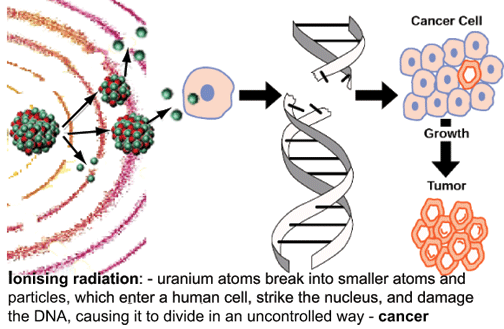
The science behind this protection regime is based on the capacity of ionising radiation to
cause damage at the cellular level in the human body. Radiation striking a cell can either
cause no damage or it may kill the cell outright – in which case, unless too many cells are
killed at once, the body will eliminate the dead cells and function healthily. The problem
comes when the cell is merely damaged, and the natural process of repair is imperfect,
leaving the cell to replicate in this damaged form – which may in some cases lead to the kind
of growth we call a cancer, other long term health or genetic damage. The level of this kind
of damage (known as stochastic) is a hit-and-miss affair – a low level of radiation exposure
doesn’t determine a health effect but as the level of exposure increases, it increases the
probability of the damage.
Current Standards Need Tightening
The limits on exposure have been progressively tightened over the years as estimates of the
cancer risks, mainly drawn from the Life-Span Studies (LSS) of Japanese survivors of the
Hiroshima and Nagasaki atomic bomb blasts in 1945, showed progressively higher rates of
this stochastic health damage. Recent evidence from studies of workers in the Nuclear
Industries in France the UK and USA (The INWORKS studies) suggest the worker-exposure
limits need to again be revised – and significantly tightened. In addition, studies on health of
populations living close to nuclear power plants in Europe and the USA show significantly
elevated rates of cancer in both children and the elderly directly related to living distance
from these facilities.
United States Proposals Would Weaken Current Standards
Unfortunately, it appears that the USA is headed in the opposite direction and given the
recent behaviour of the current President, may soon pressure other countries to follow suit.
In May 2025 US President Donald Trump issued a Directive (EO 14300) Instructing the US
Nuclear Regulatory Commission (NRC) to revise all its regulations – in particular, to revise
those relating to radiation health and safety. He instructed the NRC to abandon the LNT
and ALARA principles and re-set limits on worker and public exposures based on ‘deterministic’ rather than ‘probabilistic’/’stochastic ‘ health outcomes – potentially allowing
much higher levels of exposure.
Exactly how the NRC will respond to these directives is unclear. To comply with the
president’s orders would put the USA in conflict with national and international agencies
such as the International Commission of Radiological Protection (ICRP), the United Nations
Scientific Committee on Atomic Radiation (UNSCEAR), the US National Academy of
Science’s. Committee on the Biological Effects of Ionising Radiation (the BEIR committee)
and other countries’ national agencies including the Australian Radiation Protection and
Nuclear Standards Agency (ARPANSA) – all of which have recently reaffirmed commitment
to the LN and ARPANSA principles and the current annual limits on worker and public
exposure.
TThe draft of the revised NRC regulations on radiation protection is expected on 30 April
2026 with a 30-day period for comments before the final comprehensive revision of all NRC
regulations is published in November 2026.
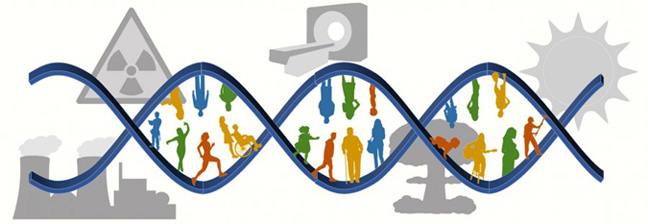
An international Campaign
These US proposals have stimulated the beginnings of an international campaign bringing
together trade unions, environment and public health groups and communities concerned
about current and future exposures from mining, industrial, medical, and nuclear radiation
sources. The objectives of this campaign are two-fold:
1 To pressure national and international agencies with responsibility for radiation
protection to publicly repudiate any US regulations that align with the Trump
Directive and resist any pressures from the US to similarly weaken existing national
standards.
2. To build pressure on these national and international agencies to revise and tighten
the standards in line with the best available scientific evidence that the health risks
are greater than those used to set current standards.
The Military Connection
For Australian workers and the public, the situation is complicated by and made more
urgent as a result of the Australia, UK, USA (AUKUS) agreement regarding the building and
stationing of nuclear-powered submarines in Australia. We have already seen the creation
of a separate Australian Naval Nuclear Power Standards Regulator (ANNPSR) that will be
responsible for all standards in the construction, operation, maintenance, decommissioning,
and radioactive waste management from the submarines built or stationed here. We can
expect pressure from the USA to have these standards align with those in the USA. As such
the ANNPSR could become a back door for pressuring the current standards agency
ARPANSA to revise and weaken rather than tighten protection standards across the full
range of other occupational and public radiation health risks.
For further information
For references to the scientific evidence and to be kept informed of developments as this
campaign evolves contact:
Dr Tony Webb,
E-mail: webbt45@icloud.com,
Shrimp with a side of cancer? Radioactive contamination is real.
by Kimberly Roberson, opinion contributor – 01/18/26,
https://thehill.com/opinion/healthcare/5692924-fda-radioactive-shrimp-threat/
The specter of radioactivity in food just reared its head again, with another shipment of imported shrimp recalled for possible Cesium-137 contamination.
The MAHA Commission 2025 report unfotunately ignored radioactivity as a possible cause of rising cancer and chronic illness. But even leaving aside nuclear accidents, studies show living near nuclear plants elevates cancer risk. Nuclear reactors generate radioactive waste and ionizing radiation, which get into the environment, contaminating air, water, soil and food.
Harmful isotopes like Cesium-137 aren’t natural; they’re made only in reactors, but persist in the environment and food for centuries. Decades after Chernobyl, for instance, researchers found Cesium-137 in meat from domestic and game animals in Poland, and in food and children’s bodies in Belarus, which caused pediatric cardiovascular disease.
Cesium-137 has a 30-year half-life but remains dangerous for 300 years, especially when ingested or inhaled. It lodges in soft tissues inside the body, irradiating cells and increasing cancer risk, according to the Centers for Disease Control and Prevention. Even very low doses have been shown to cause cancer, renal pathology and other damage.
This summer, the Food and Drug Administration issued multiple health hazard warnings about Cesium-137 detected in imported Indonesian shrimp, triggering massive recalls and worried coverage in mainstream outlets like “Martha Stewart Living.” Consumer Reports found evidence a wide swath of Indonesia’s land may be contaminated.
U.S. Sens. Bill Cassidy (R-L.) and John Kennedy (R-La.) then launched an inquiry, asking grocery chains how they will keep radioactive shrimp off their shelves. Kennedy said that eating Cesium-137-laced shrimp “will kill you. Even if doesn’t turn you into the alien from ‘Alien,’ I guarantee you’ll grow another ear.” Rep. Clay Higgins (R-La.) wrote to President Trump, calling radioactive shrimp a “significant public health threat” and asking him to pause all shrimp imports.
“Alien” shrimp penetrated public consciousness, but the radioactivity problem is much bigger. The FDA recently found radioactive cloves, and Malta customs officials found radioactive clothing, both contaminated with Cesium-137. The World Customs Organization launched “Operation Stingray” to intercept nuclear and radioactive materials, seizing 51 shipments in just three weeks.
Such action is overdue. Long before so-called “forever chemicals” or microplastics were recognized as health threats, watchdog groups were flagging the threat of radioactivity in food, especially after the 2011 Fukushima disaster. A 2013 FDA Citizen Petition demanded tighter regulation and lower allowable radioactivity levels. My organization has collected 1,600 comments and thousands of companion signatures.
Fears about radioactive fish surged in 2023 as Fukushima resumed dumping radioactive water into the Pacific. The FDA downplayed them, claiming “Cs-137 is readily excreted and does not accumulate in seafood.” But that’s a misdirection. The point is, it accumulates in our bodies when we ingest it, even in tiny amounts, according to the International Commission on Radiological Protection.
Health advocacy groups recently pointed this out in a joint letter, exhorting Kennedy and federal officials to “finally address the impact of radiation contamination of U.S. food on the trajectory of cancer and chronic illness by setting and enforcing much safer levels for Americans.” In its reply FDA demurred, calling it “unlikely that a fish exposed to significant levels of radionuclides near the [Fukushima] reactor could travel to U.S. waters and be caught and harvested.”
Yet we see evidence of consumer goods contaminated with radioactivity all around us. Instead of downplaying the problem, the FDA should tighten and enforce protective standards.
The Indonesian shrimp flagged as a health hazard had 68 becquerels of Cesium-137. The FDA’s “derived intervention level” — more of a guideline than an enforceable standard — is about 20 times higher, at 1,200 becquerels.
No level of Cesium-137 or other harmful radioactive isotopes is safe, yet Trump’s recent executive orders raise exposure limits and depart from the longstanding linear no-threshold model of radiation safety. Advocates warned the public health consequences would be severe, with women, children and fetuses worst impacted.
The standard should be, if Cesium-137 or other isotopes of concern are detectable in food items, they ought to be pulled off shelves, or at the very least labeled with warnings so consumers can make an informed decision. Unfortunately, that’s not the system we have. The importance of humility and transparency are among the lessons of Chernobyl and Fukushima, but the Trump administration is ignoring them in an explosion of hubris.
That’s nothing new; it’s deep in the nuclear culture. That 2011 International Commission on Radiological Protection report states, “There may be situations where a sustainable agricultural economy is not possible without placing contaminated food on the market. As such foods will be subject to market forces, this will necessitate an effective communication strategy to overcome the negative reactions from consumers outside the contaminated areas.”
But a communications strategy designed to soft-pedal radioactive contamination of food won’t make America healthy. Only setting and enforcing science-based standards will.
Kimberly Roberson is director of the Fukushima Fallout Awareness Network, a project of the National Institute for Science, Law and Public Policy.
Residential proximity to nuclear power plants and cancer incidence in Massachusetts, USA (2000–2018)
18 December 2025, Springer Nature, Volume 24, article number 92, (2025)
“………………………………………. Results
Proximity to plants significantly increased cancer incidence, with risk declining by distance. At 2 km, females showed RRs of 1.52 (95% CI: 1.20–1.94) for ages 55–64, 2.00 (1.59–2.52) for 65–74, and 2.53 (1.98–3.22) for 75 + . Males showed RRs of 1.97 (1.57–2.48), 1.75 (1.42–2.16), and 1.63 (1.29–2.06), respectively. Cancer site-specific analyses showed significant associations for lung, prostate, breast, colorectal, bladder, melanoma, leukemia, thyroid, uterine, kidney, laryngeal, pancreatic, oral, esophageal, and Hodgkin lymphoma, with variation by sex and age. We estimated 10,815 female and 9,803 male cancer cases attributable to proximity, corresponding to attributable fractions of 4.1% (95% CI: 2.4–5.7%) and 3.5% (95% CI: 1.8–5.2%).
Conclusions
Residential proximity to nuclear plants in Massachusetts is associated with elevated cancer risks, particularly among older adults, underscoring the need for continued epidemiologic monitoring amid renewed interest in nuclear energy. https://link.springer.com/article/10.1186/s12940-025-01248-6
Finland detects small amount of radioactivity, sees no health impact

Armen Press 30th Jan 2026, original at https://armenpress.am/en/article/1240847
Small amounts of radioactive substances have been detected in air samples in Finland though there was no risk to public health, Reuters reported citing the country’s nuclear safety watchdog.
“The concentrations were very low and posed no risk to people or the environment,” the Radiation and Nuclear Safety Authority (STUK) said in a statement, according to Reuters.
According to the report, STUK said that the radioactive substances did not originate from Finnish nuclear power plants, though it did not offer an explanation for their detection.
“In many cases, the source of the radioactive substances cannot be identified,” the agency said.
Finland, Sweden, Russia and the wider region have a number of nuclear power reactors.
President Trump’s radical attack on radiation safety.

By Daniel Hirsch, Haakon Williams, Cameron Kuta | October 15, 2025, https://thebulletin.org/2025/10/president-trumps-radical-attack-on-radiation-safety/?variant=B&utm_source=ActiveCampaign&utm_medium=email&utm_content=Trump%20s%20attack%20on%20radiation%20safety&utm_campaign=20251009%20Thursday%20Newsletter%20%28Copy%29

In May, President Donald Trump issued a series of executive orders that, in part, require the US Nuclear Regulatory Commission (NRC) to consider dramatically weakening its radiation protection standard. If federal radiation limits are gutted in the manner urged by the president, the new standard could allow four out of five people exposed over a 70-year lifetime to develop a cancer they would not otherwise get.
Contesting the scientific consensus. Section 5(b) of the executive order—formally titled “Ordering the Reform of the Nuclear Regulatory Commission”—directs the NRC to issue a proposed “wholesale revision of its regulations and guidance documents,” including reconsideration of the agency’s “reliance on the linear no-threshold (LNT) model for radiation exposure.” The LNT model maintains that risk from radiation exposure is proportional to the dose: Even a tiny amount of radiation causes some small but real increased risk of cancer, and that risk goes up linearly as the dose increases.
While most Americans have doubtless never heard of the LNT model, it has been the bedrock of radiation exposure risk analysis for decades and forms the basis of public health protection from radiation. The LNT model is scientifically robust, supported by the longstanding and repeatedly affirmed determinations on low-dose radiation by the National Academies of Sciences, Engineering, and Medicine, virtually all international scientific bodies, the Environmental Protection Agency (EPA), and the NRC itself.
Despite the LNT model’s long track record and the well-established body of scientific evidence upon which it is built, President Trump has unilaterally issued a presidential finding that this scientific consensus is wrong. His order could lead to LNT’s complete abandonment in a matter of months, posing a serious increase in the amount of radiation that industries and government agencies would be allowed to inflict upon the public.
If the NRC goes along with Trump’s assertion, the weakening of radiation protection standards would likely be extreme. Advocates of abandoning LNT have often asserted that low-dose radiation is harmless or even beneficial, and therefore, that the public health radiation limits should be hugely increased. In 2015, three petitions for rulemaking to the NRC proposed doing away with the LNT model and increasing allowable radiation exposures for everyone—including children and pregnant women—to 10 rem. (The Roentgen equivalent man (rem) is a unit of effective absorbed radiation in human tissue, equivalent to one roentgen of X-rays. One rem is equal to 0.01 Sievert in the international system of units.)
One petition to the NRC went so far as to ask, “Why deprive the public of the benefits of low-dose radiation?” The NRC strongly rejected the petitions in 2021, citing the conclusions of numerous scientific bodies that “[c]onvincing evidence has not yet demonstrated the existence of a threshold.
Low-level, or “low-dose,” radiation is generally defined as a dose range of 10 rem and below. However, “low dose” is something of a misnomer, as 10 rem is still relatively high. Even when doses are low, they nonetheless cause substantial harm when spread across a large population over time, especially for sensitive groups like children.
Raising radiation exposure limits. If President Trump’s executive order results in a new public radiation exposure limit of around 10 rem—the level LNT opponents often advocate—the increased health risks would be extraordinary. Longstanding radiation protection limits for members of the public are in the range of 10 to 100 millirem (0.01 to 0.1 rem) per year. A 10-rem limit would increase allowed exposures to radiation by factors of 100 to 1000—and so would increase the risk of cancer.
A single chest X-ray is about 2 millirem (0.002 rem) of radiation exposure. An annual limit of 10 rem would correspond to a person receiving a dose equivalent to 5,000 chest X-rays each year, from conception to death. Current official radiation risk estimates—adopted by EPA from the National Academies’ BEIR VII study on the health risks from exposure to low levels of ionizing radiation—indicate that receiving 10 rem per year over a 70-year lifetime would result in about four out of every five people exposed getting a cancer they would not get otherwise.
Despite what opponents of the LNT model claim, there is no threshold at 10 rem below which there is no measurable health harm. A substantial body of scientific work has demonstrated significant negative health impacts well below 10 rem. Beginning in the 1950s, pioneering Oxford researcher Alice Stewart demonstrated that a single fetal X-ray with a dose of 200 millirem (0.2 rem) was associated with a measurable increase in the risk of that child dying of cancer. The radiation establishment fought Stewart’s findings vigorously, but her research has long since been vindicated.
More recently, a major study covering an international cohort of over 300,000 nuclear facility workers has found that annual doses well below 1 rem create measurable increases in the risk of developing a variety of cancers, and that, as NRC put it, “even tiny doses slightly boost the risk of leukemia.” A second massive study of nearly one million European children found that those who received a CT scan, at an average dose of 800 millirem (0.8 rem), suffered a measurable increase in their risk of getting cancer.
Standards already weak. Radiation protection standards should be tightened, not weakened. The US government has a long history of underestimating radiation risks. The more scientists have learned about low-dose radiation, the more their estimates of the risk per unit dose have tended to increase. Yet the NRC has not updated in step with the science.
The NRC protection limit for workers of 5 rem per year was set in the early 1960s and has not changed since, despite decades of increasing official estimates of radiation risk. The current best estimate, from the National Academies’ BEIR VII, indicates that one out of every five workers receiving the NRC’s allowable dose each year from ages 18 to 65 would develop a cancer.
NRC’s radiation exposure limits for the public have not been updated in 35 years. Despite a requirement to employ EPA’s more conservative radiation risk standards, the NRC has long ignored it and instead continues to use 100 millirem per year—100 times lower than what Trump’s executive order could lead to. Current risk figures from the National Academies and the EPA indicate that 70 years of exposure at that level would result in nearly one in 100 people getting cancer from that exposure. That is 100 to 10,000 times higher than the EPA’s acceptable risk range. As the former director of EPA’s Office of Radiation and Indoor Air said years ago, “To put it bluntly, radiation should not be treated as a privileged pollutant. You and I should not be exposed to higher risks from radiation sites than we should be from sites which had contained any other environmental pollutant.”
The NRC held a webinar in July to gather public feedback on implementing President Trump’s executive order on abolishing the LNT model. Many presenters—including representatives from the National Council on Radiation Protection and the Union of Concerned Scientists—gave a vigorous defense of the LNT model, as did many of the comments from the public. Yet the NRC, despite itself having strongly reaffirmed this standard only 4 years ago, seemed to minimize low-dose radiation risks and suggested that all radiation cancer risk models be treated equally (including the long-discredited view that low-dose radiation has health benefits). More concerning, the NRC has put its thumb on the scale, giving special treatment to LNT opposition by posting among the general meeting materials a link to one presenter’s paper, which suggests that an annual dose of 10 rem is acceptably safe.
At a time when radiation protection should be strengthened, President Trump has directed action to weaken it markedly. If the NRC implements the executive order, the potential outcome would be a new, deeply flawed radiation standard as much as a thousand times weaker than the current standard, resulting in a massive increase in radiation-related health hazards across the American population.
Loosening radiation exposure rules won’t speed up nuclear energy production.
Relaxing radiation safety standards could place women and children at higher risks of health issues
By Katy Huff, 24 Jan 26, https://www.scientificamerican.com/article/weaker-radiation-limits-will-not-help-nuclear-energy/
Get an x-ray, and you get a small dose of radiation to visualize your bones and body structures to help you medically. Buy a smoke detector, you’re inviting a tiny source of radiation, americium-241, into your home to keep you safe. But we don’t just take on that radiation heedlessly. Until perhaps now.
The U.S. regulates the amount of radiation people are exposed to using something called the linear no-threshold model, which says that every additional dose of ionizing radiation, however small, adds a small risk to health. It’s a simple equation that describes the relationship between dose and risk. For decades it has anchored radiation dose limits for both the public and radiation workers. But by February 23, the Nuclear Regulatory Commission (NRC) is expected to overhaul its regulations, potentially retiring this risk model, per a May executive order by President Donald Trump.
Why loosen this protection? Supposedly to spur nuclear energy production. The administration says that this risk model is too cautious, leading to costly conservatism in reactor design, staffing redundancies and stringency in licensing. The executive order promises that lifting it will accelerate nuclear reactor licensing while lowering the costs of providing nuclear energy to the grid.
As a nuclear energy advocate and former Department of Energy official, I want to see more nuclear energy on the grid soon. But loosening the protections of the linear no-threshold (LNT) model is not supported by current research. Some experts warn that relaxing it could especially place women and children at higher risk of damage from radiation.
The LNT model is based on the idea that exposure to any amount of radiation proportionally increases health risks, including the risk of cancer. From data on high radiation exposures, scientists extrapolate, or predict, what might happen if people are exposed to lower levels of radiation. At low doses, however, it becomes difficult to distinguish the health effects of radiation from the other environmental and lifestyle factors that can affect health. That uncertainty is why regulators rely on a cautious approach like the LNT model, and also why some people question its use.
People are willing to accept the radiation risks inherent in medicine, industry and energy because they trust that standards have been set by credible experts relying on evidence who err on the side of caution and protecting human health. Weakening regulations without new evidence would do the opposite. The last time the question of raising the public dose limit came up, the NRC said no—there wasn’t enough evidence. We must urge the NRC’s current commissioners to demand evidence and heed science over political agenda.
HIGH LEVEL NUCLEAR WASTE REMAINS UNAPPROACHABLE AND EXTREMELY TOXIC FOR HUNDREDS OF MILLIONS OF YEARS

Gordon Edwards, 20 Jan 26
Q: When is irradiated nuclear fuel less radioactive than uranium ore?
A: Never!
Mark Twain once wrote, “There are three kinds of lies: lies, damned lies, and statistics.” I would add to that short list many of the reassurances promulgated by nuclear enthusiasts. Take high-level nuclear waste for example.
Nuclear proponents often reassure the public and decision-makers that, after 10 million years or so, the high-level radioactive waste from nuclear reactors is more-or-less on a par with the original uranium ore found in nature from which the uranium fuel was extracted. Sounds reassuring, no doubt, but it is not true.
First of all, the language itself can be misleading. Many people may not realize that uranium ore is much more dangerously radioactive than uranium itself.
That’s because the ore is a mélange of uranium and its two dozen radioactive progeny, including isotopes of radium, polonium, and radon, as well as radioactive varieties of bismuth and lead. See www.ccnr.org/U-238_decay_chain.png & www.ccnr.org/U-235_decay_chain.png
Each one of these byproducts of uranium is much more radiotoxic (i.e.following ingestion or inhalation) than uranium itself. Indeed these pernicious radioactive poisons have already killed countless hundreds of thousands of humans exposed to them in one way or another.
Due to the presence of the radioactive progeny, uranium ore gives off a lot of highly penetrating gamma radiation (the principal cause of external whole-body irradiation) – far more than uranium itself. Pure uranium gives off very little gamma radiation.
Secondly, not all uranium ore is the same. Some ores are a lot more dangerous than others.
The potential health hazard of uranium ore depends on the “grade” of the ore. The grade is the concentration of uranium per gram of ore. The grade dictates the concentration of all of the radioactive progeny as well. So, the higher the grade, the more radioactive and the more radiotoxic the ore is.
At Cigar Lake in Northern Saskatchewan, for example, we have “high-grade” ore averaging about 17 percent uranium, which makes that ore more than 150 times more radioactive (and radiotoxic) than uranium ore from Elliot Lake Ontario (having a grade of about 0.1 percent).
The Cigar Lake ore is the richest (i.e. the highest grade) ever found. The ore is so radioactive that it cannot be safely mined by human beings, but must be mined using robotic equipment. See https://saskpolytech.ca/news/posts/2021/Cigar-Lake-project-collaboration-a-high-tech-home-grown-win.aspx .
But hold on a minute. Even after ten million years, the concentration of uranium left in spent fuel is about 98.5 percent. That is a MUCH higher grade than any ore ever found in nature.
So even after ten million years, used nuclear fuel is about 480 percent MORE radioactive and radiotoxic than the uranium ore at Cigar Lake – which is in turn more than 100 times more radioactive and radiotoxic than most other uranium deposits that have been mined in other countries. And that estimate is based ONLY on the uranium progeny mentioned above.
But that’s not all. In addition to uranium and its progeny, the ten-million-year-old CANDU used fuel bundles contain other radioactive poisons not found in uranium ore at all, such as caesium-135 (half-life 2.3 million years), iodine-129 (half-life 16 million years), palladium-107 (half-life 6.5 million years), and zirconium-93 (half-life 1.6 million years).
So when Canadian nuclear establishment people tell you that after 10 million years CANDU spent fuel is about as dangerous as naturally-occurring uranium ore, they are bending the truth by a significant amount. They are also misleading people by not explaining the difference between uranium ore and uranium in a refined form.
Incidentally, the Ontario Royal Commission on Electric Power Planning (commonly called the Porter Commission) published a graph in their 1978 Report “A Race Against Time” showing that the overall radiotoxicity of used CANDU fuel (the blue line in the graph) decreases for the first 50,000 years or so, and then increases to a higher level as the result of inbreeding of uranium progeny. Although it is not stated in the report, the radiotoxicity level of used nuclear fuel after ten million years does not change for a very long time – it remains relatively constant for the next several hundred millions of years.
Canada’s double standard on tritium emissions
Frank Greening, 24 Dec 25
Here is an example of how Canada allows all kinds of tritium emissions while other nations are criticized for almost trivial releases.
Thus, it was reported today that the Japanese reactor at Fugen had a leak that spilled tritiated water. The amount released? A staggering 20 ml:
By comparison a CANDU reactor at Bruce NGS suffered a steam generator release back in 2007. Steam generator tube leaks involve the escape of primary heat transport heavy water contaminated with tritium. In the case of Bruce Unit 8, a steam generator leak was detected in June 2007 but was allowed to continue until the first week of November. The monthly heavy water losses associated with this leak were as follows:
June 2007: 484 kg
July 2007: 2157 kg
Aug 2007: 2832 kg
Sept 2007: 4339 kg
Oct 2007: 5036 kg
Nov 2007: 1115 kg
Thus, in total, 15,963 kg of tritiated heavy water was lost to Lake Huron over a six-month period in 2007. This leak created a giant plume of tritiated water that was carried northwards by the prevailing currents towards the townships of Saugeen Shores, Port Elgin and Southampton. By September 2007, the concentration of tritium in the water intake of the Port Elgin Water Treatment Plant, 17 km north of the Bruce site, had increased by more than a factor of three compared to the normal levels of tritium in lake water at this location.
But remarkably this increase in the tritium concentration in the drinking water supply to residents to the north of the Bruce site was not the reason that the Unit 8 steam generator leak was finally fixed. On the contrary, the leak was plugged to prevent further loss of a valuable commodity – heavy water – which at $300/kg had already cost Bruce Power almost $5 million. And besides, thanks to the CNSC’s lax tritium emission standards, Bruce B’s waterborne emission action level for tritium is a staggering 130,000 Ci per month; thus the station was well below its regulatory limit in this regard. Nevertheless, one has to wonder how such a liberal action level is permitted when it allows a station to discharge tritiated water that is 5000 times higher than the Ontario Drinking Water Objective.
Exposure to protracted low-dose ionizing radiation and incident dementia in a cohort of Ontario nuclear power plant workers.
Brianna Frangione 1, Ian Colman, Franco Momoli, Estelle Davesne, Robert Talarico, Chengchun Yu, Paul J Villeneuve
Scand J Work Environ Health
Abstract
Objectives: Emerging evidence suggests that low-dose ionizing radiation increases the risk of neurodegenerative diseases. Past studies have relied on death data to identify dementia, and these are prone to under-ascertainment and complicate the estimation of health risks as individuals tend to live with dementia for many years following onset. We present findings from the first occupational cohort to investigate dementia risk from low-dose radiation using incident outcomes.
Methods: This is a retrospective cohort of 60 874 Ontario Nuclear Power Plant workers from the Canadian National Dose Registry. Personal identifiers were linked to Ontario population-based administrative health data. Incident dementias between 1996 and 2022 were identified using a validated algorithm based on physician, hospital, and prescription drug data. Individual-level annual estimates of whole-body external ionizing radiation were derived from personal workplace monitoring. The incidence of dementia among these workers was compared to a random sample of Ontario residents matched by sex, age, and residential area. Internal cohort analysis using Poisson and linear excess relative risk (ERR) models, adjusted for sex, attained age, calendar period, and neighborhood income quintile, were used to characterize the shape of the exposure-response curve between low-dose cumulative radiation (lagged 10 years) and incident dementia.
Results: There were 476 incident dementias and 867 028 person-years of follow-up. The mean whole-body lifetime accumulated exposure at the end of follow-up was 11.7 millisieverts (mSv). Workers with cumulative exposure between 50-100 mSv had an increased risk of dementia [RR 1.50, 95% confidence interval (CI) 0.99-2.28] compared to those unexposed. Spline analysis suggested that the dose-response relationship was non-linear. The linear ERR per 100 mSv increase in exposure was 0.704 (95% CI 0.018-1.390).
Conclusion: Our findings suggest that low-dose exposure to ionizing radiation increases the risk of incident dementia.
Radioactive fertilizer and the nuclear industry
Gordon Edwards. 14 Dec 25
CORRECTION
I wrote that
“…selling raffinate as fertilizer goes on all the time from the world’s largest uranium refinery owned by Cameco, situated at Blind River on the north shore of Georgian Bay.”
This sentence is incorrect. Raffinate from Blind River is not used as fertilizer. I apologize for the error.
Radioactive fertilizer from the Canadian uranium industry does not come from the Cameco Blind River refinery but from two other sources – the Cameco Key Lake uranium mill in Northern Saskatchewan, and the Cameo uranium dioxide conversion facility at Port Hope Ontario.
Moreover, the material that is being used in radioactive fertilizer is not raffinate (i.e. refinery waste). It is ammonium sulphate that is recovered from the Key Lake uranium processing circuits and sold as fertilizer, together with a liquid by-product of Cameco’s Port Hope uranium dioxide conversion plant – an ammonium nitrate solution – that is sold to a local agricultural supply company for use in fertilizer production.
The use of similar waste solutions from nuclear fuel facilities as fertilizer has been a concern in other jurisdictions as well. So at the present time, it is not raffinate but ammonium compounds that have been used in uranium processing that ends up in fertilizer. I apologize for not checking the facts much more carefully..
About radioactive fertilizer and the nuclear industry.
A lot of the phosphate used for fertilizer comes from Florida where the phosphate ore is mined. That ore is contaminated with uranium and its decay products, especially radium. Radium disintegrates to produce radon gas Radon-222) and this builds up in an enclosed space, without adequate ventiliation, reaching an “equilibrium” in about one month.
That’s why Florida was the first “hot spot” that alerted the US government to the major public health hazard posed by radon, which is estimated to kill about 20-30 thousand Americans every year. Every atom of radon comes from the disintegration of a radium atom, and in turn, every atom of radium started out as an atom of uranium.
Radioactive quilibrium means #becquerels of radium = #becquerels of radon. One becquerel being one disintegration per second. In a simiar way, if pure radon gas is in an enclosed container, it will reach equilibrium with its four short-lived decay products in a couple of hours – so the radioactivity in the container is about five times greater than it was originally, as all the short-lived decay products have attained roughly the same level of radioactivity as the radon.
When this radioactive fertilizer is used on tobacco crops, the radon from the soil and the fertilizer builds up under the thick canopy of tobacco leaves and hangs there for a time (radon being 7-8 times heavier than air). The radon atoms disintegrate to produce four airborne solid short lived decay products – polonium-218, bismuth-214, lead-214, polonium-214, all of which decay into lead-210 and polonium-210. [Note: the last two nuclides never reach equilibrium, unlike the first four.]
These radon decay products stick to the resinous (sticky) hairs on the undersides of the tobacco leaves and when the tobacco is harvested these radioactive materials are harvested along with the tobacco. By the time the tobacco is cured, rolled, and packaged, small quantities of lead-210 (22-year half-life) and its immediate successor polonium-210 are left in the tobacco/cigarettes for the unwitting smoker (or second-hand-smoke inhaler) to encounter.
When the cigarette is lit and the smoker draws on it, the temperature at the tip increases dramatically and it vaporizes the lead-210 and polonium-210 which is inhaled deep into the lungs, where polonium-210 sticks to and attacks the sensitive lung tissue with its very energetic alpha particles.
Polonium-210 is a very damaging radionuclide which Los Alamos Labs reckons is about 250 billion time more toxic than hydrogen cyanide. (It’s what was used to murder Alexander Litvenenko in London at the “request” of Putin who was openly criticized by Litvenenko).
Polonium-210 adds greatly to the cancer-causing characteristic of the tobacco residues lodged in the lung, making cigarettes smoke significantly more carcinogenic than it would otherwise be. (When the smoker is not inhaling, the lead-210/polonium-210 is wafted into the second-hand cigarette smoke as a respirable aerosol to endanger the health of those within sniffing distance,)
Inside the lung, some of the inhaled polonium-210 crosses the blood-air barrier end enters the bloodstream. Being solid, it attaches to pre-existing plaque build-up in the arteries of the smoker, usually near the arterial valves, where the alpha particle bombardment causes fibrosis of the arterial wall and valve, thus exacerbating the plaque build-up and increasing the restriction of blood flow, thereby contributing substantially to the incidence of heart attacks and strokes among smokers because of the alpha emitting polonium-210 in the plaque.
What you may not have heard is that voluminous sand-like radioactive waste from the uranium industry, called “raffinate” (leftovers from uranium refining), is also sold as fertilizer on the open market without any warnings about the radioactive content. The justification for this nefarious practice seems to be, that since “natural” phosphate from Florids is used to make fertilizer, and it is clearly radioactive (due to the radium-radon chain), and since raffinate from a uranium refinery is not much higher in radioactive content, then what the heck, we (the uranium industry) may as well turn this sow’s ear into a silk purse by selling the radioactive raffinate waste as fertilizer.
Extensive radioactive contamination – involving uranium raffinate – of the homes, schools, roadways, ravines, and the public beach in the town of Port Hope (prior to 1985) – has led to a $2.6 billion radioactive environmental cleanup of the town (by the federal government) resulting in over a million cubic metres (about a million tonnes) of radioactibve waste to be stored for 500 years in a gigantic earthen mound just north of the town. The subsequent fate of the still-radioactive waste will be decided at that time.
This practice of selling raddinate as fertilizer goes on all the time from the world’s largest uranium refinery owned by Cameco, situated at Blind River on the north shore of Georgian Bay. The Blind RIver plant turns uranium mill concentrates from Saskatchewan, Australia and South Africa, called “yellowcake” (mostly U3O8), into a product called “uranium trioxide” UO3. At that point the raffinate is the waste product, contaminated with radium. That’s what’s sold for fertilizer.
The trioxide then goes to Port Hope Ontario, where it is chemically converted into UO2 (uranium dioxide) for domestic use, about 15% of the total, and into UF6 (uranium hexafluoride or “hex”) for export to enrichment plants outside of Canada where the concentration of U-235 is increased to the level required by the customer.
At the enrichment plant, the “hex” is turned into a gas at a fairly low temperature so that the heavier U-238 atoms can be separated from the lighter U-235 atoms, resulting in an enriched uranium product that goes out the front door while the voluminous discarded U-238 (called depleted uranium or “DU”) goes out the back door.
For low enrichment in light water nuclear power plants, about 85% of the refined uranium is discarded as depleted uranium. The DU has important military uses, and a few civilian uses, but for the most part DU is part of the radioactive legacy of the nuclear age wth a half-life of 4.5 billion years.
Besides using DU in conventional bullets, shells, missiles, tanks, et cetera, used in the former Yugoslavia and in other conflicts, resulting in a battlefield litters with radioactive waste, the military also uses DU as “target rods” in plutonium production reactors to breed plutonium for nuclear warheads. In addition, the military uses DU metal in almost all nuclear warheads as a way of significantly multiplying the explosive power of the warhead by a sizable factor. These weapons are called “fission-fusion-fission” weapons,
The first fission is from a small ball of plutonium (usually with a tritium “spark-plug” inside) whose sole purpose is to ignite the fusion reaction by raising it to a temperature of about 100 million degrees. When fusion occurs, extremely energetic neutrons are goven off which fission the U-238 that has been used for that exact purpose in the construction of the warhead. That third stage, the fission of U-238, provides the bulk of the explosive power and the lion’s share of the radioactive fallout.
It is a sad story from beginning to end.
And, to add to this tale of woe, Canada currently has about 220 million tonnes of radioactive waste (tailings) stored at or near the surface from uranium milling (the operation that produces yellowcake) along with about 167 million tonnes of radioactive “waste rock”. Yet the Canadian authorities and others routinely and unabashedly declare that nuclear power is a “clean” source of energy and for the most part, Canadian academic scientists and sientific bodies say not a peep to the contrary.
All French nuclear power plants are releasing tritium, according to Criirad.
December 5, 2025 , https://reporterre.net/Toutes-les-centrales-nucleaires-francaises-ont-rejete-du-tritium-selon-la-Criirad
All French nuclear power plants are releasing tritium. This is the finding of the Independent Research and Information Commission on Radioactivity (CRIIRAD), which issued a warning on December 3rd about uncontrolled releases.
Between 2015 and 2024, 16 power plants recorded levels exceeding 10 Bq/l in groundwater, some exceeding 1,000 Bq/l such as Bugey, Gravelines and Tricastin, the association details.
The three other power plants (Golfech, Nogent-sur-Seine, Paluel) experienced similar episodes before or after this period, notably Nogent-sur-Seine on January 17, 2025.
Criirad emphasizes that no power plant has been able to guarantee the permanent protection of groundwater and that any massive discharge would quickly affect the aquatic environment.
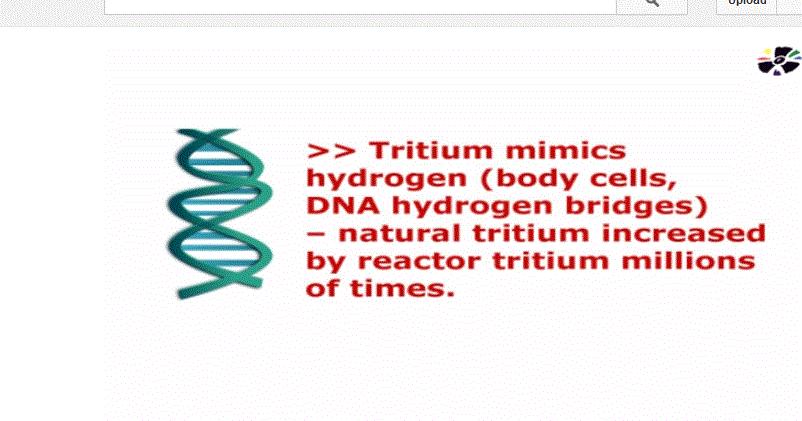
According to the Sortir du nucléaire network , the toxicity of tritium has been underestimated, particularly when it is absorbed by the body, where it then enters the DNA of cells.
The mysterious black fungus from Chernobyl that may eat radiation
Mould found at the site of the Chernobyl nuclear disaster appears to be
feeding off the radiation. Could we use it to shield space travellers from
cosmic rays? In May 1997, Nelli Zhdanova entered one of the most
radioactive places on Earth – the abandoned ruins of Chernobyl’s exploded
nuclear power plant – and saw that she wasn’t alone.
Across the ceiling,
walls and inside metal conduits that protect electrical cables, black mould
had taken up residence in a place that was once thought to be detrimental
to life. In the fields and forest outside, wolves and wild boar had
rebounded in the absence of humans. But even today there are hotspots where staggering levels of radiation can be found due to material thrown out from the reactor when it exploded.
BB 28th Nov 2025, https://www.bbc.co.uk/future/article/20251125-the-mysterious-black-fungus-from-chernobyl-that-appears-to-eat-radiation
1 This Month

of the week – Shut Down Drone Warfare!


Tell the Ukrainian Government to Drop Prosecution of Peace Activist Yurii Sheliazhenko

Petition to revoke the licensing of the Near Surface Nuclear Disposal Facility (NSDF) at Chalk River. https://www.ourcommons.ca/petitions/en/Petition/Details?Petition=e-7247
To see nuclear-related stories in greater depth and intensity – go to https://nuclearinformation.wordpress.com
-
Archives
- March 2026 (237)
- February 2026 (268)
- January 2026 (308)
- December 2025 (358)
- November 2025 (359)
- October 2025 (376)
- September 2025 (257)
- August 2025 (319)
- July 2025 (230)
- June 2025 (348)
- May 2025 (261)
- April 2025 (305)
-
Categories
- 1
- 1 NUCLEAR ISSUES
- business and costs
- climate change
- culture and arts
- ENERGY
- environment
- health
- history
- indigenous issues
- Legal
- marketing of nuclear
- media
- opposition to nuclear
- PERSONAL STORIES
- politics
- politics international
- Religion and ethics
- safety
- secrets,lies and civil liberties
- spinbuster
- technology
- Uranium
- wastes
- weapons and war
- Women
- 2 WORLD
- ACTION
- AFRICA
- Atrocities
- AUSTRALIA
- Christina's notes
- Christina's themes
- culture and arts
- Events
- Fuk 2022
- Fuk 2023
- Fukushima 2017
- Fukushima 2018
- fukushima 2019
- Fukushima 2020
- Fukushima 2021
- general
- global warming
- Humour (God we need it)
- Nuclear
- RARE EARTHS
- Reference
- resources – print
- Resources -audiovicual
- Weekly Newsletter
- World
- World Nuclear
- YouTube
-
RSS
Entries RSS
Comments RSS
 nuclear-news