Iran’s nukes – a matter of national pride
At Tehran University, a group of hard-line students starts a petition urging Iran to withdraw from an international treaty regulating nuclear development. There’s no doubt Iran carefully stage manages much of its backlash to Western pressures over its nuclear efforts. But not all.
Iran’s defiance remains one of the few patches of common ground in a nation with multiple divisions: Hard-liners against opposition groups; power struggles between the ruling clerics and President Mahmoud Ahmadinejad; infighting among various parliament factions.
“Iranians don’t agree on much these days, but you could say the nuclear issue is one where they more or less speak in a common voice,” said William O. Beeman, aUniversity of Minnesota professor who follows Iranian affairs. Continue reading
The psychology of attitudes in Iran to nuclear power
what about Ahmadinejad’s promise to “wipe Israel off the face of the map?” Several problems exist with the idea.
Firstly, scholars of the Persian language say that his oft-cited words have been mistranslated and taken out of context. Ahmadinejad was actually quoting the revolutionary regime’s founder, Ayatollah Khoemeni, not making a policy statement.. (Read here for more on this dispute).
The Threat of a Nuclear Theocracy, Act II. Slate, By Michael Moran , Nov. 15, 2011 As the U.S. debate over Iran’s nuclear program has heated up, an issue of war and peace is being framed in a very dangerous way. The United States, with all its other problems right now, must get this right, because all options on Iran’s nuclear program are laden with risk, and the truth is very inconvenient.
The debate—roughly sanctions and diplomacy versus airstrikes—fails to acknowledge some important facts, the most important of which is that neither a military option—short of the lunacy of an all-out invasion of Iran—nor diplomacy will guarantee that Iran won’t soon gatecrash the nuclear club. Continue reading
Japan: the psychological impact of Fukushima nuclear catastrophe
For Japanese, Fukushima spells fear, MARK MACKINNON,TOKYO—Globe and Mail, Oct. 12, 2011 The Fukushima fallout has now spread well beyond what can be measured with a Geiger counter. In the minds of many consumers, Fukushima prefecture – which, at almost 14,000 square kilometres is bigger than Lebanon or Jamaica – and the Fukushima Daiichi nuclear plant are one and the same. Though the Japanese government has evacuated only a 20-kilometre radius around the plant, many inside and outside Japan treat the entire region as though it’s contaminated, unsure of what to make of shifting official assessments of the situation. Continue reading
Radiation standards for children should be lower than for adults
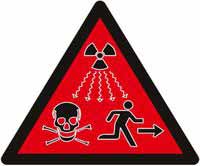 “Safety standards established in nuclear power countries are currently set for adults,” .. “It is a given fact that children are far more vulnerable to exposure.”
 New Radiation Limits Demanded for Children, By Suvendrini Kakuchi TOKYO, Sep 29, 2011 (IPS) – The threat of radioactive contamination faced particularly by children after the Mar. 11 nuclear disaster in Japan has touched the heart of the Japanese public, and become a major political and social issue.
Mothers are inevitably in the forefront of citizen groups working to protect children. At a meeting this week at the Ministry of Welfare, they presented an appeal that included a demand for the world’s first radiation safety standards for minors. Continue reading
Japan’s nuclear crisis making young Japanese more thoughtful
 young people in Japan have significantly shifted their focus from material gain to altruism….
Previously, the key purpose for finding a career had been to earn money …..respondents said that their views had also changed about nuclear power
Nuclear incidents cause shift in values among young Japanese, Inside Japan Tours, 15th September 2011 A new survey reveals that the earthquake and nuclear disaster that beset Japan earlier this year has led to a shift in attitudes among the country’s young citizens. Continue reading
Anxiety in city on border of Fukushima’s no-go zone
Japan city on border of nuclear no-go zone fights for survival, By Antoni Slodkowski, Editing by Tomasz Janowski and Jonathan Thatcher, MINAMI SOMA, Japan Sep 11, 2011 (Reuters) – A line dividing the no-go zone around the Fukushima nuclear plant and the area deemed safe from radiation cuts right across this coastal city but the “good” part is starting to look very much like the ghost town on the other side.
Six months after a magnitude 9.0 earthquake unleashed a deadly tsunami that triggered meltdowns and radiation leaks at the Tokyo Electric Power’s complex, Minami Soma, a city just a half an hour’s drive away, struggles to stay alive. Continue reading
The psychological fallout from Fukushima’s continuing radiation
Low-level radiation is an invisible threat that breaks DNA strands with results that do not become apparent for years or decades. Though the vast majority of people remain completely unaffected throughout their lives, others develop cancer. Not knowing who will be affected and when is deeply unsettling….
Twenty years after the 1986 reactor explosion in Chernobyl, the World Health Organisation said psychological distress was the largest public health problem unleashed by the accident…
the radiation “creates a slow, creeping, invisible pressure” that can lead to prolonged depression.
Fukushima disaster: it’s not over yet Six months after the multiple meltdowns at the Fukushima Daiichi nuclear plant, the streets have been cleared but the psychological damage remains “…...Jonathan Watts, guardian.co.uk, Sept 9 11, ”……..Reiko went on to describe how everything had changed in the wake of the nuclear accident in Fukushima the previous month. Daily life felt like science fiction. She always wore a mask and carried an umbrella to protect against black rain. Every conversation was about the state of the reactors. In the supermarket, where she used to shop for fresh produce, she now looked for cooked food – “the older, the safer now”. She expressed fears for her son, anger at the government and deep distrust of the reassuring voices she was hearing in the traditional media. “We are misinformed. We are misinformed,” she repeated. “Our problem is in society. We have to fight against it. And it seems as hard as the fight against those reactors.” Continue reading
1 This Month

of the week – Shut Down Drone Warfare!


Tell the Ukrainian Government to Drop Prosecution of Peace Activist Yurii Sheliazhenko

Petition to revoke the licensing of the Near Surface Nuclear Disposal Facility (NSDF) at Chalk River. https://www.ourcommons.ca/petitions/en/Petition/Details?Petition=e-7247
To see nuclear-related stories in greater depth and intensity – go to https://nuclearinformation.wordpress.com
-
Archives
- March 2026 (237)
- February 2026 (268)
- January 2026 (308)
- December 2025 (358)
- November 2025 (359)
- October 2025 (376)
- September 2025 (257)
- August 2025 (319)
- July 2025 (230)
- June 2025 (348)
- May 2025 (261)
- April 2025 (305)
-
Categories
- 1
- 1 NUCLEAR ISSUES
- business and costs
- climate change
- culture and arts
- ENERGY
- environment
- health
- history
- indigenous issues
- Legal
- marketing of nuclear
- media
- opposition to nuclear
- PERSONAL STORIES
- politics
- politics international
- Religion and ethics
- safety
- secrets,lies and civil liberties
- spinbuster
- technology
- Uranium
- wastes
- weapons and war
- Women
- 2 WORLD
- ACTION
- AFRICA
- Atrocities
- AUSTRALIA
- Christina's notes
- Christina's themes
- culture and arts
- Events
- Fuk 2022
- Fuk 2023
- Fukushima 2017
- Fukushima 2018
- fukushima 2019
- Fukushima 2020
- Fukushima 2021
- general
- global warming
- Humour (God we need it)
- Nuclear
- RARE EARTHS
- Reference
- resources – print
- Resources -audiovicual
- Weekly Newsletter
- World
- World Nuclear
- YouTube
-
RSS
Entries RSS
Comments RSS
 nuclear-news