20,000 cleanup workers not counted, in estimating Fukushima cancer risks

 Thousands More Radiation-Related Deaths Expected From Fukushima, Asian Scientist, Study By Rebecca Lim July 20, 2012 Thousands of deaths could still be expected from the Fukushima nuclear fallout in the years to come, according to the first estimate of the disaster’s worldwide impact AsianScientist (Jul. 20, 2012) –
The research, published in the latest edition of the journal Energy & Environmental Science, found that inhalation exposure, external exposure, and ingestion exposure of the public to radioactivity may result in up to 1,300 cancer mortalities and up to 2,500 cancer morbidities worldwide, mostly in Japan.
Stanford University researchers John Ten Hoeve and Mark Jacobson feel that the risk of a meltdown is not small, given that “modest to major radionuclide releases (occurred) in almost 1.5 percent of all reactors ever built.”….
Estimates in the paper do not account for the increased radiation risk to the roughly 20,000 workers at the plant in the months following the accident.
Psychological effects such as depression, anxiety, fear, and unexplained physical symptoms which were seen post-Chernobyl, are likely to be repeated in evacuees after Fukushima, they say….
The “white male effect” – psychologists show that affluent white men are the most accepting of nuclear waste dumps
Where to put nuclear waste? e! science news, , June 19, 2012 Researchers in Finland have found that acceptance of the site of a spent nuclear fuel repository can depend on gender and economic background. Writing in the International Journal of Environmental Technology and Management, the team reports that affluent men more often have a positive opinion on the location of such facilities than women or disadvantaged people.
While the actual quantities of nuclear waste around the globe are relatively small, the disposal or storage of such materials remains a controversial and sensitive issue and one
that is likely to grow if more nuclear power plants are built. Matti Kojo of the University of Tampere and Mika Kari and Tapio Litmanen of the University of Jyväskylä have recently canvassed and analyzed local opinion on the siting of a nuclear waste repository in the
municipality of Eurajoki, Finland. They have demonstrated what they refer to as a “white male effect” associated with acceptance of such facilities close to a residential area…..
http://esciencenews.com/articles/2012/06/19/where.put.nuclear.waste
The way to win over climate sceptics
How to convince climate sceptics to be pro-environment, New Scientist, 17 June 2012 by Michael Slezak, Climate change might eventually cause millions of deaths and all kinds of natural disasters. But don’t tell that to a climate-change sceptic if you want them to do anything about it.
Instead, focus on how mitigation efforts can help people become more warm and caring towards others or how it can promote economic and technological development. That’s the advice psychologists give after confirming the strategy in an experiment. Continue reading
“Mentally ill”, “seditious” – govt labels for India’s anti nuclear protestors!
NIMHANS psychiatrists, to their shame, are striving to help people ”understand the importance of the nuclear power plant.” They treat opposition to nuclear power as a disorder like schizophrenia, paranoia, or craving for victimhood.
 Demonising anti-nuclear protests, The Daily Star, Praful Bidwai, 15 June 12, So monumen-tally arrogant is India’s nuclear establishment that it brazenly brands its critics insane and in need of psychiatric treatment. It has asked the state-run National Institute of Mental Health and Neuro-Sciences (NIMHANS) to “counsel” the tens of thousands protesting against the Koodankulam nuclear power station in Tamil Nadu that it’s perfectly safe.
This marks a new offensive to impose nuclear power upon people who have resisted Koodankulam’s Russian-made reactors since 1988. After Fukushima, the presumption that fears about nuclear hazards are irrational betrays delusional insensitivity.
The police have filed 107 First Information Reports against an incredible 55,795 people in Koodankulam, charging 6,800 of them with ”sedition” and “waging war.” This sets a new record in harassment of popular protests anywhere. Leave alone sedition, there hasn’t been one violent incident during the seven-months-long Koodankulam protests. Continue reading
Indian government treats anti nuclear citizens as mentally ill
If anything, then, the really delusion-prone people are on the other side, in the Department of Atomic Energy (DAE) and Nuclear Power Corporation of India Limited (NPCIL). The day the Fukushima crisis took a turn for the worse last year, with hydrogen explosions ripping through three reactors, DAE secretary Sreekumar Banerjee said the blasts were “purely a chemical reaction and not a nuclear emergency …”. NPCIL chairman SK Jain went one better: “There is no nuclear accident….It is a well-planned emergency preparedness programme …“
 No margin for error Hindustan Times Praful Bidwai June 04, 2012 When it comes to thrusting nuclear power down the throats of unwilling people, official India sets a record of violations of dignity and rights that is embarrassing. Which other government but India’s maligns all anti-nuclear protesters as foreign-inspired and lacking any agency? Where else would the police file 107 FIRs against 55,795 peaceful anti-nuclear protesters, but at Koodankulam, charging 6,800 with “sedition” and ”waging war against the State”?
And which other government has asked a psychiatric institution, in this case, the National Institute of Mental Health and Neuro-Sciences (Nimhans), to “counsel” people and convince them that the project, despite the hazards, is good for them?
To its discredit, Nimhans despatched psychiatrists to Koodankulam to ”get a peek into the protesters’ minds” and help these insane people to “understand the importance” of the plant. According to reports quoting its director, Nimhans has “commenced the collection of primary data” and is now seeking “field reactions” to write “multiple strategies” to address “the problem” (the opposition to nuclear power).
Such opposition is thus equated with schizophrenia, fear of sexual intimacy, paranoia or craving for victimhood, to be cured by drastic means. By this criterion, more than 80% of the people of Japan, Germany, France and Russia – who oppose new nuclear plants – must be considered abnormal. Continue reading
Lawsuit against TEPCO, over suicide in Fukushima
 Japan grapples with post-tsunami suicides Daily Mail, By Arata Yamamoto, NBC News , 12 May 12 TOKYO, Japan – More than 60 people have committed suicides related to last year’s 9.0 quake and tsunami, which triggered meltdowns at a nuclear plant in Fukushima, the Japanese government says.
The data comes as a family prepares to file the first lawsuit against the Tokyo Electric Power Co. over the suicide of Hamako Watanabe, a 58-year-old woman who set herself on fire in wake of the disaster.
In 2011, 55 people committed suicide, with another six cases reported since the beginning of 2012. Suicides linked to the Fukushima nuclear accident are included in the numbers, but attribution to the nuclear crisis has been omitted due to privacy concerns. The data was collected using local police reports since last June…..
Watanabe’s family will seek $910,000 in damages in the death of Hamako Watanabe from TEPCO, the operator of the Fukushima nuclear plant, according to The Japan Times and The Mainichi . They plan to file the lawsuit – which would be the first over a suicide linked to the nuclear crisis – on May 18 in Fukushima District Court….
Hamako Watanabe had been a poultry worker until her workplace was shuttered after the tsunami, and she began to show signs of insomnia and had a poor appetite. A group of lawyers representing victims of the nuclear crisis said her depression and suicide were due to the nuclear disaster, The Mainichi reported. http://www.dailymail.co.uk/news/article-2142849/Haunting-shots-Chernobyl-nuclear-disaster-revealed-true-scale-catastrophe–cost-photographers-lives.html?ito=feeds-newsxml
Nuclear missiles – the ultimate phallic symbol
North Korea’s Performance Anxiety, NYT, By WILLIAM J. BROAD, May 5, 2012 “IT’S a boy,” Edward Teller exulted after the world’s first hydrogen bomb exploded in 1952 with a force 1,000 times more powerful than the bomb that destroyed Hiroshima.
From the start, the nuclear era seethed with sexual allusions. Military officers joked about the phallic symbolism of their big missiles and warheads — and of emasculating the enemy. “Dr. Strangelove” mocked the idea with big cigars and an excited man riding into the thermonuclear sunset with a bomb tucked between his legs.
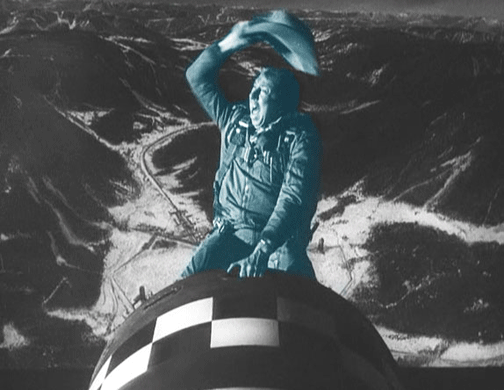
Helen Caldicott, the antinuclear activist, argued in the 1980s that male insecurity accounted for the cold war’s perilous spiral of arms. Her book? “Missile Envy.” Today, the psychosexual lens helps explain why North Korea, in addition to dire poverty and other crippling woes, faces international giggles over its inability to “get it up” — a popular turn of phrase among bloggers and some headline writers.
“Things like this never go away,” Spencer R. Weart, an atomic historian and director emeritus of the Center for History of Physics at the American Institute of Physics, said in an interview. “There’s little doubt that missiles are phallic symbols. Everybody agrees on that.”
On Friday, April 13, North Korea fired a big rocket on a mission to loft the nation’s first satellite into orbit. But it fell back to Earth with a splash……. The phallic symbolism once centered on success. Nowadays, at least with North Korea, it seems as if it’s more about dysfunction. http://www.nytimes.com/2012/05/06/sunday-review/north-koreas-fizzling-missiles.html?pagewanted=2&_r=1
Japanese do not trust the government about Fukushima radiation
 83% of Fukushima residents and 73% countrywide felt ‘greatly’ or ‘somewhat’ worried about radioactive contamination. More importantly, 70% of people in the three disaster hit prefectures , and 71% people countrywide , felt that government was “hiding” information.
This background of mistrust and deception, coming on top of enormous suffering, haunts the island nation, and especially the 350,000 people, who are living in camps unable to go back home to Fukushima.
Debris, radiation fear, mistrust still piling up Times of India, Subodh Varma, TNN | Mar 12, It is one year since the Great Eastern Japan Earthquake generated a tsunami that ripped apart the north-eastern sea-coast of Japan leaving over 20,000 people dead and the Fukushima nuclear power plant damaged. The triple disaster is estimated to have caused losses worth $235 billion according to World Bank.
Pictures circulated worldwide by visiting journalists show spectacular scenes of the massive clean up operation launched by the government of Japan. But the reality is numbingly grim. Goshi Honoso , Japan’s environment minister speaking at a routine press conference on February 21, urged local governments to help in cleaning up the debris left behind in Iwate, Miyagi and Fukushima prefectures, the three areas which bore the brunt of the tsunami, reports Kyodo news agency.
Then, he revealed jaw dropping numbers: an estimated 22.53 million tonnes of debris was created by the tsunami . Of this, only 1.18 million tonnes, that is, about 5% has been disposed of.The rest of it is simply bulldozed and piled into giant heaps, some as high as 20 meters high. ….
Safecast helps Japanese people to learn about radiation
Even if nuclear science and the impact of a nuclear meltdown on human health were simple to understand (and they are not), there is still the rather uneasy fact of dealing with a daily foe: invisible, odourless radiation.
Working with Safecast , which crowdsources radiation readings gathered by volunteers, and combines it with data from other outfits to give a clearer picture of what’s going on, Saito wanted people to be able to determine what was safe for them based on fact, not paranoia or nuclear industry propaganda.
Japan’s radiation: Ignorance isn’t bliss Feeling that officials aren’t doing enough, everyone, farmer to housewife, is learning about radiation contamination. Aljazeera, D. Parvaz 10 Mar 2012 Iitate Village, Japan – Second-generation farmer Muneo Kano has not been able to tend to his cattle or grow crops since the Daiichi nuclear power plant contaminated land, air and sea after being damaged by last year’s earthquake and tsunami.
He had his 11 cows scanned for radiation and sold them to another farm outside the radiation area. Kano’s own seven-hectare farm is 45km from the nuclear site, and the soil has been deemed too contaminated for farming.
And Kano has had to learn all about radiation and soil fast – he now tracks and maps radiation dips and spikes on an iPad, and has a series of maps he consults to check what authorities say about farms in the area.
Soil samples tested in Iitate still contain ten times the acceptable levels of the radioactive isotope Caesium-137 for agricultural soil, and the government has yet to remove the top layers of contaminated soil and wash the streets…. Continue reading
The mental health effects of the nuclear accident at Fukushima
they live in fear of the invisible threat in their midst. …. there is agreement that the Fukushima case is unprecedented.
conflicting information has left them confused and fearful about the future.
“We’re being treated like lab rats. The authorities should have told us as soon as they knew the reactors had melted down and helped us leave immediately
Fukushima residents plagued by health fears of nuclear threat in their midst A year after the power plant’s triple meltdown, conflicting official information leaves families confused and fearful for their future, Justin McCurry in Fukushima guardian.co.uk, 9 March 2012 The noise levels soar inside Fukushima city’s youth centre gymnasium as dozens of nursery school children are let loose on bouncy castles and pits filled with plastic balls.
The handful of teachers and volunteers on duty are in forgiving mood: for the past year, the Fukushima nuclear accident has robbed these children of the simple freedom to run around.
Instead, anxious parents and teachers have confined them to their homes and classrooms, while scientists debate the possible effects of prolonged exposure to low-level radiation on their health. Continue reading
Fukushima’s psychological trauma, as well as radiation cancer risk
Radiation is still leaking from the now-closed Fukushima Dai-ichi nuclear plant, though at a slower pace than it did in the weeks after the March 11 earthquake and tsunami. It’s not immediately fatal but could show up as cancer or other illnesses years later.
The uncertainty breeds fear.
 The [cancer] risk is cumulative. The radioactivity in one’s body builds up through various activities, including eating contaminated food every day or staying in a hot spot for an extended period.
Uncertain risks torment Japanese in nuclear zone, THE HINDU, 8 March 12, Yoshiko Ota keeps her windows shut. She never hangs her laundry outdoors. Fearful of birth defects, she warns her daughters — never have children.
This is life with radiation, nearly one year after a tsunami-hit nuclear power plant began spewing it into Ota’s neighbourhood, 60 km away. She’s so worried that she has broken out in hives.
“The government spokesman keeps saying there are no immediate health effects,” the 48-year-old nursery school worker says. “He’s not talking about 10 years or 20 years later. He must think the people of Fukushima are fools. It’s not really OK to live here,” she says. “But we live here.” Continue reading
The continuing human cost of Fukushima’s continuing radiation
Enduring the nuclear winter, Irish Times, 26 Dec 11“……..More than 100,000 people have been displaced due to radiation around Fukushima Prefecture, home to the crippled Daiichi nuclear plant. Those who stay keep children indoors for much of the day. Others, such as single mother Kanako Nishitaka from Fukushima City, have fled in an attempt to find normality in a different part of the country.
“My daughter is smaller and closer to the ground, so she absorbed more radiation,” she says. “They found caesium in her body. I was told it was about the same amount as people exposed to nuclear bomb tests. When I told my son we were moving, he cried his eyes out because he
didn’t want to leave his friends.”
Many doubt the immediate area around the plant will ever again be habitable. The Daiichi plant will become an unwanted monument to Japan’s nuclear ambitions for years to come, while the cost of dismantling its reactors and supporting its victims will haunt future
governments…….” http://www.irishtimes.com/newspaper/features/2011/1227/1224309514995.html
Iranian people are frightened of military strike, nuclear disaster
 Fear, speculation in Iran over military strike, By Parisa Hafezi and Hashem Kalantari TEHRAN Dec 8, 2011 (Reuters) – The threat of military strikes on Iran has upturned the quiet and comfortable lives once enjoyed by many Iranians, ushering in a new era of struggle and fear.
Like many Iranians, Maryam Sofi says the West and Iran are locked in a dangerous game. “I don’t think we can know just yet if war will break out, but I am concerned for my family and my country,” says university teacher Sofi, 42, a mother of two.
“I cannot sleep at night, thinking about destruction and bloodshed if Israel and America attack Iran.”
The United States and Israel have not ruled out military action against Iran’s nuclear facilities Continue reading
The lingering nuclear disaster of Chernobyl
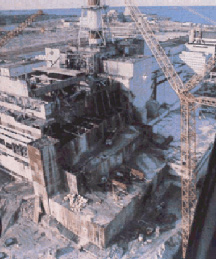 the global death toll by 2004 was closer to 1 million and said health effects included birth defects, pregnancy losses, accelerated aging, brain damage, heart, endocrine, kidney, gastrointestinal and lung diseases.
The physical and financial legacies of that disaster are obvious: a 30-km uninhabited ring around the Chernobyl plant, billions of dollars spent cleaning the region and a major new effort to drum up 600 million euros ($840 million) in fresh funds that Kiev says is needed to build a more durable casement over the stricken reactor. Continue reading
Iran and nuclear issues: diplomacy is the only answer
Let’s be clear: there is still no concrete evidence Iran is building a bomb.The latest report from the IAEA, despite its much discussed reference to “possible military dimensions to Iran’s nuclear programme”, also admits that its inspectors continue “to verify the non-diversion of declared nuclear material at [Iran’s] nuclear facilities”.
 The simple fact is there is no alternative to diplomacy, no matter how truculent or paranoid the leaders of Iran might seem to western eyes. If a nuclear-armed Iran is to be avoided, US politicians have to dial down their threatening rhetoric and tackle the very real and rational perception, on the streets of Tehran and Isfahan, of America and Israel as military threats to the Islamic Republic. Iranians are fearful, nervous, defensive – and, as the Middle East map shows, perhaps with good reason…
 If you lived in Iran, wouldn’t you want the nuclear bomb? Mehdi Hasan, guardian.co.uk, 19 Nov 11 The best way for the US to stop Iran developing nuclear weapons is to dial down the rhetoric and adopt some diplomacy
Imagine, for a moment, that you are an Iranian mullah. Sitting crosslegged on your Persian rug in Tehran, sipping a cup of chai, you glance up at the map of the Middle East on the wall. It is a disturbing image: your country, the Islamic Republic of Iran, is surrounded on all sides by virulent enemies and regional rivals, both nuclear and non-nuclear… Continue reading
1 This Month

of the week – Shut Down Drone Warfare!


Tell the Ukrainian Government to Drop Prosecution of Peace Activist Yurii Sheliazhenko

Petition to revoke the licensing of the Near Surface Nuclear Disposal Facility (NSDF) at Chalk River. https://www.ourcommons.ca/petitions/en/Petition/Details?Petition=e-7247
To see nuclear-related stories in greater depth and intensity – go to https://nuclearinformation.wordpress.com
-
Archives
- March 2026 (237)
- February 2026 (268)
- January 2026 (308)
- December 2025 (358)
- November 2025 (359)
- October 2025 (376)
- September 2025 (257)
- August 2025 (319)
- July 2025 (230)
- June 2025 (348)
- May 2025 (261)
- April 2025 (305)
-
Categories
- 1
- 1 NUCLEAR ISSUES
- business and costs
- climate change
- culture and arts
- ENERGY
- environment
- health
- history
- indigenous issues
- Legal
- marketing of nuclear
- media
- opposition to nuclear
- PERSONAL STORIES
- politics
- politics international
- Religion and ethics
- safety
- secrets,lies and civil liberties
- spinbuster
- technology
- Uranium
- wastes
- weapons and war
- Women
- 2 WORLD
- ACTION
- AFRICA
- Atrocities
- AUSTRALIA
- Christina's notes
- Christina's themes
- culture and arts
- Events
- Fuk 2022
- Fuk 2023
- Fukushima 2017
- Fukushima 2018
- fukushima 2019
- Fukushima 2020
- Fukushima 2021
- general
- global warming
- Humour (God we need it)
- Nuclear
- RARE EARTHS
- Reference
- resources – print
- Resources -audiovicual
- Weekly Newsletter
- World
- World Nuclear
- YouTube
-
RSS
Entries RSS
Comments RSS
 nuclear-news