New Book. The Scientists Who Alerted us to Radiation’s Dangers
March 29, 2024, https://www.ianfairlie.org/news/new-book-on-radiation-whistleblowers/
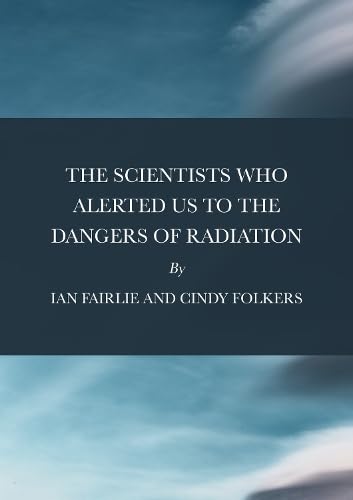
“The Scientists Who Alerted us to Radiation’s Dangers”, now published, contains the biographies of 23 radiation scientists who blew the whistle on radiation risks but were victimised by their governments and their nuclear establishments for doing so. Most of these scientists are no longer with us.
Recent epidemiology evidence clearly shows that the denials and obfuscations on radiation risks by successive governments and their nuclear establishment in the past on both sides of the Atlantic were and are wrong and the maligned scientists were right. Radiation is considerably more dangerous than official reports indicate, both in terms of the numerical magnitudes of cancer risks, but also in terms of the new types of diseases, apart from cancer, now shown to be radiogenic.
Written by a former UK government scientist Dr Ian Fairlie and a US anti-nuclear campaigner, Cindy Folkers, the book preserves the memories of the radiation scientists over the previous half-century or so, mostly from the US and UK.
They portray another 15 more recent radiation scientists who have followed in their footsteps but have managed to avoid being victimised. The book also lists over 150 activists in North America, Japan and Europe who have raised their voices against radiation risks and exposures over the past 30 to 40 years.
Radiation and radioactivity and their current risks are explained in easy-to-understand terms. All scientific statements are backed by evidence via hundreds of references, 14 Appendices, 6 Annexes, a glossary and an extensive bibliography.
This is an up-to-date reference book for all academics on the dangers and risks of radiation and radioactivity. The book also serves to help journalists and students counter the misrepresentations, incorrect assertions, wrong assumptions, and untruths about radiation risks often disseminated by the nuclear (power and weapons) establishments on both sides of the Atlantic.
Guam’s fight for radiation exposure compensation ‘far from over’
RNZ, By Mar-Vic Cagurangan, Pacific Island Times, 17 June 24
Despite nearly two decades of relentless lobbying, Guam’s hopes to finally be included in the Radiation Exposure Compensation Act (RECA) crumbled anew when the US House Republican leadership let the program expire without extension or expansion.
While the RECA extension and expansion proposal received bipartisan support in the US Senate, House Speaker Mike Johnson shunned its inclusion in the 2025 National Defense Authorization Act.
Guam Delegate James Moylan said the House Rules Committee ruled his amendment to incorporate the RECA expansion language into the defense spending policy bill “out of order”. As a result, the language didn’t make it to the floor for the House vote.
“The primary reason was that offset costs were not provided, which were estimated at around US$50 billion,” Moylan said in a statement.
“This mirrors the message from House leadership when referencing the RECA measure passed by the Senate, and many in the House, including myself, have been requesting for a vote to take place on the floor.”
RECA, the 1990 legislation that provided financial compensation for atomic test downwinders in three states and pre-1971 uranium miners, expired on June 10.
The expanded version would have added Guam, Colorado, Idaho, Missouri, Montana and New Mexico to the list of areas currently included in RECA, namely Nevada, Arizona and Utah.
“The Republican leadership’s policy is that any new spending measure must have an offset provided, to prevent uncontrolled spending or an unfunded mandate,” Moylan said.
“There are others who believe the measure should be passed regardless, and thus allow the executive branch to identify the funds. We believe a combination of both is needed.”
The Pacific Association of Radiation Survivors led by Robert Celestial has been fighting for Guam’s inclusion in RECA, backed by the National Research Council’s 2005 report declaring the territory’s eligibility for compensation under the program.
“Guam did receive measurable fallout from atmospheric testing of nuclear weapons in the Pacific between 1946 and 1958,” read the council’s report, which recommended that people living on island during that period be compensated under RECA “in a way similar to that of persons considered to be downwinders.”
Despite the latest defeat, Moylan said the advocacy “is far from over” and “building more support along the way”.
He is banking on the Senate to include the language in its version of the NDAA in the coming weeks………………………………………… more https://www.rnz.co.nz/international/pacific-news/519741/guam-s-fight-for-radiation-exposure-compensation-far-from-over
LANL plans to release highly radioactive tritium to prevent explosions. Will it just release danger in the air?

The venting may harm pregnant women and fetuses, advocates say. |
| SEARCHLIGHT NEW MEXICO, by Alicia Inez Guzmán 12 June 24 |
Last fall, the international community rose up in defense of the Pacific Ocean. Seafood and salt purveyors, public policy professors, scientists and environmentalists, all lambasted Japan’s release of radioactive wastewater from the disastrously damaged Fukushima Daiichi nuclear plant into the sea.
At the heart of the contention was tritium, an element that, by mass, is 150,000 times more radioactive than the plutonium used in the cores of nuclear weapons. Odorless and colorless, tritium — the radioactive form of hydrogen — combines with oxygen to form water. Just one teaspoon is enough to contaminate 100 billion gallons more water up to the U.S. drinking water standard, according to Arjun Makhijani, an expert on nuclear fusion and author of the monograph, “Exploring Tritium Dangers.”

What didn’t make international headlines — but was quietly taking place on the other side of the world — was Los Alamos National Laboratory’s own plans to vent the same radioactive substance into northern New Mexico’s mountain air. Japan’s releases would take place over three decades. LANL’s would include up to three times more tritium — and take place in a matter of days.
There is no hard timeline for the release, but if the plans are approved by the Environmental Protection Agency, LANL is looking at a period with “sufficiently warm weather,” a spokesperson from the National Nuclear Security Administration wrote by email. That could mean as soon as this summer.
Those controversial plans date back to 2016, when LANL discovered that a potentially explosive amount of hydrogen and oxygen was building up in four containers of tritium waste stored in a decades-old nuclear dump called Area G. The safest and most technically viable solution, the lab decided — and the best way to protect workers — would be to release the pressure and, with it, thousands of curies of tritium into the air.
When advocates caught wind of the venting in March 2020, Covid was in its earliest and most unnerving phase. Pueblo leaders, advocates and environmentalists wrote impassioned letters to the lab and the EPA, demanding that they change or, at the very least, postpone the release until after the pandemic. At the same time, Tewa Women United, a nonprofit founded by Indigenous women from northern New Mexico, issued its first online petition, focusing on tritium’s ability to cross the placental barrier and possibly harm pregnant women and their fetuses. Only after a maelstrom of opposition did the lab pause its plans and begin briefing local tribes and other concerned members of the community.
“We see this as a generational health issue,” said Kayleigh Warren, Tewa Women United’s food and seed sovereignty coordinator. “Just like all the issues of radioactive exposure are generational health issues.”
Last fall, the lab again sought the EPA’s consent. A second petition from Tewa Women United followed. Eight months later, the federal agency’s decision is still pending.
The NNSA, which oversees the health of America’s nuclear weapons stockpile from within the Department of Energy, declined Searchlight New Mexico’s requests for an interview.
The crux of the issue comes down to what is and isn’t known about the state of the containers’ contents. Computer modeling suggests they are pressurized and flammable, but the actual explosive risk has not been measured, the lab has conceded.
Critics have requested that the contents be sampled first to determine whether there is any explosive risk and whether venting is even needed. The EPA says that sampling would require going through the same red tape as venting. The lab, for its part, plans to sample and vent the contents in one fell swoop.
But why, critics wonder, are these containers in this state in the first place? Were they knowingly over packed and left for years to grow into ticking time bombs?
“I do not like the position we’re in,” James Kenney, cabinet secretary of the New Mexico Environment Department, told the Legislature’s Radioactive and Hazardous Materials Committee in 2020. The containers, he said, had been “neglected for so long by both DOE and the Environment Department” that NMED potentially faces a lose-lose situation: Vent the tritium drums and try to prevent the emissions from being released into the air or “run the risk of leaving those drums onsite knowing that they are pressurized and could rupture, meaning an uncontrolled amount of tritium would go out.”
Venting and vexing
State and federal documents paint a kind of chicken-and-egg dilemma. The containers can’t be moved until the pressure is vented. But the movement itself may cause more pressure to build up, requiring a second, third or even fourth venting……………………………………………………………………………………………………………………
Tritium 101
Plutonium and uranium are familiar to most people, if by name only. But few know anything at all about tritium — a radioactive isotope of hydrogen that is used to make watch dials and EXIT signs glow bright neon. Tritium’s other, lesser-known use is as a “boost gas,” which, when inserted into the hollow core of a plutonium pit, amplifies a nuclear weapon’s yield. Globally, hundreds of atmospheric weapons tests dispersed tritium into the atmosphere, steeping rain, sea, and groundwater with the element and, ultimately, lacing sediment worldwide.
Tritium is widely produced at nuclear reactors and is today tested, handled and routinely released at Los Alamos National Laboratory.
Criticisms of this venting have always centered on two of the element’s key characteristics: First, it travels “tens to hundreds of miles,” according to lab documents. Second, when tritium is in the form of water, it becomes omnipresent and easy for bodies to absorb.
“Tritium is unique in this,” wrote Makhijani. “It makes water, the stuff of life, most of the mass of living beings, radioactive.”
Years of LANL reports depict tritium’s ubiquity in the lands and ecosystem within its bounds, a palimpsest of radioactive decay. This is measured in curies, a basic unit that counts the rate of decay second by second.
The lab’s first environmental impact statement, published in 1979, estimated that it had buried close to 262,000 curies of tritium at Area G and released tens of thousands more into the air from various stacks over the decades. The lab had two major accidental releases of tritium around the same time — 22,000 curies in the summer of 1976 and nearly 31,000 curies in the fall of 1977.
Today, trees have taken it into their root systems on Area G’s southeast edge. Rodents scurrying in and out of waste shafts are riddled with the substance, owing to tritium vapors from years past. A barn owl ate those rodents and had 740 times more tritium concentration in its body than the U.S. drinking water standard, the common reference value for indicating tritium contamination. The lab’s honeybee colonies — kept to determine how radioactive contaminants are absorbed — produced tritiated honey up to 380 times more concentrated than the drinking water standard, reports show.
The EPA set the current standard for radioactive emissions at DOE facilities in 1989, but that didn’t stop the lab from releasing thousands of curies of tritium into the air shortly afterward. In 1991, the EPA issued a notice of non-compliance to the lab for not calculating how much of a radiation dose the public received. Another notice followed in 1992.
Concerned Citizens for Nuclear Safety filed a lawsuit two years later alleging that the DOE hadn’t properly monitored radioactive emissions, as required by the Clean Air Act. At the time, a former lab safety officer, Luke Bartlein, observed what he described in an affidavit as a “pattern and practice of deception at LANL with respect to the radionuclide air monitoring system.” It was routine for lab staffers and management to vent glove boxes and other materials contaminated with tritium outside so that the contamination would deliberately “not register” on the stack monitors, he recounted, leading to false emissions reports.
The lab settled in 1997; a consent decree followed and would stay in effect until 2003. The lab says it has maintained low annual emissions ever since…………………………………………………………………………………………………………………………………….
In 1999, Makhijani and more than 100 scientists, activists and physicians across the country and worldwide signed a letter to the National Academy of Sciences. Their ask? To evaluate how radionuclides that cross the placental boundary, including tritium, impact the fetus, a request Makhijani renewed in 2022.
As he put it, tritium — the “most ubiquitous pollutant from both nuclear power and nuclear weapons” — has largely escaped regulatory and scientific scrutiny when it comes to matters of pregnancy.
Cindy Folkers, the radiation and health hazard specialist at Beyond Nuclear, a national advocacy organization, believes the reason is rooted in the radiation establishment’s fear of liability. “You get layers and layers and layers and layers of denial.”
The scant research that does exist comes from pregnant women who survived atomic bombs in Hiroshima and Nagasaki. In 1986, the International Commission on Radiation Protection concluded that exposing a fetus to ionizing radiation, the kind that tritium emits, has a “damaging effect…upon the development of the embryonic and fetal brain.” The area most at risk of harm, it went on, is the forebrain, which controls complex and fundamental functions like thinking and processing information, eating, sleeping and reproduction.
Ionizing radiation damages the cell in two ways. On the one hand, it breaks apart the building blocks from which humans are made, causing rifts in DNA. On the other, it fundamentally changes the chemistry of the cell, breaking apart its water molecules and upsetting its metabolism.
That’s what makes it different from, say, an X-ray, Folkers said. “A machine can be shut off,” but “a radioactive particle that’s inside your body will continue irradiating you.” For a pregnant woman, this adds up to “cumulative biological damage,” the kind that cuts across generations.
“We’re dealing with a life cycle,” Folkers said. “And females are an integral part of that life cycle. Not only are they more damaged by radioactivity, and their risks are higher for cancer, but they are also carrying in them the future generations. So when you’re dealing with a female baby who’s developing in the womb, you are dealing with that child’s children at the very least.”
In other words, a mother is like a Russian nesting doll. She holds a fetus and that fetus, if a female, holds all future eggs. Exposure to her is exposure to future generations. https://searchlightnm.org/lanl-plans-to-release-highly-radioactive-tritium-to-prevent-explosions-will-it-just-release-danger-in-the-air/?utm_source=Searchlight+New+Mexico&utm_campaign=08e25288bd-6%2F12%2F2024+-+LANL+Tritium+Release&utm_medium=email&utm_term=0_8e05fb0467-08e25288bd-395610620&mc_cid=08e25288bd&mc_eid=a70296a261
Radioactive Tritium from Monticello Reactor Leaked to the Mississippi River

BY JOHN LAFORGE, https://www.counterpunch.org/2024/06/10/radioactive-tritium-from-monticello-reactor-leaked-to-the-mississippi-river/
The US Nuclear Regulatory Commission (NRC) has formally apologized for multiple false assurances from its staff that a major leak of radioactive tritium from Xcel Energy’s Monticello nuclear reactor had not reached the Mississippi River — the drinking water source for 20 million people, including, 3.7 million in the Minneapolis/St. Paul metro area.
In opening remarks to an NRC-sponsored public hearing at the Monticello (Minn.) Community Center May 15, 2024, senior NRC Branch 1 Environmental Project Manager Stephen Koenick, made jaws drop around the room when he quashed and corrected the NRC staff’s oft-repeated claims that 820,000 gallons of radioactive tritium-contaminated cooling water, that leaked from the 53-year-old reactor, had not been detected in the Mississippi.
Koenick said, “I would like to take a moment to address and clarify some miscommunication regarding the presence of detectable tritium in the Mississippi River. I know we … reported there [was] no indication [that the] tritium leak made it to the Mississippi. However, … in our Draft Environmental Impact Statement we … conclude there were some very low concentrations of tritium in the Mississippi River.” In this extremely rare and incriminating confession, Koenick went on: “So we apologize for this miscommunication.” (Transcribed from cellphone recording of the hearing.)
This official U-turn and apology from NRC managerial staff over its use of routinized PR-driven claims of “no danger to the public” — in this case regarding a major radioactive leak — should ravage the credibility an arguably industry-captured commission. Nothing it says should be taken at face value.
The NRC’s about-face nullifies months of repeatedly saying to the press, which then duly reported, that no detectable tritium had been found by Xcel’s testing of the Mississippi River. On March 18, 2023, NRC spokesperson Victoria Mitlyng even told the press, “There is no pathway for the tritium to get into drinking water.” Absurdly, even an official NRC email message sent to Nukewatch the same evening of the May 15 public hearing, states: “As far as the Mississippi River, samples taken from the river so far have not shown increased tritium concentrations.”
A week before the formal disavowal, on May 7, 2024, NRC presenters at an NRC-sponsored public hearing, held in the same Monticello community center, repeated on the record that Xcel had found “no detectable levels” of tritium in the Mississippi. Since the massive leak was disclosed in March 2023, Xcel has claimed, as it does in a company website posting (“Monticello Groundwater: Progress on the recovery and treatment of tritium in the groundwater….as of Nov. 18, 2023”): “We test the river regularly for tritium and have not found any, indicating that if it is present, it is at such low levels, and is dispersing so quickly, that it cannot be detected by highly sensitive instruments.”
Xcel’s tritium contamination of the Mississippi has been confirmed by the NRC’s April 2024 “draft Site-specific Environmental Impact Statement” (Draft EIS) regarding Xcel’s request for an extended operating license, and by Xcel’s own 2023 “Annual Radioactive Effluent Release Report”, which says on page 2: “Tritium was detected in newly developed MW-33A [monitoring well-33A] and MW-37A which resulted in MNGP [Monticello Nuclear Generating Plant] reporting an abnormal discharge to the Mississippi River.” Monitoring wells 33A and 37A are the two closest to the river.
Xcel has now, and for a second time, applied to the NRC for an extended operating license which, if granted, would allow the achey, breaky Monticello jalopy to run until the age of 80. No power reactor on earth has ever done so. Such official lying and its protection of corporate contamination of drinking water ought to be scandal enough to cancel any consideration of Xcel’s license extension. Public denunciations or “comments” on the NRC’s Draft EIS on the application are being accepted until June 25. To send yours, see: www.nukewatchinfo.org.
John LaForge is a Co-director of Nukewatch, a peace and environmental justice group in Wisconsin, and edits its newsletter.
Samsung workers treated for exposure to radiation in South Korea

Workplace safety org identifies 26 hazards in the chipmaking process
Simon Sharwood, Thu 30 May 2024 https://www.theregister.com/2024/05/30/samsung_giheung_radiation_exposure/
Two workers at a Samsung Electronics chip plant in South Korea have been treated for exposure to radiation.
A notice posted on Wednesday by South Korea’s Nuclear Safety and Security Commission revealed that it is investigating an incident that occurred May 27 at Samsung’s Giheung campus.
The notice states that two workers’ fingers were exposed to radiation, leading to their hospitalization. Abnormal symptoms have been detected in the pair, but the Commission revealed their blood tests have delivered normal results and no chromosomal abnormalities have been detected.
The Nuclear Commission points out that Samsung holds a license to employ X-ray fluorescence, a non-destructive technique used to analyze semiconductor wafers.
Local media report the workers reported swollen fingers and red spots on their hands, and that Samsung immediately offered appropriate assistance and reported the situation to the Commission.
Just what went wrong has not been revealed. The regulator also plans further investigation of Samsung’s Giheung campus.
The campus is a sprawling affair, located around 40km south of South Korea’s capital, Seoul. In 2022, Samsung announced it would host a new semiconductor research and development facility, alongside the existing manufacturing center.
Samsung operates at least three foundries in its home country, and fifteen R&D centers.
Even if this incident disrupts the Giheung facility it may not, therefore, have wide supply chain implications. Indeed, at the time of writing Samsung appears not to have made any public statements about disruptions to its operations as a result of this incident.
It does, however, highlight the complex and risky processes involved in production of advanced semiconductors. According to the US Occupational Safety and Health Administration, the industry presents at least 26 classes of known hazards.
OSHA’s guidance suggests X-ray exposure is a risk during mask alignment and photo exposure – a part of the semiconductor manufacturing process during which patterns are etched onto a silicon substrate. ®
Speaker Johnson, hear the prayers of nuclear weapons testing victims. It’s time to act.
2 B1 Radiation Exposure Compensation for impacted downwind communities is expiring Friday. Speaker Johnson, bring it to a vote.
James Moylan and Leslie Begay, https://www.usatoday.com/story/opinion/2024/06/04/congress-radiation-exposure-compensation-act-extension/73910553007/
The 20th century saw no shortage of patriotic Americans stepping up to serve our nation. We both know this well: As young men, we served in the U.S. military – Mr. Leslie Begay as a combat Marine in Vietnam, and Rep. James Moylan as a veteran of the Army. As a country, it is our solemn responsibility to support those who have made sacrifices on our behalf.
We should also honor many thousands of Americans who did not enlist yet also sacrificed for our national security.
These patriots of the Manhattan Project and Cold War were unknowingly poisoned by their own government in the creation of our nuclear arsenal, and they deserve our support. The Radiation Exposure Compensation Act (RECA), which aims to address those harms, will expire Friday unless Congress acts immediately.
This is urgent: Congress has only a few working days left to act before RECA expires.
As we mined uranium and built and tested nuclear weapons that defended our country, we exposed countless service members and communities across the country to dangerous, often deadly levels of radiation without their knowledge or consent. In some cases, we’re only just learning the full extent of that harm, with impacted Americans succumbing to new cancers every day.
RECA was created in 1990 to provide an apology and a small reimbursement for critical medical care for some victims. It is a valuable program, but it has excluded far too many Americans who were harmed, and nearly 35 years later, it is still woefully inadequate despite years of studies and reports proving the need for improvement.
In Guam, for example, a 2005 report determined that residents during nuclear testing in the Pacific received substantial unwarranted radiation and should be eligible for RECA. Yet nearly 20 years later, they are still awaiting recognition and support.
Additionally, uranium workers are only eligible for RECA if they were employed through 1971, despite a flood of studies showing that they faced just as grave health impacts after that year. This means that patriotic Americans like Mr. Begay have been suffering for decades with no avenues for support.
Uranium miner lost both lungs due to radiation exposure
Mr. Begay was born and raised in the Navajo Nation. After serving in Vietnam, he came home and spent eight years mining the uranium that built our nuclear weapons. He was given a hard hat and no mask, was never told he was being poisoned, and he ended up losing both lungs due to radiation exposure. Given just a month to live, he received a double lung transplant. As he recovered, he decided to dedicate his remaining years to helping his people and improving RECA.
As lucky as he feels to have a new set of lungs, his health issues are far from over. With no cancer center or veterans’ hospital on the Navajo Nation, he had to move away from his wife and grandkids to live near a hospital in Mesa, Arizona, so that he could attend almost weekly medical appointments. He is on 22 medications that he’ll take for the rest of his life – and they don’t come cheap.
He has had to sell all his cattle to pay for these expenses, and sometimes he and his wife don’t know where the money will come from to cover his next medical bill. Even worse – he’s just had a biopsy because of a possible new cancer diagnosis.
Oppenheimer nuclear fallout still kills:Time is running out for American victims of nuclear tests. Congress must do what’s right.
The people of Guam and miners like Mr. Begay are far from alone.
Across the West, communities living downwind of nuclear testing – including those downwind of the very first nuclear test in New Mexico – were excluded from RECA seemingly arbitrarily.
Victims of illegally stored nuclear waste in Missouri have also suffered from devastating illnesses, with nowhere to turn.
US creation of nuclear arsenal sacrificed our own people
The United States asked its people for a great deal of sacrifice to win the Cold War – some willingly as part of their service and many thousands unknowingly.
We have a duty now to take care of everyone sickened by their own government in the creation of our nuclear arsenal. It’s long past time that Congress does its job and improves RECA so these patriotic Americans can get the recognition and help they so richly deserve.
Oscar honors ‘Oppenheimer,’but what about Americans still suffering from nuke tests?
Some have called for a plain extension of RECA as is, but we know that would only be an extension of injustice. We must not blindly extend such an obviously flawed program, knowing that it would leave so many Americans behind.
On May 16, we stood together with dozens of advocates who had traveled to Washington, D.C., from across America to fight for RECA. They traveled on behalf of their loved ones – many of whom are sick and dying – and pleaded with Congress: Don’t let us go home without good news; don’t keep letting our people die.
In March, armed with new information about the true scope of Americans harmed by our Cold War nuclear program, the Senate passed a bill with overwhelming bipartisan support to hugely improve RECA.
Now, that bill is sitting on House Speaker Mike Johnson’s desk waiting to be brought to a vote.
Speaker Johnson: Please hear our prayers. It’s time to finally support these patriots, harmed by their own government, and get them the justice they deserve.
Rep. James Moylan, Guam’s delegate in the 118th Congress, is a lead sponsor of the Radiation Exposure Compensation Act Amendments of 2023. He is an Army Veteran and a native of Guam from the village of Tumon.
Mr. Leslie Begay is an enrolled member of the Navajo Nation and a resident of Coyote Canyon, New Mexico. He is a post-1971 uranium miner, Vietnam War veteran and volunteer member of the Navajo Uranium Radiation Victims Committee. He previously worked at Fort Wingate Army Depot.
Heatwaves increase risk of early births and poorer health in babies, study finds

Research that looked at 53 million births says Black and Hispanic mothers and those in lower socioeconomic groups most at risk
Heatwaves increase rates of preterm births, which can lead to poorer
health outcomes for babies and impact their long-term health, a new study
found. Black and Hispanic mothers, as well as those in lower socioeconomic
groups, are particularly at risk of delivering early following heat waves.
Extreme heat events are happening more frequently, lasting longer, and
increasing in intensity due to the climate crisis. Last year saw
record-breaking temperatures, with July 2023 bringing about the hottest day
ever recorded for four days in a row globally. Additionally, pregnant
people are among the most vulnerable to heat stress and are more likely to
experience heat stroke and heat exhaustion, according to the CDC. This can
adversely affect their unborn babies.
Guardian 29th May 2024
https://www.theguardian.com/lifeandstyle/article/2024/may/29/heat-waves-preterm-births-babies-study
Medical Isotopes and Nuclear Power

| Radiation and medical isotopes are routinely and increasingly used to diagnose and treat many diseases. However, these medical uses do not depend on nuclear power reactors in any essential way. |
No doubt some medical isotopes can be produced in a nuclear reactor, but it doesn’t have to be a power reactor. Even if all the power reactors were shut down, the supply of medical isotopes would still be met by traditional alternative means.
From the beginning, all medical needs for artificial (human-made) isotopes have been met by particle accelerators and a handful of research reactors scattered around the world, including those in Canada.
Nevertheless, nuclear proponents argue nowadays that new nuclear power stations are “necessary” to ensure that the medical profession has all the diagnostic and therapeutic tools it needs. It’s a new sales pitch, and it’s not true.
For starters, X-rays and CT scans have nothing to do with nuclear reactors. Moreover, for the last 125 years – and for decades before the first power reactors were built in the late 1950s – medical isotopes have been (a) extracted from natural sources (e.g. radium needles, radon seeds), (b) produced in particle accelerators like cyclotrons (e.g. for PET scans), or (c) harvested from “target materials” irradiated in research reactors (e.g. technetium-99m).
None of these modes of production depend on nuclear power reactors, which are designed specifically to produce bulk electricity. Anything non-electrical is an afterthought.
It is true that one isotope, cobalt-60, has been produced in Canadian power reactors for both medical and industrial use, but the direct medical usage could be fully satisfied by research reactors.
None of these modes of production depend on nuclear power reactors, which are designed specifically to produce bulk electricity. Anything non-electrical is an afterthought.
It is true that one isotope, cobalt-60, has been produced in Canadian power reactors for both medical and industrial use, but the direct medical usage could be fully satisfied by research reactors.
To improve its public relations image, the nuclear industry has seen fit to diversify its operations by beginning to produce medical isotopes in power reactors, implying that it is providing an indispensable service to the medical community. Again, untrue.
For further information, consult this FACT SHEET
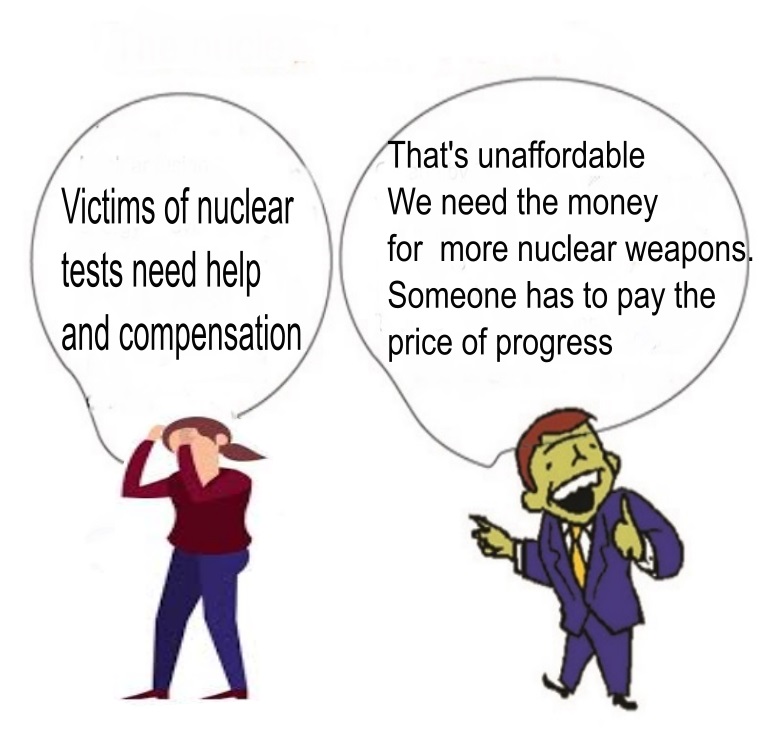
Radiation Exposure Compensation Act (RECA) set to expire soon, while many nuclear test victims await justice .
The defense spending bill for 2024 was signed into law on Dec. 22 by Biden, but the RECA expansion was cut from the final bill before it landed on his desk.
Without an extension, RECA is set to expire in June, and the deadline for claims to be postmarked is June 10, 2024, according to the DOJ.
‘Time is running out’
by beyondnuclearinternational by Shondiin Silversmith, Arizona Mirror
Navajo Nation urges Congress to act on RECA expansion bill
Kathleen Tsosie remembers seeing her dad come home every evening with his clothes covered in dirt. As a little girl, she never questioned why, and she was often more excited to see if he had any leftover food in his lunchbox.
“We used to go through his lunch and eat whatever he didn’t eat,” Tsosie said, recalling when she was around 4 years old. “And he always had cold water that came back from the mountain.”
Tsosie’s father, grandfather, and uncles all worked as uranium miners on the Navajo Nation near Cove, Arizona, from the 1940s to the 1960s. The dirt Tsosie’s father was caked in when he arrived home came from the mines, and the cold water he brought back was from the nearby springs.
Tsosie grew up in Cove, a remote community located at the foothills of the Chuska mountain range in northeastern Arizona. There are 56 abandoned mines located in the Cove area, according to the Environmental Protection Agency.
In the late 1960s, Tsosie said her grandfather started getting sick. She remembers herding sheep with him and how he would often rest under a tree, asking her to push on his chest because it hurt.
Tsosie said she was about 7 years old when her uncles took her grandfather to the hospital. At the time, she didn’t know why he was sick, but later on, she learned he had cancer. Her grandfather died in October 1967.
Over a decade later, Tsosie’s father also started getting sick. She remembers when he came to visit her in Wyoming; she was rubbing his shoulders when she felt a lump. She told him to get it checked out because he complained about how painful it was.
Her father was diagnosed with cancer in 1984 and went through treatments, but died in April 1985.
“When my dad passed away, everybody knew it was from the mine,” Tsosie said. He was just the latest on a long list of Navajo men from her community who worked in the uranium mines and ended up getting sick and passing away.
Because of that history, Tsosie became an advocate for issues related to downwinders and uranium mine workers from the Navajo Nation, including the continuation of the Radiation Exposure Compensation Act.
The Radiation Exposure Compensation Act, or RECA, provides a program that compensates individuals who become ill because of exposure to radiation from the United States’ development and testing of nuclear weapons.
RECA was initially set to expire in 2022, but President Joe Biden signed a measure extending the program for two more years. Now, it’s set to expire in less than a month…………………………………………………………………………………
In July 2023, the U.S. Senate voted to expand and extend the RECA program, and it was attached as an amendment to the National Defense Authorization Act, which funds the Department of Defense.
It could have extended health care coverage and compensation to more uranium industry workers and “downwinders” exposed to radiation in several new regions — Colorado, Missouri, New Mexico, Idaho, Montana, and Guam — and expanded coverage to new parts of Arizona, Nevada and Utah.
The defense spending bill for 2024 was signed into law on Dec. 22 by Biden, but the RECA expansion was cut from the final bill before it landed on his desk.
When she heard that the Radiation Exposure Compensation Act amendments failed to pass, Tsosie said it really impacted her, and she cried because so many people deserve that funding.
“I know what it feels like. I know what it feels like to suffer,” she said.
Without an extension, RECA is set to expire in June, and the deadline for claims to be postmarked is June 10, 2024, according to the DOJ.
The sunset of the Radiation Exposure Compensation Act is approaching fast, and leaders from the Navajo Nation are urging Congress to act on the expansion bill that has been waiting for the U.S. House of Representatives to take it up for more than two months.
“Time is running out,” Justin Ahasteen, the executive director of the Navajo Nation Washington Office, said in a press release.
“Every day without these amendments means another day without justice for our people,” he added. “We urge Congress to stand on the right side of history and pass these crucial amendments.”
Republican Sen. Josh Hawley from Missouri introduced S. 3853 – The Radiation Exposure Compensation Reauthorization Act, which funds RECA past its June sunset date for another six years.
The bill passed through the U.S. Senate with a bipartisan 69-30 vote on March 7. But since being sent to the House on March 11, the bill hasn’t moved.
The RECA expansion bill would include more communities downwind of nuclear test sites in the United States and Guam. It would extend eligibility for uranium workers to include those who worked after 1971. Communities harmed by radioactive waste from the tests could apply for the program, and expansion would also boost compensation payments to account for inflation.
“The Navajo Nation calls for immediate passage of S. 3853,” Ahasteen said in a press release. “This is to ensure that justice is no longer delayed for the Navajo people and other affected communities.”
Ahasteen told the Arizona Mirror in an interview that congressional leaders holding the bill back due to the program’s expense is not a good enough reason not to pass it.
“They keep referencing the cost and saying it’s too expensive,” he said. But, he explained, the RECA expansion is only a sliver of U.S. spending on foreign aid or nuclear development.
And it shouldn’t even be a matter of cost, Ahasteen said, because people have given their lives and their health in the interest of national security.
“The bill has been paid with the lives and the health of the American workers who were exposed unjustly to radiation because the federal government kept it from them and they lied about the dangers,” he said.
From 1945 to 1992, the U.S. conducted a total of 1,030 nuclear tests, according to the Arms Control Association.
Many were conducted at the Nevada Test Site, with 928 nuclear tests conducted at the site between 1951 and 1992, according to the Nevada National Security Site. About 100 of those were atmospheric tests, and the rest were underground detonations.
According to the United Nations Scientific Committee on the Effects of Atomic Radiation, atmospheric tests involved unrestrained releases of radioactive materials directly into the environment, causing the largest collective dose of radiation thus far from man-made radiation sources………………………………………………………………………
The legacy of uranium mining has impacted the Navajo Nation for decades, from abandoned mines to contaminated waste disposal.
From 1944 to 1986, nearly 30 million tons of uranium ore were extracted from Navajo lands, according to the EPA, and hundreds of Navajo people worked in the mines, often living and raising families in close proximity to the mines and mills.
Ahasteen said those numbers show exactly how large the uranium operations were on the Navajo Nation and the impact it would have on the Navajo people.
“There are photos on record to show Navajo people being exploited, not given any proper protective equipment, but (the federal government) knew about the dangers of radiation since the ’40s,” Ahasteen said. “They were given a shovel and a hard hat, and they were told: Go to work. You’ll earn lots of money. You’ll have a nice life, and we did that, but it didn’t work so well for us.”……………………………………………………………………………………………………………………
WHAT YOU CAN STILL DO BEFORE JUNE 7TH
Urge your U.S. Representative to push for a House floor vote on, and to vote in favor of, extending/expanding RECA, the Radiation Exposure Compensation Act. And urge House Speaker Mike Johnson to allow the vote on the House floor, on the Hawley version of RECA (the most expansive). There is likely enough support to pass the bill. Johnson’s phone is: 202-225-4000.
Shondiin Silversmith is an award-winning Native journalist based on the Navajo Nation. Silversmith has covered Indigenous communities for more than 10 years, and covers Arizona’s 22 federally recognized sovereign tribal nations, as well as national and international Indigenous issues. This article was first published by the Arizona Mirror, https://beyondnuclearinternational.org/2024/05/26/time-is-running-out-2/
New Brunswick’s nuclear reactor emits high levels of radioactivity, increasing cancer risk.
Expert report for the Passamaquoddy Recognition Group
by Ian Fairlie, May 9, 2022, https://nbmediacoop.org/2022/05/09/new-brunswicks-nuclear-reactor-emits-high-levels-of-radioactivity-increasing-cancer-risk/
New Brunswick Power’s Point Lepreau nuclear reactor on the Bay of Fundy emits much higher levels of radioactive tritium than other nuclear reactors in Canada. Ingesting and breathing in tritium increases the risk of cancer in humans and other animals.
Tritium is the radioactive isotope of hydrogen, and international agencies recognise it as an unusually hazardous radioactive substance. One of its properties is to bind with carbohydrates, proteins and lipids in cells to form organically-bound tritium (OBT) which sticks inside the body for years.
These alarming findings will be tabled on May 10 by the Passamaquoddy Recognition Group in Saint John during Canadian Nuclear Safety Commission (CNSC) hearings on the application by NB Power for an unprecedented 25-year extension of its licence to operate its Lepreau reactor. The CNSC is the regulator of all nuclear activities in Canada.
Although industry scientists in Canada claim tritium has low toxicity and does not bioaccumulate, official reports show tritium is twice to three times more radiotoxic compared to external gamma radiation. And many studies indicate OBT levels increase the longer people are exposed to tritiated water.
Considerable evidence exists – from many epidemiology studies around the world, that children who live near nuclear plants emitting large amounts of tritium are more likely to get leukemia than those living further away. References to all these studies are included in the appendix to the CNSC submission by the Passamaquoddy Recognition Group.
The problem is that Canadian CANDU heavy water reactors emit much larger amounts of tritium than US or European reactors, so the health effects here are very likely to be greater. However the industry and CNSC avoid any studies that could spell trouble for them.
Mainly because of pressure from Canada’s powerful nuclear lobby, safety levels for tritium here are very lax compared to other countries. For example, acceptable levels for tritium in drinking water in Canada are 70 times those in the EU, and approximately 400 times higher than in some US states.
High emissions
In my expert report for the Passamaquoddy Recognition Group, I found that annual tritium releases from the Point Lepreau reactor are very large in comparison with all other nuclear reactors in Canada and indeed in the world.
In 2020, its tritium air emissions were 290 terabecquerels, that’s 290,000,000,000,000 becquerels – which is a huge amount of radioactivity. Worryingly, these releases have been increasing in recent years.
It is well understood that the older a reactor the higher the tritium levels in its moderator and cooling circuits. As well, various operations and maintenance activities increase tritium releases. Without a means of removing tritium, its inventory and releases will continue to increase each year.
These worries are exacerbated by NB Power’s proposed 25-year relicensing from 2022 to 2047. The reactor started operations 40 years ago in 1982 (with retubing between 2008 and 2012). The CNSC has recommended the NB Power nuclear facility is re-licensed to operate for another 20 years to 2042, see the CNSC’s response.
However, this would mean that Lepreau would have operated for 60 years which is unacceptably long as it was originally designed with a 30-year lifespan. This is arguably an unsafe proposal and it flies in the face of the Precautionary Principle, which states that “complete evidence of a potential risk is not required before action is taken to mitigate the effects of the potential risk.”
How does tritium get inside people?
When tritium is emitted from Point Lepreau, it travels via multiple environmental pathways to humans including through air. It cycles in the environment, because tritium atoms swap quickly with stable hydrogen atoms in the biosphere and hydrosphere.
This means that all open water surfaces, rivers, streams and all biota, local crops and foods in open-air markets, animals and humans will become contaminated by tritiated moisture up to ambient levels – that is, up to the air concentrations of the emitted tritium.
According to New Brunswick Power’s environmental assessments, local residents will receive radiation exposures from these tritium emissions, from the tritium in food and water, from the tritium breathed in, and from the tritium absorbed through their skin.
For example, NB Power already admits that people are exposed to radiation from tritiated water vapour in the air, drinking water in local wells, diving for sea urchins, harvesting clams and dulse, and eating local seafood. But local people will also get doses from eating wild foods such as mushrooms, berries and other fruits, gardening vegetables, honey hives, and the harvesting of seaweed for fertiliser.
These are all important matters for Indigenous peoples who take pride in living close to their lands and sea. The continued radioactive poisoning of their lands and sea is deeply offensive to them.
These intakes increase their risk of getting cancer and other radiogenic diseases, but NB Power does not measure tritium levels in people near its Lepreau reactor, nor does it carry out epidemiology studies into ill-health levels in nearby populations.
Nevertheless epidemiology studies at other Canadian facilities which emit tritium all indicate increases in cancer and congenital malformations. In addition, evidence from cell and animal studies, and radiation biology theory, indicates radiogenic effects occur from tritium exposures.
New studies show increased risks
Recent, large, statistically powerful, epidemiology studies of nuclear workers in UK, US and France have increased our perception of the radiation risks of low-level radiation, including tritium. The new studies show a 47% increase in solid cancers and a 580% increase in leukemias. This evidence is directly applicable to tritium’s radiation exposures from Point Lepreau.
These high and increasing tritium emissions, high levels of radioactive contamination, and increased estimates of cancer risk together mean that tritium poses worrying health risks to workers and to people near Lepreau and in the direction of the prevailing winds, including in Saint John.
There is already a long history of NB Power ignoring tritium dangers at Lepreau.
The conclusion from my report for the Passamaquoddy Recognition Group, is that Point Lepreau should not be granted any extension of its operating license, far less a 20 year one. As shown by experience around the world, much safer, healthier, less expensive alternatives exist for generation electricity, such as wind turbines, solar panels and tidal schemes.
Dr. Ian Fairlie is an independent citizen scientist based in the UK who has specialised on radioactivity in the environment with degrees in chemistry and radiation biology. His doctoral studies at Imperial College, UK and Princeton University, US examined nuclear waste technologies. One of his areas of expertise is the dosimetric impacts of nuclear reactor emissions, in particular tritium.
RADIATION. Euratom Treaty requires continuous monitoring radioactive discharges from nuclear facilities
Study on monitoring of radioactive discharges from nuclear facilities in
the EU. Chapter three of Title II of the Euratom Treaty, Article 35 states:
‘Each Member State shall establish the facilities necessary to carry out
continuous monitoring of the level of radioactivity in the air, water and
soil and to ensure compliance with the basic standards’.
This study focuses on the facilities that have the authorisation to discharge a
significant amount of radioactivity in the environment. With this
authorisation, the nuclear facilities are required to have technical
systems in place to carry out continuous or batch-wise monitoring of these
discharges.
During this study, 11 nuclear facilities in nine Member States
(covering nuclear power plants with different technologies, a spent fuel
reprocessing plant, medical isotope production facilities, and a nuclear
plant under dismantling) were visited for a detailed assessment of the
monitoring of liquid and gaseous radioactive discharge systems.
EU (accessed) 15th May 2024
Canada’s federal budget -calls nuclear energy “clean” – the height of absurdity!

Nuclear energy never will be ‘clean,’ write Jones and Edwards.
THE HILL TIMES | MONDAY, MAY 6, 2024
The 2024 federal budget contains many references to nuclear energy as
a “clean” source of electricity. In our view, referring to
nuclear electricity as “clean” is the height of absurdity.
The nuclear fuel chain begins with the mining of uranium from rock
underground where, without human intervention, it would remain safely
locked away from the biosphere. Uranium has many natural radioactive
byproducts, including radium, radon, and polonium-210 that are
discarded in voluminous sandlike “tailings” at uranium mine sites.
These materials are responsible for countless thousands of deaths in
North America alone. Canada has accumulated 220 million tonnes of
these indestructible radioactive mining wastes, easily dispersed by
wind and rain over the next 100,000 years.
Inside a nuclear reactor, uranium atoms are split to produce energy.
The atomic fragments are hundreds of newly created radioactive
poisons, most of them never found in nature before 1940. They make
used fuel millions of times more radioactive than the original
uranium. One used fuel bundle, freshly discharged, will deliver a
lethal dose of radiation in seconds to any unshielded human nearby.
There are hundreds of thousands of tonnes of waste irradiated fuel
bundles worldwide and the quantity grows larger each year. There is no
operating repository anywhere in the world for such wastes, but there
are several failed repositories.
Radioactive waste has the “reverse midas touch” turning everything
it touches into more radioactive waste. This includes the nuclear
vessel in which the waste is created, and everything that comes in
contact with the cooling water needed to prevent the waste from
melting down. Containers for radioactive waste become radioactive
waste themselves. All radioactive waste must be kept out of our food,
air and drinking water for countless millennia.
Radioactive atoms are unstable. They disintegrate, throwing off a kind
of subatomic shrapnel called “atomic radiation.” Emissions from
disintegrating atoms damage living cells. Chronic radiation exposure
can cause miscarriages, birth defects, and a host of degenerative
diseases including cancers of all kinds. Genetic damage to eggs or
sperm can transmit defective genes to successive generations.
Plutonium is one of the hundreds of radioactive byproducts created in
used nuclear fuel. It is of special concern because it is the primary
nuclear explosive in nuclear arsenals worldwide. “Reprocessing” of
nuclear fuel waste to extract plutonium is sometimes called
“recycling” but this is disinformation; the resulting waste is
more difficult to manage than the original fuel waste. Many serious
accidents have occurred around the world at reprocessing plants.
Places where extensive reprocessing has occurred are among the most
radioactively contaminated sites on Earth. Plutonium can be used as a
nuclear fuel, but extracting it is a nuclear weapons proliferation
risk.
Managing radioactive waste is difficult and very expensive. The
projected multi-billion-dollar cleanup cost for the legacy waste at
Chalk River, Ont., is the federal government’s biggest environmental
liability by far, exceeding the sum total of all other federal
environmental liabilities across Canada.
The multinational consortium running Canada’s federal nuclear
laboratories is receiving close to $1.5-billion annually, much of it
for managing legacy radioactive wastes. The consortium’s plans
include piling up one million tonnes of waste in a giant mound beside
the Ottawa River and entombing old reactors in concrete and grout
beside major drinking water sources. Many are of the view that the
plans fail to meet the fundamental requirement to isolate waste from
the biosphere and have been met with widespread concern, opposition
and legal challenges. Nuclear energy is not now, never has been, and
never will be “clean.”
The sooner our elected officials come to terms with this fact, the
better for Canada and Canadians. Honesty is the best policy.
New Book – The Scientists Who Alerted Us to the Dangers of Radiation.
Jim Green, 2 May 24, A new book on radiation risks recently published by The Ethics Press International “The Scientists Who Alerted us to Radiation’s Dangers”. The book was written by myself and a US campaigner Cindy Folkers.
Recent epidemiology evidence clearly shows that radiation risks have increased and that previous denials on radiation risks by successive governments and their nuclear establishment on both sides of the Atlantic were and are wrong. Radiation is considerably more dangerous than official reports indicate, both in terms of the numerical magnitudes of cancer risks, and also in terms of new diseases, apart from cancer, ow shown to be radiogenic.
This is an up-to-date reference book for academics on the dangers and risks of radiation and radioactivity. The book also serves to help journalists and students counter the misrepresentations, incorrect assertions, wrong assumptions, and untruths about radiation risks often disseminated by the nuclear (power and weapons) establishments on both sides of the Atlantic. All scientific statements are backed by evidence via hundreds of references, 14 Appendices, 6 Annexes, a glossary and an extensive bibliography.
At present the book is only available in hardback from the Ethics Press. This is expensive but a 33% discount is available at
In addition, a paperback (~£30) version will be available in November 2024.https://www.amazon.co.uk/Scientists-Who-Alerted-Dangers-Radiation/dp/1804414468
In the meantime, the book’s first three chapters may be sampled at
Dounreay & Scottish Nuclear Policy
Allan Dorans , SNP MP for Ayr, Carrick and Cumnock:
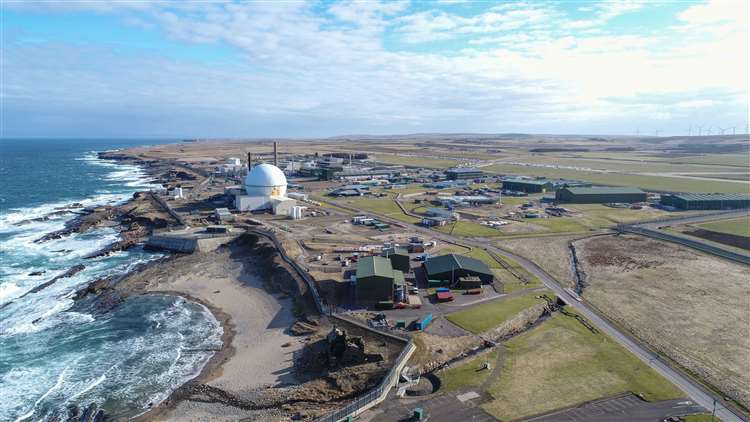
Workers at the Dounreay nuclear power complex on Scotland’s north coast plan strike action
next month which will further delay the decommissioning of a plant which
started operating in 1955.
The Prospect, Unite and GMB unions are all
involved. The GMB, the main union for nuclear energy workers, champions
alongside Scottish Labour proposals for new nuclear power stations in
Scotland, despite widespread public opposition to them. The union also
helps to fund Labour candidates.
While it is always disturbing to hear of
industrial conflict at a nuclear plant, these strikes will in reality,
relatively speaking, make little difference to the decommissioning process.
Why? Decommissioning began in 2019 and the plan envisages taking 50-60
years to complete.
But “complete” doesn’t mean the same to the company
responsible for the clean-up and demolition of Dounreay, Magnox Ltd, what
it means to most of us, and the site will be under surveillance – ie, not
usable – for at least 300 years. Leaving aside for the moment the appalling
financial costs of nuclear decommissioning, rarely mentioned in Scottish
Labour’s campaign material, what about the costs for the local people and
the environment over the last nearly 70 years?
There have been three
significant accidents and countless smaller ones. On May 10, 1977, a
65-metre (213ft) deep shaft at the plant was packed with radioactive waste
with at least 2 kg of sodium and potassium. Seawater flooded in and
reacted violently with the sodium and potassium, blowing the huge steel and
concrete lids off the shaft. The explosion littered the area with
radioactive particles, with around 150 of these being found on the beach in
the following 20 years.
This was, according to the New Statesman in 1995,
the worst nuclear accident ever in the UK. Dounreay was never prosecuted.
Researchers based at Oxford University, reporting – conveniently for some
political forces – in July 2014 revisited earlier studies of the incidence
of leukaemia around Sellafield and Dounreay and concluded that children,
teenagers and young adults currently living close to the facilities were
not at an increased risk of developing cancers.
The researchers, who were
dependent upon UK Government grants for their survival, downplayed two
earlier studies that found a raised risk of leukaemia among 0 to
14-year-olds and 15- to 24-year-olds living within 12.5km of Dounreay
during the period 1979-84. A subsequent study in 1996 reported an excess of
childhood leukaemia and Non-Hodgkin’s Lymphoma (NHL) within 25 km of
Dounreay for the period 1968-93. The researchers do not tell us just how
many cases, how many more children and young adults than expected, had
developed these often-deadly cancers, but 1287 cases near seven nuclear
sites in Scotland were looked at in the second study.
Around Dounreay,
almost twice as many cases as expected were found. The difference was
greatest around Dounreay. If we share the 1287 cases among the seven sites,
we get around 180 cases near Dounreay, of which half or might not have
occurred if the plant had never been built. To, me that’s “significant”
and I feel sure it was for those young people and their families. With
every passing month, it becomes clearer that Scottish Labour must
reconsider their plans for a nuclear Scotland.
The National 29th April 2024
Chernobyl – the Cloud Lingers On
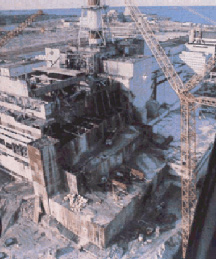
CHERNOBYL – THE FACTS
- The total radioactively released from Chernobyl was 20 times that of the combined releases of the Hiroshima and Nagasaki atomic bombs.
- At least 9 million people have been directly affected by the accident
- Over 160,000 square kilometres of land were contaminated with 42,000 squarekilometres rendered unusable.
- At least 400,000 people were forced to leave their homes in Russia, Ukraine and Belarus.
- Analysis concluded that the former Soviet Union would have been better off financially if it had never begun building nuclear reactors.
- It is estimated that the total cost of compensation paid to UK farmers is over £12 million.
- The Chernobyl disaster has caused a massive increase in thyroid cancers in the three most affected countries of Belarus, Russia and Ukraine.
- The sarcophagus built to contain the damaged reactor was supposed to last 30 years but some 300 yards of cracks and holes are already evident.
- In Ukraine, two million children live in contaminated areas with 900,000 still living in high-risk zones.
- The stricken reactor will remain radioactive for about 10,000 years.
BY MARIANNEWILDART, https://mariannewildart.wordpress.com/2024/04/26/chernobyl-the-cloud-lingers-on/
38th Anniversary of Chernobyl
Today is the 38th Anniversary of the ongoing Chernobyl nuclear disaster. A huge steel and concrete sarcophagus covers the site of the meltdown. Under its dome, called the New Safe Confinement, lie 200 tons of lava-like nuclear fuel, 30 tons of highly contaminated dust and 16 tons of uranium and plutonium that continue to release high levels of radiation. There is a rather odd link with the Russian state nuclear body Rosatom and Cumbria. Until recently Rosatom shared the same PR company as West Cumbria Mining – New Century Media. The coal mine plans have an uncanny resemblance to the Chernobyl sarcophagus
The damage from Chernobyl is ongoing, snowballing down through the generations with tenacious charities such as Chernobyl Children’s Project (UK) and Chernobyl Childern International doing their utmost to support those whose lives continue to be damaged.
Here we re-publish “The Cloud Lingers On”
a hard hitting article from 1996…in non other than Cumbria Life.
The lifestyle magazine, Cumbria Life, is not where you would expect to find a hard- hitting article on Chernobyl and the nuclear industry. But that is exactly what was published in this Cumbrian coffee table magazine in 1996. ….
(the article is in the public domain but not online – any mistakes in transcript are mine)
Ten years ago a cloud washed over the Cumbrian fells, coating the grass, trees, heather, bracken and rocks with a film of radiation. It came from Chernobyl, a ruptured nuclear reactor in the Ukraine, several thousand miles away. Early, confident predictions that the heavy Cumbrian rain, that brought down the radioactive Caesium in the first place would now wash it from the uplands, were quietly buried. No amount of rain was every going to wash away the poison from Chernobyl. Award winning environmental writer Alan Air reports.
At the height of the Cold War, the superpowers hid behind the perverted logic of the military defence acronym MAD – Mutually Assured Destruction – to shore up a global arms industry worth billions of pounds. We pointed our nuclear warheads at them. They pointed their nuclear warheads at us. Would they dare unleash their missiles? Would we dare unleash our missiles? All that awful tension.
Cumbria at first glance a global backwater of lakes, dry stone walls and back packing ramblers, seemed remote from the world stage but it played a part in the divide between West and East; Sellafield’s nuclear complex, the Broughton Moor arms depot, Anthorn’s submarine tracking station and even the Chapelcross nuclear plant just across the Solway Firth were all key components in the UK’s military and nuclear defence strategy.
Britain’s post-war civil atomic power programme was inextricably interwoven with its nuclear defence objectives; no British Government Minister wanted to enter the nuclear conference chamber naked.
Thankfully, Eastern Bloc missiles never did scream over Saddleback or the back o’ Skiddaw but in the spring of 1986, before the Soviet Union started to implode, Cumbrians felt the heat of Cold War politics on its back when an experiment at the Lenin nuclear plant at Chernobyl, in the Ukraine went wrong and Number 4 reactor exploded and threw up over Europe.
Spiralling weather patterns spread the atomic debris to dozens of countries in different time zones, heavy rain brought the radiation down on our county’s mountain tops and the alarms went berserk at Sellafield evoking a home-grown nuclear nightmare, the Windscale fire of ’57 that contaminated large parts of Cumbria and northern England. Chernobyl was nothing if not ironic.
Ten years later and Chernobyl – the noun is now instantly synonymous with the world’s worst nuclear disaster – is now in the hands of a ‘democratic’ Ukraine, but the perilous state of the infamous Number 4 reactor continues to cause concern among the international community. The cracking concrete sarcophagus, hastily erected around the molten core by nuclear workers a the stricken plant, many of whom later died from the radiation, is already crumbling and radioactive water is pouring from the site. Unless a new containment chamber is constructed, and much of the cash would have to come from a kitty topped up by the rich industrial nations of the West, then Chernobyl 2 – The Sequel, is not just a possibility but a probability, warns Janine Allis-Smith of the campaign group Cumbrians Opposed to a Radioactive Environment (CORE).
“Chernobyl proved that you can never, ever guard against human error, someone doing something stupid. Whatever nuclear experts say about the design of the Chernobyl reactor it was human error that triggered the explosion. It is bound to happen again,” she predicts.
In the weeks, months and years after Chernobyl, hundreds of Cumbrian hill farmers faced restrictions on the movement, and sale for meat, of radioactive-contaminated sheep. Initial Government estimates about the time it would take for dangerous radiation to leave the animals were constantly revised upwards as the main components of Chernobyl fallout, Caesium 137 and Caesium 134, persisted in dangerous amounts in the beasts’ tissues.
Early, confident predictions that the heavy Cumbrian rain that brought down the Caesium in the first place, would now wash it from the uplands were quietly buried.
It took scientists at the Merlewood Research Station at Grange over Sands in south Cumbria, to uncover some very down to earth truths about the persistence of cancer causing Caesium in the Cumbrian hills. The irony of the scientific explanation wasn’t lost on the county’s loose alliance of anti-nuclear and ‘green’ campaigners forever kicking up a stink about nuclear waste reprocessing at Sellafield.
It was all to do with recycling.
In the nutrient poor uplands of the Lake District, native grasses and heathers survive by carefully safeguarding what minerals are available. Elements – which in 1986 including Caesium – are taken up by the roots and then circulated to the succulent shoot tips during the growing season. However, they are not lost when the plant sheds its leaves in the Autumn. Instead they are sucked back into the woody, permanent tissues, to be stored for re-use in the Spring. By another quirk of nature, Caesium was readily absorbed by Cumbrian hill vegetation because of a lack of potassium in the upland soil.
Scientists discovered that plants in potassium deficient areas have a Caesium take up rate that is 12 times greater than those plants growing in potassium rich soil. Even more bizarrely, many of Cumbria’s hillside plants enjoy ‘symbiotic’ relationships with ‘mycorrhizal fungi’ – tiny plants that survive by assisting the host plant to take up minerals. In the case of Cumbrian heather, these fungi helped move Caesium from the roots to the shoot tips on which the sheep fed. Even the lack of clay in our upland soil, a material that binds Caesium and hinders root absorption meant that vegetation could easily access this radioactive ion.
No amount of rain was ever going to wash away the poison from Chernobyl.
Sheep feeding on hillside vegetation took in Caesium with every mouthful. For Ennerdale sheep farmer, John Hinde, who has a 1,500 strong flock at Low Moor End, the Chernobyl fallout meant nine stressful years of working within Government restrictions and monitoring. He has survived but recalls: “For a time it looked as if there wasn’t going to be any sheep left on the fells.”
Ten years on and only a dozen or so farms in Cumbria are regulated by movement restrictions compared to nearly 400 in Wales. That would appear to be good news for our farmers, and the mutton-eating consumer. Janine Allis-Smith of CORE isn’t so sure that radiation levels on the fells have declined quite so dramatically as the Government would have us believe, and she suggests that the de-restrictions are rooted in political pragmatism.
“It is interesting that the only area where this massive de-restriction has taken place is the Lake District. It is obviously important that Cumbrian and the whole tourist area is seen to be okay. I think a lot of Cumbrian farmers had their eyes opened when it was discovered that only 50% of the radiation on the hills came from Chernobyl. Some of the stuff was there long before May 1986” she says.
Indeed, scientists confirmed that radioactive contamination of the fells was not confined to Chernobyl but that much of it came from global nuclear bomb testing, the Windscale Fire of 1957 and routine discharges from Windscale, now Sellafield, in the 1960s and 1970s. Allis-Smith cites an aerial survey revealed the Ravenglass Estuary was contaminated by radioactive discharges from Sellafield long before Chernobyl dumped on us.
“If radiation was like confetti, the whole bloody Lake District would be like a wedding cake.” She suggests.
Cumbrian hill farmer’s daughter Jill Perry is equally suspicious of recent de-restrictions in the Lake District,
“The hill farm where I was born and brought up was one of those where milk had to be destroyed after the 1957 Windscale fire and one which, 29 years later, was placed under Chernobyl restrictions and has recently been exempted>” she explains.
“I think most farmers originally thought the Chernobyl testing was just a formality and were surprised and dismayed when they were placed under restriction, and equally wonder why restrictions have been lifted more quickly than those in Wales, where the number of restricted farms seems to fall much more slowly.”
Mrs Perry who now acts as the spokesman for West Cumbrian Friends of the Earth group, sees no point in differentiating between Windscale ’57 and Chernobyl ’86.
“What these two incidents show most graphically is that whether a nuclear accident happens locally or in another country, the radiation recognises no international borders and that we cannot afford to take lightly the risks brought about by human error in a high tech industry.”
The greatest irony of Chernobyl may yet lie ahead. British Nuclear Fuels, the company that now runs Sellafield in West Cumbria (and which has polluted areas of the UK coastline with its radioactive discharges) is now spreading tentacles around the globe. Selling its decontamination services to a tainted world. No-one can rule out experts from Sellafield, the plant that spawned the world’s first ‘civil’ nuclear disaster in 1957 and whose alarms bells rung out loud and clear when the Chernobyl could went over, will not, in the future, ret-trace the path of the Chernobyl radiation plume and venture into the plant’s exclusion zone.
Bridget Woodman, an anti nuclear campaigner with Greenpeace believes that Chernobyl taught Cumbrians about the universal nature of the nuclear power threat.
“When the Chernobyl explosion first appeared on the news bulletins, most Cumbrians probably never envisaged that it would impact directly on them. Yet within a few days, people were watching the skies apprehensively. Cumbrians may have become blasé about Sellafield on their own doorstep but Chernobyl proved that a nuclear disaster can affect them even if its happening thousands of miles away. There is no guarantee of safety. Chernobyl proved there is no escape.
“And while many of the restrictions on sheep movements in Cumbria have now been lifted, we should remember that there is no safe dose of radiation. No-one knows what the legacy of Chernobyl fallout will be on existing and future generations of Cumbrians.
RED GROUSEThe Red Grouse has escaped media attention but its almost exclusive diet of succulent heather shoots means that many birds will have concentrated Caesium in their bodies post Chernobyl. Work prior to the Chernobyl disaster established that the heather family, Ericaceae, could accumulate high concentrations of Caesium. Since then, surveys in the Lake District have revealed that one species of heather, calluna vulgaris, accumulates the highest Caesium burden.
CHERNOBYL – THE FACTS
- The total radioactively released from Chernobyl was 20 times that of the combined releases of the Hiroshima and Nagasaki atomic bombs.
- At least 9 million people have been directly affected by the accident
- Over 160,000 square kilometres of land were contaminated with 42,000 squarekilometres rendered unusable.
- At least 400,000 people were forced to leave their homes in Russia, Ukraine and Belarus.
Analysis concluded that the former Soviet Union would have been better off financially if it had never begun building nuclear reactors.- It is estimated that the total cost of compensation paid to UK farmers is over £12 million.
- The Chernobyl disaster has caused a massive increase in thyroid cancers in the three most affected countries of Belarus, Russia and Ukraine.
- The sarcophagus built to contain the damaged reactor was supposed to last 30 years but some 300 yards of cracks and holes are already evident.
- In Ukraine, two million children live in contaminated areas with 900,000 still living in high-risk zones.
- The stricken reactor will remain radioactive for about 10,000 years. ENDS
-
Archives
- February 2026 (199)
- January 2026 (308)
- December 2025 (358)
- November 2025 (359)
- October 2025 (376)
- September 2025 (258)
- August 2025 (319)
- July 2025 (230)
- June 2025 (348)
- May 2025 (261)
- April 2025 (305)
- March 2025 (319)
-
Categories
- 1
- 1 NUCLEAR ISSUES
- business and costs
- climate change
- culture and arts
- ENERGY
- environment
- health
- history
- indigenous issues
- Legal
- marketing of nuclear
- media
- opposition to nuclear
- PERSONAL STORIES
- politics
- politics international
- Religion and ethics
- safety
- secrets,lies and civil liberties
- spinbuster
- technology
- Uranium
- wastes
- weapons and war
- Women
- 2 WORLD
- ACTION
- AFRICA
- Atrocities
- AUSTRALIA
- Christina's notes
- Christina's themes
- culture and arts
- Events
- Fuk 2022
- Fuk 2023
- Fukushima 2017
- Fukushima 2018
- fukushima 2019
- Fukushima 2020
- Fukushima 2021
- general
- global warming
- Humour (God we need it)
- Nuclear
- RARE EARTHS
- Reference
- resources – print
- Resources -audiovicual
- Weekly Newsletter
- World
- World Nuclear
- YouTube
-
RSS
Entries RSS
Comments RSS
 nuclear-news