Cancer toll in Serbia, from NATO’s use of depleted uranium weapons
 Depleted uranium used by NATO during bombing of Serbia takes its toll http://inserbia.info/today/2016/03/depleted-uranium-used-by-nato-during-bombing-of-serbia-takes-its-toll/ By InSerbia with agencies -Mar 29, 2016 BELGRADE – The use of depleted uranium during NATO bombing of Serbia has caused long-term damage to Serbia and the Serbian people. Because every year we have an increase in the number of cancer cases by 25 percent over the previous year. Figures in the case of patients in Kosovska Mitrovica support this fact, as in 2011 here were registered 185 of them, the following year, 225 and in 2013 – 250. Therefore, the gloomy forecasts, imposed back in 2002, that the use of depleted uranium during the aggression of Western military alliance against FRY will cause an epidemic of malignant diseases, turned out to be accurate, said dr. Nebojsa Srbljak for Serbian daily “Vecernje Novosti”.
Dr Srbljak, a cardiologist at the ZTC in Kosovska Mitrovica and founder of the NGO “Angel of Mercy” which deals with data on the number of patients with malignancy in Kosovo, explained for the daily that “those who used the depleted uranium had to know what consequences it causes”. He said that the study of his organization, which cover the period of two years before and two years after the bombing, clearly shows that the number of patients with malignant diseases is caused by radioactivity, and not stress and other bad life habits.
“Let us remember the example of Italy which has revealed that their soldiers, who stayed in Kosovo, were irradiated and that the increased number of hematological diseases is a direct consequence of the use of depleted uranium ammunition,” said dr. Srbljak. “Italian KFOR soldiers were deployed where the most of the ammunition with depleted uranium was used, in Pec, Djakovica, in Kosare. Their families, as far as I know, have received compensation.”
Dr. Srbljak urges the authorities that our country formally request compensation, not only for material damage but also because of the increase in the number of patients with malignant diseases. The cardiologist claims that someone was trying to minimize the information he and his team published back in 2002 that the number of patients with malignant diseases was increased by almost 200 percent compared to the period before the bombing.
“It became clear that we are right when our neighbors Albanians started to go to Belgrade for a treatment. Because, and that is obvious, they have confidence in the expertise of Serbian doctors. I therefore think that our proposal, to open a branch of Oncology Institute in Belgrade here in (Kosovska) Mitrovica could finally be realized.”
Nuclear Ruins Still Toxic Even After 30 Years – Chernobyl
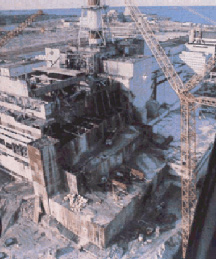 Chernobyl Aftertaste: Nuclear Ruins Still Toxic Even After 30 Years, Nature World News. 19 Apr 16 Thirty years after what many has considered their worst nightmare, the effects of the Chernobyl explosion still live on. Many may have escaped from death but most of those who have been affected by the incident are still carrying the upshot of the trauma……..
He observed the higher amount of homocysteine, an amino acid linked to heart disease on 80 percent of teenagers. Serious hormonal level changes were also found in 45 percent of the children. Premature death is larger in the places near the explosion site which clearly shows the long-time toxic effect of Chernobyl on human health……..http://www.natureworldnews.com/articles/20961/20160419/chernobyl-aftertaste-nuclear-ruins-still-toxic-even-after-30-years.htm
Parents, Radiation Safety Experts Petition Against 2020 Olympics in Radioactive Fukushima
Young Athletes, Women, More Susceptible to Radiation Dangers Washington, DC — Apr 14, 2016 / (http://www.myprgenie.com) — On March 11, 2016, the fifth anniversary of the Fukushima triple nuclear meltdowns, the Japanese Olympic Minister Toshiaki Endo stated that preliminary softball, baseball and possibly other games would likely be moved from the host city of Tokyo to Fukushima Prefecture. In fact, organizers are already far into the process of developing J Village, located 19 km (12 mi) from the devastated Fukushima Daiichi nuclear reactors, into a training facility for Japan’s soccer team and possibly more uses. J Village was used as a disaster staging and support facility during the early days of the ongoing catastrophic Fukushima Daiichi nuclear disaster.
In a stunning development in 2013, Japan’s Olympic bid was won by Prime Minister Shinzo Abe when he promised the International Olympic Committee (IOC) that it (Fukushima Daiichi) “has never done, and will never do, any damage in Tokyo”. Now, according to the Olympic Minister’s recent statements and credible news reports in Japan, the IOC and IPC will be required to use venues not only in Tokyo as originally agreed upon, but also in Fukushima Prefecture, not far from the Fukushima Daiichi nuclear disaster site. “The Abe administration’s willingness to expose both their own population and the world’s to lethal particles in order to deny the horrendous contamination of their land, is morally reprehensible”, says Mary Beth Brangan, Co-Director of Ecological Options Network.

The person in charge of decommissioning at Fukushima Daiichi has publicly stated that there is no solution in sight to the massive radioactive releases at there and appealed to the international community for assistance. Radiation has been documented well beyond Fukushima to several areas around Japan that have been used for the past 5 years for the open storage and subsequent incineration of toxic and radioactive tsunami rubble, garbage, and more. Cesium 134, 137 and other cancer causing radionuclides from the disaster have been found in tap water and vacuum cleaner bags sampled at different locations around Japan. Hundreds of radioisotopes are released in nuclear accidents, many of which are long-lived and remain hazardous for millions of years. Once inhaled, they pose a significant health risk to everyone in affected environments and to athletes during strenuous competition. Women and children are the most vulnerable as stated in the Biological Effects of Ionizing Radiation (BEIR 7) report issued by the National Academy of Sciences.
“Instead of spending money on the Olympics, Japan should spend it ensuring that citizens of its country are not forced to live in contaminated areas in the same prefecture where Japan now wants to host some of these games”, states Cindy Folkers, Radiation and Health Specialist at Beyond Nuclear. “In 2012, the UN Commissioner on Human Rights traveled to Japan and concluded that the government should “reduce the radiation dose to less than 1mSv/year” in accordance with recommended international standards. Instead, Japan is forcing some evacuees to be exposed to up to 20 times this amount, while telling the world, and the Olympic committee, everything is fine.”
Presidential candidate and US Senator Bernie Sanders has called for the immediate closure of the aging and leaking Indian Point nuclear reactors near New York City. Fukushima Fallout Awareness Network (FFAN) is asking other leaders to also make an informed decision where nuclear hazards are concerned by calling for an immediate halt to the 2020 Summer Olympics and Paralympics games planned in Fukushima Prefecture. Petition recipients include UN Secretary General Ban ki-Moon, Secretary of State John Kerry, Ambassador to Japan Caroline Kennedy, UNICEF, the World Health Organization and others.
Contact: Continue reading
Fukushima – the irradiation of a nation
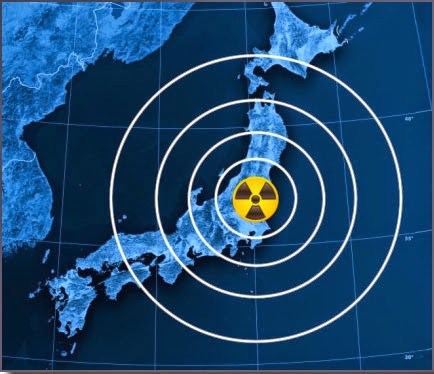 Top Official: Over 60 million Japanese irradiated by Fukushima — Nuclear Expert: 50,000 sq. miles of Japan highly contaminated… Many millions need to be evacuated… Gov’t has decided to sacrifice them, it’s a serious crime — TV: More than 70% of country contaminated by radiation (VIDEOS) http://enenews.com/top-official-60-million-japanese-irradiated-fukushima-nuclear-expert-50000-square-miles-country-highly-contaminated-many-millions-be-evacuated-govt-decided-sacrifice-serious-crime-professor-70-l?utm_source=feedburner&utm_medium=email&utm_campaign=Feed%3A+ENENews+%28Energy+News%29
Interview with nuclear engineer Hiroaki Koide (translation by Prof. Robert Stolz, transcription by Akiko Anson), published Mar 8, 2016 (emphasis added): [Radioactive] material has been dispersed, contaminating Tohoku, Kanto [Tokyo area], and western Japan… [The law says] that absolutely nothing may be removed from a radioactive management area in which the levels exceed 40,000 Becquerels per square meter… [H]ow much area has been contaminated beyond 40,000 Bq/m2… that answer is 140,000 km^2 [54,054 square miles]… Indeed, while centered on Fukushima, parts of Chiba and Tokyo have also been contaminated. The number of people living in what must be called a radiation-controlled area is in the millions, and could exceed ten million… I believe the government has the responsibility to evacuate these entire communities… the government decided to leave them exposed to the real danger of radiation. In my view, Fukushima should be declared inhabitable… but if that were to be done, it would likely bankrupt the country… They’ve decided to sacrifice people… In my view, this is a serious crime committed by Japan’s ruling elite… [F]undamentally, people must not be forced to live in contaminated areas… First must come complete evacuation… [W]hen it comes to radiation… “removal of contaminants” is impossible… This stuff contaminates everything.
Naoto Kan, former Prime Minister of Japan, Apr 11, 2016 (at 2:15 in): The molten material broke through the pressure vessel and accumulated low down in the containment. Now what would have happened if this molten material had escaped from the containment?… A radius of 250 kilometers — which includes the city of Tokyo — anyone living in this area, if you count them up it comes to 50 million or 40% of the Japanese population, and they would all have had to be evacuated. As we know from Chernobyl, not just a couple of weeks, but 30 years or 40 years — it would have virtually meant the end of Japan. [Note: Many nuclear experts believe the molten fuel did in fact escape from the containment] Half the population was subject to radiation [Japan Population: 127 million]. That’s something that could just be imagined, for instance the event of losing a major war.
Arirang (Gov’t-funded Korean TV network), ‘Fukushima and Its Aftermath’, Mar 16, 2016 (at 6:45 in) —Prof. Kim Ik-Jung, Medical College at Dongguk Univ.: “When you look at the contamination map, about 70% of Japan is contaminated by radiation. That means that 70% of Japan’s agricultural and marine products are contaminated.”… According to PNAS, one of the five major scientific journals, over 70% of the land in Japan is contaminated by radiation.
Fukushima’s evacuees have radiation-caused illnesses, but this is covered up in Japan
 Nuclear Expert in Fukushima: People’s feet turned black for years because radiation so high — Every time I turned around I saw someone who had radiation damage — Hair falling out, caughing up blood, bodies covered with boils… Officials keeping doctors from telling truth… Public being brainwashed (VIDEO) http://enenews.com/nuclear-expert-fukushima-peoples-feet-turned-black-years-because-radiation-levels-high-every-time-turned-around-radiation-damage-hair-fell-bloody-noses-bodies-covered-boils-officials-covering-pu?utm_source=feedburner&utm_medium=email&utm_campaign=Feed%3A+ENENews+%28Energy+News%29
CCTV, Apr 5, 2016 (emphasis added) — Nuclear engineer Arnie Gundersen: [During my recent trip to Japan] I met in one of the resettlement areas… The unofficial mayor of this group – a real dynamo of a woman – she experienced hair loss, bloody nose, speckles on her skin and the doctors told her it was stress and not to worry about it. That’s not stress. It was radiation damage. But again, that’s this inhumanity that I was experiencing… Every time I turned around, I saw people that definitely experienced radiation damage. We had one woman who ran from her house to evacuate carrying her dog. About a day after the accident, they realized that she needed to be evacuated. And so she runs barefoot to her car, gets in her car, drives to the resettlement community. She’s highly radioactive. They make her – especially her feet – they make her take her socks off and take showers, wash her down before they let her in. And her feet were black for three years from radiation damage. And that’s not being spoken about in any of the medical journals… [The government wants] to get these other nuclear plants up and running. And if the population is getting ill from radiation effects, it’s a lot harder. So they have… banded together with the medical community.
We had numerous doctors say that they were going to lose hospital privileges and things like that. And the people that are keeping track of deaths in Fukushima Prefecture aren’t publishing the data. So the entire government infrastructure, from the people in Tokyo to the underlings in the Prefecture, are all singing the same song: that this is stress, there’s no radiation. And it sure isn’t what I found, I’ll tell you… Were it not for the internet, they would have won. And I think the difference between the disaster at Fukushima and the disaster at Chernobyl and TMI is that now we have the internet. It still is an unlevel playing field. There’s still so much money on the other side of it that people are being brainwashed. Oh, that bloody nose you’ve had for the last 3 weeks is stress. So they are being brainwashed.
Fairewinds Japan Speaking Tour Series No. 3, Feb 24, 2016 – Nuclear engineer Arnie Gundersen: Today I went to a resettlement community… their unofficial mayor, the woman who sort of runs all the groups… she told us that after the disaster at Fukushima, her hair fell out, she got a bloody nose and her body was speckled with hives and boils and the doctor told her it was stress and she believes him. It was absolutely amazing.
Fairewinds Japan Speaking Tour Series No. 4, Mar 3, 2016 — Nuclear engineer Arnie Gundersen: The Japanese government’s position is when your hair falls out and your nose starts to bleed and you’re hacking up blood, that that’s all stress related… We had a woman back my first week that was there, the radiation levels were so high, her feet turned black for four years. And I was at the Hiroshima Museum and I saw the same thing. I saw pictures of the Hiroshima victims with their feet blackened from radiation. The government has done a very successful job of covering this up.
The Guardian, Apr 11, 2016: At first they thought it was just a fire, then the chickens started to turn black… Soviet authorities neglected to tell the people the extent of the danger they were in [from Chernobyl], for fear of causing mass panic, tell-tale symptoms soon followed. Dark marks appeared on the skin. The wattles of the local chickens turned from crimson to black.
Radiation effects of depleted uranium continue to bring disease and death in Iraq
Fallujah (pop. 300,000) is Iraq’s most contaminated city.
Cancers in Fallujah catapulted from 40 cases among 100,000 people in 1991 to at least 1,600 by 2005. In a 2010International Journal of Environmental Research and Public Health article, Busby and two colleagues, Malak Hamden and Entesar Ariabi, reported a 38-fold increase in leukemia, a 10-fold increase in breast cancer, and infant mortality rates eight times higher than in neighboring Kuwait.
 Busby sampled the hair of Fallujah women with deformed babies and found slightly enriched uranium. He found the same thing in the soil. “The only possible source was the weapons,” he states.
These numbers are probably low. “Iraqi women whose children have birth defects feel stigmatized and often don’t report them,” says Mozhgan Savabieasfahani, a Michigan-based environmental toxicologist who won the 2015 Rachel Carson Award.
IRRADIATED IRAQ The Nuclear Nightmare We Left Behind, The Washington Spectator, By Barbara Koeppel 30 Mar 16 When the United States revealed in January that it is testing a more nimble, more precise version of its B61 atom bomb, some were immediately alarmed. General James Cartwright, a former strategist for President Obama, warned that “going smaller” could make nuclear weapons “more thinkable” and “more usable.”
However, what is little known is that for the past 25 years, the United States and its allies have routinely used radioactive weapons in battle, in the form of warheads and explosives made with depleted, undepleted, or slightly enriched uranium. While the Department of Defense (DOD) calls these weapons “conventional” (non-nuclear), they are radioactive and chemically toxic. In Iraq, where the United States and its partners waged two wars, toxic waste covers the country and poisons the people. U.S. veterans are also sick and dying.
Scott Ritter, a former Marine Corps officer in Iraq and United Nations weapons inspector, told me, “The irony is we invaded Iraq in 2003 to destroy its non-existent WMD [weapons of mass destruction]. To do it, we fired these new weapons, causing radioactive casualties.”
The weapons were first used in 1991 during Desert Storm, when the U.S. military fired guided bombs and missiles containing depleted uranium (DU), a waste product from nuclear reactors. The Department of Defense (DOD) particularly prized them because, with dramatic density, speed, and heat, they blasted through tanks and bunkers.
Within one or two years, grotesque birth defects spiraled—such as babies with two heads. Or missing eyes, hands, and legs. Or stomachs and brains inside out.
Keith Baverstock, who headed the radiological section of the World Health Organization’s (WHO) Center of Environment and Health in the 1990s, explained why: When uranium weapons explode, their massive blasts produce gray or black clouds of uranium oxide dust particles. These float for miles, people breathe them, and the dust lodges in their lungs. From there, they seep into the lymph system and blood, flow throughout the body, and bind to the genes and chromosomes, causing them to mutate. First, they trigger birth defects. Within five or more years, cancer. Organs, often the kidneys, fail.
At one Basra hospital, leukemia cases in children up to age 14 doubled from 1992 to 1999, says Amy Hagopian, a University of Washington School of Public Health professor. Birth defects also surged, from 37 in 1990 to 254 in 2001, according to a 2005 article in Environmental Health.
Leukemia—cancer of the blood—develops quickly. Chris Busby, a British chemical physicist, explains: “Blood cells are the most easily damaged by radiation and duplicate rapidly. We’ve known this since Hiroshima.”
Dai Williams, an independent weapons researcher in Britain, says the dust emits alpha radiation—20 times more damaging than the gamma radiation from nuclear weapons. The military insists the dust is harmless because it can’t penetrate the skin. They ignore that it can be inhaled.
Fast forward to 2003. When the United States reinvaded Iraq, it launched bunker-busting guided bombs, cruise missiles, and TOW anti-tank missiles. It also fired new thermobaric warheads—much stronger explosives with stunningly large blasts. Many of these, says Ritter, contained some type of uranium, whether depleted, undepleted, or slightly enriched.
Williams says thermobaric weapons explode at extremely high temperatures and “the only material that can do that is uranium.” He adds that while today’s nuclear weapons are nominally subject to international regulations, no existing arms protocol addresses uranium in a non-nuclear context.
While the U.S. government has cleaned up some contaminated sites at home—such as a former uranium munitions plant in Concord, Mass.—it has yet to acknowledge the mess in Iraq.
“Iraq is one large hazardous waste site,” Ritter says. “If it was the U.S., the Environmental Protection Agency would declare it a Superfund site and order it be cleaned.
Left behind in Fallujah
Fallujah (pop. 300,000) is Iraq’s most contaminated city. The U.S. military attacked it twice in 2004, and in the November siege, troops fired thermobaric weapons, including a shoulder-launched missile called the SMAW-NE. (NE means “novel explosive.”)
Ross Caputi was there with the U.S. 1st Battalion 8th Marines. He told me, “We used the SMAW-NE and guys raved about how you could fire just one round and clear a building.” Concrete bunkers and buildings were instantly incinerated and collapsed. The DOD was not disappointed.
Cancers in Fallujah catapulted from 40 cases among 100,000 people in 1991 to at least 1,600 by 2005. In a 2010International Journal of Environmental Research and Public Health article, Busby and two colleagues, Malak Hamden and Entesar Ariabi, reported a 38-fold increase in leukemia, a 10-fold increase in breast cancer, and infant mortality rates eight times higher than in neighboring Kuwait.
Busby sampled the hair of Fallujah women with deformed babies and found slightly enriched uranium. He found the same thing in the soil. “The only possible source was the weapons,” he states.
These numbers are probably low. “Iraqi women whose children have birth defects feel stigmatized and often don’t report them,” says Mozhgan Savabieasfahani, a Michigan-based environmental toxicologist who won the 2015 Rachel Carson Award.
Besides the cancers and birth defects, an Irish pathologist (who asked for anonymity) said an unusually high number of children have cerebral palsy (CP) near the city of Hawija. “I was skeptical when Iraqi doctors told me, but I examined 30 and saw it was classic CP. I don’t know what caused this, but the increase is almost certainly war-related.”
It is often argued that uranium occurs in nature, so it’s impossible to link soil and other samples to the weapons. But, Ritter told me that when experts examine a site, they take samples, study them in a special lab, and can easily tell the difference between uranium that is natural and that which was chemically processed. “The idea that you can’t link soil samples to weapons because of the presence of natural uranium is simply ludicrous. It’s done all the time by experts in the International Atomic Energy Agency and within the nuclear programs of all major nuclear powers,” Ritter says.
Burn pits and toxic clouds
In addition to the weapons’ lethal dust, Iraqis and coalition troops were exposed to poisonous smoke from huge open burn pits, some stretching 10 acres. From 2003 to 2011, U.S. military bases burned waste in the pits around the clock—spewing toxic clouds for miles.
Two were near Fallujah. Caputi says,“We dumped everything there. Our plastic bottles, tires, human waste, and batteries.”
Rubber, oil, solvents, unexploded weapons, and even medical waste were also tossed into the pits. As a 2008 Army Times article noted, Balad Air Base burned around 90,000 plastic bottles a day.
When plastic burns, it gives off dioxin—the key ingredient in Agent Orange…..http://linkis.com/washingtonspectator.org/b2hLC
Self styled “Pro Nuclear Environmentalists (PNEs) are just not credible on Chernobyl radiation
Evidence of PNE ignorance abounds. For the most part, PNEs had a shaky understanding of the radiation/health debates (and other nuclear issues) before they joined the pro-nuclear club, and they have a shaky understanding now.
the WHO, IAEA and other UN agencies estimated 9,000 deaths in ex-Soviet states in their 2005/06 reports, and more recently UNSCEAR has adopted the position that the long-term death toll is uncertain.
Radiation harm deniers? Pro-nuclear environmentalists and the Chernobyl death toll, Ecologist, Dr Jim Green 7th April 2016 “……….the self-styled pro-nuclear environmentalists (PNEs). We should note in passing that some PNE’s have genuine environmental credentials while others – such as Patrick Moore and Australian Ben Heard – are in the pay of the nuclear industry.
James Hansen and George Monbiot cite UNSCEAR to justify a Chernobyl death toll of 43, without noting that the UNSCEAR report did not attempt to calculate long-term deaths. James Lovelock asserts that “in fact, only 42 people died” from the Chernobyl disaster.
Patrick Moore, citing the UN Chernobyl Forum (which included UN agencies such as the IAEA, UNSCEAR, and WHO), states that Chernobyl resulted in 56 deaths. In fact, the Chernobyl Forum’s 2005 report (p.16) estimated up to 4,000 long-term cancer deaths among the higher-exposed Chernobyl populations, and a follow-up study by the World Health Organisation in 2006 estimated an additional 5,000 deaths among people exposed to lower doses in Belarus, the Russian Federation and Ukraine.
Australian ‘ecomodernist‘ academic Barry Brook says the Chernobyl death toll is less than 60. Ben Heard, another Australian ‘ecomodernist’ (in fact a uranium and nuclear industry consultant), claims that the death toll was 43.
In 2010, Mark Lynas said the Chernobyl death toll “has likely been only around 65.” Two years earlier, Lynas said that the WHO estimates “a few thousand deaths” (actually 9,000 deaths) but downplays the death toll by saying it was “indiscernible” in the context of overall deaths. Yes, the Chernobyl death toll is indiscernible … and the 9/11 terrorist attacks accounted for an indiscernible 0.1% of all deaths in the US in 2001.
There doesn’t appear to be a single example of a PNE – or a comparable organisation – providing a credible account of the Chernobyl death toll. They’re perfectly entitled to follow UNSCEAR’s lead and argue that the long-term death toll is uncertain. But conflating or confusing that uncertainty with a long-term death toll of zero clearly isn’t a defensible approach.
The Breakthrough Institute comes closest to a credible account of the Chernobyl death toll (which isn’t saying much), stating that “UN officials say that the death toll could be as high as 4,000”. However the Breakthrough Institute ignores:
- the follow-up UN/WHO study that estimated an additional 5,000 deaths in ex-Soviet states;
- scientific estimates of the death toll beyond ex-Soviet states (more than half of the Chernobyl fallout was deposited beyond the three most contaminated Soviet states);
- scientific literature regarding diseases other than cancer linked to radiation exposure;
- and indirect deaths associated with the permanent relocation of over 350,000 people after the Chernobyl disaster.
Cherry-picking
Cherry-picking is abundantly evident in PNE accounts of the Chernobyl death toll. In a review of Robert Stone’s ‘Pandora’s Promise’ propaganda film, physicist Dr Ed Lyman from the Union of Concerned Scientists writes: Continue reading
Pro Nuclear Environmentalists trivialise Chernobyl with lies about psychological trauma
Radiation harm deniers? Pro-nuclear environmentalists and the Chernobyl death toll, Ecologist, Dr Jim Green 7th April 2016“……..Psychological trauma
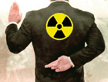 Finally, PNEs [Pro Nuclear Environmentalists] also trivialise Chernobyl by peddling the furphy that the psychological trauma was greater than the biological effects from radiation exposure. There’s no dispute that, as the WHO states, the relocation of more than 350,000 people in the aftermath of the Chernobyl disaster “proved a deeply traumatic experience because of disruption to social networks and having no possibility to return to their homes.”
How to compare that psychological trauma to estimates of the death toll, such as the UN/WHO estimate of 9,000 cancer deaths in ex-Soviet states? Your guess is as good as mine.
Perhaps the biological damage and psychological trauma can be compared and ranked if we consider the second of the two defensible positions regarding the long-term death toll – UNSCEAR’s position that the death toll is uncertain. Does the psychological trauma outweigh the 50 or so known deaths, around 6,000 non-fatal thyroid cancers (withanother 16,000 to come), and an uncertain long-term death toll?
The argument only begins to make sense if you accept the third of the two defensible positions regarding the death toll – the view that there were no deaths other than emergency workers and a small number of deaths from thyroid cancers. Thus Mark Lynasasserts that “as Chernobyl showed, fear of radiation is a far greater risk than radiation itself in the low doses experienced by the affected populations” and he goes on to blame anti-nuclear campaigners for contributing to the fear.
But the trauma isn’t simply a result of a fear of radiation – it arises from a myriad of factors, particularly for the 350,000 displaced people. Nor is the fear of radiation necessarily misplaced given that the mainstream scientific view is that there is no threshold below which radiation exposure is risk-free.
Most importantly, why on earth would anyone want to rank the biological damage and the psychological trauma from the Chernobyl disaster? Chernobyl resulted in both biological damage and psychological trauma, in spades.
Psychological insult has been added to biological injury. One doesn’t negate the other.
Dr Jim Green is the national nuclear campaigner with Friends of the Earth Australia and editor of the Nuclear Monitor newsletter, where a version of this article was originally published. Nuclear Monitor, published 20 times a year, has been publishing deeply researched, often critical articles on all aspects of the nuclear cycle since 1978. A must-read for all those who work on this issue! http://www.theecologist.org/News/news_analysis/2987515/radiation_harm_deniers_pronuclear_environmentalists_and_the_chernobyl_death_toll.html
Estimating the Chernobyl death toll from radiation – rubbishy opinions from “Pro Nuclear Environmentalists”
 Radiation harm deniers? Pro-nuclear environmentalists and the Chernobyl death toll Jim Green, The Ecologist, 7 April 2016, With few if any exceptions, self-styled pro-nuclear environmentalists peddle flapdoodle and tommyrot regarding the Chernobyl death toll.
Before considering their misinformation, a brief summary of credible positions and scientific studies regarding the Chernobyl cancer death toll (for detail see this earlier article in The Ecologist).
Epidemiological studies are of course important but they’re of limited use in estimating the overall Chernobyl death toll. The effects of Chernobyl, however large or small, are largely lost in the statistical noise of widespread cancer incidence and mortality.
The most up-to-date scientific review is the TORCH-2016 report written by radiation biologist Dr Ian Fairlie. Dr Fairlie sifts through a vast number of scientific papers and points to studies indicative of Chernobyl impacts: an increased incidence of radiogenic thyroid cancers in Austria; an increased incidence of leukemia among sub-populations in ex-Soviet states (and possibly other countries ‒ more research needs to be done); increases in solid cancers, leukemia and thyroid cancer among clean-up workers; increased rates of cardiovascular disease and stroke that might be connected to Chernobyl (more research needs to be done); a large study revealing statistically significant increases in nervous system birth defects in highly contaminated areas in Russia, similar to the elevated rates observed in contaminated areas in Ukraine; and more.
Without for a moment dismissing the importance of the epidemiological record, let alone the importance of further research, suffice it here to note that there is no way that one could even begin to estimate the total Chernobyl death toll from the existing body of studies.
Estimates of collective radiation exposure are available ‒ for example the International Atomic Energy Agency (IAEA) estimates a total collective dose of 600,000 person-Sieverts over 50 years from Chernobyl fallout. And the collective radiation dose can be used to estimate the death toll using the Linear No Threshold (LNT) model.
If we use the IAEA’s collective radiation dose estimate, and a risk estimate derived from LNT (0.1 cancer deaths per person-Sievert), we get an estimate of 60,000 cancer deaths. Sometimes a risk estimate of 0.05 is used to account for the possibility of decreased risks at low doses and/or low dose rates ‒ in other words, 0.05 is the risk estimate when applying a ‘dose and dose rate effectiveness factor’ or DDREF of two. That gives an estimate of 30,000 deaths.
Any number of studies (including studies published in peer-reviewed scientific literature) use LNT ‒ or LNT with a DDREF ‒ to estimate the Chernobyl death toll. These studies produce estimates ranging from 9,000 cancer deaths (in the most contaminated parts of the former Soviet Union) to 93,000 cancer deaths (across Europe).
Those are the credible estimates of the cancer death toll from Chernobyl. None of them are conclusive ‒ far from it ‒ but that’s the nature of the problem we’re dealing with. Moreover, LNT may underestimate risks. The 2006 report of the US National Academy of Sciences’ Committee on the Biological Effects of Ionising Radiation (BEIR) states: “The committee recognizes that its risk estimates become more uncertain when applied to very low doses. Departures from a linear model at low doses, however, could either increase or decrease the risk per unit dose.”
So the true Chernobyl cancer death toll could be lower or higher than the LNT-derived estimate of 60,000 deaths ‒ a point that needs emphasis and constant repetition since the nuclear industry and its supporters frequently conflate an uncertain long-term death toll with a long-term death toll of zero.
Another defensible position is that the long-term Chernobyl cancer death toll is unknown and unknowable because of the uncertainties associated with the science. The UN Scientific Committee on the Effects of Atomic Radiation (UNSCEAR) states (p.64):
“The Committee has decided not to use models to project absolute numbers of effects in populations exposed to low radiation doses from the Chernobyl accident, because of unacceptable uncertainties in the predictions. It should be stressed that the approach outlined in no way contradicts the application of the LNT model for the purposes of radiation protection, where a cautious approach is conventionally and consciously applied.”
Pro-nuclear environmentalists
So there are two defensible positions regarding the Chernobyl cancer death toll ‒ estimates based on collective dose estimates (with or without a DDREF or a margin of error in either direction), and UNSCEAR’s position that the death toll is uncertain.
A third position ‒ unqualified claims that the Chernobyl death toll was just 50 or so, comprising some emergency responders and a small percentage of those who later suffered from thyroid cancer ‒ should be rejected as dishonest or uninformed spin from the nuclear industry and some of its scientifically-illiterate supporters……..www.theecologist.org/News/news_analysis/2987515/radiation_harm_deniers_pronuclear_environmentalists_and_the_chernobyl_death_toll.html
Large number of baby deaths close to nuclear contaminated site
 Cemetery full of dead babies missing brains next to US nuclear site — Funeral Director: Almost all infants we have died the same way… “that’s pretty much all I see on death certificates” — Few miles from “most contaminated place in hemisphere” — “One of largest documented anencephaly clusters in US history” (VIDEO) http://enenews.com/one-largest-documented-clusters-history-video?utm_source=feedburner&utm_medium=email&utm_campaign=Feed%3A+ENENews+%28Energy+News%29 March 23rd, 2016
Waiting for answers: a community copes with babies’ deaths
Seattle Times, updated Jan 28, 2016 (emphasis added): How the state is missing chances to find deadly birth defect’s cause… at least 40 other mothers have lost babies to [anencephaly, which result in missing large parts of the brain] in Yakima, Benton and Franklin counties since 2010… one of the largest documented clusters of anencephaly in U.S. history… “Something’s going on and someone needs to tell us,” said [mother Sally] Garcia… Dr. Lisa Galbraith was one of the doctors… In Prosser, the obstetrician oversaw care of Garcia’s pregnancy and others affected by the disorder… “I had a total of four or five babies with anencephaly over the course of two years,” recalled Galbraith… the rate of anencephaly was much higher [than US averages]… Washington health officials… have collected no blood samples, performed no genetic tests and conducted no examination of water, soil… and have no plans to do so… In Texas, just three babies withanencephaly sparked enough outrage to overhaul the state’s birth-defects reporting system.
Seattle Times video transcript – Carlen Majnarich, funeral director: “It’s tragic… It just seems like that’s pretty much all I see on the death certificate is the same diagnosis. And nobody seems to know why. We average close to 100 families a year here in Prosser [a few miles from Hanford]. Almost all the infants that we have have died of anencephaly. It’s just what do you say?”… Sally Garcia (mother who lost her baby to anencephaly): “All these on this side [of the cemetery] are all babies… all babies, starting from right there.”
The Legal Examiner, Dec 31, 2015: [T]he strange eruption of anencephaly cases, which occurs in Washington at a rate almost 5 times as high as the national average, has highlighted a number of government policies that may actually conceal these sort of birth defect “clusters,” rather than help investigate them.
KVEW-TV, Mar 4, 2016: As of November 2015 cases of anencephaly have continued to increase with the current rate at 9.5 per 10,000 live births.
Sara Barron, MS, BSN – American Journal of Nursing, Mar 2016: In the spring of 2012 two babies without brains were born within weeks of each other at the rural hospital in Washington State where I was working… I was stunned when the delivering physician said another patient was expecting the same outcome. After speaking with colleagues at neighboring hospitals, I learned that two other babies with anencephaly had recently been born in the area. In over 30 years of nursing, I had seen only two cases of anencephaly prior to these. I called the Washington State Department of Health and reported a birth defect cluster… RISK FACTORS…Radiation exposure. Popular media and blogs have often linked the Washington State NTD cluster to the Hanford Nuclear Reservation in Benton County, Washington. Althoughleaks from nuclear power plants have been associated with a higher rate of anencephalyand other NTDs, Washington State Department of Health investigators point out that the three counties with the highest prevalence of NTDs were both upwind and upriver of the Hanford site, making the nuclear plant an unlikely cause of the 2012 cluster.
- Bulletin of the Atomic Scientists: “The Hanford Site… is widely considered to be the most contaminated place in the Western Hemisphere”
- KOIN: “The biggest, most toxic nuclear waste site in the Western hemisphere”
- Time: “The largest nuclear clean-up site in the western hemisphere”
- AFP: “The Western hemisphere’s most contaminated nuclear site“”
More infant deaths near Hanford: Cemetery blocks filled w/ babies downwind of US nuclear site — Mother: My newborns died in hours… tumors all over, brain disintegrated after massive stroke — “Body parts, cadavers, fetuses… nuke industry took in the dead of night”
St Louis County residents count the health toll from radioactive wastes
As they painstakingly mapped out the cases, Wright, Schanzenbach, and other members of the group were struck by the statistical improbability of what they were seeing. They found higher than average levels of leukemia, rare brain tumors, breast, and colon cancers — all known to be associated with nuclear radiation exposure according the Centers for Disease Control and the US Environmental Protection Agency. “We realized that we were seeing the effects of long-term exposure among people who grew up in North St. Louis County from the 1960s to the 1980s when the contamination was at its worst,” says Wright…….
Over the past four years, more than 100 current and former North St. Louis County residents have filed lawsuits against Mallinckrodt and the other companies involved in the manufacture and disposal of the nuclear waste, alleging these businesses’ reckless and negligent actions caused their cancers and other illnesses.
According to the latest data collected by the survey, as of 2015 there were 1,993 self-reported cancer cases, of which 45, including Patricia Barry’s, were cases of appendix cancer — a disease so rare that it’s usually seen in 1 of about 500,000 people a year in the United States.
In total, there were more than 2,725 reported cases of multi-generational illnesses, including rare cancers, thyroid problems, infertility, autoimmune diseases, and genetic mutations in children. (below, archival photo of waste barrels, st Louis)

Nuclear Waste Creates Casualties of War in Missouri TruthOut , 18 March 2016 By Lori Freshwater, Earth Island Journal | News Analysis “…….Google search revealed shocking information. It seemed there was an unusually high number of rare cancers and diseases afflicting current and former residents of several neighborhoods that Coldwater Creek ran through, including St. Ann. The most likely cause, the news reports and websites she scanned indicated, was the creek, which had been contaminated by radioactive waste from the World War II era. Continue reading
Radioactivity in the Ocean: Diluted, But Far from Harmless
Still, the world has never quite seen an event like the one unfolding now off the coast of eastern Japan, in which thousands of tons of radioactively contaminated water from the damaged Fukushima Daiichi nuclear power plant are pouring directly into the ocean. And though the vastness of the ocean has the capacity to dilute nuclear contamination, signs of spreading radioactive material are being found off Japan, including the discovery of elevated concentrations of radioactive cesium and iodine in small fish several dozen miles south of Fukushima, and high levels of radioactivity in seawater 25 miles offshore.
“Given that the Fukushima nuclear power plant is on the ocean, and with leaks and runoff directly to the ocean, the impacts on the ocean will exceed those of Chernobyl, which was hundreds of miles from any sea,” said Ken Buesseler, senior scientist in marine chemistry at the Woods Hole Oceanographic Institution in Massachusetts. “My biggest concern is the lack of information. We still don’t know the whole range of radioactive compounds that have been released into the ocean, nor do we know their distribution. We have a few data points from the Japanese — all close to the coast — but to understand the full impact, including for fisheries, we need broader surveys and scientific study of the area.”
Buessler and other experts say this much is clear: Both short-lived radioactive elements, such as iodine-131, and longer-lived elements — such as cesium-137, with a half-life of 30 years — can be absorbed by phytoplankton, zooplankton, kelp, and other marine life and then be transmitted up the food chain, to fish, marine mammals, and humans. Other radioactive elements — including plutonium, which has been detected outside the Fukushima plant — also pose a threat to marine life. A key question is how concentrated will the radioactive contamination be. Japanese officials hope that a temporary fishing ban off the northeastern Japanese coast will be enough to avert any danger to human health until the flow of radioactive water into the sea can be stopped…….
Studies from previous releases of nuclear material in the Irish, Kara and Barents Seas, as well as in the Pacific Ocean, show that such radioactive material does travel with ocean currents, is deposited in marine sediment, and does climb the marine food web. In the Irish Sea — where the British Nuclear Fuels plant at Sellafield in the northwestern United Kingdom released radioactive material over many decades, beginning in the 1950s — studies have found radioactive cesium and plutonium concentrating significantly in seals and porpoises that ate contaminated fish. Other studies have shown that radioactive material from Sellafield and from the nuclear reprocessing plant at Cap de la Hague in France have been transported to the North Atlantic and Arctic Oceans. A study published in 2003 found that a substantial part of the world’s radioactive contamination is in the marine environment.
How the radioactive materials released from the Fukushima plants will behave in the ocean will depend on their chemical properties and reactivity, explained Ted Poston, a ecotoxicologist with the Pacific Northwest National Laboratory, a U.S. government facility in Richland, Washington. If the radionuclides are in soluble form, they will behave differently than if they are absorbed into particles, said Poston. Soluble iodine, for example, will disperse rather rapidly. But if a radionuclide reacts with other molecules or gets deposited on existing particulates — bits of minerals, for example — they can be suspended in the water or, if larger, may drop to the sea floor.
“If particulates in the water column are very small they will move with the current,” he explained. “If bigger or denser, they can settle in sediment.”…….http://e360.yale.edu/feature/radioactivity_in_the_ocean_diluted_but_far_from_harmless/2391/
The health toll of Fukushima nuclear disaster – especially workers and children
Nuclear Expert: Fukushima “like the worst nightmare becoming reality” — Released as much as 1,000 atomic bombs worth of radioactive material — “Everyone on earth has been exposed… an increase in cancer will be the result” »
“Shocking how many people died in Fukushima” — Cremated bodies of Fukushima radiation workers found near plant — “Such a high rate of cancer” being detected in Fukushima children (VIDEOS) http://enenews.com/shocking-many-people-died-fukushima-cremated-remains-fukushima-radiation-workers-found-plant-high-rate-cancer-being-detected-children-videos?utm_source=feedburner&utm_medium=email&utm_campaign=Feed%3A+ENENews+%28Energy+News%29
AP,Mar 10, 2016 (emphasis added): Fukushima ‘Decontamination Troops’ Often Exploited, Shunned — The ashes of half a dozen unidentified laborers ended up at a Buddhist temple in this town just north of the crippled Fukushima nuclear plant… They were simply labeled “decontamination troops” — unknown soldiers in Japan’s massive cleanup campaign to make Fukushima livable again five years after radiation poisoned the fertile countryside… One laborer… said he was instructed never to talk to reporters… Minutes after chatting with some workers in Minamisoma, Associated Press journalists received a call from a city official warning them not to talk to decontamination crews… [W]orkers have developeddiabetes, cerebral and respiratory problems… local hospital intern Toyoaki Sawano said in a medical magazine last month… Hideaki Kinoshita, a Buddhist monk who keeps the unidentified laborers’ ashes at his temple [said] “There is no end to this job… Five years from now, the workers will still be around. And more unclaimed ashes may end up here.”
Mainichi, Mar 7, 2016: Experts divided on causes of high thyroid cancer rates among Fukushima children — A total of 166 children in Fukushima Prefecture had been either diagnosed with thyroid cancer or with suspected cases of cancer… “Compared to the estimated prevalence rates based on the country’s statistics on cancer, which are shown in data including regional cancer registration, the level of thyroid cancer detection is several dozen times higher(in children of Fukushima Prefecture),” said the final draft for the interim report compiled by the prefectural government’s expert panel on Feb. 15… [T]wo teams both concluded that the number of cancer cases found in Fukushima children was “about 30 times” that of national levels [and] agree that the “30 times higher (than the national occurrence rates)” is unexplainable. At the moment, the most likely theories for such a high rate of cancer detection are the “overdiagnosis theory” held by [the team led by Shoichiro Tsugane, a member of the Fukushima government’s expert panel] and the “radiation effect theory” that [the team led by Okayama University professor Toshihide Tsuda] supports… Tsugane is not completely denying the effects of radiation in children’s cancer… [Tsuda] argues that radiation exposure is the main cause of the high prevalence of cancer in children [and] because the spread of cancer cells to lymph nodes and other tissues could be seen in 92 percent of patients, Tsuda believes thatoverdiagnosis makes up 8 percent of the patients at most…
RT, Mar 11, 2016: ‘Shocking how many people died in Fukushima‘ – documentary director… Authorities in Japan want locals to think “nothing happened,” documentary director Jeffrey Jousan told RT. “The government prints the number of people who died as a result of the 2011 disaster in the newspapers… the (death toll) amounts to 300-400 people in each prefecture, but in Fukushima it is over 8,000 people… It is shocking… to see [how] many people have died in Fukushima”… [I]t is still unclear how many people have succumbed to or suffer from radiation-caused cancer diseases directly linked to the crippled plant.
Watch Press Conferences: Prof. Tsuda | Dr. Angelika Claussen, physician
Fukushima misery continues – thyroid cancer epidemic, and more
Fukushima: The misery piles up https://pursuit.unimelb.edu.au/articles/fukushima-the-misery-piles-up
 Five years on from the Fukushima nuclear disaster there is now an emerging thyroid cancer epidemic and 174,000 people are still displaced By Associate Professor Tilman Ruff, Nossal Institute for Global Health, University of Melbourne
Five years on, the Fukushima nuclear disaster is far from over – the dispersed fallout continues to irradiate and move around the environment; in the water, in the plants and animals, and blown on the wind.
Every day 300 tons of contaminated water leak from the wrecked nuclear plants into the soil and eventually the ocean. The Reconstruction Agency estimates 174,000 people remain displaced, with many families disrupted having lost their land and livelihoods and now facing an uncertain future.
Despite inadequate health monitoring of exposed people, ultrasound screening of almost 370,000 children in Fukushima has yielded clear evidence of an emerging thyroid cancer epidemic among children and adolescents in Fukushima.
Whereas across Japan three cases of thyroid cancer per million per year would be expected in children, a total of 166 have been identified in Fukushima children. Rates are up to 50 times the national average in the most contaminated regions. Nor are these cases of little long-term consequence, detected earlier than usual because of an active screening program. Post-operative findings indicate that over 90 per cent had spread outside the thyroid gland, to local lymph nodes, or with distant metastases.
It is highly likely that this emerging thyroid cancer epidemic will be the harbinger of increases in other cancers and chronic illness. However, there is regrettably no register of people exposed from the disaster or of the doses they are likely to have received to enable long-term follow-up of health outcomes and appropriate targeting of health screening services.
The Japanese government is acting as if it wishes the Fukushima nuclear disaster could be quietly swept under the carpet before the 2020 Tokyo Olympics. It has announced cuts to housing and other assistance for displaced people by this time next year, and plans to clear the public evacuation orders for areas still contaminated at more than 20 times the internationally recommended and previous Japanese radiation limit.
Along with limited subsidies for those who choose to return to evacuated areas, these measures serve to push those whose lives have already been disrupted and health harmed by the disaster back into areas that remain significantly contaminated. No other government has failed in its first duty to protect its citizens by accepting such a high level of radiation exposure in the long term, including for pregnant women and young children.
We should not be at all surprised about emerging evidence of human health damage from a disaster which most Japanese and some international agencies, like the United Nations Scientific Committee on the Effects of Atomic Radiation – but not the World Health Organisation – claimed would have no discernible adverse radiation-related health impacts. Extensive evidence from a large number of plant and animal species in Fukushima confirm earlier findings from the region of the Chernobyl nuclear disaster in Ukraine showing high rates of genetic damage and a wide variety of illnesses and abnormalities in direct proportion to the level of contamination in essentially every species studied. In none of these studies was a threshold identified below which no damage occurred.
In Fukushima, malformations have been demonstrated in fir trees, butterflies, reduced diversity and numbers of birds and mammals, and reduced diversity of a wide variety of intertidal marine species, including anemones, worms, sponges, crustaceans and bivalves. Since 2012 rock shells within 30 km of the damaged reactors have completely disappeared.
Australians bear a special responsibility to ensure that the consequences of the Fukushima nuclear disaster and its victims are not forgotten or neglected. The fallout contaminating Japan comes in part from uranium mined in our country. Once mined and processed, there are only three ways that uranium can end up: as nuclear waste, in nuclear weapons, or as radioactive fallout.
The most important lesson from Fukushima is that sustaining global health demands a renewable energy future, not a radioactive one. Along with prohibiting and eliminating nuclear weapons, this is the only way to ensure that massive radioactive releases spreading around the world causing indiscriminate harm to present and future generations are prevented.
Comprehensive report on Chernobyl – 30 years on
 TORCH, Ian Fairlea, March 10, 2016 First of all, apologies to the many readers who have written complaining about the lack of new blogs/information on this website.
The explanation is that I’ve been busy for the past 5 months writing a new report on the health effects of the 1986 Chernobyl nuclear disaster -TORCH-2016. This is an update of the 2006 TORCH report. (TORCH means The Other Report on Chernobyl.)
The report (120 pages) was commissioned by Global 2000/Friends of the Earth Austria and funded by the Vienna City Council Environmental Ombuds Office.
The report updates the new health evidence which has been published in peer-reviewed journals during the 10 year period 2006-2016.
In a nutshell, the report finds
- 5 million people in Belarus, Ukraine and Russia still live in highly contaminated areas
- 400 million people in less contaminated areas
- 37% of Chernobyl’s fallout deposited on western Europe; 42% of western Europe contaminated
- 40,000 fatal cancers predicted
- 6,000 thyroid cancer cases to date, 16,000 more expected
- increased radiogenic thyroid cancers now seen in Austria
- increased radiogenic leukemia, cardiovascular disease, breast cancers confirmed
- new evidence of radiogenic birth defects, mental health effects and diabetes
- new evidence that children in contaminated areas suffer radiogenic illnesses https://www.global2000.at/sites/global/files/TORCH%20-%20The%20other%20Report%20of%20Chernobyl.pdf

1 This Month
Chernobyl: The Lost Tapes – A good documentary on Chernobyl on SBS available On Demand for the next 3 weeks– https://www.sbs.com.au/ondemand/tv-program/chernobyl-the-lost-tapes/2352741955560

of the week–London Campaign for Nuclear Disarmament

Tell the Ukrainian Government to Drop Prosecution of Peace Activist Yurii Sheliazhenko
To see nuclear-related stories in greater depth and intensity – go to https://nuclearinformation.wordpress.com
-
Archives
- April 2026 (152)
- March 2026 (251)
- February 2026 (268)
- January 2026 (308)
- December 2025 (358)
- November 2025 (359)
- October 2025 (376)
- September 2025 (257)
- August 2025 (319)
- July 2025 (230)
- June 2025 (348)
- May 2025 (261)
-
Categories
- 1
- 1 NUCLEAR ISSUES
- business and costs
- climate change
- culture and arts
- ENERGY
- environment
- health
- history
- indigenous issues
- Legal
- marketing of nuclear
- media
- opposition to nuclear
- PERSONAL STORIES
- politics
- politics international
- Religion and ethics
- safety
- secrets,lies and civil liberties
- spinbuster
- technology
- Uranium
- wastes
- weapons and war
- Women
- 2 WORLD
- ACTION
- AFRICA
- Atrocities
- AUSTRALIA
- Christina's notes
- Christina's themes
- culture and arts
- Events
- Fuk 2022
- Fuk 2023
- Fukushima 2017
- Fukushima 2018
- fukushima 2019
- Fukushima 2020
- Fukushima 2021
- general
- global warming
- Humour (God we need it)
- Nuclear
- RARE EARTHS
- Reference
- resources – print
- Resources -audiovicual
- Weekly Newsletter
- World
- World Nuclear
- YouTube
-
RSS
Entries RSS
Comments RSS
 nuclear-news