 India’s Nuclear Graveyard: Haunting images show the devastating effects of uranium mining in Jadugoda http://www.mirror.co.uk/news/gallery/indias-nuclear-graveyard-haunting-images-10871818, BY NATALIE EVANSJAMIE FERGUSON, 1 Aug 17,
For years, the local population has suffered from the extensive environmental degradation caused by mining operations, responsible for the high frequency of radiation related sicknesses and developmental disorders found in the area. Increases in miscarriages, impotency, infant mortality, Down’s syndrome, skeletal deformities, thalassemia have been reported. With raw radioactive ‘yellow-cake’ production to increase and more than 100,000 tons of radio-active waste stored at Jadugoda the threat to the local tribal communities is set to continue.
August 2, 2017
Posted by Christina Macpherson |
health, India, Resources -audiovicual |
Leave a comment
 http://www.fairewinds.org/newsletter-archive//press-release-radioactively-hot-particles-in-japan 7/27/17 Contact: info@fairewindsenergy.org
Today, the scientific journal Science of the Total Environment (STOTEN) published a peer-reviewed article entitled: Radioactively-hot particles detected in dusts and soils from Northern Japan by combination of gamma spectrometry, autoradiography, and SEM/EDS analysis and implications in radiation risk assessment. Co-authored by Dr. Marco Kaltofen, Worcester Polytechnic Institute (WPI), and Arnie Gundersen, Fairewinds Energy Education, the article details the analysis of radioactively hot particles collected in Japan following the Fukushima Dai-ichi meltdowns.
Based on 415 samples of radioactive dust from Japan, the USA, and Canada, the study identified a statistically meaningful number of samples that were considerably more radioactive than current radiation models anticipated. If ingested, these more radioactive particles increase the risk of suffering a future health problem.
“Measuring radioactive dust exposures can be like sitting by a fireplace,” Dr. Kaltofen said. “Near the fire you get a little warm, but once in a while the fire throws off a spark that can actually burn you.”
The same level of risk exists in Japan. While most people have an average level of risk, a few people get an extra spark from a hot particle. According to Dr. Kaltofen, “The average radiation exposures we found in Japan matched-up nicely with other researchers. We weren’t trying to see just somebody’s theoretical average result. We looked at how people actually encounter radioactive dust in their real lives. Combining microanalytical methods with traditional health physics models,” he added, “we found that some people were breathing or ingesting enough radioactive dust to have a real increase in their risk of suffering a future health problem. This was especially true of children and younger people, who inhale or ingest proportionately more dust than adults.”
Fairewinds’ book Fukushima Dai-ichi: The Truth and the Way Forward was published in Japan by Shueisha Publishing, just prior to the one-year commemoration of the tsunami and meltdowns. “Our book,” Mr. Gundersen said, “which is a step-by-step factual account of the reactor meltdowns, was a best seller in Japan and enabled us to build amazing relations with people actually living in Japan, who are the source of the samples we analyzed. We measured things like house dusts, air filters, and even car floor mats. Collecting such accurate data shows the importance of citizen science, crowd sourcing, and the necessity of open, public domain data for accurate scientific analysis.”
Fairewinds Energy Education founder Maggie Gundersen said, “We are very thankful to the scientists and citizen scientists in Japan, who sought our assistance in collecting and analyzing this data. We will continue to support ongoing scientific projects examining how people in Japan and throughout the world experience radioactive dust in their daily lives.”
The complete peer reviewed report and project audio description by Dr. Kaltofen are available here at the Science of the Total Environment website.
Interactive data and the supporting materials are available here at the Fairewinds Energy Education website.
July 31, 2017
Posted by Christina Macpherson |
2 WORLD, radiation |
Leave a comment
Longtime critics of the program’s administration point to numerous examples not only of claimants dying after years of waiting for their compensation but of spouses who refiled for survivorship claims dying while waiting for their compensation awards.
 Labor Department Whistleblower: Agency Officials Intentionally Denied or Delayed Pay-Outs to Nuclear Workers in Hopes They Would Die Government attorney who raised red flags said Perez, other Obama officials ignored his complaints about hostility toward nuclear-worker claims, Washington Free Beacon Susan Crabtree, 21 July 17,
A senior attorney at the Labor Department is accusing agency officials of writing and manipulating regulations to intentionally delay and deny congressionally mandated compensation to nuclear-weapons workers who suffered from sicknesses—and in some cases died—as a result of their work building the nation’s Cold War nuclear arsenal.
The attorney, Stephen Silbiger, says Labor Department leadership under former Labor Secretary Tom Perez ignored years of his complaints about the “open hostility” he said some officials exhibited toward claimants, many of whom are too poor and sick to fight the agency’s denials and red tape in federal court.
When Congress passed the law creating the compensation program in 2000, a bipartisan group of lawmakers promised these nuclear workers a claimant-friendly path to compensating them or their families for illnesses related to the country’s nuclear build-up and their exposure to toxins at bombing-making facilities.
Under the law, the Energy Employees Occupational Illness Compensation Program Act (EEOICPA), qualified workers or their survivors who were diagnosed with certain types of cancer or other diseases from exposure to toxic substances at covered facilities are entitled to between tens of thousands and hundreds of thousands of dollars in compensation to help pay medical bills and loss of wages due to their illnesses, with a cap of $400,000.
However, Silbiger and other critics say government officials often purposely thwarted workers’ attempts to seek the compensation by writing regulations that made qualification much more stringent than Congress intended, failing to disclose all the application rules, changing eligibility rules midstream, and delaying compensation for years until the sick workers died.
“There’s explicit hostility toward claimants, and this has become a game for bureaucrats to see how clever they can be in manipulating the statute and the regs to deny benefits to indigent claimants,” Silbiger told the Washington Free Beacon in his first public complaint about the program’s administrators.
Silbiger says the problems with the compensation program parallel some of those at the heart of decades of Veterans Affairs Department corruption and abuse.
“The problem in the VA is that nobody would confront these people [poorly administrating the VA medical service]—it’s very similar,” he said. “Nobody really cares about the program—these people have no real constituency. They’re rural, they’re elderly, they have no political clout, so they’re ignored.”
Silbiger, an attorney in the Labor Department’s Solicitor’s Office, which is charged with meeting the agency’s legal service demands, says that President Donald Trump and Labor Secretary Alexander Acosta now have a chance to fix the problems.
Two Labor Department spokesman did not respond to repeated emails seeking answers to a list of Free Beacon questions about the program, including whether there is a current claimant backlog, exactly how many claimants have received compensation versus how many have filed for it, and why top officials never took action in response to Silbiger’s complaints.
The Democratic National Committee, which Perez now chairs, also did not respond to a request for comment after acknowledging receipt of the questions……….
Longtime critics of the program’s administration point to numerous examples not only of claimants dying after years of waiting for their compensation but of spouses who refiled for survivorship claims dying while waiting for their compensation awards.
Some of Silbiger’s complaints echo recent allegations from the Alliance of Nuclear Workers Advocacy Groups (ANWAG), although the two parties said they do not know each other and have not conferred on the topic or anything else.
In a letter to the Labor Department Inspector General Scott Dahl dated July 12, ANWAG called for an immediate and full investigation into the administrators’ handling of the claims “to determine if unethical or illegal regulatory procedures occurred which may have resulted in unjustified denial of claims.”………
ANWAG, however, remains deeply concerned about other recent eligibility rules changes, they say make it more difficult to qualify for compensation. In its July 12 letter to the Labor Department’s inspector general, ANWAG argued that that changes to the rules EEOIC program administrators made earlier this year are illegal because they were never formally adopted through the rulemaking process and were used to deny claims months and even years before officially proposed.
“We do not take this step lightly,” ANWAG stated in its letter, noting that it represents more than 100 advocates across the country helping sick nuclear workers and their survivors receive compensation Congress promised them.
“We believe government employees responsible for implementing EEOICPA have abused their power, ignored the laws of the land [and] failed to comply with executive orders requiring that agencies operate in a transparent manner,” ANWAG wrote, noting that the Labor Department received nearly 500 comments during the rulemaking promise with many commenters voicing their objection to the proposed changes, including those dealing with changes to eligibility for wage-loss compensation.
The new rules require that a worker must identify the “trigger month” in which he first became disabled and that the worker must be employed during that “trigger month” to receive any wage-loss compensation.
ANWAG argued that the new rule did not take into account that the symptoms of the illness could have begun long before a worker left their position and long before reaching a definitive doctor diagnosis of their illness.
“Since DOL regulations accepts [sic] that a worker was injured the last day he or she worked at a facility, it seems logical that DOL would only need to review the medical records they relied upon to accept a disease and compare those records (such as date of diagnosis or documentation of symptoms consistent with the disease before a formal diagnosis was rendered) to the Social Security Administration’s quarterly wages to determine when the worker first lost wages due to [a] covered disease,” the organization wrote.
To make matters worse, the Labor Department revised the rule for wage-loss claims to reflect this more stringent standard in July 2015, four months before they issued proposed rules to do so, the group said. It cited a case in which EEOICP administrators used the same language about the new “trigger month” requirement.
ANWAG also cited a case of the EEOICP officials using this “unauthorized wording” to deny a wage-loss claim seven years ago, in February 12, 2009.
The group also referred to the Lucero decision to back up their argument that the Labor Department is narrowly and illegally interpreting the law Congress passed to compensate nuclear workers for their illnesses in a timely and even-handed way.
“It is ANWAG’s position that DEEOIC has, at least in the changes made for wage-loss claims, overstepped their authority by restricting the ability to claim loss of wages to a very narrow time period,” Barrie wrote.
“Congress understood that many workers suffered from occupational disease which went often not correctly diagnosed for months after the symptoms appeared,” she argued.
“The statute clearly lays out the manner for which DEEOIC is to figure out amount of wage loss. It does not give DEEOIC the authority to limit wage loss to only workers who were employed during the same month they were diagnosed with a covered condition.” http://freebeacon.com/issues/labor-department-whistleblower-agency-officials-intentionally-denied-or-delayed-pay-outs-to-nuclear-workers-in-hopes-they-would-die/
July 28, 2017
Posted by Christina Macpherson |
employment, health, Legal, USA |
Leave a comment

 Science and Public Health Under Siege, UCA,KATHLEEN REST, EXECUTIVE DIRECTOR | JULY 24, 2017, My colleagues at the Union of Concerned Scientists (UCS) have released a report on how science—and public health—have been sidelined during the first six months of the Trump administration. The report documents a deliberate and familiar set of strategies that undermines the role of science, facts, and evidence in public policy and decision-making.
From a public health perspective, the short- and long-term impacts are truly frightening. The Trump administration—aided and abetted by a willing Congress—is actively pushing an ideological, anti-science agenda that will profoundly affect the health, safety, and security of children, families, and communities today, tomorrow, and for decades to come.
They claim their approach is pro-business, but on closer look, that isn’t true. It harms the many good business people who want to play by the rules and make a profit without harming the public or their workers. How? By giving an unfair advantage to unscrupulous businesses that will put profit ahead of public and worker safety and health.
Control, Alt, Delay: Public health protections on the chopping blockMercury, lead, arsenic, ozone, beryllium, silica, chlorpyrifos. These substances all have several things in common:
- They have all been found to contaminate our air, water, soil, and/or food, as well as some of our workplaces and community environments.
- Robust and often long-standing science has proven that exposure to them can cause serious health effects, including death.
- Government agencies charged with protecting our health and safety have established rules and standards to prevent or minimize our exposure to them. (Note: these and other public health safeguards are increasingly denigrated as unnecessary regulations by the Trump administration and some in Congress.)
- Exposure standards established years ago have been found to be insufficiently protective.
- The Trump administration has taken steps to weaken, delay, and subvert recent science-based safeguards that enhance public protection from these toxic substances.
Make no mistake. There is an all-out assault on the agencies charged with using independent, unconflicted science to protect our nation’s public health—and on the critical resources and infrastructure they need to do just that.
The proposed draconian cuts to budgets, staffing levels, and programs at agencies like the EPA, CDC, FEMA, NOAA, USDA, and OSHA speak for themselves. (And don’t even get me started on how current congressional efforts to reform health care will impact the health of our most vulnerable populations.)
But the real issue isn’t about protecting agency budgets or staff levels, essential as they are. It’s about protecting all of us from known (and emerging and future) threats to our health, safety, and well-being. What follows is just a snapshot of this administration’s siege on public health…….http://blog.ucsusa.org/kathleen-rest/six-months-into-the-trump-administration-science-and-public-health-under-siege
July 26, 2017
Posted by Christina Macpherson |
health, USA |
Leave a comment
 The U.S. Tested 67 Nuclear Bombs in Their Country. Now They’re Dying in Oklahoma. Narratively, by Zoë Carpenter , 20 July 17 After a series of military experiments devastated their homeland, Marshall Islands residents were permitted to immigrate to the U.S. But they didn’t know their American dream came with a catch
Lately, Terry Mote has been going to a lot of funerals. There were at least five in the early spring, sometimes on consecutive weekends. The elderly get sicker when the weather changes, he’s noticed – though the friends dying lately aren’t all that old, and they aren’t dying just because of the weather.
One breezy evening in April, on a weekend with no funeral, Mote’s kitchen filled with steam and the snapping sound of hot oil. He’d driven a hundred miles the previous day, to Oklahoma City, to buy bitter melon and small fish that he placed delicately into the frying pan with a pair of tongs. They were among the things he missed from the Marshall Islands, where he grew up. Fresh seafood is hard to find in the dry, windy city where he lives now – Enid, Oklahoma, a hunkered-down prairie town at the eastern edge of the Great Plains…….
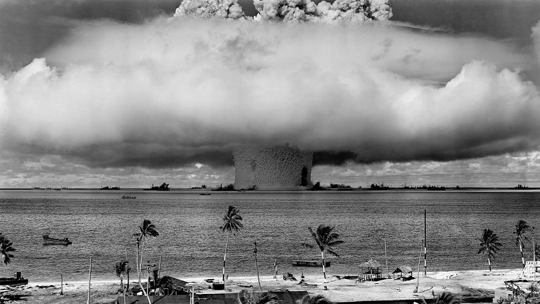
Many leave the islands in search of the same things as other migrants – work, education, health care. But an unusual shadow trails the Marshallese. Following the Second World War, the United States used the islands as a testing ground for its nuclear weapons program, detonating more than 60 bombs over a dozen years. The largest, the “Castle Bravo” test, blew a crater 6,510 feet wide in the lagoon of Bikini Atoll and ignited a fireball visible from 250 miles away. Children on neighboring islands played in the ashy fallout, which fell like snow from the sky.
Today, thanks to a treaty signed when the Marshall Islands gained independence from the U.S. in 1986, Marshallese citizens are allowed to live and work in the States. Between 2000 and 2010, the number here grew by 237 percent. This mass migration is driven in part by poverty and lack of services in the islands. But it’s also a legacy of the U.S. occupation and the various damages it left behind. And it’s accelerated by climate change, which has started to drown the low-lying archipelago……
Mote and many other Marshallese in the U.S. live in a precarious state of in-between. Granted residency but not citizenship, the Marshallese have virtually no political influence and rank as the single poorest ethnic group in the U.S. In 1996, the Personal Responsibility and Work Opportunity Reconciliation Act of 1996 (or welfare reform) eliminated federal health care funding for Marshallese by excluding them from the group of “qualified aliens” who are eligible for benefits. That means that Marshallese citizens who live, work and pay taxes in the U.S. are ineligible for Medicaid and Medicare unless states opt to provide it. Oklahoma has not done so.
Mote loves Enid, but life is more difficult than he anticipated. Rent and groceries are expensive, and there is the problem of the funerals. Few of the elderly Marshallese in the city live into their 70s, according to Mote and other residents I spoke with. Instead, they’re dying young – of diabetes, kidney failure and heart disease, illnesses they might have been able to manage under other circumstances. Often they leave behind families saddled with medical debt.
Mote described the struggle in his community as part of a legacy of broken promises made by the U.S. – promises that the islanders displaced by the nuclear program would be able to return; that those relocated or sickened would be provided for; that the testing was for “the good of mankind.” America tested 67 nuclear bombs in the islands, Mote reminded me. “Then they’re just going to let us die over here?”
…………Inside the clinic I met Daina Joseia, a 63-year-old woman wearing a loose, floral-print dress of a style worn by many Marshallese women. Joseia smiled easily, but she seemed frail and tired. She moved to Enid in 1999, seeking care for various physical ailments – too many for me to write down, she said. Once she arrived, she found she couldn’t afford insurance. She often feels scared or ashamed to see a doctor because she’s uninsured, but she’s sick enough that she can’t avoid it. She has a lot of bills to pay. The day we met, Joseia had a large sore on her back.
Joseia believes her ill health might be connected to something she saw in the islands when she was a little girl: an enormous flash of light, she told me through an interpreter, “a real bright color, like a fire.” It wasn’t until she was an adult that she understood what she’d seen.
Between 1946 and 1958, the United States tested 67 nuclear bombs on or near two atolls at the northern end of the Marshall Islands – an area that became known as the Pacific Proving Grounds. The largest weapons test, a hydrogen bomb set off on Bikini Atoll in 1954, detonated with more than a thousand times the power of the bomb dropped on Hiroshima during World War II. Though Bikini Atoll had been evacuated, the wind blew radioactive fallout onto several inhabited islands, and perhaps much further away. (A few days later, a doctor in Tennessee reported that cattle in the state showed unusually high levels of radioactivity in their thyroids.) Officially, the U.S. claimed only three inhabited islands were seriously affected by fallout from Bravo. But an internal report declassified in the 1990s suggested that radiation from that and subsequent tests may have affected as many as 13 atolls.
On neighboring islands, many health effects were immediate: radiation burns, damage to stomach linings, low blood cell counts. Others surfaced gradually in the following months and years. Rates of leukemia, breast cancer, and thyroid cancer rose. Children were born deformed, or had their growth stunted.
“In a nation that lacks a single oncologist or cancer treatment facility, the Marshallese experience extremely high rates of cancer; degenerative conditions associated with radiation exposure; miscarriage and infertility; and, the birth of congenitally deformed children,” environmental anthropologist Barbara Rose Johnston wrote in a 2013 report on the legacy of the tests. According to a 2012 report by a special rapporteur for the U.N., those health issues were “exacerbated by near-irreversible environmental contamination,” which in turn led to “indefinite displacement” for many Marshallese.
According to Dr. Neal Palafox, a cancer specialist at the University of Hawaii who worked in the Marshall Islands for nearly a decade, the weapons testing damaged more than flesh and bone. It constituted a form of cultural trauma, too. Palafox believes the U.S. chose to conduct the testing where it did because residents had little power to push back. “Not for a second does anybody believe that there was any kind of informed consent,” Palafox said in an interview. There is some evidence the U.S. knew that the winds had shifted before the Bravo test in a direction that endangered inhabited islands, yet proceeded anyway. Afterward, many of the people most heavily exposed to the Bravo fallout became test subjects in Project 4.1, a classified medical study of radiation exposure run by the U.S. government. Later in 1954, the Congress of the Marshall Islands requested a halt to the testing, which the U.S. rejected on the grounds that the islanders “had no medical reason to expect any permanent after-effects on the general health of the inhabitants.”
Joseia remembers the sickness that followed the bright light. She remembers women giving birth to babies that “didn’t look like human beings.” One man I met in Enid described infants born looking “like jellyfish.” Another woman, Joelynn Karben, told me she remembered infants born after the nuclear tests as incoherent lumps of flesh, like bunches of grapes. Her own brother was born missing part of his skull, and her mother died from what she thinks was thyroid cancer.
The bombings are deeply etched in the islands’ collective memory, and some people I met in Enid blamed them for all manner of illnesses. It’s impossible to say which, if any, of Joseia’s health issues are directly related. The sore she had on her back the day we met was actually a symptom of her diabetes, a nurse told me later – though that, too, is linked to the U.S. military presence in the islands, specifically to the dietary changes that accompanied imports of processed, sugary foods.
More than 90 percent of the food in the Marshall Islands is imported from the U.S. now. Before the U.S. occupation, the Marshallese ate mostly fish, breadfruit, coconut, and pandanus, a knobby fruit resembling a large pinecone. World War II and the nuclear testing that followed damaged local crops and created a stigma around local foods, which residents of islands affected by fallout had been warned by the U.S. not to eat. Some people were forced to relocate to desolate islands where growing food was impossible. Imported white rice, canned meats, refined sugar, and other cheap, processed foods filled the gap. Diabetes rates soared.
In Enid, it seemed like almost everyone I met had diabetes. In fact, the Marshallese have the second highest rate of Type II diabetes in the world. While the illness can be controlled, it becomes gruesome if not properly managed. Complications can escalate to blindness, nerve damage, and serious infections, which can require amputation.
Joseia’s diabetes is acute. Her kidneys are failing, and she needs dialysis. But there’s nowhere for her to get it in Enid without insurance. When her condition gets bad enough she can be admitted to an emergency room – but only in a crisis……..
Marshallese also bear the rare burden of radiation-related illness. Cancer killsmore Marshallese citizens than any other disease but diabetes, and according to a 2004 report by the U.S. National Cancer Institute, it is likely some radiation-related cancers have yet to develop or be diagnosed in people who lived on the islands between 1948 and 1970………
Mote is an optimistic guy, and a relentless jokester. He claims that “tired” is not part of his vocabulary. He hesitates to speak badly about anyone.
But watching Enid’s Marshallese families get sick so often, listening to them fret about coming up with rent money, going to all the funerals – it does wear on him. He constantly fields requests for help, but there’s only so much he can do; his toehold in the city bureaucracy is still tenuous. He’d like to run for a seat on the city council, but without citizenship he’s ineligible. Mote believes that if Oklahomans understood more about the history and culture of the islands, they might be more sympathetic to the plight of their people. But he also acknowledges that Enid, which is more than 80 percent white, “has a lot of issues with race” to overcome first.
“I don’t want to blame someone,” Mote said, when I asked what he thought the U.S. owed the Marshallese. “But yes, I feel frustrated sometimes, to see all these people getting sick every day, dying every day… If the state is not going to help us, and the government is not listening to us, who will help us?” He went on, “Do we just scatter our stuff and leave Oklahoma?”…….http://narrative.ly/how-years-of-ruthless-nuclear-testing-in-the-south-pacific-forged-americas-most-impoverished-ethnic-group/
July 21, 2017
Posted by Christina Macpherson |
health, PERSONAL STORIES, politics international, USA |
Leave a comment
July 17 2017 Terry R Scheidt Seems like Terry is the only responder, is there anyone else, It is July 2017, been writing to Trump to use his EO but he never responds either. Boy is this America?
January 12, 2014 Aloha, It is now 01/2014 (24 years) since RECA was enacted. We are still waiting for justice. Our country denied, deceived, has no integrity or values by denying victims of radiation they caused. The justice system denied and dismissed most litigation cases claiming the Congress had to enact better laws to address radiation.
They claimed radiation does not cause cancer, of course we know better in the PACIFIC, Micronesia, Guam, Johnston
Island and many other location. The unfortunate thing is 70 years have passed and many have already died which is our countries hope.
May 13, 2017 It is now May 2017, yes Terry is still alive and still seeking equity, HA. Our delegates never heard such a word, denial is more like it. I will advocate for loyalty till I die. Hard to believe our nation does things I thought only others did.
I was a range rat, many friends on Midway, Eniwetok, Wake, French Frigate Shoals, Christmas, Johnston, Jarvis, Canton damn so many.
*************************************************************************************************************
 Way back in 2010, we made a small post about the the plight of residents of Guam, who were suffering from illnesses resulting from radiation exposure. Research presented to the National Academy of Science and National Research Council described the effects on this community, of atmospheric testing of nuclear weapons. The Pacific Association for Radiation Survivors, a nonprofit organization, was lobbying U.S. Congress to include Guam in the Radiation Exposure Compensation Act Program, so that they could receive help and compensation for their radiation-induced illnesses.
Well, what happened about this?
Thanks to one reader of this website, we have been kept up to date over the years:
TERRY R SCHEIDT by Terry R Scheidt January 6, 2011 I WAS A 1962 JOHNSTON ISLAND PARTICIPANT. I WAS AT GROUND ZERO AND EXPOSED TO HIGH LEVELS OF RADIATION FOR WHICH I GOT CANCER. I HAVE NOT BEEN COMPENSATED UNDER THE DOE/EEOICPA ACT BECAUSE I DID NOT WORK FOR DOE. I WAS DENIED. I RECEIVED UNEQUAL COMPENSATION FROM DOJ (RECA) BUT AT A MUCH LESSER AMOUNT THAN DOE (EEOICPA). NO MEDICAL AND LESS THAN HALF THAT OF DOE. PLEASE SUPPORT HR 5119/S3224.
April 23, 2011 Do our representatives really care? Why have both HR5119/S3224 both died in committee. Our government does not live up to responsibility. They cause us harm than ignore us as if we do not exist. Aloha.
April 26, 2011 I am a 1962 ground zero victim of the Johnston Island PPG. Senators Pangelinan, Udalls and Rep Lujan have done nothing. All legislation died in committee. They turned their backs on us again. Shame.
June 25, 2012 Continue reading →
July 17, 2017
Posted by Christina Macpherson |
health, Legal, OCEANIA, PERSONAL STORIES, USA |
3 Comments
 Looking for Hanford’s radioactive hot spots from the air http://www.tri-cityherald.com/news/local/hanford/article160823189.html, BY ANNETTE CARY, acary@tricityherald.com Hanford will use an airplane to save some employee legwork this week.
A small plane based at the Pasco airport will fly over central Hanford to survey for slight increases in temperature. Thermal images will be collected to check for hot spots that could be caused by buried radioactive waste.
The data will be used to augment information collected two years ago with a helicopter equipped with sensors to measure levels of radiation and to help predict what type of radioactive contaminants might be present.
“It gives us a starting point of where to go look,” said Mike Cline, Department of Energy director for the Hanford nuclear reservation soil and groundwater division.

Work then will be done to determine the extent and type of waste that may have been buried in central Hanford from World War II through the Cold War, when Hanford was producing plutonium for the nation’s nuclear weapons program.
Characterization will be done with more intrusive methods, such as boring into the ground, before plans are developed for how to clean up the waste.
July 14, 2017
Posted by Christina Macpherson |
radiation, USA |
Leave a comment
 Study Links Three Mile Island Nuclear Partial Meltdown To Thyroid Cancers In Surrounding Counties https://cleantechnica.com/2017/06/07/study-links-three-mile-island-nuclear-partial-meltdown-thyroid-cancers-surrounding-counties/, June 7th, 2017 by James Ayre A new study from the Penn State College of Medicine has — for the first time, apparently — linked the partial meltdown of the Three Mile Island Nuclear Generating Station on March 28, 1979, to thyroid cancers in the surrounding counties.
To be more exact here with the wording, the researchers have found a “shift in (thyroid cancer) cases to cancer mutations consistent with radiation exposure from those consistent with random causes,” as worded by the press release.
As most people reading this will remember, the partial meltdown at the Three Mile Island facility — near Harrisburg, Pennsylvania — definitely released some radiation into the wider environment, but according to the United States Nuclear Regulatory Commission, the levels were low enough that no detectable health effects were associated with it.
The new work — which analyzed tumor samples from people who have been verified through an extensive vetting process to have lived in areas surrounding the nuclear facility at the time of the accident, to have stayed in the area, and to have later developed thyroid cancer there — shows that this apparently hasn’t, in fact, been the case.
The press release provides more:
“In this retrospective cohort study — meaning the patients in the study already had thyroid cancer and were known to have been exposed to the TMI accident — lead researcher Dr David Goldenberg, professor of surgery, and colleagues identified 44 patients who were treated at the Penn State Health Milton S Hershey Medical Center for the most common type of thyroid cancer, papillary thyroid cancer, between 1974 and 2014. The patients were then divided into two groups: at risk and control groups.
“Patients in the at-risk group were those who developed cancer between 1984 and 1996, consistent with known latency periods of radiation-induced thyroid cancer, and who lived in at-risk geographical areas — based on reported weather patterns — at the time of the accident.”
“This definition was designed to allow us to identify relatively acute effects of radiation exposure from the accident,” explained Goldenberg.
The press release continues: “Patients who developed cancer outside of the expected latency period were placed in the control group. Researchers searched through all thyroid cancer tumor samples in the hospital’s possession from the study period for patients who lived in at-risk regions Dauphin, York, eastern Cumberland, Lancaster and western Lebanon counties. They used genealogical software to verify that the patient was in an at-risk area during the accident, remained until cancer developed and was treated at the Medical Center. The tumor samples of those patients who were positively linked to the TMI accident area were then processed through the Penn State Institute for Personalized Medicine to determine genetic makeup of the cancer.
“While most thyroid cancers are sporadic, meaning they happen without clear reasons, exposure to radiation has been shown to change the molecular makeup of the cancer, according to the researchers. The researchers observed an increase in the genetic mutation caused by exposure to low-dose radiation in the at-risk group and a decrease in the incidence of sporadic thyroid cancer, identified by a specific genetic mutation known as BRAF. The BRAF mutation is typically not present in the radiation-induced types of thyroid cancer.
“The study indicates that these observations are consistent with other radiation-exposed populations. In the control group, 83% of patients had the BRAF mutation. The BRAF mutation was found in only 53% of patients in the at-risk group. In the at-risk group, there was also a rise in other molecular markers seen in radiation induced thyroid cancer, the researchers added.”
So, this is yet another example of the way that nuclear energy is probably not the safest (or most economical) way to go about providing people with electricity.
Goldenberg continued: “While no single marker can determine whether an individual tumor is radiation-induced, these data support the possibility that radiation released from TMI altered the molecular profile of thyroid cancers in the population surrounding the plant.”
The researchers are now planning to expand the work to include patients from other regional hospitals, to try and determine if the correlation is true on the larger scale as well.
The new research is detailed in a paper published as a supplement to the latest issue of the journal Laryngoscope.
July 10, 2017
Posted by Christina Macpherson |
health, USA |
Leave a comment
The highest incidence of cancer, looking across 60 years, was among those who were children when they were exposed. This is not news. The surprise is that in this group, females suffered twice as much cancer across their lives than did males.
The difference between male and female, with males more resistant to radiation harm, is measurable in all the age-of-exposure cohorts, even into old age
For every two men exposed in adulthood who died of cancer, three women died of cancer
 Females Exposed to Nuclear Radiation Are Far Likelier Than Males to Suffer Harm http://www.passblue.com/2017/07/05/females-exposed-to-nuclear-radiation-are-far-likelier-than-males-to-suffer-harm/, by Mary Olson • July 5, 2017 • The new nuclear weapons ban treaty, to be most likely adopted by the United Nations General Assembly this week, arises from hope for our future. The negotiations for the treaty have elevated new information about the damage from ionizing radiation to the world stage. That is exactly where it needs to be heard.
More cancers are derived from radiation than national regulators now report. They may not be aware that both age-at-exposure and one’s sex determine how much harm we suffer from radiation.
Women exposed to ionizing radiation during childhood suffer from cancer at a rate 10 times higher than predicted by traditional models used by the United States Nuclear Regulatory Commission.
The models assume that “Reference Man” represents us all. Invented to simplify calculations, Reference Man is 25 to 30 years old, weighs 154 pounds, is 5 feet 6 inches tall, “Caucasian and has a Western European or North American” lifestyle.
There has never been a pause as more than 2,000 atomic tests since 1945 have been spreading radioactivity worldwide and hundreds of nuclear factories have proliferated. No one asked if Reference Man is an appropriate stand-in for all of humanity and radiation harm.
It turns out that adult males are hurt by radiation, but they are significantly more resistant than their mothers, sisters, wives or daughters. Use of Reference Man masks gendered impacts and therefore systematically underreports radiation harm.
My first paper on radiation, published in 2011, “Atomic Radiation Is More Harmful to Women,” answers a simple question from a woman who raised her hand at one of my public lectures in North Carolina a year earlier, asking, “Does radiation exposure harm me more than a man?” She did not mean in pregnancy; she meant her own body.
I was shocked. That was 2010; in decades of work on radioactive waste policy, I had never heard of gender as a factor in radiation harm. I could not even attempt an answer. When the literature yielded nothing, my mentor, Rosalie Bertell, suggested I look at the numbers myself. Bertell was a mathematician and a recipient of a Right Livelihood Award, which is called an alternative to the Nobel prizes. Bertell devoted her life to communities hurt by radiation, including the ones she pointed me to in order to examine the data.
Only one large data set includes all ages and both genders exposed together to a single flash of gamma and neutron radiation: the survivors of the US nuclear attacks on Hiroshima and Nagasaki in 1945. They survived in shelters or other shielding amid the first horrific years. Sixty years of data on cancer incidences and fatality among the survivors — called the Hibakusha — was published by the US National Academy of Science in 2006.
I regret that this data even exists — it was my government that used the first nuclear bombs on cities full of people, and I certainly wish they had not. I nonetheless use the numbers. They hold a message for humanity: gender matters in the atomic age. That does not make it right.
The highest incidence of cancer, looking across 60 years, was among those who were children when they were exposed. This is not news. The surprise is that in this group, females suffered twice as much cancer across their lives than did males.
The difference between male and female, with males more resistant to radiation harm, is measurable in all the age-of-exposure cohorts, even into old age — the difference between genders is smaller when adults are exposed rather than when they are children.
For every two men exposed in adulthood who died of cancer, three women died of cancer. A 50 percent difference in the rate of cancer death from radiation exposure in adulthood is not insignificant to most female readers! Indeed, this finding is changing my own behavior in fieldwork.
The question, Why is gender a factor?, is waiting for researchers to tackle. A team lead by David Richardson in the Department of Epidemiology at the University of North Carolina, Chapel Hill, in 2016 showed that the A-bomb cancer data mirrors the outcomes of many smaller radiation exposures over time, adding up to the same exposure level as the Japanese survivors.
We are all getting these smaller radiation exposures.
The 10-females-to-1-male ratio cited here is the comparison of cancer outcomes from the youngest female survivors versus the 25- to 30-year-old males: the group that underpins Reference Man. This dramatic order-of-magnitude difference in biological research is like a siren blaring: pay attention!
It is time to retire Reference Man. Any level that is set for public exposure to radiation should be based on little girls. When we protect them, everyone is better protected. Unless we protect girls, our collective future is at stake.
The radiation and gender “siren” has not been heard widely, but it has been heard. In 2014, I was honored to present my findings at the Vienna Conference on the Humanitarian Consequences of Nuclear Weapons and exhilarated to read the draft treaty on the prohibition of nuclear weapons, where one basis for the need for the new treaty is the disproportionate harm to women and girls from ionizing radiation.
The treaty falls within the jurisdiction of humanitarian law, which includes the most human activity of all: making babies, from which flow future generations. For these countless people to come, I celebrate that the news on radiation has been heard at the UN as it takes the next vital step of voting on a new nuclear-ban treaty.
It is a sturdy seedling of hope.
July 10, 2017
Posted by Christina Macpherson |
2 WORLD, radiation, women |
Leave a comment
 Climate change’s brutal toll on Africa, newsroom, 9 Jul 17 United Nations International Children’s Emergency Fund The vast majority of child migrants uprooted by violence, poverty and climate change remain in Africa, write UNICEF’s Lachlan Forsyth and Patrick Rose
The vast majority of child migrants uprooted by violence, poverty and climate change remain in Africa, according to a new report by child rights organisation UNICEF.
It is a bitter irony that the countries that have done the least to cause climate change are going to suffer the most. Countries that have minuscule carbon footprints are going to be the first to suffer the consequences of flooding, drought and displacement.
In West and Central Africa, the impact of climate change will be especially severe, with the region set to experience a 3 to 4 degree rise in temperature this century – more than one and a half times higher than anywhere else on the planet.
For the millions of people living in this vast region, longer droughts and intense storms will make farming and herding more difficult, and people will be forced to seek a better life.
Already, children account for more than half of the 12 million West and Central African people on the move each year. Contrary to many opinions, 75 percent of them remain in sub-Saharan Africa, with fewer than one in five heading to Europe.
This current wave of migrants is just the start of a swelling humanitarian crisis. Migration involving children and young people is likely to increase due to rapid population growth and urbanisation, climate change, inequitable economic development, and persistent conflict.
Poverty is a powerful driver of migration in West and Central Africa. Countries with high levels of poverty are more likely to be a source of migration as people look to improve their lot in life. In interviews conducted by UNICEF, migrants describe the feeling of ‘having nothing to lose,’ aware that by migrating they are taking a risk, but it is a gamble that might pay off.
Helene is one of them. She is 14 years old, holding a sign saying “I am a child, and not a commodity.”……..
With drought and temperatures intensifying in West and Central Africa, tensions in accessing scarce resources for cattle are also increasing hostilities in many rural areas, pushing greater numbers of people towards cities. But with more than 100 million people living in coastal cities less than one metre above sea level, even conservative estimates of a sea-level rise could result in the forced displacement of millions of climate refugees as people seek safety for their families and children.
For organisations like UNICEF, the challenges are enormous and complex. Aid money can only fix so much, when monumental societal changes are required also. Until the root causes of poverty are addressed, and solutions provided in the form of economic opportunities, access to health care and access to quality education, people are likely to continue to take dangerous risks migrating for better opportunities.
Unless the long-term planning of governments and civil society is equipped to anticipate these climate shocks and subsequent migration, the unmitigated impact of these forces will create detrimental outcomes for children across the region.
To read the full UNICEF report, click here https://www.newsroom.co.nz/2017/07/09/37772/climate-changes-brutal-toll-on-africa
July 10, 2017
Posted by Christina Macpherson |
AFRICA, children, climate change |
Leave a comment
Tahiti test veterans await compensation http://www.radionz.co.nz/international/pacific-news/334455/tahiti-test-veterans-await-compensation The head of French Polynesia’s test veterans organisation Roland Oldham has cautiously welcomed a government letter expressing support for its cause.
Mr Oldham said for years, anti-independence leaders had stayed away from the commemorations for the victims of the French nuclear weapons tests.
To mark the 51st anniversary of the first test, the president Edouard Fritch sent a minister and in a letter advised Mr Oldham that France was broadening its compensation offer.
Mr Oldham said for years there were undertakings from the French state which were barely followed up.
He also said the gravity of the aftermath of the tests was sinking in and politicians from all camps have used the nuclear issue in their recent campaigns.
“We have been here for so long and we know politicians so well that all I’m awaiting from them is some concrete action,” he said. Roland Oldham said he would like to have dates for when previously rejected claims would be reconsidered as well as recognition of the lasting health problems now emerging among the veterans’ children.
July 5, 2017
Posted by Christina Macpherson |
health, OCEANIA, weapons and war |
Leave a comment
Guardian 29th June 2017, The government must reverse its opposition to new building regulations that
ensure homes, hospitals and schools do not overheat as the number of deadly
heatwaves rises, according to its official climate change advisers. The
Committee on Climate Change (CCC) recommended the new regulations in 2015
but ministers rejected the advice, citing a commitment to “reduce net
regulation on homebuilders”.
Without action, the number of people dying as
a result of heat is expected to more than triple to 7,000 a year by 2040,
the CCC warns in its annual report on the UK’s pr ogress on tackling global
warming. Earlier in June, Britain experienced its longest period with
temperatures above 30C since 1976. Heatwaves are known killers in the UK
and the number of hot days is rising. On the hottest day of the year in
2016 there were almost 400 extra deaths, while a heatwave in 2006 led to
680 people dying and another in 2003 contributed to the deaths of about
2,000 people.
https://www.theguardian.com/environment/2017/jun/29/failure-to-update-building-regulations-could-triple-heatwave-deaths-by-2040
July 1, 2017
Posted by Christina Macpherson |
climate change, health, UK |
Leave a comment
http://www.tri-cityherald.com/news/local/hanford/article158751159.html BY ANNETTE CARY acary@tricityherald.com A bill that would allow ill Hanford workers to more easily get worker compensation claims approved has popped up very late in the state legislative session.
It’s essentially the same as a bill passed earlier this year by the House. But the initial bill failed to be scheduled for a vote to pass out of the Senate Commerce, Labor and Sports Committee before an early April deadline.
Since then, three Democratic state senators from the west side of the state have introduced a new Senate bill that was scheduled to be discussed on Wednesday in an executive session of the same Senate committee. But the executive session was canceled after a hearing on another bill ran long.
Now the committee is unlikely to meet again this session as the Legislature works to pass a budget by Friday, making chances slim that the bill will advance this year. But the introduction of the new bill signals continued interest by lawmakers in the issue.
Sen. Karen Keiser, D-Kent, introduced the new Hanford worker bill, SB 5940, out of concern for worker safety after the partial collapse of Hanford tunnel storing highly radioactive waste was discovered in May, according to her staff. Sen. Steve Conway, D-Tacoma, and Sen. Guy Palumbo, D-Maltby, also are sponsors.
The breach in the tunnel resulted in an emergency order for more than 3,000 workers to shelter in place, some for hours, before it was determined that no airborne radioactive material had been released. No one was injured.
But concern remains because of aging infrastructure at Hanford, some dating to the 1940s, while the Department of Energy is expected to continue cleanup of radioactive and hazardous chemical contamination at the nuclear reservation for decades to come. Hanford produced plutonium for the nation’s nuclear weapons programs from World War II through the Cold War.
Proving a worker compensation claim can be impossible for workers, when even DOE may not know precisely what workers are exposed to at Hanford, said workers and former workers who testified at hearings on HB 1723.
The state Department of Labor and Industries requires proof that an exposure to chemical vapors or other hazardous chemical or radioactive materials at Hanford caused a worker’s illness.
But the original bill that passed the House, HB 1723, and the new Senate bill, SB 5940, would require the state agency to presume that a wide range of illnesses were caused by working at Hanford. A worker would have to be assigned to just one eight-hour shift anywhere at Hanford to be covered.
DOE, which is self-insured and hires a contractor to administer worker claims, could rebut the presumption that disease was caused by Hanford exposure with evidence about a worker’s health, including smoking, weight, lifestyle, hereditary factors or exposure from other activities.
Covered diseases would include a wide range of cancers, respiratory disease, any heart problems experienced within 24 hours of an exposure, and neurological disease. The coverage would continue for a worker’s lifetime.
The Washington Self-Insurers Association opposed the bill, pointing out that one eight-hour shift on a site half the size of Rhode Island would entitle a worker to a presumption of coverage for life.
July 1, 2017
Posted by Christina Macpherson |
health, politics, USA |
Leave a comment
Repeated radiation warnings go unheeded at sensitive Idaho nuclear plant Center fr Public Integrity 29 June 17
“…….Key findings
- The chairman of a safety committee at Idaho National Laboratory wrote a memo in 2009 warning that damaged plutonium plates could endanger workers. He said in a legal deposition that he shared it with 19 people at the lab, including high-ranking managers.
- The managers ignored most of his recommendations, he said. An accident occurred in which 16 workers inhaled plutonium dust particles. Two minutes beforehand, a supervisor who had been warned about the risks relayed an order for it to proceed.
- Three workers sued, claiming their inhalations brought injury and illness. Though BEA, the contractor running the lab, disagreed about the severity of the exposures, it settled the suits confidentially and then petitioned the federal government to pay its legal fees and settlement costs.
- Word of this incident reached local newspapers, but there were other radiation exposures at the lab — both before and after this incident — that did not attract public notice. Despite work stoppages and re-training of workers, unsafe conditions persisted, according to government reports.
- The year of the plutonium-exposure accident, BEA received 92 percent of all the profit its contract made available — $17.1 million. In 2012 the Energy Department withheld $500,000 in profits from BEA for radiation events, but later gave all of the money back to the company. In March 2014, the Department of Energy extended BEA’s contract to operate Idaho National Laboratory for five more years without holding a competition……..https://apps.publicintegrity.org/nuclear-negligence/repeated-warnings/
June 30, 2017
Posted by Christina Macpherson |
health, USA |
Leave a comment






 nuclear-news