Link above is to a PDF, 47 page, readable report. Very well done. stock out
New research reveals significant Fukushima radioactive particle release
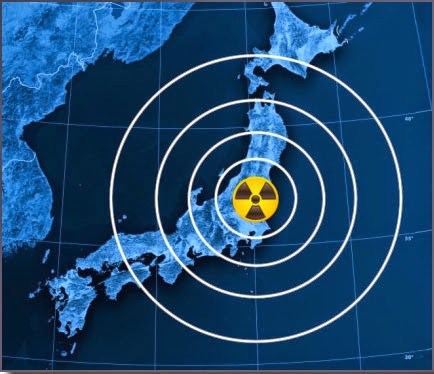 Fukushima radioactive particle release was significant says new research https://www.eurekalert.org/pub_releases/2018-05/uom-frp052418.php UNIVERSITY OF MANCHESTER
Scientists say there was a significant release of radioactive particles during the Fukushima-Daiichi nuclear accident.
The researchers identified the contamination using a new method and say if the particles are inhaled they could pose long-term health risks to humans.
The new method allows scientists to quickly count the number of caesium-rich micro-particles in Fukushima soils and quantify the amount of radioactivity associated with these particles.
The research, which was carried out by scientists from Kyushu University, Japan, and The University of Manchester, UK, was published in Environmental Science and Technology.
In the immediate aftermath of the Fukushima Daiichi nuclear accident, it was thought that only volatile, gaseous radionuclides, such as caesium and iodine, were released from the damaged reactors. However, in recent years it has become apparent that small radioactive particles, termed caesium-rich micro-particles, were also released.
Scientists have shown that these particles are mainly made of glass, and that they contain significant amounts of radioactive caesium, as well as smaller amounts of other radioisotopes, such as uranium and technetium.
The abundance of these micro-particles in Japanese soils and sediments, and their environmental impact is poorly understood. But the particles are very small and do not dissolve easily, meaning they could pose long-term health risks to humans if inhaled.
Therefore, scientists need to understand how many of the micro-particles are present in Fukushima soils and how much of the soil radioactivity can be attributed to the particles. Until recently, these measurements have proven challenging.
The new method makes use of a technique that is readily available in most Radiochemistry Laboratories called Autoradiography. In the method, an imaging plate is placed over contaminated soil samples covered with a plastic wrap, and the radioactive decay from the soil is recorded as an image on the plate. The image from plate is then read onto a computer.
The scientists say radioactive decay from the caesium-rich micro particles can be differentiated from other forms of caesium contamination in the soil.
The scientists tested the new method on rice paddy soil samples retrieved from different locations within the Fukushima prefecture. The samples were taken close to (4 km) and far away (40 km) from the damaged nuclear reactors. The new method found caesium-rich micro-particles in all of the samples and showed that the amount of caesium associated with the micro-particles in the soil was much larger than expected.
Dr Satoshi Utsunomiya, Associate Professor at Kyushu University, Japan, and the lead author of the study says “when we first started to find caesium-rich micro-particles in Fukushima soil samples, we thought they would turn out to be relatively rare. Now, using this method, we find there are lots of caesium-rich microparticles in exclusion zone soils and also in the soils collected from outside of the exclusion zone”.
Dr Gareth Law, Senior Lecturer in Analytical Radiochemistry at the University of Manchester and an author on the paper, adds: “Our research indicates that significant amounts of caesium were released from the Fukushima Daiichi reactors in particle form.
“This particle form of caesium behaves differently to the other, more soluble forms of caesium in the environment. We now need to push forward and better understand if caesium micro-particles are abundant throughout not only the exclusion zone, but also elsewhere in the Fukushima prefecture; then we can start to gauge their impact”.
The new method can be easily used by other research teams investigating the environmental impact of the Fukushima Daiichi accident.
Dr Utsunomiya adds: “we hope that our method will allow scientists to quickly measure the abundance of caesium-rich micro-particles at other locations and estimate the amount of caesium radioactivity associated with the particles. This information can then inform cost effective, safe management and clean-up of soils contaminated by the nuclear accident”.
USA Department of Veterans Affairs conveniently lost hundreds of claims for children, grandchildren of contaminated veterans
 VA lost or misplaced hundreds of claims for children, grandchildren of contaminated veterans http://www.wfla.com/8-on-your-side/investigations/va-lost-or-misplaced-hundreds-of-claims-for-children-grandchildren-of-contaminated-veterans/1194448265, Steve Andrews May 23, 2018
Cosmic radiation will damage the brains of space travellers
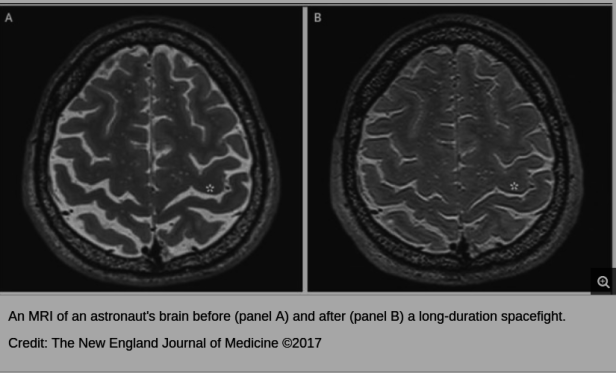
Can we protect the brain from cosmic radiation? Medical News Today , As we prepare to enter a new era of space travel, we must find ways of averting health risks posed by the cosmic environment. Deep space radiation, in particular, is known to impair cognitive function………. One main threat comes from cosmic radiation, which can harm the central nervous system, altering cognitive function and leading to symptoms similar to those found in Alzheimer’s disease.
……. ‘Cosmic radiation may affect brain long-term’Previous research conducted by Rosi and team found that, after mice were exposed to a level of radiation roughly equivalent to what human astronauts might encounter during an outer space mission, their capacity to differentiate between familiar and unfamiliar objects was impaired.
Usually, when mice are faced with two objects — one that is new and unknown to them and one that they formerly explored — they will spend more time familiarizing themselves with the new object.
However, the animals that had been exposed to radiation tended to spend an equal amount of time exploring both objects, which suggested to the researchers that the mice had forgotten they had already been exposed to one of the two.
Other symptoms that the mice presented included problems with social interactions and a sense of elevated anxiety. Rosi and team note that this was likely because of the effect the strong radiation had on the microglia, or nerve cells found in the brain and spinal chord that are part of the central nervous system’s immune mechanism.
When microglia are activated, they can cause symptoms — such as impaired memory recall — that are consistent with those of neurodegenerative disorders.
This is partly due to the fact that they are driven to destroy synapses, or the connections formed between brain cells that allow them to convey information.
“We are starting to have evidence that exposure to deep space radiation might affect brain function over the long-term, but as far as I know, no one had explored any possible countermeasures that might protect astronauts’ brains against this level of radiation exposure.” Susanna Rosi………https://www.medicalnewstoday.com/articles/321898.php
Timothy Mousseau to lead research into radiation in Chernobyl dogs
South Carolina researcher wants to learn about radiation by researching stray dogs near Chernobyl https://www.postandcourier.com/features/south-carolina-researcher-wants-to-learn-about-radiation-by-researching/article_eee33baa-5454-11e8-89c1-17da43576a65.html By Mary Katherine Wildeman mkwildeman@postandcourier.com May 14, 2018
Japan’s planned Olympics torch relay route found to have high levels of radiation
the proposed torch route samples had the highest mean radioactivity due to their close proximity to the plant. Based on the measurement, we estimated qualitatively that the radiation exposure of people living near the Azuma Sports Park area was 20.7 times higher than that of people living in Tokyo. The main tourist and proposed torch routes had radiation exposure of 24.6 and 60.6 times higher, respectively, than in Tokyo.
our results showed that the highest radioactivity level was at the proposed torch route, which is located to the northeast of the plant.
Olympic officials should consider using the results of this project to decide whether the radioactivity level at the proposed torch route and the Olympic venues are within acceptable level.

Measuring Radioactivity in Soil and Dust Samples from Japan Fukushima IQP Final Report. An Interactive Qualifying Project Report Submitted to the Faculty of the Worcester Polytechnic Instituteby Thang Pham Steven Franca Son Nguyen
Abstract
A radioactivity map of Cesium-137, a radioactive material emitted from the Fukushima Dai-ichi Nuclear Power Plant, was created by examining 30 soil and dust samples originating from Japan. A Sodium Iodide (NaI) detector measured gamma rays emitted from the samples. Qualitative evaluation of human exposure to radio-cesium in five sets of locations in Japan shows the radioactivity of tested samples. The Fukushima section of one of the Olympic proposed torch route has a 60 times higher activity of Cesium-137 than the activity of the samples from Tokyo.
Acknowledgements…….
Executive Summary
Overview
On March 11th, 2011, a magnitude 9.0 earthquake hit the Fukushima Prefecture of Japan (AESJ, 2015, p.19). This resulted in major structural damage to the surrounding area. Following the earthquake, a 13-meter tsunami hit the Fukushima Dai-ichi Nuclear Power Plant and disabled the backup the diesel backup power generator and the cooling water pumps needed to keep the Power Plant running in the event of a disaster. Since power restoration was unsuccessful and there was major structural damage caused to the Units by the tsunami, there were high concentrations of nuclear particles released into the air.
The amount of radioactive materials emitted from the Power Plant raised health and environmental concerns to the people living in the areas around the Fukushima Dai-ichi Nuclear Power Plant. In fact, several studies conducted after the accident determined the activity of radioactive isotopes in the environments. These studies around Fukushima provided excellent understanding of the activity of radioactive isotopes in the environment and the health effects on humans.
With the upcoming XXXII Olympiad in 2020 hosted by Japan, it is necessary to look into the radioactivity of Olympic venues as well as tourist attractions in the host cities. Previous studies pose a major gap because they focused on regions that are closer to the Fukushima Daiichi Nuclear Power Plant, where the highest concentration of radioactive fallout is located. On the other hand, the radioactivity in other locations in Japan is relatively less studied. Since thousands of athletes and millions of visitors are travelling to Japan for the Olympics, there has been widespread concern from the international community about radiation exposure. Therefore, it is important to investigate the extent of radioactive fallout from the Fukushima Dai-ichi incident.
Project goals and Objectives
The goals of the project were to measure the radioactivity of Cesium-137 in soil and dust samples from Japan and to generate a map that illustrates the activity of Cesium-137 in five locations in Japan.Understanding the radioactivity in Japan soil would help in giving an estimation of human exposure to radioactivity in the studied areas. The primary objectives of this project were to:
- Perform soil sample preparation for measurement, including categorizing, drying and sub-sampling
- Measure the activity of Cesium-137 in the samples and analyze the radioactivity at different locations in Japan.
- Generate a map to illustrate the radioactivity level in Japan soil.
- Estimate qualitatively human exposure to radioactivity for people living in the studied areas.
Development of methodology
The employment of various study methods and experiment designs helped complete the objectives. Through literature review and discussion with advisors and lab instructors, we were able to develop main steps and setting for our study.
Primarily, we performed preparation for 87 soil and dust samples collected in Japan and transferred to Worcester Polytechnic Institute (WPI). The samples were classified into five categories based on their original location: Tokyo samples, Azuma Sports Park samples, proposed torch route samples, tourist route samples and non-Olympic samples. All the samples were dried and sub-sampled so that their physical conditions were consistent throughout the testing phase. From the 87 samples that are dried and sub-sampled, we eventually further narrowed to 30 samples for radioactivity measurement.
Previous studies on radioactive nuclides accumulation in soil and dust samples from Japan identified that Cesium-137 had the highest concentration among radionuclides in Japan soil (Saito et al., 2015). Therefore, we set our goal to measure the activity of Cesium-137 in the samples from Japan. A thallium-activated sodium iodine detector, or NaI (TI) detector, measured the concentration of Cesium-137 in the soil samples. The calibrating sources used for Cesium137 measurement were Cesium-137, Sodium-22 and Manganese-54. The experiment reported the radioactivity of the background and the radioactivity of Cesium-137 in the samples above the background. Measurements were made in triplicate to provide counting variability statistics.
At the beginning of the project, samples were selected randomly for measurement. Our focus then shifted, as we looked deeper into the four main areas that will be important to the XXXII Olympiad in 2020. These Olympic areas included Azuma Sports Park, tourist attractions in Tokyo, a proposed torch route, and official designated tourist routes. Time constraint and large amount of samples, limited testing which resulted in results on only a limited part of each sample set.
After finishing measuring, the radioactivity of the soil and dust samples helped generate a map that shows the activity of Cesium-137 in Japan soil. Since there was a large variation in the measured activity between samples at different locations, we decided to analyze the results based on the samples’ original locations.
Our results were cross-referenced with information and results gathered from literature reviews. Understanding the activity of Cesium-137 in Japan soil, we were able to give a qualitative estimation of human exposure.
Results and Analysis
By the end of the project, we were able to measure the activity of Cesium-137 in 30 soil and dust samples. The results showed a great variation in radioactivity between samples from different locations. The activity of Cesium-137 in the 30 samples ranged from 38.6 Bq/kg to 28041.5 Bq/kg with the mean radioactivity of 4903.3 Bq/kg (standard deviation, σ= 6611.0 Bq/kg).
Among the five categories of locations, the Tokyo sample set had the lowest radioactivity mean of 117.6 Bq/kg. The following locations are ordered by increasing mean of radioactivity: Azuma Sports Park samples (2703.9 Bq/kg), main tourist routes samples (3206.0 Bq/kg) and proposed torch route samples (7896.0 Bq/kg). Only one of the non-Olympic samples, which originates from the Entrance to Fukushima Dai-ichi waste mounds, had a radioactivity of 14119.8 Bq/kg. Due to this outlier, this sample set was omitted from the other sets.
The measured results showed that the Tokyo sample set had the lowest radioactivity level, which was understandable based on its significant distance from the Fukushima Nuclear Power Plant. On the contrary, the proposed torch route samples had the highest mean radioactivity due to their close proximity to the plant. Based on the measurement, we estimated qualitatively that the radiation exposure of people living near the Azuma Sports Park area was 20.7 times higher than that of people living in Tokyo. The main tourist and proposed torch routes had radiation exposure of 24.6 and 60.6 times higher, respectively, than in Tokyo.
The results in this study were in agreement with published results qualitatively. Saito et al. reported a much higher deposition of Cesium-137 in the area to the northeast of the Fukushima Nuclear Power Plant and the further away from the plant, the lower the deposition of Cesium-137 (2015). Accordingly, our results showed that the highest radioactivity level was at the proposed torch route, which is located to the northeast of the plant. The further away from the plant for example, in Tokyo and the Azuma Sports Park, the lower the activity of Cesium137. However, because of the differences in sampling techniques and reported unit of radioactivity, there could not be an established direct comparison.
Recommendations
Given the aforementioned results, there is significant evidence through our testing, that there are still high amounts of radiation in areas close to the Fukushima Prefecture. Past and current tests found that high amounts of radiation remain at the origin of the disaster. The results showed a significantly higher amount of radioactive materials in the proposed torch route compared to those in Tokyo.
Given the results from testing, we confidently make the following recommendations:
- Further study on the activity of Cesium-137 on the proposed torch route is necessary to understand how much radioactive materials remain.
- A more detailed study with more soil and dust samples can give a more accurate map of specific areas of interest.
- Olympic officials should consider using the results of this project to decide whether the radioactivity level at the proposed torch route and the Olympic venues are within acceptable level. 4. Qualified health professionals should use this data to make connections about short and long-term effects on health.
Authorship……….
Table of Contents……. 47 pages Very well supplied with references, diagrams, maps, … https://web.wpi.edu/Pubs/E-project/Available/E-project-031418-011249/unrestricted/Fukushima_IQP_Final_Report.pdf
New NON_NUCLEAR technology to produce medical radioisotopes
 BWXT developed a new medical isotope technology to produce Mo-99 https://www.dotmed.com/news/story/42928
May 10, 2018 by Lauren Dubinsky , Senior Reporter
BWX Technologies has developed a new technology to manufacture Mo-99 that uses neutron capture. “While neutron capture was the original method for producing Mo-99, Tc-99m generators using neutron capture Mo-99 historically produced a far less concentrated elution of Tc-99m,” Dr. Jonathan Cirtain, VP of advanced technologies at BWXT, told HCB News. “Therefore, [it] limited the types of kits and doses of imaging agent that could be effectively compounded, administered and imaged.”
However, the new technology produces a proprietary Mo-99 product that when eluted, produces an eluent of similar specific activity to fission-based Tc-99m generators that are available today. That means radiopharmacies can use BWXT Tc-99m generators in the same way they use current fission-based Tc-99m generators.
But Cirtain noted that unlike the traditional process of producing Mo-99 and Tc-99m generators from a nuclear fission process, this process doesn’t use fission. As a result, it doesn’t produce uranium or other fission products as waste, which is costly and difficult to dispose of and can be a proliferation concern.
BWXT expects this new medical isotope technology to provide a reliable domestic supply of Mo-99 and Tc-99m for North America. But the company has competition from a handful of companies with the same goal.
“We are confident because we have experience in this area developed over decades of work, and we’ve had a highly successful development program, including supplemental assistance from outside expertise when needed,” said
Swizerland’s Health Office recalls jewellery contaminated with radioactive thorium and uranium
 Radioactive jewellery recalled in Switzerland swissinfo, 7 May 18 A Swiss company has sold esoteric “negative-ion” jewellery containing high levels of uranium and thorium. The Federal Office of Public Health has written to people who have bought the jewellery, telling them to send it to the health office.
Health office spokesman Daniel Dauwalder on Monday confirmed media reports that an unnamed company had imported rock powder from China with levels of the two radioactive substances that were harmful for skin cells and the outer skin layer.
The health office said if the bracelets, necklaces and earrings were worn for several hours a day over a year, the skin’s dose threshold of 50 millisieverts could be exceeded. In the long term, the risk of skin cancer would increase, it added.
….The radioactive rock powder was discovered by German customs guards, who informed the Federal Office of Public Health.
Dauwalder said the office had already received many items of jewellery, which would be disposed of accordingly. The jewellery must not end up in the normal rubbish, the office said.https://www.swissinfo.ch/eng/uranium-earrings_radioactive-jewellery-recalled-in-switzerland/44101980
There’s money in monitoring ionising radiation

 Radiation Detection, Monitoring & Safety Market Worth 2.26 Billion USD by 2022 PUNE, India, May 8, 2018 /PRNewswire/ —
According to a new market research report “Radiation Detection, Monitoring, & Safety Market by Product (Detection & Monitoring, Safety), Composition (Gas-filled detectors, Scintillator, Solid-state detector), Application (Healthcare, Homeland Security & Defence, Industrial) – Global Forecast to 2022“, published by MarketsandMarkets™, the global market is expected to reach USD 2.26 Billion by 2022 from USD 1.71 Billion in 2017, at a CAGR of 5.7% during the forecast period (2017-2022).
The key factors propelling the growth of Radiation Detection, Monitoring and Safety Market are growing security threats, growing prevalence of cancer worldwide, increasing safety awareness among people working in radiation-prone environments, growing safety concerns post the Fukushima disaster, growing security budgets of global sporting events, growth in the number of PET/CT scans, increasing usage of nuclear medicine and radiation therapy for diagnosis and treatment, and use of drones for radiation monitoring.
….The healthcare segment dominated the market on the basis of applications in 2017
The Radiation Detection, Monitoring and Safety Market is segmented on the basis of applications into healthcare, homeland security and defense, industrial applications, nuclear power plants, and other applications (environmental monitoring and academic research). In 2017, the healthcare segment accounted for the largest share of the global market. Factors such as the growth in the number of PET/CT scans and increasing usage of nuclear medicine and radiation therapy for diagnosis and treatment, increasing research activities, and growing incidence of cancer are driving the growth of this segment.
North America held the largest share of the market in 2017
In 2017, North America accounted for the largest share of the Radiation Detection, Monitoring and Safety Market, followed by Europe. Factors such as favorable government initiatives, increasing number of nuclear power plants, rising prevalence of cancer, and increasing awareness of radiation safety are contributing to the large share of this geographical segment………https://www.prnewswire.com/news-releases/radiation-detection-monitoring–safety-market-worth-226-billion-usd-by-2022-682063101.html
U.S. Department of Energy sending helicopters to measure radiation levels
UF flyovers part of DOE radiation study http://www.gainesville.com/news/20180508/uf-flyovers-part-of-doe-radiation-study
The flyovers are part of a research project measuring baseline levels of radiation in the environment.
The U.S. Department of Energy’s National Nuclear Security Administration says the public shouldn’t be alarmed by a low-flying helicopter near the University of Florida.
It’s a part of a routine procedure, officials say.
According to a Department of Energy press release, the public might see a twin-engine Bell 412 helicopter flying at about 150 feet or higher around UF and in Gainesville until early Wednesday evening.
The helicopter is operated by the Remote Sensing Laboratory Aerial Measuring System from Joint Base Andrews in Prince George’s County, Maryland, and is equipped with radiation-sensing technology.
The manned helicopter will fly in a grid pattern over the area at about 80 miles per hour, the release says.
The flyovers are part of a research project measuring baseline levels of radiation in the environment.
How safe is cellphone’s electromagnetic radiation?
 Why does this article not mention the difference in vulnerability between children and adults?
What is mobile phone radiation and how safe is it? ABC Science,By science reporter Belinda Smith
“…. What is electromagnetic radiation?

We are surrounded by all sorts of different types of electromagnetic radiation every day: your eyes pick up visible light, your bag is scanned by X-rays at airport security, microwaves heat your lunch and too much ultraviolet light gives you sunburn.
At its essence, electromagnetic radiation is energy comprising an electric field and magnetic field, which travel together, but perpendicularly, in waves.
Sometimes the length of these waves (or wavelength) is very short — a few nanometres for X-rays — while others are much longer — a few centimetres up to kilometres.
It’s these long wavelengths, called radio waves, that are the electromagnetic radiation of choice for mobile phones and base stations.
Unlike shorter wavelengths, such as visible light, radio waves can pass through walls. The longer the wavelength, the better it can penetrate solid stuff.
Another term you might see is frequency, which is the number of times a wave makes a full oscillation each second.
Frequency and wavelength are closely related. Wavelength is the speed of light divided by the frequency, so long wavelengths also have low frequency.
What are ionising and non-ionising radiation?

The radio frequency end of the electromagnetic spectrum is home to what’s known as “non-ionising radiation”, said Rodney Croft, from the University of Wollongong and director of the Australian Centre of Electromagnetic Bioeffects Research.
It’s the high-frequency, short wavelength radiation, such as X-rays, that can tinker with your DNA and are linked to cancer.
These waves are small enough and carry enough energy to knock electrons off atoms, ionising them.
Radio frequency used in mobile communications simply doesn’t have the energy to do that. But that’s not to say it doesn’t exert any effects on the matter it travels through.
“It’s an oscillating wave, which swings between positive and negative,” Professor Croft said
“If you have a bunch of molecules rotating, that causes friction, and energy is given off as heat. It’s how a microwave oven works.”
Does anyone regulate radio frequency limits?
In Australia, mobile phone and base station exposure limits are set by the Australian Radiation Protection and Nuclear Safety Agency (ARPANSA) and regulated by the Australian Communications and Media Authority.
The ARPANSA standard looks at how much energy a user absorbs from a mobile phone over time.
The maximum limit is currently 2 watts per kilogram of tissue. Phone manufacturers usually specify their maximum absorption rate in their manual.
You can find how much radio frequency is emitted by base stations at the Radio Frequency National Site Archive.
According to ARPANSA, it’s “typically hundreds of times below the [ARPANSA] limits”.
What are the effects of mobile radio frequency on tissues?
So are we microwaving our head whenever we answer the phone? A tiny bit, but not enough to be worried about, Professor Croft said.
He and his team found mobile phone radiation exposure increases the temperature of the outer grey, wrinkled layer of the brain called the cortex, but it’s only “maybe about 0.1 degree, which is very small compared to the temperature variation the body normally has to contend with”, he said.
“We do find that we get a slight change to thermoregulation, so the body, even with that small change, is sending a bit more blood out to the periphery to cool it, so your body doesn’t end up warming up.”
……...What about cancer in rodents?
Mobile phones are classed as “possibly carcinogenic” by the International Agency for Research on Cancer, putting them in the same category as aloe vera, bracken fern and Asian pickled vegetables.
And while radio frequency is non-ionising radiation — remember, it can’t knock electrons off atoms, fiddle with genetic material and trigger tumour growth like ionising radiation can — studies still investigate possible links.
Research published in February this year by the US National Toxicology Program found tumours grew in the nerves around the heart of male rats if they were bathed in extremely high levels of mobile radiation.
But, Professor Croft said, “there were so many difficulties with that study.
………Risks and benefits
Despite research showing no link between safe levels of radio frequency and cancer, telecommunications companies and other organisations do offer suggestions if you want to reduce exposure.
The obvious action, Dr Halgamuge said, is to limit mobile phone use: “You have no control over base stations, because that radiation is around you all the time, but you do have control over your mobile phone.”
The ARPANSA also recommends using hands-free or texting instead of calling, “but none of those things are actually based on any health effects”, Professor Croft said.
………So: does radio frequency have any effect on human tissue, apart from heating it a fraction of a degree?
That question is still open, Professor Wood said.
“Even though some of the evidence [that radio frequency causes damage] on the face of it looks quite compelling, there’s still a question of consistency…….http://www.abc.net.au/news/science/2018-04-30/mobile-phone-radiation-health-explainer-biophysics/9702630
New Study Shows Full Extent of Radiation Damage to Hiroshima Victims
https://www.popularmechanics.com/military/weapons/a20113160/new-study-shows-full-extent-of-radiation-damage-to-hiroshima-victims/ A study decades in the making shows victims may have absorbed double a deadly dose. By David Grossman
A weapon drastically different than any other ever used in war, the atomic bomb in Hiroshima instantly killed over 100,000 people and left thousands more dealing with radiation fallout. By the end of 1945, it is estimated that 160,000 people had been killed directly from the bombing. Several historians have argued that while the bombs effectively ended World War II, their unprecedented destructive capabilities started the next global conflict, the Cold War, at the exact same time.
Attempting to measure the damage done to Hiroshima by the atomic bomb overwhelmed science for decades. There were simply no computers or radiation-measuring devices capable of understanding the damage. Personal stories, like those of the survivors describe in John Hershey’s Hiroshima and art works of survivors, took hold as the dominant narratives.
But that didn’t mean scientists weren’t trying. When the Atomic Bomb Casualty Commission (ABCC) formed in 1947, the agency quickly realized it would need long term study to understand what had happened. Japanese scientists like E. T. Arakawa and Takenobu Higashimura were releasing studies about the effects of the bombings by the early 1960s.
In 1973, Brazilian physicist Sérgio Mascarenhas was trying to date archaeological items in his home country based on radiation absorption. Radiation occurs naturally in sand through elements like thorium, and techniques like radiocarbon dating use similar principles.
However, Mascarenhas realized that this method might have applications beyond archaeological items. He flew to Hiroshima and, with help from the Institute of Nuclear Medicine in Hiroshima, was able to obtain a jawbone from a bombing victim’s body. While he gained some understanding of what the victim’s body had endured, technical issues stood in his way. He was unable to separate background radiation levels from the bomb blast radiation.
Flash forward four decades later and Angela Kinoshita of Universidade do Sagrado Coração in São Paulo State has reexamined the jawbone using modern technology. Kinoshita’s team was able to determine that the jawbone absorbed 9.46 grays of radiation. A mere 5 grays can be fatal. That number lines up with measurements taken of bricks and other inorganic objects measured at the time. The work is published in PLOS ONE.
Beyond gaining a better understanding of what happened to the victims of Hiroshima, who ranged from prisoners of war to soldiers to civilians, the study offers insight into what might happen if a nuclear weapon was ever used again.
“Imagine someone in New York planting an ordinary bomb with a small amount of radioactive material stuck to the explosive. Techniques like this can help identify who has been exposed to radioactive fallout and needs treatment,” says study co-author Oswaldo Baffa of the University of São Paulo in a press statement. Source: Discover
Cancers in children near nuclear sites , and the risks to embryos
 Ian Fairlie London N8 https://www.lrb.co.uk/v40/n07/thomas-jones/diary Vol. 40 No. 8 · 26 April 2018
Thomas Jones digs up Carol Barton’s research article from 2001, in which she relayed her findings that, between 1972 and 1996, the risk of child leukaemia within ten kilometres of Aldermaston and Burghfield was double the rate for the UK as a whole (LRB, 5 April). Barton was then a consultant haematologist at the Royal Berkshire Hospital. ‘Until the cause of cancer is fully understood, and what the part of radiation in the process could be,’ she wrote, ‘no firm measures can be taken to redress the balance.’
Research has moved on since then. More than sixty epidemiological studies worldwide have examined the incidence of cancer in children near nuclear power plants (NPPs): most indicate increases in leukaemia. These include the landmark 2008 KiKK study commissioned by the German government, which found relative risks of 1.6 in total cancers and 2.2 in leukaemias among infants living within five kilometres of all German NPPs.
A number of hypotheses have been proposed to explain these findings. One is that the increased cancers arise from the exposure of pregnant women near NPPs to radiation. However, any theory has to account for the greater than a thousand-fold discrepancy between official estimates of radiation doses from nuclear emissions and the observed increases in cancer risk. It may be that radiation exposures from spikes in NPP radionuclide emissions are significantly larger than the averages recorded in official estimates. In addition, the risks to embryos and foetuses from radiation exposure are much greater than to adults, and the blood-forming tissues in embryos and foetuses are even more radiosensitive.
1 This Month
Chernobyl: The Lost Tapes – A good documentary on Chernobyl on SBS available On Demand for the next 3 weeks– https://www.sbs.com.au/ondemand/tv-program/chernobyl-the-lost-tapes/2352741955560

of the week–London Campaign for Nuclear Disarmament

Tell the Ukrainian Government to Drop Prosecution of Peace Activist Yurii Sheliazhenko
To see nuclear-related stories in greater depth and intensity – go to https://nuclearinformation.wordpress.com
-
Archives
- April 2026 (139)
- March 2026 (251)
- February 2026 (268)
- January 2026 (308)
- December 2025 (358)
- November 2025 (359)
- October 2025 (376)
- September 2025 (257)
- August 2025 (319)
- July 2025 (230)
- June 2025 (348)
- May 2025 (261)
-
Categories
- 1
- 1 NUCLEAR ISSUES
- business and costs
- climate change
- culture and arts
- ENERGY
- environment
- health
- history
- indigenous issues
- Legal
- marketing of nuclear
- media
- opposition to nuclear
- PERSONAL STORIES
- politics
- politics international
- Religion and ethics
- safety
- secrets,lies and civil liberties
- spinbuster
- technology
- Uranium
- wastes
- weapons and war
- Women
- 2 WORLD
- ACTION
- AFRICA
- Atrocities
- AUSTRALIA
- Christina's notes
- Christina's themes
- culture and arts
- Events
- Fuk 2022
- Fuk 2023
- Fukushima 2017
- Fukushima 2018
- fukushima 2019
- Fukushima 2020
- Fukushima 2021
- general
- global warming
- Humour (God we need it)
- Nuclear
- RARE EARTHS
- Reference
- resources – print
- Resources -audiovicual
- Weekly Newsletter
- World
- World Nuclear
- YouTube
-
RSS
Entries RSS
Comments RSS
 nuclear-news