Asbestos fibres contain radium: lodged in a person’s lungs, this radioactivity causes mesothelioma
Ken Raskin, 17 Aug 18, Why is it, that sticky jagged fibers, like fiberglass, don’t cause mesothelioma, when embedded in lung tissue yet, similar asbestos fibers do cause cancer and mesothelioma?
For toxicologists, studying asbestos and mesothelioma, there has always been one question. “How can these little-tiny, mineral fibers, embedded in soft tissue, almost always cause cancer? ”
Little or no physiological explanation, for it, made much sense.. The consensus was, that the fibers, set off a lethal-unending inflammation cascade, where the mineral fiber is lodged. An assault, on ones own body, by itself, from cytokines.
So, I ask, “Why is it that sticky jagged fibers, like fiberglass, dont cause mesothelioma when embedded in lung tissue, while asbestos does cause cancer and mesothelioma?”
The answer must be because, the asbestos fibers, are radioactive. They are mineral fibers, extracted from the earth. Asbestos fibers, contain radium. When lodged in soft tissue, the asbestos fibers, constantly emmit alpha rays that are mutagenic, chemotoxic, and carcinogenic to the surrounding tissue microenvironment.
People forget, that for 80 years, that the government and nuclear physicists, have been lying-their-asses-off about the true nature of radionuclides. They have been lying about radionuclide, lethality in the human body, even in microscopic doses. Even the more diluted emmitors, like the radium in asbestos just sits there in the tissue constantly emitting alpha and beta rays. The smallest fibers of asbestos, trapped in soft tissue, always causes cancer.
This is what a fiber of asbestos trapped in your lungs, stomach, colon or any other soft tissue is doing: Alpha emittor in a cloud chamber:
Cloud chamber. Alpha particles
This is the age of ultimate Trump -republican corrumption and criminality . Russia has the largest and, one of the only asbestos mines left, in the world. Any semblance of logic that they are not uncaring psychopaths. is all an illusion. Thee republicans, are making trillions on insider trading on the helterskelter tariffs that only make sense, to wall street crooks .
They will make trillions from kickbacks from russia for buying Russian asbestos, so that millions of americans can die horrible mesothelioma deaths
FROM an Nih Article ncbi.nlm.nih.gov/pubmed
“Along with mineralogical observation, we have analyzed forty-four major and trace elements in extracted asbestos bodies (fibers and proteins attached to them) with coexisting fiber-free ferruginous protein bodies from extirpative lungs of individuals with malignant mesothelioma. Observarions and patients’ characteristics suggest that inhaled iron-rich asbestos fibers and dust particles, induce ferruginous protein body formation resulting in ferritin aggregates in lung tissue that contain radium from the asbestos. Chemical analysis of ferruginous protein bodies extracted from lung tissues reveals anomalously high concentrations of radioactive radium, reaching millions of times higher concentration than that of seawater. Continuous and prolonged internal exposure to hotspot ionizing radiation from radium and its daughter nuclides could cause strong and frequent DNA damage in lung tissue, initiate different types of tumour cells, including malignant mesothelioma”
SCIENCE DIRECT ARTICLE
https://doi.org/10.1016/0160-4120(78)90030-2Get rights and content
Abstract
226Ra has been measured in five asbestos group minerals. The activity levels are variable, are consistent with other forms of rock and range from 0.01–0.4 pCi 226Ra/g. Alpha particles from asbestos fibers immobilized in the lower lung near pleural surfaces and in the upper lung on bronchial surfaces may be implicated in initiating mesothelioma and bronchial carcinoma.
WHAT MORE DIRECT PROOF DO YOU NEED? TO KNOW HOW LETHAL RADIONUCLIDES ARE. THEY ARE THE MOST CARCINOGENIC, MUTAGENIC, TERATOGENIC, TOXIC agents in the universe. Radionuclide pollution, is destroying the life-giving chemistry of biomolecules on earth, that animate us!
For the first time, scientists can reliably estimate highly radioactive cesium-rich microparticles released by Fukushima nuclear disaster
 First reliable estimates of highly radioactive cesium-rich microparticles released by Fukushima disaster https://www.eurekalert.org/pub_releases/2018-08/gc-1re081218.php GOLDSCHMIDT CONFERENCE
Scientists have for the first time been able to estimate the amount of radioactive cesium-rich microparticles released by the disaster at the Fukushima power plant in 2011. This work, which will have significant health and environmental implications, is presented at the Goldschmidt geochemistry conference in Boston*.
The flooding of the Fukushima Daiichi Nuclear Power Plant (FDNPP) after the disastrous earthquake on March 11 2011 caused the release of significant amounts of radioactive material, including cesium (Cs) isotopes 134Cs (half-life, 2 years) and 137Cs (half-life, 30 years).Initially scientists thought that all Cs was released in soluble form. Now however, they have realized that a part of the released Cs was in the form of glassy microparticles, formed at the time of the reactor meltdown; these particles were thrown over a wide area, but until now there has been no reliable estimate of how much radioactive cesium-rich microparticles was deposited in the surrounding area, and how this material was distributed.
Now a group of international scientists, led by Dr. Satoshi Utsunomiya (Associate Professor of Kyushu University, Fukuoka, Japan) has been able to give the first accurate estimates of the amount of the radioactive microparticles in the environment. This work describes the significance of the microparticles to current radiation levels, and provides fundamental data for a future re-evaluation of health risks from the highly radioactive microparticles which remain in the local environment.
Most of the glassy microparticles are only a few microns in size, and were spread alongside the soluble cesium. The soluble cesium is generally bound to clay minerals after wet deposition, with the clay minerals also forming particles, so it was difficult to distinguish the cesium-rich microparticles from cesium absorbed on clay.” said Dr Utsunomiya, “However, we realized that the cesium-rich microparticle has an extremely high radioactivity ~1011 Bq/g compared with the much lower radioactivity for cesium-sorbing clay particles, and this can be used to distinguish the two types. So we have established a novel procedure to quantify the cesium-rich microparticles by applying a quantitative autoradiography method”.
Autoradiography exposes a photographic film or detector to a radioactive source, which causes the radiation to show up on the film (medical X-rays is the most common autoradiography technique). The team determined the threshold radioactivity for Cs-rich microparticles in the sieved fraction based on the relation between photostimulated luminescence signal and radioactivity. They applied this method to soil samples from 20 affected areas.
Dr Utsunomiya continued “In certain areas, these glassy particles are highly concentrated, so they are a major concern. We have found up to 318 of these particles in just 1 gram of soil, near the Fukushima Daiichi power plant. Most of these particles are still in the ambient environments, indicating the high stability.
Since the Fukushima accident we have been gradually coming to understand how the microparticles were distributed, and what this might mean to health and the environment. As you would expect, there are more radioactive particles nearer the reactor: we believe that there was a proportion of cesium released as soluble material, but we have found that the area south of the reactor contains a higher proportion of glassy particles. Our estimate is that around 78% of radioactive cesium was released as glassy particles. Many of the microparticles have been washed down from roofs and from plants, and have now gathered in radioactive hot spots.
Now that we have a better idea of the quantities involved and how the radiation has been distributed, it gives our team a better idea of how to approach the effect on health, which is obviously a major concern. This work does not imply that there is any additional radiation which has been missed – the total amount of cesium released at Fukushima remains the same. However, the glassy particles have concentrated the radiation, which means that there is still much new work to be done to understand how this concentrated radiation might affect health”
Commenting on the work, Dr Ken Buesseler (Woods Hole Oceanographic Institution) said:
“The idea of microparticles has not been ‘missed’ in the assessment of total cesium levels in soil after Fukushima; it has been included, although this work highlights the fraction found in cesium microparticles. So we shouldn’t think that there is additional radiation to worry about, but nevertheless in this highly concentrated form it may have different health impacts. These researchers have done a fine job of developing new tools to quantify these microparticles, and that is an important story to tell”
###
Dr Buesseler was not involved in this work, this is an independent comment.
*Part of the work was also recently published: Ikehara et al, Environmental Science & Technology, 52(11), (2018) 6390-6398, DOI: 10.1021/acs.est.7b06693. This press release contains additional material and comments.
UK compensation for nuclear workers with radiation induced cancers
 Trib Live 9th Aug 2018 The volunteer efforts of a Hyde Park environmental activist and a retired
Washington Township engineer helped about 300 former nuclear workers in the
region collect $60 million from the federal government for cancers likely
caused by their jobs.
A federal entitlement program that was enacted in 2000, the Energy Employees Occupational Illness Compensation Program pays$150,000 tax-free, plus medical benefits, to workers who became ill,
because of their work for the government or contractors for nuclear weapons
and Cold War-related work.
The illnesses covered include diagnoses of one
of 22 types of cancers. But that program fell short in its early years for
workers from the former Nuclear Materials and Equipment Corp. (NUMEC)
because many of the workers or their families couldn’t find the required
medical records and the company couldn’t come up with the required
documentation.
https://triblive.com/local/valleynewsdispatch/13956792-74/volunteer-activists-credited-with-getting-compensation-for-former-nuclear-workers
Cleaner, cheaper, safer, more practical – cyclotrons

QUANTM Irradiation System™ Earns CE Mark Approval https://business.financialpost.com/pmn/press-releases-pmn/business-wire-news-releases-pmn/quantm-irradiation-system-earns-ce-mark-approval
VANCOUVER, British Columbia, 8 Aug 18 — ARTMS Products today announced it received CE marking approval for its first-in-class, advanced technology QUANTM Irradiation System™ for producing high-value radioisotopes, such as Tc-99m and Ga-68, on medical cyclotrons. Cyclotron facilities are constantly facing higher isotope costs and poor supply availability. Now, with CE marking, ARTMS’ QUANTM Irradiation System™ will help ease these issues.
“CE marking is an important milestone for ARTMS,” remarked Dr. Kaley Wilson, CEO of ARTMS Products. “There is a huge opportunity in providing a cost effective and secured supply of radioisotopes to hospitals and research institutions. ARTMS provides a more economical, environmentally safe and secured supply of important radioisotopes than reactor-based sources. Now, with CE marking approval, ARTMS can be readily integrated in a standardized fashion into existing and emerging facilities which ultimately leads to improved patient access and care across Europe.”
Giving Cyclotron Facilities More Control Over the Supply of Medical Isotopes
Unlike traditional reactor and generator production methods, which are growing increasingly more expensive and cannot consistently supply user requirements, the ARTMS QUANTM Irradiation System™ combines both local production control and a cost-effective, easy-to-use solid target system for production of radioisotopes on medical cyclotrons. Medical radioisotopes are used in the field of nuclear medicine on a daily basis for both medical diagnostic imaging and therapy, particularly in the fields of oncology, cardiology and neurology.
The ARTMS QUANTM Irradiation System™ is currently available for most OEM cyclotron systems and has been installed and is operating in a number of countries.
About ARTMS Products
Based in Vancouver, British Columbia, ARTMS Products Inc. is a leader in the development of novel technologies and products which enable the production of the world’s most-used diagnostic imaging isotope, technetium-99m (Tc-99m), using local, hospital-based medical cyclotrons. ARTMS holds the exclusive global commercialization rights to award-winning and proprietary Canadian inventions which address these challenges, and which offer the prospect of revolutionizing the nuclear medicine industry.
For more information on the QUANTM Irradiation System™ and ARTMS Products, please follow us on Twitter @Quantm99 and LinkedIn and visit http://www.artms.ca/
St Louis residents near radioactive wastes – high cancer risks – says Agency for Toxic Substances and Disease Registry
CBS News 7th Aug 2018 , The federal government confirms some people in the St. Louis area may have
a higher risk of getting cancer. A recent health report found some
residents who grew up in areas contaminated by radioactive waste decades
ago may have increased risk for bone and lung cancers, among other types of
the disease.
The assessment was conducted by the Agency for Toxic
Substances and Disease Registry, a branch of the U.S. Centers for Disease
Control and Prevention. As CBS News correspondent Anna Werner reports, the
situation is not unique to St. Louis because it’s connected to America’s
development of its nuclear weapons program decades ago. Radioactive wastes
persist in soils, and many believe that’s why they or a loved one developed
cancer. Now for the first time, federal health officials agree, on the
record, that’s a real possibility.
https://www.cbsnews.com/news/radioactive-waste-cancer-federal-health-officials-acknowledge-possible-link/
Young children will suffer the most from health risks of a changing climate
 Children are highly vulnerable to health risks of a changing climate https://www.eurekalert.org/pub_releases/2018-08/cums-noc080618.php, COLUMBIA UNIVERSITY’S MAILMAN SCHOOL OF PUBLIC HEALTH , August 6, 2018 —
Young children are far more vulnerable to climate-related disasters and the onus is on adults to provide the protection and care that children need, according to research by Columbia University’s Mailman School of Public Health and Columbia University Irving Medical Center. In a paper published in PLoS Medicine, researchers set out some specific challenges associated with the impacts of climate change on the world’s 2.3 billion children and suggest ways to address their underprioritized needs.
“Because of their anatomic, cognitive, immunologic, and psychologic differences, children and adolescents are more vulnerable to climate change-related events like floods, droughts, and heatwaves than adults,” says Madeleine Thomson, PhD, a research scholar in the Department of Environmental Health Sciences, faculty member at Columbia’s Earth Institute, a guest editor in PLOS One Medicine’s Special Issue on Climate Change and Health in the International Research Institute for Climate and Society.
Because of their small surface-to-body ratio, infants and children are particularly vulnerable to dehydration and heat stress. During heat waves, children are more likely to be affected by respiratory disease, kidney disease, electrolyte imbalance, and fever. Heat waves have also been shown to exacerbate allergens and air pollution which impact children more severely than adults because of their underdeveloped respiratory and immune systems and because they breathe at a faster rate than adults.
The authors write that hotter temperatures may also expand the range of vector-borne diseases, including the Zika virus which, following the 2015 epidemic, has profoundly affected the lives of children and their families across Latin America and the Caribbean. Even children who were asymptomatic at birth may develop problems later in life.
After Hurricane Maria made landfall in Puerto Rico in September 2017 medical responders encountered increases in gastroenteritis, asthma exacerbations and skin infections. Children were also at increased risk for mosquito-borne diseases such as Chikungunya and Dengue, as well as leptospirosis through the drinking of contaminated water. Flood waters from Hurricane Harvey a few weeks earlier dropped record breaking rain. Most of the Harvey-related toxic releases were never publicized and the long-term implications for children’s health is unknown. Studies suggest that climate change is increasing the intensity of North Atlantic hurricanes and the likelihood that the severe consequences for children’s health will grow.
In rural households droughts can have significant impacts on child development through increased food insecurity and dietary changes [17]. Droughts may also contribute to conflict and forced migration in resource poor settings, thereby increasing children’s vulnerability to a wide range of health issues.
To begin to address the specific needs of children confronted with climate-change related health disasters, Thomson and colleagues are proposing the following:
- Establish an international consortium of experts to develop adoptable medical and behavioral protocols and to set research agendas to address the unmet child specific needs that arise from climate-related natural disasters.
- Develop best practice guidelines for climate-change related event planning that incorporates strategies for addressing the health-related needs of children.
- Fund mechanisms designed to help the most vulnerable nations prepare for and respond to climate related disasters must consider funding the development of responses that specifically address the unmet needs of children’s health.
Asbestos and mesothelioma everywhere for everyone: EPA is allowing asbestos back.
Ken Rankin 8 Aug 18
https://archpaper.com/2018/08/epa-asbestos-manufacturing/ As a toxicologist, who worked with asbestos lawyers, there was one question. How can these little-tiny, mineral fibers, embedded in soft tissue, almost always cause cancer? Little or no physiological explanation for it. The consensus was, that the fibers, set off a lethal-unending inflammation cascade, where the mineral fiber is lodged. An assault, on ones own body, by itself, from cytokines and tumor necrotic factor, that leads to the deadly, almost always fatal, mesothelioma.
People forget, that for 80 years, that the government and nuclear physicists, have been lying-their-asses-off about the true nature of radionuclides. They have been lying about radionuclide, lethality in the human body, even in microscopic doses. Even the more diluted emmitors, like the radium in asbenstos just sits there in the tissue constantly emitting alpha and beta rays. The smallest fibers of the shit, trapped in soft tissue, always causes cancer.
This is what a fiber of asbestos trapped in your lungs, stomach, colon or any other soft tissue is doing: Alpha emittor in a cloud chamber:
Cloud chamber. Alpha particles
Asbestos has Radium https://www.sciencedirect.com/science/article/pii/0160412078900302
Environment International Volume 1, Issue 4, 1978, Pages 161-165 Radioactivity in asbestos Author links open overlay panelN.H.HarleyA.N.Rohl
https://doi.org/10.1016/0160-4120(78)90030-2Get rights and content
Abstract
226Ra has been measured in five asbestos group minerals. The activity levels are variable, are consistent with other forms of rock and range from 0.01–0.4 pCi 226Ra/g. Alpha particles from asbestos fibers immobilized in the lower lung near pleural surfaces and in the upper lung on bronchial surfaces may be implicated in initiating mesothelioma and bronchial carcinoma.
WHAT MORE DIRECT PROOF DO YOU NEED? TO KNOW HOW LETHAL RADIONUCLIDES ARE. THEY ARE THE MOST CARCINOGENIC, MUTAGENIC, TERATOGENIC, TOXIC agents in the universe
Study into cancer risks in New Mexico
Trinity site cancer study expected to finish in 2019, Santa Fe New Mexican, By Russell Contreras | Associated Press, 6 Aug 18
Eight more Tahiti nuclear compensation claims accepted
https://www.radionz.co.nz/international/pacific-news/363581/eight-more-tahiti-nuclear-compensation-claims-accepted A French Polynesian anti-nuclear group has been advised that eight compensation claims lodged over the French atomic weapon tests have been accepted.
The Association 193 has told a news conference in Tahiti it has been encouraged by the response from the commission charged with assessing claims for poor health.
The Association’s Auguste Uebe-Carlson said six applications, however, have been rejected.
Father Uebe-Carlson is encouraging people to contact his association to lodge claims if they meet the criteria for compensation, such as location and type of illness.
According to the public broadcaster, since 1992 about 10,000 people have developed radiation-related conditions or illnesses which might be eligible for compensation.
Between 1966 and 1996, France carried out 193 nuclear weapons tests in the South Pacific.
After Hiroshima’s horror, the nuclear-caused illness and death continue
What we see when we look at Hiroshima and Nagasaki depends on who we are, and where we are gazing from.,
Some people see a humane use of a weapon of mass destruction whose use “ended the war” and “saved lives.” Some people see a place of sorrow and mourning. For those who live here, we see home, work, friends, we see the same normal place anyone sees when they go about their day.
Recently I published a book chapter on this topic in the wonderful book The unfinished atomic bomb: Shadows and reflections published by Rowman & Littlefield, edited by David Lowe, Cassandra Atherton and Alyson Miller. My chapter is a personal reflection on living and grappling with Hiroshima while working at the Hiroshima Peace Institute.
Among the topics I consider:
Why it is easier for people to stand on the t-bridge that was the aiming point for the Enola Gay crew and photograph the A-Bomb Dome, than to turn the other way and photograph Honkawa Elementary School. The Dome is a Western designed buildilng dedicated to commerce. We can’t intuite how many people were killed inside. Maybe a few. Maybe none. Honkawa Elementary School is a traditional looking Japanese school building. We know for a fact that over 400 elementary school children and ten teachers were killed in the school on the morning of August 6th, 1945. Some things are easier to look at than other things.
I also talk about the retroactive logic of the use of weapons of mass destruction in Japan. Even today people claim that less lives were lost through the use of nuclear weapons than if the US had invaded Japan. They assert that the use of these weapons, even against a civilian population, was “humane.” I explore how that logic appears to only have been legitimate for this one use. Imagine that at the beginning of any modern conflict, lets say the invasion of Iraq, the US had asserted that we should just use chemical weapons on the first day since it would end the war sooner and probably result in less casualites overall. That logic would seem barbaric. Yet it continues to be repeated for the nuclear attacks on Hiroshima and Nagasaki.
I also examine the maxim that after Hiroshima and Nagasaki nuclear weapon should “never be used again.” There have been over 2,000 nuclear weapon detonations since 1945, many of these were thermonuclear weapons that cast vast fallout clouds over inhabited areas. While no one has been directly attacked with nuclear weapons since 1945, nuclear weapons have been detonated, and millions of people have had their lives and health severely impacted by these weapons.
Just as in the classsic 1950 film Rashomon what you see depends on who you are, and where you are looking from.
Read the whole book chapter here.
U.S. Dept of Labor looks for nuclear workers eligible for compensation for radiation-caused illnesses
Government seeking nuclear workers who had radiation-caused cancers or their survivors https://triblive.com/local/valleynewsdispatch/13940878-74/government-seeking-nuclear-workers-who-had-radiation-caused-cancers-or-their-survivors, MARY ANN THOMAS | Sunday, Aug. 5, 2018
Canadian university develops new particle accelerator to supply medical isotopes
U of A develops new particle accelerator to supply medical isotopes https://www.thegatewayonline.ca/2018/05/u-of-a-develops-new-particle-accelerator-to-supply-medical-isotopes/
University of Alberta’s Medical Isotope Cyclotron Facility – medical radioisotopes without nuclear reactor
University’s cyclotron facility could fully supply province’s demand for medical isotopes HINA ALAM, Edmonton Journal : May 15, 2018
For an Albertan who needs it, the journey of a radioactive isotope that has the ability to detect a potential heart or a bone cancer could begin at the University of Alberta’s Medical Isotope Cyclotron Facility…….
Although tests conducted over the past few months have shown that the U of A facility is capable of meeting the province’s need for 1,000 diagnostic procedures a day, there are still hurdles to overcome and its future use for producing technetium is still unclear…..
But research lead and university oncology department chairman Sandy McEwan sees a silver lining….
There are three isotopes that are commonly used — technetium-99m, a radioactive molecule of fluorine used in PET (positron emission tomography) scanning, and isotopes of iodine, used to detect and treat thyroid cancers.
Technetium-99m is the most common of these, and has a half-life of six hours, meaning that only half of it remains after that time. This is advantageous because the imaging scan is quick and the technetium doesn’t linger around in the body. This also means that the isotope must be produced quickly.
In the cyclotron, McEwan said it takes about six hours to make enough technetium-99m for the province each day.
……… ……The U of A technology shows that the isotope can be made locally and the science replicated across the country.
As it stands now, a dose of technetium-99m produced by the cyclotron at U of A is about 10 per cent more expensive compared to a dose of technetium-99m produced by traditional reactors.
“But that includes costing everything,” McEwan said. “It includes costing the cyclotron, the building, the research, the operations — everything.”
McEwan said the technetium-99m produced by the cyclotron is of a slightly higher purity profile than what you get from a reactor.
Also, most of the reactors are extremely old, said John Wilson, manager of the facility……
“Nuclear reactors are the highest capacity source for technetium-99m but are very, very expensive and create nuclear waste,” he said. “No one wants a reactor built close to where they live.” Jan Andersson, a researcher at the facility said as the supply stands now, reactors produce molybdenum-99, which has a half-life of 66 days and decays into technetium-99m, which is used in patients. This allows isotope to be supplied from far away but only if the reactors are running.
McEwan believes that technetium PET imaging will soon fade to give way to newer technologies, and the cyclotron is well-positioned to handle that.
“The cyclotron is Canadian,” he said. “We have a made-in-Canada solution.”
Large retrospective study shows the connection between low level radiation and leukemia
Low-dose radiation exposure linked to leukemia in large retrospective study https://dceg.cancer.gov/news-events/research-news-highlights/2018/low-dose-rad-leukemia National Cancer Institute. Division of Cancer Epidemiology and Genetics July 20, 2018 Using data from nine historical cohort studies, investigators in the Radiation Epidemiology Branch and colleagues from other institutions, led by senior investigator
1 This Month
6 June – WEBINAR- Get Inspired by Protests Against Military Bases!

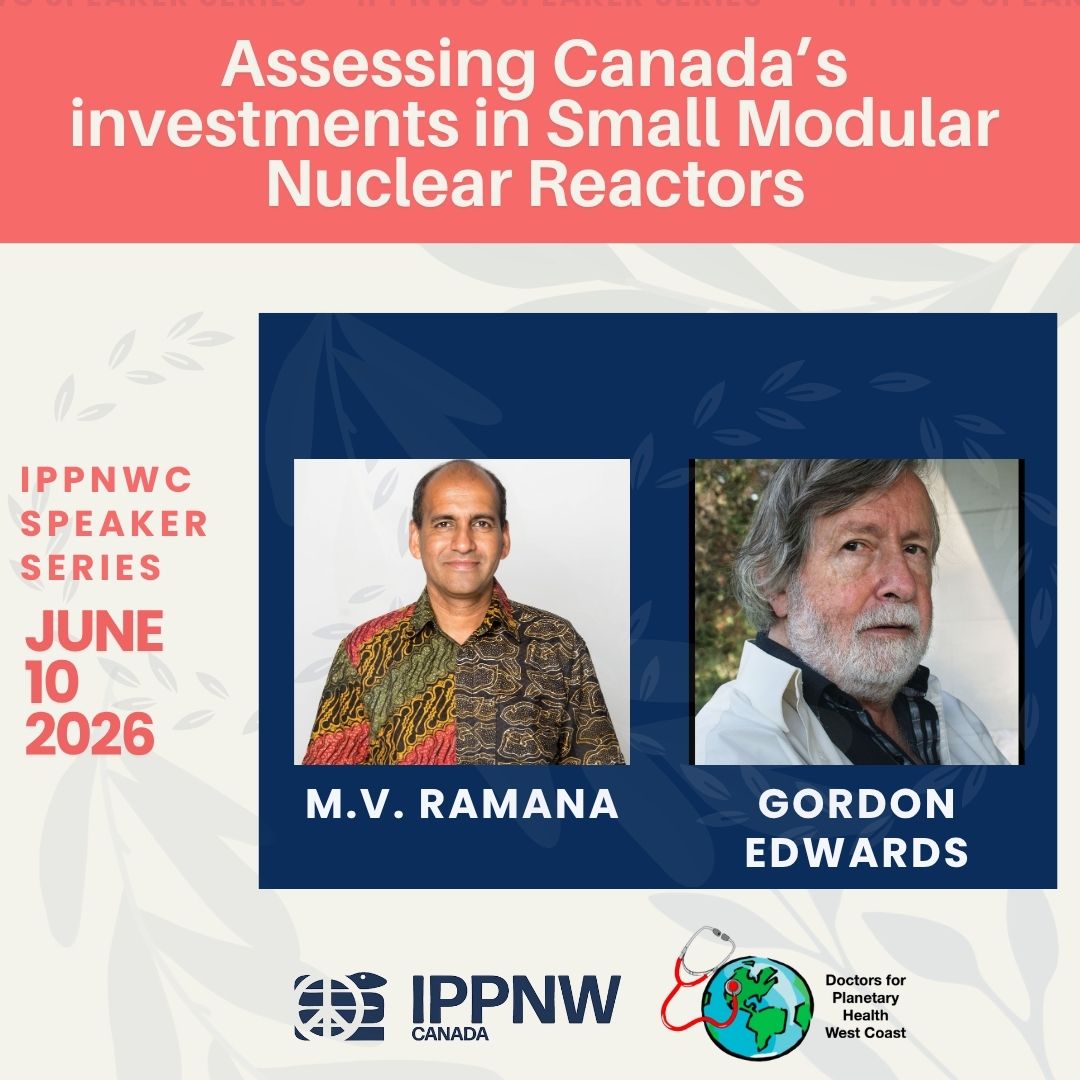
10 June – Assessing Canada’s Investments in Small Modular Nuclear Reactors – https://zoom.us/meeting/register/IiqHA5feRhaEBycOLNTJlA#/registration


Cuba Is Not a Failed State – It Is a Besieged State
PETITION: “Global Appeal to Endorse Palestinian Right of Return of Refugees”
To see nuclear-related stories in greater depth and intensity – go to https://nuclearinformation.wordpress.com
-
Archives
- June 2026 (57)
- May 2026 (306)
- April 2026 (356)
- March 2026 (251)
- February 2026 (268)
- January 2026 (308)
- December 2025 (358)
- November 2025 (359)
- October 2025 (376)
- September 2025 (257)
- August 2025 (319)
- July 2025 (230)
-
Categories
- 1
- 1 NUCLEAR ISSUES
- business and costs
- climate change
- culture and arts
- ENERGY
- environment
- health
- history
- indigenous issues
- Legal
- marketing of nuclear
- media
- opposition to nuclear
- PERSONAL STORIES
- politics
- politics international
- Religion and ethics
- safety
- secrets,lies and civil liberties
- spinbuster
- technology
- Uranium
- wastes
- weapons and war
- Women
- 2 WORLD
- ACTION
- AFRICA
- Atrocities
- AUSTRALIA
- Christina's notes
- Christina's themes
- culture and arts
- Events
- Fuk 2022
- Fuk 2023
- Fukushima 2017
- Fukushima 2018
- fukushima 2019
- Fukushima 2020
- Fukushima 2021
- general
- global warming
- Humour (God we need it)
- Nuclear
- RARE EARTHS
- Reference
- resources – print
- Resources -audiovicual
- Weekly Newsletter
- World
- World Nuclear
- YouTube
-
RSS
Entries RSS
Comments RSS
 nuclear-news