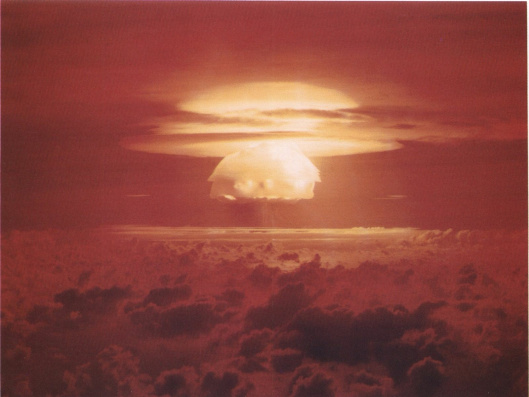
by Zack Brown,Alex Spire 28 Jul 19, For a brief fraction of a second on an early March morning in 1954, the United States summoned a second sun into existence above Bikini Atoll.
As the four-mile wide fireball bathed the Pacific seascape in its angry, white-red light, onlookers recognized something nearly divine—and unquestionably ominous. “It was a religious experience, a personal view of the apocalypse or transfiguration,” said one observer. Another remembered feeling “like you stepped into a blast furnace,” even though he was over thirty miles away.
This was the Castle Bravo thermonuclear test, one of several dozen nuclear detonations the United States carried out in the Marshall Islands during the Cold War. At 15 million tons of TNT—one thousand times more powerful than the bomb that destroyed Hiroshima—it was the largest explosion ever set off by Americans.
It was also the dirtiest, as a new study published this month shows. Researchers from Columbia University, analyzing soil samples from several Marshall Island atolls, discovered widespread radioactivity. Bikini Island itself was declared unsafe for human habitation, while the three other atolls had significant radionuclide concentrations—mainly americium, cesium, and plutonium. In some cases, the level of radioactivity—more than sixty years since the last mushroom cloud loomed over Bikini’s azure lagoon—exceeded that found at Chernobyl or Fukushima.
The process that led to this long-standing radioactivity is relatively simple, even if it wasn’t fully understood as the Cold War heated up. As the Castle Bravo fireball ascended into the sky, it carried with it tons of vaporized coral, rock, and dirt. This debris intermingled with radioactive isotopes before settling back down to the ground as deadly fallout. In one case, ignorant of its lethal effects, children on a neighboring atoll played in the falling powder, believing it was snow.
But American nuclear testing didn’t just occur in the middle of the Pacific. Throughout the Cold War, the United States detonatedhundredsof atomic bombs in Nevada at a test site just northwest of Las Vegas. Many of these tests were above-ground, exposing the continental United States to the same radioactive fallout that fell over those remote atolls.
As with the Marshall Islands, the radiological effects of this testing were widespread—and immense. A 2017 study from the University of Arizona suggested that the fallout generated by the Nevada nuclear explosions exposed millions of Americans to its lethal radiation.
The exposure mechanism wasn’t always direct, either. Once caught in high-altitude winds, fallout from these tests would travel for hundreds or even thousands of miles before settling back down over the vast fields of the American heartland. Unsuspecting cattle would graze on grass freshly laced with this fallout, including Iodine-131, a highly potent radionuclide that spews beta and gamma radiation.
The cows concentrated this iodine in their milk, which would then be quickly consumed by the local population through the dairy industry. Because they’re chemically indistinguishable, the human body can’t tell the difference between normal iodine and the radioactive variety, and so deposits both in the thyroid gland. Once securely lodged there, Iodine-131 bombards nearby tissue on a cellular level, damaging DNA strands and eventually causing cancer.
This was just one of the exposure mechanisms; there were many others. Taken together, the 2017 study suggested that fallout from the Nevada nuclear testing could have led to between 340,000 and 460,000 premature deaths, mostly Americans and mainly through cancer.
If that death toll seems unreal, consider the scale of the radiation involved. Using a figure of 81 million Curies for the radioactive material released at Chernobyl as a baseline, one estimate held that the Nevada-based nuclear testing emitted 12 billion Curies into the atmosphere between 1951 and 1963. That’s the equivalent of nearly 150 Chernobyl disasters—or one a month for more than a decade. If you added in the Marshall Islands nuclear tests over this same period, that figure would be even higher.
As we mark the seventy-fourth anniversary of the Hiroshima and Nagasaki bombings in a handful of days, we will rightly remember the horrors of nuclear war. But we should also recognize the deadly tests that followed. Because any nuclear explosion—even a “peacetime test” in a Pacific paradise or the dry desert of Nevada—can put human lives at risk.
A Dead Man Was Cremated in Arizona Without Anyone Realising He Was Radioactive, Science Alert PETER DOCKRILL, 28 JUL 2019
In 2017, a 69-year-old man with pancreatic cancer went to hospital with abnormally low blood pressure. Sadly, he died only two days later, and his remains were cremated.
What nobody at the hospital or the crematorium knew, was that this hadn’t been the man’s only recent trip to hospital. ust one day earlier, in fact, he had been injected with a radioactive compound at another hospital to treat his tumour – and when his mortal remains were incinerated, this radioactive and potentially dangerous dose of lutetium Lu 177 dotatate was still inside his body.
This alarming case, reported in a research letter published in February this year, illustrates the collateral risks potentially posed by on average 18.6 million nuclear medicine procedures involving radiopharmaceuticals performed in the US every year.
While rules regulate how these drugs are administered to living patients, the picture can become less clear when those patients die, thanks to a patchwork of different laws and standards in each state – not to mention situations like the 69-year-old man, whose radioactive status simply slipped through the cracks.
“Radiopharmaceuticals present a unique and often overlooked postmortem safety challenge,” researchers from the Mayo Clinic explained in a case note.
“Cremating an exposed patient volatilises the radiopharmaceutical, which can then be inhaled by workers (or released into the adjacent community) and result in greater exposure than from a living patient.”……..
Given more than half of all Americans eventually get cremated, postmortem management of individuals who receive radioactive drugs is an area the US health system needs to work on, the researchers say.
This includes better ways of evaluating radioactivity in deceased patients (prior to them being cremated), and also standardising ways of notifying crematoriums about their clients.
After all, nobody really has any idea how often this is happening.
As nuclear scientist Marco Kaltofen from the Worcester Polytechnic Institute in Massachusetts, who wasn’t involved with the research, told BuzzFeed News: “They only happened to catch this one case because normally they don’t look.”
a contentious report published by members of the Russian Academy of Sciences indicates that there could have been as many as 830,000 people in the Chernobyl clean-up teams. They estimated that between 112,000 and 125,000 of these – around 15% – had died by 2005. Many of the figures in the report, however, were disputed by scientists in the West, who questioned their scientific validity.
The Ukrainian authorities, however, kept a registry of their own citizens affected by the Chernobyl accident…… In Ukraine, death rates among these brave individuals has soared, rising from 3.5 to 17.5 deaths per 1,000 people between 1988 and 2012. Disability among the liquidators has also soared. …… In Belarus, 40,049 liquidators were registered to have cancers by 2008 along with a further 2,833 from Russia.
Viktor Sushko, deputy director general of the National Research Centre for Radiation Medicine (NRCRM) based in Kiev, Ukraine, describes the Chernobyl disaster as the “largest anthropogenic disaster in the history of humankind”. The NRCRM estimate around five million citizens of the former USSR, including three million in Ukraine, have suffered as a result of Chernobyl, while in Belarus around 800,000 people were registered as being affected by radiation following the disaster.
Springtime was always the busiest time of year for the women working at the wool processing plant in Chernihiv, northern Ukraine. More than 21,000 tons of wool passed through the factory from farms all across the country during the annual sheep shearing period. The April and May of 1986 were no exception.
The workers pulled 12-hour shifts as they sorted the piles of raw fleece by hand before they were washed and baled. But then the women started getting sick.
Fifty miles away was the Chernobyl nuclear power plant. On 26 April 1986 reactor number four at the power plant suffered a catastrophic explosion that exposed the core and threw clouds of radioactive material over the surrounding area as a fire burned uncontrollably. But Chernihiv was regarded to be well outside the exclusion zone that was hastily thrown up around the stricken plant and readings elsewhere in the town had shown it to have comparatively low levels of radiation.
“The area was yellow on the radiation maps which means thetown didn’t get hit very hard,” says Kate Brown, a science historian at the Massachusetts Institute of Technology (MIT). “Yet there were 298 women in this factory who were given liquidator status, which was normally reserved for those who had documented exposures during the early days of the clean-up after the accident.”
Brown uncovered the story of the Chernihiv wool workers as part of her research into the impact of the Chernobyl disaster. Her determination to unravel the true cost of the disaster has seen her travel to many parts of Ukraine, Belarus and Russia, to interview survivors, trawl through official archives and search old hospital reports.
Brown’s research, however, suggests Chernobyl has cast a far longer shadow.“When I visited the wool factory in Chernihiv, I met some of the women who were working at the time,” she says. “There were just 10 of these women still there. They told me that they were picking up bales of wool and sorting them on tables. In May 1986, the factory was getting wool that had radiation readings of up to 30Sv/hr. The bales of wool the women were carrying were like hugging an X-ray machine while it was turned on over and over again.”
Thousands of animals were slaughtered in the area around Chernobyl as it was being evacuated. Brown believes fleeces from some of these animals appear to have found their way to the factory in Chernihiv along with other contaminated wool from farms enveloped in the clouds of radioactive material that spread out across northern Ukraine.
When Brown spoke to the 10 “liquidators” at the wool factory, their stories gave a grim picture of what appears to have happened all across the region as ordinary people who had nothing to do with the clean-up of the disaster were exposed to radioactive material.
“They pointed to different parts of their bodies that had aged more than the rest and where they had health problems,” says Brown. “They knew all about which radioactive isotopes had lodged in their organs.” The other 288 women, they told her, had either died or had taken pensions for ill health.
In the weeks and months that followed the Chernobyl disaster, hundreds of thousands of firefighters, engineers, military troops, police, miners, cleaners and medical personnel were sent into the area immediately around the destroyed power plant in an effort to control the fire and core meltdown, and prevent radioactive material from spreading further into the environment.
These people – who became known as “liquidators” due to the official Soviet definition of “participant in liquidation of the Chernobyl nuclear power plant accident consequences” – were given a special status that meant they would receive benefits such as extra healthcare and payments. Official registries indicate that 600,000 people were granted liquidator status.
But a contentious report published by members of the Russian Academy of Sciences indicates that there could have been as many as 830,000 people in the Chernobyl clean-up teams. They estimated that between 112,000 and 125,000 of these – around 15% – had died by 2005. Many of the figures in the report, however, were disputed by scientists in the West, who questioned their scientific validity.
The Ukrainian authorities, however, kept a registry of their own citizens affected by the Chernobyl accident. In 2015 there were 318,988 Ukrainian clean-up workers on the database, although according to a recent report by the National Research Centre for Radiation Medicine in Ukraine, 651,453 clean-up workers were examined for radiation exposure between 2003 and 2007. A similar register in Belarus recorded 99,693 clean-up workers, while another registry including included 157,086 Russian liquidators.
In Ukraine, death rates among these brave individuals has soared, rising from 3.5 to 17.5 deaths per 1,000 people between 1988 and 2012. Disability among the liquidators has also soared. In 1988 68% of them were regarded healthy, while 26 years later just 5.5% were still healthy. Most – 63% – were reported to be suffering from cardiovascular and circulatory diseases while 13% had problems with their nervous systems. In Belarus, 40,049 liquidators were registered to have cancers by 2008 along with a further 2,833 from Russia.
The International Atomic Energy Agency, however, says that health studies on liquidators have “failed to show any direct correlation between their radiation exposure” and cancer or other disease.
Another group who bore the brunt of the radiation exposures in the hours and days after the explosion were those living in the nearby town of Pripyat and the surrounding area. It took a day and a half before the evacuation began and led to 49,614 people being evacuated. Later a further 41,986 people were evacuated from another 80 settlements in a 30km (18.7 mile) zone around the power plant, but ultimately some 200,000 people are thought to have been relocated as a result of the accident.
Some of those living closest to the power plant received internal radiation doses in their thyroid glands of up to 3.9Gy – roughly 37,000 times the dose of a chest x-ray – after breathing radioactive material and eating contaminated food. Doctors who have been studying the evacuees report that mortality among the evacuees has gradually increased, reaching a peak in 2008-2012 with 18 deaths per 1,000 people.
But this still represents a small proportion of the people affected by Chernobyl.
Brown has found evidence hidden in hospital records from around the time of the accident that show just how widespread problems were.
“In hospitals throughout the region and as far away as Moscow, people were flooding in with acute symptoms,” she says. “The accounts I have indicate at least 40,000 people were hospitalised in the summer after the accident, many of them women and children.”
Political pressure is widely thought to have led to the true picture of the problem to be suppressed by the Soviet authorities, who were keen not to lose face on the international stage. But following the collapse of the USSR and as people living in the areas that were exposed to radiation begin to present with a wide range of health problems, a far clearer picture of the toll taken by the disaster is emerging.
Viktor Sushko, deputy director general of the National Research Centre for Radiation Medicine (NRCRM) based in Kiev, Ukraine, describes the Chernobyl disaster as the “largest anthropogenic disaster in the history of humankind”. The NRCRM estimate around five million citizens of the former USSR, including three million in Ukraine, have suffered as a result of Chernobyl, while in Belarus around 800,000 people were registered as being affected by radiation following the disaster.
As of January 2018, 1.8 million people in Ukraine, including 377,589 children, had the status of victims of the disaster, according to Sushko and his colleagues. There has been a rapid increase in the number of people with disabilities among this population, rising from 40,106 in 1995 to 107,115 in 2018.
Interestingly, Sushko and his team also report that the number of Chernobyl victims in Ukraine has decreased by 657,988 since 2007 – a fall of 26%. Although they don’t explain why, this is likely to be partly due to migration as victims have left the country, reclassification of victim status and, inevitably, some deaths.
In total some 150,000sq km (57,915 sq miles) of Belarus, Russia and Ukraine are considered to be contaminated and the 4,000sq km (1,544 sq miles) exclusion zone – an area more than twice the size of London – remains virtually uninhabited. But radioactive fallout, carried by winds, scattered over much of the Northern Hemisphere. Within two days of the explosion, high levels of radiation were picked up in Sweden while contamination of plants and grasslands in Britain led to strict restrictions on the sale of lamb and other sheep products for years.
In areas of Western Europe hit by Chernobyl fallout there have also been indications that the rates of neoplasms – abnormal tissue growths that include cancers – have been higher than in areas that escaped contamination.
But Brown believes some of the actions of those attempting to deal with the aftermath of the disaster also led to contamination spreading far further than it otherwise would. In an archive in Moscow she found records that indicated that meat, milk and other produce from contaminated plants and animals were sent all over the country.
“They came up with manuals for the meat, wool and milk industries to classify produce as high, medium and low in terms of radiation,” she says. “Meat with high levels, for example, was shoved into a freezer so they could wait until it fell. Medium and low-level meat was supposed to be mixed with clean meat and turned into sausage. It was labelled as normal and sent all over the country, although they were told not to send it to Moscow.”
Brown, who has written a book about her findings called Manual for Survival: A Chernobyl Guide to the Future, also discovered similar stories of blueberries that were over the accepted radiation limit being mixed with cleaner berries so the whole batch would fall under the regulatory limit.
It meant people outside Ukraine would “wake up to a breakfast of Chernobyl blueberries” without even knowing it, she says.
Establishing the links between radiation exposure and long-term health effects, however, is a difficult task. It can take years, even decades before cancers appear and attributing them to a particular cause can be difficult.
“Genome instability represents a significant risk of cancer,” says Aleksandra Fučić, a genotoxicologist at the Institute for Medical Research and Occupational Health in Zagreb, Croatia. The daughter of a Ukrainian woman herself, she has been working with Russian scientists to study the effects of Chernobyl’s radiation on children from the region. “In Chernobyl cases, time is not healing. Time is a latency period for cancer development.”
Putting a figure on exactly how many deaths around the world may result from the Chernobyl disaster is almost impossible. But despite the grim picture much of the research paints, there are some stories of hope too.
Three engineers who volunteered to drain millions of gallons of water from tanks beneath the burning reactor in the days immediately after the explosion waded through highly radioactive water and debris to reach the release valves. Their heroics are one of the most dramatic moments in HBO’s recent dramatisation of the disaster.
Astonishingly, two of the three men are still alivedespite having minimal protection from the radiation during their mission. The third man, Borys Baranov, survived until 2005.
Children living in these areas have seen health problems such as enlarged thyroids, cancer, and respiratory illnesses, which environmentalists and pediatricians have linked to contaminated food and drink.
Each summer, charity organizations offer these kids a chance to vacation in a “clean” city or town, which has both psychological and health benefits.
But host families are limited, meaning the charities can’t accommodate every child living in a contaminated zone.
More than 30 years after the core of a nuclear reactor opened at the Chernobyl Nuclear Power Plant, locals near the plant are still exposed to radioactive contaminants through their food and water supply. In 2018, scientists discovered that milk in Ukrainian villages contained five times the amount of cesium considered safe for adults and 12 times the safe limit for children.
As second-generation victims of Chernobyl, children growing up near the disaster zone have seen health problems since birth such as enlarged thyroids, cancer, and respiratory illnesses. Some environmentalists and pediatricians have linked these health problems to contaminated food and drink.
In 1991, Adi Roche, then a volunteer in the Chernobyl zone, received a fax from Belarusian and Ukrainian doctors, asking her to remove children from the area so their bodies could have time to recover from radiation exposure. The fax inspired Roche to found Chernobyl Children International, an organization that sets up vacations in Ireland for children living in contaminated areas. To date, the group has helped organize stays for around 25,000 children, though it estimates that around 1 million children live in zones affected by the disaster.
In the years since, more organizations have pitched in to offer similar vacations.
In 2008, a program called “Blue Summer” began organizing summer stays in Portugal for Ukranian children. The group paid for transportation and health insurance, while host families covered living expenses.
In Raleigh, North Carolina, a charity called Overflowing Hands hosts children ages 6 to 16 for a month and a half over the summer. The charity also pays for pediatrician appointments and dental care.
In the UK, multiple organizations — including the Chernobyl Children’s Project, Friends of Chernobyl’s Children, and Chernobyl Children’s Lifeline — welcome kids for “recuperative” holidays. Some of these children are sick with cancer, while others haven’t shown any signs of adverse health effects.
While on vacation, children can develop healthier immune systems and lower their levels of radiation. A chairwoman from the Children’s Lifeline recently told the BBC that, after a three-week period of recovery in Scotland, “it takes up to two years for the radiation to build back up again.”
There are also psychological benefits to staying where the Chernobyl tragedy is out of sight. A 2005 UN report determined that mental health issues “pose a far greater threat to local communities than does radiation exposure.” Children living in contaminated zones may suffer anxiety about becoming ill or having their lives cut short.
But the number of families willing to host these children is limited.
Both the Chernobyl Children’s Project and the Chernobyl Children’s Lifeline recently told the BBC they had seen a decline in host families in recent years. This year, the Children’s Project said they could only host 600 children compared to 3,500 each year in the early 2000s.
There’s hope that things could could change following the release of the HBO’s “Chernobyl” miniseries in May. The same UK charity groups that worried about a decline in host families told the BBC that the show prompted renewed interest from donors and volunteers.
Low doses of radiation promote cancer-capable cells, Science Daily
New research in mice helps to understand the risks around exposure to low doses of radiation, such as CT scans and X-rays
Date
July 18, 2019
Source:
Wellcome Trust Sanger Institute
Summary:
New research finds that low doses of radiation equivalent to three CT scans, which are considered safe, give cancer-capable cells a competitive advantage over normal cells.
Low doses of radiation equivalent to three CT scans, which are considered safe, give cancer-capable cells a competitive advantage over normal cells in healthy tissue, scientists have discovered. Researchers at the Wellcome Sanger Institute and the University of Cambridge studied the effects of low doses of radiation in the esophagus of mice.
The team found that low doses of radiation increase the number of cells with mutations in p53, a well-known genetic change associated with cancer. However, giving the mice an antioxidant before radiation promoted the growth of healthy cells, which outcompeted and replaced the p53 mutant cells.
The results, published today (18 July) in Cell Stem Cell show that low doses of radiation promote the spread of cancer-capable cells in healthy tissue. Researchers recommend that this risk should be considered in assessing radiation safety. The study also offers the possibility of developing non-toxic preventative measures to cut the risk of developing cancer by bolstering our healthy cells to outcompete and eradicate cancer-capable cells……..
Low doses of radiation equivalent to three CT scans, which are considered safe, give cancer-capable cells a competitive advantage over normal cells in healthy tissue, scientists have discovered. Researchers at the Wellcome Sanger Institute and the University of Cambridge studied the effects of low doses of radiation in the esophagus of mice.
The team found that low doses of radiation increase the number of cells with mutations in p53, a well-known genetic change associated with cancer. However, giving the mice an antioxidant before radiation promoted the growth of healthy cells, which outcompeted and replaced the p53 mutant cells.
The results, published today (18 July) in Cell Stem Cell show that low doses of radiation promote the spread of cancer-capable cells in healthy tissue. Researchers recommend that this risk should be considered in assessing radiation safety. The study also offers the possibility of developing non-toxic preventative measures to cut the risk of developing cancer by bolstering our healthy cells to outcompete and eradicate cancer-capable cells…….
Dr Kasumi Murai, an author from the Wellcome Sanger Institute, said: “Giving mice an antioxidant before exposing them to low doses of radiation gave healthy cells the extra boost needed to fight against the mutant cells in the esophagus and make them disappear. However, we don’t know the effect this therapy would have in other tissues — it could help cancer-capable cells elsewhere become stronger. What we do know is that long term use of antioxidants alone is not effective in preventing cancer in people, according to other studies.” … https://www.sciencedaily.com/releases/2019/07/190718150933.htm
Space radiation hasn’t contributed to astronaut mortality — yet, study shows
An analysis of all living and dead astronauts and cosmonauts shows that radiation hasn’t contributed meaningfully to their mortality rates. Astronomy, By Korey Haynes , July 5,2019 “………… they found no trend in the deaths suggesting any common cause, meaning radiation didn’t play a major role in the health outcomes of the astronauts and cosmonauts they studied.
Of course, this doesn’t mean humans are in the clear.
“We would expect that at some level of dose there should be adverse health effects,” Reynolds says. “We keep getting the answer ‘no.’ This doesn’t mean radiation isn’t harmful or greater doses wouldn’t be. But so far the doses have been low enough that we don’t see anything.”
That’s probably because the vast majority of space farers so far have spent most or all of their time in Earth orbit, where Earth’s magnetic fields still protect them from the majority of harmful space radiation. Only those 24 astronauts who ventured to the Moon went beyond Earth’s radiation protection, and they stayed for just a few days.
Reynolds says that it’s difficult to draw meaningful results from that tiny sub-sample of people.
By contrast, a Mars mission might last multiple years, and would take place almost entirely beyond Earth’s shielding.
Space radiation: the Apollo crews were extremely lucky The Conversation, Jim Wild
Professor of Space Physics, Lancaster UniversityJuly 17, 2019 “……….. There is potentially harmful radiation in space. So how did the astronauts survive it?
The term “radiation” is used to describe energy that is emitted in the form of electromagnetic waves and/or particles. Humans can perceive some forms of electromagnetic radiation: visible light can be seen and infrared radiation (heat) can be felt.
Meanwhile, other varieties of radiation such as radio waves, X-rays and gamma rays are not visible and require special equipment to be observed. Worryingly, when high energy (ionising) radiation encounters matter, it can cause changes at the atomic level, including in our bodies.
There are a several sources of ionising radiation in space. The sun continuously pours out electromagnetic radiation across all wavelengths – especially as visible, infrared and ultraviolet radiation. Occasionally, enormous explosions on the solar surface known as solar flares release massive amounts of X-rays and gamma rays into space, as well as energetic electrons and protons (which make up the atomic nucleus along with neutrons). These events can pose a hazard to astronauts and their equipment even at distances as far from the sun as Earth, the moon and Mars.
Potentially dangerous radiation in space also originates from outside our solar system. Galactic cosmic rays are high energy, electrically charged atomic fragments that travel at nearly the speed of light and arrive from all directions in space.
On Earth, we are protected from most of this ionising radiation. The Earth’s strong magnetic field forms the magnetosphere, a protective bubble that diverts most dangerous radiation away, while the Earth’s thick atmosphere absorbs the rest.
But above the atmosphere, the magnetosphere traps energetic subatomic particles in two radiation regions. These “Van Allen belts” comprise an inner and outer torus of electrically charged particles.
Lucky escape
So how did NASA solve the problem of crossing the Van Allen belts? The short answer is they didn’t. To get to the moon, a spacecraft needs to be travelling quickly to climb far enough away from the Earth such that it can be captured by the moon’s gravity. The trans-lunar orbit that the Apollo spacecraft followed from the Earth to the moon took them through the inner and outer belts in just a few hours.
Although the aluminium skin of the Apollo spacecraft needed to be thin to be lightweight, it would have offered some protection. Models of the radiation belts developed in the run-up to the Apollo flights indicated that the passage through the radiation belts would not pose a significant threat to astronaut health. And, sure enough, documents from the period show that monitoring badges worn by the crews and analysed after the missions indicated that the astronauts typically received doses roughly less than that received during a standard CT scan of your chest.
But that is not the end of the story. To get to the moon and safely back home, the Apollo astronauts not only had to cross the Van Allen belts, but also the quarter of a million miles between the Earth and the moon – a flight that typically took around three days each way.
They also needed to operate safely while in orbit around the moon and on the lunar surface. During the Apollo missions, the spacecraft were outside the Earth’s protective magnetosphere for most of their flight. As such, they and their crews were vulnerable to unpredictable solar flares and events and the steady flux of galactic cosmic rays.
The crewed Apollo flights actually coincided with the height of a solar cycle, the periodic waxing and waning of activity that occurs every 11 years. Given that solar flares and solar energetic particle events are more common during times of heightened solar activity, this might seem like a cavalier approach to astronaut safety.
There is no doubt that the political imperative in the 1960s to put US astronauts on the moon “in this decade” was the primary driving factor in the mission timing, but there are counterintuitive benefits to spaceflight during solar activity maxima. The increased strength of the sun’s magnetic field that permeates the solar system acts like an umbrella – shielding the Earth, moon and planets from galactic cosmic rays and therefore lessening the impact on astronaut radiation doses. https://theconversation.com/space-radiation-the-apollo-crews-were-extremely-lucky-120339
The Real Chernobyl: Q&A With a Radiation Exposure Expert, UCSF,
Ed note: This article considers only external radiation emitters – fails to consider internal emitters
By Nicoletta Lanese 17 July 19, The Emmy-nominated HBO mini-series “Chernobyl,” which is a dramatized account of the 1986 nuclear power plant disaster, has rekindled conversation about the accident, its subsequent cleanup and the long-term impacts on people living near the power plant.
UC San Francisco’s Lydia Zablotska, MD, PhD, grew up in Ukraine, trained as physician in Belarus, and has studied the long-term health impacts of radiation exposure on the Chernobyl cleanup workers, local children and others in the region. Her research helped uncover the connection between radiation exposure, thyroid conditions and leukemia, and remains relevant to global health today.
We talked with her about the real-life health impacts from the disaster portrayed in the HBO miniseries. The following answers have been edited for length and clarity.
What kind of radiation were people exposed to at Chernobyl?
The first responders, including firefighters and nuclear workers who tried to put out the multiple fires and prevent the explosion of other reactors at the nuclear power plant, were exposed to large doses of gamma radiation. Gamma radiation originates during the decay of radioactive isotopes of uranium or plutonium used as a nuclear fuel in nuclear power plants. As a result of decay, packets of electromagnetic radiation, which consist of high-energy photons, are emitted and could penetrate body tissues and cause damage to cells and their genetic material. Subsequently, DNA mutations could lead to the development of cancer.
The miniseries shows some workers dying instantly from acute radiation syndrome – what symptoms did they really experience?
The latest report from the United Nations Scientific Committee on the Effect of Atomic Radiation found 134 first responders who were diagnosed with acute radiation syndrome (ARS) after the Chernobyl accident. Of these, 28 died in the first four months, but not instantaneously. Then 19 more died over the next 20 years. But the majority of these survived and lived a long life after that. There were no cases of ARS among the general public living in cities and villages around the Chernobyl power plant.
Large doses of radiation could affect a number of systems in the body that are necessary for survival. Patients with ARS could develop a bone marrow syndrome, which suppresses their immunity, or a gastrointestinal syndrome, which could lead to damage to the lining of the intestines and associated infection, dehydration, and electrolyte imbalance. Then, a couple days later, the circulatory system collapses so people start having blood volume issues and so forth. The whole body is essentially collapsing.
Can those exposed to intense radiation exposure “pass on” their radioactivity to others, as the HBO show suggests?
There are types of radiation where human bodies could retain radioactive particles and remain radioactive over time, but this is not the type that was seen at Chernobyl. After gamma radiation has passed through the body, the person is no longer radioactive and can’t expose other people.
Based on what we know, at Chernobyl, there were also no effects on children who were exposed to radiation in utero.
How does radiation exposure relate to thyroid conditions?
We conducted two studies of thyroid conditions in children who lived at the time of the Chernobyl accident in affected areas in Ukraine and Belarus. We confirmed that the particular type of radiation in Chernobyl, radioactive iodine, could cause thyroid cancer. Unexpectedly, we also showed that radiation to the thyroid gland from ingesting radioactive iodine within two months after the Chernobyl accident by children and adolescents could lead to development of non-cancer thyroid diseases, such as thyroid follicular adenoma, thyroid benign nodules, and hypothyroidism.
We also showed that the youngest children were at the highest risk for developing these diseases. Children’s thyroid glands are very active and act as a sponge for iodine, because our body needs iodine. But our bodies cannot distinguish between dietary iodine, from salt or fish, and radioactive iodine. After the explosion of the nuclear reactor, parts of the core were dispersed in clouds and carried by the prevailing winds. This is how Belarus, which was in the path of winds in the first days after the accident, got really large doses. One of the most contaminated products was milk from pastured cows, mostly consumed by children.
What about leukemia?
We did a study of cleanup workers in Ukraine and confirmed that gamma radiation causes leukemia, as was found in atomic bomb survivors in Japan. Our truly unique finding was that radiation exposure can cause many types of leukemia, not just a select few. In particular, we showed that radiation doses of gamma radiation were associated with chronic lymphocytic leukemia, the most prevalent type of leukemia in adult, Caucasian men. CLL was not increased in the study of atomic bomb survivors, but as our group at UCSF reported in a later study, CLL is very rare in Japan, so this finding could have been missed. …… https://www.ucsf.edu/news/2019/07/414976/real-chernobyl-qa-radiation-exposure-expert
HAGÅTÑA — The Radiation Exposure Compensation Act Amendments of 2019, officially introduced in the U.S. House of Representatives on Tuesday, includes a congressional apology to individuals exposed to radiation while either working in or living near uranium mines or downwind from nuclear weapon test sites.
The bill, introduced by New Mexico Congressman Ben Ray Lujan and cosponsored by Guam Delegate Michael San Nicolas, would expand the coverage of the RECA program to include Guam and the Northern Marianas.
The RECA program is set to expire in 2022. The bill, if enacted into law, would extend the Radiation Exposure Compensation Trust Fund until 2045.
Other jurisdictions covered by the proposed RECA expansion are New Mexico, Idaho, Colorado, Arizona, Utah, Texas, Wyoming, Oregon, Washington, South Dakota, North Dakota and Nevada.
“Tens of thousands of individuals, including miners, transporters, and other employees who worked directly in uranium mines, along with communities located near test sites for nuclear weapons, were exposed during the mid-1900s to dangerous radiation that has left communities struggling from cancer, birth defects, and other illnesses,” states a press release from Lujan’s office.
The RECA amendment legislation provides health and monetary compensations for individuals who were exposed to high levels of radiation that caused sickness, cancer and deaths in identified jurisdictions.
A similar bill was introduced by Sen. Mike Crapo in the U.S. Senate.
The 35th Guam Legislature is scheduled today, Thursday, to hold a public hearing on Resolution 94-35, supporting the passage of Crapo’s S. 947.
The bill does not include the CNMI.
In August 2018, CNMI Delegate Gregorio Kilili Camacho Sablan said the Northern Marianas should also be considered “downwinders.”
“Perhaps, because the [Northern] Marianas was not represented in Congress in 2005, we were not included in a congressionally mandated study of how fallout from nuclear testing in the Marshall Islands may have harmed people on downwind islands,” Sablan said in an August 2018 letter to the U.S. Senate Judiciary Committee. “I think that inequity needs to be addressed.”
July 17, 2019 New legislation has been introduced in the U.S. House of Representatives that would expand compensation for those exposed to radiation from nuclear test weapon sites, including victims from Guam.Congressman Ben Ray Luján (D-N.M.), the U.S. House Assistant Speaker, introduced The Radiation Exposure Compensation Act Amendments of 2019, which provides health and monetary compensations for individuals who were exposed to high levels of radiation that caused sickness, cancer, and deaths in New Mexico and other parts of the country, including Guam.
RECA was first passed in 1990 to ensure the federal government met its responsibilities to Americans who made sacrifices for national security. The new legislation has more than 35 co-sponsors, including Guam Congressman Michael San Nicolas.
“This legacy issue for the people of Guam is more than about policy; it is about cancer, it is about the major impact these diseases have on our families, it is about the life and death of loved ones past, present, and future, and we are humbled to join Assistant Speaker Ben Ray Luján in making this right,” San Nicolas said.
Without this legislation, the current authorization for RECA will expire in two years – leaving thousands without the ability to pay for their medical care for illnesses directly linked to the exposure.
Senator Therese Terlaje, who coincidentally is having a hearing tomorrow, July 18, on Resolution 94-35 (COR), which is related to RECA, said she wants to thank the New Mexico congressman and Congressman San Nicolas for the introduction of the House RECA bill.
“That’s very good timing for us as we hold this hearing tomorrow,” Terlaje said during an interview with Andrea Pellacani on NewsTalk K-57.
The senator would also like to thank Robert Celestial, president of the Pacific Association of Radiation Survivors (PARS) for his work and for building relationships that have ensured Guam’s inclusion in the House bill and in Radiation Exposure Compensation Act (RECA) compensation.
For his part: Celestial said: “The people of Guam thank and applaud Congressman Ben Ray Luján and sponsors for their compassionate and just recognition of the cancer and other ailments suffered on Guam from downwind exposure to nuclear fallout, as determined in a report to Congress 2005: “Assessment of the Scientific Information for the radiation exposure Screening and Education program ” by the National Academy of Sciences.”
Senator Terlaje’s Resolution 94-35 (COR) expresses support for S. 947, “The Radiation Exposure Compensation Act Amendments of 2019,” which includes Guam residents exposed to radiation during nuclear testing in the Pacific from 1946 to 1962.
S. 947 was introduced in the U.S. Senate by Senator Mike Crapo (R- Idaho) and would expand eligibility requirements and increase compensation for persons suffering health problems related to cancer caused by radioactive fallout from nuclear bomb tests.
Idaho, Arizona, Colorado, Montana, New Mexico, Nevada, Utah and Guam would be added to existing areas where victims can apply for compensation under the federal Radiation Exposure Compensation Act program (RECA). Qualified claimants are entitled to free medical care, health screening, and $150,000 compensation for certain illnesses.
In 2004, The National Academies of Science confirmed Guam’s exposure to radiation as “downwinders” and recommended that Guam be included under RECA. Fifteen years later, Terlaje said Guam is still fighting an uphill battle for inclusion. S. 947 is the eighth version of the RECA Amendment bill introduced in the last 12 years.
Senator Terlaje’s hearing on Resolution 94-35 (COR) will be held tomorrow, July 18, at 10 a.m., at the Guam Congress Building.
After a nearly half a century of denial, the US Department of Energy concluded in 2006, “the Trinity test also posed the most significant hazard of the entire Manhattan Project.
Ionizing radiation is especially damaging to dividing cells, so the developing infant, both before and after birth, is susceptible to radiation damage, as Alice Stewart, an epidemiologist who first demonstrated the link between X-rays of pregnant women and disease in their children,[12] first warned in 1956.[13]This damage may be seen years later with the development of leukemia and other cancers in children exposed in utero to ionizing radiation, as Stewart and others confirmed in subsequent studies.[14] By 1958, the United Nations Scientific Committee on the Effects of Atomic Radiation recognized that, in the short term, radiation damage can be reflected in fetal and infant deaths.[15]
Fallout protection was not a priority for the Trinity explosion.
The current body of historical evidence of harm, negligence, and deception—especially the evidence of increased infant death following the first nuclear explosion—should be more than enough for long overdue justice for the people in New Mexico who were downwind of Trinity.
Is cancer the legacy left by world’s first atomic bomb test?
By Kathleen M. Tucker, Robert Alvarez, July 15, 2019 For the past several years, the controversy over radioactive fallout from the world’s first atomic bomb explosion in Alamogordo, New Mexico on July 16, 1945—code-named Trinity—has intensified. Evidence collected by the New Mexico health department but ignored for some 70 years shows an unusually high rate of infant mortality in New Mexico counties downwind from the explosion and raises a serious question whether or not the first victims of the first atomic explosion might have been American children. Even though the first scientifically credible warnings about the hazards of radioactive fallout from a nuclear explosion had been made by 1940, historical records indicate a fallout team was not established until less than a month before the Trinity test, a hasty effort motivated primarily by concern over legal liability.
In October 1947, a local health care provider raised an alarm about infant deaths downwind of the Trinity test, bringing it to the attention of radiation safety experts working for the US nuclear weapons program. Their response misrepresented New Mexico’s then-unpublished data on health effects. Continue reading →
Feeling Anxious About Climate Change? Therapists Say You’re Not Alone
There’s no official clinical diagnosis, but the psychiatric and psychological communities have names for the phenomenon of worrying about the Earth’s fate: “climate distress,” “climate grief,” “climate anxiety” or “eco-anxiety”, People, By Victoria Knight , July 15, 2019
Therapist Andrew Bryant says the landmark United Nations climate reportlast October brought a new mental health concern to his patients.
“I remember being in sessions with folks the next day. They had never mentioned climate change before, and they were like, ‘I keep hearing about this report,’” Bryant said. “Some of them expressed anxious feelings, and we kept talking about it over our next sessions.”
The study, conducted by the world’s leading climate scientists, said that if greenhouse gas emissions continue at the current rate, by 2040 the Earth will warm by 2.7 degrees Fahrenheit (1.5 degrees Celsius). Predictions say that increase in temperature will cause extreme weather events, rising sea levels, species extinction and reduced capacity to produce food.
Bryant works at North Seattle Therapy & Counseling in Washington state. Recently, he said, he has been seeing patients with anxiety or depression related to climate change and the Earth’s future.
Often these patients want to do something to reduce global warming but are overwhelmed and depressed by the scope of the problem and difficulty in finding solutions. And they’re anxious about how the Earth will change over the rest of their or their children’s lifetimes.
Although it is not an official clinical diagnosis, the psychiatric and psychological communities have names for the phenomenon: “climate distress,” “climate grief,” “climate anxiety” or “eco-anxiety.”
The concept also is gradually making its way into the public consciousness.
In a June 23 episode of the HBO series Big Little Lies, one of the main character’s young daughters has a panic attack after hearing about climate change in school. And other recently released TV shows and movies have addressed the idea.
An April survey by Yale and George Mason universities found that 62% of Americans were at least “somewhat worried” about climate change. Of those, 23% were “very worried.”
Both younger and older generations express worry, although younger Americans generally seem more concerned: A 2019 Gallup poll reported that 54% of those ages 18 to 34, 38% of those 35 to 54 and 44% of those 55 or older worry a “great deal” about global warming.
There is no epidemiological data yet to show how common distress or anxiety related to climate change is. But, people say these feelings are real and affect their life decisions.
On February 9, 2001, the Vancouver Sun published an article about Nancy Riva who lost her two brothers and was diagnosed with cancer as a result of thymus radiation treatment they received as children — in the belief that this would prevent sudden infant death.
Riva and her brothers were born in Vancouver General Hospital (VGH) in the late 1940s and underwent radiation treatment at the hospital as babies.
Radiation treatment for benign illnesses (that is not for treating cancer), like Riva’s inflamed thymus gland, was a standard medical practice worldwide during the 1940 and 1950s. The treatment was considered to be safe and effective for non-cancerous conditions such as acne and ringworm as well as deafness, birthmarks, infertility, enlargement of the thymus gland and more.
In the early 1970s, medical research confirmed the long-standing suspicion that children and young adults treated with radiation for benign diseases, during the 1940s and 1950s, showed an alarming tendency to develop thyroid cancer and other ailments as adults.
In our recent paper, published in the American Journal of Public Health, Shifra Shvarts and I have explored how health authorities in the United States responded to the discovery of the late health effects of radiation treatment.
Over two million people are estimated to have been treated with radiation in the U.S. for benign conditions. We show how an ethical decision at Michael Reese Hospital in Chicago in 1973 to locate and examine former patients, who had been treated with radiation in childhood, led to a nationwide campaign launched in July 1977 by the National Cancer Institute (NCI) — to warn the medical community and public about the late effects of radiation treatment in childhood for a variety of diseases.
U.S. campaign promotes thyroid checkups
Media coverage of the Chicago hospital’s campaign had a snowball effect that prompted more medical institutions to follow suit (first in the Chicago area and later in other parts of the U.S.), resulting in the NCI’s campaign.
Hundreds of thousands of pamphlets were distributed in shopping centres across the U.S., asking people who had undergone radiation treatment to go to their family doctor for a thyroid checkup. In addition, television presenters opened their programs with warnings; notices were published in newspapers.
Meanwhile in Canada, an unknown number of patients, like Riva and her brothers, were treated with radiation. Interviewed by the Vancouver Sun in 2001, Riva wanted to raise public awareness about this issue, encouraging people who might have been treated with radiation as children to have their thyroid checked.
According to VGH’s officials, quoted in the article, locating former patients was logistically impossible. Spokeswoman Tara Wilson told Vancouver Sun reporter Pamela Fayerman:
“Under the Hospital Act, records only have to be maintained for 10 years after a patient’s last hospital admission, so it’s unlikely we would have these birth records, although people can still phone the hospital to check.”
No systematic investigation in Canada
Riva’s story raises the question of why the Canadian health authorities did not launch a campaign to warn the public, as happened in the United States. Early detection of thyroid cancer saved lives.
The U.S. campaign was known in Canada. On July 14, 1977 a Globe and Mail article titled, “U.S. increasing efforts to warn million potential cancer victims,” described the national program to alert the public of the late health effects of radiation treatment.
Moreover, in an article published in Annals of Internal Medicine in February 1978, two University of Toronto professors of medicine, Paul Walfish and Robert Volpé, discussed the long-term risk of therapeutic radiation and described the efforts made by the U.S. Department of Health, Education and Welfare to educate the American public about the late effects of the treatment.
To date, there has been no known attempt to systematically investigate how many children underwent radiation treatment in Canada for benign conditions and what has been done to alert the public and the medical community of the risks. From Riva we learn that in 2001 patients were still looking for advice.
Had the Canadian health authorities effectively warned the public of the long-term risk of radiation treatment, illnesses and deaths may have been prevented.
Category: Science blogAugust 29, 2008Ed YongCigarette smoke has been called many things – smelly, dangerous and cancer-causing for a start. But radioactive? Yes, that too. Tobacco smoke contains a radioactive chemical element called polonium-210. It’s the same substance that poisoned the Russian Alexander Litvinenko in London two years ago.
Now, a new study reported in the Independent and to be published in the American Journal of Public Health suggests that tobacco companies have known about the danger of polonium in cigarette smoke for over 40 years. Monique Muggli, who led the review, examined over 1,500 internal documents from tobacco companies. Most of these have never been published and were made available through legal action.
Muggli wrote, “Internal tobacco industry documents reveal that the companies suppressed publication of their own internal research to avoid heightening the public’s awareness of radioactivity in cigarettes.”
What happens when you inhale polonium?
Polonium-210 emits a type of radiation called alpha-radiation, which is very energetic and can seriously damage DNA. Thankfully, what alpha-radiation has in destructive ability, it lacks in penetrating power. Human skin is usually enough to stop it, but that’s of little consolation to people who inhale particles of polonium-210. That places the tissues of their lungs and airways in direct and close contact with these powerful sources of radiation.
Indeed, studies have detected polonium-210 in the airways of smokers, where they are concentrated in hot spots. They remain there because other chemicals in cigarette smoke damage the body’s cleaning systems, which would normally get rid of gunk in our airways.
As a result, polonium builds up and subjects nearby cells to higher doses of alpha-radiation. These localised build-ups lead to far greater and longer exposures to radiation than people would usually get from natural sources.
For example, one study found that a person smoking two packs a day is exposed to about 5 times as much polonium as a non-smoker but specific parts of their lungs could be exposed to hundreds of times more radiation. Another study estimated that smoking a pack-and-a-half every day exposes a smoker to a dose of radiation equivalent to 300 chest X-rays a year.
Do these doses lead to lung cancer? It’s hard to say, especially since the effects of polonium are only part of a wider range of damaging consequences caused by inhaling cigarette smoke. But animal studies certainly give us cause for concern.
Absorbed doses of radiation can be measured using units called rads, and experiments have shown that as little as 15 rads of polonium can induce lung cancers in mice. That’s only about a fifth of what a smoker would get if they averaged 2 packs a day for 25 years. Indeed, the lung tissues of smokers who have died of lung cancer have absorbed about 80-100 rads of radiation.
Where does polonium comes from?
Some tobacco plants are grown using fertilisers that contain a mineral called apatite. Apatite contains a radioactive element called radium, which can eventually decay into polonium-210.
But tobacco plants can also absorb radioactive elements directly from the air around them. These include both polonium, and other radioactive elements that eventually decay into it. Tobacco leaves are covered in sticky hairs, making them especially good at catching chemicals from the atmosphere around them. Studies in countries all over the world have found significant levels of polonium in local tobacco brands.
Is it possible to create a ‘safe’ cigarette by removing polonium? Simple answer – no. The newly retrieved documents reveal that the tobacco industry has tried in vain to remove the radioactive element by washing tobacco leaves, genetically modifying the plants or using filters. None of these methods appears to have worked, and indeed, an independent Polish study found that filters only absorb a very small amount of polonium-210.
Even if polonium could be removed, it would be a shallow victory, for the radioactive element is just one of at least 69 cancer-causing chemicals found in tobacco smoke. They are 69 very good reasons to never touch a cigarette again.
AP News July 5, 2019 COPENHAGEN, Denmark (AP) — A joint Norwegian-Russian expedition will assess whether a Russian submarine that sank 30 years ago is leaking radioactive material, Norwegian authorities said Friday.
The Radiation and Nuclear Safety Authority say Norwegian research vessel G.O. Sars will set off Saturday from Tromsoe, northern Norway, to the Arctic Barents Sea where the Komsomolets submarine sank in 1989. Forty-two of the 69 crewmen died in a fire, and the submarine’s nuclear reactor and two nuclear warheads are still on board.
The agency said a Norwegian-built remote-controlled submersible would be used and the work “would be demanding” as the submarine “lies deep” at about 1,700 meters (5,610 feet)…… https://www.apnews.com/dd6e18dafde14bf799de6d9b5f13fccd







 nuclear-news