 Coronavirus and the states: Plastic bag bans on hold; nuclear plants run low on gloves, masks, wipes. Missoula, BY MATT VASILOGAMBROS, 30 Mar 20
“…… Nuclear Sites Could Run Out of Critical Supplies. Nuclear sites across the country might soon run out of gloves, masks and wipes. The U.S. Energy Department said the priority was to supply those items to health care workers and others on the frontline of the coronavirus epidemic.
That means thousands of nuclear power plant workers across the country may not have the protection needed to do their jobs. Nuclear Energy Institute CEO Maria Korsnick anticipated the shortage as early as last week, when she asked U.S. Energy Secretary Dan Brouillette for supplies and testing kits.
To be sure, not every plant expects to run out of masks. The Tennessee Valley Authority this week donated more than 50,000 masks to state emergency responders, according to spokeswoman Melinda Hunter.
Still, the TVA has worked to adapt to the crisis, including reducing power at some plants. One of its plants, Sequoyah, downsized its refueling crew from 1,000 to 800. No TVA worker had tested positive for COVID-19 as of Thursday.
Regulators also have been scrambling to adapt. The U.S. Nuclear Regulatory Commission will allow plants to operate with fewer workers on duty for longer hours, said Scott Burnell, a spokesman for the agency, in an email.
Environmental activists say now is not the time to cut corners and risk a nuclear accident. “An accident with a major release of radiation or the threat of it during this time of pandemic and social isolation would be a double whammy,” said Don Safer, a member of the board of the Tennessee Environmental Council, which advocates for renewable energy. “A major evacuation now would be chaos.”….. https://missoulacurrent.com/government/2020/03/states-coronavirus/
March 31, 2020
Posted by Christina Macpherson |
health, USA |
Leave a comment
West Somerset Free Press 27th March 2020, EDF workers living in village

accommodation around Hinkley Point are a major health risk to residents and should be moved out to purpose-built campuses which have strict health precautions, local councillors urged this week.
Despite a decision by EDF on Wednesday to reduce its Hinkley C
workforce by half to around 2,000 in the coming days in an attempt to limit
the spread of the coronavirus, it was claimed that while residents were in
lockdown, HPC construction workers could “come and go as they wish”.
“People are very scared and concerned,” said Cllr Chris Morgan,
chairman of Stogursey Parish Council and the area’s councillor on
Somerset West and Taunton Council. “What is happening is a recipe for
disaster.”
Cllr Morgan said that, while he welcomed the reduction in the
Hinkley workforce, “you have still got a very large group of people doing
what everyone else has been told not to do. “We have a large multiple
occupation building (HMO) in the middle of the village, another in Castle
Street, one in Burton and many rented rooms, all full of people going to
work, coming back, using the shops, all mixing together.
“When you have a predominantly older age group it is a recipe for disaster. “Most of the villages around Hinkley Point have quarantined themselves but when you have got people constantly doing the complete opposite of that being asked of the people who live here, it just doesn’t seem right. “The answer could be to move workers out of the villages back to purpose-built campuses. It’s not beyond the capabilities of EDF to do that.
This is a national emergency.” Parish council vice-chairman Cllr Sue Goss said that, while she also welcomed the cut in the Hinkley workforce, it did not go far enough to address the needs of the local community. “Our main concern,
particularly in Stogursey parish, is that we still have contractors who
quite rightly go home at the weekends, some to the Covid 19 hotspots of
South Wales and the West Midlands, and then return to the middle of our
local community, totally untested, before they return to the site.
March 31, 2020
Posted by Christina Macpherson |
health, UK |
Leave a comment
Coronavirus Shows Us What Our Future Could Look Like During Climate 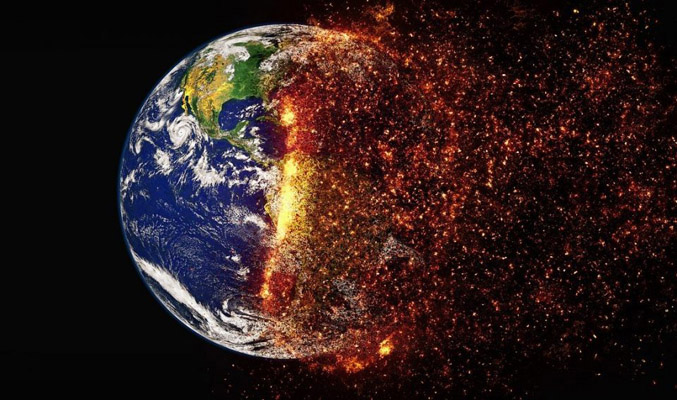 Crisis, BY Sharon Zhang, Truthout, March 29, 2020 The COVID-19
  pandemic has rapidly been absorbed into our collective consciousness, remaking the fabric of our lives. Suddenly, millions are sheltering in place, strangers have started wishing each other well when exiting grocery stores, people have stopped touching their faces and shelves that are normally stocked with bleach and hand sanitizer are barren.
For many, the looming sense of dread is a new sensation….
But for those of us who have lived in acute awareness of the reality of the climate crisis, the current state of pandemic dread feels awfully familiar — just a more imminent version of the dread about the climate that we have been feeling for years.
It’s a psychological phenomenon known informally in the climate community as climate anxiety, climate grief or eco-anxiety…….
Though the pandemic-panic that Mull and others have written on has been ongoing for the past few weeks, climate writers started opening up about their climate grief years ago. …….
But it’s not just psychological trauma that these two crises share — if you take the time to look, the similarities run wide and deep. These are twin worldwide crises that require global cooperation to defeat; they will ravage the way of life as we know it; they will affect, in one way or another, nearly every single person on Earth.
The economy as we know it — rather, as we knew it three months ago — will be a thing of the past if we let the climate crisis continue unmitigated…….
Economists are currently struggling to model all of the short-term effects of the pandemic, so many of those remain unknown. Climate researchers, however, have had much more time to model the future economic impacts of the climate crisis. By 2090, in the U.S. alone and under the same high emissions scenario, NCA researchers predict that costs from mortality due to extreme temperatures will total $141 billion a year, losses of coastal property will total $118 billion a year, and labor losses will cost $155 billion a year. That’s equivalent to a Hurricane Katrina every single year, just from lost labor.
The health care system, too, will be overwhelmed by the climate crisis, just as hospital beds are rapidly being filled by COVID-19 patients. In some places, the climate crisis has already given a preview of this: In 2018, record heat waves caused U.K. hospitals to utilize emergency procedures, when people were being sent to the hospital in such an overwhelming volume that ambulances had to line up outside.
Though COVID-19 is causing hospitals to fill up simultaneously nationwide, “climate-related events will be more limited in their spatial scale, but will be increasingly frequent over time,” says Kristina Dahl, a senior climate scientist at the Union of Concerned Scientists. A heat wave in San Francisco won’t set the whole country ablaze, but it could overwhelm the local health care system.
The key difference between illness caused by a pandemic and the climate crisis, Dahl points out, is that it’s much easier to trace the illness caused by the former. “Things like hurricanes and heat waves and wildfires have always occurred,” she says, but, “to some extent, we know that we are amping them up by adding greenhouse gases to the atmosphere.”
This is likely, in part, why the federal government has quickly pivoted to action on COVID-19, while greenhouse gases have remained largely untouched by Congress for decades. While right-wing media and politicians denied the consequences of inaction on the virus just weeks ago, they have quickly had to change their tune as the spread of the virus has become undeniable. Whereas with long-term, gradual change, it’s easy for deniers to blame such things as the severity of the bushfires in Australia on anything but increasingly hot and arid conditions caused by climate change.
The ruling class has also had less motivation to address the climate crisis because the people suffering the most are, disproportionately, already marginalized. Poor, Black and health-compromised people are and will be the hardest hit by both crises — and some are already being affected by both at once. Air pollution is continually one of the most pronounced issues of environmental justice, and physicians have said those with continual exposure to air pollution are likely to be more vulnerable to the effects of coronavirus……..
“Coronavirus has made so clear that global issues can’t be easily categorized as just a health issue or just an environmental issue,” says says Kristina Dahl, a senior climate scientist at the Union of Concerned Scientists. “They really encompass our broader economy and encompass or entire social systems and ways of life.” ….. https://truthout.org/articles/coronavirus-shows-us-what-our-future-could-look-like-during-climate-crisis/?eType=EmailBlastContent&eId=5e383daa-77a3-48e3-a6f5-f82b689f50fc
March 30, 2020
Posted by Christina Macpherson |
2 WORLD, climate change, health |
Leave a comment
 Coronavirus could disrupt normal refueling practices for nuclear facilities as staffing concerns grow, Utility Dive, By Iulia Gheorghiu March 26, 2020, The nuclear sector has sprung into action to screen employees for signs of the novel coronavirus and prepare for potential disruptions to their typical refueling practices in light of pandemic-related travel restrictions……..
……https://www.utilitydive.com/news/coronavirus-could-disrupt-normal-refueling-practices-for-nuclear-facilities/574920/
March 30, 2020
Posted by Christina Macpherson |
employment, health, USA |
1 Comment
Entire crew of nuclear submarine in coronavirus quarantine https://thebarentsobserver.com/en/security/2020/03/nuclear-submarine-crew-coronavirus-quarantine
A civilian who went on board the cruise-missile carrier “Orel” had met with a man who tested positive to the coronavirus.
“Orel” (K-266) is an Oscar-II class nuclear-powered submarine sailing for the Northern Fleet. Normally, the submarine has a crew of about 110 sailors.
The civilian that had met with a man infected with the coronavirus was on board “Orel” in a “business matter”, Murmansk-based news-online B-port reports.
Also, the crew of a nearby submarine and the personnel on a floating workshop are placed in quarantine.
The submarine is based in Zapadnaya Litsa, the westernmost bases of the Northern Fleet on the Kola Peninsula.
No reports have been published about any coronavirus cases in Zaozersk, the navy town where the crew and their families live.
By March 28th, Russia’s official number of coronavirus infections raised to 1,264.
The “Murmansk group” on social media channel Vkontakte says there are 12 people who have given pre-positive tests of coronavirus in the Murmansk region.
March 30, 2020
Posted by Christina Macpherson |
health, Russia, weapons and war |
Leave a comment
 Coronavirus Diverts U.S. Aircraft Carrier From Mission In Western Pacific https://getaka.co.in/usa-news/coronavirus-diverts-u-s-aircraft-carrier-from-mission-in-western-pacific/ March 26, 2020 npr.org First it was commercial cruise ships that became floating petri dishes for the coronavirus.
Now the U.S. Navy’s nuclear powered aircraft carrier USS Theodore Roosevelt has been diverted to the U.S. “There were three [crew members who] initial[ly tested positive], there were five more that were flown off the ship or in the process of being flown off the ship, and then there are several others that are in isolation right now,” Acting Secretary of the Navy Thomas Modly said Thursday at the Pentagon. “But the ship is going to be pulling into Guam, and they’re going to figure out from there who needs to come off, who can stay on, looking at the level of symptoms and things like that. “
Other U.S. officials have said there are now dozens aboard the Roosevelt who have been found to be infected with the coronavirus.
“We are already starting the process of testing 100 percent of the crew to ensure that we’ve got that contained,” said Modly.
There are 5,000 sailors aboard the carrier, and Modly says some are being tested with approximately 800 test kits available and a limited laboratory capacity to process them on board.
With 133 confirmed cases of COVID-19 as of Thursday morning, the Navy accounts for nearly half of the U.S. military’s 280 reported cases.
“Our forces are all over the world all the time, that may have something to do with it,” Modly said, “and we also have big fleet concentration in areas such as San Diego, Norfolk and other areas where we have a lot of people that are together.”
The acting Navy secretary spoke shortly after Defense Secretary Mark Esper told Reuters that the Pentagon would no longer be disclosing in granular detail where cases of COVID-19 in the U.S. military have been detected.
“What we want to do is give you aggregated numbers,” the wire service quotes Esper as saying. “But we’re not going to disaggregate numbers because it could reveal information about where we may be affected at a higher rate than maybe some other places.”
Modly acknowledged that the Navy had not been disclosing which of its ships had been impacted by the outbreak.
“But obviously the information about the [Roosevelt] came out and we felt it was responsible for us to come out and give you all the straight story about what’s happening there,” he told reporters in the Pentagon briefing room. “We’ll follow the direction of the secretary of defense in terms of this, but from my perspective, being as transparent as possible is probably the best path.”
March 28, 2020
Posted by Christina Macpherson |
health, weapons and war |
Leave a comment
 NFLA 26th March 2020,
 The Nuclear Free Local Authorities (NFLA) calls today for the suspension of all work by contractors of EDF Energy at the Hinkley Point C proposed new nuclear reactor site, due to the concerns of an infection spread from the public health emergency sparked by the covid-19 outbreak.
March 28, 2020
Posted by Christina Macpherson |
health, safety |
Leave a comment
Covid 19 threatens outages scheduled at 97% of U.S. nuclear plants in 2020
by Sonal Patel, powermag.com, 27 Mar 20
Challenged by the COVID-19 pandemic, the U.S. nuclear industry has asked the Trump administration to ensure nuclear workers, suppliers, and vendors will have access to nuclear plants and personal protective equipment (PPE) during the 2020 spring and fall refueling outage seasons and beyond. All but two of the nation’s nuclear plants had scheduled planned outages this year, work that the generators consider crucial to keep the lights on.
In a March 20 letter to Energy Secretary Dan Brouillette, Nuclear Energy Institute (NEI) President and CEO Maria Korsnick noted nuclear reactors have a “unique requirement” to load a fresh batch of fuel once every 18 to 24 months. The event necessitates a shut down for two to four weeks during which intense work occurs, including critical maintenance.
Each plant typically brings in several hundred specialized workers for this work over a typical period of 30-60 days, which includes activities in advance of and following the outage. These workers typically stay in hotels or board with local families, and eat in restaurants,” Korsnick wrote. In the course of performing outages and in routine operations, nuclear plant workers also use PPE and supplies for radiological protection. As the COVID-19 pandemic intensifies, the industry will also require medical PPE and supplies to minimize its spread, she said. Continue reading →
March 28, 2020
Posted by Christina Macpherson |
health, politics, safety |
Leave a comment
|
 LANL Plans to Release Twice the Amount of Tritium Allowed http://nuclearactive.org/ March 26th, 2020 The Department of Energy (DOE) and its contractor at Los Alamos National Laboratory (LANL) plan to vent radioactive tritium into the air in an amount twice the federal standard of 10 millirems a year. LANL estimates a possible offsite dose to the public of 20.2 he Department of Energy (DOE) and its contractor at Los Alamos National Laboratory (LANL) plan to vent radioactive tritium into the air in an amount twice the federal standard of 10 millirems a year. LANL estimates a possible offsite dose to the public of 20.2 LANL Plans to Release Twice the Amount of Tritium Allowed http://nuclearactive.org/ March 26th, 2020 The Department of Energy (DOE) and its contractor at Los Alamos National Laboratory (LANL) plan to vent radioactive tritium into the air in an amount twice the federal standard of 10 millirems a year. LANL estimates a possible offsite dose to the public of 20.2 he Department of Energy (DOE) and its contractor at Los Alamos National Laboratory (LANL) plan to vent radioactive tritium into the air in an amount twice the federal standard of 10 millirems a year. LANL estimates a possible offsite dose to the public of 20.2
In 2019, the federal Environmental Protection Agency (EPA) approved a 2018 LANL plan under the Clean Air Act. This month, the New Mexico Environment Department approved the plan under the state’s Hazardous Waste Act because there are lead tools present in the containers. But there are inconsistencies between the two plans.
For instance, the earlier Clean Air Act plan proposed using “getters” to capture a portion of the vented tritium before it is released through an open door in the prefabricated shed. The later plan deleted the use of a “getter bed” and replaced it with an unnamed air emissions control system. Nevertheless, the Hazardous Waste Act plan states the gases will pass through a molecular sieve bed and through a metering value before release. https://permalink.lanl.gov/object/tr?what=info:lanl-repo/eprr/ESHID-603412
New Mexicans are concerned about the proposed venting. Tritium is radioactive hydrogen and is highly mobile moving from air to water and back. It can cross the placenta and affect a developing fetus. The 10 millirem standard is based on a 154-pound, five feet 6 inch, Anglo “reference man,” between the ages of 20 to 30, who consumes a European diet.
Beata Tsosie, a Community Doula and Gardener, from Santa Clara Pueblo, said, “As a Pueblo woman living downwind and downstream from Los Alamos nuclear weapons production, I am very concerned about the lab’s intentions to go forward with releasing radioactive tritium vapor into our air, land, waters, and ecosystems. During mid April is when our land-based community is outdoors for longer periods of time preparing their fields and gardens for planting. What will it mean to also have cumulative exposure when we consume these crops? There are also increased exposures due to active foraging of wild plants, gathering of clays, fishing, hunting, and ceremony.
“Our children are also outdoors for longer periods of time due to the school shutdown for COVID-19, which is scheduled to go on indefinitely. I watch my son playing in his backyard, making his own gardens, running, getting out of breath and breathing deeply the air that I need to know is safe for him to be exposed to. We live 20 minutes away from these planned releases, and now in addition to an already stressful self-quarantine I need to worry about my family being outside enjoying their birthright.
“It is my understanding that in the documents submitted to the EPA and NMED in 2018, there is no inclusion of alternatives to these releases. There should not be a rush to put our communities in harms way when all solutions have not even been discussed. I know that the federal standards for tritium exposure are not protective of land-based people of color, or pregnant families and infants who are more vulnerable to radioactive toxicity. Tritium can cross placental boundaries. These standards of exposure are still based on an obsolete model of an adult, white male of European descent and custom.
There must be an informed public process that prioritizes protecting those most vulnerable. I do not consent to these toxic releases in my ancestral homelands; it is the continuation of nuclear colonialism and violence on Indigenous lands and bodies and a sorrowful history of environmental racism in our sacred Jemez Plateau. I call on all of our Congressional delegation, EPA and NMED directors to put an immediate halt and suspension to these planned tritium releases and increase in LANL production. Our communities deserve reprieve, health, calm, and wellness in these challenging times.”
Given the cumulative health consequences from the proposed venting, organizations and individuals are requesting the Environment Department hold a public comment period and a public hearing.
|
|
March 28, 2020
Posted by Christina Macpherson |
environment, radiation, USA |
Leave a comment
Coronovirus pandemic could cripple the nuclear industry, Online Opinion, By Noel Wauchope Thursday, 26 March 2020 Nuclear power facilities have this one problem that is unique to the nuclear industry, and that is, the need for exceptional security. No other industry has these risks of radioactive accident and special vulnerability to terrorism. The IAEA defines nuclear security as:
The prevention and detection of and response to, theft, sabotage, unauthorized access, illegal transfer or other malicious acts involving nuclear material, other radioactive substances or their associated facilities.Nuclear power facilities have this one problem that is unique to the nuclear industry, and that is, the need for exceptional security. No other industry has these risks of radioactive accident and special vulnerability to terrorism. The IAEA defines nuclear security as:
According to Mycle Schneider, in the World Nuclear Status Report , reactor safety depends above all on a:
…’culture of security’, including the quality of maintenance and training, the competence of the operator and the workforce, and the rigour of regulatory oversight. So a better-designed, newer reactor is not always a safer one.
Experts say that the
…largest single internal factor determining the safety of a nuclear plant is the culture of security among regulators, operators and the workforce – and creating such a culture is not easy.
This security risk brings with it, the need for a very high level of secrecy……….
There was already a shortage of skilled nuclear workers, even before COVID19 hit the world. The most recent Global Energy Talent Index (GETI) reports “an acute need for talent” in the nuclear sector. Nuclear professionals are an aging group, with a “vast wave of imminent retirements.” The onslaught of the pandemic could mean some shortages of well-informed, capable professionals working at nuclear reactors, and at other nuclear facilities, such as waste management and transport. And there’s that even more secretive area, nuclear weapons production and management.
Of course, there’s that whole other workforce – the nuclear security officers, whose job is just as critical as that of the physicists and engineers. There’s quite a history of anti- nuclear activists breaking into nuclear facilities in order to demonstrate their vulnerability to terrorist attacks.
The nuclear lobby is of course, fighting to win hearts and minds, with some persuasive propaganda. Their theme is the value of nuclear research reactors in industry and health, and especially in the detection of viruses. And they do have a point. Still radionuclides are being produced by non-nuclear means. The role of small nuclear research reactors is increasingly looking like the fig leaf on an unsustainable and super-expensive nuclear power industry.
In the meantime, as trade and industry slow down, with the global march of this pandemic, the nuclear industry is already suffering a set-back. The loss of well-informed staff, whether in the professional area, or at lower levels in the workforce hierarchy, poses a special problem for this industry, with its secretive culture. Nuclear power has a unique safety requirement, meaning that its reactors may need to be shut down, or at least, have their operations cut back. https://www.onlineopinion.com.au/view.asp?article=20808
March 27, 2020
Posted by Christina Macpherson |
2 WORLD, health, safety |
Leave a comment
For now, Kristensen says, “probably the healthiest people in America are those who are coming back from the longest submarine patrols,” which currently last as long as 78 days.
They’ve been underwater since almost the beginning of the year.
THE U.S. MILITARY’S BEHIND-THE-SCENES MOVES TO PROTECT NUCLEAR READINESS AMID CORONAVIRUS https://www.newsweek.com/us-militarys-behind-scenes-moves-protect-nuclear-readiness-amid-coronavirus-1493829
BY WILLIAM M. ARKIN ON 3/23/20 The Defense Department shifted many of its domestic bases to “health protection condition” Charlie on Sunday, the latest in a series of moves to protect military forces, families and bases from coronavirus. HPCON Charlie – also known as “substantial threat of sustained community transmission” – is the fourth highest of five levels.
Though Pentagon officials continue to insist that the coronavirus pandemic has had no impact on operational readiness of the armed forces, behind the scenes military exercises and deployments are being scaled down and canceled, and plans are being put in place to sustain essential operations. That includes the so-called triad of bombers, land-based missiles and submarines that make up the U.S. nuclear arsenal.
Last week, the head of U.S. Strategic Command (STRATCOM), Adm. Charles A. “Chas” Richard, said that nuclear readiness was unaffected by coronavirus. The nuclear forces, he said, “remain ready to execute” their war plans despite coronavirus and that the pandemic has had “no impact to our ability” to carry out missions.
Adm. Richard said that his Omaha, Nebraska-based command “had plans in place that we have updated and are executing,” to deal with a pandemic. The nuclear force, he said, was designed to operate isolated for long periods of time.
But an active force that is constantly kept on alert is also one that is more exposed. According to a military tally compiled as of Sunday and reviewed by Newsweek, units feeding STRATCOM have a cumulative 106 uniformed personnel not on duty due to coronavirus, either because of confirmed cases or “protective self-quarantine.” Six bases are listed where bombers, missiles, aerial refueling tankers and supporting command and communications units that support the nuclear force are reporting coronavirus cases, according to the data compiled by the Defense Department.
One positive case of coronavirus was reported Saturday at Whiteman air force base in Johnson County, Missouri, where the B-2 stealth bomber force is deployed. Three of those bombers returned to base over the weekend from a “deterrent” mission deployment to Europe. That mission, observers say, was cut short in comparison with previous bomber deployments.
The United States currently has a total of about 850 nuclear warheads on alert – 400 nuclear-armed land-based intercontinental missiles in three western states, and 450 warheads on five ballistic missile submarines in the Atlantic and Pacific Oceans. These are the weapons that are ready to instantly respond to presidential commands, according to the Federation of American Scientists. An additional 1,300 warheads can be brought up to alert status quickly on four or five additional submarines and on 60 nuclear-configured B-2 and B-52 bombers at bases, all in a matter of a few days.
Last week, Air Force Chief of Staff Gen. David L. Goldfein said that the nuclear deterrent has had no changes in its operations due to coronavirus.
An example of those operations is the deployment of the three B-2 stealth bombers to Europe on March 8, the bombers and their maintainers first landing at Lajes Field in the Azores, an archipelago of nine islands 850 miles off the coast of Portugal. The next day, the bombers flew to RAF Fairford in Gloucestershire in the southwest U.K. There, they conducted various practice missions – over the North Sea on March 12, an Icelandic Air Policing mission on March 16 and 17, over the North Sea on March 18, and then over the Arctic Ocean on March 20. The bombers practiced flying with British, Dutch and Norwegian fighter planes, practicing escort and the procedures for the bombing of Russia.
“A credible deterrent for the high North region,” Lt. Gen. Steven Basham said, in describing the operations. “Operating B-2s in the Arctic allow us to shape that environment by demonstrating our resolve to deliver combat power anywhere in the world if called upon.”
“The world expects that NATO and the U.S. continue to execute our mission with decisiveness, regardless of any external challenge,” said Gen. Jeff Harrigian, commander of U.S. Air Forces in Europe.
Instead, the Department is in a constant cycle of keeping the existing stockpile of bomber and missile warheads healthy. Nuclear weapons expert and observer Hans Kristensen of the Federation of American Scientists says that includes “taking apart and surveying existing warheads in the stockpile” at the rate of about a dozen or so warheads per month. This is primarily accomplished at the Pantex plant in Amarillo, Texas, though the two nuclear laboratories –Los Alamos in New Mexico and Livermore in California – also get involved in more complex and problem cases discovered in what are called “surveillance” activities. The current U.S. nuclear stockpile is made up of seven different basic types of warheads, and some sampling of each is shipped from active bases back to Pantex and the laboratories in a complex and secret ongoing process.
Kristensen says that though there have been few signs of how coronavirus is impacting nuclear forces, the B-2 mission in Europe was “dramatically shortened” in comparison with previous years. “Last fall when they deployed the B-2s, they were there [at RAF Fairford] for a month,” he says. Kristensen is been closely following bases where nuclear weapons are deployed, as well as the operations of the force, expecting that there will be significant changes if the virus persists in its growth.
Though U.S. European Command says its readiness remains high “for the foreseeable future,” it admits it is already curtailing numerous military exercises due to coronavirus. In the coming months, Gen. Tod Wolters, overall European commander says, it is likely that between 30 and 65 percent of exercises will be reduced or canceled. Other commands have similarly canceled or postponed Russia-oriented military exercises, including a Red Flag exercise planned for Alaska and a high-profile test of a new all-domain warfighting system planned for next month, one that would have practiced the integration of nuclear, conventional, cyber and space weaponry.
“My organization is designed to be able to operate isolated for long periods of time,” STRATCOM commander Adm. Richard insists.
The 3,000 person headquarters in Omaha has taken steps to institute social distancing, and it has shifted some people and functions to alternate and subordinate commands, improving redundancies and guarding against spread of the virus.
Though alerts, exercises, and the shuffling around of warheads continues, a senior officer at U.S. Strategic Command (who requested anonymity because he is not authorized to public speak on the matter) says that everyone is anticipating that there will be significant changes are coming. “There isn’t a command headquarters, including STRATCOM,” the senior officer says, “where there aren’t people with coronavirus symptoms or in self-quarantine.”
For now, Kristensen says, “probably the healthiest people in America are those who are coming back from the longest submarine patrols,” which currently last as long as 78 days.
They’ve been underwater since almost the beginning of the year.
March 26, 2020
Posted by Christina Macpherson |
health, USA, weapons and war |
Leave a comment
Hanford workers were given leaky respirators at contaminated job site, contractor’s documents reveal https://www.seattletimes.com/seattle-news/times-watchdog/hanford-workers-were-given-leaky-respirators-at-contaminated-job-site-contractors-documents-reveal/?fbclid=IwAR18g7iwSGZJNg63q1UKl8nmUbzP4WF0JD7pqTMte9_IVRDXwM5JoCZcESA
RICHLAND, Benton County — Bill Evans Jr. worked on the front lines of the Hanford cleanup. He supervised crews tasked with dismantling tanks, uncoupling pipes and painting over surfaces to stanch the spread of radioactive particles inside some of the most hazardous buildings at the nation’s most contaminated nuclear site.
To keep themselves safe, they donned full-body protective suits, sometimes two. Battery-charged respirators hung by their sides, circulating filtered air through breathing tubes and into hoods.
In May 2016, seven years into his Hanford career, Evans had a seizure on his lunch break that left him dazed. It was the first of many that forced him to stop working. Since then, repeated seizures have overtaken his life, resulting in falls that dislocated his jaw, fractured his spine and sent him crashing through a glass pane that gashed his head and required 30 stitches.
Evans, 45, is convinced that the sudden onset of his illness was linked to his job. Last year, he got a surprising clue about what might have gone wrong. A document from his old employer, slipped to him by a colleague, stated that a respirator cartridge Evans frequently used had a bad seal caused by changes made to the gear at Hanford, and possibly exposed him to radioactive and chemical contamination.
“I was floored, surprised and angry,” Evans said. “Because I trusted that equipment. That equipment was my lifeline.”
Evans was one of an estimated 560 workers at the Plutonium Finishing Plant between 2012 and October 2016 who wore respirator gear that may have leaked, according to documents obtained by The Seattle Times. The project contractor, CH2M Hill Plateau Remediation Company, told workers on the job site about the safety lapse, which was also detailed in a November 2016 letter to be placed in affected workers’ medical files.
But the contractor did not directly reach out to workers, like Evans, who had already left the job, according to a spokesman for CH2M Hill. The letter ended up in the files of only 150.
UPDATE
In response to a Seattle Times investigation, advocates seek benefits for workers who wore leaky respirators at Hanford
March 26, 2020
Posted by Christina Macpherson |
- plutonium, health, USA |
Leave a comment
Rightwing governments have denied the problem and been slow to act. With coronavirus and the climate, this costs lives.
The coronavirus pandemic has brought urgency to the defining political question of our age: how to distribute risk. As with the climate crisis, neoliberal capitalism is proving particularly ill-suited to this.
Like global warming, but in close-up and fast-forward, the Covid-19 outbreak shows how lives are lost or saved depending on a government’s propensity to acknowledge risk, act rapidly to contain it, and share the consequences.
On these matters, competence and ideology overlap. Governments willing to intervene have been more effective at stemming the virus than laissez-faire capitalists. The further right the government, the more inclined it is to delay action and offload blame elsewhere. International comparisons suggest this could be making infection and death rates steeper.
Take the US, where Donald Trump is only now acknowledging the seriousness of the pandemic after weeks of claiming fears were exaggerated. Until recently, his government put more money into shielding the oil industry than providing adequate testing kits. He reportedly ordered officials to downplay early warnings because he did not want bad news in an election year. The US now has one of the fastest rising numbers of new cases in the world.
In Brazil, the ultra-right president, Jair Bolsonaro, is equally reckless. He claimed the risks of coronavirus were overblown, until 17 of his aides and security detail tested positive after a trip to the US. Last weekend, he ignored his own government’s advice and chose to shake hands and pose cheek-to-cheek for selfies at a mass rally of supporters. As cases and deaths surge, his support has plummeted.
In the UK, Boris Johnson acknowledged the risk, but did little about it. Though not as extreme in his denial as Trump or Bolsonaro, Johnson’s government first dithered, then dabbled with a policy of “herd-immunity”that was reportedly driven by Dominic Cummings’ desire to protect the economy, even if it cost pensioners’ lives. The UK has since shifted tack and enforced a lockdown, but its controls are still haphazard. Last week, daily deaths in the UK were reckoned to be on a steeper upward curve than Italy was at the same stage.
By contrast, more interventionist governments – generally but not exclusively those which are centrist or leftwing – have acted more quickly and shared the burden of risk more widely. Norway, Denmark and Sweden already appear to have flattened the coronavirus curve. Spain and France implemented lockdowns at around 200 deaths, which the UK and US have far surpassed.
In Asia, China initially attempted to hide the problem from the public when the virus emerged in Wuhan, then mobilised huge public resources to enforce a strict lockdown and provide extra hospital beds. South Korea, Taiwan and Thailand also appear to have turned the corner thanks to different combinations of extensive testing, quarantine measures and public health education.
Other factors are at play. Asian countries with prior experience of the Sars epidemic appear to have been better prepared. Italy, one of the worst affected countries, has one of the world’s oldest populations. In Japan’s case, the relatively flat curve of confirmed cases may also be a result of the government’s unwillingness to do widespread testing because it could jeopardise the Olympics.
Similarly, the relatively low number of cases in the global south has raised hopes that warmer weather might slow the disease – but this is far from certain. A comparatively low number of coronavirus cases could be the result of a lag caused by distance from the origin of the disease, relatively lower levels of international traffic, and fewer resources for testing.
This pandemic has amplified the importance of assessing and controlling risk before it gets out of hand. But the political champions of the neoliberal right, such as Trump and Bolsonaro, are more inclined to deny and delay, as climate politics have shown us in recent years.
When it comes to a pandemic like Covid-19, that position is untenable. No leader can deny the science, nor can they endlessly delay action as they have done on global heating. Muddling through until the next election is not an option; leaders will be judged on deaths next week, not emissions reductions in 2050.
The demographics are also completely different. Unlike the climate crisis, the virus predominantly threatens the elderly – the right’s core support group – rather than millennials. So far, the worst affected regions are also closer to the centre of economic power: the cool industrialised north rather than the warmer developing south (though the latter may suffer more in the future due to weaker healthcare systems).
For the right, this makes the pandemic a greater political threat than the climate crisis has ever been. Unless they can quickly get on top of the disease, they will lose any claim to being champions of national security. It is entirely possible that the effects of this pandemic could be one of the most catastrophic failures of free-market capitalism.
This should also be a lesson for the left. If state intervention and scientific advice is effective in dealing with the virus, the same principles should be applied more aggressively towards the still more apocalyptic threats of climate disruption and the collapse of nature. Until now, the left has recognised these dangers, but done little to act on them because economic growth has always taken precedence.
The pandemic has proved that delays are deadly and expensive. If we are to avoid a cascade of future crises, governments must think beyond a return to business as usual. Our conception of what is “normal” will have to change. We’ll need to invest in natural life-supporting systems such as a stable climate, fresh air and clean water. In the past, those goals have been dismissed as unrealistic or expensive, but recent weeks have shown how quickly the political compass can shift.
First though, we need to accept – and share – risk. Instead of deferring risks to future generations, weaker populations and natural systems, governments need to transform risks into responsibilities we all bear. The longer we hesitate, the fewer resources we will have at our disposal, and the more risk we will have to divide.
• Jonathan Watts is the Guardian’s global environment editor
March 26, 2020
Posted by Christina Macpherson |
2 WORLD, climate change, health |
Leave a comment
The president and his far-right allies see the pandemic as one more chance to again rip apart the notion that countries do better by cooperating.
While we have to self-isolate from the virus, we don’t have to isolate ourselves from the world. Trump could be uniting our strengths. We all could.


Trump Could Have Led the World Against the Coronavirus We have to isolate ourselves from the virus. He doesn’t have to isolate us from the world. 25 Mar 20, https://www.defenseone.com/ideas/2020/03/trump-could-have-led-world-against-coronavirus/164086/?oref=d-topstory
Trump can’t help himself. He is missing his chance to live out “America First.”
In January or February, he could have convened world leaders, determined a plan to stop the coronavirus, and shown what American power can really do with all of the pomp and circumstance of summit stages and Fox News backdrops. He could have made the world grateful for his leadership.
Even now, as the world stays home FaceTiming with family, Trump could convene a video conference of world leaders, sitting in Washington’s big chair in the middle of the virtual table, directing help, aid, relief, supplies, NATO militaries and the narrative. He could have even liberals and TV pundits praising him as the global leader he believes himself to be.
The coronavirus pandemic is more than a 9/11 moment. It’s a Reagan-second-term-chance-to-beat-the-Soviets moment. It’s a political opening to soften up, wake up, and bring the world together. It’s an opportunity to diminish Beijing and Moscow and marginalize violent extremists.
The United States should be leading the world through this pandemic. Americans should be leading the world. Trump should be leading the world.
He could have thought big, but instead he plays small. On Tuesday night, the president of the United States was up late retweeting posts from the partisan and anti-Semitic information warfare site Breitbart, amplifying their praise and thumping liberal snowflakes and the corporate media.
Yesterday, the number of Americans who have died from the coronavirus rose by 160. The number of Americans who tested positive for the virus rose by 10,000. The number of infected reached 26,000 in New York state. The number worldwide is nearly 500,000. Continue reading →
March 26, 2020
Posted by Christina Macpherson |
health, politics, USA |
Leave a comment
Dundee Courier 24th March 2020, Opponents of the Hinkley Point C project criticised the decision to carry on and called on the Government to tell them to stop. “This is putting lives at risk right across Somerset and the whole of the country,” said Stop Hinkley campaign spokeswoman Katy Attwater. “Why hasn’t the Prime Minister ordered them to stay at home – is he just pandering to the nuclear lobby? “While the rest of the country is in lockdown, EDF fails to acknowledge that if someone has developed a fever, they have been incubating and spreading the virus for days beforehand.
“Monitoring for fever is leaving it too late. Who is advising them on best practice? “EDF is irresponsible with its decisions on climate change, marine protection, archaeological heritage, and future safety of the people in Somerset. “Now it is failing to address the Covid-19 emergency adequately. They need to stop work at Hinkley Point C now to protect workers and local people.”
March 26, 2020
Posted by Christina Macpherson |
health, safety, UK |
Leave a comment













 nuclear-news