Global Warming, Environmental Variability, and Infectious Disease — GarryRogers Nature Conservation

COVID-19 battle allowing spread of other infectious diseases in India.
Global Warming, Environmental Variability, and Infectious Disease — GarryRogers Nature Conservation
The danger of Japan dumping Fukushima wastewater into the ocean
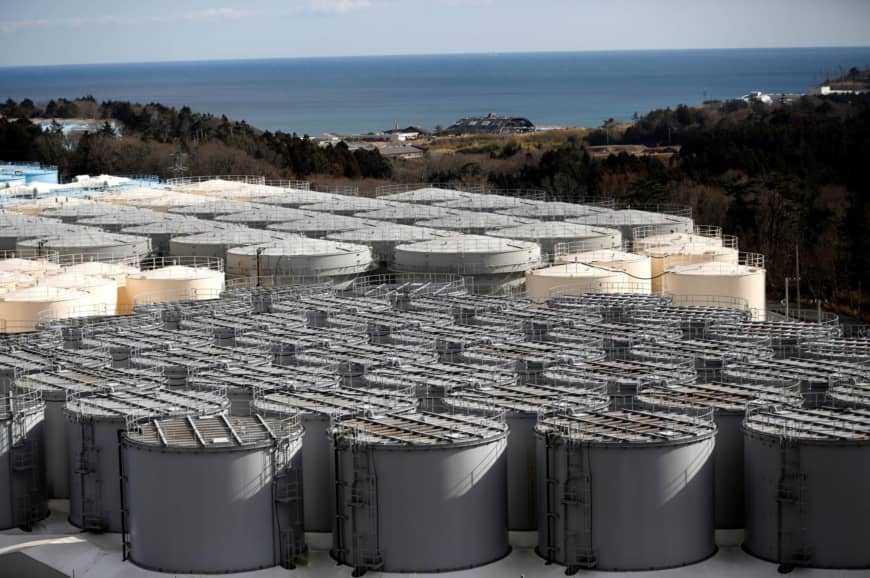
The danger of Japan dumping Fukushima wastewater into the ocean, https://thehill.com/opinion/energy-environment/548726-the-danger-of-japan-dumping-fukushima-wastewater-into-the-ocean
BY RICK STEINER,— 04/17/21 The Japanese government just announced that it intends to release over 1.2 million tons of radioactive wastewater from the Fukushima Nuclear Power Plant into the North Pacific. This would result in dangerous radionuclides flowing across the ocean to Russia, Alaska, Canada, Hawaii and the U.S. West Coast. The release of this material — which is strongly opposed by local scientists and residents in Japan — would begin in two years and continue for another 40 years.
The Biden administration must urge Japan to abandon this unnecessary and dangerous plan.
The 2011 Fukushima nuclear disaster was caused by the 9.1 magnitude Tohoku earthquake and a 14-meter-high tsunami. The tsunami flooded and disabled emergency generators needed to pump cooling water into the nuclear reactor cores, causing three reactor core meltdowns and hydrogen explosions. Radionuclides flowed eastward across the Pacific and were eventually found in waters off California, Hawaii, Oregon, Washington, British Columbia and Alaska. We all live downstream.
The storage tanks now hold seawater that has been used to continue cooling the reactor cores, and this water is contaminated with such radionuclides as Cesium-137, Carbon-14, tritium (including the more dangerous “Organically Bound Tritium”), Strontium-90, Cobalt-60, Iodine-129, Plutonium-239 — and over 50 other radionuclides. Some of this has reportedly been removed, but some has not (e.g. radioactive tritium and C-14).
The Tokyo Electric Power Company (TEPCO) that owns Fukushima, and is now responsible for the cleanup (that is likely to last the remainder of this century), didn’t admit until recently that the wastewater contains significant amounts of radioactive Carbon-14. As C-14 has a half-life of 5,730 years, and is known to bio-accumulate in marine ecosystems and cause cellular and genetic impairment. This is a very serious concern.
Fukushima C-14 will be added to the already elevated radioactive C-14 load in the oceans from nuclear weapons tests — or “bomb carbon” — last century. It’s now found in organisms even in the deepest part of the ocean, the Marianas Trench. It is easy to imagine the impact this new, intentional Fukushima release could have, rightly or not, on the public image of clean marine seafood and tourism along the Pacific coast.
TEPCO claims the water has been sufficiently treated and is OK to release, but the treatment system they are using is reported to be substandard and not up to the job. Communities across the Pacific deserve an independent scientific assessment of TEPCO’s claims, by an Independent Scientific and Technical Commission. Remember, TEPCO and the Japanese government approved locating the nuclear power plant’s emergency generators in a tsunami flood zone. Their assurances now that there is no risk in releasing this radioactive water are neither credible nor scientifically defensible.
China and South Korea have registered objections to the release plan with Japan, but other downstream nations — the U.S., Russia and Canada — have stayed quiet. It isn’t often that China expresses more concern for the environment than the U.S., but this is one such time.
And even if the ecological and public health risk from the planned release is indeed low, as claimed (this is highly doubtful), the risk is entirely unnecessary and avoidable.
Beyond marine discharge, several other disposal options have been considered, including evaporating the water, or injecting it into deep geologic formations.
But by far the best solution is for TEPCO to build more storage tanks and continue holding all contaminated water for another 15 years or so, during which time the radioactive tritium level will decay by half, and simultaneously treat it with best available technology (such as ion exchange systems and modular “detritiation” systems in the U.S.) to remove all radionuclides possible.
Japan and TEPCO considered this long-term storage option, but opted instead for the cheapest choice — simply dumping the wastewater into the Pacific.
The era of intentionally dumping toxic waste in our one global ocean is, or should be, over.
Fukushima was, and continues to be, a nuclear nightmare, and all nations should join together in a collaborative effort to resolve this mess. This effort will take hundreds of billions of dollars, over many decades, and the U.S. and other G20 nations must step up and help both financially and technically.
Unless and until this wastewater is independently certified as effectively free of radionuclides and safe, not one drop should be released into the beautiful deep blue Pacific.
Finally, Fukushima should be the last nail in the coffin for the notion that nuclear fission power could be a realistic solution to our climate crisis.
Rick Steiner is a marine conservation biologist in Anchorage and former professor of marine conservation with the University of Alaska from 1980-2010. He now consults for the U.N., governments and NGOs on marine environmental issues. He is author of “Oasis Earth: Planet in Peril.”
French Prime Minister visiting Algeria. The question of radioactive dust from nuclear tests will be on the agenda.
*Algeria – French Nuclear Testing**
French atomic tests in Algeria: so much brings the wind. The wind regularly
blows radioactive particles from the Sahara over Europe, a memory of the
atomic tests carried out in Algeria in the 1960s. Will the responsibility
of Paris be on the menu of Jean Castex’s visit to Algiers this weekend.
end?
Liberation 7th April 2021
On April 10 and 11, French Prime Minister Jean Castex will travel to
Algiers, accompanied by eight ministers – including the ministers of
foreign affairs and the armed forces to participate in the 5th session of
the France-Algeria High Level Intergovernmental Committee (CIHN). The
question of the health and environmental consequences of the 17 nuclear
tests carried out by France in the Sahara between 1960 and 1966, as well as
that of nuclear and non-nuclear waste left by France, will be on the menu
of discussions.
ICAN France 7th April 2021
http://icanfrance.org/alerte-presse-les-consequences-des-essais-nucleaires-francais-en-algerie/
Iodine tablets to be givento 64 municipalities near France’s Paluel nuclear power plant in Normandie
Paris – Normandie 24th March 2021, Iodine tablets to protect residents living near the Paluel nuclear power
plant. Paluel. 64 municipalities and 108,000 inhabitants are now included
in the security perimeter extended to 20 km around the nuclear power plant.
A campaign to distribute iodine tablets is underway.
Environmental Ruin in Modern Iraq – largely due to depleted uranium.


In particular, she points to depleted uranium, or DU, used by the U.S. and U.K. in the manufacture of tank armor, ammunition, and other military purposes during the Gulf War and the 2003 invasion of Iraq.
The United Nations Environment Program estimates that some 2,000 tons of depleted uranium may have been used in Iraq, and much of it has yet to be cleaned up.
‘Everything Living Is Dying’: Environmental Ruin in Modern Iraq, Decades of war, poverty, and fossil fuel extraction have devastated the country’s environment and its people. Undark, BY LYNZY BILLING, 12.22.2021 All photos by LYNZY BILLING for UNDARK ”’,,,,,,,,,,,,,,,,,,,,,,,,,,,,,,,,,,,,,,,,,,, Miscarriages, of course, are common everywhere, and while pollution writ large is known to be deadly in the aggregate, linking specific health outcomes to local ambient pollution is a notoriously difficult task. Even so, few places on earth beg such questions as desperately as modern Iraq, a country devastated from the northern refineries of Kurdistan to the Mesopotamian marshes of the south — and nearly everywhere in between — by decades of war, poverty, and fossil fuel extraction.
As far back as 2005, the United Nations had estimated that Iraq was already littered with several thousand contaminated sites. Five years later, an investigation by The Times, a London-based newspaper, suggested that the U.S. military had generated some 11 million pounds of toxic waste and abandoned it in Iraq. Today, it is easy to find soil and water polluted by depleted uranium, dioxin and other hazardous materials, and extractive industries like the KAR oil refinery often operate with minimal transparency. On top of all of this, Iraq is among the countries most vulnerable to climate change, which has already contributed to grinding water shortages and prolonged drought. In short, Iraq presents a uniquely dystopian tableau — one where human activity contaminates virtually every ecosystem, and where terms like “ecocide” have special currency.
According to Iraqi physicians, the many overlapping environmental insults could account for the country’s high rates of cancer, birth defects, and other diseases. Preliminary research by local scientists supports these claims, but the country lacks the money and technology needed to investigate on its own. To get a better handle on the scale and severity of the contamination, as well as any health impacts, they say, international teams will need to assist in comprehensive investigations. With the recent close of the ISIS caliphate, experts say, a window has opened.
While the Iraqi government has publicly recognized widespread pollution stemming from conflict and other sources, and implemented some remediation programs, few critics believe these measures will be adequate to address a variegated environmental and public health problem that is both geographically expansive and attributable to generations of decision-makers — both foreign and domestic — who have never truly been held to account. The Iraqi Ministry of Health and the Kurdistan Ministry of Health did not respond to repeated requests for comment on these issues……………………….
experts who study Iraq’s complex mosaic of pollution and health challenges say. Despite overwhelming evidence of pollution and contamination from a variety of sources, it remains exceedingly difficult for Iraqi doctors and scientists to pinpoint the precise cause of any given person’s — or even any community’s — illness; depleted uranium, gas flaring, contaminated crops all might play a role in triggering disease……………………………
This is Eman’s sixth year at the hospital, and her 25th as a physician. Over that time span, she says, she has seen an array of congenital anomalies, most commonly cleft palates, but also spinal deformities, hydrocephaly, and tumors. At the same time, miscarriages and premature births have spiked among Iraqi women, she says, particularly in areas where heavy U.S. military operations occurred as part of the 1991 Gulf War and the 2003 to 2011 Iraq War.
Research supports many of these clinical observations. According to a 2010 paper published in the American Journal of Public Health, leukemia cases in children under 15 doubled from 1993 to 1999 at one hospital in southern Iraq, a region of the country that was particularly hard hit by war. According to other research, birth defects also surged there, from 37 in 1990 to 254 in 2001.
But few studies have been conducted lately, and now, more than 20 years on, it’s difficult to know precisely which factors are contributing to Iraq’s ongoing medical problems. Eman says she suspects contaminated water, lack of proper nutrition, and poverty are all factors, but war also has a role. In particular, she points to depleted uranium, or DU, used by the U.S. and U.K. in the manufacture of tank armor, ammunition, and other military purposes during the Gulf War and the 2003 invasion of Iraq.
The United Nations Environment Program estimates that some 2,000 tons of depleted uranium may have been used in Iraq, and much of it has yet to be cleaned up. The remnants of DU ammunition are spread across 1,100 locations — “and that’s just from the 2003 invasion,” says Zwijnenburg, the Dutch war-and-environment analyst. “We are still missing all the information from the 1991 Gulf War that the U.S. said was not recorded and could not be shared.”
Souad Naji Al-Azzawi, an environmental engineer and a retired University of Baghdad professor, knows this problem well. In 1991, she was asked to review plans to reconstruct some of Baghdad’s water treatment plants, which had been destroyed at the start of the Gulf War, she says. A few years later, she led a team to measure the impact of radiation on soldiers and Iraqi civilians in the south of the country.
Around that same time, epidemiological studies found that from 1990 to 1997, cases of childhood leukemia increased 60 percent in the southern Iraqi town of Basra, which had been a focal point of the fighting. Over the same time span, the number of children born with severe birth defects tripled. Al-Azzawi’s work suggests that the illnesses are linked to depleted uranium. Other work supports this finding and suggests that depleted uranium is contributing to elevated rates of cancer and other health problems in adults, too.
Today, remnants of tanks and weapons line the main highway from Baghdad to Basra, where contaminated debris remains a part of residents’ everyday lives. In one family in Basra, Zwijnenburg noted, all members had some form of cancer, from leukemia to bone cancers.
To Al-Azzawi, the reasons for such anomalies seem plain. Much of the land in this area is contaminated with depleted uranium oxides and particles, she said. It is in the water, in the soil, in the vegetation. “The population of west Basra showed between 100 and 200 times the natural background radiation levels,” Al-Azzawi says.
Some remediation efforts have taken place. For example, says Al-Azzawi, two so-called tank graveyards in Basra were partially remediated in 2013 and 2014. But while hundreds of vehicles and pieces of artillery were removed, these graveyards remain a source of contamination. The depleted uranium has leached into the water and surrounding soils. And with each sandstorm — a common event — the radioactive particles are swept into neighborhoods and cities.
Cancers in Iraq catapulted from 40 cases among 100,000 people in 1991 to at least 1,600 by 2005.

In Fallujah, a central Iraqi city that has experienced heavy warfare, doctors have also reported a sharp rise in birth defects among the city’s children. According to a 2012 article in Al Jazeera, Samira Alani, a pediatrician at Fallujah General Hospital, estimated that 14 percent of babies born in the city had birth defects — more than twice the global average.
Alani says that while her research clearly shows a connection between contamination and congenital anomalies, she still faces challenges to painting a full picture of the affected areas, in part because data was lacking from Iraq’s birth registry. It’s a common refrain among doctors and researchers in Iraq, many of whom say they simply don’t have the resources and capacity to properly quantify the compounding impacts of war and unchecked industry on Iraq’s environment and its people. “So far, there are no studies. Not on a national scale,” says Eman, who has also struggled to conduct studies because there is no nationwide record of birth defects or cancers. “There are only personal and individual efforts.”…………………..

After the Gulf War, many veterans suffered from a condition now known as Gulf War syndrome. Though the causes of the illness are to this day still subject to widespread speculation, possible causes include exposure to depleted uranium, chemical weapons, and smoke from burning oil wells. More than 200,000 veterans who served in Iraq, Afghanistan, and elsewhere in the Middle East have reported major health issues to the Department of Veterans Affairs, which they believe are connected to burn pit exposure. Last month, the White House announced new actions to make it easier for such veterans to access care.
Numerous studies have shown that the pollution stemming from these burn pits has caused severe health complications for American veterans. Active duty personnel have reported respiratory difficulties, headaches, and rare cancers allegedly derived from the burn pits in Iraq and locals living nearby also claim similar health ailments, which they believe stem from pollutants emitted by the burn pits.
Keith Baverstock, head of the Radiation Protection Program at the World Health Organization’s Regional Office for Europe from 1991 to 2003, says the health of Iraqi residents is likely also at risk from proximity to the burn pits. “If surplus DU has been burned in open pits, there is a clear health risk” to people living within a couple of miles, he says.
Abdul Wahab Hamed lives near the former U.S. Falcon base in Baghdad. His nephew, he says, was born with severe birth defects. The boy cannot walk or talk, and he is smaller than other children his age. Hamed says his family took the boy to two separate hospitals and after extensive work-ups, both facilities blamed the same culprit: the burn pits. Residents living near Camp Taji, just north of Baghdad also report children born with spinal disfigurements and other congenital anomalies, but they say that their requests for investigation have yielded no results. ……………………………………… https://undark.org/2021/12/22/ecocide-iraq/
Need for more research into causes of increased incidence of childhood lukaemia near nuclear site
National Library of Medicine 15th March 2021, A previous investigation of the occurrence of childhood acute leukemia around the Belgian nuclear sites has shown positive associations around one nuclear site (Mol-Dessel). In the following years, the Belgian Cancer Registry has made data available at the smallest administrative unit for
which demographic information exists in Belgium, i.e. the statistical sector. This offers the advantage to reduce the potential misclassification due to large geographical scales.
Results confirm an increased incidence of acute childhood leukemia around Mol-Dessel, but the number of cases remains very small. Random variation cannot be excluded and the ecological design does not allow concluding on causality. These findings emphasize the need for more in-depth research into the risk factors of childhood leukemia, for a better understanding of the etiology of this disease.
Report alleges elevated cancer deaths in Monroe may be result of nuclear plant
Report alleges elevated cancer deaths in Monroe may be result of nuclear plant, Tyler Eagle-The Monroe News, 16 Mar 21,
A new report has found that Monroe County’s cancer mortality rate is significantly higher than that of the national average.
And the scientist behind it contends the driving force behind that statistic is DTE Energy’s Fermi 2 Nuclear Power Plant in Newport.
Epidemiologist and executive director of the Radiation and Health Project Joseph Mangano unveiled a report titled “Fermi 2 Nuclear Reactor and Rising Cancer Rates” Thursday afternoon during a virtual press conference.
Using mortality data collected by the Centers for Disease Control and Prevention, Mangano’s analysis found that cancer-related deaths in Monroe County were 14.3% higher than the national average.
“We have raised red flags — these are matters of concern,” Mangano said. “There are no other obvious reasons for such an unexpected change. …
“You wouldn’t think Monroe County is a (center) for cancer. It’s a suburban county.”
More:DTE Energy decries advocacy group’s report
The national average for cancer-related deaths nationally was about 150 deaths per 100,000, according to Mangano’s report. Monroe County’s most recent metric — which is from 2019 — was 170 per 100,000.
Prior to Fermi 2’s activation in 1985, Monroe County’s cancer death rate was 3% less the national average, according to Mangano. He said the elevated trend has continued to increase in the last ten years, resulting in the most recent and highest metric.
Mangano said elevated risk and mortality of cancer was present in all population groups, including those classified by gender, race and age.
His report shows that in Monroe County, 10 of the 11 most common cancers in the U.S. occurred at a significantly higher rate, including leukemia, brain and central nervous system and bronchus and lung cancers.
The report also indicates that cancer-related mortality among younger populations is also much higher than the national average.
According to the report, cancer-related deaths among those ages 0-24 occurred 40.2% more than the national average.
Among those ages 25-49, the rate was 49.2% above the U.S. average.
Mangano is calling for more research into the matter, saying the federal and state government have not done enough to examine nuclear plants’ impact on those who live near such sites.
“You don’t have to wait for a meltdown for nuclear reactor to harm people,” Mangano said. “Every single day, reactors release a mix of 100 or more (harmful) chemicals into the environment. It gets into people’s bodies through the food chain.”……….
Mangano also discussed a new initiative to collect donated baby teeth from Monroe County residents in an effort to investigate whether there are increased instances of in-body radioactive contamination.
Mangano said the Tooth Fairy Project will analyze collected specimens for Strontium-90, a harmful substance that is a byproduct of nuclear reaction.
The project will seek to collect 25-50 local specimens, he said………. https://www.monroenews.com/story/news/2021/03/11/study-elevated-cancer-deaths-monroe-may-result-nuclear-plant/4649665001/
Space radiation – harmful to astronauts, not only with cancers, but also with heart and blood vessel effects
From Vitamin C to Spinach: Researching Ways to Protect Astronaut Cardiovascular Health From Space Radiation. Review explores ways that space radiation can damage cardiovascular health, and discusses how we can protect astronauts, from vitamin C to spinach. SciTech Daily 14 Mar 21, Space: the final frontier. What’s stopping us from exploring it? Well, lots of things, but one of the major issues is space radiation, and the effects it can have on astronaut health during long voyages. A new review in the open-access journal Frontiers in Cardiovascular Medicine explores what we know about the ways that space radiation can negatively affect cardiovascular health, and discusses methods to protect astronauts. These include radioprotective drugs, and antioxidant treatments, some of which are more common than you might think.
Space is incredibly inhospitable. Outside of low earth orbit, astronauts are bombarded with radiation, including galactic cosmic rays, and ‘proton storms’ released by the sun. This radiation is harmful for the human body, damaging proteins and DNA, and is one of the major reasons that we haven’t yet been able to send anyone to Mars, or beyond.
These issues inspired Dr Jesper Hjortnaes of the Leiden University Medical Center in the Netherlands to investigate what we know about the harmful effects of space radiation. “If we want to see human long distance space travel, we need to understand the impact of space-induced disease and how to protect our bodies from it,” said Hjortnaes. However, Hjortnaes has an interest in a specific aspect of space radiation: its cardiovascular effects.
You may be surprised to learn that aside from the illnesses we typically associate with radiation, such as cancer, it can also have serious effects on the cardiovascular system. Suffering from cardiovascular illness would be catastrophic for crew members on long-haul space missions, and so it’s important to identify what the risks are, and how to reduce them.
Hjortnaes and colleagues reviewed the evidence to establish what we know about the cardiovascular risks of space radiation. Much of what we know comes from studying people who have received radiation therapy for cancer, where cardiovascular disease is a common side-effect, or from mouse studies of radiation exposure.
So, what are the effects? Radiation can cause myocardial remodeling, where the structure of the heart begins to change, and tough, fibrous tissue grows to replace healthy muscle, potentially leading to heart failure. Other effects include atherosclerosis in blood vessels, which can cause stroke or heart attack. Radiation exerts its effects by causing inflammation, oxidative stress, cell death and DNA damage.
Researchers have also investigated potential ways to protect astronauts. These include drugs that an astronaut could take to protect themselves from space radiation, and antioxidants. Interestingly, an antioxidant diet, including dairy products, green vegetables such as spinach, and antioxidant supplements such as vitamin C, has potential in protecting astronauts from the damaging reactive oxygen molecules produced during radiation exposure.
Overall, the review revealed that so far, research has only scratched the surface of space radiation and the best methods to protect astronauts from it. There is little conclusive evidence of radiation-induced cardiovascular disease in astronauts themselves, as so few of them have ever gone further than low earth orbit, and mouse studies aren’t an exact match for humans……..https://scitechdaily.com/from-vitamin-c-to-spinach-researching-ways-to-protect-astronaut-cardiovascular-health-from-space-radiation/
Low doses of radiation used in medical imaging lead to mutations in cell cultures

|
Low doses of radiation used in medical imaging lead to mutations in cell cultures Discovery that radiation creates breaks that allow in foreign DNA must be confirmed in animal studies Science Daily, January 16, 2020 Source: PLOS
|
|
Harm done to people by the Fukushima evacuation, but radiation was still the root cause of all this
 The Lancet 6th March 2021, “The evacuation was the biggest risk factor in impacting health”, said Masaharu Tsubokura, an expert in radiation health management at Fukushima Medical University. “But [the evacuation] was inevitable, so I’m not saying that it was the wrong choice”, he added. He describes the tsunami-hit region of northeast Japan as a case study in the myriad health issues arising from natural disasters—an interplay between non-communicable diseases, the effect on mental and physical health of sudden upheaval, family separation, and the struggle to provide nursing care in ageing communities that hold little appeal for younger people, including health-care staff, who are worried about radiation and lack of job opportunities.
 concludes “the radiation contamination due to the Fukushima nuclear power plant accidents is positively associated with the thyroidcancer detection rate in children and adolescents. This corroborates previous studies providing evidence for a causal relation between nuclear
accidents and the subsequent occurrence of thyroid cancer”. Burnie said, “The extent to which the current thyroid rates are due to radiation exposure is not proven. However, given the uncertainties, including dose data, it is not credible to dismiss an association between iodine exposure and the higher incidence of thyroid cancer. The authorities need to continue screening and prioritise other physical and mental health issuesarising from displacement and evacuation, as well as monitor people who have returned”.
https://www.thelancet.com/journals/lancet/article/PIIS0140-6736(21)00560-2/fulltext
The truth about Fukushima today – and the cover-up – Thomas A Bass
 Fukushima today: “I’m glad that I realized my mistake before I died.” Bulletin of the Atomic Scientists, By Thomas A. Bass | March 10, 2021After the nuclear disaster at Fukushima, evacuees were put in what was supposed to be temporary housing built in parking lots and fields on the outskirts of inland towns. These metal structures were measured by the size of Japan’s traditional tatami sleeping mats, typically about 36 by 71 inches.
Takenori and Tomoko Kobayashi lived in an eight-tatami-mat house for the next five years—nuclear refugees inhabiting 132 square feet of living space.
In 2016, Mr. and Mrs. Kobayashi were allowed to return to their former home in Odaka, a village on the edge of Fukushima’s 20-kilometer exclusion zone, where Tomoko is a third-generation innkeeper. Owner of a small ryokan—a traditional Japanese hotel with common baths and a dining room holding a long table for family and guests—she invited volunteers to help her scrub down the inn, plant flowers along the roadside, open a gift shop, and rescue some of the area’s famous “samurai horses,” which are now branded with the white mark that labels radioactive livestock.
The operator of the plant, the Tokyo Electric Power Company, or TEPCO, evacuated its workers from F1 and ordered the site abandoned. The Japanese prime minister, in a dawn visit to TEPCO headquarters in Tokyo, effectively seized the company and demanded that they keep working. As a result, a suicide squad of older workers struggled to contain the disaster. Known as the “Fukushima Fifty” (which actually numbered 69) they tried to cool the reactors with fire trucks brought from Tokyo, 140 miles to the south. The command center for managing the disaster was moved to J-Village.
No one can say with 100-percent certainty the amount of radiation that came from Fukushima, since most of this radiation has been carried eastward into the ocean. At the high end, Fukushima may be worse than Chernobyl in terms of global contamination. At the low end, the Nuclear Energy Institute estimates that Fukushima’s release is one-tenth that of the accident at Chernobyl—which is estimated to have scattered between 50 and 200 million curies of radiation over Russia and Central Europe says Kate Brown, the MIT historian who published a book on Chernobyl in 2019. (One curie equals 37 billion becquerels, the standard unit of measurement for radioactive decays per second.) To give a sense of scale, this amount of radiation is the equivalent of what would have been emitted by at least 400 Hiroshima bombs, according to the International Atomic Energy Agency. As Nobel laureate Kenzaburō Ōe says of the Fukushima disaster, unlike Hiroshima and Nagasaki, this time Japan bombed itself.
Compounding the problem, most of Fukushima’s dosimeters were swept away in the flood or knocked offline. Readings from US military planes flying overhead and ships sailing offshore differed dramatically from those reported by TEPCO. The same is true for spot readings of air and soil samples around the plant………..
F1’s reactors are still radioactively hot. They are lethal to humans who approach them and even the robots sent to explore the melting cores are quickly fried; in 2017, TEPCO lost two robots in two weeks. But some of the nuclear exclusion zone has been re-opened—at least officially—to resettlement, and the Japanese government is paying two million yen (about $20,000) to people who move into the area.
Ouside the core but still in the zone. An army of about 100,000 workers has spent a decade scraping up and bagging radioactively contaminated soil. Consequently, what were once the emerald green rice paddies of Fukushima’s coastal plain are now filled with black plastic garbage bags holding mountains of radioactive dirt…………..
casual attitude toward radiation is widespread. “We found a disregard for global trends and a disregard for public safety,” said the parliamentary report on the Fukushima disaster, known as The Official Report of The Fukushima Nuclear Accident Independent Investigation Commission. “Across the board, the commission found ignorance and arrogance unforgivable for anyone or any organization that deals with nuclear power,” the report’s authors concluded.
They went on to note: “What must be admitted—very painfully—is this was a disaster ‘Made in Japan.’ ”
If Japan covered up the risks involved in building 54 nuclear reactors on its geologically unstable shores, it is now covering up the consequences. A government-sponsored study of radiation exposure in Fukushima prefecture undercounted people’s exposure by two-thirds. Australian physician Tilman Ruff, co-founder of the International Campaign to Abolish Nuclear Weapons (which won the 2017 Nobel Peace Prize), wrote me to say that doctors have left the area because the government refuses to reimburse them when they list radiation sickness as the cause for nose bleeds, spontaneous abortions, and other ailments resulting from ionizing radiation. (The only acceptable diagnoses are so-called “radiophobia,” nervousness, and stress.) The spike in thyroid cancer among children in Fukushima is dismissed as a survey error, produced by examining too many children.
The government has mounted no epidemiological study in Fukushima. It has established no baseline for comparing public health before and after the disaster. Instead, it has greenlighted the use of radioactive ash and soil from Fukushima in construction projects throughout the country, the Japan Times reported.
The generally accepted safety standard for radiation exposure is one milliSievert, or one-thousandth of a Sievert, per year. Different countries have different standards, but in the United States, the Nuclear Regulatory Commission requires that the operators of nuclear power plants limit the amount of their incidental radiation exposure to individual members of the public to 1 milliSievert (1,000 microSieverts) per year above the average annual background radiation, and this figure has become a sort of rough international average benchmark. (For comparison’s sake, the natural level of background radiation usually averages in the range of up to as much as 3 milliSieverts annually.)
But in its haste to deal with the Fukushima emergency in the months after the accident, the Japanese government simply raised the limit of what was considered an acceptable amount of incidental radiation coming from the now-defunct nuclear power plant.
The Japanese government now allows individuals in Fukushima prefecture to be exposed to 20 milliSieverts per year of incidental radiation, above and beyond what was emitted naturally, reported Scientific American. Figures like these are a far cry from that international average benchmark of 1 milliSievert annually.
To give a sense of scale, a figure in the 20 milliSieverts range means that a schoolchild in Fukushima can be exposed to the same amount of radiation as the average adult working full-time in a nuclear power plant.
The limit in the rest of Japan, outside of Fukushima’s environs, remains 1 milliSievert per year.
21st-century versions of hibakusha, or “bomb-affected people”? Anyone objecting to Fukushima’s 20-fold increase in allowable radiation exposure is criticized for promoting “harmful rumors.” After China and 50 other countries banned the importation of food from Fukushima on the grounds that it might be radioactive, the Japanese authorities reacted vehemently, and critics of the Japanese government’s response to the handling of anything related to Fukushima were treated like economic saboteurs. Similarly, refugees from Fukushima are scorned in other parts of Japan, and the Asahi Shimbun reported “widespread bullying and stigmatization of evacuees.” This finding was echoed by the UK newspaper The Independent, which said that “discrimination suffered by evacuee pupils [is] likened to that faced by those who lived through the atom bomb blasts of the Second World War.”
Women from Fukushima are shunned as marriage partners, and a new kind of Fukushima divorce has emerged, with men returning to the area in greater numbers than their wives, who want to keep their children as far away as possible.
“Japan has clamped down on scientific efforts to study the nuclear catastrophe,” said Alex Rosen, a pediatrician who co-chairs the German affiliate of International Physicians for the Prevention of Nuclear War. “There is hardly any literature, any publicized research, on the health effects on humans, and those that are published come from a small group of researchers at Fukushima Medical University, which are centered around the scientist Shunichi Yamashita, who in Japan is called ‘Mr. 100 milliSieverts.’ ” (Yamashita was the spokesman for the Japanese government in the early months of the catastrophe and led the Fukushima health survey for two years, before being forced to resign in 2013. Contradicting his earlier research and instructions to his own staff, Yamashita told the public that 100 milliSieverts of radiation was harmless. He recommended against administering iodine pills to prevent thyroid cancer, and told people that their best protection against radiation poisoning was literally to smile and be happy.)
Four thousand people continue to labor daily to contain the ongoing disaster at F1. They pump cooling water into reactor cores and fuel pools, while struggling to keep the damaged buildings from collapsing. More than a billion liters of contaminated water—the equivalent of 480 Olympic-sized swimming pools—are stored on-site in rusting tanks. Claiming that it has run out of storage room, TEPCO is planning to release this water directly into the ocean. For years, TEPCO maintained that the water stored at F1 had been scrubbed of radioactivity, save for tritium, a water-soluble isotope that is said to be relatively safe. In 2014, TEPCO was forced to admit that its cleaning process had failed, and Fukushima’s cooling water is actually contaminated with high levels of strontium-90 and other radioactive elements.
From the day it opened, Fukushima Daiichi struggled to contain the groundwater that rushed down from the nearby mountains and flowed through the plant. Fukushima today is a swamp of groundwater and cooling water contaminated with strontium, tritium, cesium, and other radioactive particles. Engineers have laced the site with ditches, dams, sump pumps, and drains. In 2014, TEPCO was given $292 million in public funds to ring Fukushima with an underground ice wall—a supposedly impermeable barrier of frozen soil. This, too, has failed, having “limited, if any effect,” Japan’s Nuclear Regulation Authority said.
In 2019, the Japan Institute for Economic Research estimated that the cost of cleaning up the Fukushima disaster could reach $747 billion. But there is actually no such thing as saying that a nuclear disaster has been cleaned up. Lumps of radioactive fuel, concrete, and cladding remain lethal for tens of thousands of years. At Chernobyl, this lava-like mass, called the “Elephant’s Foot,” has been buried under a mountain of concrete and covered again by a second, $1.5 billion shield financed by the European Union, which some have dubbed the “sarcophagus.” Sensitive about looking like a failed nuclear power, Japan has vetoed the building of a similar concrete sarcophagus over Fukushima. Instead, relying upon technology yet to be invented, TEPCO plans to scoop up the fuel in its failed reactors and store the waste in some undisclosed location. In the meantime, Fukushima sits like an open wound on Japan’s eastern shore.
The takeaway? Among the new buildings meant to lure settlers back to Fukushima are two museums. In Tamioka, directly to the south of the power plant, a former energy museum has been converted into something called the Decommissioning Archive Center. Films depict actors replaying scenes from the disaster on one floor of the museum and demonstrate TEPCO’s “Progress of the Work” on another floor.
In the village of Futaba, directly to the north of the reactors, the government has erected a three-story building called The Great East Japan Earthquake and Nuclear Disaster Memorial Museum. A former boomtown filled with workers from the plant, Futaba used to have an archway over its main street, declaring, in bold letters, “Atomic Power: Energy for a bright future.” Yuji Onuma created this slogan for a ninth-grade homework assignment. He received a prize from the mayor.
Now living far from Fukushima and running a business installing solar panels, Onuma returned to Futaba one day a few years after the disaster. A photo from that visit shows him wearing a white Tyvek suit, booties, hat, and facemask. Behind him is Futaba’s main street, filled with crumbling buildings and overgrown with weeds. Above him is the archway that TEPCO financed. Over his head, Onuma holds a placard with red-letter writing on it, so the sign instead reads, “Atomic Power: Energy for a destructive future.”
The archway has since been removed and stored in Futaba’s new museum. Onuma wants it reinstalled, where the irony of having his slogan floating over the ruins of a dead city will remind everyone of their original mistake. At the least, he wants the sign put on display in the museum. “I made the wrong slogan,” he recently told an American interviewer. “But I’m glad that I realized my mistake before I died.” https://thebulletin.org/2021/03/fukushima-today-im-glad-that-i-realized-my-mistake-before-i-died/?utm_source=Newsletter&utm_medium=Email&utm_campaign=ThursdayNewsletter032021&utm_content=NuclearRisk_Bass_03102021
United Nations Scientific Committee on Atomic Radiation (UNSCEAR) report on Fukushima health effects -rushed, inadequate, inconsistent
Dr Ian Fairlie, 12 Mar 21, more https://www.ianfairlie.org/news/latest-unscear-report-on-the-fukushima-nuclear-disaster-in-2011/ On March 9, the United Nations Scientific Committee on Atomic Radiation (UNSCEAR) published an advance copy of its latest (third) report on the health effects from the Fukushima Daichi nuclear accident which commenced on March 11, 2011. UNSCEAR 2020 Report – Annex B – Advance Copy
The report shows signs of having been rushed out as it is an advance copy and is unfinished. It states 23 electronic attachments with supplementary information on detailed analyses of doses to the public and their outcomes are currently in production and will be available soon on the UNSCEAR website.
I shall look at the Report in more detail when the additional information is published. However at the 10th anniversary of the nuclear catastrophe at Fukushima in 2011, it’s necessary to have an initial look at the Report’s comments on contentious issues arising from the accident – (a) the number of expected fatal cancers and (b) the continuing controversy over the cause(s) of the large observed increases in thyroid cancers (TCs) in Japan since 2011.
On (a), the 2020 Report concludes that there are no observed ill health effects from the accident but this conclusion is inconsistent with UNSCEAR’s own estimates of high collective doses from the accident. Table 13 (page 72) of UNSCEAR’s 2020 report shows that, in the first 10 years after the accident, the whole body collective dose from the accident was 32,000 man Gy. When we apply the widely-accepted fatal cancer risk estimate of 10% per Gy to this figure, we see that about 3,000 fatal cancers will have occurred due to the accident, correct to one significant figure. The report’s strange, unscientific conclusion to the contrary is inconsistent with these estimates. The only assumption used here is that radiation’s dose-response relationship follows the linear-no-threshold model, as recognised and used by all the world’s radiation protection authorities.
On (b), the 2020 Report (page 107, para q) concludes that the sharp increase in observed thyroid cancers post-Fukushima was not due to thyroid intakes of iodine isotopes from the accident but due to increased surveillance.
However large collective doses to the thyroid are also published in UNSCEAR’s new 2020 report. In the first 10 years after the accident, the 2020 report states the collective thyroid dose to the Japanese population from the accident was 44,000 man Gy. Again, this is a high number, but the absence of an authoritative risk factor for thyroid cancer – especially among young children aged 0 to 4 who were exposed to both internal intakes of radioactive iodine plus external exposures to ground-deposited Cs-134 and C-137 means that reliable estimates of the actual numbers of thyroid cancer cases due to the accident are unfortunately not possible. The supplementary information yet to be released may enable such calculations to be made. However the large collective dose to the thyroid from Fukushima casts doubt on UNSCEAR’s conclusion that the observed increases are not due to the accident.
I would not be surprised to learn that the negative conclusions in the UNSCEAR 2020 Report might be a reason why an advance copy was rushed out in unfinished form before the anniversary of the Fukushima accident.
I add the caveat that the above analysis is a (second) draft and has not yet been fully peer-reviewed. However many requests have been made for views on the UNSCEAR’s 2020 report, so I’m publishing this quickly. Any errors which are pointed out will be corrected in a later post.
Report: Cancer death rates rising near Fermi nuclear plant
 Report: Cancer death rates rising near Fermi nuclear plant https://www.13abc.com/2021/03/11/report-cancer-death-rates-rising-near-fermi-nuclear-plant/
A new study is looking to test baby teeth from children living near the plant. NEWPORT, Mich. (WTVG) – A new report from the Radiation and Public Health Project claims that the cancer death rate in Monroe County, Michigan is on the rise and it’s tying that growth to the Fermi 2 nuclear plant in Newport.
According to the report, which uses public health data from the Centers for Disease Control and Prevention, the rate of death due to cancer in Monroe County was roughly equal to that of the rest of the United States. Since 1988, that rate has risen steadily, reaching 11.3% higher than the national average in the most recent 10 years (2009-2018). From 2014-2018, that rate was 14.3% higher than the national average, amounting to 1,794 deaths. In the period between 1969 and 1978, outlines the report, that rate was 4.5% lower than the national average.
The Fermi 2 nuclear power plant went online in June of 1985, and while the report has no concrete evidence that the plant is the definitive cause of the rise in cancer deaths in the county, it does provide a correlative pattern. 13abc has reached out to DTE Energy, owners of the Fermi 2 plant, for comment.
“The trends in Monroe County cancer rates since the mid-1980s cannot overlook the startup of the Fermi reactor, and the potential role of radioactive emissions on health,” says Joseph Mangano MPH MBA, Executive Director of RPHP and study author.
“The report needs to be taken seriously, and follow-up measures are urgently needed,” adds Christie Brinkley, a long-time activist on nuclear issues, Board member of RPHP, and a native of Monroe County. “In particular our children must be protected, as they are most vulnerable.”
In an effort to further understand the role the reactor may have had in the rise in cancer rates in the area, the RPHP is conducting a “Tooth Fairy” study. They’re collecting baby teeth from children living near the power plant to test for levels of Strontium-90, a chemical created by nuclear reactors. They’re hoping to test up to 50 teeth and will compare the results to Sr-90 levels in Detroit-area residents from a 1950s-era study of atomic bomb test fallout. Information about the study, including how to participate, can be found at their website.
Every hour, Fukushima reactor 2 emits more than 10,000 times the yearly allowable dose for radiation workers

|
Fukushima today: “I’m glad that I realized my mistake before I died.” Bulletin of the Atomic Scientists, By Thomas A. Bass | March 10, 2021 ”………..What we know about nuclear disasters at Chernobyl, Fukushima, and elsewhere comes primarily from modelling what is known as the “source term”—the types and amounts of radioactive material that were in a reactor’s core and then released to the environment by an accident. These models are revised as we learn more about the prevailing winds and other factors but are still only models; ideally, one wants to examine the reactors’ cores themselves. Unfortunately, even 10 years later, no one can get close to Fukushima’s reactor cores, and we do not even know precisely where they are located. As recently as December 2020, Japan’s Nuclear Regulatory Authority (NRA) announced “extremely serious” developments at Fukushima that were far worse than previously thought, the Asahi Shimbun newspaper reported. TEPCO had discovered that the massive shield plugs covering the reactors were emitting 10 Sieverts of radiation per hour—a lethal dose for humans (though it should be noted that reactor cores are normally examined by robots, unless these, too, are destroyed by radiation). Because Fukushima now has more contaminated material at higher doses than previously estimated, “this will have a huge impact on the whole process of decommissioning work,” said NRA chairman Toyoshi Fuketa. The effective dose of radiation required to sicken or kill you is measured in Sieverts, a unit named after Rolf Sievert, the Swedish physicist who first calibrated the lethal effects of radioactive energy. A dose of 0.75 Sieverts will produce nausea and a weakened immune system. (Sieverts are used to measure the relative biological damage done to the human body, while becquerels and curies are units that describe the amount of radiation emitted by radioactive material.) A dose of 10 Sieverts will kill you, if absorbed all at once. A dose somewhere in-between 0.75 and 10 Sieverts gives you a fifty-fifty chance of dying within 30 days. Guidelines for workers in the nuclear industry limit the maximum yearly dose to 0.05 Sieverts, or 50 milliSieverts—the equivalent of five CT scans, says Harvard Health Publishing. (This is a high figure compared to the 1 milliSievert per year that is considered acceptable for the general public; a physicist familiar with the industry explained that the thinking is that workers in the nuclear energy industry are implicitly being paid to take on the risk.) So how many Sieverts are currently being produced by Fukushima’s melted reactors? The latest reading from reactor No. 2 is 530 Sieverts per hour. This means that every hour the heart of the reactor is emitting more than 10,000 times the yearly allowable dose for radiation workers…… https://thebulletin.org/2021/03/fukushima-today-im-glad-that-i-realized-my-mistake-before-i-died/?utm_source=Newsletter&utm_medium=Email&utm_campaign=ThursdayNewsletter032021&utm_content=NuclearRisk_Bass_03102021 |
|
Radiation from Fukushima meltdown collects in timber in affected region
1 This Month

of the week – Shut Down Drone Warfare!


Tell the Ukrainian Government to Drop Prosecution of Peace Activist Yurii Sheliazhenko

Petition to revoke the licensing of the Near Surface Nuclear Disposal Facility (NSDF) at Chalk River. https://www.ourcommons.ca/petitions/en/Petition/Details?Petition=e-7247
To see nuclear-related stories in greater depth and intensity – go to https://nuclearinformation.wordpress.com
-
Archives
- April 2026 (68)
- March 2026 (251)
- February 2026 (268)
- January 2026 (308)
- December 2025 (358)
- November 2025 (359)
- October 2025 (376)
- September 2025 (257)
- August 2025 (319)
- July 2025 (230)
- June 2025 (348)
- May 2025 (261)
-
Categories
- 1
- 1 NUCLEAR ISSUES
- business and costs
- climate change
- culture and arts
- ENERGY
- environment
- health
- history
- indigenous issues
- Legal
- marketing of nuclear
- media
- opposition to nuclear
- PERSONAL STORIES
- politics
- politics international
- Religion and ethics
- safety
- secrets,lies and civil liberties
- spinbuster
- technology
- Uranium
- wastes
- weapons and war
- Women
- 2 WORLD
- ACTION
- AFRICA
- Atrocities
- AUSTRALIA
- Christina's notes
- Christina's themes
- culture and arts
- Events
- Fuk 2022
- Fuk 2023
- Fukushima 2017
- Fukushima 2018
- fukushima 2019
- Fukushima 2020
- Fukushima 2021
- general
- global warming
- Humour (God we need it)
- Nuclear
- RARE EARTHS
- Reference
- resources – print
- Resources -audiovicual
- Weekly Newsletter
- World
- World Nuclear
- YouTube
-
RSS
Entries RSS
Comments RSS
 nuclear-news