Six men stood directly under a nuclear explosion test – all got cancer.
Rough Job: A Nuclear Bomb Exploded Over These Six Men
When the AIR-2 Genie was launched at eighteen thousand feet from an F-89J interceptor and detonated over the Yucca Flats in Nevada there were six men directly underneath. They would later grow to develop serious health complications. National Interest by Peter Suciu 9 Jan 22, Here’s What You Need to Remember: Above-ground nuclear tests were finally banned in 1963 as a result of the Partial Nuclear Test Ban Treaty, which limited radiation exposure to test personnel.
Instead of being granted three wishes the five United States Airmen and cameraman who volunteered to stand directly under a nuclear explosion during a test of the Douglas AIR-2 Genie air-to-air rocket in the Nevada desert were eventually “rewarded” with cancer while they were in their 1940s and 1950s. Whether it should be seen as a “successful” test that the AIR-2 Genie could, in fact, be used safely over populated areas remains a matter of debate, but the fact that test was the one and only one of its kind likely answers the question…………What was remarkable about the AIR-2 Genie test wasn’t just that it was the only live demonstration of a U.S. nuclear-tipped air-to-air rocket, but also that when it was launched at eighteen thousand feet from an F-89J interceptor and detonated over the Yucca Flats in Nevada there were six men directly underneath.
And they volunteered to be there.
As Popular Mechanics reported, five men including Colonel Sidney Bruce, Lt. Col. Frank P. Ball, Major Norman “Bodie” Bodinger, Major John Hughes, and Don Lutrell volunteered to stand directly under the detonation point and stood their ground as the nuclear explosion went off 3.5 miles overhead. One additional man, George Yoshitake didn’t exactly “volunteer” but instead there to operate the camera and capture the moment for posterity.
……………past nuclear detonations had been witnessed by those just miles away—so much so that Las Vegas actually promoted “atomic tourism” where people were encouraged to travel to “Sin City” and view various atomic tests taking place just outside the city. The Las Vegas Chamber of Commerce even issued a calendar for tourists, which listed the schedule times of bomb detonations and the best places to view them—while the Sky Room at the Desert Inn was promoted to be one of the best places to take in the explosions!.
Sadly all six men present under the Genie detonation eventually developed cancer, but whether it was from that one incident is questionable as all the men were present at several nuclear tests. Their respective cancers could have been as much a cumulative effect of several tests as from being exposed to this one bomb.
Above-ground nuclear tests were finally banned in 1963 as a result of the Partial Nuclear Test Ban Treaty, which limited radiation exposure to test personnel. …………. https://nationalinterest.org/blog/reboot/rough-job-nuclear-bomb-exploded-over-these-six-men-199199
Texas residents affected by New Mexico nuclear tests – radioactive fallout ignores state lines
Nuclear fallout ignores state lines: Lon Burnam and Istra Fuhrmann, https://www.elpasotimes.com/story/opinion/2022/01/07/nuclear-fallout-ignores-state-lines-lon-burnam-and-istra-fuhrmann/9122752002/ Early in the morning of July 16, 1945, native El Pasoan Barbara Kent was thrown out of her bunk bed at dance camp.
Just 13 years of age, she had traveled to Ruidoso, New Mexico, to learn ballet, unwittingly only a short distance from the site of the first nuclear weapons test. After the explosion awakened her, she says the camp owner came running in to tell the young girls to head outside, where the sky had turned from dark to blindingly bright.
Barbara Kent describes playing in pleasantly warm snow improbably falling in July, grabbing it in her hands and rubbing it on her face. Decades later, she realized that this “snow” had been radioactive fallout from the atomic blast. Today, she is the only survivor from the camp – all the other girls passed away from cancers before the age of 30.
El Paso is less than 150 miles from the epicenter of the nuclear bomb detonation known as the Trinity Test. While Kent happened to be in New Mexico that day, she was not the only Texan exposed to dangerous radiation levels. According to U.S. Census data, between 100,000-130,000 people lived in El Paso during the blast. Nuclear fallout from the explosion settled over thousands of square miles and exposed locals to radiation levels 10,000 times higher than what is currently allowed.
Unfortunately, many of our state’s lawmakers in Congress do not see radiation exposure as a Texas issue. They have not treated the problem with the urgency it is due. It’s time to acknowledge this historical wrong and compensate Texans and New Mexicans suffering from life-threatening illnesses due to nuclear weapons activities.
Congress has united in compensating nuclear testing survivors in the past. In 1990, Utah Senator Orrin Hatch introduced the Radiation Exposure Compensation Act (RECA), which received strong bipartisan support and was signed into law by President George H.W. Bush. Unless Congress acts, this compensation program is set to expire in July 2022. Making matters worse, Texas and New Mexico “downwinders” – locals exposed to nuclear fallout – have never been eligible.
Last month, communities affected by nuclear testing celebrated when the RECA Amendments Act of 2021 was overwhelmingly approved by the House Judiciary Committee. If passed into law, this bill will extend RECA by 19 years and allow New Mexican downwinders to claim compensation for the first time. Importantly, Texan downwinders just across the border are also pushing to be included.
Texas is currently covered in RECA as a uranium mining state that supplied material for America’s nuclear weapons arsenal. Uranium workers employed before 1971 who have developed radiation-related illnesses are eligible to receive a one-time RECA payment of $150,000. Many industry workers came from low-income Native and Hispanic communities and were never informed of deadly radiation exposure.
Greg Harman writes that “after 30 years of heavy [uranium] mining activity, cancer rates in Navajo Country began to shoot upward, doubling by the late ’90s.” RECA does not compensate post-1971 uranium miners, even though mining (and cancer cases) continued past this cutoff date. Texas contained the country’s third-largest uranium reserves and ranked second in the nation in drilling for uranium in 1971. As a result, many Texan uranium miners stand to benefit from the RECA extension, which expands eligibility to include workers in the industry post-1971.
We scored another victory when El Paso’s Congresswomen Veronica Escobar recently cosponsored the RECA Amendments Act. Now it’s time for Senators John Cornyn and Ted Cruz to cosponsor and endorse the Senate version. This bill ensures that compensation for Texan uranium miners will not expire this summer. Advocates from local groups like the Tularosa Basin Downwinders Consortium ask legislators to amend the bill’s language to include El Paso County.
Nuclear fallout does not respect state lines or dates on the calendar. Perhaps, in this case, neither should Congress. It is long past time to compensate Texans, New Mexicans, and downwinders of the 1945 Trinity Tests.
Coronavirus cases doubled in a few days at Sellafield nuclear site

CORONAVIRUS cases at Sellafield have more than doubled in a week as
Omicron continues to spread rapidly throughout the county. Numbers of cases
among those employed on the site rose from 320 in the week to Wednesday 29,
up to 712 in the week to January 5.
Carlisle News & Star 7th Jan 2022
https://www.newsandstar.co.uk/news/19829854.coronavirus-rates-double-week-sellafie
Britain under pressure to follow Joe Biden’s plan to honour nuclear test veterans

Britain under pressure to follow Joe Biden’s plan to honour nuclear test veterans
Shadow Defence Secretary John Healey has written to Defence Secretary Ben Wallace urging the British Government to follow the White House’s example, Mirror UK, ByBen Glaze, Deputy Political Editor, 30 Dec 2021
Ministers are under fresh pressure to grant medals to Britain’s nuclear test veterans after Joe Biden pledged to honour America’s nuke guinea pigs.
The US President announced legislation for an “Atomic Veterans Service Medal” to “honor retired and former members of the Armed Forces who are radiation-exposed veterans”.
The plan would cover those who “participated in nuclear tests between 1945 and 1962”………..
t is thought around 22,000 men, many of them on National Service, took part in hundreds of nuclear blasts in America, Australia and the South Pacific.
They now report a legacy of rare cancers, a higher risk of miscarriages for their wives, and 10 times the usual rate of birth defects in their children.
Genetic research has proved they have the same level of DNA damage as clean-up workers at Chernobyl……………….. https://www.mirror.co.uk/news/politics/britain-under-pressure-follow-joe-25819130
USA reclassifies nuclear waste, with new interpretation, making it easier to move to storage.
The Biden administration has affirmed a Trump administration
interpretation of high-level radioactive waste that is based on the
waste’s radioactivity rather than how it was produced.
The U.S. Department of Energy announcement last week means some radioactive waste
from nuclear weapons production stored in Idaho, Washington and South
Carolina could be reclassified and moved for permanent storage elsewhere.
“After extensive policy and legal assessment, DOE affirmed that the
interpretation is consistent with the law, guided by the best available
science and data, and that the views of members of the public and the
scientific community were considered in its adoption,” the agency said in
a statement to The Associated Press on Wednesday.
The policy has to do with nuclear waste generated from the reprocessing of spent nuclear fuel to
build nuclear bombs. Such waste previously has been characterized as high
level. The new interpretation applies to waste that includes such things as
sludge, slurry, liquid, debris and contaminated equipment. The agency said
making disposal decisions based on radioactivity characteristics rather
than how it became radioactive could allow the Energy Department to focus
on other high-priority cleanup projects, reduce how long radioactive waste
is stored at Energy Department facilities, and increase safety for workers,
communities and the environment. The department noted that the approach is
supported by the Blue Ribbon Commission on America’s Nuclear Future,
formed during the Obama administration.
The department identified three
sites where waste is being stored that will be affected by the new
interpretation.
ABC News 29th Dec 2021
https://abcnews.go.com/Health/wireStory/us-affirms-interpretation-high-level-nuclear-waste-81991323
Radioactive radiation could damage biological tissue also via a previously unnoticed mechanism

Radioactive radiation could damage biological tissue also via a previously unnoticed mechanism, Science Daily
Date:December 27, 2021Source:Max-Planck-Gesellschaft
Summary:When cells are exposed to ionizing radiation, more destructive chain reactions may occur than previously thought. An international team led by researchers has now observed intermolecular Coulombic decay in organic molecules. This is triggered by ionizing radiation such as from radioactivity or from space. The effect damages two neighboring molecules and ultimately leads to the breaking of bonds – like the ones in DNA and proteins. The finding not only improves the understanding of radiation damage but could also help in the search for more effective substances to support radiation therapy……….. https://www.sciencedaily.com/releases/2021/12/211227154333.htm3
NASA seems to be struggling with the fact that ionising radiation is a greater risk to women, than to men

The committee also recommended NASA provide all its astronauts with individual radiation risk assessment (based on age and sex), communicate a comprehensive picture of an astronaut’s own cancer risk, and continue to discuss changes in radiation risk during routine health briefings.
New NASA radiation exposure limit would bring equality to female, male astronauts, Healio.com, Ryan Lawrence 20 Dec 21,
“Experts in oncology help advise NASA on space radiation health standard for astronauts”A committee of experts from science, medicine and academia, among other fields, has recommended NASA proceed with a proposal for a universal, career-long radiation dose limit for all astronauts
The Committee on Assessment of Strategies for Managing Cancer Risks Associated with Radiation Exposure During Crewed Space Missions, convened at the request of NASA, concluded that the career-long dose limit should apply to both men and women, a change from previous standards, and recommended improved communication methods for advising astronauts on cancer risks.
“The old radiation standards were very restrictive for women astronauts,” Amy Berrington de González, DPhil, senior investigator and chief of the radiation epidemiology branch at the NCI and a member of the committee, told Healio | HemOnc Today. “There has been a lot of progress in understanding of radiation risk in the last few decades, so bringing that in to see whether you could make the flying time more equitable for women astronauts, I think was really important.”
Berrington de González said the universal dose was established “for the most protective case” and applied to all astronauts.
As it currently stands, men and women have different allowable doses of radiation in space travel with NASA, which were based on reported relative susceptibilities to different radiation-induced cancers. The report recommends NASA move forward with its proposed single standard dose limit for all astronauts.
“I think NASA got worried because they saw some data from the Japanese atomic bomb survivors, who we use as our primary group for determining [radiation] risk, and it looked like there was an increased risk for lung cancer among women,” committee member Gayle E. Woloschak, PhD, associate dean for graduate student and postdoctoral affairs and professor of radiation oncology and radiology at Feinberg School of Medicine at Northwestern University, told Healio | HemOnc Today. “
“Then the question was, ‘Should we have a different risk level for women than for men, considering Mars missions might limit a woman from going into space at all?’ And, you can imagine, there are ethical issues with that, too. Basically, we said there should be the same risks across the board for everybody.”
Before these proposals, the current standard set career exposure to radiation to not exceed 3% risk for exposure-induced death (REID) for cancer mortality at a 95 percent confidence level, to limit the cumulative effective dose received throughout an astronaut’s career.
NASA called for an independent review of the validity of the 3% REID, which has been the standard since 1989, because it is for low-Earth orbit missions exclusively. An update was necessary as NASA plans for longer-duration missions farther in the solar system.
“The radiation in deep space is different,” committee member Carol Scott-Conner, MD, PhD, MBA, emeritus professor of surgery in surgical oncology and endocrine surgery at Carver College of Medicine at University of Iowa, told Healio | HemOnc Today. “Once you get beyond the Earth’s magnetosphere, you get highly energetic particles from the sun. And these are things like the nuclei of iron. You can think of them as like cannon balls going through cells, as opposed to protons, electrons or gamma rays that we think of here on Earth. … If you go to Mars, and let’s say it takes you about 6 months, you’re exposed that whole time to this radiation.”
The committee also recommended NASA provide all its astronauts with individual radiation risk assessment (based on age and sex), communicate a comprehensive picture of an astronaut’s own cancer risk, and continue to discuss changes in radiation risk during routine health briefings.
.
‘Anti-5G’ necklaces are radioactive and dangerous, Dutch nuclear experts say
‘Anti-5G’ necklaces are radioactive and dangerous, Dutch nuclear experts say, Officials issue product alert and say ‘quantum pendants’ could damage DNA with prolonged use, Guardian, Daniel Boffey in BrusselsSat 18 Dec 2021 People who wear “anti-5G” pendants to “protect” themselves from radio frequencies emitted by phone masts have been told by the Dutch nuclear authority that their necklaces are dangerously radioactive.
Owners of “quantum pendants” and other “negative ion” jewellery have been advised to store them away, as they have been found to continuously emit ionising radiation.
The product alert was issued by the Dutch authority for nuclear safety and radiation protection (ANVS) in relation to 10 products.
“Exposure to ionising radiation can cause adverse health effects,” the safety agency said. “Due to the potential health risk they pose, these consumer products containing radioactive materials are therefore prohibited by law. Ionising radiation can damage tissue and DNA and can cause, for example, a red skin. Only low levels of radiation have been measured on these specific products.
“However, someone who wears a product of this kind for a prolonged period (a year, 24 hours a day) could expose themselves to a level of radiation that exceeds the stringent limit for skin exposure that applies in the Netherlands. To avoid any risk, the ANVS calls on owners of such items not to wear them from now on.”……………… https://www.theguardian.com/technology/2021/dec/17/anti-5g-necklaces-radioactive-dutch-nuclear-experts-quantum-pendants
UK’s nuclear test veterans ‘were victims of a crime
UK’s nuclear test veterans ‘were victims of a crime’ with one suffering 100 tumours
Many of the 22,000 men who served at nuclear bomb tests carried out by Britain have died from cancers and suffered rare blood disorders – Andy Burnham and Steve Rotheram heard their tales of horror Mirror UK, BySusie Boniface, 15 Dec 2021
Campaigning giants Andy Burnham and Steve Rotheram have vowed to win recognition for Britain’s nuclear test veterans, telling them: “You were victims of a crime.”
The two metro mayors likened 70 years of official denials about the Cold War radiation experiments to Hillsborough, forced adoptions and the contaminated blood scandal.
Around 22,000 men served at 45 bomb tests and more than 600 radiation experiments in Australia, America and the South Pacific between 1952 and 1991. Many have died from cancers and suffered rare blood disorders. Their 155,000 descendants show 10 times the usual rate of birth defects, which the government refuses to investigate.
After meeting survivors, Mr Burnham said: “It feels like you were victims of a crime, and that has been passed down through your families.”
Mr Rotheram added: “The pattern of these scandals is the always the same. They deflect the truth, they make it about money, they deny, suppress, cover up, and blame.”
John Morris told them: “I don’t want their money, I just want the damned truth.”
In 1957, aged 20, he was among troops exposed on a beach when the 1.8 megaton Grapple X bomb was exploded 20 miles away. “I wore a shirt, shorts, and sunglasses. The flash was white, the heat like a blowtorch on your back, then we were knocked off our feet,” said John, 84, from Rochdale.
“There were 2,000 men running around, terrified. We couldn’t get in our wagons to get away because the tires had melted. If I told you to stand 20 miles away from the Sun, would you do it?”
After his return home, John was diagnosed with a radiation-related blood disorder. His first-born Steven died in 1962, aged four months, in an unexplained cot death. Daughter Liz Bacon said: “We’re made to feel unreasonable just for questioning it. He didn’t even get the autopsy report until 2018.”
Ex-railway manager Archie Hart, 84, of Warrington, told how he was an 18-year-old stoker on HMS Diana in 1956 when the ship was twice ordered to spend 8 hours in the fallout of atomic bombs in a human experiment designed to test the effect on ship and crew. Archie, wearing just a cotton hood for protection, was on deck throughout, and within two years began developing benign tumours.
“There’s 100 all over my body, some the size of tennis balls,” he told the mayors. “I can’t do the dance of the seven veils anymore, because my body’s an unsightly mess. What they did to us was morally wrong, and their cavalier attitude in the years since is causing problems to this day for the generations that follow.”
Both men have survived cancer, but told the mayors: “We were the lucky ones.”
Alan Owen, whose Royal Navy dad Jesse died aged 52 after witnessing 24 US bomb tests in 78 days in 1962, said: “The Americans compensated my family, but our own governments delay, deny, until we die.”
For more than 30 years the Mirror has campaigned for justice for the brave men who took part in Britain’s nuclear weapons tests.
The Ministry of Defence has fought back every step of the way.
We have told countless heartbreaking stories of grieving mums, children with deformities, men aged before their time and widows struggling to hold their families together, all while campaigning for recognition.
Two years ago we launched an appeal for a medal for the 1,500 survivors.
For the first time we were able to prove some were unwittingly used in experiments.
Our appeal was backed by then-Defence Secretary Gavin Williamson but his review foundered after he lost his job.
……………….. Mr Burnham said: “These are the tactics of the British state: to deflect onto the victims, use a lack of progress to grind people down, and create mental torture so people cannot fight injustice.”………………
Both mayors supported the idea of a medal for its “totemic significance” to veterans, whose average age is now 85, and promised to support a nuclear tests education programme to be rolled out across their regions’ schools, with veterans meeting children to discuss their personal legacy……………………… https://www.mirror.co.uk/news/politics/uks-nuclear-test-veterans-were-25708681
Radionuclides found from Hinkley nuclear mud Bristol Channel Citizens Radiation Survey .
Radionuclides found…! Bristol Channel Citizens Radiation Survey, Tim Deere-Jones, Stop Hinkley C. A new survey has concluded the spread of man-made radioactivity from reactor discharges into the Bristol Channel is far more extensive and widespread than previously reported.
The research has also detected a high concentration of radioactivity in Splott Bay, which could be linked to the controversial dumping of dredged waste off the Cardiff coast in 2018.The survey was undertaken over the summer by groups from both sides of the Bristol Channel after EDF Energy refused to carry
out pre-dumping surveys of the Cardiff Grounds and Portishead sea dump sites where they have disposed of waste from the construction of the Hinkley Point C nuclear power plant.
The survey found that shoreline concentrations of two radio nuclides (Caesium 137 and Americium 241)
typical of the effluents from the Hinkley reactors and indicators of the presence of Plutonium 239/240 and 241, do not decline significantly with distance from the Hinkley site as Government and Industry surveys had previously reportedOverall, the study found significant concentrations of Hinkley derived radioactivity in samples from all 11 sites, seven along the Somerset coast and four in south Wales and found unexpectedly high concentrations in sediments from Bristol Docks, the tidal River Avon, the
Portishead shoreline, Burnham-on-Sea and Woodspring Bay.
Public Enquiry 11th Dec 2021
Research finds ‘significant concentrations’ of radioactivity in
samples taken from across the Somerset and south Wales coast. Nation Cymru 9th Dec 2021
Scenarios of the release of radioactive ions if high precision missiles were to strike Middle East nuclear reactors.
Report: Missile strike risks to Middle East nuclear reactors, A new study explores potential radiological fallout and evacuations from a missile strike on commercial nuclear power plants. Aljazeera, By Patricia Sabga, 8 Dec 21 ” ………………Scenarios and reactors
To illustrate the potential vulnerability of a nuclear power facility to a high precision missile strike, NPEC analysed four current and planned nuclear power plants in the region for three scenarios involving the radiological release of caesium-137 (Cs-137) into the atmosphere.
“Caesium-137 is one isotope that is particularly concerning for several reasons and it’s one of the most common isotopes looked at when evaluating the danger of a nuclear accident or some kind of radioactive release,” the report’s lead researcher Eva Lisowski told Al Jazeera. “It’s dangerous enough and lasts long enough that it can cause a significant increase in the chances of developing cancer.”
Significant contamination with Cs-137 can result in hundreds of thousands of people being evacuated from their homes, the report warns, and they may not be able to return for decades, given it has a 30-year half-life.
The first scenario Lisowski modelled examined what would happen if a nuclear reactor containment building is breached by an air strike, resulting in the core being released. The second scenario mapped what would happen if a spent fuel pond were hit and a fire broke out. The third scenario assessed what would happen if a spent fuel pond that is densely packed with radioactive rods were targeted and caught fire.
The four facilities chosen for the scenarios include the UAE’s Barakah power plant, Iran’s Bushehr, the plant under construction at Akkuyu in Turkey, and the site of Egypt’s planned commercial nuclear power station at El Dabaa.
The study focused only on select commercial nuclear power reactors. Research reactors, such as the one Israel maintains at the Shimon Peres Negev Nuclear Research Center near the city of Dimona, Iran’s Tehran Research Reactor, Egypt’s research reactor at Inshas, or Algeria’s research reactor at Es-Salam were not included in the study.
Sokolski also notes that containment buildings and spent fuel ponds are not the only targets for potential sabotage.
“You can go after the electricity lines that go into the plant that are necessary to keep the cooling system operating. You can go after the emergency generators, you can calibrate any number of effects with precision against that kind of sympathetic target,” he said.
The findings
The amounts of Cs-137 released in each scenario, as well as the estimated number of evacuees in each contamination zone, were simulated for four different months of the year based on 2020 weather patterns: March, June, September and December.
The simulations all include neighbouring countries that could be affected by mandatory evacuations.
The report examined scenarios for both a large release of Cs-137 (75 percent) and a smaller release (10 percent or 5 percent) to illustrate the potential differences between a densely-packed spent fuel pool catching fire, versus one that is not full.
The three scenarios involving a missile or drone attack on the Barakah nuclear power plant predicted average population displacements ranging from 800 mandatory and 40,000 voluntary evacuations in a low-radiological release simulation involving a core breach, to 4 million mandatory and 8 million voluntary evacuations if a densely packed spent fuel pond is hit resulting in a high release of Cs-137.
The three scenarios involving a missile or drone attack on the Bushehr nuclear power plant predicted average population displacements ranging from 53,000 mandatory and 120,000 voluntary evacuations in low-radiological release simulation involving a core breach, to 6.7 million mandatory and 4.8 million voluntary evacuations if a densely packed spent fuel pond is hit resulting in a high release of Cs-137.
The three scenarios involving a missile or drone attack on the Akkuyu nuclear power plant predicted average population displacements ranging from 1,000 mandatory and 28,000 voluntary evacuations in low-radiological release simulation involving a reactor core breach, to 4.6 million mandatory and 10 million voluntary evacuations if a densely packed spent fuel pond is hit resulting in a high release of Cs-137. https://www.aljazeera.com/economy/2021/12/8/report-missile-strike-risks-to-middle-east-nuclear-reactors
Nuclear risks are laid bare by COVID-19
Nuclear risks are laid bare by COVID-19, https://www.europeanleadershipnetwork.org/commentary/nuclear-risks-are-laid-bare-by-covid-19/
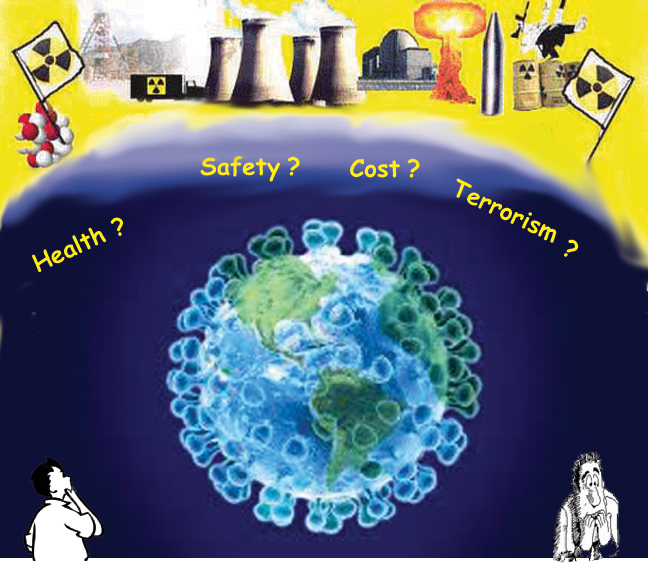
the prioritization of deterrence operations in these circumstances—and the emphasis on conveying this to the public—is fundamentally disquieting. In some circles, there is a call for a reckoning with the massive costs associated with nuclear modernization programs, ever more noticeable with the health sector buckling under extreme pressure.
Wilfred Wan |Researcher at the United Nations Institute for Disarmament Research (UNIDIR) 11 june 2020,
Maintaining deterrence postures has emerged as a key security challenge in the era of COVID-19. In recent weeks, officials in more than one nuclear-armed State have reassured their publics about the viability of their nuclear arsenals. A spokesperson for the UK Royal Navy noted “all required outputs are being maintained” at Faslane, home to Britain’s deterrent, following reports of personnel self-isolating. French submarine crews may not even be informed of the COVID-19 situation, according to their Naval spokesperson. The US Air Force Chief of Staff claimed in a press briefing no change to their nuclear deterrence operations. Similarly, the head of US Strategic Command stressed the pandemic had “no impact to our ability to accomplish our (deterrence) mission.”
Claims of ‘business as usual’ invite scepticism. The machinery of nuclear weapons complexes may be relatively immune from the pandemic, but the people that service them are not. Risk of transmission is especially great in the confined spaces like submarines, bombers, and missile silos that military personnel operate in. For instance, there are confirmed cases of COVID-19 at every nuclear base in the United States except one. Changes by now familiar to the working world are impacting military operations too: virtual teleconferencing, minimized on-site contact, identification of mission-critical tasks; with resources drawn from areas deemed inessential to the deterrence mission. The commander of the US Air Force Global Strike Command noted, “You’ll train a little less, but you can keep training; you can do maintenance, but you don’t have to do as much maintenance.” This is not business as usual.
There should be concern that shifting resources from tasks seen as inessential now could have safety implications down the line. Technical malfunction and human fallibility have featured across the known history of nuclear weapons programs, resulting in false alarms, accidents, and near misses. The US program, about which there exists the most declassified information, experienced a number of ‘broken arrow’ incidents during the Cold War such as missile explosions, aircraft collisions, and even the inadvertent release of nuclear weapons. The longer pandemic-containing measures are in force, the more the militaries of nuclear-armed States will face tough operational choices—choices that bear on nuclear risk.
Meanwhile, the prioritization of deterrence operations in these circumstances—and the emphasis on conveying this to the public—is fundamentally disquieting. In some circles, there is a call for a reckoning with the massive costs associated with nuclear modernization programs, ever more noticeable with the health sector buckling under extreme pressure. Beyond economics, continued reliance on nuclear weapons feels anachronistic as today’s threats are increasingly non-traditional, taking shape in cyber offensive operations or hybrid warfare, and adversaries harder to identify, with their motivations, doctrines, and capabilities varied and complex. Security, as COVID-19 underlines, has evolved. It is hard to hit many of these kinds of nails with the nuclear hammer.
Revitalizing nuclear arms control and disarmament is the only means to eliminate the lingering spectre of nuclear war. Given geopolitical tension, however, a critical short-term goal is to enhance understanding of that risk coming to fruition, intentionally or inadvertently. Proper assessment of the risk of nuclear weapon use is a prerequisite to reducing that risk. The veil of secrecy that has long surrounded nuclear weapons management must be lifted enough to ensure proper regulation, oversight, and accountability, including in all the processes linked to the deterrence ‘mission’. Enhanced use of notifications, signalling, and crisis communication channels, meanwhile, can lessen the likelihood that the mission itself will fail, especially in these extraordinary times.
In the meantime, preserving central control over nuclear arsenals during this and any other time is infinitely preferable to most alternatives. But even control cannot be taken for granted. The possibility of human failure in nuclear operations may well be higher with non-routine rotations and altered schedules of personnel. The hospitalization of British Prime Minister Boris Johnson for COVID-19 in April underlines the permeability of nuclear command and control at even the highest levels. The state of nuclear normalcy and perceived safety and security States are working so hard to uphold is far more fragile than they are willing to admit.
This is not to say that nuclear-armed States cannot effectively maintain their deterrent postures during this difficult period. But for some time now, experts and many governments have become increasingly concerned about nuclear misperception and miscalculation in an environment marked by worsening great power relations (and more so if the US and China continue their blame game over the pandemic). COVID-19 is a further wake-up call. There is no substitute for the easing of tensions and resumption of stockpile reductions. Nevertheless, States must do more to reduce the risk of any use of nuclear weapons. So long as nuclear weapons exist, the possibility remains. This is business as usual.
Prisoners and families exposed to undocumented, possibly risky radiation levels
 | |||

Radiation safety feature of prison x-ray scanner is being overridden
Inmates and families exposed to undocumented, possibly risky radiation levels
NationalPrisonHealthYimes of Malta Mark Laurence Zammit Prison officials are being instructed to override a security feature embedded in x-ray scanners that warns them when inmates and visitors are being exposed to excessive levels of radiation.
Several sources told Times of Malta that the high-end scanners in the entrances of prison are equipped with AI that records the amount of radiation each person is exposed to and warns officials when the pre-set limit is reached.
When this happens, officials are instructed to enter a four-digit code (1585) that overrides the security feature, prompting the scanners to perform further x-ray scans without keeping record of each individual’s radiation intake.
On Sunday morning, prisoners’ rights activist Peppi Azzopardi released a video revealing details about the practice.
When the scanner detects that a person has reached the radiation limit, it ceases to perform scans,” he said.
“But they use the code to cheat the software into taking more scans.”
Azzopardi also said officials sometimes input the code straight away.
“Not only should they record radiation from the scanner; they should also have records of any radiation the inmate might have absorbed elsewhere, like in hospital, so they have a clear picture of how risky the scan will be.”
In the video, Azzopardi also demanded an ‘immediate investigation’ into this practice.
| “I have more information that I’m ready to present to whoever will do the investigations,” he said. Inmates are made to go through the scanner, not only when they are first admitted, but almost every time they return to prison from court, hospital or prison leave. Their families and other visitors too, including lawyers, are forced to go through the scanner almost every time they enter prison. ………………… In regulations published on the use of x-ray body scanners in prison, the UK Justice Ministry strictly prohibits x-ray scans on visitors and family members, and demands that each scan is fully justified, arguing that “the exposure may only occur when the benefit to the individual or society outweighs the health detriment that may be caused to the individual”.UK policy says that for a scan to be justified, there must be “intelligence or reasonable suspicion that the prisoner in internally concealing contraband” and when “there are no other means of determining the suspected contraband, for example by means of a full or rubdown search”…………Times of Malta sent questions to the prison authorities, asking why officials are instructed to override the system, how the prison keeps record of how much radiation each person was exposed to, how the prison justifies the amount of scans it performs, why some people are searched after the scan, and how the prison protects its wardens from radiation……………………… https://timesofmalta.com/articles/view/radiation-safety-feature-of-prison-x-ray-scanner-is-being-overridden.917758 |
Guest Post from Gordon Frederick Coggon – a Nuclear Test Veteran’s Experience — RADIATION FREE LAKELAND

Gordon Frederick Coggon ·26 Nov 21,
Guest Post from Gordon Frederick Coggon – a Nuclear Test Veteran’s Experience — RADIATION FREE LAKELAND
https://wordpress.com/read/feeds/331643/posts/3682558618 During 1957 and 1958 I was one of 20,000 British serviceman sent to the central Pacific testing ground of British Hydrogen bomb tests which in my own case involved being at Christmas Island.(now named Kiritimati). During my year there I was subjected to radiation contamination. I witnessed two hydrogen bombs, the first being Operation Grapple X with a 1.8 megaton yield on Nov 8th. 1957 and the second bomb being on 28th. April 1958. Which had a yield of 3 megatons.( Both these devices were dropped by a Valient ‘V’ bomber about 20 miles off the southern tip of the Island.)
After the Grapple X test I was sent to hand wash a Canberra Aircraft,s engine nacelles after it had flown through the cloud of the hydrogen bomb collecting samples. I was set to work using a small bore hosepipe and a scrubbing brush, (the Aircraft had been hosed down with high pressure jets of water before I was employed on a gantry cleaning where the jets of water were not directed at the intakes of the engines.) Initially, I was given a pair of denims, wellingtons, rubber gloves and a remote breathing apparatus (which consisted of a face mask attached to 38 feet of corrugated rubber hose and connected to a fresh air filter which was fastened down as far away as possible from the aircraft. The face mask head straps were broken so the man in the white suit and gas mask said it was useless for the job in hand so I was given a crude homemade mask made from cotton wool sandwiched between a silver paper foil.
Whilst working on the gantry the mask got wet through and I wasnt able to breathe, so I had to move it from my mouth and nose to enable myself to breathe. I continued to work for between 20 to 30 minutes before I was replaced by someone else and I was then sent to the decontamination tent where I showered several times until the man in the white suit and Geiger counter said I was ok to get dressed in the clean side of the tent and was given a new set of kd shorts and shirt. This showering and decontamination took at least one and a half hours, My contaminated clothing was put in a yellow barrel marked with radiation signs in the dirty side of the facility. I have to say also that some of us were given other dangerous tasks like picking up dead fish and birds after the tests and some guys had to dump contaminated equipment in the ocean or bulldoze contaminated earth. After the Grapple Y bomb on 28th.April 1958, there was a massive downpour of rain, which came from the bomb cloud, a lot of the young innocent troops stood outside bathing in it like one normally did during the rain showers, but unlike the normal rain this was said to be contaminated because there was no other clouds in the sky at the time.
At that time I was 18 years old (picture of me above whilst there) and most of us had no idea what radiation was. Nor was I told anything about it until later in my career when I remustered into the Fire, Crash and rescue trade, where I was trained up to an advanced stage about radiation and biological warfare and every Monday I was teaching an induction course to new arrivals on the station that I was posted too. That was when I began to worry about my own health. Had I been put at an high risk of radiation whilst on Christmas Island ??. The Aircraft that I had helped to decontaminate was still emitting Gamma radiation, to what extent?? Also, did I swallow, inhale Alpha particles.?? ( Alpha radiation cannot penetrate human skin but they can be swallowed in water droplets, eaten if on food, or more commonly inhaled.)
These Alpha particles may remain inside your body for your whole life, attacking cells of your body for decades and could take many years before irrepairable damage becomes apparent. Recently it has been associated with radiation caused diseases and malformities in new born descendants of nuclear test veterans. I have had Cancer and several other illnesses which most lightly have been caused by atomic radiation, so far, even after seventy years, the successive British Governments have continued to deny that their troops were subjected to radiation during their atomic and hydrogen tests in the fifties and sixties. And yet, many of the nuclear armed countries have acknowledged the troops that was sent to take part in their experiments with nuclear fission and have been recognised by being given a medal and/or compensation.
I have only mentioned my own experience at Christmas Island (Kiritimati) but during a period 1952 – 1968 there have been many such tests in Australia, other testing areas of the Pacific where a lot of fellow veterans were irradiated by atomic fallout and nuclear poisoning from various clean-up operations after the tests, many of these young men never got to grow old because of their contamination from the tests. Many test sites were carried out where local people lived, these same people have since lost their homes and way of life by the poisoning effects of radiation . Since; atomic radiation contamination illnesses have continually been killing test veterans and clean-up veterans nothing has been done so far to help the families of these brave innocent troops and civilians by the British Government, who were subjected to experiments during the trials.
It is now becoming more alarming by the number of offspring who have also inherited their veteran father’ s damaged cells genetically. * reference to these tests are also available in two books that I have published on Amazon. The first one is titled :- ‘ Christmas Island 1957-1958 ‘ an Ebook on Kindle. The other is a paperback, titled:-‘ The Life of a Yorkshire Lad’ on Amazon and an ebook on kindle.
All royalties for the (latter paperback/ebook have been donated to LABRATS INTERNATIONAL for their continued valuable work in helping test veterans and their descendants come together from all over the world in their fight for justice.
1 This Month


4 August – WEBINAR – Hiroshima & Nagasaki: Nuclear Bombs Never Again
Tuesday, Aug. 4 at 5 pm PT / 8 pm ET.
Aug 5, 2026 10:00 AM in Australia/Melbourne
Join the Nuclear Bombs Never Again webinar on August 4th at 5pm Pacific Time / 8pm Eastern Time / 9am Japan Standard Time.
Cross generational voices at the intersection of Japan-Korea-US policy and militarization will share their lived experiences, nuclear impacts in these contexts, anti-war strategies, and actions you can take to advocate for a world with Nuclear Bombs Never Again. This 75-minute event is co-hosted by WILPF US and Korea Peace Now.
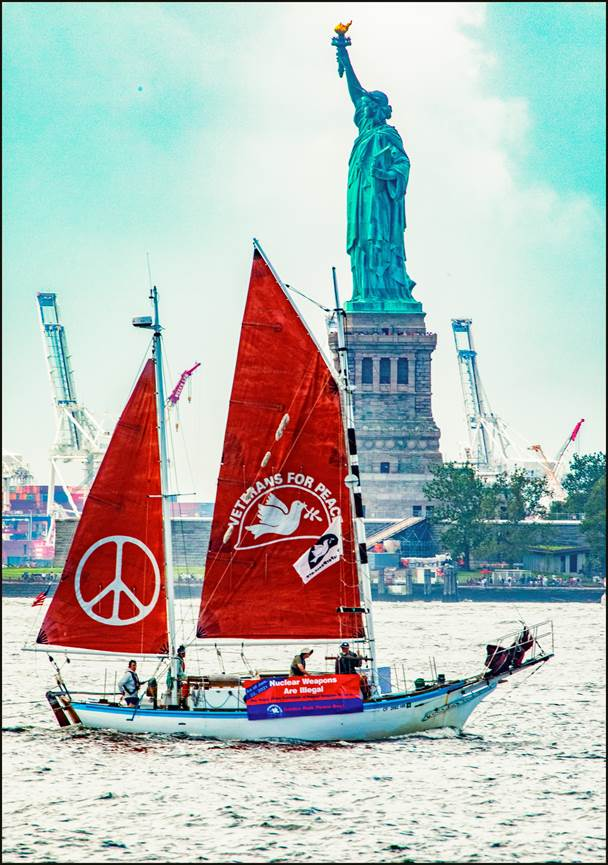
22,000+ miles voyaging for nuclear disarmament
and a radiation-free environment https://vfpgoldenruleproject.org/
To see nuclear-related stories in greater depth and intensity – go to https://nuclearinformation.wordpress.com
-
Archives
- July 2026 (266)
- June 2026 (287)
- May 2026 (306)
- April 2026 (356)
- March 2026 (251)
- February 2026 (267)
- January 2026 (308)
- December 2025 (358)
- November 2025 (359)
- October 2025 (375)
- September 2025 (257)
- August 2025 (319)
-
Categories
- 1
- 1 NUCLEAR ISSUES
- business and costs
- climate change
- culture and arts
- ENERGY
- environment
- health
- history
- indigenous issues
- Legal
- marketing of nuclear
- media
- opposition to nuclear
- PERSONAL STORIES
- politics
- politics international
- Religion and ethics
- safety
- secrets,lies and civil liberties
- spinbuster
- technology
- Uranium
- wastes
- weapons and war
- Women
- 2 WORLD
- ACTION
- AFRICA
- Atrocities
- AUSTRALIA
- Christina's notes
- Christina's themes
- culture and arts
- Events
- Fuk 2022
- Fuk 2023
- Fukushima 2017
- Fukushima 2018
- fukushima 2019
- Fukushima 2020
- Fukushima 2021
- general
- global warming
- Humour (God we need it)
- Nuclear
- RARE EARTHS
- Reference
- resources – print
- Resources -audiovicual
- Weekly Newsletter
- World
- World Nuclear
- YouTube
-
RSS
Entries RSS
Comments RSS
 nuclear-news