Compensation sought for victims of nuclear weapons development
By Russell Kinsaul https://www.kmov.com/2023/03/07/compensation-sought-victims-nuclear-weapons-development/
Mar. 7, 2023
ST. LOUIS, Mo. (KMOV) – Two Republican state representatives from Wentzville are seeking a full accounting of the contamination and potential caused by the nuclear weapons work that took place in the St. Louis region decades ago.
Additionally, they hope to get the state to press the federal government for compensation for people who developed rare cancers and diseases that were likely caused by radiation exposure.
Representative Tricia Byrnes filed House Concurrent Resolution number 21 last week, and Representative Richard West filed the companion House concurrent Resolution number 22. The legislation calls for a joint investigation by various departments of state government.
“We hope to get the state of Missouri and its agencies to stand up and ask the federal government to step in with some kind of legislative remedy,” said Byrnes.
“We’ve been fighting this as singular battles, St. Louis City, St. Louis County, St. Charles County. And I think if all the leaders come together, we approached the federal government and say, look, we want to be made whole,” said West.
Uranium was processed in the 1940′s and 1950′s at Mallinckrodt Chemical Works at a facility downtown for atomic bombs. Some of the waste was stored along Banshee Road near Lambert St. Louis International Airport and contributed to the contamination of nearby Coldwater Creek. Some of the waste was also stored in the 9200 block of Latty Avenue and eventually was illegally buried at West Lake Landfill.
Uranium was also processed at the Weldon Spring Chemical Plant along Highway 94 in St. Charles County from 1957-1966. After the plant closed and before it became a Superfund Cleanup site, children were known to play in the abandoned buildings. People also swam in a nearby quarry where radioactive waste and remnants of the downtown St. Louis site were dumped.
Both Byrnes and West have relatives who’ve been diagnosed with rare cancers and diseases that are associated with exposure to radiation.
“The victims of this are starting to become numerous,” said West.
In 2018 the Missouri Department of Health and Senior Services found elevated levels of cancer in the zip codes that Coldwater Creek runs through. And the CDC concluded that contamination in the creek was the likely cause.
The Energy Employees Occupational Illness Compensation Program Act (EEOICPA) was set up to compensate nuclear weapons workers who develop one of about two dozen types of cancer associated with radiation exposure. A similar program called the Radiation Exposure Compensation Act (RECA) was set up to compensate people who lived downwind from nuclear bomb tests and also developed one of the cancers on the government list.
West and Byrnes are seeking to get the State of Missouri to advocate, on behalf of residents of the region with radiation-related cancers and illnesses, to be compensated similarly.
Both pieces of legislation have been assigned to the General Laws committee, which will hold a hearing on the legislation Tuesday, March 7, at 4 p.m. Byrnes and West are requesting that anyone who was diagnosed with radiation-related cancer or illness which may have been caused by the local work on the nuclear weapons program, to attend the hearing and tell their story.
Seoul offers radiation tests to N Korea defectors as group flags nuclear risks

By Kelly Ng and Jean Mackenzie, BBC News, 24 Feb 23
South Korea will offer radiation testing to 881 North Korean defectors after concerns were raised about their exposure to the North’s nuclear tests.
It comes after a research report warned that residents around Punggye-ri, the main nuclear testing site, could be exposed to radioactive leaks in water.
The Transitional Justice Working Group (TJWG) estimates that up to half a million residents are at risk.
It also potentially affects people in China, South Korea and Japan.
The group – which was established in Seoul in 2014 by activists and researchers from South Korea, North Korea, US, UK and Canada – analysed publicly available data and open-source intelligence for its latest report.
North Korea last tested a nuclear bomb in 2017 – the most powerful of six tests conducted at Punggye-ri.
It said the tests were conducted safely, but scientists have long raised fears that radioactive material might have escaped into the surrounding soil and groundwater.
North Korean defectors, who once lived near the site, have previously reported seeing strange illnesses in their communities, but scientists have not been able to establish a link.
Authorities in Seoul are now inviting all North Koreans, who escaped from nearby towns near the site, to be tested for signs of radiation.
Nuclear experts the BBC spoke to largely agree with the possibility of nuclear contamination laid out in TJWG’s report but say its extent will be hard to determine.
Nuclear radiation can damage living cells partially or completely, sometimes resulting in cancer. As with most toxins, the risks associated with radioactive materials depend on the amount of exposure.
The Ministry of Unification, an executive department in South Korea promoting Korean reunification, stopped testing defectors for radiation exposure in 2019.
Nine of the 40 defectors tested in 2017 and 2018 showed “worrying levels” of genetic abnormalities, the group said in its report. While the TJWG did not directly attribute these to radiation exposure, it noted higher radiation doses for those who showed more abnormalities.
In particular, the TJWG flagged the leakage of radioactive materials into groundwater as a particular concern, given people’s growing tendency to consume groundwater.
North Korea’s 2008 census data shows that a sixth of households in the northernmost province of North Hamgyong, where Punggye-ri is located, use groundwater as drinking and agricultural water.
This proportion is likely to have gone up due to a chronic shortage of electricity across the country. Electricity is supplied only on a part-time basis even in the capital Pyongyang, which is always prioritised in resource allocation…………………………………………………………..
The group has urged South Korean and Chinese authorities to disclose results of past tests, for radiation exposure. It is also calling for an international inquiry into the radiation risks for communities around Punggye-ri. https://www.bbc.com/news/world-asia-64714337
Our Global Surveillance System on NUKE TESTING is inadequate
For the ones whom are not aware, there is a global monitoring and surveillance system that detects radioactive particles and gases on a global scale from 80 stations to detect the “smoking gun” in regards to nuclear testing globally in which Canada and the US are collaborators for surveillance purposes.
Suffice to say, pending global atmospheric transport, there are not enough monitoring stations in Canada or the US.
This is because of the complexity of the jet stream (northern hemisphere) and the long-range transport of these radioactive particles emitted by nuclear testing because of atmospheric dilution or long-range transport, especially xenon (gas), either because of atmospheric dilution or weather patterns in the northern atmosphere. Climate change will in time make this even more problematic.
This is because of the complexity of the jet stream (northern hemisphere) and the long-range transport of these radioactive particles emitted by nuclear testing because of atmospheric dilution or long-range transport, especially xenon (gas), either because of atmospheric dilution or weather patterns in the northern atmosphere. Climate change will in time make this even more problematic.
Coriolis forces:
Link: https://education.nationalgeographic.org/resource/coriolis-effect/
Check out the link below for more details on the global surveillance system on radioactive fallouts from nuke testing: Link: https://www.ctbto.org/our-work/monitoring-technologies/radionuclide-monitoring
“How the radionuclide monitoring network works
The 80-station radionuclide monitoring network enables a continuous worldwide observation of aerosol samples of radionuclides. The network is supported by 16 radionuclide laboratories with expertise in environmental monitoring, providing independent additional analysis of IMS samples.”
“Radionuclide technology is complementary to the three waveform technologies used in the CTBT verification regime, and the only one that can confirm whether an explosion detected and located by the others is indicative of a nuclear test.”
“Radionuclide stations measure radioactive particles and noble gases, i.e. radionuclides, in the air. A radionuclide is an isotope with an unstable nucleus that loses its excess energy by emitting radiation in the form of particles or electromagnetic waves in a process called radioactive decay.”
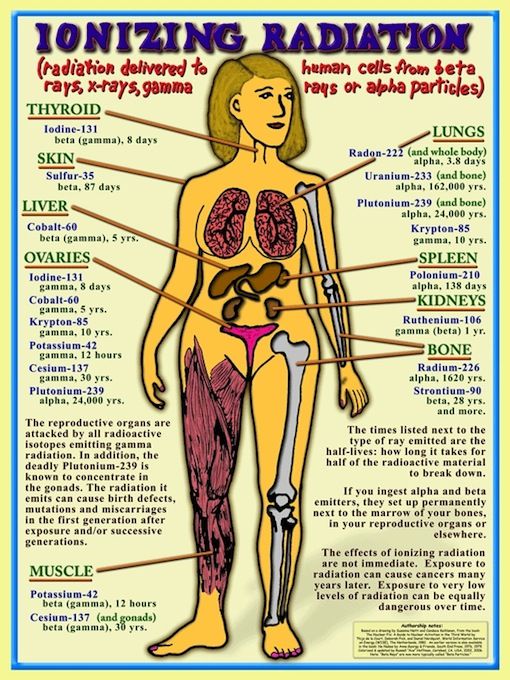
Radioactive releases from the nuclear power sector and implications for child health.
Notes here provided by:
Simon J Daigle, B.Sc., M.Sc., M.Sc(A)
Industrial / Occupational Hygienist, Climatologist,
Environmental Sciences Expert (Air Quality tropospheric Ozone),
Epidemiologist, Citizen scientist
Montreal, Quebec, Canada.
This BMJ article articulated extremely well the challenges of women’s health, pregnancy and radioactive exposures and includes nuclear power and related industries (nuclear waste). The facts below were known for decades and true to this very day and I quote:
“exposure standards in the USA remain based on a Reference Man—a model that does not fully account for sex and age differences.”
“Early in the nuclear weapons era, a ‘permissible dose’ was more aptly recognised as an ‘acceptable injury limit,’ but that language has since been sanitised. Permissible does not mean safe.”
“As noted by the EPA, this gives radiation a ‘privileged pollutant’ status”
The facts above are not only astonishing, in which the general public may either be oblivious or uninformed, but in 2023, these facts remain true and yet the nuclear industry remain “willfully blind” and disingenuous about the real radiation risks, especially to the most vulnerable groups in our population.
British Medical Journal – Paediatrics (Open Access).
A reputable journal! A recent article in the British Medical Journal – Paediatrics (Oct 2022).
Open access to all. A reputable journal!
Radioactive releases from the nuclear power sector and implications for child health (October 2022).
Link: https://bmjpaedsopen.bmj.com/content/6/1/e001326
Selected excerpts:
“Children, women and particularly pregnant women living near nuclear production facilities appear to be at disproportionately higher risk of harm from exposure to these releases. Children in poorer often Non-White and Indigenous communities with fewer resources and reduced access to healthcare are even more vulnerable—an impact compounded by discrimination, socioeconomic and cultural factors.”
“Nevertheless, pregnancy, children and women are under protected by current regulatory standards that are based on ‘allowable’ or ‘permissible’ doses for a ‘Reference Man’.”
“Early in the nuclear weapons era, a ‘permissible dose’ was more aptly recognised as an ‘acceptable injury limit,’ but that language has since been sanitised. Permissible does not mean safe. Reference Man is defined as ‘…a nuclear industry worker 20–30 years of age, [who] weighs 70kg (154 pounds), is 170cm (67 inches) tall…is a Caucasian and is a Western European or North American in habitat and custom’.”
“However, many studies are unable to link these adverse outcomes to radioactivity because the studies’ authors tend to use several faulty assumptions:
- ‘doses will be too low to create an effect’—a beginning assumption ensuring poor hypothesis formation and study design. Therefore, when an effect is found, radioactivity has been predetermined not to have an association with the effect. This exclusion often leads to an inability to find an alternate associated disease agent;
‘small negative findings matter’—In fact, what matters are positive findings or very large negative findings;- ‘statistical non-significance means a lack of association between radiation exposure and disease’ — a usage a number of scientists in various disciplines now call ‘ludicrous’;
- ‘potential bias or confounding factors are reasons to dismiss low dose studies’—In fact, when assessing low dose impacts, researchers should take care not to dismiss studies with these issues and researchers should minimise use of quality score ranking.
“Consequently, we examine and reference studies even if they contain such faulty assumptions because they still indicate increases in certain diseases, such as some leukaemias, known to be caused by radiation exposure. Additionally, few alternative explanations were offered in the conclusions of these studies, meaning radiation exposure might still have been the cause.”
“Current U.S. regulations allow a radiation dose to the public (100 mrem per year) which poses a lifetime cancer risk to the Reference Man model of 1 person in 143. This is despite the EPA’s acceptable risk range for lifetime cancer risk from toxics being 1 person in 1million to 1 person in 10000. As noted by the EPA, this gives radiation a ‘privileged pollutant’ status. Additionally, biokinetic models for radioisotopes are not sex-specific. A male model is still used for females. The models are also not fully age-dependent. Radiation damage models also fail to account for a whole host of childhood and pregnancy damage.”
Highlights (Conclusion)
- Despite the numerous observations globally, linking radiation exposures to increased risks for children, pregnant and non-pregnant women and the well-demonstrated sensitivity to other toxicants during these life stages, exposure standards in the USA remain based on a Reference Man—a model that does not fully account for sex and age differences.
- In addition, faulty research assumptions, unique exposure pathways, systemic inequities and legacy exposures to both heavy metals and radioactivity from mining wastes add to the risks for women and children, especially those in underserved communities.
- Socioeconomic factors that drive higher deprivation of services in non-homogenous low-income communities of colour also put non-White children at higher risk of negative health outcomes when exposed to radioactive releases, than their White counterparts.
- A first and essential step is to acknowledge the connection between radiation, heavy metal and chemical exposures from industries and the negative health impacts observed among children, so that early diagnosis and treatment can be provided.
- Measures should then be taken to protect communities from further exposures, including a prompt phaseout of nuclear power and its supporting industries.
Studies are also urgently needed where there are none, and the findings of independent doctors, scientists and laboratories should be given equal attention and credence as those conducted by industry or government-controlled bodies, whose vested and policy interests could compromise both their methodologies and conclusions.- Finally, in the face of uncertainty, particularly at lower and chronic radiation doses, precaution is paramount.
Notes:
Funding: The authors have not declared a specific grant for this research from any funding agency in the public, commercial or not-for-profit sectors.
Competing interests: None declared.
Patient consent for publication: Not applicable.
Ethics approval: Not applicable.
Provenance and peer review: Commissioned; externally peer reviewed
‘Downwind’: How Did America Create Its Own Nuclear Disaster?
BY PANDORA DEWAN ON 2/9/23 https://www.newsweek.com/downwind-documentary-america-create-nuclear-disaster-1780196
new documentary called Downwind shines a spotlight on the legacy of nuclear testing in the Nevada desert in the 50s and 60s and shares the stories of those whose lives were the most severely impacted.
Between 1951 and 1962, nuclear weapons were tested above ground at the Nevada Test Site, based in the Nevada desert, 65 miles north of Las Vegas. Underground testing continued until the 1990s and, in total, over 900 nuclear weapons tests were carried out at the site, according to the documentary.
Ken Smith, professor of family studies and population science at the University of Utah and executive director of the Wasatch Front Research Data Center, told Newsweek that the people who were most affected by these detonations, known as “downwinders,” were mostly based in Utah, southern Nevada and northern Arizona. “The number of people in that area at the time—[in] the mid-50s to the early 60s—is the concern,” he said.
The testing released plumes of radioactive material into the atmosphere, which was carried hundreds of miles by the wind before falling back down to the ground. This “nuclear fallout” material takes many different forms, but one of the most concerning is iodine-131, which can increase risk of thyroid cancer.
It is impossible to accurately determine the dose of radiation and the resulting risk of this exposure, but a report in 1999 by the National Cancer Institute estimated that nuclear weapons testing at the Nevada site would have yielded between 11,300 to 212,000 excess cases of thyroid cancer over this period.
Exposure to radioactive material is mainly thought to have occurred through the consumption of contaminated milk: when iodine-131 falls down to the earth it can settle on vegetation, which is eaten by cows and goats. Over time, the iodine-131 builds up in the animal’s bodies and accumulates in their milk, which is then consumed by people. Fresh produce and meat may have also contained small amounts of this radioactive material too, but it would have been less concentrated.
Overall, these concentrations are still very small, but some people would have been more vulnerable to this radiation than others. “It’s the children who were the most affected,” Smith said. “This is because they drink more milk and have smaller bodies. Your thyroid accumulates iodine-131, and they have a smaller thyroid.”
The Centers for Disease Control and Prevention (CDC) says that iodine-131 is not the only radioactive material in fallout that affects a person’s health. For example, strontium-90 can affect the bone marrow and lead to an increased risk of leukemia.
Downwind directors Douglas Brian Miller and Mark Shapiro, spoke to people from Utah and Nevada about how this testing had impacted their communities.
One of the people they heard from was Mary Dickson, a writer, playwright and downwinder who grew up in Salt Lake City during this period. She ate locally grown vegetables and drank locally produced milk, never knowing the risks of her exposure. At age 29, she was diagnosed with thyroid cancer.
Dickson survived the disease, but others she knew were less lucky.
In a post for the anti-nuclear campaign group, #stillhere, Dickson said that two of her fellow classmates had died of cancer at 8 and 4 years old, and her own sister is now battling a rare form of stomach cancer.
“Sometimes I feel like I am forever piling up losses,” she said.
On July 10, 2000, Congress established the Radiation Exposure Compensation Act (RECA) which provides monetary compensation for the people who developed cancer in light of this exposure. It was due to expire in 2022 but has been extended for another two years.
To date, RECA has awarded nearly $2.6 billion in benefits to close to 40,000 claimants, as per statistics from the U.S. Department of Justice. However, over 13,000 claims have been rejected, and downwinders can only claim compensation if they lived in Utah, Nevada or Arizona during the period of above-ground testing.
Downwind premiered at the Slamdance Film Festival in Park City, Utah, at the end of January.
Health status of the population living in the zone of influence of radioactive waste repositories

Health status of the population living in the zone of influence of radioactive waste repositories. (2019)
D. J. Janavayev1 , Ye. T. Kashkinbayev1 , K. B. Ilbekova1 , Ye. A. Saifulina1 , M. M. Bakhtin1 , M. K. Sharipov1 , P. K. Kazymbet. (2016). Electron J Gen Med 2019;16(6):em176.
Some brief extracts:
“The results of the study indicate an almost complete absence of healthy individuals living in the area.”
- Currently, the study of the effects of low doses of ionizing radiation on biological objects continues to be a complex problem in the field of radiation biology.
- The urgency of this problem is due to the increase in the number of people exposed to man-made radiation in small doses, this category of the population includes people living near the storage of radioactive waste of uranium production
- The risk of environmental problems and living conditions is high for public health.
- Radioactive contamination of the territories behind the sanitary protection zone, tailings of radioactive waste is one of the serious problems of the Republic of Kazakhstan
- As a result of earlier clinical and epidemiological studies found that the population living in a tense environmental situation, had a high medical and social risk of chronic somatic and cancer.
Results:
- Analyzing the research results, we note a clear pattern of the distribution of the incidence of the pathology among the population, depending on the length of stay in the territory longer duration of residence in the territory of the tailings, the greater the prevalence of diseases observed in the population.
- In the population of the control group, the prevalence of diseases, depending on the period of residence in the Akkol settlement of Akmola region, tended to increase, but did not change significantly. This may indicate that the influence of technogenic factors of radiation nature on the overall morbidity of the population living near the tailings dump for a long time is not excluded.
- A significant increase in the prevalence of diseases, depending on the length of residence in ecologically unfavorable areas, was detected for diseases of the eye, cardiovascular system, digestive and genitourinary systems.
Summary:
- Thus, living conditions in the zone of influence of radioactive waste repositories determine the wide prevalence among the population of the main group living in the settlements of Zavodskaya and Aksu.
- The results of the study indicate an almost complete absence of healthy individuals living in the area.
Length of living near radioactive waste storage affect the formation and character of General somatic morbidity: increase the duration of life in the areas adjacent to the tailings, leading to increased incidence of chronic diseases.- It should be noted that in order to fully assess the health of the population of the settlements of Zavodskaya and Aksu under prolonged exposure to radioactive waste storage factors, data are required, which will be obtained in the course of further research.
Australia radioactive capsule: Missing material more common than you think

By Antoinette Radford, BBC News, 5 Feb 23
The world watched as Australia scrambled to find a radioactive capsule in late January.
Many asked how it could have been lost – but radioactive material goes missing more often than you might think.
In 2021, one “orphan source” – self-contained radioactive material – went missing every three days, according to the International Atomic Energy Agency (IAEA).
The not-for-profit Nuclear Threat Initiative (NTI) lists lost and found nuclear and radiological material, and its records include a person in Idaho who stumbled across a radioactive gauge lying in the middle of a road.
The organisation also listed a package containing radioactive material falling off the back of a truck onto a nearby lawn in an undisclosed location – the resident who found it then delivered it to its intended recipient later that day.
And, in 2019, a tourist was detected in St Petersburg airport wearing a radioactive watch, according to the list.
Of the nearly 4,000 radioactive sources that have gone missing since the International Atomic Energy Agency started tracking them in 1993, 8% are believed to have been taken for malicious reasons, and 65% were lost accidentally. It is unclear what happened to the rest.
When properly maintained and handled, radioactive material does not pose a significant threat to humans.
But if a person is directly exposed to the radiation without protection, they can fall severely ill – or even die.
For example, four people died after a canister containing radioactive material was stolen from an abandoned hospital in the Brazilian city of Goiânia in 1987.
A group of men took the canister that contained Caesium-137 (Cs-137) – a radioactive material commonly used in medical settings – thinking it may have some value as scrap metal. As they took it apart, they ruptured the Cs-137 capsule, spilling its radioactive contents onto the rest of the metal.
A junkyard owner who bought the contaminated metal then exposed dozens of friends and family to the radiation after he brought them to see it glow blue in the dark. This included a six-year-old who ate the radioactive powder.
Dozens required urgent medical attention and two nearby towns were evacuated once doctors established their sudden illness was caused by radiation exposure.
The incident was described by the IAEA as among “the most serious radiological accidents to have occurred”.
In 2020, radioactive waste was also found at the home of a former nuclear energy agency employee in Indonesia.
And in 2013, six men were arrested – apparently unharmed – in Mexico for stealing radioactive material from a cancer treatment machine……………………………… https://www.bbc.com/news/world-64512297
Military probing link between nuclear silo work, cancers.
https://www.coloradopolitics.com/news/military-probing-link-between-nuclear-silo-work-cancers-out-west-roundup/article_e52dd2fa-a0e4-11ed-83ec-dbc142e08bdc.html The Associated Press, 5 Feb 23,
Military probing whether cancers linked to nuclear silo work
WASHINGTON — Nine military officers who had worked decades ago at a nuclear missile base in Montana have been diagnosed with blood cancer and there are “indications” the disease may be linked to their service, according to military briefing slides obtained by The Associated Press. One of the officers has died.
All of the officers, known as missileers, were assigned as many as 25 years ago to Malmstrom Air Force Base, home to a vast field of 150 Minuteman III intercontinental ballistic missile silos. The nine officers were diagnosed with non-Hodgkin lymphoma, according to a January briefing by U.S. Space Force Lt. Col. Daniel Sebeck.
Missileers ride caged elevators deep underground into a small operations bunker encased in a thick wall of concrete and steel. They remain there sometimes for days, ready to turn the launch keys if ordered to by the president.
In the slide presentation, Sebeck said the “disproportionate numbers of missileers presenting with cancer, specifically lymphoma” was concerning.
In a statement to the AP, Air Force spokeswoman Ann Stefanek said that “senior leaders are aware of the concerns raised about the possible association of cancer related to missile combat crew members at Malmstrom AFB.”
Stefanek added: “The information in this briefing has been shared with the Department of the Air Force surgeon general and our medical professionals are working to gather data and understand more.”
Last year President Joe Biden signed the PACT Act, which greatly expanded the the types of illnesses and toxic exposures that would be considered presumptive — meaning a service member or veterans would not face an uphill battle to convince the government that the injury was tied to their military service in order to received covered care.
Julian Assange’s Biggest Fight in Notorious Prison Isn’t Over Extradition
NewsWeek, BY SHAUN WATERMAN ON 01/27/23 “…………………………………………….. Assange’s physical and mental health have declined severely during more than a decade in confinement — first sheltering from U.S. authorities in the Ecuadorian embassy in London from 2012-2019, where he lived in two rooms and never left the building, and for the last almost four years, since he was dragged from the embassy by British police in April 2019, in Belmarsh fighting extradition.
…………………… The proceedings in London continue to drag on. It has been more than a year since the High Court cleared the way for his extradition and his appeal was filed in August. But the court continues to weigh it, with no deadline to reach a decision. Even if he loses, there remains the possibility of an appeal to the British Supreme Court, or to the European Court of Human Rights. Assange could be in the U.S. within months, but he might remain in Britain for years.
His family says that with uncertainty about his extradition hanging over him like the sword of Damocles, he has lost weight and become depressed and anxious.
A confinement of uncertain duration
The worst part about the confinement is having no idea when or how he would be able to leave, Stella Assange said. “It is the uncertain duration that makes it so hard to bear … It’s a kind of torture.”…………..
The uncertainty has exacerbated Assange’s physical and mental deterioration, his wife said. In October 2021, during a High Court hearing about his extradition, Assange, attending via video link from Belmarsh, suffered a “transient ischaemic attack” — a mini-stroke. He has been diagnosed with nerve damage and memory problems and prescribed blood thinners.
“He might not survive this,” she said.
As a remand prisoner, not convicted or sentenced, and facing extradition, not prosecution, Assange is an anomaly in Britain’s most secure prison — designed to hold “Category A” inmates such as IRA militants, jihadis and murderers. One of a tiny handful of unconvicted prisoners, prison regulations require him to be treated differently, his wife said.
“He’s supposed to be able to get visits every day, he’s supposed to be able to work on his case,” she said, “But that’s only on paper. The way the prison system works, it is more efficient to treat everyone like a Cat A prisoner rather than to try to adapt the rules for individuals. In reality, that just doesn’t translate at all.” She said Assange is allowed one or two legal visits, and one or two social visits each week.
In between visits, time can stretch. And the isolation has been hard on him……………………………..
Phone calls, his half-brother Gabriel Shipton told Newsweek from Assange’s native Australia, are limited to 10 minutes. “You’ll just be getting into it and click, it’s over.”
Neither the governor’s office at Belmarsh, nor the press office for the British Prison Service, responded to emails requesting responses to detailed questions.
A source of inspiration and power
Assange gets thousands of letters and parcels from all over the world, Stella Assange said, but the authorities interdict banned items, such as books about national security, paintings and other forbidden objects.
His father, John Shipton, told Newsweek from Australia that Assange draws a lot of inspiration and power from the letters that people write to him. During their phone conversations, he will often read snippets or recall memorable letters, Shipton said. “He loves getting them … You can hear him light up a bit” when he talks about them………………………………………… more https://www.newsweek.com/2023/02/10/julian-assanges-biggest-fight-notorious-prison-isnt-over-extradition-1774197.html
The WHO is urging countries to start stockpiling medicines for ‘nuclear emergencies’ after the EU’s latest warning on Ukraine war.
Fortune, BYORIANNA ROSA ROYLE, January 28, 2023
The World Health Organization (WHO) has issued guidance on how to survive a nuclear catastrophe, just hours after the EU warned that Russia “is at war with the West”.
Included in the guidance is a list of medicines that nations should stockpile for “radiological or nuclear emergencies”.
The global health body also shared how the stockpiles which could “prevent or reduce exposure to radiation” should be handled.
Dr Maria Neira, WHO’s acting assistant director-general warned that governments need to make treatments for radiation and nuclear exposure available quickly.
“It is essential that governments are prepared to protect the health of populations and respond immediately to emergencies,” she added.
Potential scenarios considered in the publication include radiological or nuclear emergencies at nuclear power plants, as well as intentional uses of radioactive materials with malicious intent.
These emergencies could result in exposure to deadly radiation doses, yet many countries are underprepared, according to the document.
It stressed: “It is therefore extremely important that governments respond rapidly to such threats.”……………….. https://fortune.com/2023/01/27/how-to-survive-nuclear-catastrophe-who-medicine-stockpile-warning/
Nuclear strike chief seeks cancer review of launch officers
Midland Daily News. TARA COPP, Associated Press, Jan. 27, 2023
WASHINGTON (AP) — The top Air Force general in charge of the nation’s air- and ground-launched nuclear missiles has requested an official investigation into the number of officers who are reporting blood cancer diagnoses after serving at Malmstrom Air Force Base in Montana.
The illnesses became publicly known this week after The Associated Press obtained a military brief that at least nine missileers — those officers serving in underground bunkers near silo-based Minuteman III intercontinental ballistic missiles and responsible for turning launch keys if ordered — were reporting diagnoses of non-Hodgkin lymphoma. One of the officers has died.
Gen. Thomas A. Bussiere, commander of Air Force Global Strike Command, which is responsible for all of the silo-based and aircraft-launched nuclear warheads, said in a statement to the AP Friday that he has requested that the U.S. Air Force School of Aerospace Medicine conduct a formal assessment into the reported cancers.
It was not immediately clear if that assessment would be limited to Malmstrom, or if it would include similar nuclear missile facilities at Minot Air Force Base in North Dakota and F.E. Warren Air Force Base in Wyoming.
“Air Force Global Strike Command and our Air Force takes the responsibility to protect airmen and Guardians incredibly seriously, and their safety and health is always my top priority,” Bussiere said. “While we continue to work through this process, service members and their dependents as well as former service members who may have concerns or have questions are encouraged to speak with their healthcare providers.”…………..
Over the last week, more missileers who served at Malmstrom or their families have reached out to the AP to share their experiences with diagnoses of blood cancer and other types of cancer……………………..
nly about 3,300 troops are based at Malmstrom at a time, and only about 400 of those are assigned either as missileers or as support for those operators. The three bases control a total of 400 siloed Minuteman III ICBMs. https://www.ourmidland.com/news/article/nuclear-strike-chief-seeks-cancer-review-of-17747375.php
New documentary film ‘Downwind’ explores why testing, using nuclear weapons are deadly mistakes
St George News, by Stephanie DeGraw, January 25, 2023
PARK CITY — The tragedies of nuclear testing are not over, advocates and directors with the world premiere of the film “Downwind” told the audience at the Slamdance Film Festival in Park City Monday evening.
“Subsequent generations may suffer more than the original exposed generation,” Dr. Brian Moench, founder and president of the Utah Physicians for a Healthy Environment, said. “The faces behind the statistics we’ve heard are real human beings, but there will be more who you don’t see because they haven’t been born yet.”
The Slamdance Spotlight documentary film is still relevant today, locally and globally. The film exposes an often-forgotten chapter of U.S. history and the ongoing health consequences for Americans living downwind.
Some 928 nuclear detonations took place from 1951 to 1992 near Las Vegas, Nevada. These included the 100 atmospheric tests residents of Southern Utah could watch. Research shows St. George has above-average rates of radioactivity compared with the nationwide average.
The West Shoshone is also profoundly affected by the government’s testing. Ian Zabarte, principal man of the West Bands of the Shoshone Nation, said their sacred land continues to be cordoned off as a nuclear test site.
For 40 years, large-scale atomic weapons obliterated the landscape. It exposed people, the environment, livestock and agriculture across the country to deadly fallout. Zabarte said despite a moratorium on testing, the Nevada Test Site remains operational with the possibility of resumed testing.
“The film ‘Downwind’ is important because it provides us with an understanding of the past,” Zabarte said. “Awareness is key. If we’re going to protect future generations, we need to know what happened in the past and not repeat those mistakes.
“Testing, developing and using nuclear weapons is a mistake. America is the only nation that’s ever killed people with nuclear weapons.”
Zabarte said that atomic weapons are illegal under the new international law, the Treaty on the Prohibition of Nuclear Weapons, which was enacted on Jan. 22, 2021.
“We can protect our environment, our Mother Earth, by ending our obsession with nuclear weapons of mass destruction,” Zabarte said. “We can join the Treaty on Prohibition of Nuclear Weapons,.”………………………………………………………………………….. more https://www.stgeorgeutah.com/news/archive/2023/01/25/sdw-new-documentary-film-downwind-explores-why-testing-using-nuclear-weapons-are-deadly-mistakes/#.Y9I1onZBy5c
Investigation underway after nine nuclear missileers develop non-Hodgkin’s lymphoma
ABC News 23 Jan 23
Nine military officers — who had worked decades ago at a nuclear missile base in Montana — have been diagnosed with a blood cancer, and there are “indications” the disease may be linked to their service, according to military briefing slides obtained by The Associated Press. One of the officers has died.
Key points:
- One of the nine officers diagnosed with non-Hodgkin lymphoma has since died
- Top officials say military medical professionals are investigating the new cases
- Previously, 14 cancer cases were investigated at the base, which was deemed safe
All of the officers — known as missileers — were assigned as many as 25 years ago to Malmstrom Air Force Base, home to a vast field of 150 Minuteman III intercontinental ballistic missile silos.
The nine officers were diagnosed with non-Hodgkin’s lymphoma, according to a January briefing by US Space Force Lieutenant Colonel Daniel Sebeck.
Missileers ride caged elevators deep underground into a small operations bunker encased in a thick wall of concrete and steel.
They remain there sometimes for days, ready to turn the launch keys if ordered to by the country’s president.
“There are indications of a possible association between [this] cancer and missile combat crew service at Malmstrom AFB,” Lieutenant Colonel Sebeck said in slides presented to his Space Force unit this month.
The “disproportionate number of missileers presenting with cancer, specifically lymphoma” was concerning, he said…………………………..
Non-Hodgkin’s lymphoma — which, according to the American Cancer Society, affects an estimated 19 out of every 100,000 people in the US annually — is a blood cancer that uses the body’s infection-fighting lymph system to spread………………..
The median age for adult non-Hodgkin’s lymphoma is 67, according to the National Institutes of Health.
However, the former missileers affected are far younger.
Officers are often in their 20s when they are assigned duty watch.
The officer who died, who was not identified, was a Space Force officer assigned to Schreiver Space Force Base in Colorado, with the rank of major, a rank typically achieved in a service member’s 30s.
Two of the others are in the same Space Force unit with the rank of lieutenant colonel, which is typically reached in a service member’s early 40s…………………………………………………
Last year, President Joe Biden signed the PACT Act, which greatly expanded the the types of illnesses and toxic exposures that would be considered presumptive — meaning a service member or veterans would not face an uphill battle to convince the government that the injury was tied to their military service — in order to received covered care. https://www.abc.net.au/news/2023-01-23/nuclear-missileers-develop-non-hodgkins-lymphoma/101883726
Return to studying baby teeth for radioactivity from nuclear weapons and nuclear facilities
St. Louis baby teeth study sparked nuclear test ban 60 years ago
Now, the baby tooth study from decades ago carries new life in the form of a Harvard study.
by: Joey Schneider, Jan 7, 2023 https://fox2now.com/news/missouri/st-louis-baby-teeth-study-sparked-nuclear-test-ban-60-years-ago/
ST. LOUIS – A famous study involving the baby teeth of St. Louis area children helped lay the foundation for a treaty to ban atmospheric nuclear testing 60 years ago.
A group of scientists, led by physician Louise Reed and St. Louis-area professor Barry Commoner, launched the study in December 1958 through the Greater St. Louis Citizen’s Committee for Nuclear Information. The mission: To determine whether radioactive fallout and nuclear energy had a negative impact on children’s health.
From 1958 to 1970, researchers collected more than 320,000 baby teeth of children from various ages, primarily from those in the St. Louis area.
The study followed a 1956 report from the U.S. Public Health Service, which hinted that St. Louis and other Midwestern cities could have alarming levels of radioactivity in water, air and milk following above-ground nuclear tests around the United States. In the decade leading up to that, officials had moved forward with nearly 100 nuclear tests, some that happened above-ground and spurred concerns of exposure, according to the Arms Control Association.
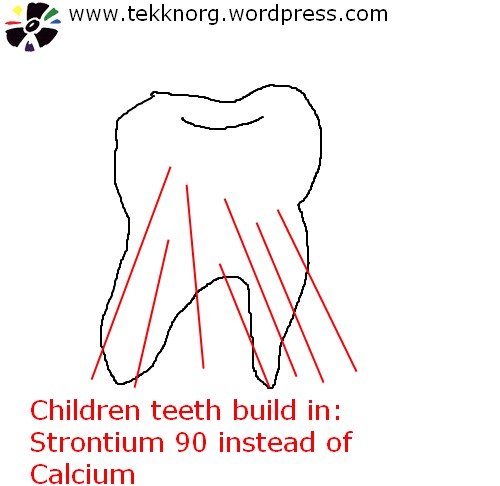
Preliminary case studies determined that children born in 1963 had levels of strontium 90, a radioactive isotope found in bomb fallout, nearly 50 times higher than children born in 1950. A limited study published by Science Magazine in 1961 presented similar findings.
“The immediate radiation danger moved public opinion, which influenced Congress to pass and President John F. Kennedy to implement the Limited Test Ban Treaty in 1963,” said the Missouri History Museum on the research. “They knew that a by-product of nuclear weapons testing is death-dealing, cancer-causing radiation. Some elemental isotopes last for thousands of years while others decay quickly, but airborne debris drifts for miles from explosions, falling onto food and water.”
Kennedy campaigned for president in strong opposition to nuclear testing, according to the John F. Kennedy Presidential Library. However, he entered his term at the height of the Cold War and faced mounting pressure after the Soviet Union conducted dozens of above-ground nuclear tests. In 1962, he reluctantly announced that the United States would resume atmospheric testing.
As Kennedy attempted to negotiate a ban on such testing, the findings of the St. Louis baby tooth study came to his attention. Negotiations to end atmospheric radioactive testing, the issue at the center of the baby tooth study, intensified midway through 1963.
By July, Kennedy had reached an agreement with the Soviet Union to exclusively conduct nuclear tests underground. By August, government officials from the Soviet Union, the United Kingdom, and the United States gathered in Moscow to sign what is officially known as the “Treaty Banning Nuclear Weapon Tests in the Atmosphere, in Outer Space and Under Water” or “Partial Test Ban Treaty.”
“Let us if we can step back from the shadows of war and seek out the way of peace. And if that journey is 1,000 miles or even more, let history record that we, in this land, at this time, took the first step,” said Kennedy on the agreement in a televised speech on July 26, 1963.
The initial baby tooth study continued through 1970. A research team acquired 85,000 of the tested teeth for a 2001 analysis that concluded 12 children who died of cancer had strontium 90 levels twice as high as others alive during the time of research. Some scientists denounce those findings to this day.
Now, the baby tooth study from decades ago carries new life in the form of a Harvard study. Researchers hope to collect tens of thousands and determine a possible connection between metals and cognitive decline at an older age. Harvard neuroscientist Marc Weisskopf launched the study in 2021, and one survey for the project remains ongoing.
According to a report from DrBicuspid.com, Japanese filmmaker Hideaki Ito is also working on a documentary about the original study and visited St. Louis last year for some groundwork.
1 This Month

To see nuclear-related stories in greater depth and intensity – go to https://nuclearinformation.wordpress.com
-
Archives
- September 2026 (194)
- August 2026 (330)
- July 2026 (355)
- June 2026 (287)
- May 2026 (306)
- April 2026 (356)
- March 2026 (251)
- February 2026 (267)
- January 2026 (308)
- December 2025 (358)
- November 2025 (359)
- October 2025 (375)
-
Categories
- 1
- 1 NUCLEAR ISSUES
- business and costs
- climate change
- culture and arts
- ENERGY
- environment
- health
- history
- indigenous issues
- Legal
- marketing of nuclear
- media
- opposition to nuclear
- PERSONAL STORIES
- politics
- politics international
- Religion and ethics
- safety
- secrets,lies and civil liberties
- spinbuster
- technology
- Uranium
- wastes
- weapons and war
- Women
- 2 WORLD
- ACTION
- AFRICA
- Atrocities
- AUSTRALIA
- Christina's notes
- Christina's themes
- culture and arts
- Events
- Fuk 2022
- Fuk 2023
- Fukushima 2017
- Fukushima 2018
- fukushima 2019
- Fukushima 2020
- Fukushima 2021
- general
- global warming
- Humour (God we need it)
- Nuclear
- RARE EARTHS
- Reference
- resources – print
- Resources -audiovicual
- Weekly Newsletter
- World
- World Nuclear
- YouTube
-
RSS
Entries RSS
Comments RSS
 nuclear-news