Nuked blood: PM Rishi Sunak is urged to uncover the truth on veterans’ missing health records

The PM has been told to fix his “broken promises” as MPs urge an investigation into missing blood records of nuclear veterans
Rishi Sunak promised to meet test veterans and back a police investigation into possible crimes committed against them, but has yet to do either
Mirror UK, By Susie Boniface, Reporter, 14 Jul 2023
Rishi Sunak has been told to fix his “broken promises” to nuclear test veterans by telling Parliament the full truth of their missing medical records.
Labour and Tory MPs have asked the Defence Select Committee to hold its own inquiry into the blood tests that Cold War veterans say are being illegally withheld from them.
Labour peer Lord Watson of Wyre Forest has written to the Prime Minister asking him to correct Ministry of Defence claims in Parliament that it does not hold the blood data, and fulfil the promise made last year to meet the test veterans in person.
“Given the series of misleading statements, broken promises, and unwarranted delays, the onus rests upon the PM to rectify this matter,” Lord Watson said……………….
Lord Watson added: “It is an affront to expect elderly veterans to navigate the labyrinthine corridors of the MoD, merely to ascertain partial truths.”
It followsthe Mirror’s revelations yesterday that veterans’ service records appear to have had health data, including blood and urine analysis which may have showed radiation damage during their time at the weapons tests, removed from the files.
It is potentially a criminal offence for any healthcare provider to withhold, falsify or destroy medical records, due to the likely impact on the health of patients who cannot later be properly diagnosed or treated.
A timeline of denial…
December 2018: Defence Minister Tobias Ellwood tells Parliament “the MoD is unable to locate any information AWRE staff took blood samples for radiological monitoring”
October 2022: Atomic Weapons Establishment confirmed in Freedom of Information requests it held the results of “a small number” of blood and urine tests; the same information is given to Parliament
February 2023: Royal Navy tells veteran’s son that “the AWE does not hold any evidence that such tests ever happened”
March 2023: Defence Minister Andrew Murrison tells Parliament “AWE does not hold the blood test results for Nuclear Test Veterans” but only “references” to them, which are “included in scientific documentation related to nuclear weapons trials”. He says veterans can request any information held, individually
June 2023: Murrison tells one Tory MP that AWE only has information about blood tests of “one individual”; 10 days later he tells a second Tory MP it holds “blood test data for a small number of individuals”……………………………………
Labour MP Emma Lewell-Buck, who sits on the Commons defence committee, has urged it to consider launching an investigation. She said yesterday: “There is enough evidence to show blood tests were ordered, arranged, and taken, from large numbers of people. The results were stored and analysed. The veterans have always had a right to that information, and failing to provide it can cost lives.
“We must find out when and why they were removed from the medical records.”
Support has come from Tory backbencher Dr Julian Lewis, on behalf of a test veteran constituent, who has asked the committee chairman Tobias Ellwood to question the MoD further.
We have uncovered more than 200 pages of archive documents, ordering blood to be taken from servicemen at all of Britain’s nuclear weapons tests, from 1952 onwards.
They show:
- The MoD had a “Director of Hygiene and Research” who organised blood tests of personnel and kept a “master record” of results
- Orders from the Air Ministry and War Office telling unit medical officers to arrange repeated “blood testing of personnel working regularly with radioactive sources”, from 1952 onwards
- The medical forms used and instructions on how to duplicate and store them
- Officers seeking guidance from government ministers on testing troops and civilians
- A task force commander demanding all RAF sampling and decontamination personnel, and 25% of other trades under his command, have blood tests
- RAF crews being blood-screened before leaving the UK, with some rejected for service as a result
- Proof that army blood tests were copied “from AWRE records” to be put into soldiers’ main medical files – where they can no longer be found
- Pathologists attached to the weapons trials were told to create a “special health register” to log the data, with “safety limits” set for the blood counts, and instructions to send home or withdraw from service anyone who tested below those levels.
We have uncovered documentary evidence that urine was taken from men ordered into the forward area after Britain’s first atomic bomb in 1952, and analysed by scientists. Everyone who served at nine subsequent bomb tests on the Australian mainland had their blood tested. And for another three atom bombs, and six hydrogen bombs, detonated at Christmas Island in the South Pacific, there is evidence that RAF and Army soldiers were tested too.
Almost 22,000 men took part in the weapons tests, which were the biggest tri-service operation since D-Day.
Alan Owen, who founded campaign group LABRATS, said: “It is inconceivable that with all these orders, and thousands of men involved over more than a decade, there isn’t a warehouse somewhere filled with the results. We understand they were held on microfiche at the AWE in Aldermaston, and may have been recently reclassified or moved.
“We are certain these records exist and are being withheld, and the only possible reason to do that is to limit compensation claims to those injured by the radiation the government has always denied they were exposed to.”
All the documents are available to view online at www.labrats.international/blood https://www.mirror.co.uk/news/politics/nuked-blood-rishi-sunak-promises-30464869
New Evidence on Tritium Hazards

Due to recent unprecedented levels of public interest in tritium, it is
relevant to point to new publications (and two older ones just discovered)
on tritium’s hazards. One of these concludes “ …contrary to some
popular notions that tritium is a relatively benign radiation source, the
vast majority of published studies indicate that exposures, especially
those related to internal exposures, can have significant biological
consequences including damage to DNA, impaired physiology and development,
reduced fertility and longevity, and can lead to elevated risks of diseases
including cancer. Our principal message is that tritium is a highly
underrated environmental toxin that deserves much greater scrutiny.”
Ian Fairlie 14th July 2023
How the world’s most radioactive man cried blood while his skin melted as he was kept alive in 83-day nightmare after horror accident at Japanese nuclear power plant

- Hisashi Ouchi, 35, became the world’s ‘most radioactive man’ in 1999
- He was the worst affected by Japan’s 1999 Tokaimura nuclear accident
- Ouchi – reportedly left with ‘melted skin’ and ‘crying blood’ – died after 83 days
Daily Mail , By MATTHEW COX, 14 July 2023
A Japanese nuclear disaster on September 30, 1999, was the world’s worst since Chernobyl, and left the world’s ‘most radioactive’ man with ‘melted skin.’
That victim was Hisashi Ouchi, a worker at the uranium processing plant in Tokaimura – 70 miles northeast of Tokyo – who was exposed to a massive dose of radiation resulting in severe burns.
This was to be the first of 83 days of unimaginable suffering in critical condition for the 35-year-old who died on December 21, after begging doctors to stop treating him months earlier.

The accident was a result of a series of fatal mistakes while he and his colleagues were preparing uranium for use as reactor fuel in the privately-run plant, including carrying the uranium in buckets, and not wearing appropriate protective equipment.
Technicians Ouchi and Masato Shinohara, with supervisor Yutaka Yokokawa, were speeding up the conversion process by putting 16kg of uranium in a vat which had a maximum limit of 2.4kg, when a chain-reaction was caused as Ouchi was ‘draped over’ the tank.
He was exposed to 17 Sieverts of radiation – for comparison, emergency responders at Chernobyl were exposed to 0.25 – over double what is seen as a lethal dose.
That is also the record amount of radiation in any living person, making him the most irradiated man ever, sometimes referred to as the world’s ‘most radioactive.’
He and his co-workers reported seeing a blue flash above the vat, the indication that a reaction similar to that inside an atomic bomb has happened, releasing deadly neutron radiation.
The colleagues rapidly lost consciousness as alarms blared inside the plant and radiation levels shot to 4,000 times typical levels.
The surrounding area was evacuated, with many not having even been aware that the unassuming building was a nuclear facility.
Ouchi was rushed to the University of Tokyo Hospital, where doctors found that he had almost no white blood cells and was in need of extensive skin grafts and multiple blood transfusions.
Local reports at the time claimed that he was also left ‘crying blood,’ and begged doctors to stop treating him.
However, he was resuscitated after multiple heart attacks on his 59th day in hospital.
Ouchi eventually died on December 21, 1999, and a few months later in April 2000 Shinohara, his fellow technician, died of multiple organ failure aged 40………………………. https://www.dailymail.co.uk/news/article-12299235/How-worlds-radioactive-man-cried-blood-kept-alive-83-day-nightmare.html
12 years on, Fukushima’s citizen-scientists continue to test local fish for radioactive substances.
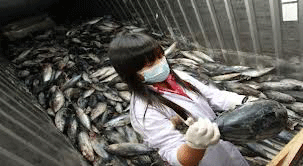
2 In a white coat and gloves, Ai Kimura is cutting up a fish sample at the
Tarachine lab, about an hour’s drive from the now-crippled Fukushima
Daiichi nuclear power plant on Japan’s eastern coast.
Four times a year, Ms Kimura and her team of volunteers collect samples of fish from the waters around the plant. They have been doing this since the lab was founded in
2011, just months after a devastating tsunami flooded the reactors, causing
a radiation leak. Except Ms Kimura is not a scientist – and neither are any
of the women who run the non-profit lab, whose name Tarachine is derived
from the term for “mother” in old Japanese.
Shaken after the tsunami, Ms Kimura says locals started the lab to find out what was safe to feed their children because it was hard to come by information on the risks of
radiation. So they asked technical experts to train them on how to test for
radioactive substances and log the readings, raised funds and began
educating themselves. It was the decision of a shattered community that
never thought an accident at the nuclear power plant was possible.
Now, 12 years on, they again find themselves struggling to trust the Japanese
government as it insists it’s safe to release treated radioactive water
from the plant into the Pacific Ocean.
BBC 13th July 2023
Russian K-278 sub sank 30 years ago but continues to leak radiation
By Boyko Nikolov On Jul 7, 2023 https://bulgarianmilitary.com/2023/07/07/russian-k-278-sub-sank-30-years-ago-but-continues-to-leak-radiation/
Imagine a Russian nuclear submarine, resting at the bottom of the Arctic sea for over 30 years, still leaking radiation. It may sound like a plot from a sci-fi movie, but according to Norwegian researchers, this is indeed reality.
For several years, a joint team of Russian and Norwegian scientists has been investigating this phenomenon. They found that the water around the K-278 Komsomolets submarine is 100,000 times more radioactive than uncontaminated water. The results of their research revealed in 2019, raise alarming questions about the potential short and long-term effects of radioactive water surrounding the vessel beneath the Barents Sea.
An essay in The Drive from 2019 suggests that the submarine may now be actively leaking radiation. This could be from its reactor or a pair of nuclear-armed torpedoes, both having remained submerged in the Barents Sea for over three decades.
The researchers collected samples from 5,500 feet below the sea surface, around 100 miles southwest of Norway’s Bear Island. This incident, and its potential long-term effects, highlight the importance of managing and disposing of radioactive material responsibly. This is even more crucial given the current geopolitical tensions between the US and Russia.
The submarine, known as Soviet Project 685, is believed to be leaking radiation either from its reactor or from its nuclear-armed torpedoes. This leakage is likely due to the submarine’s prolonged stay at the bottom of the Barents Sea.
The contaminated water was collected by the Egir 600, a Norwegian-designed remotely operated submersible. The research was carried out by Norway’s Institute of Marine Research and Norway’s University of Bergen.
One of the samples showed a significantly elevated radiation level. While the findings were preliminary, researchers stressed the need for continued monitoring of the sunken submarine. The ongoing analysis likely examines the extent of potential contamination and its possible impact on wildlife, ships, and coastal regions. The currents, water flow, and concentrations of radioactive material were probably scrutinized to minimize damage and contamination.
In conclusion, a plan was likely set in motion to mitigate the leakage of radioactive materials. Perhaps the nuclear-armed torpedoes were safely removed, or the contaminated materials were disposed of in a manner that would prevent any further leakage.
Japan claims that China and South Korea both pour radioactive waste-water , worse than Japan’s, into the oceans

Japan said Thursday that China and South Korea have both discharged liquid
waste containing high levels of tritium, a radioactive material, countering
Beijing’s criticism of Tokyo’s plan to release treated water from the
Fukushima nuclear power plant. Chief Cabinet Secretary Hirokazu Matsuno
also said Japan will explain to China “based on scientific perspectives”
the planned water discharge into the sea from the nuclear complex, crippled
by a devastating earthquake and ensuing tsunami in March 2011. Japan’s
standard for the release of tritium, at below 22 trillion becquerels per
year, is far stricter than that of other nations including its neighbors
China and South Korea, Matsuno, the top government spokesman, said at a
regular press conference.
In 2021, the Yangjiang nuclear plant in China
discharged around 112 trillion becquerels of tritium, while the Kori power
station in South Korea released about 49 trillion becquerels of the
radioactive material, Japan’s industry ministry said.
Japan Today 6th July 2023
Workers, residents at US site that made Nagasaki A-bomb’s plutonium still suffering

June 18, 2023 (Mainichi Japan) https://mainichi.jp/english/articles/20230616/p2g/00m/0in/069000c
HANFORD, Washington (Kyodo) — As cleanup efforts continue in Washington state at a decommissioned U.S. nuclear facility that played a crucial role in the country’s acquisition of the atom bomb in World War II, questions linger over whether the site has caused serious health issues for workers and local residents.
Construction began on the facility, known as the Hanford site, eighty years ago in 1943 and involved the building of the world’s first large-scale nuclear reactor.
Through the Manhattan Project, a U.S. government research and development program for building nuclear weapons, the site’s B reactor, erected on a 580-square-mile stretch of land next to the Columbia River in south-central Washington, produced the nuclear material for one of the only two atomic bombs ever used in an armed conflict.
Codenamed “Fat Man,” the device was detonated over the city of Nagasaki in southwestern Japan on Aug. 9, 1945, effectively ending Japan’s involvement in the conflict.
The 6.2 kilograms of plutonium contained in the nuclear device released energy equivalent to 21 kilotons of TNT, taking the lives of tens of thousands of innocent people while subjecting the surrounding area to deadly radiation, killing countless more.
But citizens of Nagasaki may not be the only victims of Hanford’s plutonium production. During its decades of operation, U.S. residents living near and mainly downwind of the complex experienced severe health effects that they believe stem from the site’s activities.
One such resident is Tom Bailie, 76, who grew up and still resides just miles downwind from Hanford in a farming community.
Reflecting on his upbringing, Bailie recalled during an interview in April that no one ever thought the site at Hanford would cause harm to “patriotic American citizens.”
But, after he and a local journalist conducted a survey on surrounding farms in 1985, Bailie began to have doubts. Nearly all the families living nearby suffered from cancer, birth defects, or thyroid disease, he says — health issues that could be attributed to radiation exposure. This led to the area being coined “the death mile” by some journalists at the time.
Bailie said that his wife, father, and three uncles all had cancer before passing away, while his two sisters also have cancer and take thyroid medicine. The year before Bailie was born, his mother had a stillbirth. Bailie himself was born with birth defects and was on an iron lung when he was 4 years old. He now requires medication for a thyroid problem.
Bailie vividly remembers encounters with “men in space suits,” equipped with dosimeters to measure radiation levels, walking on his farm. The men would collect soil samples and even ask the farmers to send the heads and feet of ducks and rabbits they would kill while hunting to Hanford for analysis.
When he began speaking out about the hardships and health problems that he attributed to the Hanford site, many people from the community dismissed him as “nuts” or “crazy.” Some even mockingly referred to him as the “glow-in-the-dark farmer.”
But documents that were declassified in the late 1980s showed that Hanford had contaminated the surrounding farmland, air, farm animals, and crops with unsafe levels of radiation for years.
One such document shows that in December 1949, in an experiment called “Green Run,” Hanford scientists knowingly released thousands of curies of dangerous radioactive Iodine-131 from the site to track its course and better understand how it dispersed.
Even with the documents, some living downwind who joined the class action suit against the site were unable to explicitly prove their medical problems were caused by the contamination from the Hanford site. But Bailie still firmly believes the facility is the reason for many people’s health problems in the downwind areas.
Bailie said “the government should be ashamed of itself” for what it did to its citizens and that he thinks, at the very least, the government should cover the medical expenses of those who lived downwind.
Before being decommissioned in 1989, Hanford produced around 74 tons of plutonium, nearly two-thirds of all the plutonium produced for government purposes in the United States. One of the consequences of the site’s work was massive amounts of contamination and dangerous leftover byproducts, most of which remain on the site today.
Currently, 177 underground tanks containing 56 million gallons of highly radioactive waste, contaminated buildings, and cocooned reactors still exist there, alongside multiple other buried waste sites.
The same year Hanford was decommissioned, cleanup efforts began for dealing with the dangerous byproducts left over from the production of plutonium. Efforts to clean the area of waste are anticipated to be astronomically costly and time-consuming.
According to Hanford’s latest estimate, released in 2022, the total cost of the cleanup is projected to range from $319.6 billion to $660 billion, with a completion date not expected until at least fiscal 2078.
But Tom Carpenter, 66, former head of Hanford Challenge, a nonprofit organization dedicated to ensuring the responsible and safe clearing of the Hanford site, argues that using the word “cleanup” is misleading.
Carpenter says complete eradication of contamination from thousands of acres is impossible, and not the goal of the cleanup process. He asserts that the best that can be achieved at Hanford is “the mitigation of some risks.”
Hanford Challenge’s primary goal, he says, is to ensure authorities prioritize a swift cleanup and make sure that no corners are cut, nor workers put in unnecessary danger. This includes fighting for those who are currently working on the site.
Many workers involved in the cleanup of the Hanford site continue to be exposed to toxic chemicals, vapors, and radioactive materials, resulting in debilitating health conditions.
A recent survey of the workers by Washington state revealed more than 50 percent of them had been exposed to radioactive or toxic chemicals. Workers exposed to these dangerous materials and vapors have developed beryllium disease, cancers, organ damage, and occupational dementia.
Until recently, these workers had to prove that their health issues were directly caused by their work at the Hanford site to receive assistance with their medical expenses.
According to former worker and Hanford Challenge director Jim Millbauer, 65, proving this was extremely difficult, costly, time-consuming, and often fruitless, as most occupational illness claims were rejected.
But a recent law has changed this, presuming that any health effects suffered by workers who spend just eight hours working at Hanford are caused by working at the facility, making it easier for sick workers to get their treatment paid for.
Local colleges train students to work in a plutonium pit factory, but at what cost?
It carries a legacy of illness, death and environmental racism for countless others. History tells of a long practice of hiring local Hispano and Pueblo communities to staff some of the most dangerous positions.
History tells of a long practice of hiring local Hispano and Pueblo communities to staff some of the most dangerous positions, a practice that has its origins in the early years of the lab, as Myrriah Gómez describes in her 2022 book Nuclear Nuevo México.
- By Alicia Inez Guzmán Searchlight New Mexico, Jun 10, 2023 https://www.santafenewmexican.com/news/local_news/local-colleges-train-students-to-work-in-a-plutonium-pit-factory-but-at-what-cost/article_068bd3b2-0589-11ee-b8ba-93e1230989e7.html
Every day, thousands of people from all parts of El Norte make the vertiginous drive up to Los Alamos National Laboratory. It’s a trek that generations of New Mexicans have been making, like worker ants to the queen, from the eastern edge of the great Tewa Basin to the craggy Pajarito Plateau. All in the pursuit of “good jobs.”
Some, inevitably, are bound for that most secretive and fortified place, Technical Area 55, the very heart of the weapons complex — home to PF-4, the lab’s plutonium handling facility, with its armed guards, concrete walls, steel doors and sporadic sirens. To enter “the plant,” as it’s known, is to get as close as possible to the existential nature of the nuclear age.
For 40 years, some 250 workers were tasked, mostly, with research and design. But a multibillion-dollar mission to modernize the nation’s nuclear arsenal has brought about “a paradigm shift,” in the words of the Defense Nuclear Facilities Safety Board, a federal watchdog. Today, the plant is in the middle of a colossal expansion — growing from an aged building to what the safety board calls “a large-scale production facility for weapon components with the largest number of workers in its history.”
In short, the plant is slated to become a factory for making plutonium pits, the essential core of every nuclear warhead.
Four years ago, LANL began laying the groundwork for this expansion by searching out and shaping a highly trained labor pool of technicians to handle fissile materials, machine the parts for weapons, monitor radiation and remediate nuclear waste. The lab turned to the surrounding community tapping New Mexico’s small regional institutions — colleges that mostly serve minority and low-income students. The plan, as laid out in a senate subcommittee meeting, set forth a college-to-lab pipeline — a “workforce of the future.”
Taken altogether, Santa Fe Community College, Northern New Mexico College and the University of New Mexico’s Los Alamos campus have accepted millions of federal dollars for their role in preparing that workforce. They’ve graduated 74 people to date, many of whom will end up at TA-55.
As Kelly Trujillo, associate dean of SFCC’s School of Sciences, Health, Engineering and Math, put it, “A lot of these jobs are high-paying jobs and they allow [workers] to stay in their home, in the area that they love.”
The trade-offs, like so much involving LANL’s history in Northern New Mexico, are not without controversy. For many local families, the lab has been a gateway to the American dream. Its high wages have afforded generations of Norteños a chance at the good life — new houses, new cars, land ownership, higher education for their kids. To work there is to become part of the region’s upper crust.
It carries a legacy of illness, death and environmental racism for countless others. History tells of a long practice of hiring local Hispano and Pueblo communities to staff some of the most dangerous positions, a practice that has its origins in the early years of the lab, as Myrriah Gómez describes in her 2022 book Nuclear Nuevo México.
New Mexico’s academic institutions have for decades served as LANL’s willing partner, feeding students into the weapons complex with high school internships; undergraduate student programs; graduate and postdoc programs; and apprenticeships for craft trades and technicians. The lab heavily recruits at most local colleges, too.
Talavai Denipah-Cook can still remember LANL representatives plying her with promises of a high-paying job and good benefits at an American Indian Sciences and Engineering Society conference years ago. At the time, she was a student at a private high school in Española, and the future that they painted looked bright.
“I was like, ‘Wow, that sounds really intriguing.’ We don’t get that around here, especially as people of color,” said Denipah-Cook, now a program manager in the Environmental Health and Justice Program at Tewa Women United, an Indigenous nonprofit based in Española.
Then she remembered the words of her grandmother, a field nurse from Ohkay Owingeh, who once tended to Navajo Nation tribal members affected by uranium mining and saw the health impacts of radiation exposure firsthand.
“She used to tell me, ‘Don’t ever, ever work at Los Alamos National Labs.’”
‘The snake road’
For nearly eight decades, LANL’s repeated attempts to expand have run up against the plateau’s geography. During the Manhattan Project, the site proved problematic in terms of housing, transportation and access along the road that old-timers called el camino de la culebra — the snake road. In more recent years, the lab’s footprint has stretched to encompass a nearly 40-square-mile campus that abuts Bandelier National Monument, U.S. Forest Service lands, the cities of Los Alamos and White Rock, and San Ildefonso Pueblo.
One of its smallest areas, TA-55, sits at the north-central edge of campus. Within is “the plant” — a 233,000-square-foot building that ranks, according to the U.S. Department of Energy, as the only “fully operational, full capability plutonium facility in the nation.”
This is where plutonium and other irradiated materials are conveyed by a trolley system from a vault to rooms lined with gloveboxes, sealed and oxygen-free. Workers, their hands protected by bulky gloves, weigh and handle plutonium in all its forms — molten, metal and powder. They disassemble and inspect existing weapons from the stockpile; forge parts for nuclear batteries that help power spacecrafts; and perfect the dimensions of plutonium “hemishells” on hand-built machines. According to a retired machinist, each pit has to be so precisely crafted that the difference between it and others can vary no more than the width of a strand of hair.
A mass of certifications and protocols are required for every task; there is little margin for error. Should radiation escape its enclosure, a radiation control technician stands by with a Geiger counter to detect it and stop work immediately.
Plant employees earn an extra $20,000 of environmental pay — in order “to attract people, quite frankly, to work in our more challenging facilities,” said Stephen Schreiber, who works in weapons production as the technical director of the lab’s office of Science, Technology and Engineering.
When Joaquin Gallegos, the former chair of NNMC’s Biology, Chemistry and Environmental Sciences Department, recruited high school students to join the college pipeline, he cited the competitive salaries and drew upon his own family history: the aunts and uncles who worked at LANL while continuing to tend multigenerational land.
The lab “subsidized” their lifestyle and made it possible not to “sell out,” Gallegos said. “People who have 10 or 15 acres of agricultural land, that’s not enough to support a family. But if you work at the labs, you could still maintain that culture. You could still raise animals and maintain that as part of your family.”
Pendulum swings for pits
It’s been almost 75 years since LANL last produced plutonium pits at an industrial scale. In 1996, the lab was sanctioned to produce up to 20 plutonium war reserve pits a year for the W88 warhead. It produced 30 pits in a five-year period, until 2012 when all major plutonium operations were suspended, after four pieces of weapons-grade plutonium were placed side by side for a photo op — a positioning that could have caused a runaway neutron chain reaction and a flash of potentially fatal radiation.
“The lab has never had to be accountable for their promises,” said Greg Mello, of the Los Alamos Study Group, an influential anti-nuclear nonprofit based in Albuquerque. “Could they be a factory? Could they produce pits reliably? No. Not at all.”
LANL, regardless, was tapped as one of two sites — the other being South Carolina’s Savannah River plutonium processing facility — to produce no fewer than 80 pits annually by 2030, according to the Fiscal 2020 National Defense Authorization Act. The law authorized LANL to produce 30 pits per year by 2026.
What’s being proposed is so huge it has no precedent, said Jay Coghlan, executive director of Nuclear Watch New Mexico, an anti-nuclear advocacy organization in Santa Fe.
“Here we have this arrogant agency that thinks it can just impose expanded bomb production on New Mexico,” said Coghlan, referring to the National Nuclear Security Administration, the lead agency for pit production. “They do not have credible cost estimates and they do not have a credible plan for production. But yet they expect New Mexicans to bear the consequences.”
The costs, according to the Los Alamos Study Group, will come to some $46 billion by 2036 — the earliest the NNSA says it can hit 80 pits per year at the two sites. It’s roughly the same amount of money it would take to rebuild every single failing bridge in America.
The NNSA estimates the lab will need 4,100 full-time employees, including scientists and engineers, security guards, maintenance, craft workers, and “hard-to-fill positions,” as LANL has dubbed the pipeline jobs.
It is the most costly program in the agency’s history. It is also destined, Coghlan and others say, to collapse under its own weight. Both Los Alamos and Savannah River are, according to federal documents, billions of dollars over budget and years behind schedule.
Money, waste and risk
More than $20 billion is slated for paying personnel and underwriting the construction in and around TA-55, including parking structures, office buildings, facilities to process transuranic liquid waste, and demolishing and decontaminating hundreds of old gloveboxes and installing hundreds of new ones. Construction is taking place at night, while staff work toward meeting LANL’s new quota by day.
Safety and controlling risk are paramount, said Schreiber, the LANL technical director. “We really do instill that in our workers.” But observers at the Union of Concerned Scientists say the pace doesn’t bode well.
“When you have new employees who are not very experienced in a new facility running new procedures in a high-risk environment — trying to do it fast, trying to meet a quota — that’s a recipe for something bad to happen,” said Dylan Spaulding, a senior scientist in the nonprofit’s global security program.
New Mexico’s all-Democratic congressional delegation, whatever the controversies, supports the project wholeheartedly. It was Heinrich and South Carolina’s Republican Sen. Lindsey Graham who rallied behind pit production in their states — ushering it into law in the 2020 National Defense Authorization Act. Then-Congressman Ben Ray Luján helped shepherd money to the pipeline programs.
Radiation 101
Last spring, assistant professor Scott Braley taught two back-to-back introductory courses to 13 future radiation control technicians at NNMC. His lectures covered a host of topics: the history of “industrial-scale” radiation accidents worldwide, algebraic formulas to determine the correlation between individual cancer and workplace exposure, and maximum permissible doses for future workers like themselves. The rates are higher than for the general public, Braley explained, because, for one, radiation workers “have accepted a higher risk.”
Once they get their associate degree, NNMC graduates proceed to the second part of their training, in a Los Alamos classroom. There, they learn how to don and doff personal protective gear — a suit not unlike the one that recent NNMC graduate Karen Padilla said she once used to keep bees. Padilla, 42, participated in simulations of scenarios that she and others might one day face, learning the proper ways to detect radiation around trash and 55-gallon barrels of waste, for instance.
“Long-term, I don’t have really any fears about this because I feel like my instructors are doing a good job of helping me understand how to protect myself” and others, said Padilla. “I think ultimately that’s my job as a [radiation control technician], to protect people who are working, to make sure they’re not getting into something that could be harmful.”
Much of the college programs center around minimizing risk. And yet they present an ethical dilemma, said Eileen O’Shaughnessy, co-founder of Demand Nuclear Abolition.
“What does it mean to assume that exposure is acceptable at all? Because the thing about radiation is it’s cumulative and any amount is unsafe.”
Generations of Northern New Mexicans have faced the same time-worn question: Are the good jobs worth the trade-offs?
“You realize, yes, they are paying you well, but you’re being put in situations that you have no idea about,” said the retired machinist, with over two decades of experience working at the lab, much of it at the plant. He asked to remain anonymous for fear of retaliation. “It’s the mentality at the lab,” he said. “They don’t really think that people that are techs are even really worth much.”
A powerful neighbor
Dueling perspectives reveal the chasms around the lab and, in particular, what some consider the Manhattan Project’s original sin: Its use of eminent domain to force Indigenous and Hispano people off their farms and sacred lands on the Pajarito Plateau. Its arrival, oral histories hold, spelled the end of land-based living.
“When did we stop farming to sustain ourselves?” Kayleigh Warren recalled asking a relative from Santa Clara Pueblo. The answer: “When the labs came in.”
Now an environmental health and justice program coordinator at Tewa Women United, Warren has borne witness to the region’s change in values. The lab has so deeply carved itself into Northern New Mexico’s psyche that imagining another future and means of survival has come to seem impossible.
As the single largest employer in northern New Mexico, LANL’s horizon of influence is vast. And with billions more dollars flooding in, its sway in almost every sphere seems only to grow.
Despite the lab’s omnipresence, economic gains have been relatively limited. While Los Alamos County has one of the highest median household incomes in the nation, the surrounding communities — including Española — are among the poorest in the state.
“LANL has been a bad neighbor,” Warren said. “If the economic benefits are so good for them to continue their work and expand, you would think the communities around here would be doing better. But we’re not.”
‘Exploring Tritium’s Dangers’: a book review
By Robert Alvarez | June 26, 2023 https://thebulletin.org/2023/06/exploring-tritiums-danger-a-book-review/
Over the past 40 years, Arjun Makhijani has provided clear, concise, and important scientific insights that have enriched our understanding of the nuclear age. In doing so, Makhijani—now president of the Institute for Energy and Environmental Research—has built a solid reputation as a scientist working in the public interest. His most recent contribution to public discourse, Exploring Tritium’s Dangers, adds to this fine tradition.
A radioactive isotope of hydrogen, tritium is one the most expensive, rare, and potentially harmful elements in the world. Its rarity is underscored by its price—$30,000 per gram—which is projected to rise from $100,000 to $200,000 per gram by mid-century.
Although its rarity and usefulness in some applications gives it a high monetary value, tritium is also a radioactive contaminant that has been released widely to the air and water from nuclear power and spent nuclear fuel reprocessing plants. Makhijani points out that “one teaspoon of tritiated water (as HTO) would contaminate about 100 billion gallons of water to the US drinking water limit; that is enough to supply about 1 million homes with water for a year.”
Where tritium comes from. Since Earth began to form, the radioactive isotope of hydrogen known as tritium (H-3) has been created by interactions between cosmic rays and Earth’s atmosphere; through this natural process, the isotope continues to blanket the planet in tiny amounts. With a radioactive half-life of 12.3 years, tritium falls from the sky and decays, creating a steady-state global equilibrium that comes to about three to seven kilograms of tritium.
Tritium initially became a widespread man-made contaminant when it was spread across the globe by open-air nuclear weapons explosions conducted between 1945 and 1963. Rainfall in 1963 was found in the Northern Hemisphere to contain 1,000 times more tritium than background levels. Open-air nuclear weapons explosions released about 600 kilograms (6 billion curies) into the atmosphere. In the decades since above-ground nuclear testing ended, nuclear power plants have added even more to the planet’s inventory of tritium. For several years, US power reactors have been contaminating ground water via large, unexpected tritium leaks from degraded subsurface piping and spent nuclear fuel storage pool infrastructures.
Since the 1990s, about 70 percent of the nuclear power sites in the United States (43 out of 61 sites) have had significant tritium leaks that contaminated groundwater in excess of federal drinking water limits.
The most recent leak occurred in November 2022, involving 400,000 gallons of tritium-contaminated water from the Monticello nuclear station in Minnesota. The leak was kept from the public for several months. In late March of this year, after the operator could not stop the leak, it was forced to shut down the reactor to fix and replace piping. By this time, tritium reached the groundwater that enters the Mississippi River. A good place to start limiting the negative effects of tritium contamination, Makhijani recommends, is to significantly tighten drinking water standards.
Routine releases of airborne tritium are also not trivial. As part of his well-researched monograph, Makhijani underscores this point by including a detailed atmospheric dispersion study that he commissioned, indicating that tritium (HTO) from the Braidwood Nuclear Power Plant in Illinois has been literally raining down from gaseous releases – as it incorporates with precipitation to form tritium oxide (HTO)—something that occurs at water cooled reactors. Spent fuel storage pools are considered the largest source of gaseous tritium releases.
The largely unacknowledged health effects. Makhijani makes it clear that the impacts of tritium on human health, especially when it is taken inside the body, warrant much more attention and control than they have received until now. This is not an easy problem to contend with, given the scattered and fragmented efforts that are in place to address this hazard. Thirty-nine states, and nine federal agencies (the US Nuclear Regulatory Commission (NRC), Environmental Protection Agency (EPA), the Department of Energy (DOE), the Occupational Safety and Health Administration (OSHA), the Consumer Product Safety Commission, the Food and Drug Administration (FDA), and the Department of Agriculture are all responsible for regulating tritium.
This highly scattered regulatory regime has been ineffective at limiting tritium contamination, much less reducing it. For example, state and federal regulators haven’t a clue as to how many of some two million exit signs purchased in the United States—and made luminous without electric power by tritium—have been illegally dumped. For decades, tritium signs, each initially containing about 25 curies (or 25,000,000,000,000 pCi) of radioactivity, have found their way into landfills that often contaminate drinking water. One broken sign is enough to contaminate an entire community landfill. There are no standards for tritium in the liquid that leaches from landfills, despite measurements taken in 2009 indicating levels at Pennsylvania landfills thousands of times above background.
Adding to this regulatory mess, is the fact that federal standards limiting tritium in drinking water only apply to public supplies, and not to private wells.
In past decades, regulators have papered over the tritium-contamination problem by asserting, when tritium leakage becomes a matter of public concern, that the tritium doses humans might receive are too small to be of concern. Despite growing evidence that tritium is harmful in ways that fall outside the basic framework for radiation protection, agencies such as the Nuclear Regulatory Commission remain frozen in time when it comes to tritium regulation.
The NRC and other regulating agencies are sticking to an outdated premise that tritium is a “mild” radioactive contaminant that emits “weak” beta particles that cannot penetrate the outer layers of skin. When tritium is taken inside the body (by, for example, drinking tritiated water), half is quickly excreted within 10 days, the agencies point out, and the radiation doses are tiny. Overall, the NRC implies its risk of tritium ingestion causing cancer is small.
But evidence of harm to workers handling tritium is also growing. Epidemiologists from the University of North Carolina reported in 2013, that the risk of dying from leukemia among workers at the Savannah River Plant following exposure to tritium is more than eight times greater (RBE-8.6) than from exposure to gamma radiation (RBE-1). Over the past several years, studies of workers exposed to tritium consistently show significant excess levels of chromosome damage.[1]
The contention that tritium is “mildly radioactive” does not hold when it is taken in the body as tritiated water—the dominant means for exposure. The Defense Nuclear Facility Safety Board—which advises the US Energy Department about safety at the nation’s defense nuclear sites—informed the secretary of energy in June 2019 that “[t]ritiated water vapor represents a significant risk to those exposed to it, as its dose consequence to an exposed individual is 15,000 to 20,000 times higher than that for an equivalent amount of tritium gas.”
As it decays, tritium emits nearly 400 trillion energetic disintegrations per second. William H. McBride, a professor of radiation oncology at the UCLA Medical School, describes these disintegrations as “explosive packages of energy” that are “highly efficient at forming complex, potentially lethal DNA double strand breaks.” McBride, underscored this concern at an event sponsored by the National Institutes of Health, where he stated that “damage to DNA can occur within minutes to hours.” [2]
“No matter how it is taken into the body,” a fact sheet from the Energy Department’s Argonne National Laboratory says, “tritium is uniformly distributed through all biological fluids within one to two hours.” During that short time, the Defense Nuclear Facility Safety Board points out that “the combination of a rapid intake and a short biological half-life means a large fraction of the radiological dose is acutely delivered within hours to days…”
A new approach to tritium regulation. Makhijani pulls together impressive evidence clearly pointing to the need for an innovative approach that addresses, in addition to cancer, a range of outcomes that can follow tritium exposure, including prenatal and various forms of genomic damage. In particular, he raises a key point about how physics has dominated radiation protection regulation at the expense of the biological sciences.
It all boils down to estimation of a dose as measured in human urine based on mathematical models. For tritium, dose estimation can be extraordinarily complex (at best) when it is taken inside the body as water or as organically bound, tritide forms. So the mathematical models that can simplify this challenge depend on “constant values” that provide the basis for radiation protection.
In this regard, the principal “constant value” holding dose reconstruction and regulatory compliance together is the reliance on the “reference man.” He is a healthy Caucasian male between the age of 20 to 30 years, who exists only in the abstract world.
Use of the reference man standard gives rise to obvious (and major) questions: What radiation dose limit is necessary to protect the “reference man” from serious genomic damage? And what about protection of more vulnerable forms of human life?
According to the 2006 study by the National Research Council, healthy Caucasian men between the age of 20 and 30 are about one-tenth as likely to contract a radiation-induced cancer as a child exposed to the same external dose of gamma radiation while in the womb.
In his monograph, Makhijani underscores the need to protect the fetus and embryo from internal exposures to tritium—a need largely being side-stepped by radiation protection authorities. “Tritium replaces non-radioactive hydrogen in water, the principal source of tritium exposure,” Makhijani writes, pointing to unassailable evidence that tritium “easily can cross the placenta and irradiate developing fetuses in utero, thereby raising the risk of birth defects, miscarriages, and other problems.”
He is not alone in such an assessment. According a 2022 medical expert consensus report on radiation protection for health care professionals in Europe, “The greatest risk of pregnancy loss from radiation exposure is during the first 2 weeks of pregnancy, while between 2-8 weeks after conception, the embryo is most susceptible to the development of congenital malformations because this is the period of organogenesis.”
In the United States, the Nuclear Regulatory Commission’s efforts to reduce exposure limits and protect pregnant women and their fetuses is best described as foot-dragging. By comparison, the required limit for a pregnant worker in Europe to be reassigned from further exposure is one-fifth the US standard—and was adopted nearly 20 years ago.
Long-term environmental retention. A 2019 study put forward the first ever empirical evidence of very long-term environmental retention of organically bound tritium (OBT) in an entire river system, deposited by fallout from atmospheric nuclear weapons explosions.
When released into the environment, tritium atoms can replace hydrogen atoms in organic molecules to form organically bound tritium, which is found soil, and river sediments, vegetation, and a wide variety of foods. It’s been more than a half century since the ratification of the Limited Test Ban Treaty, and tritium released through nuclear weapons testing has undergone significant decay. Yet because of the long retention of organically bound tritium, in greater than expected concentrations, it still remains a contaminant of concern.
For instance, despite its 12.3-year half-life, a much larger amount of organically bound tritium from nuclear tests than previously assumed is locked in Arctic permafrost, raising concerns about widespread contamination as global warming melts the Arctic. Organically bound tritium can reside in the body far longer than tritiated water, to consequently greater negative effect.[3]
Nuclear weapons, nuclear power, and tritium. The tritium problem has several dimensions that relate directly to the world’s current and future efforts vis a vis nuclear power and nuclear weapons.
Now that nuclear power reactors are closing down, especially in the aftermath of the Fukushima accident, the disposal of large volumes of tritium-contaminated water into lakes, rivers, and oceans is becoming a source of growing concern around the world. The Japanese government has approved the dumping of about 230 million gallons of radioactive water, stored in some 1,300 large tanks sitting near the Fukushima nuclear ruins, into the Pacific Ocean. Once it incorporates into water, tritium is extraordinarily difficult, if not impossible to remove.
Protests in Japan by a wide segment of the public and in several other nations—including Russia, the Marshall Islands, French Polynesia, China, South Korea and North Korea—object to the disposal of this large volume of contaminated water into near-shore waters.
Then there’s the matter of boosting the efficiency and destructive power of nuclear weapons with tritium gas—a use that has dominated demand for this isotope. Because five percent of the tritium in thermonuclear warheads decays each year, it has to be periodically replenished. Over the past 70 years, an estimated 225 kilograms of tritium were produced in US government reactors, principally at the Savannah River Plant in South Carolina. Those reactors were shuttered in 1988. Since 2003, tritium supplies for US nuclear warheads are provided by two Tennessee Valley Authority nuclear power reactors. The irradiation of lithium target elements in the reactors has fallen short of meeting demand because of excess tritium leakage into the reactor coolant.
The hazards of tritium production for weapons are far from trivial.
For instance, since June of 2019, the Defense Nuclear Facility Safety Board has taken the Energy Department to task for its failure to address the risk of a severe fire involving tritium processing and storage facilities at the Savannah River Site. According to the Board, such a fire may have a 40 percent chance of occurring during 50 years of operation and could result in potentially lethal worker doses greater than 6,000 rems—1,200 times the annual occupational exposure limit. Doses to the public would not be inconsequential. Meanwhile, the Energy Department is under pressure from the nuclear weapons establishment to step up demand for tritium. Unless there is “a marked increase in the planned production of tritium in the next few years,” the 2018 US Nuclear Posture Review concluded “our nuclear capabilities will inevitably atrophy and degrade below requirements.”
The Energy Department estimates it will take 15-20 years to achieve a major multibillion overhaul of its tritium production infrastructure.
Meanwhile, the quest for fusion energy highlights a startling fact: The amount of tritium required to fuel a single fusion reactor (should an economic, fusion-based power plant ever be created) will likely be far greater than the amount produced by all fission reactors and open-air bomb tests since the 1940s. A full-scale (3,000 megawatt-electric) fusion reactor is estimated to “burn” about 150 kilograms of tritium a year.[4]
The cost for a one-year batch of tritium fuel for a fusion reactor, based on the current market price, would be $4.5 billion. An annual loss to the environment from a single fusion reactor could dwarf the release of tritium from all nuclear facilities that currently dot the global landscape.
The tritium overview. Evidence is mounting not just in regard to increased health risks from tritium-contaminated water and from organically bound tritium, but also as relates to the harm tritium can visit on the unborn. At the same time, it has become clear that regulation of tritium in the United States is grossly insufficient to the current risk from tritium contamination, not to mention future risks that could arise if tritium production, use, and associated leakage rise. Arjun Makhijani provides a useful roadmap for sparing workers and the public from the dangers this pernicious contaminant will pose in the future, absent more effective regulation that includes lower limits for human tritium exposure.
Notes
[1] See: https://link.springer.com/article/10.1007/s004200050272; https://www.mdpi.com/2305-6304/10/2/94; https://www.jstor.org/stable/3579658; http://www.rbc.kyoto-u.ac.jp/db/Literature/THO-Occupational.html; and https://www.unscear.org/docs/publications/2016/UNSCEAR_2016_Annex-C.pdf
[2] William MacBride, UCLA School of Medicine Vice Chair for Research in Radiation, Principal Investigator of UCLA’s Center for Medical Countermeasures Against Radiation — National Institutes of Health, Jan 27, 2014. See: https://www.youtube.com/watch?v=XEH72v-yN9A
[3] See https://www.nature.com/articles/s41598-019-47821-1
[4] Advocates assume that only the initial loading of 150 kg will be needed, as the reactor will “breed” the remaining amount of tritium to run the plant after a year of operation.
Chinese astronauts install radiation-exposure experiment outside Tiangong space station
By Andrew Jones, 21 June 23, https://www.space.com/astronauts-install-radiation-experiment-china-tiangong-space-station
China plans to conduct radiation experiments on plant seeds, microorganisms and small animals.
China is running a biological radiation exposure experiment outside its space station.
The country’s Shenzhou 16 astronauts — Jing Haipeng, Zhu Yangzhu and Gui Haichao — installed the experiment outside the Tiangong space station‘s Mengtian science module on June 10, China’s National Space Science Center (NSSC) announced in a statement.
The experiment was deployed using Mentian’s dedicated payload airlock and attached to an external payload adapter using the space station’s small robotic arm.
The experiment payload contains 13 sample box units loaded with biomaterials. These are designed to study the impact of cosmic radiation and microgravity on organisms, the origin and evolution of life and the development of space radiation mutagenic resources.
The equipment can be used for in-orbit experiments on biological samples, including plant seeds, microorganisms and small animals, according to NSSC. The temperature inside each sample container unit can be adjusted to suit the organisms it is hosting.
On-orbit medical research involving space radiation biological exposure is of great significance to supporting China’s human spaceflight program. That program is ambitious, with plans to launch long-term crewed missions in Earth orbit and send people to the surface of the moon, the Chinese-language outlet Science and Technology Daily reported.
The experiment payload was developed jointly by the NSSC and Dalian Maritime University. It is intended to operate for five years and is planned to be used for several scientific projects.
The Shenzhou 16 crew arrived at Tiangong on May 30 and will remain aboard the space station until November.
Workers, residents, at US site that made Nagasaki A-bomb’s plutonium, are still suffering
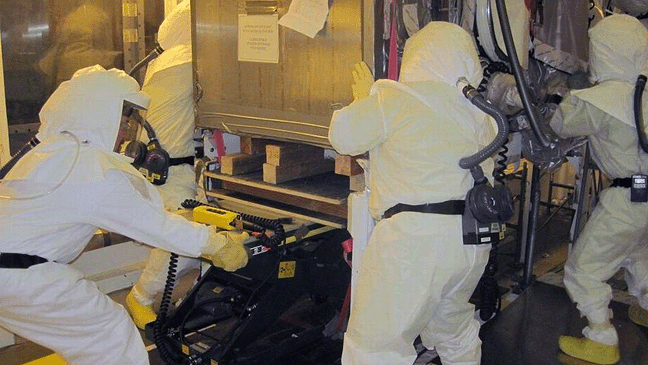
after he and a local journalist conducted a survey on surrounding farms in 1985, Bailie began to have doubts. Nearly all the families living nearby suffered from cancer, birth defects, or thyroid disease, he says — health issues that could be attributed to radiation exposure. This led to the area being coined “the death mile” by some journalists at the time.
documents that were declassified in the late 1980s showed that Hanford had contaminated the surrounding farmland, air, farm animals, and crops with unsafe levels of radiation for years.
June 18, 2023 , Mainichi, Japan
HANFORD, Washington (Kyodo) — As cleanup efforts continue in Washington state at a decommissioned U.S. nuclear facility that played a crucial role in the country’s acquisition of the atom bomb in World War II, questions linger over whether the site has caused serious health issues for workers and local residents.
Construction began on the facility, known as the Hanford site, eighty years ago in 1943 and involved the building of the world’s first large-scale nuclear reactor.
Through the Manhattan Project, a U.S. government research and development program for building nuclear weapons, the site’s B reactor, erected on a 580-square-mile stretch of land next to the Columbia River in south-central Washington, produced the nuclear material for one of the only two atomic bombs ever used in an armed conflict.
Codenamed “Fat Man,” the device was detonated over the city of Nagasaki in southwestern Japan on Aug. 9, 1945, effectively ending Japan’s involvement in the conflict.
The 6.2 kilograms of plutonium contained in the nuclear device released energy equivalent to 21 kilotons of TNT, taking the lives of tens of thousands of innocent people while subjecting the surrounding area to deadly radiation, killing countless more.
But citizens of Nagasaki may not be the only victims of Hanford’s plutonium production. During its decades of operation, U.S. residents living near and mainly downwind of the complex experienced severe health effects that they believe stem from the site’s activities.
One such resident is Tom Bailie, 76, who grew up and still resides just miles downwind from Hanford in a farming community.
Reflecting on his upbringing, Bailie recalled during an interview in April that no one ever thought the site at Hanford would cause harm to “patriotic American citizens.”
But, after he and a local journalist conducted a survey on surrounding farms in 1985, Bailie began to have doubts. Nearly all the families living nearby suffered from cancer, birth defects, or thyroid disease, he says — health issues that could be attributed to radiation exposure. This led to the area being coined “the death mile” by some journalists at the time.
Bailie said that his wife, father, and three uncles all had cancer before passing away, while his two sisters also have cancer and take thyroid medicine. The year before Bailie was born, his mother had a stillbirth. Bailie himself was born with birth defects and was on an iron lung when he was 4 years old. He now requires medication for a thyroid problem.
Bailie vividly remembers encounters with “men in space suits,” equipped with dosimeters to measure radiation levels, walking on his farm. The men would collect soil samples and even ask the farmers to send the heads and feet of ducks and rabbits they would kill while hunting to Hanford for analysis.
When he began speaking out about the hardships and health problems that he attributed to the Hanford site, many people from the community dismissed him as “nuts” or “crazy.” Some even mockingly referred to him as the “glow-in-the-dark farmer.”
But documents that were declassified in the late 1980s showed that Hanford had contaminated the surrounding farmland, air, farm animals, and crops with unsafe levels of radiation for years…………………….
Before being decommissioned in 1989, Hanford produced around 74 tons of plutonium, nearly two-thirds of all the plutonium produced for government purposes in the United States. One of the consequences of the site’s work was massive amounts of contamination and dangerous leftover byproducts, most of which remain on the site today.
Currently, 177 underground tanks containing 56 million gallons of highly radioactive waste, contaminated buildings, and cocooned reactors still exist there, alongside multiple other buried waste sites.
The same year Hanford was decommissioned, cleanup efforts began for dealing with the dangerous byproducts left over from the production of plutonium. Efforts to clean the area of waste are anticipated to be astronomically costly and time-consuming.
According to Hanford’s latest estimate, released in 2022, the total cost of the cleanup is projected to range from $319.6 billion to $660 billion, with a completion date not expected until at least fiscal 2078.
But Tom Carpenter, 66, former head of Hanford Challenge, a nonprofit organization dedicated to ensuring the responsible and safe clearing of the Hanford site, argues that using the word “cleanup” is misleading.
Carpenter says complete eradication of contamination from thousands of acres is impossible, and not the goal of the cleanup process. He asserts that the best that can be achieved at Hanford is “the mitigation of some risks.”
Hanford Challenge’s primary goal, he says, is to ensure authorities prioritize a swift cleanup and make sure that no corners are cut, nor workers put in unnecessary danger. This includes fighting for those who are currently working on the site.
Many workers involved in the cleanup of the Hanford site continue to be exposed to toxic chemicals, vapors, and radioactive materials, resulting in debilitating health conditions.
A recent survey of the workers by Washington state revealed more than 50 percent of them had been exposed to radioactive or toxic chemicals. Workers exposed to these dangerous materials and vapors have developed beryllium disease, cancers, organ damage, and occupational dementia.
Until recently, these workers had to prove that their health issues were directly caused by their work at the Hanford site to receive assistance with their medical expenses.
According to former worker and Hanford Challenge director Jim Millbauer, 65, proving this was extremely difficult, costly, time-consuming, and often fruitless, as most occupational illness claims were rejected.
But a recent law has changed this, presuming that any health effects suffered by workers who spend just eight hours working at Hanford are caused by working at the facility, making it easier for sick workers to get their treatment paid for. https://mainichi.jp/english/articles/20230616/p2g/00m/0in/069000c
Silent Danger: Hidden Link Discovered Between Low-Dose Radiation and Heart Disease
By COLUMBIA UNIVERSITY IRVING MEDICAL CENTER JUNE 16, 2023
According to a new study by a global team of researchers, individuals exposed to small amounts of ionizing radiation may experience a slight increase in their lifetime risk of developing heart disease.
“The study suggests that radiation exposure, across a range of doses, may be related to an increased risk of not just cancer, as has been previously appreciated, but also of cardiovascular diseases,” says Andrew Einstein, MD, Ph.D., professor of medicine at Columbia University Vagelos College of Physicians and Surgeons and one of the study’s senior authors.
“It should not steer people away from receiving radiation if necessary—in fact many medical uses of radiation are lifesaving—but it underscores the importance of ensuring that radiation is used appropriately and kept as low as reasonably achievable.”
It’s well known that exposure to high doses of radiation, from cancer therapy for example, can damage the heart. But firm evidence linking heart disease with low-dose radiation—encountered by workers in the nuclear industry or from diagnostic medical imaging—is less clear.
The researchers used data from 93 studies covering all ranges of radiation exposures to find a relationship between dose and heart disease……………………….
“The effect of lower doses of radiation on the heart and blood vessels may have been underestimated in the past,” Einstein says. “Our new study suggests that guidelines and standards for the protection of workers exposed to radiation should be reconsidered, and efforts to ensure optimal radiation protection of patients should be redoubled.”
Reference: “Ionising radiation and cardiovascular disease: systematic review and meta-analysis” by Mark P Little, Tamara V Azizova, David B Richardson, Soile Tapio, Marie-Odile Bernier, Michaela Kreuzer, Francis A Cucinotta, Dimitry Bazyka, Vadim Chumak, Victor K Ivanov, Lene H S Veiga, Alicia Livinski, Kossi Abalo, Lydia B Zablotska, Andrew J Einstein and Nobuyuki Hamada, 8 March 2023, The BMJ.
DOI: 10.1136/bmj-2022-072924
The study was funded by the National Cancer Institute. https://scitechdaily.com/silent-danger-hidden-link-discovered-between-low-dose-radiation-and-heart-disease/
As Japan prepares to release Fukushima nuclear waste water – a reminder that countries can ban goods with radiation contamination risks
Banning goods with radiation contamination risks can pressure Tokyo, say analysts, as Japan prepares to start nuclear-contaminated wastewater dumping trials
By Wan HengyiPublished: Jun 11, 2023
2
Japan’s unilateral decision to discharge nuclear-contaminated wastewater into the sea disregards international law and public opinion, said analysts on Sunday, one day before Tokyo Electric Power Company (TEPCO), the operator of the crippled Fukushima Daiichi nuclear power plant, starts trial operations of equipment for dumping nuclear-contaminated wastewater into the Pacific Ocean.
Some analysts believe that resisting goods with potential nuclear radiation contamination risks can be extended to other regions apart from Fukushima in Japan and products beyond seafood in accordance with the relevant import regulations, which would exert greater pressure on the Japanese government by consumers.
Fukushima media reported that the trial operation will be carried out on Monday by mixing fresh water and seawater, and will take 10 days to two weeks to check whether the specified amount of water can flow to the sea and whether the shutoff device can shut off water in the event of an emergency.
Japan’s unilateral discharge of nuclear nuclear-contaminated wastewater is not in line with the spirit of the UN Convention on the Law of the Sea, said Tse Chin-wan, secretary for the Environment and Ecology of China’s Hong Kong Special Administrative Region, on Thursday, adding that imports of seafood from Fukushima and nearby high-risk areas will be banned in Hong Kong at once if Japan starts to dump nuclear-contaminated water into the Pacific Ocean.
Seafood from outside high-risk areas in Japan would also need to provide radiation test reports before it can be sold in local markets in Hong Kong, he added.
According to a report issued by the plant’s operator Tokyo Electric Power Company (TEPCO) on June 5, the radioactive elements in marine fish caught in the harbor of the Fukushima Daiichi Nuclear Power Plant far exceeded safety levels for human consumption, with the content of Cs-137 reaching 180 times that of the standard maximum stipulated in Japan’s food safety law.
South Korea also announced it would maintain a ban on imports of seafood from Japan’s Fukushima Prefecture, according to reports from Nikkei Asia on April 30. The country has for the past decade banned imports of food from the area due to concerns over food safety and fears of radiation contamination following the 2011 nuclear disaster.
In 2019, South Korea won the bulk of its appeal in a dispute at the World Trade Organization over import bans and testing requirements it had imposed on Japanese seafood in the wake of the Fukushima nuclear disaster.
The case of South Korea serves as a valuable reference for China and other countries, as it demonstrates that a resistance against potentially radiation-contaminated products is not limited to seafood from Fukushima alone, Chang Yen-chiang, director of the Yellow Sea and Bohai Sea Research Institute of Dalian Maritime University, told the Global Times on Sunday………………………………………… more https://www.globaltimes.cn/page/202306/1292369.shtml
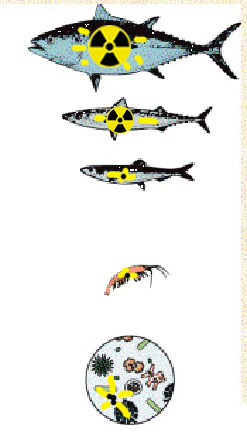
Content of radioactive element in fish at Fukushima’s Nuclear Power Plant 180 times of safe limit
CGTN 6 June 23
The radioactive elements in the marine fish caught in the harbor of the Fukushima Daiichi Nuclear Power Plant in Japan far exceed safety levels for human consumption, according to a report issued by the plant’s operator Tokyo Electric Power Company (TEPCO) on Monday. In particular, the data released show that the content of Cs-137, a radioactive element that is a common byproduct in nuclear reactors, is 180 times that of the standard maximum stipulated in Japan’s food safety law.
CGTN downloaded the English version of the report available on TEPCO’s official website. According to the data, the sampled black rockfish contains the radioactive element Cs-137 with a content of 18,000 becquerels per kilogram. Data available on the website of Fukushima Revitalization Station run by Japan’s Fukushima prefectural government shows that Japan’s current limit of radioactive cesium in general food which contains fish is set at 100 becquerels per kilogram.
According to the report, the location where the sampled fish was caught is at the port area of Units 1 to 4 of the Fukushima Daiichi Nuclear Power Plant, where a breakwater is built and nuclear wastewater with a high concentration of radioactive substances flows in. TEPCO said it will set up multiple protective nets to prevent fish from swimming out of the harbor.
A Chinese news website sina.com.cn quoted experts noting that the radioactive elements in the nuclear wastewater could penetrate into fish, shrimp and other seafood, and later accumulate in the human body after consumption. ……………………
TEPCO on Monday started sending seawater into an underwater tunnel to be diluted before releasing the nuclear wastewater into the ocean. The company said that all facilities for the water release system are expected to be completed by the end of this month.
Local fishing communities say their businesses and livelihoods will suffer still more damage. Neighboring countries such as China and South Korea and Pacific Island nations have raised safety concerns. Environmental groups including Friends of the Earth oppose the release. https://news.cgtn.com/news/2023-06-06/Radioactive-element-in-fish-at-Fukushima-plant-180-times-safe-limit-1kpOlJEH9xm/index.html
Energy Northwest nuclear plant failed to properly measure workers’ radioactive exposure, report says
KPVI, Annette Cary Tri-City Herald, Jun 7, 2023
Energy Northwest failed to correctly measure the exposure of workers who inhaled or ingested radioactive material during an incident at the Northwest’s only commercial nuclear power plant, said the Nuclear Regulatory Commission.
On the night shift during the spring refueling and maintenance outage two years ago, some workers received unexpected and significant exposure to radiation, according to the initial report by the NRC.
The NRC issued a “white finding” last week and said it is considering issuing a second white finding after workers were exposed to radiation May 28, 2021, at Energy Northwest’s Columbia Generating Station nuclear power plant, according to documents made public Monday.
A white finding, the second lowest on NRC’s four-step color scale, has low to moderate safety significance and can lead to an additional NRC inspection to make sure issues have been corrected.
The notice of the first white finding was for three violations in the incident — failure to the control the concentration of radiation material in the air, failure to control the activities in a high radiation area and failure to survey areas to evaluate the extent of radiation levels.
But while investigating the incident at the plant near Richland, Wash., the NRC also began questioning whether Energy Northwest correctly measured the internal radioactive exposure of the workers…………………………………………………………………….
Radiation readings ‘off-scale high’
The updated NRC information says that as the two pipefitters left the heat exchanger room, they were frisked by radiation protection staff “and the instrument readings went off-scale high.”
They were then escorted to personnel contamination monitors, which alarmed, indicating there was radioactive material on or in the workers.
After multiple showers and scans on the personnel contamination monitors, Energy Northwest confirmed they had internal uptakes.
The two workers were sent to initiate the whole-body count process, with initial counts confirming they had inhaled or ingested cobalt 58 and cobalt 60 radionuclides.
However, there was indication from checking the pipe that was cut that plutonium 239 and plutonium 240 contamination was possible in the incident, but that information was not used to assess workers.
Energy Northwest’s procedures for internal dose assessment were incomplete, failed to provide clear directions and did not fully address all radionuclides that could have contaminated the workers, according to the NRC report.
Dose is a measure of the amount of radiation absorbed that accounts for the type of radiation and its effects on particular organs.
The two pipefitters had their urine tested only once and no fecal samples were collected.
“In conclusion, not only did the licensee (Energy Northwest) fail to implement the most appropriate sampling methods to detect the level of hard-to-detect radionuclides from the intake, including alpha emitters, but they did not take any additional samples to suitably establish trends and elimination rates of these radionuclides,” according to the most recent NRC inspection report.
Energy Northwest also failed to effectively take air samples in the workers’ breathing space during the incident, the NRC said.
Not only were procedures inadequate, but Energy Northwest did not have the equipment or personnel available to address the level of contamination and assess the dose within workers bodies, according to the NRC report………………… https://www.kpvi.com/news/national_news/nw-nuclear-plant-failed-to-properly-measure-workers-radioactive-exposure-report-says/article_820def90-c6b4-581a-a989-708339c2c32e.html
1 This Month



Shut down the radiation-damaged Heysham nuclear reactors now
To see nuclear-related stories in greater depth and intensity – go to https://nuclearinformation.wordpress.com

Say No to NASA’s Reckless Nuclear Reactor on the Moon
Say No to NASA’s Reckless Nuclear Reactor on the Moon
-
Archives
- October 2026 (256)
- September 2026 (339)
- August 2026 (330)
- July 2026 (355)
- June 2026 (287)
- May 2026 (306)
- April 2026 (356)
- March 2026 (251)
- February 2026 (267)
- January 2026 (308)
- December 2025 (358)
- November 2025 (359)
-
Categories
- 1
- 1 NUCLEAR ISSUES
- business and costs
- climate change
- culture and arts
- ENERGY
- environment
- health
- history
- indigenous issues
- Legal
- marketing of nuclear
- media
- opposition to nuclear
- PERSONAL STORIES
- politics
- politics international
- Religion and ethics
- safety
- secrets,lies and civil liberties
- spinbuster
- technology
- Uranium
- wastes
- weapons and war
- Women
- 2 WORLD
- ACTION
- AFRICA
- Atrocities
- AUSTRALIA
- Christina's notes
- Christina's themes
- culture and arts
- Events
- Fuk 2022
- Fuk 2023
- Fukushima 2017
- Fukushima 2018
- fukushima 2019
- Fukushima 2020
- Fukushima 2021
- general
- global warming
- Humour (God we need it)
- Nuclear
- RARE EARTHS
- Reference
- resources – print
- Resources -audiovicual
- Weekly Newsletter
- World
- World Nuclear
- YouTube
-
RSS
Entries RSS
Comments RSS

