Radiation exposure is of growing concern in medicine.

 Intermountain Healthcare alerts patients to cumulative radiation exposure The cancer risk from a single CT scan or chest X-ray is low, but radiation exposure is of growing concern in medicine. By Kirsten Stewart The Salt Lake Tribune, 22 May 13, Roughly 25 patients a day are wheeled into Intermountain Medical Center’s “cath lab” for CT scans to look for calcium buildup in their coronary arteries.
Coronary artery scans — the newest addition to radiologists’ growing arsenal of diagnostic tools — can aid doctors in diagnosing heart problems early. But they expose patients to 50 to 150 times the radiation of a chest X-ray, raising their risk for developing cancer later in life. “We want to make sure patients are getting tests only for the right reasons,” said cardiologist Donald Lappe at a new conference Wednesday touting a 9-month-old initiative aimed at ensuring just that.
Since August 2012 Intermountain Heathcare’s 168 clinics and 22 hospitals have been tracking patients’ cumulative radiation exposure from high-dose tests: CT scans, nuclear medicine scans and interventional radiology exams. Later the hospital chain hopes to also track x-rays, mammograms and other screens.
Generally the cancer risk from a single test is low, but radiation exposure is of growing concern in medicine.
The U.S. population’s exposure to ionizing radiation has nearly doubled over the past two decades, largely due to medical tests, according to the U.S. Food and Drug Administration, which requires all hospitals to disclose radiation doses to patients upon request…….http://www.sltrib.com/sltrib/news/56343948-78/radiation-exposure-patients-risk.html.csp
Radiation therapy may be unnecessary for older breast cancer patients
Can Older Early-Stage Breast Cancer Patients Skip Radiation? Medscape Today, Kate Johnson May 22, 2013 There is no benefit in adding radiation to tamoxifen therapy in women aged 70 years or older after lumpectomy for early-stage breast cancer, according to extended, long-term results of the Cancer and Leukemia Group B (CALGB) 9343 trial.
“Irradiation adds no significant benefit in terms of survival, time to distant metastasis, or ultimate breast preservation,” noted author Kevin Hughes, MD, from Harvard Medical School, and colleagues in an article published online ahead of print in theJournal of Clinical Oncology.
Median follow-up for the trial is now 12.6 years, and the 10-year results back up the trial’s previous 5-year data.
As previously reported by Medscape Medical News, those results prompted the National Comprehensive Cancer Network (NCCN) to adjust its treatment guidelines, so that it no longer recommends radiation therapy after lumpectomy in older women with estrogen receptor (ER)–positive early breast cancer who are receiving endocrine therapy.
However, despite this, the authors note that their initial findings had “little impact” on clinical practice, “with the use of irradiation only slightly diminishing in this population.”…. http://www.medscape.com/viewarticle/804584
New research on depleted uranium, cancer, birth defects in Iraq

 Scientists detect high levels of uranium contamination that increases cancers, birth defects in Iraq http://www.news-medical.net/news/20130521/Scientists-detect-high-levels-of-uranium-contamination-that-increases-cancers-birth-defects-in-Iraq.aspx May 21, 2013 Ten years after the Iraq war of 2003 a team of scientists based in Mosul, northern Iraq, have detected high levels of uranium contamination in soil samples at three sites in the province of Nineveh which, coupled with dramatically increasing rates of childhood cancers and birth defects at local hospitals, highlight the ongoing legacy of modern warfare to civilians in conflict zones. The radioactive element uranium is widely dispersed throughout the earth’s crust and is much sought after as a fuel for nuclear power plants and for use in weapons. Depleted uranium (DU), commonly used in modern munitions such as defensive armour plating and armour-piercing projectiles, is 40 per cent less radioactive than natural uranium, but remains a significant and controversial danger to human health.
The World Health Organisation (WHO) sets a maximum uranium exposure of 1 millisievert (mSv) per year for the general public, but environmental scientists at the University of Mosul and the Institute of Forest Ecology, Universitaet für Bodenkultur (BOKU), Vienna, Austria, led by Riyad Abdullah Fathi have measured significant levels of uranium in soil samples from three sites in the province of Nineveh in the north of Iraq. Writing in the journal Medicine, Conflict and Survival, Fathi and colleagues link their findings with dramatic increases in cancers reported to the Mosul Cancer Registry and the Iraqi national cancer registry (which began collecting data in 1975).
They conclude that:
“The Gulf Wars of 1991 and 2003 left a legacy of pollution with DU in many regions of Iraq. The effects of these munitions may be affecting the general health of Iraqi citizens, manifesting in an increase in cancers and birth defects.”
They also warn that, even though some of the contamination measured in this study is specifically linked to known sites, it can be easily spread widely in the air, soil and water, particularly as dust in windstorms.
Their report “Environmental pollution by depleted uranium in Iraq with special reference to Mosul and possible effects on cancer and birth defect rates” begins with a literature review that collates health-related data from a range of sources, including a report by the WHO (in 2003), which states that childhood cancers – particularly leukaemia – are ten times higher in Iraq than in other industrialised countries. Continue reading
Safecast’s revolution in radiation data collection
Safecast’s software and devices are all open source, and anyone can use the data. Franken says it’s being used by researchers around the world and even by the government in some Japanese cities.
you can tie specific medical symptoms to radiation levels.”
In Japan, Citizen Radiation-Tracking Project Goes Big Time, PRI’s The World, BY CATHERINE WINTER ⋅ MAY 21, 2013 ⋅ON A SUNNY SPRING MORNING JUST OUTSIDE TOKYO, JOE MOROSS HOOKS A RADIATION DETECTOR OUTSIDE THE BACK WINDOW OF A LITTLE RED CAR. HE LOOKS AT A MAP OF THE AREA ON HIS LAPTOP COMPUTER, TRYING TO FIND A ROUTE HE HASN’T DRIVEN BEFORE, SO HE CAN TAKE NEW RADIATION READINGS.
“We want to cover every street so people who look at our maps can drill down and zoom in and find out what the measurement is right in front of their house,” Moross says.
Moross is taking measurements for Safecast. Since the nuclear accident at Fukushima Daichi two years ago, volunteers like him have been driving around Japan, testing radiation and adding their readings to online maps.
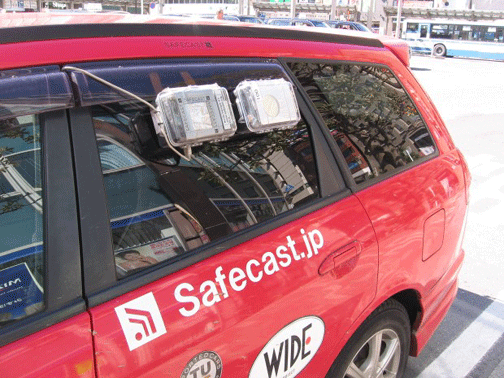
When The World last checked in on Safecast, in May of 2011, the group had just formed and had posted a handful of radiation measurements.
Now, Safecast volunteers have taken close to 10 million separate readings……. Continue reading
System for tracking patients’ medical radiation
New Tracking of a Patient’s Radiation Exposure , WSJ, By LAURA LANDRO, 21 May 13, During a four-week hospital stay, 29-year-old Josh Page had so many CT scans that he lost track, kidding with his doctor about how much radiation he was exposed to—though he admits he had “no clue.” Now, Intermountain Healthcare, where he was treated for an inflammation of the pancreas and underwent surgery in February, is keeping track for him.
The Salt Lake City-based nonprofit group of 22 hospitals and 185 clinics is launching the first major system of its kind to measure and report patients’ cumulative medical radiation exposure from tests that deliver the highest amount of radiation. This includes CT scans, nuclear medicine scans and interventional radiology exams for the heart. In addition to educating doctors and patients about the risks and benefits of medical radiation, Intermountain will allow them to access their exposure data via its electronic health record.
While the benefits of tests and procedures usually outweigh the slightly increased cancer risk from exposure due to radiation, “the risks should be considered before these imaging tests are performed,” says Keith White, medical director of Intermountain’s Imaging Services. This is particularly true for younger patients, who have a higher risk because they live long enough to see long-term effects…… Federal data shows that in 2006, Americans received seven times more radiation exposure than in the 1980s, Continue reading
Fishermen testing fish for radiation, in South Fukushima waters
Fishermen net fish in Fukushima waters to measure radiation levels
http://ajw.asahi.com/article/0311disaster/recovery/AJ201305210005 May 21, 2013 By HIROSHI KAWAI/ Staff Writer
A fishing vessel from Fukushima Prefecture caught fish in waters south
of the crippled Fukushima No. 1 nuclear power plant on May 20 to test
them for levels of radiation contamination, as local fishing
cooperatives hope to soon resume fishing in the area.
The No. 12 Akira Maru belonging to the Iwaki fishermen’s cooperative
trawled plenty of flatfish and other species.
Due to ocean currents, the concentration of radioactive materials has
been found to be higher in waters to the south of the plant, than to
the north.
Of the Akira Maru’s catch, nine species of fish were kept as samples
to measure radiation levels in them. The fishermen tested about 10
kilograms of each type and threw the rest back into the sea.
“It feels hollow to have to throw fish back into the sea, considering
that they could fetch high prices,” Captain Akiyoshi Abe said.
Before the nuclear accident triggered by the Great East Japan
Earthquake and tsunami in March 2011, waters off the prefecture were
known as a good fishing area where more than 100 species could be
caught.
Many local fisheries cooperatives have had to suspend operations since
the nuclear accident.
Japanese authorities ignore radiation levels in Tokyo river eels
 Local governments ignore cesium detection in Tokyo river eels, Asahi Shimbun May 17, 2013 By YUSUKE FUKUI/ Staff Writer Tokyo and Chiba local governments took no action for nearly two months after being informed that radioactive cesium had been detected in eels caught in a boundary river between the two prefectures.
Officials of both governments said no independent study was conducted because the eels were not caught by professional fishermen intending to sell the catch.
The detection of the cesium was also not publicized. On March 9, a 47-year-old self-employed woman caught an eel from the Edogawa river in Tokyo’s Katsushika Ward. Concerned about reports that cesium had accumulated downstream in the river, she sent the eel to Hideo Yamazaki, a professor of environmental analysis at Kinki University in Osaka Prefecture. Using a germanium semiconductor detector, Yamazaki found that the eel had 147.5 becquerels of radioactive cesium per kilogram, higher than the central government standard of 100 becquerels.
Yamazaki reported his finding to the Fisheries Agency in late March because he felt there was a need for an official investigation to back up his finding as well as further studies to look into the effects on other fish.
Although the Fisheries Agency informed both the Tokyo metropolitan and Chiba prefectural governments about the finding, neither had conducted an official study as of May 16.
An official with the Tokyo metropolitan government’s fisheries division said, “Basically, only fish that enter the distribution network is subject to studies. The eel fishing season also does not start until summer.”….. Yamazaki conducted further studies on four eels caught by the same woman in April and May in the Edogawa river. The eels had cesium levels between 97.4 becquerels and 129.6 becquerels per kilogram, with three of the eels having cesium levels exceeding the central government standard….. http://ajw.asahi.com/article/behind_news/social_affairs/AJ201305170079
Fukushima to California – the path of nuclear radiation along Latitude 40
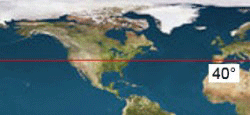 Study: Concentrated Fukushima radioactive plume staying on narrow path toward U.S. — Moving with surface water along 40 N — Same latitude as Northern California(MAP) http://enenews.com/study-concentrated-fukushima-radioactive-plume-staying-along-narrow-path-moving-surface-water-along-40-same-latitude-northern-california-map
Title: Surface pathway of radioactive plume of TEPCO Fukushima NPP1 released 134Cs and 137Cs
Source: Biogeosciences
Authors: M. Aoyama, M. Uematsu, D. Tsumune, and Y. Hamajima
Date: May 7, 2013
[…] The main body of radioactive surface plume of which activity exceeded 10 Bq m−3 travelled along 40° N and reached the International Date Line on March 2012, one year after the accident. A distinct feature of the radioactive plume was that it stayed confined along 40° N when the plume reached the International Date Line. […]
A distinct feature of the radioactive plume was that it stayed confined along 40 N when the plume reached the International Date Line, as stated in Sect. 3.2. The radioactive plume travelled 1800 km (from 160 E to 178 E) for 270 days (9 months) (Fig. 5); therefore, an average zonal speed (u) of the surface radioactive plume was calculated to be about 8 cm s−1 which was consistent with the speed of the reported surface current of 4–16 cm s−1 in the region (Maximenko et al., 2009). […]
We can also assume that the Fukushima radioactive plume moved with surface water […]
Full study here
Radiation exposure led to blindness in Kayelekera uranium mine worker
 Man loses sight due to Kayelekera radiation, SUNDAY TIMES, 19 MAY 2013 KAREN MSISKA It is all doom and gloom for a Kayelekera Uranium Mine ex-employee who has lost his sight, his job and any means of eking out a leaving to fend for his extended family.
On July 7, 2010, Abraham Siliwonde started working as a labourer at [Australian] Paladin Africa’s Kayelekera Mine in Karonga bubbling with hope that he would use the remuneration to improve living standards in his household.
But less than three years later, the 31-year-old, along with his six children and five wards from his deceased relatives, is a mere dependent on a small banana business his wife conducts at Karonga town market.
He lost sight in July 2012 and medical examinations have linked his condition, uveitis or inflammation of the uvea – the part of the eye that contains the iris and ciliary body and choroid – to exposure to radioactive chemicals.
Uranium ore is known to be highly radioactive.”In February 2012, I was moved to spotting. This is where one stands and guides the dumpers on where to drop the uranium ore from the pit as it is set to get into the crusher, the first point in uranium processing,” said Siliwonde on Friday.
“I was guiding dumpers carrying high grade uranium ore; the other grades are low and medium. I could feel intense heat from lumps of uranium ore and the next day I would be passing yellowish urine and feeling malarial symptoms.” He said regardless of the gear one puts on while at spotting, they feel the heat being emitted by the uranium ore, stressing “the situation is worsened by supervisors who keep people there longer than more productive.”
He said he was drafted into driving dumpers in January 2012 but by July, he had lost his vision and instead of working, he was a continuous visitor to health facilities seeking to restore his vision. ”After a series of visits to the mine clinic at Kayelekera, I was referred to Karonga district hospital where I was further referred to Mzuzu central hospital on 30 November 2012,” he added.
“At Mzuzu Central Hospital, they asked whether I had an eye operation before because they said my eyes had cracks. I underwent strenuous tests but after telling them the environment I was working in, they identified exposure to radiation as the possible cause and referred me to Kamuzu Central Hospital.”
According to medical documents The Sunday Times has seen, Siliwonde’s reference to Kamuzu Central Hospital’s Lions Sight First Eye Hospital was “to determine if patient’s condition may indeed be due to uranium dust exposure.” His situation was not improving even with spectacles. A reference report dated April 15, 2013 indicates that Siliwonde’s acuity (sharpness of vision) for both eyes had slightly improved to 6/36 from 6/60.
A report signed by Dr J Msosa, Chief Ophthalmologist at Lions Sight First Eye hospital, confirms exposure to radiation as the possible cause.
Part of the report reads: “The vitritis (posterior uveitis) may indeed be due to exposure to radiation. It is well known that all radioactive substances can cause radiation retinopathy which appears like posterior uveitis………
“The only source of income is a small banana business my wife conducts. It’s a pity that the situation at Kayelekera is not closely monitored. A lot of people are suffering because they are exposed to radioactive dust blowing from the pit area since the surface is not kept wet as per agreement.”
However, Paladin officials pushed the bucket to one of their contractors. In response to an emailed questionnaire, Paladin Energy Limited’s General Manager – International Affairs, Greg Walker, said Siliwonde was employed by one of their contractors at the mine. He added that the issue has not been brought to Paladin’s attention……http://www.bnltimes.com/index.php/sunday-times/headlines/national/15108-man-loses-sight-due-to-kayelekera-radiation
The Japan Nuclear Crowd Map reveals local radiation levels
ECS researchers at Southampton University develop new tool to provide radiation monitoring in Japan http://www.ecs.soton.ac.uk/news/4237 17 May 13, People living in Japan after the Fukushima nuclear disaster can find out the radiation level in their area thanks a new tool designed by a team of researchers from the ECS research group Agents, Interaction and Complexity Group (AIC). Continue reading
Good news- radiation type scanners replaced by safe “millimetre wave” airport scanners
 The reporting here didn’t show much knowledge about radiation, more’s the pity. Because this is a good news item. The new “millimetre wave” scanners, (at left) using sound waves, do not pose the radiation danger that did exist in using the “backscatter” method of airport scanning.
A pity that the mainstream media does not seem to bother informig itself, or the public, about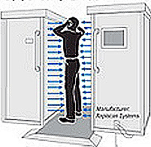 the differences between types of radiation. A great pity, because ionising radiation [as in ‘backscatter’ – at right) is a proven cause of cell damage – leading to mutations, cancer, other diseases, birth deformities, and inherited genetic instability. Christina Macpherson
 Video New Airport Scanners Reduce Radiation Risk, TSA Says KTLA by Micah Ohlman. 17 May 13 “…..The TSA says that the new millimeter-wave scanners can not only catch the bad guys better, but the radiation emitted is well below safety standards.
So what can you expect? Ticket holders still have to “assume the position” like the old backscatter machines.
But the new machines don’t use X-ray, but rather radio-frequency waves that are considered safer….”
THE ONGOING THREAT OF FUKUSHIMA FALLOUT
 WHAT ABOUT THE ONGOING THREAT OF FUKUSHIMA FALLOUT ?, Veterans Today, 14 May 13 The Washington Blog posed that same question on April 13, 2013 ~ Is Fukushima Leaking … Or Are the Reactors Wholly Uncontained?
“You may have heard that Tepco ~ the operator of the stricken Fukushima nuclear power plants ~ announced alarge leak of radioactive water….. You may have heard that the cooling system in the spent fuel pools at Fukushima has failed for a second time in a month.
This is newsworthy stuff … but completely misses the big picture. Associated Press notes: ” Experts suspect a continuous leak into the ocean through an underground water system, citing high levels of contamination in fish caught in waters just off the plant. (Tepco graphics of the Fukushima plants even appear to show water directly flowing from the plant to the ocean. And see this.) In fact, Japanese experts say that Fukushima is currently releasing up to 93 billion becquerels of radioactive cesium into the ocean each day. ”
How much radiation is that? Continue reading
Geiger counter shows higher radiation in ground, less in the air – Japan
Top Talk Show: Ever seen those Geiger counter videos from Japan? Fascinating stuff — “Really dangerous levels and all these people are living there“ (VIDEO)http://enenews.com/top-talk-show-you-ever-seen-those-geiger-counter-videos-from-japan-fascinating-stuff-really-dangerous-levels-and-all-these-people-are-living-there-video
Title: Bert Kreischer « Joe Rogan
Source: Joe Rogan Experience
Date: May 13, 2013
*Warning: Not safe for work
At 1:58:15 in
Joe Rogan: You ever seen those Geiger counter videos? Really fascinating stuff.
There’s a completely different reading when you’re holding it up in the air as opposed when you put it down on the ground.
When it touches the ground — they show safe levels in the air — when they touch it down on the ground, this one guy on his Geiger counter, it’s going off man. It’s reaching these really dangerous levels and all these people are living there.
Watch the broadcast here
See also from today: Watch: Mystery black substance detected in Japan with extreme radioactivity levels — Over 170,000 CPM (VIDEO)
Sun’s ultraviolet radiation a threat to young eyes
A latest study by the Vision Council in the US found UV radiation was often recognised as the culprit for sunburns and skin cancer but most people did not realise its damaging impact on the eye. It said this left many vulnerable to short-term and long-term health problems such as photokeratitis, cataracts, age-related macular degeneration and cancer of the eye and surrounding skin.
The Council’s newly released 2013 study found that 40 per cent of US adults still did not wear sunglasses while outside. The study found 28.5 per cent did not wear sunglasses to protect their eyes from the sun, a figure that rose to 32.9 per cent for men but was lower among women.
It said: ‘Sadly, these unsafe habits are being passed on to younger generations. Over half of parents do not utilise sunglasses to protect their children’s eyes from UV exposure, opening the door for life-long damage.’
The Council advised that individuals could decrease their exposure by taking extra precautions between 10am and 4pm, when the sun is closest to the Earth and UV radiation is most intense. Researchers also warned recent studies showed the eyes receive double the amount of UV in the early morning and late afternoon.
It added that most contact lenses blocked UV rays, but since contact lenses did not cover the entire eye, protective sunwear was still necessary.
A case study was documented of CNN news anchor Anderson Cooper, who was left temporarily blinded with photokeratitis for nearly two days, as a result of UV reflected from open water. Ski slopes also presented this reflection risk, the Council added.
Further research on UV will be shared at a conference hosted by the European Sunglass Association (ESA) and the Vision Council following their merger deal last year. Coverage from the event, taking place on May 23 and 24 at the Marriott Praia D’el Rey in Portugal, will appear in Optician later this month.
The horror of the Hiroshima atomic bombing – nuclear effects, theme for June 19
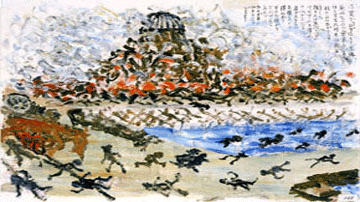 Who Will Drop the Next Nuclear Bomb? We ignore the ever-growing global arsenal of nuclear weapons at our peril. The Nation, Nick Turse May 13, 2013 “……..Nuclear Horror: Then and Now The first nuclear attack on a civilian population center, the U.S. strike on Hiroshima, left that city “uniformly and extensively devastated,” according to astudy carried out in the wake of the attacks by the U.S. Strategic Bombing Survey. “Practically the entire densely or moderately built-up portion of the city was leveled by blast and swept by fire… The surprise, the collapse of many buildings, and the conflagration contributed to an unprecedented casualty rate.” At the time, local health authorities reported that 60% of immediate deaths were due to flash or flame burns and medical investigators estimated that 15%-20% of the deaths were caused by radiation.
Witnesses “stated that people who were in the open directly under the explosion of the bomb were so severely burned that the skin was charred dark brown or black and that they died within a few minutes or hours,” according to the 1946 report. “Among the survivors, the burned areas of the skin showed evidence of burns almost immediately after the explosion. At first there was marked redness, and other evidence of thermal burns appeared within the next few minutes or hours.”

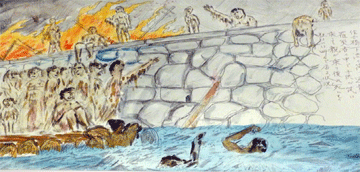 Many victims kept their arms outstretched because it was too painful to allow them to hang at their sides and rub against their bodies. One survivor recalled seeing victims “with both arms so severely burned that all the skin was hanging from their arms down to their nails, and others having faces swollen like bread, losing their eyesight. It was like ghosts walking in procession… Some jumped into a river because of their serious burns. The river was filled with the wounded and blood.”…… http://www.thenation.com/article/174295/who-will-drop-next-nuclear-bomb#
1 This Month



19 November – Webinar – The Reality of Reprocessing
Time: 11:00 AM Pacific Time (US & Canada) / 2:00 PM Eastern / 7:00 PM UK / 8:00 PM CET
Register for the Zoom Event Here



Shut down the radiation-damaged Heysham nuclear reactors now
To see nuclear-related stories in greater depth and intensity – go to https://nuclearinformation.wordpress.com

Say No to NASA’s Reckless Nuclear Reactor on the Moon
Say No to NASA’s Reckless Nuclear Reactor on the Moon
-
Archives
- November 2026 (64)
- October 2026 (302)
- September 2026 (339)
- August 2026 (330)
- July 2026 (355)
- June 2026 (287)
- May 2026 (306)
- April 2026 (356)
- March 2026 (251)
- February 2026 (267)
- January 2026 (308)
- December 2025 (358)
-
Categories
- 1
- 1 NUCLEAR ISSUES
- business and costs
- climate change
- culture and arts
- ENERGY
- environment
- health
- history
- indigenous issues
- Legal
- marketing of nuclear
- media
- opposition to nuclear
- PERSONAL STORIES
- politics
- politics international
- Religion and ethics
- safety
- secrets,lies and civil liberties
- spinbuster
- technology
- Uranium
- wastes
- weapons and war
- Women
- 2 WORLD
- ACTION
- AFRICA
- Atrocities
- AUSTRALIA
- Christina's notes
- Christina's themes
- culture and arts
- Events
- Fuk 2022
- Fuk 2023
- Fukushima 2017
- Fukushima 2018
- fukushima 2019
- Fukushima 2020
- Fukushima 2021
- general
- global warming
- Humour (God we need it)
- Nuclear
- RARE EARTHS
- Reference
- resources – print
- Resources -audiovicual
- Weekly Newsletter
- World
- World Nuclear
- YouTube
-
RSS
Entries RSS
Comments RSS

