To help the nuclear industry, USA’s EPA to weaken radiation standards
 Green groups say EPA rules would weaken radiation standards The Hill, By Tim Devaney – 08/04/14 Green groups say the Environmental Protection Agency’s plan to weaken radiation standards at nuclear power plants would triple the likelihood of people in surrounding communities developing cancer.
The EPA said earlier this year it is considering new rules that green groups claim would actually weaken radiation standards, increasing public exposure by at least three times from the current level. The agency has not updated the standards since 1977. “The EPA admits that radiation is much more likely to cause cancer than was believed when the rule was originally written,” said Dan Hirsch, president of nuclear watchdog group Committee to Bridge the Gap. “So it’s perplexing that rather than tightening the rule, they’re proposing to weaken it further.”
The Committee to Bridge the Gap is one of about 70 environmental groups that sent EPA Administrator Gina McCarthy a letter over the weekend, asking her to reconsider the new rules as the public comment period closes and the agency enters the final stages of rule-making.
In addition to the environmental groups, more than 6,000 people have written to the EPA opposing the changes to the radiation standard, Hirsch said.
Under the EPA’s current standards, about one in every 500 people who are exposed to radiation develop cancer, but the new rules would increase the risk even more, Hirsch said.
“They’ve given a free pass to radiation,” Hirsch said……….
environmental groups speculate the Obama administration could be trying to replace coal production with nuclear energy, which they say is why the EPA is loosening radiation standards.
Environmental groups, however, express deep concerns about this plan.
“I would not say that nuclear is safer than coal, not at all,” Hirsch said.
“Choosing between coal and nuclear is a form of picking one’s poison, either carbon or plutonium,” he added. “But we believe that shouldn’t be the choice. The choice should be between dangerous pollutants and renewables, which are far safer.”
Renewable energies such as solar, wind and hydropower are all better replacements for coal than nuclear energy, Hirsch said. : http://thehill.com/regulation/214232-green-groups-say-epa-rules-would-weaken-radiation-standards#ixzz39gQFKYxi
Follow us: @thehill on Twitter | TheHill on Facebook
USA’s Nuclear – I mean – Environmental Protection Agency
Officially “Safe” RadiationBy William Boardman OpEd News 8/3/2014 More Radiation Exposure Won’t Hurt You, Says U.S. EPA
“Protection Standards for Nuclear Power Operations” means what?
The Environmental Protection Agency (EPA) of the United States is a full blown oxymoron when it comes to protecting U.S. residents from the danger of increased exposure to ionizing radiation. That’s the kind of radiation that comes from natural sources like Uranium and the sun, as well as unnatural sources like Uranium mines, nuclear weapons, and nuclear power plants (even when they haven’t melted down like Fukushima). The EPA is presently considering allowing everyone in the U.S. to be exposed to higher levels of ionizing radiation.
In 1977, the EPA established levels of radiation exposure “considered safe” for people by federal rule (in bureaucratese, “the regulation at 40 CFR part 190“). In the language of the rule, the 1977 safety standards were: “The standards [that] specify the levels below which normal operations of the uranium fuel cycle are determined to be environmentally acceptable.” In common parlance, this became the level “considered safe,” even though that’s very different from “environmentally acceptable.” “Acceptable by whom? The environment has no vote.
The phrase “considered safe” is key to the issue, since there is no “actually safe” level of radiation exposure. The planet was once naturally radioactive and lifeless. Life emerged only after Earth’s radiation levels decayed to the point where life became possible, in spite of a continuing level of natural “background radiation.” The reality is that there is no “safe” level of radiation exposure.
Is the EPA actually immersed in a protection racket?
The studied ambiguity of the proposal’s title — “Environmental Radiation Protection Standards for Nuclear Power Operations” — goes to the heart of the issue: who or what is really being protected, nuclear power operations?
Quite aware that it is perceived by some as placing the desires of the nuclear power industry above the safety needs of the population, the EPA begins its proposal for changing radiation limits with this defensive and apparently contradictory passage:
This Advance Notice of Proposed Rulemaking is being published to inform stakeholders, including federal and state entities, the nuclear industry, the public and any interested groups, that the Agency is reviewing the existing standards to determine how the regulation at 40 CFR part 190 should be updated and soliciting input on changes (if any) that should be made.
This action is not meant to be construed as an advocacy position either for or against nuclear power.
EPA wants to ensure that environmental protection standards are adequate for the foreseeable future for nuclear fuel cycle facilities. As far as the EPA is concerned, the uranium fuel cycle does not include Uranium mining, despite the serious environmental danger that process entails. Once the environmental and human degradation from Uranium mining has been done, the EPA begins regulating environmental protection from nuclear fuel cycle facilities, beginning with milling and ending with storage or reprocessing facilities for nuclear waste.
According to the agency itself, “EPA’s mission is to protect human health and the
environment. EPA sets limits on the amount of radiation that can be released into the environment.”
Radiation exposure is chronic, cumulative, and unhealthy
Given the pre-existing radiation load on the environment from natural sources, it’s not clear that there is any amount of radiation that can be released into the environment with safety. The EPA pretty much evades that question, since the straight forward answer for human health is: no amount. Besides, the semi-captured protection agency is just as much engaged in protecting economic health for certain industries as it is in protecting human health. This leads it to making formulations that manage to acknowledge human reality without actually supporting it:………
Lower radiation levels provide more environmental protection
Environmental organizations like the Nuclear Information and Resource Service (NIRS) are urging the EPA to lower radiation release standards, to “protect more, not less.” According to NIRS, regulation of nuclear power has a sorry history:……..
In 2005, the National Academy of Sciences addressed “safe” levels of radiation and concluded that there are none in any scientifically meaningful sense.
Humans are exposed to a basic, damaging level of ionizing radiation from multiple sources from gestation till death. This natural background radiation is at a relatively low level, but the risk from radiation is cumulative. Every additional exposure above background radiation adds to the risk. Some of these risks, like radiation treatment to ward off cancer, are widely accepted as reasonable trade-offs. The reasonableness of greater exposure from the nuclear fuel cycle and the uncontrolled growth of nuclear waste is not such an obviously beneficial trade-off. http://www.opednews.com/articles/Officially-Safe-Radiatio-by-William-Boardman-Cancer_Environment_People_Radiation-140803-863.html
How the victims of nuclear radiation simply become socially invisible
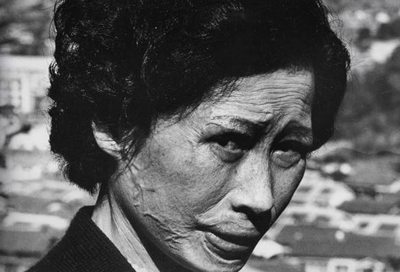 The Radiation That Makes People Invisible: A Global Hibakusha Perspective Robert Jacobs The Asia-Pacific Journal, Vol. 12, Issue 30, No. 1, August 3, 2014.

Radiation makes people invisible. We know that exposure to radiation can be deleterious to one’s health; can cause sickness and even death when received in high doses. But it does more. People who have been exposed to radiation, or even those who suspect that they have been exposed to radiation, including those who never experience radiation-related illnesses, may find that their lives are forever changed – that they have assumed a kind of second class citizenship. They may find that their relationships to their families, to their communities, to their hometowns, to their traditional diets and even traditional knowledge systems have been broken. They often spend the remainder of their lives wishing that they could go back, that things would become normal. They slowly realize that they have become expendable and that their government and even their society is no longer invested in their wellbeing.
As a historian of the social and cultural aspects of nuclear technologies, I have spent years working in radiation-affected communities around the world. Many of these people have experienced exposure to radiation from nuclear weapons testing, from nuclear weapons production, from nuclear power plant accidents, from nuclear power production or storage, or, like the people in the community where I live, Hiroshima, from being subjected to direct nuclear attack. For the last five years I have been working with Dr. Mick Broderick of Murdoch University in Perth, Australia on the Global Hibakusha Project. We have been working with victims in radiation-affected communities all around the world. Our research has revealed a powerful continuity to the experience of radiation exposure across a broad range of cultures, geographies, and populations. About half way between beginning this study and today the triple disaster at the Fukushima Daiichi nuclear power plant occurred in Japan. One of the most distressing things (among so many) since this crisis began is to hear people, often people in positions of political power and influence, say that the future for those affected by the nuclear disaster is uncertain. I wish that it were so, but actually, deep historical precedents suggest that the future for the people who lived near the Fukushima Daiichi meltdowns is predictable.
Here I will outline some continuities in the experiences of radiation-affected people. Most of the following also holds true for people who merely suspect that they have been exposed to radiation, even if they never suffer any health effects. Many have already become a part of the experiences of those affected by the Fukushima disaster. There are, of course, many differences and specificities to each community, but there is also profound continuity……..
Conclusion–Radiation makes people invisible. It makes them second class citizens who no longer have the expectation of being treated with dignity by their government, by those overseeing nuclear facilities near them, by the military and nuclear industry engaged in practices that expose people to radiation, and often by their new neighbors when they become refugees. People exposed to radiation often lose their homes, at times permanently, either through forced removal or through contamination that makes living in them dangerous. They lose their livelihoods, their diets, their communities, and their traditions. They can lose the knowledge base that connects them to their land and insures their wellbeing.
Radiation can cause health problems and death, and even when it doesn’t it can cause anxiety and uncertainty that can become crippling. Often those exposed to radiation are blamed for all of the problems that follow their exposures. After a nuclear disaster we count the victims in terms of those who died but they are only a small fraction of the people who are truly victimized by the event. Countless more suffer the destruction of their communities, their families, and their wellbeing. The full scale of devastation that a nuclear disaster wreaks is unknowable.
The lives of those exposed to radiation, or those in areas affected by radiation but uncertain about their exposure, will never be the same. As Natalia Manzurova, one of the “liquidators” at Chernobyl said in an interview published two months after the Fukushima triple meltdowns: “Their lives will be divided into two parts: before and after Fukushima. They’ll worry about their health and their children’s health. The government will probably say there was not that much radiation and that it didn’t harm them. And the government will probably not compensate them for all that they’ve lost. What they lost can’t be calculated.”10
(This article is expanded from an article originally published on the SimplyInfowebsite. Original can be seen here)
Robert Jacobs is an associate professor at the Hiroshima Peace Institute of Hiroshima City University in Japan and an Asia-Pacific Journal Associate. He is the author of The Dragon’s Tail: Americans Face the Atomic Age (2010), the editor of Filling the Hole in the Nuclear Future: Art and Popular Culture Respond to the Bomb (2010), and co-editor of Images of Rupture in Civilization Between East and West: The Iconography of Auschwitz and Hiroshima in Eastern European Arts and Media (2012). His book, The Dragon’s Tail, is available in a Japanese language edition by Gaifu. apanese language edition by Gaifu. He is the principal investigator of the Global Hibakusha Project. http://japanfocus.org/-Robert-Jacobs/4157
Discrimination against the victims of nuclear radiation
 The Radiation That Makes People Invisible: A Global Hibakusha Perspective Robert Jacobs The Asia-Pacific Journal, Vol. 12, Issue 30, No. 1, August 3, 2014.
“…………Discrimination– People who may have been exposed to radiation often experience discrimination in their new homes and may become social pariahs. We first saw this dynamic with the hibakusha in Hiroshima and Nagasaki who found it very difficult to find marriage partners, since prospective spouses feared they would have malformed children, and found it difficult to find jobs since employers assumed that they would be chronically sick. Hibakusha children, moreover, often become the targets of bullying. It became very common to attempt to hide the fact that one’s family had been among those exposed to radiation.6
Many people are familiar with the story of Sadako who died at the age of twelve after being exposed to radiation from the nuclear attack on Hiroshima ten years earlier. Sasaki Sadako folded paper cranes in accordance with a Japanese tradition that someone who folds 1,000 paper cranes is granted a wish. Sadako’s story has become well known and children around the world fold paper cranes when they learn her story, many of which are sent to Hiroshima. While Sadako has become a symbol of the innocence of so many hibakusha, her father tried to hide this fact so that his family would not suffer discrimination and was upset that his daughter had become so famously afflicted.
Children whose families evacuated from Fukushima prefecture after the triple meltdowns at Tepco’s nuclear power plant frequently became victims of bullying at their new schools. Cars with Fukushima license plates were scratched when parked in other prefectures. Often this is the result of the natural fear of contamination that is associated with people exposed to a poison. In the Marshall Islands those who were evacuated from Rongelap and other atolls that became unlivable after being blanketed with radioactive fallout from the US Bravo test in 1954 have had to live as refugees on other atolls for several generations now, with no prospect of return home. The Marshall Islands have a very small amount of livable land and so being moved to atolls that traditionally belonged to others left them with no access to good soil and good locations for fishing and storing boats. They have had to live by the good graces of their new hosts, and endure being seen as interlopers.
Becoming medical subjects– Many people who have been exposed to radiation then become the subjects of medical studies, often with no information about the medical tests to which they are subjected, and frequently without provision of treatment by those conducting the tests. Hibakusha of the nuclear attacks on Hiroshima and Nagasaki became medical subjects of the Atomic Bomb Casualty Commission during the American occupation of Japan after World War Two. This study has continued to this day under the now jointly administered US-Japan Radiation Effects Research Foundation. In the early days of the study Japanese hibakusha had no choice about being subjected to the medical exams. An American military jeep would appear in front of their homes and they had to go in for an examination, whether it was a good time or not. Not only did they receive no information about the results of their tests but the US government provided no treatment.7 This has happened in many radiation-affected communities.
In 1966 a US nuclear bomber blew up in midair and the debris fell on the small village of Palomares, Spain. Four H-bombs fell from the plane, one into the sea, and three onto the small village. None exploded but two broke open and contaminated part of the town with plutonium and other radionuclides. To this day some of the residents of Palomares are taken to Madrid each year for a medical examination as the effects of exposure on their health is tracked. They have never been given any of the results of the tests nor informed if any illnesses they develop were related to their exposures. They are subjects, not participants in the gathering and assessing of the effects of radiation on their bodies. There is no doubt that such studies contribute data to scientific understanding of the health consequences of radiation exposures (the data itself is contentious for reasons cited below)8, however for those from whom the information is gathered, being studied but not informed reduces one’s sense of integrity and agency in one’s health maintenance. Many Pacific islanders exposed to radiation by the nuclear tests of the US, the UK and France had such experiences where they were examined and then sent off with no access to the results and no medical follow-up. Many report feeling as if the data had been harvested from them and at their expense.
Anxiety– Often those exposed to radiation are told that they have nothing to worry about. Their anxieties are belittled. Radiation is a very abstract and difficult thing to understand. It is imperceptible – tasteless, odorless, invisible – adding to uncertainty that people feel about whether they were exposed, how much they were exposed to, and whether they and their loved ones will suffer any health effects. The dismissal of their anxieties by medical and governmental authorities only compounds their anxiety. When other members of their community develop health problems, such as thyroid cancer and other illnesses years later it can cast a pall over their own sense of wellbeing for the rest of their lives.
Every time that they run a fever, every time that they experience stomach pains, nosebleeds, and other common ailments, this anxiety rears up and they think – this is it, it’s finally got me. These fears extend to their parents, their children and other loved ones. Every fever that a child runs triggers fears that one’s child will die. Sadako was healthy for nine years following her exposure to radiation when she was two years old in Hiroshima, then one day her neck suddenly began to swell and she was soon diagnosed with leukemia. This is the nightmare world that the parents of children exposed to radiation, or who even simply suspect radiation exposure, experience on a daily basis. Every ailment can rip them apart.
Radiophobia and blaming the victim– Since it is often the case that who is and isn’t exposed to dangerous levels of radiation, especially to internalized alpha emitting particles, is unknown, large numbers of people near a radiological incident of some kind worry about their health and the health of loved ones. Among this group, some have been exposed and some have not. The uncertainty is part of the trauma. Often, as is currently the case for the people of FukushimaNorthern Japan, all of these people are dismissed as having undue fear of radiation, and are often told that their health problems are simply the result of their own anxieties. In some cases that may be true, but it is beside the point.
For those who have experienced a nuclear catastrophe, who may have been removed from their homes and communities and lost those bonds and support systems, who are uncertain as to whether each flu or stomach ache is the harbinger of the end, and who cannot be certain that contamination from hard to find alpha emitting particles is still possible when their children play in the park, anxiety is the natural response. Regardless of whether it causes acute health problems, forces outside of their control have upended their lives. They now must live a life of uncertainty and often experience discrimination. Of course they are going to suffer from the anxiety that this situation produces. To blame them for this is to blame the victims and is a further form of traumatization.9……….http://japanfocus.org/-Robert-Jacobs/4157
The irradiated community – Losses of homes, community and identity
The Radiation That Makes People Invisible: A Global Hibakusha Perspective Robert Jacobs The Asia-Pacific Journal, Vol. 12, Issue 30, No. 1, August 3, 2014.
“…………Losses of homes, community and identity–Areas that experience radioactive contamination often have to be abandoned by those who live there. The levels of radiation may be so high that continued habitation could be dangerous to health. In these cases people lose their homes, often permanently.
For communities that have to be abandoned, the bonds that have been built up and that sustain the wellbeing of the community disintegrate. Friends are separated, extended families are often separated, and schools are closed. People who have lived in the same place all of their lives have to make a fresh start, sometimes in old age, sometimes as children. The communal structures that sustained them are destroyed: shopkeepers who know them, neighbors who can be relied on, the simple familiarity of communities. What is lost when a person is no longer able to eat an apple from a tree planted by a parent or grandparent? Tony Hood, a former uranium miner from Gallup, New Mexico, spoke of the sense of loss when contemplating the necessity for his Navajo community to abandon their homes because of uranium contamination, “Our umbilical cords are buried here, our children’s umbilical cords are buried here. It’s like a homing device.”2
With the loss of community, many people lose their livelihood. This is especially true in places where many have been farmers, fishers or herders for generations. When someone who has only known farming is taken from the land they have tended, when fishers can no longer fish in areas where they understand the natural rhythms and habits of the fish, it can be impossible to start over. Often such people are forced to enter service positions or become dependent on state subsidies, further eroding their sense of self and wellbeing. Usually, those removed from their land because of contamination are placed into temporary housing. In Fukushima this has been the case for 100,000 who remain in temporary housing while hundreds of thousands of others who are not housed by the government have fled the area.3 In almost all cases the public housing provided to officially recognized victims proves not to be temporary, but becomes permanent.
Frequently, multigenerational families that have been living together for decades, find it impossible to remain together. This can remove care for the elderly, childcare for young families and further erodes the continuity of family identity, knowledge and support. Removal from land also is accompanied by the loss of a traditional diet. Those without access to the land and seas that have provided food for their families often begin a journey of dislocation and ill health. In some communities such as the small villages around the former Soviet nuclear test site in Kazakhstan, many people simply continue to live in dangerously contaminated homes. The state responsible for their exposures (the Soviet Union) no longer exists and neither the Russian nor Kazakh governments feel the responsibility to evacuate them or to provide health care for those with disabilities. Many live very traditional lives deriving most of their food from their own gardens and from livestock raised on their contaminated land. Many long-lived radionuclides simply cycle through this ecosystem and residents can be contaminated and recontaminated over generations.4
In Fukushima Prefecture the Japanese government proclaimed a 20km mandatory evacuation zone, while also designating a “suggested” evacuation zone from 20km to 30km. These zones do not directly reflect the dangers from radiation levels. In some of the mandatory evacuation areas the gamma levels are below those in parts of the suggested evacuation areas. Some areas where the plumes came down 50-80km away have even higher levels. The limits to mandatory evacuation areas reflect efforts to limit the direct liability of the government. Even today children live in areas where the radiation levels are too high for them to be allowed to play or spend significant time outdoors.5 http://japanfocus.org/-Robert-Jacobs/4157
Loss of traditional knowledge– In some remote places survival is dependent on centuries old understandings of the land. In Maralinga, Australia the areas where the British conducted nuclear tests between 1956 and 1963 are very difficult places to live. Traditional communities in these areas often have songs that hold and transmit essential knowledge about how to survive in such a harsh environment, such as where to find water, when to hunt specific animals, when to move to various locations. But can knowledge gathered over millennia be effectively applied to radiation disasters?
When the British relocated entire communities to areas hundreds of kilometers from their homes, the local knowledge chain was broken. It became impossible for the refugees to sustain a traditional life in areas where they had no knowledge of the rhythms of the land and animals. This removal from their lands led to ever increasing dependence on governmental assistance and severed what had been millennia of self-reliance. While self-reliance had been dramatically impacted by the brutal rule of the Australian government and its policies towards aboriginal peoples, the people living near the test site were still living on the land in the 1950s. Relocation led to the further erosion of community, familial and personal wellbeing………http://japanfocus.org/-Robert-Jacobs/4157
Proper research urgently needed into medical effects of Japan’s nuclear meltdowns
issue under the rug, predicting any harmful effects of the catastrophe is “unlikely.”
The UN panel made a very broad assumption about the worst nuclear catastrophe in history (or worst since Chernobyl) – and did this BEFORE research is done. However, a local health study raises alarm bells. Fukushima Medical University found 46% of local children have a pre-cancerous nodule or cyst, and 130 have thyroid cancer, vs. 3 expected. Incredibly, the University corrupts science by asserting the meltdown played no role in these high figures.
But Japanese studies must go far beyond childhood thyroid diseases. Japan isn’t the only site to study, as the fallout from the meltdown spread across the northern hemisphere.
In 2011, we estimated 13,983 excess U.S. deaths occurred in the 14 weeks after Fukushima, when fallout levels were highest – roughly the same after Chernobyl in 1986. We used only a sample of deaths available at that time, and cautioned not to conclude that fallout caused all of these deaths.
Final figures became available this week. The 2010-2011 change in deaths in the four months after Fukushima was +2.63%, vs. +1.54% for the rest of the year. This difference translates to 9,158 excess deaths – not an exact match for the 13,983 estimate, but a substantial spike nonetheless.
Again, without concluding that only Fukushima caused these deaths, some interesting patterns emerged. The five Pacific and West Coast states, with the greatest levels of Fukushima fallout in the U.S., had an especially large excess. So did the five neighboring states (Arizona, Idaho, Montana, Nevada, and Utah), which received the next highest levels.
Most of the spring 2011 mortality increase were people over 80. Many of these elderly were in frail health; one possibility is that the added exposure to radioactive poison sped the dying process.
Fukushima radiation is the same as fallout from atom bomb explosions, releasing over 100 chemicals not found in nature. The radioactive chemicals enter the body as a result of precipitation that gets into the food chain. Once in the body, these particles harm or kill cells, leading to disease or death.
Once-skeptical health officials now admit even low doses of radiation are harmful. Studies showed X-rays to pregnant women’s abdomens raised the risk of the child dying of cancer, ending the practice. Bomb fallout from Nevada caused up to 212,000 Americans to develop thyroid cancer. Nuclear weapons workers are at high risk for a large number of cancers.
Rather than the UN Committee making assumptions based on no research, medical research on changes in Japanese disease and death rates are needed – now, in all parts of Japan. Similar studies should be done in nations like Korea, China, eastern Russia, and the U.S. Not knowing Fukushima’s health toll only raises the chance that such a disaster will be repeated in the future.
Joseph Mangano is Executive Director of the Radiation and Public Health Project.
Janette D. Sherman MD is an internist and toxicologist, and editor of Chernobyl: Consequences of the Catastrophe for People and the Environme
Dr Helen Caldicott on the authorities’ concealment of medical effects of Fukushima catastrophe
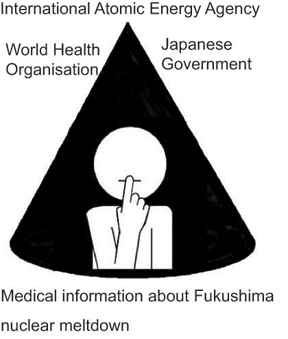
UN, Japan, Concealing Extent of Fukushima Catastrophe MWC News, By Sherwood Ross Friday, 01 August 2014 Japanese and United Nations authorities have placed “a cone of silence” over medical information an endangered Japanese public is entitled to have about the Fukushima nuclear plant meltdown.
“It is obvious that there is collaboration between the World Health Organization(WHO) and the International Atomic Energy Agency(IAEA) and also the Japanese government…to hide, to lie, and to cover-up vital medical information that must be made available to the Japanese population,” says Dr. Helen Caldicott, the medical doctor who has been showered with honors and awards for her long-time opposition to the dangers of nuclear power manufacture and nuclear war.
“Many doctors have been ordered not to inform their patients that their symptoms could be related to radiation, leaving them in a state of despair,” Dr.Caldicott says. (They) “need to know the truth about their situation and that of their children.”
Dr. Caldicott, who has received 21 honorary doctorates for her work, says that to make matters worse, Japan Prime  Minister Shinzo Abe “has passed a secrecy law which will almost certainly intimidate the media from keeping a very close watch over the tenuous (nuclear) plant.”
The government, she says, and Tokyo Electric Power Co.(TEPCO), “have been reluctant to divulge reliable data and information about radioactive releases, the ongoing state of the severely damaged reactors, the continuous outflow of radioactive water into the sea, and the possibility of a serious accident and radiation release in the event of another earthquake greater than 7 on the Richter scale which could well trigger the collapse of the seriously damaged buildings numbers 3 and 4.”
Damaged Building 3 contains over 100 tons of molten radioactive fuel which “would almost certainly release massive quantities of radioactive elements…threatening millions of people with radioactive contamination,” Dr. Caldicott points out.
She goes on to say that if precariously damaged Building 4 should collapse, 400 tons of extremely radioactive fuel will plunge 100 feet to the ground, releasing its cooling water with possible ignition of the fuel. This could release ten times more cesium than was released at Chernobyl or the equivalent of 14,000 Hiroshima-sized bombs.
What’s more, of the 800,000 healthy youngsters called “liquidators” brought in by the Government from around Russia to fight the burning reactor, within 19 years more than 120,000 were dead.
Dr. Caldicott urged the public to “demand that TEPCO and the Japanese government continually inform the public about the events that are and will be occurring at the Fukushima reactors, without cover-ups and denials of the facts.”
Should another major release of radiation occur, she said, the public must be informed immediately and evacuation begun immediately. http://mwcnews.net/focus/politics/44145-fukushima-catastrophe.html#sthash.5cgmPLZn.dpuf
Bioaccumulation of Fukushima radiation in global food supply
 Fukushima Radiation Poisoning Global Food Supply (includes videos) http://chemtrailsplanet.net/2014/08/01/forget-mh-17-fukushima-radiation-poisoning-global-food-supply/ Chemtrail Following a major earthquake, a 15-metre tsunami disabled the power supply and cooling of three Fukushima Daiichi reactors, causing a nuclear accident on 11 March 2011. All three cores largely melted in the first three days. — World Nuclear Association
Report by Dr. Bill Deagle reminds us that extinction-level amounts of lethal radiation continues to contaminate the planet.
It has to be considered that the consequences of global panic in response to full public knowledge the horrific Fukushima event are so dire that corporate media outlets have been instructed not to cover it. Instead, we get bizarre reports on MH-370, MH-17, the Ebola virus, Israeli war on Gaza, Impeaching Obama,…on and on.
By not reporting on Fukushima, “authorities” hope to hide the dire consequences of continued radiation leak(s) from the American people and global populations for as long a possible.
By monitoring social media conversations, it’s an easy task for “rulers” to know when the “flash-point” of public awareness will prompt need to apply further media distractions or increase certain elements of the police state without actually declaring outright, “martial law”….as a last resort.
Bio-accumulation of radiation from Fukushima can damage nearly all life on earth.
All along the west coast of North America, sea stars are dying at an alarming rate. There was an “outbreak” of some unknown wasting disease last year and it appears to have come back even worse this summer. — Radiation Rain
One aspect of this out-of-control contamination is in the Pacific’s 30 foot deep layer of surface ocean water where much of the global oxygen supply is generated by plankton. Bio-accumulation in this layer is unknown and no questions are being asked by corporate media “experts”. Dalton’s Law of partial pressures of gases tells us that measured CO2 levels will respond by going up if global oxygen levels go down.
Reports of a massive case of dead star-fish, absence of certain species of fish and dwindling herds of animals up and down the Pacific region of the northern hemisphere are never connected to the consequences of bio-accumulation of radiation sprays from the ongoing Fukushima disaster.
Why?
Follow the money. Media will avoid reporting any news that could be bad for business as usual.
Spraying aerosols over the Pacific to interrupt rainfall is a desperate attempt to mitigate radiation from being washed onto crops in the central valley that provides much of our food commodities . The obvious downside is the failure of normal rainfall and forcing of drought that increases the number of wildfires in the Northwest and the opportunistic privatization of water resources.
Japan wants to measure individuals’ radiation exposure, not air doses
Ministry seeks to focus on individual radiation exposure The Yomiuri Shimbun 2 Aug 14 The Environment Ministry has compiled a report calling for decontamination work in areas affected by the crisis at Tokyo Electric Power Co.’s Fukushima No. 1 nuclear power plant to be based on measurements of individuals’ radiation exposure doses, instead of air doses. Continue reading
Fukushima children having an holiday in Australia
The Rainbow Stay Project is designed to give the children a chance to do things they can no longer do at home, due to the fear of radiation poisoning……..The group of children, aged between ten and sixteen, are here on a charity-sponsored trip.
It is world away from the ongoing fear of radiation which affects their daily lives back home………..
Kazuki says the threat of radiation still affects her life in many ways.
“I was really sad because everything was polluted by radioactive material. I couldn’t swim in the sea anymore and my mum told me to stay inside and not touch the soil.”
There have been several trips like this since 2011, thanks to a Japanese woman living in Sydney.
Yukiko Hirano set up a Rainbow Stay Project with the aim of giving the children new hope.
” I tried to invite the Fukushima children to come over to Sydney. Beautiful environment, and no fear of radiation earthquake. They can enjoy entire holiday, without fearing those kind of things.”……..Andrew Vickers is from the Construction, Forestry, Mining and Energy Union which helped make the trip a reality.
“They can’t eat fish from the sea, they can’t pick up plants and flowers, they can’t touch any wild animals for fear of further radiation poisoning – so it’s not just coming to another country, it’s a totally new experience” http://www.sbs.com.au/news/article/2014/08/01/fukushima-children-visit-australia
Japanese residents near Sendai to get iodine tablets, in case of nuclear power accident
 Kagoshima residents near Sendai nuclear plant given iodine tablets http://www.japantimes.co.jp/news/2014/07/27/national/kagoshima-residents-near-sendai-nuclear-plant-given-iodine-tablets/#.U9bY_ONdUnk KYODO JUL 27, 2014 Local authorities in Kagoshima Prefecture on Sunday started handing out iodine tablets to residents living within 5 km of the Sendai nuclear power plant, which may be restarted in the fall.
It is the first time iodine tablets have been distributed under guidelines instituted by the Nuclear Regulation Authority, which was set up in the wake of the 2011 Fukushima nuclear disaster. Iodine tablets help people protect their thyroid glands from radiation.
The move by the Kagoshima prefectural and Satsumasendai municipal governments came after Kyushu Electric Power Co.’s Sendai plant cleared a key safety hurdle for restarting operations earlier this month.
About 2,700 of the roughly 4,700 residents over 3 who live within the 5-km radius were given a supply of tablets after hearing an official briefing, submitting medical interview sheets and receiving the green light from doctors, according to prefectural officials.
Briefings for the remaining residents will resume in September, they said.
A total of 39 residents declined to receive the tablets. Children under 3 will receive the equivalent at shelters in the event of a nuclear accident, the officials said.
Delaware residents to get iodine tablets just in case of nuclear [power accident
Del. distributing radiation protection tablets http://newsok.com/del.-distributing-radiation-protection-tablets/article/feed/715584 July 26, 2014 MIDDLETOWN, Del. (AP) — Officials say they’ll be distributing free potassium iodide tablets to Delaware residents who live within 10 miles of the Salem/Hope Creek nuclear power plant in New Jersey.
If a radiation emergency were to occur, officials would inform the public through the use of emergency alert system radio stations. The information would include evacuation instructions as well as instructions on when to take the potassium iodide tablets.
Tokyo’s growing nuclear radiation danger
 ‘Tokyo should no longer be inhabited,’ Japanese doctor warns residents regarding radiation http://www.naturalnews.com/046112_radiation_fukushima_tokyo.html 25 July 14 (NaturalNews)In an essay addressed to his colleagues, Japanese doctor Shigeru Mita has explained why he recently moved away from Tokyo to restart his practice in western Japan: He believes that Tokyo is no longer safe to inhabit due to radioactive contamination caused by the March 11, 2011, meltdowns at the Fukushima Daiichi nuclear plant.
The essay, titled “Why did I leave Tokyo?” was published in the newsletter of the Association of Doctors in Kodaira, metropolitan Tokyo.
Soil tests prove contamination
Dr. Mita opens his essay by contextualizing his decision to leave, noting that he had a long history as a doctor in Tokyo.
“I closed the clinic in March 2014, which had served the community of Kodaira for more than 50 years, since my father’s generation, and I have started a new Mita clinic in Okayama-city on April 21,” he wrote.
Dr. Mita notes that, for the past 10 years, he had been working to persuade the municipal government of Tokyo to stock iodine pills to distribute to the population in the case of a nuclear accident. Dr. Mita’s concern had been that an earthquake might trigger a meltdown at the Hamaoka nuclear power plant. All of his requests were rejected, however, under the excuse that there was no reason to expect such an accident.
Prior to 2011, Shinjuku (the region of Tokyo that houses the municipal government) tested at only 0.5-1.5 Bq/kg. Today, levels at nearby Kodaira are at 200-300 Bq/kg.
“Within the 23 districts of Metropolitan Tokyo, contamination in the east part is 1000-4000 Bq/kg and the west part is 300-1000 Bq/kg,” Dr. Mita wrote.
For comparison, Kiev (capital of the Ukraine) has soil tested at 500 Bq/kg (Cs-137 only). Following the Chernobyl accident, West Germany and Italy reported levels of 90-100 Bq/kg, and both experienced measurable health effects on their populations.
Dr. Mita notes that the radiation situation in Tokyo is getting worse, not better, due to urban practices of concentrating solid waste in small areas such as municipal dumps and sewage plants. That is why, he says, radiation levels in Tokyo riverbeds have actually been increasing over the prior two years.
Dr. Mita’s essay also chronicles the many cases he has observed of patients presenting with radiation-induced health problems. He notes that, since 2011, he has observed while blood cell counts declining in children under the age of 10, including in children under one year old. In all of these cases, symptoms typically improve if the children move to western Japan. He has similarly observed persistent respiratory symptoms that improve in patients who move away.
Other patients have shown symptoms including “nosebleed, hair loss, lack of energy, subcutaneous bleeding, visible urinary hemorrhage, skin inflammations, coughs and various other non-specific symptoms.” He also notes high occurrences of rheumatic muscle symptoms similar to those observed following the Chernobyl disaster.
“Ever since 3.11, everybody living in Eastern Japan including Tokyo is a victim, and everybody is involved,” he wrote.
Sources for this article include:
Lack of knowledge about potential cancer risks of electromagnetic radiation from cell phones
Here’s What We Know About Mobile Phones And Cancer, Business Insider LAUREN F FRIEDMAN JUL 22 2014, “……..Mobile phones emit “non-ionizing electromagnetic radiation” (the kind that comes from microwaves), not “ionizing radiation” (the kind that comes from X-rays). And it turns out that’s an important difference.
“Exposure to ionizing radiation, such as from radiation therapy, is known to increase the risk of cancer,” the National Cancer Institute explains, although even there, the dose matters a lot. “However, although many studies have examined the potential health effects of non-ionizing radiation from radar, microwave ovens, and other sources, there is currently no consistent evidence that non-ionizing radiation increases cancer risk.”
Non-ionizing radiation also does not cause DNA damage, something that’s usually considered a necessary trigger for cancer.
While people spend much more time with their cell phones than their microwaves, it’s still hard to get a good idea of the dose of non-ionizing radiation we get from them. The amount of radiation absorbed by individuals will vary depending on the kind of phones they have and how they use them.
A lot of uncertainty also comes from improved cell phone technology and increased usage over the years — the research just can’t keep up.
The Research So Far
“Studies thus far have not shown a consistent link between cell phone use and cancers of the brain, nerves, or other tissues of the head or neck,” the National Cancer Institute notes on their website. But their fact sheet addressing the topic is not conclusive for the reasons above.
Since proximity is so important in radiation exposure, most research has looked for links between cell phones and brain cancer specifically, which only represents 2% of all cancers……….
The World Health Organisation, in 2011, concluded that the radiation emitted by cell phones was “possibly carcinogenic to humans” based on evidence they describe as “limited.” …..
More recent research, however, suggests that if anyone is at risk, it would be the heaviest cell phone users, not those who use their phones with moderation.
What’s Next
While the research has been inconclusive so far, scientists are working to figure out if there is a link between cancer and cell phone use — or if such a link can be ruled out.
One study in the U.K., known as COSMOS, began in 2010 and will follow 290,000 cell phone users for 20-30 years. Researchers will have access to participants’ phone records, which should give a much more reliable picture of usage than previous studies, which relied largely on people’s recollections of their cell phone usage from many years ago.
Such ongoing research will be crucial.
“It often takes many years between the use of a new cancer-causing agent — such as tobacco — and the observation of an increase in cancer rates,” Dr. John Moynihan, of the Mayo Clinic, points out. “At this point, it’s possible that too little time has passed to detect an increase in cancer rates directly attributable to mobile phone use.”
In the meantime, people concerned about the potential but as yet wholly unknown risks from cell phones can minimize usage, text instead of call, use a headset, and keep a distance from the phone as much as possible. http://www.businessinsider.com.au/do-cell-phones-cause-cancer-2014-7
Critical analysis of Fukushima report by the United Nations Scientific Committee on the Effects of Atomic Radiation
Fukushima: Bad and Getting Worse – Global Physicians Issue Scathing Critique of UN Report on Fukushima CounterPunch, by JOHN LaFORGE, 20 July 14
There is broad disagreement over the amounts and effects of radiation exposure due to the triple reactor meltdowns after the 2011 Great East-Japan Earthquake and tsunami. The International Physicians for the Prevention of Nuclear War (IPPNW) joined the controversy June 4, with a 27-page “Critical Analysis of the UNSCEAR Report ‘Levels and effects of radiation exposures due to the nuclear accident after the 2011 Great East-Japan Earthquake and tsunami.’”
IPPNW is the Nobel Peace Prize winning global federation of doctors working for “a healthier, safer and more peaceful world.” The group has adopted a highly critical view of nuclear power because as it says, “A world without nuclear weapons will only be possible if we also phase out nuclear energy.”
UNSCEAR, the United Nations Scientific Committee on the Effects of Atomic Radiation, published its deeply flawed report April 2. Its accompanying press release summed up its findings this way: “No discernible changes in future cancer rates and hereditary diseases are expected due to exposure to radiation as a result of the Fukushima nuclear accident.” The word “discernable” is a crucial disclaimer here.

Cancer, and the inexorable increase in cancer cases in Japan and around the world, is mostly caused by toxic pollution, including radiation exposure according to the National Cancer Institute.[1] But distinguishing a particular cancer case as having been caused by Fukushima rather than by other toxins, or combination of them, may be impossible – leading to UNSCEAR’s deceptive summation. As the IPPNW report says, “A cancer does not carry a label of origin…”
UNSCEAR’s use of the phrase “are expected” is also heavily nuanced. The increase in childhood leukemia cases near Germany’s operating nuclear reactors, compared to elsewhere, was not “expected,” but was proved in 1997. The findings, along with Chernobyl’s lingering consequences, led to the country’s federally mandated reactor phase-out. The plummeting of official childhood mortality rates around five US nuclear reactors after they were shut down was also “unexpected,” but shown by Joe Mangano and the Project on Radiation and Human Health.
The International Physicians’ analysis is severely critical of UNSCEAR’s current report which echoes its 2013 Fukushima review and press release that said, “It is unlikely to be able to attribute any health effects in the future among the general public and the vast majority of workers.”
“No justification for optimistic presumptions”
The IPPNW’s report says flatly, “Publications and current research give no justification for such apparently optimistic presumptions.” UNSCEAR, the physicians complain, “draws mainly on data from the nuclear industry’s publications rather than from independent sources and omits or misinterprets crucial aspects of radiation exposure”, and “does not reveal the true extent of the consequences” of the disaster. As a result, the doctors say the UN report is “over-optimistic and misleading.” The UN’s “systematic underestimations and questionable interpretations,” the physicians warn, “will be used by the nuclear industry to downplay the expected health effects of the catastrophe” and will likely but mistakenly be considered by public authorities as reliable and scientifically sound. Dozens of independent experts report that radiation attributable health effects are highly likely………. http://www.counterpunch.org/2014/07/18/fukushima-bad-and-getting-worse/
1 This Month
29 Jan. Thursday 7-8 p.m. Webinar – World’s Largest Nuclear Station in Port Hope, ON?
To see nuclear-related stories in greater depth and intensity – go to https://nuclearinformation.wordpress.com/



31st January – Challenging the War Machine – a DECLASSIFIED UK SUMMIT


Website of the Week
Now until to February 10, 2026 Radioactive waste storage in France: the debate is finally open! How to participate?
-
Archives
- January 2026 (288)
- December 2025 (358)
- November 2025 (359)
- October 2025 (376)
- September 2025 (258)
- August 2025 (319)
- July 2025 (230)
- June 2025 (348)
- May 2025 (261)
- April 2025 (305)
- March 2025 (319)
- February 2025 (234)
-
Categories
- 1
- 1 NUCLEAR ISSUES
- business and costs
- climate change
- culture and arts
- ENERGY
- environment
- health
- history
- indigenous issues
- Legal
- marketing of nuclear
- media
- opposition to nuclear
- PERSONAL STORIES
- politics
- politics international
- Religion and ethics
- safety
- secrets,lies and civil liberties
- spinbuster
- technology
- Uranium
- wastes
- weapons and war
- Women
- 2 WORLD
- ACTION
- AFRICA
- Atrocities
- AUSTRALIA
- Christina's notes
- Christina's themes
- culture and arts
- Events
- Fuk 2022
- Fuk 2023
- Fukushima 2017
- Fukushima 2018
- fukushima 2019
- Fukushima 2020
- Fukushima 2021
- general
- global warming
- Humour (God we need it)
- Nuclear
- RARE EARTHS
- Reference
- resources – print
- Resources -audiovicual
- Weekly Newsletter
- World
- World Nuclear
- YouTube
-
RSS
Entries RSS
Comments RSS
 nuclear-news