Nuclear test campaigner demands access to medical files

By Andrea Ormsby, BBC News, 23 Apr 24
A campaigner from Devon is suing the government over missing medical records belonging to veterans exposed to radiation more than 70 years ago.
Susan Musselwhite’s father, Derek, was one of 22,000 servicemen who took part in nuclear tests in the 1950 and 1960s.
Ms Musselwhite said access to missing medical files would help veterans and descendants who said their health had suffered as a result of the trials.
The Ministry of Defence (MoD) said no information was withheld from veterans.
Ms Musselwhite, 44, from Paignton, is part of a group of former military personnel and their families who have sent a letter before action on the MoD, formally warning of a potential court claim, and handed a petition into Downing Street in March 2024.
Ms Musselwhite said: “What these men witnessed you only see in movies. But they witnessed it, they lived it; they know the deadliest weapon ever created.”
The group is calling for the government to create a special tribunal to oversee compensation.
Personnel from all three armed forces took part in Cold War nuclear weapons trials between 1952 and 1967 in Australia and the South Pacific.
Susan Musselwhite said the government “sent their men as cannon fodder and those men deserve to be recognised for what they did”, including her Royal Navy diver father.
Like many of the veterans’ children and grandchildren, Ms Musselwhite said she was struggling with serious health issues.
Campaigners say they are currently unable to access their records or parts are missing or incomplete because the samples have been reclassified as “scientific data” and placed at the MoD’s Atomic Weapons Establishment research facility.
MoD sources previously told the BBC that archives at the facility have been searched and do not contain the medical records in question.
Ms Musselwhite said missing medical records of blood and urine tests taken by the military during the trials could provide vital information…………………………….. more https://www.bbc.com/news/uk-england-devon-68883809
St. Louis Residents Seek Compensation for Illnesses Tied to Nuclear Contamination
By Jim Salter | April 8, 2024, https://www.insurancejournal.com/news/midwest/2024/04/08/768472.htm
Karen Nickel has been dealing with lupus and other illnesses for years, illnesses she blames on childhood exposure to a suburban St. Louis creek where Cold War-era nuclear waste was dumped decades ago. It’s time, she said Friday, for the federal government to start making amends.
“People have died and are still dying,” Nickel, co-founder of the activist group Just Moms STL, said.
Nickel and others impacted by nuclear waste exposure in the St. Louis region joined Democratic U.S. Rep. Cori Bush at a news conference at a park that sits near long-contaminated Coldwater Creek. They urged renewal of a law initially passed more than three decades ago that would provide an estimated $50 billion to compensate Americans exposed to radiation by the government.
Last month, the Senate approved legislation by Republican Sen. Josh Hawley of Missouri and Democratic Sen. Ben Ray Luján of New Mexico that would not only extend the 1990 Radiation Exposure Compensation Act, but expand its scope to include Missouri and other states adversely affected by the nation’s nuclear weapons program.
But the compensation plan was excluded from a spending bill.
“The Senate did its job, but House leadership has failed to act,” Bush, of St. Louis, said. “This injustice cannot stand.”
The plan isn’t dead. It could still pass as a stand-alone bill, or be attached to another piece of legislation. But time is of the essence, Bush said. The RECA program expires June 7.
Uranium processing in the St. Louis area played a pivotal role in developing the nuclear weapons that helped bring an end to World War II and provided a key defense during the Cold War. But eight decades later, the region is still dealing with contamination at several sites.
In July, an investigation published by The Associated Press, The Missouri Independent and MuckRock showed that the federal government and companies responsible for nuclear bomb production and atomic waste storage sites in the St. Louis area were aware of health risks, spills, improperly stored contaminants and other problems but often ignored them.
While it is difficult to prove definitively that the waste caused residents’ illnesses, advocates argue that there is more than enough evidence that it has sickened people.
Since the RECA program began, more than 54,000 claims have been filed and about $2.6 billion has been awarded for approved claims in Nevada, Utah and Arizona.
In New Mexico, residents in the communities surrounding the area where the first atomic bomb was detonated in 1945 — the top-secret Manhattan Project — were not warned of the radiological dangers and didn’t realize that an atomic blast was the source of the ash that was raining down upon them.
Advocates also have sought to bring awareness to the lingering effects of radiation exposure on the Navajo Nation, where millions of tons of uranium ore were extracted over decades to support U.S. nuclear activities.
President Joe Biden signed an executive order in 2022 extending RECA for two years, into June. Hawley’s bill would extend the law for five years and expand coverage to include people in Missouri as well as Idaho, Montana, Colorado, Tennessee, Kentucky, Alaska and Guam.
The White House has indicated that Biden would sign the legislation.
“The President believes we have a solemn obligation to address toxic exposure, especially among those who have been placed in harm’s way by the government’s actions,” the White House said in a statement earlier this year.
Others worry about the cost. The taxpayer advocacy group Committee for a Responsible Federal Budget said that the legislation should include budget offsets to pay for it.
Nuclear waste stored near St. Louis’ Lambert Airport made its way into Coldwater Creek in the 1960s. Many people who grew up or live near the meandering creek believe the contamination is responsible for cancers and other illnesses, though experts say connecting radiation exposure to illness is complicated. Cancer concerns also have been raised by people in nearby St. Charles County, Missouri, where uranium was processed and a large quarry became contaminated, resulting in a Superfund cleanup.
In 2022, a St. Louis County grade school closed amid worries that contamination from Coldwater Creek got onto the playground and inside the building. The Army Corps of Engineers announced last month that it is testing a few homes near the creek after high radiation levels were found in their backyards.
Like Nickel, Democratic state Rep. Doug Clemens grew up along Coldwater Creek. He said every man in his childhood neighborhood eventually died of stomach or intestinal cancer.
“They knew they were poisoning us for 75 years,” Clemens said of the government. “RECA is a step. We must do RECA now.”
St. Louis-area residents make plea for compensation for illnesses tied to nuclear contamination
People impacted by nuclear contamination in the St. Louis region are urging federal lawmakers to approve a plan to spend billions of dollars to compensate Americans exposed to radiation by the government
By JIM SALTER Associated Press, April 6, 2024, https://abcnews.go.com/US/wireStory/st-louis-area-residents-make-plea-compensation-illnesses-108900650
Karen Nickel has been dealing with lupus and other illnesses for years, illnesses she blames on childhood exposure to a suburban St. Louis creek where Cold War-era nuclear waste was dumped decades ago. It’s time, she said Friday, for the federal government to start making amends.
“People have died and are still dying,” Nickel, co-founder of the activist group Just Moms STL, said.
Nickel and others impacted by nuclear waste exposure in the St. Louis region joined Democratic U.S. Rep. Cori Bush at a news conference at a park that sits near long-contaminated Coldwater Creek. They urged renewal of a law initially passed more than three decades ago that would provide an estimated $50 billion to compensate Americans exposed to radiation by the government.
Last month, the Senate approved legislation by Republican Sen. Josh Hawley of Missouri and Democratic Sen. Ben Ray Luján of New Mexico that would not only extend the 1990 Radiation Exposure Compensation Act, but expand its scope to include Missouri and other states adversely affected by the nation’s nuclear weapons program.
But the compensation plan was excluded from a spending bill.
“The Senate did its job, but House leadership has failed to act,” Bush, of St. Louis, said. “This injustice cannot stand.”
The plan isn’t dead. It could still pass as a stand-alone bill, or be attached to another piece of legislation. But time is of the essence, Bush said. The RECA program expires June 7.
Uranium processing in the St. Louis area played a pivotal role in developing the nuclear weapons that helped bring an end to World War II and provided a key defense during the Cold War. But eight decades later, the region is still dealing with contamination at several sites.
In July, an investigation published by The Associated Press, The Missouri Independent and MuckRock showed that the federal government and companies responsible for nuclear bomb production and atomic waste storage sites in the St. Louis area were aware of health risks, spills, improperly stored contaminants and other problems but often ignored them.
While it is difficult to prove definitively that the waste caused residents’ illnesses, advocates argue that there is more than enough evidence that it has sickened people.
Since the RECA program began, more than 54,000 claims have been filed and about $2.6 billion has been awarded for approved claims in Nevada, Utah and Arizona.
In New Mexico, residents in the communities surrounding the area where the first atomic bomb was detonated in 1945 — the top-secret Manhattan Project — were not warned of the radiological dangers and didn’t realize that an atomic blast was the source of the ash that was raining down upon them.
Advocates also have sought to bring awareness to the lingering effects of radiation exposure on the Navajo Nation, where millions of tons of uranium ore were extracted over decades to support U.S. nuclear activities.
President Joe Biden signed an executive order in 2022 extending RECA for two years, into June. Hawley’s bill would extend the law for five years and expand coverage to include people in Missouri as well as Idaho, Montana, Colorado, Tennessee, Kentucky, Alaska and Guam.
The White House has indicated that Biden would sign the legislation.
“The President believes we have a solemn obligation to address toxic exposure, especially among those who have been placed in harm’s way by the government’s actions,” the White House said in a statement earlier this year.
Others worry about the cost. The taxpayer advocacy group Committee for a Responsible Federal Budget said that the legislation should include budget offsets to pay for it.
Nuclear waste stored near St. Louis’ Lambert Airport made its way into Coldwater Creek in the 1960s. Many people who grew up or live near the meandering creek believe the contamination is responsible for cancers and other illnesses, though experts say connecting radiation exposure to illness is complicated. Cancer concerns also have been raised by people in nearby St. Charles County, Missouri, where uranium was processed and a large quarry became contaminated, resulting in a Superfund cleanup.
In 2022, a St. Louis County grade school closed amid worries that contamination from Coldwater Creek got onto the playground and inside the building. The Army Corps of Engineers announced last month that it is testing a few homes near the creek after high radiation levels were found in their backyards.
Like Nickel, Democratic state Rep. Doug Clemens grew up along Coldwater Creek. He said every man in his childhood neighborhood eventually died of stomach or intestinal cancer.
“They knew they were poisoning us for 75 years,” Clemens said of the government. “RECA is a step. We must do RECA now.”
Russia declares ‘state of emergency’ after radiation detected in eastern city of Khabarovsk
Authorities in Russia’s far eastern city of Khabarovsk have declared a state of emergency in an area where a “radiation source” was found, TASS news agency reported on Friday, adding that elevated radiation levels were detected near a power pylon about 2.5 km (1.5 miles) from residential buildings.
Officials have not provided an explanation for the leak but have confirmed its containment and transfer to a secure radioactive waste storage site. A state of emergency is to persist for a minimum of three additional days as law enforcement continues investigations into the incident.
Reports indicate a delay of approximately one week before authorities responded to the leak. Video footage has surfaced depicting an individual in a nuclear protective mask, carrying a radiation reader, which displayed escalating readings as he traversed a designated “waste dump” area.
No one had been injured or exposed to radiation and “there is no threat to the health of citizens”, TASS quoted the local branch of Russia’s consumer safety watchdog as saying.
It said radiation levels would be monitored for the next two days and the source of the radiation would be investigated.
WHERE HAVE ALL THE INSECTS GONE? Satellites are taking them, every one.
The least noticed and greatest assault on Earthly life rains on us from the sky. Nature’s wires strung above us from horizon to horizon, carrying the electricity that helps power our bodies, and the information that informs our growth, healing, and daily lives, now carries dirty electricity — millions of frequencies and pulsations that confuse our cells and organs, and dim our nervous systems, be we humans, elephants, birds, insects, fish, or flowering plants.
The pulsations pollute the Earth beneath our feet, surround us in the air through which we fly, course through the oceans in which we swim, flow through our veins and our meridians, and enter us through our leaves and our roots. The planetary transformer that used to gentle the solar wind now agitates, inflames.
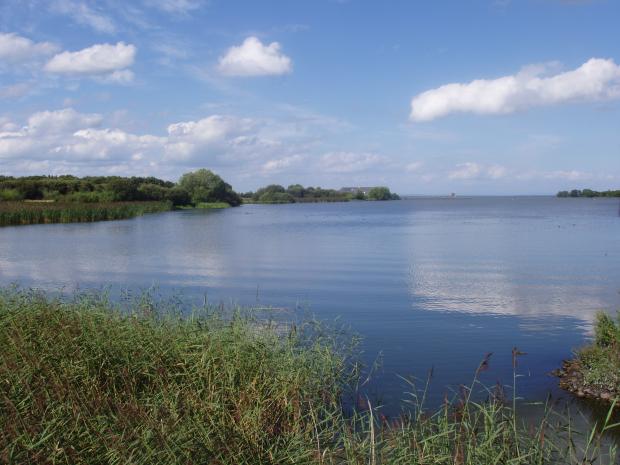
The lake pictured above is the United Kingdom’s largest. Located in Northern Ireland, Lough Neagh swarms so densely with flies every spring and summer that residents shut their windows against the living smoke. Clothes left out on a line are covered with them. So is any windshield on a vehicle traveling around the lough’s 90-mile shoreline. Until 2023.
Last year, unbelievably, no flies were to be seen. Windshields and hanging clothes were bare of them. None flew into open windows. Other species that used to eat them were gone as well — ducks, frogs, fish, eels, and predatory insects. Fly larvae were not there to keep the lake bottom clean. Little was alive in the lough except an overgrowth of algae. “Has the ecosystem of the UK’s largest lake collapsed?” asked The Guardian in a February 19, 2024 article.
Has the ecosystem of the entire Earth collapsed? we ask, for the same is happening all over, according to reports I have been receiving for a year from almost everywhere on every continent.
56 Years of Global Vandalism
On June 13, 1968, the United States completed its launch of the world’s first constellation of military satellites. Twenty-eight of them, more than twice as many satellites as were in orbit around the Earth until then, were lofted to an altitude of 18,000 miles, in the heart of the outer Van Allen radiation belt. The “Hong Kong” flu pandemic began two weeks later and lasted for almost two years.
For the next three decades, the skies slowly filled up with hundreds of satellites, mostly for military purposes. Then in the late 1990s, cell phones became popular.
On May 17, 1998, a company named Iridium completed its launch of a fleet of 66 satellites into the ionosphere, at an altitude of only 485 miles, and began testing them. They were going to provide cell phone service to the general public from anywhere on earth. Each satellite aimed 48 separate beams at the earth’s surface, thus dividing the planet into 3,168 cells. Reports of insomnia came from throughout the world………………………………………………………………
SpaceX has been launching rockets carrying dozens of satellites at a time on a weekly or biweekly basis, filling the heavens with luminous objects that interfere with astronomy, spewing chemicals that are destroying our planet’s protective ozone layer, filling the upper layers of the atmosphere with water vapor that should not be there and that is increasing the current in the global electric circuit and the violence of thunderstorms, and cluttering up space with satellites that are nothing but solar arrays and computers that are continually failing, wearing out, and having to be replaced, and which are deorbited to burn up in the lower atmosphere, filling it with metals and toxic chemicals for everyone to breathe — and altering the electromagnetic environment of the Earth that had not changed in three billion years and that life below depends on for its vitality and survival.
Last Thursday morning, from Boca Chica, Texas, SpaceX successfully launched its Starship — the largest rocket ever built, the one it wants to ferry men and women to Mars with — into space for the first time. And on Friday it launched yet another 23 Starlink satellites to bring its total polluting the ionosphere up to more than 6,000, now not only for internet communication with rooftop dishes but for direct communication with handheld cell phones. The 6,000 satellites are also now communicating directly with one another, wrapping the Earth with pulsating lasers carrying 42 million gigabytes of data every single day………
Since March 24, 2021, not only has human health deteriorated, but the biodiversity of the Earth, everywhere, has plummeted. People have not so much noticed the decline of the larger wildlife like wolves, bears, lions and tigers, which were already scarce, but they are shocked by the total disappearance of the smallest animals that were only recently so common you couldn’t open your windows without them flying in. They are shocked by the disappearance of all the frogs that used to swim in their ponds, the birds that used to nest in their trees, the worms that used to slither on the ground, the insects that used to fly through their windows and cover their clothes hanging on the line. My newsletters of March 29, June 21, September 20, October 17, and November 28, 2023 carried major stories about this from various parts of the world. My newsletters of December 5 and December 26, 2023, and January 9 and February 6, 2024 quoted from individuals all over the world who have emailed or called me, and I have a huge backlog of more such reports that you can read when I publish them in the future.
If we want to have a planet to live on, not only for our children but for ourselves, the [electromagnetic]radiation has to stop. Not only do the cell towers have to come down that are so ugly to look at, but also the cell phones that we hold in our hands and have become so dependent on, and the satellites that are squeezing all the life that remains out from under them. We are running out of time. https://cellphonetaskforce.org/where-have-all-the-insects-gone/

Nuclear test veterans demand compensation and medical records access
By Anna Lamche, BBC News, 20 Mar 24
Veterans exposed to radiation during British nuclear tests are calling for the government to create a “special tribunal” to oversee compensation.
The group, who say their lives have been blighted by ill health as a result of the tests, also want access to their missing military medical records.
The Ministry of Defence (MoD) says no information is withheld from veterans.
But on Tuesday it was threatened with legal proceedings by alleged victims and their families.
Former military personnel and their families served a “letter before action” on the MoD and handed a petition into Downing Street earlier.
Veterans and their families developed cancer, heart problems and even lost babies after the tests – and their children have been born with obvious disabilities, the group claims.
The campaigners have called on the government to establish a “special tribunal” that would investigate, compensate and commemorate alleged victims of the nuclear tests, which took place between 1952 and 1967 in Australia and the South Pacific.
The government is under pressure to act quickly because many of the claimants are now getting older.
The group is demanding access to blood and urine samples taken during the Cold War weapons trials.
Regis
Nuclear test veterans demand compensation and medical records access
By Anna Lamche, BBC News 20 Mar 24
Veterans exposed to radiation during British nuclear tests are calling for the government to create a “special tribunal” to oversee compensation.
The group, who say their lives have been blighted by ill health as a result of the tests, also want access to their missing military medical records.
The Ministry of Defence (MoD) says no information is withheld from veterans.
But on Tuesday it was threatened with legal proceedings by alleged victims and their families.
Former military personnel and their families served a “letter before action” on the MoD and handed a petition into Downing Street earlier.
Veterans and their families developed cancer, heart problems and even lost babies after the tests – and their children have been born with obvious disabilities, the group claims
The campaigners have called on the government to establish a “special tribunal” that would investigate, compensate and commemorate alleged victims of the nuclear tests, which took place between 1952 and 1967 in Australia and the South Pacific.
The government is under pressure to act quickly because many of the claimants are now getting older.
The group is demanding access to blood and urine samples taken during the Cold War weapons trials…………………………………………. https://www.bbc.com/news/uk-68611769
The horrors of nuclear weapons testing
I think that enough time has gone by that the longer-term dangers of nuclear weapons, such as radioactive fallout, have largely disappeared from the public consciousness—much to the agony and despair of those afflicted to this day.
Radioactive fallout and its long-term effects—things that the average person today does not really appreciate—would be the result from any future nuclear weapons explosion that touched the Earth’s surface. Fallout does not just affect the target, but also the surrounding areas—which could be as far as hundreds of miles away. And the effects could last for years, if not decades thereafter.
Bulletin By Walter Pincus, March 7, 2024
There has been talk in the national security community lately about the so-called “merits” of resuming underground or even atmospheric nuclear weapons tests. I think this would be a grave mistake for many reasons—chief among them is that it forgets the horrific health effects that resulted from some previous nuclear tests.
To be clear, since 1963, atmospheric tests of nuclear weapons have been banned, as have tests in outer space and under water. And underground explosive tests have been banned ever since the 1996 Comprehensive Nuclear Test Ban Treaty, or CTBT. (Technically speaking, while the United States and China have signed the CTBT, neither has ratified it. Russia did both sign and ratify the treaty but on November 2, 2023 Russia announced it had rescinded its ratification. All three countries, however, have so far abided by the CTBT treaty.)
Meanwhile, sub-critical nuclear tests—which use tiny amounts of plutonium but do not create self-sustaining, exponentially-growing, nuclear chain reactions—have continued to this day, in laboratories or in specially constructed underground tunnels. The US is building new tunnels for sub-critical tests at the Nevada Nuclear Test Site where they are expected to help in designing the new, US W93 nuclear warhead now under development.
Presumably, then, what we are referring to when we talk about the possible resumption of nuclear testing is not the latter sub-critical testing, but some version of atmospheric, outer space, underwater, or underground explosives testing.
And here things get tricky.
Because I think that enough time has gone by that the longer-term dangers of nuclear weapons, such as radioactive fallout, have largely disappeared from the public consciousness—much to the agony and despair of those afflicted to this day.
I believe that the more people understand and even can visualize the immediate and long-term dangers of nuclear weapons use, the less likely it is that they may be used. Several nuclear scientists have told me they have memories of specific past nuclear atmospheric tests, most memorably two who were involved in the Manhattan Project—Harold Agnew and Hans Bethe.
Agnew photographed the Hiroshima mushroom cloud from the US aircraft that followed the Enola Gay that dropped the atomic bomb. Agnew almost always brought up the effect that had on him when we met.
For his part, Bethe, at 88—on the 50th anniversary of the birth of the atomic bomb—wrote: “I feel the most intense relief that these weapons have not been used since World War II, mixed with horror that tens of thousands of such weapons have been built since that time—one hundred times more than any of us at Los Alamos could ever imagine.”
In an interview years earlier at Cornell University where he was teaching, Bethe had told me something similar—and at 91, I have never forgotten those words.
The closer you are to nuclear weapons, the more you are aware of the dangers if they were to be used again. However, I believe, most people today have forgotten, if they ever knew, what a single nuclear weapon could do.
Seeing is believing. But believing in this case should make you work to oppose their use, as can be seen in a very rough sort of timeline of my own life…………………………………………………………………………………………………………………
It was in February 1966, well after the 1963 atmospheric test ban treaty, that I first wrote about the impact of nuclear weapons. It was a rather flip, three-paragraph note in The Reporter Magazine, which no longer exists. The story concerned a law that had passed Congress the previous month, a measure which required the US Government to pay $11,000 to each of the 82 men, women and children—or their survivors—who had been on Rongelap Atoll in the Marshall Islands in the central Pacific on March 1, 1954 when the United States detonated Test Bravo from a tower on an artificial island built within Bikini Atoll, more than 120 miles west of Rongelap.
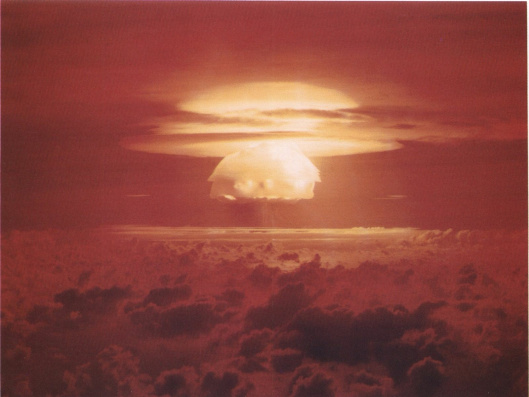
Bravo was the first US test of a deliverable thermonuclear bomb and was expected to have a six-megaton yield, the equivalent of six million tons of TNT. In fact, the explosion was more than double that—15 megatons—and one thousand times more powerful than the atomic bomb that destroyed Hiroshima.
Thanks in good part to thousands of documents on nuclear weapons declassified and released during the Clinton Administration, I was able to describe details about the Bravo explosion two years ago in my book, Blown To Hell: America’s Deadly Betrayal of the Marshall Islanders, as follows:
In a few seconds the fireball, recorded at one hundred million degrees, had spread nearly three miles in diameter, then quickly spread to ten miles. The sandspit and nearby reef where Bravo had stood, along with coral island areas, were vaporized down almost two hundred feet into the sea, creating a crater about one mile in diameter.
It was estimated that three hundred million tons of vaporized sand, coral and water shot up into the air as the fireball rose, and one-hundred-mile-an-hour winds created by the blast pulled additional debris up into the fireball. Within one minute, the fireball had gone up forty-five thousand feet with a stem four miles wide filled with radioactive debris. It continued to zoom upward, shooting through the troposphere and into the stratosphere within five minutes.
Later data showed the cloud bottom was at fifty-five thousand feet, the secondary mushroom cloud bottom was at one-hundred-fourteen thousand feet, and the upper cloud hit one-hundred-thirty thousand feet.
Ten minutes after detonation the mushroom cloud had widened and measured seventy-five miles across just below the stratosphere.
Original projections had predicted Bravo radioactive fallout would emanate from a fifteen-mile-wide cylinder that could stretch into the stratosphere. Instead, it turned out to be a one-hundred-mile-wide cloud where “debris was carried up and dispersed over a much larger area than was thought possible,” wrote Dr. William Ogle, the test’s task force commander of the scientific group that dealt with radioactivity.
Radioactive fallout and its long-term effects—things that the average person today does not really appreciate—would be the result from any future nuclear weapons explosion that touched the Earth’s surface. Fallout does not just affect the target, but also the surrounding areas—which could be as far as hundreds of miles away. And the effects could last for years, if not decades thereafter. These effects are worth spelling out in detail, using what happened downwind of the test as an example.
That March 1, 1954 morning, the Japanese fishing boat Lucky Dragon, with a crew of 23 aboard, was trawling its nets 90 miles east-northeast of Bikini. A crewman at the stern rail saw a whitish flare in the west that briefly lit up the clouds and the water. It grew in size, turned to yellow-red, then orange. After a few minutes, the colors faded and shortly thereafter the ship was rocked by the blast of an explosion.
The Lucky Dragon’s captain and the fishing master, who had read ship warnings before they left port, realized they might have strayed into a nuclear test area. They quickly decided to haul in their fishing nets and head back to Japan, almost 2,500 miles away.
It was another two or three hours before a fine white dust began to come down on the boat. With a light rain, the radioactive dust continued to settle on crewmen and the fish on the deck as they worked for another two hours to bring in their lines.
On Rongelap about 30 miles further east, at about 11:30 a.m., a similar powdery, radioactive ash began falling in the area. It stuck to the Marshallese people’s skin, hair, and eyes; many walked barefoot and the powder stuck to their toes; it fell on fish drying on wooden racks that would be eaten that night. Rain briefly fell as the fallout continued into afternoon, dissolving the powdery ash on roofs and carrying it down drains into water barrels that provided drinking water to each household.
On parts of Rongelap Island, where most people lived, the almost five hours of fallout led to drifts of up to one-inch or more high on the ground, on roofs, and along the beach. People recalled that when the moon broke through the clouds that night, it looked like patches of snow on the ground.
It would be two days before the Marshallese were evacuated from Rongelap and taken to the Kwajalein Navy Base by a US Navy destroyer. By then, most of the Rongelapese people had suffered from acute radiation exposure and nausea; some had experienced skin lesions as well.
Since the Bravo test was highly classified, a decision was made in Washington to keep the fallout incident secret, although the Atomic Agency Commission (AEC) had released a statement on March 1, 1954 that a nuclear test had taken place in the Marshall Islands Pacific Proving Ground. That had generated a small front page story in the March 2, 1954, edition of The New York Times. It was not until March 11, 1954, that the AEC admitted people “unexpectedly exposed to some radioactivity” had been moved to Kwajalein “according to a plan as a precautionary measure.”
Two weeks passed before the Lucky Dragon returned to its home port in Japan. It was only then that on March 16, 1954, the first story appeared in the Japanese Yomiuri Shimbun newspaper of what had happened to the boat’s crew and their fish—not what happened to the Marshallese. That story immediately triggered initial worldwide attention to the dangers of fallout from nuclear weapons.
However, it was not until President Eisenhower’s March 31, 1954 press conference that AEC Chairman Lewis Strauss, who had just returned from observing post-Bravo nuclear tests, admitted publicly that the Bravo test was “in the megaton range” and “the yield was about double that of the calculated estimate.” ……………………………………………………………………………………………………….
The early part of the 1955 report described the blast and heat effects of early atomic bombs detonated in the air, before discussing fallout from Bravo and other detonations. “In the air explosion, where the fireball does not touch the earth’s surface, the radioactivity produced in the bomb condenses only on solid particles from the bomb casing itself and the dust which happens to be in the air. In the absence of materials drawn up from the surface, these substances will condense with the vapors from the bomb and air dust to form only the smallest particles. These minute substances may settle to the surface over a very wide area—probably spreading around the world—over a period of days or even months. By the time they have reached the earth’s surface, the major part of their radioactivity has dissipated harmlessly in the atmosphere and the residual contamination is widely dispersed.”
The report then turned to what fallout would occur if the fireball hit the ground. “If however the weapon is detonated on the surface or close enough so that the fireball touches the surface, then large amounts of material will be drawn up into the bomb cloud. Many of the particles thus formed are heavy enough to descend rapidly while still intensely radioactive. The result is a comparatively localized area of extreme radioactive contamination, and a much larger area of some hazard. Instead of wafting down slowly over a vast area, the larger and heavier particles fall rapidly before there has been an opportunity for them to decay harmlessly in the atmosphere and before the winds have had an opportunity to scatter them.”
It described the Bravo fallout as looking like snow “because of calcium carbonate from coral,” and then noted its “adhesive” quality thanks to moisture picked up in the atmosphere as it descended. In the end it contaminated “a cigar-shaped area extending approximately 220 statute miles downwind, up to 40 miles wide,” from Bikini. It “seriously threatened the lives of nearly all persons in the area who did not take protective measures,” the report said.
The report then talked about radioactive strontium in fallout as having a long, average lifetime of nearly 30 years, noting it could enter the human body either by inhaling or swallowing. Deposited directly on edible plants, the strontium could be eaten by a human or animal. While rainfall or human washing of the plants would remove most of the radioactive material, radioactive strontium deposited directly on the soil or in the ocean, lakes, or rivers could be taken up by plants, animals, or fish. There it would lodge in their tissue where it could later be eaten by humans…………….
The other radioactive element in fallout described specifically as a threat in the report was radioactive iodine. Even though the average life of radioactive iodine was only 11.5 days, it was described as a serious hazard because, if inhaled, it concentrated in the thyroid gland where it could damage cells, depending on dosage………………………………………………………………………………………………………………………………………………………………..
Back on Rongelap, despite some cleanup, there are few in residence. A study published in the Proceedings of the National Academy of Sciences in July 2019, done by researchers from Columbia University, found that levels of plutonium and cesium in the soil on Rongelap and other Marshall Island atolls were “significantly higher” than levels that resulted from fallout existing from the July 1986 Chernobyl nuclear power accident—which occurred 28 years after US nuclear tests had ended in the Marshalls.
The Rongelap Marshallese as well as the Japanese seamen who were exposed to fallout on March 1, 1954, can be seen as surrogates for anyone caught in a future nuclear war. Rongelap Atoll, as well as Bikini Atoll, for the most part still cannot be inhabited despite attempts to decontaminate them. Think of what today’s cities would be like if hit by a thermonuclear weapon whose fireball struck the ground and created radioactive fallout.
Within weeks it will be 70 years since the Bravo test. The more the US public and the world are reminded of that test and the resulting Rongelap story, the more they should work to deter any potential use of nuclear weapons. https://thebulletin.org/premium/2024-03/the-horrors-of-nuclear-weapons-testing/?utm_source=Newsletter&utm_medium=Email&utm_campaign=ThursdayNewsletter03072024&utm_content=NuclearRisk_NuclearTestingHorrors_03072024
There Are 1 Million Cases of Infectious Disease in Gaza, Health Ministry Says
Israel has dismantled the health and hygiene systems in Gaza, making even basic illnesses potentially deadly.
By Sharon Zhang , TRUTHOUT, https://truthout.org/articles/there-are-1-million-cases-of-infectious-disease-in-gaza-health-ministry-says/— 4 Mar 24
here is currently about one infectious disease for every two people in Gaza, according to data released by the Gaza Health Ministry, as experts warn that the avoidance of a large epidemic so far has been “lucky.”
In a statement on Monday, Gaza health officials said that they have detected 1 million cases of infectious diseases in Gaza, a situation that the ministry called “extremely catastrophic.”
Because of Israel’s six month-long blockade of food, water, electricity, medicine and other basic hygienic needs, cases of infectious diseases like diarrhea, chickenpox, and respiratory, staph and urinary tract infections have been fiercely spreading across the region for months.
Just in December, the UN Relief and Works Agency for Palestine Refugees (UNRWA) and the health ministry reported that they had documented 360,000 cases of infectious diseases in shelters, though this was likely an undercount. Since then, that number has grown three-fold, over the course of just about three months.
According to Al Jazeera, “the ministry stressed that the Israeli occupation deliberately caused an unspeakable humanitarian and health catastrophe, which contributed to the spread of epidemics and infectious diseases.” Further in its statement, the ministry confirmed reports that Palestinians in northern Gaza are dying of starvation due to “famine that has exceeded global levels due to the scarcity of water and food,” per Al Jazeera.
The spread of disease is worsened by Israel’s systematic destruction of the Palestinian health system and depletion of any medical supplies in Gaza. Almost all drugs are scarce or nonexistent in the region, with even basic pain medication like acetaminophen reserved for extreme cases like severe burns or amputations.
According to the ministry, Israel has killed 364 health care workers amid its genocidal assault and arrested 269 others. Israeli forces have also destroyed 32 hospitals and 53 health centers, and targeted 126 ambulances with attacks, officials said.
Israel’s food blockade and starvation campaign has made Palestinians especially vulnerable to diseases, as their immune systems have been weakened by malnutrition; according to Al Jazeera, at least 16 children have died in northern Gaza due to malnutrition and dehydration.
This combination of malnutrition, dehydration and a lack of proper medical resources makes even basic illnesses potentially deadly.
Health experts are warning that the spring season could worsen the disease crisis dramatically. Communicable diseases like diarrhea and hepatitis A spread faster with warmer temperatures, especially since there is hardly any hygiene left to speak of — like working toilets and showers — and Palestinians are living in severely overcrowded areas due to Israel’s blockade.
Many experts are especially concerned about cholera — a bacterial disease spread through contaminated food and water which, if it took hold, would spread extremely quickly and have deadly results.
“Something like cholera, if introduced into the Gaza Strip, would result in a really massive epidemic for the reasons you can imagine: It would be extremely transmissible because people are living on top of each other, there’s not enough water, not enough sanitation,” warned Francesco Checchi, an epidemiologist specializing in diseases in crisis at the London School of Hygiene and Tropical Medicine, in an interview with Time.
“It’s the perfect environment for a massive epidemic to take hold,” Checci went on. “And perhaps we’ve just been a little lucky so far that one hasn’t.”
“Tritium Removal” A Report on the Proposed MCECE nuclear Facility at Chalk River
“Tritium Removal” A Report on the Proposed MCECE Facility at Chalk
River by Gordon Edwards, Ph.D. for the Keboawek First Nation. In a letter
to Keboawek First Nation dated February 2, 2024 (reference # 2), we read
that “CNL is restoring and protecting Canada’s environment by reducing
and effectively managing nuclear liabilities.
Among these liabilities is
Atomic Energy of Canada’s (AECL) large inventory of tritium contaminated
heavy water.” In an accompanying Fact Sheet (reference # 3) CNL states
that “tritiated heavy water cannot be used, re-used or disposed of in its
current form.”
The fact that tritium-contaminated heavy water cannot be
used, re-used, or even disposed of in its present form is a testament to
the considerable hazards posed by radioactive tritium. Nevertheless,
tritiated heavy water can be safely stored, and kept out of the
environment, as is being done at present. There is no reason given by CNL
as to why such storage cannot be continued indefinitely, until the
radioactive tritium has disintegrated to innocuous levels.
Canadian Coalition for Nuclear Responsibility 27th Feb 2024
Breakthrough research unveils effects of ionizing radiation on cellular DNA

Feb 14 2024The Korea Advanced Institute of Science and Technology (KAIST)
Recent release of the waste water from Japan’s Fukushima nuclear disaster stirred apprehension regarding the health implications of radiation exposure. Classified as a Group 1 carcinogen, ionizing radiation has long been associated with various cancers and genetic disorders, as evidenced by survivors and descendants of atomic bombings and the Chernobyl disaster. Despite much smaller amount, we remain consistently exposed to low levels of radiation in everyday life and medical procedures.
Radiation, whether in the form of high-energy particles or electromagnetic waves, is conventionally known to break our cellular DNA, leading to cancer and genetic disorders. Yet, our understanding of the quantitative and qualitative mutational impacts of ionizing radiation has been incomplete.
On the 14th, Professor Young Seok Ju and his research team from KAIST, in collaboration with Dr. Tae Gen Son from the Dongnam Institute of Radiological and Medical Science, and Professors Kyung Su Kim and Ji Hyun Chang from Seoul National University, unveiled a breakthrough. Their study, led by joint first authors Drs. Jeonghwan Youk, Hyun Woo Kwon, Eunji Kim and Tae-Woo Kim, titled “Quantitative and qualitative mutational impact of ionizing radiation on normal cells,” was published in Cell Genomics.
Employing meticulous techniques, the research team comprehensively analyzed the whole-genome sequences of cells pre- and post-radiation exposure, pinpointing radiation-induced DNA mutations. Experiments involving cells from different organs of humans and mice exposed to varying radiation doses revealed mutation patterns correlating with exposure levels.
Notably, exposure to 1 Gray (Gy) of radiation resulted in on average 14 mutations in every post-exposure cell. Unlike other carcinogens, radiation-induced mutations primarily comprised short base deletions and a set of structural variations including inversions, translocations, and various complex genomic rearrangements. (Figure 3) Interestingly, experiments subjecting cells to low radiation dose rate over 100 days demonstrated that mutation quantities, under equivalent total radiation doses, mirrored those of high-dose exposure. ……………………………………….. more https://www.news-medical.net/news/20240214/Breakthrough-research-unveils-effects-of-ionizing-radiation-on-cellular-DNA.aspx
Sellafield nuclear plant: Cancer fears raised by Scottish MP.

By Hamish Morrison The National, 1st Feb 2024
CANCER fears have been raised amid fresh concerns about the level of nuclear waste found in Scottish waters.
As delays and costs mount on Britain’s new flagship nuclear project, SNP MP Allan Dorans has unearthed research showing the environmental impact of atomic energy – and has
raised fears it could cause cancer. Dorans has previously raised concerns
about the Sellafield nuclear waste processing plant in Cumbria, which pumps
waste out into the sea, reaching as far as the Ayrshire coast in his
constituency. While the levels of radiation remain within what the UK
authorities consider safe, Dorans has repeatedly raised fears these
assessments may be underplaying the health risks of exposure to
radioactivity.
Now he has highlighted research from Manchester University
which examined how the sea bed conditions around the Sellafield site
effectively contain radioactive waste which is then distributed around the
coast to Scotland and disturbed by fish, including haddock. Dorans said:
“While most Government advisors insist that this radioactivity only
inches down is safe from transmission into the food chain, the activity of
bottom-feeding species and the disturbance that storms and flooding must
cause in the sediment suggests to me complacency.”
The National 1st Feb 2024
https://www.thenational.scot/news/24091797.sellafield-nuclear-plant-cancer-fears-raised-scottish-mp
Man suffered most painful death imaginable after horror accident made him ‘cry blood’ and ‘skin melted’

Joshua Nair 30 Jan 24, https://www.ladbible.com/news/world-news/tokaimura-nuclear-disaster-japan-366945-20240130
A man died in excruciating pain, ‘crying blood’ as his ‘skin melted’, reportedly begging doctors to stop treating him.
Hisashi Ouchi was a technician at the Tokaimura Nuclear Power Plant, about 90 miles northwest of Tokyo.
Disaster struck in 1999 when three workers attempted to pour uranium into a huge metal vat.
Ouchi was helping a colleague with the dangerous task, but due to a miscalculation, the harmful liquid reached ‘critical point’, releasing dangerous neutron radiation and gamma rays into the building.
Unfortunately, none of the men involved in the delicate process were trained to carry it out, as it was later discovered that it involved 16kg of uranium, 13.6kg over the limit.
Reports state that, due to the fact that workers were manually carrying out the procedure, there was no way of measuring how much was being transferred.
Ouchi got exposed to more radiation than the other workers, suffering burns, becoming dizzy, and violently vomiting.
The 35-year-old’s nightmare was only getting started though.
It was discovered that Ouchi had absorbed 17 Sieverts (sv) of radiation, which is still the highest amount of radiation taken on by a single living person, around twice the amount that should kill someone.
For comparison, emergency responders at Chernobyl were exposed to just 0.25 sv.
After he was rushed to the University of Tokyo Hospital, the area surrounding the plant was put into lockdown.
Doctors discovered that there were no white blood cells in Ouchi’s body, and that he was in desperate need of extensive skin grafts and multiple blood transfusions.
Exposure to the dangerous substance reportedly left him ‘crying blood’, bleeding from his eyeballs.
Doctors desperately tried to keep him alive, but Ouchi begged them to stop just a week into treatment.
Ouchi reportedly yelled: “I can’t take it any more! I am not a guinea pig!”
However, at the request of his family, doctors were able to get it started again.
But on 21 December that year, Ouchi’s body eventually gave out and he died as a result of multiple organ failure.
The technicians’ supervisor, Yutaka Yokokawa, also received treatment, but was released after three months with minor radiation sickness, before going on to face charges of negligence in October 2000.
Nuclear fuel company JCO later paid $121 million to settle 6,875 compensation claims from people and businesses who had suffered from or been exposed to radiation from the accident.
Gaza’s Heath Workers and Aid Agencies Face Impossible Choices
Health workers are at grave risk while trying to provide care to the tens of thousands who are injured due to Israel’s brutal attacks. Both they and aid agencies are also faced with extremely tough choices on how to distribute the scarce medical supplies that are remaining.
By Ana Vračar / Peoples Dispatch, https://scheerpost.com/2024/01/14/gazas-heath-workers-and-aid-agencies-face-impossible-choices/
Triage is the term that most accurately summarizes what is happening to health services in Gaza. Every hour, health workers have to determine who among the dozens of patients lying on the hospital floors should be treated first. Doctors and nurses also have to decide who gets paracetamol or ibuprofen for procedures that would usually be performed while patients are under anesthesia, and who goes without even that.
There is also a third form of triage going on in the proximity of Gaza these days, and that one falls upon the people trying to get supplies into the Strip. Despite reassurances that they would allow aid to be distributed more easily, Israeli authorities are still obstructing deliveries. Knowing that only a fraction of what is needed will eventually be allowed in, international and humanitarian organizations are choosing—very, very carefully—what they will load on to their trucks.
It’s a difficult choice, explained Michael Ryan, Executive Director of the World Health Organization’s (WHO) Health Emergencies Program, during the organization’s beginning-of-the-year press conference. “Do you replace a truck of food with a truck of lab supplies? Which truck has more priority?“
There is no good answer to Ryan’s question. Almost everyone in Gaza is facing food insecurity. All children below the age of 5—335,000 of them—are hungry and facing a lifetime of struggle with the consequences of stunting. Due to the food shortage, more than half of pregnant and breastfeeding women only have access to limited types of food, which impacts theirs and children’s health, according to a testimony by Rohan Talbot from Medical Aid for Palestinians, heard by the International Development Committee of the British Parliament.
On the other hand, the lack of medical supplies, combined with relentless bombardments, has brought about the total collapse of the public health system in Gaza. For decades, the Central Public Health Laboratory in Gaza ensured high-quality public health services. Located north of the Wadi Gaza line, the laboratory is no longer functional. The lack of laboratory capacities means that it is only possible to evaluate the spread of infectious diseases from what is obvious at first glance. There is no way to confirm what are the specific causes leading to e.g. respiratory problems
“We don’t have the means to verify why specific communicable diseases are appearing. We don’t have a way to see what particular pathogen is causing them,” said Teresa Zakaria from WHO’s Health Emergency Program. Because of that, it is impossible to know which measures should be put in place to mitigate the increase in morbidity.
Even if the WHO were able to pinpoint which measures are needed right now, it is extremely unlikely they would be permitted to implement them. Like all other organizations trying to maintain a lifeline to Gaza, the UN’s health agency is not really allowed in. “We have the supplies, the teams, and the plans in place. What we don’t have is access,” said WHO Director-General Tedros Adhanom Ghebreyesus.
The WHO had planned 7 missions into Gaza since December 26, but was forced to cancel all of them as Israel failed to provide security guarantees. It’s not just the WHO’s experience. Of the 21 missions that various UN bodies had planned in January 2024 alone, 16 were canceled because of the lack of cooperation by the Israeli occupation, reported Richard Peeperkorn, head of the WHO’s office for the occupied Palestinian territories.
Meanwhile, the Israeli army continues to target hospitals and other medical infrastructure in Gaza. Four members of the Palestine Red Crescent Society staff were killed on January 10 when Israeli Occupying Forces (IOF) hit their vehicle. Days before, the 5-year-old daughter of a staff member of Médecins Sans Frontières (MSF) died from the consequences of an IOF attack on the shelter where MSF workers and their families were seeking refuge.
Those who are still alive share the faith of their patients. Ghada Al Jadba, UNRWA health officer, stressed to the UK International Development Committee that health workers are themselves displaced, having no safe space to sleep or water to drink. Tents, said Al Jadba, are a luxury. She also said that people were increasingly feeling dehumanized and alienated as a result of Israel’s attacks and, presumably, the unwillingness of the international community to act to stop the genocide immediately.
For those on the ground, safeguarding the remnants of the health system in Gaza is looking more and more like “mission impossible,” as Al Jadba put it.
The mystery of a Truchas woman who died with extraordinary amounts of plutonium in her body
KUNM | By Alice Fordham, https://www.kunm.org/local-news/2024-01-08/the-mystery-of-a-truchas-woman-who-died-with-extraordinary-amounts-of-plutonium-in-her-body
With the release of the movie Oppenheimer last year, there has been a resurgence of interest in the history of the Los Alamos National Laboratory. But for writer Alicia Inez Guzmán at the investigative nonprofit Searchlight New Mexico, that interest has been there for years as she has covered the past and present of the lab and its impact on the people of northern New Mexico. Her reporting includes the town of Truchas, where she grew up. In her latest report, Guzmán looks at the story of one woman who lived in Truchas, and died in 1972, inexplicably with extraordinarily high levels of plutonium in her body. Guzmán spoke with KUNM about her reporting.
ALICIA INEZ GUZMAN: When I first heard about this mystery woman, it was on an airplane coming back to Santa Fe. And I was sitting next to Jay Coghlan, who’s the executive director of Nuclear Watch New Mexico. And he said something to the effect of, the woman with the most plutonium in her body after the Trinity Site detonation, was from Truchas. And I just thought it was so fascinating and cryptic that I actually got the source of the information, which is the LAHDRA report or the Los Alamos Historical Document and Retrieval Assessment. And that’s where I was able to read for myself that there was a woman from Truchas, who had 60 times the amount of plutonium than the average New Mexico resident, and it was attributed to the Trinity Site, which led me on a wild goose chase basically
KUNM: Why was this so intriguing to you?
GUZMAN: Sure, so Truchas is 225 miles away from the Trinity Site. It’s in northern New Mexico in the Sangre de Cristo Mountains. And we know of course, the fallout did reach places like Truchas and far beyond, but in order for somebody to have plutonium in their body, they have to ingest it or inhale it. And so that was part of the question that I had was: well, she’s 225 miles away, could she have ingested or inhaled plutonium at that distance?
KUNM: So you had these questions, how did you go about finding out more about this person?
GUZMAN: When she was listed in the larger report, simply she was from Truchas, alive when Trinity detonated. So I had two pieces of information to go on. But what I realized was that the reason why they had that information about her at all was because the lab had conducted a series of autopsies on not only workers from Los Alamos National Laboratory, but the surrounding community. And once I found that information out, I was able to determine that there had actually been a class action lawsuit made on behalf of families of people who had been autopsied, because their families had never given informed consent. So I had to go to the courthouse here in Santa Fe, and from there, I found an issue of Health Physics magazine from 1979. And her name was not given, but it gave her age, at death, where she was from, what she did — a housewife — and the year that she died. And so, when I did a search in obituaries for that set of criteria, only one woman came up. And it turns out, as I suspected, that I knew the family.
KUNM: And what did they learn from you, and what did you learn from them?
GUZMAN: I should start out with what they learned, because I had to basically call them and reveal that possibly their grandmother had been involved in this clandestine study. And that if it was her, she had by far the most amount of plutonium in her body than anybody else who had been autopsied as a resident in that study. So, I think it was a huge shock to them.
Of course, what I learned from them was that this woman, whose name is Epifania Trujillo, she ended up moving in with her daughter and son in law, and her son in law, as it happened, worked at the laboratory as a janitor in a hot site, a hot site being somewhere where there was radiation, and that all of his children, he had seven children, all of his children except for one ended up getting cancer, and his wife. And so, I started talking to epidemiologists and toxicologists and physicists to really think through: is it possible that instead of having been exposed or contaminated from the Trinity Site, could it be Epifania and her family had been exposed and contaminated by what I later came to know or find out was take-home toxins? And largely what I hypothesize in the story was it is far more likely that her exposure came from Los Alamos National Laboratory, then it would be from Trinity Site.
-
Archives
- February 2026 (199)
- January 2026 (308)
- December 2025 (358)
- November 2025 (359)
- October 2025 (376)
- September 2025 (258)
- August 2025 (319)
- July 2025 (230)
- June 2025 (348)
- May 2025 (261)
- April 2025 (305)
- March 2025 (319)
-
Categories
- 1
- 1 NUCLEAR ISSUES
- business and costs
- climate change
- culture and arts
- ENERGY
- environment
- health
- history
- indigenous issues
- Legal
- marketing of nuclear
- media
- opposition to nuclear
- PERSONAL STORIES
- politics
- politics international
- Religion and ethics
- safety
- secrets,lies and civil liberties
- spinbuster
- technology
- Uranium
- wastes
- weapons and war
- Women
- 2 WORLD
- ACTION
- AFRICA
- Atrocities
- AUSTRALIA
- Christina's notes
- Christina's themes
- culture and arts
- Events
- Fuk 2022
- Fuk 2023
- Fukushima 2017
- Fukushima 2018
- fukushima 2019
- Fukushima 2020
- Fukushima 2021
- general
- global warming
- Humour (God we need it)
- Nuclear
- RARE EARTHS
- Reference
- resources – print
- Resources -audiovicual
- Weekly Newsletter
- World
- World Nuclear
- YouTube
-
RSS
Entries RSS
Comments RSS
 nuclear-news