High cancer rates in thorium and uranium contaminated sites in Missouri
 The problem, critics such as McKeel and Kleba said, is that the study’s design diluted the string of infant deaths into regional data, making the amount seem statistically insignificant. Between October 1999 and October 2000, the Riverfront Times reported, seven of the eight deaths were children at Kleba’s church, all of whom lived near Dardenne Creek.
in an unexpected turn, a 2014 Missouri Department of Health and Senior Services study did indeed find higher rates of cancers in ZIP codes near known contaminated sites in St. Louis County, and the state promptly requested help from the Center for Disease Control to conducted further studies in the area.

 St. Louis burning: What killed the babies near Weldon Spring? Aljazeera America by Ryan Schuessler @RyanSchuessler1 April 30, 2015
State health studies did little to ease residents’, activists’ concerns about potential radiation exposure in metro area This is part two of a three-part series investigating the effects of radioactive waste from the Manhattan Project on St. Louis and its suburbs. Part one examined the health problems impacting those who lived near Coldwater Creek.
DARDENNE PRAIRIE, Mo. — On a Saturday afternoon in late February at the Immaculate Conception Parish of Dardenne, a fresh snow was falling on the graves of more than a dozen infant-sized tombstones. The church bells tolled, signaling the beginning of Mass as parishioners walked briskly through the cold.
It was at this Roman Catholic parish where, some 15 years ago, the small congregation’s streak of infant deaths caught the attention of locals and media, both of whom drew connections to the area’s atomic history that left groundwater in the area contaminated with uranium.
But the state of Missouri said nothing was out of the ordinary. Continue reading
Inspector resigns as 127 Fukushima children diagnosed malignant or possible malignant thyroid tumor
 127 Fukushima children diagnosed malignant or possible malignant thyroid tumor / Inspector Suzuki resigned http://fukushima-diary.com/2015/05/127-fukushima-children-diagnosed-malignant-or-possible-malignant-thyroid-tumor-inspector-suzuki-resigned/ 5/18/2015, Fukushima prefectural government announced they found malignant or possible malignant thyroid tumor from 127 children so far.
Among 127 children, they confirmed 103 children cases are thyroid cancer.
Before 311, pediatric thyroid cancer was found only in one of 1 million children. The population of Fukushima prefecture is approx. 200 million in 2012.
They have tested only 0.4 million children so far.
Also, Fukushima health investigative committee announced in the press conference that the thyroid tumor inspector, Suzuki, professor from Fukushima medical university resigned “in order to focus on the medical treatment of thyroid cancer”. The successor, Otsuru, who is also a professor of Fukushima medical university stated he is a physician so he cannot treat the cancer.
Huge rise in thyroid cancer in Fukushima’s children
 Officials: 6,000% cancer rate increase in Fukushima children’s thyroids — Expert: Urgent countermeasures against the suspected outbreak are necessary — Professor: Gov’t stopped me from checking thyroid exposure levels after 3/11 (VIDEO) http://enenews.com/officials-6000-increase-thyroid-cancer-rate-among-fukushima-children-asahi-16-new-cases-detected-first-3-months-2015-professor-urgent-countermeasures-against-suspected-outbreak-necessary-govt?utm_source=feedburner&utm_medium=email&utm_campaign=Feed%3A+ENENews+%28Energy+News%29
Asahi Shimbun, May 19, 2015 (emphasis added): Fukushima finds 16 new cases of thyroid cancer in young people… authorities said May 18, although they added it is “unlikely” a direct result of the nuclear accident…The 16 new cases were detected between January and March, and bring the total number of young people diagnosed with the disease in the testing program to 103… 127 [have been diagnosed or suspected of having thyroid cancer]… many cases of thyroid cancer in infants were reported after the 1986 Chernobyl disaster. However, this has not proven to be the case so far with regard to the Fukushima nuclear crisis.
Fukushima Voice, May 19, 2015: The Thyroid Examination Evaluation Subcommittee… came to a conclusion [that this] clearly represents an excess incidence… by an order of magnitude(At the November 11, 2014 subcommittee meeting, it was described as “61 times“)… this increase can be a result of either excess occurrence due to radiation exposure or over-diagnosis… “it is not possible to conclude if thyroid cancer cases detected during the screening are radiation-induced… it is unlikely these cases are the effect of radiation exposure… the exposure dose is far less than the Chernobyl accident and that there have been no cancer cases in children younger than 5… early internal exposure dose from radioactive iodine is extremely critical in assessing the effect of the accident.”
The subcommittee and Asahi article discount the link between these cancers and the Fukushima disaster due to a lack of cases among infants. Asahi claims this is unlike Chernobyl, where “many cases of thyroid cancer in infants” had developed. Is this accurate? According toShinichi Suzuki, who was in charge of the Fukushima Thyroid Examination, March 2015: “There is a striking similarity between the [age] profiles of patients diagnosed during the period of latency after Chernobylin Ukraine and currently in Fukushima.”
Also, the subcommittee noted “the early internal exposure dose from radioactive iodine is extremely critical in assessing the effect of the accident” — what does that dose data show?
Japan Focus, Dec 8, 2014: Sakiyama Hisako, former senior researcher at the National Institute of Radiological Sciences… observed that power was deployed to stop measurements of thyroid exposure being taken… Professor Tokonami Shinji of Hirosaki University… tried to measure exposure levels immediately after the explosions [but] was halted by Fukushima Prefecture, which accused him of stirring up trouble… Tokonami went on to test 65 Fukushima residents one month after the explosions [and] found radioactive iodine in the thyroids of 50 out of the 65 (77%)… He estimated the equivalent dose to the thyroid [was up to] 87 mSv [and] infants who remained in areas with high iodine levels may have been exposed to over 100 mSv.
FUKUDEN (pdf), Dec 31, 2014: Prof. Toshihide Tsuda, an epidemiology specialist [said] “When we analyzed the results of the thyroid cancer survey conducted in the Fukushima Prefecture according to location, it is obvious that there are more numbers of thyroid cancer cases in the Nakadori area (middle area), and we urgently need to take necessary measures.”
Prof. Tsuda, Eiji Yamamoto & Etsuji Suzuki of Okayama Univ.: [The thyroid cancer] incidence rate ratio was 26.98… in the nearest area, and in Fukushima city, it was 19.41… compared with the Japanese mean… [E]xcess incidence rate ratios were observed… Dose-response relationship by distance from the plant was indicated… countermeasures against the suspected outbreak are necessary in Fukushima and the neighboring areas.
more intensive medical examinations needed – for Fukushima’s children
74% chance of lymph node metastasis Not only is the number of thyroid cancers large, but also the symptoms are serious. Last year Fukushima Medical University published 55 cases of thyroid cancer in Fukushima: 2 of them were anaplastic carcinoma, and 74% of them lymph node metastasis. Normally, the prognosis of thyroid cancer among adults is good: little metastasis and slow progression. But this is not true of thyroid cancer found in Fukushima.
The Government Must Expand Medical Examinations for Victims of the Fukushima Nuclear Disaster http://www.foejapan.org/en/energy/doc/150310.html 10 March 2015
117 children in Fukushima have been suspected of having thyroid cancer: the second round of medical examination found 8 children. On February 12, 2015, the Oversight Committee for Fukushima Prefecture Health Management Survey held a meeting. According to the committee, the total number of children suspected of thyroid cancer reached 117. Of them, 86 already went through surgery and were confirmed to have suffered thyroid cancer. Since April 2014, the second round of medical examination has been conducted on 75,311 children. 8 of them had shown “no abnormality” at the first round, but they were newly suspected of thyroid cancer after the second round. One of them went through surgery and indeed had thyroid cancer.Every time a child in Fukushima was diagnosed with thyroid cancer, Fukushima Medical University and the Japanese government insisted on “screening effects” – namely, an early ultrasound scan simply detected thyroid cancer that would have been otherwise found much later. The university and the government also argue that thyroid cancer develops slowly: Since the number of paediatric thyroid cancers began to increase only five years after the Chernobyl Nuclear Disaster, the cases of paediatric thyroid cancers in Fukushima so far are unlikely to have be caused by the Fukushima Daiichi Nuclear Disaster. But if their argument had been correct, they would not have found any thyroid cancer after the second round of medical examination. Nonetheless, Hokuto Hoshi, chairman of the oversight committee, stated, “Of course, we cannot completely preclude the possibility of causal relationship between the nuclear disaster and thyroid cancer. But, given the results of medical examinations, we don’t think it’s necessary to change our position, that is, the causal relationship is unlikely.”
74% chance of lymph node metastasis Not only is the number of thyroid cancers large, but also the symptoms are serious. Last year Fukushima Medical University published 55 cases of thyroid cancer in Fukushima: 2 of them were anaplastic carcinoma, and 74% of them lymph node metastasis. Normally, the prognosis of thyroid cancer among adults is good: little metastasis and slow progression. But this is not true of thyroid cancer found in Fukushima. Moreover, the nuclear fallout contaminated not only Fukushima but also adjacent prefectures, as suggested by UNSCEAR’s report. In light of the real extent of nuclear pollution, the government must expand the coverage of medical examinations for areas outside of Fukushima Prefecture.
Treatment for other diseases than thyroid cancer
While we tend to focus on thyroid cancer, we also should keep in mind the necessity of systematic medical examinations for thyroid malfunction and other illnesses. According to longitudinal surveys on A-bomb survivors, radiation dose exceeding 1 mSv (with regard to a particular organ) is statistically correlated with the increased likelihood of uterine fibroid, thyroid diseases, cataract, kidney and ureteral stones (among men), hypertension, and heart attack. The national report, published by the Ukraine government 25 years after the Chernobyl disaster, also describes thyroid malfunction and many other illnesses related to immune, respiratory, and digestive systems.
Problems with MOE’s “Expert Committee” and “Current Policy”
Victims of the nuclear disaster and NGOs demanded the government to (1) improve medical examinations and (2) extend them to municipalities outside of Fukushima Prefecture. The Ministry of Environment (MOE), responsible for the health of disaster victims, established the “Expert Committee” in November 2013. The committee is chaired by Shigenobu Nagataki, emeritus professor at Nagasaki University, one of the longstanding defenders of the “radioactivity-is-safe” ideology who helped to underestimate health effects of the Chernobyl disaster. The committee also includes members who received monetary contributions from the Federation of Electric Power Companies of Japan, sit on radioactivity, nuclear safety, and emergency response commissions, and are responsible for the failures to distribute potassium iodine tablets and use SPEEDI in the aftermath of the nuclear disaster. Put another way, those who helped to create disaster victims deliberated on policy for victims’ health management.
The selection of committee members, as well as the way the committee’s deliberation was framed, was therefore meant to defend the foregone conclusion, not to expand the current medical examinations for disaster victims. Indeed, the mid-term report published by the expert committee in December 2014 not only failed to offer epidemiological analysis of thyroid cancer and other illnesses in Fukushima Prefecture, not to mention case studies, but also concluded that the level of radiation exposure outside the prefecture is too low to warrant any medical examination. Given this report, MOE announced its “current policy” on February 28, 2015, to promote “nationwide cancer registration” as well as “risk-communication projects” to educate citizens with “accurate” information about health effects of radioactivity, instead of expanding medical examinations for disaster victims inside and outside of Fukushima.
Conclusion
Article 13.2 in the Act on the Protection and Support for the Children and other Victims of the TEPCO Disaster guarantees lifelong medical examinations for victims residing in areas where radiation doses are estimated to exceed a certain level, whereas Article 13.3 promises to subsidize medical expenses for illnesses related to the nuclear disaster. However, these measures are yet to be implemented. At this rate, we are concerned that adequate investigation and prevention of thyroid cancer and other illnesses, both inside and outside of Fukushima, will not take place. We therefore demand that the government effectively implement the Act, given that our knowledge of health effects of radioactivity is very much incomplete at present.
| Details of the 8 children suspected of thyroid cancer after the second roundSex: 4 boys and 4 girls Age: 6 to 17 at the time of the disaster Size of tumour: 6-17.3 mm Residence: Namie, Date, Tamura, Ōkuma, Fukushima Estimated dose: less than 1 mSv (2), 2.1 mSv maximum, unknown (2) First-round results: A1 (5), A2 (3) |
Contact:
Friends of the Earth Japan
1-21-9 Komone Itabashi-ku Tokyo 173-0037
TEL: (+81)3-6909-5983
FAX: (+81)3-6909-5986
E-mail: info@foejapan.org
Concerns of mothers and children in Fukushima
 Mako Oshidori in Düsseldorf “The Hidden Truth about Fukushima”, Fukushima Voice version 2E 28 May 2014 “…….. Next, I would like to talk about mothers in Fukushima. These mothers (and fathers) live in Iwaki City, Fukushima. They are active on school lunch issues. Currently, Fukushima produce isn’t selling well due to suspected contamination. So the prefectural policy is to encourage the use of Fukushima produce in school lunches, in an attempt to appeal its safety. As a large municipality, Iwaki City had been purchasing produce from distant prefectures instead of Fukushima produce, but after the accident, the policy changed to use Fukushima produce in school lunches in order to appeal safety of Fukushima produce by showing it’s safe enough to give to children.
By the way, the current measure to deal with areas contaminated with a high level of radioactive material is to remove the soil, put it in bags, and place them in an empty lot. It’s not just Fukushima Prefecture. Neighboring prefectures in eastern Japan, such as Ibaraki Prefecture, Gunma Prefecture, Miyagi Prefecture and Iwate Prefecture also have a lot of areas with contamination where people live. They decontaminate, put the soil in bags, and stack them in an empty lot. By the way, these bags look small, but each bag actually weighs 1 ton. It’s rather large. ……
Very few parents aware of the danger to children from UV radiation
Although 85 % of Americans recognizing that UV rays can damage the eyes, only 65 % wear sunglasses as protection, and ensure even fewer report that their children wear sunglasses* forzest ranbaxy review .
To parents, carers and other help to understand better, the risks to take with UV irradiation to the eyes and UV exposure UV exposure, Healthy Women, the leading independent health information source for women, offers a free education to minimize resource, Fast Facts for your Health related: The Sun & your Eyes: What You Need to Know. It may take years before you can have a harmful effect of the sun on your eyes, but do some damage may occur on short notice, says Elizabeth Battaglino Cahill, Fast Facts Healthy Women. This latest in our series of Fast Facts for Your Health resources can help families understand the potential damage that UV can, can cause to their eyes and eyesight. It’s a quick read on the unexpected sources of UV radiation damage as well as simple, practical advice to reduce the risks of UV radiation. .
Prolonged exposure to radiation is taking health toll on Fukushima’s kids
 TV: Officials lying, many more kids getting cancer after Fukushima — Report: 1,200+ deaths from “illness caused by prolonged exposure” — Mom: “I’m really worried… children not the same… sick… nosebleeds, rashes.. white blood cells decreased” — Radiation by school 100 times normal (VIDEO) http://enenews.com/tv-fukushima-residents-govt-lying-im-really-worried-many-children-same-sick-nosebleeds-rashes-incredible-fatigue-white-blood-cells-decreased-radiation-levels-school-100-times-normal-video?utm_source=feedburner&utm_medium=email&utm_campaign=Feed%3A+ENENews+%28Energy+News%29
ABC (Australia), Mar 11, 2014 (emphasis added): Radiation levels posing cancer risks… Before the disaster, there was just one to two cases of thyroid cancers in a million Japanese children but now Fukushima has more than 100 confirmed or suspected cases, having tested about 300,000 children… It is expected that thyroid cancers could turn up about four to five years after a nuclear disaster… [Megumi] Muto said her daughter and son, like many other children, had not been the same since experiencing the Fukushima fallout. “They had rashes on their bodies then nose bleeds. My son’s white cells have decreased and they both haveincredible fatigue… both have multiple nodulesaround their thyroids. I’m really worried.”… Mutowanted to move her family out of Fukushima city but she said she could not afford to.
News 24 (SAPA), Mar 10, 2015: A total of 1232 deaths in Japan’s Fukushima prefecture over the past year were linked to the nuclear accidentfour years ago, up 18% from a year earlier, a news report said on Tuesday. A death is considered nuclear-related if is not directly resulting from a nuclear accident but is due from an illness caused by prolonged exposure. Namie town, close to the Fukushima Daiichi Nuclear Power Station, had the largest number of deaths at 359, followed by 291 in Tomioka town, which is also near the complex, the Tokyo Shimbun reported.
ABC (Australia) video transcript, Mar 11, 2014:
- Headline: Fukushima residents have taken cancer and radiation testing into their own hands, saying authorities are lying to them about the safety of their community.
- Matthew Carney, ABC correspondent: It’s a heartbreaking time for Megumi Muto. Her daughter is being tested to see if the lumps in her thyroid gland have grown… Megumi isconvinced exposure to high radiation levels after the Fukushima nuclear meltdowns is the cause.
- Megumi Muto, Fukushima mother (translated): I feel angry. I think the authorities hide the real dangers, and now many more children are being diagnosed.
- Carney: Many residents in Fukushima don’t trust the government or TEPCO.
- Muto: Since the disaster my kids have been sick with nosebleeds, rashes and lethargy. Fukushima used to be a safe… area, but not now.
ABC (Australia) audio transcript, Mar 11, 2014:
- Michael Brissenden, ABC: the issue of long term health implications like cancer are causing the greatest concern and controversy in Japan…
- Matthew Carney, ABC correspondent: [Fukushima residents say the local and central] governments failed to protect the children. And they do not trust what the government or TEPCO… are telling them about radiation levels and safety. They’re conducting their own radiation tests and near this school in Fukushima City, the monitor reads 3 mircosieverts an hour. That’s about 100 times the rate of Tokyo.
- Sumio Kunno, nuclear plant engineer: I have to investigate and inform the public of the facts… They’re still not decontaminating areas where children live or play.
CT scans; the radiation riks should be weighed up – especially for children
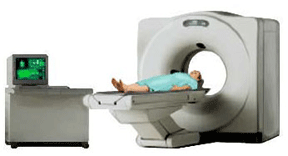 Imaging Tests: Weighing the Radiation Risk http://health.usnews.com/health-news/patient-advice/articles/2015/03/06/imaging-tests-weighing-the-radiation-risk Ask if that CT scan – for you or your child – is really needed. You walk into the emergency room, clutching your right side in pain. When the ER doctor examines your belly, she suspects you have appendicitis. But she wants to confirm the diagnosis before sending you for surgery. Or maybe your son falls off the high playground bars, and while he has a good-sized bump on his head, he seems otherwise fine. Should either of you have a computed tomography exam – a CT scan? As with any medical test or procedure, there’s a risk-benefit balance to consider.
Radiation Risk
Some 75 million CT scans are done each year in the United States – and they’re great diagnostic tools. A CT exam uses a specialized type of X-ray and a rotating scanner to take a variety of images from different angles around your body. CT exams rapidly produce clear, detailed, cross-sectional pictures. They facilitate diagnosis and treatment of trauma, cancers, cardiovascular disease, infections and congenital conditions, some life-threatening.
But the test itself may pose a health risk. CT scans use ionizing radiation, a known (although relatively weak) carcinogen. Research suggests that CT scans may raise cancer risk – although it would still be very low – particularly in childhood. In addition, studies find radiation doses used in CT vary widely among facilities, even for the same procedure on similar patients.
Rebecca Smith-Bindman, a physician and professor of radiology and biomedical imaging at the University of California–San Francisco, has published a number of papers on CT safety issues, dose variations and the notable rise in CT scans performed.
The increased exposure is a concern because of the high radiation dosage used, Smith-Bindman says: Compared to a standard chest X-ray, the radiation dose for a chest CT scan involves radiation that’s 500 times higher or more.
Magnetic resonance imaging and ultrasound exams don’t use ionizing radiation and are considered safer. MRI uses a magnetic field and high-frequency radio waves, while ultrasound uses sound waves to create images.
CT Conversation
Debra Ritzwoller of Colorado is the mother of a teenage cancer survivor. Her daughter, now 16, just marked her three-year anniversary of completing treatment for a rare solid tumor.
Ritzwoller, a health economist who does cancer-related research. was concerned about “surveillance” CT scans, used to monitor cancer survivors for relapse or recurrence. There’s little evidence to support the effectiveness or value of regular surveillance CTs, Ritzwoller says. So she had a conversation with her daughter’s oncologist. This led to her daughter’s surveillance exams being switched from CTs to ultrasounds.
Don’t hesitate to ask about alternatives, she advises, like using blood tests to monitor patients for cancer markers instead of (not in addition to) CT scans. “I would express concern about radiation exposure,” she says. “That’s a good way to start the conversation.”
Smaller Bodies, Lower Doses
A 2012 study of British children showed evidence of a CT radiation-cancer link, and a 2013 study of U.S. children found having these tests in childhood brings a significant increase in risk of developing a cancer such as leukemia or a solid tumor.
Diana Miglioretti, a professor of biostatistics at the UC Davis School of Medicine and lead author of the U.S. study, found CT imaging “doubled in the younger kids and tripled in the older kids” over a 10-year period, after which the rate of usage stabilized.
A striking study finding was the large inconsistency in radiation exposure. “Children who get an abdomen CT can get a very different dose depending on where they go and who does the exam,” she says. Because of their smaller size, children require lower radiation doses for CTs to produce diagnostic-quality images.
Based on current CT use and looking at the five most common pediatric CT exams performed combined – of the head, abdomen, pelvis, chest or spine – the researchers estimated that if about 4 million CTs were performed, that would cause 4,800 cancers.
The type of cancer was related to the body part on which the CT was done. For example, leukemia risk was highest for head CTs, especially for children under 5, Miglioretti says, because of the active bone marrow in their skulls.
Still, the risk for an individual patient of developing cancer from a CT radiation exposure “is very, very low,” she notes. “So if the physician says an exam’s medically necessary – then yes, you should definitely do the exam.”
Effect of ionising radiation on health, shown through Baby Tooth Survey
 They found that the radioactive strontium-90 levels in the baby teeth of children born from 1945 to 1965 had risen 100-fold and that the level of strontium-90 rose and fell in correlation with atomic bomb tests.
Early results from the Baby Tooth Survey, and a U. S. Public Health Service study that showed an alarming rise in the percentage of underweight live births and of childhood cancer, helped persuade President John F. Kennedy to negotiate a treaty with the Soviet Union to end above-ground testing of atomic bombs in 1963.
St. Louis Baby Tooth Survey, 1959-1970, Washington University School of Dental Medicine Though many members of the group were vocally against nuclear testing, CNI never took an official position for or against the testing of nuclear weapons. Scientific facts were assembled, studied by the Committee and its Scientific Advisory Group, and then made available to the public through regular bulletins, newsletters, and a speaker’s bureau…. Continue reading
The Radiation and Public Health Project
Japan’s deadly game of nuclear roulette, Japan Times, BY LEUREN MORET MAY 23 2004“……The Radiation and Public Health Project, a group of independent U.S. scientists, has collected 4,000 baby teeth from children living around nuclear power plants. These teeth were then tested to determine their level of Strontium-90, a radioactive fission product that escapes in nuclear power plant emissions.
Unborn children may be exposed to Strontium-90 through drinking water and the diet of the mother. Anyone living near nuclear power plants is internally exposed to chronically low levels of radiation contaminating food and drinking water. Increased rates of cancer, infant mortality and low birth weights leading to cognitive impairment have been linked to radiation exposure for decades.
However, a recent independent report on low-level radiation by the European Committee on Radiation Risk, released for the European Parliament in January 2003, established that the ongoing U.S. Atomic and Hydrogen Bomb Studies conducted in Japan by the U.S. government since 1945 on Hiroshima and Nagasaki survivors underestimated the risk of radiation exposure as much as 1,000 times.
Additionally, on March 26 this year — the eve of the 25th anniversary of the worst nuclear disaster in U.S. history, at the Three Mile Island plant in Pennsylvania — the Radiation and Public Health Project released new data on the effects of that event. This showed rises in infant deaths up to 53 percent, and in thyroid cancer of more than 70 percent in downwind counties — data which, like all that concerning both the short- and long-term health effects, has never been forthcoming from the U.S. government……..http://www.japantimes.co.jp/life/2004/05/23/to-be-sorted/japans-deadly-game-of-nuclear-roulette/#.VMMMH9KUcnk
Deformities and deaths of babies due to the USA nuclear industry
 Video: Cemetery blocks filled with babies downwind of US nuclear site — “This needs to be talked about, the children… murdered” — Mother: My newborns died within hours, tumors all over, brain disintegrated after massive stroke — “Body parts, cadavers, fetuses… the nuclear industry took in the dead of night… from all over US”http://enenews.com/video-cemetery-blocks-filled-babies-downwind-nuclear-site-be-talked-about-children-murdered-mother-newborns-died-hours-tumors-all-brain-disintegrated-after-massive-stroke?utm_source=feedburner&utm_medium=email&utm_campaign=Feed%3A+ENENews+%28Energy+News%29
Kay Sutherland (Walla Walla, Washington) published Nov 8, 2010 (emphasis added):
- We’re in the Walla Walla Mountain View Cemetery standing where the babies’ graves are… Many children all died in the same era… (counting tombstones) 1950, 1950, 1950, 1950, 1945 — All of these babies need to have a voice in what Hanford has done. From this section… back towards my car, is all babies. Some of them do not have marked graves, my cousin was one.
- All of them here say ’48, ’49, ’48, ’48, ’48… ’55, ’55, ’56… ’48, ’48, ’48… This is what needs to be talked about — the children… our future, that Hanford murdered… ’46, ’46, ’46… this area must be the 1954 and ’55 area… It breaks your heart to know that there was so much sadness… because of a handful of men who decided to play god and took away… our life, our hope. ’62, ’62, ’62.
- My daughter [Jennifer] was born in 1963 [and is] buried here… double club feet… tumors throughout her body, an enlarged liver, and died from a massive stroke which disintegrated her brain. She lived 15 hours.
- It doesn’t even tell you about all the miscarriages… I myself had 4 miscarriages.
- My children are right over here… Todd lived 36 hours… These babies need to have a voice in what has happened… Todd weighed 3 lbs, 14 oz… the placenta didn’t develop.
- Jennifer, her birth was very traumatic… I hemorrhaged… filled my bed with blood. The doctor told me… when the water broke, it was green, foul smelling… It took her 2 hours… to die after she had her stroke. They never brought her to me so I could hold her… I wasn’t even told until the following day she was dead… It just goes on and on and on.
According to the Walla Walla coroner’s website, they have ‘unclaimed’ remains of nearly 100 cremated babies. 95% of the babies died between 1946 and the 1970s (56 of 57 boys; 33 of 36 girls). “Hanford produced its first plutonium on Nov 6, 1944 [until] the reactor shutdown in the 1970s.” –Source
Sutherland also noted this about Jennifer: “Her body had been removed and I wasn’t even told that she was cremated. I thought that she had been buried here… she sat on the shelf of the mortuary for 4 years… It was big secret that was kept from me, from my whole family… Everything that I thought was true wasn’t. What was true I didn’t know… Jennifer was delivered by one of the old doctors of Walla Walla… the old doctors were in-on-the-know with Hanford… His very church-going friend… did the experiments on the prisoners… She was autopsied by the very same pathology lab that autopsied Hanford people. They would… steal them away from the mortuaries over there, bring them to Walla Walla, have the pathology lab do their tests or take their body samples or parts, and take them back to Hanford… without their families ever knowing… The nuclear mausoleum [is] under the direction of… Washington St. University… They have body parts, cadavers, fetuses — any kind of sample that you can imagine… that the nuclear industry took in the dead of night, under cloak-and-dagger terms, from all over the US [and] nuclear facilities.”
Need to research effects of electromagnetic radiation from cellphones to children
 Radiation watchdog wants harder look at children and smartphones YLE UUTISET, UUTISET NEWS 9 Dec 14 Finland’s Radiation and Nuclear Safety Authority STUK hopes to see more research on the possible impact on children of the radiation emitted by smartphones, reports Yle’s investigative programme MOT. However STUK does not have the funding for a study and government spending cuts have closed its own radiation biology laboratory.
According to a study by mobile services operator DNA, 75% of children in Finland between the ages of 6 and 12 have their own smartphones.
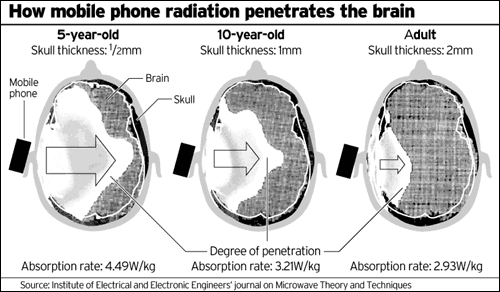
Smartphones emit more radiation than do basic talk-and-text cell phones since they generate radiation even when they are not actively being used. No data is available on what the daily level of radiation is that children are subject to from these devices, or how this radiation affects children in particular.
“Overall estimates concerning the current situation are not available. We do not know the impact, for example, of the levels of internet usage. This would be an interesting research subject,” says Tommi Toivonen, Head of Laboratory at STUK’s Department of Radiation Practices Regulation.
More specifically, the biological effects of this radiation on children are unknown……….http://yle.fi/uutiset/radiation_watchdog_wants_harder_look_at_children_and_smartphones/7676646
Hanford nuclear site area has dramatically high rate of babies born without brains
New data shows babies missing brains at 2,500% national rate in county by nuclear site — Mother: Officials “shut me down the minute I mentioned Hanford!… WE NEED ANSWERS!” — Experts: No birth defect is more extreme; It’s the most significant impact of radiation on developing embryos (AUDIO) http://enenews.com/79334?utm_source=feedburner&utm_medium=email&utm_campaign=Feed%3A+ENENews+%28Energy+News%29

“Nothing [is] more extreme than anencephaly” –Dr Michael Grodin, Boston U. School of Medicine
‘Fatal Birth Defects Surge’ – Dr. Kathy Lofy, Washington Dept.of Health (emphasis added): Anencephaly is a rare birth defect in which the brain and the skull of the baby do not fully form [and is] not compatible with life… The most well known risk factor… is a deficiency in folic acid… that’s one of the possibilities we’re looking into [note that mothers in the birth defect cluster had much higher rates of folic acid consumption than the control group chosen by officials]…Hanford nuclear facility has been one concern of the community. We worked really closely with our radiation experts… who work closely with… Hanford. There have been no recent releases [note how she rephrases this] — no recent CHANGE in radiation releases. We can’t really determine any pathway by which radiation could affect all the women in the 3-county area [note all 3 counties surround Hanford]… We’re working with the doctors to make sure we’re identifying all the cases… It’s very important to figure out the rates.
Dr. Wladimir Wertelecki, MD, (Chair of Medical Genetics at U. of S. Alabama), Dr. Helen Caldicott’s Crisis Without End, Oct 2014: “The most significant negative impact of radiation on a developing embryo includes anencephaly… Two US studies… sponsored by the[CDC and published in 1988] sought to determine the… impact of ionizing radiation nearHanford… One study detected higher neural tube defect rates [e.g. Anencephaly, Spina Bifida] in two counties near the nuclear complex and the other demonstrated higher rates of neural tube defects in parents exposed… to low levels of radiation.”
Physicians for Social Responsibility: Hanford documents [reveal] incredible contamination of the environment and exposure of large numbers of citizens to dangerous amounts…Eight plutonium production reactors dumped a daily average of 50,000 curies of radioactive material into the Columbia... [In 1949] 8,000 curies of iodine-131 were [secretly] released [over] an area o 200 by 40 miles, no warnings were given… [`400 times TMI’s release of] 15 -24 curies — PSR: Contamination has not and will not stay inside Hanford’s boundaries… Over 300 miles of the Columbia… are threatened… [Fires in] 2000… burned three radioactive waste sites [and] plutonium was detected in nearby communities. — PSR: Hanford is the most contaminated site in the Western Hemisphere… At least 200-square miles of groundwater… is contaminated and migrating to the Columbia.
Nuclear engineer Arnie Gundersen on Nuclear Hotseat, Nov. 12, 2014 (at 34:00 in): Birth defect issues occur in the 2nd [generation after radiation exposure] — especially the 3rd and 4th.
Washington Anencephaly Investigation, Oct 2014:
- Anencephaly in Benton, Franklin, YakimaCounties (next to Hanford) from Jan 1 to Oct 17, 2014: 9 cases in 290 days with est. 6,423 births (based on 8,084 in 2013) —RATE: 14 cases per 10,000 births
- Anencephaly in Yakima County from Jan 1 to Jun 6, 2014: 2 cases in 157 days wirh est. 1,700 births (based on 3,953 in 2013) – RATE: 11.8 cases per 10,000 births
- Anencephaly in Yakima County from Jun 7 to Oct. 17, 2014: 3 cases in 133 days out of est. 1,440 births (based on 3,953 in 2013) — RATE: 20.8 cases per 10,000 births (2,860% of US national rate)
CDC 2010 statistics, released 2013: Anencephaly 313 cases; RATE: 0.73 per 10,000 births.
Instead of using the 0.73 rate, officials claim the national rate is 2.1, nearly 3 times higher. The rate of 2.1 is from a study using data from 2004-2006 that estimates the anencephaly rate, andonly uses data from less than 15 states — unlike the CDC report above which is based on the most current data, uses data from all 50 states, and is not an ‘estimate’.
Nikki Shelton, mother of baby w/ neural tube defect (e.g. Anencephaly, Spina Bifida) 13 mi. from Hanford, Nov 6, 2014: This is not something that is going away… the numbers are increasing. The last teleconference I was in shut me down the minute I mentioned Hanford! … let’s not let the department of health just sweep this under the rug…WE NEED ANSWERS!
Young people at risk of brain tumours from ionising radiation
Radiation a risk factor for brain tumors in young people, study finds Medical Xpress 3 Nov 14 In people under age 30, radiation is a risk factor for a type of brain tumor called a meningioma, a Loyola University Medical Center study has found. Researchers analyzed records of 35 patientswho were diagnosed with meningiomas before age 30. Five had been exposed to ionizingradiation earlier in their lives. They include two patients who received radiation for leukemia at ages 5 and 6; one who received radiation at age 3 for a brain tumor known as a medulloblastoma; and one who received radiation for an earlier skull base tumor that appeared to be a meningioma. The fifth patient had been exposed at age 9 to radiation from the Chernobyl nuclear power plant disaster in Ukraine. Twenty years later, he was diagnosed with a meningioma.

In the five patients, the average latency period for the tumors was 23.5 years.
The study was published in the online journal Neuroscience Discovery.
“The results of this preliminary study have prompted us to look closely at radiation’s effects on the brain,” said Loyola neurosurgeon Vikram Prabhu, MD, first author of the study. Dr. Prabhu specializes in treating brain tumors……….
Researchers so far have identified 14 meningioma patients who were exposed to radiation earlier in their lives. They include three patients who were exposed to Chernobyl radiation and 11 patients who received therapeutic radiation for such conditions as leukemia, medulloblastoma tumors and fungal infections of the scalp……….
The study is titled “Intracranial meningiomas in individuals under the age of 30; Analysis of risk factors, histopathology and the recurrence rate.”
 Explore further: Chest radiation to treat childhood cancer increases patients’ risk of breast cancer
More information: “Intracranial meningiomas in individuals under the age of 30; Analysis of risk factors, histopathology, and recurrence rate.” Neuroscience DiscoveryISSN 2052-6946. www.hoajonline.com/neuroscienc… stract/2052-6946/2/1

28 of 32 Matsudo city children tested had thyroid nodules (≦5.0mm) but no medical follow-up,
 28 of 32 testees diagnosed A2 in thyroid inspection of Matsudo city Chiba http://fukushima-diary.com/2014/10/28-32-testees-diagnosed-a2-thyroid-inspection-matsudo-city-chiba/ Iori Mochizuki 28 of 32 testees were diagnosed as “A2″ in the thyroid inspection of Matsudo city, Chiba. The test was implemented from 6/1/2014 to 8/31/2014 and the result was announced on 9/26/2014.
A2 is given when the testee has thyroid nodule (≦5.0mm) or cyst (≦ 20.0mm). Matsudo city government however announces they won’t provide those testees with any medical follow-up for some reason.
The testees were supposed to be born 4/2/1992 ~ 4/1/2011. However, the children who already had the subjective symptoms were not given the right to have the test. The municipal government hasn’t made any announcement about why these children were eliminated from the testees.
1 This Month
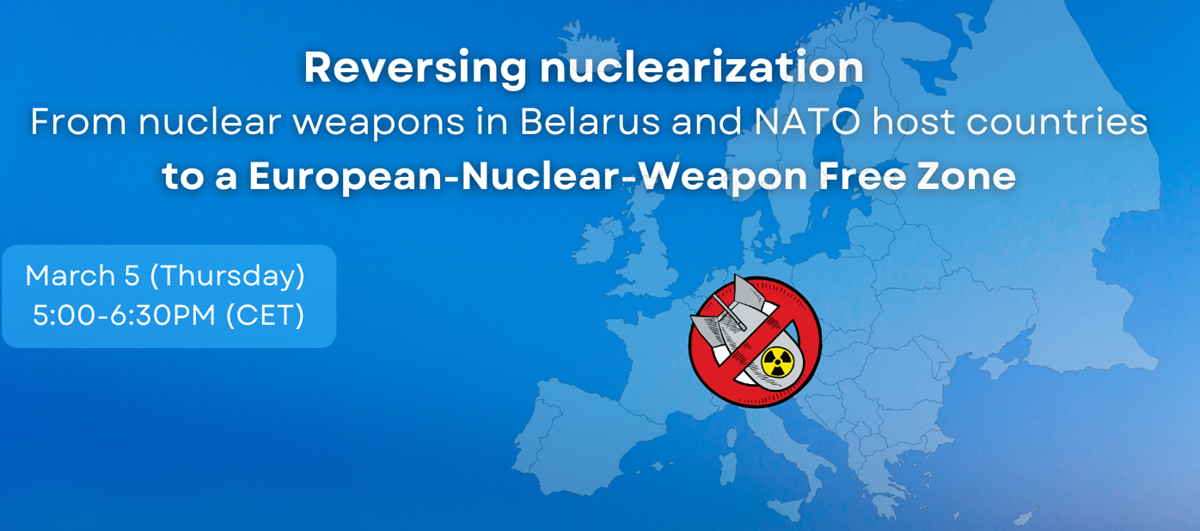
5 March -Online – Reversing nuclearization:
From nuclear weapons in Belarus and NATO host countries to a European-Nuclear-Weapon Free Zone
11am-12:30pm Eastern Time USA / 5pm-6:30pm CET

of the week – Advocating for a
nuclear free beach – https://www.samuellawrencefoundation.org/
The Samuel Lawrence Foundation advocates for a Nuclear Waste Free Beach at San Onofre, join us and take action!

10 March A LIVE WEBINAR THE REAL EFFECTS OF NUCLEAR POWER
What the Industry Isn’t Telling Us
1:00 PM Mountain, 2 pm Central, 3 pm Eastern. Live on the Keepers of the Water Facebook page

18 March Webinar @ 1 PM EST: An Assessment of SMR Projects: The Case of Canada
register for the zoom:
https://us02web.zoom.us/webinar/register/WN_o8BIIOUvQ2ONJR1nta65DQ#/registration

of the week – STOP SMALL MODULAR REACTORS IN CANADA
To see nuclear-related stories in greater depth and intensity – go to https://nuclearinformation.wordpress.com
-
Archives
- March 2026 (38)
- February 2026 (268)
- January 2026 (308)
- December 2025 (358)
- November 2025 (359)
- October 2025 (376)
- September 2025 (258)
- August 2025 (319)
- July 2025 (230)
- June 2025 (348)
- May 2025 (261)
- April 2025 (305)
-
Categories
- 1
- 1 NUCLEAR ISSUES
- business and costs
- climate change
- culture and arts
- ENERGY
- environment
- health
- history
- indigenous issues
- Legal
- marketing of nuclear
- media
- opposition to nuclear
- PERSONAL STORIES
- politics
- politics international
- Religion and ethics
- safety
- secrets,lies and civil liberties
- spinbuster
- technology
- Uranium
- wastes
- weapons and war
- Women
- 2 WORLD
- ACTION
- AFRICA
- Atrocities
- AUSTRALIA
- Christina's notes
- Christina's themes
- culture and arts
- Events
- Fuk 2022
- Fuk 2023
- Fukushima 2017
- Fukushima 2018
- fukushima 2019
- Fukushima 2020
- Fukushima 2021
- general
- global warming
- Humour (God we need it)
- Nuclear
- RARE EARTHS
- Reference
- resources – print
- Resources -audiovicual
- Weekly Newsletter
- World
- World Nuclear
- YouTube
-
RSS
Entries RSS
Comments RSS
 nuclear-news