One moment from my work in the USA in the early 1980s stands out in my memory. I’d driven from Chicago to Cleveland at the invitation of the Health and Safety Officer of the US Boilermakers Union to speak to the members meeting held on the night ahead of the recruitment of members for work on the annual ‘clean-up’ of the local Nuclear Power plant. The hired workers would be ‘radiation sponges’ – short-term casuals recruited for the ‘dirty jobs’ that would result in significant radiation exposures sometimes up to the permitted annual exposure limit and ‘let go’ if they reached that limit. The practice offered some protection to the company’s full -time employees whose skills would be needed on an ongoing basis and whose exposures needed to be kept below the limit. The meeting was well attended , rowdy, with a lot of questions and discussion which spilled over into the carpark after the meeting closed. I noticed one man hanging back from the circle and invited him to join and share his thoughts. As I recall them the essences was:
“I will be going in to apply for work tomorrow. I understand what you shared about the risks . . . no safe level of exposure and chance of getting cancer perhaps 20 years from now . . . It will put a roof over my family’s heads and food on the table . . . BUT my wife and i have had all the family we want. If we hadn’t, what you shared about the genetic risks, the damage to our children and future generations . . . no I wouldn’t be going . . . “
It is a sad fact that workers, both men and women will choose, often from necessity, to put their health at risk from the work environment. What is however consistent in my experience of working on radiation and other occupational health and safety issues is that they are far more concerned, cautious and likely to prioritise safety when it comes to risks to their children.
We now have solid evidence that workers in nuclear power plants routinely exposed to radiation face significantly increased cancer risks, risks of cardiovascular disease including heart attacks and strokes, dementia and potentially other health effects. There is also an increased risk of genetic damage that can be passed on to their children and future generations. But perhaps most significant of all there is now solid evidence of increased rates of leukaemia in children living close to nuclear power plants.
To put it simply and in language that will resonate with workers and their families in the communities around the seven nuclear power plant sites the federal Liberal-National Coalition proposes to build if elected to government; nuclear kills kids. It matters little whether or not these nuclear plants can be built on time, within budget, make a contribution to climate change, reduce electricity prices, or secure a long-term energy future; these nuclear power plants will kill kids who live close by. They cannot operate without routine releases of radioactive material into the environment and our young will be exposed and are particularly susceptible to any exposure that results.
Now add to that if you care that women are more susceptible than men, that workers in these plants face greater exposure and health risks than adults in the community, that nuclear plants have and will continue to have both major accidents and less major ‘incidents’ resulting in radiation releases, community exposures and consequent health damage. Add also that quite apart from the workers and others exposed when these plants need to be decommissioned, the radioactive wastes resulting from perhaps 30-50 years life will need to be safely stored and kept isolated from human contact for many thousands of years longer than our recorded human history. And, again if you care, also add in the concerns around proliferation of nuclear weapons which historically has occurred on the back of, enabled by and sometimes concealed by countries’ developing so called peaceful nuclear power.
All these arguments add weight to the absurdity of Australia starting and the world continuing down this nuclear power path. But if we want a single issue that strikes at the heart of human concerns it is this – and forgive me saying it again, it needs to be repeated many times until the electorate in Australia hears it loud and clear – Nuclear Kills Kids
The main perpetrators of violence against children are states armed with nuclear weapons, writes Tim Wright.
Nuclear weapons are designed to destroy cities; to kill and maim whole populations, children among them.
In a nuclear attack, children are more likely than adults to die or suffer severe injuries, given their greater vulnerability to the effects of nuclear weapons: heat, blast and radiation. The fact that children depend on adults for their survival also places them at higher risk of death and hardship in the aftermath of a nuclear attack, with support systems destroyed.
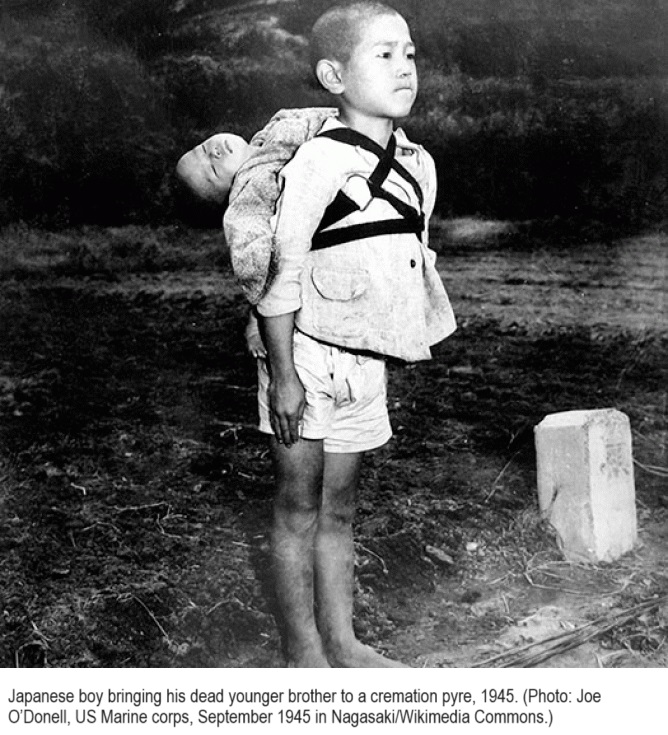
Tens of thousands of children were killed when the United States detonated two relatively small nuclear weapons (by today’s standard) over the Japanese cities of Hiroshima and Nagasaki in 1945.
Many were instantly reduced to ash and vapour. Others died in agony minutes, hours, days or weeks after the attacks from burn and blast injuries or acute radiation sickness. Countless more died years or even decades later from radiation-related cancers and other illnesses. Leukaemia – cancer of the blood – was especially prevalent among the young.
In Hiroshima and Nagasaki, the scenes of devastation were apocalyptic: Playgrounds scattered with the dead bodies of young girls and boys. Mothers cradling their lifeless babies. Children with their intestines hanging out of their bellies and strips of skin dangling from their limbs.
At some of the schools close to ground zero, the entire student population of several hundred perished in an instant. At others, there were but a few survivors. In Hiroshima, thousands of school students were working outside to create firebreaks on the morning of the attack. Approximately 6,300 of them were killed.
Those children who, by chance, escaped death carried with them severe physical and psychological scars throughout their lifetimes. What they witnessed and experienced on 6 August and 9 August 1945 and in the days that followed was permanently seared into their memories.
Thousands of children lost one or both parents, as well as siblings. Some “A-bomb orphans” were left to roam the streets, with orphanages exceeding capacity.
Many of the babies who were in their mothers’ wombs at the time of the atomic bombings were also harmed as a result of their exposure to ionising radiation. They had a greater risk of dying soon after birth or suffering from congenital abnormalities such as brain damage and microcephaly, as well as cancers and other illnesses later in life.
Pregnant women in Hiroshima and Nagasaki also experienced higher rates of spontaneous abortions and stillbirths.
In communities around the world exposed to fallout from nuclear testing, children have experienced similar harm from radiation.
Since 1945, nuclear-armed states have conducted more than two thousand nuclear test explosions at dozens of locations, dispersing radioactive material far and wide
Among the general population, children and infants have been the most severely affected, due to their higher vulnerability to the effects of ionising radiation. Young children are three to five times more susceptible to cancer in the long term than adults from a given dose of radiation, and girls are particularly vulnerable.
In the Marshall Islands, where the United States conducted 67 nuclear tests, children played in the radioactive ash that fell from the sky, unaware of the danger. They called it “Bikini snow” – a reference to the atoll where many of the explosions took place. It burned their skin and eyes, and they quickly developed symptoms of acute radiation sickness.
For decades after the tests, women in the Marshall Islands gave birth to severely deformed babies at unusually high rates. Those born alive rarely survived more than a few days. Some had translucent skin and no discernible bones. They would refer to them as “jellyfish babies”, for they could scarcely be recognised as human beings.
Similar stories have been told by people living downwind or downstream of nuclear test sites in the United States, Kazakhstan, Ma’ohi Nui, Algeria, Kiribati, China, Australia and elsewhere.
We have a collective moral duty to honour the memories of the thousands of children killed in Hiroshima and Nagasaki, as well as those harmed by the development and testing of nuclear weapons globally. And we must pursue the goal of a nuclear-weapon-free world with determination and urgency, lest there be any more victims, young or old.
Under international humanitarian law and the Convention on the Rights of the Child, governments have a legal obligation to protect children against harm in armed conflict. To fulfil this obligation, it is imperative that they work together now to eliminate the scourge of nuclear weapons from the world.
In this report, we describe how nuclear weapons are uniquely harmful to children, based on the experiences of children in Hiroshima and Nagasaki and those living near nuclear test sites. We share their first-hand testimonies and depictions of the toll of nuclear weapons on their lives. And we explain how the ever-present fear of nuclear war – the possibility that entire cities might be destroyed at any given moment – causes psychological harm to children everywhere.
Finally, we make an urgent appeal to all governments to protect current and future generations of children by eliminating nuclear weapons, via the landmark UN Treaty on the Prohibition of Nuclear Weapons, which entered into force in 2021.
Key Findings
So long as nuclear weapons exist in the world, there is a very real risk that they will be used again, and that risk at present appears to be increasing.
In the event of their use, it is all but certain that many thousands of children – perhaps hundreds of thousands or more – would be counted among the dead and injured, and they would suffer in unique ways and out of proportion to the rest of the population.
In a nuclear attack, children would be more likely than adults:
To die from burn injuries, as their skin is thinner and more delicate and burns deeper, more quickly and at a lower temperature;
To die from blast injuries, given the relative frailty of their smaller bodies;
To die from acute radiation sickness, as they have more cells that are growing and dividing rapidly and are significantly more vulnerable to radiation effects;
To be unable to free themselves from collapsed and burning buildings or take other steps in the aftermath that would increase their chances of survival;
To suffer from leukaemia, solid cancers, strokes, heart attacks and other illnesses years later as a result of the delayed effects of radiation damage to their cells; and
To suffer privation in the aftermath of the attacks, as well as psychological trauma leading to mental disorders and suicide.
Furthermore, babies who were in their mothers’ wombs at the time of the attack would be at greater risk of:
Death soon after birth or in early childhood;
Microcephaly, accompanied by intellectual disability, given the higher vulnerability of the developing brain to radiation damage;
Other developmental abnormalities;
Growth impairment due to the reduced functioning of the thyroid; and
Cancers and other radiation-related illnesses during childhood or later in life.
These horrifying realities should have profound implications for policy-making in countries that currently possess nuclear weapons or those that support their retention as part of military alliances.
They should also prompt organisations dedicated to the protection of children and the promotion of their rights to work to address the grave global threat posed by nuclear weapons.
While children played no part in developing these doomsday devices, it is children who would suffer the most in the event of their future use – one of the myriad reasons why such weapons must be urgently eliminated.
This is the Executive Summary from the longer report, The Impact of Nuclear Weapons on Children, by Tim Wright and published by ICAN, which can be found in full on the ICAN website. It is republished with permission of the author.
Standards don’t protect them and studies dismiss them
By Linda Pentz Gunter
In a peer reviewed article published in the British Medical Journal Pediatrics Open in October, my Beyond Nuclear colleague, Cindy Folkers and I, reviewed the studies currently available that look at the impact on children from radiation exposures caused by the nuclear power sector.
In particular, we looked at the disproportionately negative impact on children living in disadvantaged communities, primarily those of color. As we wrote in the article:
“From uranium mining and milling, to fuel manufacture, electricity generation and radioactive waste management, children in frontline and Indigenous communities can be disproportionately harmed due to often increased sensitivity of developing systems to toxic exposures, the lack of resources and racial and class discrimination.”
At about the same time, and as if to confirm our hypothesis, the story of the Jana elementary school in Missouri began to break.
The school is in a predominantly Black community in northern St. Louis and the US army corps of engineers had been called in to assess radioactivity found in classrooms, playgrounds and on sports fields at the school after findings of unacceptable levels of radioactivity on the premises were revealed in an independent report conducted by Dr. Marco Kaltofen, President of Boston Chemical Data Corporation.
The radioactive contamination found at the school was, as the report described it, “consistent with the radioactive legacy uranium processing wastes notoriously found in the heavily contaminated Coldwater Creek in North St. Louis County, MO, and in low-lying areas subject to flooding from the creek.”
The report concluded that “radiological contamination exists at unacceptable levels (greater than 5.0 net pCi/g as alpha radiation) at the Jana School property.”
Those wastes, dating back from the 1940s to 1960s, were produced by a company called Mallinckrodt, which processed uranium from the Belgian Congo as part of the Manhattan Project. The radioactive waste they produced was illegally dumped in what was then surrounding countryside and at the West Lake Landfill. It seeped into creeks and spread into parks and even homes.
A story we ran on Beyond Nuclear International in March 2018 relates the struggle of residents to get their community cleaned up. Atomic Homefront, a compelling documentary about this fight, brings home exactly the toll this environmental crime has taken on people living there, especially women.
Radioactive lead-210, thorium and radium-226 were among the isotopes found at Jana Elementary school, at levels far higher than those considered permissible (but not safe) at Superfund sites. The lead-210 was at levels 22 times what would be considered “expected” in such an environment.
Why had it taken so long to discover this immense and unacceptable risk to children?
Jana’s PTA president, Ashley Bernaugh, believes she knows the answer.
“Jana elementary’s radioactive past looks like a lot of other communities where hazardous waste has been allowed to exist in predominantly minority communities and in lower middle income communities, where it never would have been allowed in upper income level communities because of the public outrage,” she told The Guardian.
By November 9 the corps had declared that radiation levels at the school “showed no levels of radiation higher than ‘the level of radioactivity Mother Nature already provides.’”
“Mother Nature” is a euphemistic reference to “background radiation,” already problematic given the decades of atomic testing and major nuclear accidents that have added to what “background” radiation levels once were but are no longer. Of far greater concern is that these levels, while likely not even safe for adults, are certainly not safe for children.
This determination of what is “safe” is based on a standard that is not only outdated but was wrong from the start. Here is what we wrote about this in our BMJ article.
“Pregnancy, children and women are underprotected by current regulatory standards that are based on ‘allowable’ or ‘permissible’ doses for a ‘Reference Man’. Early in the nuclear weapons era, a ‘permissible dose’ was more aptly recognized as an ‘acceptable injury limit,’ but that language has since been sanitized.”
Reference Man is defined as a nuclear industry worker 20–30 years of age, who weighs around 154 pounds, is 67 inches tall and is a Caucasian Western European or North American in habitat and custom.
“Very early research conducted in the USA in 1945 and 1946 indicated higher susceptibility of pregnancy to radiation exposure. Pregnant dogs injected with radiostrontium had defects in their offspring and yet, complete results of these studies were not made public until 1969,” we wrote.
“By 1960 however, U.S. experts were clearly aware that research indicated higher susceptibility of children, when the Federal Radiation Council (established in 1959 by President Eisenhower) briefly considered a definition for ‘Standard Child’—which they subsequently abandoned in favor of maintaining a Standard Man definition, later renamed Reference Man.”
Reference Man still stands, although our organization, in partnership with the Gender + Radiation Impact Project, are working to get it changed to Reference Girl. (If you are interested in learning more about this, you can join our online classes.)
Why are children, and especially female children, as well as women and especially pregnant women, more susceptible to harm from radiation exposure? This is not fully understood and regulatory practices, particularly in the establishment of protective exposure standards, have failed to take this difference into account.
An examination of Navajo babies born between 1964 and 1981 showed that congenital anomalies, developmental disorders and other adverse birth outcomes were associated with the mother living near uranium mines and wastes.
Other studies — among Aboriginal communities in Australia and members of Indigenous tribes in India —showed similar outcomes. But so-called anecdotal evidence is invariably dismissed in favor of “statistical insignificance”.
Even perhaps the most famous study, in Germany, of children living near nuclear plants showing elevated rates of leukemia directly correlated to the proximity of their homes to the nuclear sites, was dismissed with claims that the doses were simply too low to have such an impact.
As we concluded in our BMJ article, which is fully accessible and can be read in its entirety here, “more independent studies are needed focused on children, especially those in vulnerable frontline and Indigenous communities. In conducting such studies, greater consideration must be applied to culturally significant traditions and habits in these communities.”
Linda Pentz Gunter is the international specialist at Beyond Nuclear and writes for and curates Beyond Nuclear International.
Radioactive fallout from atmospheric nuclear weapons testing in the 1950s and 1960s caused the greatest exposure of man-made radiation to humankind.
The radiation dose to the world’s population from these tests was estimated by UNSCEAR in 1993 at 30 million person-sieverts, which was 50 times more than the 600,000 person-sieverts from the Chernobyl accident in 1986.
The cumulative explosive power of the tests corresponded to 545 million tons of TNT, equivalent to 40,000 atomic bombs of the size dropped on Hiroshima in 1945.
However surprisingly few epidemiological studies of the possible health effects of atmospheric testing have ever been conducted. The few that were carried out had inconclusive results: no clear signature of raised leukemias, for example, was observed. But we should always apply the strict rule in epidemiology that absence of evidence does not provide evidence of absence (Altman and Bland, 1993). It just means that we have not been able to find the evidence yet.
However Dr Alfred Körblein, an independent researcher in Germany, has just found clear evidence. He has just published (Körblein, 2023) the results of his own statistical study of data on infant deaths from UNSCEAR (1993) data and other sources. He concluded that, after the atmospheric bomb tests, infant deaths definitely increased both in the United States and in Europe including the UK. He hypothesised this was an effect of radioactivity from bomb fallout (from strontium-90) on the immune systems of pregnant women.
In more detail, what Körblein’s study shows is that the bomb tests resulted in very high levels of radioactive fallout which remained suspended in the northern hemisphere for years afterwards. He reproduces charts showing high levels of strontium-90 fallout: similar levels of radioactive caesium-137, carbon-14, iodine-131, hydrogen-3 (tritium) and other nuclides would also have occurred at the same time.
These radionuclides would have been inhaled and ingested by everyone in the northern hemisphere, including pregnant women. We know that the immune systems of developing embryos and fetuses in pregnant women are extremely sensitive to radiation. The evidence produced in the study clearly shows increased levels of perinatal deaths (between >24 weeks’ gestation and 7 days after birth) and neonatal deaths (within 28 days of birth) in several countries including the UK. In other words, the radioactivity from these bomb tests is thought to have produced teratogenic effects in the offspring of pregnant women in the years during and following the bomb tests.
Körblein concludes that “atmospheric nuclear weapons testing may be responsible for the deaths of several million babies in the Northern Hemisphere”. I agree with his analysis and his sobering conclusion. Here is a rough cross-check. If we accept the dose modelling carried out by UNSCEAR in their 1993 estimate of 30 million person-sieverts (which I accept) and apply a commonly-used risk factor for fatal cancer of 10% per Sv, then we arrive at a crude figure of 3 million deaths – similar to Korblein’s estimate.
Körblein A (2023) Statistical modeling of trends in infant mortality after atmospheric nuclear weapons testing. PLoS ONE 18(5): e0284482. https://doi.org/10.1371/journal.pone.0284482
UNSCEAR (1993) United Nations Scientific Committee on the Effects of Atomic Radiation. UNSCEAR 1993 report to the General Assembly. United Nations, New York.
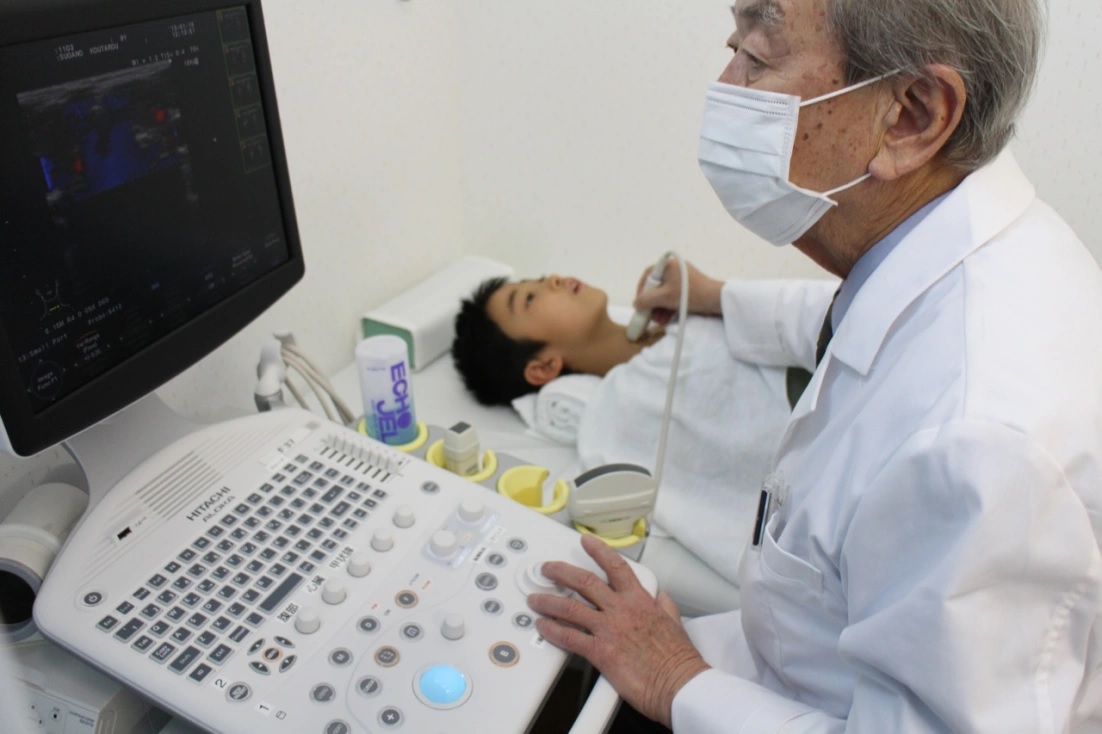
Fukushima Prefecture has been implementing thyroid gland examinations for children (born between April 2, 1992 and April 1, 2012) who were living in the prefecture at the time of the earthquake and nuclear disaster. The results are summarized in the table below: [on original]
In addition to the 295 children with thyroid cancer confirmed in the survey (excluding one with benign nodules), 43 other patients were identified outside of the tally in the cancer registry, bringing the total number of children aged 18 or younger with malignant or suspected malignant thyroid cancer who were living in Fukushima Prefecture at the time of the accident to 338. Note that the screening uptake rate at the age of 25 is low.
Surveys have found thyroid cancer in children at a rate dozens of times higher than normal.
Iraqi Kids Test Positive for Depleted Uranium Remnants Near Former US Air Base, https://truthout.org/articles/iraqi-children-test-positive-for-depleted-uranium-near-former-us-air-base/Mike Ludwig, September 19, 2019 For the first time, independent researchers have found that the bodies of Iraqi children born with congenital disabilities, such as heart disease and malformed limbs, near a former United States air base in southern Iraq are contaminated with high levels of radioactive heavy metals associated with toxic depleted uranium pollution leftover from the 2003 U.S.-led invasion.
The findings appear to bolster claims made by Iraqi doctors who observed high rates of congenital disabilities in babies born in areas that experienced heavy fighting during the bloody first year of the most recent Iraq war.
In 2016, researchers tested the hair and teeth of children from villages in proximity to the Talil Air Base, a former U.S. air base, located south of Baghdad and near the city Nasiriyah. They found elevated levels of uranium and of thorium, two slightly radioactive heavy metals linked to cancer and used to make nuclear fuel.
Thorium is a direct decay product of depleted uranium, a chemically toxic byproduct of the nuclear power industry that was added to weapons used during the first year of the war in Iraq. Thanks to its high density, depleted uranium can reinforce tank armor and allow bullets and other munitions to penetrate armored vehicles and other heavy defenses. Depleted uranium was also released into the environment from trash dumps and burn pits outside U.S. military bases.
Mozhgan Savabieasfahani, an independent researcher based in Michigan and a co-author of the study, said that levels of thorium in children born with congenital disabilities near the Talil Air Base were up to 28 times higher than in a control group of children who were born without congenital disabilities and live much further away.
“We are basically seeing a depleted uranium footprint on these children,” Savabieasfahani said in an interview.
Using statistical analysis, the researchers also determined that living near the air base was associated with an increased risk of giving birth to a child with congenital disabilities, including congenital heart disease, spinal deformations, cleft lip and missing or malformed and paralyzed limbs. The results of the study will soon be published in the journal Environmental Pollution, where the authors argue more research is needed to determine the extent that toxins left behind after the U.S.-led war and occupation are continuing to contaminate and sicken the Iraqi population.
For years following the 2003 U.S-led invasion, Iraqi doctors raised alarms about increasing numbers of babies being born with congenital disabilities in areas of heavy fighting. Other peer-reviewed studies found dramatic increases in child cancer, leukemia, miscarriages and infant mortality in cities such as Fallujah, which saw the largest battles of the war. Scientists, Iraqi physicians and international observers have long suspected depleted uranium to be the culprit. In 2014, one Iraqi doctor toldTruthout reporter Dahr Jamail that depleted uranium pollution amounted to “genocide.”
The U.S. government provided Iraq’s health ministry with data to track depleted uranium contamination but has said it would be impossible to identify all the material used during wartime. War leaves behind a variety of potentially toxic pollutants, and some researchers have cast doubt on the connection between depleted uranium and congenital disabilities, noting that Iraq has faced a number environmental problems in recent decades. However, political manipulation was suspected to have skewed results of at least one study, a survey of congenital disabilities released by the World Health Organization and the Iraqi government in 2013 that contradicted claims made by Iraqi doctors.
While the authors caution that more research is needed, by identifying the presence of thorium in the teeth and hair of Iraqi children born with congenital disabilities near the Talil Air Base, the latest studies draw direct links to depleted uranium and the U.S. military.
“Baby teeth are highly sensitive to environmental exposures,” said Savabieasfahani. “Such high levels of thorium simply suggest high exposure at an early age and potentially in utero.”
Up to 2,000 metric tons of depleted uranium entered the Iraqi environment in 2003, mostly from thousands of rounds fired by the U.S., according to United Nations estimates. Depleted uranium munitions were also fired by U.S. forces in Iraq, Kuwait and Saudi Arabia during the Persian Gulf War in 1993. Researchers and veterans have long suspected that depleted uranium could be a potential cause of Gulf War syndrome, a wide range of harmful symptoms experienced by thousands of service members for years after the war.
The U.S. has also imported thousands of tons of military equipment into Iraq, including tanks, trucks, bombers, armored vehicles, infantry weapons, antiaircraft systems, artillery and mortars – some of which were coated with depleted uranium. Much of this equipment eventually found its way into military junkyards, dozens of which remain scattered near former U.S. military bases and other installations across country.
Depleted uranium was also stored at U.S. military bases and was known to leak into the environment. The Talil Air Base, which served as a focal point for the new study, is only one of dozens of sites across Iraq where the U.S. military is believed to have left a highly toxic legacy.
“What we see here, and what we imply with this study, is that we could see this very same scenario around every single U.S. military base in Iraq,” Savabieasfahani said. “The exposure of pregnant mothers to the pollutions of war, including uranium and thorium, irreversibly damages their unborn children.”
In 2013, international observers reported that between 300 and 365 sites with depleted uranium contamination were identified by Iraqi authorities in the years following the 2003 U.S. invasion, with an estimated cleanup cost of $30 million to $45 million. In some cases, military junk contaminated with depleted uranium was being sold as scrap metal, spreading the contamination further. At one scrap site, children were seen climbing and playing on contaminated scrap metal.
Savabieasfahani, who has researched military pollution across Iraq, said the violence of war continues through pollution long after the carnage ends and the troops come home. Dropping tons of bombs and releasing millions of bullets leaves toxic residues in the air, water and soil of the “targeted population,” poisoning the landscape – and the people — for generations. Of course, U.S. war making in Iraq has not ended. The U.S. military continues to train Iraqi security forces and lead a coalition that carried out airstrikes against ISIS (also known as Daesh) insurgents in Iraq as recently as last week.
“The U.S. must be held responsible and forced to clean up all the sites which it has polluted. Technology exists for the cleanup of radiation contamination,” Savabieasfahani said. “The removal and disposal of U.S.-created military junkyards would go a long way toward cleaning toxic releases out of the Iraqi environment.”
The U.N. Internal Law Commission is currently circulating 24 draft principles urging governments to protect the environment from the ravages of war. In July, an international group of scientists renewed calls for a Fifth Geneva Convention that would establish an international treaty declaring environmental destruction a war crime under international law. While a Fifth Geneva convention on environmental war crimes would be significant, it would not ensure accountability for the U.S., which routinelyshields itself from international prosecution for its war crimes.
Where are the voices of nuclear victims? It is becoming increasingly difficult to hear them. In denial of the harmful consequences of atomic plants, there is an attempt, for example, to downplay and minimize the damage caused by nuclear accidents and more generally the nuclear risk, limiting it merely to the number of deaths.
But there is a far wider web of suffering, especially because nuclear power accidents often do not cause instant, headline-grabbing deaths, but later ones, after a long latency period. This makes them harder to quantify and more easily dismissed.
In the context of the revival of nuclear power in France and Japan, it seems important to return to the field and listen to the voices of the victims. To that end, Nos Voisins Lontains 3.11 has created a new YouTube Channel — Voix des victimes du nucléaire (Voices of the nuclear victims).
In this series, the NGO Nos Voisins Lointains 3.11 (Our Faraway Neighbours 3.11) proposes to broadcast their voices with English subtitles. We are not presenting only the voices of the Fukushima nuclear accident victims, but also more widely the words of the victims of all nuclear uses, military or civil.
We hope that the courage and perseverance of these people will allow the warning voices of so many Cassandras to be heard far and wide, piercing the curse of the powerful nuclear industry and the political powers that support it.
The first video message is from Akiko Morimatsu. You can watch her testimony below. The transcript of her remarks follows.
My name is Akiko MORIMATSU.
The Great East Japan Earthquake of March 11, 2011 was followed by the TEPCO Fukushima Daiichi nuclear accident. What happened to us, the residents of Fukushima? What damage did the people living near the plant suffer? I would like to tell you about it in a concrete way.
On March 11, 2011, I was living in Koriyama, a town in Fukushima Prefecture, located about 60 km from the Fukushima Daiichi plant. There were four of us. Me, my husband and two children. A 5-month-old girl and a 3-year-old boy.
First of all, I would like to tell you that when a nuclear accident occurs, regardless of our age or sex, whether we are for or against nuclear power, we are all confronted with the problem of exposure to radioactivity. Radiation is invisible and colourless. There is no pain or tingling on the skin. And there is the issue of low-dose radiation exposure. At a great distance, you are exposed to low doses of radiation. Besides the fact that radiation cannot be perceived by the senses, people do not die instantly.
In this context, we, living 60km from the plant, lost our home in the Great Earthquake, and then after this natural disaster, we suffered a man-made disaster: the nuclear accident.
Of course, we did not hear the explosions at the nuclear power plant, nor did we see the damaged plant buildings directly. We only learned about the accident through the news on TV. Apart from that, there was no way to know that an accident with explosions took place. There was no way of knowing the exact situation of the Fukushima Daiichi plant, nor how much radiation we would be exposed to.
First of all, I would like to tell you that when a nuclear accident occurs, regardless of our age or sex, whether we are for or against nuclear power, we are all confronted with the problem of exposure to radioactivity. Radiation is invisible and colourless. There is no pain or tingling on the skin. And there is the issue of low-dose radiation exposure. At a great distance, you are exposed to low doses of radiation. Besides the fact that radiation cannot be perceived by the senses, people do not die instantly.
In this context, we, living 60km from the plant, lost our home in the Great Earthquake, and then after this natural disaster, we suffered a man-made disaster: the nuclear accident.
Of course, we did not hear the explosions at the nuclear power plant, nor did we see the damaged plant buildings directly. We only learned about the accident through the news on TV. Apart from that, there was no way to know that an accident with explosions took place. There was no way of knowing the exact situation of the Fukushima Daiichi plant, nor how much radiation we would be exposed to. . We didn’t know how much radiation we had to endure, because neither the state authorities nor the operator TEPCO provided accurate information. We, the people living near the plant, had to make many decisions in this ignorance.
I’m going to tell you about the most difficult thing I have had to do in the last 12 years since the accident. After the explosions at the nuclear power plant, we were well aware of the explosions… But we, who were 60 km away from the plant, were not evacuated by force. Apart from the evacuation order, there was also a confinement order. Gradually, within a radius of 2 km, then 3 km around the nuclear power plant, the population was forcibly evacuated. The circular mandatory evacuation zone gradually expanded. And from 20 to 30 km from the power plant, there was the order to stay indoors. That was the order given by the government. But we, 60 km away, did not receive the confinement order. We were not evacuated either. We were left on our own without any protection.
In this situation, I learned from the TV that the tap water, the drinking water, was contaminated. The first information I got was about the tap water in Kanamachi in Tokyo. They had found radioactive substances in the water. It was on a television program.
The Kanamachi water treatment plant was 200 km from the Fukushima Daiichi plant. We were only 60 km from the plant. Within the 200 km radius, the radioactivity increased, and with the rain radioactive substances contaminated the drinking water. Since the tap water at 200 km from the plant was contaminated, the water at 60 km had to be contaminated without any doubt. So, we learned about the radioactive contamination of our drinking water from the TV news.
Up to that point, it was known that radioactive material had been dispersed, but at 60km, there were no orders to evacuate or to stay indoors. There were repeated statements from the Prime Minister’s Office that there would be no immediate impact on health. The issue of exposure was indeed on our minds. But when I found out that the water in Tokyo was contaminated, and that the water in Fukushima was also contaminated, I realised that I was unknowingly drinking radioactive water. But even after learning this fact, I had to continue drinking the water. And so did my two children, aged 5 months and 3 years. My 5-month-old daughter was clinging to life through breast milk from a mother who was drinking contaminated water.
We also heard on the news that there had been a huge radioactive fallout in and around Fukushima, that shipments of leafy vegetables had been suspended, that farmers were going to lose their livelihoods, and that there had been suicides of desperate farmers. They had lost all hope in the future of their profession. All this we heard on TV.
So, we learned that there really was radioactive contamination. I learned that the farmers had milked the cows, but since shipping was no longer possible, they had to dump the milk in the fields.
As a nursing mother in Fukushima, I thought that we were also mammals like the cows. We humans were also exposed to high doses of radioactivity in the air, and we had to drink tap water, knowing that it was polluted.
I heard about the biological concentration. Milk was even more radioactive than water. That’s why the milk had to be thrown away. Yet I was drinking radioactive water, I was breastfeeding my 5-month-old daughter, and my milk concentrated the radioactivity.
didn’t want to be exposed to radiation myself, and of course I didn’t want my five-month-old child to be exposed to radiation. But we were totally denied the right to choose to refuse exposure. Above all, a baby can’t say she doesn’t want to drink breast milk because it is contaminated. My three-year-old son brought me a glass when he was thirsty, saying “mummy, give me a glass of water”. Knowing that the tap water was contaminated, I was obliged to give him this water.
This is my experience.
The will to avoid exposure, the right to avoid exposure, are fundamental rights to protect life. Their violation is the most serious of all the damages caused by the nuclear accident. I think this issue should be at the heart of the nuclear debate.
I am not the only one who gave poisoned water to our children. Many people living in the area affected by the nuclear disaster had the same experience.
In order to avoid repeating these experiences and to improve the radioprotection policy, I would like you all to think together about the real damage caused by a nuclear accident, starting with whether you can drink radio-contaminated water. I think that this would naturally lead to a certain conclusion.
The most serious damage I suffered from the nuclear accident was that I was subjected to radiation exposure that was not chosen and was avoidable.
This is the most serious damage to which I would strongly like to draw your attention.
Headline photo of Akiko Morimatsu and her son in Geneva at the UN courtesy of Nos Voisins Lontains 3.11.
This BMJ article articulated extremely well the challenges of women’s health, pregnancy and radioactive exposures and includes nuclear power and related industries (nuclear waste). The facts below were known for decades and true to this very day and I quote:
“exposure standards in the USA remain based on a Reference Man—a model that does not fully account for sex and age differences.”
“Early in the nuclear weapons era, a ‘permissible dose’ was more aptly recognised as an ‘acceptable injury limit,’ but that language has since been sanitised. Permissible does not mean safe.”
“As noted by the EPA, this gives radiation a ‘privileged pollutant’ status”
The facts above are not only astonishing, in which the general public may either be oblivious or uninformed, but in 2023, these facts remain true and yet the nuclear industry remain “willfully blind” and disingenuous about the real radiation risks, especially to the most vulnerable groups in our population.
British Medical Journal – Paediatrics (Open Access).
A reputable journal! A recent article in the British Medical Journal – Paediatrics (Oct 2022).
Open access to all. A reputable journal!
Radioactive releases from the nuclear power sector and implications for child health (October 2022).
“Children, women and particularly pregnant women living near nuclear production facilities appear to be at disproportionately higher risk of harm from exposure to these releases. Children in poorer often Non-White and Indigenous communities with fewer resources and reduced access to healthcare are even more vulnerable—an impact compounded by discrimination, socioeconomic and cultural factors.”
“Nevertheless, pregnancy, children and women are under protected by current regulatory standards that are based on ‘allowable’ or ‘permissible’ doses for a ‘Reference Man’.”
“Early in the nuclear weapons era, a ‘permissible dose’ was more aptly recognised as an ‘acceptable injury limit,’ but that language has since been sanitised. Permissible does not mean safe. Reference Man is defined as ‘…a nuclear industry worker 20–30 years of age, [who] weighs 70kg (154 pounds), is 170cm (67 inches) tall…is a Caucasian and is a Western European or North American in habitat and custom’.”
“However, many studies are unable to link these adverse outcomes to radioactivity because the studies’ authors tend to use several faulty assumptions:
‘doses will be too low to create an effect’—a beginning assumption ensuring poor hypothesis formation and study design. Therefore, when an effect is found, radioactivity has been predetermined not to have an association with the effect. This exclusion often leads to an inability to find an alternate associated disease agent;
‘small negative findings matter’—In fact, what matters are positive findings or very large negative findings;
‘statistical non-significance means a lack of association between radiation exposure and disease’ — a usage a number of scientists in various disciplines now call ‘ludicrous’;
‘potential bias or confounding factors are reasons to dismiss low dose studies’—In fact, when assessing low dose impacts, researchers should take care not to dismiss studies with these issues and researchers should minimise use of quality score ranking.
“Consequently, we examine and reference studies even if they contain such faulty assumptions because they still indicate increases in certain diseases, such as some leukaemias, known to be caused by radiation exposure. Additionally, few alternative explanations were offered in the conclusions of these studies, meaning radiation exposure might still have been the cause.”
“Current U.S. regulations allow a radiation dose to the public (100 mrem per year) which poses a lifetime cancer risk to the Reference Man model of 1 person in 143. This is despite the EPA’s acceptable risk range for lifetime cancer risk from toxics being 1 person in 1million to 1 person in 10000. As noted by the EPA, this gives radiation a ‘privileged pollutant’ status. Additionally, biokinetic models for radioisotopes are not sex-specific. A male model is still used for females. The models are also not fully age-dependent. Radiation damage models also fail to account for a whole host of childhood and pregnancy damage.”
Highlights (Conclusion)
Despite the numerous observations globally, linking radiation exposures to increased risks for children, pregnant and non-pregnant women and the well-demonstrated sensitivity to other toxicants during these life stages, exposure standards in the USA remain based on a Reference Man—a model that does not fully account for sex and age differences.
In addition, faulty research assumptions, unique exposure pathways, systemic inequities and legacy exposures to both heavy metals and radioactivity from mining wastes add to the risks for women and children, especially those in underserved communities.
Socioeconomic factors that drive higher deprivation of services in non-homogenous low-income communities of colour also put non-White children at higher risk of negative health outcomes when exposed to radioactive releases, than their White counterparts.
A first and essential step is to acknowledge the connection between radiation, heavy metal and chemical exposures from industries and the negative health impacts observed among children, so that early diagnosis and treatment can be provided.
Measures should then be taken to protect communities from further exposures, including a prompt phaseout of nuclear power and its supporting industries.
Studies are also urgently needed where there are none, and the findings of independent doctors, scientists and laboratories should be given equal attention and credence as those conducted by industry or government-controlled bodies, whose vested and policy interests could compromise both their methodologies and conclusions.
Finally, in the face of uncertainty, particularly at lower and chronic radiation doses, precaution is paramount.
Notes:
Funding: The authors have not declared a specific grant for this research from any funding agency in the public, commercial or not-for-profit sectors.
Competing interests: None declared.
Patient consent for publication: Not applicable.
Ethics approval: Not applicable.
Provenance and peer review: Commissioned; externally peer reviewed
ST. LOUIS – A famous study involving the baby teeth of St. Louis area children helped lay the foundation for a treaty to ban atmospheric nuclear testing 60 years ago.
A group of scientists, led by physician Louise Reed and St. Louis-area professor Barry Commoner, launched the study in December 1958 through the Greater St. Louis Citizen’s Committee for Nuclear Information. The mission: To determine whether radioactive fallout and nuclear energy had a negative impact on children’s health.
From 1958 to 1970, researchers collected more than 320,000 baby teeth of children from various ages, primarily from those in the St. Louis area.
The study followed a 1956 report from the U.S. Public Health Service, which hinted that St. Louis and other Midwestern cities could have alarming levels of radioactivity in water, air and milk following above-ground nuclear tests around the United States. In the decade leading up to that, officials had moved forward with nearly 100 nuclear tests, some that happened above-ground and spurred concerns of exposure, according to the Arms Control Association.
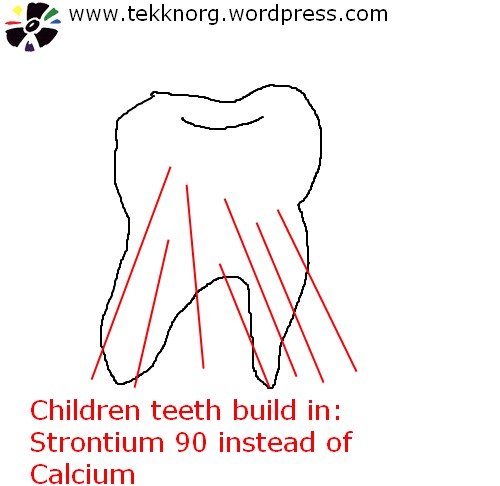
Preliminary case studies determined that children born in 1963 had levels of strontium 90, a radioactive isotope found in bomb fallout, nearly 50 times higher than children born in 1950. A limited study published by Science Magazine in 1961 presented similar findings.
“The immediate radiation danger moved public opinion, which influenced Congress to pass and President John F. Kennedy to implement the Limited Test Ban Treaty in 1963,” said the Missouri History Museum on the research. “They knew that a by-product of nuclear weapons testing is death-dealing, cancer-causing radiation. Some elemental isotopes last for thousands of years while others decay quickly, but airborne debris drifts for miles from explosions, falling onto food and water.”
Kennedy campaigned for president in strong opposition to nuclear testing, according to the John F. Kennedy Presidential Library. However, he entered his term at the height of the Cold War and faced mounting pressure after the Soviet Union conducted dozens of above-ground nuclear tests. In 1962, he reluctantly announced that the United States would resume atmospheric testing.
As Kennedy attempted to negotiate a ban on such testing, the findings of the St. Louis baby tooth study came to his attention. Negotiations to end atmospheric radioactive testing, the issue at the center of the baby tooth study, intensified midway through 1963.
By July, Kennedy had reached an agreement with the Soviet Union to exclusively conduct nuclear tests underground. By August, government officials from the Soviet Union, the United Kingdom, and the United States gathered in Moscow to sign what is officially known as the “Treaty Banning Nuclear Weapon Tests in the Atmosphere, in Outer Space and Under Water” or “Partial Test Ban Treaty.”
“Let us if we can step back from the shadows of war and seek out the way of peace. And if that journey is 1,000 miles or even more, let history record that we, in this land, at this time, took the first step,” said Kennedy on the agreement in a televised speech on July 26, 1963.
The initial baby tooth study continued through 1970. A research team acquired 85,000 of the tested teeth for a 2001 analysis that concluded 12 children who died of cancer had strontium 90 levels twice as high as others alive during the time of research. Some scientists denounce those findings to this day.
Now, the baby tooth study from decades ago carries new life in the form of a Harvard study. Researchers hope to collect tens of thousands and determine a possible connection between metals and cognitive decline at an older age. Harvard neuroscientist Marc Weisskopf launched the study in 2021, and one survey for the project remains ongoing.
According to a report from DrBicuspid.com, Japanese filmmaker Hideaki Ito is also working on a documentary about the original study and visited St. Louis last year for some groundwork.
In a new study based on five- to six-year follow-up data from over 650,000 children and young adults who had at least one computed tomography (CT) exam prior to the age of 22, researchers found a “strong dose-response relationship” between increased CT radiation exposure and brain cancer.
Increased cumulative exposure to radiation from computed tomography (CT) exams led to elevated risks for developing gliomas and other forms of brain cancer in children and young adults, according to the findings of a large multinational study of data from over 650,000 patients.
In the study, recently published in the Lancet Oncology, researchers reviewed pooled data from nine European countries and a total of 658,752 patients. All study participants had at least one CT exam prior to the age of 22 with no prior cancer or benign brain tumor, according to the study. Examining follow-up data at a median of 5.6 years, the study authors noted 165 brain cancers (including 121 gliomas). They also found that the overall mean cumulative brain radiation dose, lagged by five years, was 47.4 mGy for the study cohort in comparison to a mean cumulative brain radiation dose of 76.0 mGy for those with brain cancer.
“First results of (the study) after a median follow-up of 5.6 years show a strong dose-response relationship between the brain radiation dose and the relative risk of all brain cancers combined and glioma separately; a finding that remains consistent for doses substantially lower than 100 mGy,” wrote lead study author Michael Hauptmann, Ph.D., a professor of Biometry and Registry Research at the Brandenburg Medical School Theodor-Fontane in Neuruppin, Germany, and colleagues.
For head and neck CT exams, the researchers noted a “significant positive association” between the cumulative number of these procedures and elevated brain cancer risk. Employing linear dose-response modelling, the researchers found a 1.27 excess relative risk (ERR) per 100 mGy of brain radiation dosing for all brain cancers, a 1.1 ERR for gliomas and a 2.13 ERR for brain cancers excluding gliomas, according to the study.
Hauptmann and colleagues acknowledged that the risk estimates in the study translate to one out of 10,000 children experiencing a radiation-induced brain cancer five to 15 years after a head CT exam. However, the researchers also emphasized appropriate caution, pointing out annual estimates of pediatric head CT exams surpassing one million in the European Union and five million in the United States.
“These figures emphasize the need to adhere to the basic radiological protection principles in medicine, namely justification (procedures are appropriate and comply with guidelines) and optimization (doses are as low as reasonably achievable),” added Hauptmann and colleagues.
Study limitations included the potential for confounding indications with the study authors noting the inclusion of studies with some patients having congenital syndromes that may be predisposing factors for brain tumor development. However, Hauptmann and colleagues noted that exclusion of those patients and adjustments for those conditions saw no significant effect on the assessment of ERR.
The study authors also noted a lack of information on other imaging, such as nuclear medicine studies and X-rays, that may have been performed in the study population. However, they suggested the contribution of radiation dosing from these exams “is probably minor” in comparison to higher frequencies and dosing seen with pediatric head CT exams.
In the 2022 report, BCDC took 32 soil, dust, and plant samples throughout the school buildings and campus. Using x-ray to analyze the samples BCDC found more than 22 times more lead-210 than the estimated exposure levels for the average US elementary school in the Jana Elementary playground alone. There were also more than 12 times the lead-210 expected exposure in the topsoil of the basketball courts alone.
Radioactive isotopes of polonium-210, radium-266, thorium-230, and other toxicants were also found in the library, kitchen, ventilation system, classroom surfaces, surface soil and even soil as far as six feet below the surface.
The families, students, and school officials in Florissant, Missouri have been living a modern nightmare for the past several weeks, learning that Jana Elementary school and the surrounding region has high levels of radiation, a problem caused decades ago by the production of nuclear weapons
Radiation exposure can damage the DNA in cells leading to a host of health problems including cancer and auto-immune disorders. What’s more troubling is that the Centers for Disease Control reports that children and young adults, especially girls and women, are more sensitive to the effects of radiation.
Jana Elementary school has 400 students and a predominantly (82.9%) Black student body. Unfortunately, the United States has a long history of environmental racism which results in harming Black, Indigenous and Brown communities much more in the process of creating and maintaining nuclear weapons.
When science cannot agree, the community suffers
The suburban school north of St. Louis, Missouri, was thought to be safe for students based on research completed in 2000 by the Army Corps of Engineers (USACE).
Specifically, USACE has been in the Coldwater Creek region for the last 20 years attempting to remediate radioactive waste associated with the creek (which does not include Jana Elementary).
Toward the start of the 2022 semester, as part of an ongoing lawsuit in the region the Boston Chemical Data Corp (BCDC), an environmental consulting group, reported the elementary school as having radioactive waste levels far above the estimated national levels.
These radioactive waste exposures—like lead-210—are associated with decreased cognition, brain defects, thyroid disease, and cancer, and can accumulate in the body over time.
Following the BCDC report, all Jana Elementary students were sent home for the rest of the semester in hopes their homes were less toxic.
By the Thanksgiving holiday break, the USACE returned to test inside and on the playground of the school and found no radiation on the campus, news which many community members and organizers unsurprisingly expressed as suspicious.
The School Board then hired SCI Engineering, a private engineering firm, to sample Jana Elementary who came to a similar conclusion as USACE.
Now returning to classes from Thanksgiving break, many wary students joined classes at new schools in the area per the school board’s decision related to BCDC’s radiation exposure assessment. Many parents also expressed to National Public Radio they felt left out of discussions for decisions being made.
How did radioactive waste end up in Florissant, MO?
The region near Jana Elementary was first contaminated by the US Department of Energy’s decision to make St. Louis one of the processing sites for uranium during the Manhattan Engineering District project. These nuclear weapons were built through World War II and originally stored at the St. Louis Lambert International Airport.
Unfortunately, the waste was later illegally dumped in 1973 at the West Lake Landfill in Bridgeton, MO, which lies about 10 miles Southwest of Jana Elementary. The West Lake Landfill is located near the Mallinckrodt Chemical Works Company which regularly floods, causing these harmful chemicals to be carried away by nearby water ways like Coldwater Creek.
Coldwater Creek runs for 19 miles throughout the area and flows directly into the Missouri River. Jana Elementary, just North of St. Louis, is bordered by the creek on two sides but has to date not been included in any clean-up efforts by the US Army Corps of Engineers (USACE).
US Army Corps of Engineers initially didn’t sample inside or outside of Jana Elementary
Prior to the Boston Chem Data Corp 2022 report, the USACE did not take any samples within 300 feet of the school building in their 2017 assessment. According to BCDC’s report, this doesn’t follow US Agency for Toxic Substances Disease Registry (ATSDR) standards for radioactive sampling.
In fact, it ignores the conclusion ATSDR made that most exposures in the region will be indoors and just outdoors of buildings.
Indoor samples from creek-facing homes in the same neighborhood as Jana Elementary had similar radioactive waste both indoors and outdoors. ATSDR also noted in a 2019 report that radioactive wastes are routinely moved from Coldwater Creek into homes due to flooding. The region floods frequently which is only increasing due to climate change in the region.
New radioactive sampling methods used to understand student exposure
In the 2022 report, BCDC took 32 soil, dust, and plant samples throughout the school buildings and campus. Using x-ray to analyze the samples BCDC found more than 22 times more lead-210 than the estimated exposure levels for the average US elementary school in the Jana Elementary playground alone. There were also more than 12 times the lead-210 expected exposure in the topsoil of the basketball courts alone.
Radioactive isotopes of polonium-210, radium-266, thorium-230, and other toxicants were also found in the library, kitchen, ventilation system, classroom surfaces, surface soil and even soil as far as six feet below the surface.
Marco Kaltofen, an environmental engineer who is leading the BCDC team, collected roughly 1,000 samples from across the region as a part of law suit efforts. There are several businesses and homes also indicated as exposed in the lawsuit as well.
Overall, Kaltofen suggests that BCDC’s unprecedented x-ray method better picks up the microscopic radioactive materials. However, he also asserts both studies are essentially saying the same thing, which is of course confusing for many community members.
Community organizers fight for testing and clean-up
Just Moms STL activist Dawn Chapman has worked tirelessly since 2014 to get the federal government to test for radioactive material in more regions where the creek floods.
The co-founder of Just Moms STL, Karen Nickel, also attended Jana Elementary School and has reported currently living with several autoimmune disorders. She uses her experience and love of the area to battle these exposure injustices.
“They [The US Government] fought us for years. Finally, they [tested] parks that had flooded, and found [radioactive waste]. They started testing some backyards and found it. We pushed for Jana Elementary, because it is the closest school to the creek.” Just Moms STL activist, Dawn Chapman
We reached out to Just Moms STL to understand what the next steps are. Just Moms STLRecommends:
The sites in St. Louis should be expeditiously cleaned up.
Unfortunately, Jana Elementary School is not the only place to be concerned about near St. Louis.
Since remediation of nuclear weapons waste in the area has already taken decades, many of these students will likely age out of Jana Elementary School before there is full remediation of radioactive waste in the St. Louis area.
While there is guidance on defining “safe” or acceptable radioactive exposure levels as it relates to human health, scientists also calculate “expected” levels from the Earth naturally (like radon in sediment).
Unacceptable levels are frequently defined as radiation exposure above natural levels by communities.
However, legally the Army Corps is allowed to leave some radioactive residue above naturally occurring levels, and Just Moms STL would like this to no longer be the case.
Residents near nuclear weapon processing sites like the St. Louis area should be included in federal radiation compensation programs, such as the Radiation Exposure Compensation Act (RECA).UCS also suggests consideration of St. Louis in the Energy Employees Occupational IllnessProgram Act (EEOICPA), and other forms of compensation as well.
Expanding radiation compensation programs is complicated because the list of communities that want to be included who currently qualify is long. Moreover, Just Moms STL says the RECA program needs to be expanded to include processing sites like St. Louis, which has previously only applied to nuclear testing exposure sites and uranium workers, or EEOICPA, which has only covered nuclear site workers, but not surrounding communities.
There are currently two bills being proposed to the House and Senate to extend and strengthen RECA. Just Moms STL is working to get Missouri elected officials to help sponsor and carry RECA as well. And your representatives may also be interested in supporting adjustments to RECA or the EEOICPA.
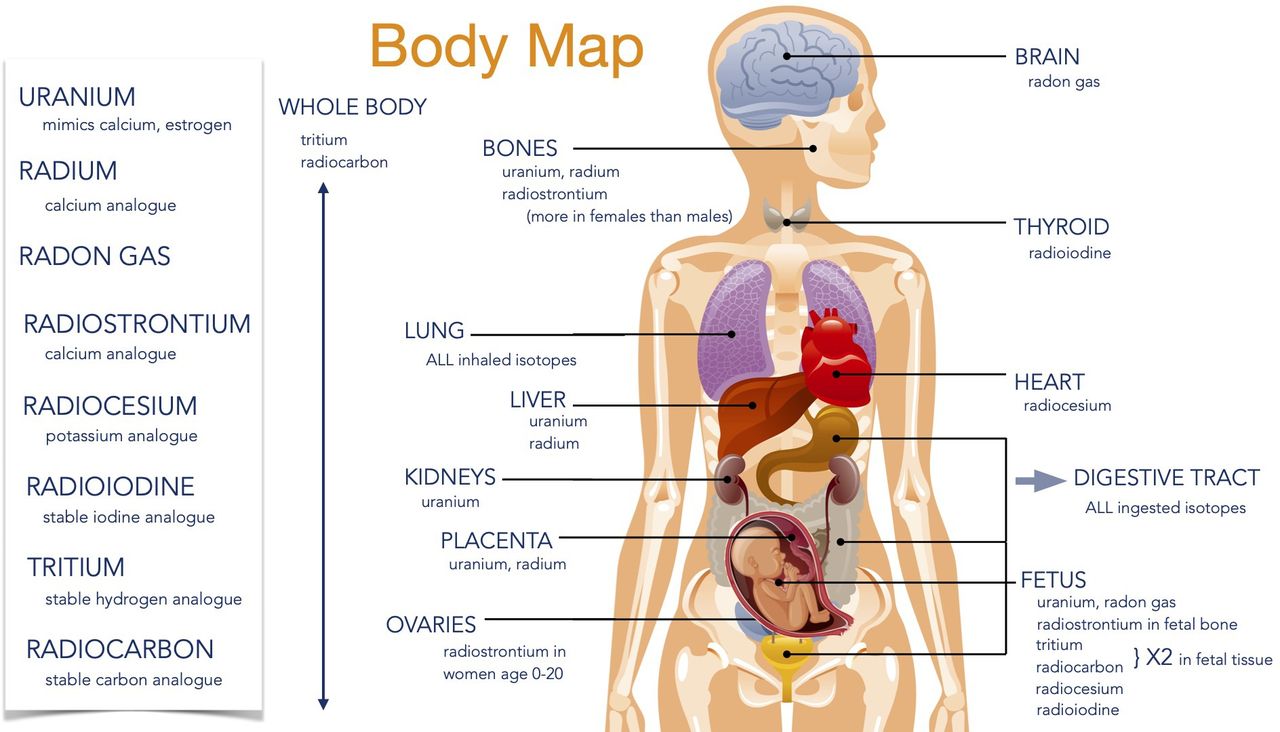
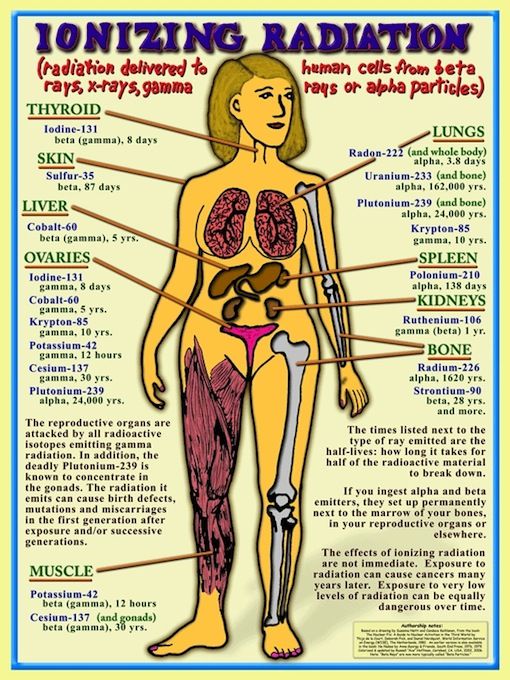
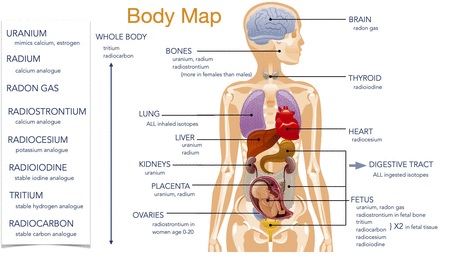
Selected radioisotopes: where they travel and primarily collect in the body.
British Medical Journal Paedistrics,Cindy Folkers & Linda Pentz Gunter 9 Oct 22, :
Although radioactivity is released routinely at every stage of nuclear power generation, the regulation of these releases has never taken into account those potentially most sensitive—women, especially when pregnant, and children.
From uranium mining and milling, to fuel manufacture, electricity generation and radioactive waste management, children in frontline and Indigenous communities can be disproportionately harmed due to often increased sensitivity of developing systems to toxic exposures, the lack of resources and racial and class discrimination.
The reasons for the greater susceptibility of women and children to harm from radiation exposure is not fully understood. Regulatory practices, particularly in the establishment of protective exposure standards, have failed to take this difference into account.
Anecdotal evidence within communities around nuclear facilities suggests an association between radiation exposure and increases in birth defects, miscarriages and childhood cancers.
A significant number of academic studies tend to ascribe causality to other factors related to diet and lifestyle and dismiss these health indicators as statistically insignificant.
In the case of a major release of radiation due to a serious nuclear accident, children are again on the frontlines, with a noted susceptibility to thyroid cancer, which has been found in significant numbers among children exposed both by the 1986 Chornobyl nuclear accident in Ukraine and the 2011 Fukushima-Daiichi nuclear disaster in Japan.
The response among authorities in Japan is to blame increased testing or to reduce testing. More independent studies are needed focused on children, especially those in vulnerable frontline and Indigenous communities. In conducting such studies, greater consideration must be applied to culturally significant traditions and habits in these communities.
Biggest US nuclear bomb test destroyed an island—and this man’s life, https://nypost.com/2021/11/20/biggest-us-nuclear-bomb-test-destroyed-an-island-and-lives/By Eric Spitznagel The US bomb tested near John Anjain’s (right) home in the Marshall Islands in 1954 was 1,000 times stronger than at Hiroshima, and left his wife and kids with debilitating and deadly health problems, as detailed in a new book. November 20, 2021
Just before dawn on March 1, 1954, John Anjain was enjoying coffee on the beach in the South Pacific when he heard a thunderous blast, and saw something in the sky that he said “looked like a second sun was rising in the west.”
Later that day, “something began falling upon our island,” said Anjain, who at the time was 32 and chief magistrate of the Rongelap atoll, part of the Marshall Islands. “It looked like ash from a fire. It fell on me, it fell on my wife, it fell on our infant son.”
It wasn’t a paranormal experience. Anjain and his five young sons, along with the 82 other inhabitants of Rongelap, were collateral damage from a “deadly radioactive fallout from a hydrogen bomb test… detonated by American scientists and military personnel,” writes Walter Pincus in his new book, “Blown to Hell: America’s Deadly Betrayal of the Marshall Islanders” (Diversion Books), out now.
In 1946, the US started testing atomic weapons began in Bikini Atoll, 125 miles west of Rongelap. Known as Operation Crossroads, the tests were moved to the islands from the US because officials feared “radioactive fallout could not be safely contained at any site in the United States,” writes Pincus.
During those early tests, the Rongelapians were relocated to another island a safe distance away.
But the 1954 test was different. Not only were there no evacuations, but “Castle Bravo,” as it was dubbed, was also the largest of the thermonuclear devices detonated during the military’s 67 tests, “a thousand times as large as the bomb that destroyed Hiroshima,” writes Pincus.
It took just hours for fallout to reach the shores of Rongelap, where it blanketed the island with radioactive material, covering houses and coconut palm trees. On some parts of the isle, the white radioactive ash was “an inch and a half deep on the ground,” writes Pincus.
The natives, who often went barefoot and shirtless, were covered in the toxic debris. It stuck to their hair and bodies and even between their toes.
“Some people put it in their mouths and tasted it,” Anjain recalled at a Washington DC hearing run by the Senate Energy and Natural Resources Committee to investigate the incident in 1977. “One man rubbed it into his eye to see if it would cure an old ailment. People walked in it, and children played with it.”
Rain followed, which dissolved the ash and carried it “down drains and into the barrels that provided water for each household,” writes Pincus.
It took three days before American officials finally evacuated the island, taking the natives to nearby Kwajalein for medical tests. Many Rongelapians were already suffering health effects, like vomiting, hair loss, and all-over body burns and blisters. Tests showed their white blood cell counts plummeting, and high levels of radioactive strontium in their systems. No one died, at least not immediately. That would come later.
After three years, the Rongelapians were allowed to return home, assured by officials that conditions were safe. But by 1957, the rate of miscarriages and stillbirths on the island doubled, and by 1963 the first residents began to develop thyroid tumors.
Though they continued to conduct annual medical tests, the US military admitted no culpability, other than awarding each islander $10,800 in 1964 as compensation for the inconvenience.
In fact, some — including the islanders — have speculated that the US government had used the Rongelapians as “convenient guinea pigs” to study the effects of high-level radiation.
For Anjain and his family, the effects were devastating. His wife and four of his children developed cancer. A sixth child, born after the fallout, developed poliomyelitis and had to use a crutch after one of his legs became paralyzed.
But the biggest tragedy befell his fifth child Lekoj, who was just one year old when Castle Bravo covered their island in nuclear dust. As a child, he was mostly healthy, other than the occasional mysterious bruise. Soon after his 18th birthday, Lekoj was flown to an American hospital, where doctors discovered he had acute myelogenous leukemia.
Anjain stayed at his son’s bedside for weeks as he underwent chemo, holding his dying son’s hand and watching him disappear.
He recounted Lekoj’s final days in a letter to the Friends of Micronesia newsletter in 1973. “Bleeding started in his ears, mouth and nose and he seemed to be losing his mind,” Anjain wrote of his son. “When I would ask him questions he gave me no answer except ‘Bad Luck.’”
Lekoj passed away on November 15, 1972, at just 19. Newsweek called him “the first, and so far only leukemia victim of an H-bomb,” and said his death was proof that nuclear fallout “could be even more lethal to human life than the great fireball itself.”
After burying his son at a spot overlooking Rongelap Lagoon, Anjain continued to battle for financial restitution for his family and other Rongelapian survivors. In 2004, just months before his death (of undisclosed causes) at 81, he marched with 2,000 people in Japan to commemorate the 50th anniversary of the 1954 hydrogen bomb test that slowly killed his son.
In 2007, a Nuclear Claims Tribunal awarded Rongelap more than $1 billion in damages, but not a penny of it has yet been paid. And according to a 2019 Columbia University study, radiation levels on Rongelap are still higher than Chernobyl or Fukushima.
For Anjain, it was never really about the money. “I know that money cannot bring back my son,” he once said. “It cannot give me back 23 years of my life. It cannot take the poison from the coconut crabs. It cannot make us stop being afraid.”
In 1954 the U.S. executed its largest nuclear detonation. The people of the Marshall Islands would endure the effects of fallout for years.Walter Pincus Nov. 07, 2021. During the 1954 Castle Bravo test over Bikini Atoll in the Marshall Islands, America executed its largest nuclear detonation, a thousand times more powerful than the bomb dropped on Hiroshima. Nuclear fallout rained down on inhabitants of atolls more than 100 miles away, including Rongelap.
What follows is an excerpt ofBlown to Hell: America’s Deadly Betrayal of the Marshall Islanders, where Dr. Robert A. Conard, a former Navy doctor who was among those who first examined the Marshall Island natives after Bravo, discovers a new impact of the radioactive fallout on children. Beginning in 1956, as an employee of the Atomic Energy Commission’s Brookhaven National Laboratory, Conard led annual medical examinations of the Rongelapese.
Over the years, Dr. Robert A. Conard and pediatricians he brought with him to Rongelap carefully watched the slow development of several children who had been exposed to the 1954 fallout. In the survey done in March 1963, the doctors’ attention was initially focused on two boys who had been one-year-olds at the time of the fallout.
Both showed early signs of cretinism, a condition of stunted physical and mental growth owing to a deficiency of a thyroid hormone often related to iodine deficiency.
Also of particular interest was the development of a palpable nodule in the thyroid gland of 13-year-old Disi Tima, a fisherman’s daughter, who had been exposed to the Bravo fallout when she was four years old.
October 20, 2021 Ricardo Marquina. In Belarus, just across the border from Ukraine, many children have been living with chronic radiation sickness since a reactor at the Chernobyl nuclear power plant exploded in 1986. They have returned to school after being unable to escape contamination for yet another summer due to COVID-19 pandemic border restrictions. For VOA, Ricardo Marquina has more from the Gomel region of southern Belarus in this report narrated by Miguel Amaya.





 Iraqi Kids Test Positive for Depleted Uranium Remnants Near Former US Air Base, https://truthout.org/articles/iraqi-children-test-positive-for-depleted-uranium-near-former-us-air-base/ Mike Ludwig, September 19, 2019 For the first time, independent researchers have found that the bodies of Iraqi children born with congenital disabilities, such as heart disease and malformed limbs, near a former United States air base in southern Iraq are contaminated with high levels of radioactive heavy metals associated with toxic depleted uranium pollution leftover from the 2003 U.S.-led invasion.








 nuclear-news