Russia nuclear-powered submarine to visit Cuba amid rising tensions with US
Guardian, 7 June 24
Russian sub – joined by three other naval vessels – will not be carrying nuclear weapons, authorities in Havana said as they announced the visit
A Russian nuclear-powered submarine – which will not be carrying nuclear weapons – will visit Havana next week, Cuba’s communist authorities have announced, amid rising tensions with the US over the war in Ukraine.
The nuclear submarine Kazan and three other Russian naval vessels, including the missile frigate Admiral Gorshkov, an oil tanker and a salvage tug, will dock in the Cuban capital from 12-17 June, Cuba’s ministry of the revolutionary armed forces said in a statement.
“None of the vessels is carrying nuclear weapons, so their stopover in our country does not represent a threat to the region,” the ministry said.
The announcement came a day after US officials said that Washington had been tracking Russian warships and aircraft that were expected to arrive in the Caribbean for a military exercise. They said the exercise would be part of a broader Russian response to US support for Ukraine.
The US officials said that the Russian military presence was notable but not concerning. However, it comes as Russian President Vladimir Putin has suggested that Moscow could take “asymmetrical steps” elsewhere in the world in response to President Joe Biden’s decision to allow Ukraine to use US-provided weapons to strike inside Russia to protect Kharkiv, Ukraine’s second-largest city………………………………… more https://www.theguardian.com/world/article/2024/jun/07/russia-nuclear-powered-submarine-kazan-to-visit-cuba
AI’s craving for data is matched only by a runaway thirst for water and energy

John Naughton, https://www.theguardian.com/commentisfree/2024/mar/02/ais-craving-for-data-is-matched-only-by-a-runaway-thirst-for-water-and-energy
The computing power for AI models requires immense – and increasing – amounts of natural resources. Legislation is required to prevent environmental crisis.
One of the most pernicious myths about digital technology is that it is somehow weightless or immaterial. Remember all that early talk about the “paperless” office and “frictionless” transactions? And of course, while our personal electronic devices do use some electricity, compared with the washing machine or the dishwasher, it’s trivial.
Belief in this comforting story, however, might not survive an encounter with Kate Crawford’s seminal book, Atlas of AI, or the striking Anatomy of an AI System graphic she composed with Vladan Joler. And it certainly wouldn’t survive a visit to a datacentre – one of those enormous metallic sheds housing tens or even hundreds of thousands of servers humming away, consuming massive amounts of electricity and needing lots of water for their cooling systems.

On the energy front, consider Ireland, a small country with an awful lot of datacentres. Its Central Statistics Office reports that in 2022 those sheds consumed more electricity (18%) than all the rural dwellings in the country, and as much as all Ireland’s urban dwellings. And as far as water consumption is concerned, a study by Imperial College London in 2021 estimated that one medium-sized datacentre used as much water as three average-sized hospitals. Which is a useful reminder that while these industrial sheds are the material embodiment of the metaphor of “cloud computing”, there is nothing misty or fleecy about them. And if you were ever tempted to see for yourself, forget it: it’d be easier to get into Fort Knox.
There are now between 9,000 and 11,000 of these datacentres in the world. Many of them are beginning to look a bit dated, because they’re old style server-farms with thousands or millions of cheap PCs storing all the data – photographs, documents, videos, audio recordings, etc – that a smartphone-enabled world generates in such casual abundance.
But that’s about to change, because the industrial feeding frenzy around AI (AKA machine learning) means that the materiality of the computing “cloud” is going to become harder to ignore. How come? Well, machine learning requires a different kind of computer processor – graphics processing units (GPUs) – which are considerably more complex (and expensive) than conventional processors. More importantly, they also run hotter, and need significantly more energy.
On the cooling front, Kate Crawford notes in an article published in Nature last week that a giant datacentre cluster serving OpenAI’s most advanced model, GPT-4, is based in the state of Iowa. “A lawsuit by local residents,” writes Crawford, “revealed that in July 2022, the month before OpenAI finished training the model, the cluster used about 6% of the district’s water. As Google and Microsoft prepared their Bard and Bing large language models, both had major spikes in water use – increases of 20% and 34%, respectively, in one year, according to the companies’ environmental reports.”
Within the tech industry, it has been widely known that AI faces an energy crisis, but it was only at the World Economic Forum in Davos in January that one of its leaders finally came clean about it. OpenAI’s boss Sam Altman warned that the next wave of generative AI systems will consume vastly more power than expected, and that energy systems will struggle to cope. “There’s no way to get there without a breakthrough,” he said.
What kind of “breakthrough”? Why, nuclear fusion, of course. In which, coincidentally, Mr Altman has a stake, having invested in Helion Energy way back in 2021. Smart lad, that Altman; never misses a trick.
As far as cooling is concerned, it looks as though runaway AI also faces a challenge. At any rate, a paper recently published on the arXiv preprint server by scientists at the University of California, Riverside, estimates that “operational water withdrawal” – water taken from surface or groundwater sources – of global AI “may reach [between] 4.2 [and] 6.6bn cubic meters in 2027, which is more than the total annual water withdrawal of … half of the United Kingdom”.
Given all that, you can see why the AI industry is, er, reluctant about coming clean on its probable energy and cooling requirements. After all, there’s a bubble on, and awkward facts can cause punctures. So it’s nice to be able to report that soon they may be obliged to open up. Over in the US, a group of senators and representatives have introduced a bill to require the federal government to assess AI’s current environmental footprint and develop a standardised system for reporting future impacts. And over in Europe, the EU’s AI Act is about to become law. Among other things, it requires “high-risk AI systems” (which include the powerful “foundation models” that power ChatGPT and similar AIs) to report their energy consumption, use of resources and other impacts throughout their lifespan.
It’d be nice if this induces some investors to think about doing proper due diligence before jumping on the AI bandwagon.
State papers: Plans for nuclear power plant on shores of Lough Neagh shelved over drinking water concerns
The Northern Ireland government was warned against proposals to build a nuclear power station beside Lough Neagh, archive files show.
Newsletter, By David Young, PA, 28th Dec 2023
The feasibility of the proposal was assessed by the Atomic Energy Research Establishment (AERE), a UK government body that was responsible for research on, and development of, nuclear power.
The Stormont government had been assessing the potential for a nuclear power plant in Northern Ireland in the 1950s and the shores of Lough Neagh, the UK and Ireland’s largest freshwater lake, had been identified as a possible location.
However, the AERE advised against this site, raising concern about water contamination in the event of an accident, particularly given that the lough was to be increasingly used as one of the main sources of water for Belfast.
The opinion of the AERE was outlined in a letter from its director John Cockcroft to then prime minister of Northern Ireland Viscount Brookeborough (Basil Brooke) in August 1958.
The document, marked confidential, is in archive files newly released from the Public Records Office of Northern Ireland.
In began by noting that an assessment of the “siting problem” in Northern Ireland had been conducted by a body called the Reactor Location Panel two years earlier, in 1956…………………………………………………………………………………… more https://www.newsletter.co.uk/news/politics/state-papers-plans-for-nuclear-power-plant-on-shores-of-lough-neagh-shelved-over-drinking-water-concerns-4458627
Microsoft Is Using a Hell of a Lot of Water to Flood the World With AI
Angely Mercado, September 12, 2023 https://gizmodo.com.au/2023/09/microsoft-is-using-a-hell-of-a-lot-of-water-to-flood-the-world-with-ai/
—
As artificial intelligence is increasingly developing and data centres are erected to further this tech, it’s becoming clear that AI has a water usage problem.
Microsoft’s latest sustainability report revealed that the software giant’s water usage saw a tremendous spike between 2021 and 2022. In 2021, the company used up 4,772,890 cubic meters of water. In 2022 that went up to 6,399,415—which is around a 30 percent increase from one year to the next. That’s almost 1.7 billion gallons of water in just one year, which is enough to fill more than 2,000 Olympic-sized swimming pools.
Why did Microsoft draw so much freaking water? Data centres that run AI supercomputers are hot. Equipment heats up, and if a centre overheats, those computers can shut down. The increase in water use is directly tied to the company’s investment and development of AI. Microsoft has backed OpenAI, which has a data centre in Des Moines, Iowa. During the summer months, the centre has to use a ton of water to keep equipment cool, especially as Iowa experiences rising temperatures due to climate change.
The water is drawn from nearby watersheds including the Des Moines and Raccoon rivers to cool the supercomputer that develops AI systems, the Associated Press reported. However, local waterways also provide drinking water for nearby communities. The volume used by the data centres has become a concern for the local utility company, West Des Moines Water Works.
A document from the utility dated April 2022 outlined that officials and the utility will only “consider future data centre projects beyond Microsoft Data Center Project Ginger East and West” unless the new projects can significantly lower their water usage. “This approach to resource conservation will help preserve the water supply for current and future commercial and residential needs of West Des Moines,” the document read.
Google, another tech giant that has heavily invested in AI products, has also seen a spike in water usage. An environmental report released this July outlined that the company’s water usage increased about 20% from 2021 to 2022. “We’re working to address the impact of our water consumption through our climate-conscious data centre cooling approach and water stewardship strategy,” a spokesperson told Gizmodo in an email this July.
As the planet becomes warmer, it may become harder for large tech companies to cool facilities. Many data centres are in cooler locations like the Pacific Northwest and states like Iowa in the upper Midwest, but neither location has been spared from heat waves.
Other tech companies have experienced challenges with keeping their centres online during especially hot weather. Last September, equipment at then Twitter’s data centre in Sacramento shut down during a heat wave. Increased instances of heat waves due to the climate crisis have also plagued data centres overseas. Last July, Google and Oracle’s London-based data centres went offline as England baked through sky-high temperatures of over 40 degrees Celsius.
Cooling system at Zaporizhzhya stabilised – but military action in the area continues
In its Update 183 on the Ukraine situation International Atomic
Energy Agency director general Rafael Grossi announced that Zaporizhzhya
Nuclear Power Plant has been drilling more wells at the site as part of
efforts to find new sources of cooling water following the destruction of
the downstream Kakhovka dam more than three months ago.
ZNPP has built
another two groundwater wells to supply the sprinkler ponds that cool the
six reactors and spent fuel, bringing the total of new wells to nine.
Together they pump around 200 cubic metres of water per hour into the
sprinkler ponds, representing most of the cooling needs of the six shutdown
reactors.
The remainder of the water comes from the drainage system and
clean water that is periodically discharged from the plant’s chemical
water treatment facility. The IAEA has been informed that the water supply
situation will be assessed after a tenth well has been constructed to see
if more will be needed.
How much water do French nuclear plants use?

Figures showing that the cooling of reactors could capture 30% of water resources have been removed from the site of the Ministry of Environment.
Le Monde ,By Perrine Mouterde, March 26, 2023,
How much do nuclear power plants contribute to total water consumption in France? This simple question no longer seems to have a clear answer. At the root of the confusion lies the Ministry of Environmental Transition’s removal of a background paper on the resourcing and use of water in France on around March 10. According to this fact sheet from the statistical service, power plant cooling represented the second most water-consuming activity in the country (31%), behind agriculture (45%) and ahead of drinking water (21%) and industrial use (4%). The annual volume of water consumed in mainland France, over the period 2008-2018, was estimated at 5.3 billion cubic meters.
In the midst of the review of the parliamentary bill to accelerate the construction of new reactors, the figure of 31% was being used by opponents of atomic energy to demonstrate that this energy source was not adapted to climate change. “Once and for all, let’s say it, simply and firmly: at this rate, there will soon not be enough water in our rivers to cool the nuclear power plants!,” stated Marine Tondelier – the national secretary of Europe Ecologie-Les Verts (EELV, Greens) – on March 7, based on this data.
Three days later, the Ministry of Environmental Transition………….(subscribers only)
The profligate use of our stressed freshwater resource by the nuclear industry.
Stressed Freshwater in our Lakes and Rivers Cooling the Heels of the Nuclear Industry – while the Industry wants More and Hotter Waste.
BY MARIANNEWILDART, https://mariannewildart.wordpress.com/2023/06/15/stressed-freshwater-in-our-lakes-and-rivers-are-cooling-the-heels-of-the-nuclear-industry-and-the-industry-wants-more-and-hotter-waste/
There is a deeply worrying unspoken aspect of this heatwave and that is the profligate use of our stressed freshwater resource by the nuclear industry. The hotter the weather the more freshwater is required for processes including the one absolutely essential to protect all life on planet earth from humanity’s greatest hubris – and that is the cooling of high level radioactive wastes. The industry requires top quality water not the rubbish that was given to folk in West Cumbria from the boreholes near Sellafield – nope the industry requires the coolest freshest waster including from Britain’s most iconic lake.
For Fifteen years now Radiation Free Lakeland have been flagging up the nuclear industry’s eyewatering use of our most precious resource, freshwater. For fifteen years the main stream media have shied away from the issue preferring to flag up the freshwater use of fracking which is big and very nasty but on a different scale both in time and quantity of freshwater involved .
Despite the nuclear industry insisting that the public should not have access to information on fresh water use for reasons of ‘national security’ we now have a body of documentation from (largely blacked out) Freedom of Information requests and research which shows that the nuclear industry’s freshwater use is on a scale second to none. The nuclear industry’s abuse of fresh water continues long after other industrys’ fracking, fossil fuel etc will have come and gone.
We have been told by diligent fracking activists that the figure from the hydraulic fracture plan for Cuadrilla was up to 31,000 cubic metres of water to frack the first well. This was based on up to 765 cubic metres per stage. The number of stages in the fracture plan was 41. That is a lot, it is too much and thanks to diligence of fracking campaigners (nuclear campaigners also fought fracking) this was stopped in its tracks. The ALREADY monstrous freshwater use by the nuclear industry in the Preston area was flagged up by nuclear campaigners.
Springfields Nuclear Fuels just off Preston New Road discharges at least 2400 cubic metres A DAY into the River Ribble. The fresh water discharge contains chemical and radioactive contamination – but the industry say this is fine as the super large quantities of fresh water used “dilute and disperse” the nasties.
Springfields Nuclear Fuels which is slap bang in the middle of Cuadrilla’s fracking plans on the Fylde has recieved no, nada, zilch attention over its fresh water use.
The video illustrates information painstakingly gleaned about Springfields freshwater use along with Sellafield’s. The front and the back end of the nuclear industry which are neatly tucked away under a cloak of invisibility in the NW. Sellafield’s abusive use of the Lake District’s freshwater is detailed in the video taken from a talk at New Horizons, St Annes. Lets hope the rain falls soon to replenish our Lakes and Rivers which have been flushing cool water over hot nuclear wastes since the 1940s. The new build plan would mean more and ever hotter wastes to cool into infinity . Our Lakes and rivers are finite.
This abuse of our fresh water has been going on now since the 1940s. Who knew? and Who Cares?
South Korean experts to continue analysis of Fukushima water discharge
Japan Times 26 May 23
A South Korean delegation of experts will continue, from home, with its analysis of Japan’s plan to discharge treated radioactive water into the sea from the disaster-hit Fukushima nuclear power plant, the group said Thursday after inspecting it.
The delegation of 21 experts from agencies and affiliated organizations of the South Korean government with expertise in radiation and nuclear reactors, among other fields, held a meeting with Japanese officials to summarize their observations following the two-day inspection, telling the Japanese side they still needed to confirm several things before releasing their conclusion on the plan’s safety.
They requested additional materials, such as protocols for a power outage and a long-term management plan for an advanced liquid processing system (ALPS) capable of removing radionuclides other than tritium in water……….. (Subscribers only) more https://www.japantimes.co.jp/news/2023/05/26/national/south-korea-fukushima-analysis/
South Korean nuclear experts to tour Fukushima plant amid water concerns
Japan Times, BY ERIC JOHNSTON. STAFF WRITER. May 22, 2023
A team of South Korean experts arrived in Japan on Sunday for an unprecedented six-day visit that will include a trip on Tuesday to the crippled Fukushima No. 1 nuclear power plant, where the government is planning to release treated water into the ocean as part of a decadeslong decommissioning process.
Concerned about the aftereffects of the March 2011 nuclear disaster, South Korea continues to uphold a ban on seafood and marine imports from the area around the Fukushima No. 1 plant, despite Japanese government insistence the food is safe.
Nuclear Safety and Security Commission Chairperson Yoo Guk-hee is heading a 21-member team of government experts, who on Monday met with nuclear officials from plant operator Tokyo Electric Power Company Holdings (Tepco) and various government agencies that oversee Japan’s nuclear power industry. They will tour the plant on Tuesday and Wednesday, paying particular attention to Japan’s plans to discharge treated water, currently being stored at Fukushima No. 1, into the ocean……………. https://www.japantimes.co.jp/news/2023/05/22/national/south-korean-experts-fukushima-tour/
Fukushima greets summer with dread as nuclear-contaminated wastewater dumping approaches
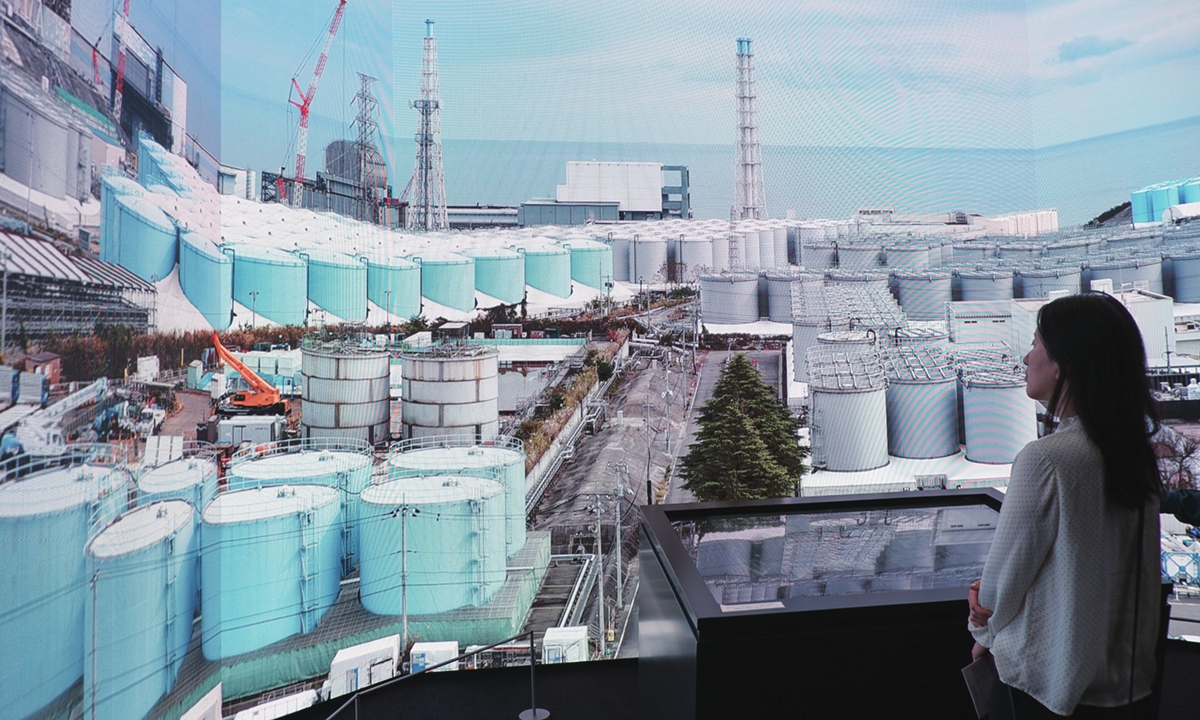
Global Times, By Xu Keyue and Xing Xiaojing in Iwaki, May 15, 2023
The Fukushima Prefecture in northeastern Japan is known as “the island of happiness,” which embodies people’s longing for a better life. Summer began in Fukushima in early May when locals normally look forward to intimate contact with the sea.
However, despite strong opposition at home and abroad, the Japanese government and the Tokyo Electric Power Company (TEPCO) are set to go ahead with the plan to dump the nuclear-contaminated wastewater from the Fukushima Daiichi Nuclear Power Plant into the sea this summer.
As summer approaches, the Global Times reporters went to the Fukushima Prefecture. In this first installment of this field investigation, the Global Times reveals the palpable sense of fear and unease hanging over Fukushima, paired with intense opposition from locals who chanted “Never allow arbitrary dumping into the sea!”………………………………………………………………………………………………………
About 54 kilometers away from the Fukushima Daiichi Nuclear Power Plant, the city looks subdued with few passersby along the streets. The excavation of an underwater tunnel for the project to drain the nuclear-contaminated wastewater from the Fukushima Daiichi Nuclear Power Plant was completed in April, and TEPCO announced that it is expected to complete the construction of the tunnel by the end of June. Measuring 1,031 meters long and 1 kilometer away from the coast, the tunnel will allow radioactive wastewater to be dumped into the sea.
…………………………………………………….. Chiyo Oda, co-chairperson of an environmental NGO and city assembly “Stop polluting the oceans!” was one of them.
“Summer is coming. What’s going to happen? Fukushima greets summer with fear!” said Oda, who expressed strong concern about the dumping of nuclear-contaminated wastewater at a conference themed “Don’t Nuke the Pacific” on May 7. “The Japanese government has reached an agreement with the fishing community that nothing will be done without [the fishing community and other stakeholders’] understanding.” Nevertheless, the Japanese government is apparently breaking its promise and is preparing to dump the water which is likely to start this summer.
When the Global Times reporters met Oda, the 68-year-old woman had just returned to Iwaki from Fukushima city, the capital of Fukushima Prefecture. Early that day, with Kazuyoshi Sato, another co-representative of the city assembly, Oda had driven for two hours to the Fukushima prefectural office to hold a press conference to announce that a mass rally called “May 16 Tokyo Action” will be held in Tokyo on May 16 to urge the Japanese government and TEPCO to stop dumping the nuclear-contaminated wastewater.
Oda told the Global Times that the campaign will last all day on May 16, when anti-sea pollution campaigners from all over Japan are meant to gather in Tokyo. As planned, they will gather in front of the TEPCO headquarters at 10:30 am, and then head to the House of Representatives with lawmakers to hold the rally. The rally and petition to the Japanese government and parliament will be followed by a speech at the Hibiya Open Air Concert Hall in the evening. It will then be followed by a massive demonstration in Ginza, Tokyo, which is expected to be attended by more than 1,000 people.
“The sea of my hometown, the Sea of Japan, and the seas of the world must not be polluted,” said Oda.
Oda noted that the Japanese government, TEPCO, the Fukushima Prefectural Federation of Fisheries Cooperative Associations, and the National Federation of Fisheries Cooperative Associations of Japan signed an agreement in 2015, stating it would not “do anything about the nuclear-contaminated water from Fukushima without the understanding and consent of the relevant people,” but now the Japanese government and TEPCO insist on dumping the water despite opposition from all parties, including fishermen. …………………………………………………………………………………………………………………………………………………………………..
“Look! This is the sea we want to protect!” Ikarashi told the Global Times that he and his family have fond memories of living by the sea, eating the catch from the same sea, surfing, and frolicking with their children. The people of Fukushima live just like them, having enjoyed the bounty of the sea for generations. If the nuclear-contaminated wastewater is dumped into the sea, future generations will no longer be able to enjoy the beautiful nature.
Ruiko Muto, who lives in Tamura, Fukushima, is the head of the association for the victims of the Fukushima nuclear accident. After the accident, she worked hard to hold the former management of TEPCO accountable as a member of the legal team for the Fukushima nuclear accident and the criminal prosecution team.
Muto told the Global Times in an email that “ALPS-treated water” used by the Japanese government and TEPCO contains many other radioactive substances besides tritium, making it “not safe at all.” Under such circumstances, attempts to release the radioactive wastewater from Fukushima into the sea must not be allowed.
Muto said that as summer approaches, her group will join forces with other civic groups and continue to express opposition through protests and rallies.
Dumping not only way
In an on-the-spot interview, Global Times reporters noted the intense concern over whether “ALPS-treated water,” as the Japanese government and TEPCO refer to it, is safe, and whether there is an alternative to dealing with the wastewater.
Hideyuki Ban, a Japanese nuclear expert and co-director of the Tokyo-based Citizens’ Nuclear Information Center (CNIC), told the Global Times that “the nuclear-contaminated wastewater contains 64 radionuclides, including tritium, some of which are very long-lived and cannot necessarily be diluted. [The compounds] can accumulate in the ocean and attach to fish and shellfish, and some of them can enter the body of marine organisms, causing human beings to be exposed to nuclear radiation after consumption. Even if [the wastewater] is treated and released into the sea, it is not safe.”
“There is no precedent in the world for dumping such wastewater containing 64 radionuclides into the sea,” he said.
“The capacity of ALPS to remove radionuclides and the amount of the nuclear-contaminated wastewater to be discharged are not fully understood, let alone gaining the understanding and consent of stakeholders. Under such circumstances, it is not allowed to arbitrarily discharge the wastewater,” he said.
Ban noted that there are other ways to dispose of the wastewater. For example, there is the option of “mortar solidification,” where the nuclear-contaminated wastewater is mixed, solidified, and stored in mortar as in cement production. What the Japanese government has done is based on a political decision, not one based on scientific research, Ban criticized……………………………………………………………………….
The problem, however, is that even if the nuclear-contaminated wastewater is disposed of, key issues such as whether nuclear fuel debris can be removed from the Daiichi plant remain unresolved. The government plans to decommission the reactor in the next 30 to 40 years, but it has yet to give a clear explanation of how long it will take to complete the project and in what condition the facility will have to be in order to qualify as successfully decommissioned, according to Muto.
Surrounded by the sea, Japan gives thanks to the gracious sea as a prosperous maritime nation, on “Sea Day” held annually on the third Monday of July, which is one of the statutory holidays in the country.. Born by the sea, the locals reached by the Global Times could not help but express their deep concern and fear that if the sea is polluted, it will be difficult to enjoy the sea’s succor in the future. https://www.globaltimes.cn/page/202305/1290745.shtml
 |
Plans to release nuclear wastewater into Hudson River delayed following outcry
Spectrum News, By John Camera Hudson Valley, Apr. 28, 2023
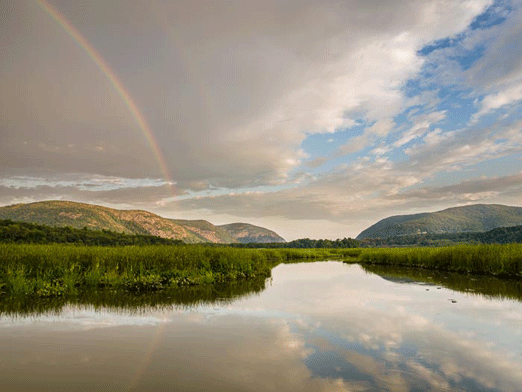
Manna Jo Greene, an Ulster County legislator and environmental director for Hudson River Sloop Clearwater, does not want to see the proposed release of nuclear wastewater from Indian Point into the Hudson River to go forward.
She says standards that deem the proposed discharge safe are outdated.
“And we’re also looking into whether or not this could impact communities that take their drinking water from the Hudson,” Greene said.
……………………………… For now, the release of about 300,000 gallons of nuclear wastewater has been slated for September, giving more time to determine the best path forward.
The next meeting from the Indian Point Decommissioning Oversight Board will take place June 15. https://spectrumlocalnews.com/nys/hudson-valley/news/2023/04/28/release-of-nuclear-wastewater-into-hudson-pushed-to-fall
Water shortage at Sizewell: the environmental cost
Pete Wilkinson: (From Feb 2022) Building the Sizewell C plant, which
requires vast amounts of fresh water, in an area of water scarcity makes no
sense. The availability of water is something we barely give a thought to:
only ten percent of people consider water shortage to be an environmental
issue, yet without it, it’s curtains. According to the Environment Agency
(EA), England could fail to meet national demand by 2050.
As the driest part of the country, Eastern England has been designated as a
water-stressed area and future pressures include climate change, economic
and housing development. Suffolk is recognised as an area of water
scarcity, facing predictions of a water shortage in the coming years.
East Anglia Bylines (accessed) 23rd April 2023
Plan for Dumping Nuclear Wastewater Into Hudson River Is Paused

New York Times, By Patrick McGeehan, April 14, 2023
Wastewater from the shuttered Indian Point nuclear power plant in New York will not be dumped into the Hudson River next month as planned, the company that owns the plant said.
The owner, Holtec International, said on Thursday that it would take more time to explain its plan to elected officials and community leaders who have become alarmed about potential harmful effects on the environment.
A Holtec spokesman, Patrick O’Brien, said the company would take a “voluntary pause” in its scheduled release of water from the pools that contained spent fuel rods from Indian Point’s reactors, which stopped generating electricity in 2021.
Why It Matters: Area Residents Feared Contamination of Drinking Water
Releasing water from the spent-fuel pools into the Hudson had always been part of Holtec’s plan for dismantling Indian Point, in Buchanan, N.Y. But a recent notice from the company that it might speed up the process alarmed some environmental activists, who oppose discharging the wastewater because it contains tritium, a radioactive element.
Riverkeeper, an organization that advocates for clean water in New York, opposed the plan, saying: “Ingestion of tritium is linked to cancer, and children and pregnant women are most vulnerable.” Riverkeeper called for the wastewater to be stored in tanks on the site until a safer method of disposal could be devised.
In an April 6 letter to the federal Nuclear Regulatory Commission, New York’s Democratic senators, Chuck Schumer and Kirsten Gillibrand, said that Holtec’s “sudden” announcement had “shocked the community” and would increase public opposition and distrust of Holtec as it continues the decommissioning of Indian Point.
On Thursday, Mr. Schumer said in a statement that he was “relieved that Holtec has heeded our call and will put a stop to its hastily hatched plan to dump radioactive wastewater into the Hudson this May.”
………………………………………… Holtec tried to assure community leaders that the safest way to dispose of the wastewater was to put it in the river. But elected officials proposed legislation in Albany that would ban the “discharge of any radiological agent into the waters of the state.”
What’s Next
Holtec has not abandoned its plan to discharge the wastewater. Mr. O’Brien said the company hoped to “further engage” with elected officials and state agencies and that regulators would gain “time to continue explaining the science and regulations” at public meetings. The Indian Point Decommissioning Oversight Board has scheduled a special online meeting for public comment on April 25. https://www.nytimes.com/2023/04/14/nyregion/hudson-river-nuclear-waste.html
Opponents pack Pilgrim Nuclear meeting as potential discharge of radioactive water looms
CAI | By Jennette Barnes, March 28, 2023
Opponents of the proposed discharge of radioactive water from the Pilgrim Nuclear Power Station packed a meeting on the future of the station last night.
Ryan Collins of Bourne received a standing ovation from the audience when he presented a thick binder of signatures from his Change.org petition. The petition calls for a stop to the discharge plan. It garnered more than 200,000 signatures.
The state’s Nuclear Decommissioning Citizens Advisory Panel hosted the meeting at Plymouth Town Hall as part of its regular calendar.
…………………………………… opponents argue that the terms of a state settlement with Holtec would make a release of contaminated water illegal, with or without a permit.
Many members of the audience held orange signs that read, “Protect our bays! No permit!” in reference to the proposed modification of Holtec’s permit under the National Pollutant Discharge Elimination System.
Jo-Anne Wilson-Keenan, of East Dennis, said she’s concerned about contamination. Speaking from the podium, she raised her arm to show the shape of Cape Cod and the location of Dennis.
“We live right here in the elbow, and when the radioactive water comes down from Plymouth, it’s going to land right on our beaches,” she said.
Jim Cantwell, state director for U.S. Sen. Ed Markey, discussed Markey’s March 17 letter to Holtec asking the company to use the ratepayer-funded decommissioning trust fund to pay for an independent scientific study of the risks of discharging the radioactive water stored at Pilgrim.
Last May, at a field hearing hosted by Markey in Plymouth, Singh agreed to allow independent testing.
Meanwhile, state-supervised testing of the Pilgrim water is set to begin with a collection of samples on April 5. Senior staff from the Massachusetts Department of Environmental Protection and Department of Public Health are scheduled to observe, along with a representative of the town of Plymouth.
But Seth Pickering, a deputy regional director with DEP, said the state no longer plans to use the previously identified Colorado lab, Eurofins, to test for non-radioactive pollutants.
The agency will instead rely on Gel Laboratories of South Carolina, which Pickering disclosed is a lab Holtec uses as well.
Members of the audience objected to the idea of using the same lab as Holtec……………. https://www.capeandislands.org/local-news/2023-03-28/opponents-pack-pilgrim-nuclear-meeting-as-potential-discharge-of-radioactive-water-looms
Groundwater carries radiation risk for North Korean cities near nuke test site – rights group
By Hyonhee Shin https://www.reuters.com/world/asia-pacific/groundwater-carries-radiation-risk-north-korean-cities-near-nuke-test-site-2023-02-21/
SEOUL, Feb 21 (Reuters) – Tens of thousands of North Koreans and people in South Korea, Japan and China could be exposed to radioactive materials spread through groundwater from an underground nuclear test site, a Seoul-based human rights group said in a report on Tuesday.
North Korea secretly conducted six tests of nuclear weapons at the Punggye-ri site in the mountainous North Hamgyong Province between 2006 and 2017, according to the U.S. and South Korean governments.
The study by the Transitional Justice Working Group said radioactive materials could have spread across eight cities and counties near the site, where more than 1 million North Koreans live, and where groundwater is used in everyday lives including drinking.
The group, formed in 2014, worked with nuclear and medical experts and defectors and used open source intelligence and publicly available government and U.N. reports for the study, which was backed by the National Endowment for Democracy, a non-profit corporation funded by the U.S. Congress.
“This report is significant in showing that North Korea’s nuclear tests could threaten the right to life and health of not only the North Korean people, but also of those in South Korea and other neighbouring countries,” said Hubert Young-hwan Lee, the group’s chief and a co-author.
Telephone calls by Reuters to North Korea’s diplomatic mission to the United Nations in New York went unanswered.
In 2015, South Korea’s food safety agency detected nine times the standard level of radioactive caesium isotopes in imported hedgehog mushrooms that had been sold as Chinese produce though their actual origin was North Korea.
China and Japan have ramped up radiation monitoring and expressed concerns over potential exposure following the North’s previous nuclear tests but did not openly provide information on contaminated food.
Many outside experts have raised concerns over potential health risks from contaminated water, but North Korea rejected such concerns, saying there were no leaks of harmful materials following past nuclear tests, without providing evidence.
When North Korea invited foreign journalists to witness the destruction of some tunnels at the nuclear test site in 2018, it confiscated their radiation detectors.
Seoul’s Unification Ministry, which handles inter-Korean affairs, stopped testing defectors for radiation exposure since 2018 amid a thaw in cross-border ties.
But, out of 40 defectors from the regions near Punggye-ri who were tested for radiation in 2017 and 2018, at least nine showed abnormalities. The ministry said, however, that it could not establish a direct link with the nuclear site.
More than 880 North Koreans have escaped from those regions since 2006, the report said.
The rights group urged a resumption of testing and an international enquiry into the radiation risks for communities around Punggye-ri.
The Unification Ministry said it will consider restarting testing if any defectors report health problems and request support regarding radiation exposure.
Seoul and Washington have said Pyongyang could be preparing for a seventh nuclear test.
1 This Month

of the week – Shut Down Drone Warfare!


Tell the Ukrainian Government to Drop Prosecution of Peace Activist Yurii Sheliazhenko

Petition to revoke the licensing of the Near Surface Nuclear Disposal Facility (NSDF) at Chalk River. https://www.ourcommons.ca/petitions/en/Petition/Details?Petition=e-7247
To see nuclear-related stories in greater depth and intensity – go to https://nuclearinformation.wordpress.com
-
Archives
- April 2026 (57)
- March 2026 (251)
- February 2026 (268)
- January 2026 (308)
- December 2025 (358)
- November 2025 (359)
- October 2025 (376)
- September 2025 (257)
- August 2025 (319)
- July 2025 (230)
- June 2025 (348)
- May 2025 (261)
-
Categories
- 1
- 1 NUCLEAR ISSUES
- business and costs
- climate change
- culture and arts
- ENERGY
- environment
- health
- history
- indigenous issues
- Legal
- marketing of nuclear
- media
- opposition to nuclear
- PERSONAL STORIES
- politics
- politics international
- Religion and ethics
- safety
- secrets,lies and civil liberties
- spinbuster
- technology
- Uranium
- wastes
- weapons and war
- Women
- 2 WORLD
- ACTION
- AFRICA
- Atrocities
- AUSTRALIA
- Christina's notes
- Christina's themes
- culture and arts
- Events
- Fuk 2022
- Fuk 2023
- Fukushima 2017
- Fukushima 2018
- fukushima 2019
- Fukushima 2020
- Fukushima 2021
- general
- global warming
- Humour (God we need it)
- Nuclear
- RARE EARTHS
- Reference
- resources – print
- Resources -audiovicual
- Weekly Newsletter
- World
- World Nuclear
- YouTube
-
RSS
Entries RSS
Comments RSS
 nuclear-news
