Radiation increase a thousand fold in Fukushima groundwater
 Radiation in Fukushima groundwater skyrockets 3,500+ times over weekend — Just 5 meters from Pacific Ocean — Nothing being done to stop it flowing into sea (PHOTO) http://enenews.com/radiation-in-groundwater-skyrockets-3500-times-over-weekend-just-5-meters-from-pacific-no-steps-being-taken-to-stop-flow-into-ocean-photo[…]
Tepco, Dec. 17, 2013: As a result of the measurement, it was found that the gross-β density in the groundwater observation holeNo.0-3-2 obtained at the east of the Units 1-4 Turbine Buildings on December 16 [was] 63,000Bq/L
Jiji Press, Dec. 17, 2013: Highest Ever Radiation Detected in Fukushima Plant Well […] Some 63,000 becquerels of radioactive materials that emit beta rays, such as strontium-90, per liter have been found in groundwater […] the highest level at the well [Tepco] said Tuesday […] sample [was] taken on Monday from the observation well 5 meters from the coast […] Since the company is not takings steps to prevent tainted water in the well from flowing into the sea […] the water is likely to be reaching the plant’s bay. […] standards require strontium-90 levels to be less than 10 becquerels in water to be released into the sea. […]
See also: Asahi: Radiation levels spike to record high in Fukushima groundwater well nearby ocean — Trench failures to blame, says Tepco — Million times more strontium/beta-ray source than cesium
Utah nuclear power plant wins approval for diversion of water
“We expected this to be the case. The state engineer obviously spent two years looking at it,” said Aaron Tilton, whose company, Blue Castle Holdings, is proposing the twin-reactor plant in Emery County.
Tilton added that the judge rightfully weighed the merits of Jones’ decision within the context of what state law dictates.
“You got to look at the totality of everything that we have done and the way the law was applied. If we interpreted the law the way HEAL Utah wanted, nobody’s water rights would be approved,” he said.
The decision was blasted by HEAL Utah and other environmental groups that contended Jones’ decision was illegal because there was no demonstration by Blue Castle that the project is economically feasible or the water use is sustainable.
“It’s baffling that this project continues to stumble forward,” says HEAL Utah’s policy director, Matt Pacenza.
But 7th District Judge George Harmond said HEAL Utah and the other environmental groups failed to prove their case, and there was no lawful basis to deny the water use………http://www.ksl.com/index.php?nid=960&sid=27813730&fm=most_popular
Fukushima’s radioactive water problem does not go away
The Global Threat of Fukushima, counterpunch A Global Response is Needed WEEKEND EDITION OCTOBER 25-27, 2013 by KEVIN ZEESE AND MARGARET FLOWERS”………As bad as the ongoing leakage of radioactive water is into the Pacific, that is not the largest part of the water problem. The Asia-Pacific Journal reported last month that TEPCO has 330,000 tons of water stored in 1,000 above-ground tanks and an undetermined amount in underground storage tanks. Every day, 400 tons of water comes to the site from the mountains, 300 tons of that is the source for the contaminated water leaking into the Pacific daily. It is not clear where the rest of this water goes.
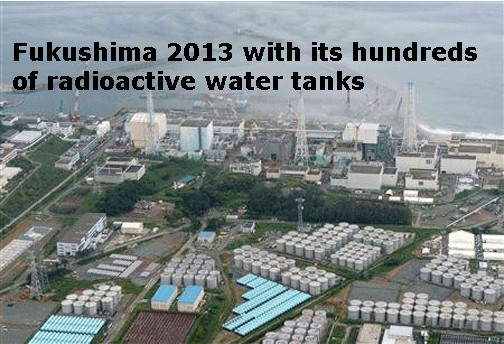
Each day TEPCO injects 400 tons of water into the destroyed facilities to keep them cool; about half is recycled, and the rest goes into the above-ground tanks. They are constantly building new storage tanks for this radioactive water. The tanks being used for storage were put together rapidly and are already leaking. They expect to have 800,000 tons of radioactive water stored on the site by 2016. Harvey Wasserman warns that these unstable tanks are at risk of rupture if there is another earthquake or storm that hits Fukushima. The Asia-Pacific Journal concludes: “So at present there is no real solution to the water problem.”
The most recent news on the water problem at Fukushima adds to the concerns. On October 11, 2013, TEPCO disclosed that the radioactivity level spiked 6,500 times at a Fukushima well. “TEPCO said the findings show that radioactive substances like strontium have reached the groundwater. High levels of tritium, which transfers much easier in water than strontium, had already been detected………”http://www.counterpunch.org/2013/10/25/the-global-threat-of-fukushima/
Water shortage affecting uranium mining industry in Namibia
Rio Tinto, Paladin Uranium Mines in Namibia Face Water Shortage, Bloomberg News By Felix Njini November 18, 2013 Uranium mines operated by companies including Rio Tinto Plc (RIO) and Paladin Energy Ltd. in Namibia face a water shortage as a drought in the southwest African nation curbs supply to the operations and three coastal towns.
Volumes from the Omaruru Delta acquifer, about 200 kilometers (124 miles) northwest of the capital, Windhoek, have declined to 4 million cubic meters this year from 9 million cubic meters a year earlier, said Nehemia Abraham, under-secretary for water and forestry in the Ministry of Agriculture.
The source is in the semi-arid Erongo region, which supplies the towns of Swakopmund, Walvis Bay and Henties Bay and suffers from severe shortages. Water from a desalination plant owned by Areva SA (AREVA), the country’s first such facility, isn’t enough to meet needs of Paladin’s Langer Heinrich uranium mine, China Guangdong Nuclear Power Co.’s Husab uranium project and Rio’s Rossing complex.
“The water-supply situation at the coastal area has become too critical,” Abraham said by phone yesterday. “Mining companies in the area will have to operate with less water. We are reviewing the situation now and from end of November we might be unable to get enough water from the aquifer to supply to mines.”
Langer Heinrich spokeswoman Ratonda Murangi didn’t immediately respond to e-mailed questions. Botha Ellis, a spokesman for Rossing, directed queries to Namibia Water Corp., the country’s state-owned utility known as Namwater.
Water Needs
Rossing’s total water requirement for 2012 was 7.48 million cubic meters, 41 percent of which was for fresh water, while the rest was recycled, according to its website.
The three towns use about 4.5 million cubic meters and there is currently no spare capacity from the aquifer, known as Omdel, Abraham said…… http://www.businessweek.com/news/2013-11-18/rio-tinto-paladin-uranium-mines-in-namibia-face-water-shortage
Unanswered questions about proposed uranium mine in South Dakota
 Uranium mine hearings reveal questions about proposed project Rapid City Journal 3 Nov 13 After two weeks of public testimony, one thing has become clear about the proposed uranium mine that would operate near Edgemont: many things about the project remain unclear.
The process paperwork and permit applications …..
“It consists of nearly 80,000 pages of documents, very complex documents,” said Hickey, who represents the Black Hills Wild Horse Sanctuary. ,,,,,,
 As a pair of governor-appointed state permit boards decide whether to allow uranium mining to South Dakota, the stakes couldn’t be higher, and yet the issue couldn’t be murkier. As he testified at last week’s hearings, John Mays, vice president of engineering for Powertech, didn’t ease the concerns of opponents who worry over potential groundwater contamination.
Under questioning, Mays refused to commit Powertech to cleaning water in the mining area to its pre-mining condition. Mays said it was a primary goal, but not a requirement.
Nor would Mays specify what other heavy metals might be extracted along with uranium and then injected back into the aquifers.
Mays testified that only uranium and vanadium — another metal the company hopes to mine — are certain to circulate in and out of the ground. As for arsenic, selenium, molybdenum, and other potentially harmful metals, Mays wouldn’t say.
“What you’re telling this board is that you don’t really know what’s in that ore yet?” Bruce Ellison asked Mays. Ellison is an attorney for Clean Water Alliance, a group of mining opponents. “You haven’t done enough testing?” Continue reading
Fukushima nuclear reactors leaking directly into sea?
 Alert: Top Japan nuclear official suggests Fukushima reactors “leaking directly into sea”… not mixing with groundwater and getting diluted — Expert: Contamination flowing from plant will be carried away to North America’s west coast
Jiji Press, http://enenews.com/alert-top-level-japan-official-publicly-suggests-multiple-fukushima-reactors-are-leaking-directly-into-the-sea-its-not-mixing-with-groundwater-and-getting-diluted-expert-contamination-f Oct. 16, 2013: Tepco’s toxic water failures pitiful: NRA[…] Tepco is pumping up groundwater and has injected a water-stopping agent into the ground near the plant’s port in order to curb the flow of radioactive groundwater into the sea. Despite such efforts, the levels of cesium-137 in seawater samples collected between the water intakes for reactors 1 and 2 inside the port rose to around 100 becquerels per liter this month from around 10 becquerels between late June and early July. […] Radioactive water from the damaged reactors “may be leaking directly into the sea instead of mixing with groundwater before making its way into the sea,” [Nuclear Regulation Authority Commissioner Toyoshi] Fuketa said. […]
Vladimir Kovbasyuk, Russian Hydrometeorological Expert, Oct. . 16, 2013: “We analyzed the problems several years ago, when the 2011 earthquake and tornado hit the Fukushima nuclear plant. Radioactive waters will first be carried away to the west coast of North America and only then, on intermingling with other ocean waters, may they return to the Russian coast. Currently, we are measuring radiation levels, and we’ve registered no excess radiation thus far.” […]
It appears Fuketa has provided the answer to the ‘mystery’ discussed on NHK’s ‘Nuclear Watch’ earlier thisyear: Fukushima Mystery? TV: Japan expert says radiation levels in ocean too high to be explained by groundwater flow alone — Must be coming from “other contamination routes” entering Pacific — “Devastating impact” to come? (VIDEO)
Huge spike in groundwater radiation under Fukushima nuclear reactor No 1
 Strontium readings spike 6,500-fold in one day Water radiation soars at Fukushima No. 1 Japan Times JIJI, AFP-JIJI 18 Oct 13 FUKUSHIMA – Radiation levels in groundwater under Tokyo Electric Power Co.’s Fukushima No. 1 nuclear plant are soaring, Tepco said Friday after taking samples from an observation well.
Tepco said 400,000 becquerels per liter of beta ray-emitting substances such as strontium were detected in water sampled Thursday from the well located some 15 meters from a storage tank that leaked about 300 tons of highly radioactive water in August.
The level of becquerels, a record high for water in that well, was up 6,500-fold from the 61 becquerels found Wednesday.
Tepco was planning to pump groundwater up from different wells about 100 meters from the leaky tank for release into the Pacific before the water flows into the damaged reactor buildings and becomes heavily contaminated with radioactive materials.
But that plan appears in jeopardy because the sharp increase in the levels of radioactive materials in the observation well suggest the radioactive groundwater is spreading.
By law, water containing beta particle-emitting substances exceeding certain levels cannot be released into the sea. The upper limit is set at 30 becquerels per liter for strontium-90 and 60 becquerels for cesium-134.
Tepco also said water collected Thursday from a drainage ditch near the leaky tank contained 34,000 becquerels of beta particle-emitting substances per liter, compared with 2,300 becquerels the day before……Officials said Thursday they will solicit proposals from both domestic and overseas nuclear experts and firms on how best to scrap the ruined reactors at Fukushima No. 1…….http://www.japantimes.co.jp/news/2013/10/18/national/water-radiation-soars-at-fukushima-no-1/?utm_source=feedburner&utm_medium=feed&utm_campaign=Feed%3A+ja
Pennsylvania water has dangerous levels of radiation due to fracking
Dangerous levels of radiation from fracking found in PA water http://www.salon.com/2013/10/02/dangerous_levels_of_radiation_from_fracking_found_in_pa_water/singleton/ Researchers found 200 times the normal amount of radium downstream of a treatment plant BY LINDSAY ABRAMS The wastewater released into a Pennsylvania river from a plant that processes fracking wastewater tested positive positive for dangerous contaminants — including radium levels elevated 200 times above normal — Duke University researchers found.
“The radioactivity levels we found in sediments near the outflow are above management regulations in the U.S. and would only be accepted at a licensed radioactive disposal facility,” Robert B. Jackson, one of the researchers, said in a statement.
The study, published in the journal Environmental Science and Technology, compared water and sediment samples from downstream of the Josephine Brine Treatment Facility, located on western Pennsylvania’s Marcellus shale formation, to samples from above the plant. In addition to the extreme levels of radium, it also found two to ten times the amoung of chlorides and bromides in the downstream samples. As Smithsonian Magazine notes, Pennsylvania hosts 74 facilities that treat the radioactive water driven to the surface by fracking. Ostensibly, they’re supposed to remove radium and other contaminants from the water before releasing it into rivers and streams. No national standards, however, exist to regulate the plants, many of which, according to the EPA, “are not properly equipped to treat this type of wastewater.” They’re also not required to test to radiation — so until the Duke researchers stepped in, it’s likely no one was aware of just how poorly this plant was performing.
“Each day, oil and gas producers generate 2 billion gallons of wastewater,” Jackson told Climate Central. “They produce more wastewater than hydrocarbons. That’s the broader implication of this study. We have to do something with this wastewater.”
Film: Uranium in situ mining, radiation in water, cancer
The mining companies know that if the leaching solution breaks into an aquifer, the water is contaminated and cannot be corrected. They cannot and will not guarantee it but will only promise to use the best available technology and make the best possible effort to correct the problem. Then as always, they will walk away with the ore and the profits and leave local residents and federal taxpayers to deal with the aftermath.
Hot Water: The Uranium Industry’s Dirty Little Story The only thing green about nuclear power are the people who think it’s safe. Lizabeth Rogers Activist Post 2 Oct 13,
HOT WATER Documentary Trailer
How many do you know today?
I began this odyssey, innocently enough in July 2009 when I led a filmmaking crew to South Dakota to investigate what we had heard was an abandoned uranium mine which had contaminated local groundwater and made local ranchers, their children and even their livestock sick. Continue reading
Damning verdict on Japan’s ability to stop radioactive groundwater leak
 Former US nuclear chief’s damning Fukushima report http://www.radioaustralia.net.au/international/radio/program/asia-pacific/former-us-nuclear-chiefs-damning-fukushima-report/1195596 25 September 2013,
The former chief nuclear regulator in the United States has delivered a damning verdict on Japanese authorities’ ability to stop contaminated groundwater from the crippled Fukushima nuclear plant flowing into the sea. Gregory Jaczko was responding to comments by the Japanese Prime Minister that the situation at Fukushima was under control.
Mr Jaczko told foreign journalists in Tokyo that the surging groundwater “was beyond human control”, warning that a planned underground ice wall around the site would also fail to stop the sea becoming contaminated.
Reporter: Mark Willacy
Speakers: Shinzo Abe, Japanese Prime Minister; Gregory Jaczko, former United States Nuclear Regulatory Commission chairman
WILLACY: It was a last ditch guarantee from a prime minister fighting to win the Olympics for his country. Continue reading
Water conscious Utah residents oppose nuclear power plant in Emery County
 Utah’s first nuclear plant on hold over trial for water rights
The lawsuit, filed in 2012, was brought by multiple groups hoping to kill plans for a proposed twin-reactor nuclear power plant in Emery County.
HEAL Utah and others want 7th District Judge George Harmond to rule illegal the Utah state engineer’s decision granting 53,600 acre-feet of water to the project.
Aaron Tilton’s Blue Castle Holdings is proposing to take the water from the Green River for use in the cooling process at the proposed plant, which would be located near the city of Green River in Emery County and generate 3,000 megawatts of electricity.
The groups challenging Tilton’s acquisition of the water assert that state engineer Kent Jones should have done much more in reviewing the water rights applications, including a demonstration that the water for the project won’t interfere with other water rights or harm the fragile Green River ecosystem……..
HEAL Utah and Uranium Watch are joined by 16 other plaintiffs, including the Utah Rivers Council, Living Rivers and the Center for Water Advocacy. Others include businesses that depend on the Green River such as Moki Mac River Expeditions and Holiday River Expeditions, and several residents from Green River, Moab and Salt Lake City……..http://www.ksl.com/index.php?nid=148&sid=26970736&fm=most_popular
Massive radioactive water collection grows, Japan’s government paralysed on this issue
Tepco has yet to decide how to dispose of the contaminated water, spokeswoman Mayumi Yoshida said. But before it can act it will need approval from the government, residents and fishermen, who are already suspicious of the company’s motives.
Fukushima’s toxic water pool grows as Tepco dithers http://www.smh.com.au/world/fukushimas-toxic-water-pool-grows-as-tepco-dithers-20130830-2svvn.html#ixzz2dncD1B4t August 31, 2013 Yuriy Humber The Tokyo Electric Power Company is trying to decide what to do with the largest pool of radioactive water in the history of nuclear accidents. It can either dump it in the ocean, let it evaporate into the air, or both.
The more than 330,000 tonnes of water with varying levels of toxicity is stored in pits, basements and hundreds of tanks at the wrecked Fukushima nuclear plant.
The government said this week it would take a bigger role in trying to staunch the toxic outflow that has grown to 40 times the volume accumulated in the atomic disaster at Three Mile Island in the US.
Processing and disposing of the water – enough to fill a large crude oil tanker or 132 Olympic-size swimming pools – is presenting one of the most challenging engineering tasks of our generation, former nuclear engineer Michael Friedlander said. Continue reading
Kazakhstan’s water imperilled by in situ leaching of uranium
Scientists studying the effects of ISL doubt how quickly mine sites can self-cleanse. This uncertainty appears to be little known to both Kazakhstan’s nuclear industry and fledgling environmentalists.
no site in the US has been entirely returned to pre-mining conditions
The cost of being the world’s No.1 uranium producer Kazakhstan’s industry has skyrocketed in the past 10 years. But what could that mean for the environment? Christian Science Monitor, By Ben Arnoldy, Staff writer / August 28, 2013 ASTANA, KAZAKHSTAN
If you make a toxic mess under one of the most isolated parts of the planet, does it matter if you don’t clean it up? Does it make a difference if that mess will be there for thousands of years? Scientists are asking those questions as Kazakhstan has steadily risen to become the world’s No. 1 uranium producer, surpassing such nations as the United States, Canada, and Australia, which require more cleanup.
Rather than employing miners to haul rock up to the surface, mine operators in Kazakhstan have embraced a newer – and generally cleaner – process by which a chemical solution is injected down a pipe to dissolve the underground uranium deposits and then is sucked back up to the surface.

This in situ leach (ISL) method avoids making a mess above ground, but leaves toxic levels of heavy metals in the ground water. In the US, companies using the method have tried for years and failed to return ground water to its pre-mining state. Continue reading
Massive underground reservoir of radioactive water moves closer to Fukushima coast
The turbine buildings at the Fukushima Dai-ichi plant are about 150 meters (500 feet) from the ocean. According to a Japan Atomic Energy Agency document, the contaminated underground water is spreading toward the sea at a rate of about 4 meters (13 feet) a month.
At that rate, “the water from that area is just about to reach the coast,” if it hasn’t already,
radioactive cesium levels in most fish caught off the Fukushima coast hadn’t declined in the year following the March 2011 disaster, suggesting that the contaminated water from the reactor-turbine areas is already leaking into the sea.
But TEPCO hasn’t provided the details he and other scientists need to further assess the situation.
Radioactive Groundwater at Fukushima Nears Pacific abc news, TOKYO August 23, 2013 (AP) By MARI YAMAGUCHI Associated Press Deep beneath Fukushima’s crippled nuclear power station, a massive underground reservoir of contaminated water that began spilling from the plant’s reactors after the 2011 earthquake and tsunami has been creeping slowly toward the Pacific.
Now, 2 1/2 years later, experts fear it is about to reach the ocean and greatly worsen what is fast becoming a new crisis at Fukushima: the inability to contain vast quantities of radioactive water.
The looming crisis is potentially far greater than the discovery earlier this week of a leak from a tank that stores contaminated water used to cool the reactor cores. That 300-ton (80,000-gallon) leak is the fifth and most serious from a tank since the March 2011 disaster, when three of the plant’s reactors melted down after a huge earthquake and tsunami knocked out the plant’s power and cooling functions.
But experts believe the underground seepage from the reactor and turbine building area is much bigger and possibly more radioactive, confronting the plant’s operator, Tokyo Electric Power Co., with an invisible, chronic problem and few viable solutions. Continue reading
Huge and growing area of tanks storing Fukushima’s radioactive water

 Radioactive Leaks in Japan Prompt Call for Overseas Help, Bloomberg, By Yuji Okada, Jacob Adelman & Peter Langan – Aug 21, 2013
“……..Toxic Sludge. Tepco was storing 330,000 tons of radioactive water as of Aug. 13 in tanks covering an area equal to 37 football fields, according to the company. The utility is clearing forest to make room for more tanks as it adds to the stored water at a rate of 400 tons a day after pumping it out from under the plant’s reactors, which melted down as a result of the March 2011 earthquake and tsunami.
The water is treated to remove some of the cesium particles before it is stored, which has left 480 filters clogged with the radioactive material at the site. Each weigh 15 tons and are warehoused in what the utility calls temporary storage, though it will take hundreds of years for the radiation to decay. Other radioactive contaminants remain in the water even after treatment. That includes strontium, which has been linked to bone cancers.
Besides radiated water, the site north of Tokyo has more than 73,000 cubic meters of contaminated concrete, 58,000 cubic meters of irradiated trees and undergrowth, and 157,710 gallons of toxic sludge, according to the utility.
’Biggest Concern’
Japan’s nuclear watchdog has ratcheted up alarm over the potential for more leaks of highly radioactive water from the hundreds of storage tanks at the Fukushima atomic plant.
The possibility of leaks from other tanks “is the biggest concern,” said Nuclear Regulation Authority Chairman Shunichi Tanaka at a press conference yesterday. “This will need to be handled carefully on the assumption that one incident could bring another.”
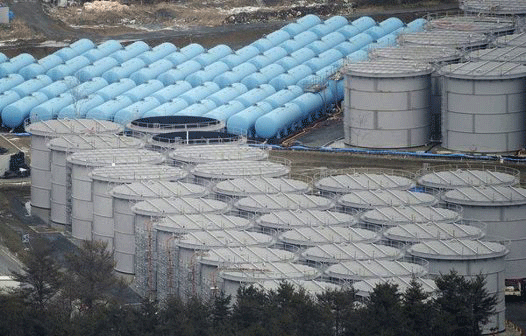
Late last night, Tepco said water leaking from the storage tank probably ran into the ocean, citing high radiation readings in a drainage ditch.
As much as 20 trillion becquerels of cesium and 10 trillion becquerels of strontium leaked into the ocean since May 2011, Tepco spokeswoman Mayumi Yoshida said today. The total amount of cesium and strontium is equivalent to about 100 times the annual limit on radiation from the plant to the ocean under normal conditions, according to calculations based on Tepco data……….
Leaking Tanks
Japan’s government has ordered an investigation into the safety of hundreds of other tanks storing contaminated water in Fukushima, the site of the world’s worst civilian nuclear disaster since the Chernobyl reactor exploded in 1986.
There are 226 tanks of similar bolted design to the leaking unit with the same 1,000-ton capacity at the site, said Tatsuya Shinkawa, director of the nuclear accident response office in the government’s Agency for Natural Resources and Energy, which called for the probe…… http://www.bloomberg.com/news/2013-08-21/tepco-shares-plunge-on-report-of-serious-radiated-water-leak.html
1 This Month
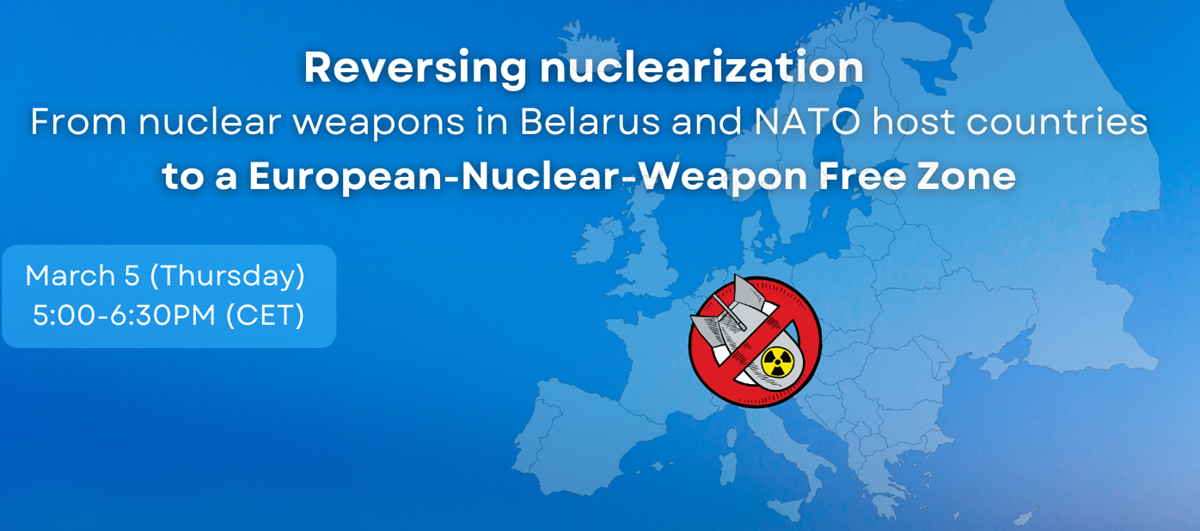
5 March -Online – Reversing nuclearization:
From nuclear weapons in Belarus and NATO host countries to a European-Nuclear-Weapon Free Zone
11am-12:30pm Eastern Time USA / 5pm-6:30pm CET

of the week – Advocating for a
nuclear free beach – https://www.samuellawrencefoundation.org/
The Samuel Lawrence Foundation advocates for a Nuclear Waste Free Beach at San Onofre, join us and take action!

10 March A LIVE WEBINAR THE REAL EFFECTS OF NUCLEAR POWER
What the Industry Isn’t Telling Us
1:00 PM Mountain, 2 pm Central, 3 pm Eastern. Live on the Keepers of the Water Facebook page

18 March Webinar @ 1 PM EST: An Assessment of SMR Projects: The Case of Canada
register for the zoom:
https://us02web.zoom.us/webinar/register/WN_o8BIIOUvQ2ONJR1nta65DQ#/registration

of the week – STOP SMALL MODULAR REACTORS IN CANADA
To see nuclear-related stories in greater depth and intensity – go to https://nuclearinformation.wordpress.com
-
Archives
- March 2026 (38)
- February 2026 (268)
- January 2026 (308)
- December 2025 (358)
- November 2025 (359)
- October 2025 (376)
- September 2025 (258)
- August 2025 (319)
- July 2025 (230)
- June 2025 (348)
- May 2025 (261)
- April 2025 (305)
-
Categories
- 1
- 1 NUCLEAR ISSUES
- business and costs
- climate change
- culture and arts
- ENERGY
- environment
- health
- history
- indigenous issues
- Legal
- marketing of nuclear
- media
- opposition to nuclear
- PERSONAL STORIES
- politics
- politics international
- Religion and ethics
- safety
- secrets,lies and civil liberties
- spinbuster
- technology
- Uranium
- wastes
- weapons and war
- Women
- 2 WORLD
- ACTION
- AFRICA
- Atrocities
- AUSTRALIA
- Christina's notes
- Christina's themes
- culture and arts
- Events
- Fuk 2022
- Fuk 2023
- Fukushima 2017
- Fukushima 2018
- fukushima 2019
- Fukushima 2020
- Fukushima 2021
- general
- global warming
- Humour (God we need it)
- Nuclear
- RARE EARTHS
- Reference
- resources – print
- Resources -audiovicual
- Weekly Newsletter
- World
- World Nuclear
- YouTube
-
RSS
Entries RSS
Comments RSS
 nuclear-news