Could a huge data centre revitalise Ayrshire – or ruin it?
Jonathan Geddes,BBC Glasgow and West reporter, 1 Mar 26
It is currently a large, unassuming patch of farmland in East Ayrshire – but within years it could be one of the largest artificial intelligence data centres on Earth.
About 100 hectares (250 acres) of land near HMP Kilmarnock has been earmarked for a technology hub by energy firm ILI Group.
ILI says the development would be similar in size to the prison, while the “vast majority” of the land would be set aside for “biodiversity and landscaping”.
Supporters talk of it revitalising the region, bringing new jobs and investment that would be ploughed back into the community. But the plans have met strong opposition from locals concerned about the impact on the wider area.
Some of those opposed have contacted BBC Your Voice, and say the firm has not provided concrete details about a building that would dominate Hurlford for decades to come.
In recent years, a string of applications for data centres have been made across Scotland. The group Action to Protect Rural Scotland estimate 17 are at various stages of the planning process.
It comes during a worldwide rush to develop data centres. Estimates in 2025 suggested about $3tn (£2.2tn) will be spent on data centres that support AI between now and 2029.
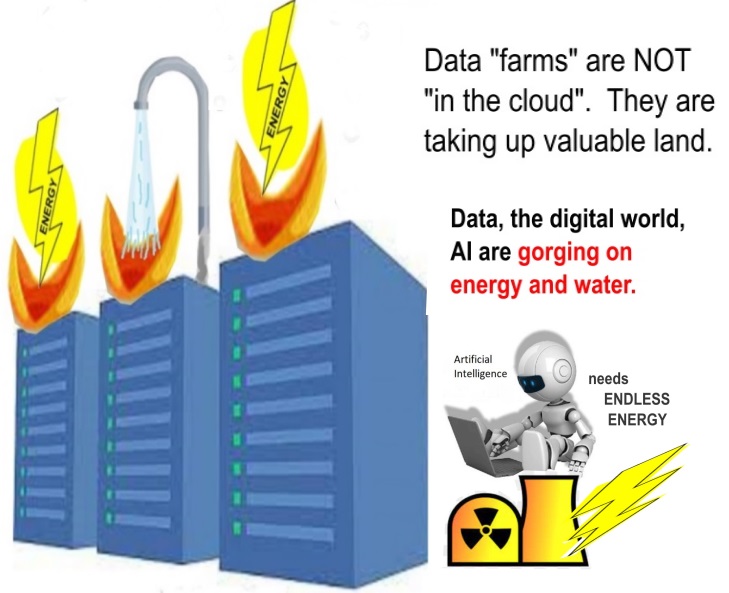
That surge has been accompanied by growing concern about the knock-on effects of the facilities, especially the large amounts of energy and water they consume……………….
For some Hurlford residents though, the announcement of the facility – called Rufus – prompted questions, and a lot of them.
Lisa Beacham became aware of the proposal – which ILI stress is still at a very early stage – shortly after the initial announcement.
A student from Hurlford, she then went down a rabbit hole looking at the amount of water that would be needed for coolant, the process which stops the computer chips there from overheating.
“The site proposal is that it would be powered at 540MW, which would require millions of litres of water a day,” she said.
“Water is a global commodity and we are currently facing global water bankruptcy, according to the UN. Yet we’ll have a site that is using up a huge amount, and due to residue [from the centre] the water used there cannot easily be recirculated.”
Last year the BBC told of people who lived near a data centre in Georgia in the USA who were struggling with an excessive build-up of sediment in water supplies………………………….
Alex De Vries, who runs the Digiconomist blog and website, said he estimated a 540MW facility “could result in almost 6bn litres of annual fresh water consumption” to generate the power needed.
He told BBC Scotland News: “The relatively cooler climate in Scotland isn’t going to do much to mitigate this.”…………………………………..
Cheryl Rowland, an admin assistant at a construction company, who lives in Hurlford, is sceptical.
Speaking at the consultation event, she said: “They are talking about something that will be here for 40 or 50 years.
“Would they arrange education upskilling, to bring local people through and help them grow into jobs here, or will the jobs all be people coming into the area?”……………………
Rowland says it is a worry such a large site will be built by a company who will not be there long term.
https://www.bbc.co.uk/news/articles/c2d1ny161yyo
New Mexico Environment Department Requires Los Alamos National Laboratory to Stop All Injection Operations into Regional Drinking Water Aquifer.
Concerned Citizens for Nuclear Safety, 26 Nov 25
In a protective move, on Friday, November 18th, the New Mexico Environment Department required the Department of Energy (DOE) to cease all injection operations of treated waters back into the sole source regional drinking water aquifer shared by Pueblo de San Ildefonso, Los Alamos National Laboratory (LANL) and others. 2025-11-18-WPD-GWQB-NMED-Withdrawal-of-Temporary-Authorization-for-DP-1835-Final and EMID-704003_EMLA-26-BF028-2-1_Resp_DP-1835_Temp_Auth_WD_112125
In October, hexavalent chromium contamination was found beneath Pueblo de San Ildefonso while LANL was drilling a new well on the Pueblo, called San Ildefonso Regional Monitoring Well 3, or SIMR-3, in Mortandad Canyon. The Pueblo and LANL share borders in the area of Mortandad Canyon.
In Friday’s letter, the Environment Department wrote to LANL that “[S]ince 2021, DOE has neither complied with [the Environment Department’s] regulatory directives nor made substantial progress towards ensuring the protection of the regional aquifer. The latest sampling results from SIMR-3 prove that DOE’s refusal to take appropriate steps to ensure that contamiantion does not migrate further in the regional aquifer or offsite has created the harm to the environment that [the Environment Department] sought to prevent.”
The Silicon Thirst: When Data Drinks the World Dry

4 November 2025 Andrew Klein, https://theaimn.net/the-silicon-thirst-when-data-drinks-the-world-dry/
We live in an age of digital miracles, where intelligence is artificial and clouds are not in the sky, but in warehouses. Yet, this ethereal realm has a staggering physical appetite, one that is quietly draining the planet of its most vital resource: water.
The numbers are not just statistics; they are a prognosis.
- A single data centre can consume 1 to 5 million gallons of water per day – the equivalent of a small city.
- Training a single advanced AI model can gulp down 185,000 gallons of fresh, clean water, used to cool the furious processors dreaming of a digital future.
- By 2027, the water footprint of the AI sector alone could reach 4.2 billion cubic metres, a thirst that begins to compete with the needs of nations.
This is not progress. It is a profound and suicidal miscalculation.
Efficiency for What?
The technology giants speak of “efficiency,” but it is a narrow, self-serving metric. It is the efficiency of a faster loading time, a more intrusive advertisement, a more powerful algorithm for predicting our desires. But by what possible measure is it “efficient” to exchange a million gallons of drinking water for a fractional improvement in computational speed?
This is the logic of a parasite that has forgotten its host is mortal. It is the logic of a civilisation that will meticulously optimise a virtual world while making the physical one uninhabitable.
The Path of the Steward: A Call for Conscious Calculation
The solution is not to abandon technology, but to re-forge it in the image of stewardship. We must demand a new calculus, where the true cost of every byte and algorithm is accounted for. This requires:
- A Radical Shift in Cooling: The era of guzzling pristine freshwater must end. Investment must be urgently directed toward air-assisted liquid cooling, the use of recycled or saltwater, and the strategic placement of data centres in colder climates to drastically reduce their environmental burden.
- Transparency and Accountability: The water footprint of digital services must be made as visible as their price tag. Consumers and regulators have a right to know the true ecological cost of their cloud storage and AI queries.
- Licensing to Operate: A social license to operate in the 21st century must be contingent on water neutrality and a demonstrable positive environmental impact. Profit cannot be the sole metric of success when the very habitability of our home is at stake.
The choice is no longer between technology and nature. The choice is between a technology that devours its own foundation, and a technology that exists in harmony with it.
The silicon world is thirsty. But the thirst of children, of farms, of ecosystems, must come first.
Leaked document reveals Amazon deliberately planned to hide data centers’ full water use.
Amazon deliberately excludes majority of water use from public sustainability reports
Serdar Dincel, Türkiye Today, Sat, 25 Oct 2025
mazon deliberately withheld information about the complete scope of its data centers’ water consumption from the public to protect its corporate image, according to an internal document obtained by the Guardian.
The leaked memo reveals that executives at Amazon Web Services, the company’s cloud computing arm, debated whether to report what they termed “secondary” water use — the water consumed in generating electricity for the company’s data centers — before launching a 2022 sustainability campaign.
Ultimately, leadership opted to publicize only a fraction of the company’s water footprint, citing concerns about “reputational risk” if total consumption figures became public knowledge.
The document, dated one month before AWS unveiled its “Water Positive” initiative in November 2022, shows Amazon consumed 105 billion gallons of water in 2021. That volume would supply approximately 958,000 U.S. households annually, comparable to a city larger than San Francisco.
Company reported fraction of actual consumption in public campaign
Instead of reporting this total, Amazon disclosed only its primary water use — 7.7 billion gallons per year, roughly equivalent to 11,600 Olympic-sized swimming pools — when measuring progress toward sustainability goals.
The Water Positive campaign committed Amazon to “return more water than it uses” by 2030, targeting a reduction in primary use to 4.9 billion gallons. Secondary water consumption was excluded from these calculations…………………………………………….
As the world’s largest data center operator, Amazon is rapidly expanding its artificial intelligence infrastructure despite growing concerns about water resources needed to cool computing facilities. The company has faced mounting criticism for refusing to disclose total water usage, a transparency measure adopted by competitors Microsoft and Google.
Amazon’s Water Positive campaign remains active but continues to exclude secondary water use from its accounting, and the company has not made its overall water consumption public. https://www.turkiyetoday.com/business/amazon-deliberately-excludes-majority-of-water-use-from-public-sustainability-reports-3208989
45K gallons of radioactive water to be dumped into Hudson River from Indian Point nuclear plant

Shane Galvin Oct. New York Post, 2, 2025,
Roughly 45,000 gallons of radioactive water from a defunct plant north of New York City will be discharged into the Hudson River after a federal court ruling struck down a state environmental law.
US District Judge Kenneth Karas sided with company Holtec International over New York State in a ruling issued last week that reversed the 2023 “Save The Hudson” law which sought to prevent the company from muddying the Hudson’s waters.
Holtec sued the Empire State last year, arguing that only the federal government had the right to regulate discharge of the Indian Point plant’s nuclear waste, which amounted to the 45,000-gallon sum, The New York Times reported……………………………………..
Indian Point, which sits on the Hudson River about 35 miles north of Manhattan, was closed in 2021 after years of public outcry from the local community over environmental concerns…………………… https://nypost.com/2025/10/02/us-news/45k-gallons-of-radioactive-water-to-be-dumped-into-hudson-river-from-indian-point-nuclear-plant/
Data centers consume massive amounts of water – companies rarely tell the public exactly how much.

August 19, 2025 , Peyton McCauley and Melissa Scanlan
As demand for artificial intelligence technology boosts construction and proposed construction of data centers around the world, those computers require not just electricity and land, but also a significant amount of water. Data centers use water directly, with cooling water pumped through pipes in and around the computer equipment. They also use water indirectly, through the water required to produce the electricity to power the facility. The amount of water used to produce electricity increases dramatically when the source is fossil fuels compared with solar or wind………………………….
The Great Lakes are an important, binational resource that more than 40 million people depend on for their drinking water and supports a US$6 trillion regional economy. Data centers compete with these existing uses and may deplete local groundwater aquifers.
Our analysis of public records, government documents and sustainability reports compiled by top data center companies has found that technology companies don’t always reveal how much water their data centers use. In a forthcoming Rutgers Computer and Technology Law Journal article, we walk through our methods and findings using these resources to uncover the water demands of data centers.
In general, corporate sustainability reports offered the most access and detail – including that in 2024, one data center in Iowa consumed 1 billion (3.8 billion liters) gallons of water – enough to supply all of Iowa’s residential water for five days.
How do data centers use water?
The servers and routers in data centers work hard and generate a lot of heat. To cool them down, data centers use large amounts of water – in some cases over 25% of local community water supplies. In 2023, Google reported consuming over 6 billion gallons of water (nearly 23 billion liters) to cool all its data centers.
In some data centers, the water is used up in the cooling process. In an evaporative cooling system, pumps push cold water through pipes in the data center. The cold water absorbs the heat produced by the data center servers, turning into steam that is vented out of the facility. This system requires a constant supply of cold water………………………………………………………………………….
Sustainability reports offer a valuable glimpse into data center water use. But because the reports are voluntary, different companies report different statistics in ways that make them hard to combine or compare. Importantly, these disclosures do not consistently include the indirect water consumption from their electricity use, which the Lawrence Berkeley Lab estimated was 12 times greater than the direct use for cooling in 2023. Our estimates highlighting specific water consumption reports are all related to cooling.
Amazon releases annual sustainability reports, but those documents do not disclose how much water the company uses. Microsoft provides data on its water demands for its overall operations, but does not break down water use for its data centers. Meta does that breakdown, but only in a companywide aggregate figure. Google provides individual figures for each data center.
In general, the five companies we analyzed that do disclose water usage show a general trend of increasing direct water use each year. Researchers attribute this trend to data centers.
A closer look at Google and Meta
To take a deeper look, we focused on Google and Meta, as they provide some of the most detailed reports of data center water use.
Data centers make up significant proportions of both companies’ water use. In 2023, Meta consumed 813 million gallons of water globally (3.1 billion liters) – 95% of which, 776 million gallons (2.9 billion liters), was used by data centers…………………………………………………………………………………
Given society’s growing interest in AI, the data center industry will likely continue its rapid expansion. But without a consistent and transparent way to track water consumption over time, the public and government officials will be making decisions about locations, regulations and sustainability without complete information on how these massive companies’ hot and thirsty buildings will affect their communities and their environments.
Ohio EPA launches limited Luckey water testing after independent report shows high radiation in wells.
The Ohio Environmental Protection Agency, now under sharp scrutiny, will begin targeted water sampling in the village of Luckey on Wednesday, May 7. The move comes in response to independent testing conducted by The Toledo Blade, which uncovered elevated levels of radioactive contaminants in residential wells surrounding a former Cold War-era nuclear materials site.
The Ohio EPA said it will collect samples from Eastwood Local School buildings, Pemberville Public Library branches, and the Pemberville water treatment plants. The agency stated that certified laboratories will perform radiological analyses using “standard protocols,” though it has not clarified whether that includes specific isotope detection or testing for beta-emitting radionuclides.
Of the 38 samples tested for gamma radiation, 19 revealed bismuth-214 levels at least 10 times higher than the background thresholds established by the U.S. Army Corps of Engineers. The presence of bismuth-214 strongly indicates the presence of radon-222, a radioactive gas known to increase cancer risk. Some wells also tested positive for radium-226, radon-222, alpha and beta radiation, beryllium, and mercury.
https://googleads.g.doubleclick.net/pagead/ads?gdpr=0&gdpr_consent=tcunavailable&tcfe=3&client=ca-pub-2554767935405984&output=html&h=280&adk=3957413466&adf=830603344&pi=t.aa~a.3453247533~i.6~rp.4&w=634&abgtt=6&fwrn=4&fwrnh=100&lmt=1746683330&num_ads=1&rafmt=1&armr=3&sem=mc&pwprc=3568220565&ad_type=text_image&format=634×280&url=https%3A%2F%2Fappareport.com%2F2025%2F05%2F06%2Fohio-epa-launches-limited-luckey-water-testing-after-independent-report-shows-high-radiation-in-wells%2F%3Futm_source%3Dfacebook%26utm_medium%3Djetpack_social%26fbclid%3DIwY2xjawKH1O9leHRuA2FlbQIxMQBicmlkETFqODFPMTBmQTF5TEZicE1sAR7DD3WHCKFbMcsxONI6PwwU3BG179LZeDq1kHE5syHZgCdNvasXdjpfr-DjYw_aem_DfMkHt4eTpIDIAfrZFlmGQ&host=ca-host-pub-2644536267352236&fwr=0&pra=3&rh=159&rw=633&rpe=1&resp_fmts=3&wgl=1&fa=27&uach=WyJXaW5kb3dzIiwiMTUuMC4wIiwieDg2IiwiIiwiMTM1LjAuNzA0OS4xMTUiLG51bGwsMCxudWxsLCI2NCIsW1siR29vZ2xlIENocm9tZSIsIjEzNS4wLjcwNDkuMTE1Il0sWyJOb3QtQS5CcmFuZCIsIjguMC4wLjAiXSxbIkNocm9taXVtIiwiMTM1LjAuNzA0OS4xMTUiXV0sMF0.&dt=1746683047064&bpp=1&bdt=4365&idt=1&shv=r20250506&mjsv=m202505050101&ptt=9&saldr=aa&abxe=1&cookie=ID%3D64420eca75c0ed2b%3AT%3D1746229513%3ART%3D1746683048%3AS%3DALNI_MadpzcDidvM12j1XEfmCG_w3cmjYA&gpic=UID%3D000010171172a210%3AT%3D1746229513%3ART%3D1746683048%3AS%3DALNI_Ma3MjH8_Lx9G9s2ELouutptKcrFZQ&eo_id_str=ID%3Df70225faa56d1ddf%3AT%3D1746229513%3ART%3D1746683048%3AS%3DAA-AfjY3YWrttstp60Hpetggs1xY&prev_fmts=0x0%2C1265x585&nras=3&correlator=6082623994933&frm=20&pv=1&u_tz=600&u_his=2&u_h=720&u_w=1280&u_ah=672&u_aw=1280&u_cd=24&u_sd=1.5&dmc=8&adx=127&ady=3031&biw=1265&bih=585&scr_x=0&scr_y=699&eid=95358862%2C95358864%2C95354563%2C95359240%2C95359120%2C95359476&oid=2&pvsid=8479030565798310&tmod=1640054256&uas=3&nvt=1&fc=1408&brdim=0%2C0%2C0%2C0%2C1280%2C0%2C1280%2C672%2C1280%2C585&vis=1&rsz=%7C%7Cs%7C&abl=NS&fu=128&bc=31&bz=1&td=1&tdf=2&psd=W251bGwsbnVsbCxudWxsLDNd&nt=1&pgls=CAEQBBoHMS4xNTIuMQ..~CAEQBRoGMy4yOC40&ifi=3&uci=a!3&btvi=1&fsb=1&dtd=M
Beryllium, used at the Luckey site in the 1950s, was a focal point. Of 14 wells tested for it and other metals, multiple locations showed concerning levels. Several samples were also retested to look for specific contamination types.
Katie Boyer, spokesperson for the Ohio EPA, told investigative journalist Jason Salley during an earlier investigation into drinking water concerns in Pike County, that “Ohio public water systems are not required to monitor for gross beta radiation unless they are located near a known contamination source or are at risk of contamination. If initial tests show low or no beta radiation, no further testing is necessary. Gross beta monitoring is very rare in public water systems.”
https://googleads.g.doubleclick.net/pagead/ads?gdpr=0&gdpr_consent=tcunavailable&tcfe=3&client=ca-pub-2554767935405984&output=html&h=280&adk=3957413466&adf=1277231945&pi=t.aa~a.3453247533~i.8~rp.4&w=634&abgtt=6&fwrn=4&fwrnh=100&lmt=1746683332&num_ads=1&rafmt=1&armr=3&sem=mc&pwprc=3568220565&ad_type=text_image&format=634×280&url=https%3A%2F%2Fappareport.com%2F2025%2F05%2F06%2Fohio-epa-launches-limited-luckey-water-testing-after-independent-report-shows-high-radiation-in-wells%2F%3Futm_source%3Dfacebook%26utm_medium%3Djetpack_social%26fbclid%3DIwY2xjawKH1O9leHRuA2FlbQIxMQBicmlkETFqODFPMTBmQTF5TEZicE1sAR7DD3WHCKFbMcsxONI6PwwU3BG179LZeDq1kHE5syHZgCdNvasXdjpfr-DjYw_aem_DfMkHt4eTpIDIAfrZFlmGQ&host=ca-host-pub-2644536267352236&fwr=0&pra=3&rh=159&rw=633&rpe=1&resp_fmts=3&wgl=1&fa=27&uach=WyJXaW5kb3dzIiwiMTUuMC4wIiwieDg2IiwiIiwiMTM1LjAuNzA0OS4xMTUiLG51bGwsMCxudWxsLCI2NCIsW1siR29vZ2xlIENocm9tZSIsIjEzNS4wLjcwNDkuMTE1Il0sWyJOb3QtQS5CcmFuZCIsIjguMC4wLjAiXSxbIkNocm9taXVtIiwiMTM1LjAuNzA0OS4xMTUiXV0sMF0.&dt=1746683047068&bpp=3&bdt=4369&idt=3&shv=r20250506&mjsv=m202505050101&ptt=9&saldr=aa&abxe=1&cookie=ID%3D64420eca75c0ed2b%3AT%3D1746229513%3ART%3D1746683048%3AS%3DALNI_MadpzcDidvM12j1XEfmCG_w3cmjYA&gpic=UID%3D000010171172a210%3AT%3D1746229513%3ART%3D1746683048%3AS%3DALNI_Ma3MjH8_Lx9G9s2ELouutptKcrFZQ&eo_id_str=ID%3Df70225faa56d1ddf%3AT%3D1746229513%3ART%3D1746683048%3AS%3DAA-AfjY3YWrttstp60Hpetggs1xY&prev_fmts=0x0%2C1265x585%2C634x280&nras=4&correlator=6082623994933&frm=20&pv=1&u_tz=600&u_his=2&u_h=720&u_w=1280&u_ah=672&u_aw=1280&u_cd=24&u_sd=1.5&dmc=8&adx=127&ady=3428&biw=1265&bih=585&scr_x=0&scr_y=1123&eid=95358862%2C95358864%2C95354563%2C95359240%2C95359120%2C95359476&oid=2&pvsid=8479030565798310&tmod=1640054256&uas=3&nvt=1&fc=1408&brdim=0%2C0%2C0%2C0%2C1280%2C0%2C1280%2C672%2C1280%2C585&vis=1&rsz=%7C%7Cs%7C&abl=NS&cms=2&fu=128&bc=31&bz=1&td=1&tdf=2&psd=W251bGwsbnVsbCxudWxsLDNd&nt=1&pgls=CAEQBBoHMS4xNTIuMQ..~CAEQBRoGMy4yOC40&ifi=4&uci=a!4&btvi=2&fsb=1&dtd=M
This admission has further fueled public concern, given that Luckey sits adjacent to a federally managed cleanup site under the Formerly Utilized Sites Remedial Action Program (FUSRAP). Critics argue that limited testing of public buildings, rather than the private wells identified in The Blade’s report, leaves gaps in understanding potential exposure risks.
In response to the Ohio EPA’s vague testing plan, the Appalachian Press and Public Affairs Report (APPA Report) submitted a formal request to the agency, pressing for clarity on whether the upcoming analyses will include beta emitters or man-made radionuclides. As of publication, the agency has not responded.
https://googleads.g.doubleclick.net/pagead/ads?gdpr=0&gdpr_consent=tcunavailable&tcfe=3&client=ca-pub-2554767935405984&output=html&h=280&adk=3957413466&adf=3563305841&pi=t.aa~a.3453247533~i.10~rp.4&w=634&abgtt=6&fwrn=4&fwrnh=100&lmt=1746683332&num_ads=1&rafmt=1&armr=3&sem=mc&pwprc=3568220565&ad_type=text_image&format=634×280&url=https%3A%2F%2Fappareport.com%2F2025%2F05%2F06%2Fohio-epa-launches-limited-luckey-water-testing-after-independent-report-shows-high-radiation-in-wells%2F%3Futm_source%3Dfacebook%26utm_medium%3Djetpack_social%26fbclid%3DIwY2xjawKH1O9leHRuA2FlbQIxMQBicmlkETFqODFPMTBmQTF5TEZicE1sAR7DD3WHCKFbMcsxONI6PwwU3BG179LZeDq1kHE5syHZgCdNvasXdjpfr-DjYw_aem_DfMkHt4eTpIDIAfrZFlmGQ&host=ca-host-pub-2644536267352236&fwr=0&pra=3&rh=159&rw=633&rpe=1&resp_fmts=3&wgl=1&fa=27&uach=WyJXaW5kb3dzIiwiMTUuMC4wIiwieDg2IiwiIiwiMTM1LjAuNzA0OS4xMTUiLG51bGwsMCxudWxsLCI2NCIsW1siR29vZ2xlIENocm9tZSIsIjEzNS4wLjcwNDkuMTE1Il0sWyJOb3QtQS5CcmFuZCIsIjguMC4wLjAiXSxbIkNocm9taXVtIiwiMTM1LjAuNzA0OS4xMTUiXV0sMF0.&dt=1746683047074&bpp=1&bdt=4375&idt=1&shv=r20250506&mjsv=m202505050101&ptt=9&saldr=aa&abxe=1&cookie=ID%3D64420eca75c0ed2b%3AT%3D1746229513%3ART%3D1746683048%3AS%3DALNI_MadpzcDidvM12j1XEfmCG_w3cmjYA&gpic=UID%3D000010171172a210%3AT%3D1746229513%3ART%3D1746683048%3AS%3DALNI_Ma3MjH8_Lx9G9s2ELouutptKcrFZQ&eo_id_str=ID%3Df70225faa56d1ddf%3AT%3D1746229513%3ART%3D1746683048%3AS%3DAA-AfjY3YWrttstp60Hpetggs1xY&prev_fmts=0x0%2C1265x585%2C634x280%2C634x280&nras=5&correlator=6082623994933&frm=20&pv=1&u_tz=600&u_his=2&u_h=720&u_w=1280&u_ah=672&u_aw=1280&u_cd=24&u_sd=1.5&dmc=8&adx=127&ady=3794&biw=1265&bih=585&scr_x=0&scr_y=1493&eid=95358862%2C95358864%2C95354563%2C95359240%2C95359120%2C95359476&oid=2&pvsid=8479030565798310&tmod=1640054256&uas=3&nvt=1&fc=1408&brdim=0%2C0%2C0%2C0%2C1280%2C0%2C1280%2C672%2C1280%2C585&vis=1&rsz=%7C%7Cs%7C&abl=NS&fu=128&bc=31&bz=1&td=1&tdf=2&psd=W251bGwsbnVsbCxudWxsLDNd&nt=1&pgls=CAEQBBoHMS4xNTIuMQ..~CAEQBRoGMy4yOC40&ifi=5&uci=a!5&btvi=3&fsb=1&dtd=M
Sampling will begin at 1 p.m. on Wednesday at Basic Park in Luckey. Amy Klei, chief of Ohio EPA’s Division of Drinking and Ground Waters, will be available to address media questions about the scope and intent of the testing.
While state officials move forward with limited action, residents and environmental watchdogs continue to demand transparency and accountability, warning that failure to address the full scope of potential contamination could have long-term public health consequences.
Tankers travel from Alton Water to Sizewell C every day

Tankers full of water are travelling 30 miles up the A12 and B1122 to keep Sizewell C’s offices topped up because the local water company cannot cope with demand.
Essex and Suffolk Water is the company that supplies the north
east of the county – and it has long been known that it has problems in
coping with increasing demand. The company is operating at near capacity –
and this problem has forced some development or expansion plans in the area
to be cancelled or postponed. It is not able to supply water to the offices
that have been built at Sizewell so a temporary deal has been signed with
Anglian Water to bring in supplies.
Ipswich Star 25th April 2025,
https://www.ipswichstar.co.uk/news/25110191.tankers-travel-alton-water-sizewell-c-every-day/
Sellafield Construction of new “Box Encapsulation Plant” Requires Dumping Nearly 1 Million Litres of Contaminated Water into the River Calder Every Day For An Unknown Length of Time
And they already use the River Calder as a sewer for radioactive crapola, there is sacrifice and then there is sacrifice.
Marianne Birkby, Apr 21, 2025, Radiation Free Lakeland
If anyone can make sense of this document received from the Environment Agency then please do get in touch – the deadline for comments to the EA is 23rd April.
From what I can see the plan is to dig a tunnel and drive multiple piles into the alluvium sandstone below Sellafield for a “Box Encapsulation Plant Product Store 2 (BEPPS2)”. This new build would be just 700 metres from the coast and would facilitate transfer of the Magnox wastes including from the silos that have been leaking at a rate of knots for decades into the groundwater.
This is the information below, no-one begrudges the nuclear industry repackaging the wastes – we are relying on them to repackage the wastes again and again into eternity but we should absolutely begrudge them the label of “clean energy.” An industry that produces wastes that should be isolated from the biosphere and has polluted an existing major aquifer (and more) as they admit in this document is not “clean.” The tone of this Sellafield application to the Environment Agency is one of: “we have you over a barrel so you need to allow us to do this no matter the cost to the River Calder or the major aquifer that we have already polluted.” Any help on our response to the Environment Agency about this application would be really welcome. People can contact me here: wastwater@protonmail.com
The application by Sellafield to the Environment Agency is for a full licence to abstract water from the Alluvium Sandstone Deposit at Sellafield, Cumbria, within the area marked by National Grid References NY 03193 03004, NY 03240 02991, NY 03175 02939 and NY 03223 02927. [Map here on original]
The application is to abstract water as follows:
· 40 cubic metres an hour
· 960 cubic metres a day
· 350,400 cubic metres a year
· between 1 April and 31 March inclusive in each year.
“The water will be used for the purpose of dewatering to aid construction.
The Box Encapsulation Plant Product Store 2 (BEPPS2) facility is one in a series of Intermediate Level Waste (ILW) stores required to provide future storage and enable operational continuity for High Hazard Risk Reduction work at Sellafield. BEPPS2 construction excavations will generate construction waters – rainfall, infiltration through soil, and groundwater due to digging and piling required for construction. This will initially require an Abstraction Licence to dewater excavations and transfer the collected water for discharge.” Environment Agency
Documents and tables …………………………………………………………………………………………………………………………….. https://radiationfreelakeland.substack.com/p/sellafield-construction-of-new-box?utm_source=post-email-title&publication_id=2706406&post_id=161731523&utm_campaign=email-post-title&isFreemail=true&r=ln98x&triedRedirect=true&utm_medium=email
Nuclear Energy Expansion Faces Water Resource Challenges
Oil Price, By Haley Zaremba – Apr 10, 2025.
- The global nuclear energy sector is experiencing a renaissance with increased interest and expansion plans, but faces the challenge of high water consumption for reactor cooling.
- Debates surround the actual water needs of nuclear power, with some arguing it uses more water than coal and renewables, while others claim water use can be managed with existing licenses and recycling.
- Advancements in nuclear technology, including small modular reactors and future designs using gas or air cooling, offer potential solutions to reduce water dependency, but concerns about increased nuclear waste persist.
A global nuclear energy renaissance is unfolding. Around the world, the public and private sectors are warming to the idea of nuclear energy expansion to meet ballooning energy demand driven by data centers without throwing decarbonization accords out the window. ………….
However, next-generation nuclear does have some key drawbacks as well. For one, studies have shown that SMRs will create more nuclear waste than traditional models. This presents a tricky and expensive problem, as the highly radioactive waste material remains hazardous for thousands of years in the best of scenarios. For another, nuclear energy is an extremely thirsty form of power production, requiring huge quantities of water to cool down the reactors for optimal particle speed for fission, as well as to generate steam to create electricity.
According to Dave Sweeney, a nuclear policy analyst at the Australian Conservation Foundation, nuclear power uses more water than coal, and “massively more than renewables” on a per-kilowatt basis. Sweeney was speaking with the Guardian in reference to a recent conflict between political parties in Australia over planned nuclear expansion and water scarcity. A report commissioned by the organization Liberals Against Nuclear found that a whopping 90% of the nuclear generation capacity proposed by the opposing Coalition party lacks sufficient access to water for safe operations. “Half of the proposed nuclear capacity was already unfeasible given insufficient water, while a further 40% of the capacity would need to be curtailed during dry seasons,” the Guardian reported this week based on the findings. ……………………….
https://oilprice.com/Alternative-Energy/Nuclear-Power/Nuclear-Energy-Expansion-Faces-Water-Resource-Challenges.html
Concern UK’s AI ambitions could lead to water shortages
Zoe Kleinman, Technology editor•@zskm Brian Wheeler, Senior political reporter.
BBC 7th Feb 2025, https://www.bbc.co.uk/news/articles/ce85wx9jjndo
Sir Keir Starmer’s plan to make the UK a “world leader” in Artificial Intelligence (AI) could put already stretched supplies of drinking water under strain, industry sources have told the BBC.
The giant data centres needed to power AI can require large quantities of water to prevent them from overheating.
The tech industry says it is developing more efficient cooling systems that use less water.
But the department for science, innovation and technology said in a statement it recognised the plants “face sustainability challenges”. The government has committed to the construction of multiple data centres around the country in an effort to kick start economic growth.
Ministers insist the notoriously power-hungry server farms will be given priority access to the electricity grid.
Questions have been raised about the impact this might have on the government’s plans for clean energy production by 2030.
But less attention has been given to the impact data centres could have on the supply of fresh, drinkable water to homes and businesses.
Parts of the UK, in the south especially, are already under threat of water shortages because of climate change and population growth.
The government is backing plans for nine new reservoirs to ease the risk of rationing and hosepipe bans during droughts.
But some of these are in areas where new data centres are set to be built.
The first of the government’s “AI growth zones” will be in Culham, Oxfordshire, at the UK Atomic Energy Authority’s campus – seven miles from the site of a planned new reservoir at Abingdon.
The 4.5 sq mile (7 sq km) reservoir will supply customers in the Thames Valley, London and Hampshire. It is not known how much water the massive new data centres now planned nearby could take from it.
The BBC understands Thames Water has been talking to the government about the challenge of water demand in relation to data centres and how it can be mitigated.
In a new report, the Royal Academy of Engineering calls on the government to ensure tech companies accurately report how much energy and water their data centres are using.
It also calls for environmental sustainability requirements for all data centres, including reducing the use of drinking water, moving to zero use for cooling.
Without such action, warns one of the report’s authors, Prof Tom Rodden, “we face a real risk that our development, deployment and use of AI could do irreparable damage to the environment”.
Southern boom town that is just 24 miles away from dangerous canyon contaminated by plutonium
By Alex Hammer For Dailymail.Com, 16 September 2024, https://www.dailymail.co.uk/news/article-13765533/canyon-contaminated-plutonium-santa-fe-boom-town.html
Residents of Santa Fe, New Mexico – less than a half-hour drive from the birthplace of the atomic bomb – are drinking from a water supply with alarming traces of plutonium, scientists have found.
The shocking samples were taken from Los Alamos’s soil just 24 miles from Santa Fe, which has roughly 90,000 residents.
Experts warned have since warned that the discovery could mean a rehabilitation project is necessary to save the city’s drinking water.
The contaminated soil can be found right on the cusp of Los Alamos, in the area’s appropriately named Acid Canyon, where radioactive waste seeped into the land from 1943 to 1964.
‘We need to permanently protect precious, irreplaceable groundwater and the Rio Grande while providing high-paying cleanup jobs for decades,’ said Jay Coghlan, executive director of Nuclear Watch, in an email to Santa Fe New Mexican this past spring.
Pointing to maps showing the contaminated spots across an area of land, Coghlan asserted that there was proof a ‘genuine cleanup’ is needed.
While the water in Santa Fe is still drinkable with its current levels of plutonium, Coghlan said the radioactive drinking water ‘should be of great concern to Northern New Mexicans’.
In Santa Fe County, up to 3 picocuries per liter of plutonium were recorded in the water supply – twice the guideline set by the New Mexico Administrative Code, according to the outlet.
Nuclear Watch also compiled data plutonium contamination below the soil from 1992 and 2023 through plot points on a map.
Huge hot spots were found at dump sites of an old lab used for experiments.
This, of course, was at Los Alamos’ National Laboratory, located a little more than a mile out of town, and one of 16 research and development sites used and owned by the United States Department of Energy.
Contamination in surface water like streams and rivers has been traced back to places including the hiking trail Acid Canyon, where the lab discarded waste from 1943 to 1964.
Its past pollution could now be migrating down to the area’s unseen aquifer underground – likely bringing the pollutants across San Ildefonso Pueblo land and into the Rio Grande, Coghlan warned.
The river feeds into the Buckman Direct Diversion Project, a system of integrated infrastructure used to divert as much as 2.8 billion gallons of surface water to Santa Fe annually.
That water serves as nearly half of Santa Fe’s public drinking supply – a cause for concern, according to Coghlan.
Over the past 40 years, Santa Fe has seen its population almost double to roughly 90,000, leading it to earn the distinction of ‘boom town’ in a 2019 national survey.
In the years since, the city added roughly 5,000 residents, for an increase of about 6 percent as occupied homes and per capita income have also grown.
The news of Acid Canyon’s contamination comes almost 20 years after the Department of Energy and the University of California – the lab’s previous operator – made an agreement with the New Mexico Environment Department to clean up the contamination.
Spread out over decades, the efforts have so far been unsuccessful in remediating the fallout, data from Nuclear Watch shows – as the NMED seeks a full cleanup at one of the dump sites at a cost of over $800 million to protect Santa Fe’s drinking water.
As it stands, radiation levels are not high enough to hurt those walking the Acid Canyon trail, but Coghlan pointed out another danger that would happen if a fire broke out.
‘Were Acid Canyon to burn in a wildfire, and we know that threat is all too real, that could be dangerous in the form of respirable plutonium that is released to the air through wildfire,’ he said.
Warning the smoke inhaled could lead to lung cancer, Coghlan had his concerns echoed by the Professor Emeritus of Chemistry and Biochemistry at Northern Arizona University, Dr. Michael Ketterer.
‘I’m just trying to show New Mexicans what the truth is here,’ he said after collecting and analyzing plutonium samples from trailheads at Acid Canyon. ‘I see a lot of things to be concerned about here.’
We can’t really predict where it’s going to go and how bad it’s going to be,’ he continued, of the possibility of a fire creating deadly conditions in the area.
Surrounding communities could be at risk as well, including historic Santa Fe, as the shocking contamination data saw Ketterer question whether official warnings should be posted across the trail.
‘I’ve never seen anything quite like it in the United States,’ Ketterer. ‘This is an unrestricted area.’
He went on to compare radiation levels seen at the popular park to those at the site of the Soviet Union’s Chernobyl nuclear disaster.
‘It’s just an extreme example of very high concentrations of plutonium in soils and sediments,’ the biochemist said. ‘It’s hiding in plain sight.’
The biochemist also noted that high concentrations of plutonium in the canyon’s water posed wider environmental risks to communities and habitats downstream.
‘Under monsoon storm flow conditions, Pu [plutonium] laden water and sediment flow through Acid Canyon and into Los Alamos Canyon and ultimately, the Rio Grande,’ he noted in a presentation for Nuclear Watch New Mexico.
Radioactive plutonium in ground water, Ketterer noted, can also be absorbed by plants where it enter the food chain via local veggie-eating herbivores, or spread as airborne ash following increasingly common wildfires.
‘This is one of the most shocking things I’ve ever stumbled across in my life,’ the biochemist recently told The Guardian of the unsettling find.
Meanwhile, the cleanup of the lab’s Cold War sites is only half complete, the DOE reports.
Should the department’s plans be finalized, all pits and shafts would be excavated and radioactive waste interred at Carlsbad’s Waste Isolation Pilot Plant.
‘Unacceptable’: Is this Ontario nuclear waste dump a risk to Quebec’s water supply?
The Bloc Québécois is calling for work to immediately stop on an already-approved nuclear waste facility at the Chalk River research site in eastern Ontario, arguing its current placement unnecessarily risks Quebecers’ water supply — a claim that the company behind the project denies.
Sept. 10, 2024, By Alex Ballingall, Ottawa Bureau, Toronto Star
OTTAWA — The Bloc Québécois is calling for work to immediately stop on an already-approved nuclear waste facility at the Chalk River research site in eastern Ontario, arguing its current placement unnecessarily risks Quebecers’ water supply — a claim the company behind the project denies.
Bloc Leader Yves-François Blanchet held a news conference on Parliament Hill Monday with First Nations from Ontario and Quebec who also oppose the project. Trumpeting his solidarity with the leaders, who claim the project’s approval early this year violated their rights as Indigenous Peoples, Blanchet said the waste facility is too close to the Ottawa River that separates Quebec from Ontario and flows into the St. Lawrence River.
Speaking in French, Blanchet described the plan as a way to take the “dangerous” waste from Ontario’s nuclear industry and place it in a spot that he claimed could put the water supply of Quebecers at risk.
“This is unacceptable to us,” Blanchet said. He added that the planned facility “should be placed elsewhere.”
Chief Lance Haymond of the Kebaowek First Nation, who attended the news conference with Blanchet, accused the company building the facility — Canadian Nuclear Laboratories, which is contracted to run the Chalk River facility by an arms-length federal Crown corporation — of dismissing his community’s concerns, which include worries about disruption to local bears and other wildlife.
Haymond said the company is presenting a “façade of reconciliation” over its failure to seek his nation’s consent for the project, which is on unceded territory of the Algonquin Anishinaabeg near Deep River, Ont., almost 200 kilometres northwest of Ottawa.
The Kebaowek First Nation has also launched a legal process in Federal Court that seeks to overturn the January decision by Canada’s federal nuclear regulator to green-light the project.
“We will not stand by while our rights are trampled, our lands desecrated and our future put at risk,” Haymond said. ……………………………………………………………..
The Canadian Nuclear Safety Commission approved the project in January, more than eight years after Canadian Nuclear Laboratories first raised the idea.
A spokesperson for the commission declined to comment Monday, citing the Federal Court challenge………………………………………………………………………….
According to the safety commission, most of the waste slated for disposal there will come from the company’s existing Chalk River Laboratories operation at the site, with about 10 per cent coming from other sites, including commercial sources like hospitals and universities.
The waste site is planned as an “engineered containment mound” that covers 37 hectares, alongside other facilities like a wastewater treatment plant.
The project has been controversial for months, with several municipalities in the region and environmental groups stating their opposition alongside First Nations. Bloc MPs and Green Leader Elizabeth May have also denounced the project. https://www.thestar.com/politics/federal/unacceptable-is-this-ontario-nuclear-waste-dump-a-risk-to-quebecs-water-supply/article_27adb27e-6ec2-11ef-985e-9345e7a9932d.html?source=newsletter&utm_source=ts_nl&utm_medium=email&utm_email=C574FBD817092BE3920DD70067C080F0&utm_campaign=frst_1906
Hungary to allow nuclear plant to exceed Danube water temperature limit
By Reuters, July 27, 202 https://www.reuters.com/business/energy/hungary-allow-nuclear-plant-exceed-danube-water-temperature-limit-2024-07-27/
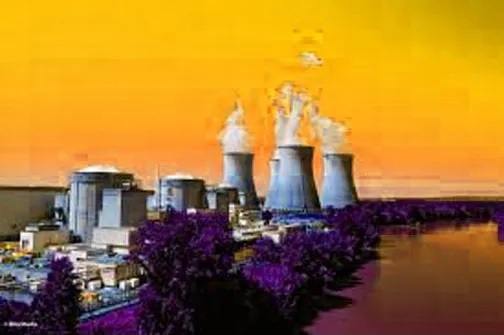
BUDAPEST, July 27 (Reuters) – Hungary is planning to allow the temperature limit for a section of the Danube which receives cooling water from the Paks nuclear power plant to be exceeded for security of supply reasons, the energy ministry said in a statement on Friday.
The plant’s four reactors operate by using the water of the Danube to cool its operations. Currently, according to the regulation, the river cannot receive water if its temperature exceeds 30 degree Celsius, in which case the operator must cut output and wait for the river to cool below the limit.
“In addition to environmental considerations, it may therefore be justified to exceed the limit value on a case-by-case basis if this is unavoidable for security of supply.”
The Paks plant has four Russian-built VVER 440 reactors with a combined capacity of about 2,000 megawatts. The reactors became operational between 1982 and 1987 and are scheduled to be retired in 2032-2037.
Hungary plans to expand the plant, with Russia’s Rosatom building two VVER reactors with a capacity of 1.2 gigawatts each, in addition to the currently working four reactors.
Hungary is planning to allow the temperature limit for a section of the
Danube which receives cooling water from the Paks nuclear power plant to be
exceeded for security of supply reasons, the energy ministry said in a
statement on Friday. The plant’s four reactors operate by using the water
of the Danube to cool its operations. Currently, according to the
regulation, the river cannot receive water if its temperature exceeds 30
degree Celsius, in which case the operator must cut output and wait for the
river to cool below the limit.
Reuters 27th July 2024
Israel using water as weapon of war as Gaza supply plummets by 94%, creating deadly health catastrophe: Oxfam

A new Oxfam report reveals how Israel has been systematically weaponizing water against Palestinians in Gaza, showing disregard for human life and international law.
July 18, 2024, by: The AIM Network,
https://theaimn.com/israel-using-water-as-weapon-of-war-as-gaza-supply-plummets-by-94-creating-deadly-health-catastrophe-oxfam/
A new Oxfam report reveals how Israel has been systematically weaponizing water against Palestinians in Gaza, showing disregard for human life and international law.
The report, Water War Crimes, finds that Israel’s cutting of external water supply, systematic destruction of water facilities and deliberate aid obstruction have reduced the amount of water available in Gaza by 94% to 4.74 litres a day per person – just under a third of the recommended minimum in emergencies and less than a single toilet flush.
Oxfam analysis also found:
- Israeli military attacks have damaged or destroyed five water and sanitation infrastructure sites every three days since the start of the war.
- The destruction of water and electricity infrastructure and restrictions on entry of spare parts and fuel (on average a fifth of the required amount is allowed in) saw water production drop by 84% in Gaza. External supply from Israel’s national water company Mekorot fell by 78%.
Israel has destroyed 70% of all sewage pumps and 100% of all wastewater treatment plants, as well as the main water quality testing laboratories in Gaza, and restricted the entry of Oxfam water testing equipment.- Gaza City has lost nearly all its water production capacity, with 88% of its water wells and 100% of its desalination plants damaged or destroyed.
The report also highlighted the dire impact of this extreme lack of clean water and sanitation on Palestinians’ health, with more than a quarter (26%) of Gaza’s population falling severely ill from easily preventable diseases.
In January, the International Court of Justice demanded that Israel immediately improve humanitarian access in light of a plausible genocide in Gaza. Since then, Oxfam has witnessed firsthand Israel’s obstruction of a meaningful humanitarian response, which is killing Palestinian civilians.
Oxfam Water and Sanitation Specialist Lama Abdul Samad said it was clear that Israel had created a devastating humanitarian emergency resulting in Palestinian civilian deaths.
“We’ve already seen Israel’s use of collective punishment and its use of starvation as a weapon of war. Now we are witnessing its weaponizing of water, which is already having deadly consequences.
“But the deliberate restriction of access to water is not a new tactic. The Israeli Government has been depriving Palestinians across the West Bank and Gaza of safe and sufficient water for many years,” she said.
“The widespread destruction and significant restrictions on aid delivery in Gaza impacting access to water and other essentials for survival, underscores the urgent need for the international community to take decisive action to prevent further suffering by upholding justice and human rights, including those enshrined in the Geneva and Genocide Conventions.”
Monther Shoblak, General Manager of the Gaza Strip’s water utility CMWU, said:
“My colleagues and I have been living through a nightmare these past nine months, but we still feel it’s our responsibility and duty to ensure everybody in Gaza is getting their minimum right of clean drinking water. It’s been very difficult, but we are determined to keep trying – even when we witness our colleagues being targeted and killed by Israel while undertaking their work.”
Oxfam is calling for urgent action including an immediate and permanent ceasefire; for Israel to allow a full and unfettered humanitarian response; and for Israel to foot the reconstruction bill for water and sanitation infrastructure.
1 This Month

of the week – Shut Down Drone Warfare!


Tell the Ukrainian Government to Drop Prosecution of Peace Activist Yurii Sheliazhenko

Petition to revoke the licensing of the Near Surface Nuclear Disposal Facility (NSDF) at Chalk River. https://www.ourcommons.ca/petitions/en/Petition/Details?Petition=e-7247
To see nuclear-related stories in greater depth and intensity – go to https://nuclearinformation.wordpress.com
-
Archives
- April 2026 (57)
- March 2026 (251)
- February 2026 (268)
- January 2026 (308)
- December 2025 (358)
- November 2025 (359)
- October 2025 (376)
- September 2025 (257)
- August 2025 (319)
- July 2025 (230)
- June 2025 (348)
- May 2025 (261)
-
Categories
- 1
- 1 NUCLEAR ISSUES
- business and costs
- climate change
- culture and arts
- ENERGY
- environment
- health
- history
- indigenous issues
- Legal
- marketing of nuclear
- media
- opposition to nuclear
- PERSONAL STORIES
- politics
- politics international
- Religion and ethics
- safety
- secrets,lies and civil liberties
- spinbuster
- technology
- Uranium
- wastes
- weapons and war
- Women
- 2 WORLD
- ACTION
- AFRICA
- Atrocities
- AUSTRALIA
- Christina's notes
- Christina's themes
- culture and arts
- Events
- Fuk 2022
- Fuk 2023
- Fukushima 2017
- Fukushima 2018
- fukushima 2019
- Fukushima 2020
- Fukushima 2021
- general
- global warming
- Humour (God we need it)
- Nuclear
- RARE EARTHS
- Reference
- resources – print
- Resources -audiovicual
- Weekly Newsletter
- World
- World Nuclear
- YouTube
-
RSS
Entries RSS
Comments RSS
 nuclear-news