EDF considers plans to revive ‘fish disco’ at Hinkley Point plant.
Move marks latest step in long-running debate over project’s wildlife
protection measures. EDF is considering reviving plans to install a
so-called fish disco in the Bristol Channel to ward off marine life
approaching its nuclear plant Hinkley Point C.
The French state-owned
company has written to communities around the project, being built in
Somerset, saying new technology could make its planned “acoustic
deterrent” system “safe and effective”. The move marks the latest
step in a long-running saga over the plant’s fish protection measures,
which has become emblematic of a wider national debate between development
and environmental protection measures.
EDF proposed an “acoustic
deterrent” as part of its original plans for the 3.2-gigawatt power
station. The system was devised to protect fish at risk of being sucked
into the plant’s machinery as it draws in water for cooling. But the
company has for several years been trying to ditch the proposal, arguing it
would endanger divers having to install and maintain the system, and may
not be effective.
It proposed to instead develop salt marshes to shelter
shoals. In their letter to local communities, sent last week and seen by
the FT, Andrew Cockcroft, head of stakeholder relations at Hinkley Point C,
said it had “recently become aware” of innovation that meant a new type
of deterrent could be installed. “The technology, pioneered in the
south-west, is proven and deployed internationally [ . . . ] We are
now working with experts to provide the scientific data to underpin the
case for using it at Hinkley Point C,” he said. EDF will “pause all
design and development work on salt marsh creation” in the meantime, he
added.
FT 4th March 2025. https://www.ft.com/content/b282d3f9-22f3-4075-9fce-6458a6c053af
Total collapse of vital Atlantic currents unlikely this century, study finds

Damian Carrington, Guardian 26th Feb 2025
Climate scientists caution, however, that even weakened currents would cause profound harm to humanity.
Vital Atlantic Ocean currents are unlikely to completely collapse this century, according to a study, but scientists say a severe weakening remains probable and would still have disastrous impacts on billions of people.
The Atlantic meridional overturning circulation (Amoc) is a system of currents that plays a crucial role in the global climate. The climate crisis is weakening the complex system, but determining if and when it will collapse is difficult.
Studies based on ocean measurements indicate that the Amoc is becoming unstable and approaching a tipping point, beyond which a collapse will be unstoppable. They have suggested this would happen this century, but there are only 20 years of direct measurements and data inferred from earlier times bring large uncertainties.
Climate models have indicated that a collapse is not likely before 2100, but they might have been unrealistically stable compared with the actual ocean system………………………………………………………………………………………. https://www.theguardian.com/environment/2025/feb/26/total-collapse-of-vital-atlantic-currents-unlikely-this-century-study-finds
‘Fish disco’ row risks fresh delays to Hinkley Point nuclear plant
EDF has been urged by campaigners to stick with plans to install underwater
loudspeakers to deter fish in the Bristol Channel, as the energy company
grapples with delays to construction of its Hinkley Point C nuclear
reactor.
The row over the “fish disco” deterrent, as it is known in
Whitehall circles, marks the latest salvo in the UK’s long-running battle
to balance growth with environmental protections. Mark Lloyd, chief
executive of The Rivers Trust charity, said France’s state-owned energy
company should keep its commitment to the acoustic fish deterrent, as part
of its Hinkley Point C project.
His comments follow warnings that wrangling
over fish protection risks further delaying completion of the Somerset
power plant, which is already several years behind schedule and billions of
pounds over budget. Plans for the deterrent system involve 288 underwater
speakers that would produce underwater noise louder than a jumbo jet all
day, every day for six decades, according to EDF.
Despite previously
agreeing to build an “acoustic fish deterrent”, EDF is now trying to
scrap those plans, saying they would endanger divers, and is instead
proposing salt marshes to shelter fish. But Lloyd argued that, unless the
acoustic deterrent was installed, “there are likely to be local
extinctions and a very significant impact on marine species throughout the
South West and the Irish Sea”. EDF rejects this characterisation,
pointing out that regulators estimate the amount of fish that will be
harmed without the deterrent is 44 tonnes per year, equivalent to an annual
catch of one small fishing vessel.
FT 26th Feb 2025,
https://www.ft.com/content/28c4cade-d477-4df5-a4b4-cf5ea8dfac95
Nuclear waste plan ‘would scar Lincolnshire Wolds’
BBC UK Sharon Edwards, Political reporter, Lincolnshire, 12th Feb 2025
A council is set to withdraw from talks to bury nuclear waste in the countryside.
Nuclear Waste Services (NWS), a government body, has earmarked an area near Louth, Lincolnshire, to build a disposal facility.
However, East Lindsey District Council (ELDC) leader Craig Leyland said the scheme would “scar” agricultural land, and a consultation process had served only to “antagonise and distress” residents.
NWS thanked the district council for taking part in the talks and said it would continue working with Lincolnshire County Council.
In 2021, the district council joined a community partnership group with NWS to examine a previous proposal to bury waste at a former gas terminal in Theddlethorpe, near Mablethorpe.
Last month, NWS announced it had moved the proposed location of the facility to land between Gayton le Marsh and Great Carlton.
But Leyland said the new proposal would “scar several kilometres of Lincolnshire farmland on the margins of the Lincolnshire Wolds”.
He also said the consultation process had “not been effective” and the council had not been given all the information it needed from NWS.
East Lindsey councillors will be asked to formally vote to withdraw from the consultation.
‘A key role’
The move will not automatically kill the plan, which requires “community consent” to go ahead, as NWS is still working with the county council……………………………
Lincolnshire County Council (LCC) remains in the process, but leader Councillor Martin Hill said the authority shared some of ELDC’s concerns about the new location…………………………….
https://www.bbc.co.uk/news/articles/cnvqljq77p0o
Safety Issues and Impact on Marine Environment of Extension of British Nuclear Plant Lifespan Queried by NGO

The Celtic League has noted that there was a previous review of a decision to extend Torness’s lifespan, after the discovery of cracks in the graphite bricks, which make up the reactor cores of some advanced gas-cooled power stations.
Afloat 12th February 2025, https://afloat.ie/resources/news-update/item/66295-safety-issues-and-impact-on-marine-environment-of-extension-of-british-nuclear-plant-lifespan-queried-by-ngo
The Celtic League NGO has queried the impact on the marine environment of the British government’s decision to extend the life of four old nuclear power plants.
It has also said that the decision is one that both the Irish and Manx governments should be concerned about, given the potential environmental impact.
Last month, French state-owned company EDF Energy said that the lifespan of Scotland’s last remaining nuclear power station and three other plants in England would be extended.
The company said that Torness, in East Lothian, and its sister site Heysham 2, in Lancashire, would continue generating for an extra two years until 2030.
Two other sites – Hartlepool and Heysham 1 – will continue for an extra year until 2027, it said, and it planned to invest £1.3bn (sterling) across its operational nuclear estate over the next three years.
The Celtic League has noted that there was a previous review of a decision to extend Torness’s lifespan, after the discovery of cracks in the graphite bricks, which make up the reactor cores of some advanced gas-cooled power stations.
Bernard Moffatt of the Celtic League has submitted a number of questions relating to safety to British Chief Nuclear Inspector Mark Foy at the Office of Nuclear Regulation, and says it will publish any response it receives.
‘Nothing prepared us for Sizewell C devastation’
Richard Daniel, Environment reporter, BBC East of England, 10 Feb 25
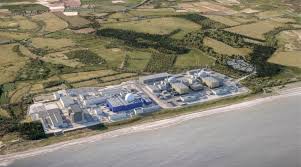
Groundwork for a new nuclear power station on the Suffolk coast is well under way, but the funding needed to build it has still not been agreed.
Sizewell C said it was confident a final investment decision on the station would be made this summer.
Meanwhile, the cost of its sister project, Hinkley Point C in Somerset, has risen to as high as £46bn.
Opponents have likened Sizewell C to the beleaguered HS2 rail project and said the government should pull out before it is too late.
So what is the state of play?
In east Suffolk, signs of development are hard to miss.
Thousands of trees have been felled, and a huge swathe of land stretching from the outskirts of Leiston to the coast have been cleared for a new construction compound and access road to the Sizewell C site.
Elsewhere, land is being dug up for a new link road off the A12, a new bypass around the villages of Stratford St Andrew and Farnham, and two park-and-ride sites at Wickham Market and Darsham.
The groundwork started a year ago.
The twin reactors would generate 3.2 GW of electricity, sufficient to power six million homes.
So far the UK government, which has an 85% stake in the project, has pledged £5.5bn towards development work.
Last month, EDF denied reports that the total cost of the project had risen to over £40bn, up from an estimated £20bn in 2018.
It is seeking investors and the government said a final investment decision would be made in June.
‘It’s all gone’
David Grant’s farm at Middleton, near Leiston, has been cut in two by the new Sizewell link road and an access road to the B1122.
He said he had lost 38 acres (15 hectares) of arable land.
Opponents of Sizewell C still argue the project should be scrapped before it is too late.
Alison Downes, from Stop Sizewell C, said: “The taxpayer is being forced to pay for what is basically a bet that this project is a good idea and should go ahead.
“The possibility that Sizewell C could go ahead at whatever price is just completely inconceivable.
“Every penny they spend on Sizewell C is a penny lost to cheaper, quicker renewable energy projects that could get us to net zero more quickly and address our climate crisis.”
“Nothing prepared us for the devastation caused,” he said.
“It’s all gone, dug out with machines completely ruthlessly and without any sympathy.
“I think this is HS2, but bigger, frankly.
“I’ve got friends who were involved in the HS2 cancellation and they haven’t even been able to repurchase their land. Luckily we have the option to repurchase if this doesn’t go ahead.”
‘Every penny they spend is a penny lost’
Opponents of Sizewell C still argue the project should be scrapped before it is too late.
Alison Downes, from Stop Sizewell C, said: “The taxpayer is being forced to pay for what is basically a bet that this project is a good idea and should go ahead.
“The possibility that Sizewell C could go ahead at whatever price is just completely inconceivable.
“Every penny they spend on Sizewell C is a penny lost to cheaper, quicker renewable energy projects that could get us to net zero more quickly and address our climate crisis.”…………………. https://www.bbc.co.uk/news/articles/cd9qwygd5j4o
Requiem for the trees
Earlier this week, Sizewell C admitted to a Community Forum that they have
felled a staggering 21,675 trees! The photo above shows local resident
David Grant seated on the remains of a 300 year-old oak tree on the
boundary between his land and what was compulsorily purchased for the
Sizewell Link Road. He was being interviewed by BBC Look East, for
broadcast next Tuesday (11th, 6.30pm) about the devastation. But we are
still not being told who will pay for Sizewell C and what it will cost.
Stop Sizewell C 7th Feb 2025 https://mailchi.mp/stopsizewellc/en7?e=326ee81c22
Concern UK’s AI ambitions could lead to water shortages

Zoe Kleinman, Technology editor•@zskm Brian Wheeler, Senior political reporter.
BBC 7th Feb 2025, https://www.bbc.co.uk/news/articles/ce85wx9jjndo
Sir Keir Starmer’s plan to make the UK a “world leader” in Artificial Intelligence (AI) could put already stretched supplies of drinking water under strain, industry sources have told the BBC.
The giant data centres needed to power AI can require large quantities of water to prevent them from overheating.
The tech industry says it is developing more efficient cooling systems that use less water.
But the department for science, innovation and technology said in a statement it recognised the plants “face sustainability challenges”. The government has committed to the construction of multiple data centres around the country in an effort to kick start economic growth.
Ministers insist the notoriously power-hungry server farms will be given priority access to the electricity grid.
Questions have been raised about the impact this might have on the government’s plans for clean energy production by 2030.
But less attention has been given to the impact data centres could have on the supply of fresh, drinkable water to homes and businesses.
Parts of the UK, in the south especially, are already under threat of water shortages because of climate change and population growth.
The government is backing plans for nine new reservoirs to ease the risk of rationing and hosepipe bans during droughts.
But some of these are in areas where new data centres are set to be built.
The first of the government’s “AI growth zones” will be in Culham, Oxfordshire, at the UK Atomic Energy Authority’s campus – seven miles from the site of a planned new reservoir at Abingdon.
The 4.5 sq mile (7 sq km) reservoir will supply customers in the Thames Valley, London and Hampshire. It is not known how much water the massive new data centres now planned nearby could take from it.
The BBC understands Thames Water has been talking to the government about the challenge of water demand in relation to data centres and how it can be mitigated.
In a new report, the Royal Academy of Engineering calls on the government to ensure tech companies accurately report how much energy and water their data centres are using.
It also calls for environmental sustainability requirements for all data centres, including reducing the use of drinking water, moving to zero use for cooling.
Without such action, warns one of the report’s authors, Prof Tom Rodden, “we face a real risk that our development, deployment and use of AI could do irreparable damage to the environment”.
Hinkley Point C owner warns fish protection row may further delay nuclear plant.
The prospect of a fresh delay to the plant, which is expected to generate about 7% of the UK’s electricity in the 2030s, comes amid a deepening row between green groups and the government over the chancellor, Rachel Reeves’s plan to prioritise economic growth over other considerations, including the environment and net zero.
Solution to stop River Severn fish being sucked into cooling systems taking too long to resolve, EDF says
Jillian Ambrose, Guardian 30th Jan 2025
The owner of Hinkley Point C in Somerset has warned that the much-delayed construction of Britain’s first new nuclear power plant in a generation could face further hold-ups because of a row over its impact on local fish.
The nuclear developer, EDF Energy, warned that the “lengthy process” to agree to a solution with local communities to protect fish in the River Severn had “the potential to delay the operation of the power station”.
As a result, the developer, which is owned by the French state, raised the threat of further delays to Hinkley Point – a project already running years late and billions of pounds over budget.
EDF said last year that Hinkley could be delayed to as late as 2031 and cost up to £35bn, in 2015 money. The actual cost including inflation would be far higher. EDF declined to say how long any new delay could be.
The prospect of a fresh delay to the plant, which is expected to generate about 7% of the UK’s electricity in the 2030s, comes amid a deepening row between green groups and the government over the chancellor, Rachel Reeves’s plan to prioritise economic growth over other considerations, including the environment and net zero.
EDF last week welcomed the government’s new reforms to “stop blockers getting in the way” of new infrastructure projects, including nuclear power plants. It called for the government to establish a framework to manage environmental concerns “in a more proportionate” manner.
The developer has pressured the government to loosen environmental rules while at loggerheads with local communities over its complex plans to protect local fish populations which are at risk of being sucked up into the nuclear power plant’s cooling systems.
The company had planned to install an “acoustic fish deterrent” to keep fish away from the reactor’s water intake system, which is nearly two miles offshore.
The project, which was reportedly informally dubbed “the fish disco” among former ministers, would require almost 300 underwater speakers to boom noise louder than a jumbo jet 24 hours a day for 60 years.
But the plan was later scrapped by EDF over concerns for the safety of divers who would need to maintain the speakers in dangerous conditions. There are also questions over its effectiveness.
Without the deterrent an estimated 18 to 46 tonnes of fish could be killed every year, according to estimates provided by EDF.
The company dismayed local farmers and landowners last year by suggesting plans to turn 340 hectares (840 acres) of land along the River Severn into a salt marsh to compensate for the number of fish forecast to be killed by the reactor every year.
After a growing outcry, it said earlier this month it would delay the formal consultation on its salt marsh plan, which it says would provide safe habitats for fish and animals, from the end of this month until later this year.
Mark Lloyd, the chief executive of the Rivers Trust, said any fish deterrent was vital. “The water intakes will suck in an Olympic swimming pool’s worth of water every 12 seconds, more than the normal flow of all the rivers flowing into the Severn estuary, and without a deterrent mechanism will cause a vast slaughter of millions of fish every year for the next 60 years.
“This will cause the potential extinction of populations of rare and endangered species … As the Severn estuary is a vital fish nursery for the whole region, the strategic and economic impacts for marine fisheries throughout the Irish Sea will be devastating.”……………………………………………………………………………………… https://www.theguardian.com/business/2025/jan/30/hinkley-point-c-owner-warns-fish-row-may-further-delay-nuclear-plant
The surface of our oceans is now warming four times faster than it was in the late 1980s

The surface of our oceans is now warming four times faster than it was in
the late 1980s. The rate of the ocean’s warming has more than quadrupled
over the past four decades, according to researchers. While ocean
temperatures were rising at about 0.06 degrees Celsius per decade in the
late 1980s, they are now increasing at 0.27 degrees Celsius per decade,
scientists said Tuesday.
Independent 28th Jan 2025, https://www.independent.co.uk/climate-change/oceans-heat-temperature-climate-warming-b2687248.html
Hinkley Point C: EDF says fish issue could delay new plant operation
By Seth Dellow, Digital Reporter, Bridgwater Mercury 24th Jan 2025
EDF has stated that a “lengthy process” to identify acceptable compensation for the loss of fish stemming from Hinkley Point C could have “the potential to delay the operation of the power station.”
The French energy giant behind the nuclear project has welcomed government plans to stop delaying major infrastructure projects over ‘excessive’ environmental obligations.
The government is proposing to reduce the number of legal challenges a group can make in court, from three to just one attempt……………………………………………………….
EDF has warned that a “current lengthy process to identify and implement acceptable compensation for a small remaining assessed impact on fish has the potential to delay the operation of the power station.”
It follows the recent delay of a formal consultation over the proposed location of a new salt marsh, which would act as an environmental mitigation for the harm the project would bring to 44 tonnes of fish.
According to EDF, creating a salt marsh “is the only option currently likely to be accepted as a mitigation.” But local residents along the Severn, including landowners and farmers, have previously expressed their opposition to the plans. The initial proposal to create a saltmarsh at Pawlett Harms was opposed in Parliament, with Bridgwater’s MP Sir Ashley Fox branding the idea as a “disaster.” https://www.bridgwatermercury.co.uk/news/24878911.hinkley-point-c-edf-says-fish-issue-delay-new-plant-operation/
Vegetation being removed to enable upgrade of Sizewell line
Work on a Suffolk railway line has sparked “fury and upset” over the
apparent removal of mature trees and vegetation. Leiston resident Hayley
Trueman said the foliage had been cut down along the Sizewell branch line
between Saxmundham and Leiston as part of an upgrade to enable the track to
be used to transport building materials to the new Sizewell C nuclear power
station.
She said: “The trees and vegetation not only provide screening for
us as residents, but is a green corridor for the abundant wildlife that
lives there.
East Anglian Daily Times 22nd Jan 2025 https://www.eadt.co.uk/news/24873970.vegetation-removed-enable-upgrade-sizewell-line/
Trump’s got a radioactive time bomb under Greenland’s ice
The U.S. would inherit an environmental dilemma of its own making if it lays claim to the massive Arctic island.
January 17, 2025 , By Seb Starcevic, https://www.politico.eu/article/trumps-got-a-radioactive-time-bomb-under-greenlands-ice/
Deep in Greenland’s frozen wilderness, a radioactive secret sleeps beneath the ice — and it could be a headache for Donald Trump if the U.S. president-elect follows through on his threat to take control of the vast Arctic island.
Its name is Camp Century, an American military base built in 1959 during the Cold War in an attempt to develop nuclear launch sites that could survive a Russian strike.
The project, which involved carving a network of tunnels through Greenland’s ice sheet and was powered by a small nuclear reactor, was deemed unfeasible due to the constantly shifting ice and abandoned in 1967.
Although the Americans dismantled the reactor and took its nuclear reaction chamber with them when they departed in ’67, they left behind thousands of tonnes of waste and debris — including radioactive residue — to be buried under the icecap forever.
But thanks to climate change, forever might come sooner than planned.
As the world warms, Camp Century — which is located in one of the most remote spots on Earth, about 1,500 kilometers north of Nuuk, Greenland’s capital city — has been the focus of renewed interest and anxiety about just how long it will remain entombed. A landmark study published in 2016 found the remains of the abandoned base could be exposed by melting ice and snow toward the end of the 21st century.
“Our study highlights that Camp Century now possesses unanticipated political significance in light of anthropogenic climate change,” the researchers wrote (though they later revised their findings in 2021 to rule out the base reemerging from the ice until at least 2100).
The revelation caused a political storm in Greenland, a Danish territory which has been self-ruling since 1979.
Greenlandic Foreign Minister Vittus Qujaukitsoq demanded Denmark take responsibility for cleaning up the debris from abandoned U.S. military installations in Greenland, of which there are 20 to 30 mainly disused sites. Greenland, formerly a colony of Denmark, never consented to hosting them.
Nuuk and Copenhagen signed a deal in 2017 earmarking about $30 million to clean up the debris and waste — but Camp Century was not included in the agreement.
Greenlanders are “concerned that [Camp Century] will pollute as the ice melts down,” said Pipaluk Lynge, an MP from Greenland’s largest party and chair of the parliamentary foreign policy committee.
But it’s not just Camp Century, she added, referring to the other abandoned bases. “There are many places where [they] have left tons of dump,” she told POLITICO. “The U.S. has military waste all over the Arctic.”
‘Don’t poke it’
There have so far been “no attempts” to clean up Camp Century’s radioactive and toxic waste, said William Colgan, professor of glaciology and climate at the Geological Survey of Denmark who led the 2016 study into the ice surrounding Camp Century.
While Colgan did once drill deep into the site to test its radioactivity at the Danish health ministry’s request, “There is actually a conscious effort not to drill into the debris field,” he told POLITICO. “We don’t actually know the full nature of what’s down there.”
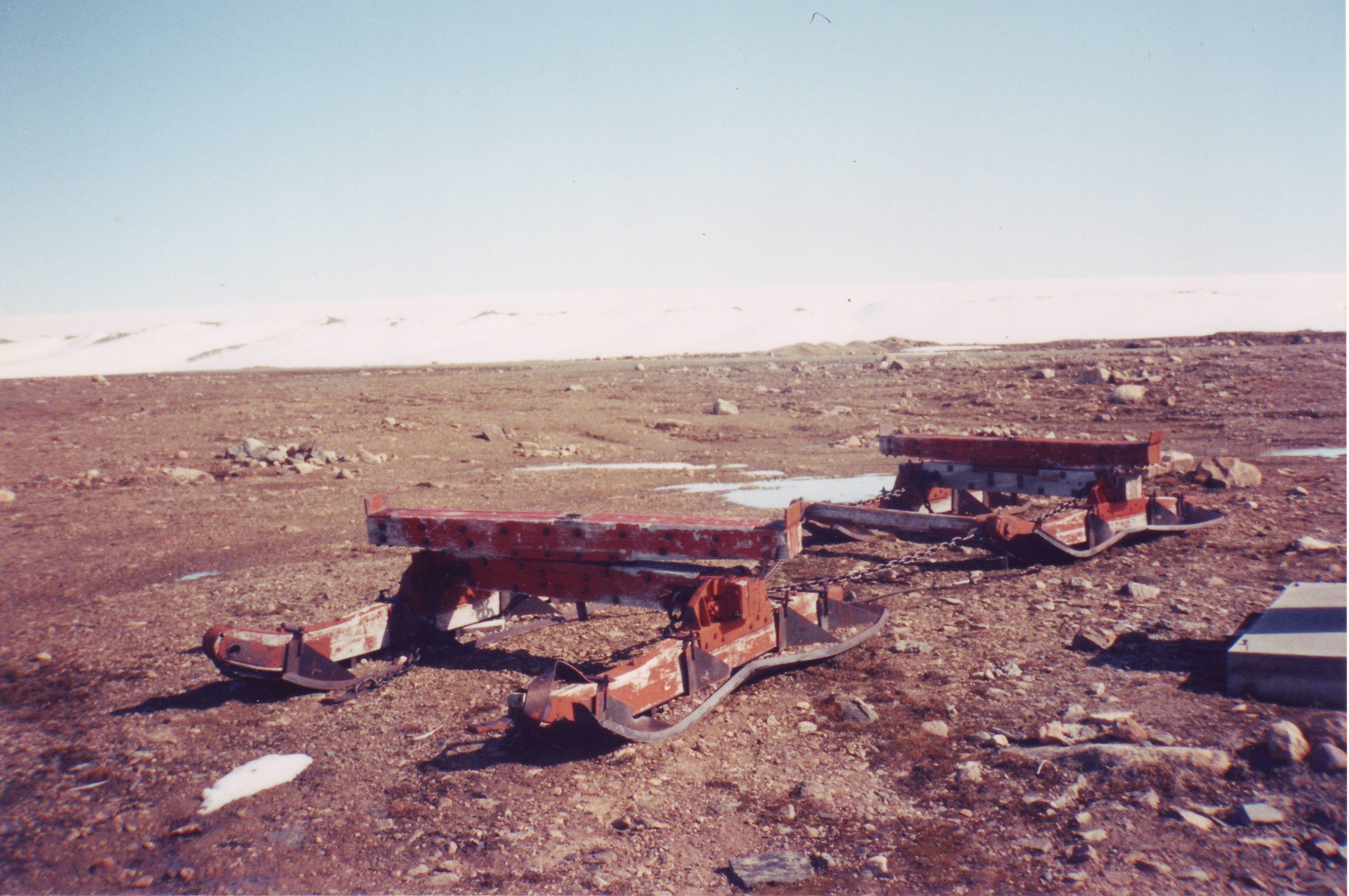
Camp Century has been described as a subterranean city, complete with a chapel, a barbershop and dormitories that once housed hundreds of people. To construct it, equipment and supplies were transported across the ice on sleds and tractor-trailers from nearby Pituffik Space Base, the northernmost U.S. military installation in the world, which is still active today.
In a 1961 report on American broadcaster CBS, TV legend Walter Cronkite visited the military base. His program filmed Camp Century’s massive ice tunnels being dug and showed U.S. army engineers relaxing in their underground, nuclear-powered barracks, reading and listening to records.
All that is now buried under thick layers of ice. Colgan said he and his team of researchers had been unable to find parts of Camp Century, such as its fuel depot, and feared disturbing it too much. “It’s cold, it’s deep, don’t poke it,” he said.
There are different ways Camp Century could contaminate the environment. One is if melting ice and snow carry toxic waste — such as the 200,000 liters of diesel fuel beneath the ice, according to Colgan — out into the ocean. Another is if the ice containing the base breaks off and forms an iceberg. Neither are likely anytime this century; while the latter would likely take thousands of years.
But the timeline shifts a little depending on how much the world warms in the coming decades. While there are different projections, a United Nations report published last October found the planet will heat up by 2.6 to 3.1 degrees Celsius this century, with no chance of limiting the temperature increase to the totemic 1.5 C target agreed in Paris in 2015.
“It’s a game of just a couple of degrees,” Colgan said. “2 or 3 C is the difference between Camp Century staying under ice or melting out.”
Climate change in microcosm
Camp Century itself was pivotal to scientists’ understanding of climate change. In the 1960s, scientists extracted an ice core there, a frozen soil sample that is still studied to this day for insights into climate patterns hundreds of thousands of years ago. The base remains a scientific “supersite,” said Colgan, who visits it annually along with many other climate researchers.
If the U.S. were to lay claim to the island — as Trump has repeatedly said it should do, calling American control of Greenland an “absolute necessity” and even threatening to use military force — it would also inherit the legacy of its own Cold War-era polluting activities at Camp Century.
“Camp Century is a microcosm of climate change,” Colgan argued. “People today are left picking up and trying to understand the climate impacts of decisions made 50 years ago, 60 years ago.”
And with the U.S. currently the second-biggest emitter of planet-warming emissions in the world, Camp Century and its “shifting fate” aren’t just a fascinating slice of Cold War trivia, but a story of climate action and responsibility today, he added.
“It is the decisions being made in the next decade or two that will put us on these trajectories that have multi-century implications,” Colgan warned.
How Canada supplied uranium for the Manhattan Project
Peter C. van Wyck · CBC, Jan 10, 2025
In the past couple of years, the public imagination has been taken up with all things nuclear — the bomb, energy and waste. The film Oppenheimer recasts the story of the bomb as a Promethean and largely American narrative, while the series Fallout depicts a post-nuclear world. Russia has repeatedly emphasized its readiness for nuclear conflict. Nuclear energy has been regaining popularity as a hedge against climate change.
And yet, the story of Canada’s nuclear legacy — and our connection to the bombs that the U.S. military dropped on the Japanese cities of Hiroshima and Nagasaki, killing tens of thousands in an instant — is rarely told.
The documentary Atomic Reaction examines the impact of the radioactive materials mined in a Dene community in the Northwest Territories in the 1930s and ’40s. That radioactive ore was transported thousands of kilometres south, via Canada’s “Atomic Highway,” to be refined in Port Hope, Ont. And the uranium was used in the Manhattan Project, which developed those atomic bombs.
A mineral with immense power
This Canadian story began in 1930. Gilbert LaBine, a co-founder of Eldorado Gold Mines, discovered a rich deposit of radioactive pitchblende ore — containing radium, uranium and polonium — as well as silver, on the eastern shores of Great Bear Lake in the Northwest Territories. The site, on the traditional lands of the Sahtúgot’įnę Dene, came to be known as Port Radium. In a stroke, the country had entered the atomic age. ………………………………….
Port Hope: ‘The town that radiates friendliness’
In 1932, Eldorado constructed a radium-processing plant in Port Hope, the only such refinery in North America. Eldorado secured an abandoned waterfront factory and hired Marcel Pochon, a former student of radioactivity pioneers Marie and Pierre Curie, to mass-produce radium.
By 1936, the first grams of radium salts had been produced. (More than six tonnes of pitchblende are needed to produce a gram of radium.) However, by the late 1930s, Eldorado’s radium business was in decline. Competition with Belgium’s mine in the Congo was fierce, and global radium prices had fallen. In 1940, the Port Radium mine closed.
But soon, Eldorado’s and Port Hope’s fortunes radically changed. Uranium, previously considered waste from the processing of radium, became a strategic commodity. In 1942, LaBine’s Eldorado signed contracts with the U.S. military to supply uranium to the fledgling Manhattan Project, and the mine at Port Radium quietly reopened. In 1943, the company changed its name to Eldorado Mining and Refining, and in early 1944 the Canadian government took over the company and made it a Crown corporation.
The Port Hope refinery processed both Canadian and Congolese ores for the Manhattan Project. Eldorado continued to refine military-grade uranium for the Americans until 1965. The facility currently converts nuclear-grade uranium trioxide into uranium hexafluoride or uranium dioxide, used in nuclear reactors around the world. In the 1970s, a billboard leading into town even read, “Beautiful old Port Hope. The town that radiates friendliness.” Today, the plant is owned by Cameco, one of the world’s largest publicly traded uranium companies.
A lasting legacy and a massive cleanup
In Délı̨nę, a Dene community near Port Radium, a dark shadow remains after so many residents worked in the mine without being told they were involved in the Manhattan Project. And later, Dene miners started dying of lung cancer, earning the community of Délı̨nę the grim nickname the “Village of Widows.”
In 2005, a national report examining the health and environmental effects of the mine concluded there was no scientific link between cancer rates in Délı̨nę and mining activities in the area. But another study by the Canadian Nuclear Safety Commission the following year found increased rates of lung cancer in mine workers. People in the community still feel fear and anxiety about Port Radium’s impact on their health.
But the story of Eldorado and Port Hope also includes radioactive and chemical contamination.
Today, the municipalities of Port Hope and neighbouring Clarington are the sites of the largest volume of historic low-level radioactive waste in Canada — a result of spillage, leakage and widespread disposal of contaminated fill and other materials.
Major radioactive contamination in the area first came to light in the late 1960s, but little was done.
It wasn’t until 1975 that the public started to become aware of the problem, when St. Mary’s elementary school was abruptly closed. Eldorado had detected gamma radiation in the school’s parking lot and dangerously high levels of radon gas in the school; the building had unknowingly been built on contaminated fill from Eldorado’s operations some 15 years earlier.
The school closure set in motion a flurry of activity. It came to light that radioactive and chemical waste — estimated at roughly two million cubic metres — had been dumped directly into the harbour beside the plant and in ravines around town and used in the construction of homes, basements, driveways, businesses, roads, schools and other public buildings. Properties were surveyed for radiation levels; several hundred of them were remediated; and some 100,000 tonnes of contaminated soil and materials were relocated to a site at Chalk River, operated by Atomic Energy of Canada Ltd. (AECL). Still, the scope and severity of the contamination was not fully understood.
In 2001, the Port Hope Area Initiative (PHAI) began — a government plan to ensure the safe long-term management of historic low-level radioactive waste.
In 2012, the minister of natural resources announced an investment of $1.28 billion over 10 years for the PHAI. A radiological survey of approximately 4,800 public and private properties began, along with project design, an environmental assessment and community engagement.
Today, many sites await cleanup, and waste is still produced and stored at the Port Hope facility. https://www.cbc.ca/documentaries/how-canada-supplied-uranium-for-the-manhattan-project-1.7402051
EDF’s UK nuclear plan – salt marsh consultation delay reaction
Author: LDRS, 11th Jan 2025
EDF has been urged to “end the uncertainty” over its plans to turn part of North Somerset into a salt marsh after it announced it was delaying the plans.
The power company, which is building Hinkley Point C, wants to create 340 hectares of new salt marsh habitats along the Severn — including at Kington Seymour in North Somerset — to compensate for the 44 tonnes of fish expected to be sucked into the power plant’s cooling systems each year. Farmers and the communities who could see their land become salt marsh have expressed dismay at the plans.
A consultation on the plans had been set to launch this month — but now EDF has said it is marking sure all options are “fully explored” and is delaying the consultation until later in 2025. A letter sent to people in the areas affected on Monday said: “We have listened carefully to all views and the feedback has provided us with a great deal of insight as we consider what proposals to put forward in our public consultation.”
But the letter has not impressed locals. Local councillor Steve Bridger, who represents the Yatton ward which includes Kingston Seymour on North Somerset Council, said: “It is clear to me that EDF’s preference is to find voluntary ways to meet its planning obligations, so I would ask that they end the uncertainty for residents and businesses and just drop their proposals to create salt marsh and put their energy into a genuine and open conversation with our communities to develop a strategy that protects all our residents and funds all sorts of biodiversity gains in North Somerset that we actually want and need.”
Claire Stuckey, whose parents’ land and a business faces becoming part of the Kingston Seymour salt marsh, said: “We have unanimous community opposition and significant evidence it won’t work. It’s their decision what they are going to do.”
Farmers and landowners found out their lands were being looked at in September, when they received letters from EDF. Ms Stuckey said that EDF’s statement that they needed more time to look at their options “goes against the original excuse for their heavy handed approach.”
EDF is also looking at Littleton-upon-Severn in South Gloucestershire, and Rodley and Arlingham in Gloucestershire — where the plans have also met with outrage — as potential locations for salt marsh. The controversial plans were debated in Parliament in October, and North Somerset Council resolved in November to write to the government to urge it to block the plans.
But EDF says it has to find a way to compensate for the deaths of fish in its cooling system as it draws in water from the Severn Estuary. Although it does have a fish return mechanism to reduce the numbers of fish killed — the first British nuclear power station to have one — it is predicted that 44 tonnes of fish a year will slip through the mechanism.
The planning permission for Hinkley Point C originally stipulated that it would use loudspeakers by the water intakes on the sea floor to scare off fish, but EDF has warned it would be dangerous for divers to install the speakers and instead proposed creating salt marshes to compensate for the dead fish………….
Rayo 11th Jan 2025,
https://hellorayo.co.uk/greatest-hits/bristol/news/edf-consultation-delay/
1 This Month

of the week – Shut Down Drone Warfare!


Tell the Ukrainian Government to Drop Prosecution of Peace Activist Yurii Sheliazhenko

Petition to revoke the licensing of the Near Surface Nuclear Disposal Facility (NSDF) at Chalk River. https://www.ourcommons.ca/petitions/en/Petition/Details?Petition=e-7247
To see nuclear-related stories in greater depth and intensity – go to https://nuclearinformation.wordpress.com
-
Archives
- April 2026 (68)
- March 2026 (251)
- February 2026 (268)
- January 2026 (308)
- December 2025 (358)
- November 2025 (359)
- October 2025 (376)
- September 2025 (257)
- August 2025 (319)
- July 2025 (230)
- June 2025 (348)
- May 2025 (261)
-
Categories
- 1
- 1 NUCLEAR ISSUES
- business and costs
- climate change
- culture and arts
- ENERGY
- environment
- health
- history
- indigenous issues
- Legal
- marketing of nuclear
- media
- opposition to nuclear
- PERSONAL STORIES
- politics
- politics international
- Religion and ethics
- safety
- secrets,lies and civil liberties
- spinbuster
- technology
- Uranium
- wastes
- weapons and war
- Women
- 2 WORLD
- ACTION
- AFRICA
- Atrocities
- AUSTRALIA
- Christina's notes
- Christina's themes
- culture and arts
- Events
- Fuk 2022
- Fuk 2023
- Fukushima 2017
- Fukushima 2018
- fukushima 2019
- Fukushima 2020
- Fukushima 2021
- general
- global warming
- Humour (God we need it)
- Nuclear
- RARE EARTHS
- Reference
- resources – print
- Resources -audiovicual
- Weekly Newsletter
- World
- World Nuclear
- YouTube
-
RSS
Entries RSS
Comments RSS
 nuclear-news