The War Intervention: AI, Data Centers, and the Environment

the issue of militarism is still left out of climate conversations.
SCHEERPOST, January 28, 2026 By: Aaron Kirshenbaum for Codepink
Early on Saturday, January 3rd, Venezuela was attacked on behalf of oil, mineral, tech, and
weapons profiteers in a regime change operation. Since then, the Trump administration has
threatened Iran, Greenland, Cuba, Colombia, and Mexico. What unites these threats? The
U.S.’s quest for endless resource extraction to power its increasingly deadly global empire. And
it’s not slowing down. These resource wars and “operations” are emerging as the AI drive also
ramps up. In July, Palantir and the Pentagon signed a 10-year, $10 billion agreement. In
April 2025, Palantir won a $30 million contract with ICE — a significant development in their
decade-plus-long partnership that we are now seeing play out in their increasingly militarized,
unrestrained murders and abductions in Minneapolis and around the country. This increasingly
inextricable partnership between AI and the war economy is throwing us into a fast track
of climate and environmental chaos that threatens us all.

In August, I learned about an AI program created by the U.S.-armed Israeli military called
“Where’s Daddy.” The program is designed to track individuals Israel is targeting in order to kill
them at home with their families. In October 2023, the AI war giant Palantir entered into a
contract with the Israeli military. Since 2021, the Israeli Occupation Forces have been working
with tech companies like Google on AI programs such as Project Nimbus, used to surveil and
murder Palestinians. “Where’s Daddy” and other overlapping systems represent the newest
phase of this. The program characterizes the families of these alleged combatants as “collateral
damage” and is often far from accurate, killing entire families without the “intended targets” even
being there. The tech companies developing these programs do not have anyone’s “safety” or
“security” in mind; they are solely motivated by profit. This cruelty is no surprise— these
companies are the same ones building toxic data centers across the U.S., largely in working-
class and Black and Brown communities, in the newest phase of environmental injustice.
We’ve been hearing about AI more and more as it enters the commercial market in increasingly
pervasive ways. In particular, much has been reported about AI data centers entering
communities and the opposition to them. Many of these fights have been taken up by
environmental organizations; it’s estimated that data centers could consume approximately 21%
of global energy by 2030. In order to sustain this energy use, data centers need cooling. Mid-
sized data centers use as much water as a city of 50,000 people. Meta’s Hyperion data center
in Louisiana is projected to use as much water as the entire city of New Orleans. Another
Meta center in Cheyenne, Wyoming, is projected to use more power than the state of
Wyoming itself.
These centers not only increase electricity bills for communities that can’t afford them, but they
also generate significant air, water, and noise pollution. Some centers regularly use diesel
“emergency” generators to meet increased demand. Each generator is the size of a railcar, and
thousands are littered across data center hotspots like Northern Virginia. As a result, toxic
chemicals are seeping into the lungs of residents, causing asthma and long-term illness. Data centers are known to create noise pollution, with constant hums that can lead to hearing loss,
anxiety, cardiovascular stress, and a host of other long-term issues. Furthermore, equipment is
certain to break down and lead to toxic waste and electronic pollution.
“Critical” minerals are required for the operation of these data centers. The process of obtaining
these minerals, supposedly also used for green technology, requires the militarization,
destabilization, and total plunder of mineral-rich regions. These minerals are supposedly
“critical” for energy transitions, and some have advocated more “sustainable” methods for
maintaining data centers through “green” technologies.
The use of these minerals is clear: The Pentagon recently became the largest shareholder in
MP Minerals, one of the largest mining companies in the Western Hemisphere. Why?
Aluminum for fighter jets. Titanium for missiles. And copper, lithium, cobalt, and many others for
data center batteries and semiconductors. The more data centers are built, the more minerals
are needed. This process of extraction has murdered millions in the Congo, destroying the soil,
water, and forest: one of the largest “lungs” of the planet. It has led to the newest phase of
imperialist aggression on Venezuela, a mineral-rich country with the largest oil reserves in the
world (oil, of course, is also essential for data centers). Additionally, it has led to the attempted
subordination of the Philippines to semiconductor production. The U.S. also seeks to use the
archipelago as an “unsinkable aircraft carrier” for the U.S.’s looming war with China, its largest
competitor in the AI and mineral race.
These are the impacts we already know to be devastating. But this is also new technology,
which means there’s a lot we don’t know and a lot that’s being intentionally hidden. Lack of
transparency is the norm in this industry. As data centers rapidly expand and buy up land
around the country, the actual companies behind them hide behind non-disclosure
agreements. This is not dissimilar to the intentional concealment of the military’s role in global
emissions, enacted through U.S. pressure at the third U.N. Climate Change Conference in 1997.
Decades later, the issue of militarism is still left out of climate conversations.
The parallel makes sense, considering how the AI industry has fused with the war machine. The
U.S. military is one of the most environmentally destructive forces on the planet. In its oil
consumption alone, the U.S. military is the world’s largest institutional polluter. The U.S.’s 800+
bases in 80 countries globally are known to regularly leak jet fuel and cancer-causing PFAS
chemicals, along with a toxic cocktail of hundreds of other chemicals. While training exercises
like RIMPAC in the Asia-Pacific region authorize the deaths of thousands of sea creatures, in
environmental sacrifice zones like Camp Lejeune in North Carolina, toxic waste from military
facilities has killed infants hours after birth. In bomb testing sites like Vieques, off the coast of
mainland Puerto Rico, lung cancer and bronchitis rates have been shown to be 200% higher
than on the mainland for men, and 280% for women. And the oil-motivated “war on terror”
emitted 1.2 billion metric tons of carbon dioxide from 2001-2017.
Now we are entering a new era of resource wars that will further destroy the planet as the AI
race with China accelerates. The relationship between AI and the U.S. military goes beyond the Pentagon’s contracts with Palantir, Meta, and Microsoft………………………………………………………………………..
No part of this is sustainable — not the war economy, not unending extraction, regardless of
how much “green tech” it produces, and not an AI-driven speculative economy. We cannot
afford to have splintered conversations either; these AI and tech companies are war profiteers.
The new Cold War on China drives this. The genocide in Palestine drives this. The war on
Venezuela, Latin America, and the Caribbean drives this. And so our organizing must be unified
against the impacts, mechanisms, and causes. Against data centers and the wars that drive
them.We need to stop the blood. But we can’t lose sight of why and how the bullets are
fired. https://scheerpost.com/2026/01/28/the-war-intervention-ai-data-centers-and-the-environment/
Plans to ease nuclear build rules could spell disaster for nature, says Wildlife Trusts
Jack Loughran, Engineering and Technology,
ENDS 20th Jan 2026
Government plans to cut environmental protections in a bid to make it easier to build nuclear power plants is “misguided” and based on “misleading advice”, the Wildlife Trusts has said.
Published in November 2025, the Nuclear Regulatory Review proposes a number of changes to the habitats regulations so that developers building nuclear plants would face less stringent requirements to avoid harming protected nature sites before they build.
In theory, it would allow developers to proceed, even if there is potential harm to nearby habitats, by moving directly to off-site compensation or mitigation rather than blocks to their original proposals.
But the Wildlife Trusts has said the rule changes would have “devastating consequences” for what remains of Britain’s natural landscape and warned that many habitats are “irreplaceable” and would be lost forever if proper protections were not in place.
Nuclear power plants were originally limited to just eight sites in the UK, but these restrictions are being scrapped ahead of a new wave of small modular reactors that are expected to be more numerous and constructed in various locations around the country.
The Wildlife Trusts said that a major expansion of the UK’s nuclear power infrastructure, which is planned by the government in order to decarbonise the energy grid, risks weakening critical environmental safeguards that protect habitats and landscapes across the country. The body also argues that the Nuclear Regulatory Review exaggerates the cost of adhering to nature regulations while underplaying the real ecological consequences of nuclear development near sensitive areas………………………………….. https://eandt.theiet.org/2026/01/20/plans-ease-nuclear-build-rules-could-spell-disaster-wildlife-says-wildlife-trusts
Why the Nuclear Regulatory Review is flawed – and how itcould turn the nature crisis into a catastrophe.

January 2026, Research commissioned by The Wildlife Trusts
“…………………………………………………. Large nuclear projects, using potentially risky technology, have potential for significant environmental impacts on sensitive places and so it is right for there to be robust environmental assessments of these projects. The Government has an ambitious programme of nuclear
deployment. It has published a new National Policy Statement for nuclear power.3
It has removed the restriction on new nuclear power to eight sites around the UK. It has said it will aid
the completion of Hinkley Point C, provide additional funding for Sizewell C, and consider one
large new nuclear power plant alongside the deployment of Small Modular Reactors. Due to
their requirements and the types of site needed, nuclear projects have often impacted on
ecologically sensitive areas. The new National Policy Statement on nuclear reiterates the
importance of the Habitats Regulations and the protection of legally protected sites and wildlife.
As part of its efforts to boost nuclear deployment, the Government commissioned John
Fingleton to lead a taskforce review of nuclear regulation. The final report of the Nuclear
Regulatory Review was published in November 2025.
It diagnosed environmental regulations
as a blocker to nuclear deployment and included recommendations to water down those
regulations. The Prime Minister and the Chancellor have said that the Government accepts the
principles of the Review, that within three months a plan will be published by DESNZ to
implement the Review, and that its recommendations will be implemented within two years
using legislation.6 Environmental groups are very concerned the recommendations will be
adopted for the nuclear sector using legislation and potentially applied to other types of major
infrastructure.
The Nuclear Regulatory Review is part of a wider pattern of the Government adopting the
arguments of developers to pinpoint where delays are coming from; however, it is inaccurate
and does not represent reality. Research by The Wildlife Trusts already shows that – despite
the headlines and claims by the Chancellor and others – bats and newts, for example, were a
factor in just 3.3% of planning appeals.7 This briefing will highlight how the claims made by the
Nuclear Regulatory Review are similarly short on evidence and, if adopted, will do little to speed
up planning decisions but, instead, will turn the nature crisis into a catastrophe. Many industries
already say that the uncertainty caused by constantly changing regulations holds back
development; the Nuclear Regulatory Review threatens to do just that.
Flaws and Inaccuracies in the Nuclear Regulatory Review
The Review, commissioned by the Government, identifies three major areas for reform: risk
aversion, process over outcomes, and a lack of incentives. The Review also turns nature into a
scapegoat for a failure to deliver nuclear projects.
Recommendation 11 calls for various changes to the Habitats Regulations, including removing
the requirement for compensation to be like-for-like. Recommendation 12 calls for nuclear
developers to be allowed to comply with the regulations simply by paying a fixed sum (an
amount per acre), which would be used by Natural England for nature somewhere else. When it
comes to local planning, The Wildlife Trusts remain concerned with the related idea of
payments for Environmental Delivery Plans as a way for developers to meet their legal
obligations. A strategic approach might be appropriate when it comes to, for example, pollution
impacts, but would not be suitable for irreplaceable habitats or species that cannot re-establish
elsewhere easily.8
Recommendation 19 would remove the duty on Local Authorities to seek and further National
Parks and Landscapes, returning to the old language of “have regard to”. The combination of
these changes would not only substantially weaken protections for nature but would also
introduce significant uncertainty in the nuclear sector and for other sectors about whether
standards and regulations that are bedding in and increasingly becoming well understood are in
fact about to change.
The Review was produced without enough environmental expertise – and this shows. It
contains a number of errors when it comes to environmental evidence, which has led to a
misdiagnosis of the problem and to damaging recommendations about environmental
regulations.
The Review relies heavily on the case study of the Hinkley Point C nuclear power station. It is
quick to use the case study to blame nature without examining the actions and decisions of the
developer. A large amount of confusing and misleading information has been issued to the
media and in the Review itself to further this narrative.
Here are some of the facts:
- Hinkley Point C is on the edge of one of the most highly ecologically protected sites in
Europe and will draw through a swimming pool’s worth of water every second for 70
years of operation. This will have enormous impacts on surrounding ecosystems, fish,
and other species.9 - A £700 million figure has been widely circulated in the press relating to fish deterrents
and is quoted in the Review. This is incorrect. The cost of the fish deterrent system is
£50 million.10 - EDF themselves unilaterally decided in 2017 not to proceed with the fish deterrent
system, despite it being a requirement. They then proceeded to apply for permit
variations, undertake further environmental assessments and initiate a public inquiry to
attempt to remove the requirement. These developer decisions have caused selfinflicted delays.11 - Hinkley Point C’s original budget was £18 billion. It has since risen to an estimated £46
billion. The fish deterrent (at £50 million) comes to just 0.1% of this increased £46
billion budget. Nearly £30 billion in cost increases for Hinkley Point C have nothing to
do with nature.12 - The Nuclear Regulatory Review says (for example) that just 0.08 salmon, 0.02 trout,
and 6 lamprey per year would be saved. This deliberately downplays the impact on
nature. This statement relies on analysis by the developer EDF, who captured fish and
put trackers on them and used old data from Hinkley B power station. Since then ,a
more thorough analysis has been completed for the Environment Agency, who have found that 4.6 million adult fish per year being killed is a more accurate number, or 182 million fish in total over sixty years.13 These fish populations are a foundation stone for the wider ecosystem of the Severn Estuary, supporting internationally important migratory bird populations and other species. Many of the fish are rare or endangered. Damage on the scale suggested by the Environment Agency figures could have calamitous impacts on that ecosystem and the economic and social activities that rely on it………………………………………………………………………………
Environmental Damage of Nuclear Regulatory Recommendations………………………………………………………………………………………………………………………………………………………………………………………………
Conclusion
The Nuclear Regulatory Review recommendations 11, 12 and 19 will harm nature and
biodiversity. They are based on flawed evidence relating to environmental regulations and how
they have been applied. As discussed, the true reasons for nuclear delay lie elsewhere.
Implementing the Nuclear Regulatory recommendations would devastate nature without
speeding up the nuclear planning and delivery process. The Government must reject the three
Nuclear Regulatory Review’s recommendations on environmental regulations and end its
confected war on nature as a barrier to planning.
20th January 2026
Research commissioned by The Wildlife Trusts and conducted by Matt Williams, https://www.wildlifetrusts.org/sites/default/files/2026-01/WhyTheNuclearRegulatoryReviewIsFlawed_TheWildlifeTrusts.pdf
Nature groups question UK’s Fingleton nuclear review
The Engineer, 21 Jan 2026, https://www.theengineer.co.uk/content/news/nature-groups-question-fingleton-nuclear-review
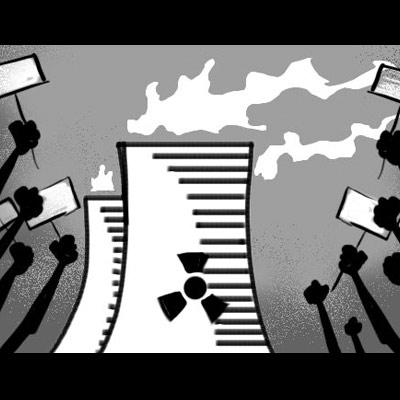
More than a dozen environmental groups and over 60 MPs are questioning the ‘Fingleton recommendations’ set out in the recent Nuclear Regulatory Review.
Led by economist John Fingleton, the Nuclear Regulatory Review made several recommendations designed to ease the path of nuclear development. Among these were proposals to weaken the Habitats Regulations which protect nature sites. But environmental groups, led by The Wildlife Trusts, claim that the review is based on flawed evidence, and that the recommendations could have a catastrophic effect on nature across the UK.
“The dice were loaded from the start – the nuclear review confirms a false narrative that was already being circulated by certain industry lobby groups and think tanks,” said Craig Bennett, chief executive of The Wildlife Trusts.
“The errors in the review form a clear pattern: repeated exaggeration of the costs of preventing harm to nature – and minimisation of the impact to wildlife of nuclear development without those measures. The fact that no environmental experts served on the panel is a disgrace and the resulting distorted picture obscures the value the natural world delivers for economic stability and net zero.”
A new report from The Wildlife Trusts points to specific examples where it believes the nuclear review falls short. It claims that, rather than £700m, Hinkley C’s much-debated fish deterrent system would actually cost £50m. This is against a total project cost of £46bn, up from an original estimate of £18bn.
The Nuclear Regulatory Review also claims that the fish deterrent system would save just 0.08 salmon, 0.02 trout and 6 lamprey per year. However, The Wildlife Trusts cites a report from the Environment Agency that suggests up to 4.6 million adult fish per year could be killed per year if no protective measures are put in place.
“There is limited evidence that environmental protections impose undue costs on infrastructure developers,” said Bennet. “In fact, evidence shows that frequently cited examples of expensive mitigation measures originated from developer mistakes and were unconnected to environmental issues. Blaming nature is unacceptable and a way of avoiding accountability.
“The developers of Hinkley C are trying to blame everyone but themselves for their own failure to think about nature from the outset. When developers think about nature too late in the design process, they end up creating bolt-on engineering solutions for ecological problems, which tend to be more expensive and less effective than committing to make infrastructure nature positive from the very start of the designing process. It’s pretty pathetic that the government is now trying to bail out energy infrastructure developers for this failure of commitment and imagination.”
The Wildlife Trusts’ campaign to save the environmental protections that are threatened by the recommendations of the Nuclear Regulatory Review is supported by 14 other organisations: Wildlife and Countryside Link, Rivers Trust, Campaign for National Parks, Marine Conservation Society, Plantlife, Buglife, Bat Conservation Trust, Amphibian Reptile Conservation, Badger Trust, Beaver Trust, Bumblebee Conservation Trust, Butterfly Conservation, Open Spaces Society, and Client Earth.
Miliband’s ‘green energy’ sea cable risks spreading nuclear waste across Orkney
Miliband’s ‘green energy’ sea cable risks spreading nuclear waste
across Orkney. Project could disturb radioactive particles on the seabed
which were created by the now-decommissioned Dounreay nuclear power plant.
The Orkney Link Transmission Project will enable renewable electricity to
be sent from the Scottish mainland to Orkney via an undersea cable that was
first approved in 2019. The project, overseen by the Department for Energy
Security & Net Zero, has already been criticised by locals for being
unsightly. It has now also emerged that the cable could disturb
“irradiated particles” on the seabed which were created by the
now-decommissioned Dounreay nuclear power plant decades ago. There is a
risk these radioactive particles, including radioactive forms of cobalt,
Americium and niobium, could wash ashore if disturbed. While official
documents state the risk is “extremely small”, the Government has
approved a £20m taxpayer-backed insurance policy to cover the cost of any
possible clean up operation.
Telegraph 17th Jan 2026, https://www.telegraph.co.uk/news/2026/01/17/milibands-green-sea-cable-risk-spreading-nuclear-waste/
The plastisphere: a world choked by plastic
13 Jan 26, https://jonathonporritt.com/the-plastisphere-microplastic-crisis/
Inside the microplastic emergency the petrochemical industry doesn’t want us to see
I can sometimes be such a bloody know-all! I’ve been doing all this sustainability stuff for so long that as soon as a particular topic crops up (which I think I’ve got sorted in my own mind), I immediately go into ‘nothing to learn here’ mode, power down the old brain, and wait for what I think I know to be confirmed.
Case in point: microplastics. I’ve been on the case with microplastics for a long time. Working with companies that are responsible for tens of millions of tonnes of plastic waste means that one has to be on the case if one is going to challenge them appropriately. So I keep up with the latest articles, follow the non-technical science, tut-tut vigorously at the continuing failure of politicians to even touch the sides of this vast global problem – and, given half a chance, opine eloquently on what I think ought to happen next.
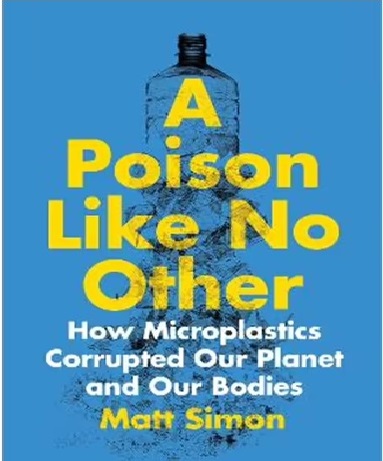
So, I’m not quite sure why I chose to read Matt Simon’s ‘A Poison Like No Other’, dealing with the microplastics crisis. Perhaps it was the subtitle: ‘How Microplastics Corrupted Our Planet and Our Bodies’ – I do like a big bold subtitle. Or it might well have been my intense anger at the all-too-predictable collapse (in August 2025) of negotiations on the Global Plastics Treaty — brutally executed by today’s supremely arrogant petrochemicals industry. Whatever it was, I got myself a copy of ‘A Poison Like No Other’. And it showed me, in short order, that my knowledge about microplastics was wafer thin and that the crisis is so, so much worse than I had ever imagined.
What we talk about most of the time is macroplastics: plastic bags, plastic bottles, plastic packaging, plastic everything, everywhere, in each and every corner of our lives. Matt Simon calls it ‘the plastisphere’. Microplastics are what we end up with when macroplastics break down into little pieces less than 5 mm in size. And when all those teeny-weeny bits of microplastics (and microfibres from our clothes) continue to break down, we end up with unimaginably, unaccountably (as in beyond our ability to count it all) large volumes of nanoplastics. Which, at a millionth of a metre, are not visible to the human eye.
‘A Poison Like No Other’ comprehensively explores the (literal) ubiquity of this source of pollution in the water environment, in the soil, in the atmosphere, and last – but most disturbingly of all – in our own bodies. The sheer scale of the plastisphere is staggering:
“Exactly how much plastic humanity has produced thus far, we will never know. But scientists have taken a swing at an estimate: more than 18 trillion pounds, twice the weight of all the animals living on Earth. Of that, 14 trillion pounds have become waste. Just 9% of that waste has been recycled, and 12% has been incinerated. The rest has been landfilled or released into the environment.”
What scientists have only recently discovered is that as microplastics and microfibres degrade, they split into more and more small pieces, creating an ever-larger surface area on which every conceivable kind of bacteria, viruses, algae, larvae, microbes and infinite varieties of chemical pollutants (including the real baddies like endocrine disruptors and persistent toxics) happily take up residence. And that’s how the food chains that underpin the whole of life on Earth (including our own existence, at the very top of those food chains) have become increasingly contaminated.
Simon argues (convincingly, I believe) that this confronts us with a crisis that is unlike any other. He describes it as “an unprecedented threat to life on the planet”, although he’s very cautious about linking the presence of microplastics in the human body (scientists have detected microplastics in blood, in every part of our digestive systems, in our brains, in mothers’ milk, in placentas in semen – and even in newborns’ first faeces) with any particular uptick in health issues. Respiratory diseases, such as asthma, cognitive problems, and even obesity have all been linked to the vast increase of plastics in the environment – and it’s hard not to imagine that this is rather more than just correlation.
At the heart of this crisis is a classic ‘progress trap’: our modern world simply wouldn’t be possible without a vast range of plastics. We should, of course, be doing much more to reduce the damage caused by that dependency – a tax on virgin plastics, for instance, or specific technological interventions such as mandatory filters in all new washing machines to capture the microfibres before they can escape into the water environment – but we’ll still be caught in the trap.
However, Matt Simon is astonishingly understated in his critique of the petrochemicals industry. That may be because ‘A Poison Like No Other’ was completed well before the industry was finally revealed in all its poisonous glory as it succeeded in crashing negotiations on the Global Plastics Treaty – under the aegis of UNEP (United Nations Environment Programme) – in August 2025.
Talks had been going on since 2022, and although critics of the process (including myself) were deeply sceptical about the industry’s intentions, nobody could have predicted the systematic subversion of the entire process right from the off. Hundreds of corporate lobbyists succeeded in slowing things down, blocking progress at every meeting. Saudi Arabia (the undisputed leader of the bloc of petrochemical countries) somehow got itself onto the coordinating bureau of National Representatives. UNEP itself was subject to intense lobbying, intimidating tactics, and all sorts of ‘inducements’. Its Executive Director, Inger Andersen, has been widely criticised as getting ‘too close to the industry’, not just by NGOs but by independent scientists (whose advice has been consistently ignored by UNEP) and all those other businesses and countries which really did want to see a deal done – including mandatory limits on all future production.
And that remains a crucial objective. From 450 million tonnes today, production is due to triple by 2060. This means that the principal proposal from the industry (that we can recycle our way out of this crisis) is cynically unrealistic. Total recycled volumes have been stuck at around 9% for many years, and even if that doubled, it would still leave untouched the unavoidably vast increases in microplastics and nanoplastics.
No doubt the talks will soon resume. Between now and then, let’s hope that UNEP’s Inger Andersen has had a chance to read A Poison Like No Other. Perish the thought that she should remain as ill-informed as I once was.
Microplastics are making it harder for oceans to absorb greenhouse gases, study warns

Researchers say tackling plastic pollution is now part of fight against global warming
Stuti Mishra, Independent UK Wednesday 07 January 2026
Microplastics are reducing the capacity of oceans to absorb carbon dioxide, weakening one of the planet’s most critical natural defences against the climate crisis, a new study warns.
Researchers found the spread of microplastics through marine ecosystems was interfering with the processes that allowed oceans to store carbon and regulate temperature.
Oceans are the planet’s largest carbon sink and “microplastics are undermining this natural shield against climate change”, Ihsanullah Obaidullah from the University of Sharjah, one of the study’s authors, said. “Tackling plastic pollution is now part of the fight against global warming.”
Microplastics, particles smaller than five millimetres across, have made their way into every nook of the planet, from deep ocean waters and Arctic ice to soil, air and even human bodies. While they are widely recognised as a major pollution problem, their role in the climate crisis has received much less attention, according to researchers.
“Climate disruption and plastic pollution are two major environmental challenges that intersect in complex ways,” they explained. “Microplastics influence biogeochemical processes, disrupt oceanic carbon pumps and contribute directly to greenhouse gas emissions.”
Oceans absorb about a quarter of the carbon dioxide released by human activity every year, slowing the pace of global warming. A major part of that process is the “biological carbon pump”, in which sea phytoplankton absorb carbon through photosynthesis and transfer it to deeper ocean layers when they die or are eaten.
The study published in the Journal of Hazardous Materials warns that microplastics interfere with this system by reducing phytoplankton photosynthesis and impairing the metabolism of zooplankton, both of which play a central role in carbon cycling.
“In marine ecosystems, MPs alter the natural carbon sequestration by affecting phytoplankton and zooplankton, which are key agents of carbon cycling,” it said.
Researchers also highlight the role of the “plastisphere”, the communities of microbes which colonise plastic particles in the ocean. These microbes can influence carbon and nitrogen cycles and contribute to greenhouse gas production.
Dr Obaidullah warned that the effects could intensify over time. “Microplastics disrupt marine life, weaken the biological carbon pump, and even release greenhouse gases as they degrade,” he said……………………………………. https://www.independent.co.uk/climate-change/news/microplastics-ocean-greenhouse-gases-b2895826.html
UK’s largest planned data centre ‘could use 50 times more water’ than developer claims.
The developer of the UK’s largest proposed data
centre is likely significantly understating the scale of its planned water
footprint, teams of investigative journalists have claimed.
US-based data
centre developer QTS recently secured permission from the local council for
its campus in Cambois, Northumberland. It plans to build 10 data halls
across a 133-acre site, at a cost of $13.5bn. The site had previously been
home to Britishvolt, which had intended to develop a battery gigafactory
for the electric car sector before it folded. QTS’s proposals also
include cooling systems and dozens of diesel-powered generators to act as
an emergency backup, the BBC reports. These should only be used
“occasionally” on a “temporary basis”.
Edie 22nd Dec 2025, https://www.edie.net/uks-largest-planned-data-centre-could-use-50-times-more-water-than-developer-claims/
Biodiversity Net Gain: can developers be trusted?
Developers seem rather too fickle concerning their obligations to protect the environment, and the situation may be about to get worse
Rachel Fulcher, 21 December 2025
During the consultations for Sizewell C, it became clear
from the documents put forward by EDF, owner of this pine forest, that the
company considered the plantation to be of low biodiversity value.
They failed to take into account the fact that the rides between the trees
supported several species so rare that they are protected by law. Looking
into it in further detail I came across Biodiversity Net Gain (BNG), which
specifies that developers must provide a minimum of 10% net gain for nature
in addition to compensating for any damage caused.
Using the Statutory
Biodiversity Metric devised by the Department for Environment, Food and
Rural Affairs (Defra), the biodiversity value of the land prior to
development is calculated in units according to size, type of habitat, its
current condition, ecological distinctiveness and location. The proposed
replacement and enhancement habitats are then also calculated and must show
the necessary improvement.
Ideally these should be in the same area, but if
this is not possible then they can be elsewhere. As a last resort, builders
can simply buy habitat units from conservation organisations or even obtain
biodiversity credits from the government. In the first instance, however,
they must avoid harm – but do they?
A conversation with a Suffolk
ecologist revealed his profound disapproval of use of this metric,
considering the method to be ‘damaging’. He feels that it gives
builders a licence to destroy the environment, including protected sites
and species, so long as they offer something more elsewhere. However, some
non-governmental organisations (NGOs) have accepted BNG on the basis that
something for nature is better than nothing.
East Anglia Bylines 21st Dec 2025, https://eastangliabylines.co.uk/environment/biodiversity-net-gain-can-developers-be-trusted/
Wildlife groups hit back at nuclear review claims over Hinkley Point C
By Burnham-On-Sea.com, December 14, 2025, https://www.burnham-on-sea.com/news/wildlife-groups-hit-back-at-nuclear-review-claims-over-hinkley-point-c/
Environmental organisations have criticised the government’s Nuclear Review, known as the Fingleton Report, for suggesting that environmental protections are blocking development at Hinkley Point C.
The Severn Estuary Interests Group, a collaboration of organisations working to protect the estuary, says EDF’s reported £700m spend on fish protection measures is not due to regulations but to poor planning and design decisions. The group points out that the government chose to build the power station on one of the UK’s most protected ecological sites.
The Severn Estuary is both a Special Area of Conservation and a Special Protection Area, supporting migratory fish, internationally important bird species and diverse invertebrate communities.
Campaigners say the impact of the plant will be immense, with cooling systems drawing in the equivalent of an Olympic-sized swimming pool every 12 seconds and discharging heated water back into the estuary. They argue that data used in the Fingleton Report is inaccurate, relying on figures from the now-decommissioned Hinkley Point B rather than the new design.
EDF’s costs have already risen from £18bn in 2017 to a projected £46bn, with completion now expected in 2031. The company has blamed inflation, Brexit, Covid and engineering challenges for the delays.
Simon Hunter, CEO of Bristol Avon Rivers Trust, said: “When developers fail to consult meaningfully, ignore local expertise, and attempt to sidestep environmental safeguards, costs rise and nature pays the price. Many countries would never have permitted a development of this scale in such a sensitive location in the first place.”
“The situation at HPC is not an indictment of environmental protection, but of poor planning, weak accountability, and a persistent willingness to blame nature for the consequences of human decisions.”
Georgia Dent, CEO of Somerset Wildlife Trust, said: “The government seems to have adopted a simple, reductive narrative that nature regulations are blocking development, and this is simply wrong. To reduce destruction of protected and vulnerable marine habitat to the concept of a ‘fish disco’ is deliberately misleading and part of a propaganda drive from government.”
“Nature in the UK is currently in steep decline and the government has legally binding targets for nature’s recovery, and is failing massively in this at the moment. To reduce the hard-won protections that are allowing small, vulnerable populations of species to cling on for dear life is absolutely the wrong direction to take.”
“A failing natural world is a problem not just for environmental organisations but for our health, our wellbeing, our food, our businesses and our economy. There is no choice to be made; in order for us to have developments and economic growth we must protect and restore our natural world.”
“As we have said all along in relation to HPC, how developers interpret and deliver these environmental regulations is something that can improve, especially if they have genuine, meaningful and – most importantly – early collaboration with local experts.”
As the UK looks to invest in nuclear, here’s what it could mean for Britain’s environment
In this week’s newsletter: The government’s bid to speed up nuclear construction could usher in sweeping deregulation, with experts warning of profound consequences for nature.
Helena Horton, Guardian, 12 Dec 25
When UK prime minister Keir Starmer announced last week that he was “implementing the Fingleton review”, you can forgive the pulse of most Britons for failing to quicken.
But behind the uninspiring statement lies potentially the biggest deregulation for decades, posing peril for endangered species, if wildlife experts are to be believed, and a likely huge row with the EU.
Earlier this year, John Fingleton, a lively, intelligent Irish economist, was commissioned by the government to lead a “taskforce” with a mission to come up with a way to build nuclear power faster and cheaper. It’s accepted by experts that we need more nuclear if we are to meet net zero, and that Britain is the most expensive place in the world to build it. In the end, Fingleton turned in a review with 47 recommendations aimed at speeding up the process. So far, so snoozeworthy.
However, his recommendations, if adopted, could well lead to the biggest divergence from retained EU habitat and environment law since Brexit. Changes could be made to the habitats directive, which Britain helped write when we were in the EU, and which protect rare species and the places they live. The government could also make it more costly for individuals and charities to take judicial reviews against infrastructure projects……………
Legal advice is that removing these rules for nuclear power will inevitably lead for other infrastructure projects to be subject to the same, weaker regulatory system. Expert planning lawyer Alexa Culver said: “It’s a clever move to sneak broadbrush environmental deregulation, as the government can point to ‘net zero’ as being the ultimate driver. In reality, though, if you don’t protect ecosystems while reducing emissions, you’ve lost the battle. We’re gone anyway.”
It’s not surprising Starmer is clinging to anything which might increase economic growth…….. OBR has predicted an anticipated average GDP growth of 1.5% over the next five years. This is despite the controversial Planning and Infrastructure Bill which Starmer introduced in order to “get Britain building” and experts say it will weaken environmental protections.
Nature also continues to decline. The recently released biodiversity indicators show species numbers continue to decrease in the UK, which is extremely concerning when you consider just how much wildlife has dropped off since the 1970s. Some species, including one-fifth of mammals, are facing extinction, and recent figures show wild bird numbers are in freefall.
Of the review, Georgia Dent, CEO of Somerset Wildlife Trust said: “The government seems to have adopted a simple, reductive narrative that nature regulations are blocking development, and this is simply wrong. Nature in the UK is now in steep decline and the government has legally binding targets for nature’s recovery, and is failing massively in this at the moment. To reduce the hard-won protections that are allowing small, vulnerable populations of species to cling on for dear life is absolutely the wrong direction to take.”
…………………………. the UK is negotiating an energy deal with the EU. There are competition and non-regression clauses in the newest free trade agreement, which prevent either side from weakening environmental law. Government sources tell me their legal advice has been that implementing the Fingleton review could put the free trade agreement at risk……………
………..When MPs, environmental experts and the EU look past the boring title and read the detail, Starmer may have a fight on his hands. https://www.theguardian.com/environment/series/down-to-earth
Activists fight plans for nuclear power station over threat to rare bird.
Ed Miliband’s plans to build the Sizewell C nuclear power station are facing a High Court legal threat over claims it will destroy a rare bird habitat.
Activists are seeking a judicial review to force the Government to revisit plans for the project, which they say is being built on land occupied by endangered marsh harriers. In a hearing on Tuesday, the Together Against Sizewell C (TASC) campaign group raised concerns over Sizewell C’s plans to build 10-metre-high flood defences on Suffolk marshland.
They argue that this will threaten the marsh harrier, a rare
bird that was almost driven to extinction before enjoying a recovery in recent years, particularly alongside the Suffolk coastline.
The group claims that details of the flood defences were Activists fight plans omitted from the original planning proposals in 2022. This now forms the basis of the group’s
argument, as it claims that work on Sizewell C should be paused while a further environmental assessment is carried out.
Chris Wilson, of TASC, said: “TASC’s legal challenge focuses on two additional sea defences that Sizewell C has committed to installing – but despite EDF, who is building Sizewell, being aware of the potential need for them since 2015,
they were not included in their planning application for the project.
Rowan Smith, the solicitor at Leigh Day representing TASC, said: “The failure to assess these impacts was alarming. “Our client is concerned about the revelation that provisions have been made for further flood defences at Sizewell C, which could harm the environment, yet the impact of this has never been assessed.”
Telegraph 9th Dec 2025, https://www.telegraph.co.uk/business/2025/12/09/activists-nuclear-power-station-threat-rare-bird/
UK’s Planning & Infrastructure Bill 2 – worse, and by stealth.
I was wondering why there was no PIB2 in the Budget. Now I understand why. It’s far worse (from an environmental perspective) than I could have imagined.
In his speech yesterday, (1/12/25) Starmer said, “in addition to accepting the Fingleton recommendations… I am asking the Business Secretary to apply these lessons across the entire industrial strategy.”
There are some VERY far-reaching proposals within the Fingleton recommendations. These include,
but are not limited to: modifying the Habitat Regulations, – allowing developers to comply with the Habitats Regulations requirements by paying a substantial fixed contribution to Natural England; – reversing Finch; – reversing the LURA’s enhanced protection for National Landscapes; – increasing Aarhus cost caps. Those are just SOME!
Community Planning Alliance 2nd Dec 2025, https://www.linkedin.com/feed/update/urn:li:activity:7401614251934654464/
New mini nuclear reactors are jeopardised by wildlife fears

COMMENT. Doncha love that headline?
I mean – those poor little non-existent unaffordable, dirty, dangerous, useless mini nuclear reactors – being persecuted by nasty Arctic, Sandwich and vulgar common terns!
Pledge to build three small modular reactors on island of Anglesey is threatened by warnings of potential impact on nesting terns in local nature reserve.
Sir Keir Starmer’s attempt to kickstart Britain’s mini nuclear reactor programme is being threatened by a protected colony of rare birds. The prime minister has pledged to build the UK’s first three small modular reactors (SMRs) at the Wylfa nuclear site on the island of Anglesey in north Wales, but the proposed location sits beside the Cemlyn nature reserve, where about 2,000 pairs of Arctic, Sandwich and common terns nest
each summer.
Wildlife groups have warned that the birds could abandon the
site if construction goes ahead, and this threatens to delay or reshape the first big project in the government’s nuclear programme, according to the Telegraph, which first reported the story, Mark Avery, a scientist and former conservationist at the Royal Society for the Protection of Birds (RSPB), said:
“Terns are vulnerable because of the types of places where
they live, which tend to be places that would be disturbed if they’re not protected. So they do need our help. And the UK is important for these species. If anybody’s going to look after them, we ought to.”
Times 1st Dec 2025, https://www.thetimes.com/business/energy/article/new-mini-nuclear-reactors-are-jeopardised-by-wildlife-fears-gjmf28bgz
UK is running out of water – but data centres refuse to say how much they use.

One Government insider said ‘accurate water figures have historically been very hard to get from facilities of any size’.
Tech firms are failing to tell the Government how much water they use in
their data centres, as concerns grow that the UK does not have enough water to meet its needs.
Experts are calling on the Government to introduce
tighter regulations on data centres amid warnings that new power and
water-intensive supercomputers could be built in areas vulnerable to
drought. Campaigners have raised concerns that the Government is “too
close” to tech lobbyists and is failing to fully consider the impact a
data centre boom could have on the UK’s natural resources.
iNews 1st Dec 2025, https://inews.co.uk/news/uk-running-out-water-data-centres-refuse-say-4062230
1 This Month

of the week – Shut Down Drone Warfare!


Tell the Ukrainian Government to Drop Prosecution of Peace Activist Yurii Sheliazhenko

Petition to revoke the licensing of the Near Surface Nuclear Disposal Facility (NSDF) at Chalk River. https://www.ourcommons.ca/petitions/en/Petition/Details?Petition=e-7247
To see nuclear-related stories in greater depth and intensity – go to https://nuclearinformation.wordpress.com
-
Archives
- April 2026 (57)
- March 2026 (251)
- February 2026 (268)
- January 2026 (308)
- December 2025 (358)
- November 2025 (359)
- October 2025 (376)
- September 2025 (257)
- August 2025 (319)
- July 2025 (230)
- June 2025 (348)
- May 2025 (261)
-
Categories
- 1
- 1 NUCLEAR ISSUES
- business and costs
- climate change
- culture and arts
- ENERGY
- environment
- health
- history
- indigenous issues
- Legal
- marketing of nuclear
- media
- opposition to nuclear
- PERSONAL STORIES
- politics
- politics international
- Religion and ethics
- safety
- secrets,lies and civil liberties
- spinbuster
- technology
- Uranium
- wastes
- weapons and war
- Women
- 2 WORLD
- ACTION
- AFRICA
- Atrocities
- AUSTRALIA
- Christina's notes
- Christina's themes
- culture and arts
- Events
- Fuk 2022
- Fuk 2023
- Fukushima 2017
- Fukushima 2018
- fukushima 2019
- Fukushima 2020
- Fukushima 2021
- general
- global warming
- Humour (God we need it)
- Nuclear
- RARE EARTHS
- Reference
- resources – print
- Resources -audiovicual
- Weekly Newsletter
- World
- World Nuclear
- YouTube
-
RSS
Entries RSS
Comments RSS
 nuclear-news