The new space race Is Causing New Pollution Problems.

NY Times, Ed Friedman Tue, 30 Jan 2024
The high-altitude chase started over Cape Canaveral on Feb. 17, 2023, when a SpaceX Falcon 9 rocket launched. Thomas Parent, a NASA research pilot, was flying a WB-57 jet when the rocket ascended past the right wing — leaving him mesmerized before he hit the throttle to accelerate.
For roughly an hour, Mr. Parent dove in and out of the plume in the rocket’s wake while Tony Casey, the sensor equipment operator aboard the jet, monitored its 17 scientific instruments. Researchers hoped to use the data to prove they could catch a rocket’s plume and eventually characterize the environmental effects of a space launch.
In the past few years, the number of rocket launches has spiked as commercial companies — especially SpaceX, founded by Elon Musk — and government agencies have lofted thousands of satellites into low-Earth orbit. And it is only the beginning. Satellites could eventually total one million, requiring an even greater number of space launches that could yield escalating levels of emissions.
SpaceX declined to comment about pollution from rockets and satellites. Representatives for Amazon and Eutelsat OneWeb, two other companies working toward satellite mega-constellations, said they are committed to sustainable operations. But scientists worry that more launches will scatter more pollutants in pristine layers of Earth’s atmosphere. And regulators across the globe, who assess some risks of space launches, do not set rules related to pollution.
Image
The exhaust plume from a SpaceX Falcon 9 rocket taking off from Vandenberg Air Force Base in California in 2018,Credit…Matt Hartman/Associated Press
Experts say they do not want to limit the booming space economy. But they fear that the steady march of science will move slower than the new space race — meaning we may understand the consequences of pollution from rockets and spacecraft only when it is too late. Already, studies show that the higher reaches of the atmosphere are laced with metals from spacecraft that disintegrate as they fall back to Earth.
“We are changing the system faster than we can understand those changes,” said Aaron Boley, an astronomer at the University of British Columbia and co-director of the Outer Space Institute. “We never really appreciate our ability to affect the environment. And we do this time and time again.”
……………………………… By the time a rocket curves into orbit, it will have dumped in the middle and upper layers of the atmosphere as much as two-thirds of its exhaust, which scientists predict will rain down and collect in the lower layer of the middle atmosphere, the stratosphere.
The stratosphere is home to the ozone layer, which shields us from the sun’s harmful radiation. But it is extremely sensitive: Even the smallest of changes can have enormous effects on it — and the world below.
………………………….Just how rockets will affect that relatively clear top, the stratosphere, remains uncertain. But scientists are concerned that black carbon, or soot, that is released from current rockets will act like a continuous volcanic eruption, a change that could deplete the ozone layer and affect the Earth below.
……………………………………………… A Race Against the Space Race
As space companies set records for launches and satellites deployed, scientists are starting to quantify the potential effects.
In a paper published in 2022, soot from rockets was shown to be nearly 500 times as efficient at heating the atmosphere as soot released from sources like airplanes closer to the surface. It’s the muddy-barrel effect.
“That means that as we start to grow the space industry and launch more rockets, we’re going to start to see that effect magnify very quickly,” said Eloise Marais, an associate professor in physical geography at University College London and an author of the study.
That said, Dr. Maloney’s team did not quantify how much more radiation exposure could occur.
The exact amounts of soot emitted by different rocket engines used around the globe are also poorly understood. Most launched rockets currently use kerosene fuel, which some experts call “dirty” because it emits carbon dioxide, water vapor and soot directly into the atmosphere. But it might not be the predominant fuel of the future. SpaceX’s future rocket Starship, for example, uses a mix of liquid methane and liquid oxygen propellants.
Still, any hydrocarbon fuel produces some amount of soot. And even “green rockets,” propelled by liquid hydrogen, produce water vapor, which is a greenhouse gas at these dry high altitudes.
“You can’t take what’s green in the troposphere and necessarily think of it being green in the upper atmosphere,” Dr. Boley said. “There is no such thing as a totally neutral propellant. They all have different impacts.”
Smithereens of Satellites
What goes up must come down. Once satellites in low-Earth orbit reach the end of their operational lifetimes, they plunge through the atmosphere and disintegrate, leaving a stream of pollutants in their wake. Although scientists do not yet know how this will influence Earth’s environment, Dr. Ross thinks that it will be the most significant impact from spaceflight.
A study published in October found that the stratosphere is already littered with metals from re-entering spacecraft. It used the same NASA WB-57 jet that chased the SpaceX rocket plume last year, studying the stratosphere over Alaska and much of the continental U.S.
When the researchers began analyzing the data, they saw particles that didn’t belong. Niobium and hafnium, for example, do not occur naturally but are used in rocket boosters. Yet these metals, along with other distinct elements from spacecraft, were embedded within roughly 10 percent of the most common particles in the stratosphere.
The findings validate earlier theoretical work, and Dr. Boley, who was not involved in the study, argues that the percentage will only increase given that humanity is at the beginning of the new satellite race.
Of course, researchers cannot yet say how these metals will affect the stratosphere.
“That’s a big question that we have to answer moving forward, but we can’t presume that it won’t matter,” Dr. Boley said.
…………………………………..scientists argue, satellite operators and rocket companies need regulations. Few are currently in place.
“Space launch falls into a gray area,” said Gavin Schmidt, director of the NASA Goddard Institute for Space Studies, who has been involved in a working group on this research. “It falls between the cracks of all the regulatory authorities.”
The Montreal Protocol, for instance, is a treaty that successfully set limits on chemicals known to harm the ozone layer. But it does not address rocket emissions or satellites.
In the United States, the Environmental Protection Agency is not responsible for analyzing rocket launches. The Federal Communications Commission licenses large constellations of satellites but does not consider their potential harm to the environment. (The Government Accountability Office called for changes to that F.C.C. policy in 2022, but they have yet to occur.) And the Federal Aviation Administration assesses environmental impacts of rocket launches on the ground, but not in the atmosphere or space.
That could put the stratosphere’s future in the hands of Elon Musk, Jeff Bezos and other private space company executives — which is particularly worrying to Dr. Boley, who says the space industry does not want to slow down.
“Unless it immediately affects their bottom line, they’re simply not interested,” he said. “The environmental impact is an inconvenience.”……… https://www.nytimes.com/2024/01/09/science/astronomy-telescopes-satellites-spacex-starlink.html?action=click&module=RelatedLinks&pgtype=Article—
Fijian youths condemn Japan’s discharge of radioactive water
Global Stringer, 22-Jan-2024, https://news.cgtn.com/news/2024-01-22/We-Talk-Fijian-youths-condemn-Japan-s-discharge-of-radioactive-water-1qz4wGtqnkc/p.html
The fourth round of discharge of nuclear-contaminated water from the Fukushima Daiichi nuclear power plant will begin in late February 2024, with a total release of 7,800 tonnes, local media reported on December 18. Japan has so far completed three rounds of nuclear discharge, sending more than 23,000 tonnes of nuclear wastewater into the Pacific Ocean in less than three months.
CGTN Stringer took to the streets of Fiji and asked many local college students for their opinions on this matter. The students expressed their strong opposition, noting that the islanders depend on the sea for a living. The discharge of nuclear-contaminated water into the sea will pollute the Pacific Ocean and destroy coral groups. It will seriously affect the living resources of the islanders, endanger the health of the people of the island country, and cause immeasurable damage to ecosystems.
Work officially ‘started’ at Sizewell C Nuclear on Monday – but it was really only political theatre.

Ipswich Star, By Paul Geater 18 Jan 24
This week we had big fanfares and a major ceremony to “mark the start” of construction at Sizewell C.
But what did it all mean?
In one sense construction has already started. Land has been dug up, mature trees have been cut down, and one of the new entrances to the site is being cleared.
However, the Final Investment Decision (FID), the point at which the various parties are committed to building the station is still, apparently, several months away – so Monday’s ceremony really does look like nothing but a piece of political theatre.
What is clear, though, is that there is clear political will for this project to go ahead. The Government and the official opposition are both committed to it whatever the cost they may be exposed to.
I can understand that. I still don’t think it makes a great deal of economic sense – but given the uncertainties across the globe and the need to move to carbon zero energy I can see why they want to proceed with nuclear whatever the cost.
Personally I don’t have any concerns about the potential safety of the plant – while there are potential dangers with nuclear generation the experience over the last 60 years in this country suggests it can be operated safely.
And given that there are already two nuclear plants at Sizewell that need to be protected from the sea, it doesn’t seem unreasonable to put the new plant next to them so the protection can be shared.
I still have serious concerns with EDF and the government – who must be seen as equal partners in the project – over the way it is going to be built and the devastating impact it will have on local communities.
By adopting a “bull in a china shop” attitude towards its construction, EDF and the government are planning to cause substantial environmental damage to some of the most precious parts of the Heritage Coast that are closely linked in with Minsmere and Dunwich Heath……………………………………
Creating a new nature reserve two miles inland is great – but it can’t replace a massive area that’s directly linked to the coast.
But I fear that battle is lost now. With both the current government and the likely future government keen on the project, the best we can hope for is that some new habitats will make up for the lost treasures………………….
There’s also been a failure to really engage with local people. There have now been local community forums set up but they are being treated with suspicion by many. https://www.ipswichstar.co.uk/news/24054795.opinion-sizewell-c-still-doesnt-engage-residents/
Inside Bradwell’s Dark Secrets
BANNG’s coordinator, Peter Banks, identifies the radioactive residues
that lurk beneath the shiny cladding of the former Bradwell nuclear power
station in the December 2023 column for Regional Life.
The discoveries of extensive radioactive contamination around the site has triggered the
imperative to keep potential intruders at bay, out of all the shiny
buildings, including the radioactive waste store, and the contaminated
underground labyrinth of tunnels and ducts. How ludicrous would it be to
introduce a new power station next door and go through the whole cycle
again?
BANNG 18th Dec 2023
Nuclear Power: The Thousand Year-Plus Albatross Around Humanity’s Neck
BY EVE OTTENBERG, https://www.counterpunch.org/2024/01/12/nuclear-power-the-thousand-year-plus-albatross-around-humanitys-neck/
The only sane reaction to Japan’s December debut of its six-story experimental fusion reactor is uh-oh. You thought we had it bad with fission reactors blowing up in places like Fukushima and Chernobyl, spewing radioactivity over land and into the ocean? Well, if lotsa money starts pouring into fusion reactors, mark my words, we’ll have it even worse. Of course, fusion boosters claim there’s no danger or nuclear waste and fusion will be the cleanest energy ever. But rest assured there will be radioactive or other hiccups down the road. Like what happens if something goes wrong and a fusion reactor as hot as the sun blows up? Our species has its hands full with the environmental mess it made with fission power plants, whose waste litters the landscape because no one knows what to do with it. Why not hold the fusion ones till we solve the fission problems first?
Remember it was Japan that not too long ago began dumping radioactive waste water from its infamous Fukushima nuclear power melted-down reactors into the ocean in huge quantities, prompting Beijing to ban the import of Japanese fish. China’s move is all very well and good, but who says the irradiated fish will only remain near Japan’s shores? Tokyo’s monkey-brained scheme of filling the Pacific with damaging isotopes has no guard rail around northern waters. It can spread – and will. The Pacific is gigantic, you say? Well, so are the quantities of contaminated water from Fukushima.
Japan began dumping this poison in late August, with an initial release of a modest three Olympic swimming pools-worth of water. According to the AP August 24, “The plant operator, Tokyo Electric Power has…reduced the increase in contaminated water to about 100 tons a day, one fifth of the initial amount.” Most of the water is “stored in around 1000 tanks, which are already filled to 98 percent of their 1.37 million-ton capacity.” And that’s the kicker: Tokyo plans to release that 1.37 million tons of radioactive water into the Pacific. If you think that’s kinda a lot, you have a knack for understatement.
Japan says discharging this radioactive water will take 30 years. That’s plenty of time for ocean currents to swill this mess to every coastline of the earth. “China has accused Japan of treating the ocean as its ‘private sewer,” the BBC reported August 25. But this drek won’t stay still, as in a storage pool, nope. There are seven major currents that Fukushima’s garbage will travel through: Oyashio Current, North Pacific Current, California Current, North Equatorial Current, Kuroshio Current, Yellow Sea warm Current and Tsushima warm Current. So this stuff will pour directly throughout the entire Pacific Ocean.
And it doesn’t stop there. Every day Fukushima produces contaminated water. So it’s not as if dumping 1.37 million tons of these atomic dregs over 30 years will be the end of it. After all, 30 years is not set in stone. It could take longer to dismantle the reactors, remove the nuclear fuel and all the buildings. Meanwhile the good news is that some isotopes have half-lives of only 30 years, that is cesium-137 and strontium-90; but the bad news is Plutonium-239 has a half-life of an eye-popping 24,000 years. So yes, you got it, Japan is polluting the ocean for thousands of years.
None of this would have happened had nuclear power plants not been built in tsunami-earthquake zones. But shockingly little care appears to have been taken over the years about locating humanity’s most hubristic creations. Just as common sense rarely prevails in corporate/governmental decisions about whether or not to prolong the life of reactors that are clearly on their last legs. Most decisions about aging reactors are to keep them running, even though that vastly increases the chances of catastrophic accident. This is extremely problematic in the U.S., given that nuclear reactors here are generally not spring chickens. Their average age is 40. Fortunately, so far, this fact has not caused disasters. Let’s hope our luck holds long enough to get some of these rust buckets shut down.
The list of troubled nuclear power plants in the U.S. is long. “Repeated near-disasters at Davis Besse in Ohio include a hole eaten through a critical core component by boric acid that was missed because the owners refused to do required inspections,” wrote Harvey Wasserman in Truthout July 31. “Monticello and Prairie Island in Minnesota threaten the entire Mississippi Valley. Critical intake pipes at South Texas recently froze, as its builders never anticipated the cold weather that hit it unexpectedly in 2021.” Truthout describes numerous nuclear power plants in the U.S. and abroad that are in lousy shape and should be shuttered. The gist of the article is that industry claims that the so-called peaceful atom can help alleviate the climate catastrophe are fictitious.
Because it’s not just accidents and the dilemma of waste storage that menace humanity as we play with nuclear fire. The construction of nuclear power plants and the mining, milling and enrichment of uranium are very carbon intensive, indeed they go a long way toward cancelling out the supposed green benefits of nuclear power. So don’t believe the hype about atomic energy saving our species from the dangers of our fossil fuel addiction. Nuclear power is not the answer. Wind farms and solar panels on every building on the planet are.
But don’t’ tell Joe “So-Called Climate President” Biden. His infrastructure bill contained $6 billion for nuclear power. That’s just for starters. “A billion in federal dollars has been promised,” according to Truthout, “to keep California’s Diablo Canyon running along with another billion from the state.” That’s the same power plant that a Nuclear Regulatory Commission inspector said should be closed “because of the danger posed by seismic activity.” What danger? This rusty old thing lies just 45 miles from the San Andreas Fault. Needless to say, the NRC inspector was ignored. With any luck, someone with a brain will decide that yes, this plant should be shut down.
Sadly, our Climate President not only goes all out for oil and gas, he’s a multi-billion- dollar nuclear booster, too. This is puzzling, because at the start of his term, Biden showed environmental promise. But then came the Russian invasion of Ukraine, suicidal western sanctions on Moscow’s energy, wild inflation of gasoline prices and the predictable terror of homo politicus at voter fury over paying through the nose at the pump. So then Biden’s hunt was on for cheap oil and gas, as the Climate President’s lofty goals went out the window and bad ideas like nuclear power came in. So Biden did this to himself – and all the rest of us. Thus the wretched results of one imperial politician’s lust to settle a score with another superpower, half way around the globe.
Eve Ottenberg is a novelist and journalist. Her latest book is Lizard People. She can be reached at her website.
Utility scale solar farms contribute to bird diversity
New research has shown that solar parks can play a positive role in promoting bird diversity in the agricultural landscape of Central Europe. The scientists said solar farms offer food availability and nesting sites.
JANUARY 9, 2024 LIOR KAHANA, PV Magazine
A European group of researchers has conducted a study on the impact of solar parks on birds in a Central European agricultural landscape. They surveyed 32 solar park plots and 32 adjacent control plots in Slovakia during a single breeding season.
“We selected ground-mounted photovoltaic power plants with an area of at least 2 hectares,” the researchers explained. “All of the studied solar parks had fixed-tilt solar racks, one of which also had panels mounted on biaxial trackers, and were developed at least eight years earlier. Seventeen solar parks were developed on arable land, and 15 parks were developed on grassland.”…………………………………………………………………..
According to the research group, bird species richness, diversity, and invertebrate-eater species richness and abundance were higher in the solar parks than in the control plots. Among the reasons provided by the research group is the food availability for insectivorous birds, as the PV panels attract various species of water-seeking aquatic insects.
“As food availability and accessibility is low in winter, it can be assumed that solar parks can have a positive impact on farmland birds outside the breeding season, as they can serve as stopover, foraging and roosting sites during migration and wintering as the ground under the solar panels can remain snow-free in winter,” the academics explained……………………………..
They presented their analysis in the study “Solar parks can enhance bird diversity in the agricultural landscape,” published in the Journal of Environmental Management. The research was a collaborative work of scientists from Slovakia’s Slovak Academy of Sciences, Gemer-Malohont Museum, Comenius University in Bratislava, Catholic University in Ružomberok, Slovak Ornithological Society/BirdLife Slovakia, and Belgium’s University of Antwerp. https://www.pv-magazine.com/2024/01/09/utility-scale-solar-farms-contribute-to-bird-diversity/
Bottled water discovered to contain thousands of invisible plastic pieces which can seep into your bloodstream
Most of these are nanoparticles which have the potential to penetrate human cells and gain entry into bloodstream and major organs
Climate Correspondent12
A new study found people are consuming a quarter million of tiny invisible pieces of plastic with every litre of bottled water – 10-100 times more than previously estimated.
One litre of water in a plastic bottle was found to contain an average of 240,000 particles, research published on Monday showed. Most of these are nanoparticles which have the potential to penetrate human cells and gain entry into the bloodstream and major organs.
The groundbreaking findings, published in the Proceedings of the National Academy of Sciences (PNAS) journal, show the extent of plastic in bottled water which was highly undervalued in previous studies.
While microplastics have been found everywhere from the deepest points in the ocean to inside our bodies from as early as birth, each bottle was earlier believed to contain only 325 pieces on an average.
But this new study by researchers from Columbia shows the presence of plastic particles is approximately a hundred times more than that, challenging the previously accepted norms surrounding bottled water safety.
Most of these particles were coming from the bottle itself, according to the authors. These are particles that are less than a micron in size.
Researchers used five samples from three brands of bottled water in the US and found that plastic particle levels ranged from 110,000 to 400,000 per litre, averaging at around 240,000 from seven types of plastics.
The authors declined to mention which brands were used as samples.
Approximately 90 per cent of these particles were identified as nanoplastics and the rest were microplastics. Nanoparticles are less than one-seventieth the width of a human hair, so tiny they cannot be seen under a microscope.
Researchers had to invent a technology to quantify these tiny particles to be able to count and analyze the chemical structure of nanoparticles in bottled water.
While scientists knew nanoplastics existed in bottled water, Naixin Qian, a PhD student in chemistry at Columbia and the first author of the new paper said “before our study, people didn’t have a precise number of how many”.
Previous studies showed nanoparticles of plastics can enter cells and tissues in major organs, move through the bloodstream and spread potentially harmful synthetic chemicals in the body, reaching the blood, liver, and brain.
While the potential impacts of these nanoparticles are known, researchers are not sure whether these findings make bottled water more dangerous. (Whaa -aat?)
“That’s currently under review. We don’t know if it’s dangerous or how dangerous,” said study co-author Phoebe Stapleton, a toxicologist at Rutgers.
“We do know that they are getting into the tissues (of mammals, including people) … and the current research is looking at what they’re doing in the cells,” study co-author Ms Stapleton said.
Coldwater Creek to finally have warning signs after decades of nuclear contamination
Nuclear waste stored outside St. Louis was found to pose a risk to nearby Coldwater Creek as early as 1949. The contaminated creek will finally have warning signs almost 75 years later.
Missouri Independent, BY: ALLISON KITE – JANUARY 8, 2024
More than 70 years after workers first realized barrels of radioactive waste risked contaminating Coldwater Creek, the federal government has started work to put up signs warning residents.
The U.S. Army Corps of Engineers said in a statement Monday that it was working with the Environmental Protection Agency to add signs along the creek to help it monitor areas “that may pose a risk if disturbed.”
Coldwater Creek has been contaminated for decades with radioactive waste left over from the World War II-era effort to build an atomic bomb. But though the creek winds through some of St. Louis’ busiest suburbs and past public parks and schools, the federal government had resisted calls to post signs warning visitors of the contamination.
“This is decades of potential exposure that could have been prevented that they drug their feet on,” said Dawn Chapman, co-founder of Just Moms STL, an organization formed to advocate for communities affected by St. Louis-area radioactive waste.
Despite the delays, Chapman said she’s thankful that the signs are finally going to be installed.
The St. Louis area has long struggled with a radioactive waste problem. Uranium for the Manhattan Project, the name given to the effort to develop the first atomic bomb, was refined in downtown St. Louis.
After World War II, radioactive waste left over from those efforts was trucked to the St. Louis airport and dumped — some on the open ground and some in barrels — next to Coldwater Creek. As early as 1949, Mallinckrodt Chemical Works, the company that refined uranium for the federal government, was aware the waste could escape deteriorating barrels and enter the creek…………………………………………………………………………………………………………………………..
While the Army Corps, which has overseen the sites since the late 1990s, said the remaining contaminated sites surrounding Coldwater Creek only pose a risk if they’re disturbed, in previous decades exposure to the creek’s waters may have raised the risk of cancer for St. Louis residents.
The Agency for Toxic Substances and Disease Registry concluded in 2019 that children and adults who played in or near Coldwater Creek or lived in its floodplain between the 1960s and 1990s may have been exposed to radioactive materials that raise the risk of certain cancers. The agency — part of the Centers for Disease Control and Prevention — recommended signs be placed along the creek to warn residents of the potential exposure risk.
According to the St. Louis Post-Dispatch, the Army Corps said at the time doing so wasn’t its role………………………………………………………………………………………………………………………….
The announcement comes at a time of renewed focus on St. Louis’ radioactive waste problem. Bush and U.S. Sen. Josh Hawley have sought compensation for residents sickened because of exposure to radioactive waste, and an investigation by The Missouri Independent, MuckRock and The Associated Press found that private companies and government agencies downplayed the risks associated with the contamination for decades .
Andy Quinones, senior communications manager for the city of Florissant, said the Army Corps had requested to put signs in several of the city’s parks that sit along the creek.
“I’m glad,” Quinones said, “that they are taking the initiative to start doing a better job of informing the public.” https://missouriindependent.com/2024/01/08/coldwater-creek-to-finally-have-warning-signs-after-decades-of-nuclear-contamination/
Hinkley Point C proposes new wetland reserve to protect fish from cooling system

Pippa Neill, https://www.endsreport.com/article/1856616/hinkley-point-c-proposes-new-wetland-reserve-protect-fish-cooling-system. 05 Jan 2024
The developers of the Hinkley Point C nuclear power station are asking the public for views on plans to create more than 320 hectares of saltmarsh habitat on the river Parrett in Somerset, which it says will act as a natural alternative to installing an acoustic fish deterrent.
Under a previous proposal, French energy firm EDF Energy was planning to install an acoustic fish deterrent (AFD) system to keep some fish species away from the power station’s cooling water system.
This system would have used 280 speakers to make noise louder than a jumbo jet, 24 hours a day for 60 years. However EDF said there were “significant issues” associated with the installation, namely that installing and maintaining the sound projectors underwater would present risks to divers and offshore works.
In August last year, the Environment Agency approved an amendment to the permit allowing the firm to remove this AFD system from the plans.
Campaigners have warned that the removal of the AFD could “decimate” fish stocks. A report published in 2021 by the Hinkley Point C stakeholder reference group, an expert panel which advises the Welsh government on the development of the new power station, estimated that without AFDs, 182 million fish would be caught by the system annually, “and it is likely that many of these will not survive”.
The firm has said that the proposed saltmarsh will help wildlife and the environment around the Severn estuary by providing breeding grounds for fish and providing food and shelter for birds and animals. The plans are being developed with Natural England, Natural Resources Wales and the Environment Agency.
It also said that Hinkley Point C is “still the first power station in the area to have any fish protection measures in place – including a fish recovery and return system and low velocity water intakes. Power stations have been taking cooling water from the Bristol Channel for decades with no significant impact on fish populations”.
In March, the Environment Agency issued three new permits linked to the Sizewell C nuclear plant in Suffolk, despite concerns that the approved cooling system and lack of fish deterrent device could result in “thousands of fish dying every day”.
Chris Fayers, head of environment at Hinkley Point C, said: “The new wetland would be a fantastic place for wildlife and a beautiful place to visit. Using natural and proven ways to improve the environment is better than creating 60 years of noise pollution with a system that is untested far offshore in the fast-flowing waters of the Severn.
“Hinkley Point C is one of Britain’s biggest acts in the fight against climate change and its operation will provide significant benefits for the environment”.
The proposals for habitat creation and other changes to Hinkley Point C’s design, such as alterations to the way the power station will store spent fuel, will be included in a public consultation launching on 9 January.
A ‘natural alternative’ plan for protecting fish from Hinkley nuclear station’s cooling system
Plans for a salt marsh near a nuclear power station have been proposed as
a “natural” alternative to protect fish from its cooling systems.
Campaigners had called for changes amid fears Hinkley Point C’s cooling
tunnels could kill millions of fish. EDF Energy said it would carry out a
consultation on its proposal for the 800 acres of wetland near Bridgwater.
Chris Fayers from Hinkley Point C said it would be a natural alternative to
installing an acoustic fish deterrent.
The deterrent system would have used
280 speakers to make noise “louder than a jumbo jet” 24-hours a day for 60
years. The alternative plans for the wetland, being developed with Natural
England, Natural Resources Wales and the Environment Agency, are expected
to create new habitats for fish and animals, improve local water quality
and help prevent flooding.
BBC 5th Jan 2024
Effect of U.S. nuclear weapons tests on the otters of Alaska
How US nuclear tests in the ’70s led to today’s thriving otter population on the Pacific west coast
Jenny McGrath , Dec 28, 2023
- In 1971, the US set off its largest underground nuclear weapon test at a remote Alaskan island.
- Before, scientists managed to relocate hundreds of sea otters that may have died in the explosion.
- Their populations are thriving in Alaska, Canada, and Washington but causing some problems.
………………………………………………………………………………….. more https://www.businessinsider.com/amchitka-island-nuclear-test-otter-relocation-alaska-washington-oregon-cannikin-2023-12
State papers: Plans for nuclear power plant on shores of Lough Neagh shelved over drinking water concerns
The Northern Ireland government was warned against proposals to build a nuclear power station beside Lough Neagh, archive files show.
Newsletter, By David Young, PA, 28th Dec 2023
The feasibility of the proposal was assessed by the Atomic Energy Research Establishment (AERE), a UK government body that was responsible for research on, and development of, nuclear power.
The Stormont government had been assessing the potential for a nuclear power plant in Northern Ireland in the 1950s and the shores of Lough Neagh, the UK and Ireland’s largest freshwater lake, had been identified as a possible location.
However, the AERE advised against this site, raising concern about water contamination in the event of an accident, particularly given that the lough was to be increasingly used as one of the main sources of water for Belfast.
The opinion of the AERE was outlined in a letter from its director John Cockcroft to then prime minister of Northern Ireland Viscount Brookeborough (Basil Brooke) in August 1958.
The document, marked confidential, is in archive files newly released from the Public Records Office of Northern Ireland.
In began by noting that an assessment of the “siting problem” in Northern Ireland had been conducted by a body called the Reactor Location Panel two years earlier, in 1956…………………………………………………………………………………… more https://www.newsletter.co.uk/news/politics/state-papers-plans-for-nuclear-power-plant-on-shores-of-lough-neagh-shelved-over-drinking-water-concerns-4458627
How green is the UK Government’s nuclear energy strategy?
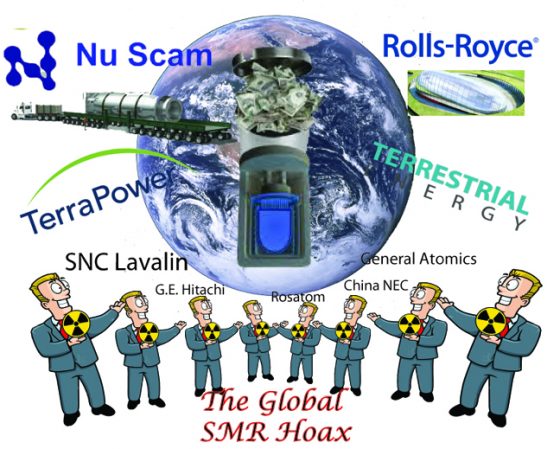
Small modular reactors have been touted as a solution to reaching net-zero – but how safe are they and will they do the job?
By Lucie Heath, Environment Correspondent, 28 Dec 23, https://inews.co.uk/news/how-green-is-the-governments-nuclear-energy-strategy-2824596
The Government has pledged to boost the country’s nuclear energy capacity, setting itself a target to power a quarter of the national grid with nuclear energy by 2050.
But i has revealed that the transition to nuclear energy has been beset by delays, prompting former prime pinister Boris Johnson to urge Rishi Sunak to “get on with it”.
Mr Johnson has been a vocal supporter of nuclear energy and has championed the development of new small modular nuclear reactors (SMRs).
SMRs have been touted as a key solution as the world transitions towards a net-zero future, but some have raised questions regarding the green credentials and viability of the technology.
Here i fact-checks the key claims with regards to SMRs.
Nuclear is low carbon
True or False: True

Ed. comment. That’s as long as you don’t count the CO2 emissions from the full nuclear fuel cycle, and the waste disposal methods.
Nuclear power is considered to be a low carbon source of energy. It has a minimal carbon footprint of around 15–50 grams of CO2 per kilowatt hour (gCO2/KWh), compared to an average footprint of around 450 gCO2/KWh for a gas powered generator and 1,050 gCO2/KWh for coal.
According to the International Energy Association (IEA), over the past 50 years the use of nuclear power has reduced CO2 emissions by over 60 gigatonnes – nearly two years’ worth of global energy-related emissions.
While nuclear produces far less CO2 than fossil fuels, environmentalists dispute its green credentials, not least due to the high volume of radioactive waste created as part of the fuel cycle.
SMRs will play a key role in the energy transition
True or False: Jury’s out
Small modular reactors have many potential benefits that overcome some of the hurdles of traditional nuclear reactor sites.
Their smaller size means that can be placed in locations not suited to large power plants and the modular nature of their design means they should be cheaper and quicker to build.
But as of 2023, only Russia and China have successfully built operational SMRs, and neither are in commercial use.
Mr Johnson’s plan to have the UK’s first SMRs contributing to the grid by 2030 looks increasingly unlikely. Rolls-Royce, which was one of the winners of a Government competition to develop them in the UK, recently told MPs its project could be contributing to the grid by 2031-32 at the very earliest.
MPs sitting on the Science, Innovation and Technology Committee recently published a report that described the Government’s nuclear strategy as more of a “wish list” and said ministers need to make it clearer what role SMRs will play in the energy transition.
SMRs are cheaper to build
True or False: Unclear
This section fails to mention the one and only commercial application of small nuclear reactors - the NuScale attempt in the USA, which was a financial fiasco, and had to be cancelled.
One of the largest hurdles to the deployment of nuclear energy are the huge costs of developing new plants. In theory, SMRs should be cheaper to build due to their size and modular nature, allowing for prefabrication.
However, it is not known exactly what the cost will be to the public purse of developing new SMRs in the UK.
The Environmental Audit Committee recently launched an inquiry into the topic, saying it was “currently unclear what financing models will be used to fund SMRs”.
Critics of nuclear argue it would be wiser to spend money on the deployment of renewable energy, which is cheaper to build.
SMRs are safer
True or false: True in theory
Safety has proved to be a massive issue preventing wider uptake of nuclear energy in the past. Incidents such as the 2011 Fukushima nuclear accident have sparked greater fears regarding the vulnerability of plants during a natural disaster, while nuclear stations can also be a risk during times of conflict, such as in Ukraine.
Proponents of SMRs say they are safer than traditional reactors, partly because their smaller core produces less heat, reducing the likelihood of overheating. A number of other innovations exist in their design which in theory should reduce the risk of failure.
While seen as being safer than large plants, SMRs are still associated with many of the same risks as traditional nuclear.
Inside the Pentagon’s Painfully Slow Effort to Clean Up Decades of PFAS Contamination
By Hannah Norman and Patricia Kime / Kaiser Health News, December 28, 2023
Oscoda, Michigan, has the distinction as the first community where “forever chemicals” were found seeping from a military installation into the surrounding community. Beginning in 2010, state officials and later residents who lived near the former Wurtsmith Air Force Base were horrified to learn that the chemicals, collectively called PFAS, had leached into their rivers, lakes, and drinking water…………………………………….
PFAS chemicals have been linked to increased cholesterol levels, preeclampsia in pregnant women, decreased birth weights, and decreased immune response to vaccines, as well as certain types of cancer. A federal study of U.S. military personnel published in July was the first to show a direct connection between PFAS and testicular cancer, and the chemicals have been linked to increased risk of kidney cancer…………………………………………………………………………………………………………………………………. more https://scheerpost.com/2023/12/28/inside-the-pentagons-painfully-slow-effort-to-clean-up-decades-of-pfas-contamination/
Fukushima: Japan’s Triple Threat in Spades
BY JOHN LAFORGE, CounterPunch ,15 Dec 23
“………………………… Dumping prompts major seafood import bans
Japan intends to disperse over 1.34 million tons of the contaminated wastewater to the Pacific. The government and international regulators have declared that the pollution will have a “negligible” impact on sea life and human health. Skeptical governments in 15 countries maintain import restrictions on Japanese fish and other seafood. China fully banning imports of fishery products from Japan from Aug. 24 when the wastewater discharge started. According to Food Navigator online, five states with the strictest bans are geographically close to Japan and fiercely oppose the radioactive waste dumping. They are South Korea, Taiwan, China, Hong Kong, and Macau. Ten others — Indonesia, French Polynesia, the U.S., the European Union (27 states), Iceland, Switzerland, Norway, Liechtenstein, Russia, and Singapore — require certification, inspections, etc. before allowing imports.
China’s ban has had a serious impact on Japan’s fishery. According to the BBC, China imported over 100,000 tons of scallops from Japan last year. The South China Morning Post reports that China had been the world’s biggest buyer of Japanese seafood, but now “says its ban is due to food safety fears.”
Another micro dosing of mushrooms
Mushrooms grown in Yamahashi prefecture, 172 miles southwest of Fukushima, were found with high levels of radioactive cesium, Japan’s Ministry of Health reported. The edible mushrooms had 150 becquerel of cesium-per-kilo, but the state allows 100 “Bq/kg”. The United States is more at ease with people eating cesium, and allows 1,200 Bq/kg. The U.S. doesn’t even make an exception for baby food.
Fisheries minister apologizes for stating fact
Information control and media manipulation by Japan’s government was on display in August, after Minister of Fisheries Tetsuro Nomura said publicly that Tepco was dumping “contaminated water” into the Pacific. Nomura was immediately attacked by editors, industry, and politicians for his “error” in not speaking of “treated water” — the state’s official term of art. In fact, the wastewater is poisoned with radioactive tritium, carbon-14, and (before “treatment”) some 62 radioactive elements picked up through contact with mounds of melted uranium and plutonium reactor fuel. The minister publicly apologized for his “gaffe” after being scolded by the Prime Minister himself, Fumio Kishida.
Third round of wastewater dumping protested
In November, Tepco began its third major discharge. The group Korean Peoples’ Action Against Japan’s Ocean Dumping of Radioactive Wastewater said problems with the process include clogged wastewater filters, and an increase in the concentration of radioactive material in the third discharge compared to the second. Likewise, the Pacific Collective on Nuclear Issues, composed of civil society groups, NGOs, and others in the Pacific region, said in a statement, “If the Japanese government and Tepco believe the radioactive wastewater is safe, they should be prepared to safely dispose of it within terrestrial Japan.”
The Collective also reminded the 52nd meeting of Pacific Island Forum states in Cook Island that the panel of scientific experts commissioned by the Forum found that “data provided so far, to support Japan’s claim that the treated wastewater is safe, is inconsistent, unsound, and therefore far from reliable.” Additionally, the Polynesian bloc attending the Forum (including Niue, Cook Islands, Samoa, American Samoa, French Polynesia, Wallis and Futuna, Tuvalu and Tonga) demanded a pause in Japan’s dumping.
Wastewater accident contaminates five workers
Tepco has reported that five workers accidentally came in contact with radioactive “fluid” while cleaning ocean dumping discharge pipelines. Two of them were contaminated enough to be kept under medical observation, China Daily reported November 6. According to Tepco, a doctor said there was a possibility the two men sustained burns due to radiation exposure. The Daily, which has been highly critical of Japan’s wastewater discharging, demanded to know: “[S]ince four of the five workers ‘were wearing protective gear and full-face masks, which prevented ingestion of the fluid,’ how could the ‘fluid’ splash and burn the ‘lower body and both arms’ of one of them, and why the other worker, whose ‘entire body was found to be exposed,’ was allowed to do the dangerous work without wearing any protective gear?” The Daily’s editors declared that the “Accident proved Japan’s toxic water plan dubious.”
Editors plaster “safe” over risky discharge
“IAEA confirms safe tritium levels in latest ALPS treated water release at Fukushima,” was the November 7 headline Nuclear Engineering International magazine used in its report on Tepco’s wastewater dumping. However, the article itself had no such confirmation. IAEA experts monitoring the discharge only said that the concentration of radioactive tritium in the waste was “far below Japan’s operational limit.” The word “safe” did not appear in the article or the IAEA report. The article’s text was factually accurate since there is no safe level of radioactive contamination. Like hundreds of others in the sane position, the magazine’s editors put the word “safe” into the IAEA’s mouth and turned the reporter’s story into a lullaby.
Area forests are a re-contamination source
Editors plaster “safe” over risky discharge
“IAEA confirms safe tritium levels in latest ALPS treated water release at Fukushima,” was the November 7 headline Nuclear Engineering International magazine used in its report on Tepco’s wastewater dumping. However, the article itself had no such confirmation. IAEA experts monitoring the discharge only said that the concentration of radioactive tritium in the waste was “far below Japan’s operational limit.” The word “safe” did not appear in the article or the IAEA report. The article’s text was factually accurate since there is no safe level of radioactive contamination. Like hundreds of others in the sane position, the magazine’s editors put the word “safe” into the IAEA’s mouth and turned the reporter’s story into a lullaby.
Area forests are a re-contamination source
Jim Smith, a Professor of Environmental Science at the University of Portsmouth, wrote in The Conversation October 23, that “Radiocaesium [cesium-137], which is the most important long-lived radioactive element emitted by the accident in terms of radiation dose, adheres to soil particles very strongly. Consequently, the decontamination of agricultural land primarily involved removing the top 5cm [about 2 inches] of topsoil. In urban areas, decontamination efforts entailed the removal of soil from sports fields”, school yards and other public areas.
However, as much as 71% of Fukushima Prefecture is covered by forest, and most of it remains contaminated. “Restrictions on the consumption of forest products have lasted for decades following the 1986 Chernobyl incident. And they are expected to persist in many forested areas of Fukushima too,” Prof. Smith wrote. Rainwater runoff from these forests creates routine downstream re-contamination of previously decontaminated areas. Additionally, forest fires can redistribute radioactivity still on trees and the forest floor creating inhalation risks — the same way fire regularly plagues the radioactive exclusion zone around the Chernobyl wreckage in Ukraine. https://www.counterpunch.org/2023/12/15/fukushima-japans-triple-threat-in-spades/
1 This Month



4 August – WEBINAR – Hiroshima & Nagasaki: Nuclear Bombs Never Again
Tuesday, Aug. 4 at 5 pm PT / 8 pm ET.
Aug 5, 2026 10:00 AM in Australia/Melbourne
Join the Nuclear Bombs Never Again webinar on August 4th at 5pm Pacific Time / 8pm Eastern Time / 9am Japan Standard Time.
Cross generational voices at the intersection of Japan-Korea-US policy and militarization will share their lived experiences, nuclear impacts in these contexts, anti-war strategies, and actions you can take to advocate for a world with Nuclear Bombs Never Again. This 75-minute event is co-hosted by WILPF US and Korea Peace Now.

22,000+ miles voyaging for nuclear disarmament
and a radiation-free environment https://vfpgoldenruleproject.org/
To see nuclear-related stories in greater depth and intensity – go to https://nuclearinformation.wordpress.com
-
Archives
- July 2026 (266)
- June 2026 (287)
- May 2026 (306)
- April 2026 (356)
- March 2026 (251)
- February 2026 (267)
- January 2026 (308)
- December 2025 (358)
- November 2025 (359)
- October 2025 (375)
- September 2025 (257)
- August 2025 (319)
-
Categories
- 1
- 1 NUCLEAR ISSUES
- business and costs
- climate change
- culture and arts
- ENERGY
- environment
- health
- history
- indigenous issues
- Legal
- marketing of nuclear
- media
- opposition to nuclear
- PERSONAL STORIES
- politics
- politics international
- Religion and ethics
- safety
- secrets,lies and civil liberties
- spinbuster
- technology
- Uranium
- wastes
- weapons and war
- Women
- 2 WORLD
- ACTION
- AFRICA
- Atrocities
- AUSTRALIA
- Christina's notes
- Christina's themes
- culture and arts
- Events
- Fuk 2022
- Fuk 2023
- Fukushima 2017
- Fukushima 2018
- fukushima 2019
- Fukushima 2020
- Fukushima 2021
- general
- global warming
- Humour (God we need it)
- Nuclear
- RARE EARTHS
- Reference
- resources – print
- Resources -audiovicual
- Weekly Newsletter
- World
- World Nuclear
- YouTube
-
RSS
Entries RSS
Comments RSS
 nuclear-news