Radioactive Medical Devices Could be Used to Make Dirty Bombs
Radioactive Medical Devices Could be Used to Make Dirty Bombs January 15, 2009 by: David Gutierrez, staff writer (NaturalNews) The radioactive devices used in medical centers across the country could pose an attractive target for terrorists seeking to make dirty bombs, according to a report by a panel of the U.S. National Research council.
In a report commissioned by Congress, the council suggests phasing out the 5,000 most radioactive medical devices in the United States, with a particular emphasis on the 1,300 radionuclide devices that use radioactive cesium chloride.
Cesium chloride contains the high-activity radionuclide cesium-137.
“We think it is possible to get rid of most of the 5,000 high-activity radiation devices over the next 10 to 20 years if there was a national policy to encourage it,” panel chair Theodore L. Phillips said.
These 5,000 devices, using eight different radionuclides, account for 99 percent of the highest security risk radioactivity sources in the United States, the report concluded. Of these eight radionuclides, the one of most concern is cesium-137 in the form of cesium chloride.The report recommends that the federal government stop licensing, importing or exporting new cesium chloride irradiators, and that it provide incentives for older devices to be phased out.
Radioactive Medical Devices Could be Used to Make Dirty Bombs
Press TV – Environment and human life under attack
Environment and human life under attack
Press TV Tue, 13 Jan 2009
By Mahmood Perviz Alam “………………………Nuclear weapons leave a legacy of their own. Environmental problems from the Chernobyl incident are still being uncovered. A nuclear explosion is followed by radiation with a chain of innumerable consequences. Hiroshima and Nagasaki are examples of this tragedy. The health threats brought about by the war in Iraq — and more recently, what is happening in the Gaza Strip — can be better understood when we focus on the statement of Norwegian doctors who found traces of depleted uranium in the wounded. Catastrophes keep on unfolding because budget allocations are made to keep the muscles of the war machine strong and impressive………………………”.
Press TV – Environment and human life under attack
Tags: nuclear, antinuclear, radioactive, uranium
Old tooth study revived to look at radiation effects
Old tooth study revived to look at radiation effects
Baltimore Sun January 12, 2009 – “……………….Fifty years ago, concern about atmospheric tests of nuclear weapons spurred a group of local scientists and other area residents to begin the project, then called the St. Louis Baby Tooth Survey.An early apparent link between fallout and health problems was established by the study. But now, more than 40 years later, the study is resuming. Researchers now hope to find links between fallout and instances of cancer in children born in the 1950s and early 1960s…………….
…………….The scientist, Joseph Mangano, is executive director of the Radiation and Public Health Project. He said in a telephone interview that his research group has had possession of 85,000 donated baby teeth since 2001 but lacked the money until recently to begin a full study of the cancer risk posed by nuclear tests.
Old tooth study revived to look at radiation effects — baltimoresun.com
Tags: nuclear, antinuclear, radioactive, uranium
H-bomb ‘guinea pigs’ claim compensation
H-BOMB ‘GUINEA PIGS’ CLAIM COMPENSATION
DAILY EXPRESS January 12,2009
By John Ingham NUCLEAR test veterans will this month launch their case for compensation, claiming they were used as guinea pigs. About 22,000 British servicemen from attended H-bomb tests in Australia and the South Pacific between 1952 and 1958.
Every other country that had servicemen at the tests has provided them with help.
Campaigners say many British veterans died young, had diseases like cancer or saw their wives suffer miscarriages or give birth to deformed children. Next week lawyers representing 1,000 survivors and their widows will launch an action for compensation which could cost the Ministry of Defence millions.
Veterans accuse the MoD of stalling, knowing the longer the process goes on the fewer will be left alive.
Daily Express | UK News :: H-bomb ‘guinea pigs’ claim compensation
Climate refugees – the hidden cost of climate change
Climate refugees – the hidden cost of climate change
BY GREEN LEFT ONLINESolomon Times Online January 13, 2009 By Margarita Windisch (Green Left Weekly) 3 December 2008 – The culturally diverse 7 million Pacific Islanders live in 22 nations. They only contribute 0.06 percent to global greenhouse gas emissions but are three times more vulnerable to climate change than countries of the global North, according to the IPCC.
“If these people can spend millions and millions on sending troops to fight other countries, why can’t they spend maybe a couple of billions just to save people, like ourselves; the marginalised, poorest of the poor. Why? Because we are taking the brunt, we are the victims of these green[house] gas emissions, the pollution made by industrialised countries.”
These words were spoken by a Carteret Islander in an unfinished documentary, The First Wave, the evacuation of the Carteret Islands. For the inhabitants of Pacific and Indian Ocean island nations, such as the Carteret Islands, climate change is already a devastating reality.
……………………….The Intergovernmental Panel on Climate Change (IPCC) fourth assessment report identifies small islands, including those in the South Pacific, as one of the key global regions to be most affected by climate change.The IPCC report predicts an estimated 150 million environmental refugees worldwide by the middle of this century, citing coastal flooding, shoreline erosion and agricultural degradation as major factors.
The culturally diverse 7 million Pacific Islanders live in 22 nations. They only contribute 0.06% to global greenhouse gas emissions but are three times more vulnerable to climate change than countries of the global North, according to the IPCC.
Climate refugees – the hidden cost of climate change | Regional | Solomon Islands News
Depleted uranium found in Gaza victims
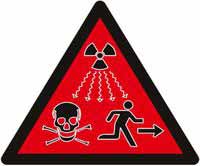
Depleted uranium found in Gaza victims
Global research 9 Jan 09 “………..Norwegian medics told Press TV correspondent Akram al-Sattari that some of the victims who have been wounded since Israel began its attacks on the Gaza Strip on December 27 have traces of depleted uranium in their bodies.The report comes after Israeli tanks and troops swept across the border into Gaza on Saturday night, opening a ground operation after eight days of intensive attacks by Israeli air and naval forces on the impoverished region.
Israeli Defense Minister Ehud Barak warned on Sunday that the wide-ranging ground offensive in the Gaza Strip would be “full of surprises.”
Depleted uranium found in Gaza victims
Tags: nuclear, antinuclear, uranium, radioactive
Radiologists see overuse of patient scans; specialists see turf battle
Radiologists see overuse of patient scans; specialists see turf battle
Stesman.com 9 Jan 09 Lawmakers expected to be asked to referee dispute between radiologists and other doctors investing in own scanning equipment.By Mary Ann RoserAMERICAN-STATESMAN STAFFThursday, January 08, 2009Are you being overexposed?Some Texas radiologists — the doctors who use scans such as CT and MRI to see inside the body — say yes. And they want the Legislature to consider regulating who can scan, where the scanning is done and who reads the tests.Once lawmakers convene for a new session Tuesday, radiologists plan to ask them to order a study of who owns scanning equipment, hoping to curb what they say is a growing problem: a rising number of scans being done by specialists who are not radiologists but who own advanced imaging equipment.
They say this is a conflict of interest that is driving up health care costs and exposing some patients to unnecessary radiation………..
……………….At issue is the use of CT, or computed tomography, and MRI, or magnetic resonance imaging, both of which scan organs inside the body, and PET, or positron emission tomography, which uses a radioactive substance to show the functioning of organs and tissues. With a CT scan, patients are exposed to 100 times more radiation than with a standard X-ray, Perkins said. MRI does not use radiation…………
…….A November 2007 study in the New England Journal of Medicine said…..
….with rising CT use about 1.5 percent to 2 percent of all cancers could be attributed to CT scans in future decades, based on scans received today, the study said. CT scans increased from 3 million in 1980 to 62 million per year in the mid-2000s.
Radiologists see overuse of patient scans; specialists see turf battle
Tags: nuclear, antinuclear, uranium, radioactive
Head-to-toe executive physicals get their own checkup
Head-to-toe executive physicals get their own checkup
Quality health care or snake oil for VIPs? The Montreal Gazette By EVRA TAYLOR LEVY & EDDY LANGDecember 30, 2008 – “……………………Executive physicals that include total body CT scans – which have no proven benefit but subject patients to a significant dose of radiation – may, several years down the road, increase the risk of the very cancers that the test was trying to detect.
Head-to-toe executive physicals get their own checkup
Tags: nuclear, antinuclear, radioactive, uranium
Chromosomal changes seen in long-term airline pilots | Health | Reuters
Chromosomal changes seen in long-term airline pilots
NEW YORK (Reuters Health) 19 Dec 08 – New research suggests that airline pilots with long-term flying experience may be exposed to higher than average levels of radiation, resulting in more chromosomal translocations than usually seen.Further studies with longer follow-up and more subjects, however, will be needed to determine if these pilots are at increased risk for cancer, according to the report in the online issue of Occupational and Environmental Medicine.Chromosomal translocations occur when a chromosome fragment breaks off and attaches to another. This can lead to a range of medical problems, such as leukemia, breast cancer, schizophrenia or muscular dystrophy, depending on were the fragments reattach.”Airline pilots are exposed to cosmic ionizing radiation, but few flight crew studies have examined translocations in relation to flight experience,” Dr. Lee C. Yong, from the National Institute for Occupational Safety and Health, Cincinnati, Ohio, and colleagues explain.The research team therefore looked for chromosome translocations in the blood cells of 50 airline pilots and from 50 comparison subjects……………………..among pilots, the frequency of translocations was directly related to flight years. For each 1-year increase in flight years, the likelihood of a translocation rose by 6 percent.
Relative to pilots in the lowest quartile of flight years, those in the highest quartile were 2.59-times more likely to have chromosomal translocations, the report indicates.
Chromosomal changes seen in long-term airline pilots | Health | Reuters
Tags: nuclear, antinuclear, radioactive, uranium
Polynesian nuclear workers criticise French compensation offer | Medical Association for Prevention of War
Polynesian nuclear workers criticise French compensation offer
Medical Association for the Prevention of War 13/12/2008 French nuclear veterans have strongly criticised a proposed new law covering compensation for survivors of French nuclear testing in Algeria and French Polynesia. The law would cover former nuclear workers and military personnel whose health was affected by French nuclear tests – but survivors say few people would be eligible.
the announcement has been greeted with scorn by civilian and military personnel who staffed the nuclear tests sites from 1960 until 1996. They argue that the proposed legislation ignores a number of key concerns that have been central to their lobbying over the last decade, and has been designed to replace more comprehensive laws. They argue that almost no survivors would be eligible for compensation, and that thresholds for radiation exposure are well above accepted international safety standards.For many years, there have been repeated statements by government ministers and officials that no one was adversely affected by radiation exposure during the era of French nuclear testing. In Algeria, France conducted four atmospheric tests and 13 underground tests (1960 – 1965). In French Polynesia, 46 atmospheric and 147 underground tests were held at Moruroa and Fangataufa atolls (1966 – 1996).
Tags: nuclear, antinnuclear, radioactive, uranium
AFP: US refuses Marshalls bid to use aid for nuclear victims
US refuses Marshalls bid to use aid for nuclear victims
MAJURO (AFP) 12 Dec 08 — The US has refused a request by the Marshall Islands to use grant money to compensate victims of the American nuclear weapons testing programme in the western Pacific atoll nation, officials said.The US tested 67 nuclear weapons at Bikini and Enewetak atolls from 1946 to 1958 and a Nuclear Claims Tribunal was set up by the two governments to compensate those displaced or suffering health problems due to the tests.But the 150 million dollars the United States provided for paying settlements ran out three years ago and the US State Department has said there is no obligation to pay more.More than 22 million dollars remains unpaid for personal injury awards and about two billion dollars is outstanding for land damage awards made by the tribunal.
AFP: US refuses Marshalls bid to use aid for nuclear victims
Two Good Reasons to Reconsider Scans, such as CT and MRI
Two Good Reasons to Reconsider Scans, such as CT and MRI
Natural News December 05, 2008 by: Reuben Chow, citizen journalist – “……………….A recent study conducted by a team from the University of California-San Francisco has found that the use of such medical imaging tools is playing its part in rising health care costs, while at the same time subjecting patients to increasing levels of radiation exposure……………………………ne of the main problems, in my book, is that we cannot effectively quantity the damage done by advanced medical imaging. How many cases of breast cancer, for example, are caused in large part by excessive exposure to radiation from annual mammograms?
Some research has also suggested that such tests uncover problems which might have gone away on their own anyway, and carrying out the tests could have unnecessarily opened a can of worms. Recent research in Norway, for example, suggested the “possibility that the natural course of some screen-detected invasive breast cancers is to spontaneously regress”. Once discovered, however, the medical-go-round usually begins – more tests, surgeries, chemotherapy, radiation, the works. In this scenario, how many women are actually hurt by the results of the scans they went through?……………
When it comes to medical imaging, is more necessarily better? As Dr Smith-Bindman said, “The new technologies are fantastic, but they should be used judiciously.”
Uranium – a blessing or a curse?
Uranium – a blessing or a curse?
Marketplace Herbert Jauch 5 Dec 08 “………………….. Following the release of a uranium study by the director of the Labour Resource and Research Institute, Hilma Shindondola-Mote, earlier this year, mineworkers and environmental organisations have raised concerns.At the heart of the dispute is whether a mushrooming uranium mining industry is a curse or a blessing for Namibia………………………..Exposure to even relatively low levels of radiation over a long period can be extremely harmful to the health of workers and communities living around uranium mines.
Several workers who spent long years working at uranium mines developed serious health problems.
Cancerous strains are commonplace as workers are exposed to dust and radon gas daily and thus develop diseases such as TB and lung cancer.
Although mining companies usually deny any responsibility and refuse to compensate workers, there is increasing evidence of a link between uranium mining and workers’ health problems.
Uranium mining uses an enormous amount of water.
In a recent article in The Namibian, the writer pointed out that the proposed uranium mine by the Canadian company Forsys Metal, would use 1 million litres of water each day……………….
Situated on the Valencia farm in the Erongo region, the mine would consume in only three months the amount of water that the current users in the area would consume in 36 years.
Given that all existing and envisaged uranium mines are in the Namib desert, one needs to ask if it is wise to spend Namibia’s most scarce resource – water – on mining operations that may only bring short-term benefits.
All existing and proposed uranium mining sites are in the Namib desert, mostly in the protected area of the Namib Naukluft Park.
Besides using huge amounts of water, uranium mining also leaves large craters as it relies on open-pit operations.
Once mining activities cease, the huge holes remain.
Furthermore, radioactive dust particles may be blown over many kilometres.
This brings mining into direct conflict with tourism ventures that rely on Namibia’s natural beauty as a main attraction.
National Survey of Radiologists Reveals Systemic Problems Hurting Industry and Patient Care
National Survey of Radiologists Reveals Systemic Problems Hurting Industry and Patient Care
Almost Seventy Percent Report Unnecessary or Duplicative Scans
RSNA 2008CHICAGO–(BUSINESS WIRE) 3 Dec 08 –A national survey released today (at RSNA) uncovers a host of systemic problems and challenges that are hindering radiologists’ ability to control skyrocketing demand and negatively impacting patient diagnosis and care……………… The study also discovered that almost seven in ten radiologists surveyed (69%) reported experiencing unnecessary or duplicative scans in the past six months. The growing national concern over the dramatic rise in CT scans nationally stems from evidence of increased cancer risk due to overexposure to radiation. Totaling 62 million CT scans annually1, the amount performed in the U.S. has nearly doubled between 2000 and 20052 with more than 30 percent deemed to be unnecessary or redundant each year3.
National Survey of Radiologists Reveals Systemic Problems Hurting Industry and Patient Care
iafrica.com | technology | news | science Climate change heats up
Climate change heats up iafrica.com By: Marlowe Hood 1 Dec 08 “………………………..
Arctic meltdown……………..When the reflective ice surface retreats, the Sun’s radiation — heat — is absorbed by open water rather than bounced back into the atmosphere, creating a vicious circle of heating.
“We had always known that the Arctic was going to respond first,” said Mark Serreze of the National Snow and Ice Data Center in Boulder, Colorado. “What has us puzzled is that the changes are even faster than we would have thought possible,” he said by phone………………………
Rising oceans New data on the rate at which oceans might rise has also caused consternation.
“The most recent IPCC report was prior to … the measurements of increasing mass loss from Greenland and Antarctica, which are disintegrating much faster than IPCC estimates,” said climatologist James Hansen, head of NASA’s Goddard Institute for Space Studies in New York.
Unlike the Arctic ice cap, which floats on water, the world’s two major ice sheets — up to three kilometres thick — sit on land.
Runaway sea level rises, Hansen said, would put huge coastal cities and agricultural deltas in Bangladesh, Egypt and southern China under water, and create hundreds of millions of refugees.
The IPCC’s most recent assessment “did not take into account the potential melting of Greenland, which I think was a mistake,” said Watson, the former IPCC chairman.
Were Greenland’s entire ice block to melt, it would lift the world’s sea levels by almost seven metres, while western Antarctica’s ice sheet holds enough water to add six metres…………………………Atmospheric issues The accelerating concentration of greenhouse gases in the atmosphere, and signs of the planet’s dwindling ability to absorb them, are also causing some scientists to lose sleep…………………..
One potential source of both gases is frozen tundra in the Arctic and sub-Arctic regions, where temperatures have risen faster than anywhere else on Earth.
“The amount of carbon that is locked up in permafrost that could be released into the atmosphere is just about on a par with the atmospheric load the world has right now,” said Serreze.
These higher concentrations of greenhouse gases come at a time when Earth’s two major “carbon sinks” — forests and especially oceans — are showing signs of saturation.
iafrica.com | technology | news | science Climate change heats up
1 This Month
26 September – International Day for the Total Elimination of Nuclear Weapons





PLEASE OPPOSE HR 8255 AND S.3639 – bills would accelerate satellite deployment, with no environmental review or safeguards – https://ncstd5li.quorum.us/campaign/169331/
To see nuclear-related stories in greater depth and intensity – go to https://nuclearinformation.wordpress.com
-
Archives
- September 2026 (305)
- August 2026 (330)
- July 2026 (355)
- June 2026 (287)
- May 2026 (306)
- April 2026 (356)
- March 2026 (251)
- February 2026 (267)
- January 2026 (308)
- December 2025 (358)
- November 2025 (359)
- October 2025 (375)
-
Categories
- 1
- 1 NUCLEAR ISSUES
- business and costs
- climate change
- culture and arts
- ENERGY
- environment
- health
- history
- indigenous issues
- Legal
- marketing of nuclear
- media
- opposition to nuclear
- PERSONAL STORIES
- politics
- politics international
- Religion and ethics
- safety
- secrets,lies and civil liberties
- spinbuster
- technology
- Uranium
- wastes
- weapons and war
- Women
- 2 WORLD
- ACTION
- AFRICA
- Atrocities
- AUSTRALIA
- Christina's notes
- Christina's themes
- culture and arts
- Events
- Fuk 2022
- Fuk 2023
- Fukushima 2017
- Fukushima 2018
- fukushima 2019
- Fukushima 2020
- Fukushima 2021
- general
- global warming
- Humour (God we need it)
- Nuclear
- RARE EARTHS
- Reference
- resources – print
- Resources -audiovicual
- Weekly Newsletter
- World
- World Nuclear
- YouTube
-
RSS
Entries RSS
Comments RSS

