Coral bleaching: Fourth global mass stress episode underway – US scientists
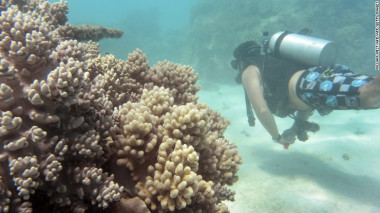
Coral around the world is turning white and even dying as recent record
ocean heat takes a devastating toll. It has triggered the fourth global
mass coral bleaching event, according to the US National Oceanic and
Atmospheric Administration (NOAA).
Bleaching happens when coral gets
stressed and turns white because the water it lives in is too hot. Coral
sustains ocean life, fishing, and creates trillions of dollars of revenue
annually.
Ocean heat records have been falling for months but this is the
first global evidence of how this episode is affecting sea life. The US
National Oceanic and Atmospheric Administration (NOAA) confirmed the mass
stress in all oceans (the Atlantic, Pacific and Indian Ocean) after weeks
of receiving reports from scientists globally. The bleached coral can look
beautiful in pictures but scientists that dive to examine the reefs say
that up close the coral is clearly ill and decaying.
BBC 15th April 2024
New Hinkley nuclear power plant expected to kill 46 tonnes of fish a year.

EDF building £50m nature reserve near Hinkley Point to compensate for loss of life
Jonathan Leake, 16 April 2024
A nature reserve is to be flooded by the developer of the Hinkley Point C nuclear plant at a cost of £50m to compensate for the death of fish in its cooling pipes…
An 840 acre swathe of land along the Parrett
estuary in Somerset will be transformed into salt marsh as a habitat for
marine life to replace fish sucked in by the new power station’s cooling
ducts. The area affected – part of the Somerset levels, where Saxon king
Alfred the Great is said to have hidden from the Vikings – includes
farmers’ fields used for grazing, as well as a nature reserve.
EDF, the French company building Hinkley Point, will create a new nature reserve
nearby to replace the land being lost. The overall changes are expected to
cost it £50m. The massive water intakes used to suck water from the
Bristol Channel to cool Hinkley Point C’s reactors are expected to kill
up to 46 tonnes of fish a year when the plant opens in 2031.
EDF also explored installing an acoustic fish deterrent, effectively a loud noise to
ward away animals, but concluded this would cause more harm than it
prevented. Chris Fayers, the company’s head of environment at Hinkley,
said: “An acoustic fish deterrent would use 280 speakers to make noise
louder than a jumbo jet 24-hours a day for 60 years with unknown impacts on
other species like porpoises, seals, whales. “It offers a very
small potential benefit to protected fish species and would also risk the
safety of divers in the fast-flowing tides of the Bristol Channel. New
natural habitat is a better solution.”
EDF said it was working with
Natural England, the Environment Agency, and other conservation
bodies to develop the new natural habitats. It plans to take out
compulsory purchase orders to acquire the land and then destroy its
protective dykes so that saltwater can flood in, according to planning
documents.
Dozens of farmers around Pawlett Hams, north of Bridgwater in
Somerset, have been told their grazing land is likely to become salt marsh.
One said: “It’s an existential threat to farmers’ livelihoods.” EDF
has told local people: “We are proposing to create 340 hectares of salt
marsh habitat. Will Barnard, chair of the Pawlett Parish Council, who also
works as an environmental land manager on some of the affected land, said
no-one was happy with the scheme.
Telegraph 16th April 2024
Environmental impacts of underground nuclear weapons testing

While underground nuclear tests were chosen to limit atmospheric radioactive fallout, each test still caused dynamic and complex responses within crustal formations. Mechanical effects of underground nuclear tests span from the prompt post-detonation responses to the enduring impacts resulting in radionuclide release, dispersion, and migration through the geosphere. Every test of nuclear weapons adds to a global burden of released radioactivity (Ewing 1999).
Bulletin, By Sulgiye Park, Rodney C. Ewing, March 7, 2024
Since Trinity—the first atomic bomb test on the morning of July 16, 1945, near Alamogordo, New Mexico—the nuclear-armed states have conducted 2,056 nuclear tests (Kimball 2023). The United States led the way with 1,030 nuclear tests, or almost half of the total, between 1945 and 1992. Second is the former Soviet Union, with 715 tests between 1949 and 1990, and then France, with 210 tests between 1960 and 1996. Globally, nuclear tests culminated in a cumulative yield of over 500 megatons, which is equivalent to 500 million tons of TNT (Pravalie 2014). This surpasses by over 30,000 times the yield of the first atomic bomb dropped on Hiroshima on August 6, 1945.
Atmospheric nuclear tests prevailed until the early 1960s, with bombs tested by various means: aircraft drops, rocket launches, suspension from balloons, and detonation atop towers above ground. Between 1945 and 1963, the Soviet Union conducted 219 atmospheric tests, followed by the United States (215), the United Kingdom (21), and France (3) (Kimball 2023).
In the early days of the nuclear age, little was known about the impacts of radioactive “fallout —the residual and activated radioactive material that falls to the ground after a nuclear explosion. The impacts became clearer in the 1950s, when the Kodak chemical company detected radioactive contamination on their film, which was linked to radiation resulting from the atmospheric nuclear tests (Sato et al. 2022). American scientists, like Barry Commoner, also discovered the presence of strontium 90 in children’s teeth originating from nuclear fallout thousands of kilometers from the original test site (Commoner 1959; Commoner 1958; Reiss 1961). These discoveries alerted scientists and the public to the consequences of radioactive fallout from underwater and atmospheric nuclear tests, particularly tests of powerful thermonuclear weapons that had single event yields of one megaton or greater.
Public concerns for the effects of radioactive contamination led to the Limited (or Partial) Test Ban Treaty, signed on August 5, 1963. The treaty restricted nuclear tests from air, space, and underwater (Atomic Heritage Foundation 2016; Loeb 1991; Rubinson 2011). And while the treaty was imperfect with only three signatories at the beginning (the United States, the United Kingdom, and the Soviet Union), the ban succeeded in significantly curbing atmospheric release of radioactive isotopes.
After the entry into force of the partial test ban, almost 1,500 underground nuclear tests were conducted globally. Of the 1,030 US nuclear tests, nearly 80 percent, or 815 tests (See Table 1 on original ), were conducted underground, primarily at the Nevada Test Site.[1] As for other nuclear powers, the Soviet Union conducted 496 underground tests, mostly in the Semipalatinsk region of Kazakhstan, France conducted 160 underground tests, the United Kingdom conducted 24, and China 22. These underground nuclear tests were in a variety of geologic formations (e.g., basalt, alluvium, rhyolite, sandstone, shale) to depths up to 2,400 meters.
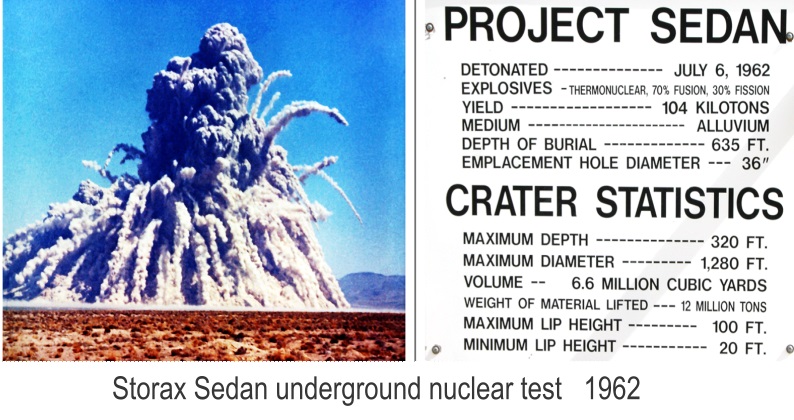
In 1996, after some international efforts to curb nuclear testing and promote disarmament, the Comprehensive Test Ban Treaty (CTBT) was negotiated, which prohibited all nuclear explosions (General Assembly 1996). Since the negotiation of the CTBT, India and Pakistan conducted three and two underground nuclear tests, respectively, in 1998. And today, North Korea stands as the only country to have tested nuclear weapons in the 21st century.
While underground nuclear tests were chosen to limit atmospheric radioactive fallout, each test still caused dynamic and complex responses within crustal formations. Mechanical effects of underground nuclear tests span from the prompt post-detonation responses to the enduring impacts resulting in radionuclide release, dispersion, and migration through the geosphere. Every test of nuclear weapons adds to a global burden of released radioactivity (Ewing 1999)…………………………………………………………………………
………………………………………………………………….. Containment failures and nuclear accidents
Underground nuclear tests are designed to limit radioactive fallout and surface effects. However, containment methods are not foolproof, and radioisotopes, which are elements with neutrons in excess making them unstable and radioactive, can leak into the surrounding environment and atmosphere, posing potential risks to ecosystems and human health.
Instances of radiation leaks were not uncommon…………………………………..
Unintended radioactive releases from underground nuclear tests occurred through venting or seeps, where fission products and radioactive materials were uncontrollably released, driven by pressure from shockwave-induced steam or gas. In rare cases, more serious nuclear accidents occurred due to incomplete geological assessments of the surrounding medium in preparation for the test. A notable example of accidental release is the Baneberry underground nuclear test on December 18, 1970, which, according to the federal government, resulted in an “unexpected and unrecognized abnormally high water content in the medium surrounding the detonation point” ……………………………………………………………………………………………
Mechanical and radiation effects of underground nuclear tests
Three main factors affect the mechanical responses of underground nuclear tests: the yield, the device placement (i.e., depth of burial, chamber geometry, and size), and the emplacement medium (i.e., rock type, water content, mineral compositions, physical properties, and tectonic structure). These factors influence the physical response of the surrounding geological formations and the extent of ground displacement, which, in turn, determine the radiation effects by influencing the timing and fate of the radioactive gas release.
Every kiloton of explosive yield produces approximately 60 grams (3 × 10¹² fission product atoms) of radionuclides (Smith 1995; Glasstone and Dolan 1977). Between 1962 and 1992, underground nuclear tests had a total explosive yield of approximately 90 megatons (Pravalie 2014), producing nearly 5.4 metric tons of radionuclides. ……………………………………………….
……………………………..The partitioning of radionuclides between the melt glass and rubble significantly impacts the subsequent transfer of radioactivity to groundwater.
…………………………Temperatures produced by large explosions can change the permeability, porosity, and water storage capacity by creating new fractures, cavities, and chimneys……………………. The explosion also affects the porosity of the surrounding rock. For example, a fully contained explosion of 12.5-kiloton yield in Degelen Mountain at the former Soviet Union’s Semipalatinsk test site resulted in up to a six-fold increase in porosity within the crush zone surrounding the cavity (Adushkin and Spivak 2015). Increased permeability and porosity of the surrounding rock can lead to more radionuclides being released, as more groundwater can pass through the geologic formation.
Hydrogeology and release of radioactivity
The main way contaminants can be moved from underground test areas to the more accessible environment is through groundwater flow. …………………………………………..
Given their long half-lives (Table 2 on original ), the ability of plutonium isotopes to migrate over time raises concerns about the long-term impacts and challenges in managing radioactive contamination.
In all these cases, colloid-facilitated transport allowed for the migration of radioactive particles through groundwater flow over an extended period—long after the nuclear tests or discharge occurred (Novikov et al. 2006). ………………………
The risks associated with the environmental contamination from underground nuclear tests have often been considered low due to the slow movement of the groundwater and the long distance that separates it from publicly accessible groundwater supplies. But these studies demonstrate that apart from prompt effect of radioactive gas releases from instantaneous changes in geologic formations, long-term effects persist due to the evolving properties of the surrounding rocks long after the tests. Long-lived radionuclides can be remarkably mobile in the geosphere. Such findings underscore the necessity for sustained long-term monitoring efforts at and around nuclear test sites to evaluate the delayed impacts of underground nuclear testing on the environment and public health.
Enduring legacy
Nearly three decades after the five nuclear-armed states under the CTBT stopped testing nuclear weapons both in the atmosphere and underground, the effects of past tests persist in various forms—including environmental contamination, radiation exposure, and socio-economic repercussions—which continue to impact populations at and near closed nuclear test sites (Blume 2022). The concerns are greater when the test sites are abandoned without adequate environmental remediation. This was the case with the Semipalatinsk test site in Kazakhstan that was left unattended after the fall of the Soviet Union in 1991, before a secret multi-million effort was made by the United States, Russia, and Kazakhstan to secure the site (Hecker 2013). The abandonment resulted in heavy contamination of soil, water, and vegetation, posing significant risks to the local populations (Kassenova 2009).
In 1990, the US Congress acknowledged the health risks from nuclear testing by establishing the Radiation Exposure Compensation Act (RECA), which provides compensation to those affected by radioactive fallout from nuclear tests and uranium mining. Still, there are limitations and gaps in coverage that leave many impacted individuals, including the “downwinders” from the Trinity test site without compensation for their radiation exposure (Blume, 2023). The Act is set to expire in July 2024, potentially depriving many individuals without essential assistance. Over the past 30 years, the RECA fund paid out approximately $2.5 billion to impacted populations (Congressional Research Service 2022). For comparison, the US federal government spends $60 billion per year to maintain its nuclear forces (Congressional Budget Office 2021).
As the effects of nuclear testing still linger, today’s generations are witnessing an increasing concern at the possibility of a new arms race and potential resumption of nuclear testing (Drozdenko 2023; Diaz-Maurin 2023). The concern is heightened by activities in China and North Korea and with Russia rescinding its ratification of the CTBT. Even though the United States maintains a moratorium on non-subcritical nuclear tests, its decision not to ratify the test ban treaty shows a lack of international leadership and commitment. As global tensions and uncertainties arise, it is critical to ensure global security and minimize the risks to humans and the environment by enforcing comprehensive treaties like the CTBT. Transparency at nuclear test sites should be promoted, including those conducting very-low-yield subcritical tests, and the enduring impacts of past nuclear tests should be assessed and addressed.
Endnotes………………………………………………………………more https://thebulletin.org/premium/2024-03/environmental-impacts-of-underground-nuclear-weapons-testing/?utm_source=Newsletter&utm_medium=Email&utm_campaign=MondayNewsletter04152024&utm_content=NuclearRisk_EnvironmentalImpactsNuclearTests_03072024
Not content with nuclear wastes to the seas, the nuclear lobby now wants floating nuclear power – (for the environment! they say).

New association for maritime nuclear created
OFFSHORE ENERGY , April 3, 2024, by Naida Hakirevic Prevljak
A global group of companies with a common interest in developing nuclear energy solutions for the maritime sector have launched Nuclear Energy Maritime Organization (NEMO).
To be headquartered in London, NEMO will officially start activities in the second quarter of 2024.
By bringing together stakeholders with relevant expertise, NEMO aims to assist nuclear and maritime regulators in the development of appropriate standards and rules for the deployment, operation and decommissioning of floating nuclear power………………………………
Advanced nuclear technologies deployed at sea can reduce environmental impact, enhance social responsibility, and increase economic competitiveness. NEMO aims to provide a platform for its members to network and facilitate a functional connection between regulators to foster development and exchange best practices.
NEMO’s inaugural members are South Korean shipbuilder HD KSOE, the UK-based classification society Lloyd’s Register, American manufacturing and engineering company BWXT Advanced Technologies, American nuclear innovation company TerraPower, Japanese shipbuilder and ship repairer Onomichi Dockyard, American nuclear reactor designer and vendor Westinghouse Electric Company, Anglo-American maritime nuclear innovation company CORE POWER (UK), Fincantieri subsidiary VARD Group, French classification society Bureau Veritas, Italian classification society RINA, and Korean developer, consultant serving nuclear supply chain JEIL Partners.
……………………………………. The organization plans to hold regular events, workshops, webinars, and publications for its members and the wider public. The organization also intends to collaborate with other industry associations, government bodies, academic institutions, and civil society organizations to advance the cause of floating nuclear power.
In related news, Korean industry majors, led by shipping companies HMM and Sinokor, forged an alliance last year to develop nuclear-powered ships.
Under the agreement, the partners aim to develop and demonstrate how small modular nuclear reactors can be used to propel ships. The project will also investigate the development of relevant marine system interface and propulsion technology as well as the production of hydrogen using molten salt reactors (MSR). https://www.offshore-energy.biz/new-association-for-maritime-nuclear-created/
Ecocide a ‘Critical Dimension of Israel’s Genocidal Campaign’ in Gaza: Probe
Analysis by a research group found that roughly 40% of Gaza land that was previously used for food production has been destroyed by Israeli forces.
JAKE JOHNSON, Mar 29, 2024, https://www.commondreams.org/news/ecocide-israel-gaza
The widespread destruction Israel’s military has inflicted on Gaza’s farmland and agricultural infrastructure amounts to a “deliberate act of ecocide,” according to a new investigation that uses satellite imagery to survey the extent of the damage.
Released Friday ahead of Palestine’s Land Day, the analysis by the London-based research group Forensic Architecture (FA) shows that Israel’s ground forces—including tanks and other military vehicles—have advanced over half of Gaza’s farms and orchards, critical food sources that the besieged enclave’s population has worked tirelessly to cultivate in the face of decades of occupation.
“Since 2014, Palestinian farmers along Gaza’s perimeter have seen their crops sprayed by airborne herbicides and regularly bulldozed, and have themselves faced sniper fire by the Israeli occupation forces,” FA said. “Along that engineered ‘border,’ sophisticated systems of fences and surveillance reinforce a military buffer zone.”
Comparing satellite imagery from prior to Israel’s invasion and the present, FA found that roughly 40% of Gaza land that was previously used for food production has been destroyed by Israeli forces. Nearly a third of Gaza’s greenhouses have been demolished, according to the investigation.
“In total, Forensic Architecture has identified more than 2,000 agricultural sites, including farms and greenhouses, which have been destroyed since October 2023, often to be replaced with Israeli military earthworks,” the group said. “This destruction has been most intense in the northern part of Gaza, where 90% of greenhouses were destroyed in the early stages of the ground invasion.”
It is no surprise, then, that northern Gaza is currently experiencing famine conditions, with most of the population there at imminent risk of starvation as Israeli forces impede the flow of humanitarian assistance and continue their relentless bombing campaign.
Leading human rights organizations have accused the Israeli government of using starvation as a weapon of war in Gaza, pointing to the decimation of the territory’s agricultural sector and attacks on aid convoys. The United Nations warned less than two months into Israel’s assault that “in the north, livestock is facing starvation and the risk of death due to shortage of fodder and water.”
The new investigation was published amid growing global momentum to formally codify ecocide as an international crime alongside genocide, which Israel also stands accused of committing against Palestinians in Gaza.
An expert panel convened by Stop Ecocide International has defined ecocide as “unlawful or wanton acts committed with knowledge that there is a substantial likelihood of severe and either widespread or long-term damage to the environment being caused by those acts.”
Ecocide is officially recognized as a crime in at least 10 countries, including France, Ecuador, Russia, and Ukraine. Earlier this week, the European Council adopted new rules that include a provision criminalizing acts deemed “comparable to ecocide.”
FA’s analysis argues that Israel’s latest military assault on the Gaza Strip and the intentional targeting of the enclave’s agriculture is “a critical dimension of Israel’s genocidal campaign,” fueling both a humanitarian and environmental disaster.
“The targeted farms and greenhouses are fundamental to local food production for a population already under a decades-long siege,” the research group said. “The effects of this systematic agricultural destruction are exacerbated by other deliberate acts of deprivation of critical resources for Palestinian survival in Gaza.”
“These acts include the well-reported, catastrophic, and Israeli-made famine ongoing in Gaza, continued obstruction of humanitarian aid destined for Gaza, the destruction of medical infrastructure, the destruction beyond repair of other areas of civilian infrastructure, including bakeries, schools, mosques, churches, and cultural heritage sites,” the group added.
Japan confirms experts met in China to ease concerns over discharge of treated radioactive water
Japan said Sunday its experts have held talks with their Chinese
counterparts to try to assuage Beijing´s concerns over the discharge of
treated radioactive wastewater from the wrecked Fukushima Daiichi nuclear
power plant into the sea. The discharges have been opposed by fishing
groups and neighboring countries especially China, which banned all imports
of Japanese seafood. China´s move has largely affected Japanese scallop
growers and exporters to China. During the talks held Saturday in the
northeastern Chinese city of Dalian, Japanese officials provided
“science-based” explanation of how the discharges have been safely carried
out as planned, according to the Japanese Foreign Ministry.
Daily Mail 31st March 2024
Man blames nuclear meltdown for deformities in city more radioactive than Chernobyl

Ozersk – code named City 40 – was the birthplace of the Soviet nuclear weapons programme, now it’s one of the most contaminated places on the planet with residents exposed to high radiation levels.
By Kelly Williams, Assistant News Editor (Live) https://www.dailystar.co.uk/news/world-news/man-blames-nuclear-meltdown-deformities-32405120
A man living in a secret city five times more radioactive than Chernobyl has been left with facial deformities he blames on huge nuclear meltdowns.
Vakil Batirshin has massively swollen lymph nodes said to be caused by radiation-related illness. He lives in Ozersk – code named City 40 in Russia – which was built in total secrecy around the huge Mayak nuclear power plant by the Soviets in 1946.
For the first eight years after City 40 was built, Ozersk residents were forbidden from communicating with the outside world. Like Chernobyl, it was designed as a place to house the scientists working at the plant who – unbeknownst to the world – were leading the Soviet Union’s nuclear weapons programme during the Cold War era.
Locals were told they were “the nuclear shield and saviours of the world,” and everyone on the outside was an enemy.
They also kept it a secret that the extreme exposure to radiation was affecting the health of the city’s inhabitants. They started to get sick and die and the authorities were clandestine about the mortality rate.
However, the city’s graveyard with all its young victims tells the story.
Ozersk, nicknamed “The graveyard of the Earth,” was surrounded by guarded gates and barbed wire fences and did not appear on any maps.
Its inhabitants’ identities were also erased from the Soviet census to guard their secret.
The Mayak nuclear plant went through Russia’s biggest nuclear disaster when the facility allegedly dumped 200million curies worth of radioactive material into the environment around Ozersk.
The residents also suffered the Kyshtym disaster in 1957, the worst nuclear disaster the world had seen before Chernobyl.
Radiation bathed the city when a cooling system exploded at Mayak with the force of 100 tons of dynamite.
One of the nearby lakes has been so heavily contaminated by plutonium that locals have renamed it the “Lake of Death” or “Plutonium Lake”.
In an interview which resurfaced earlier this week on X (formerly Twitter), Vakil Batirshin struggles to speak, his neck is painfully swollen from lymph nodes that have grown to triple their normal size.
His exact diagnosis remains steeped in mystery as doctors say it can be hard to trace any one condition to radiation.
But asked if he has any doubt his symptoms are related to radioactivity, he said: “Well, when I lived in my home village, I didn’t have anything. Everything was great.
“When I came here, it all started.”
Another resident, Gilani Dambaev is riddled with diseases doctors think are linked to a lifetime’s exposure to excessive radiation. He and his family have government-issued cards identifying them as residents of radiation-tainted territory.
He said: “Sometimes they would put up signs warning us not to swim in the river, but they never said why. After work, we would go swimming in the river. The kids would too.”
Although the secret is now out and Ozyorsk resembles “a suburban 1950s American town” according to The Guardian, residents know their water is contaminated, their crops are poisoned, and their children may be sick.
Half a million people in Ozersk and its surrounding area are said to have been exposed to five times as much radiation as those living in the areas of Ukraine affected by the Chernobyl nuclear accident.
But most refused to leave, because while the Soviet population were suffering from famine and living in extreme poverty, the city was regarded as a paradise as authorities gave them private apartments, plenty of food, good schools and healthcare, and a plethora of entertainment and cultural activities.
Even still, residents opt against leaving. The Guardian reported that “it is prestigious to live in Ozersk.”
Residents describe it as a town of “intellectuals”, where they are used to getting “the best of everything for free”.
Living in Mayak’s nuclear shadow and resigned to her fate, one said: “I don’t hope for anything anymore. If we get sick, we get sick.”
Some locals, however, claim that long term dumping by the nuclear plant’s management continues today.
The government has started resettling residents to new homes away from the river, but the process only began in 2008.
WHERE HAVE ALL THE INSECTS GONE? Satellites are taking them, every one.
The least noticed and greatest assault on Earthly life rains on us from the sky. Nature’s wires strung above us from horizon to horizon, carrying the electricity that helps power our bodies, and the information that informs our growth, healing, and daily lives, now carries dirty electricity — millions of frequencies and pulsations that confuse our cells and organs, and dim our nervous systems, be we humans, elephants, birds, insects, fish, or flowering plants.
The pulsations pollute the Earth beneath our feet, surround us in the air through which we fly, course through the oceans in which we swim, flow through our veins and our meridians, and enter us through our leaves and our roots. The planetary transformer that used to gentle the solar wind now agitates, inflames.
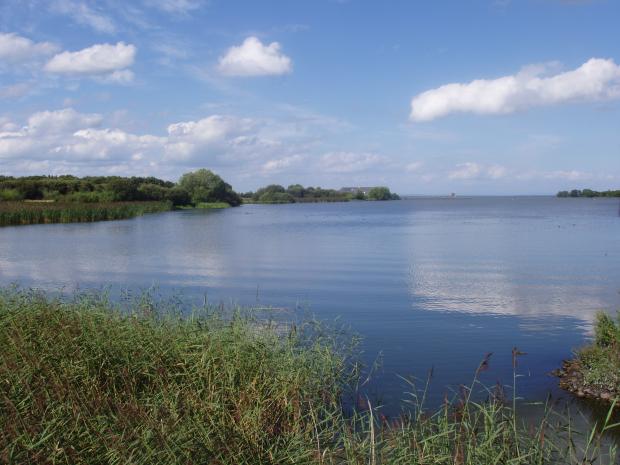
The lake pictured above is the United Kingdom’s largest. Located in Northern Ireland, Lough Neagh swarms so densely with flies every spring and summer that residents shut their windows against the living smoke. Clothes left out on a line are covered with them. So is any windshield on a vehicle traveling around the lough’s 90-mile shoreline. Until 2023.
Last year, unbelievably, no flies were to be seen. Windshields and hanging clothes were bare of them. None flew into open windows. Other species that used to eat them were gone as well — ducks, frogs, fish, eels, and predatory insects. Fly larvae were not there to keep the lake bottom clean. Little was alive in the lough except an overgrowth of algae. “Has the ecosystem of the UK’s largest lake collapsed?” asked The Guardian in a February 19, 2024 article.
Has the ecosystem of the entire Earth collapsed? we ask, for the same is happening all over, according to reports I have been receiving for a year from almost everywhere on every continent.
56 Years of Global Vandalism
On June 13, 1968, the United States completed its launch of the world’s first constellation of military satellites. Twenty-eight of them, more than twice as many satellites as were in orbit around the Earth until then, were lofted to an altitude of 18,000 miles, in the heart of the outer Van Allen radiation belt. The “Hong Kong” flu pandemic began two weeks later and lasted for almost two years.
For the next three decades, the skies slowly filled up with hundreds of satellites, mostly for military purposes. Then in the late 1990s, cell phones became popular.
On May 17, 1998, a company named Iridium completed its launch of a fleet of 66 satellites into the ionosphere, at an altitude of only 485 miles, and began testing them. They were going to provide cell phone service to the general public from anywhere on earth. Each satellite aimed 48 separate beams at the earth’s surface, thus dividing the planet into 3,168 cells. Reports of insomnia came from throughout the world………………………………………………………………
SpaceX has been launching rockets carrying dozens of satellites at a time on a weekly or biweekly basis, filling the heavens with luminous objects that interfere with astronomy, spewing chemicals that are destroying our planet’s protective ozone layer, filling the upper layers of the atmosphere with water vapor that should not be there and that is increasing the current in the global electric circuit and the violence of thunderstorms, and cluttering up space with satellites that are nothing but solar arrays and computers that are continually failing, wearing out, and having to be replaced, and which are deorbited to burn up in the lower atmosphere, filling it with metals and toxic chemicals for everyone to breathe — and altering the electromagnetic environment of the Earth that had not changed in three billion years and that life below depends on for its vitality and survival.
Last Thursday morning, from Boca Chica, Texas, SpaceX successfully launched its Starship — the largest rocket ever built, the one it wants to ferry men and women to Mars with — into space for the first time. And on Friday it launched yet another 23 Starlink satellites to bring its total polluting the ionosphere up to more than 6,000, now not only for internet communication with rooftop dishes but for direct communication with handheld cell phones. The 6,000 satellites are also now communicating directly with one another, wrapping the Earth with pulsating lasers carrying 42 million gigabytes of data every single day………
Since March 24, 2021, not only has human health deteriorated, but the biodiversity of the Earth, everywhere, has plummeted. People have not so much noticed the decline of the larger wildlife like wolves, bears, lions and tigers, which were already scarce, but they are shocked by the total disappearance of the smallest animals that were only recently so common you couldn’t open your windows without them flying in. They are shocked by the disappearance of all the frogs that used to swim in their ponds, the birds that used to nest in their trees, the worms that used to slither on the ground, the insects that used to fly through their windows and cover their clothes hanging on the line. My newsletters of March 29, June 21, September 20, October 17, and November 28, 2023 carried major stories about this from various parts of the world. My newsletters of December 5 and December 26, 2023, and January 9 and February 6, 2024 quoted from individuals all over the world who have emailed or called me, and I have a huge backlog of more such reports that you can read when I publish them in the future.
If we want to have a planet to live on, not only for our children but for ourselves, the [electromagnetic]radiation has to stop. Not only do the cell towers have to come down that are so ugly to look at, but also the cell phones that we hold in our hands and have become so dependent on, and the satellites that are squeezing all the life that remains out from under them. We are running out of time. https://cellphonetaskforce.org/where-have-all-the-insects-gone/

Canadian officials found radiation levels in these northern Ontario homes ‘well above’ the safe limit. Their response: ‘¯\_(ツ)_/¯’ .
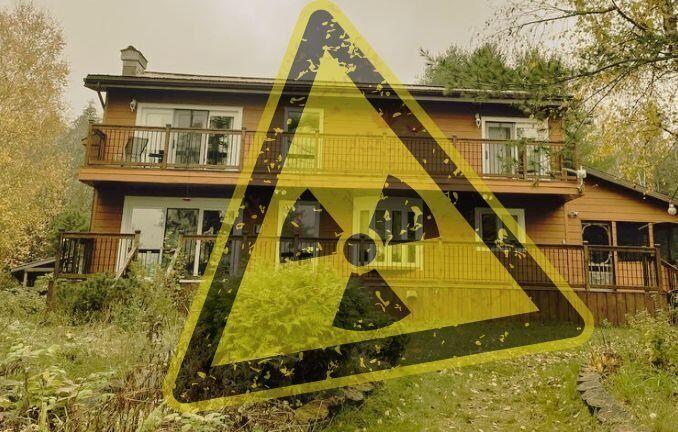
Many residents might not be aware they are living atop radioactive infill, which came from nearby, closed-down uranium mines that helped develop atomic bombs during the Cold War.Toronto Star
The number of homes in Elliot Lake affected by buried radioactive waste could top 100 — twice as many as previously thought.
By Declan Keogh and Masih Khalatbari, Investigative Journalism Bureau, Thursday, March 21, 2024 https://www.thestar.com/news/investigations/canadian-officials-found-radiation-levels-in-these-northern-ontario-homes-well-above-the-safe-limit/article_6b68ad20-e605-11ee-9a2a-f72182db65b6.html
In January 2021, a senior official with Canada’s nuclear regulator asked a colleague to do a rough, “back-of-the-envelope” calculation on the amount of potentially deadly radiation that residents in Elliot Lake were exposed to in their homes.
The government had just received a complaint that long-forgotten radioactive mine waste was buried underneath some homes in the northern Ontario city. Ron Stenson, senior project officer at the Canadian Nuclear Safety Commission (CNSC), wanted to “confirm our assumption that 468 Bq/m3 is not an urgent health concern.”
He did not get the answer he wanted. A senior official with the commission’s radiation protection division replied that those levels of radon are “well above” the public radiation dose limit set by federal authorities.
Stenson’s response came 90 minutes later: “¯\_(ツ)_/¯.”
For too long, shrugging is all the Canadian government has done, as far as local homeowner Lisa Speck is concerned.
The government official’s email is “a true visual representation of the response we’ve received to date,” she says. “It accurately summarizes the respect we’ve been shown.”
Documents show 100+ homes affected
Documents obtained by the Investigative Journalism Bureau show the number of homes affected by buried radioactive waste could top 100 — twice as many as previously thought. Many of the residents might not be aware they are living atop radioactive infill, which came from nearby, closed-down uranium mines that helped develop atomic bombs during the Cold War.
And when faced with calls for action, civil servants make jokes.
Speck, part of a group of Elliot Lake homeowners fighting to get the radioactive mining waste removed from their properties, called the email exchange “disgusting” and “dismissive.”
Despite having spent billions of dollars to clean up similar radioactive waste in Port Hope, federal regulators deny they have any obligation to do the same in Elliot Lake, saying the waste buried beneath the properties is the homeowners’ responsibility.
CNSC declined an interview request. In a statement, the agency said it could not answer detailed questions from the IJB because of ongoing litigation, adding that it’s “dedicated to upholding the highest standards of safety in our work.” Stenson did no respond to a request for comment.
Lawyers representing impacted Elliot Lake homeowners filed an application to Federal Court for a judicial review last July in the hopes of forcing the reversal of the federal government’s position.
The government filed their response in federal court on March 4, reiterating the waste is outside their jurisdiction and stating that the Nuclear Safety and Control Act, which governs the CNSC, does not compel them to act upon demands from the homeowners.
It argues federal legislation does not give the public the right “to file complaints, request inspections, or demand orders be issued as against regulated entities.”
A screen grab from a January 2021 email sent by a senior project officer at the Canadian Nuclear Safety Commission (CNSC), after being told the levels of radon recorded at homes in Elliot Lake are “well above” the safe limits. Toronto Star illustration
Lawyers representing impacted Elliot Lake homeowners filed an application to Federal Court for a judicial review last July in the hopes of forcing the reversal of the federal government’s position.
The government filed their response in federal court on March 4, reiterating the waste is outside their jurisdiction and stating that the Nuclear Safety and Control Act, which governs the CNSC, does not compel them to act upon demands from the homeowners.
It argues federal legislation does not give the public the right “to file complaints, request inspections, or demand orders be issued as against regulated entities.”
Lawyers representing impacted Elliot Lake homeowners filed an application to Federal Court for a judicial review last July in the hopes of forcing the reversal of the federal government’s position.
The government filed their response in federal court on March 4, reiterating the waste is outside their jurisdiction and stating that the Nuclear Safety and Control Act, which governs the CNSC, does not compel them to act upon demands from the homeowners.
It argues federal legislation does not give the public the right “to file complaints, request inspections, or demand orders be issued as against regulated entities.”
At the crux of the federal government’s refusal to accept responsibility is a technicality: It says that it isn’t responsible for the regulation of naturally-occurring radioactive materials, only those that have been processed in some way. It says that the uranium rock dug up during mining “was never chemically processed” before being trucked to nearby Elliot Lake for use as backfill during the construction of homes. That, the government says, means it’s technically “not considered radioactive waste.”
‘Public perception of a coverup’
The government didn’t always view the radiation blight in Elliot Lake as someone else’s problem, internal documents suggest.
By the 1980s, the government had assumed some role alongside the mining companies that built most of the houses.
The Atomic Energy Control Board (AECB) — the predecessor of the CNSC — took responsibility for “about 1,900 private properties and public areas,” according to a 1998 internal report summarizing the ongoing radiation problems in Elliot Lake.
Despite discovering “contaminated materials in structures” as well as “excessive gamma radiation due to the presence of mine waste on private properties,” there had been “minimal effort” to remove the waste, the summary report noted.
Fans and venting had been previously installed in homes to funnel the dangerous gas outside. However, it was likely these remediation efforts had failed, the report stated, possibly because residents didn’t know how to maintain the systems — or that they even existed.
“There is no evidence to suggest that owners were made aware of corrections made, or that they must assume responsibility for maintenance,” the report states.
All of this, the report concluded, created a “public perception of a coverup.”
“The only way to remove the mine waste issue from public perception is to remove the contamination.”
Supplied
As of 1998, it was estimated up to 120 properties were potentially affected by radioactive contamination and, as a result, “increased radiation exposure is likely as is renewed public concern.”
The report also called for a citywide effort to test properties, monitor and remediate excess levels of radiation and clean up the “man-introduced contamination” once and for all. It’s unclear whether those calls were heeded.
At the time, it was assumed that cleanup efforts would be shared between the federal government and the mining companies, with the companies offering financial assistance to remediate the properties they once owned.
Billions spent on remediation in other Ontario communities
In 2001, the federal government signed a deal with the municipalities of Port Hope and Clarington to collect, transport and permanently store as much as 2 million cubic metres of low-level radioactive waste that had been distributed by a government-owned radium and uranium refinery between the 1930s and the 1980s.
The $2.6 billion remediation project, which involves digging up and removing soil around affected houses, the construction of permanent storage facilities and monitoring of radiation levels, is slated to be completed by the end of this year.
Despite the parallels to Elliot Lake, the federal government has said it is not responsible for the cleanup in the northern community because the radioactive contamination came from a private company, not a crown corporation.
In June 2023, lawyers for the residents sent a host of politicians including Prime Minister Justin Trudeau and executives of CNSC more than 3,000 pages of evidence and documentation. They called on the government and mining companies to remove the uranium waste in Elliot Lake.
Upon receiving the demands, Patrick Burton, director of CNSC’s uranium mines and mills division, asked two of his colleagues in radiation protection about the claims that residents were getting excess doses of radiation. He also told them to “buy a shovel and get a [travel authorization] for Elliot Lake,” adding a winking face emoji.
“Is that going to get a response?” replied one of his colleagues with a smiling face emoji.
When reached by the IJB, Burton directed questions about the email to CSNC. The agency did not offer further comment. When questioned by lawyers representing the Elliot Lake homeowners, Burton said it was supposed to be a joke among colleagues.
“The intention was never … for the homeowners to become aware of this exchange,” Burton said during his deposition.
Homeowner Speck says the joke was “rude” but says she would welcome the government’s shovels to clean up the uranium on her property.
“The statement sort of lends to the fact that he thinks it’s a small job. If it’s such a small job that he’s just going to go to buy a shovel and fix it … then just do that,” Speck says.
“Everyone in the community would expect better from a government official than to be joking about a matter that could potentially affect … or maybe has affected, a population of people.”
With files from the Toronto Star’s Marco Chown Oved. The Investigative Journalism Bureau is a non-profit newsroom based at the University of Toronto’s Dalla Lana School of Public Health.
Japan finishes first-year ocean discharge of nuclear-tainted wastewater amid backlash
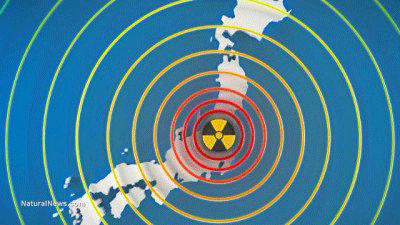
“All fishermen are against ocean dumping. The contaminated water has flowed into what we fishermen call ‘the sea of treasure’, and the process will last for at least 30 years,“
“There is no good reason to dump radioactive materials into the ocean. There is no reason to just dilute them and flush them away,“
https://thesun.my/world/japan-finishes-first-year-ocean-discharge-of-nuclear-tainted-wastewater-amid-backlash-PD12227910 18 Mar 24,
TOKYO: Despite opposition and concern from at home and abroad, Japan’s crippled Fukushima Daiichi Nuclear Power Plant has finished its initial year of discharging nuclear-contaminated wastewater into the ocean, according to the plant’s operator, said Xinhua.
As per the initial plan, approximately 31,200 tons of wastewater, containing radioactive tritium, was released into the ocean since the discharge started in August 2023, with each round of discharge carried out for about two weeks. Earlier this week, International Atomic Energy Agency Director-General Rafael Grossi emphasised continued efforts in monitoring Japan’s ocean discharge of nuclear-contaminated wastewater from the crippled plant, following his first visit to Fukushima prefecture since the discharge started.
Stressing that the discharge marks merely the initial phase of a long process, Grossi said that “much effort will be required in the lengthy process ahead,“ and reiterated the organisation’s stance on maintaining vigilance throughout the process.
While the Japanese government and TEPCO have asserted the safety and necessity of the discharge, concerns have been raised by neighbouring countries and local stakeholders regarding environmental impacts.
“All fishermen are against ocean dumping. The contaminated water has flowed into what we fishermen call ‘the sea of treasure’, and the process will last for at least 30 years,“ said Haruo Ono, a fisherman in the town of Shinchi in Fukushima.
“There is no good reason to dump radioactive materials into the ocean. There is no reason to just dilute them and flush them away,“ said the man in his 70s.
“Is it really necessary, in the first place, to dump what has been stored in tanks into the sea? How can we say it’s ‘safe’ when the discharged water clearly consists of harmful radioactive substances? I think the government and TEPCO must provide a solid answer,“ said Chiyo Oda, a resident of Fukushima’s Iwaki city.
Concerns were fuelled among the Japanese public over the recent leakage of contaminated water from pipes at the Fukushima plant. – Bernama, Xinhua
Fourth discharge of treated Fukushima water completed
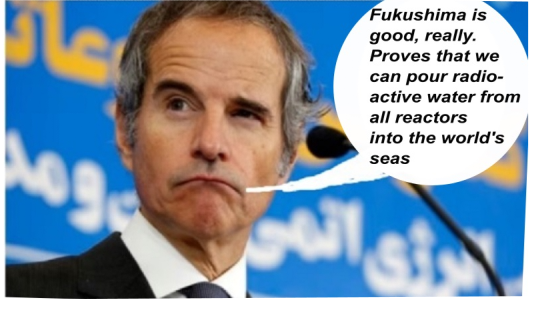
The release of the fourth batch of treated radioactive water from the
crippled Fukushima No. 1 nuclear power plant into the sea concluded Sunday,
with the next round possibly starting next month, the plant’s operator
said.
Japan Times 17th March 2024
https://www.japantimes.co.jp/news/2024/03/17/japan/fourth-fukushima-water-release-completed
Concerns and complaints continue as fourth Fukushima wastewater discharge completed

Concerns and complaints from home and abroad remain while Japan’s crippled Fukushima Daiichi Nuclear Power Plant has finished its first year of discharging nuclear-contaminated wastewater into the ocean.
The plant completed its fourth and final round of discharge for the current fiscal year, which ends in March, Tokyo Electric Power Company (TEPCO) said on Sunday.
As per the initial plan, approximately 31,200 tonnes of wastewater containing radioactive tritium has been released into the ocean since August 2023, with each discharge running for about two weeks.
Earlier this week, International Atomic Energy Agency Director-General Rafael Grossi emphasized continued efforts to monitor the discharging process.
Stressing that the discharge marks merely the initial phase of a long process, Grossi said that “much effort will be required in the lengthy process ahead,” and reiterated the organization’s stance on maintaining vigilance throughout the process.
While the Japanese government and TEPCO have asserted the safety and necessity of the process, there are still concerns from other countries and local stakeholders regarding environmental impacts.
Sophia from the U.S. complained that the release of nuclear-contaminated water into the sea made her fear for the future.
Najee Johnson, a college student from Canada, suggested the Japanese government find a different plan because it could pollute our ocean and harm our sea life.
Haruo Ono, a fisherman in the town of Shinchi in Fukushima, said “All fishermen are against ocean dumping. The contaminated water has flowed into what we fishermen call ‘the sea of treasure’, and the process will last for at least 30 years.”
“Is it really necessary, in the first place, to dump what has been stored in tanks into the sea? How can we say it’s ‘safe’ when the discharged water clearly consists of harmful radioactive substances? I think the government and TEPCO must provide a solid answer,” said Chiyo Oda, a resident of Fukushima’s Iwaki city.
The recent leakage of contaminated water from pipes at the Fukushima plant also fueled concerns among the Japanese public.
Besides, the promised fund of more than 100 billion yen (around $670 million) to compensate and support local fishermen and fishing industry remains doubtful as a court ruling last December relieved the government of responsibility to pay damages to Fukushima evacuees.
A Tokyo court ruled that only the operator of the tsunami-wrecked Fukushima nuclear power plant has to pay damages to the evacuees, relieving the government of responsibility. Plaintiffs criticized the ruling as belittling their suffering and the severity of the disaster. The court also slashed the amount by ordering the TEPCO to pay a total of 23.5 million yen to 44 of the 47 plaintiffs.
The ruling backpedaled from an earlier decision in March 2018, when the Tokyo District Court held both the government and TEPCO accountable for the disaster, which the ruling said could have been prevented if they both took better precautionary measures, ordering both to pay 59 million yen in damages.
Radioactive waste, baby bottles and Spam: the deep ocean has become a dumping ground

The ocean’s depths are not some remote alien realm, but are in fact intimately entangled with every other part of the planet. We should treat them that way
by James Bradley. Guardian 12 Mar…….
“…………………………………………………………………………………………..The ocean’s depths have also been used as the final resting place for large amounts of nuclear material.
A 2019 study found at least 18,000 radioactive objects scattered across the bottom of the Arctic Ocean, many of them dumped there by the Soviet Union. These objects include vessels such as the K-27, the 110-metre nuclear submarine powered by an experimental liquid-metal-cooled reactor, which was scuttled in 1982 with its reactor still on board (when the explosive charges that were supposed to sink the K-27 failed to fully detonate, it had to be rammed with a tug); the wreck of the K-141 Kursk, which sank in the Barents Sea in 2000 during a naval exercise, killing all 118 on board and bearing its reactor and fuel to the bottom; and the K-159 attack submarine, which sank while being towed near Murmansk in 2003 with 800kg of spent uranium fuel on board. The head of Norway’s Nuclear Safety Authority says it is only a matter of time before these objects begin to release their toxic legacy into the water; others have called the situation a “Chornobyl in slow motion on the sea floor”.
While the Soviet Union dumped more nuclear waste on the sea floor than any other country, it was certainly not alone. Between 1948 and 1982, the British government consigned almost 70,000 tonnes of nuclear waste to the ocean’s depths, and the US, Switzerland, Japan and the Netherlands are just a few of the nations that have used the ocean to dispose of radioactive material, albeit in much smaller quantities. And while international treaties now prohibit the dumping of radioactive material at sea, the British government is exploring plans to dispose of up to 750,000 cubic metres of nuclear waste, including more than 100 tonnes of plutonium, beneath the sea floor off Cumbria. British officials argue this sort of geological disposal offers a way of keeping waste stable and secure over hundreds of thousands of years, although incidents such as the 2014 leak of radioactive material at a waste disposal facility half a kilometre beneath salt beds in New Mexico suggests that like many of the assurances offered by the nuclear industry, this claim should be approached with great caution.
The dumping of nuclear waste in the ocean is only one part of a far larger story of carelessness and greed. Human waste in the form of plastics and other objects is everywhere in the deep ocean, a fact that is made brutally apparent by the Japan Agency for Marine-Earth Science and Technology’s Deep-sea Debris Database, which documents the presence of tyres, fishing nets, sports bags, mannequins, beach balls and baby’s bottles spread across the sea floor at depths of many thousands of metres. In some regions, the number of such objects exceeds 300/sq km.
This tide of garbage has even reached the deepest and most remote parts of the ocean: …………………………………………………………………………………….
Possibly more disturbing, though, is the growing accumulation of microplastics in the ocean depths………………………………………………..
Nor is plastic the only thing that drifts downwards. In 2019 Chinese scientists discovered radioactive carbon-14 from the detonation of nuclear bombs in the 1940s and 50s in the bodies of amphipods living at the bottom of the Mariana Trench, borne into the deep not by ocean circulation, but in the rain of organic matter from above. More recent studies have found radioactive caesium from the Fukushima nuclear disaster in sediment more than 7,000 metres down in the Japan Trench……………………………………………………….. more https://www.theguardian.com/environment/2024/mar/12/radioactive-waste-baby-bottles-and-spam-the-deep-ocean-has-become-a-dumping-ground
Could Fukushima’s radioactive water pose lasting threat to humans and the environment?
studies have highlighted how tritium can be absorbed into sediments and soils, raising concerns about its potential transfer to the water cycle and the food web.
research showing that fish have transported radioactive particles generated by the Fukushima incident far and wide. Like a number of other nuclear accidents before it, that makes what happened at Fukushima a global concern.”
by Alan Williams, University of Plymouth, https://phys.org/news/2024-03-fukushima-radioactive-pose-threat-humans.html
The meltdown of Japan’s Fukushima Daiichi power plant, caused by the devastating earthquake and tsunami of March 2011, represents the most severe nuclear power accident of the 21st century so far.
However, a new study highlights how the decision by the Japanese government to begin releasing the radioactive water stored within it—a decision approved by the International Atomic Energy Agency (IAEA)—has generated scientific and public debate, given its potential to cause environmental harm for decades to come.
Writing in the journal Environmental Science and Technology, researchers say the water cannot be stored indefinitely due to the ongoing risk of earthquakes and tsunamis in the region.
But they say not enough is known about the long-term impacts of tritium—the primary radionuclide present, with a half-life of 12.6 years—to ascertain if the release of more than one million tons of water can be considered safe or not.
As a result, they have called for assurances that regular monitoring will be carried out in different components of the region’s ecosystem to examine any impacts the release might be having on the environment.
They have also suggested more evidence is needed about the future effects of tritium in the presence of multiple and emerging stressors, such as hypoxia, rising ocean temperatures, and microplastics, given that environmental contamination can occur in many combinations.
The study was carried out at the University of Plymouth, where researchers have been examining the environmental impacts of radioactive material for almost three decades.
“The Japanese tsunami of 2011 was devastating for people living along this whole coastline. The presence of a nuclear power plant within the region left a lasting threat, and this study highlights some of the complex challenges that need managing and scientific questions that still need addressing.”
“Being in a region prone to earthquakes and tsunamis, there is an obvious danger in simply storing radioactive water there indefinitely. But based on our research, not enough is known about the impacts of tritium on both environmental and human health to say that releasing the water into the ocean is completely safe,” says Awadhesh Jha, professor in genetic toxicology and ecotoxicology and corresponding author on the research.
The new study includes a review of existing literature on the behavior of tritium in the environment and studies that have assessed its impact on individual species.
That includes studies that have highlighted how tritium can be absorbed into sediments and soils, raising concerns about its potential transfer to the water cycle and the food web.
There has also been research showing that tritium can cause DNA damage to certain fish species, which could impact their physical and reproductive fitness and—ultimately—the genetic diversity of a population.
However, the researchers say there is little data available on the distribution, behavior, and potential effects of tritiated water and organically-bound tritium, and therefore assessing the broad risks is almost impossible.
They also say the Fukushima situation cannot be compared with the Chornobyl accident, as some authorities have attempted to do, given the differing geographical locations of the two plants and the fact the long-term environmental impacts of Chornobyl are still being debated.
“Through our study, we have found research showing that fish have transported radioactive particles generated by the Fukushima incident far and wide. Like a number of other nuclear accidents before it, that makes what happened at Fukushima a global concern.”
“As such, we urgently need global research into the impacts of tritium—and how they might be managed—especially with the nuclear power industry set to expand significantly. If it does indeed expand, the construction of nuclear power plants, especially in coastal regions, should also take into account worst-case scenarios of flooding, earthquakes, and tsunamis as part of a fundamental goal to minimize radioactive discharges to the environment,” says Professor Jha.
Hinkley Point Responds to Environmental Concerns Over Bristol Channel Eel Populations
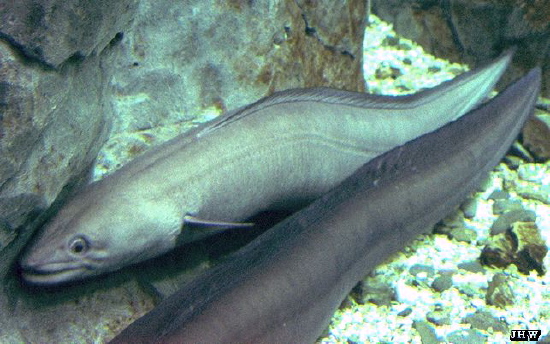
Hinkley Point addresses SEG’s concerns on eel populations in the Bristol Channel, proposing solutions for environmental conservation amidst development.
BNN, Nitish Verma, 05 Mar 2024
In a recent development, Hinkley Point has addressed concerns voiced by the Sustainable Eel Group (SEG) regarding the nuclear plant’s impact on eel populations in the Bristol Channel. The SEG, a prominent organization dedicated to the conservation of the European eel, has expressed reservations about supporting the Hinkley Point C development without significant changes to protect these migratory fish, especially the critically endangered European eel.
Environmental Alarms and Hinkley’s Rebuttals
The Bristol Channel is home to the most substantial population of migrating eels in the British Isles, with recent surveys suggesting an annual arrival of 75 million tonnes of glass eels. This has raised alarms about the potential threats posed by the Hinkley Point C development to this vital migratory route. The area’s designation as a RAMSAR reserve and Site of Special Scientific Interest underscores its global ecological importance. Chris Fayers, head of environment at Hinkley Point C, countered these concerns by highlighting extensive research conducted by the Centre for Environment, Fisheries and Aquaculture Science (Cefas), which suggests a minimal impact on fish populations, including eels. Furthermore, joint studies by the Universities of Bristol and Exeter have been cited to address risks related to noise pollution, a factor previously thought to significantly harm eel populations.
Proposed Solutions and SEG’s Stance
In response to the SEG’s concerns, Hinkley Point C has proposed the creation of a new salt marsh and the implementation of fish passes designed to be ‘eel friendly’ and benefit the overall eel population. These measures aim to mitigate the environmental impact of the nuclear plant’s operations on the local ecosystem. However, the SEG remains cautious, emphasizing the need for substantial evidence and effective implementation of these measures before lending their support to the development. The group’s focus on ensuring the survival and recovery of the European eel underscores the critical nature of this issue.
Looking Ahead: Conservation and Development Balance
The debate surrounding Hinkley Point C’s impact on eel populations in the Bristol Channel highlights the broader challenge of balancing infrastructure development with environmental conservation. As the largest and most high-profile NGO focusing on the recovery of the European eel, the SEG’s concerns carry significant weight. The outcome of this situation could set important precedents for how large-scale projects address and mitigate their environmental impacts. With both sides presenting arguments and potential solutions, the ongoing dialogue between Hinkley Point C and environmental groups will be crucial in determining the future of the Bristol Channel’s eel populations. https://bnnbreaking.com/world/uk/hinkley-point-responds-to-environmental-concerns-over-bristol-channel-eel-populations
1 This Month
To see nuclear-related stories in greater depth and intensity – go to https://nuclearinformation.wordpress.com/
12 February – Webinar The Big Push: New Nuclear Projects in Canada
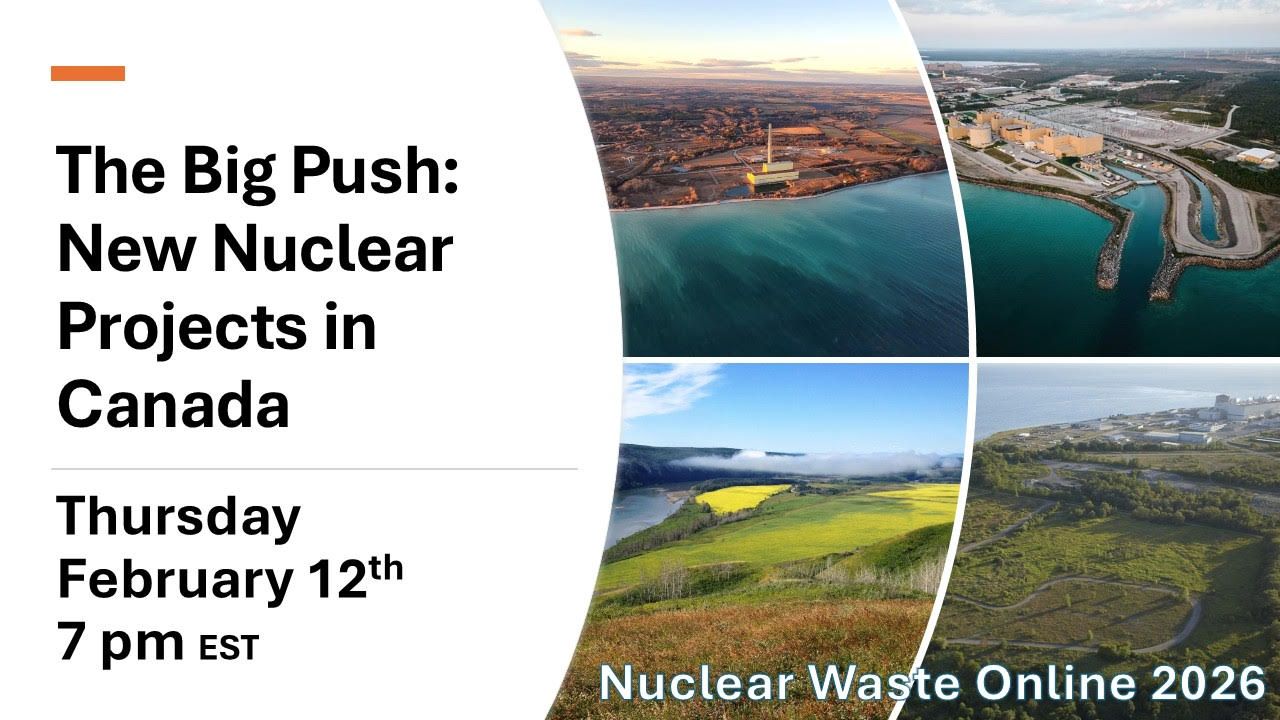
Thursday, February 12, 7 pm Eastern | 2nd of 4 sessions in the 2026 Nuclear Waste Online webinar series
Join a webinar on the push for new nuclear generation in Canada. Go to Northwatch.org to register or use the registration link https://us02web.zoom.us/webinar/register/WN_ZfWOf1GITqSRIZX8CB-A9w

-
Archives
- February 2026 (127)
- January 2026 (308)
- December 2025 (358)
- November 2025 (359)
- October 2025 (376)
- September 2025 (258)
- August 2025 (319)
- July 2025 (230)
- June 2025 (348)
- May 2025 (261)
- April 2025 (305)
- March 2025 (319)
-
Categories
- 1
- 1 NUCLEAR ISSUES
- business and costs
- climate change
- culture and arts
- ENERGY
- environment
- health
- history
- indigenous issues
- Legal
- marketing of nuclear
- media
- opposition to nuclear
- PERSONAL STORIES
- politics
- politics international
- Religion and ethics
- safety
- secrets,lies and civil liberties
- spinbuster
- technology
- Uranium
- wastes
- weapons and war
- Women
- 2 WORLD
- ACTION
- AFRICA
- Atrocities
- AUSTRALIA
- Christina's notes
- Christina's themes
- culture and arts
- Events
- Fuk 2022
- Fuk 2023
- Fukushima 2017
- Fukushima 2018
- fukushima 2019
- Fukushima 2020
- Fukushima 2021
- general
- global warming
- Humour (God we need it)
- Nuclear
- RARE EARTHS
- Reference
- resources – print
- Resources -audiovicual
- Weekly Newsletter
- World
- World Nuclear
- YouTube
-
RSS
Entries RSS
Comments RSS
 nuclear-news