‘Extreme situation’: Antarctic sea ice hits record low

Damian Carrington 16 Feb 23
https://www.theguardian.com/world/2023/feb/15/antarctic-sea-ice-hits-record-low-climate-crisis
The area of sea ice around Antarctica has hit a record low, with scientists reporting “never having seen such an extreme situation before”. The ice extent is expected to shrink even further before this year’s summer melting season ends.
The impact of the climate crisis in melting sea ice in the Arctic is clear in the records that stretch back to 1979. Antarctic sea ice varies much more from year to year, which has made it harder to see an effect from global heating.
However, “remarkable” losses of Antarctic sea ice in the last six years indicate that the record levels of heat now in the ocean and related changes in weather patterns may mean that the climate crisis is finally manifesting in the observations.
Scientists were already very concerned about Antarctic ice. Climate models suggested as far back as 2014 that the giant West Antarctic Ice Sheet (WAIS), which sits on the continent, was doomed to collapse due to the levels of global heating already seen then.
The increasing loss of sea ice exposes ice sheets and their glaciers to waves that accelerate their disintegration and melting, researchers warned. A recent study estimated that the WAIS would be tipped into gradual collapse – and four metres of sea level rise – with a global temperature rise as low as 1C, a point already passed.
“I have never seen such an extreme, ice-free situation here before,” said Prof Karsten Gohl, from the Helmholtz Centre for Polar and Marine Research in the Alfred Wegener Institute, Germany, and who first visited the region in 1994.
Gohl, on board the research vessel Polarstern in Antarctica, said: “The continental shelf, an area the size of Germany, is now completely ice-free. It is troubling to consider how quickly this change has taken place.”
Prof Christian Haas, also at the Helmholtz Centre, said: “The rapid decline in sea ice over the past six years is quite remarkable, since the ice cover hardly changed at all in the 35 years before.”
Scientists at the National Snow and Ice Data Center in the US have also said a new record low has been set. They said Antarctic sea ice extent fell to 1.91m square kilometres on 13 February, below the previous record set on 25 February 2022.
Sea ice melts away in the Antarctic summer before starting to grow again as autumn arrives. “In past years, the annual minimum has occurred between 18 February and 3 March, so further decline is expected,” the NSIDC researchers said. “Much of the Antarctic coast is ice free. Earlier studies have linked low sea ice cover with wave-induced stresses on the floating ice shelves that hem the continent, leading to break up of weaker areas.”
The German scientists said the “intense melting” could be due to unusually high air temperatures to the west and east of the Antarctic peninsula, which were about 1.5C above the long-term average. Furthermore, there have been strong westerly winds, which increase sea ice retreat. The result is “intensified melting of ice shelves, an essential aspect of future global sea-level rise”, the researchers said.
Historical records also show dramatic changes in Antarctica, they said. The Belgian research vessel Belgica was trapped in massive pack ice for more than a year in the Antarctic summer 125 years ago, in exactly the same region where the Polarstern vessel is now sailing in completely ice-free waters.
Prof Carlos Moffat, at the University of Delaware, US, and recently returned from a research cruise in the Southern Ocean, told Inside Climate News: “The extraordinary change we’ve seen this year is dramatic. Even as somebody who’s been looking at these changing systems for a few decades, I was taken aback by what I saw.”
Antarctic sea ice level now lowest on record.
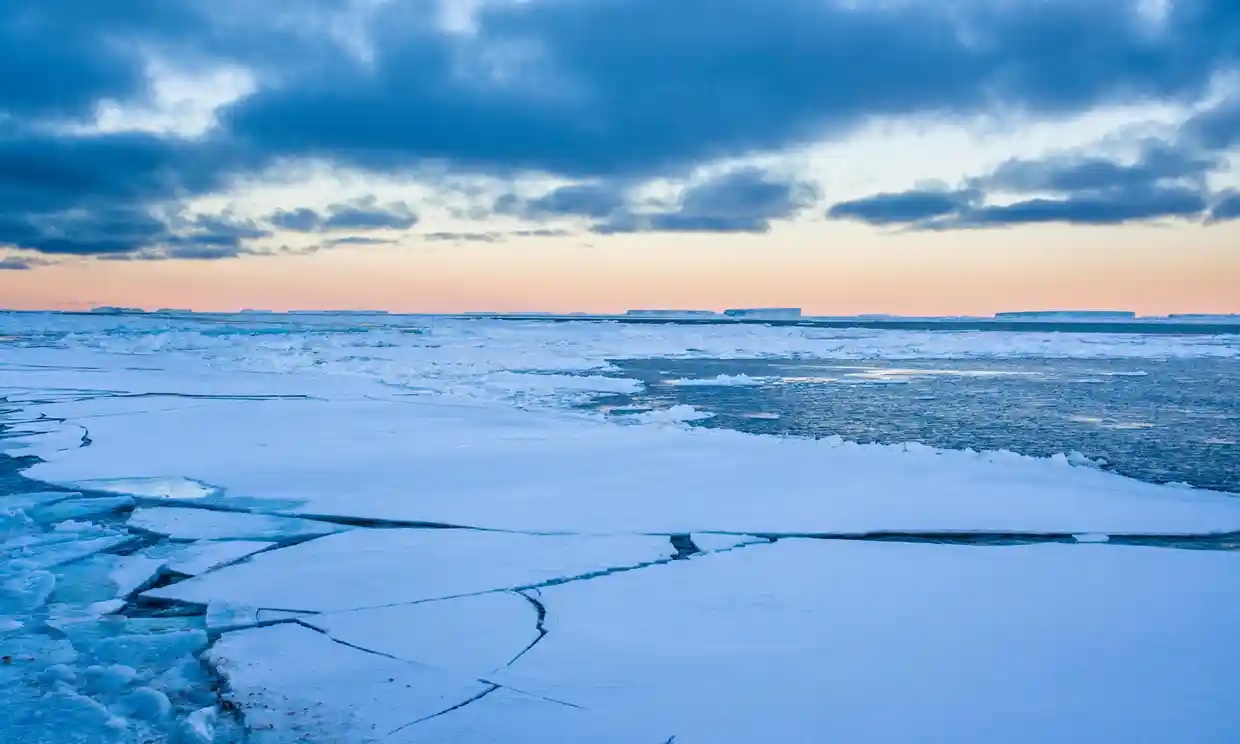
There is now less sea-ice surrounding the Antarctic continent than at any
time since we began using satellites to measure it in the late 1970s. It is
the southern hemisphere summer, when you’d expect less sea-ice, but this
year is exceptional, according to the National Snow and Ice Data Center.
Winds and warmer air and water reduced coverage to just 1.91 million square
km (737,000 sq miles) on 13 February. What is more, the melt still has some
way to go this summer.
BBC 17th Feb 2023
Japan Plans to Dump Fukushima Wastewater Into a Pacific With a Toxic Nuclear History
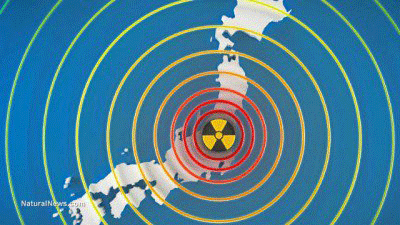
In December, the U.S.-based National Association of Marine Laboratories also announced its opposition to TEPCO’s plans, publishing a position paper that says “there is a lack of adequate and accurate scientific data supporting Japan’s assertion of safety” while “there is an abundance of data demonstrating serious concerns about releasing radioactively contaminated water.”
BY AMY GUNIA , FEBRUARY 6, 2023,
Pacific Island nations have for decades been grappling with the environmental and health consequences of Cold War-era nuclear testing in the region by the likes of the U.S. and France. Now, they worry about another kind of nuclear danger from neighbors much closer to home.
As concerns over energy security and the desire to transition away from fossil fuels pushes several Asian nations to reconsider once-scrapped nuclear power programs, there is increasing anxiety over how the waste from those facilities—depending on the methods of disposal—might impact the lives of Pacific Islanders.
Notably, in the region, Philippines President Ferdinand “Bongbong” Marcos said in his first address to Congress in mid-2022 that he was open to adding nuclear energy to the country’s energy mix, the Indonesian government said in December it plans to build a nuclear power plant by 2039, and weeks later Japan announced that it plans to ramp up the use of nuclear energy.
Nuclear plants have long been touted as a reliable source of carbon-free energy, though many plants across the world had been shuttered in past decades over worries about the safety of nuclear waste disposal. In this new era of nuclear revival, similar uncertainties abound.
In Japan, one plant that isn’t even operational has become the frontline for the fight between activists seeking safety assurances for waste disposal and operators who are running out of space in on-site tanks to store the wastewater accumulating from keeping damaged reactors cool. Currently, Japan plans to release wastewater from the Fukushima Daiichi nuclear power plant into the Pacific Ocean later this year.
“It’s just horrendous to think what it might mean,” says Henry Puna, the secretary general of the Pacific Islands Forum (PIF), a regional intergovernmental organization that has more than a dozen member countries, including, for example, the Cook Islands, Fiji, Tonga, and Vanuatu. “The people of the Pacific are people of the ocean. The ocean is very much central to our lives, to our culture, to our livelihoods. Anything that prejudices the health of the ocean is a matter of serious concern.”
When a magnitude 9.1 earthquake and tsunami hit off the coast of Japan in 2011, it caused a meltdown at the Fukushima nuclear power plant. Since then, water is being used to cool the damaged reactors and prevent further catastrophe. Now, more than 1.3 million metric tons of radionuclide-contaminated water has been collected on site, and it continues to accumulate, as rain and groundwater seep in. Tokyo Electric Power Company (TEPCO), the operator of the plant, says that the storage tanks take up too much space and hinder decommissioning the plant. Japan initially said that it would begin releasing the water into the ocean in the spring of 2023. Chief Cabinet Secretary Hirokazu Matsuno told the media in January that the release target date is now around spring or summer, which appears to be a postponement, according to the Associated Press, due to construction delays on a pipeline and the apparent need to gain greater public support.
The plan has faced widespread opposition. Japanese fishermen, international environmentalists, and other governments in the region, including China, South Korea, and Taiwan, have all expressed concern. Some of the strongest pushback has come from Pacific Island countries, including from lawmakers, former leaders, regional fisheries management groups, and other organizations. Among those voices is the PIF, which is advocating for more time to deal with questions and concerns. Earlier this year, the PIF appointed a panel of independent global nuclear experts to help inform its members in their consultations with Japan and TEPCO. The experts have stressed that more data are needed to determine the safety of the water for disposal.
“We think that there is not enough scientific evidence to prove that the release is safe, environmentally, healthwise, and also for our economy in the Pacific,” says Puna, who is also the former Prime Minister of the Cook Islands. Until more information is shared and evaluated, he asks that Japan “please defer the discharge of the water.”
……………………………. there appears to be a major disconnect between TEPCO and others, including the PIF panel of experts—who say that they’re concerned with the adequacy, accuracy, and reliability of the data backing up the decision to release the water.
Robert H. Richmond, a research professor and the director of the Kewalo Marine Laboratory at the University of Hawaii at Manoa, who is one of the panel experts, tells TIME that “the critical, foundational data upon which a sound decision could be made was either absent or, when we started getting more data,” he says, “extremely concerning.” He also casts doubt on if the IAEA is in the best position to assess the risks. “They’re an agency that has a mandate to promote the use of nuclear energy,” says Richmond, “and our mandate is to look after the people, the ocean, and the people who depend on the ocean. And our unanimous conclusion … is that this is a bad idea that is not defended properly at this point, and that there are alternatives that Japan should really be looking at.”
“One of the biggest surprises to me was the fact that the data was so sparse,” says Ferenc Dalnoki-Veress, scientist-in-residence and adjunct professor at the James Martin Center for Nonproliferation Studies at the Middlebury Institute of International Studies at Monterey, who is also on the PIF panel of experts. “There were prolonged gaps in data collection, which suggests that the matter may not have been given the level of attention and importance it deserved.” He adds that only a fraction of the tanks had been sampled, and only a handful of some 60 isotopes were typically measured in the samples—fewer than he would expect for this kind of assessment. (TEPCO says that the analysis done on a sample of tanks so far is just to assess the water’s condition in storage but that, after the purification process, further measurements will be taken on all the treated water before discharge to ensure that only that which meets sufficient standards of safety is released into the ocean).
Some still fear the safety of the treated water, and the far-reaching implications if it’s dumped into the ocean. Puna points out, for example, that the waters of the Western and Central Pacific Ocean produce much of the world’s tuna. If the tuna were to be impacted, it would cause major problems for Pacific nations, for which fisheries are a significant source of income, as well as for consumers globally.
In December, the U.S.-based National Association of Marine Laboratories also announced its opposition to TEPCO’s plans, publishing a position paper that says “there is a lack of adequate and accurate scientific data supporting Japan’s assertion of safety” while “there is an abundance of data demonstrating serious concerns about releasing radioactively contaminated water.”
……………………………………. A scarring past and a new path forward
Other nuclear plants across the globe have released treated wastewater containing tritium. Rafael Mariano Grossi, the IAEA’s director general, said in 2021 that Japan’s plan is “in line with practice globally, even though the large amount of water at the Fukushima plant makes it a unique and complex case.”
But Pacific Island nations have particular reason to be anxious. There is a noxious legacy of nuclear testing in the region, and other countries have historically treated the Pacific as a dumping ground for their waste. The U.S. conducted 67 nuclear tests in the Marshall Islands between 1946 and 1957—and disposed of atomic waste in Runit Dome, where it’s still stored. That testing led not only to forced relocations, but also to increased rates of cancers. Today there is concern that the dome is leaking and that rising sea levels might impact its structural integrity. France also conducted 193 nuclear tests from 1966 to 1996 at Moruroa and Fangataufa atolls in French Polynesia.
…………………….. Rather than let dumping wastewater into the ocean become the norm, at this juncture for nuclear energy, some say it’s an opportunity to explore different ways of doing things. The panel of PIF experts has proposed several alternative solutions, including treating the water and storing it in more secure tanks to allow the tritium time to decay, or using the treated water to make concrete for use in projects that won’t have high contact with humans.
“This is not the first nuclear disaster and by no means is it going to be the last,” says Richmond. “This is an opportunity for Japan,” he says, “to do the right thing and to invest time, effort, and money into determining and coming up with new ways of handling radioactive waste and setting a new trajectory.”
Campaigners claim permit change at Hinkley Point would kill billions of fish
West Somerset Free Press, 6th February 2023
ANTI-nuclear campaigners have estimated 11 billion fish off the West Somerset coastline could be killed during the operating life of the new Hinkley Point C nuclear power station.
The Stop Hinkley group said the slaughter would arise if EDF was allowed to ‘wriggle out’ of planning conditions which required acoustic fish deterrents (AFDs) to be fitted to water intake heads.
EDF has to date refused to fit the AFDs and is consulting the Environment Agency (EA) with a view to trying to have the condition dropped.
Stop Hinkley spokeswoman Katy Attwater said the 11 billion figure was calculated over the 60-year lifespan of Hinkley C.
She said affected common fish species would include river lamprey, twaite shad, sprat, herring and the common goby, while rarer species which would be killed included salmon, cod, anchovy, John dory, crucian carp, silver bream, and sea lamprey.
Ms Attwater said the fish migrated from the Bristol Channel to nine main rivers, the Ely, Taff, Rhymney, Ebbw, Usk, Wye, Severn, Avon, and Parrett.
She said particularly hard hit would be the elver migration from the Atlantic, with eels being sucked into the Hinkley intakes and only comparatively few making it to the Somerset Levels and other rivers, which would be their homes for the next 20 years before their return journey past the intake heads to travel back to their Sargasso Sea breeding grounds.
Ms Attwater said EDF’s request three years ago to not have to install the AFDs was rejected by the Environment Agency, a public inquiry, and DEFRA Secretary George Eustice.
“Yet, EDF are still trying to wriggle out of it and waste all the time, money, and effort spent by the EA, the Severn Estuary interest groups, and DEFRA to defend one of the most important breeding grounds for British fish,” she said.
The estuary is a site of Special Scientific Interest (SSSI) and a Special Area of Conservation(SAC) and has been given an internationally important Ramsar site designation………………………………………….
The Environment Agency has launched a five-week consultation on the proposed change to the Water Discharge Activity permit. https://www.wsfp.co.uk/campaigners-claim-permit-change-at-hinkley-point-would-kill-billions-of-fish-592793
Japan’s Plan To Discharge Water From Fukushima Nuclear Plant Faces Pacific Opposition
By BenarNews, By Stephen Wright
Officials from Pacific island nations will meet Japan’s prime minister in March in an effort to halt the planned release of water from the tsunami-damaged Fukushima Daiichi nuclear plant into the Pacific Ocean, a regional leader said.
Plans to dispose of Fukushima water over four decades are a source of tension between Japan and Pacific island nations and a possible complication for the efforts of the United States and its allies to show a renewed commitment to the Pacific region as China’s influence grows.
The planned discharges “are a very serious issue that our leaders have accepted must be stopped at all costs,” Henry Puna, secretary-general of the 18-nation Pacific Islands Forum, said Thursday at a press conference in the Solomon Islands capital Honiara.
The Japanese government’s timetable for disposal of Fukushima water indicates that releases could begin as soon as April this year – part of an effort to decommission the stricken power station over several decades. Water contaminated by the nuclear reactors damaged in a 2011 tsunami is stored in dozens of large tanks at the coastal Fukushima plant.
Japan’s method involves putting the contaminated water through a purification process known as the Advanced Liquid Processing System, which it says will reduce all radioactive elements except tritium to below regulatory levels. The treated water would then be diluted by more than 100 times to reduce the level of tritium – radioactive hydrogen used to create glow-in-the-dark lighting and signs……………………………
Data doubts
Five scientists working with the Pacific Islands Forum last week criticized the quality of data they had received from Tokyo Electric on the treated water in the tanks and expressed doubts about how well the purification process works.
Over more than four years, only a quarter of tanks had been tested for radiation, and testing rarely covered more than nine types of radiation out of 64 types that should be tested for, said the five scientists, who include Woods Hole Oceanographic Institution’s senior scientist Ken Buesseler.
“The accident is not over; this is not normal operations for a reactor. Therefore, extraordinary efforts should be made to prove operations are safe and will not cause harm to the environment,” the scientists’ presentation said.
The Pacific Islands Forum has described the scientists as independent nuclear experts. The forum’s secretariat didn’t respond to a question about whether the scientists are compensated for their work with the forum.
Nigel Marks, a materials scientist at Australia’s Curtin University and former nuclear reactor engineer, who is not advising the forum, said he is sympathetic to concerns that Tokyo Electric’s data could be more complete.
“But at the same time some recognition for Japan’s unique situation must be acknowledged,” he said. “The authorities have done their very best that technology allows. Eventually they reach a point where there is too much water to store.”
Puna said the Pacific islands delegation would meet with Japanese Prime Minister Fumio Kishida around March 7. They want a delay in water releases, at the very least, while more research is carried out, he said.
“There are serious gaps in the scientific evidence on the safety or otherwise of the proposed release,” Puna said. “I am pleased that the Japanese prime minister has finally agreed to meet with a high-level delegation from our region.”
Decades of Fukushima water discharges, Puna said, could “damage our livelihoods, our fisheries livelihoods, our livelihood as people who are dependent very much and connected to the ocean in our culture and identity.”
Mihai Sora, a Pacific analyst at Australia’s Lowy Institute, said it’s hard to imagine a more alarming proposition for Pacific island nations given the “toxic legacy” of nuclear weapons testing and waste dumping in the Pacific.
The timing, amidst regional geopolitical competition that has traditional powers falling over themselves to demonstrate who’s a better partner to the Pacific, could scarcely be worse,” Sora said.
The United States, United Kingdom and France carried out more than 300 nuclear detonations in the Pacific from 1946 to 1966, according to the International Disarmament Institute at Pace University in New York, which exposed thousands of military personnel and civilians to radiation and made some atolls uninhabitable.
“Decades of hard-won regional goodwill towards Japanese Pacific engagement are at risk with this single policy initiative,” Sora said……………….
Japan’s embassy in Suva, Fiji didn’t respond to a request for comment. https://www.eurasiareview.com/28012023-japans-plan-to-discharge-water-from-fukushima-nuclear-plant-faces-pacific-opposition/
Don’t dump on us
Japan has also benefited from the (inevitable) support of the (nuclear power-promoting) International Atomic Energy Agency, an organization that never met a nuclear danger it couldn’t downplay. The agency has described the proposed discharges as “far below the Japanese regulatory limits,” in a statement last April.
Pacific Islanders, marine scientists, urge Japan not to dump Fukushima radioactive water into ocean
By Linda Pentz Gunter, Beyond Nuclear International, 24 Jan 23,
The nuclear power industry has a long history of disproportionately impacting people of color, Indigenous communities and those living in the Global South. As Japan prepares to dump more than 1 million tonnes of radioactive water from its stricken Fukushima-Daiichi nuclear power plant site into the Pacific Ocean some time this year, history is about to repeat itself.
To remind us of that — and to warn against this reckless and entirely unnecessary action (Japan could and should expand the cask storage pad on site and keep storing the radioactive water there) — the leader of the Pacific Islands Forum (PIF) has spoken out.
In a recent column in the UK daily newspaper, The Guardian, Henry Puna wrote that “continuing with ocean discharge plans at this time is simply inconceivable”, given how directly it once again discriminates against — and will likely seriously harm the health of — the peoples of the Pacific. Puna took care to remind readers “that the majority of our Pacific peoples are coastal peoples, and that the ocean continues to be an integral part of their subsistence living.”
Going forward with the dump without further study and serious consideration of viable alternatives, would, Puna said, mean that “the region will once again be headed towards a major nuclear contamination disaster at the hands of others.” Victims of years of atomic testing, Pacific Islanders are rightly not ready to be dumped on yet again.
Tepco and the lapdog Japanese government announced last May that they would release around 1.3 million tonnes of radioactive waste water from the Fukushima site next spring. Recently, authorities suggested the dump could be delayed until the summer but seem undeterred by the loud chorus of opposition from multiple quarters.
The plant produces 100 cubic metres of contaminated water daily, a combination of groundwater, seawater and water used to keep the reactors cool. The water is theoretically filtered to remove most harmful isotopes, other than tritium, which is radioactive hydrogen and cannot be separated from water. It is then stored in casks on site where authorities claim they are running out of space. However, independent watchdogs are not convinced that the filter system has successfully removed other dangerous radioactive isotopes from the waste water.
Most recently, the 100-member American group, the National Association of Marine Laboratories (NAML), expressed its fervent opposition in a strongly worded position paper released last month. Their opposition, they wrote, “is based on the fact that there is a lack of adequate and accurate scientific data supporting Japan’s assertion of safety. Furthermore, there is an abundance of data demonstrating serious concerns about releasing radioactively contaminated water.”
The report went on: “The proposed release of this contaminated water is a transboundary and transgenerational issue of concern for the health of marine ecosystems and those whose lives and livelihoods depend on them. We are concerned about the absence of critical data on the radionuclide content of each tank, the Advanced Liquid Processing System (ALPS), which is used to remove radionuclides, and the assumption that upon the release of the contaminated wastewater, ‘dilution is the solution to pollution.’”
The scientists accused Japan of ignoring the inevitable processes of bioaccumulation and bioconcentration, which contradict the dilution contention. The Association also called out what it saw as shoddy or incorrect science conducted by Tepco and the Japanese government, including “flaws in sampling protocols, statistical design, sample analyses, and assumptions, which in turn lead to flaws in the conclusion of safety and prevent a more thorough evaluation of better alternative approaches to disposal.”
Japan has consistently rejected on-going onsite storage — presumably due to the expense, given the land space is there and more casks could be provided. In the view of some, the eagerness to dump the water— largely contaminated with tritium (a form of radioactive hydrogen that cannot be separated from water) and likely other undeclared radionuclides — is a public relations exercise to make the problem “go away” and restore normal optics to the site. The site cannot also be fully decommissioned so long as the tanks are there.
Japan has also benefited from the (inevitable) support of the (nuclear power-promoting) International Atomic Energy Agency, an organization that never met a nuclear danger it couldn’t downplay. The agency has described the proposed discharges as “far below the Japanese regulatory limits,” in a statement last April.
After sending in a task force and several earlier reports, the IAEA released a new report in December in which it said “the IAEA will conduct its own independent checks of the radiological contents of the water stored in the tanks and how it will analyse environmental samples (for example seawater and fish) from the surrounding environment.” However, the IAEA has not expressed opposition to the dumping of the radioactive water even now and instead indicates that its safety reviews will continue “before, during, and after the discharges of ALPS treated water.”
Japan has faced down opposition from fishermen and environmentalists, particularly from those in the Marshall Islands who have suffered decades of horrific health issues, especially birth defects, after enduring 67 US atomic tests there. A Pacific region collective advocacy group, Youngsolwara Pacific, expressed dismay that the Japanese, of all people, would not empathize with them and condemn the Fukushima water dump………………………….. https://beyondnuclearinternational.org/2023/01/24/dont-dump-on-us/—
In the Pacific, Outcry Over Japan’s Plan to Release FukushimaWastewater.
The proposal has angered many of Japan’s neighbors,
particularly those with the most direct experience of unexpected exposure
to dangerous levels of radiation. Tanks are storing radioactive water at the
Fukushima Daiichi nuclear power plant in Japan.
The government plans to
release the water, treated, but still slightly radioactive, into the
Pacific starting in spring 2023. Every day at the Fukushima Daiichi nuclear
plant in Japan, officials flush over a hundred tons of water through its
corroded reactors to keep them cool after the calamitous meltdown of 2011.
Then the highly radioactive water is pumped into hundreds of white and blue
storage tanks that form a mazelike array around the plant. For the last
decade, that’s where the water has stayed.
But with more than 1.3 million
tons in the tanks, Japan is running out of room. So next year in spring, it
plans to begin releasing the water into the Pacific after treatment for
most radioactive particles, as has been done elsewhere.
New York Times 30th Dec 2022
Greenland’s glaciers are melting 100 times faster than estimated
Greenland’s glaciers are melting 100 times faster than estimated according
to a new model that takes into account the unique interaction between ice
and water at the island’s fjords.
Live Science 19th Dec 2022
Pilgrim power plant owner Holtec still considering dumping nuclear waste into Cape Cod Bay
Holtec International has 1.1 million gallons of radioactive wastewater to get rid of.
Boston.com By Susannah Sudborough, September 28, 2022 ,
The company working to decommission the Pilgrim Nuclear Power Plant in Plymouth is still considering dumping radioactive waste into Cape Cod Bay despite pushback from activists, lawmakers, and the EPA.
Holtec International has 1.1 million gallons of leftover wastewater from the plant, which closed in 2019, that it needs to get rid of.
NBC 10 Boston reported Tuesday that a representative from Holtec gave an update on the company’s plans at a town hall meeting Monday evening.
“When you do liquid discharges, it is diluted with seawater to non-detectable levels pretty quickly once it’s released, and doing it in small batches is actually the safest manner,” Holtec spokesman Patrick O’Brien told the news station.
But activists from Save Our Bay, a coalition of conservation groups, local leaders, and citizens who oppose the proposed dumping, say Holtec wants to dump the nuclear waste in Cape Cod Bay simply because it’s cheaper.
While O’Brien denied to NBC 10 Boston that dumping is the cheaper option, the group, which protested in Plymouth before the meeting Monday, says the waste will make the bay’s and local waters unsafe.
“The contaminated water will inevitably flow into Plymouth, Duxbury, and Kingston Bays. The bays are semi-enclosed, and circulation currents tend to keep the water in them. It [does] not quickly flush out and disperse in the ocean, but is likely to end up in the sediments at the bottoms of the bays or beaches,” the group wrote on its website.
Additionally, Save Our Bay says, the nuclear waste could contaminate the fish, oysters, clams, and mussels that support the local aquaculture industry, making a major local product dangerous.
The loss of the local fishing and potentially tourism, due to contaminated waters would devastate the local economy, the group says.
Save Our Bays is not alone in opposing the proposed dumping. In January 2022, Sen. Elizabeth Warren, Sen. Ed Markey, Rep. Bill Keating, and Rep. Seth Moulton sent a letter to Holtec stating their opposition.
Additionally, in July, the EPA wrote to the company saying it doesn’t think the company is allowed to dump the waste according to its permit.
According to The Boston Globe, Nuclear Regulatory Commission rules say Holtec can dump the water as long as its radioactivity is not above specified limits……………………….
A decision could come early next year, NBC 10 Boston reported. https://www.boston.com/news/local-news/2022/09/28/pilgrim-power-plant-owner-considering-dumping-nuclear-waste-into-cape-cod-bay-holtec-international-plymouth/—
Save the fish: Nuclear Free Local Authorities call for acoustic deterrent at Sizewell C
https://www.nuclearpolicy.info/news/save-the-fish-nuclear-free-local-authorities-call-for-acoustic-deterrent-at-sizewell-c/ 28 Sept 22, The Nuclear Free Local Authorities have written to the Environment Agency calling for the developers of a new nuclear power plant at Sizewell C to be required to install an acoustic fish deterrent to save local fish stocks from destruction should the plant become operational.
The Environment Secretary George Eustace has recently decided that EDF Energy should be required to install a similar device at Hinkley Point C, a new nuclear plant currently being built on the Somerset coast, and as Sizewell C would be built to the same design the NFLA can see no reason why the same condition should not be applied to the Suffolk plant.
Councillor David Blackburn, Chair of the NFLA Steering Committee, has just written to the Environment Agency responding to a consultation over the permits that will be issued to EDF by the Environment Agency now that a Development Consent Order has been granted by a government minister.
Commenting he said: “We are still a very long way from Sizewell C becoming operational and it is far from a done deal. Most of the finance is not in place, there remains doubts about the safety and reliability of the proposed EDR reactor, EDF appears to be having cold feet given its financial position and poor operational performance at home, and local activists are looking to challenge the decision to go-ahead in the courts.
“I hope that the decision to grant approval can be successfully challenged in the courts or that EDF’s many troubles elsewhere may still kibosh the plan, but if somehow, despite the odds, this insane plan goes ahead it is important that we ensure that high standards are encapsulated in the conditions attached to the operation of Sizewell C to protect the natural environment and the people who live in adjoining communities – at least as far as is possible when your neighbour is a huge nuclear power plant.”
Although the NFLA submission to Environment Agency covers many points but two particular concerns are plans for long-term salination and the welfare of marine life.
Councillor Blackburn further explained: “We are grateful to Sizewell C for their advice on our response to this consultation; we completely share their concerns about the adverse impact of this plant on the lives of local people and the local environment. Our two key points in our response are that should EDF Energy look to desalination as a long-term solution to the lack of potable water that an extensive public consultation should take place prior to a decision on approval and that an acoustic fish deterrent should be installed at Sizewell C.
“The Environment Secretary has creditably recently upheld his inspector’s decision to require EDF Energy to install an Acoustic Fish Deterrent at Hinkley Point C. The EPR reactors proposed for Sizewell C will be the same as those proposed for Hinkley Point C. Both sites will be heavily reliant upon sucking in vast amounts of seawater to cool the plant, the impact on local sea life is likely to be similarly destructive. Accordingly, the NFLA believes that an acoustic fish deterrent, which projects sound waves to deter fish entering the plant, should be installed at Sizewell C as a condition of any permit issued by the Environment Agency giving the go ahead.”
Continuing campaign to stop the dumping of Hinkley nuclear power station mud off Cardiff coast
Campaigners attempting to stop mud from the construction of Hinkley Point
Nuclear Power Station, Somerset, being dumped into Welsh waters, have
announced they are working with leading environmental lawyers Leigh Day to
block the proposals. In February EDF Energy applied to National Resources
Wales for a licence to dump 800,0000 tonnes of mud dredged as part of
building work for the new plant that is being built on the site of the
disused Hinkley Point A facility.
Two years ago, EDF were given permission
to dump 300,000 tonnes of mud from the site off the Cardiff coast, despite
protests and following a Senedd debate. A petition against the latest
proposals received over 10,000 signatures and has triggered a debate in the
Senedd tomorrow. Earlier this month EDF Energy confirmed it will carry out
an Environmental Impact Assessment as part of its licence application. This
agreement reverses NRW and Welsh Government’s previous position that an
EIA was not needed for the dumping they permitted in 2018 just 2.1 miles
off the South Wales coast and 2.5 miles from Cardiff. Leigh Day has now
written to Natural Resources Wales (NRW) requesting full disclosure of
documents on the Environmental Impact Assessment (EIA)-screening
application from EDF and the agreement with NRW that “environmental
impact assessment is required”.
EDF are also facing a public inquiry over
a controversial fish management system that is being installed at the site
of the new facility. The Environment Agency granted a licence to EDF in
2013 that permitted sea water to be used for the nuclear power station’s
cooling system but required the deployment of a fish deterrent system on
the site to protect marine life in the estuary. Initially the operator
proposed the use of an acoustic deterrent system to reduce the number of
fish being killed by the cooling system but in 2017 abandoned the plans
without suggesting any alternative.
Currently the plant’s proposed Fish
Recovery and Return System will consist of a 5mm mesh barrier set up in the
water intake tunnel to stop large fish from being sucked in while another
channel will divert fish, dead or alive, back out to sea. Last year the
Sunday Times reported that marine and conservation groups estimated that
this system will kill 250,000 fish a day and called for it to be altered or
scrapped. EDF said the FRR will kills an estimated 650,00 fish a year.
Source: Nation Cymru 20th Oct 2020
https://nation.cymru/news/senedd-roundup-leading-environmental-lawyers-join-battle-to-block-mud-dump/
At U.N., Micronesia denounces Japan plan to release Fukushima water into Pacific
UNITED NATIONS, Sept 22 (Reuters) – The president of the Pacific island state of Micronesia denounced at the United Nations on Thursday Japan’s decision to discharge what he called nuclear-contaminated water from the Fukushima Daiichi Nuclear Power Station into the Pacific Ocean………………… (subscribers only) more https://www.reuters.com/world/asia-pacific/un-micronesia-denounces-japan-plan-release-fukushima-water-into-pacific-2022-09-22/
s
Permit problems for Sizewell C nuclear project? Cooling system could kill millions of fish.
Permit problems for Sizewell C predicted after report confirms cooling
mechanisms can kill millions of fish. The Sizewell C nuclear reactor may
face obstacles in receiving an environmental permit after a report revealed
that the cooling mechanism at a similar development could kill millions of
fish.
ENDS 12th Sept 2022
As Japan builds nuclear dumping facilities, Pacific groups say ‘stop’
https://www.reuters.com/world/iran-seeks-stronger-us-guarantees-revival-2015-nuclear-deal-2022-08-31/ Pacific civil society groups are calling on Japan to halt its plans to dump radioactive nuclear wastewater into the Pacific Ocean.
Earlier this month the Japanese government started building facilities needed for the discharge of treated, but still radioactive, wastewater from the defunct Fukushima nuclear power plant.
In a joint statement, civil society groups, non-governmental organisations and activists described the Fumio Kishida Government’s plans as a fundamental breach of Pacific peoples’ right to a clean, healthy and sustainable environment.
Joey Tau from the pan-Pacific movement Youngsolwara Pacific said this breaches Pacific peoples’ rights to live in a clean environment.
Tau told Pacific Waves the Pacific Ocean is already endangered and Japan’s plan will have devastating impacts.
“We have a nuclear testing legacy in the Pacific. That continues to impact our people, our islands and our way of life, and it impacts the health of our people.
“Having this plan by Japan poses greater risks to the ocean which is already in a declining state.
“The health of our ocean has declined due to human endured stresses and having this could aggravate the current state of our region.
“And also, there are possible threats on the lives of our people as we clearly understand in this part of the world, the ocean is dear to us, it sustains us,” Tau said.
Tau said both the opposition in Vanuatu and the president of the Federated States of Micronesia have expressed serious concerns at Japan’s plans, and the Pacific Islands Secretariat this year has appointed an international expert panel to advise the Forum Secretary-General and national leaders.
The Northern Marianas’ House of Representatives has also condemned Japan’s plan to dump the nuclear waste.
Tau said the plans should not proceed without the Pacific people being able to voice their concerns and being better advised.
Pacific Alliance of Municipal Councils starts Petition against dumping nuclear wastewater in Pacific

https://www.mvariety.com/news/petition-against-dumping-nuclear-wastewater-in-pacific/article_5ad4f2f2-2103-11ed-ac27-6ffcaa93ec58.html Aug 22, 2022 , The Pacific Alliance of Municipal Councils or PAMC has started a petition on change.org (https://chng.it/JLT2btJQB6) to try and stop Japan from dumping its Fukushima nuclear wastewater into the Pacific Ocean.
PAMC President and Secretary of the Rota Municipal Council, Councilman Jim Atalig, expressed his strong opposition saying, “If it’s not good for their land, it is definitely not good for our ocean where most of us get our food on a daily basis!”
Chairman Joseph E. Santos, PAMC member and chairman of the Tinian Municipal Council, says, “It is an outrage for anyone to think that it’s okay to dump their toxic wastes in our ocean when we rely on it for food, health activities, and economic sustainability.”
The other members of PAMC are Saipan and Northern Islands Municipal Council member Ana Demapan-Castro, Chairwoman, Antonia Tudela, member Daniel Aquino; Rota Municipal Council Chairman Jonovan Lizama, Vice Chairman William Taitano; Tinian Municipal Council Vice Chairwoman Thomasa P. Mendiola, and Secretary Juanita M. Mendiola, who is also the vice president of PAMC.
PAMC is urging everyone to please circulate the petition through their Facebook page so we can prevail in preventing Japan and any other countries from using our ocean as their toxic waste dumping ground!
“Nothing good will come out of this, just as the toll of human suffering as a result of all nuclear energy fallouts were never worth their well-intended, but disastrously misguided, objectives!”
1 This Month
To see nuclear-related stories in greater depth and intensity – go to https://nuclearinformation.wordpress.com/
12 February – Webinar The Big Push: New Nuclear Projects in Canada
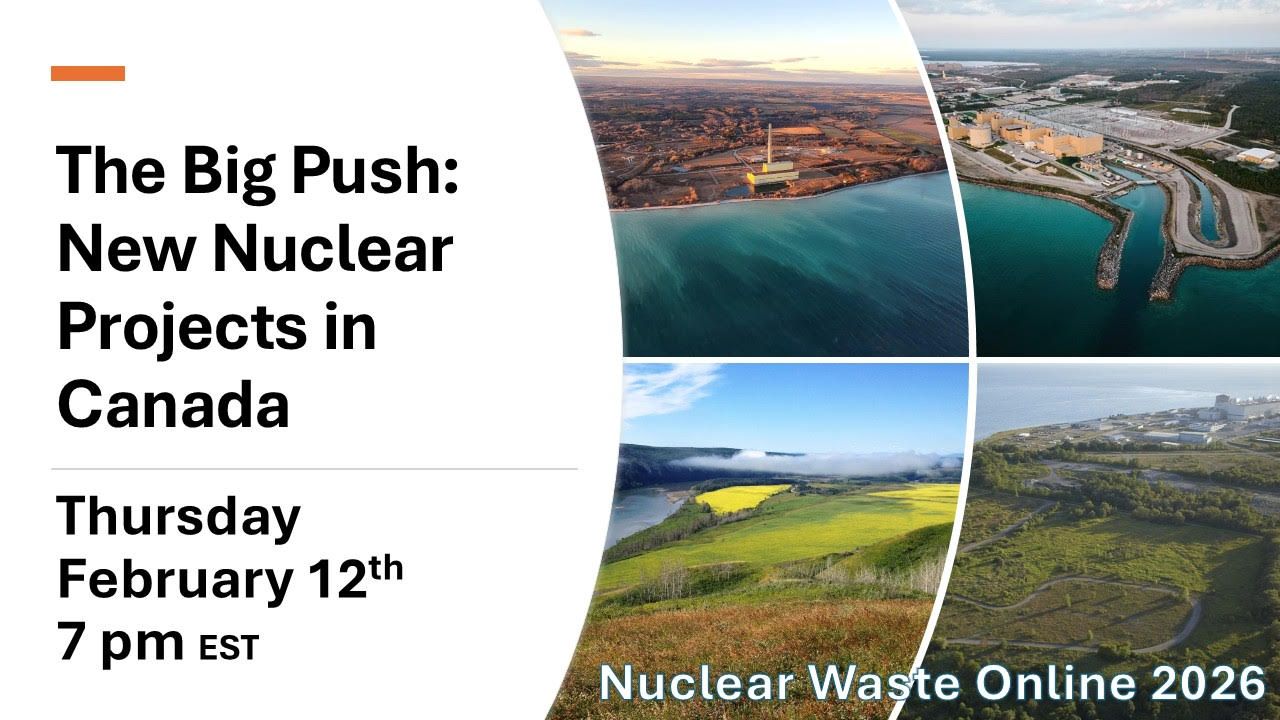
Thursday, February 12, 7 pm Eastern | 2nd of 4 sessions in the 2026 Nuclear Waste Online webinar series
Join a webinar on the push for new nuclear generation in Canada. Go to Northwatch.org to register or use the registration link https://us02web.zoom.us/webinar/register/WN_ZfWOf1GITqSRIZX8CB-A9w

-
Archives
- February 2026 (105)
- January 2026 (308)
- December 2025 (358)
- November 2025 (359)
- October 2025 (376)
- September 2025 (258)
- August 2025 (319)
- July 2025 (230)
- June 2025 (348)
- May 2025 (261)
- April 2025 (305)
- March 2025 (319)
-
Categories
- 1
- 1 NUCLEAR ISSUES
- business and costs
- climate change
- culture and arts
- ENERGY
- environment
- health
- history
- indigenous issues
- Legal
- marketing of nuclear
- media
- opposition to nuclear
- PERSONAL STORIES
- politics
- politics international
- Religion and ethics
- safety
- secrets,lies and civil liberties
- spinbuster
- technology
- Uranium
- wastes
- weapons and war
- Women
- 2 WORLD
- ACTION
- AFRICA
- Atrocities
- AUSTRALIA
- Christina's notes
- Christina's themes
- culture and arts
- Events
- Fuk 2022
- Fuk 2023
- Fukushima 2017
- Fukushima 2018
- fukushima 2019
- Fukushima 2020
- Fukushima 2021
- general
- global warming
- Humour (God we need it)
- Nuclear
- RARE EARTHS
- Reference
- resources – print
- Resources -audiovicual
- Weekly Newsletter
- World
- World Nuclear
- YouTube
-
RSS
Entries RSS
Comments RSS
 nuclear-news