Public health expert says Fukushima waste water release a retrograde step
ABCNewsAustralia 30 May 23 Operators of the Fukushima Daiichi Nuclear Power Plant, which was destroyed by a massive tsunami followed by nuclear meltdowns in March 2011, are set to release treated wastewater into the ocean in coming months.
Public health expert Tilman Ruff says the danger with dumping the contaminated water is that it could settle on the sea floor or concentrate up the food chain.
Fukushima fishermen speak out against nuclear-contaminated wastewater dumping plan
Global Times, Xu Keyue and Xing Xiaojing in Iwaki May 17, 2023
Located at the confluence of cold and warm currents, the coastal area of Fukushima Prefecture, Japan, has a rich variety of sea life and a long history of local fishing.
In the 12 years since the accident at the Fukushima Daiichi Nuclear Power Plant, the fishing industry in the area has started to recover thanks to the efforts of local fishermen and other groups.
However, the Japanese government and the Tokyo Electric Power Company (TEPCO) have gone back on their promises and arbitrarily decided to release nuclear-contaminated wastewater into the sea, in a big blow to the Fukushima fishing industry and the prefecture’s revitalization.
As the scheduled plan to dump the nuclear-contaminated wastewater from Daiichi plant approaches, Global Times reporters went to Fukushima. In this second installment of this field investigation, the Global Times reveals the helpless fishermen who are speaking out.
Silenced Fukushima fishermen
Fishermen in Fukushima were banned from fishing after the March 11 earthquake and tsunami in 2011, which caused leaks at the Fukushima Daiichi Nuclear Power Plant. In 2015, the Japanese government, TEPCO, the Fukushima Prefectural Federation of Fisheries Cooperative Associations, and the National Federation of Fisheries Cooperative Associations of Japan signed an agreement, stating nothing would be done “about the nuclear-contaminated water from Fukushima without the understanding and consent of the relevant people.” However, in April 2021, the Japanese government blatantly broke its promise and announced that it had decided to dump the nuclear-contaminated wastewater from the Daiichi plant into the sea in two years, which has sparked strong dissatisfaction from fishery associations and the wider public.
As the most direct stakeholders, the voices of Fukushima fishermen are indispensable in the opposition to the disposal of nuclear-contaminated wastewater. However, when contacting them before the trip to Fukushima, Global Times reporters were surprised to find that the local fishermen were not allowed to speak.
Global Times reporters contacted industry groups such as the Fukushima Prefectural Federation of Fisheries Cooperative Associations and Fukushima Prefecture’s Soma Futaba Fisheries Cooperative Association for help in reaching fishermen in their areas, but were told that “individual fishermen are not allowed to give interviews.” Toshimitsu Konno, president of the Soma Futaba Fisheries Cooperative Association, told the Global Times that fishermen have different views and need to unify their opinions to form a single position on behalf of the association before negotiating with the Japanese government and TEPCO.
The voices of fishermen are at the heart of a series of field investigations into the issue of nuclear-contaminated wastewater at Fukushima. Global Times reporters tried other ways to contact the fishermen for interviews, but were either rejected or ignored.
It is understood that Japan’s trade associations are highly hierarchical and an extremely closed society. If members are excluded for offending the trade associations, it is equivalent to losing their jobs. When asked for an interview, one fisherman said, “we have to fish here for generations.”
The voices of fishermen are at the heart of a series of field investigations into the issue of nuclear-contaminated wastewater at Fukushima. Global Times reporters tried other ways to contact the fishermen for interviews, but were either rejected or ignored.
It is understood that Japan’s trade associations are highly hierarchical and an extremely closed society. If members are excluded for offending the trade associations, it is equivalent to losing their jobs. When asked for an interview, one fisherman said, “we have to fish here for generations.”
However, Haruo Ono, a fisherman from the town of Shinchi in Fukushima, said he was willing to be interviewed. He had something to say about the dumping of nuclear-contaminated wastewater.
The town is the northernmost part of Fukushima’s coastline, where rivers run eastward into the Pacific Ocean. Since Iwaki city where the Global Times reporters stayed is in the southernmost part of Fukushima Prefecture, to interview Ono, they set out early and drove north through towns of Hirono, Tomioka, Futaba and Namie, near the Daiichi and Daini nuclear power plants, and through Minamisoma and Soma cities, for more than 100 kilometers before arriving at Shinchi……………..
After the accident, fishermen were unable to fish normally for a long time and have not fully recovered until now. For years, Ono has been pressing for answers from the Japanese government and TEPCO…………………………………
the 71-year-old walked briskly, holding forth without waiting for a reporter’s question.
“When will Fumio Kishida, the Japanese prime minister, come and listen to our voices? When can he come to know the real situation in Fukushima?” asked Ono, speaking quickly in the Fukushima dialect.
“Does the government think that by issuing leaflets telling people that the nuclear-contaminated wastewater is OK, it can be released into the sea? Is that really safe? The sea is not a dustbin! In Japan, where people are fined for throwing rubbish into the sea, how can the wastewater containing radioactive materials be discharged into the sea? It is really strange that the Japanese government and TEPCO chose the easiest and cheapest way to throw out the wastewater when there were other options,” Ono said with a puzzled face………………………………………………………………………………………………….
Global Times reporters also visited seafood shelves in local supermarkets and found many imported products from areas such as the US, Chile and Russia, but those from Fukushima were nowhere to be found……………………………………………………….
“There is no change in the Fukushima fisheries association’s clear stance against the discharge plan,” Sawada said, stressing that he will continue to express his opposition to the plan to the Japanese government and TEPCO in collaboration with the national fishery association and other organizations.
………………………… World’s responsibility to protect the sea
Why would the association prohibit individual fishermen from speaking out when it also opposes the dumping plan? What is the “unified position” of the association, and how did the negotiations with the Japanese government go?……………………………………..more https://www.globaltimes.cn/page/202305/1290843.shtml
Fukushima greets summer with dread as nuclear-contaminated wastewater dumping approaches
Global Times, By Xu Keyue and Xing Xiaojing in Iwaki, May 15, 2023
The Fukushima Prefecture in northeastern Japan is known as “the island of happiness,” which embodies people’s longing for a better life. Summer began in Fukushima in early May when locals normally look forward to intimate contact with the sea.
However, despite strong opposition at home and abroad, the Japanese government and the Tokyo Electric Power Company (TEPCO) are set to go ahead with the plan to dump the nuclear-contaminated wastewater from the Fukushima Daiichi Nuclear Power Plant into the sea this summer.
As summer approaches, the Global Times reporters went to the Fukushima Prefecture. In this first installment of this field investigation, the Global Times reveals the palpable sense of fear and unease hanging over Fukushima, paired with intense opposition from locals who chanted “Never allow arbitrary dumping into the sea!”………………………………………………………………………………………………………
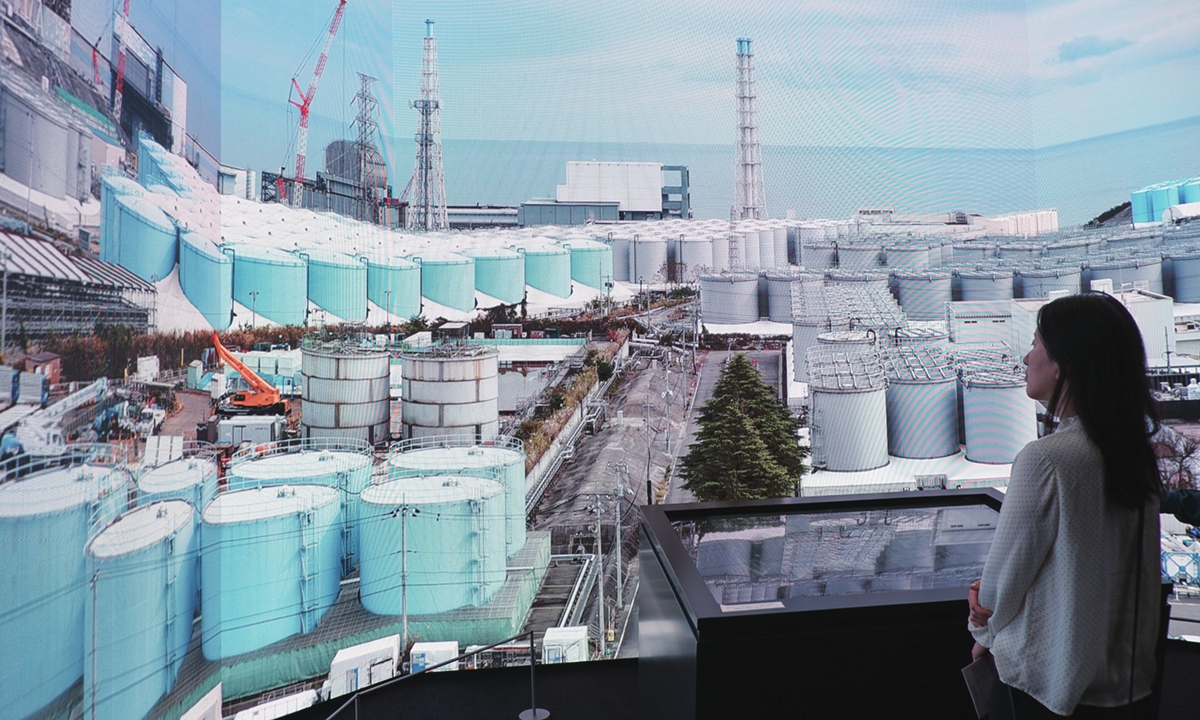
About 54 kilometers away from the Fukushima Daiichi Nuclear Power Plant, the city looks subdued with few passersby along the streets. The excavation of an underwater tunnel for the project to drain the nuclear-contaminated wastewater from the Fukushima Daiichi Nuclear Power Plant was completed in April, and TEPCO announced that it is expected to complete the construction of the tunnel by the end of June. Measuring 1,031 meters long and 1 kilometer away from the coast, the tunnel will allow radioactive wastewater to be dumped into the sea.
…………………………………………………….. Chiyo Oda, co-chairperson of an environmental NGO and city assembly “Stop polluting the oceans!” was one of them.
“Summer is coming. What’s going to happen? Fukushima greets summer with fear!” said Oda, who expressed strong concern about the dumping of nuclear-contaminated wastewater at a conference themed “Don’t Nuke the Pacific” on May 7. “The Japanese government has reached an agreement with the fishing community that nothing will be done without [the fishing community and other stakeholders’] understanding.” Nevertheless, the Japanese government is apparently breaking its promise and is preparing to dump the water which is likely to start this summer.
When the Global Times reporters met Oda, the 68-year-old woman had just returned to Iwaki from Fukushima city, the capital of Fukushima Prefecture. Early that day, with Kazuyoshi Sato, another co-representative of the city assembly, Oda had driven for two hours to the Fukushima prefectural office to hold a press conference to announce that a mass rally called “May 16 Tokyo Action” will be held in Tokyo on May 16 to urge the Japanese government and TEPCO to stop dumping the nuclear-contaminated wastewater.
Oda told the Global Times that the campaign will last all day on May 16, when anti-sea pollution campaigners from all over Japan are meant to gather in Tokyo. As planned, they will gather in front of the TEPCO headquarters at 10:30 am, and then head to the House of Representatives with lawmakers to hold the rally. The rally and petition to the Japanese government and parliament will be followed by a speech at the Hibiya Open Air Concert Hall in the evening. It will then be followed by a massive demonstration in Ginza, Tokyo, which is expected to be attended by more than 1,000 people.
“The sea of my hometown, the Sea of Japan, and the seas of the world must not be polluted,” said Oda.
Oda noted that the Japanese government, TEPCO, the Fukushima Prefectural Federation of Fisheries Cooperative Associations, and the National Federation of Fisheries Cooperative Associations of Japan signed an agreement in 2015, stating it would not “do anything about the nuclear-contaminated water from Fukushima without the understanding and consent of the relevant people,” but now the Japanese government and TEPCO insist on dumping the water despite opposition from all parties, including fishermen. …………………………………………………………………………………………………………………………………………………………………..
“Look! This is the sea we want to protect!” Ikarashi told the Global Times that he and his family have fond memories of living by the sea, eating the catch from the same sea, surfing, and frolicking with their children. The people of Fukushima live just like them, having enjoyed the bounty of the sea for generations. If the nuclear-contaminated wastewater is dumped into the sea, future generations will no longer be able to enjoy the beautiful nature.
Ruiko Muto, who lives in Tamura, Fukushima, is the head of the association for the victims of the Fukushima nuclear accident. After the accident, she worked hard to hold the former management of TEPCO accountable as a member of the legal team for the Fukushima nuclear accident and the criminal prosecution team.
Muto told the Global Times in an email that “ALPS-treated water” used by the Japanese government and TEPCO contains many other radioactive substances besides tritium, making it “not safe at all.” Under such circumstances, attempts to release the radioactive wastewater from Fukushima into the sea must not be allowed.
Muto said that as summer approaches, her group will join forces with other civic groups and continue to express opposition through protests and rallies.
Dumping not only way
In an on-the-spot interview, Global Times reporters noted the intense concern over whether “ALPS-treated water,” as the Japanese government and TEPCO refer to it, is safe, and whether there is an alternative to dealing with the wastewater.
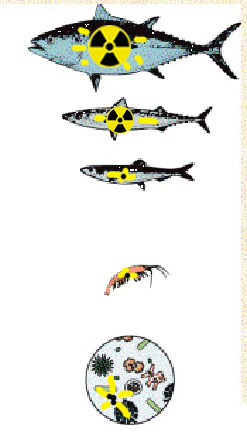
Hideyuki Ban, a Japanese nuclear expert and co-director of the Tokyo-based Citizens’ Nuclear Information Center (CNIC), told the Global Times that “the nuclear-contaminated wastewater contains 64 radionuclides, including tritium, some of which are very long-lived and cannot necessarily be diluted. [The compounds] can accumulate in the ocean and attach to fish and shellfish, and some of them can enter the body of marine organisms, causing human beings to be exposed to nuclear radiation after consumption. Even if [the wastewater] is treated and released into the sea, it is not safe.”
“There is no precedent in the world for dumping such wastewater containing 64 radionuclides into the sea,” he said.
“The capacity of ALPS to remove radionuclides and the amount of the nuclear-contaminated wastewater to be discharged are not fully understood, let alone gaining the understanding and consent of stakeholders. Under such circumstances, it is not allowed to arbitrarily discharge the wastewater,” he said.
Ban noted that there are other ways to dispose of the wastewater. For example, there is the option of “mortar solidification,” where the nuclear-contaminated wastewater is mixed, solidified, and stored in mortar as in cement production. What the Japanese government has done is based on a political decision, not one based on scientific research, Ban criticized……………………………………………………………………….
The problem, however, is that even if the nuclear-contaminated wastewater is disposed of, key issues such as whether nuclear fuel debris can be removed from the Daiichi plant remain unresolved. The government plans to decommission the reactor in the next 30 to 40 years, but it has yet to give a clear explanation of how long it will take to complete the project and in what condition the facility will have to be in order to qualify as successfully decommissioned, according to Muto.
Surrounded by the sea, Japan gives thanks to the gracious sea as a prosperous maritime nation, on “Sea Day” held annually on the third Monday of July, which is one of the statutory holidays in the country.. Born by the sea, the locals reached by the Global Times could not help but express their deep concern and fear that if the sea is polluted, it will be difficult to enjoy the sea’s succor in the future. https://www.globaltimes.cn/page/202305/1290745.shtml
 |
Hinkley fish deterrent farce makes mockery of Environment Agency and Minister

In a humiliating climbdown, the Environment Agency now recommend that EDF Energy be excused from installing an acoustic fish deterrent at Hinkley Point C nuclear power plant, and they have had the cheek to ask for the public’s endorsement of the Agency’s inexplicable volte face in a further consultation.
The UK/Ireland Nuclear Free Local Authorities for one will not be giving it.
NFLA England Forum Chair Councillor David Blackburn said: “After a late hour supper of humble lamprey pie, senior executives at the Environment Agency appear to have shown themselves to have less spine than jellyfish. The requirement to install a deterrent was first made after representations from the public and campaign groups, including the NFLA; a detailed analysis of the impact of the plant on fish stocks and pain-staking deliberations; and the personal intercession of the Secretary of State George Eustice to ensure that it became part of the permitting conditions.
“This new recommendation makes a mockery of the Environment Agency inspection team and the Secretary of State who previously had the courage to stand up to nuclear interests. It also represents a massive slap in the face with a wet kipper for public consultation, because what is the point responding again and again to consultations and presenting to inquiries demonstrating conclusively the validity of your case when senior civil servants simply cave into any clamour from EDF Energy?”
Nonetheless, the NFLA, in a last-ditch effort, will be joining local campaigners by responding robustly to oppose this proposal – for the sake of the fish.
Councillor Blackburn added: “It looks like someone at EDF Energy is following the adage of Robert the Bruce ‘to try, try, try again’ as clearly the company remains determined to pressurise the Environment Agency to recuse it from installing an acoustic fish deterrent at Hinkley Point C to save time and money, for this is a project well behind schedule and massively over budget. French shareholders will be happy, but the fish will not.
“The Severn Estuary is one of the most important fish habitats in the UK, and the fear is that millions of fish will die every day once this plant finally becomes operational as they are sucked to their deaths along with the cooling water.
“We would urge members of the public, elected members and local groups opposed to this plan to respond to the Environment Agency consultation before 25 May 2023. This is your last chance to save the fish!”
Details of the latest Environment Agency consultation can be found at:
https://www.gov.uk/government/consultations/hinkley-point-c-water-discharge-activity-permit-variation
Marine deaths prompt calls for investigation and halt into any new nuclear dump tests.

Marine Deaths of harbour porpoise, dolphin, pilot whale, seals
and other protected species following last August’s seismic blasting
looking at the geology of the Irish Sea for a deep sub-sea nuclear dump
have prompted calls for a halt and an investigation.
A legal challenge has been threatened by campaigners against further seismic blasting in the search areas which include the Irish Sea and Allerdale’s Solway Firth area.
The Copeland seismic blasting went ahead for 20 days from the 1st August
2022 despite a petiton of over 50,000 signatures. The testing of the
Copeland Irish Sea area centred off Sellafield was contracted by Nuclear
Waste Services in their quest to find a place to dispose of high level
nuclear wastes in a Geological Disposal Facility.
Environmental Lawyers
Leigh Day acting for Lakes Against Nuclear Dump, a Radiation Free Lakeland
campaign have now written to the Environment Secretary Thérèse Coffey and
to the Marine Management Organisation. The letter includes an Appendix of
“Events” beginning with strandings of protected species including dead
seals and harbour porpoise at Drigg on the 8th August and includes deaths
of dolphin, pilot whale and jellyfish (food for protected turtle species).
Radiation Free Lakeland 25th April 2023
Japan hopes to start discharging Fukushima nuclear wastewater in July
Gong Zhe https://news.cgtn.com/news/2023-04-23/Japan-hopes-to-start-discharging-Fukushima-nuclear-wastewater-in-July-1jfbTfpbNvy/index.html
Japan is hoping to start discharging radioactive waste water from its destroyed Fukushima nuclear plant into the ocean in July.
Tokyo Electric Power Company (TEPCO) told Kyoto News on Saturday that the excavator is near the exit of the tunnel located one-kilometer offshore. The 1,030-meter tunnel is used to discharge the treated water stored in the Fukushima Daiichi Nuclear Power Plant into the sea. As long as 1,017 meters of the tunnel have been excavated.
TEPCO is trying to complete the tunnel and other facilities related to water discharging before the end of June, and the possibility of starting discharge operations as early as July has increased.
The Japanese government and TEPCO are trying to start discharging around this summer, but fishermen and others continue to oppose it. The plan faces opposition at home and has raised “grave concern” in neighboring countries, including but not limited to China and South Korea.
TEPCO plans to use a large amount of seawater for dilution to make the activity of tritium in treated water less than one-fortieth of national standards, and then discharge it through a seabed tunnel. It is expected to be discharged for several decades.
Ignoring science, environmental protection and international law – G7 endorses Japan’s Fukushima water discharge plans

Greenpeace International, 16 April 2023 https://www.greenpeace.org/international/press-release/59193/science-environmental-protection-international-law-g7-japans-fukushima-water-discharge/
Legacy of Fukushima disaster shows nuclear energy is no solution to energy and climate crisis.
Sapporo, Japan – The nations of the G7 have chosen politics over science and the protection of the marine environment with their decision today to support the Japanese government’s plans to discharge Fukushima radioactive waste water into the Pacific Ocean.
The 1.3 million cubic meters/tons of radioactive waste water at the Fukushima Daiichi plant, currently in tanks, is scheduled to be discharged into the Pacific Ocean this year. Nations in the Asia Pacific region, led by the Pacific Island Forum, have strongly voiced their opposition to the plans.[1] Some of the world’s leading oceanographic institutes and marine scientists have criticised the weakness of the scientific justification applied by TEPCO, the owner of the nuclear plant, warned against using the Pacific Ocean as a dumping ground for radioactive contaminated water, and called for alternatives to discharge to be applied.[2]
“The Japanese government is desperate for international endorsement for its Pacific Ocean radioactive water dump plans. It has failed to protect its own citizens, including the vulnerable fishing communities of Fukushima, as well as nations across the wider Asia Pacific region. The aftermath of the nuclear disaster at Fukushima is still strongly felt, and the Japanese government has failed to fully investigate the effects of discharging multiple radionuclides on marine life. The government is obligated under international law to conduct a comprehensive environmental impact assessment, including the impact of transboundary marine pollution, but has failed to do so. Its plans are a violation of the UN Convention Law of the Sea.
The marine environment is under extreme pressure from climate change, overfishing and resource extraction. Yet, the G7 thinks it’s acceptable to endorse plans to deliberately dump nuclear waste into the ocean. Politics inside the G7 at Sapporo just trumped science, environmental protection, and international law,” said Shaun Burnie, Senior Nuclear Specialist at Greenpeace East Asia.
Greenpeace East Asia analysis has detailed the failures of liquid waste processing technology at the Fukushima Daiichi plant and the environmental threats posed by the releases.[3] There is no prospect of an end to the nuclear crisis at the plant as current decommissioning plans are not feasible. Furthermore, the report finds the nuclear fuel debris in the reactors cannot be completely removed and will continue to contaminate the ground water over many decades.[4] Claims that the discharges will take 30 years is inaccurate as in reality, it will continue into the next century. Viable alternatives to discharge, specifically long term storage and processing, have been ignored by the Japanese government.[3]
The Japanese government’s attempt to normalise the Fukushima nuclear disaster is directly linked to its overall energy policy objective of increasing the operation of nuclear reactors again after the 2011 disaster. 54 reactors were available in 2011 compared to only ten reactors in 2022, generating 7.9% of the nation’s electricity in FY21 compared to 29% in 2010.[5] Meanwhile, five of the other six G7 governments led by France, the US and the UK are also aggressively promoting nuclear power development.
The idea that the nuclear industry is capable of delivering a safe and sustainable energy future is delusional and a dangerous distraction from the only viable energy solution to the climate emergency which is 100% renewable energy. The global growth of low cost renewable energy has been phenomenal – but it has to be much faster and at an even greater scale if carbon emissions are to be reduced by 2030. Approval for nuclear waste dumping and nuclear energy expansion sound like the 1970’s but we have no time for such distractions. We are in a race to save the climate in the 21st century, and only renewables can deliver this,” said Shaun Burnie.
The temperature of the world’s ocean surface has hit an all-time high.
The temperature of the world’s ocean surface has hit an all-time high
since satellite records began, leading to marine heatwaves around the
globe, according to US government data. Climate scientists said preliminary
data from the National Oceanic and Atmospheric Administration (Noaa) showed
the average temperature at the ocean’s surface has been at 21.1C since
the start of April – beating the previous high of 21C set in 2016.
Three years of La Niña conditions across the vast tropical Pacific have helped
suppress temperatures and dampened the effect of rising greenhouse gas
emissions. But scientists said heat was now rising to the ocean surface,
pointing to a potential El Niño pattern in the tropical Pacific later this
year that can increase the risk of extreme weather conditions and further
challenge global heat records.
Guardian 8th April 2023
Sizewell C permits approved despite concerns over potential mass fish deaths
Sizewell C permits approved despite concerns over potential mass fish
deaths. The Environment Agency has issued three new permits to Sizewell C,
despite concerns that the approved cooling system and lack of fish
deterrent device could result in “thousands of fish dying every day”.
ENDS 30th March 2023
South Korea to keep Fukushima seafood ban despite thaw with Japan
Aljazeera, 30 Mar 23
President Yoon Seok-yeol’s administration says ‘health and safety’ top priority despite improving Seoul-Tokyo ties.
South Korea has ruled out lifting a ban on Japanese seafood imports from the area around the Fukushima nuclear plant despite warming relations between Seoul and Tokyo.
“
“Seafood imports from near the tsunami-stricken plant will “never come into” South Korea due to health concerns related to leaked radiation, the administration of President Yoon Seok-yeol said on Thursday.
With regard to the import of Japanese seafood products, the government’s stance remains unchanged that the health and safety of the people are the top priority,” the presidential office said in a statement, South Korea’s Yonhap News Agency reported.
South Korea has banned Japanese seafood imports from eight prefectures, including Fukushima, since 2013 due to fears of radiation contamination from the meltdown of the plant following an earthquake and tsunami.
…………………………………………….. Apart from South Korea, mainland China and Hong Kong continue to block imports of food from the region, including all dairy products and fruits and vegetables. https://www.aljazeera.com/economy/2023/3/30/south-korea-to-keep-fukushima-seafood-ban-despite-thaw-with-japan
What’s dumped is not just Fukushima nuclear water
In January, the Japanese government announced that it would begin to release into the Pacific Ocean more than 1.37 million tons of water from the wrecked Fukushima Daiichi nuclear plant sometime this spring or summer. A shadow of nuclear contamination is looming larger.
Although the Tokyo Electric Power Company (TEPCO) insists that the contaminated water has been filtered and diluted and meets the criterion for a safe discharge, a report has shown that 73 percent of the treated water still exceeds the discharge standard.
Unlike normal wastewater from nuclear power plants, Fukushima nuclear-contaminated water contains over 60 kinds of radioactive substances. Besides tritium, which is difficult to remove, the treated water also contains strontium-90 and carbon-14, whose half-lives are 29 years and 5,730 years, respectively.
For those who can’t grasp its meaning, tritium can replace stable hydrogen atoms in the human body and cause chronic radiation syndrome and cancer. Strontium-90 is highly toxic and may induce bone tumors.
Experts have pointed out that once released into the ocean, the contaminated water would rapidly spread to most parts of the Pacific. Radiation would be absorbed by marine life and enters the human body.
In 2022, it was detected that radiation in black rockfish caught off Fukushima prefecture was 14 times higher than the safe level for humans, even after 11 years have passed since the Fukushima nuclear disaster. The South China Morning Post reported that caesium, one of the most dangerous radionuclides that “can build up in muscle, fat and bone and cause malignant tumors,” was detected in “fish caught at a depth of 24 meters about 9 km off Fukushima prefecture’s town of Shinchi.”
After more than 10 years, the local fishery industry has not fully recovered. In 2012, Japan banned the sale of 36 species of fish caught off Fukushima, and Tokyo’s decision crushed their hopes. Voices of opposition have been ongoing. In Japan, fishery organizations have expressed their concerns. Citizens in Tokyo, Osaka and Shizuoka protested on the streets to demand the government rescind its decision.
On the world stage, Japan’s neighbors including China, Russia and South Korea have asked Tokyo to provide useful information, engage in full consultation, and take responsible measures. The Pacific Island countries urged Japan not to release the contaminated water before there is enough scientific evidence proving that it’s safe. And independent UN human rights experts issued a joint statement calling Japan’s decision “very concerning” and “deeply disappointing.”
To make a clear evaluation of the safety of Japan’s plan, an International Atomic Energy Agency task force was set up to conduct a safety review. Days ago, it completed its second regulatory review and “will release a report on its findings in about three months, as well as a comprehensive report before the discharge.” Nonetheless, even before the task force set out, Tokyo unilaterally announced the planned discharge. The Japanese government has set its mind on the discharge regardless of the review outcome.
When Tokyo decides to discharge the contaminated water without ensuring safety, does it even consider people’s right to life and health? As a party to the UN Convention on the Law of the Sea, the Convention on Early Notification of a Nuclear Accident, and the Convention on Nuclear Safety, does the Japanese government recognize its international obligations? When it puts the whole Pacific and Pacific Rim countries at the risk of environmental disaster, how does it uphold the principle of “environment first”?
When it comes to nuclear contamination, it’s better to err on the side of caution. There could be better alternatives than dumping the contaminated water into the sea. Evaporating, storing underground the tritium-laced water from the plant, or storing and processing the water over the long term, these are all technically reasonable options that are safer than a direct discharge. Unfortunately, Tokyo has chosen to go for the cheapest “quick fix.”
When the earthquake and tsunami struck Fukushima, neighboring countries reached out their helping hands to Japan. Today, the nation is repaying them with tons of nuclear contaminated water.
The Pacific Ocean is home to billions of people, but Japan takes it as its own sewer. Along with contaminated water, Japan’s reputation, conscience and international obligations will be dumped as well.
Ocean discharge is the worst plan for Fukushima waste water — IPPNW peace and health blog

Japan may soon start dumping radioactively contaminated waste water from the Fukushima Daichi nuclear plant into the Pacific Ocean, despite warnings from neighboring countries, marine scientists, and health experts. As soon as within a month or two, Japan could begin dumping into the Pacific Ocean 1.3 million tons of treated but still radioactively contaminated wastewater […]
Ocean discharge is the worst plan for Fukushima waste water — IPPNW peace and health blog
As soon as within a month or two, Japan could begin dumping into the Pacific Ocean 1.3 million tons of treated but still radioactively contaminated wastewater from the stricken Fukushima Daichi nuclear plant. Construction of the kilometer long undersea discharge tunnel and a complex of pipes feeding it commenced last August.
This cheap and dirty approach of “out of sight out of mind” and “dilution is the solution to pollution” belongs in a past century. It ignores the significant transboundary, transgenerational and human rights issues involved in this planned radioactive dumping, projected to continue over the next 40 years.
Concerns about Japan’s ocean dumping plans have been strongly voiced by China and South Korea, and by numerous Pacific island nations. Multiple UN Special Rapporteurs have severely criticised the plan, which has also been opposed by the United States National Association of Marine Laboratories and many regional and international health and environmental civil society organisations.
Australia bears a particular responsibility in relation to the aftermath of the ongoing Fukushima nuclear disaster, since fuel fabricated with uranium from Australia was in each of the Fukushima reactors which exploded. Yet my letters to the relevant Australian federal ministers on this matter have gone unanswered for seven weeks, and no evidence is publicly available that the Australian government has supported our Pacific neighbours in raising concerns about the planned discharge with its Japanese counterparts.
We are in the UN Decade of Ocean Science for Sustainable Development (2021-30). As Pacific Islands Forum (PIF) Secretary-General Henry Puna reminded us in his piece in The Guardian on 4 January, in 1985 the Forum welcomed the then Japanese prime minister’s statement that “Japan had no intention of dumping radioactive waste in the Pacific Ocean in disregard of the concern expressed by the communities of the region.” The current plan is inconsistent with this commitment.
In a public event organised by the PIF in Suva on 18 January, Puna noted Prime Minister Kishida’s reassurance during Japan’s regular meeting with the Forum in July 2022 of the need to progress this matter consistent with international law and verifiable science. The Secretary-General reiterated his request on behalf of Forum members for postponement of the planned discharge in order to allow adequate consideration of alternative options and to engage in respectful and full evidence-based consultation with Pacific nations in planning the best course of action. His calls have been ignored.
The most authoritative independent scientific assessment of the planned discharge has been conducted by a five-member independent international scientific panel appointed by the PIF. The experts were unanimous in their conclusions and recommendations. Their main conclusions:
- TEPCO’s knowledge of the specific radionuclide contents of all the tanks is seriously deficient. Only roughly one quarter of the more than 1,000 tanks at the site have been sampled at all, and in almost all cases only nine or fewer of 64 total radionuclides are measured in the data shared with PIF. TEPCO’s assumptions of consistent ratios of various radionuclides across different tanks are contradicted by the data, with show many thousand-fold variation.
Sampling and measurements have been unrepresentative, statistically deficient and biased, and have not included the debris and sludges, which Japan has acknowledged are present in at least some of the tanks. Sludges and debris are likely to be most radioactive, particularly in relation to harmful isotopes like plutonium and americium.- More than 70% of the tanks which had gone through ALPS (Advanced Liquid Processing System), designed to remove most of the radioactive contaminants, will require re-treatment. For some isotopes, the levels after treatment are up to 19,900 times higher than the regulatory limits for discharge. There is no evidence confirming that even repeated processing through ALPS can provide consistently effective purification.
- There has been no adequate consideration of the behavior of radioactive elements in the ocean, with transport by ocean currents and organisms, accumulation in biota and sea floor sediments, or the behavior of organically bound tritium in an ocean environment. The seafloor off Japan’s east coast still contains up to 10,000 times the cesium concentration as before the disaster, before any planned discharge.
- Neither TEPCO nor the IAEA acknowledged or addressed the many serious scientific questions raised by the panel. For example, TEPCO reported that tanks sampled in 2019 contained tellurium-127, an isotope with a half-life of only 9 hours. This signifies either that accidental criticality with fission reactions are occurring on an ongoing basis in the molten reactor cores, which would be very significant, or that the measurements are wrong. However no satisfactory answers were provided. Indeed the IAEA cut off contact with the panel.
- Neither TEPCO, the International Atomic Energy Agency (IAEA) nor the Japanese Nuclear Regulatory Authority have properly considered several viable alternative approaches, including storage in purpose-built seismically safe tanks, possibly after initial purification, subsequent use in concrete for structural applications with little or no potential for contact with humans and other organisms, and bioremediation for some important isotopes such as strontium-90. All the proposed alternatives would have orders of magnitude less impact and avoid transboundary impacts.
The argument that the site is running out of room to store water is spurious. Contaminated water will continue to be generated for many decades hence, and there is plenty of nearby space available that will be unfit for other uses for a very long time and is already being used to store large amounts of contaminated soil from around the prefecture. There is in fact no urgency to begin ocean discharge.
The independent expert panel recommended unanimously that the planned ocean dumping should not proceed. Their overwhelming case, based on scientific evidence and the need to minimise transboundary and transgenerational impacts, is that new approaches and alternatives to ocean dumping are needed and are the responsible way forward.
This matter requires urgent attention. Construction of the pipeline through which the ocean discharge is planned to occur is well underway, and the discharge may commence as soon as this month. Given that the discharge is planned to continue over 30-40 years, reconsideration could still be undertaken even after ocean discharge commenced. However it would be far better if the planned discharge were postponed until better alternatives were properly considered and implemented.
Now is the time for the Australian government, scientists and citizens to join with our Pacific neighbours in calling on Japan to stop its irresponsible plan to use the Pacific Ocean as a radioactive waste dump.
Fukushima nuclear water plan is a new blow to fishermen
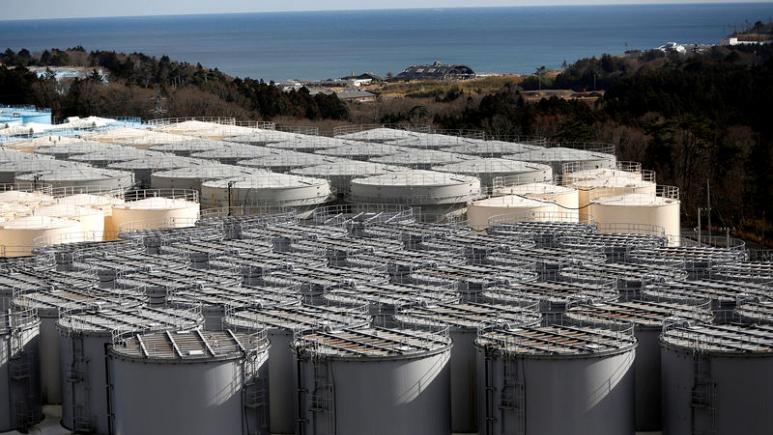
Locals believe livelihoods are at risk as authorities attempt to tackle
contamination 12 years on from the disaster. The authorities are about to
begin pumping contaminated water from the Fukushima nuclear power plant
into the Pacific Ocean.
More than a million tons of water will be released
into the sea over the next thirty years. The waste water will be treated
and diluted to remove most radioactive contaminants, but will still contain
traces of the isotopes, tritium and carbon-14.
The governments of China,
South Korea and Pacific island nations have protested against the decision.
But none are affected more directly than the fishermen of Fukushima. Twelve
years after the catastrophe, there is no clear timeline for the
decommissioning of Fukushima Daiichi, which is decades away from being
safely dismantled.
In the meantime, 130 tons of water is contaminated by it
every day. Some of this is poured directly onto the broken reactors to cool
them. Much is natural ground water which flows through the earth towards
the sea, picking up radiation from the exposed reactors on the way.
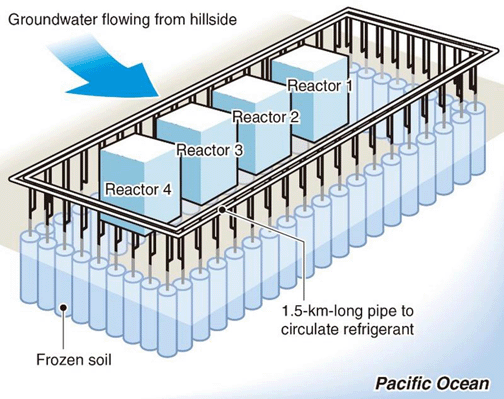
To prevent the groundwater reaching the plant in the first place, the
authorities built an underground “ice wall” of frozen earth, but this
has been only partly effective. Filtering is supposed to remove all the
radioactive elements except for tritium, which is routinely released into
the sea in diluted form from nuclear plants around the world
. But carbon-14
and trace elements of more dangerous radioactive substances, including
strontium-90 and iodine-129, have also been detected in the water. The
Japanese government says that tritium will be diluted to less than one-40th
of the concentration permitted under Japanese safety standards and
one-seventh of the World Health Organisation’s permitted level for safe
drinking water.
According to Tepco, the radiation in the tritium in the
water amounts to some 860 trillion becquerels — less than half the 1,620
trillion becquerels released from Britain’s Sellafield plant in 2015. The
theory is that the water will quickly and harmlessly dissipate into the
vastness of the Pacific Ocean.
But environmentalists and some scientists
disagree. The US National Association of Marine Laboratories claims that
the statistics, assumptions and models used in the Tepco projections are
flawed. It points to the danger of concentrated clusters of radiation
accumulating on the ocean floor.
Shaun Burnie, a nuclear expert at
Greenpeace, says that the water should be stored longer in tanks, allowing
time for the tritium to reduce, and that the decision to release into the
ocean is as much as about saving money as science. It also gives an
illusion of concrete progress.
Even if it is safe, it makes little
difference to the fishermen of Soma, for whom even just the perception of a
danger is enough to harm their business. Among them opinion is divided.
Some oppose the release under any circumstances; others, including Konno,
reluctantly accept it as the least worst option given that only complete
decommissioning, decades in the future, will solve the problem.
Times 10th March 2023
Historic treaty to protect the oceans.
After 15 years of stalled talks, more than 100 countries reached a historic
agreement to protect the high seas on Saturday, a long-awaited step that
environmental groups say will help reverse marine biodiversity losses from
climate change and overfishing.
The legally binding UN treaty to conserve
and ensure the sustainable use of ocean biodiversity was finally agreed on
after five rounds of protracted UN-led negotiations that ended on Saturday,
a day after the original deadline. “The ship has reached the shore,”
said the UN conference’s president Rena Lee, after a marathon final stretch
of talks hit 38 hours.
Independent 5th March 2023
https://www.independent.co.uk/climate-change/news/un-ocean-treaty-global-biodiversity-b2294370.html
Fury as Japan plans to dump a million tonnes of contaminated water in the Pacific
Japan has a serious problem it can no longer control – and the “solution” has horrified our nearest neighbours, who say a catastrophe is coming.
Alexis Carey@carey_alexis, news.com.au February 23, 2023
Outrage is growing over an “unjust” plan to dump more than a million tonnes of contaminated wastewater on Australia’s doorstep – within months.
In 2011, Japan was rocked by the Fukushima nuclear disaster – the worst of its kind since Chernobyl in 1986.
Responders scrambled to stop damaged reactors at Fukushima’s Daiichi nuclear plant from overheating by pumping massive amounts of water through them, with the contaminated water then being stored in massive tanks at the site.
But now, Japan has run out of space, and in 2021, announced plans to dump 1.3 million tonnes of the contaminated wastewater into the Pacific Ocean.
The water would be treated before being released over a period of several decades, with Prime Minister Yoshihide Suga saying at the time it was “a realistic solution”.
“We will do our utmost to keep the water far above safety standards,” he vowed.
In the almost two years since, Japan has been working out the finer details of the release, which is now due to begin as soon as the northern hemisphere’s spring or summer – Australia’s autumn or winter.
And countries across the Pacific are furious.
Kenichi Takahara, risk communicator of the Fukushima Daiichi decontamination and decommissioning engineering company, visits the Fukushima Daiichi nuclear power plant. Picture: Philip Fong/AFP
‘Catastrophic harm’
Writing for The Guardian soon after the plan was first announced, youth advocates from the region Joey Tau and Talei Luscia Mangioni described it as an “unjust act”.
“To Pacific peoples, who have carried the disproportionate human cost of nuclearism in our region, this is yet another act of catastrophic and irreversible trans-boundary harm that our region has not consented to,” they wrote.
They were referring to the long history of the Pacific being used as the world’s nuclear waste dumping ground, with hundreds of nuclear tests being carried out across the region in the decades since the Second World War.
High-profile individuals and groups from across the Pacific – including from Vanuatu, Fiji, the Marshall Islands and French Polynesia – have also spoken out against Japan’s plan for months on end.
“If it is safe, dump it in Tokyo, test it in Paris, and store it in Washington, but keep our Pacific nuclear-free,” Vanuatu stateswoman and veteran activist of the Nuclear Free and Independent Pacific (NFIP) movement Motarilavoa Hilda Lini said soon after Japan’s plan was unveiled.
“We are people of the ocean, we must stand up and protect it.”
In another moving statement released last year, environmental advocacy group Youngsolwara Pacific likened the release to “nuclear war”.
“How can the Japanese government, who has experienced the same brutal experiences of nuclear weapons in both Hiroshima and Nagasaki, wish to further pollute our Pacific with nuclear waste? To us, this irresponsible act of trans-boundary harm is just the same as waging nuclear war on us as Pacific peoples and our islands.”
But their pleas have fallen on deaf ears – and a string of experts have even voiced support for Japan’s controversial move.
………………………………….But for many critics of the plan, plenty of concerns remain.
“We must prevent actions that will lead or mislead us towards another major nuclear contamination disaster at the hands of others,” the former prime minister of the Cook Islands Henry Puna said just last month, as the deadline for the release looms. https://www.news.com.au/technology/environment/fury-as-japan-plans-to-dump-a-million-tonnes-of-contaminated-water-in-the-pacific/news-story/fbf0c9c3ab7a4414c7e41713a4b0c628
1 This Month


Tell the Ukrainian Government to Drop Prosecution of Peace Activist Yurii Sheliazhenko

Petition to revoke the licensing of the Near Surface Nuclear Disposal Facility (NSDF) at Chalk River. https://www.ourcommons.ca/petitions/en/Petition/Details?Petition=e-7247


of the week – STOP SMALL MODULAR REACTORS IN CANADA
To see nuclear-related stories in greater depth and intensity – go to https://nuclearinformation.wordpress.com
-
Archives
- March 2026 (204)
- February 2026 (268)
- January 2026 (308)
- December 2025 (358)
- November 2025 (359)
- October 2025 (376)
- September 2025 (258)
- August 2025 (319)
- July 2025 (230)
- June 2025 (348)
- May 2025 (261)
- April 2025 (305)
-
Categories
- 1
- 1 NUCLEAR ISSUES
- business and costs
- climate change
- culture and arts
- ENERGY
- environment
- health
- history
- indigenous issues
- Legal
- marketing of nuclear
- media
- opposition to nuclear
- PERSONAL STORIES
- politics
- politics international
- Religion and ethics
- safety
- secrets,lies and civil liberties
- spinbuster
- technology
- Uranium
- wastes
- weapons and war
- Women
- 2 WORLD
- ACTION
- AFRICA
- Atrocities
- AUSTRALIA
- Christina's notes
- Christina's themes
- culture and arts
- Events
- Fuk 2022
- Fuk 2023
- Fukushima 2017
- Fukushima 2018
- fukushima 2019
- Fukushima 2020
- Fukushima 2021
- general
- global warming
- Humour (God we need it)
- Nuclear
- RARE EARTHS
- Reference
- resources – print
- Resources -audiovicual
- Weekly Newsletter
- World
- World Nuclear
- YouTube
-
RSS
Entries RSS
Comments RSS
 nuclear-news