The danger of Japan dumping Fukushima wastewater into the ocean
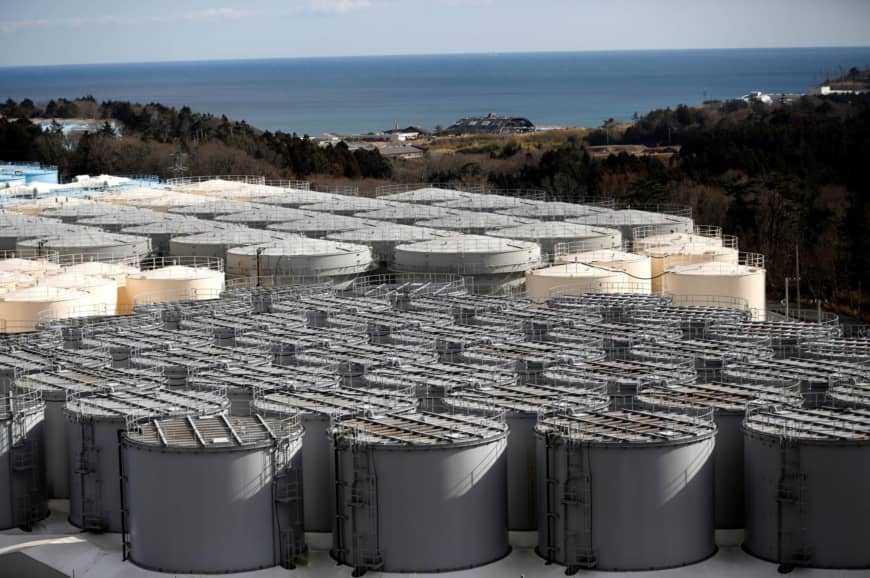
The danger of Japan dumping Fukushima wastewater into the ocean, https://thehill.com/opinion/energy-environment/548726-the-danger-of-japan-dumping-fukushima-wastewater-into-the-ocean
BY RICK STEINER,— 04/17/21 The Japanese government just announced that it intends to release over 1.2 million tons of radioactive wastewater from the Fukushima Nuclear Power Plant into the North Pacific. This would result in dangerous radionuclides flowing across the ocean to Russia, Alaska, Canada, Hawaii and the U.S. West Coast. The release of this material — which is strongly opposed by local scientists and residents in Japan — would begin in two years and continue for another 40 years.
The Biden administration must urge Japan to abandon this unnecessary and dangerous plan.
The 2011 Fukushima nuclear disaster was caused by the 9.1 magnitude Tohoku earthquake and a 14-meter-high tsunami. The tsunami flooded and disabled emergency generators needed to pump cooling water into the nuclear reactor cores, causing three reactor core meltdowns and hydrogen explosions. Radionuclides flowed eastward across the Pacific and were eventually found in waters off California, Hawaii, Oregon, Washington, British Columbia and Alaska. We all live downstream.
The storage tanks now hold seawater that has been used to continue cooling the reactor cores, and this water is contaminated with such radionuclides as Cesium-137, Carbon-14, tritium (including the more dangerous “Organically Bound Tritium”), Strontium-90, Cobalt-60, Iodine-129, Plutonium-239 — and over 50 other radionuclides. Some of this has reportedly been removed, but some has not (e.g. radioactive tritium and C-14).
The Tokyo Electric Power Company (TEPCO) that owns Fukushima, and is now responsible for the cleanup (that is likely to last the remainder of this century), didn’t admit until recently that the wastewater contains significant amounts of radioactive Carbon-14. As C-14 has a half-life of 5,730 years, and is known to bio-accumulate in marine ecosystems and cause cellular and genetic impairment. This is a very serious concern.
Fukushima C-14 will be added to the already elevated radioactive C-14 load in the oceans from nuclear weapons tests — or “bomb carbon” — last century. It’s now found in organisms even in the deepest part of the ocean, the Marianas Trench. It is easy to imagine the impact this new, intentional Fukushima release could have, rightly or not, on the public image of clean marine seafood and tourism along the Pacific coast.
TEPCO claims the water has been sufficiently treated and is OK to release, but the treatment system they are using is reported to be substandard and not up to the job. Communities across the Pacific deserve an independent scientific assessment of TEPCO’s claims, by an Independent Scientific and Technical Commission. Remember, TEPCO and the Japanese government approved locating the nuclear power plant’s emergency generators in a tsunami flood zone. Their assurances now that there is no risk in releasing this radioactive water are neither credible nor scientifically defensible.
China and South Korea have registered objections to the release plan with Japan, but other downstream nations — the U.S., Russia and Canada — have stayed quiet. It isn’t often that China expresses more concern for the environment than the U.S., but this is one such time.
And even if the ecological and public health risk from the planned release is indeed low, as claimed (this is highly doubtful), the risk is entirely unnecessary and avoidable.
Beyond marine discharge, several other disposal options have been considered, including evaporating the water, or injecting it into deep geologic formations.
But by far the best solution is for TEPCO to build more storage tanks and continue holding all contaminated water for another 15 years or so, during which time the radioactive tritium level will decay by half, and simultaneously treat it with best available technology (such as ion exchange systems and modular “detritiation” systems in the U.S.) to remove all radionuclides possible.
Japan and TEPCO considered this long-term storage option, but opted instead for the cheapest choice — simply dumping the wastewater into the Pacific.
The era of intentionally dumping toxic waste in our one global ocean is, or should be, over.
Fukushima was, and continues to be, a nuclear nightmare, and all nations should join together in a collaborative effort to resolve this mess. This effort will take hundreds of billions of dollars, over many decades, and the U.S. and other G20 nations must step up and help both financially and technically.
Unless and until this wastewater is independently certified as effectively free of radionuclides and safe, not one drop should be released into the beautiful deep blue Pacific.
Finally, Fukushima should be the last nail in the coffin for the notion that nuclear fission power could be a realistic solution to our climate crisis.
Rick Steiner is a marine conservation biologist in Anchorage and former professor of marine conservation with the University of Alaska from 1980-2010. He now consults for the U.N., governments and NGOs on marine environmental issues. He is author of “Oasis Earth: Planet in Peril.”
U.N. experts concerned at Japan’s decision to dump Fukushima nuclear waste-water into the Paific.

UN Experts Decry Japan’s Plan to Dump Radioactive Fukushima Wastewater Into Ocean, https://www.commondreams.org/news/2021/04/16/un-experts-decry-japans-plan-dump-radioactive-fukushima-wastewater-ocean?utm_campaign=shareaholic&utm_medium=Social&utm_source=facebook&fbclid=IwAR2W9TNN5pZWTgQjFhnnd_99e_F3cH4y7uPJggM1row-iqAzbRtoZvj2tvM
The decision is particularly disappointing as experts believe alternative solutions to the problem are available,” said the three special rapporteurs.by Brett Wilkins, staff writer 18 Apr 21, A trio of United Nations experts on Thursday added their voices to the chorus of concern over the Japanese government’s decision to dump hundreds of millions of gallons of radioactive wastewater from the Fukushima Daiichi Nuclear Power Plant into the Pacific Ocean, saying the move threatens not only the environment but also the human rights of people in and beyond Japan.
Japanese officials announced earlier this week that 1.25 million tonnes of treated radioactive water from the deactivated nuclear plant—which in March 2011 suffered major damage from a magnitude 9.0 earthquake and subsequent tsunami—would be discharged into the sea starting in about two years. Prime Minister Suga Yoshihide called the planned release “a realistic solution.”
However, anti-nuclear campaigners joined Japan’s neighbors China and South Korea in condemning the decision, with Greenpeace saying that it “completely disregards the human rights and interests of the people in Fukushima, wider Japan, and the Asia-Pacific region.”
Marcos Orellana, Michael Fakhri, and David Boyd—respectively the U.N.’s special rapporteurs on toxics and human rights, the right to food, and human rights and the environment—weighed in on the issue Thursday with a joint statement calling Tokyo’s decision “very concerning.”
“The release of one million tonnes of contaminated water into the marine environment imposes considerable risks to the full enjoyment of human rights of concerned populations in and beyond the borders of Japan,” they said, adding that “the decision is particularly disappointing as experts believe alternative solutions to the problem are available.”
Critics say other options for disposing of the the water, including evaporating and then releasing it into the air, were not fully considered, although nuclear experts stress that evaporation would not isolate radioactivity.
Japanese officials claim that levels of radioactive tritium are low enough to pose no threat to human health. However, scientists and other experts warn that the isotope bonds with other molecules in water and can make their way up the food chain to humans.
Cindy Folkers, radiation and health hazards specialist at the advocacy group Beyond Nuclear, said in a statement Wednesday that Fukushima Daiichi operator Tokyo Electric Power Company (TEPCO) “wants us to believe that the radioactive contamination in this water will be diluted in the ocean waters, but some of the radioactive isotopes will concentrate up the food chain in ocean life.”
“Some of the contamination may not travel out to sea and can double back on itself,” said Folkers. “Dilution doesn’t work for radioactive isotopes, particularly tritium, which research shows can travel upstream.”
“TEPCO data show that even twice-through filtration leaves the water 13.7 times more concentrated with hazardous tritium—radioactive hydrogen—than Japan’s allowable standard for ocean dumping, and about one million times higher than the concentration of natural tritium in Earth’s surface waters,” she added.
Japanese officials did reverse one highly controversial policy related to the wastewater dump this week. Amid intense public backlash, the government hastily retired Little Mr. Tritium, an animated radioactive mascot meant to promote and popularize the discharge.

“Some of the contamination may not travel out to sea and can double back on itself,” said Folkers. “Dilution doesn’t work for radioactive isotopes, particularly tritium, which research shows can travel upstream.”
“TEPCO data show that even twice-through filtration leaves the water 13.7 times more concentrated with hazardous tritium—radioactive hydrogen—than Japan’s allowable standard for ocean dumping, and about one million times higher than the concentration of natural tritium in Earth’s surface waters,” she added.
Japanese officials did reverse one highly controversial policy related to the wastewater dump this week. Amid intense public backlash, the government hastily retired Little Mr. Tritium, an animated radioactive mascot meant to promote and popularize the discharge.
“It seems the government’s desire to release the water into the sea takes priority over everything,” Katsuo Watanabe, an 82-year-old fisher from Fukushima, told Kyodo News. “We fisherman can’t understand it.”
South Korea raises with USA its worries about Fukushima water to be dumped into the Pacific Ocean

South Korea raises Fukushima concerns with U.S,
Yahoo News, April 18, 2021 As U.S. climate envoy John Kerry appeared in Seoul over the weekend to discuss global warming,
South Korea’s foreign ministry says it raised concerns to him over Japan’s plans to dump contaminated water from its defunct Fukushima nuclear plant into the sea…….
Under the plan, more than 1 million tonnes of water will be discharged from the plant, the site of the world’s worst nuclear disaster since Chernobyl.
Seoul has strongly rebuked the decision……
Kerry’s visit to Seoul precedes U.S. President Joe Biden’s virtual summit with world leaders on climate change, set for two days starting April 22. https://news.yahoo.com/south-korea-raises-fukushima-concerns-080908571.html
China concerned about Japan dumping Fukushima nuclear waste water into the Pacific.
| China says concerned over Fukushima waste disposal https://www.aa.com.tr/en/asia-pacific/china-says-concerned-over-fukushima-waste-disposal/2206069 Beijing asks Japan to take ‘responsible attitude’ towards Fukushima nuclear plant’s radioactive water disposal Riyaz Ul Khaliq |12.04.2021 ANKARAChina on Monday expressed concern over the disposal of waste from Japan’s Fukushima nuclear power plant into the sea.“China has expressed grave concern to Japan through diplomatic channels, asking the country to take a responsible attitude towards Fukushima nuclear power plant’s radioactive water disposal,” the local newspaper People’s Daily reported, quoting the Chinese Foreign Ministry. Last week, Japan said it plans to dispose of radioactive wastewater from the Fukushima nuclear plant into the ocean.Prime Minister Yoshihide Suga’s government will move ahead with the idea despite opposition within and outside the country and may announce the decision as early as Tuesday. The wastewater, though treated, may still contain radioactive tritium.Japanese authorities want to dilute the waste to “acceptable global standards” and start dumping it into the ocean two years from now. Japan’s fishery industry and some provincial authorities have voiced concerns over the plan, which has also drawn criticism from China and South Korea.However, the Japanese government said it “will work to address their concerns and bring in the International Atomic Energy Agency (IAEA) and other partners.”“We will seek the cooperation of global organizations such as the IAEA and local governments to thoroughly check the plan’s safety and maintain transparency,” Kajiyama Hiroshi, Japan’s economy, trade, and industry minister, said last week. |
The horror of Russia’s nuclear submarines and nuclear trash dumped at sea
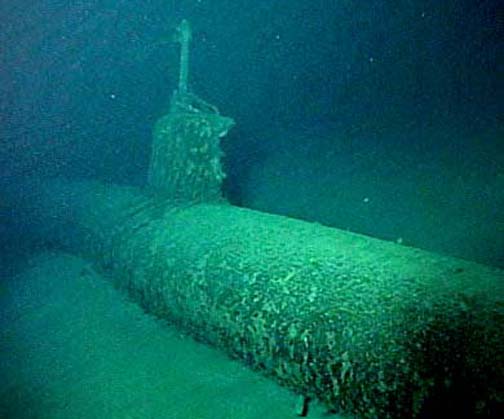
CTY Pisces – Photos of a Japanese midget submarine that was sunk off Pearl Harbor on the day of the attack. There’s a hole at the base of the conning tower where an artillery shell penetrated the hull, sinking the sub and killing the crew. Photos courtesy of Terry Kerby, Hawaii Undersea Research Laboratory. August 2003.
For decades, the Soviet Union used the desolate Kara Sea as their dumping grounds for nuclear waste. Thousands of tons of nuclear material, equal to nearly six and a half times the radiation released at Hiroshima, went into the ocean. The underwater nuclear junkyard includes at least 14 unwanted reactors and an entire crippled submarine that the Soviets deemed proper decommissioning too dangerous and expensive. Today, this corner-cutting haunts the Russians. A rotting submarine reactor fed by an endless supply of ocean water might re-achieve criticality, belching out a boiling cloud of radioactivity that could infect local seafood populations, spoil bountiful fishing grounds, and contaminate a local oil-exploration frontier.
“Breach of protective barriers and the detection and spread of radionuclides in seawater could lead to fishing restrictions,” says Andrey Zolotkov, director of Bellona-Murmansk, an international non-profit environmental organization based in Norway. “In addition, this could seriously damage plans for the development of the Northern Sea Route—ship owners will refuse to sail along it.”
News outlets have found more dire terms to interpret the issue. The BBC raised concerns of a “nuclear chain reaction” in 2013, while The Guardian described the situation as “an environmental disaster waiting to happen.” Nearly everyone agrees that the Kara is on the verge of an uncontrolled nuclear event, but retrieving a string of long-lost nuclear time bombs is proving to be a daunting challenge.
Nuclear submarines have a short lifespan considering their sheer expense and complexity. After roughly 20-30 years, degradation coupled with leaps in technology render old nuclear subs obsolete. First, decades of accumulated corrosion and stress limit the safe-dive depth of veteran boats. Sound-isolation mounts degrade, bearings wear down, and rotating components of machinery fall out of balance, leading to a louder noise signature that can be more easily tracked by the enemy. …….
The Soviet Union and Russia built the world’s largest nuclear-powered navy in the second half of the 20th century, crafting more atom-powered subs than all other nations combined. At its military height in the mid-1990s, Russia boasted 245 nuclear-powered subs, 180 of which were equipped with dual reactors and 91 of which sailed with a dozen or more long-range ballistic missiles tipped with nuclear warheads………
A majority of the Soviet’s nuclear submarine classes operated from the Arctic-based Northern Fleet, headquartered in the northwestern port city of Murmansk. The Northern Fleet bases are roughly 900 kilometers west of the Kara Sea dumping grounds. A second, slightly smaller hub of Soviet submarine power was the Pacific Fleet, based in and around Vladivostok on Russia’s east coast above North Korea. Additional Soviet-era submarines sailed from bases in the Baltic and Black Seas.
…….. the disposal of these submarines posed more problems than previous conventional vessels. Before crews could chop the vessels apart, the subs’ reactors and associated radioactive materials had to be removed, and the Soviets didn’t always do this properly.
Mothballed nuclear submarines pose the potential for disaster even before scrapping begins. In October of 1995, 12 decommissioned Soviet subs awaited disposal in Murmansk, each with fuel cells, reactors, and nuclear waste still aboard. When the cash-strapped Russian military didn’t pay the base’s electric bills for months, the local power company shut off power to the base, leaving the line of submarines at risk of meltdown. Military staffers had to persuade plant workers to restore power by threatening them at gunpoint.
The scrapping process starts with extracting the vessel’s spent nuclear fuel from the reactor core. The danger is immediate: In 1985, an explosion during the defueling of a Victor class submarine killed 10 workers and spewed radioactive material into the air and sea. Specially trained teams must separate the reactor fuel rods from the sub’s reactor core, then seal the rods in steel casks for transport and storage (at least, they seal the rods when adequate transport and storage is available—the Soviets had just five rail cars capable of safely transporting radioactive cargo, and their storage locations varied widely in size and suitability). Workers at the shipyard then remove salvageable equipment from the submarine and disassemble the vessel’s conventional and nuclear weapons systems. Crews must extract and isolate the nuclear warheads from the weapons before digging deeper into the launch compartment to scrap the missiles’ fuel systems and engines.
When it is time to dispose of the vessel’s reactors, crews cut vertical slices into the hull of the submarine and chop out the single or double reactor compartment along with an additional compartment fore and aft in a single huge cylinder-shaped chunk. Once sealed, the cylinder can float on its own for several months, even years, before it is lifted onto a barge and sent to a long-term storage facility.
But during the Cold War, nuclear storage in Soviet Russia usually meant a deep-sea dump job. At least 14 reactors from bygone vessels of the Northern Fleet were discarded into the Kara Sea. Sometimes, the Soviets skipped the de-fueling step beforehand, ditching the reactors with their highly radioactive fuel rods still intact.
According to the Bellona, the Northern Fleet also jettisoned 17,000 containers of hazardous nuclear material and deliberately sunk 19 vessels packed with radioactive waste, along with 735 contaminated pieces of heavy machinery. More low-level liquid waste was poured directly into the icy waters.
But during the Cold War, nuclear storage in Soviet Russia usually meant a deep-sea dump job. At least 14 reactors from bygone vessels of the Northern Fleet were discarded into the Kara Sea. Sometimes, the Soviets skipped the de-fueling step beforehand, ditching the reactors with their highly radioactive fuel rods still intact.
According to the Bellona, the Northern Fleet also jettisoned 17,000 containers of hazardous nuclear material and deliberately sunk 19 vessels packed with radioactive waste, along with 735 contaminated pieces of heavy machinery. More low-level liquid waste was poured directly into the icy waters.
Another submarine is perhaps a bigger risk for a radioactive leak. K-159, a November class, suffered a radioactive discharge accident in 1965 but served until 1989. After languishing in storage for 14 years, a 2003 storm ripped K-159 from its pontoons during a transport operation, and the battered hulk plunged to the floor of the Barents Sea, killing nine crewmen. The wreck lies at a depth of around 250 meters, most likely with its fueled and unsealed reactors open to the elements.
Russia has announced plans to raise the K-27, the K-159, and four other dangerous reactor compartments discarded in the Arctic. As of March 2020, Russian authorities estimate the cost of the recovery effort will be approximately $330 million.
The first target is K-159. But lifting the sunken sub back to the surface will take a specially built recovery vessel, one that does not yet exist. Design and construction of that ship is slated to begin in 2021, to be finished by the end of 2026. Now, in order to avoid an underwater Chernobyl, the Russians are beginning a terrifying race against the relentless progression of decay. https://www.popularmechanics.com/military/navy-ships/a34976195/russias-nuclear-submarine-graveyard/
India must oppose dumping of radioactive waste into the Pacific, but IAEA and Indian govt downplay the dangers
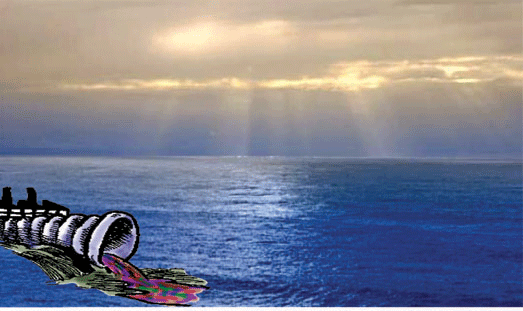 Silence on Fukushima Disaster Exposes our Approach to Nuclear Safety and Why India must Oppose Dumping of Radioactive Water Into the Pacific, BYSONALI HURIA, JANUARY 17, 2021 Next year, the operator of the tsunami-hit Fukushima nuclear plant would start releasing radioactive water into the Pacific Ocean. A number of nations are up in arms against it, but Indian authorities are not rising to the occasion to protect its most vulnerable against the impending disaster.
SONALI HURIA explains what is at stake for people and the environment.
THE new year has begun on a grim note with a toxic gas leak at the Rourkela Steel Plant in Odisha on 6 January, which claimed the lives of four contractual workers. This is the latest in a disconcerting string of industrial accidents in India over the last few years, which have remained peripheral to the mainstream media narrative.
It appears that India has learned precious little from the Bhopal gas disaster, which has ebbed from public memory even as the accident site remains contaminated and survivors continue to await an elusive justice.
Against this backdrop, as we approach the tenth anniversary of the Fukushima nuclear disaster, it may be pertinent to think of what a nuclear accident might mean for the country’s already shoddy industrial safety record and systemic inadequacies, especially as the Fukushima disaster now poses a formidable new challenge to which India’s response, so far, has been active denial and muted silence.
“Fukushima” has become synonymous with the devastating and ongoing nuclear accident that occurred off the eastern Pacific coast of Japan in 2011.
Japan’s nuclear regulator, the Nuclear Regulation Authority (NRA) reportedly stated as recently as in December 2020 that the reactor buildings of the Fukushima Daiichi nuclear power plant continue to record “lethal” levels of radiation, thus posing a “serious challenge” to decommissioning efforts.
DISPOSING CONTAMINATED WATER
Among the many vexing problems precipitated by the accident is the disposal of the contaminated water from the beleaguered nuclear plant.
The acerbic debate within Japan on the disposal of this radioactive water came to a head recently when the Japanese government made it clear that beginning 2022, the operator of the Fukushima plant, the Tokyo Electric Power Company (TEPCO), would start releasing radioactive water from the wrecked plant into the Pacific Ocean—a task envisaged to be accomplished over the next several years as part of larger decommissioning efforts.
Since the devastating earthquake and tsunami off the Pacific coast of Tōhoku triggered a meltdown at the three units of the nuclear plant in March 2011, cleanup efforts have required, among other things, the pumping of tens of thousands of tons of water to cool the smouldering reactor fuel cores.
However, this has led to a steady on-site accumulation of heavily contaminated water—as of 2020, TEPCO has nearly 1.23 million metric tons (and counting) of highly radioactive wastewater on its hands that has been stored in nearly 1,044 tanks…………
LOOMING DANGERS
Greenpeace International has warned that carbon-14, which TEPCO affirmed is present in the contaminated tank-water for the first time in August 2020, has the “potential to damage human DNA”.
Tokyo’s decision has understandably ruffled feathers globally.
The Republic of Korea, China, and Chile, state parties to the London Convention on the Prevention of Marine Pollution by Dumping of Wastes and Other Matter, have repeatedly called for international deliberation and resolution of the problem, even as South Korea, which has banned all seafood imports from the region since the accident, has formally called upon the International Atomic Energy Agency (IAEA) to dissuade Japan. While the North Korean state media described the proposed discharge as a “criminal act”, a coalition of environmental and citizens’ groups from Taiwan petitioned the Japanese government in November 2020, expressing their objections.
The IAEA has confined itself to assisting the Japanese government rather than question or evaluates the proposed water disposal plan. It has demonstrated yet again that it is not the international nuclear watchdog many believe it to be.
UN Special Rapporteurs on hazardous wastes, right to food, rights to assembly and association, and the rights of indigenous people have also urged Japan not to use the present pandemic as a “sleight of hand” to release the radioactive water without any credible consultation within and outside Japan regarding a decision that will have a long-lasting impact on the environment and human health.
DANGERS FOR INDIA
The stakes for India cannot be overstated either.
In an unanticipated moment of candidness, nuclear health scientists from within the Indian establishment—the Defence Research Development Organisation (DRDO) and the All India Institute of Medical Sciences (AIIMS)—have warned that the release of the Fukushima wastewater containing “radioactive isotopes such as cesium, tritium, cobalt and carbon-12” will prove disastrous for human and aquatic health across the world’s coastal belts by crippling fishing economies and causing a “spectrum of diseases, including cancer”……..
the Indian government, in particular, its nuclear establishment, has consistently downplayed the risks associated with nuclear energy to public and environmental health, even labelling public concerns surrounding radiation “myths”, and whose first reactions to the Fukushima nuclear accident were of impudent denial.
… EAS Sarma, former Union Power Secretary to the Government of India, has exhorted the Department of Atomic Energy (DAE) to apprise the Prime Minister’s Office of the “far-reaching implications” of the proposed release of the radioactive Fukushima water, and for India to take a firm stand at the IAEA against this unilateral decision of the Japanese government.
TEPCO has reportedly already been draining hundreds of tonnes of contaminated water into the Pacific Ocean. Noting with dismay the abject silence of the DAE and India’s Environment Ministry in this regard, Sarma identifies the lack of a robust nuclear regulatory body or mechanism in India as responsible for this lack lustre approach to an issue of great import for the health of the people of the country and the larger marine ecology of the region.
Domestically, it is time to pause and think whether India is equipped to handle an accident of the scale of Fukushima—a nuclear Bhopal?
Sarma’s letter to the Cabinet Secretary also underscores the need for the government to recognise the magnitude of the devastation wrought by nuclear accidents, the inability of TEPCO to handle the disaster even a decade since its occurrence, and thus to pause its own plans “to import reactors on a large scale and enlarge nuclear power generation capacity”.
…..…DOWNPLAYING THE DANGERS
In effect, therefore, the IAEA has demonstrated yet again that it is not the international nuclear watchdog many believe it to be. In her fascinating new account of the Chernobyl nuclear accident, Manual for Survival, the environmental historian, Kate Brown, explores the IAEA’s complicity in downplaying the accident and denying radiation impacts in exposed Chernobyl children and even asserting that “radiation anxiety” stems from “irrational fears”, as nuclear technocrats across the globe are prone to doing.
In the tenth year of the ongoing Fukushima accident, therefore, it is imperative that a dialogue be initiated on the need for an effective international nuclear monitoring regime that isn’t also tasked with the responsibility of promoting nuclear energy.
Domestically, it is time to pause and think whether India is equipped to handle an accident of the scale of Fukushima—a nuclear Bhopal?
At the very least, it is time India’s government demonstrates that it is willing and able to deploy its purportedly surging international stature and influence under Prime Minister Narendra Modi to protect the country’s environment and the health of its vulnerable communities against the Fukushima water release, which appears a near certainty now. https://www.theleaflet.in/silence-on-fukushima-disaster-exposes-our-approach-to-nuclear-safety-and-why-india-must-oppose-dumping-of-radioactive-water-into-the-pacific/#
Hinkley Point C mud dredging – radioactive mud could be dumped off Somerset instead of south Wales.
Energy is considering two sites in the Bristol Channel.
over concerns the mud was contaminated by nuclear waste. But a private disposal site off Portishead, on the England side of the channel, is also under consideration. A public outcry over the original mud dumping led to protests and petitions attracting hundreds of thousands of signatures online, a full Senedd debate and an acknowledgment by both the developers
and Natural Resources Wales that better communication with the public was needed over the plans.https://www.bbc.co.uk/news/uk-wales-55577848
The Irish sea – plagued by dumped munitions and radioactive trash
Belfast Telegraph 13th Nov 2020, A report highlighting the dangers of underwater explosions and radioactive
waste has cast doubt on the viability of any Irish Sea bridge. The UK and Ireland Nuclear Free Local Authorities (NFLA) study focused on Beaufort’s Dyke, one of the deepest sections of water in Europe and a training sitefor nuclear submarines. Munitions from both world wars and radioactive waste, when it was permitted in Europe, are known to have been dumped in the stretch of sea.
The accumulating radioactive water is another Fukushima disaster crisis
|
Japan faces another Fukushima disaster crisis https://www.eco-business.com/news/japan-faces-another-fukushima-disaster-crisis/ – 6 Nov 20, A plan to dump a million tonnes of radioactive water from the Fukushima disaster off Japan is alarming local people. Paul Brown, Climate News Network. The Japanese government has an unsolvable problem: what to do with more than a million tonnes of water contaminated with radioactive tritium, in store since the Fukushima disaster and growing at more than 150 tonnes a day.
The water, contained in a thousand giant tanks, has been steadily accumulating since the nuclear accident in 2011. It has been used to cool the three reactors that suffered a meltdown as a result of the tsunami that hit the coast. Tritium is a radioactive element produced as a by-product by nuclear reactors under normal operation, and is present everywhere in the fabric of the reactor buildings, so water used for cooling them is bound to be contaminated by it. To avoid another potentially catastrophic meltdown in the remaining fuel the cooling has to continue indefinitely, so the problem continues to worsen. The government has been told that Japan will run out of storage tanks by 2022. Announcement delayedAs often happens when governments are faced with difficult problems, the unpalatable decision to release the contaminated water into the sea has not been formally announced, but the intention of the government to take this course has been leaked and so widely reported. Immediately both local and worldwide adverse reaction has resulted. There are the direct effects on the local fishermen who fear that no one will want to buy their catch, but over a wider area the health effects are the main concern. As ever with the nuclear industry, there are two widely different views on tritium. The Health Physics Society says it is a mildly radioactive element that is present everywhere, and doubts that people will be affected by it. But the Nuclear Information and Resource Service believes tritium is far more dangerous and increases the likelihood of cancers, birth defects and genetic disorders. The issue is further complicated because the Fukushima wastewater contains a number of other radionuclides, not in such high quantities, but sufficient to cause damage. Ian Fairlie, an independent consultant on radioactivity in the environment, is extremely concerned about Japan’s plans and the health of the local people. In a detailed assessment of the situation he says other highly dangerous radioactive substances, including caesium-137 and strontium-90, are also in the water stored at Fukushima. They are in lower quantities than the tritium, he says, but still unacceptably high – up to 100 times above the legally permitted limit. All these radionuclides decay over time − some take thousands of years − but tritium decays faster, the danger from it halving every 12.3 years. In a briefing for the Nuclear Free Local Authorities (NFLA), a UK based organisation, another independent analyst, Tim Deere-Jones, discusses research that shows that tritium binds with organic material in plants and animals. This is potentially highly damaging to human health because it travels up the food chain in the marine environment, specifically accumulating in fish. This means fish-eating communities on the Japanese coast could ingest much larger quantities of tritium than some physicists think likely. Relying on dilutionTim Deere-Jones is also concerned that the tritium will be blown inshore on the prevailing wind in sea spray and will bio-accumulate in food plants, making it risky to eat crops as far as ten miles inland. Because of the potential dangers of releasing the water the NFLA has asked the Japanese government to reconsider its decision. The government has not yet responded though, because officially it is still considering what to do. However, it is likely to argue that pumping the contaminated water into the sea is acceptable because it will be diluted millions of times, and anyway seawater does already contain minute quantities of tritium. Dr Fairlie is among many who think this is too dangerous, but he admits there are no easy solutions. He says: “Barring a miraculous technical discovery which is unlikely, I think TEPCO/Japanese Gov’t [TEPCO is the Tokyo Electric Power Company, owner of the Fukushima Daiichi plant] will have to buy more land and keep on building more holding tanks to allow for tritium decay to take place. Ten half-lives for tritium is 123 years: that’s how long these tanks will have to last – at least. “This will allow time not only for tritium to decay, but also for politicians to reflect on the wisdom of their support for nuclear power.” |
|
Ocean ecosystems – future in doubt

The uncertain future of the oceans, Science Daily October 26, 2020
- Source:
- Helmholtz Centre for Ocean Research Kiel (GEOMAR)
- Summary:
- Marine food webs and biogeochemical cycles react very sensitively to the increase in carbon dioxide (CO2) – but the effects are far more complex than previously thought. Data were combined from five large-scale field experiments, which investigated how the carbon cycle within plankton communities reacts to the increase of CO2.
- The ocean plays a key role in the current climate change, as it absorbs a considerable part of the atmospheric carbon dioxide emitted by humankind. On the one hand, this slows down the heating of the climate, and on the other hand, the dissolution of CO2 in seawater leads to acidification of the oceans.
- This has far-reaching consequences for many marine organisms and thus also for the oceanic carbon cycle. One of the most important mechanisms in this cycle, is called the biological carbon pump. Part of the biomass that phytoplankton forms in the surface ocean through photosynthesis sinks to the depths in the form of small carbonaceous particles. As a result, the carbon is stored for a long time in the deep sea. The ocean thus acts as a carbon sink in the climate system. How strongly this biological pump acts varies greatly from region to region and depends on the composition of species in the ecosystem.
The study, which has now been published in the journal
Nature Climate Change, is one of the most comprehensive studies so far on the effects of ocean acidification on marine ecosystems. Scientists at the GEOMAR Helmholtz Centre for Ocean Research in Kiel have now been able to show for the first time that ocean acidification influences the carbon content of sinking organic material, and thus the biological pump. Surprisingly, the observed changes were highly variable. The carbon content of sinking particles increased or decreased significantly with increasing CO2, depending on the composition of species and the structure of the food web. Since the underlying data cover a wide range of ocean regions, this seems to be a global phenomenon. These findings allow a completely new assessment of the effects of ocean acidification……….https://www.sciencedaily.com/releases/2020/10/201026114214.htm
Angry reactions to Japanese government’s plan to release Fukushima nuclearwaste water into the Pacific
 Plan to release Fukushima water into Pacific provokes furious reaction https://www.dw.com/en/tepco-fukushima-contaminated-water/a-55334567– 25 Oct 20, The Japanese government has reportedly decided to pump highly radioactive cooling water from the Fukushima plant into the Pacific Ocean. The plan has been slammed by environmental groups, locals and neighboring nations.Environmental groups have reacted furiously to reports that the Japanese government is set to approve plans to dump more than 1 million tons of highly radioactive water stored at the Fukushima nuclear plant into the Pacific Ocean, with their concerns shared by the governments of neighboring countries and people living in northeastern Japan.
A government panel set up to determine the best way of disposing the radioactively contaminated water is scheduled to announce its decision by the end of the month.
Three Fukushima reactors suffered meltdowns following a 2011 tsunami that destroyed wide swaths of the coastline in northern Japan’s Miyagi prefecture.
According to reports leaked to Japanese media, the panel will recommend releasing the approximately 1.23 million tons of water currently stored in tanks in the grounds of the nuclear plant.
The alternatives that have been considered are to evaporate the water into the atmosphere or to mix it into concrete and store it underground.
According to reports from national broadcaster NHK and other news outlets, the panel will call for the water to be again put through a process designed to reduce the radioactivity to below “regulatory standards” and dilute it with sea water before it is pumped into the ocean.
The three damaged reactors require constant cooling with water, which becomes highly radioactive, and mixes with around 170 tons of groundwater that seeps into the subterranean levels of the reactor buildings every day.
That water is pumped into hundreds of huge tanks on the site every day, with Tokyo Electric Power Co. (Tepco), the operator of the power plant, estimating that even with more waste tanks being constructed, storage capacity will be reached fully in the summer of 2022.
Environmental groups insist that there is no reason why more storage tanks cannot be constructed outside the perimeter of the plant. They accuse the government of seeking the cheapest and quickest solution to the problem, as authorities have promised the site will be safe in 40 years.
And that deadline, they say, is completely unrealistic. Complications include recovering the molten fuel that escaped from the reactor chambers. This kind of recovery has never before been attempted and the technology required does not yet exist.
They also accuse the Japanese authorities of playing down the radiation levels in the water planned for release.
Environmental groups insist that there is no reason why more storage tanks cannot be constructed outside the perimeter of the plant. They accuse the government of seeking the cheapest and quickest solution to the problem, as authorities have promised the site will be safe in 40 years.
And that deadline, they say, is completely unrealistic. Complications include recovering the molten fuel that escaped from the reactor chambers. This kind of recovery has never before been attempted and the technology required does not yet exist.
They also accuse the Japanese authorities of playing down the radiation levels in the water planned for release.
Elevated levels of radiation
A study by the Kahoko Shinpo newspaper confirmed that levels of iodine 129 and ruthenium 106 exceeded acceptable levels in 45 out of 84 samples collected in 2017.
Iodine has a half-life of 15.7 million years and can cause cancer of the thyroid, while ruthenium 106 is produced by nuclear fission and high doses can be toxic or carcinogenic when ingested.
Tepco subsequently confirmed that levels of strontium 90 were more than 100 times above legally permitted levels in nearly 65,000 tons of water that had already been treated,
They were 20,000 times above safety levels set by the government in several storage tanks at the Fukushima site.
Fish industry worried
Precisely what is in the water that is due to be released into the ocean cannot be confirmed, however, as Tepco and the government have refused to permit independent testing on samples.
Residents of Fukushima Prefecture are also against the plan, with 42 of the 59 local authorities in the prefecture passing resolutions either expressing outright opposition to the plan or deep concern.
The fishing industry — which was devastated by the original natural disaster and has since struggled to reestablish itself — is also hostile to the proposals, with representatives of fishing cooperatives meeting with government officials last week to express their concerns.
“We are terrified that if even one fish is found to have exceeded the [radiation] safety standards after the treated water is released, people’s trust in us will plummet,” a fisherman from the city of Soma told Kyodo News. “Our efforts to fight false information and address other challenges could be wasted.”
Hideyuki Ban, co-director of the Citizens Nuclear Information Center, echoed those calls.
“Release of the contaminated water into the ocean should not be allowed when fishing unions from Fukushima and neighboring Ibaraki and Iwate prefectures are opposed,” he told DW.
“If it is dumped in the ocean, it will become an international problem and it is possible that bans on exports from this area will continue or that new export restrictions may be introduced.”
Read more: Japan: Environmentalists say Fukushima water too radioactive to release
“It is highly unlikely that the highly radioactive waste can be removed from the site of the nuclear plant, so instead of rushing to remove the fuel debris, the overall decommissioning schedule should be reviewed and measures taken so that the contaminated water can be stored on land,” he said.
In a statement issued to DW, Tepco said it is “not in a position to make a decision on this matter.”
“The government has been listening to the opinions of various stakeholders, including local municipalities and those involved in the agriculture, forestry and fisheries industries, and it is the government that will make a decision on the disposal method,” the company said, adding Tepco will follow the disposal guidelines as instructed following the official decision.
Neighbors’ concerns
The residents of Japan’s neighboring countries and their governments are equally concerned, with an editorial in the Korea Times on Monday warning of an “environmental disaster” that could “destroy the marine ecosystem.”
The South Korean government has also demanded that Japan provide a full accounting of its plans for the contaminated water, including an accurate accounting of the different radionuclides that it contains.
In a statement released by the Foreign Ministry, Seoul said it places the highest priority on protecting the environment and the Korean public’s health.
Scientists and academics in China are demanding independent testing and verification of radiation levels in the water, while environmental and citizens’ groups in Taiwan have previously expressed concerns about the impact of any large-scale release of contaminated water on their health and well-being.
Warnings on releasing Fukushima’s radioactive water into the Pacific Ocean
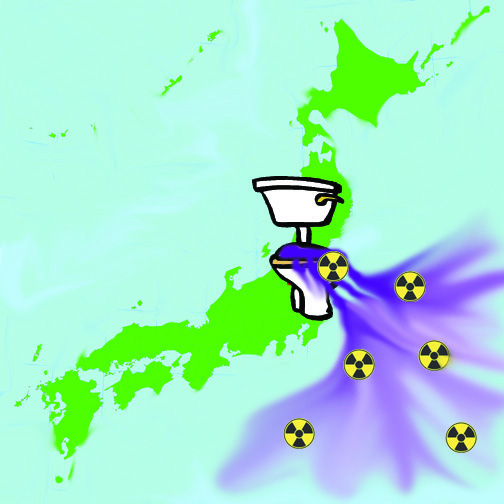 Warning over Fukushima nuclear power plant water release, 7 News, CNN, Allie Godfrey, Sunday, 25 October 2020 Contaminated water that could soon be released into the sea from the Fukushima Daiichi nuclear power plant contains radioactive carbon with the potential to damage human DNA, environmental rights organisation Greenpeace has warned.
To cool fuel cores at the damaged Fukushima nuclear plant operator Tokyo Electric Power Company (TEPCO) has pumped in tens of thousands of tons of water over the years. Once used, the water is put into storage.
But nine years on from Japan’s worst nuclear disaster, storage space is running out, and the government is still deciding what to do with the water.
Authorities, including the country’s environment minister, have indicated the only solution is to release it into the ocean – a plan facing opposition from environmental campaigners and fishing industry representatives.
On Friday, the Japanese government postponed a decision on what to do with the water. ……….“Any radioactive discharge carries some environmental and health risk,” Francis Livens, a professor of radiochemistry at the University of Manchester told CNN, adding that the risk would be relative to how much carbon 14 would be released into the ocean. “An awful lot really does depend on how much is going to be discharged.”
“If it’s (carbon-14) there and it’s there in quantity, yes, there probably is a risk associated with it,” Livens, who is not associated with the Greenpeace study, said. “People have discharged carbon-14 into the sea over many years. It all comes down to how much is there, how much is dispersed, does it enter marine food chains and find its way back to people?”……..
Corkhill told CNN the contaminated water is becoming a pressing concern: If the Japanese government does not deal with the contaminated water, it will have “several millions of cubic meters of water that’s radioactive all sat on the Fukushima site,” she said. https://7news.com.au/technology/warning-over-fukushima-nuclear-power-plant-water-release-c-1453141
Delayed freezing of Arctic sea due to continued freakish warm weather

|
Alarm as Arctic sea ice not yet freezing at latest date on record
Delayed freeze in Laptev Sea could have knock-on effects across polar region, scientists say, Guardian, jonathan Watts Global environment editor @jonathanwatts, Thu 22 Oct 2020 For the first time since records began, the main nursery of Arctic sea ice in Siberia has yet to start freezing in late October. The delayed annual freeze in the Laptev Sea has been caused by freakishly protracted warmth in northern Russia and the intrusion of Atlantic waters, say climate scientists who warn of possible knock-on effects across the polar region. Ocean temperatures in the area recently climbed to more than 5C above average, following a record breaking heatwave and the unusually early decline of last winter’s sea ice. The trapped heat takes a long time to dissipate into the atmosphere, even at this time of the year when the sun creeps above the horizon for little more than an hour or two each day. Graphs of sea-ice extent in the Laptev Sea, which usually show a healthy seasonal pulse, appear to have flat-lined. As a result, there is a record amount of open sea in the Arctic. “The lack of freeze-up so far this fall is unprecedented in the Siberian Arctic region,” said Zachary Labe, a postdoctoral researcher at Colorado State University. He says this is in line with the expected impact of human-driven climate change. 2020 is another year that is consistent with a rapidly changing Arctic. Without a systematic reduction in greenhouse gases, the likelihood of our first ‘ice-free’ summer will continue to increase by the mid-21st century,’ he wrote in an email to the Guardian. This year’s Siberian heatwave was made at least 600 times more likely by industrial and agricultural emissions, according to an earlier study. The warmer air temperature is not the only factor slowing the formation of ice. Climate change is also pushing more balmy Atlantic currents into the Arctic and breaking up the usual stratification between warm deep waters and the cool surface. This also makes it difficult for ice to form……… https://www.theguardian.com/world/2020/oct/22/alarm-as-arctic-sea-ice-not-yet-freezing-at-latest-date-on-record?CMP=twt_a-environment_b-gdneco&fbclid=IwAR1qZzerjnAanadMi942h7N8XdCf6Drz_-UIO5mECgAzvXqgiIYjuh6BETc |
|
Not only Fukushima – UK nuclear reactors also empty radioactive water into the sea
|
Ian Fairlie’s Blog 22nd Oct 2020, Concerns over proposed tritium discharges from Fukushima – why no apparent concern about the larger tritium releases from Hunterston B and Torness? Recent newspaper reports have expressed concern about the apparent decision by the Japanese Government and TEPCO to discharge large volumes of radioactive tritiated water from the stricken Fukukshima nuclear power station in Japan into the Pacific Ocean. I have expressed concern myself about this proposed decision -see here. Instead I recommend that TEPCO and the Japanese Government should build more storage tanks to allow for the decay of the radioactive tritium. Some readers have commented that all nuclear power stations world-wide discharge tritium into the sea (sometimes via rivers) and into the atmosphere. This is true and TEPCO used this fact to try to justify its proposed dumping of tritium into the sea.
My reply as that two wrongs do not make a right: it is in fact quite worrying that all nuclear facilities routinely dump large volumes of tritium into the sea and the air. This applies to all UK nuclear power stations as well – including Hunterston B and Torness in Scotland. Recent reports have expressed concern about the restarts of the ancient dilapidated reactors at Hunterston B which are well past their sell-by dates.
These fears largely centre on the risks of a nuclear accident at these oldunsafe reactors. But shouldn’t we also be concerned about their tritium discharges? In 2018, annual tritium releases to the sea from Hunterston B were 148 terabecquerels (TBq) and the even more dangerous tritium emissions to the atmosphere totalled 0.96 TBq.
The situation is similar at all other UK nuclear power stations. For example, at Torness, the tritium discharges in 2018 were 295 TBq into the sea and 1.32 TBq into the air. In most cases, these annual amounts are larger than the annual amounts being proposed to
be released at Fukushima. So shouldn’t we be equally be concerned at these releases, as we are at the Japanese ones? |
|
Vital need to protect Antarctic seas: groups aim for new protected areas

‘No other choice’: Groups push to protect vast swaths of Antarctic seas, Mongabay
BY ELIZABETH CLAIRE ALBERTS ON 19 OCT, 2020
- A coalition of conservation groups is advocating for the establishment of three new marine protected areas (MPAs) in East Antarctica, the Antarctic Peninsula and the Weddell Sea, which would encompass 4 million square kilometers (1.5 million square miles) of the Southern Ocean, or 1% of the global ocean.
- These proposals will be discussed at an upcoming meeting of the Commission for the Conservation of Antarctic Marine Living Resources (CCAMLR), which is due to take place online because of the pandemic.
- Conservationists anticipate that China and Russia may not support these MPA proposals due to fishing interests in the region, although they are optimistic that the MPAs will eventually be approved.
A coalition of conservation groups, including Pew, ASOC, SeaLegacy, Antarctica2020, Ocean Unite, and Only One, are working together to advocate for the formation of three marine protected areas (MPAs) in East Antarctica, the Antarctic Peninsula, and the Weddell Sea. Together, these areas would protect about 4 million square kilometers (1.5 million square miles), encompassing 1% of the world’s ocean. That’s two and a half times the size of Alaska, and nearly three times the size of Papahānaumokuākea Marine National Monument in Hawaiʻi, which is currently one of the world’s largest marine sanctuaries.
“If these three marine protected areas … [are] created at the same time, it would form the largest marine protection in the history of humanity,” Cristina Mittermeier, National Geographic wildlife photographer and co-founder of SeaLegacy, told Mongabay. “[It would be] a piece of good news that the planet needs.”
This is a matter of political will’
The body responsible for making decisions surrounding Antarctica’s marine region is the Commission for the Conservation of Antarctic Marine Living Resources (CCAMLR), an international commission with 25 member states and the European Union, as well as 10 acceding states. Originally established to manage krill fisheries in the Southern Ocean, the commission meets each year in Hobart, Australia, to negotiate total allowable catches for fisheries, and to discuss other matters related to Antarctica’s marine region, including the designation of MPAs.
Any decision requires a consensus among all members, and proposals can take a long time to be approved. For instance, it took more than five years for the commission to approve a proposal to turn a region of the Ross Sea into an MPA, according to Werner. But it finally went ahead in 2016: now 1.55 million km2 (nearly 600,000 mi2)of the Ross Sea is classified as an MPA, with 1.12 million km2 (432,000 mi2) of the region fully protected from commercial fishing.
“In CCAMLR, everything is possible,” said Werner, who acts as an official observer and scientific representative at the commission. “You can have a proposal blocked for years like the Ross Sea, and then one day [it happens].”…………
The way that Antarctica goes, so does the world’
One of the most important species living in the Southern Ocean is krill. These tiny, shrimp-like crustaceans are the foodstuff for many species, such as whales, seals, penguins, squids, fish and seabirds. Without krill, the pelagic food web would entirely collapse.
Krill is also heavily harvested for human consumption, mainly for fish meal and omega-3 dietary supplements.
The establishment of the three proposed MPAs — which would include no-take zones, but also areas that would allow regulated fishing — would help protect krill populations from overharvesting and enable fishing activities to continue in other areas, Cousteau said. According to one study, MPAs help increase fish mass………
But it’s not just fishing that’s a threat to krill — climate change is wreaking havoc on the species as high temperatures melt the ice it vitally depends upon. …….. https://news.mongabay.com/2020/10/no-other-choice-groups-push-to-protect-vast-swaths-of-antarctic-seas/
1 This Month

18 March Webinar @ 1 PM EST: An Assessment of SMR Projects: The Case of Canada
register for the zoom:
https://us02web.zoom.us/webinar/register/WN_o8BIIOUvQ2ONJR1nta65DQ#/registration

of the week – STOP SMALL MODULAR REACTORS IN CANADA
To see nuclear-related stories in greater depth and intensity – go to https://nuclearinformation.wordpress.com
-
Archives
- February 2026 (256)
- January 2026 (308)
- December 2025 (358)
- November 2025 (359)
- October 2025 (376)
- September 2025 (258)
- August 2025 (319)
- July 2025 (230)
- June 2025 (348)
- May 2025 (261)
- April 2025 (305)
- March 2025 (319)
-
Categories
- 1
- 1 NUCLEAR ISSUES
- business and costs
- climate change
- culture and arts
- ENERGY
- environment
- health
- history
- indigenous issues
- Legal
- marketing of nuclear
- media
- opposition to nuclear
- PERSONAL STORIES
- politics
- politics international
- Religion and ethics
- safety
- secrets,lies and civil liberties
- spinbuster
- technology
- Uranium
- wastes
- weapons and war
- Women
- 2 WORLD
- ACTION
- AFRICA
- Atrocities
- AUSTRALIA
- Christina's notes
- Christina's themes
- culture and arts
- Events
- Fuk 2022
- Fuk 2023
- Fukushima 2017
- Fukushima 2018
- fukushima 2019
- Fukushima 2020
- Fukushima 2021
- general
- global warming
- Humour (God we need it)
- Nuclear
- RARE EARTHS
- Reference
- resources – print
- Resources -audiovicual
- Weekly Newsletter
- World
- World Nuclear
- YouTube
-
RSS
Entries RSS
Comments RSS
 nuclear-news