A Sunken Nuclear Submarine Is Leaking Radiation Into the Ocean. How Worried Should We Be?

Repairs or just outright cleanup would be expensive, extremely difficult, slow, and, of course, quite dangerous.
By Luis Prada, March 25, 2026, https://www.vice.com/en/article/a-sunken-nuclear-submarine-is-leaking-radiation-into-the-ocean-how-worried-should-we-be/
According to new research published in PNAS, a Cold War-era nuclear submarine sitting at the bottom of the Norwegian Sea is still leaking radioactive material. It’s happening slowly, if unevenly, and it’s contained just enough to avoid becoming a full-scale environmental disaster… for now.
The K-278 Komsomolets sank in 1989 after an onboard fire, taking with it a nuclear reactor and two nuclear torpedoes. It now sits more than 1,600 meters below the surface, in a part of the ocean that is freezing and almost entirely out of reach.
A research team led by Justin Gwynn at Norway’s radiation safety authority analyzed years of data, including a 2019 survey using a remotely operated vehicle. The team found that the wreck is leaking radioactive isotopes, including cesium and strontium, through cracks in its deteriorating hull.
The leaks aren’t constant. They come in waves, with visible plumes drifting out from various spots, like the reactor compartment or a ventilation pipe. Radiation levels take a big jump closer to the submarine, with levels reaching hundreds of thousands of times above normal background radiation levels.
At Least the Nuclear Submarine’s Nuclear Torpedoes Are Still Intact
Terrifying, and here’s where it gets strange: measurements taken from just a few feet away dramatically drop off. Researchers believe this is caused by the ocean diluting the problem. That may be why the surrounding ecosystem isn’t showing any obvious signs of collapse, given all of the toxic radiation. There’s still plenty of marine life clinging to the wreck, including sponges, corals, and anemones. They have slightly elevated radiation levels but no visible signs of deformation or damage, though genetic damage wouldn’t be surprising.
Sediment samples collected nearby show minimal contamination. Things wouldn’t be looking so rosy if the nuclear torpedoes inside it weren’t intact, which they very much are and have been since the 1990s.
So far, there are no signs of imminent disaster. Everything is stable and holding steady… for now.
This won’t always be the case, and it is really more a matter not of if but of when. The reactor is still corroding, and the structure is still weakening. Repairs or just outright cleanup will be expensive, extremely difficult, slow, and, of course, quite dangerous. The risk is contained, but that doesn’t mean it’s going away anytime soon.
Could a huge data centre revitalise Ayrshire – or ruin it?
Jonathan Geddes,BBC Glasgow and West reporter, 1 Mar 26
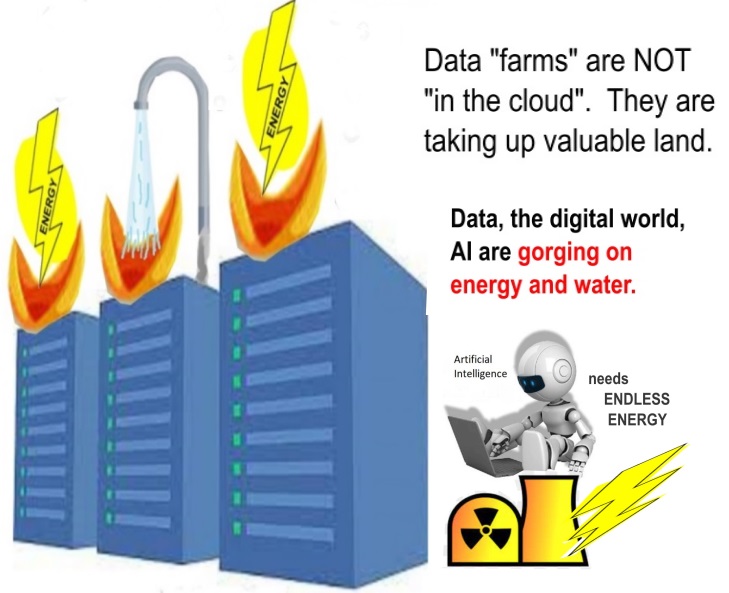
It is currently a large, unassuming patch of farmland in East Ayrshire – but within years it could be one of the largest artificial intelligence data centres on Earth.
About 100 hectares (250 acres) of land near HMP Kilmarnock has been earmarked for a technology hub by energy firm ILI Group.
ILI says the development would be similar in size to the prison, while the “vast majority” of the land would be set aside for “biodiversity and landscaping”.
Supporters talk of it revitalising the region, bringing new jobs and investment that would be ploughed back into the community. But the plans have met strong opposition from locals concerned about the impact on the wider area.
Some of those opposed have contacted BBC Your Voice, and say the firm has not provided concrete details about a building that would dominate Hurlford for decades to come.
In recent years, a string of applications for data centres have been made across Scotland. The group Action to Protect Rural Scotland estimate 17 are at various stages of the planning process.
It comes during a worldwide rush to develop data centres. Estimates in 2025 suggested about $3tn (£2.2tn) will be spent on data centres that support AI between now and 2029.
That surge has been accompanied by growing concern about the knock-on effects of the facilities, especially the large amounts of energy and water they consume……………….
For some Hurlford residents though, the announcement of the facility – called Rufus – prompted questions, and a lot of them.
Lisa Beacham became aware of the proposal – which ILI stress is still at a very early stage – shortly after the initial announcement.
A student from Hurlford, she then went down a rabbit hole looking at the amount of water that would be needed for coolant, the process which stops the computer chips there from overheating.
“The site proposal is that it would be powered at 540MW, which would require millions of litres of water a day,” she said.
“Water is a global commodity and we are currently facing global water bankruptcy, according to the UN. Yet we’ll have a site that is using up a huge amount, and due to residue [from the centre] the water used there cannot easily be recirculated.”
Last year the BBC told of people who lived near a data centre in Georgia in the USA who were struggling with an excessive build-up of sediment in water supplies………………………….
Alex De Vries, who runs the Digiconomist blog and website, said he estimated a 540MW facility “could result in almost 6bn litres of annual fresh water consumption” to generate the power needed.
He told BBC Scotland News: “The relatively cooler climate in Scotland isn’t going to do much to mitigate this.”…………………………………..
Cheryl Rowland, an admin assistant at a construction company, who lives in Hurlford, is sceptical.
Speaking at the consultation event, she said: “They are talking about something that will be here for 40 or 50 years.
“Would they arrange education upskilling, to bring local people through and help them grow into jobs here, or will the jobs all be people coming into the area?”……………………
Rowland says it is a worry such a large site will be built by a company who will not be there long term.
https://www.bbc.co.uk/news/articles/c2d1ny161yyo
Conservationists challenge effectiveness of £700 million fish safety system.
“EDF’s claims simply do not stand up to scrutiny. Its approach falls short of what is needed to protect the Severn’s unique biodiversity and risks irreversible harm to the estuary’s fish populations.”
Anthony Hawkswell March 1, 2026, https://angling-international.com/2026/03/01/conservationists-challenge-effectiveness-of-700-million-fish-safety-system/
The developer of the UK’s largest nuclear power station – close to one of the country’s most popular sea fishing venues – has claimed that it will have more fish protection than any other structure of its kind in the world.
EDF Energy, which is building the £46 billion Hinckley Point C power station on the River Severn Estuary in the Southwest of England, is spending £700m to install three fish protection systems, including a ‘fish disco’, a British developed innovation that is said to deter marine life from the reactor.
It says that a pioneering British-developed Acoustic Fish Deterrent (AFD) system has been successfully installed at Hinkley Point C, marking a major breakthrough in aquatic safety and environmental stewardship.
However, leading conservationists and politicians say that the company is downplaying the environmental risks to the River Severn Estuary. EDF’s claim that the AFD system is both effective and proportionate in cost is fiercely disputed by environmental groups and a coalition of over 60 MPs.
EDF Energy claims that Hinkley Point C leads the globe with three advanced fish protection measures: the AFD, plus state-of-the-art intake heads and a comprehensive fish recovery and return system. Combined, these initiatives represent a £700 million investment in marine conservation and set a new benchmark for the sector.
The ADF, developed by Fishtek Marine, employs ultrasound technology to guide fish away from danger zones near water intakes. Recent sea trials, led by Swansea University, have demonstrated the system’s high effectiveness in reducing fish mortality rates. Dr Emily Carter, Senior Researcher at Swansea University, commented, “Our results show a significant reduction in fish approaching intake areas, confirming the technology’s value for large-scale applications.”
EDF says these findings suggest that further compensation measures, such as additional artificial saltmarsh habitats, may not be necessary. “Local communities stand to benefit from the enhanced marine environment, with reduced disruption to fish stocks supporting both commercial and recreational fisheries,” said EDF.
Regulatory approval for the system was secured following a thorough application process with the Marine Management Organisation………………………………………………..
However, in a strongly worded open letter delivered to government regulators, England’s foremost nature organisations and dozens of Members of Parliament challenged EDF’s portrayal of the AFD’s efficiency and expense. The signatories argue that EDF’s own data misrepresents the true scale of fish losses likely to occur without full-scale deterrent measures, and they point to independent evidence suggesting the company has underestimated both the ecological and economic case for robust fish protection
Matt Browne, of The Wildlife Trusts, said: “EDF’s claims simply do not stand up to scrutiny. Its approach falls short of what is needed to protect the Severn’s unique biodiversity and risks irreversible harm to the estuary’s fish populations.”
Browne highlighted that the Wildlife Trust’s recent analysis found the proposed deterrent would leave millions of fish vulnerable each year, including species vital to both commercial and recreational fishing.
A recent publication by the Wildlife Trusts exposes significant shortcomings in the Nuclear Regulatory Review process, revealing that key assumptions about fish behaviour and the resilience of the population were misrepresented or omitted. The report details how EDF’s own studies failed to account for cumulative impacts on migratory species and ignored alternative, more effective mitigation options. These findings have intensified calls for a comprehensive reassessment of the project’s licensing condition.
Natural England, the government’s statutory adviser on the natural environment, has reiterated the Severn Estuary’s status as a legally protected site under international and domestic law. The agency emphasises the estuary’s crucial role as a nursery for diverse fish species and migratory birds, warning that any failure to implement proven fish deterrent technology risks breaching conservation obligations and undermining decades of habitat restoration.
As the debate intensifies, the angling community, conservationists and policymakers are united in demanding greater transparency and government accountability. There are mounting calls for an independent review of EDF’s environmental claims and the immediate adoption of best-available fish protection technology.
“The future health of the Severn Estuary, and the integrity of the UK’s environmental standards, now hangs in the balance,” said Natural England.
New Mexico Environment Department Holds LANL Accountable for Hexavalent Chromium Plume.
Concerned Citizens for Nuclear Safety, 20 Feb 26
Today’s Update is continuation of our reporting on the diligent and thorough work done by the New Mexico Environment Department to hold Los Alamos National Laboratory (LANL) accountable for not responsibly addressing the hexavalent chromium plume beneath LANL that has now spread beneath Pueblo de San Ildefonso.
On Tuesday, February 11th, the New Mexico Environment Department issued two Administrative Compliance Orders under the New Mexico Hazardous Waste Act and the New Mexico Water Quality Act to address the on-going migration of hexavalent chromium into the sole source regional drinking water aquifer that feeds the Rio Grande and those living downstream. The Orders proposed civil penalties for multiple violations of both laws that total nearly $16,000,000. https://www.env.nm.gov/wp-content/uploads/2026/02/2026-02-11-COMMS-NMED-acts-to-hold-DOE-accountable-for-legacy-waste-Final.pdf
Both Orders provide detailed histories of what has led the Environment Department to issue civil penalties for contamination of groundwater, which was first discovered in 2004 in a newly drilled monitoring well in Sandia Canyon.
Since then LANL has not done everything in its power to properly investigate and protect against the groundwater contamination. It has drilled wells at least 1,000 deep to reach the contaminated waters, extracted those waters, treated the waters on the surface, and returned them back into the deep aquifer. Due to the findings of contamination beneath Pueblo de San Ildefonso, in November 2025, the Environment Department ordered the cessation of these operations. This is not the first time the Environment Department ceased operations.
Major leak at Highland nuclear site triggers hunt for mystery bunkers

A 1960s bunker at a Highland nuclear site quietly leaked radioactive water
for at least a year before the alarm was raised – and officials have now
ordered a hunt for other similar hidden structures that may be leaking too,
the Sunday National can reveal.
Dounreay, on the Caithness coast, was the
UK’s centre for experimental fast‑reactor research from the 1950s until
the 1990s and is now a major nuclear decommissioning site. The clean‑up
is funded by the UK Government’s Nuclear Decommissioning Authority and
carried out locally by Nuclear Restoration Services (NRS), which runs the
site and is responsible for managing its ageing reactors, waste pits and
other legacy facilities.
The National revealed last year that radioactive
material had been accidentally released at Dounreay between July 2023 and
August 2024 and that Scotland’s environmental watchdog, SEPA, found the
operator had breached its permit.
But now, a new internal investigation
report, released to the Sunday National under freedom of information, goes
further: it warns that other underground structures with “unrevealed
hazards” may still be waiting to be found. The original leak source was a
disused underground carbon bed filter – essentially a concrete bunker –
built in the early 1960s as part of a ventilation system for one of
Dounreay’s facilities. It was taken out of normal use decades ago and
left as a legacy structure to be dealt with during decommissioning.
The report notes that it “was never designed to retain water”, yet by 2017,
it was known to contain thousands of litres of radioactive liquor and had
already been identified as a possible source of contamination at one of the
site’s outfalls.
A spokesperson for the Scottish Environment Protection
Agency (SEPA) said: “In June 2024, Nuclear Restoration Services Ltd (NRS)
notified SEPA of a potential leak of radioactively contaminated water from
a carbon bed filter on the Dounreay site. It was subsequently established
that there was a small leak from the carbon bed filter. Monitoring by the
operator has not detected any increase in radioactivity in groundwater
downstream.
“SEPA’s investigation concluded that the operator had
breached conditions of its Environmental Authorisations (Scotland)
Regulations 2018 (EASR) authorisation. To secure compliance, we have issued
a Regulatory Notice requiring NRS to take specified steps, including
reviewing groundwater monitoring arrangements and undertaking
characterisation to establish the extent of contamination which has arisen
from the leak from the carbon bed filter.”
The National 15th Feb 2026, https://www.thenational.scot/news/25854472.major-leak-highland-nuclear-site-triggers-hunt-mystery-bunkers/
A Business Necessity: Align With Nature or Risk Collapse, IPBES Report Warns
IPS News, By Busani Bafana, February 13, 2026
BULAWAYO, Zimbabwe & MANCHESTER, United Kingdom, Feb 9 2026 (IPS) – Business can still remain profitable while protecting the environment but invest in nature-positive operations, says a landmark report by the Intergovernmental Platform on Biodiversity and Ecosystem Services (IPBES), which finds that global companies have contributed to the escalating loss of biodiversity.
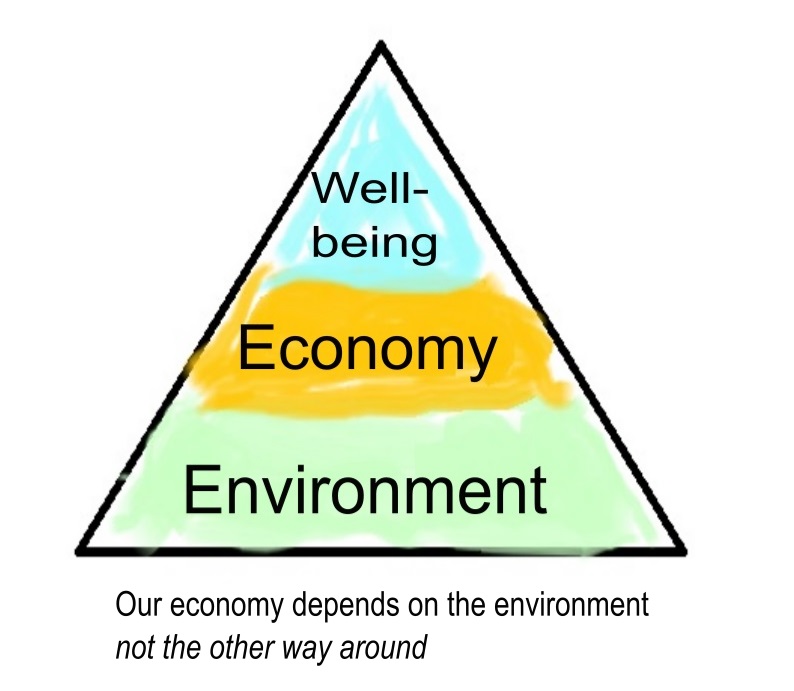
The IPBES Methodological Assessment Report on the Impact and Dependence of Business on Biodiversity and Nature’s Contributions to People, known as the Business and Biodiversity Report, says global business has benefited from nature but has immensely contributed to the decline in biodiversity. It is time it changes how it does business because biodiversity decline is a “critical systemic risk threatening the economy, financial stability, and human well-being.”
The global economy, driven by business, is dependent on healthy biodiversity and nature for materials, climate regulation, clean water, and pollination. However, the current economic system treats nature as free and infinite, creating perverse incentives for its exploitation. Businesses are largely rewarded for short-term profit, even when their activities degrade the natural systems they rely on, creating a huge risk to the economy and society, the report said.
It Must Be Business Unusual Now
Approved at the recent 12th session of the IPBES Plenary, held in Manchester, United Kingdom, the report calls for the end of business as usual. Global businesses, heavily dependent on nature and impacted by nature, must quickly change their operations or face collapse.
“Businesses and other key actors can either lead the way towards a more sustainable global economy or ultimately risk extinction… both of species in nature but potentially also their own,” noted the report.
Based on thousands of sources and prepared over three years by 79 leading experts from 35 countries from all regions of the world, the report is the first assessment of the impacts and dependencies of business on biodiversity and nature’s contributions to people.
Current conditions perpetuate business as usual and do not support the transformative change necessary to halt and reverse biodiversity loss, said the report, pointing out that large subsidies that drive biodiversity losses are directed to business activities with the support of businesses and trade associations………………………………………………………………………………………………………………………………………………………………………………………………………………
An Enabling Environment Is Good for Biodiversity
The report offers a key solution of creating a new “enabling environment” where what is profitable for business aligns with what is good for biodiversity and society. Current conditions — laws, financial systems, corporate reporting rules, and cultural norms — do not reward businesses for protecting nature.
There are many barriers to protecting nature, such as the focus on short-term profits versus long-term ecological cycles. In addition, there is a lack of mandatory disclosure and accountability for environmental impacts, inadequate data, metrics, and capacity within the business community, as well as the failure to integrate Indigenous and local knowledge in biodiversity protection.
The creation of an enabling environment needs coordinated action policy and legal frameworks where governments should integrate biodiversity into all trade and sectoral policies. Besides, there is a need to redirect the USD 7.3 trillion in harmful flows using taxes, green bonds, and sustainability-linked loans to reward positive action.
Businesses must engage with Indigenous Peoples and local communities with Free, Prior, and Informed Consent (FPIC), while access to and sharing of location-specific data on business activities and biodiversity should be improved. Leverage technology such as remote sensing and artificial intelligence for better monitoring and traceability across business supply chains………………………………………………………………………………………………………………………………………….
The report underscored that we cannot business-as-usual our way out of the biodiversity crisis. Governments need to stop incentivising the destruction of biodiversity and start rewarding environmental stewardship. Besides, business leaders should now integrate natural capital accounting into their business strategy to disclose their environmental footprint while contributing to a positive global economy.
The evidence is clear: our economic prosperity is inextricably linked to nature’s health, and we are severing that vital link at our peril.
Global economy must move past GDP to avoid planetary disaster, warns UN chief

António Guterres says world’s accounting systems should place true value on the environment
Matthew Taylor, Guardian.9 Feb 26
The global economy must be radically transformed to stop it rewarding pollution and waste, UN secretary general António Guterres has warned.
Speaking to the Guardian after the UN hosted a meeting of leading global economists, Guterres said humanity’s future required the urgent overhaul of the world’s “existing accounting systems” he said were driving the planet to the brink of disaster.
“We must place true value on the environment and go beyond gross domestic product as a measure of human progress and wellbeing. Let us not forget that when we destroy a forest, we are creating GDP. When we overfish, we are creating GDP.”
For decades, politicians and policymakers have prioritised growth – as measured by GDP – as the overarching economic goal.
But critics argue that endless, indiscriminate growth on a planet with finite resources is driving not only the climate and nature crisis but increasing inequality.
Guterres said: “Moving beyond gross domestic product is about measuring the things that really matter to people and their communities. GDP tells us the cost of everything, and the value of nothing. Our world is not a gigantic corporation. Financial decisions should be based on more than a snapshot of profit and loss.”
In January, the UN held a conference in Geneva titled Beyond GDP attended by senior economists from around the world – including Nobel laureate Joseph Stiglitz, leading Indian economist Kaushik Basu and equity expert Nora Lustig.
The trio are part of a group set up by Guterres that has been tasked with devising a new dashboard of measures of economic success that takes “human wellbeing, sustainability and equity” into account.
A report published by the group late last year argued that, as the world wrestled with repeated global shocks over the past two decades, the need for an economic transformation had become increasingly urgent – from the financial crash of 2008 to the Covid-19 pandemic.
It said those events were exacerbated by the “triple planetary crisis of climate change, biodiversity loss, and pollution” and, in addition, warned that rapid technological change was upending labour markets and exacerbating growing inequality.
Prof Basu, who co-chairs the UN group alongside Lustig, said: “Nations are so locked into the game of beating other nations in terms of the GDP metric, that the wellbeing of ordinary citizens and sustainability are getting ignored.
“If all the new income accrues to a few individuals, and the GDP grows, all citizens are expected to cheer. This is feeding hyper-nationalism, inequality and polarisation.”
Prof Lustig said GDP had never been “designed to measure human progress, yet it remains the dominant benchmark of success.”
“Economic growth can coexist with poverty, exclusion, violence, and serious violations of human rights – outcomes that remain largely invisible in conventional economic accounts … The group’s aim is not to replace GDP but to complement it, helping governments and the public assess whether development is truly improving human wellbeing, advancing equity, and safeguarding sustainability now and for future generations.”
The UN initiative follows a report published last week that said current economic models are fundamentally flawed because they failed to account of the impact of climate shocks such as extreme weather disasters and tipping points, and could crash the global economy……………………………………………………… https://www.theguardian.com/environment/2026/feb/09/global-economy-transformed-humanity-future-un-chief-antonio-guterres
£700m plan with ‘fish disco’ could save 90% of marine life, says Hinkley Point C study
Scientists find underwater acoustic project to stop fish being sucked into cooling systems could save 44 tonnes a year
Jillian Ambrose , Guardian, 10 Feb 26
Scientists have found that plans that include a “fish disco” to deter migratory marine life from the nearby Hinkley Point C nuclear reactor could help save 90% of fish from the power plant’s water intake pipes – but the measures are set to cost its developer £700m.
EDF Energy, which is building the Hinkley Point C nuclear plant in Somerset, said research it commissioned from scientists at Swansea University had found that using an acoustic deterrent system helped to ward off the “vast majority” of fish it tagged for the experiment.
The part of the costly system that is informally referred to as a “fish disco”, is designed to use more than 300 underwater speakers to emit sound pulses to repel fish from the water intake pipes, which will suck in water from the River Severn to help cool Hinkley’s reactors.
EDF said it expected to spend about £700m on the full solution, or 1.5% of the total cost of building the £46bn project, which would give Britain’s first new nuclear power plant in a generation “more fish protection than any other power station in the world”.
This should help to save about 44 tonnes of fish a year – equivalent to the annual catch of a small fishing vessel. The company declined to speculate on the total cost per fish saved over the 25-year life of the reactor’s subsidy contract.
EDF has argued against the requirement to fit an acoustic deterrent in the past, instead suggesting that it could construct salt marshes to help protect marine life.
Under EDF’s subsidy contract it will earn a set return for the electricity generated by Hinkley, meaning it will need to absorb the extra cost of the fish disco rather than add it on to household bills.
The full system is expected to include special mouths fitted to the intake pipes to slow the water suction and allow fish to escape from as close as 2 metres away, and a fish recovery system which returns fish sucked into the pipes.
The scientists found that only one of its tagged twaite shad fish came within 30 metres of the test intake pipes when the speakers were turned on, compared with the 14 seen in the same area without the system turned on………………………………………….
The results of the research will be submitted for regulatory consideration and approval by the Marine Management Organisation later this year. https://www.theguardian.com/uk-news/2026/feb/10/hinkley-point-c-plan-could-save-fish-being-sucked-into-pipes-study-finds
New Mexico Environment Department Takes Necessary Action on Los Alamos National Laboratory’s Hexavalent Chromium Plume.
Concerned Citizens for Nuclear Safety, 13 Feb 26
On Tuesday, February 11th, the New Mexico Environment Department took bold actions to hold the Department of Energy (DOE) and Los Alamos National Laboratory (LANL) accountable for the release and distribution of hexavalent chromium contamination into the regional drinking water aquifer and onto Pueblo de San Ildefonso lands. The Environment Department released two administrative compliance orders, both with civil penalties, totaling over $15,775,000.00.
This Update focuses on the first Environment Department administrative compliance order, No. 26-01, which revolves around the Environment Department’s consideration of LANL’s application for a discharge permit for the extraction, treatment of the contaminated waters and injection of those waters back into the regional drinking water aquifer and the requirements to take action to protect the regional drinking water supply. https://cloud.env.nm.gov/resources/_translator.php/MjMzYzM5YTExNTJlYjUwNTA0MTQ3ZGQzNl8yMTc2NzU~.pdf
In 2015, LANL submitted an application to the Environment Department for a groundwater discharge permit to investigate the protective interim measures that could be taken to protect the regional drinking water aquifer and to characterize the hexavalent chromium plume to determine the best course of action to clean up the contamination and to stop future contamination. After a public hearing, the Environment Department issued the groundwater discharge permit, DP-1835, to LANL.
The 44-page administrative order details the steps that were taken, the obstacles that were placed in the way, and the back and forth between the parties to address the plumes.
‘Green laws hold up nuclear plans — but we can’t say where’

Despite calling for a reduction in planning protections for the landscapes,
the energy department admits it can’t identify any where regulations are
a problem.
The energy department, run by Ed Miliband, has admitted that it
cannot name a single national park where regulations are holding up nuclear
projects, despite a review urging that protections for the landscapes be
reduced.
The recommendation also relied on a blogpost written by a member
of the reviewing panel, it has emerged.
Weakening or scrapping the
protected landscapes duty, which means that councils must further the
conservation aims of parks when making planning decisions, was one of the
calls of the government’s nuclear regulatory task force last year. Sir
Keir Starmer said he “fully accepted” the suggested reforms. However, a
Freedom of Information request has shown that the government holds “no
due diligence or impact assessment” about changing the protected
landscapes duty.
The Department for Energy Security and Net Zero conceded
that it had no list of specific national parks or national landscapes
(formerly AONBs) where a conflict exists between the duty and nuclear
development. The department also said one of the pieces of evidence
underpinning the recommendation was a blogpost written by a lawyer. That
lawyer, Mustafa Latif-Aramesh, also sits on the task force.
In an email to
John Fingleton, the economist who led the review, Latif-Aramesh appeared
unclear what the precise financial cost of the rules was to nuclear
companies. “It’s costing developers millions if not tens of
millions,” he wrote just weeks before the final report was published.
Rose O’Neill, the chief executive of the Campaign for National Parks, a
charity, said:
“This lays bare the fact that the prime minister is
considering scrapping national parks law on a recommendation that’s built
on nothing but hot air. The real shock is that the recommendation is
largely based on a single blog article written by one taskforce member.”
Barry Gardiner, a Labour MP and chair of the all-party parliamentary group
for national parks and national landscapes, said: “Any suggestion that
the government might dilute its duty to protect these landscapes is not
just alarming, it represents a betrayal of Labour’s legacy in
safeguarding our countryside for the public good.”
Chris Hinchcliff, the
Labour MP who only recently had the whip restored after his rebellions on
welfare reform, said: “Our biodiversity is at breaking point. This is the
time for a rescue plan, not more backwards steps that are harmful to
nature, deeply unpopular, bad for our long-term future and will ultimately
put our national security at risk.”
Times 10th Feb 2026, https://www.thetimes.com/uk/environment/article/ed-miliband-national-parks-nuclear-energy-2bcznpkzd
Trump nixes nukes from environmental reviews
February 5, 2026, https://beyondnuclear.org/trump-nixes-nukes-from-environmental-review/
White House Executive Order & DOE set rule for “categorical exclusion” of new reactors from NEPA environmental impact statements
On February 2, 2026, the American Nuclear Society’s NuclearNewsWire headlined the US Department of Energy (DOE) announcement for the exclusion of experimental advanced nuclear reactors (ANR) from environmental reviews under the National Environmental Policy Act (NEPA). The February 2, 2026 Federal Register notice states that the Trump White House by Executive Order (E.O.) 14301, “Reforming Nuclear Reactor Testing at the Department of Energy” (May 23, 2025), Section 6, Streamlining Environmental Reviews directs U.S. Secretary of Energy Chris Wright to create “categorical exclusions as appropriate for reactors within certain parameters.” The categorical exclusion was made effective immediately on February 2, 2026.
Beyond Nuclear encourages you to submit your comment on the new categorical exclusion rule up until March 4, 2026, using the Federal eRulemaking Portal: www.regulations.gov. Public comments must include the agency name (“Department of Energy,”) and docket number, (DOE-HQ-2025-0405) and labeled “DOE categorical exclusion for Advanced Nuclear Reactors (ANR).”
The new DOE categorical exclusion rule establishes some specific conditions allegedly before the nuclear industry can proceed through licensing for mass production, construction and operation its ANR projects unfettered by any environmental assessment or environmental impact statement as otherwise required under NEPA law.
Beyond Nuclear’s first examination of the DOE’s qualifying conditions for claiming categorical exclusion eligibility to apply finds them contradicting facts and without meeting the legal standard of “reasonable assurance”.
Here are a few samples of prepared comments that Beyond Nuclear will be submitting to the DOE on these bogus conditions of eligibility:
Inherent/Passive Safety Features: The new reactor design must employ “inherent safety” features and systems.
Based on available information of currently funded nuclear power startup companies in the United States, none of the known startups, or any of the established nuclear power corporations like Westinghouse Electric have formally declared they will refuse US government limited liability protection from a catastrophic nuclear power accident under the Price-Anderson Act. In fact, as quietly tacked onto to “An Act: To authorize appropriations for the United States Fire Administration and firefighter assistance grant programs, to advance the benefits of nuclear energy, and for other purposes,” the Accelerating Deployment of Versatile, Advanced Nuclear for Clean Energy (ADVANCE) Act of 2024—without a single public hearing—Congress extended the industry’s limited liability protection beyond the scheduled expiration of Price-Anderson on December 31, 2025 with a 40-year extension to December 31, 2065. The original Price-Anderson Act of 1957 has long been and remains essential for the nuclear industry to secure what meager private investment it can still attract by maintaining its federally limited liability and indemnification from catastrophic radiological contamination by nuclear accidents and malevolent acts. It is highly improbable that any nuclear power startup or current operational nuclear companies will voluntarily forgo the federal government’s limited liability nuclear accident financial shelter, given developing advanced reactors still face unacceptable uncertainty from severe nuclear accident risks and bad actors. This demonstrated lack of industry confidence contradicts its own claims of “inherent safety” from a well established and acknowledged “inherently dangerous” nuclear power technology.
Advanced Fuel and Coolant Systems: The reactor must utilize well-established fuel, coolant, and structural materials that support a, low-risk safety design basis.
Many of the emerging US advanced reactor designs will rely upon an advanced nuclear fuel identified as High Assay Low Enriched Uranium (HALEU) nuclear fuel. HALEU fuel is not “well-established” in the US market. HALEU is fissionable uranium-235 enriched to just under 20% U-235. (Conventional nuclear fuel is enriched to 3-5% U-235). The only commercial-grade HALEU fuel available globally today is state-owned and controlled by Russian oligarchy. Even the US current operating fleet of commercial reactors only resources roughly 1% or less of low enriched U-235 domestically to fuel its existing fleet. It is heavily reliant upon foreign uranium. According to the US Energy Information Administration, Russia and the Russia-influenced countries of Kazakhstan and Uzbekistan provide approximately 48% of the total US domestic reactor nuclear fuel purchases.
What’s more, at just under an upper limit near 20% enriched U-235, HALEU fuel significantly reduces the effort needed to produce nuclear weapons-grade material under the guise of advanced reactor deployment and fuel development. This results in an increased threat to global safety and security with accelerated nuclear weapons proliferation that would likely result with the commercial trafficking and expansion of advance reactor technology and the higher enriched uranium nuclear fuel.
The number of advanced reactor design coolant systems that plan to use highly reactive and “hazardous” liquid metal and liquid salt combined with nuclear power operations warrant the NEPA requirement for “reasonable assurance” analysis and public interrogation by environmental impact statements. In the context of advanced nuclear coolants, this refers to materials that are chemically reactive in air and water (sodium) or highly corrosive (molten salts) both of which are balanced with safety tradeoff benefits that come with low-pressure operation. However, historical accounts demonstrate numerous and recurring of reactor coolant leaks and fires in different countries involving sodium coolant do not provide the “reasonable assurance” for the blanket categorical exclusion of environmental reviews for these advanced reactors.

Japan’s Monju sodium cooled reactor had numerous and significant leaks and fires over its operational history including one major accident and widely reported sodium leak and fire accident in 1995. The accident dominated Monju’s operational history associated with forced shutdown for nearly 15 years and its eventual abandonment of operation. This 1995 accident was compounded by a scandal where the operator (JAEA) attempted to hide the extent of the damage, leading to a significant loss of Japan’s public confidence in nuclear power. Monju was permanently closed in 2016 and decommissioned. This operational history in Japan does not demonstrate “reasonable assurance” in the technology to warrant a blanket categorical exclusion of NEPA’s required environmental impact statement on the risks and consequences also associated with a catastrophic nuclear accident.
Another example documented by historical operating data comes from France’s sodium-cooled fast breeder reactor (FBR) program, specifically the Phénix (multiple sodium-air and recurring sodium-water reactive events in its steam generators). Additionally, France’s Superphénix reactors experienced a major sodium reactive event that shut down the reactor for four years. These combined incidents and accidents were frequent and costly enough to lead to major, long-term shutdowns and France’s eventual abandonment of the technology altogether in the late 1990s. Again, the operational history in France does not provide “reasonable assurance” for the DOE to grant a categorical exclusion of NEPA’s required environmental impacts statement on the resumption of yet another experimental reactor coolant failure, significant fire and/or explosion that could precipitate significant radiological releases.
Safe Waste Management: The project must demonstrate that any hazardous waste, radioactive waste, or spent nuclear fuel can be managed in accordance with applicable requirements.

The Proceedings of the National Academy of Sciences (PNAS), a peer reviewed journal of the National Academy of Sciences (NAS) published a report “Nuclear waste from small modular reactors,” on May 31, 2022. The significance of this study authored by finds “few studies have assessed the implications of SMRs (Small Modular Reactors) for the back end of the nuclear fuel cycle. The low-, intermediate-, and high-level waste stream characterization presented here reveals that SMRs will produce more voluminous and chemically/physically reactive waste than LWRs (the US conventional large Light Water Reactor fleet), which will impact options for the management and disposal of this waste.”
“‘Our results show that most small modular reactor designs will actually increase the volume of nuclear waste in need of management and disposal, by factors of 2 to 30 for the reactors in our case study,’ said study lead author Lindsay Krall, a former MacArthur Postdoctoral Fellow at Stanford University’s Center for International Security and Cooperation (CISAC). ‘These findings stand in sharp contrast to the cost and waste reduction benefits that advocates have claimed for advanced nuclear technologies.’”
Study Conclusions
“This analysis of three distinct SMR designs shows that, relative to a gigawatt-scale PWR, these reactors will increase the energy-equivalent volumes of SNF (spent nuclear fuel), long-lived LILW (low and intermediate level radioactive waste), and short-lived LILW by factors of up to 5.5, 30, and 35, respectively. These findings stand in contrast to the waste reduction benefits that advocates have claimed for advanced nuclear technologies. More importantly, SMR waste streams will bear significant (radio-) chemical differences from those of existing reactors. Molten salt– and sodium-cooled SMRs will use highly corrosive and pyrophoric fuels and coolants that, following irradiation, will become highly radioactive. Relatively high concentrations of 239Pu (plutonium) and 235U in low–burnup SMR SNF will render recriticality a significant risk for these chemically unstable waste streams.”
These few excerpts from scientific findings by the peer reviewed journal of the National Academy of Sciences do not provide “reasonable assurance” to meet a legal standard for the DOE to grant a categorical exclusion of NEPA’s required environmental impacts statement.
Additional samples of the critical comments already submitted to the DOE:
“DOE-HQ-2025-0405 is illegal, absurd, arbitrary, and capricious.
Per NEPA: § 4336e. Definitions. In this subchapter: (1) Categorical exclusion. The term ‘categorical exclusion’ means a category of actions that a Federal agency has determined normally does not significantly affect the quality of the human environment within the meaning of section 4332(2)(C) of this title. Obviously, nuclear reactors significantly affect the quality of the human environment when they fail (e.g. Three-Mile Island, Fukishima, and Chernobyl). DOEHQ-2025-0405 excludes experimental nuclear technologies from review without any analysis. DOE-HQ-2025-0405 briefly mentions that these experimental technologies will ‘limit adverse consequences from releases of radioactive or hazardous material from construction, operation, and decommissioning.’ This statement implies that there will be ‘releases of radioactive or hazardous material,’ and ‘adverse consequences’ from those releases, but that the unproven technologies will somehow ‘limit’ those adverse consequences. To be clear, releases of radioactive and hazardous materials significantly affect the quality of the human environment.”
“The new policy of waiving regulatory hurdles is INSANITY! Whole communities, town and cities are at risk for nuclear contamination. Surely you’ve documented our history of radiation contamination not only in our country but around the globe. Trump’s administration acts before thinking, studying, and reasoning. If there is anything to be done in advance of nuclear projects going online please for the sake of humanity stop this nonsense.”
“Department of Energy DOE-HQ-2025-0405. Given the controversial nature of nuclear power generation and disposal of associated waste, as well as earlier reactor disasters around the world compliance with NEPA requires the completion of an EIS not a CX. The long term environmental impacts and alternatives require a more complete and scientically informed analysis before a decision can be made.”
Harbour activity to increase at Sizewell C amid more work
There is set to be more marine activity near Sizewell C in the coming
months as construction of the nuclear power plant continues. Sizewell said
in a statement that there would be a “noticeable increase” in marine
activity due to multiple planned operational and survey activities. The
operations will involve specialist vessels and equipment in the “marine
construction zone”.
East Anglian Daily Times 6th Feb 2026, https://www.eadt.co.uk/news/25823395.harbour-activity-increase-sizewell-c-amid-work/
Controversial plans for 139 homes on old Marchon site approved.
“We have been given no guarantees that this land is safe or that contamination will not be disturbed. It is unclear how old some of the contamination reports are, raising doubts over their accuracy and reliability.“
even the developer admits in the reports they do not fully know what they will uncover until excavation begins.
By Lucy Jenkinson, 10th December 2025, https://www.whitehavennews.co.uk/news/25684633.decision-due-controversial-plans-139-homes-old-marchon-site/
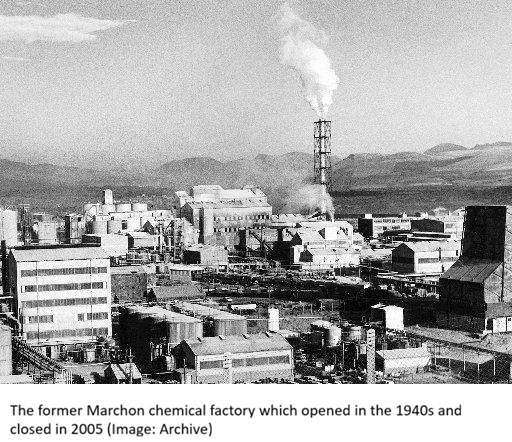
CONTROVERSIAL plans to build 139 homes on the site of a former chemical factory have been approved by planners today.
The application put forward by Persimmon Homes to build houses on the old Marchon site at Kells in Whitehaven, was considered by Cumberland Council’s planning committee this afternoon (December 9).
Members visited the site, which was formerly used to produce ingredients for detergents and toiletries from the 1940s until 2005, before making their decision.
The application is for phase one of the scheme, with an area of land designated to provide a commercial related development within phase two.
Persimmon Homes say the location creates an opportunity for ‘a vibrant residential development of good quality design’ and a range of housing types would be provided to meet local needs.
Access points would be created off High Road and there would be an opportunity to link with an existing national pedestrian and cycle network.
Concerns had been raised by some residents living nearby over the risk of contaminated land and the capacity of local services including school places and GP surgeries.
One resident who lives at Saltom Bay Heights said: “We have been given no guarantees that this land is safe or that contamination will not be disturbed. It is unclear how old some of the contamination reports are, raising doubts over their accuracy and reliability.”
“Proper up-to-date testing of the land has not been carried out, and even the developer admits in the reports they do not fully know what they will uncover until excavation begins. There are known areas where digging is restricted, yet no reassurance has been provided on what happens if contamination is released.
“There are not enough school places and GP surgeries and dental services are already overstretched in Whitehaven, yet these pressures have not been properly addressed. Approving this development without fully resolving these risks would be reckless and irresponsible. They can’t control the winds and airborne chemical contamination.”
Paula and Gary Marsh, who also live at Saltom Bay Heights, said they were ‘deeply concerned’ about the risk of airborne chemicals during excavation.
They said: “This development is being pushed forward without certainty, without transparency, and without adequate protection for public health. These risks are real, current, and long-term, and they cannot be dismissed.”
A remediation statement submitted with the application, which dates back to 2007, says the site was designated as contaminated land by the former Copeland Council, on the basis of sixteen pollutant linkages. These included petroleum hydrocarbons, phosphates and metals such as arsenic, copper, lead and mercury.
The Environment Agency said in its initial response to the plans that it considered the scheme to be ‘acceptable’ in principle but further detail should be agreed with the planning authority.
It also said if contamination not previously identified was found to be present at the site then no further development should be carried out until a remediation strategy detailing how the contamination would be dealt with had been approved by the local planning authority.
Persimmon Homes was approached for comment by The Whitehaven News.
Sellafield is Awash with Acid Chemicals – Rivers, Sea, Soil, Nothing is Off Limits for “Disposal” of This Toxic Brew Mixed with Dangerous Radioactive Isotopes at the Arse End of Atomic “Clean Energy”.
Sellafield’s Latest £22 MILLION Chemical Tender for wiping the Arse End of “Clean Energy”
Marchon Chemical Works , contaminated industrial site, which supplied Sellafield with a sea of acid used in processes on site, is now insanely earmarked for housing!……………………………………………………………………………………………………………………………………………………..
There is a requirement for Sellafield Ltd to implement a Contract for Bulk and Packaged Chemicals to support site-wide operations and decommissioning activities across the Sellafield site.
This will include, but is not limited to, the following scope:
- Sodium Hydroxide 22% – IBC 1000L/1245kg
- Aluminium Sulphate 8% – Delivered via road tanker.
- Ferric Nitrate Solution – Delivered via road tanker.
- Praestol DW-31-EU – 1L/1.1kg
- Hydrochloric Acid 14% – IBC 1000L/1071kg
- Hydrated Lime – Per kg
- Nickel Nitrate – 10kg
- Sodium Carbonate Light – 25kg
- Sodium Hypochlorite (14/15%) – IBC 1000L/1255kg
- Pure Dried Vacuum Salt – Per kg
- Sodium Nitrate 36% – 834L/1068kg
- Granulated Sugar – 1000kg
- Sulphuric Acid 77% – IBC 1000L/1698Kg
- Sulphuric Acid 96% – Per kg
- Silver Zeolite Cartridges
- Silver Zeolite – 35g
- Brenntamer CL 845 – 25kg
- Lithium Nitrate – Per kg or 1230kg
…………………………………………………………………..
CPV classifications
24960000 – Various chemical products
24311521 – Caustic soda
24411000 – Nitric acid and salts
24311520 – Sodium hydroxide
24311410 – Inorganic acids
24311470 – Hydrogen chloride
24313100 – Sulphides, sulphites and sulphates
24311500 – Hydroxides as basic inorganic chemicals
24312120 – Chlorides
24311522 – Liquid soda
24311411 – Sulphuric acid
24313000 – Sulphides, sulphates; nitrates, phosphates and carbonates
24313120 – Sulphates
24313300 – Carbonates
24962000 – Water-treatment chemicals………………………………………………………………………………………………………………………………………………………………………………………………………………………….. https://mariannewildart.wordpress.com/2026/01/31/sellafield-is-awash-with-acid-chemicals-rivers-sea-soil-nothing-is-off-limits-for-disposal-of-this-toxic-brew-mixed-with-dangerous-radioactive-isotopes-at-the-arse-end-of-atomic/
1 This Month

of the week – Shut Down Drone Warfare!


Tell the Ukrainian Government to Drop Prosecution of Peace Activist Yurii Sheliazhenko

Petition to revoke the licensing of the Near Surface Nuclear Disposal Facility (NSDF) at Chalk River. https://www.ourcommons.ca/petitions/en/Petition/Details?Petition=e-7247
To see nuclear-related stories in greater depth and intensity – go to https://nuclearinformation.wordpress.com
-
Archives
- April 2026 (57)
- March 2026 (251)
- February 2026 (268)
- January 2026 (308)
- December 2025 (358)
- November 2025 (359)
- October 2025 (376)
- September 2025 (257)
- August 2025 (319)
- July 2025 (230)
- June 2025 (348)
- May 2025 (261)
-
Categories
- 1
- 1 NUCLEAR ISSUES
- business and costs
- climate change
- culture and arts
- ENERGY
- environment
- health
- history
- indigenous issues
- Legal
- marketing of nuclear
- media
- opposition to nuclear
- PERSONAL STORIES
- politics
- politics international
- Religion and ethics
- safety
- secrets,lies and civil liberties
- spinbuster
- technology
- Uranium
- wastes
- weapons and war
- Women
- 2 WORLD
- ACTION
- AFRICA
- Atrocities
- AUSTRALIA
- Christina's notes
- Christina's themes
- culture and arts
- Events
- Fuk 2022
- Fuk 2023
- Fukushima 2017
- Fukushima 2018
- fukushima 2019
- Fukushima 2020
- Fukushima 2021
- general
- global warming
- Humour (God we need it)
- Nuclear
- RARE EARTHS
- Reference
- resources – print
- Resources -audiovicual
- Weekly Newsletter
- World
- World Nuclear
- YouTube
-
RSS
Entries RSS
Comments RSS
 nuclear-news