Japan can succeed with a zero nuclear energy policy
 Japan can reject nuclear energy Channelling money and resources into constructing a recycling society based on natural resources is a better bet than building disposal sites for toxic waste Gulf News, By Junichiro
Koizumi Former prime minister of Japan October 24, 2013 I believe that the Japanese government and the Liberal Democratic Party should adopt a zero nuclear energy policy. Pursuing this policy will unify the people in their effort to transform themselves into a recycling-oriented society that relies on nature as a source of energy, not nuclear power generation. Alternatives to nuclear power as an energy source will certainly be discovered by those with sufficient know-how…….
Japan can reject nuclear energy Channelling money and resources into constructing a recycling society based on natural resources is a better bet than building disposal sites for toxic waste Gulf News, By Junichiro
Koizumi Former prime minister of Japan October 24, 2013 I believe that the Japanese government and the Liberal Democratic Party should adopt a zero nuclear energy policy. Pursuing this policy will unify the people in their effort to transform themselves into a recycling-oriented society that relies on nature as a source of energy, not nuclear power generation. Alternatives to nuclear power as an energy source will certainly be discovered by those with sufficient know-how…….
Political leaders should establish a council that brings together the wisdom of nuclear power experts and intellectuals who support a zero nuclear energy policy. This should be followed by efforts to implement policies proposed by the panel.
Success in advancing this process would help secure the technical experts needed to decommission nuclear reactors, while also coming up with various ideas to help create jobs and develop alternative energy sources…… Continue reading
Germany’s people powered renewable energy success
Three reasons Germans are killing it on renewable energy http://reneweconomy.com.au/2013/three-reasons-germans-are-killing-it-on-renewable-energy-56628 By John Farrell on 24 October 2013 CleanTechnica Germany is racing past 20% renewable energy on its electricity grid, but news stories stridently warn that this new wind and solar power is costing “billions.” But often left out (or buried far from the lede) is the overwhelming popularity of the country’s relentless focus on energy change (energiewende).
How can a supposedly expensive effort to clean up the energy supply be so popular?
1. It’s about the cost, not the price
Most news stories focus on the cost of electricity in Germany, which has some of the highest rates per kilowatt-hour in the world. But they don’t note that the average German electricity bill – about $100 a month – is the same as for most Americans. Germans are much more efficient users of energy than most, so they can afford higher rates without having higher bills. (Note to self: check out options for energy efficiency).
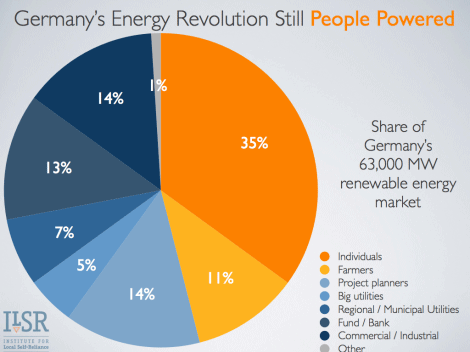 Ger,amy’s people-powered renewabl eenergy success
2. It’s about vision Continue reading
Rapid development in wind power technology promises greater energy supply
 Wind power could generate 18% of global power by 2050 http://www.enn.com/business/article/46587 Wind power could generate up to 18% of the world’s electricity by 2050, compared with 2.6% today, according to new IEA research. The Technology Roadmap: Wind Energy — 2013 Edition finds that nearly 300 gigawatts of current wind power worldwide must increase eight- to ten-fold to achieve the roadmap’s vision, with the more than USD 78 billion in investment in 2012 progressively reaching USD 150 billion per year.
The report, an update of a document first published in 2009, envisages a much larger penetration of wind power than the 12% share on global electricity generation by 2050 considered in the first roadmap.
It sees China overtaking OECD Europe as the leading producer of wind power by 2020 or 2025, with the United States ranked third. Wind power deployment under this vision would save up to 4.8 gigatonnes of CO2 emissions per year by 2050, with China providing by far the largest reductions. The reduction is equivalent to more than the current European Union annual emissions.
Recent improvement in wind power technologies as well as the changing global energy context explain the higher long-term target. Turbines are getting higher, stronger and lighter, while masts and blades are growing even faster than rated capacity, allowing turbines to capture lower-speed winds and produce more regular output. This facilitates installation in places beyond the best windy spots on mountain ridges or seashores as well as integration into power systems despite the variability of winds.
The cost of land-based wind power is close to competitive with other sources of electricity in an increasing set of circumstances. In some countries such as Brazil, wind power has prevailed over fossil alternatives in auctions for long-term power purchases, thanks to the hedge it provides against possible future price increases for fossil fuels. Offshore wind power remains expensive and technically challenging today, but has an important long-term potential. The roadmap lists the actions — by governments, industry , research centres, etc. — to target a reduction in wind power costs of 25% on land and 45% offshore by 2050.
But several obstacles could delay progress, including financing, grid integration issues and difficulties with permits and public acceptance. To achieve high penetrations of variable wind power without diminishing system reliability, improvements are needed in grid infrastructure and in the flexibility of power systems as well as in the design of electricity markets.
Michigan’s success in renewable energy and energy efficiency
Renewable energy is the answer, not the enemy The Detroit News, Shari Pollesch, 21 Oct 13 “…..Since 2008, according to a recent Michigan legislative report, there has been a dramatic reduction in the cost of renewable energy, with the latest wind energy contracts coming in 50 percent cheaper than coal. Michigan’s  Energy Efficiency program has provided the cheapest source of baseload power (over 6x cheaper than coal). For every $1 invested in energy efficiency, customers are saving $3.55 in energy costs.
Although 70 of 71 electric companies in Michigan are on track to meet the 10 percent by 2015, most of these same utilities have declared an unwillingness to do anything more unless required by law. This is notwithstanding the fact that renewable energy is cheaper and cleaner than current or proposed fossil fuel options. Without legislative action, Michigan’s progress toward clean energy will come to a halt.
Consider that Michigan currently gets over 50 percent of our electricity from coal, all of which is imported from other states. In turn, Michigan sends $1.2 billion a year — and the jobs that money creates — to other states to pay for it.
Michigan’s clean energy sector already supports 20,500 jobs and $5 billion in annual economic activity according to a report by conservative Hill Group. Homegrown renewable energy and efficiency are strong economic drivers, attracting investment and creating jobs that can’t be shipped out of state or overseas.
Expanding our use of clean energy will build on our manufacturing strength and will allow us to re-tool and reopen closed manufacturing facilities. A 25 percent RES and 2 percent Energy Efficiency standard is projected to create over 44,000 new jobs in Michigan.
Renewables are cleaner, better for our environment and better for our health. Clean energy creates jobs and saves consumers on energy bills. But the utility companies are not going to do it on their own. We need our state legislature to mandate higher renewable standards. http://www.detroitnews.com/article/20131021/OPINION01/310210004#ixzz2iSTQDlgu
Renewable energy investments already making good returns
 Renewable Energy Stocks that are Already Paying Out Oil Price. com By The Energy Report | Thu, 17 October 2013 Alternative energy is a long-term investment, but returns are already rolling in, says Edward Guinness, co-manager of the Guinness Atkinson Alternative Energy Fund, which is up a whopping 67% year to date. Before you know it, rooftop solar could be as ubiquitous as mobile phones, and developments in wind energy are already creating a compelling value proposition for energy consumers—especially in Europe, where energy prices are high. Learn about the holdings driving growth for Guinness’ fund in this interview with The Energy Report……http://oilprice.com/Finance/investing-and-trading-reports/Renewable-Energy-Stocks-that-are-Already-Paying-Out.html
Energy storage promises to revolutionise renewable energy
The PUC’s big storage decision will boost renewable energy production My desert.com October 17th, 2013 | by K Kaufmann My Twitter feed and email box are lighting up with big news that the California Public Utilities Commission has voted to approve an order requiring the state’s three big utilities to start procuring renewable energy storage technology, with the goal of having 1,325 megawatts of storage on the grid by 2020.
You can read the full text of the original proposed decision, as released Sept. 3, here.
Both Southern California Edison and Pacific Gas & Electric will be required to procure a total of 580 megawatts of storage, with 310 megawatts dedicated to transmission, 185 megawatts on distribution and 85 megawatts going to the consumer market, which presumably means distributed generation or rooftop.
San Diego Gas & Electric will be responsible for putting on 165 megawatts of storage, with an 80-55-30 split on the transmission, distribution and customer requirements. The three utilities have until Jan. 1, 2014 to file individual applications on how they will run their first solicitations for energy storage facilities.
Those are the quick basics. Expect plenty of press and discussion on this decision. Its potential impacts are huge — in terms of providing a big push for more research and investment in storage technology in the state and in pushing California to go beyond its current 33 percent renewable energy target. If renewable power can be stored for use when the wind is not blowing and sun isn’t shining, then the potential for clean energy development will be limitless……http://voices.mydesert.com/2013/10/17/the-pucs-big-storage-decision-will-boost-renewable-energy-production/
Refuting the lies of anti renewable energy propaganda
 Myth-busting Germany’s energy transition Smart Planet By Chris Nelder | October 12, 2013 Major English-language media have been propagating a false narrative about the stunning success of Germany’s transition to renewable energy: theEnergiewende. To hear them tell it, the transition has been a massive failure, driving up power prices, putting Germany’s grid at risk of blackouts, and inspiring a mass revolt against renewables.
Nothing could be further from the truth……..
I debunked a few of the hoary tropes about the Energiewende one year ago, such as the notion that the grid can’t handle a large share of variable renewable power. But apparently many in the major Western media still haven’t gotten the memo.
So let’s clear out the fog and debunk a few of the favorite myths about theEnergiewende.
Myth: “After the Fukushima nuclear accident in Japan two-and-a-half years ago, Merkel quickly decided to begin phasing out nuclear power and lead the country into the age of wind and solar.” (This one is from the above-mentioned Der Spiegel article.)
Fact: Germany’s switch to renewables started in 1991, and the nuclear phaseout started in 2002. Continue reading
Renewables leading in global energy investment
Citibank: Renewables will get bulk of world’s new power investment http://fuelfix.com/midland/2013/10/10/citibank-renewables-will-get-bulk-of-worlds-new-power-investment/ October 10, 2013 The world is going clean: Renewable energy will make up more than 70 percent of investment in new power generation by 2025, a Citibank report said Thursday.
Demand for power is growing around the globe and most of it will be renewable. Of the nearly $10 trillion dollars that will be poured into the power sector in the next decade, more than $2 trillion will be invested in wind, followed by $1.5 trillion in hydropower and $1.3 trillion in solar power, as nations around the world begin to make the shift away from fossil fuel generation.
While natural gas has cut into coal’s dominance for power generation in the United States, the report notes that in the longer run, the lower price of solar energy will make it increasingly attractive, especially during peak demand periods, when wholesale power in Texas can cost as much as $4,500 per megawatt-hour.
“Solar steals the most valuable part of electricity generation at the peak of the day when prices are highest,” the report said. German natural gas power plants have already said they are reluctant to build new generation because of the impact of solar power on their profits, according to the report.
More than $37 trillion will be invested in the global energy infrastructure in the next two decades, with nearly 50 percent of it devoted to electricity generation, Citibank estimated in the report. Oil production will account for about 37 percent of total investment, followed by natural gas, coal and biofuels, at 23 percent, 3 percent and one percent, respectively.
Financial boost for global renewable energy
Norway’s Sovereign Wealth Fund Gives a Boost to Global Renewable Energy http://oilprice.com/Latest-Energy-News/World-News/Norways-Sovereign-Wealth-Fund-Gives-a-Boost-to-Global-Renewable-Energy.html By Joao Peixe | Wed, 16 October 2013 The Norwegian sovereign wealth fund is the largest in the world at around $750 billion, and a new government is currently being formed in Oslo that is considering investing some of the wealth in renewable energy projects across the world.
Formed in 1990, the fund generates money from taxes on Norway’s oil and gas industry, as well as owning several fields in the North Sea, and a 67% stake in Statoil. It also owns large shares in many of Europe’s largest companies, and it has been calculated that one in every $80 invested in equities around the world is owned by Norway, giving the fund massive influence over the global financial market.
Samantha Smith, the head of global climate and energy initiative at the World Wildlife Fund (WWF), explained that “if Norway actually does this, it will be an unprecedented shift in the global investment community and also for tangible action on climate change.”
After the elections that took place in September, truthdig reports that a centre-right coalition government is being formed by Erna Solberg, the leader of the Conservative party. One of the first proposals that they have talked about is to use the sovereign wealth fund, officially known as the Norwegian Government Pension Fund Global, to invest in renewable energy projects in developing countries, and the global renewables sector.
The WWF is asking the Norwegian government to give 5% of its investment portfolio to invest in renewable energy infrastructure, and end all investment in coal and tar sands.
Energy storage to revolutionise large scale renewable energy
Energy storage mandate expected to bring large-scale renewable energy projects onto the electric grid http://photos.mercurynews.com/2013/10/16/energy-storage-mandate-expected-to-bring-large-scale-renewable-energy-projects-onto-the-electric-grid/ Oct 16, 2013
The first-in-the-nation energy storage mandate is expected to help integrate large-scale renewable projects onto the electric grid, help the grid better manage unpredictable events such as storms or wildfires, push utilities to consider a wider range of emerging technologies and jump-start the storage market as a whole. PG&E’s Yerba Buena Battery Energy Storage System Pilot Project, based in East San Jose, charges batteries when demand is low and sends stored power to the grid when demand grows, allowing operators to balance supply and demand. The project, which cost $18 million, uses the sodium-sulfur batteries made by NGK in Japan that have 4 megawatts of capacity and can store electricity for roughly six hours
PG&E’s Yerba Buena battery energy storage project, seen Tuesday morning Oct. 15, 2013, is capable of storing up to four megawatts of power from its place in the hills above Evergreen Valley College in San Jose, Calif. A California law that requires utilities to get 33 percent of their electricity from renewable sources like solar and wind is widely credited with accelerating the state’s cleantech economy. Now state regulators are poised to compel utilities to invest in “energy storage,” which could jump-start technology long considered the holy grail of the electricity industry. (Karl Mondon/Bay Area News Group)
100% renewable energy powers Austrian town
Güssing, Austria Powered Entirely By Renewable Energy Clean Technica 16 Oct 13, A small town in Austria that had no significant industry or trade business is now thriving thanks to local renewable resources.Güssing (population: 4,000) sits in eastern Austria. In 1988 the region (population: 27,000) was one of the poorest districts in the country. It relied on agriculture, there was no transportation infrastructure, unemployment was high, and 70 percent of those who did have work were commuting to Vienna, 100 miles away. The town, where two-thirds of the working population was out of work and young people were moving away, was referred to as a dying town. Due to a lack of connections to the railway network and to the Austrian Autobahn (freeway) system, energy costs were extremely high. At the time the town of Güssing was said to be hardly able to afford its $8.1 million annual fossil fuel bill.
Several of the town leaders realized that $8 million dollars going to pay for fuel oil (mostly for heating) and other fossil fuels (such as coal for electricity) from outside the region could stay in the local economy if they could produce their own energy. However, they realized if they wanted to be energy self-sufficient the first step was reducing energy use. In 1990, the town implemented an energy efficiency program, retrofitting all public buildings with new insulation and replacing all streetlights with energy-efficient bulbs, reducing energy expenditure in buildings in the town center by almost 50 percent.
With greatly improved efficiency, the town then adopted a policy calling for the complete elimination of the use of fossil fuels in all public buildings, in an attempt to keep more money in the local economy……
The little town has become a net energy producer—generating more energy from renewables than it uses. Altogether, there are more than 30 power plants using renewable energy technologies within 10 kilometers of the village. Now the goal is to take the lessons from the small town of Güssing and make the entire 27,000-person district an energy-self-sufficient net producer……
The town now has 60 new companies, 1,500 new jobs, and annual revenues of $17 million due to energy sales, all resulting from the growth of the renewable energy sector. The downtown has been rebuilt and young people picture themselves staying there in the future. And other areas are following Gussing’s lead. More than 15 regions in Austria are now energy independent with regard to electricity, heating, and/or transportation. The town of Güssing has shown that not only is a high-renewables future possible, but also economically advantageous. Schwarzenegger must agree, because when he left he said, “I’ll be back.”
Read more at http://cleantechnica.com/2013/10/16/renewable-energy-powered-austrian-town-gussing/#FMpHPsrls8ze6ylD.99
The Wonders of Solar Power
Eco Kinetics, a leading business in Solar PV Installers 9 Oct 13 Although solar power has now been on the scene since around the mid-20th century, the revolutionary notion hasn’t spread as much like wildfire as wed have liked. Here are a few reasons why everyone should input those lovely looking solar panels on the roofs of their homes:
Unlike oil, solar power does not emit greenhouse gases or carcinogens into the air, therefore does not pollute it a much better alternative to the contamination produced from the fossil fuels we have come to depend on. Solar energy can be used to heat water, dry clothes, heat swimming pools, power attic fans, power small appliances, produce light for both indoors and outdoors, and even to power cars, among other things.
Also – It’s free! Who doesn’t want free energy to power their homes? The only cost, is the initial price of the panels themselves, but over a period of time you will save a whole lot of money. Solar energy doesn’t require expensive and continuous raw materials like oil or coal, and requires significantly lower operational labouring than conventional power production. So it not only cuts down your household bills but is a great deal greener for the environment.
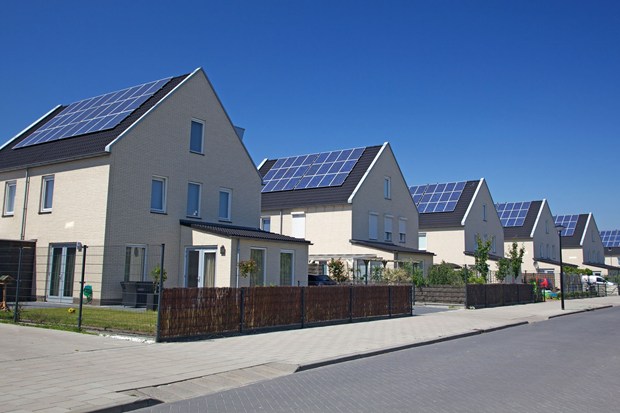
Because solar doesn’t rely on on-going mining raw materials, it doesn’t result in the destruction of forests and ecosystems that occurs with most fossil fuel operations. Italys Montalto di Castro solar park is a good example of Solar contribution to curbing emissions. It avoids 20,000 tonnes per year of carbon emissions compared to fossil fuel energy production. The sun is a gigantic source of power so why not use it rather than spoil the environment through the use of fossil fuels?
Something you don’t want surrounding your home and annoying your neighbours is noise, so you’ll be pleased to know that solar power is completely silent, you’ll be the envy of your whole street whilst being quiet and modest about it. They don’t make a single peep whilst extracting their useful energy from the sun. However, the colossal machines used for pumping oil create an abundance of noise pollution and are therefore very impractical.
Rooftop power is a good way of supplying energy to a growing community. More cells can be added to homes and businesses as the community grows so that energy generation is in line with demand. Many large scale systems currently end up over generating to ensure that everyone has enough. Additionally, solar cells can also be installed in a distributed fashion, i.e. they don’t need large scale installations.
Renewable energy generation in UK breaking records
 Record high for UK renewables Renewable Energy Focus 01 October 2013 Statistics published today by the Department of Energy and Climate Change (DECC) showed that the amount of electricity generated from renewable energy sources in the UK reached a new record high of 15.5% of total electricity generation in the second quarter of this year.
“The fact that we have seen the record for renewables generation broken twice in the space of a few months shows for itself the progress being made in the race to decarbonise our economy and secure our future electricity supply.” http://www.renewableenergyfocus.com/view/34797/record-high-for-uk-renewables/
New Renewable Energy Storage System supported by U.S. Dept. of Energy
U.S. Dept. of Energy Supports New Renewable Energy Storage System Oil Price, By John Daly | Sat, 28 September 2013 The two bottlenecks inhibiting further use of renewable energy systems are cost and the fact that the sun doesn’t always shine or the wind blow-in one word, storage. While mass production of components such as solar photovoltaic cells means that their price has been dropping, the issue of storing and releasing electricity generated by renewable sources during their down times has led engineers worldwide to tackle the problem.
Large-scale, low-cost energy storage is needed to improve the reliability, resiliency, and efficiency of next-generation power grids. Energy storage can reduce power fluctuations, enhance system flexibility, and enable the storage and dispatch of electricity generated by variable renewable energy sources such as wind, solar, and water power.
Now one technology seems sufficiently promising that it is receiving funding from the U.S. Department of Energy’s Office of Electricity Delivery and Energy Reliability Energy Storage Program.
What is this promising new technology?
Isothermal compressed air energy storage (ICAES) refers to storage of compressed air at a constant temperature, which is a key element in the improved energy efficiency of the system.
SustainX has completed construction of its first utility scale ICAES system. It was hooked up to the grid earlier this month and it’s now in the process of revving up to speed. The DOE’s Office of Electricity Delivery and Energy Reliability’s Energy Storage Program underwrote $5,396,023 of the system’s cost……..
The DOE is certainly impressed, noting on its “Isothermal Compressed Air Energy Storage” webpage; “SustainX’s ICAES technology offers several advantages: it can be sited anywhere, and it is not dependent on advantageous geological formations. It allows power and energy to scale independently. It consumes no fuel and produces no emissions. It utilizes proven mechanical systems and is composed almost entirely of steel, water, and air. It offers 20 years of performance at full power and capacity and 100% depth of discharge.” Governmental endorsements don’t come much stronger than that.
And how big is the compressed air energy storage industry going to become? According to Navigant Research director Kerry-Ann Adamson, the market will grow dramatically over the next decade. Adamson remarked, “Rapidly changing energy mixes and increasing renewable energy penetration will continue to introduce instability onto electricity grids worldwide in the coming years, while the volatility of load profiles will challenge grid operators to deliver reliable and secure electricity. These macro conditions will drive demand for CAES, helping to rejuvenate a sector that has been largely dormant for the last two decades.” http://oilprice.com/Alternative-Energy/Renewable-Energy/Bill-Gates-Backs-New-Renewable-Energy-Storage-System.html
Russia now subsidising renewable energy
Russia offers first ever subsidies for renewable energy PV MAGAZINE, 01. OCTOBER 2013 BY: IAN CLOVER The world’s largest oil producer plans to develop its renewable energy sector – which currently produces just 0.8% of the country’s power – and has hosted its first clean power auction, with 39 ventures securing subsidies. Russia has offered its first ever state-backed support for renewable energy, offering subsidies for 39 clean power ventures with a combined capacity of 504 MW.
Solar power won the day, with 399 MW secured, while the wind power sector won just one-tenth of the 1,100 MW of wind capacity offered in the auction. By contrast, solar developers bid for nearly 1,000 MW, winning 32 projects to be built between 2014 and 2017.
“The tender has been quite successful for solar energy, showing that the Russian market can attract developers,” the head of the Russian Solar Industry Association, Anton Usachev, told Bloomberg. Because developers are required to use at least 50% of materials sourced from local contractors, the wind power sector may have been reluctant to invest, he believes.
Solar bidders, on the other hand, were evidently confident in their ability to satisfy local content requirements.
Russia’s president Vladimir Putin ratified the subsidy program, which is intended to wean the country off its reliance on fossil fuels……http://www.pv-magazine.com/news/details/beitrag/russia-offers-first-ever-subsidies-for-renewable-energy_100012889/#axzz2galM1ZDF
1 This Month
29 Jan. Thursday 7-8 p.m. Webinar – World’s Largest Nuclear Station in Port Hope, ON?
To see nuclear-related stories in greater depth and intensity – go to https://nuclearinformation.wordpress.com/



31st January – Challenging the War Machine – a DECLASSIFIED UK SUMMIT

Website of the Week
Now until to February 10, 2026 Radioactive waste storage in France: the debate is finally open! How to participate?
-
Archives
- January 2026 (288)
- December 2025 (358)
- November 2025 (359)
- October 2025 (376)
- September 2025 (258)
- August 2025 (319)
- July 2025 (230)
- June 2025 (348)
- May 2025 (261)
- April 2025 (305)
- March 2025 (319)
- February 2025 (234)
-
Categories
- 1
- 1 NUCLEAR ISSUES
- business and costs
- climate change
- culture and arts
- ENERGY
- environment
- health
- history
- indigenous issues
- Legal
- marketing of nuclear
- media
- opposition to nuclear
- PERSONAL STORIES
- politics
- politics international
- Religion and ethics
- safety
- secrets,lies and civil liberties
- spinbuster
- technology
- Uranium
- wastes
- weapons and war
- Women
- 2 WORLD
- ACTION
- AFRICA
- Atrocities
- AUSTRALIA
- Christina's notes
- Christina's themes
- culture and arts
- Events
- Fuk 2022
- Fuk 2023
- Fukushima 2017
- Fukushima 2018
- fukushima 2019
- Fukushima 2020
- Fukushima 2021
- general
- global warming
- Humour (God we need it)
- Nuclear
- RARE EARTHS
- Reference
- resources – print
- Resources -audiovicual
- Weekly Newsletter
- World
- World Nuclear
- YouTube
-
RSS
Entries RSS
Comments RSS
 nuclear-news