Nuclear – not the way ahead
12 Oct 24 https://renewextraweekly.blogspot.com/2024/10/nuclear-not-way-ahead.html
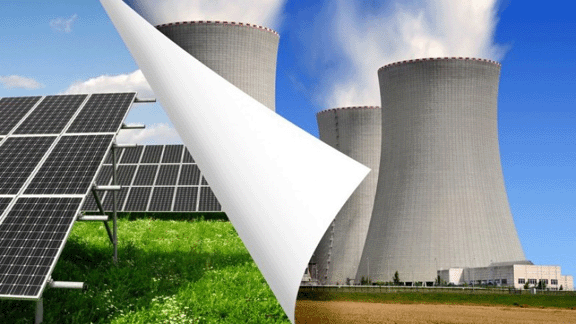
Renewable energies consistently outperform nuclear power in terms of cost and deployment speed and are therefore chosen over nuclear power in most countries’ – so says this years independent World Nuclear Industry status report (WNISR). It notes that in 2023, 5 new nuclear reactors (5 GW) started up and 5 were closed (6 GW), capacity thus declining by 1 GW. So overall it says that nuclear energy’s share of global commercial gross electricity generation declined from 9.2 % to 9.1%, little more than half of its peak of 17.5 % in 1996. In 2023, total investment in non-hydro renewable electricity capacity reached a record US$623 billion, 27 times the reported global investment decisions for the construction of nuclear power plants, with solar and wind power capacities growing by 73% and 51%, respectively.
Nevertheless, some countries are still pushing on with new nuclear, despite its poor economics, including the UK and Sweden. Sweden has mooted a new financing model but its critics say support for nuclear ‘is like throwing money down the drain’ since ‘the expansion of solar energy will make nuclear power obsolete and push it out of the electricity market by the 2030s’. In the UK, and also in France, it has been argued that part of the reason for the political commitment to new nuclear is link between civil and military nuclear, with cross-funding and technical collaboration seen as beneficial.
However, be that as it may, Emeritus Profs. Stephen Thomas (University of Greenwich) and Andrew Blowers (OU) do not see nuclear civil power prospering in the UK, indeed they say that ‘it is time to expose the Great British nuclear fantasy once and for all.’ They claim that ‘no amount of political commitment can overcome the lack of investors, the absence of credible builders and operators or available technologies let alone secure regulatory assessment and approval. Moreover, in an era of climate change there will be few potentially suitable sites to host new nuclear power stations for indefinite, indeed unknowable, operating, decommissioning and waste management lifetimes. And there are the anxieties and fears that nuclear foments, the danger of accidents and proliferation and the environmental and public health issues arising from the legacy of radioactive waste scattered on sites around the country’.
They go on to suggest backing off new nuclear projects. They do recognise that ‘abandoning Sizewell C and the SMR competition will lead to howls of anguish from interest groups such as the nuclear industry and trade unions with a strong presence in the sector. It will also require compensation payments to be made to organisations affected. However, the scale of these payments will be tiny in comparison with the cost of not abandoning them’.
Certainly the cost of construction is vast- and expanding. The EPR being built by EDF at Hinkley Point may in the event cost £35bn, with there’s still being a way to go- 2030 for unit 1 start up, maybe 2031 for Unit 2. And as industry commentators have noted ‘as the cost of Hinkley Point has increased, the backers have had to provide more funding. The souring of relations between Britain & China saw CGN stop providing any more money, leaving EDF to fund the shortfall. EDF has called upon the UK government to help out with the escalating cost but it has refused. EDF was fully nationalised in 2023, leaving the French taxpayer to pick up the tab for the cost overruns’.
UK consumers will of course pay the high cost of the power when it comes on the grid. They will also be expected to shell out for the next EPR that is planned in the UK, at Sizewell, but this time in advanced of completion, under the RAB financing system. However, although the government has provided £5.5bn to move things along, the final (private) investment decision on Sizewell C keeps being delayed. EDF aimed to secure funding by the end 2024, but that may now be extended to 2025 – and EDF is still looking for £4bn to finish Hinkley Point!
All in all, with EDF’s finances in a mess, and few other companies keen to take risks with this technology, it looks a bit uncertain. Even the UK government seems to be having doubts, with plans for a new large project on Wylfa in Wales may be subject to a review. Proposals are currently being considered for small modular reactors under a UK SMR competition, but the US NuScale PWR has just been eliminated from the race. It was once seen as the leader, but it had lost a US order. EDF had earlier dropped out. So that leaves Rolls-Royce, GE-Hitachi, Westinghouse, and Holtec Britain, with the newly formed agency, Great British Nuclear, expected to announce 2 winners later this year or early next year. Up to £20bn is at stake. However few see any power being available anywhere from SMRs until the early or mid 2030s. Despite a lot of hype, in reality it has been slow going. And there are risks.
Overall then, the prospects for new nuclear in the UK, or indeed elsewhere, do not look too good. Even in China, renewables are expanding very much faster, with according to the WNISR/IRENA, at the end of 2023, there being over 1000GW of wind and solar and around 421GW of hydro in place, compared to just 53GW of nuclear. Given the scale and rate of deployment, and the costs, it’s pretty clear which should be the way forward in terms of energy supply there and everywhere else.
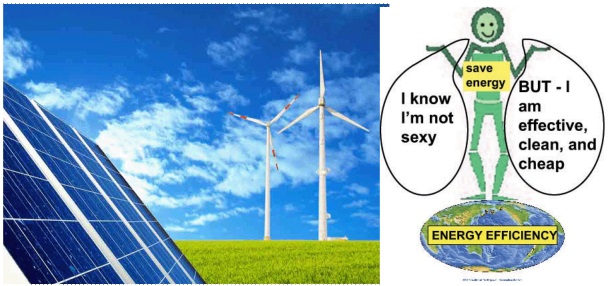
Nuclear fission may have a small role to play in some isolated locations and in some applications, and fusion may be viable at commercial scale at some stage, but we have to be aware of hype and overselling in this area, and also in the wider nuclear debate, with nuclear sometimes being sold as the answer to climate change. It’s not. As I have indicated in earlier posts, there is no shortage of studies from around the world confirming the view that nuclear is a costly and risky distraction from renewables, which are the main energy supply solutions to climate change. And Germany has shown how the exit from nuclear can be done, led by renewables. Although they do have some issues in terms of balancing, renewables, along with energy efficiency, demand management and storage, are the way ahead to an economically viable and sustainable energy future.
Renewable Energy Surge Lowers UK Blackout Risk
The risk of blackouts in the winter months in the U.K. has fallen to its lowest in four years thanks to the rise of the country’s renewable energy capacity.
To ensure a steady supply of electricity to households, Neso will encourage consumers to reduce their energy use during peak times by offering financial incentives through its demand flexibility scheme.
By Felicity Bradstock – Oct 12, 2024
https://oilprice.com/Alternative-Energy/Renewable-Energy/Renewable-Energy-Surge-Lowers-UK-Blackout-Risk.html
- The UK has significantly reduced its blackout risk by increasing renewable energy capacity and diversifying its energy sources.
- The closure of the UK’s last coal-fired power plant marks a major milestone in the country’s transition to clean energy.
- The government is actively encouraging energy conservation during peak times to further enhance grid stability.
The U.K. has been gradually boosting its energy security by increasing its renewable energy capacity while continuing to produce natural gas. It has done this while also moving away from the ‘dirtiest’ fossil fuel, coal. The diversification of the U.K.’s energy mix is helping the island country to develop its resilience and help it accelerate the green transition. Now, the government must ensure that the country’s transmission infrastructure is prepared for an influx of new clean energy projects in the coming years, and can reliably deliver clean energy to tens of millions of households across the U.K.
The risk of blackouts in the winter months in the U.K. has fallen to its lowest in four years thanks to the rise of the country’s renewable energy capacity. The National Energy System Operator predicts that the U.K.’s winter power supplies will outpace demand by nearly 9 percent this year. Neso is the new company in charge of keeping the lights on, which was bought by the government in September from National Grid for $825.5 million. The boost in the power supply margin is supported by the recent deployment of large-scale battery storage projects, small-scale renewables and imported electricity, according to Neso.
As well as producing greater quantities of clean energy at home, the U.K. has also begun importing renewable energy from Denmark through the world’s longest high-voltage power cable – the Viking power link. This cable now provides clean electricity for around 2.5 million U.K. homes, showing the significant potential for clean power sharing across countries.
The optimistic forecast comes in spite of the closure last month of the U.K.’s last coal-fired power plant. At the beginning of the year, the Ratcliffe-on-Soar coal plant was used to provide 2.3 percent of the country’s electricity supply during a period of cold weather. Britain kept its coal facilities on standby following the Russian invasion of Ukraine and subsequent sanctions on Russian energy, mainly natural gas, to ensure there would be power even in the face of severe gas shortages. However, there will be no such backup this year, and, according to Neso, no such need for a backup.
Gas reserves across Europe have been restored to around 95 percent full. The U.K. is no longer dependent on Russia for its gas, having doubled down on its long-standing relationship with Norway for its LNG supply. Britain will now import gas via Norwegian pipelines and tanker from the U.S. and Qatar during the winter months to use in its power plants, factories and residential buildings. To ensure a steady supply of electricity to households, Neso will encourage consumers to reduce their energy use during peak times by offering financial incentives through its demand flexibility scheme.
The U.K. was finally able to close its last coal-fired power plant in September, a target which was stated during the COP26 climate summit in Glasgow in 2021, after 142 years of reliance on coal. The U.K. was the birthplace of coal power, and it is the first G7 country to end coal production. The rapid transition away from a dependence on coal is impressive given that coal contributed 39 percent of the U.K.’s power in 2012. The U.K. established its first legally binding climate targets in 2008, which supported the phasing out of coal. In 2015, the then-energy and climate change secretary, Amber Rudd, stated that the country would stop using coal within the next decade. This has been made possible by the rapid expansion of the U.K.’s renewable energy capacity, with green energy rising to contribute over half of the country’s power in the first half of 2024, from just 7 percent in 2010.
Most of the U.K.’s electricity came from renewable energy sources for the first time in 2020, at around 43 percent. The green energy mix consists mainly of wind, solar, bioenergy and hydroelectric sources. In 2023, wind power contributed 29.4 percent of the U.K.’s total electricity generation, biomass contributed 5 percent, solar power accounted for 4.9 percent and hydropower added 1.8 percent of the mix. While the U.K. is currently depending on a mix of homegrown green and fossil fuel energy, as well as imports of energy from renewables and natural gas, the government plans to dramatically increase its renewable energy capacity by the end of the decade to solidify the country’s energy security. This includes increasing offshore wind output to 50 GW and solar capacity to 70 GW, as well as developing new nuclear plants.
Investing in the diversification of the U.K.’s energy mix has helped the country boost its energy security, as well as move away from a heavy reliance on fossil fuels. As the U.K. undergoes a green transition, the government is working in collaboration with utilities and regulators to ensure that the country does not face shortages, particularly in the winter months. This is further supported by strong energy agreements with other countries in Europe, North America and the Middle East, which will help to alleviate the burden of instability associated with renewable energy sources.
Japan PM Ishiba eyes more renewables, less nuclear in energy mix
New leader plans stimulus package for ‘structural transformation of the economy’
Prime Minister Shigeru Ishiba on Saturday stressed Japan’s potential to
develop renewable energy sources and vowed to raise their share in the
country’s overall power supply, indicating he will prioritize
decarbonization as his government prepares an economic stimulus plan.
“Japan has large untapped potential for renewable energy development,
including geothermal, wind and small-scale hydroelectric power,” Ishiba
said in an interview with Nikkei Asia.
Nikkei Asia 12th Oct 2024 https://asia.nikkei.com/Editor-s-Picks/Interview/Japan-PM-Ishiba-eyes-more-renewables-less-nuclear-in-energy-mix
Renewables based systems are reducing blackouts in UK and USA!

David Toke, Oct 11, 2024, https://davidtoke.substack.com/p/renewables-based-systems-are-reducing
The truth is gradually emerging that far from threatening electricity systems with blackouts, renewable energy-based systems are preventing them for occurring! This has a lot to do with the fact that the installation of batteries to deal with renewable output variability has the side-effect of improving grid resilience. Solar power is also reducing possibilities for blackouts in hot places.
Batteries stopped widespread blackouts just three days ago, on October 8th in the UK, when, the UK-Norwegian electricity interconnector suddenly crashed leading to a loss of 1.4 GW of power. Without rapid action, frequency levels would have fallen leading to widespread blackouts as the system tried to preserve grid stability. But 1.5 GW of batteries rapidly clicked into service saving the day (see HERE). Of course the build-up of batteries in the UK is only happening because of the growth of renewable energy!
Similar stories of how blackouts are being averted are coming from other places with growing renewables penetration, including Texas and California in the USA. In both cases, earlier blackouts were caused by conventional power system problems, but widely blamed on renewables by anti-renewables lobbies. But now as renewables, and battery systems, proliferate further, blackout rates are actually being reduced.
Speaking about the October 8th UK incident, Roger Hollies from the ARENCO Group, who originally posted about the outage response on linkedin (HERE) commented: ‘It’s exciting to see batteries casually keeping the lights on whilst delivering diversity of activity to maximise revenue. I count 9 markets and services being participated in by these 12 batteries during this 50 min window alone! This complexity is only going to continue with Quick Reserve coming online later this year, local markets expanding, more renewables coming online and we STILL are not using the +/-3Gvar of reactive power the installed BESS fleet can supply!’
In California, the number of blackouts has been dramatically reduced over the last couple of years. ‘Batteries were the biggest reason California didn’t see the power go out’ says Benjamin Storrow (see HERE). There has been a very big increase in battery installation in California. This has been driven partly by a State-led investment programme. In addition, the increase in battery capacity follows on from the new opportunities in spreading production from the increasing quantity of solar panels over longer periods of the day.
Texas has been saved from a summer power blow-out by a combination of solar pv and batteries. Climate-change inspired hotter summers have put a strain on the Texas grid to cope with the rising demands for air conditioning to meet the summer heat spikes. Once again, solar pv and batteries have come to the state’s rescue. See HERE.
Of course a lot of work still needs to be adapt the electricity from its traditional centralised dispatch mode to a decentralised way of operation. These include incentivising longer duration batteries, something encouraged by a ‘cap and floor’ incentive system for batteries announced by the Government today. See HERE. Initiatives to replace the inertial load system provided by traditional centralised power plant with new inertial sources needed to support variable renewable energy are also in play, for instance promoted by Statkraft’s Guy Nicolson HERE.
Acknowledgement to Dave Andrews from the Claverton Group for the alert on the Norway link tripping event.
China to head green energy boom with 60% of new projects in next six years

China is expected to account for almost 60% of all renewable energy
capacity installed worldwide between now and 2030, according to the
International Energy Agency. The IEA’s highly influential renewable energy
report found that over the next six years renewable energy projects will
roll out at three times the pace of the previous six years, led by the
clean energy programmes of China and India.
It found that the world’s
renewable energy capacity is on course to outpace the 2030 goals set by
governments to roughly equal the power systems in China, the EU, India and
the US combined. Fatih Birol, the executive director of the IEA, said:
“If I could sum this [trend] up in two words they would be: China,
solar.”
Guardian 9th Oct 2024, https://www.theguardian.com/environment/2024/oct/09/china-to-head-green-energy-boom-with-60-of-new-projects-in-next-six-years
South Australia sets spectacular new records for wind, solar and negative demand
Giles Parkinson, Sep 30, 2024, https://reneweconomy.com.au/south-australia-sets-spectacular-new-records-for-wind-solar-and-negative-demand/
Records continue to tumble across Australia’s main grids as the spring weather boosts the output of wind and solar and mild weather moderates demand, but none are as spectacular as those being set in South Australia.
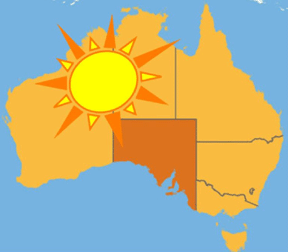
The state’s unique end-of-the-line grid already leads the country, and arguably the globe, in the integration of variable wind and solar, with an average of more than 70 per cent of its demand over the last year and a world-first target of 100 per cent net renewables by 2027.
On Sunday, at 9.35 am, the state set a new milestone, setting a new record share of wind and solar (as a percentage of state electricity demand) of 150.7 per cent, beating a record set on Christmas Day last year, when – for obvious reasons – there was little electricity demand.
As Geoff Eldridge, from GPE NEMLog, notes, this means that the rooftop PV, along with large scale wind and solar farms, were generating 50.7 per cent more power than the state’s total electricity demand at the time.
The scale of excess output was further crystallised later in the day with a new minimum record for instantaneous residual demand, which hit minus 927 megawatts at 12.35pm.
Eldridge says residual demand is what’s left for other generators to supply after wind and solar have met a share of the demand. A negative residual demand means wind and solar were producing more electricity than SA needed, resulting in excess renewable generation which can be managed by exporting and battery charging. The remainder is curtailed.
Of the surplus 927 MW, the state was exporting 685 MW to Victoria, while another 163 MW was being soaked up by the state’s growing fleet of battery storage projects, and 730 MW of output was curtailed. Prices at the time were minus $47/MWh, a good opportunity for batteries to charge.
A further 84 MW was being produced by a couple of gas generators – not because their power output was needed, but because the state, at least for the moment, relies on them for essential grid services such as system strength and fault current.
That will be reduced considerably when the new link to NSW is completed in a few years, and it will allow the state to both export more, and import more when needs be.
“Balancing the system with such high renewable penetration is challenging but necessary as the energy transition progresses,” Eldridge says. “Managing excess generation through exports, storage, and curtailment is critical to keeping the grid stable and efficient.”
It wasn’t the only record to fall over the weekend. In Queensland, the country’s most coal dependent state in terms of annual share of demand and generation, large scale solar hit a record share of 34 per cent, and coal output – in megawatt terms – hit a record low of 2,882 MW.
The Queensland coal fleet capacity is more than 8,000 MW, so that is about as low as it can run until more units are closed down.
In Victoria on Saturday, just before the AFL grand final, rooftop solar also hit a new record output of 3,164 MW – although it did not push operational demand down low enough for the market operator to enact Minimum System Load protocols and possibly switch off some rooftop solar panels to maintain grid stability.
It had flagged a potential MSL event on Friday but cancelled it in the morning. Those events will likely occur at other times in spring and over the summer holidays, although the market operator is now working on new rules for big batteries to avoid a potentially unpopular and unwieldy solar switch off.
Chart: Solar power keeps beating expectations
Energy forecasters have long underestimated the speed at which solar power is growing around the world. It’s not the first time that’s happened. [charts on original]
By Carrie Klein, 27 September 2024, https://www.canarymedia.com/articles/solar/chart-solar-power-keeps-beating-expectations
Canary Media’s chart of the week translates crucial data about the clean energy transition into a visual format. Canary thanks Clean Energy Counsel for its support of the column.
Solar is becoming predictable in its unpredictability — time and time again, experts have underestimated how much the clean energy source will grow globally. This year is no different.
The price of panels has continued to plummet and their efficiency keeps rising, while deadlines for meeting climate laws creep closer. The result? The world is installing more solar than ever before — at a pace that even many top energy analysts didn’t see coming, according to a new analysis by think tank Ember.
So far this year, 29 percent more solar has been installed than was at this point last year, per Ember. By the end of 2024, Ember says the world will be on track to reach 593 gigawatts of solar installations — 200 GW more than the International Energy Agency (IEA) predicted at the start of the year. That’s a significant underestimate: Those extra gigawatts alone represent more solar than the entire world built in 2021.
This year’s record-breaking solar installations follow another peak year in 2023, when installations grew by 86 percent over 2022.
Five countries account for the majority of solar additions: China takes the top spot, followed by the United States, India, Germany, and Brazil. In the U.S., utility-scale solar is driving the industry’s growth. Policy changes in India have helped encourage solar; this year, the country has already installed more solar panels than it did in all of 2023. In Germany, small-scale solar has grown thanks to lower panel costs and incentives for rooftop solar. Solar is also taking off in new markets, particularly distributed solar in Pakistan and Saudi Arabia.
Cost is the main factor driving solar’s always-faster-than-expected ascension, says Kingsmill Bond, senior principal on the strategy team at RMI. As solar has become cheaper, it’s “not entirely surprising” that solar installations have spiked, Bond said.
“When technologies get cheap enough, they are like water flowing down a mountain. You don’t know exactly how the water will find a way down the mountain, but you know that it will find a way,” he said.
The solar industry’s success is putting the world’s climate pledges within reach. Annual solar installations will now have to show only “relatively modest levels of growth” to meet global goals, the Ember report notes. Recent BloombergNEF (BNEF) data sees a slight shortfall on the current trajectory but says 2030 goals are still entirely feasible.
Getting there, of course, won’t be simple. “Every single solar panel needs someone to put it up and needs planning permission in many countries,” Bond said. “Change is not easy, but it is nevertheless inexorable and driven by the internal logic of what happens when you get really cheap technologies available to 8,000 million people.”
Clean Energy Counsel is the only mission-driven law firm exclusively focused on renewable energy and clean technologies. From early-stage venture investment, offtake, site control, equipment supply, and EPC contracting, through project acquisitions, debt, and tax equity, we counsel clients through every stage of the project life cycle. Visit our website to explore how we can work together toward a sustainable future.
Record solar boom

The world is on track to install a record-breaking 593 gigawatts (GW) of
new solar capacity in 2024, according to analysis by thinktank Ember. This
would be up 29% on 2023 levels and nearly six times the amount added just
five years ago. In addition to established leaders, such as China, Europe
and the US, Ember said there was strong growth in new markets, such as
Pakistan and Saudi Arabia, in 2024. It added that solar growth continues to
outpace many forecasts for the industry, “put[ting] ambitious climate
pledges within reach”.
Carbon Brief 20th Sept 2024
Global Solar Installations on Track for Another Record Year

Solar capacity around the world will be installed at a record pace in 2024,
as bargain panel prices help countries’ efforts to deploy cleaner energy.
Global additions are set to hit 593 gigawatts this year, a jump of about
29% from last year, London-based energy research firm Ember said in a new
report. The increase comes on top of a near doubling of new installations
in 2023, and largely matches a forecast from BloombergNEF.
Bloomberg 19th Sept 2024 https://www.bloomberg.com/news/articles/2024-09-18/global-solar-installations-on-track-for-another-record-year
Renewables beat nuclear – even with full balancing included
RENEW EXTRA WEEKLY, 9 Sept 24
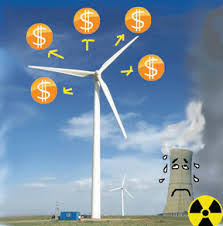
A new Danish study comparing nuclear and renewable energy systems (RES) concludes that, although nuclear systems require less flexibility capacity than renewable-only systems, a renewable energy system is cheaper than a nuclear based system, even with full backup: it says ‘lower flexibility costs do not offset the high investment costs in nuclear energy’.
It’s based on a zero-carbon 2045 smart energy scenario for Denmark, although it says its conclusions are valid elsewhere given suitable adjustments for local conditions. ‘The high investment costs in nuclear power alongside cost for fuel and operation and maintenance more than tip the scale in favour of the Only Renewables scenario. The costs of investing in and operating the nuclear power plants are simply too high compared to Only Renewables scenario, even though more investment must be put into flexibility measures in the latter’.
In the Danish case, it says that ‘the scenario with high nuclear implementation is 1.2 billion EUR more expensive annually compared to a scenario only based on renewables, with all systems completely balancing supply and demand across all energy sectors in every hour.’ It goes on ‘to achieve a more cost-efficient system based predominantly on nuclear power- the investment costs would have to drop to 1.55 MEU/MW. This is significantly below any current or future cost projection for nuclear power. Such a high cost-margin indicates that a combination of low-cost RES and sector coupling presents a cost-effective energy transition making it very hard for nuclear power to deliver a competitive alternative’…………………………………………………………………………….
Interestingly, in the UK context, Lord Turner, Chair of the UK Energy Transitions Commission, has also said that costly new nuclear plants may not be needed for net zero, since there are cheaper, low-carbon alternatives that could back up intermittent renewables. Hydrogen fuel or gas power plants fitted with CCS could fill the gap when wind or solar was not enough to keep the lights on. ‘I don’t think it is the case that you need new nuclear to balance the system. The systems of the future don’t absolutely need a base load.’ The power system ‘can work on a combination of intermittent variable renewables, wind & solar plus some hydro. I think the challenge for new nuclear is that it is just expensive. Bluntly, new nuclear can play very little role in a 2030 target.’
Well maybe that’s why there seems to have been some second thoughts about the new EPR reactor proposed for Sizewell in the UK, with the final investment decision for the Sizewell C nuclear plant evidently facing delays. Initially, EDF, the project’s developer, aimed to secure funding by the end of this year, but the timeline may now extend into 2025.
The prospect for nuclear do seem a bit uncertain, with the case for it these day relying in part on the claim that it can back up renewables and help avoid climate change. But that also seems to be uncertain, as is argued in a new comprehensive review of nuclear issues by academics from Germany and Finland, arguing that it has no role to play in responding to climate change. It says that it is ‘not a sustainable and affordable source of energy for the low-carbon energy transformation’ given its ‘cost-intensive nature, coupled with safety considerations’. And crucially it says that it is ‘characterized by very long construction times, and even longer developments of new technical generations, too far away and uncertain to contribute to climate change mitigation anytime soon’.
In addition ‘from an energy system perspective, nuclear power is not compatible with a system based on renewables, but rather hinders its expansion. Last but not least, nuclear power is particularly unfavorable in a future with higher temperatures and weather extremes and more military threats’.
That sounds pretty damning, even leaving aside radioactive waste handing, and also weapons proliferation and terrorism-related issues, with, as Prof. Ramana discusses in his recent powerful overview book ‘Nuclear is not the solution’, in addition to its other problems, reliance on civil nuclear power making ‘catastrophic nuclear war more likely’. Even if, hopefully, we can avoid that, there are still concerns about nuclear blackmail. And all this just to generate expensive energy.
Yes, going for renewables does mean we have invest in flexible balancing technology and energy storage, but that is cheaper overall and it also getting even cheaper, with many new options emerging. As Ramana says, to balance the variability of renewables, ‘we must invest in a mix of renewable energy technologies across various regions, and in battery and other storage technologies to store excess energy. In addition, we need to shape electricity demand to more closely match supply.’ In common with the German and Finnish researchers, he too sees that as the way ahead. https://renewextraweekly.blogspot.com/2024/09/renewables-beat-nuclear-even-with-full.html
The massive new projects propelling South Australia towards 100 per cent net renewables
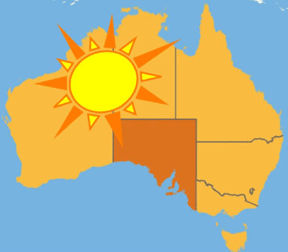
The season of renewable records has begun early in Australia, sending
average coal power down below 50 per cent for the first time, establishing
new records for wind output, and sending grid demand to new lows across the
main grid.
The state at the forefront of the country’s energy transition
is, without a shadow of a doubt, South Australia. It kicked out coal in
2016, and is steadily reducing its dependence on gas. When a new
transmission link to NSW is completed in the next two years, the state
expects to run at 100 per cent net renewables – reducing gas to a support
role and becoming the first multi-gigawatt scale grid in the world to reach
such a milestone through wind and solar, rather than more conventional
renewable sources.
Big industry is lining up to build new factories and
production facilities to take advantage of cleaner power and lower
wholesale prices, and BHP is talking of doubling its mining production at
the giant Olympic Dam – and its smelting and refining capacity. The
latest data shows that wind and solar provided enough power to meet more
than 70 per cent of the state’s electricity demand in the last 12 months
– although the government says it is 75 per cent.
Over the past 30 days
it has been 86.4 per cent, and over the past week it has been more than 105
per cent. Rooftop solar now supplies the equivalent of all state demand on
occasions, presenting a complication for the market operator which prefers
to run the grid with assets it can control. It’s working on that solution
with new inverter standards and grid protocols, including solar
switch-offs. South Australia also led the country, and the world, in the
installation of the first big battery, the original “Tesla Big Battery”
now properly known as the Hornsdale Power Reserve.
Renew Economy 6th Sept 2024
Hokkaido more plugged in to renewable energy than rest of Japan
Hokkaido had over 40% of its electricity generated by renewable energy
sources in fiscal 2023, nearly twice the national average and already above
the maximum share that the central government is looking to achieve by
2030.
With use of renewables — especially wind power — expected to grow
further, the local government has set a goal of getting 60% of its
electricity from solar, on and offshore wind, biomass, hydropower,
geothermal and some nuclear energy by 2030.
For all of Japan, the average
goal is to have between 36% and 38% of electricity be from renewables by
then.
Japan Times 26th Aug 2024
https://www.japantimes.co.jp/news/2024/08/26/japan/society/hokkaido-renewable-energy/
‘Massive disinformation campaign’ is slowing global transition to green energy

UN says a global ‘backlash’ against climate action is being stoked by fossil fuel companies
Fiona Harvey Environment editor, Thu 8 Aug 2024, https://www.theguardian.com/environment/article/2024/aug/08/fossil-fuel-industry-using-disinformation-campaign-to-slow-green-transition-says-un
Fossil fuel companies are running “a massive mis- and disinformation campaign” so that countries will slow down the adoption of renewable energy and the speed with which they “transition away” from a carbon-intensive economy, the UN has said.
Selwin Hart, the assistant secretary general of the UN, said that talk of a global “backlash” against climate action was being stoked by the fossil fuel industry, in an effort to persuade world leaders to delay emissions-cutting policies. The perception among many political observers of a rejection of climate policies was a result of this campaign, rather than reflecting the reality of what people think, he added.
“There is this prevailing narrative – and a lot of it is being pushed by the fossil fuel industry and their enablers – that climate action is too difficult, it’s too expensive,” he said. “It is absolutely critical that leaders, and all of us, push back and explain to people the value of climate action, but also the consequences of climate inaction.”
He contrasted the perception of a backlash with the findings of the biggest poll ever conducted on the climate, which found clear majorities of people around the world supporting measures to reduce greenhouse gas emissions. The survey found 72% of people wanted a “quick transition” away from fossil fuels, including majorities in the countries that produce the most coal, oil and gas. Green parties and plans may have suffered reverses in some parts of the world, he said, but in others they have gained seats, and seen policies that would once have been considered radical enter the mainstream.
Governments must take note, said Hart, who acts as special adviser on climate to the UN secretary general, António Guterres. “This should alert political leaders – those that are ambitious are not only on the right side of history, they’re on the side of their people as well.
“Climate appears to be dropping down the list of priorities of leaders,” he said. “But we really need leaders now to deliver maximum ambition. And we need maximum cooperation. Unfortunately, we are not seeing that at the moment.”
He warned that the consequences of inaction were being felt in rich countries as well as poor. In the US, many thousands of people are finding it increasingly impossible to insure their homes, as extreme weather worsens. “This is directly due to the climate crisis, and directly due to the use of fossil fuels,” he said. “Ordinary people are having to pay the price of a climate crisis while the fossil fuel industry continues to reap excess profits and still receives massive government subsidies.”
Yet the world has never been better equipped to tackle climate breakdown, Hart added. “Renewables are the cheapest they’ve ever been, the pace of the energy transition is accelerating,” he said.
Governments should also take care to ensure that their climate policies did not place unfair burdens on those on low incomes, as poorly designed measures could hurt the poor, according to Hart. “Each country will really need to ensure its transition is well planned to minimise the impact on people and vulnerable populations, because a lot of the so-called pushback comes when there’s a perception that the costs on poor and vulnerable persons are being disproportionately felt,” he said.
For that reason, the UN is calling for new national plans on the emissions reductions required under the 2015 Paris agreement, in which governments must set out clearly not just their targets but how they will be achieved through policy, and what the probable impacts are.
The new national plans, called nationally determined contributions (NDCs), should be “as consultative as possible so that whole segments of society – young people, women, children, workers – will be able to provide their perspective on how the transition should be planned and well-managed, and how it will be financed”, he said.
“Despite everything we see [in the form of extreme weather], we’re still not seeing the level of ambition or action that the world desperately needs.”
Renewables are crushing gas-fired power
Europe’s electricity system is transitioning at breakneck speed.
Renewables are displacing thermal generation so fast that gas-fired power
has slumped to a two-decade low. Continental Europe produced less
electricity from natural gas over the first seven months of this year than
at any time since 2005, according to research by Energy Flux. A few
countries bucked the trend, but at the regional level there is no sign of
this changing any time soon. The continent’s full-throttled embrace of
wind and solar — combined with the return of French nuclear, and Alpine
hydro, milder winters and a weak economic recovery — has dislodged gas
from the heart of many EU power markets. The transformation is both
astonishing and alarming. Europe’s great gas power slump has wiped out
the equivalent of the combined annual primary gas demand of Denmark,
Ireland, Norway and Portugal since 2017. That’s roughly 240 cargoes of
liquefied natural gas (LNG) every year, no longer needed.
Energy Flux 1st Aug 2024
https://www.energyflux.news/p/renewable-crushing-gas-fired-power-wind-solar-eu
How much electricity comes from the Sun on summer days in the UK?
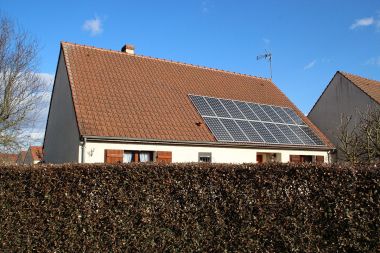
With blazing sun across the UK, the past week has seen solar energy’s
contribution to Britain’s energy mixture hit levels of up to 32% –
highlighting how much the sun can contribute to the country’s electricity
supplies. Each summer, the levels of solar energy in use rise, according to
Christelle Barnes, vice-chair at Solar Energy UK and UK general manager at
SolarEdge. “Every year, that percentage number just gets a little bit
higher. So it was typically between 25% and 27% over the last couple of
years. So just seeing numbers like 30% now is definitely showing that we’re
continuing to deploy more solar,” she told Yahoo News.
Yahoo News 31st July 2024
https://uk.news.yahoo.com/how-much-electricity-sun-summer-uk-172202857.html
More than 885 solar panels have been installed on two Scottish Water sites
in the Central Belt, helping to save 57 tonnes of carbon a year and address
the increasing urgency of climate change. The projects have seen 512 photovoltaic (PV) panels installed at
Bothwellbank Waste Water Treatment Works in South Lanarkshire, which are
able to generate 0.23GWh of power and will offset around a fifth of the
site’s energy needs. In addition, 373 tank-mounted PV panels are now in
place at Roseberry Water Treatment Works in Midlothian, supplementing 178
panels which were installed as part of a previous scheme. The site can now
generate a total of 0.18GWh of energy, offsetting 12% of its energy needs.
Combined, these installations are expected to produce 0.41GWh of green
electricity each year – equivalent to the energy needed to boil around
1.8 million kettles annually. This latest £678,000 investment by Scottish
Water and its commercial subsidiary, Scottish Water Horizons, sees the
sites join a growing list of water and waste water treatment works which
are now either self-sufficient or partly sufficient in their power
requirements.
Midlothian View 31st July 2024
1 This Month

of the week – Shut Down Drone Warfare!


Tell the Ukrainian Government to Drop Prosecution of Peace Activist Yurii Sheliazhenko

Petition to revoke the licensing of the Near Surface Nuclear Disposal Facility (NSDF) at Chalk River. https://www.ourcommons.ca/petitions/en/Petition/Details?Petition=e-7247
To see nuclear-related stories in greater depth and intensity – go to https://nuclearinformation.wordpress.com
-
Archives
- April 2026 (7)
- March 2026 (251)
- February 2026 (268)
- January 2026 (308)
- December 2025 (358)
- November 2025 (359)
- October 2025 (376)
- September 2025 (257)
- August 2025 (319)
- July 2025 (230)
- June 2025 (348)
- May 2025 (261)
-
Categories
- 1
- 1 NUCLEAR ISSUES
- business and costs
- climate change
- culture and arts
- ENERGY
- environment
- health
- history
- indigenous issues
- Legal
- marketing of nuclear
- media
- opposition to nuclear
- PERSONAL STORIES
- politics
- politics international
- Religion and ethics
- safety
- secrets,lies and civil liberties
- spinbuster
- technology
- Uranium
- wastes
- weapons and war
- Women
- 2 WORLD
- ACTION
- AFRICA
- Atrocities
- AUSTRALIA
- Christina's notes
- Christina's themes
- culture and arts
- Events
- Fuk 2022
- Fuk 2023
- Fukushima 2017
- Fukushima 2018
- fukushima 2019
- Fukushima 2020
- Fukushima 2021
- general
- global warming
- Humour (God we need it)
- Nuclear
- RARE EARTHS
- Reference
- resources – print
- Resources -audiovicual
- Weekly Newsletter
- World
- World Nuclear
- YouTube
-
RSS
Entries RSS
Comments RSS
 nuclear-news