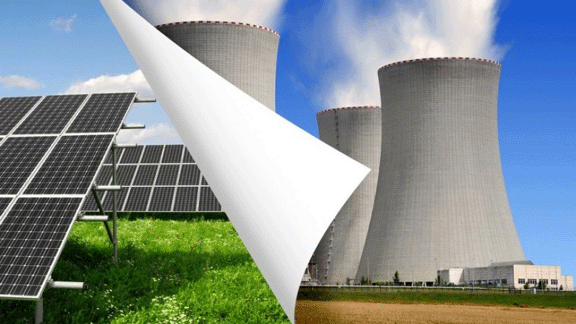
New York governor Andrew Cuomo announced plans this week to close the Indian Point nuclear power plant, which supplies electricity to New York City and surrounding areas. The plant’s two working reactors — which account for roughly 10 percent of the state’s power generation — are slated to go offline in 2020 and 2021, more than a decade ahead of schedule.
Nuclear power plants represent a range of risks, from hazardous radioactive waste to a full-scale meltdown. They also supply the bulk of America’s zero-carbon electricity. In laying out its carbon-cutting goals, the Environmental Protection Agency assumed that existing nuclear power plants would continue to hum and buzz for decades to come. But cheap natural gas is digging into the profits of America’s aging nuclear power plants, pressuring them to close ahead of schedule.
Some states, like Illinois, have thrown a lifeline to nuclear, subsidizing struggling plants, lest they be replaced by carbon-spewing natural gas. New York, by contrast, is betting that the hole created by Indian Point’s closure will be filled with solar, wind, and hydropower.
In a statement, Cuomo said the plant’s closure won’t drive up emissions “at the regional level.” Given New York’s ambitious climate policies, he might be right.
New York has big plans for clean energy.
This week, Cuomo called for states belonging to the Northeast carbon trading program to further limit carbon pollution. He also announced that New York would cut carbon emissions by an additional 30 percent by 2030. As part of its energy plan, New York will require 50 percent of its power to come from renewables by 2030.
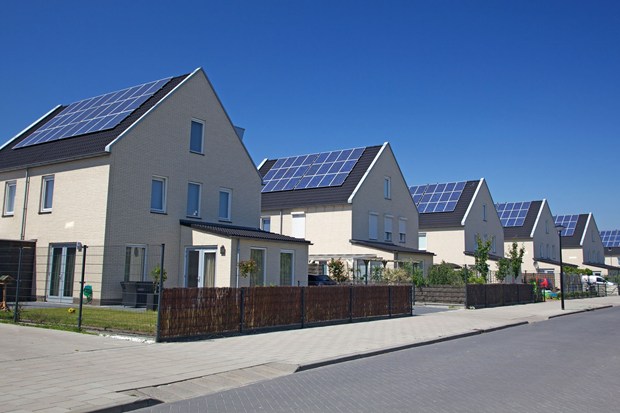
To help integrate renewables, New York is remaking its power grid, incentivizing utilities to advance distributed energy — rooftop solar panels, community solar arrays and microgrids. It’s also building power lines to supply New York City with wind and hydroelectric power generated upstate. Cuomo promised that new hydropower and improved transmission would largely fill the gap left by Indian Point. He’s said the shift will come “at a negligible cost to ratepayers.”
You may be wondering why New York isn’t maximizing zero-carbon power, building out wind, solar, and hydropower while maintaining its nuclear reactors. More zero-carbon power means less natural gas. Less natural gas means less climate change.
Advocates and policymakers are trying to perform triage on environmental threats. With climate change, there is a high probability of a global disaster in the future. With nuclear power, there is low probability of a local disaster in the present. How we should balance these risks is the subject of vigorous debate.
In the years following the Three Mile Island disaster, the United States stopped building nuclear power plants, in part because new projects were met with fierce local opposition. This left the door open for carbon-intensive coal and natural gas. Now, New York is trying to wean its way off nuclear without repeating the same mistake.
Cuomo is weighing numerous risks.
The Indian Point power plant presents a range of risks. Last year, it was discovered that a leak at the power plant was turning groundwater radioactive, though reportedly not enough to threaten human health. Experts are most concerned about the possibility of nuclear meltdown or a terrorist attack. The people who planned the 9/11 attacks had initially floated targeting nuclear power plants in addition to the World Trade Center and the Pentagon. Indian Point offers a prime target for terrorists. The plant lies less than 40 miles from Midtown Manhattan.
What should replace Indian Point? Unlike wind turbines and solar panels, gas-fired power plants can provide energy on demand. But, gas-fired power plants generate carbon dioxide and other pollutants, putting vulnerable New Yorkers in harm’s way.
“Western Queens already produces a majority of the electricity for the New York metropolitan area and has the high asthma and emphysema rates to prove it,” New York State Sen. Michael Gianaris (D) said in a statementissued in response to the planned closure of Indian Point. “Make no mistake, I will vigorously fight any efforts to build new power plants in already over-saturated communities.”
Cuomo is putting his money on clean, resilient renewable energy, but New York can’t transform its energy grid overnight. It will take decades to run the state on wind, solar, and hydropower alone, and that transition depends on smart public policy.
Renewables thrive where policies nurture their growth. That’s why New Jersey generates more solar power than Texas. And it’s why New York can shutter an important nuclear power plant and realistically expect to curb carbon emissions at the same time.
Its slate of climate policies could serve as a model for other states looking to wean off fossil fuels and nuclear energy both. And it has already begun: Just this week, Cuomo announced a new offshore wind project that will generate enough electricity to power more than 18,000 homes.
Delays of years in construction times and the doubling of costs, are the new normal, while the prices of low-carbon alternatives, wind and solar, which can be deployed in weeks rather than decades, have continued to fall. It is now clear that solar farms and wind turbines produce cheaper power than new nuclear will ever be able to. In some cases even old nuclear stations are so costly to run that new wind and solar are cheaper.
The prospects for expansion of the nuclear industry worldwide look worse in 2017 than at any time since the first atom stations were built in the 1950s.
Toshiba, the giant Japanese company that owns the American reactor designer Westinghouse, is the latest company to face financial difficulties due to unforeseen cost overruns and delays that run into billions of dollars.
Westinghouse Electric’s troubles began after it bought construction contractor CB&I Stone & Webster and then had to write down the value of the acquisition by billions of dollars because of problems with building four new reactors for U.S. utilities.
Nuclear Problems
Électricité de France (EDF), the French company with ambitious plans to build four nuclear reactors in Britain, is in ever-deepening financial difficulties because it has failed to build new stations on time or on budget at Olkiluoto, Finland and Flamanville, in France. It is also embroiled in an ongoing scandal over faulty reactor parts.
Even Rosatom, the state-owned Russian company, keen to expand sales outside its own borders, is pegging back on its building plans at home. Alexander Lokshin, the first deputy director general, said on the company’s website that, because forecasts of energy use growth in Russia have proved to be inaccurate, the company had settled for life extensions of existing plants rather than a large program of building new ones.
While China and India continue to press ahead with nuclear projects, both countries are putting ever-greater effort into renewables, which provide much quicker returns. China has cut back on nuclear plans, but is continuing to build both its own home-grown designs and two reactors of EDF’s new design, which are still under construction although they should already be in operation.
South Korea seems to be the one bright spot for the industry. It now has 25 working reactors and is building more—including exporting four to be built at Barakah in the United Arab Emirates.
So while there are still plenty of reactors planned or under construction, they appear to be running late and over budget or are in countries where state ownership and subsidy props up the industry and disguises its flaws.
The industry is in most trouble in countries where nuclear has to compete on price with renewables and gas. Raising enough capital to build a nuclear station at market rates is no longer possible without state subsidy. In the European Union and the U.S., where a “free market” in electricity is supposed to prevail, government moves to boost the nuclear industry are increasingly controversial.
However, there are unlikely to be any bankruptcies. The governments of Japan, France and Britain will bail out these flagship companies because they employ far too many voters to let them fail. In addition, closing existing nuclear stations rapidly is technically difficult and would cause serious blackouts in France and possibly some neighboring countries.
But hopes of a nuclear renaissance now appear to be a pipe dream. This is partly because western companies have apparently failed to design new nuclear power stations that can be built on time and on budget.
Delays of years in construction times and the doubling of costs, are the new normal, while the prices of low-carbon alternatives, wind and solar, which can be deployed in weeks rather than decades, have continued to fall. It is now clear that solar farms and wind turbines produce cheaper power than new nuclear will ever be able to. In some cases even old nuclear stations are so costly to run that new wind and solar are cheaper.
Future of the Industry
The outcome of all this financial turmoil for the future of the industry is difficult to predict. It is probable that stations long under construction in the U.S., Finland, France and China, and due to be finished in the next two years, will be completed if no new technical problems arise. Starting them up will probably be a political rather than an economic decision.
But whether these companies embark on planned new constructions is the real issue. EDF continues with plans to build four European Pressurised Reactors in England, two at Hinkley Point in western England, which are supposed to be completed by 2025, and two more at Sizewell, east of London, where plans are still at the consultation stage. How the deeply indebted company will raise the finance for these projects is not clear.
Toshiba’s financial plight puts another British project, the plan to build three Westinghouse AP1000 reactors in north-west England, in jeopardy. With the company’s debts close to its value in equity, the company credit rating has been lowered. It is hard to see who will put up the enormous capital required to finance the building of three new reactors with designs that already have a dubious record on building times and cost overruns.
These seven giant reactor projects are the first of 10 planned for Britain. So far there has not been the slightest hint from either the companies or the UK government that the plans might need revision. Time will tell whether anyone will come up with the $50 billion in capital needed to build them.
Solar photovoltaic is an excellent source of renewable energy that presents higher efficiency output. This is a key factor driving the solar photovoltaic installation market. In addition, wide range of applications in different sectors, the rising awareness regarding the reduction of carbon footprint, government initiatives and schemes, low cost of installation and maintenance, and constantly evolving technologies have also driven the global solar photovoltaic installation market over the years. Asia Pacific presents strong potential for growth, according to the report. On the down side, limited life of batteries, wet climate in certain regions deteriorating the quality of solar panels, revised feed in tariffs, irregular intensities of solar radiations, and oversupply conditions in certain regions are some of the major challenges that the solar photovoltaic installation market faces.
In order to give readers a better understanding of the scope and dynamics of the solar photovoltaic installation market, the report studies the overall market by segmenting it on the basis of grid type, application, technology, and geography. Based on grid type, the solar photovoltaic installation market is bifurcated into off-grid solar PV and grid-connected solar PV. By technology, the market is segmented into thin film solar PV, crystalline silicon solar PV, and others such as organic solar PV and concentrator PV.
On the basis of application, the solar photovoltaic installation market is categorized into utility scale, commercial, and residential solar PV systems. The use of solar photovoltaic installations in the commercial and residential sectors has risen substantially over the past few years, with major installations in hotels, offices, and hospitals.Geographically, the global solar photovoltaic installation market is divided into Europe, the Middle East, and Africa (EMEA), Asia Pacific, North America, and the Rest of the World. Europe currently dominates the worldwide solar photovoltaic installation market. Asia Pacific is anticipated to witness considerable growth over the next three years owing to rising demand for solar PV systems in countries such as Japan, China, and India.
The research report features a detailed section on the competitive landscape of the solar photovoltaic installation market. Key players are identified and reviewed based on key criteria such as business overview, financial standing, recent developments, and business strategies. With the help of SWOT analysis, the strengths, weaknesses, opportunities, and threats of the major players are discussed. In addition, Porter’s Five Forces give readers a clear understanding of the impact of buyers, suppliers, competitors, substitutes, and new entrants on the overall vendor landscape.
The noteworthy players competing in the global solar photovoltaic installation market include Yingli Green Energy Holding Co. Ltd., Solar World AG, Trina Solar Ltd., Sun Power Corporation, Suntech Power Holding Co. Ltd., Jinko Solar Holding Company Ltd. Corporation, Schott Solar AG, Canadian Solar Inc., First Solar Inc., Solar Frontier Ltd., and Sharp Corporation.
Solar power to rise from Chernobyl’s nuclear ashes, Guardian, Kieran Cooke, 12 Jan 17
Chinese companies plan to spend $1bn building a giant solar farm on land contaminated by the nuclear disaster in Ukraine, reports Climate News Network It was the worst nuclear accident in history, directly causing the deaths of 50 people, with at least an additional 4,000 fatalities believed to be caused by exposure to radiation.
The 1986 explosion at the Chernobyl power plant in Ukraine also resulted in vast areas of land being contaminated by nuclear fallout, with a 30-kilometre exclusion zone, which encompassed the town of Pripyat, being declared in the area round the facility.
Now two companies from China plan to build a one-gigawatt solar power plant on 2,500 hectares of land in the exclusion zone to the south of the Chernobyl plant.
Radiation that escaped as a result of the explosion at Chernobyl reached as far away as the mountains and hills of Wales in the UK, and a substantial portion of the radioactive dust released fell on farmlands in Belarus, north of Ukraine.
Until now, the exclusion zone, including the town of Pripyat, has been out of bounds for most people, with only limited farming activity permitted on lands that are still regarded as contaminated.
Many former residents of the area are allowed back only once or twice a year for visits – to their old homes or to tend their relatives’ graves. …..
Renewables Industry ‘More Than Ready’ For N.Y. Nuclear Plant Closure http://solarindustrymag.com/renewables-industry-more-than-ready-for-n-y-nuclear-plant-closureby Joseph Bebon on January 09, 2017 Gov. Andrew M. Cuomo, D-N.Y., has announced the closure of a 2 GW nuclear power plant in New York by April 2021. Renewable energy advocates have applauded the decision and say it provides an opportunity to further bolster solar and wind energy, including offshore wind power, in the state.
According to Cuomo’s announcement, the aging Indian Point Energy Center, located 25 miles north of New York City, has been plagued by numerous safety and operational problems, including faulty bolts and various leaks and fires. After extensive litigation and negotiation, plant operator Entergy Corp. has agreed to end all operations at the facility, with plans to shut down Indian Point Unit 2 as early as April 2020 and Unit 3 in April 2021 – 13 and 14 years earlier than required under the anticipated federal re-licensing terms, respectively.
“For 15 years, I have been deeply concerned by the continuing safety violations at Indian Point, especially given its location in the largest and most densely populated metropolitan region in the country,” says Cuomo in the press release. “I am proud to have secured this agreement with Entergy to responsibly close the facility 14 years ahead of schedule to protect the safety of all New Yorkers. This administration has been aggressively pursuing and incentivizing the development of clean, reliable energy, and the state is fully prepared to replace the power generated by the plant at a negligible cost to ratepayers.”
The release says there will be continued employment at the plant throughout the closure process through 2021, and Entergy has committed to offer plant employees new jobs at other facilities. Furthermore, the state will work with employees to gain access to other job opportunities and worker retraining in the power and utility sectors within New York. Through the New York State Energy Research and Development Authority, the release notes, the state will also offer workers retraining and new skills in renewable technologies, such as solar and wind.
The release says a combination of current and planned resources, including 1 GW of hydropower, will be able to generate more than enough electricity to replace Indian Point’s 2 GW of capacity by 2021. Nonetheless, Anne Reynolds, executive director of the Alliance for Clean Energy New York (ACE NY), emphasizes that the state should avoid relying on more natural gas and instead focus on additional solar and wind power. In a press release, she says the renewables industry is “more than ready” to help fill in the energy gap.
“Governor Cuomo’s 50 percent renewable energy by 2030 mandate has created fertile ground for renewables developers, and they have responded by proposing dozens of projects,” says Reynolds. “There are now 34 wind projects totaling 4,544 MW in the interconnection queue. There are also 27 proposed utility-scale solar projects totaling 583 MW of capacity. This totals to more than twice the current capacity of the two Indian Point reactors.”
“Meanwhile, continuing adoption of rooftop and community solar will also help push New York toward 50 percent, as will development of small hydro and fuel cells,” she says. “These smaller projects add up, providing New Yorkers the opportunity to generate their own power and modernize the grid.”
Reynolds adds, “Offshore wind development is also moving forward. Offshore areas for wind energy development have already been leased by the federal government off Montauk and the Rockaways and off the shores of neighboring states. Development in these areas alone could provide 1,500 to 2,000 MW of capacity to New York. And more offshore areas should be leased in the coming years.”
Liz Gordon, director of the New York Offshore Wind Alliance, comments, “With the Atlantic Ocean off New York featuring some of the best wind resources in the world, offshore wind power is uniquely situated to help meet that downstate demand.”
A new report from the national laboratories examined states’ renewable energy goals and found that, while renewables add costs, they more than make up for it in avoiding pollution and saving water.
For the first time, researchers from the National Renewable Energy Laboratory and Lawrence Berkeley National Laboratory took a look at state renewable energy portfolios and projected their costs and benefits decades into the future, as far as 2050.
Today, 29 states and Washington, D.C., have a renewable portfolio standard. They have been an important engine for the spread of renewable energy sources like solar panels and wind farms. More than half of all renewable energy installations since 2000 have been created to satisfy an RPS, according to the paper.
The study analyzed two scenarios: one where RPSs remain unchanged from where they stand today, and another where they expand to every state and have higher targets.
It’s unknown how realistic the scenarios are, since RPSs find themselves in powerful crosscurrents, with some states on a path to strengthen their standards while others face movements to weaken them.
Just since the paper’s research was completed last July, Michigan has strengthened its renewable portfolio standard, while a watering-down of Ohio’s standard was prevented only by a veto from the governor (Energywire, Dec. 16, 2016; Greenwire, Dec. 27, 2016).
Under existing RPSs, the country will count on renewables for 26 percent of electricity generation by 2030 and 40 percent by 2050. Under the high-RPS scenario, renewables would reach 35 percent by 2030 and 49 percent by 2050, the report found.
Satisfying existing portfolio standards will cost about $31 billion, or about three-quarters of a cent per kilowatt-hour of renewable energy in terms of levelized costs. If renewable standards multiply and strengthen, the study said, costs could range widely, from $23 billion to $194 billion, or from about one-quarter of a cent to 1.5 cents more per kWh.
Meanwhile, emissions of common pollutants — sulfur dioxide, nitrogen oxides and small particles — would drop by between 4 and 5 percent under existing standards, prompting $97 billion in health and environmental benefits. A stronger RPS regime would trigger these pollutants to drop much more, 29 percent, with benefits of $558 billion, the study said.
Greenhouse gas emissions will drop by 6 percent under the existing portfolio standards, with $161 billion in benefits. In the high-RPS scenario, they would decrease by 23 percent and provide a value of $599 billion in avoided costs.
Water, which is used in copious quantities to cool fossil fuel power plants, would see a drop in use as more renewables come online. One megawatt-hour of renewable energy avoids the withdrawal of 3,400 gallons from waterways and the consumption of 290 gallons, the report said. The United States would save the water consumption equivalent of 420,000 homes under the existing portfolio standards and 1.9 million homes under a high-RPS scenario.
In terms of employment, the existing state RPSs would cause the creation of 4.7 million hours of job time, while the more optimistic scenario would spur 11.5 million job-hours. But the overall number of jobs would remain the same, as a gain in renewable-related employment would be offset by the loss of jobs in other parts of the energy industry, the study said.
ll Netherlands Railways trains will be 100% wind powered by 2018 http://inhabitat.com/all-netherlands-railways-trains-will-be-100-wind-powered-by-2018/When its citizens demanded clean energy, The Netherlands responded in the best possible way. Following a ruling earlier this year when 886 citizens sued their government to reduce CO2 emissions, a court at the Hague ordered the Dutch government to adopt a goal of cutting carbon emissions by at least 25 percent over the next five years. In response, the Dutch railways unveiled plans to become 50 percent wind-powered by the end of this year and 100 percent by 2018.
The trains are reported to carry 1.2 million passengers each day and emit 550 kilotons of carbon dioxide, yet this number is hoped to reach zero within only a few years. Michel Kerkhof of energy company Eneco stated, “Mobility is responsible for 20 percent of CO2 emissions in the Netherlands, and if we want to keep traveling, it is important that we do this without burdening the environment with CO2 and particulate matter.” This speedy upgrade to renewable, safe energy sources is just what we need to address growing climate change issues.
Wind energy used to power the trains will be sourced not only by the Netherlands, but also from Belgium and Scandinavian countries. This allows the country’s resources to be used in other ventures. It also strengthens partnerships with other providers and encourages expansion of railway use throughout Europe. Perhaps this could be an inspiration to other nations – on all continents – to jump on board with the Netherlands’ enthusiasm to tip the scales toward renewable energy.
China cementing global dominance of renewable energy and technology It now owns five of the world’s six largest solar-module manufacturing firms and the largest wind-turbine manufacturer, Guardian, Michael Slezak. 6 Jan 17, China is cementing its global dominance of renewable energy and supporting technologies, aggressively investing in them both at home and around the globe, leaving countries including the US, UK and Australia at risk of missing the growing market.
A report by the Institute for Energy Economics and Financial Analysis (Ieefa) found China’s dominance in renewables is rapidly spreading overseas, with the country accelerating its foreign investment in renewable energy and supporting technologies.
Analysing Chinese foreign investments over US$1bn, Ieefa found 13 in 2016, worth a combined $32bn. That represented a 60% jump over similar investments in 2015.China was already widely recognised as the largest investor in domestic renewable energy, investing $102bn in 2015, according to Bloomberg New Energy Finance – more than twice that invested domestically by the US and about five times that of the UK.
The big foreign investments in 2016 included two in Australia, two in Germany and two in Brazil, as well as deals in Chile, Indonesia, Egypt, Pakistan and Vietnam.
In Australia, China Light & Power struck a $1.1bn deal, buying power from wind and solar farms.
In Chile, Tianqi Lithium spent $2.5bn acquiring a 25% stake of a lithium miner and processor. (Lithium is essential for lithium batteries used in electric vehicles and home battery storage.)
In Germany, Beijing Enterprises Holdings Ltd spend $1.6bn on a Waste to Energy development.
The report noted the global expansion cements China’s total domination of renewable energy growth globally. China now owned:
Five of the world’s six largest solar-module manufacturing firms
Why solar power poses a very tricky problem for Donald Trump, The Week, RyanCooper , 6 Jan 17 The worst imaginable president for climate change might be about to take power, but solar is still a bright spot. The technology and business infrastructure of solar panel manufacturing has been getting better at a blistering pace, and the latest estimates conclude that solar will surpass coal as the cheapest electricity source within a single decade — and in many places, it already has.
This raises the question of what President Trump will do about the solar business. Most Republicans, Trump included, are heavily committed to filth-spewing power sources like coal and natural gas, and deny the science of climate change. But while Republicans will no doubt want to use regulations and subsidies to prop up fossil fuels and keep down renewables, Trump has shown a bizarre fixation with U.S.-based manufacturing jobs that might just redound to solar’s benefit.
The latest estimate of solar panels’ economic viability comes via Bloomberg New Energy Finance. The price of solar power has plummeted by 62 percent merely since 2009. Taking into account current trends and planned technological developments, they estimate solar will be on average the world’s cheapest power source by about 2026, without subsidies of any kind.
That average hides much variability, of course — in some sunny regions, solar is already astoundingly cheap:…….
Republicans will likely respond to the growth of solar by trying to stamp it out by allowing fossil fuels to pollute to their heart’s content (thus granting them a huge implicit subsidy), and passing burdensome new regulations on renewables. On the face of it, this fits well with Donald Trump’s campaign, which was all about valorizing traditionally masculine jobs, particularly in manufacturing and manual labor. In the conservative shorthand, coal is tough and cool, while renewables are for sissy Prius-drivers.
But on the other hand, this stereotype is wildly at odds with the actual reality of the solar business. Solar panels must be manufactured (as of 2015, there were about 30,000 such jobs in the United States) and installed by manual laborers (120,000 jobs as of 2015). That number has no doubt grown substantially in the past year, as solar jobs have been consistently increasing in number by about 20 percent per year……..
Stamping out solar would kill an order of magnitude more jobs than that. If Trump got wind of some policy that would strangle American solar — or worse yet, force the company to pick up and move to Europe or China — there is a genuine chance he’ll go on one of his Twitter rampages and force the Republican Congress to back down.
Conversely, it will be genuinely difficult to revive coal jobs, which have been in long-term decline since the 1970s. Big Coal has been all but killed off by competition with fracked natural gas and, increasingly, renewables. It is smaller than solar and shrinking fast. Stark hypocrisy is basically the Republican motto, but even they might struggle with the large and increasing subsidies necessary to prop up an ever-more-obsolete marketplace loser.
Eden Keeper, (USA) 6 Jan 17Faith members considering solar power for churches, temples, mosques, and other houses of worship are discovering that installations are getting both easier and cheaper. Since 2009, according to the Solar Energy Industries Association (SEIA), costs for non-residential solar installations have dropped around 73%, from around $7.50 per kilowatt to today’s cost of about $2 per kilowatt.In Minnesota, for example, approximately 400 congregations are working with Minnesota Interfaith Power and Light (MNIPL), a faith-based nationwide nonprofit concerned with climate change and environmental stewardship. MNIPL Executive Director Julia Nerbonne notes that conversations on solar power for churches are trending all across the state.
Among the 20 Minnesota houses of worship that completed their transition to solar power in 2016 are Unity Church-Unitarian and Woodbury Peaceful Grove United Methodist Church in St. Paul. In Roseville, St. Christopher’s Episcopal Church also completed it’s solar rooftop installation last year……..
Community Solar Farms Offer Additional Solutions……..
Just Community Solar: A Story of Faith in Action
Many States Offer Solar IncentivesCurrent political fearmongering aside, many states are working hard to increase the transition to renewable energy in the US. Minnesota is an inspiring example…
“Tons and Tons of Faith Communities Doing Solar” An additional bill credit especially relating to solar power for churches, faith-based organizations, and other nonprofits may be approved in March 2017, by the Public Utilities Commission………
Learn More about Community Solar Power For ChurchesMNIPL’s project, “Just Community Solar: A Story of Faith in Action” is “connecting the dots between climate, racial, and economic justice.”
Inside Glanrhyd, the first solar ‘eco hamlet’ in Wales Residents of the new eco hamlet in Pembrokeshire can expect greatly reduced fuel bills and shared use of an electric car, Guardian, Steven Morris, 6 Jan 17,
Most of the houses in the Welsh village of Glanrhyd are of traditional construction – walls made out of hefty local stone, roofs of grey slate. They can get chilly when the winter winds whistle through the gaps.
The six houses that make up the “eco hamlet” of Pentre Solar look and feel very different. They are built using light, bright timber sourced from a nearby valley. The houses are carefully insulated, airtight and powered by solar panels.
Over the next few weeks the first tenants, local people from Pembrokeshire county council’s housing list, will move into what is being billed as the only development of its kind in the UK.
Their fuel bills are expected to be a fraction of their neighbours’ – and they will even get the use of a shared electric car for the school run, the shopping trip to nearby Cardigan, or even for a jolly to one of the many glorious local beaches…….
If the project, which has been backed by the Welsh government, does work, the hope is that similar developments could be rolled out across Wales and eventually across the UK.
Western Solar’s first venture was a solar farm, five miles from the eco hamlet. Doubts that it was sunny enough in this part of the British Isles (after all, the nearby village of Eglwyswrw made headlines last year after it rained for more than 80 days in a row) proved unfounded and the project thrived…….
Using technology borrowed from Germany, Western Solar built a prototype eco home called TŷSolar (Tŷis Welsh for house). The idea was to produce a high-quality, brilliantly insulated, airtight house made of locally sourced timber and powered by solar energy…….
GM Commits to 100 Percent Renewable Energy by 2050 15.09.2016 GM pledges to source global electricity from wind, sun and landfill gas, joins RE100
DETROIT – General Motors plans to generate or source all electrical power for its 350 operations in 59 countries with 100 percent renewable energy — such as wind, sun and landfill gas — by 2050.
“Establishing a 100 percent renewable energy goal helps us better serve society by reducing environmental impact,” said GM Chairman and CEO Mary Barra. “This pursuit of renewable energy benefits our customers and communities through cleaner air while strengthening our business through lower and more stable energy costs.”
This new renewable energy goal, along with the pursuit of electrified vehicles and efficient manufacturing, is part of the company’s overall approach to strengthening its business, improving communities and addressing climate change. GM is also joining RE100, a global collaborative initiative of businesses committed to 100 percent renewable electricity, working to increase demand for clean power.
In 2015, GM required 9 terawatt hours of electricity to build its vehicles and power its offices, technical centers and warehouses around the world. To meet its new renewable energy goal, GM will continue to improve the energy efficiency of its operations while transitioning to clean sources for its power needs.
Today GM saves $5 million annually from using renewable energy, a number it anticipates will increase as more projects come online and the supply of renewable energy increases. In addition, the company anticipates costs to install and produce renewable energy will continue to decrease, resulting in more bottom-line returns.
The investment will create over 13 million jobs in the sector, the National Energy Administration (NEA) said in a blueprint document that lays out its plan to develop the nation’s energy sector during the five-year 2016 to 2020 period.
The NEA said installed renewable power capacity including wind, hydro, solar and nuclear power would contribute to about half of new electricity generation by 2020.
China’s Green Energy Push
The agency did not disclose more details on where the funds — which equate to about $98 billion each year — would be spent.
The investment reflects Beijing’s continued focus on curbing the use of fossil fuels, which have fostered the country’s economic growth over the past decade, as it ramps up its war on pollution.
Last month, the National Development and Reform Commission (NDRC), the country’s economic planner, said in its own five-year plan that solar power would receive 1 trillion yuan of spending, as the country seeks to boost capacity by five times.
The spending comes as the cost of building large-scale solar plants has dropped by as much as 40 per cent since 2010. China became the world’s top solar generator last year.
Israel to build world’s tallest solar tower in symbol of renewable energy ambition, Independent, 5 Jan 17 With Israel traditionally running its economy on fossil fuels, renewable energy has long been hobbled by bureaucracy and a lack of incentives. In sunny Israel, solar energy supplies only a small percentage of the nation’s power needs, leaving it far behind countries with cloudier and colder climates.
Now the fledgling solar industry is trying to make a leap forward with a large-scale project boasting the world’s tallest solar tower, as a symbol of Israel’s renewal energy ambitions.
The country is starting to make an effort, setting a goal of generating 10 percent of its energy from renewable sources by 2020, up from the current 2.5 percent.
The Ashalim project, deep in the Negev desert, is made up of three plots, with a fourth planned for the future, each with a different solar technology. Together, the fields will be Israel’s largest renewable energy project when completed by 2018. They are set to generate some 310 megawatts of power, about 1.6 percent of the country’s energy needs — enough for about 130,000 households, or roughly 5 percent of Israel’s population, according to Israel’s Electricity Authority. …….
Another solar-thermal plot at Ashalim will be able to store energy even when the sun goes down. A third plot will use photovoltaic solar technology to produce energy.
Yaron Szilas, CEO of Shikun & Binui Renewable Energy, the lead developer of the second solar-thermal plot, said combining the three technologies was a wise move because each has its own advantage. The amount of electricity it produces will be comparable to large-scale solar fields in California and Chile……..
Israel has developed some of the world’s most advanced solar energy equipment and enjoys a nearly endless supply of sunshine. But Israeli solar companies, frustrated by government bureaucracy, have mostly taken their expertise abroad.
Countries with cooler climates have outpaced Israel. Germany, for example, gets nearly 30 percent of its energy from renewable sources.
Tesla Flips the Switch on the Gigafactory Musk meets a deadline: Battery-cell production begins at what will soon be the world’s biggest factory—with thousands of additional jobs. Bloomberg, by Tom Randall January 5, 2017 The Gigafactory has been activated.
Tesla’s solar roofs could revolutionize the industry
Hidden in the scrubland east of Reno, Nev., where cowboys gamble and wild horses still roam—a diamond-shaped factory of outlandish proportions is emerging from the sweat and promises of Tesla CEO Elon Musk. It’s known as the Gigafactory, and today its first battery cells are rolling off production lines to power the company’s energy storage products and, before long, the Model 3 electric car. 1
The start of mass production 2 is a huge milestone in Tesla’s quest to electrify transportation, and it brings to America a manufacturing industry—battery cells—that’s long been dominated by China, Japan, and South Korea. More than 2,900 people are already working at the 4.9 million square-foot facility, 3 and more than 4,000 jobs (including temporary construction work) will be added this year through the partnership between Tesla and Panasonic. 4
By 2018, the Gigafactory, which is less than a third complete, will double the world’s production capacity for lithium-ion batteries and employ 6,500 full-time Reno-based workers, according to a new hiring forecast from Tesla. The company’s shares, having touched their highest point since August, closed up $10 at $226.99 in New York trading.
The full activation of the Gigafactory carries existential significance for Tesla, representing a new sense of urgency at a company known for its unreachable deadlines. After missing almost every aggressive product milestone it set for itself over the last decade, Tesla must prove to investors and customers that it can stay on schedule for its first mass-produced car.
There are promising signs. ………
The storage products fit into Musk’s long-term vision of transforming Tesla from an an electric car company to a clean-energy company. That’s the same motivation behind his recently concluded deal to acquire SolarCity Corp., the largest U.S. rooftop solar installer. Last week, Tesla reached a deal with Panasonic to expand its relationship to produce solar cells in Buffalo, N.Y., bringing some 1,400 jobs to the region.
At a time when President-elect Donald Trump has taken to Twitter to skewer manufacturers for moving jobs to Mexico or China, Tesla stands apart as an all-American carmaker, battery maker, and solar producer. About 95 percent of the Model 3’s components will be made in the U.S., and 25,000 of the company’s 30,000 employees are based there. Musk, who visited Trump recently in New York City, was named to a strategy group to advise the new Republican president. ……. https://www.bloomberg.com/news/articles/2017-01-04/tesla-flips-the-switch-on-the-gigafactory













 nuclear-news