Daily Planet 9th Aug 2017, A UK-based solar developer has this week applied to the Tunisian government
for authorisation to build a 4.5 gigawatt plant in the country, making it a
solar plant large enough to provide carbon-free electricity to over five
million European homes or over seven million electric vehicles.
TuNur is looking to build the new solar complex in the Tunisian Sahara, supplying
energy to both Tunisia and Europe. Three high voltage submarine cable
systems are planned, allowing for the transport of power to Europe with low
loss.
The first will link Tunisia with Malta, which is already connected to
the European grid, and would reinforce the island’s position as a central
Mediterranean energy hub. The second cable, which would come ashore north
of Rome has been under development for several years and is being evaluated
as a “project of common interest” by the European Community.
The project is the latest in a number of solar projects based in North Africa,
and follows the Noor project in Morocco, which launched in 2016. Noor 1, is
the first section, providing 160 megawatts of a total 580 megawatt
capacity. https://dailyplanet.climate-kic.org/tunisian-solar-power-plant-power-five-million-homes-europe/
August 12, 2017
Posted by Christina Macpherson |
EUROPE, renewable |
Leave a comment
Solar Power Portal 9th Aug 2017, Soaring generation from the UK’s solar assets sent UK power demand to a
new low last month, according to data compiled by monitoring firm EnAppSys.
 The data showed that average half-hourly demand throughout July stood at
26.2GW, courtesy of a significant amount of embedded generation from
sources such as rooftop solar. These sources are seen on the grid as demand
reduction and, as a result, reduce the amount of power that is drawn down
from the grid.
Throughout July the average embedded generation figure stood
at 3GW. Solar and other renewables have already witnessed a number of new
generation records this year, particularly in Spring. Unseasonable weather
in April helped solar to a new landmark generation record.
https://www.solarpowerportal.co.uk/news/soaring_solar_sends_uk_power_demand_to_eight_year_low
August 11, 2017
Posted by Christina Macpherson |
decentralised, UK |
Leave a comment
Bloomberg 4th Aug 2017, Some eighty days into Emmanuel Macron’s new job, Europe’s biggest
renewable energy companies are still waiting for the French president to
make good on campaign pledges to boost green power.
To meet French goals of doubling onshore wind and tripling solar solar power by 2023, Macron’s
government still needs to show it can support investments by helping
developers cut through the country’s bureaucratic red tape.
Companies including Italy’sEnel SpA, Germany’s EON SE and Innogy SE remain
reluctant to develop renewables in Europe’s third-biggest economy. “We
regularly check our existing markets and potential new markets on new
project opportunities,” Innogy’s spokeswoman Viola Baumann said in an
email response to questions from Bloomberg. “There’s no new development
and that also applies to France.” https://www.bloomberg.com/news/articles/2017-08-04/green-power-still-tied-up-with-red-tape-in-macron-s-france
August 9, 2017
Posted by Christina Macpherson |
France, renewable |
Leave a comment
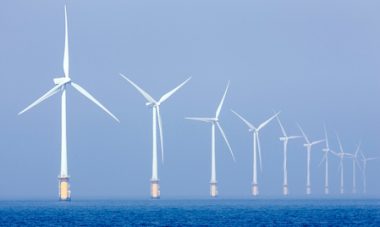
 Business Green 7th Aug 2017, Business and Energy Secretary Greg Clark has given the green light for
ScottishPower Renewables to develop a 1.2GW offshore wind project 46 miles
off the coast of East Anglia that will use ultra-efficient ‘next
generation’ turbines.
If successful in future Contracts for Difference auctions, ScottishPower Renewables said the project would begin
construction around 2022, with the wind farm up and running by 2025. The
auction is widely tipped to deliver a host of highly competitive projects
that are expected to comfortably exceed the government’s target of offshore
wind farms delivering power at less than £100/MWh.
Some industry insiders have said rapid improvements in turbine technology and project management
should enable low bids that significantly undercut the level of support
offered to new nuclear projects. https://www.businessgreen.com/bg/news/3015222/green-light-for-next-generation-12gw-east-anglia-offshore-wind-farm
August 9, 2017
Posted by Christina Macpherson |
renewable |
Leave a comment
 Climate News Network 1st Aug 2017, A solar revolution is transforming the lives of women in the remotest parts of Asia. They no longer have to wait decades to be connected to a power grid but are able today to exploit the huge potential of the abundant sunshine.
In societies where women normally play a subservient role and spend much of their time on menial chores, solar businesses are creating a new breed of female entrepreneur who are bringing electricity to their villages.
In the last two years two schemes designed to encourage women to bring the solar revolution to parts of rural India and Nepal have won international Ashden Awards, which bring the organisations involved
£20,000 (US$26,360) each in prize money and a lot of guidance to improve
and extend their businesses. http://climatenewsnetwork.net/women-take-control-solar-revolution/
August 4, 2017
Posted by Christina Macpherson |
decentralised, social effects, women |
Leave a comment
California Aims to Make Electricity Production in the State 100 Percent Renewable by 2045 http://tribunist.com/news/california-aims-to-make-electricity-production-in-the-state-100-percent-renewable-by-2045/, By Tribunist Staff on August 1, 2017, Even though the White House decided to step out of the Paris Accords, many states are still working to increase their use of clean energy in an effort to fight climate change. While California has already invested in alternative energy sources like wind, solar, and hydro, a new set of bills looks to take it to the next level.
According to
IFL Science, the current governor of California, Democrat Jerry Brown, has extended the cap-and-trade program for an additional 10 years. This puts an upper limit on carbon dioxide emissions by individual companies and provides a trade network for buying and selling the allowances. If a business lowers their emissions below their allotment, they can sell the excess to organizations that are struggling to meet the requirements.
Another bill working its way through the California legislature would require the state to produce 100 percent of its electricity needs from renewable sources by the year 2045.
Based on the current use of clean energy and upcoming projects, California is on track for producing about 50 percent of their electricity from alternative sources by 2026, a few years earlier than the original 2030 deadline.
If the bill is passed into law, California will be the second state dedicated to reaching the 100 percent mark for the generation of renewable electricity. The first state that made that commitment was Hawaii.
Both of the bills aim to reduce man-made climate change. Speaking about the issue, Brown said, “If we don’t do something about it, it is the end of the world as we know it.”
Brown and former California governor Arnold Schwarzenegger, who authored the original cap-and-trade legislation over 10 years ago, are recognized for the actions related to climate advocacy. Speaking about climate change, Schwarzenegger said, “We do not have to wait for Washington to take action.”
Since President Donald Trump stated the US was withdrawing from the Paris Accords, Brown has signed multiple climate change agreements with the international community, pledging California’s support of such initiatives. Brown has also set up a coalition of states known as the Climate Alliance that has chosen to dedicate themselves to fighting global warming.
August 4, 2017
Posted by Christina Macpherson |
renewable, USA |
Leave a comment
Times 2nd Aug 2017, Google’s parent company Alphabet is turning to salt and antifreeze to
provide energy storage that could be cheaper than lithium-ion batteries.
The technology giant’s secretive X division is working on a way to store
energy from renewable sources that would otherwise be wasted because of the
time mismatch between supply and demand.
The system was designed by Robert Laughlin, a Nobel prize-winning physicist of Stanford University. It takes
in energy in the form of electricity and converts it into hot and cold air,
using a heat pump. These streams heat molten salt and cool the antifreeze
respectively. The process can be reversed to release the energy as the warm
and cold air meet, creating gusts that drive a turbine and feed power back
into the grid.
Scientists had already shown that the technology could store
energy. Alphabet’s engineers have designed a version that works at lower
temperatures, however, which reduces costs and makes it commercially
viable. https://www.thetimes.co.uk/edition/news/cheaper-batteries-powered-by-antifreeze-designed-by-google-s-parent-company-alphabet-vpclt3jpn
August 4, 2017
Posted by Christina Macpherson |
energy storage, USA |
Leave a comment
 Telegraph 26th July 2017, Do we have enough power to deal with the growth in electric vehicles?
National Grid has warned that the boom in the number of people charging up
their cars could result in a surge in peak demand, requiring hundreds of
billions of pounds worth of investment in new power plants – unless the
electric vehicle revolution is properly managed.
In one scenario National Grid estimates that electric vehicles alone could cause peak power demand
to climb by 1.3 GW a year between 2025 and 2045. This would require the
UK’s shrinking generation capacity to grow by the equivalent of two large
gas-fired power units a year or one £18bn Hinkley Point C nuclear plant
every three years. By 2030 the UK would need 8GW, almost three extra
Hinkley projects, to meet the need of drivers who choose to top up their
vehicles during peak hours.
Fortunately, there’s a better way to accommodate the charge-up demand which could cut the extra power needed by
more than half to a more manageable 3GW increase by the end of the next
decade while saving consumers money. Earlier this week Business Secretary
Greg Clarke fired the starting gun on a battery boom through a £246m
research and development competition, and a new plan to put home batteries
at the heart of its industrial strategy.
The support should help the electric vehicle drive, but also help the energy system to cope with the
higher demand caused by the fleet of new cars. A heady roll out of electric
vehicles is expected to drive the cost of battery storage down at an even
faster rate than expected, meaning drivers could be parking their electric
cars next to affordable home batteries, which are linked to cheap solar
panels.
Currently consumers are only able to use around 30pc of the power
generated by solar panels because their demand picks up once the sun is
setting. But the battery boom means energy users can store the unused solar
power generated during the day to charge their cars at night, saving money
and easing the pressure on the grid.
Major wind farms, including the giant Burbo Bank project off the Liverpool coast, are already connected to
batteries so that energy stored during windy nights can power homes when
demand lifts in the morning. Using renewable energy more effectively also
means costs will fall too. The shift in economics is expected to trigger a
deluge of fresh investment into renewable power projects, without the need
for subsidies. The cumulative impact of more renewable power – and better
use of it – could help meet the demand created by electric vehicles in the
first place. http://www.telegraph.co.uk/business/2017/07/26/electric-vehicles-have-put-energy-sector-road-change/
July 28, 2017
Posted by Christina Macpherson |
energy storage, UK |
Leave a comment
Independent 24th July 2017, In the first six months of 2017 enough power was generated to supply more
than all of Scotland’s national demand for six days. Wind power output in
Scotland has helped set a new record for the first half of the year,
according to an independent conservation group.
Analysis by WWF Scotland of data provided by WeatherEnergy found wind turbines provided around
1,039,001MWh of electricity to the National Grid during June. Renewable
energy figures show the power generated last month was enough to supply the
electrical needs equivalent to 118 per cent of Scottish households or
nearly three million homes.
In the first six months of 2017 enough power was generated to supply more than all of Scotland’s national demand for six
days. Turbines provided 6,634,585MWh of electricity to the National Grid,
which analysts say could on average supply the electrical needs of 124 per
cent of Scottish households, or more than three million homes.
Dr Sam Gardner, acting director of WWF Scotland, said: “The first six months of
2017 have certainly been incredible for renewables, with wind turbines
alone helping to ensure millions of tonnes of climate-damaging carbon
emissions were avoided. “Scotland is continuing to break records on
renewable electricity, attracting investment, creating jobs and tackling
climate change. http://www.independent.co.uk/environment/scotland-renewable-wind-energy-power-electricity-three-million-homes-118-per-cent-of-households-a7855846.html
July 26, 2017
Posted by Christina Macpherson |
renewable, UK |
Leave a comment

 Drop in wind energy costs adds pressure for government rethink https://www.theguardian.com/environment/2017/jul/23/drop-in-wind-energy-costs-adds-pressure-for-government-rethink
Tories urged to look at onshore windfarms which can be built as cheaply as gas plants and deliver the same power for half the cost of Hinkley Point, says Arup, Guardian,Adam Vaughan, 24 July 17, Onshore windfarms could be built in the UK for the same cost as new gas power stations and would be nearly half as expensive as the Hinkley Point C nuclear plant, according to a leading engineering consultant.
Arup found that the technology has become so cheap that developers could deliver turbines for a guaranteed price of power so low that it would be effectively subsidy-free in terms of the impact on household energy bills.
France’s EDF was awarded a contract for difference – a top-up payment – of £92.50 per megawatt hour over 35 years for Hinkley’s power, or around twice the wholesale price of electricity.
By contrast, Arup’s report found that windfarms could be delivered for a maximum of £50-55 per MWh across 15 years.
ScottishPower, which commissioned the analysis, hopes to persuade the government to reconsider its stance on onshore windfarms, which the Conservatives effectively blocked in 2015 by banning them from competing for subsidies and imposing new planning hurdles.
Keith Anderson, the firm’s chief operating officer, told the Guardian that onshore wind could help the UK meet its climate targets, was proven in terms of being easy to deliver, and was now “phenomenally competitive” on price.
“If you want to control the cost of energy, and deliver energy to consumers and to businesses across the UK at the most competitive price, why would you not want to use this technology? This report demonstrates it’s at the leading edge of efficiency,” he said.
The big six energy firm believes that with a cap on top-up payments so close to the wholesale price, onshore windfarms would be effectively subsidy-free – but the guaranteed price would be enough to de-risk projects and win the investment case for them.
“What we are asking for is a mechanism that underpins the investment risk,” said Anderson.
The group believes that any political sting for Tory MPs concerned about public opposition to turbines in English shires would be removed because such a low guaranteed price would see only the windiest sites coming in cheap enough – which means windfarms in Scotland.
“You put these projects in the right place, you will get the correct level of resource out of them to keep the costs down and you will get public acceptance of people liking them,” Anderson said, citing the example of the company’s huge Whitelee windfarm near Glasgow.
Dr Robert Gross, director of the centre for energy policy and technology at Imperial College, said: “Onshore wind has been coming in at remarkably low prices internationally, so a contract for difference price of around £50-60 per MWh looks perfectly feasible for a good location in the UK, one of the windiest countries in Europe.
“Windfarms generally need fixed price contracts in order to secure finance, otherwise volatile electricity prices can make investing in wind risky.”
The Conservative manifesto was seen by some in industry as softening the party’s stance on onshore wind, saying that it did not believe “more large-scale onshore wind power is right for England” but not mentioning Wales and Scotland, which have some of the best potential sites.
The party also promised a review of the cost of energy which the Guardian revealed last week was likely to be led by the University of Oxford economist Dieter Helm, a critic of the cost of today’s renewable and nuclear power technologies.
However, Anderson said he saw the report, due in October, as a good opportunity.
“I would find it surprising if anybody else doing a costs review of the energy sector comes to a fundamentally different argument [to the Arup report],” he said.
Leo Murray, of climate change charity 10:10, said: “It looks increasingly absurd that the Conservatives have effectively banned Britain’s cheapest source of new power.”
July 26, 2017
Posted by Christina Macpherson |
renewable, UK |
Leave a comment
 Morning Star 21st July 2017, Reading headlines about Donald Trump pulling the US out of the Paris climate deal, Middle East heatwaves and the rampaging activities of the Gulf oil powers, you could be forgiven for thinking the world is crashingtoward a final oil-fuelled armaggedon.
But according to renewable energy investment experts, we are actually on the cusp of the greatest energy
revolution in history. The cost of renewables like solar and cell batteries for electric vehicles are making the carbon-based economy obsolete, with the turning point only a few years away.
Tony Seba, Stanford University professor and energy futurist, sees oil consumption collapsing after 2020
due to disruptive technologies and the fact that renewables are beating the old polluting energies where it matters most: market price. “The age of centralised, command-and-control, extraction-resource-based energy sources
(oil, gas, coal and nuclear) will not end because we run out of petroleum, natural gas, coal, or uranium,” he told investment specialists Southbank Research. “It will end because these energy sources, the business models
they employ, and the products that sustain them will be disrupted by superior technologies, product architectures and business models.
Compelling new technologies such as solar, wind, electric vehicles, and autonomous (self-driving) cars will disrupt and sweep away the energy industry as we know it. For the left and Labour to reap the benefits of these technology revolutions it must embrace the renewable sector, and not make the mistake of focusing purely on distribution, while leaving control
of the energy and transport technology to the market. Public ownership of energy utilities can be part of a planned energy revolution in which we collectively reap the benefits of decentralised non-carbon based energy
systems and resist the rent-seeking plans of monopoly capital.
http://www.morningstaronline.co.uk/a-0fd0-The-future-is-here-for-all-to-see
July 24, 2017
Posted by Christina Macpherson |
renewable, UK |
1 Comment
 Dave Toke’s Blog 21st July 2017, Dramatic increase in Nevada solar output as big companies abandon utility
in favour of cheap renewables. Solar pv output in the US state of Nevada is
heading for a 60 per cent year-on-year increase in electricity output in
2017 compared to 2016 as Nevada increases its lead as the top US state for
installed solar pv per person.
Nevada, which is heading for getting 10 per
cent of its total electricity from solar pv in 2017 could be setting a
trend whereby business and residential consumers switch to solar simply
because it is the cheapest source of electricity. Of course it is very
sunny in Nevada – indeed a given solar panel will generate around twice as
much electricity per year in Nevada compared to Northern Europe.
But really what’s happening in Nevada is just an advanced guard for other places.
That’s because the costs of solar power continue to crash and so what is
happening in Nevada will happen in lots of other places very soon.
US monopoly electricity utilities are trying to fight back by charging fee
structures to consumers that reduce the benefits of installing solar pv.
But as much as they do that, the prospect of what are increasingly cheaper
battery systems to balance their load is making consumers more and more
independent from the conventional electricity generation and supply system.
Bill Ellard. a consultant for the US Solar Energy Society describes this as
a ‘death spiral’ for the US utilities. The more they fight solar, the more
expensive they become for consumers in general and the more people are
induced to go solar. Ellard favours developing more microgrid systems so
that energy requirements can be balanced more and more on a local level.
http://realfeed-intariffs.blogspot.co.uk/2017/07/dramatic-increase-in-nevada-solar.html
July 24, 2017
Posted by Christina Macpherson |
renewable, USA |
Leave a comment
Independent 20th July 2017, The Government is planning to give some of the UK’s most polluting
industries a £130m exemption from helping to fund new renewable
technologies, which will “heap costs” onto small companies and households,
environmentalists have warned.
Subsidies for the two cheapest forms of green electricity, onshore wind and solar, have been respectively scrapped
and slashed to the bone, but financial support is still available for
offshore wind and other emerging technologies – to a large degree because
of the potential benefits to the economy.
This is funded by electricity bill payers and the Government has expressed concern about the effect on
“energy intensive industries”. According to the new plan, these companies
would be given an exemption because having to pay extra “can undermine
competitiveness”.
However Gareth Redmond-King, head of climate and energy
policy at WWF-UK, pointed out that this “disappointing decision” would mean
other bill payers would end up paying more and reward firms that are
contributing more than most to global warming.
http://www.independent.co.uk/environment/uk-energy-intensive-pollution-companies-climate-change-fund-exemption-targets-regulation-global-a7851331.html
July 22, 2017
Posted by Christina Macpherson |
politics, renewable, UK |
Leave a comment
Edie 20th July 2017, Businesses that invest in decentralised energy systems can enjoy the triple benefit of economic value, security of supply and “telling a good story”, the new chief executive of community energy supplier Mongoose Energy has told edie. In his previous role as head of international NGO the Climate Group, Mark Kenber led the RE100 scheme which gets firms to source 100% renewable electricity.
It was revealed by edie earlier this month that the initiative was targeting 500 members by 2020 after passing the 100-member milestone. Kenber, who took the reins at Wiltshire-based Mongoose Energy in April, welcomed the growing number of businesses recognising the financial benefits of sourcing renewable energy.
He cited Power Purchase Agreements (PPAs) with local suppliers as one of the increasingly popular methods for
companies to meet renewable energy targets, and also improve CSR credentials. “Businesses sign up to RE100 for broadly financial reasons, they know the economics stack up,” Kenber said. “And if you can get a lot of CSR benefit from it, with a local store buying from the localcommunity, it’s a really good story. A lot of them are looking at that. Now
you can get competitive prices which work for both partners.
https://www.edie.net/news/6/Mark-Kenber–Localised-energy-will-revolutionise-the-way-businesses-source-power—/
July 22, 2017
Posted by Christina Macpherson |
decentralised, UK |
Leave a comment
German nuclear damage shows atomic and renewable power are unhappy bedfellows, Euractiv, By Dagmar Dehmer | Der Tagesspiegel | translated by Sam Morgan 20 July 17 A Germany nuclear plant was damaged because its operators increased and decreased its output to respond to energy grid fluctuations. The incident supports the theory that nuclear and renewable energy generation are incompatible. EURACTIV’s partner Der Tagesspiegel reports.
The Brokdorf nuclear power station, located in northern Germany, was taken offline in February after maintenance showed its reactor’s fuel rods had begun to unexpectedly oxidise.
A regional nuclear supervisory body has now ruled that the plant can be booted back up but only in “safe mode”, according to Schleswig-Holstein’s energy transition minister.
State Minister for Energy Robert Habeck (Greens) added that the power plant’s output should not be increased or decreased at short notice to adapt to the supply of renewable energies on the electricity grid. The minister warned that “atomic energy is not a bridging technology”.
A 2011 study by Greenpeace also concluded that renewables and nuclear are not compatible and that fuel rod damage is a possible consequence.
Kiel’s nuclear supervisory authority explained that the corrosion of Brokdorf’s fuel rods was a result of the reactor’s capacity being increased from 1,440 MW to 1,480 MW in 2006.
The investigation also concluded that the decision to run the plant as a load-following power station, where output was tailored to grid fluctuations, contributed to the damage.
“According to our findings, this stress has contributed to the unexpected oxidisation of the upper parts of some of the fuel rods,” Habeck explained.
The practice of quickly increasing or decreasing electricity generation to compensate for excessive or reduced renewable output has been particularly prevalent since 2015…….
The German Greens’ nuclear policy spokesperson, Sylvia Kotting-Uhl, warned that Berlin’s environment ministry should share the findings from Brokdorf with the Swiss nuclear authority.
Switzerland’s Leibstadt facility is located on the German border and reportedly has the same problems as its northern German cousin. Kotting-Uhl accused Bern of “closing its eyes and leaving Leibstadt on, even though the problems are not solved”.
The German lawmaker insisted that the Swiss power plant is temporarily switched off “until complete clarity prevails”…..https://www.euractiv.com/section/electricity/news/german-nuclear-damage-shows-atomic-and-renewable-power-are-unhappy-bedfellows/
July 21, 2017
Posted by Christina Macpherson |
Germany, renewable |
Leave a comment









 nuclear-news