UK Energy Secretary Signals China Pivot
By Irina Slav – Feb 28, 2025,
https://oilprice.com/Latest-Energy-News/World-News/UK-Energy-Secretary-Signals-China-Pivot.html
UK’s energy secretary is reportedly scheduled to travel to China next month in a bid to forge a closer relationship with the country, despite it being seen by previous governments in London as a threat to national security.
The report comes from Reuters, which spoke to unnamed sources close to Ed Miliband, who said the top energy member of the UK cabinet will discuss alternative energy sources in China. What he will not discuss, per the sources, is nuclear energy.
The UK’s Labour government is looking to mend fences with China after the last series of Conservative cabinets all demonstrated mistrust and suspicion to Beijing, in sync with the EU and the United States. However, the Starmer government has signaled it was willing to change this, diverging from the EU/U.S. course of import tariffs and accusations of national security attacks on the part of the Chinese.
In the energy sector, Chinese equipment and components are crucial for the Starmer government’s transition efforts as the country is the largest producer of things such as solar panels, wind turbines, and inverters. It is also the lowest-cost producer, ironically thanks to the amount of coal-powered generation Chinese manufacturers use to make the transition components.
The UK has some of the most ambitious transition goals in the world, aiming to generate as much as 95% of its electricity from non-hydrocarbon sources. As part of efforts to achieve this, the government has committed to doubling onshore wind energy by 2030, quadrupling offshore wind, and trebling solar power by the end of the decade.
To do this, the Starmer government would need to speed up the pace of growth in wind and solar capacity considerably. In offshore wind alone, the government would need to approve more offshore capacity in the next two annual renewable energy auctions, than it has approved in the last six auctions, the country’s grid operator warned last year.
Solar a beacon of hope as Ukrainians yearn for peace
Solar a beacon of hope as Ukrainians yearn for peace. Solar energy has been
essential for survival in Ukraine during nearly three years of war since
the Russian invasion in 2022. As citizens hope for peace, PV will be
instrumental in supporting post-war recovery, whenever it comes.
PV Magazine 19th Feb 2025,
https://www.pv-magazine.com/2025/02/19/solar-a-beacon-of-hope-as-ukrainians-yearn-for-peace/
Octopus Energy launches renewables investment platform for consumers
Octopus Energy, the UK’s largest energy supplier, has launched an
investment platform allowing consumers to buy shares of a renewable energy
project. Octopus has launched ‘the Collective’ which it says is a
first-of-its-kind initiative that enables customers to invest in renewables
themselves. There is a minimum investment requirement of £25 but, since
there are no fees and the Collective is free to join, all returns go to the
investor. A YouGov survey revealed that 33% of Brits want to invest in
green power; Octopus says that by becoming the first energy company in the
UK with a retail investment platform regulated by the Financial Conduct
Authority (FCA), it will meet this demand.
Current 10th Feb 2025 https://www.current-news.co.uk/octopus-energy-launches-renewables-investment-platform-for-consumers/
With calls for nuclear, are Scottish Labour stuck in the 70s?
BE careful what you wish for. I’ve dreamt all my life of the harnessing of robots
and artificial intelligence, enabling a wondrous and liberated human
civilisation. And now you tell me their power needs mean we must build more
domestic nuclear reactors? Sometimes the big narratives really don’t line
up.
We live in a country where renewable energy provided 113% of
Scotland’s overall electricity consumption in 2022 – and it’s set to
ascend over the coming decades. It’s an infrastructural build-out which
is, rightly, one solid plank in the economic and societal case for
independence.
The sense that a Scottish national future is desirable comes
significantly from the vigour, the virtue – and the permanence – of our
renewables sector. So it was jarring, as well as embarrassing, to hear Anas
Sarwar deride John Swinney in Holyrood on Thursday as “trapped in the
1970s”, as the First Minister resisted Labour’s calls for a new wave of
nuclear power plants across the UK. What could be more 70s than
atomics+computers = progress!
The National 8th Feb 2025 https://www.thenational.scot/politics/24920161.calls-nuclear-scottish-labour-stuck-70s/
Renewables to dominate future EU energy supply despite nuclear buzz – German engineers

Clean Energy Wire, 24 Jan 2025, Benjamin Wehrmann, https://www.cleanenergywire.org/news/renewables-dominate-future-eu-energy-supply-despite-nuclear-buzz-german-engineers
The Association of German Engineers (VDI) has cautioned that new-found enthusiasm for nuclear power, as a means to mitigate global warming, must not slow the rollout of renewables, which are set to become the dominant power source. Germany and Europe therefore must stick to a path that maximises the potential of renewable power, and keeps the supplementary role of nuclear power in check, said VDI energy expert Harald Bradke. A recent paper from the International Energy Agency (IEA) titled “The Path to a New Era for Nuclear Energy” indicated there had been a recent shift towards nuclear energy, which according to the VDI “could lead to false conclusions if taken superficially.”
The IEA’s own World Energy Outlook 2024 painted a more nuanced picture, particularly for Europe, the VDI argued. The energy agency found that the EU’s nuclear power production dropped from 854 TWh in 2010 to 616 TWh in 2023, leading the technology’s share in electricity production to fall from 29 to 23 percent. One scenario on “announced pledges” that countries made in the context of the Paris Climate Agreement used by the IEA for the EU would mean that nuclear generation grows to 860 TWh by 2050 – while its share continues to slide to about 15 percent by that year. At the same time, renewables could grow from 45 to 84 percent. Solar PV’s share in this scenario grows form 9 percent to 24 percent and wind power’s share from 18 to 46 percent between 2023 and 2050. “These figures support the assumption that renewable energy sources are going to remain the main drivers of the energy transition despite the prognosed surge in nuclear energy production,” said VDI energy expert Badke.
Germany shuttered its last three nuclear reactors in April 2023. The step that ended a process which had been in the making for more than two decades was met with criticism both domestically and internationally due to its timing during the European energy crisis and the lost potential of nuclear energy generation for emissions reduction. However, despite a nuclear renaissance championed by Europe’s nuclear power leader France, most countries in the EU have much larger and more advanced plans to boost their renewable power capacities.
Globally, the IEA’s outlook found that nuclear power production grew by a mere 0.33 percent between 2010 and 2023 to 2,765 terawatt hours (TWh), while the share of nuclear power in global electricity production shrank from 13 to 9 percent during the same period. The IEA’s announced pledges scenario forecast a doubling of the world’s nuclear generation to 6,055 TWh by 2050. However, due to the simultaneous rapid surge in electricity demand that looks set to more than double, the technology’s share would remain at only 9 percent by the middle of the century, VDI pointed out.
At the same time, forecasts show that renewables will grow at a much faster pace worldwide during this time: solar power’s global electricity production share will rise from only 5 percent in 2023 to about 40 percent by 2050, while wind power’s share is expected to rise from 8 to 26 percent. All renewable energy sources together could increase their share from 30 to 83 percent, IEA found.
California debunks a big myth about renewable energy
Matt Simon, Grist, January 24th 2025, https://airqualitynews.com/fuels/california-debunks-a-big-myth-about-renewable-energy/
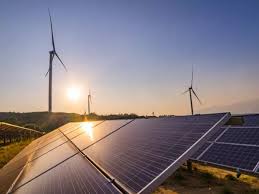
One of the biggest myths about renewable energy is that it isn’t reliable. Sure, the sun sets every night and winds calm down, putting solar panels and turbines to sleep. But when those renewables are humming, they’re providing the grid with electricity and charging banks of batteries, which then supply power at night.
A new study in the journal Renewable Energy that looked at California’s deployment of renewable power highlights just how reliable the future of energy might be. It found that last year, from late winter to early summer, renewables fulfilled 100 percent of the state’s electricity demand for up to 10 hours on 98 of 116 days, a record for California. Not only were there no blackouts during that time, thanks in part to backup battery power, but at their peak the renewables provided up to 162 percent of the grid’s needs — adding extra electricity California could export to neighboring states or use to fill batteries.
This study really finds that we can keep the grid stable with more and more renewables,” said Mark Z. Jacobson, a civil and environmental engineer at Stanford University and lead author of the new paper. “Every major renewable — geothermal, hydro, wind, solar in particular, even offshore wind — is lower cost than fossil fuels” on average, globally.
Yet Californians pay the second highest rates for electricity in the country. That’s not because of renewables, but in part because utilities’ electrical equipment has set off wildfires — like the Camp Fire started by Pacific Gas and Electric’s power lines, which devastated the town of Paradise and killed 85 people — and now they’re passing the costs that come from lawsuits and burying transmission lines to their customers. While investigators don’t know for sure what sparked all of the wildfires that have ravaged Los Angeles this month, they’ll be scrutinizing electrical equipment in the area. Power lines are especially prone to failing in high winds, like the 100-mile-per-hour gusts that turned these Southern California fires into monsters.
Even with the incessant challenge of wildfires, California utilities are rapidly shifting to clean energy, with about half of the state’s power generated by renewables like hydropower, wind, and solar. The study compared 116 days in 2024 to the same period in 2023 and discovered California’s output from solar was 31 percent higher and wind 8 percent. After increasing more than 30-fold between 2020 and 2023, the state’s battery capacity doubled between 2023 and 2024, and is now equivalent to the juice produced by more than four nuclear power plants. According to the study, all that new clean tech helped California’s power plants burn 40 percent less fossil fuel for electricty last year.
Those batteries help grid operators be more flexible in meeting demand for electricity, which tends to peak when people return home in the early evening and switch on appliances like air conditioners — just when the grid is losing solar power. “Now we’re seeing the batteries get charged up in the middle of the day, and then meet the portion of the demand in the evening, especially during those hot summer days,” said Mark Rothleder, chief operating officer of the California Independent System Operator, the nonprofit that runs the state’s grid.
Another pervasive myth about renewables is that they won’t be able to support a lot more electric vehicles, induction stoves, and heat pumps plugging into the grid. But here, too, California busts the myth: Between 2023 and 2024, demand on the state’s grid during the study period actually dropped by about 1 percent.
Why? In part because some customers installed their own solar panels, using that free solar energy instead of drawing power from the grid. In 2016, almost none of those customers had batteries to store that solar power to use at night. But battery adoption rose each of the following years, reaching 13 percent of buildings installing solar in 2023, then skyrocketing to 38 percent last year. (That is, of the 1,222 megawatts of solar capacity added last year, 464 megawatts included batteries.) That reduces demand on the grid because those customers can now use their solar power at night.
Batteries also help utilities get better returns on their investments in solar panels. A solar farm makes all its money selling electricity during the day. But if it has batteries attached to the farm, it can also provide energy in the evening, when electricity prices rise due to increased demand. “That evening battery contribution is very key to the economics working out well,” said Jan Kleissl, director of the Center for Energy Research at the University of California, San Diego, who wasn’t involved in the new paper.
So utilities are incentivized to invest in batteries, which also provide reliable backup power to avoid blackouts. But like any technology, batteries can fail. Last week, a battery storage plant caught fire on California’s central coast, the largest of its kind in the world, but it only knocked out 2 percent of the state’s energy storage capacity. A grid fully running on renewables will have a lot of redundancy built in, beyond multiple battery plants: Electric school buses and other EVs, for instance, are beginning to send power back to the grid when a utility needs it — a potentially vast network of backup energy.
But here’s where the economics get funky. The more renewables on the grid, the lower the electricity prices tend to be for customers, according to the new study. From October 1, 2023 to September 30, 2024, South Dakota, Montana, and Iowa provided 110 percent, 87 percent, and 79 percent, respectively, of their electricity demand with renewables, particularly wind and hydropower. Accordingly, the three have some of the lowest electricity prices in the country.
California, on the other hand, got 47 percent of its power from renewables over the same period, yet wildfires and other factors have translated into higher electricity prices. The California Public Utilities Commission, for instance, authorized its three largest utilities to collect $27 billion in wildfire prevention and insurance costs from ratepayers between 2019 and 2023.
Climate change is making California ever more prone to burn — a growing challenge for utilities. But the state’s banner year for solar and batteries just poked a whole lot of holes in the notion that renewables aren’t reliable.
Wind, not nuclear, is the best way to meet Sweden’s climate goals, leading think tank says
By Reuters, January 24, 2025,
Reporting by Simon Johnson Editing by Frances Kerry
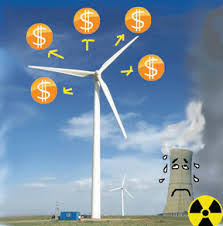
STOCKHOLM, Jan 23 (Reuters) – The cheapest way for Sweden to meet its expected rise in demand for electricity and goal of net zero emissions by 2045 is to build more onshore wind parks rather than increase the number of nuclear power plants, a leading think tank said on Thursday.
Sweden’s government has said it wants to build up to 10 new nuclear power plants by 2045 as transport and industry shift away from fossil fuels and demand for electricity is forecast to reach around 300 Terawatt hours (TWh) from 135 TWh in 2023.
The SNS think tank said that new nuclear power would be the most expensive solution, while more onshore wind and solar power combined with boosted production from hydropower plants and existing nuclear reactors would be able to meet increased demand without increasing Sweden’s low electricity prices.
“The high costs linked to nuclear power mean that these kinds of plants should primarily be built in countries with significantly higher electricity prices,” SNS said in a report on Sweden’s energy transition…………………………………………………………..
SNS said the government should focus on improving the electricity grid and regulatory framework to support private investment in new energy production. https://www.reuters.com/sustainability/wind-not-nuclear-is-best-way-meet-swedens-climate-goals-leading-think-tank-says-2025-01-23/
Europe posts record negative power prices for 2024 as renewables rise
The number of periods when day-ahead power prices fell to zero or below hit a record 4,838 instances in Europe in 2024, driven by surging renewables, weak demand, and limited grid flexibility, says Montel Analytics.
PV Magazine January 21, 2025 Brian Publicover
Europe recorded 4,838 periods of day-ahead power prices falling to zero or below in 2024, a record high driven by rising renewable generation, sluggish demand, and constrained grid flexibility, according to a new report from Montel Analytics. The total is nearly double the 2,442 instances that were recorded in 2023.
The Oslo-based market intelligence firm said that the increase was driven by surging wind and solar generation capacity, as well as sluggish demand and limited demand-side response mechanisms.
Finland led in negative pricing at 721 hours, mainly due to high wind production and low grid interconnectivity with Sweden and Estonia, said Montel Analytics. It noted that solar oversupply in the Netherlands and wind output in Sweden also weighed on prices, while the Iberian Peninsula experienced negative prices for the first time during the second quarter of 2024.
The energy data specialist said that renewables accounted for 50.4% of Europe’s total power mix, which was an all-time high. Fossil fuels, meanwhile, dropped to less than 25% of the continental total.
………………………Harreman also noted the widening price gap between solar peak and evening peak periods, as renewables displaced conventional generation.
Industrial demand remained below pre-pandemic levels, and rooftop solar continued to offset household electricity usage, said the company. It reported that total European electricity demand fell 7.7% year on year to 2,678 TWh, underscoring broader economic weakness, particularly in Germany. https://www.pv-magazine.com/2025/01/21/europe-posts-record-negative-power-prices-for-2024-as-renewables-rise/
Green energy in abundance
“Sorry, pessimists, the energy problem is solved.” Ulrich Fichtner, SPIEGEL colleague, is almost right with this description of the energy crisis ( Ulrich Fichtner: Born for the big opportunities, Spiegel-Buch-Verlag 2023 ).
Correct: The problem is solvable, but it is far from being solved. The energy question is the survival question of the 21st century. We know what we are doing, but we are not yet really doing what we know and doing it sufficiently. The new solar dynamic is like this: cheaper, better, faster. We can still win the climate war.
At least things are moving in the right direction. Examples:
- We have seen a 90 percent reduction in the cost of a kilowatt hour of solar power within two decades.
- That is why green electricity is booming worldwide, as are storage technologies.
- Solar energy and wind energy are the cheapest sources of electricity in the world. According to the Fraunhofer Institute ISE, PV with battery storage is now cheaper than electricity from conventional power plants.
- The photo (right –on original) shows one of the largest photovoltaic plants in the world in Abu Dhabi. It is expected to be four times as large by 2030 and will then be able to produce as much electricity as around 15 medium-sized nuclear power plants.
- We have global growth rates for renewable energies of 40, 50 and 60 percent per year.
- In Germany, renewables were already the largest source of electricity generation by 2024 – almost two thirds renewable and only one third fossil fuels.
- According to calculations by the World Energy Agency, IEA, this will be the case globally by 2027.
- The World Energy Outlook, published every year by the IEA in Paris, assumes that demand for fossil energy sources will peak in 2025. Although the global economy will continue to grow then, CO2 emissions will shrink.
- The energy transition is in full swing worldwide. I agree with my colleague Ulrich Fichtner when he writes: “A renewable economic miracle is sweeping the globe” (page 87).
- Even in China, solar and wind will have overtaken coal by 2024, something that seemed unthinkable until recently.
- Not only the USA, but also Germany has decided to produce its electricity completely CO2-free by 2035.
- The European Union doubled its share of green electricity between the beginning of 2022 and the end of 2023.
- Costa Rica, Iceland and Kenya already produce their electricity almost entirely from renewable sources, but from very different sources, which is due to their different geographies.
- China aims to produce half of all renewable electricity worldwide by 2027.
- The United Arab Emirates, Morocco, Norway and Chile have ambitious plans to produce solar hydrogen.
- In addition to China, the USA, Egypt and Morocco are investing heavily in photovoltaics.
- The ten ASEAN countries in East Asia want to increase their share of renewable energies by 70 percent by 2027 compared to 2023 – Brazil, Cuba, Argentina, Mali and other countries in Central and Southern Africa have similar goals.
Children born today can experience a climate without crisis in 2050 – when they will be 25. People all over the world will be the winners of the solar world revolution in the future when they produce renewable electricity for one or two euro cents. Fortunately for us, plans for a better world with peaceful coexistence without exploitation of people and nature are on the table worldwide.
In spring 2024, Abu Dhabi’s energy minister told me that his country was already producing one kilowatt hour of solar power for 0.7 euro cents. The figures mentioned show that the world is electrifying and developing economically at a previously unimaginable pace. On this point, too, I can agree with Ullrich Fichtner: “A child born today will not have to worry too much about the world’s energy supply on its 25th birthday.” (Page 86).
This reminds me of a new book title by couples therapist Matthias Jung about the miracle of transformation. He writes: “It is not where the wind blows from that determines our path, but how we set the sails.” ( Matthias Jung: Setting Sails – The Miracle of Transformation, emuverlag ).
Renewable energy sets global record…but it’s not enough

IRENA says world needs to double green generation to stay on track for 2050
16/01/2025 – https://www.energylivenews.com/2025/01/16/renewable-energy-sets-global-record-but-its-not-enough/
The world hit a record of 530GW of renewable generation in 2024 but it needs double that amount if we are to meet net zero needs.
International Renewal Energy Agency (IRENA), holding its general assembly in Abu Dhabi this week, revealed globally green generation capacity has now climbed to roughly 4,400 GW, up from 3,870 GW in 2023.
But Director-General Francesco La Camera said this is half of what is needed.
While a record $1.3 trillion (£1.07tn) was invested in energy transition technologies in 2022, annual investments need to quadruple to remain on track to meet global energy transition goals.
IRENA estimates a cumulative $150 trillion (£122tn) in investment is needed by 2050.
Germany deploys 16.2 GW of solar in 2024

Germany installed 16.2 GW of solar in 2024, bringing total PV capacity to
99.3 GW by the end of December 2024, according to the Federal Network
Agency (Bundesnetzagentur).
PV Magazine 8th Jan 2025
https://www.pv-magazine.com/2025/01/08/germany-deploys-16-2-gw-of-solar-in-2024/
Trump’s war on wind power: Plans to stop windmill construction nationwide

In a recent conference held at his Florida resort, US President-elect
Donald Trump announced his intention to halt the construction of wind
turbines across the country. “We are going to have a policy where no
windmills will be built,” Trump declared, reiterating his long-standing
opposition to this form of renewable energy.
Review Energy 8th Jan 2025
https://www.review-energy.com/otras-fuentes/trump-s-war-on-wind-power-plans-to-stop-windmill-construction-nationwide
Is the Haverigg wind project once more under a nuclear threat?
NFLA 8th Jan 2025
Standing alongside the perimeter of the old RAF Millom are eight wind turbines generating clean energy for the nation, and the UK/Ireland Nuclear Free Local Authorities fear they may be threatened by the latest plans to bring a nuclear waste dump to Haverigg and Millom.
A private company with fifty shareholders, Windcluster, owns and operates four of the turbines, whilst the remainder are run by Thrive Renewables, which has over seven thousand investors.
Windcluster was established in 1988 as a private company. The company first installed five 225 Kw Vestas V27 turbines near the abandoned airfield. This Haverigg I project was a groundbreaker being only the second commercial wind project in the UK. Commissioned on 5 August 1992, it was formally opened that December by Environment Minister, David Maclean MP, at a ceremony hosted by the Haverigg Primary School. Windcluster has continued its relationship with the school, having established a community fund to sponsor its activities.
The V27 turbines were dismantled in 2004 and replaced in 2005 by four larger V52 turbines, with a total rating of 3.4 MW, as the Haverigg III project. This had an expected generating lifespan of 20 years; however, after 15 years, the company secured permission from the landlord, the Craghill family, and from the planning authority, Copeland Council, to continue operations until 2040.
8th January 2025
Is the Haverigg wind project once more under a nuclear threat?
Standing alongside the perimeter of the old RAF Millom are eight wind turbines generating clean energy for the nation, and the UK/Ireland Nuclear Free Local Authorities fear they may be threatened by the latest plans to bring a nuclear waste dump to Haverigg and Millom.
A private company with fifty shareholders, Windcluster, owns and operates four of the turbines, whilst the remainder are run by Thrive Renewables, which has over seven thousand investors.
Windcluster was established in 1988 as a private company. The company first installed five 225 Kw Vestas V27 turbines near the abandoned airfield. This Haverigg I project was a groundbreaker being only the second commercial wind project in the UK. Commissioned on 5 August 1992, it was formally opened that December by Environment Minister, David Maclean MP, at a ceremony hosted by the Haverigg Primary School. Windcluster has continued its relationship with the school, having established a community fund to sponsor its activities.
The V27 turbines were dismantled in 2004 and replaced in 2005 by four larger V52 turbines, with a total rating of 3.4 MW, as the Haverigg III project. This had an expected generating lifespan of 20 years; however, after 15 years, the company secured permission from the landlord, the Craghill family, and from the planning authority, Copeland Council, to continue operations until 2040.
Alongside Haverigg I, Windcluster secured consents to install four more wind turbines on the airfield. Initially financed and developed by The Wind Company UK Ltd and The Wind Fund, this Haverigg II project was brought online by the end of July 1998. This is now owned outright by Thrive Renewables. Haverigg II is equipped with four Wind World W4200 turbines, with a generating capacity of 2.4 GW. Thrive has also developed a Community Benefit Programme which has awarded energy-efficiency grants to the Millom Baptist Church and Kirksanton Village Hall. Like the Windcluster project, Thrive has secured permissions to extend its operations to 2032.
Together the two wind projects generate enough renewable electricity, approximately 16 GW annually, to power around 4,100 homes. Windcluster has published an estimate that Haverigg II saves 4,430 tons of CO2 per year, equivalent to the carbon footprint of 443 people in the UK. The smaller Thrive project will save an additional two-thirds of that.
Nuclear Waste Services are now looking to identify ‘Areas of Focus’ in each of the three Search Areas where investigations are ongoing to find a prospective site for a surface facility for the Geological Disposal Facility that would receive regular shipments of high-level radioactive waste from Sellafield.
In each ‘Area of Focus’ NWS will conduct ‘further investigative and technical studies’. The NFLAs have been advised by Simon Hughes, NWS Siting and Communities Director, that ‘NWS will publish an update on Areas of Focus early next year, and the community engagement teams will be out in the community to explain our findings, listen to their feedback, and consider next steps’.
The NFLAs have already written to NWS to request that the major local employer, HMP Haverigg, and tourist and heritage sites be excluded from consideration in the South Copeland Search Area.
As supporters of renewable energy generation, we are also worried that the future of these wind turbines might also be jeopardised if the site is selected as an ‘Area of Focus’, and becomes subject to intrusive borehole investigations in the future.
This is not the first time the turbines have been threatened by a nuclear project………………………………………….. https://www.nuclearpolicy.info/news/is-the-haverigg-wind-project-once-more-under-a-nuclear-threat/
A 12-year-old schoolgirl has designed a solar-powered blanket for the homeless
A 12-year-old schoolgirl has designed a solar-powered blanket for the
homeless, winning a prize in a UK engineering competition. Rebecca Young,
from Kelvinside Academy in Glasgow, said she thought of the invention after
seeing people sleeping on the city streets. Tasked with producing a design
to address a social issue, she began researching sleeping bags and
backpacks to see if there was a way to help protect those living rough from
the cold.
Times 1st Jan 2024 https://www.thetimes.com/uk/scotland/article/girl-12-designs-solar-powered-blanket-for-homeless-xxwwg2rrx
A nuclear-free energy future for Hydro-Québec, says Michael Sabia

Marie-Anne Audet, Thursday, December 12, 2024, Le Journal de Montreal,
Hydro-Québec has definitively closed the door to nuclear power, according to its CEO, Michael Sabia, who assured Thursday that energy production will reach new heights with the agreement in principle announced between Quebec and Newfoundland and Labrador around the Churchill Falls dam.
If approved, the deal would add 2,400 MW to Hydro-Québec’s production. The Crown corporation also plans to invest $25 billion to launch three new power plants in Labrador
“We are going to increase production between 8,000 and 9,000 megawatts [by 2035]. With the 2,400 megawatts coming from Newfoundland, we arrive at more than 11,000 megawatts of additional power,” he illustrated during an interview with LCN………………………………………………… https://www.journaldemontreal.com/2024/12/12/un-futur-energetique-sans-nucleaire-pour-hydro-quebec-affirme-michael-sabia
1 This Month
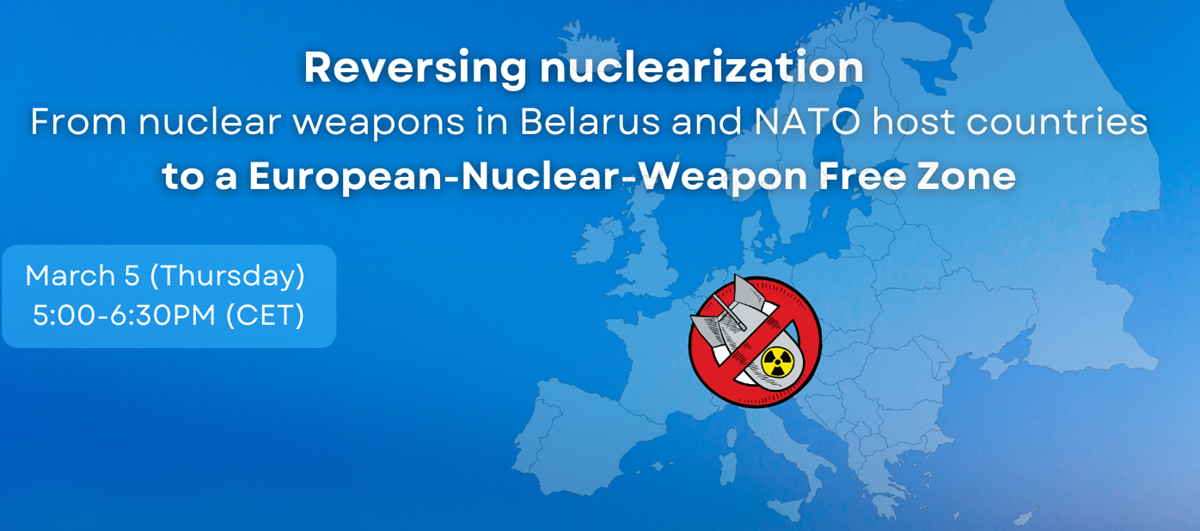
5 March -Online – Reversing nuclearization:
From nuclear weapons in Belarus and NATO host countries to a European-Nuclear-Weapon Free Zone
11am-12:30pm Eastern Time USA / 5pm-6:30pm CET

of the week – Advocating for a
nuclear free beach – https://www.samuellawrencefoundation.org/
The Samuel Lawrence Foundation advocates for a Nuclear Waste Free Beach at San Onofre, join us and take action!

10 March A LIVE WEBINAR THE REAL EFFECTS OF NUCLEAR POWER
What the Industry Isn’t Telling Us
1:00 PM Mountain, 2 pm Central, 3 pm Eastern. Live on the Keepers of the Water Facebook page

18 March Webinar @ 1 PM EST: An Assessment of SMR Projects: The Case of Canada
register for the zoom:
https://us02web.zoom.us/webinar/register/WN_o8BIIOUvQ2ONJR1nta65DQ#/registration

of the week – STOP SMALL MODULAR REACTORS IN CANADA
To see nuclear-related stories in greater depth and intensity – go to https://nuclearinformation.wordpress.com
-
Archives
- March 2026 (38)
- February 2026 (268)
- January 2026 (308)
- December 2025 (358)
- November 2025 (359)
- October 2025 (376)
- September 2025 (258)
- August 2025 (319)
- July 2025 (230)
- June 2025 (348)
- May 2025 (261)
- April 2025 (305)
-
Categories
- 1
- 1 NUCLEAR ISSUES
- business and costs
- climate change
- culture and arts
- ENERGY
- environment
- health
- history
- indigenous issues
- Legal
- marketing of nuclear
- media
- opposition to nuclear
- PERSONAL STORIES
- politics
- politics international
- Religion and ethics
- safety
- secrets,lies and civil liberties
- spinbuster
- technology
- Uranium
- wastes
- weapons and war
- Women
- 2 WORLD
- ACTION
- AFRICA
- Atrocities
- AUSTRALIA
- Christina's notes
- Christina's themes
- culture and arts
- Events
- Fuk 2022
- Fuk 2023
- Fukushima 2017
- Fukushima 2018
- fukushima 2019
- Fukushima 2020
- Fukushima 2021
- general
- global warming
- Humour (God we need it)
- Nuclear
- RARE EARTHS
- Reference
- resources – print
- Resources -audiovicual
- Weekly Newsletter
- World
- World Nuclear
- YouTube
-
RSS
Entries RSS
Comments RSS
 nuclear-news