Australia rooftop solar hits 26.8 GW as home battery uptake surges

Australia is on track to exceed its 2030 rooftop solar targets with a combined 1.1 GW of new capacity installed across 115,584 households and businesses in the first half of 2025.
September 15, 2025 David Carroll, https://www.pv-magazine.com/2025/09/15/australia-rooftop-solar-hits-26-8-gw-as-home-battery-uptake-surges/
A new report from the Clean Energy Council (CEC) shows that at the end of June there was a combined 26.8 GW of rooftop solar capacity deployed across 4.2 million homes and small businesses in Australia.
The CEC’s Rooftop Solar and Storage Report reveals that 115,584 rooftop solar units were installed nationwide in the first six months of the year, down 18% on the same period 12 months prior, while the total installed capacity of 1.1 GW was 15% lower than the 1.3 GW installed over the same period in 2024.
Despite the slowdown, the CEC said Australia is likely to exceed the Australian Energy Market Operator’s (AEMO) 2030 target for rooftop solar.
AEMO’s Integrated System Plan, which underpins the federal government’s 82% by 2030 renewable energy target, expects rooftop solar to contribute 36 GW to the National Electricity Market by the end of the decade.
The CEC said based on current trends, it expects the rollout of rooftop solar in Australia will reach 37.2 GW by June 2030, beating projections by 3.3%.
CEC Distributed Energy General Manager Con Hristodoulidis said the figures highlight the pivotal role of rooftop solar in keeping Australia’s energy transition on track.
“Australian consumers and small businesses are delivering the transition at breathtaking speed, turning suburban roofs into one of the biggest power stations in the country,” he said.
Rooftop solar contributed 12.8%, or 15,463 GWh, of Australia’s total energy generation in the first six months of the year, up from 11.5% in the same period 12 months prior.
The report also shows that Australians are embracing home batteries at record pace, with 85,000 battery units sold in the first half of 2025, representing a 191% increase from the same period last year.
The uptake has surged again since the introduction of the federal government’s Cheaper Home Batteries program with government data revealing more than 43,500 installations installed in July and August alone.
“Just as Australians have long understood the value of solar in lowering household energy bills, we are now seeing a surge in battery adoption, which allows households to store their own clean energy and maximise savings,” Hristodoulidis said.
Queensland added the most rooftop solar in the first half of 2025, with 326 MW of installed capacity, followed by New South Wales (NSW) and Victoria with 321 MW and 230 MW, respectively.
NSW has the highest level of total installed rooftop solar capacity in the nation at 7.5 GW, with Queensland second at 7.2 GW, ahead of Victoria with 5.4 GW. Queensland remains the state with the most installations, with 1.1 million.
Japan shocks the world — Solar panels as strong as 20 nuclear reactors unveiled.
by Beatriz T., September 6, 2025.EcoNews,
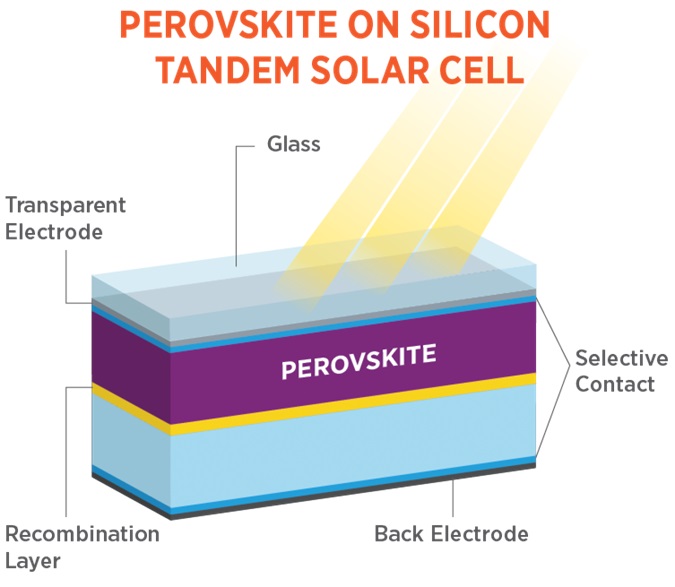
Imagine a country with limited space, a large population, and an urgent need for clean energy. That’s Japan, a nation that, since the Fukushima disaster in 2011, has been burdened with rethinking its entire energy system. This is because the catastrophe not only shook confidence in nuclear energy but also accelerated the race for sustainable and safe alternatives. More than a decade later, Japan surprises the world again with revolutionary perovskite solar cells, a light, thin, and flexible material that can be installed in places unimaginable until recently, like windows, walls, and even car roofs.
There are several important advantages
of these cells, and some of these are: Superior efficiency; application
flexibility; strategic security; export potential. Japanese companies like
Sekisui Chemical are already investing heavily in research (and other
companies are investing in the first typhoon turbine).
Internationally, Swedish company Exeger has successfully applied flexible panels to consumer products like headphones and keyboards, demonstrating that the future may be closer than we imagine. The dilemma lies in Japan seeking not only clean energy but also economic security. Essentially, the question remains: invest billions in a still-immature technology or risk losing its global leadership once again?
For a country dependent on energy imports and
vulnerable to international crises, investing in perovskites is both a
necessity and a strategic move. The country’s plan is clear: by 2040,
Japan aims to generate 20 gigawatts of power with perovskites, the
equivalent of 20 nuclear power plants.
Achieving this goal will not only be
a technological victory but a historic milestone in the global energy
transition. Essentially, this advancement could transform Japan into an
exporter of energy technology, offering the world a more efficient
alternative that’s less dependent on large areas. For densely populated
countries like South Korea, Singapore, or even parts of Europe, the
Japanese experience could serve as a model.
Eco News 6th Sept 2025,
https://www.ecoticias.com/en/japan-shocks-the-world-solar-panels/19817/
German experience shows transition to renewables possible for Taiwan and the world.
https://tcan2050.org.tw/en/nonuke-2/ 2025-08-19, Dr. Ortwin Renn |Professor emeritus of Environmental Sociology and Technology Assessment, Stuttgart University; Scientific Director emeritus, Research Institute for Sustainability at GFZ, Potsdam , Germany (RIFS)
I am writing to express my full support for your initiative to keep Taiwan’s nuclear power reactors permanently shut down and to accelerate the transition toward renewable energy. This position is not only grounded in scientific evidence but also in practical experience from countries such as my home country Germany that have successfully advanced toward a sustainable energy future.
In 2011, I served as a member of the German Federal Government’s Ethics Committee on a Safe Energy Supply, established after the Fukushima disaster. Our task was to assess the future role of nuclear energy in Germany. After extensive consultations with leading scientists, economic stakeholders, and civil society organizations, the Committee reached a consensual recommendation: to phase out nuclear energy within ten years while investing heavily in renewable energy sources. This decision was not only an ethical imperative but also based on sound economic and technological reasoning.
The results speak for themselves. Between 2011 and 2025, Germany’s share of renewable energy in electricity generation rose from 23% to over 54%—an increase of 230%. Nuclear power, which contributed less than 18% in 2011, was more than compensated for by renewables. In addition, the expansion of renewables significantly reduced reliance on fossil fuels, thereby contributing to climate protection and energy sovereignty.
Today, renewable energy is not only clean but also cost-competitive. The production of electricity from wind and solar power is now cheaper than generating electricity from coal or gas and even cheaper than nuclear power when comparing the costs of building new facilities. It is true that the transition requires substantial upfront investment in grid upgrades, storage systems, and backup solutions. However, once this infrastructure is in place, the long-term costs of renewable energy generation are lower than those of fossil or nuclear alternatives.
Germany’s relatively high electricity prices are not a consequence of renewables, but largely due to global gas price spikes and the cost of imported electricity. The long-term trend is clear: renewable energy is becoming the most economical, environmentally sound, and politically stable source of power.
The lessons for Taiwan are evident. A transition to renewable energy is possible, economically viable, and ultimately beneficial for society. It contributes to climate protection, environmental quality, and public health. It reduces dependence on imported fuels and avoids the long-term risks and costs associated with nuclear energy, including waste management and potential catastrophic accidents. Most importantly, it enables a decentralized and resilient energy system that benefits local communities.
Achieving this transformation requires significant investment and strong political will, but the German experience demonstrates that it is both feasible and advantageous. I strongly encourage Taiwan to seize this opportunity and prioritize a renewable-based energy future over a return to nuclear power.
https://tcan2050.org.tw/en/nonuke-2/
Albanese government substantially expands renewable energy scheme amid 2030 target concerns

Albanese government substantially expands renewable energy scheme amid
2030 target concerns. Chris Bowen says Labor will increase size of its main
climate and energy program by 25% to capitalise on falling cost of solar
panels and batteries. The Australian government will substantially expand a
renewable energy underwriting scheme as it aims to capitalise on the
falling cost of solar panels and batteries and combat concerns it may
struggle to meet its 2030 climate target.
Guardian 29th July 2025,
https://www.theguardian.com/australia-news/2025/jul/29/australia-expands-renewable-energy-scheme-2030-target
“We can do that:” Australian Energy Market Operator says the country’s power system can be run on 100 pct renewable energy.
The head of the Australian Energy Market Operator says he confident that
the country’s main grid – and its smaller ones for that matter – can
be run on 100 per cent renewable energy. “At AEMO, I set an ambition in
2021 for us to understand what it takes to run a power system on 100%
renewable energy,” Westerman said in an address to the Clean Energy
Summit in Sydney on Tuesday. “And today, we’re confident that with
targeted investments in system security assets, we can do just that. I’m
incredibly proud of this, but the future is coming at us fast and those
system security investments are needed urgently run a power system on 100%
renewable energy.”
Renew Economy 29th July 2025,
https://reneweconomy.com.au/we-can-do-that-aemo-says-power-system-can-be-run-on-100-pct-renewable-energy/
EPR nuclear reactors are just not performing well at all

The French EPR reactor was supposed to be built in 4 or 4,5 years, and to
produce 13 TWh of electricity per year. (As for EDF:s promise, see for
example https://lnkd.in/dFXe5geb point 19.)
At 13 TWh/year and operating when planned to do so, the first 4 reactors, in Finland, France and China should have produced about 648 TWh by the end of 2024. According to new
data from the IAEA PRIS they have produced 123,4 TWh, a mere 19 % of what
was promised.
Much of this underachievement is explained by construction
delays, on average 8,5 years for the first 4 reactors. But even after they
have started to produce electricity, it is far less than the 13 TWh/year.
In fact, it is 8,4 TWh. Put it in another way, the ”load factor” is
low. Lifetime load factors through 2024 are Taishan 1: 55%, Taishan 2: 76
%, Olkiluoto 3: 77,6%. Flamanville 3 in France was connected to the grid
only in December 2024 so it is too early to tell.
But as for the other three, the weighted average so far is about 67 percent. 100 per cent is
impossible. The world average load factor is about 82 per cent, as real
world reactors have both planned and unplanned stops.
The EPR has consistently been marketed as being able to produce 13 TWh per year, for 60
years. The theoretical maximum for a 1600 megawatt reactor, 24/365, is just
above 14 TWh, so 13 TWh corresponds to a load factor of 92.8%.It is
conceivable that the load factors will increase but it is not sure. Taishan
is the oldest EPR in operation, and it is also the worst performer.
Frederik Lundberg 24th June 2025,
https://www.linkedin.com/feed/update/urn:li:activity:7343320565471924224/
Vatican City Is Now Powered By Solar

Carolyn Fortuna, May 2025
Vatican City Is Now Powered By Solar. Pope Francis had a dream that the
Vatican would run entirely on green energy. He wanted to highlight the need
“to make a transition to a sustainable development model that reduces
greenhouse gas emissions into the atmosphere, setting the goal of climate
neutrality.”
To model what this could look like, he announced that solar
panels would be installed on a Vatican-owned property outside Rome, and the
power generated from that could supply all of Vatican City’s energy
needs. The future installation would be projected to “ensure, not only
the power supply of the radio station existing there, but also the complete
energy support of Vatican City State,” he wrote. Fast forward to 2025,
and the project is completed.
Clean Technica 29th May 2025,
https://cleantechnica.com/2025/05/29/vatican-city-is-now-powered-by-solar/
‘Fork in the road’: How a failed nuclear plot locked in Australia’s renewable future

The Age By Nick Toscano, June 1, 2025
hen Australians went to the polls and voted Anthony Albanese back as prime minister, they also voted for something that will outlive the next election: the power industry’s guaranteed switch from coal to renewable energy.
What they didn’t vote for were state-owned nuclear reactors, forced delays of coal-fired power station closures and a slew of other Coalition promises widely viewed as threats to the country’s era-defining challenge of cutting harmful emissions while keeping electricity supply and prices steady.
Although times remain testing in the energy sector, a feeling of relief is clear. “The nuclear conversation is dead and buried for the foreseeable future,” said an executive at one of Australia’s biggest power suppliers, who asked not to be named. Even as the Nationals keep arguing for a nuclear future, any genuine suggestion that atomic facilities could still be built in time to replace retiring coal plants after the next election rolls around was now downright “ridiculous”, said another, adding that renewable energy was on track to surpass 60 per cent of the grid by 2028. “That’s great for the energy sector – it simplifies the path forward,” they said.
Make no mistake, a seismic shift across the grid has been well under way for years now. Australia’s coal-fired power stations – the backbone of the system for half a century – have been breaking down often and closing down earlier, with most remaining plants slated to shut within a decade.
At the same time, power station owners including AGL, Origin Energy and EnergyAustralia are joining a rush of other investors in piling billions of dollars into large-scale renewables and batteries to expand the share of their power that comes from the sun, wind and water. The federal government has an ambitious target for renewable energy to make up 82 per cent of the grid by 2030.
Moving to a system dominated by less-predictable renewables will not be easy. It will take much greater preparation to match supply and demand and require the multibillion-dollar pipeline of private investment in the transition to continue. But ousted opposition leader Peter Dutton, before losing the May 3 federal election and his own seat, hatched a plan to change the course dramatically. A grid powered mainly by renewables would never be able to “keep the lights on”, Dutton insisted.
Instead, he declared, a Coalition government would tear up Australia’s legislated 2030 emissions-reduction commitments, cut short the rollout of renewables, force the extensions of coal-fired generators beyond their owners’ retirement plans and eventually replace them with seven nuclear-powered generators, built at the taxpayer’s expense, sometime before 2050
For Australians who wanted to see urgent action to tackle climate change – and investors at the forefront of the shift to cleaner power – the campaign to dump near-term climate targets in favour of nuclear energy came at the worst possible time. Some likened it to a “near-death experience” for the momentum of the shift to a cleaner, modern energy system that would have wiped out investor confidence and killed off billions of dollars of future renewable projects.
“When you reflect on the significance of energy in the campaign, it’s reasonable to say this was a fork in the road,” said Kane Thornton, outgoing chief executive of the Clean Energy Council……………………………………………..
Dutton argued for months that nuclear plants would be the best way to keep prices down, even though almost no one agreed with him.
“I’m very happy for the election to be a referendum on energy – on nuclear,” he said.
In the end, the idea proved too toxic for voters. It delivered big swings against Dutton’s candidates in electorates chosen to host reactors, while support for Labor grew in many of the places selected to develop massive offshore wind farms, which the Coalition had planned to scrap.
The decisive election result “locks in” the government’s ambitious push for an electricity grid almost entirely powered by renewables, said Leonard Quong, the head of Australian research at BloombergNEF.
“The Labor Party’s landslide victory … is a win for climate, clean energy and the country’s decarbonisation trajectory,” he said…………………………………………..https://www.theage.com.au/business/the-economy/fork-in-the-road-how-a-failed-nuclear-plot-locked-in-australia-s-renewable-future-20250523-p5m1qa.html
Solar puts Australia in fast lane to 100% renewables
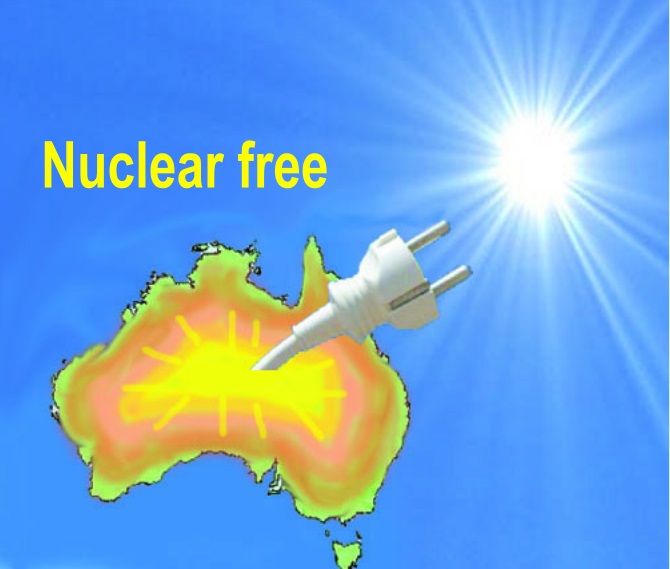
A massive increase in solar power generation capacity is already putting Australia on the fast track to a 100% renewable energy future.
An academic living in cold Canberra retired his gas heaters a few years
ago and installed electric heat pumps for space and water heating. His gas
bill went to zero. He also bought an electric vehicle, so his gas bill went
to zero. He installed rooftop solar panels that export enough solar
electricity to the grid to pay for electricity imports at night, so his
electricity bill also went to zero. That Canberra academic will get his
money back from these energy investments in about eight years. I am that
academic and I’m experiencing how rooftop solar coupled with
electrification of everything provides the cheapest domestic energy in
history. Solar energy is also causing the fastest energy change in history.
Along with support from wind energy, it offers unlimited, cheap, clean and
reliable energy forever. With energy storage effectively a problem solved,
the required raw materials impossible to exhaust – despite some
misconceptions in the community – and an Australian transition gathering
pace, solar and wind are becoming a superhighway to a future of 100%
renewable energy.
PV Magazine 29th May 2025 https://www.pv-magazine.com/2025/05/29/solar-puts-australia-in-fast-lane-to-100-renewables/
Two stories: Denmark’s soaring renewable success and global nuclear construction disaster
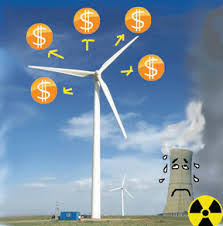
Denmark will soon achieve 100% electricity from wind and solar; but across the world nuclear power construction cost overruns soar
David Toke, May 22, 2025, https://davidtoke.substack.com/p/two-stories-denmarks-soaring-renewable
Two stories emerged on May 19th giving diametrically opposed results; one is very positive news for the booming deployment of renewable energy but the other is crushingly bad for nuclear power prospects. Renewables will make up more than of Danish 100% electricity in a couple of years time and just wind and solar not long after that. On the other hand a new study concludes that, around the world, nuclear power projects have cost overruns that are over 100%. Solar and wind have very low, if any cost overruns.
Danish renewables to reach 100 per cent of electricity
You can see the shares of electricity generation for Denmark in 2024 in Figure 1. Wind and solar already make up 69 per cent of generation and together with bioenergy they made up 87 per cent of electricity generation. But wind and solar generation is increasing rapidly. The different shares of power production can be seen in Figure 1.
Denmark blazed the trail for wind power starting in the 1970s as farmers and wind cooperatives put up their own wind turbines. Initially the turbines were only 20 kW in peak output. But the latest planned offshore windfarm will have turbines of 20 MW in size – a thousand times bigger! The early start for wind power in Denmark boosted its industry tremendously. Today Denmark also hosts Vestas, the largest wind generator manufacturer in the world.
There are still a trickle of onshore wind turbines being built. However, these days most of the new wind capacity is coming from offshore wind. The 1.08GW Thor windfarm that is currently being built will be fully operational in 2027. [on original]…………………………………………………………………………
Academic study reveals enormous average nuclear cost overruns around the world
Meanwhile, on the same day as the announcement of the forthcoming auction for the Danish offshore windfarms, an academic paper was announced which showed truly awful results for the nuclear industry. The study scoured the world for details on as many energy infrastructure projects that coud reliably be found – 662 in all – including 204 nuclear power plant constructions.
The researchers found that the average cost overrun for nuclear power plant was a staggering 102.5 per cent. That means that the construction costs were more than double the cost that was originally estimated before the construction started. What makes this figure all the more remarkable is that this was an average across the whole of the world.
The study includes Eastern countries like China. In these states there is still the specialist industrial skills (and more relaxed health and safety at work regulations) required to deliver nuclear power stations at anywhere near their projected construction time. Yet, in western countries, the construction cost overruns are much worse. Essentially, in western conditions, it has become impossible to deliver nuclear power plant at anything below astonomical costs.
I should add that there is an incredible amount of nonsense being spouted at the moment about how ‘small modular reactors’ are some way of saving nuclear power. Apart from occasioning a small amount of ultra-expensive nuclear capacity they are nothing of the sort. They are much worse in economic terms than even conventional reactors. See my discussion ‘Why small modular reactors do not exist – history gives the answer’. See HERE.
It is a completely different matter for renewable energy projects of course, where cost overruns are very low. But, from the press coverage, you would not guess all of this!
Conclusion
As we can see from this post Denmark is, within a few years, about to be the first country in the world with a net surplus of wind and solar power. Interestingly this is the country that turned its head against nuclear power forty years ago, although it never bult any nuclear power plant before then. I have heard an incredible amount of what could be described as nonsensical disinformation in the mainstream press about how nuclear power is accelerating around the world and even that is some sort of way renewables are in crisis. The reality is the exact opposite as the information in this post demonstrates.
Nuclear has highest investment risk; solar shows lowest, say US researchers

Nuclear power plants exceed construction budgets by an average of 102.5%, costing $1.56 billion more than planned, according to a study by Boston University’s Institute for Global Sustainability.
May 21, 2025 Pilar Sánchez Molina, https://www.pv-magazine.com/2025/05/21/nuclear-power-carries-highest-investment-risk-solar-shows-lowest-say-us-researchers/
A new study by the Institute for Global Sustainability at Boston University found that energy infrastructure projects exceeded planned construction costs in more than 60% of cases. Researchers analyzed data from 662 projects across 83 countries, spanning builds from 1936 to 2024 and totaling $1.358 trillion in investment.
The study covered a wide range of project types. These included thermoelectric power plants fueled by coal, oil or natural gas, as well as nuclear reactors, hydroelectric facilities and wind farms. It also examined large-scale PV and concentrated solar installations, high-voltage transmission lines, bioenergy and geothermal plants, hydrogen production sites, and carbon capture and storage systems
Researchers modeled projects with minimum thresholds: power plants with more than 1 MW of installed capacity, transmission lines over 10 km, and carbon capture systems processing more than 1,000 tons of CO₂ per year.
In the study, “Beyond economies of scale: Learning from construction cost overrun risks and time delays in global energy infrastructure projects,” published in Energy Research & Social Science, the authors found that energy infrastructure construction takes 40% longer than planned – on average, a delay of roughly two years.
Nuclear power plants had the highest cost overruns and delays, with average construction costs exceeding estimates by 102.5%, or $1.56 billion. Hydroelectric projects followed at 36.7%, then geothermal (20.7%), carbon capture (14.9%), and bioenergy (10.7%). Wind projects averaged a 5.2% cost increase, while hydrogen projects came in at 6.4%.
By contrast, PV plants and transmission infrastructure recorded cost underruns of 2.2% and 3.6%, respectively.
Construction delays also varied by technology. Nuclear, hydro, and geothermal projects experienced average delays of 35, 27, and 11 months, respectively. PV and transmission builds had the best performance, typically completing ahead of schedule or with only minimal delays – averaging one month if delayed at all.
The study concluded that projects exceeding 1,561 MW in capacity face significantly higher cost escalation risks, while smaller, modular renewable builds may lower financial exposure and improve forecasting. Once construction delays surpassed 87.5%, cost increases rose sharply.
Solar Power Set to Surpass Nuclear Generation This Summer
By Tsvetana Paraskova – May 21, 2025, https://oilprice.com/Latest-Energy-News/World-News/Solar-Power-Set-to-Surpass-Nuclear-Generation-This-Summer.html
This summer, solar power generation globally could exceed electricity from nuclear power plants for the first time ever, as solar capacity soars and sunlight and daylight hours are long in the northern hemisphere.
Global solar power generation jumped by 34% in the first quarter of 2025 from the same period in 2024, according to data from Ember cited by Reuters columnist Gavin Maguire.
If the pace of growth is sustained though June, July, and August, solar output is set to top 260 terawatt hours (TWh) in the summer months. This would beat the average 223 TWh of global nuclear power generation from 2024, Maguire notes.
Last year, record growth in renewables led by solar helped push clean power above 40% of global electricity in 2024, Ember said in its Global Electricity Review 2025 last month. However, heatwave-related demand spikes led to a small increase in fossil generation, too, the clean energy think tank said.
“Solar generation has maintained its high growth rate, doubling in the last three years, and adding more electricity than any other source over that period,” Ember’s analysts wrote in the report.
More than half, or 53%, of the increase in solar generation in 2024 was in China, with China’s clean generation growth meeting 81% of its demand increase in 2024, according to Ember.
China and Europe are driving solar power’s global surge, but in Europe, the solar boom has led to negative power prices more frequently.
At the end of April, for example, a sunny weekend in northwest Europe plunged power prices in the region to hundreds of euros below zero as solar generation soared.
Negative power prices, while beneficial for some consumers in some countries, generally discourage investments in new capacity as renewable power generators don’t profit from below-zero prices.
The more frequent occurrences of negative prices amid soaring solar output aren’t conducive to increased investment in generation only, and highlight the need of energy storage solutions to store the excess power and discharge it at evenings when it’s most needed.
Solar and wind make up 98 pct of new US generation capacity in Trump’s first three months
Stillwater plant combines 33 MW of the original baseload geothermal, 26 MW of solar PV and 2 MW of solar thermal power generation
Enel Green Power North America
Joshua S Hill, May 13, https://reneweconomy.com.au/solar-and-wind-make-up-98-pct-of-new-us-generation-capacity-in-trumps-first-three-months/
A new analysis of government data has revealed that solar and wind accounted for nearly 98 per cent of new electricity generating capacity in the United States through the first quarter of 2025, despite efforts by the new president to unravel clean energy efforts.
The Sun Day Campaign, a non-profit research and educational organisation founded by Ken Bossong, has been fighting the good fight since 1992, and has been an invaluable tool for journalists covering clean energy in the United States.
A review conducted by the Sun Day Campaign of data recently published by the US government’s Federal Energy Regulatory Commission (FERC) demonstrates the momentum driving the clean energy industry, even in the face of extreme political adversity.
According to the government’s own data, solar and wind accounted for nearly 98 per cent of new US electrical generating capacity added in the first quarter of 2025, and solar and wind were the only sources of new capacity in March – a month that was the nineteenth in a row that saw solar stand out as the largest source of new capacity.
A total of 447MW of solar was installed in March along with the 223.9MW Shamrock Wind & Storage Project in Crockett County, Texas.
Over the first three months of 2025, a total of 7,076MW of solar and wind was installed, accounting for 97.8 per cent of new capacity.
The remainder was made up with 147MW of new natural gas capacity and 11MW from oil.
On its own, solar accounted for two-thirds of all new generating capacity placed into service in March, and 72.3 per cent of new capacity through the first quarter of the year. That makes solar the largest source of new generating capacity per month since September 2023.
This also brings the total installed capacity of solar and wind up to 22.5 per cent of the country’s total available installed utility-scale generating capacity, accounting for 10.7 per cent and 11.8 per cent respectively.
On top of that, approximately 30 per cent of US solar capacity is considered small-scale, or rooftop solar, and is not in fact reflected in FERC’s data. If small-scale solar is added to utility-scale solar and wind, that brings the total share to a quarter of America’s total.
Adding other renewable energy sources – including hydropower (7.7%), biomass (1.1%) and geothermal (0.3%) – renewables accounts for 31.5 per cent of total US utility-scale generating capacity.
FERC itself also expects a “high probability” that new solar capacity additions between April 2025 and March 2028 will total 89,461MW – by far and away the largest source of new capacity. For comparison, over that period, FERC expects 129,609MW of new capacity to be installed, meaning that there is a “high probability” that solar will account for 69 per cent. The next highest source of “high probability” generating capacity is wind energy, with 22,279MW, followed by 16,947MW worth of natural gas.
Conversely, FERC expects there to be no new nuclear capacity installed in its three-year forecast, while coal and oil are projected to contract by 24,372-MW and 2,108-MW respectively. And while new natural gas capacity is expected, that 16,947MW is offset by 15,209MW worth of retirements, resulting in an expansion of only 1,738MW.
“Thus, adjusting for the different capacity factors of gas (59.7%), wind (34.3%), and utility-scale solar (23.4%), electricity generated by the projected new solar capacity to be added in the coming three years should be at least 20 times greater than that produced by the new natural gas capacity while the electrical output by new wind capacity would be over seven times more than gas,” said Sun Day.
Finally, the Sun Day Campaign is currently predicting that all utility-scale renewables will account for 37.5 per cent of total available installed utility-scale generating capacity by April 1, 2028, “rapidly approaching” that of natural gas (40.2 per cent).
“If those trendlines continue, utility-scale renewable energy capacity should surpass that of natural gas in 2029 or sooner,” says Sun Day.
“Notwithstanding the Trump Administration’s anti-renewable energy efforts during its first 100+ days, the strong growth of solar and wind continues,” said Ken Bossong, Sun Day Campaign’s executive director.
“And FERC’s latest data and forecasts suggest this will not change in the near-term.”
Joshua S. Hill is a Melbourne-based journalist who has been writing about climate change, clean technology, and electric vehicles for over 15 years. He has been reporting on electric vehicles and clean technologies for Renew Economy and The Driven since 2012. His preferred mode of transport is his feet.
How Miliband can make renewables cheaper – but there is really no alternative to renewables
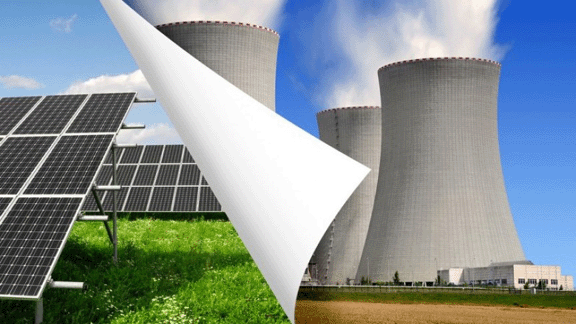
giving longer term contracts to renewable energy developers will make solar and wind schemes even cheaper
In a world where the costs of building all sorts of power plants are
increasing, the Government has a powerful card up its sleeve to keep down
the cost of new renewable energy projects. The Government is considering
extending the contract length under which new renewable energy projects
receive their fixed payments per MWh that is generated.
If contracts for
difference (CfDs) are issued to last for 20 years instead of 15 years, this
could reduce the price of power from the renewable projects by at least 10
per cent (according to my calculations). By offering lower annual returns
over a longer period, the projects can be delivered for a lower fixed price
per MWh that is generated. Such a cost reduction seems likely to offset any
temporary (Trump-induced) cost increases for renewables.
The ‘Trump
effect’ may have led Orsted to discontinue its massive 2.4 GW Hornsea 4
offshore wind project near East Anglia. However, some commentators such as
Jerome Guillet argue that Orsted should have planned better to avoid this
outcome. Other countries operating the CfD system for renewable energy
employ 20-year contracts, and it has always been a mystery to me why the UK
Treasury plumped for a 15 year period. This is an artificially short period
compared to the project lifetime of 25 or 30 years.
Hinkley C, by contrast,
was given a 35-year premium price contract. Meanwhile, the French
Government is pressing the UK Government to put more money into the
long-delayed construction of the Hinkley C power plant. This, it seems, is
part of the price for EDF agreeing to the construction of the successor
Sizewell C plant. This is even though Hinkley C was given a contract that
pays it over £130 per MWh in today’s prices.
That compares to the most
recent auctions of wind and solar PV, whose contracts are worth £71-£83
per MWh at 2025 prices. As I write this, there appears to be a standoff in
negotiations over the terms for Sizewell C between the British and French
governments.
Quite apart from the cost, the idea that nuclear power is
going to be delivered anytime soon is fanciful. The idea that so-called
small modular reactors are any sort of alternative to the big ones is
ridiculous. They are just more expensive still!
At the end of the day,
energy efficiency and renewables are the only real options. After all, over
90 per cent of the new generation being deployed in the world last year was
renewable, almost all of it being solar or wind. The reason this is
happening is that their costs are falling and they continue to fall.
Renewables are the present and future. We need more electricity to
electrify transport, heating, and much else. Sceptics may rail and sneer at
Miliband’s clean power programme. If it has any faults, it is because it
is too mainstream, wasting money and time on carbon capture and storage and
nuclear power.
Dave Toke’s Blog 8th May 2025 https://davidtoke.substack.com/p/how-milband-can-make-renewables-cheaper
Rooftop solar can be torn out of capital’s hands
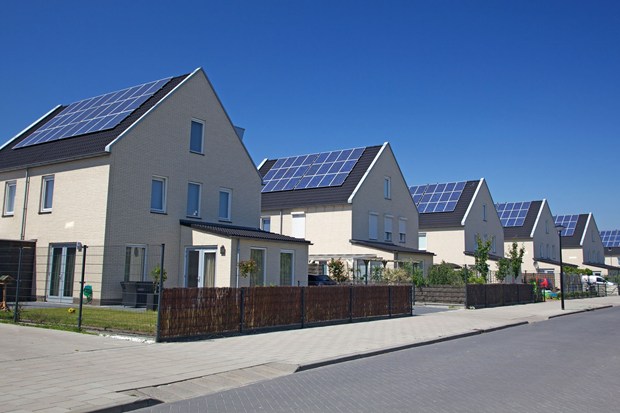
Decentralised solar has the potential to support co-operative, municipal
and other forms of community ownership and control. Solar power is
expanding across the global south, growing faster in China, India and
Brazil than in older, richer solar developers like the US, Japan and
Germany.
Big, corporate-owned solar farms now account for most of the
world’s solar capacity, but decentralised rooftop solar comes a close
second. Rooftop panels are often owned by households, especially in rich
countries, but overall are more likely to be owned by businesses – energy
companies that lease the rooftops, or industrial firms that generate
electricity for their own use.
Nevertheless, I will argue here, because of
its scale and simplicity, decentralised solar has the potential to support
co-operative, municipal and other forms of community ownership and control.
It can play a role in struggles to supercede the domination of capital with
a socially just society, and to forestall disastrous climate change.
Ecologist 7th May 2025, https://theecologist.org/2025/may/07/rooftop-solar-can-be-torn-out-capitals-hands
1 This Month

of the week – Shut Down Drone Warfare!


Tell the Ukrainian Government to Drop Prosecution of Peace Activist Yurii Sheliazhenko

Petition to revoke the licensing of the Near Surface Nuclear Disposal Facility (NSDF) at Chalk River. https://www.ourcommons.ca/petitions/en/Petition/Details?Petition=e-7247
To see nuclear-related stories in greater depth and intensity – go to https://nuclearinformation.wordpress.com
-
Archives
- March 2026 (237)
- February 2026 (268)
- January 2026 (308)
- December 2025 (358)
- November 2025 (359)
- October 2025 (376)
- September 2025 (257)
- August 2025 (319)
- July 2025 (230)
- June 2025 (348)
- May 2025 (261)
- April 2025 (305)
-
Categories
- 1
- 1 NUCLEAR ISSUES
- business and costs
- climate change
- culture and arts
- ENERGY
- environment
- health
- history
- indigenous issues
- Legal
- marketing of nuclear
- media
- opposition to nuclear
- PERSONAL STORIES
- politics
- politics international
- Religion and ethics
- safety
- secrets,lies and civil liberties
- spinbuster
- technology
- Uranium
- wastes
- weapons and war
- Women
- 2 WORLD
- ACTION
- AFRICA
- Atrocities
- AUSTRALIA
- Christina's notes
- Christina's themes
- culture and arts
- Events
- Fuk 2022
- Fuk 2023
- Fukushima 2017
- Fukushima 2018
- fukushima 2019
- Fukushima 2020
- Fukushima 2021
- general
- global warming
- Humour (God we need it)
- Nuclear
- RARE EARTHS
- Reference
- resources – print
- Resources -audiovicual
- Weekly Newsletter
- World
- World Nuclear
- YouTube
-
RSS
Entries RSS
Comments RSS
 nuclear-news