Major study finds that renewables lower emissions substantially, and nuclear power does not

Two’s a crowd: Nuclear and renewables don’t mix, https://techxplore.com/news/2020-10-crowd-nuclear-renewables-dont.html by University of Sussex OCTOBER 5, 2020
If countries want to lower emissions as substantially, rapidly and cost-effectively as possible, they should prioritize support for renewables, rather than nuclear power, the findings of a major new energy study concludes.
That’s the finding of new analysis of 123 countries over 25 years by the University of Sussex Business School and the ISM International School of Management which reveals that nuclear energy programs around the world tend not to deliver sufficient carbon emission reductions and so should not be considered an effective low carbon energy source.
Researchers found that unlike renewables, countries around the world with larger scale national nuclear attachments do not tend to show significantly lower carbon emissions—and in poorer countries nuclear programs actually tend to associate with relatively higher emissions.
Published today in Nature Energy, the study reveals that nuclear and renewable energy programs do not tend to co-exist well together in national low-carbon energy systems but instead crowd each other out and limit effectiveness.
Benjmin K Sovacool, Professor of Energy Policy in the Science Policy Research Unit (SPRU) at the University of Sussex Business School, said: “The evidence clearly points to nuclear being the least effective of the two broad carbon emissions abatement strategies, and coupled with its tendency not to co-exist well with its renewable alternative, this raises serious doubts about the wisdom of prioritizing investment in nuclear over renewable energy. Countries planning large-scale investments in new nuclear power are risking suppression of greater climate benefits from alternative renewable energy investments.”
The researchers, using World Bank and International Energy Agency data covering 1990-2014, found that nuclear and renewables tend to exhibit lock-ins and path dependencies that crowd each other out, identifying a number of ways in which a combined nuclear and renewable energy mix is incompatible.
These include the configuration of electricity transmission and distribution systems where a grid structure optimized for larger scale centralized power production such as conventional nuclear, will make it more challenging, time-consuming and costly to introduce small-scale distributed renewable power.
Similarly, finance markets, regulatory institutions and employment practices structured around large-scale, base-load, long-lead time construction projects for centralized thermal generating plant are not well designed to also facilitate a multiplicity of much smaller short-term distributed initiatives.
Andy Stirling, Professor of Science and Technology Policy at the University of Sussex Business School, said: “This paper exposes the irrationality of arguing for nuclear investment based on a ‘do everything’ argument. Our findings show not only that nuclear investments around the world tend on balance to be less effective than renewable investments at carbon emissions mitigation, but that tensions between these two strategies can further erode the effectiveness of averting climate disruption.”
The study found that in countries with a high GDP per capita, nuclear electricity production does associate with a small drop in CO2 emissions. But in comparative terms, this drop is smaller than that associated with investments in renewable energy.
And in countries with a low GDP per capita, nuclear electricity production clearly associates with CO2 emissions that tend to be higher.
Patrick Schmid, from the ISM International School of Management München, said: “While it is important to acknowledge the correlative nature of our data analysis, it is astonishing how clear and consistent the results are across different time frames and country sets. In certain large country samples the relationship between renewable electricity and CO2-emissions is up to seven times stronger than the corresponding relationship for nuclear.”
Offshore wind energy to replace more than half of the nation’s generation capacity by 2050
Japan’s offshore wind backers see clean heir to coal and nuclear, Japan Times, BY AYA TAKADA, BLOOMBERG, Sep 30, 2020
Offshore wind power in Japan will be able to replace more than half of the nation’s generation capacity forecast to retire by midcentury, according to an industry group promoting its developments.
The capacity of Japan’s offshore wind farms could total 90 gigawatts by 2050, equivalent to 60 percent of the fossil fuel and nuclear facilities expected to be closed by that time according to Shigehito Nakamura, a managing director of the Japan Wind Power Association.
Japan is seeking cleaner ways to feed its energy-hungry but resource-scarce economy, the world’s biggest after the U.S. and China. It’s reliance on fossil fuels faces resistance over climate change concerns, while its massive nuclear fleet is at risk of being abandoned due to widespread opposition to the technology following the 2011 Fukushima disaster.
The 90 gigawatts target for offshore wind is ambitious. The association expects that wind power, including onshore facilities, could account for one-third of the nation’s total power generation in 2050. Capacity in the U.K., the world’s top operator of the technology, is currently about 10.4 gigawatts.
Offshore wind, which the government is seeking to deploy in greater numbers in the coming years, could help replace facilities built during Japan’s economic boom from the 1960s to the 1980s. Those are now due for retirement at an average pace of 5 gigawatts a year over the next few decades, the association estimates.
Kimio Yamaka, a director at the Energy Strategy Institute in Tokyo, said offshore wind is a realistic option for new capacity as the government plans to reduce the share of coal power in the country’s generation to 26 percent by 2030, from 32 percent in the year to March 2019, while replacing or expanding nuclear plants is unlikely. ….
The Economy, Trade and Industry Ministry has started reviewing this target as it prepares to revise the plan next year. METI estimates that offshore wind projects can run at 95 percent utilization, a much higher level of reliability than onshore renewables.
The government plans to hold its first auction for fixed-foundation offshore wind projects in November. Winners will be announced around summer 2021 after the feasibility and economics of the proposed projects are assessed, according to Juntaro Shimizu, the director at the renewable energy division of METI……https://www.japantimes.co.jp/news/2020/09/30/business/corporate-business/offshore-wind-coal-nuclear-energy/
Wind and solar power, energy efficiency – THAT’s where the jobs are!

As fossil fuel jobs falter, renewables come to the rescue, BY JEFF BERARDELLI CBS News, SEPTEMBER 25, 2020 “…………. Professor Jay Johnson runs the Wind Energy Technician Program at Lake Region State College in eastern North Dakota, and recently he’s seen a big increase in demand. “Wind energy development has been on a tear the last few years as wind turbines have become unbelievably efficient,” he said.
According to Logan Goldie-Scot, the head of clean power research at Bloomberg New Energy Finance (BNEF), combined solar and wind power capacity has quadrupled since 2010. And in that time, installed wind capacity has increased by 260%, from 41 gigawatts to 106. BNEF expects another 60 gigawatts of wind power to be added in just the next five years.
“The amount of money being invested in wind is staggering, and people don’t realize it, but there is a 100% renewable revolution going on right underneath our feet,” says Johnson, “This all means the cost of wind-generated electricity to homeowners and businesses is the low-cost solution.”
Prices of renewable energy have indeed fallen dramatically. According to BNEF, the cost of generating power from solar photovoltaic (PV) modules has fallen by 90% since 2010, and the price of wind power has been cut in half. In fact, the prices of onshore wind and solar are now even with gas and cheaper than coal and nuclear.
Professor Jeffrey Sachs, a world-renowned economist and sustainable development expert at Columbia University, says clean energy now has several advantages over traditional fuels.
“Renewable energy now is at what is called grid parity. That means it is no more expensive to put up a solar field than it is to put up a coal plant,” explains Sachs. “The only difference is the coal plant will pollute the air, kill the people nearby and create incredible climate damage, while the solar will enable clean air and a safe and stable environment and actually put a lot more people to work.”
Recent figures show renewable energy employs about 850,000 people in the U.S. (not including some 2.3 million jobs in energy efficiency), as compared to a little more than 1 million in traditional oil, gas and coal. But most of the future job growth is projected to come from clean energy sources.
In fact, the fastest growing occupation in the U.S., according to the U.S. Bureau of Labor Statistics, is wind turbine service technician, with a median salary of about $53,000 per year. In total, the wind industry employs 120,000 U.S. workers. Solar installer is the third fastest growing occupation on the list, with a median salary of nearly $45,000.
The growth in renewable energy jobs can be explained by the fact that it is a newer, expanding industry and requires more workers per unit of energy than fossil fuels. Research shows that job creation is inherent in the transition required to combat climate change. “Such episodes of ‘creative destruction’ are often associated with innovation, job creation and growth,” as one study put it. A report by the UK Energy Research Centre concluded that for the same amount of energy produced, renewables required two to five times as many workers as compared to fossil fuels.
A poll released this week by Climate Nexus, conducted by Yale and George Mason University, finds that a large majority of registered voters in the U.S. believe combating climate change would be good for the economy. About 7 in 10 people surveyed expressed the view that government action on climate change would bolster renewable energy, create jobs and help the economy. Only about one-third thought government action on climate would impose burdensome regulations, weakening the economy and job creation.
CBS News asked Goldie-Scot how much the outcome of the 2020 presidential election would matter for the future of renewables. He says that while the industry would undoubtedly benefit more from a Democratic administration due to Joe Biden’s pledge to invest $2 trillion in clean energy and related infrastructure, “the fundamental advantages of renewables will persist despite politics. Renewables are the lowest [cost] form of generation in much of the country and renewables are popular in a number of Republican, and windy, states.”
As just one example, the typically red state of Texas is the clear leader in wind energy, generating three times as much as its nearest competitor. Sachs agrees that Republican-leaning states have the most to gain from the surge in renewables. “They could be the leaders in building the new green economy,” he said. “This is exactly a heartland issue for the United States.”
And back in the heartland, as Johnson sees more and more trainees walking through his door, he says the renewable revolution is well underway. “That’s where the jobs are, that’s where the wind energy is. It’s just free money flying across the sky.” https://www.cbsnews.com/news/renewable-energy-jobs-replacing-fossil-fuel-jobs-oil-wind/?fbclid=IwAR1aPeyOQTnh5UlpQKkRvonfkMOxT4cFwLn7uYMO-T1ckd-ldGCkOGlNNeU
As fossil fuel jobs falter, renewables come to the rescue
 As fossil fuel jobs falter, renewables come to the rescue, BY JEFF BERARDELLI CBS News, SEPTEMBER 25, 2020 In 2011, Don Williams made the long trip from Michigan to North Dakota hoping to capitalize on the Bakken oil boom — to, as he says, “chase oil and make quick cash.” It paid off; for years Williams worked in operations on the oil fields, watching over production and maintaining pump jacks.
To say that Williams worked hard would be an understatement. Putting in 12-hour days, 7 days a week — 84-hour work-weeks were typical. And the work was lucrative. The money flowed as fast as the oil did — until it didn’t. In May, Williams was laid off, along with most of the Bakken workforce, when boom went bust.
But within a week, he made a huge career leap — 300 feet up, to be exact — ascending from the firm grounds of the Bakken Oil Fields to the top of a giant wind turbine to take part in a 12-week training course to become a wind energy technician. In his words, he no longer wanted to “ride the oil waves, the highs and lows,” anymore.
While the jobs are on opposite ends of the energy spectrum — from dirty to clean and from old to new — the mechanical skills Williams gained from his time working in oil helped him navigate the career transition. And lately, many ex-oil workers are taking that same leap in hopes of finding long-term stability — something that is becoming scarcer in fossil fuels.
In the past year, two seismic shocks — a price war between Russia and Saudi Arabia, followed by global pandemic lockdowns — tanked oil demand and prices too, devastating oil and gas production in the Bakken Formation.
From June 2019 through June 2020, U.S. crude oil production fell 38% and natural gas production fell 31%. The unemployment rate in North Dakota rose to 11.3% in June. For the month of August, continued claims of unemployment in North Dakota were nearly 100,000, and about a quarter of those were tied directly to mining, quarrying and oil & gas extraction — the highest unemployment of any sector in the state.
But as luck would have it, fossil fuels aren’t the only energy source North Dakota is rich in. With an average wind speed of 20 mph 300 feet above the ground where the wind turbines churn, North Dakota is prime real estate for wind power. It ranks 10th in wind production in the U.S. with more than 3,000 megawatts (MW) of installed capacity.
Williams says he sees evidence of a renewable revolution right in his backyard, with wind turbines popping up all around his community.
He received his wind technician training at Lake Region State College, a couple hours’ drive east from the Bakken oil fields. To earn a one-year college credit certificate, the cost of the course is about $5,000. Less than a month out of the training program, Williams has already landed a wind technician job at Gemini Energy Services.
Although he says the starting salary does not quite measure up to what the oil fields paid, the trade-off of more time with his family and more stability is well worth it to him. Besides, he’s optimistic about his future financial prospects because he says the industry offers a lot of upward mobility and areas to specialize in…….. https://www.cbsnews.com/news/renewable-energy-jobs-replacing-fossil-fuel-jobs-oil-wind/?fbclid=IwAR1aPeyOQTnh5UlpQKkRvonfkMOxT4cFwLn7uYMO-T1ckd-ldGCkOGlNNeU
Recharge’s ”must read” news of the week on the energy transition
 Age of uncertainty, Dutch nuclear bombshell and why its decision-time for Big Oil, Our weekly curation of the must-read news and analysis from the-week-that-was in the global renewable energy industry. https://www.rechargenews.com/transition/age-of-uncertainty-dutch-nuclear-bombshell-and-why-its-decision-time-for-big-oil/2-1-882244 , 25 September 2020 , By Andrew Lee Age of uncertainty, Dutch nuclear bombshell and why its decision-time for Big Oil, Our weekly curation of the must-read news and analysis from the-week-that-was in the global renewable energy industry. https://www.rechargenews.com/transition/age-of-uncertainty-dutch-nuclear-bombshell-and-why-its-decision-time-for-big-oil/2-1-882244 , 25 September 2020 , By Andrew Lee
As Covid-19 continues to dominate political and economic agendas, Recharge carried a sobering reminder of the other emergency facing our world leaders – and some timely insights into how they may respond.
The latest Energy Transition Outlook from Wood Mackenzie puts at $25 trillion over 20 years the cost of investment in carbon-cutting technologies – and follows with the sting in the tail that even that won’t be enough to avoid damaging global warming without drastic measure to replace heavy-emitting industrial plant. Such epic challenges require action from the very top, and there was a cautious welcome for an announcement from China’s leader Xi Jinping that the world’s biggest polluter would aim to be carbon net-neutral by 2060. Although lacking in detail, Xi’s pledge is likely to add further momentum to China’s world-leading renewable energy growth, and Recharge revealed how key power sector players are already planning how the nation can reach a terawatt or more of wind and solar in just five years. Trump v Biden: how the election will impact US renewables policy and the global climate battle Read more
So to that other economic superpower, the US, where Recharge set out just how stark is the contrast between the two contenders in the upcoming Presidential election – Donald Trump, who views the climate emergency as a non-issue, and Joe Biden, who has pledged to rejoin the Paris Agreement withing 24 hours of taking office. Meanwhile, while by no means a superpower (expect possibly in political black comedy and offshore wind), the UK still has plenty to say about the energy transition, especially in its role as notional host of next year’s COP 26. Prime Minister Boris Johnson told a UN roundtable that Britain would make a ‘big bet’ on hydrogen as part of its drive to net-zero, only to be reminded by a leading UK renewables body that his government has yet to come up with a strategy for the key energy transition fuel. Nuclear power, that most controversial piece of the energy transition jigsaw puzzle, was back in the headlines this week in a thoroughly left-field fashion. Recharge reported how the Dutch energy minister is preparing to launch a consultation on the prospect of new nuclear plants in the Netherlands, after perusing a report that claims they can be more cost-effective (contentious) and safer (downright bizarre) than wind or solar projects. Prime Minister Boris Johnson told a UN roundtable that Britain would make a ‘big bet’ on hydrogen as part of its drive to net-zero, only to be reminded by a leading UK renewables body that his government has yet to come up with a strategy for the key energy transition fuel. Nuclear power, that most controversial piece of the energy transition jigsaw puzzle, was back in the headlines this week in a thoroughly left-field fashion. Recharge reported how the Dutch energy minister is preparing to launch a consultation on the prospect of new nuclear plants in the Netherlands, after perusing a report that claims they can be more cost-effective (contentious) and safer (downright bizarre) than wind or solar projects. This was the latest in what is becoming a regular reappearance of nuclear on the energy transition agenda, including recent endorsements of the technology’s potential by the likes of Google and an apparent determination by the French to find a role for its atomic fleet in the future hydrogen economy. Before they do anything they might regret, the Dutch may want to ask the authors of a report that claims nuclear has drained Germany of €1trn ($1.18trn) over its soon-to-end dalliance with the industry. The world’s oil giants are rarely out of the energy transition headlines, and this week it was the turn of Total, the French supermajor, to cause the biggest splash with news that it will buy 6TWh of solar power to supply green electricity to its entire European operation. Elsewhere peer Shell forged a renewable power supply pact with Microsoft, while a less familiar name got in on the act when Recharge revealed how China’s CNOOC has widened its offshore wind footprint and added green hydrogen to its corporate agenda. However, in a reality check for the world’s oil giants, Recharge Editor-in-Chief Darius Snieckus challenged them to rapidly decide that the fate of the planet is more important than any vestiges of their former fossil-led business models, then act – and invest – accordingly. |
|
Renewable Energy: The Decentralized Grid Comes to California Apartment Complexes
The Decentralized Grid Comes to California Apartment Complexes, Inside Clean Energy: BY DAN GEARINO – 4 Sep 20, One of the ways to make the electricity grid more reliable is to make it less centralized, with buildings capable of producing and storing their own electricity.
And one of the most interesting companies working to make this happen has a big new project in California. Sonnen, with global headquarters in Germany, is working with a property developer and manager to provide energy storage systems in 3,000 apartment units in California.
The project covers seven apartment complexes in locations all over the state, all run by The Wasatch Group of Utah.
This is a form of virtual power plant, something I write about whenever I get the chance because I see this as a potentially groundbreaking way to make the whole electricity grid cleaner and more reliable.
Sonnen and Wasatch say this is the largest virtual power plant in the country that is exclusively based in apartment communities, with battery capacity of 24 megawatts.
The apartment complexes will use rooftop solar to fuel the battery storage systems. In addition to providing backup power for residents during blackouts—a big selling point in California, where utilities have carried out planned blackouts because of heat or wildfire risks—the batteries will be able to work in tandem to ramp up and provide all the power for the apartments when the wider grid is under stress.
This has financial benefits, saving on electricity purchases from the utility at the times with the highest prices, and it helps to make the grid more stable for everyone by leaving more electricity on it for use by others.
“This community is actually a blueprint for all society,” said Blake Richetta, chairman and CEO of sonnen Inc. USA, the German company’s U.S. subsidiary, which is based in Atlanta. “If you’re trying to create a system for us to eliminate fossil fuels from electricity production in the future, you can’t achieve it without this sort of blueprint.”
He means that virtual power plants can reduce the need for fossil fuel plants that only operate at times of peak demand, which are some of the dirtiest plants on the market.
The project adds to The Wasatch Group’s track record of doing interesting energy projects at its properties. The company also worked with sonnen to develop a 600-unit virtual power plant at an apartment complex near Salt Lake City………. https://insideclimatenews.org/news/02092020/inside-clean-energy-nuclear-illinois-ohio
Renewable energy can save the natural world – but if we’re not careful, it will also hurt it
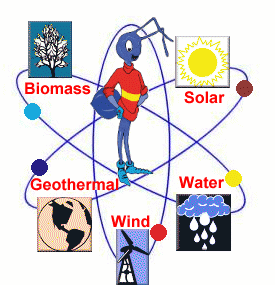 Renewable energy can save the natural world – but if we’re not careful, it will also hurt it https://theconversation.com/renewable-energy-can-save-the-natural-world-but-if-were-not-careful-it-will-also-hurt-it-145166
September 2, 2020 Laura Sonter, Lecturer in Environmental Management, The University of Queensland, James Watson, Professor, The University of Queensland, Richard K Valenta, Director – WH Bryan Mining and Geology Research Centre – The Sustainable Minerals Institute, The University of Queensland
A vast transition from fossil fuels to renewable energy is crucial to slowing climate change. But building solar panels, wind turbines and other renewable energy infrastructure requires mining for materials. If not done responsibly, this may damage species and ecosystems.
In our research, published today, we mapped the world’s potential mining areas and assessed how they overlap with biodiversity conservation sites.
We found renewable energy production will exacerbate the threat mining poses to biodiversity – the world’s variety of animals and plants. It’s fair to assume that in some places, the extraction of renewables minerals may cause more damage to nature than the climate change it averts.
Minigrids – the clean energy revolution across Africa and Asia
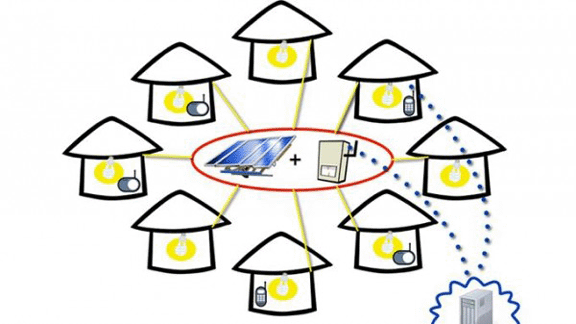
The little-known clean energy revolution https://energy.economictimes.indiatimes.com/news/renewable/the-little-known-clean-energy-revolution/77742430
There are about 5,500 mini-grids in operation across 12 countries in Africa and Asia, according to The State of the Global Mini-grids Market Report 2020 published by the international non-governmental organization Sustainable Energy for All and BloombergNEF, Bloomberg, August 26, 2020,
Over the last decade, the number of people in the world without access to electricity has fallen drastically — from 1.4 billion in 2010 to about 900 million in 2018, according to the United Nations. And yet, if current trends persist, the world won’t be able to meet the UN’s sustainable development goal of universal access to electricity by 2030, with as many as 600 million still lacking basic 21st century services.
It doesn’t have to be so. A new technology has matured and become affordable that could help achieve the laudable goal, and it’s called mini-grids.
As the name suggests, mini-grids are small, isolated versions of larger power grids. They increasingly use solar power as an energy source, with support from batteries or diesel generators. Because the cost of solar power has fallen drastically , mini-grids have become much cheaper than installing long-distance transmission lines from a central electricity grid.
There are about 5,500 mini-grids in operation across 12 countries in Africa and Asia, according to The State of the Global Mini-grids Market Report 2020, published by the international non-governmental organization Sustainable Energy for All and BloombergNEF earlier this year. The report’s authors found that mini-grids could meet the needs of half the people who still need access to electricity in those regions.
As the name suggests, mini-grids are small, isolated versions of larger power grids. They increasingly use solar power as an energy source, with support from batteries or diesel generators. Because the cost of solar power has fallen drastically , mini-grids have become much cheaper than installing long-distance transmission lines from a central electricity grid.
Universal power access will require $128 billion of spending, the report found, but the world is on track to spend only about $63 billion on mini-grids over the next decade. Plugging the gap would cost less than $600 per target household reached.
The need goes beyond money. “Today the mini-grid market is nascent, despite being the least-cost option for electricity access in many areas,” the report concludes. The international Mini-Grids Partnership, which includes the World Bank and other development agencies from rich countries, has approved $2 billion in awards since 2012 but only disbursed 13% of the money, with many projects stuck because of policy uncertainties.
Africa’s most populous country struggles to provide electricity to its 200 million people. Only 55% of the country has access to electricity, and even there, people suffer from power cuts lasting between four and 15 hours every day. As a result, the country spends more than $16 billion annually to power diesel generators.
In 2017, the country passed a law to help mini-grid development, which streamlines the online application process, offers $350 in government subsidies per user once grids with more than 30 users are up and running, and provides for compensation if the main power grid eventually arrives in an area served by a mini-grid. Developers in Nigeria now have simpler processes and clearer guidelines to follow.
The upshot is that mini-grids have become a much more attractive investment. “Now you see a lot of companies flocking to Nigeria,” says Ruchi Soni, program manager at Sustainable Energy for All. “We hear from partners that they would like to replicate Nigeria’s success in their country.”
This offshoot of the clean energy revolution has three benefits: mini-grids can help provide access to electricity to those who lack it and do so in a cleaner and cheaper way. Few things in life are win-win-win.
Ohio’s laws hamper renewable energy, even if the pro nuclear HB6 law is repealed
 HB 6 Repeal Would Address Only Part Of Lawmakers’ Actions To Slow Renewables, Cincinnati Public Radio, By KATHIANN M. KOWALSKI & EYE ON OHIO • JUL 24, 2020 Both Republican and Democratic Ohio lawmakers are pushing to repeal the state’s nuclear bailout bill after this week’s release of a federal criminal complaint against House Speaker Larry Householder and others. Clean energy advocates say that would be a start, but more is needed to address eight years of lawmakers’ actions to slow the growth of renewables in the state.
The complaint alleges a $60 million bribery and conspiracy scheme that led to the passage of House Bill 6 last summer, followed by the defeat of a referendum effort to give voters a say on the bill. Amounts involved are about 20 times more than amounts that could be tracked through public documents.
HB 6 is primarily known as a “nuclear bailout” for providing six years of subsidies for the FirstEnergy Solutions/Energy Harbor nuclear power plants in Ohio totaling roughly a billion dollars, but it also gutted the state’s renewable energy and energy efficiency standards, and provided bailouts for two 1950s-era coal plants in Ohio and Indiana.
And while Gov. Mike DeWine has recently shifted his position from defending HB 6 to saying he wants to “repeal and replace” it, legislators from both parties say the whole thing should be thrown out. DeWine has said his office had no involvement in the alleged scheme. Yet he signed the law within hours after Householder secured its passage last summer.
Whether due to actual or perceived corruption, HB 6 “is a corrupt piece of legislation. All of it — not just part of it,” said Rep. Mike Skindell, D-Lakewood. “Therefore, the entire thing needs to be repealed. … That is one step in restoring the confidence of the citizens which was broken because of this corrupt process.”
“Those of us who are free-market conservatives are against the bill. Those of us who care about consumers and predatory pricing are against the bill. And it’s why those of us who want more renewable energy, not less, are against the bill,” said Rep. Laura Lanese, R-Grove City.
“Ohioans deserve an immediate and full
repeal of House Bill 6 in order to restore the public’s trust in the legislative process, and also to get Ohio’s clean energy future restarted,” said Miranda Leppla, vice president of energy policy for the Ohio Environmental Council Action Fund. “There is simply no room to consider anything less than a full repeal of this bill, as it is corrupt to the very core. Ohio lawmakers should consider what policies are best for Ohioans, without the corrupt influence of pay-to-play politicians and lobbyists working to influence their decisions.”
“I think this fiasco of HB 6 is just symbolic of the pay-to-play culture that has been in operation for a decade or more,” said Steve Melink, founder and CEO of Melink Corporation in Cincinnati. An analysis of lawful, reported campaign contributions from the utility, nuclear and coal industries in Ohio shows substantial increases in election years after a competitive generation market finally began developing in the state.
Efforts to give preferences to FirstEnergy and utility and fossil fuel interests didn’t start with HB 6. Bailout proposals have been on the table since at least 2014. And efforts to limit or repeal Ohio’s clean energy standards have been underway since at least 2012. A 2014 law imposed a two-year “freeze,” and then former Gov. John Kasich vetoed another bill to erode the standards. Other bills for nuclear and fossil subsidies and for weakening the standards were proposed in 2017 and 2018. And then Householder was elected.
HB 6 “was much more than a bailout for uneconomic nuclear and coal plants. It was an attack on renewable energy and energy efficiency that FirstEnergy, and its allies in the legislature, had been pushing for years,” said J.R. Tolbert, managing director for Advanced Energy Economy’s national business group.
What More Is Needed?
“Ohio has some fundamental changes that need to be made to get back on track in our fight against climate change,” Leppla said. “These include fixing our wind setbacks, prioritizing efficiency as a money- and energy-saving resource, and fixing our power siting board process to ensure renewables have an even playing field.”
Removing a 2014 provision that tripled property line setbacks for wind turbines “is the very first change that has to happen” after a full repeal of HB 6, said Sandy Buchanan, executive director of the Institute for Energy Economics and Financial Analysis.
“When the rules changed, it essentially froze the number of wind projects,” said IEEFA data analyst Seth Feaster. That caused communities to miss out on revenues, more financial stability, better credit ratings and indirect job benefits, he and Buchanan noted. Meanwhile, a lot of wind projects moved to other states that were more welcoming.
The constant push to limit or repeal the state’s renewable energy and energy efficiency portfolio standards has also hurt, Melink noted. The portfolio standards act as incentives to attract and develop clean energy and other businesses that want renewable energy by setting enforceable targets, which the market then moves to meet, he said………. https://www.wvxu.org/post/hb-6-repeal-would-address-only-part-lawmakers-actions-slow-renewables
Researchers find black and white solution to wind turbine bird deaths
A Norwegian research team has demonstrated a relatively simple and potentially very effective way to drastically reduce the number of bird deaths at wind farms, by painting one of the three blades of a wind turbine black.
In a study conducted over 10 years at a 68MW wind farm on the Norwegian archipelago of Smøla, the research team found an average of nearly 72% reduction in annual bird fatality rate at painted turbines, compared to non-painted control turbines.
The team from the Norwegian Institute for Nature Research said the contrast painting method significantly reduced the fatality rate for a range of birds at the Smøla wind farm, but appeared to be particularly effective for raptors……..more https://reneweconomy.com.au/researchers-find-black-and-white-solution-to-wind-turbine-bird-deaths-96526/
Installing solar PV can increase house prices by an average of £32,459 across the UK.
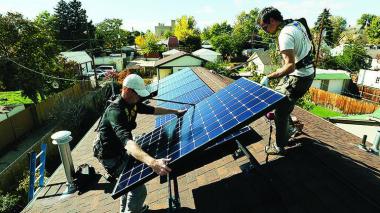 Solar Power Portal 21st Aug 2020, The value of residential solar has been touted after new research revealed
that the technology can boost the value of houses by over £30,000. The
research comes from EffectiveHome.co.uk, a website dedicated to providing
information and guidance for homeowners regarding solar. It found that
installing solar PV can increase house prices by an average of £32,459
across the UK. Houses in London see the biggest increase, with the value
jumping by £90,000. The country’s capital therefore has the largest
increase in value of the ten largest cities in the UK, followed by Bristol
(£45,142), Edinburgh (£40,095) and Leicester (£31,577).
https://www.solarpowerportal.co.uk/news/residential_solar_boosts_house_prices_by_average_of_30000
Will Ohio finally be able to use its wind resources, now that the nuclear corruption is being exposed?

|
Will Ohio Finally Inherit Its Wind? https://readersupportednews.org/opinion2/277-75/64623-rsn-will-ohio-finally-inherit-its-wind?fbclid=IwAR0iFghBoz4O6r7yMYGVnrXjyQ27vmsal94R3U6STsPlmM2TWvPOriQ4IiMBy Bob Fitrakis and Harvey Wasserman, Reader Supported News, 17 August 20
 midst an astonishing billion-dollar nuke reactor corruption scandal, one of the world’s richest wind resources—the key to Ohio’s economic and ecological future—is being trashed by a single sentence. midst an astonishing billion-dollar nuke reactor corruption scandal, one of the world’s richest wind resources—the key to Ohio’s economic and ecological future—is being trashed by a single sentence.
According to the American Wind Energy Association, Ohio is being robbed of $4 billion worth of industrial development, thousands of jobs, and a wealth of cheap, emissions-free energy by a single easily-removable clause in the Ohio Code. How? In 2014, without public hearings, pro-fossil/nuke legislators slipped into law a requirement that wind turbines be sited at least 1300 feet from property lines. The previous requirement was 600 feet. There are no meaningful economic, ecological, or health/safety imperatives served by the additional set-back footage. No other state has such a requirement. But by vastly expanding the land required for turbine siting, that single sentence stopped some $4 billion in pre-approved northern Ohio wind farm development. Ohio’s “North Coast” has steady winds blowing over flat fields whose farmers desperately need the fat checks that come with turbine leasing. The region is uniquely crisscrossed with transmission lines feeding nearby urban areas where the power is consumed. Ironically, Ohio is already a leading manufacturing center for the turbine industry being blocked within its own borders. The proposed arrays are set to create thousands of jobs, save hundreds of family farms, and provide decades of reliable, clean electricity at rates far below current subsidized fossil/nuke prices. The employment created by the wind construction projects would far exceed that at the Davis-Besse and Perry reactors. The nuke bailout is now under intense fire. Because House Bill 6 has been tainted by the $60 million in bribes given House Speaker Larry Householder to grease it through the legislature, even pro-nuke governor Mike DeWine wants it rescinded. It comes in the wake of some $9 billion in “stranded cost” bailout money sucked up by Ohio’s nukes starting in 1999. But if HB6 goes away as promised, DeWine and pro-reactor legislators will likely introduce a new, slightly altered bailout. As a popular concession, they might drop the previously included handout for two coal burners or avoid attacking Ohio’s highly successful energy efficiency programs. But the one move that could completely revamp Ohio’s energy future would be to restore its wind setback to levels commonly accepted nearly everywhere else. Opening Ohio’s energy markets to cheap wind power would undercut subsidized, fossil/nuke-inflated electric rates, restore the jobs deleted by shutting the reactors, and spur long-term economic growth as virtually nothing else would. Will Ohio’s safe energy movement grab the opportunity to make all that happen? Bob Fitrakis & Harvey Wasserman have co-authored numerous books on election protection and the environment appearing at www.freepress.org along with Bob’s Fitrakis Files. Harvey’s People’s Spiral of US History awaits Trump’s departure at www.solartopia.org, where his Solartopia! Our Green-Powered Earth also resides. |
|
UK offshore wind becomes cheaper than nuclear and gas
Das concluded: “Over the next few years, the offshore segment is expected to boom. More than 19GW of offshore wind projects are in the pipeline, either in the nascent or advanced stages of development. Players such as SSE Renewables, Scottish Power Renewables, Orsted, Engie and many more have flocked this space, trying to grab a piece of the pie. Many would be constructed as deep sea projects at more than 40km from the shore, at depths ranging from 20-70m – making the most of favorable wind speeds of 7-10m/s. Some of them are expected to have turbine capacities of more than 10MW, and rotor diameters ranging from a mere 113m to over 200m.
Renewables output outpacing coal and nuclear in USA
Renewables output outpacing coal and nuclear in US https://www.windpowermonthly.com/article/1690384/renewables-output-outpacing-coal-nuclear-us, 27 July 2020 by Craig Richard
Renewable energy sources outperformed coal and nuclear in the US during the first five months of the year, according to analysis of Energy Information Administration (EIA) data. The fastest growing energy sources during this period were wind and solar, according to analysis by renewables advocacy group the Sun Day Campaign.
Wind generated 11.1% more electricity (144.8GWh) than it did in the same period one year earlier , and accounted for 9.4% of the United States‘ total generation between January and May — up 1.4 percentage points from the first five months of 2019.
According to Windpower Intelligence, the research and data division of Windpower Monthly, the US’ wind power fleet reached nearly 109.3GW by the end of May 2020 — an increase of 11.7% year on year.
Meanwhile, solar generated 23.1% more electricity in the first five months of 2020 (50.6GWh) than it did in the same period one year earlier, and accounted for 3.3% of the US’ total electricity generation in this time — up half a percentage point from January-May 2019.
Combined, renewable energy sources — also including hydropower, biomass and geothermal — generated 331.2GWh in the first five months of the year. This is more than both coal (258.9GWh, down 33.9% year on year) and nuclear (327.6GWh, down 1%).
However, natural gas still produced the most electricity in the first five months of the year — 606.9GWh, up 7.9% year on year.
The Sun Day Campaign’s executive director Kenneth Bossong said: “With each passing month, it is becoming ever more probable that renewables will outpace both this year and then begin closing the gap with natural gas.”
Renewable generation eclipses coal, nuclear for 2nd straight month in April
Renewable generation eclipses coal, nuclear for 2nd straight month in April, S and P Global Market Intelligence, Krizka Danielle Del Rosario, 26 June 20, Although U.S. net generation in April fell 6.6% below the same month in 2019, renewable generation has continued to grow as a source of the nation’s supply and surpassed nuclear and coal for the second month in a row.
Renewables accounted for 23.3% of the total, expanding its lead on nuclear generation as the second-largest source of power supply. Nuclear generation made up 21.5% of the nation’s electricity, while gas-fired generation remained the largest supplier of power with a 39.3% share……. https://www.spglobal.com/marketintelligence/en/news-insights/blog/essential-energy-insights-june-11-2020
1 This Month
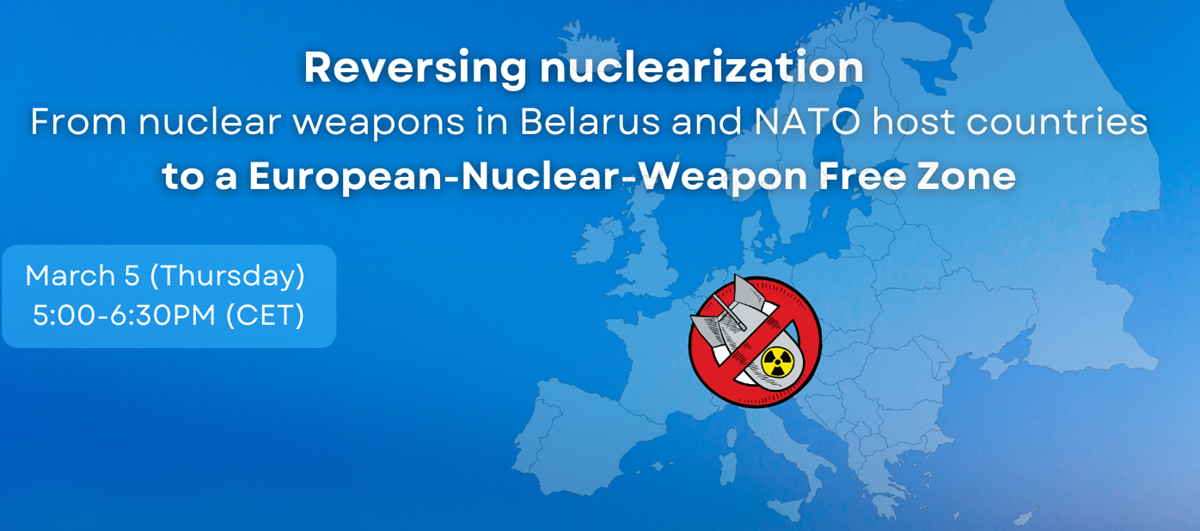
5 March -Online – Reversing nuclearization:
From nuclear weapons in Belarus and NATO host countries to a European-Nuclear-Weapon Free Zone
11am-12:30pm Eastern Time USA / 5pm-6:30pm CET

of the week – Advocating for a
nuclear free beach – https://www.samuellawrencefoundation.org/
The Samuel Lawrence Foundation advocates for a Nuclear Waste Free Beach at San Onofre, join us and take action!

10 March A LIVE WEBINAR THE REAL EFFECTS OF NUCLEAR POWER
What the Industry Isn’t Telling Us
1:00 PM Mountain, 2 pm Central, 3 pm Eastern. Live on the Keepers of the Water Facebook page


18 March Webinar @ 1 PM EST: An Assessment of SMR Projects: The Case of Canada
register for the zoom:
https://us02web.zoom.us/webinar/register/WN_o8BIIOUvQ2ONJR1nta65DQ#/registration

of the week – STOP SMALL MODULAR REACTORS IN CANADA
To see nuclear-related stories in greater depth and intensity – go to https://nuclearinformation.wordpress.com
-
Archives
- March 2026 (51)
- February 2026 (268)
- January 2026 (308)
- December 2025 (358)
- November 2025 (359)
- October 2025 (376)
- September 2025 (258)
- August 2025 (319)
- July 2025 (230)
- June 2025 (348)
- May 2025 (261)
- April 2025 (305)
-
Categories
- 1
- 1 NUCLEAR ISSUES
- business and costs
- climate change
- culture and arts
- ENERGY
- environment
- health
- history
- indigenous issues
- Legal
- marketing of nuclear
- media
- opposition to nuclear
- PERSONAL STORIES
- politics
- politics international
- Religion and ethics
- safety
- secrets,lies and civil liberties
- spinbuster
- technology
- Uranium
- wastes
- weapons and war
- Women
- 2 WORLD
- ACTION
- AFRICA
- Atrocities
- AUSTRALIA
- Christina's notes
- Christina's themes
- culture and arts
- Events
- Fuk 2022
- Fuk 2023
- Fukushima 2017
- Fukushima 2018
- fukushima 2019
- Fukushima 2020
- Fukushima 2021
- general
- global warming
- Humour (God we need it)
- Nuclear
- RARE EARTHS
- Reference
- resources – print
- Resources -audiovicual
- Weekly Newsletter
- World
- World Nuclear
- YouTube
-
RSS
Entries RSS
Comments RSS
 nuclear-news