How decentralised energy will massively reduce grid costs

How decentralised energy will massively reduce grid costs,
100% Renewables 30th May 2021
There’s lots of information being pumped out by the anti-renewables lobby about how renewable energy causes great increases in the costs of upgrading electricity networks, but in fact there’s a lot of ways in which decentralised energy will actually REDUCE network costs. A recent study from California emphasizes how the cheapest path to clean energy is a mixture of large renewable energy projects and small decentralised renewables (mainly solar pv) linked to battery storage systems. Solar pv-battery systems can exist as a mixture of domestic systems and larger ground-mounted systems.
There isn’t yet a similar study for the UK (the big energy companies who fund these things won’t want the truth leaking out!), but there’s logic to suggest that much the same thing might be the case in the UK. Sure, the UK isn’t as sunny as California, although in winter there’s a lot of wind power. But in any case the untold secret of a decentralised solar-plus-battery system is that the batteries will soak up electricity produced from whatever sources so as to even out the pressures on the electricity network. By reducing pressure on the electricity network both transmission and distribution network costs can be reduced.
Of course the rub is that these battery systems which will reduce network costs are themselves made economic by being associated with the solar pv systems – and the same things works the other way around. The solar pv systems are made more economic by being alongside the batteries. Indeed these sorts of systems are so cheap that they are being installed already in the UK at two levels without even any incentives for the Government.
First, as reported in the trade press, companies like Gridserve are doing solar pv-battery systems. The batteries can soak up energy from the solar panels when there is a lot of electricity being generated and electricity prices are low and then sell it back to the grid at other times of the day or night when electricity prices are higher.
This sort of ‘arbitrage’ trading can now also be done at the second, domestic household, level. An even quieter revolution is taking place as ordinary households can now install solar pv plus battery systems for costs that would have been regarded as fancifully low five years ago. One company called ‘Growatt‘ is currently offering a system comprising 5.5 kW of solar pv and a 6.5 kWh battery for less than £9000 (note: five or so years ago you could have been doing well just to get the solar pv for that price!). This system works best with a supplier like Octopus who offers a time-of-use tariff so that you can charge the batteries when it is cheapest to do so whether from the grid or the solar panels. Solar pv is used when buying electricity from the network is expensive and stored in the battery when network prices are cheap. Then the batteries can power consumption when prices are higher and it isn’t sunny enough to generate much solar pv.
Of course there’s also a novel energy storage company, Sunamp, that is offering the possibility the use solar pv to heat and store water. As they say: ‘SunampPV stores excess electricity from a Solar PV
array as heat. This delivers high flow rate hot water on demand, so that your instant water heater or combi boiler can operate much less, saving you money’
So, you’d expect the Government to be shouting about all of this and giving this nascent new decentralised energy industry a boost? No way! The Government will be told what is needed by the big energy companies who definitely want to keep decentralised energy a secret – especially as it gets in the way of their incessant demands for featherbedding, whether it is for capacity payment subsidies for large power stations or massive handouts to nuclear power plant.
Despite the Small Nuclear Reactor push from Bill Gates and the rest of the nuclear lobby, we already have the technologies to decarbonise our global economy.

Dave Elliott: The International Energy Institute’s new Global Energy
Roadmap sets a pathway to net zero carbon by 2050, with, by 2040, the
global electricity sector reaching net-zero emissions. It wants no
investment in new fossil fuel supply projects, and no further final
investment decisions for new unabated coal plants. And by 2035, it calls
for no sales of new internal combustion engine passenger cars. Instead it
looks to ‘the immediate and massive deployment of all available clean and
efficient energy technologies, combined with a major global push to
accelerate innovation’.
For its part, on that issue, the IEA report
summary says ‘most of the global reductions in CO2 emissions between now
and 2030 in the net zero pathway come from technologies readily available
today. But in 2050, almost half the reductions come from technologies that
are currently only at the demonstration or prototype phase’. So it says
‘this demands that governments quickly increase and reprioritise their
spending on research and development – as well as on demonstrating and
deploying clean energy technologies – putting them at the core of energy
and climate policy.
. Progress in the areas of advanced batteries,
electrolysers for hydrogen, and direct air capture and storage can be
particularly impactful’. U.S. Climate Envoy John Kerry had already
relayed the suggestion that ‘50 percent of the reductions we have to make
to get to net zero are going to come from technologies that we don’t yet
have.’ And Bill Gates had claimed that that solar, wind and batteries
were not enough, so we need ‘miracle technologies’ to decarbonize our
global economy.
Commenting on this issue, Prof Mark Jacobson from Stanford
University said it all depends on what you mean by ‘new’. Yes, we need
to improve wind, solar, storage and transmission systems, but what was
really being hinted at in these statements was that we need other
completely new technologies- such as Small Modular Reactors, Carbon Capture
systems and such like. He says we don’t need them: ‘we have 95% of the
technologies we need today and the know-how to get the rest’:
Renew Extra 29th May 2021
https://renewextraweekly.blogspot.com/2021/05/the-iea-set-out-way-ahead.html
A world based on 100% renewable energy by 2035 is technically and economically feasible

Renew Extra 22nd May 2021, Dave Elliott: 100% renewable energy ‘is possible by 2035’. A world based on 100% renewable energy is possible, and we are able to transform the energy system fast enough to avoid the climate catastrophe!’ So says the Joint declaration of the global 100% renewable energy strategy group.
Set up initially by a core of 7 leading climate and energy scientists, including Prof. Mark Jacobson from Stanford in the USA, and Prof Christopher Breyer from LUT in Finland, and then backed by 40 other scientists, it claims that ‘a 100% renewable electricity supply is possible by 2030, and with substantial political will around the world, 100% renewable energy is also technically and economically feasible across all other sectors by 2035.
A 100% RE system will be more cost effective than will a future system based primarily on fossil and nuclear power. The
transformation to 100% renewables will boost the global economy, create millions more jobs than lost, and substantially reduce health problems and mortality due to pollution’.
https://renewextraweekly.blogspot.com/2021/05/100-renewable-energy-is-possible-by-2035.html
Renewable energy cheated in uneasy coalition with Exelon nuclear, in Illinois

How Pay-to-Play Politics and an Uneasy Coalition of Nuclear and Renewable Energy Led to a Flawed Illinois Law, Inside Climate News
State lawmakers are running out of time to fix 2016 clean energy legislation.
By Dan Gearino, Inside Climate News and Brett Chase, Chicago Sun-TimesMay 21, 2021This article is the result of a partnership between Inside Climate News and the Chicago Sun-Times.
CHICAGO—Just over five years ago, the Illinois Legislature passed a plan that aimed to build a solar power industry from scratch while saving thousands of jobs at two struggling nuclear plants.
The Future Energy Jobs Act brought together environmental groups, the owner of the nuclear plants—Exelon Corp., unions and consumer advocates. The result was a plan marrying nuclear subsidies with support for renewable energy that purported to create tens of thousands of solar power jobs as well as put the state on track to move away from fossil fuels and meet its pre-existing target of having 25 percent renewable energy by 2025.
But the law sputtered from the start and now state leaders are racing to meet a May 31 legislative deadline to fix some of its biggest problems, like the impending loss of more than $300 million in funding for renewable energy programs.
But the law sputtered from the start and now state leaders are racing to meet a May 31 legislative deadline to fix some of its biggest problems, like the impending loss of more than $300 million in funding for renewable energy programs. The 2025 target is far out of reach, the jobs expectations went unmet and the solar industry is laying off workers as promised funding dries up.
Exelon emerged as a clear winner, receiving $2.3 billion in ratepayer-funded subsidies over a decade for its two plants. It is now demanding even more money and threatening to close two other nuclear plants if it doesn’t get it.
“Exelon continues to get $235 million a year, while the solar support has been stripped away,” said Howard Learner, executive director of the Chicago-based Environmental Law and Policy Center and a critic of the state’s nuclear bailout. “Illinois could’ve been a Midwest solar energy leader.”
Making the current scramble even more complicated is a federal bribery probe of Exelon and its Chicago utility subsidiary, Commonwealth Edison. Prosecutors say ComEd gave cash, jobs and contracts to associates of former House Speaker Michael Madigan with the hope he would shape the legislation to the company’s liking.
Gov. J.B. Pritzker has said that Exelon will not dictate the terms of the current debate over how to fix the state’s energy law. But the company and its close allies in organized labor nonetheless have immense power in the Legislature.
Exelon is seeking subsidies for its four Illinois nuclear plants that didn’t get help in the 2016 law, and is saying that the Byron and Dresden nuclear plants will close without this aid.
Meanwhile, solar companies are laying off workers following the abrupt end of incentive funding tied to the 2016 law.
Supporters of the law talked about a boom in solar jobs, but the actual gains have been modest. Illinois went from 3,480 solar jobs in 2015, the 14th highest number in the country, to 5,259 jobs in 2020, which ranked 13th, according to the Solar Foundation.
While there were few new solar jobs, there has been a surge in the small-scale solar projects the law was designed to encourage, with more than 20,000 projects completed. But solar remains a blip in Illinois’ energy landscape, providing less than 1 percent of the state’s electricity generation in 2020.
Solar and wind energy have grown in Illinois, but renewable sources are only about 7.5 percent of the state’s electricity consumption, which is far short of the pace needed to reach the target of 25 percent by 2025…….
While there were few new solar jobs, there has been a surge in the small-scale solar projects the law was designed to encourage, with more than 20,000 projects completed. But solar remains a blip in Illinois’ energy landscape, providing less than 1 percent of the state’s electricity generation in 2020.
Solar and wind energy have grown in Illinois, but renewable sources are only about 7.5 percent of the state’s electricity consumption, which is far short of the pace needed to reach the target of 25 percent by 2025……..
A Nuclear Bailout Takes Shape
In 2016, Exelon was threatening to close the Clinton and Quad Cities power plants and wanted the Illinois General Assembly to pass a law that would require local utilities, including ComEd, to charge consumers for a 10-year subsidy for the plants.
The idea had the strong backing of Exelon’s allies in organized labor, but it was difficult to get lawmakers to agree to raise utility bills.
At the same time, environmental groups, clean energy business groups and environmental justice advocates had their own proposals.
Madigan, a Democrat who was the longtime speaker of the House, made clear that any clean energy proposals needed to go through Exelon and get added to their nuclear bailout, according to those closely involved with the process. Madigan, through a spokeswoman, declined to comment.
“Being able to pass clean energy legislation was conditioned by the speaker to reach agreement with ComEd and Exelon and labor,” said Jen Walling, executive director of the Illinois Environmental Council, which led the push for renewable energy provisions.
Walling, whose group represents more than 90 environmental and community groups across Illinois, said the political reality forced the environmental advocates to work with Exelon.
Pat Quinn, a Democrat who was governor from 2009 until he lost his bid for re-election in 2014, said the process was unseemly but typical for Exelon.
Exelon wanted “the renewable people to literally crawl to them,” Quinn said. “As long as they could hold up the renewables and the progressive stuff, they’d get more for themselves.”
Federal prosecutors later said that Exelon subsidiary ComEd’s actions at that time were more than just hardball politics. The company was part of a pay-to-play environment for energy legislation in the state, with ComEd giving cash, contracts and jobs to people connected to Madigan, according to a federal complaint. The investigation has led to indictments and a deferred prosecution agreement with ComEd.
ComEd’s Breymaier said the company has “substantially strengthened oversight and controls of its lobbying and hiring,” among other steps to prevent actions like those described by prosecutors………… https://insideclimatenews.org/news/21052021/how-pay-to-play-politics-and-an-uneasy-coalition-of-nuclear-and-renewable-energy-led-to-a-flawed-illinois-law/
French nuclear giant EDF unveils first wind and battery project in Australia — RenewEconomy

French nuclear giant EDF buys 280MW wind project in central Queensland, the first of a major pipeline of wind, solar and storage projects in Australia. The post French nuclear giant EDF unveils first wind and battery project in Australia appeared first on RenewEconomy.
French nuclear giant EDF unveils first wind and battery project in Australia — RenewEconomy
For climate action, renewables clearly beat nuclear power

| Heinrich Boll 26th April 2021, Mark Jacobson: New nuclear power costs about 5 times more than onshore wind power per kWh. Nuclear takes 5 to 17 years longer between planning and operation and produces on average 23 times the emissions per unit electricity generated. In addition, it creates risk and cost associated with weapons proliferation, meltdown, mining lung cancer, and waste risks. Clean, renewables avoid all such risks. https://eu.boell.org/en/2021/04/26/7-reasons-why-nuclear-energy-not-answer-solve-climate-change |
PNM Resources to replace its Palo Verde nuclear energy with 100% solar and battery
Sierra Club 16th April 2021, After announcing it would drop one of its leases in the Palo Verde Nuclear plant last year, this month PNM proposed replacing the energy with 100% solar and battery. In support of its proposal, PNM cited the Energy Transition Act’s requirements and the Public Regulation Commission’s decision last year to choose a 100% solar/storage proposalrather PNM’s favored gas-inclusive replacement scenario for San Juan Generating Station coal. The replacement proposal will need to be approved by the commission. In selecting carbon emission-free generation to replace Palo Verde, PNM states in testimony it has taken into consideration “the state’s energy transition policies and long-term mandate for a carbon emission-free generation portfolio.” While we have yet to delve into all of the details of PNM’s application, this is very encouraging and we look forward to supporting PNM’s request for prompt approval of replacement resources. https://www.krwg.org/post/pnm-cites-eta-proposing-100-solar-and-storage-replace-nuclear |
New solar farm to replace Iowa’s only nuclear power plant: will supply more energy, and many jobs.
 Iowa’s only nuclear power plant will be turned into a solar farm, https://electrek.co/2021/03/22/iowas-only-nuclear-power-plant-will-be-turned-into-a-solar-farm/ Michelle Lewis, Mar. 22nd 2021
The Duane Arnold Energy Center in eastern Iowa, a now-idle nuclear power plant, will soon become a 690-megawatt solar farm. The new solar farm plus storage will produce more energy than the single-unit 615-megawatt nuclear plant generated, which powered more than 600,000 homes.
The new solar plan
Owner NextEra Energy of Florida will build the solar farm across 3,500 acres at and near Duane Arnold in Palo, Linn County. NextEra also intends to include up to 60 megawatts of AC-coupled batteries for power storage.
The project is expected to bring in a $700 million project investment, $41.6 million in tax revenue, and around 300 construction jobs.
NextEra will negotiate leases with landowners in summer 2021 and begin construction in winter 2022. The company intends to have the solar farm online by the end of 2023.
NextEra Energy Resources currently has ownership interests in 3,160 megawatts of operating solar projects representing universal-scale solar facilities in 27 US states and one in Spain, as well as multiple small-scale (distributed generation) solar projects.
Nuclear decommissioning process
The Gazette in Cedar Rapids reports on the history of the Duane Arnold site and why the nuclear power plant was shut down
In a 2019 article, a Duane Arnold plant director told the Gazette that the facility, which employed nearly 600 people, no longer fit in Iowa’s energy portfolio that increasingly consisted of wind and solar.
The facility — Iowa’s only nuclear power plant, which began operating 45 years ago — was supposed to be decommissioned at the end of October 2020.
But “extensive” damage to the facility from the August 10, 2020, derecho [a severe storm] forced NextEra to shut it down early.
The Sierra Club explains Duane Arnold’s nuclear plant decommissioning process here, but the bottom line is that it’s going to take 60 years (and nuclear waste is of course radioactive for thousands of years):
After 60 years, the plant will be torn down, the nuclear materials would be transported to a central storage facility if one is built by then, any contamination would be cleaned up, and the land will be available for re-use.
Wind is currently the largest single source of electricity in Iowa, making up more than 40% of the state’s electricity.
Lies in Texas, as Republicans blame renewable energy for cold weather traumas
|
Pressenza 19th Feb 2021, Forget Ted Cruz, What’s Really Missing in Texas Is the Green New Deal. While Republican Sen. Ted Cruz of Texas is under fire for fleeing to Cancún for a vacation as his constituents endure devastating power outages as well as food and water shortages due to rare winter weather, climate campaigners are pointing to the compounding crises in the Lone Star state as proof of the need for a Green New Deal.
As dozens of people have died and millions have spent days without electricity, some right-wing news outlets and lawmakers—including GOP Texas Gov. Greg Abbott, who’s facing calls to step down—have lied about the state’s power problems, blaming renewable energy, even though the outages are largely tied to issues with gas, coal, and nuclear facilities. Abbott even claimed Tuesday on Fox News that “this shows how the Green New Deal would be a deadly
deal for the United States of America.” |
Green energy sources are not to blame for the winter storm power blackouts in Texas.
Green energy sources are not to blame for the winter storm Uri power
blackouts in Texas, experts say. More than 4.2 million people were left
without power after a rare cold front brought record-breaking freezing
conditions to the state. Fox News host Tucker Carlson, among others, has
tried to point the finger at renewable energy sources such as wind turbines
for the rolling blackouts seen in the state.
Independent 16th Feb 2021
The electricity outages suffered by millions of Texans amid frigid
temperatures sweeping across the United States have been seized upon by
conservative commentators presenting a false narrative that renewable power
was to blame.
Guardian 17th Feb 2021
Solar sails for space voyages
 Nuclear Rockets to Mars?, BY KARL GROSSMAN– CounterPunch, 16 Feb 21,”………. As for rocket propulsion in the vacuum of space, it doesn’t take much conventional chemical propulsion to move a spacecraft—and fast.
And there was a comprehensive story in New Scientist magazine this past October on “The new age of sail,” as it was headlined. The subhead: “We are on the cusp of a new type of space travel that can take us to places no rocket could ever visit.”
The article began by relating 17th Century astronomer Johanne Kepler observing comets and seeing “that their tails always pointed away from the sun, no matter which direction they were traveling. To Kepler, it meant only one thing: the comet tails were being blown from the sun.”
Indeed, “the sun produces a wind in space” and “it can be harnessed,” said the piece. “First, there are particles of light streaming from the sun constantly, each carrying a tiny bit of momentum. Second, there is a flow of charged particles, mostly protons and electrons, also moving outwards from the sun. We call the charged particles the solar wind, but both streams are blowing a gale”—that’s in the vacuum of space.
Japan launched its Ikaros spacecraft in 2010—sailing in space using the energy from the sun. The LightSail 2 mission of The Planetary Society was launched in 2019—and it’s still up in space, flying with the sun’s energy.
New systems using solar power are being developed – past the current use of thin-film such as Mylar for solar sails.
The New Scientist article spoke of scientists “who want to use these new techniques to set a course for worlds currently far beyond our reach—namely the planets orbiting our nearest star, Alpha Centauri.”……. more https://www.counterpunch.org/2021/02/16/nuclear-rockets-to-mars/
Fukushima to Triple Wind Power Generation
|
Fukushima to Triple Wind Power Generation https://www.nippon.com/en/news/yjj2021020801101/ Feb 8, 2021 Tokyo, (Jiji Press)–Japan’s industry ministry announced a plan on Monday to triple wind power generation in Fukushima Prefecture to 360 megawatts in fiscal 2024 from four years before.The plan highlighted the use of renewable energy as a pillar of efforts to accelerate the recovery of the northeastern prefecture from the March 2011 nuclear accident.
Under the plan, the Fukushima and national governments aim to construct an industrial complex running solely on renewable energy sourced within the prefecture, by fiscal 2030. The national government will provide financing to build some 30 kilometers out of the over 80 kilometers of a grid that will supply electricity in the prefecture from renewable sources. All 10 nuclear reactors in the prefecture are set to be decommissioned, following the triple meltdown at Tokyo Electric Power Company Holdings Inc.’s <9501> disaster-hit Fukushima No. 1 nuclear plant. |
|
Why nuclear power is a bad way to balance renewable energy
Why nuclear power is a bad way to balance renewable energy https://100percentrenewableuk.org/why-nuclear-power-is-a-bad-way-to-balance-renewable-energy
David Toke, Ian Fairlie and Herbert Eppel from 100percentrenewableuk discuss how nuclear power effectively switches off wind and solar power and how a 100percent renewable energy system is much better for the UK than one involving nuclear power
The Government, backed by a lot of public policy reports paid for by pro-nuclear interests, constantly pushes out the view that nuclear power is ‘essential’ to balancing wind and solar power.
But what they never mention is the massive waste of renewables that occurs in such a scenario.
Under the scenarios planned by the Government nuclear power is paid very high prices to generate power even when there is excess electricity, which pushes renewables to close down.
The Government also refuses to undertake serious investigations of how a system that uses excess renewables to create short and long term storage is a much better way of organising our energy needs rather than wasting more money on building nuclear power statitons.
If you agree the aims of 100percentrenewableuk please join the discussion via our email group.
Hydrogen from wind and solar systems could be the ultimate solution to the planet’s pollution problem.
latest claim to fame, two spinoffs of German tech conglomerate Siemens are
joining forces to advance green hydrogen technology by building
wind-to-hydrogen systems to help decarbonize the global economy.
element can be an energy carrier, it can be used to store energy and it can
be used in fuel cells to power vehicles. Green hydrogen is a particularly
attractive option because its production comes from hydrolyzing water using
electricity produced by renewable systems, meaning it has a much lower
carbon footprint than gas- or coal-sourced hydrogen.
pollution problem.
https://oilprice.com/Energy/Energy-General/German-Tech-Giant-Places-Major-Bet-On-Green-Hydrogen.html
For the USA, despite the “Green Nuclear Deal” propaganda, solar power islooking a whole lot better.
Nuclear vs Solar: The Race For Renewable Dominance , Oil Price By Alex Kimani – Nov 11, 2020
“……….. the main sticking point to the promotion of thorium as a cleaner nuclear fuel is that it remains unproven on a commercial scale. Thorium MSRs (Molten Salt Reactors) have been in development since the 1960s by the United States, China, Russia, and France, yet nothing much ever came of them. Further, only about 50 of the world’s 440 reactors can currently be configured to run on thorium.
…… Unfortunately, practical nuclear fusion remains a long-shot and could be decades away from becoming a commercial reality.
We simply don’t have the luxury of time.
Further, nuclear power in the U.S. faces an uncertain future. ……………
Solar rising
Whereas the nuclear sector comeback has its work cut out for it, solar power has clearly been on the ascendancy thanks in large part to falling costs.
Nuclear advocates have pointed to rising electricity costs in California as the reason why other states should think twice before adopting its model. Environmental Progress has reported that between 2011 and 2018, power costs in the Golden State increased by 27.9% compared to a 4% national average. This period coincided with a period when California has been aggressively ramping up its renewable generation capacity. Renewable sources currently account for ~30% of California’s electricity generation with an aim to double that by 2030 and hit 100% by 2045.
But that’s being a bit disingenuous because it fails to capture just how much solar costs have fallen over the timeframe.
According to the Solar Energy Industries Association (SEIA), solar installation costs have dropped by more than 70% over the past decade, opening up vast new markets and systems nationwide. The organization says prices as of Q2 2020 dropped to their lowest levels in history across all market segments, with utility-scale prices ranging from $16/MWh – $35/MWh, thus making it competitive with all other forms of generation. Meanwhile, costs for the average-sized residential system were cut in half from a pre-incentive price of $40,000 in 2010 to roughly $20,000 today.
And no, renewables are not to blame for California’s blackouts.
……………..Strongly Bullish
Despite these challenges, the solar sector remains strongly bullish.
Indeed, S&P Platts says that the shift to renewable energy is likely to continue full steam ahead regardless of fed policies noting that the energy transition has “clearly been moving forward on a regional basis,” despite lacking clear endorsement at the federal level under Trump.
It remains to be seen whether nuclear energy can command the same level of support. https://oilprice.com/Alternative-Energy/Nuclear-Power/Nuclear-vs-Solar-The-Race-For-Renewable-Dominance.html
1 This Month
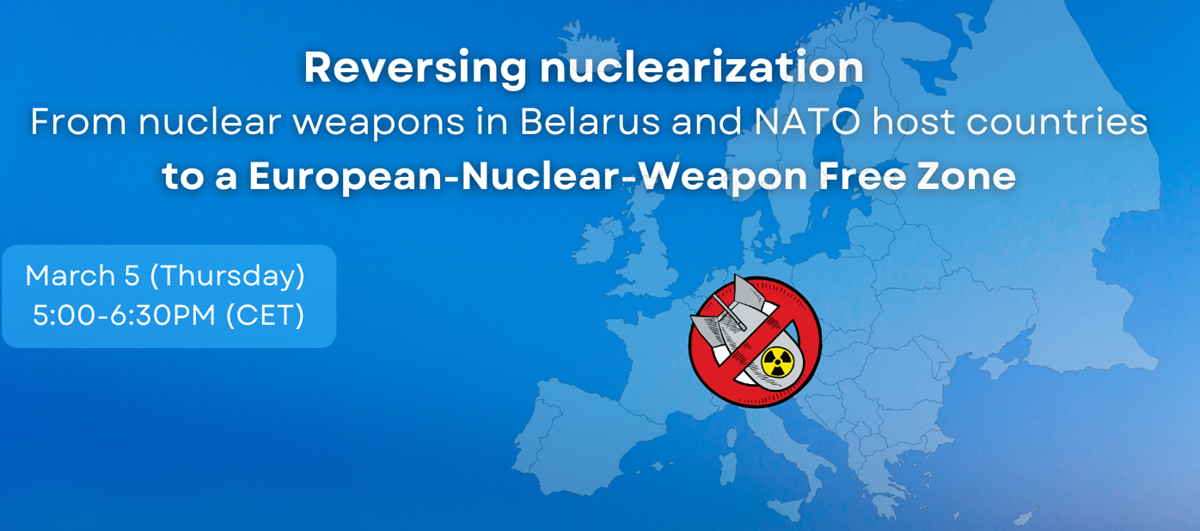
5 March -Online – Reversing nuclearization:
From nuclear weapons in Belarus and NATO host countries to a European-Nuclear-Weapon Free Zone
11am-12:30pm Eastern Time USA / 5pm-6:30pm CET

of the week – Advocating for a
nuclear free beach – https://www.samuellawrencefoundation.org/
The Samuel Lawrence Foundation advocates for a Nuclear Waste Free Beach at San Onofre, join us and take action!

10 March A LIVE WEBINAR THE REAL EFFECTS OF NUCLEAR POWER
What the Industry Isn’t Telling Us
1:00 PM Mountain, 2 pm Central, 3 pm Eastern. Live on the Keepers of the Water Facebook page


18 March Webinar @ 1 PM EST: An Assessment of SMR Projects: The Case of Canada
register for the zoom:
https://us02web.zoom.us/webinar/register/WN_o8BIIOUvQ2ONJR1nta65DQ#/registration

of the week – STOP SMALL MODULAR REACTORS IN CANADA
To see nuclear-related stories in greater depth and intensity – go to https://nuclearinformation.wordpress.com
-
Archives
- March 2026 (51)
- February 2026 (268)
- January 2026 (308)
- December 2025 (358)
- November 2025 (359)
- October 2025 (376)
- September 2025 (258)
- August 2025 (319)
- July 2025 (230)
- June 2025 (348)
- May 2025 (261)
- April 2025 (305)
-
Categories
- 1
- 1 NUCLEAR ISSUES
- business and costs
- climate change
- culture and arts
- ENERGY
- environment
- health
- history
- indigenous issues
- Legal
- marketing of nuclear
- media
- opposition to nuclear
- PERSONAL STORIES
- politics
- politics international
- Religion and ethics
- safety
- secrets,lies and civil liberties
- spinbuster
- technology
- Uranium
- wastes
- weapons and war
- Women
- 2 WORLD
- ACTION
- AFRICA
- Atrocities
- AUSTRALIA
- Christina's notes
- Christina's themes
- culture and arts
- Events
- Fuk 2022
- Fuk 2023
- Fukushima 2017
- Fukushima 2018
- fukushima 2019
- Fukushima 2020
- Fukushima 2021
- general
- global warming
- Humour (God we need it)
- Nuclear
- RARE EARTHS
- Reference
- resources – print
- Resources -audiovicual
- Weekly Newsletter
- World
- World Nuclear
- YouTube
-
RSS
Entries RSS
Comments RSS
 nuclear-news