The 50-Year Wind Farm That Ended a Nuclear Myth
A Danish offshore project’s lifespan extension to half a century dismantles one of nuclear energy’s last standing arguments.
Michael Barnard, Medium Oct 21, 2025
One of the persistent claims made by nuclear energy advocates is that nuclear power plants hold a critical advantage over wind and solar facilities due to their significantly longer operational lifespans. This argument frequently serves as justification for continued investment in nuclear, often at the expense of renewable options. News of a 25 year extension to a Danish offshore wind farm, bringing its total life to 50 years, defangs yet another nuclear talking point.
It’s not the only example. Renewables, particularly wind energy, now routinely demonstrate operational lifetimes matching those of nuclear plants. The conventional wisdom that nuclear has a built-in longevity advantage is no longer supported by real-world evidence.
The nuclear industry’s standard operating lifespan is widely cited as between 40 and 60 years, with many reactors initially licensed for 40-year terms. These facilities routinely secure extensions from regulatory bodies, typically for an additional 20 years, bringing total projected lifetimes up to 60 years. In some cases, operators are now pursuing even longer extensions……………………………(Subscribers only0 https://medium.com/the-future-is-electric/the-50-year-wind-farm-that-ended-a-nuclear-myth-9da06d3b528c
Proposed solar farm could help make Island ‘centre of excellence’ – minister.
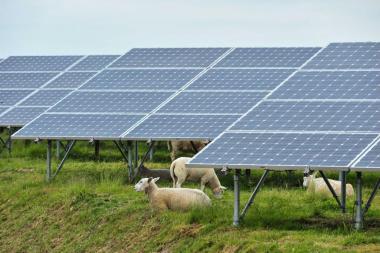
FARMERS should be able to “grow” solar power in their fields in the
same way as other crops, the Environment Minister has said during a speech
in which he highlighted the growing use of technology in agriculture.
Deputy Steve Luce, who was one of two members of the Council of Ministers
to address the 2025 Jersey Farming Conference, said that a proposed solar
farm in St Martin presented a “wonderful opportunity” for the Island to
play its part in combatting climate change. “The site could become a
European centre of excellence, showing how we could be helping farmers, and
producing sustainable energy, by enabling research and education to happen
at the same time,” he said. “In combining the latest agrivoltaics,
solar technologies, and innovations, Jersey could well end up leading on
this type of agricultural initiative.”
Jersey Evening Post 8th Nov 2025, https://jerseyeveningpost.com/news/2025/11/08/proposed-solar-farm-could-help-make-island-centre-of-excellence-minister/
Australia is getting free electricity – will other countries follow?

As one of the most advanced solar nations in the world, Australia is well placed to experiment with giving people free power – and if it succeeds, other countries may look to copy its approach
By James Woodford, New Scientist 7th Nov 2025
Australians received a welcome surprise this week with the news that every household will soon receive 3 hours of free electricity every day, as part of a world-first initiative to share the benefits of solar power. If successful, it could be a model for other to follow in a future that will increasingly be powered by sunshine.
The Australian electricity grid is zinging with excess capacity during the day thanks to solar power, but it is strained at night when people return from work and use most of their appliances. To address this, the Australian government says its “Solar Sharer” scheme will be rolled out from July 2026 in three states – New South Wales, South Australia and the south-east corner of Queensland – with the rest of the country joining in 2027…………………..(Subscribers only)..…………………. https://www.newscientist.com/article/2503532-australia-is-getting-free-electricity-will-other-countries-follow/
World’s biggest isolated grid hits new peak of 89 per cent renewables, led by rooftop solar
Western Australia’s South West Interconnected System – the world’s
biggest isolated grid – has reached a remarkable new record high of 89
per cent renewables, led by rooftop solar.
The new peak – 88.97 per cent
to be precise – was reached at 11am on Monday, beating the previous
record of 87.29 per cent set just a day earlier, and the previous peak of
85.36 per cent set on October 23. “Another milestone for WA’s clean
energy future,” Sanderson wrote. “It’s another strong sign of the
transformation underway in our energy system as we become a renewable
energy powerhouse.”
The Australian Energy Market Operator says the record
share was led by rooftop solar, which accounted for 64 per cent of
generation at the time. Large scale wind accounted for just over 16 per
cent, with the rest from large scale solar, solar battery hybrids, biomass
and battery storage.
Renew Economy 5th Nov 2025,
https://reneweconomy.com.au/worlds-biggest-isolated-grid-hits-new-peak-of-89-per-cent-renewables-led-by-rooftop-solar/
Cheaper, greener power is on the way

Cheaper, greener power is on the way. As long as anti-net zero populists
don’t throttle it in the cradle. Not that long ago, Mark Purcell, a retired
rear admiral in the Australian navy, was paying about A$250 a month for
electricity in his roomy family home on the Queensland coast.
Today, he says he makes as much as A$300 a month, or nearly $200, from the
electricity he makes, stores and sells with his solar panels and batteries.
“This is the future,” he told me. “This is what the energy transition
could look like for a lot of folks.” Purcell is one of the 58,000-plus
customers of Amber Electric, an eight-year-old Melbourne business that
gives householders access to real-time wholesale power prices so they can
use power when it’s cheap and sell what is stored in their batteries when
it’s expensive.
The company is adding 5,000 customers a month, putting it
among a new generation of fast-growing energy tech start-ups aiming to make
electricity cheaper and greener, and not just in Australia. Amber’s dynamic
pricing technology is due to launch soon in the UK, where the company has
done licensing deals with the energy suppliers Ecotricity and E.On.
Norway’s Tibber offers similar services to the 1mn customers it has gained
since launching in 2016 and expanding to Germany, Sweden and the
Netherlands. In Germany, the market share of companies including Tibber,
Octopus Energy and Rabot Charge has grown from 0.1 per cent in 2023 to 2.4
per cent in 2025, says the Kreutzer Consulting group. Between them they
have more than 1mn customers, 77 per cent of whom are particularly or very
happy with their provider, far more than the industry-wide figure of 57 per
cent.
Remember those figures the next time you hear a rightwing populist
condemn allegedly unaffordable net zero policies. In fact, this new class
of energy tech entrepreneurs is showing how electricity can become more
affordable precisely because of the renewables, batteries and electric cars
that net zero efforts drive.
It is no accident Amber Electric began in
Australia, long a world leader in rooftop solar systems that sit atop more
than 4mn of its homes and small businesses. Its population of 28mn is now
undergoing a home battery boom, following the July launch of a A$2.3bn
government subsidy scheme. Industry estimates show rooftop solar can save
households up to A$1,500 a year on energy bills, a figure that nearly
doubles if you add a battery, and rises further with dynamic pricing. Is
there a catch?
Right now, the upfront costs of green tech can be
considerable. Queensland’s Purcell is a superuser who has spent tens of
thousands of dollars on solar panels, batteries and a home energy
management system that makes everything from his pool heater to his air
conditioners price-responsive. His family also has two Teslas with even
bigger batteries.
This is clearly unaffordable for many, but maybe not for
long. Big home hardware retailers have begun to launch financing plans that
let people pay monthly fees of less than A$150 for solar and battery
packages rather than a big initial outlay.
FT 29th Oct 2025, https://www.ft.com/content/8bf14af2-8c22-4731-ad06-4a36277dff74
Bristol Airport generates record amount of renewable energy.
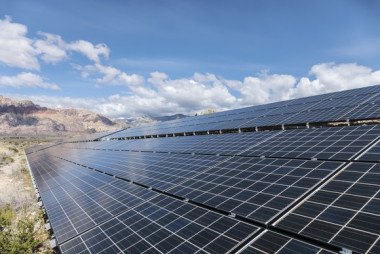
Bristol Airport has generated a record amount of renewable energy from its solar arrays, totalling more than 1,425,000 Kwh so far this year. The
energy output is equivalent to the annual electricity use of almost 400
homes and already surpasses last year’s total.
South Wales Argus 17th Oct 2025, https://www.southwalesargus.co.uk/news/25552365.bristol-airport-generates-record-amount-renewable-energy/
After Spain’s blackout, critics blamed renewable energy. It’s part of a bigger attack.
Julia Simon, October 8, 2025
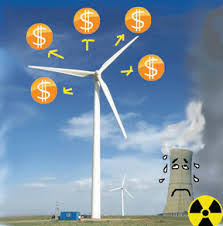
After Spain’s blackout, critics blamed renewable energy. It’s part of a
bigger attack. a new report from an expert panel of European grid operators details what happened. The report finds that for the first time in Europe, a voltage surge caused the massive outage. Voltage needs to remain within limits for an electrical grid to work.
While many things went wrong, the
problem was not a power grid with too much wind or solar, says Chris
Rosslowe, a senior energy analyst at Ember who was not involved in drafting the report. “It contradicts the numerous claims that we’ve seen that an overreliance on renewables was the cause,” Rosslowe says. “That is clearly not true.” But the misinformation about solar and wind energy causing the outage has had an impact.
A new survey found that a majority of Spanish respondents believe at least one false narrative about the blackout, and the most common was that too much reliance on renewable energy was to blame.
Countries around the world are using renewable energy to move away
from polluting fossil fuels. That’s why it’s so important to counter false
narratives about solar and wind, says Philip Newell, communications
co-chair of the Climate Action Against Disinformation, a coalition of
nonprofits.
NPR 8th Oct 2025,
https://www.npr.org/2025/10/08/nx-s1-5534949/spain-blackout-misinformation-renewable-energy
‘Solar for All’ should mean just that.

by beyondnuclearinternational, https://beyondnuclearinternational.org/2025/10/12/solar-for-all-should-mean-just-that/
An EPA decision to cancel a solar grant to tribal nations is a hard hit, writes Cody Two Bears
The EPA’s decision to cancel its Solar for All grant to our coalition of tribal nations is more than a policy reversal—it’s a gut punch to communities that believed they were finally being seen.
Our coalition of 14 tribal governments spanning North Dakota, South Dakota, Montana, Wisconsin, and Wyoming came together around a once-in-a-generation opportunity: to deploy $100 million in solar infrastructure to more than 3,500 tribal homes, while training Native youth and veterans in a clean energy workforce that could serve their own communities.
That promise is now gone. And we are not alone.
This past month, dozens of other states, cities, and communities—red and blue alike learned that their own Solar for All awards contracts will be terminated. Across the country, tens of thousands of low-income households are being told that the solar systems they were promised won’t be installed. That the jobs and training they applied for may not materialize. That another chance to turn energy burden into energy security has slipped away.
In Indian Country, the pain is particularly deep. We’ve been here before. Our communities are used to being promised opportunities that never arrive. But that doesn’t make this one hurt any less.
Solar for All wasn’t just about installing solar. It was about building a future that Native communities have been fighting for—one where we control our own energy, reduce crushing utility bills, and create jobs that allow our youth to stay and serve their people.
It was about growing Native-owned solar businesses, launching the first tribally led operations and maintenance teams in the Northern Plains, and helping each other stand up community-driven energy programs built to last.
Our coalition’s plan would have installed thousands of solar and battery systems and saved Native households over $300 million over the next 25 years. Those savings matter.
Many tribal households already pay double or even triple what the average U.S. household pays for energy. And just like the rest of the country, we’re bracing for steep increases in electricity rates in the years ahead. In communities where winter electric heating bills can exceed $600, solar isn’t just smart policy—it’s a matter of survival. We knew this wouldn’t be easy. But we showed up anyway. Tribal councils passed resolutions. Apprenticeship programs were designed. Community outreach had already begun. In some communities, program managers had been hired and work was underway.
Now, much of that momentum has been lost.
To say we’re disappointed is an understatement. But we’re not giving up. As tribal nations, we have always walked a harder path—but never without purpose. We remain grounded in our values: self-determination, stewardship, and the belief that our communities deserve to lead in this transition—not be left behind by it.
And we will lead. Solar for All gave us a platform to organize, build relationships, and design solutions tailored to our communities. We are keeping that vision alive—with or without this federal funding. But we won’t pretend this isn’t a major setback.
And we want to be clear: we are doing this anyway.
Because no matter what anyone says about solar, we have the laws of physics and economics on our side. The sun will keep shining. Panels will keep getting cheaper. And every kilowatt we produce locally is one less dollar sent off the reservation. The long-term math is in our favor—and we’re building for that future, even when the politics fall short.
Now is the time for philanthropic partners, private investors, and aligned institutions to step forward and help us carry this work forward. We have the plans, the partnerships, and the people. What we need is support—and the courage from others to believe in this vision, even when Washington doesn’t follow through.
Tribes don’t need handouts. We need the means to build what we’ve already envisioned.
Solar for All was supposed to be just that—for all. For red states and blue, for tribal communities and rural towns, for people who’ve too often been left behind in the energy transition. With its cancellation, a lot of doors just slammed shut.
But we’ll keep knocking. Because this is what leadership looks like in Indian Country: standing up, standing together, and staying the course—especially when the promises are broken.
Cody Two Bears is the Founder and CEO of Indigenized Energy and a member of the Standing Rock Sioux Tribe. He is a nationally recognized leader in the movement for tribal energy sovereignty, combining Indigenous knowledge with Western science to bring renewable energy solutions to Native communities. In response to the 2016 #NoDAPL movement, Cody launched Indigenized Energy and led the development of North Dakota’s largest solar project on Standing Rock. A shorter version of this article was published as a letter to the editor in The Washington Post.
Australian Capital Territory went first and fastest to 100 per cent renewables: It now looks like the smartest policy of all

The ACT government continues to reap the rewards for its early and bold
push to 100 per cent renewables, which is now looking like the smartest
policy of all – shielding its residents from the ravages of largely
fossil-fuelled electricity price hikes.
The latest quarterly data assessing
the cost of the ACT government’s commitment to sourcing the equivalent of
its annual demand from wind and solar – which it met on schedule in 2020
– shows the additional cost of the policy in the latest quarter was just
$3 a megawatt hour. Indeed, three of the wind farms contracted by the ACT
government returned significant sums of money (a total of $4.4 million) to
the ACT because the contract prices they agreed to are significantly lower
than current wholesale electricity prices.
Renew Economy 8th Oct 2025, https://reneweconomy.com.au/act-went-first-and-fastest-to-100-per-cent-renewables-it-now-looks-like-the-smartest-policy-of-all/
Poll suggests most Reform UK voters back investment in renewable energy
More than half of Reform UK voters approve of their pensions being
invested in green energy despite the party recently launching a
“renewables war”, a poll suggests.
A survey by YouGov found 79% of
voters overall are in favour of their pensions being invested in renewable
energy, including 53% of Reform UK supporters. The findings have led to
claims that politicians who oppose investment in the sector “have grossly
misjudged” voters’ views. Reform UK deputy leader Richard Tice launched
a campaign group called UK Opposes Renewable Eyesores in July, decrying the
“the madness of net stupid zero” and pledging to “go into battle”
against Energy Secretary Ed Miliband.
Nation Cymru 8th Oct 2025, https://nation.cymru/news/poll-suggests-most-reform-uk-voters-back-investment-in-renewable-energy/
Here comes the sun! The solar energy revolution – podcast

Why might authoritarians fear the rise of green energy? With Bill McKibben
Last week Donald Trump let the UN general assembly know exactly what he thought about renewable energy sources. “I’ve been right about everything and I’m telling you that if you don’t get away from this green scam, your country is going to fail,” he said.
Despite this political opposition, in the last 36 months there has been a global revolution in clean energy. The acclaimed environmentalist and writer Bill McKibben explains to Lucy Hough that we have now passed a tipping point when it comes to solar energy, driven by falling prices, widespread innovation and countries’ desire for energy independence.
McKibben outlines how China is becoming the world’s first “electrostate” and argues that while this global shift is too big for the US president to prevent, activism and engagement is still required to reign in the worst excesses of the climate crisis. Finally, McKibben discusses the important role that clean energy may play in loosening the grip of authoritarianism around the world.
Bill McKibben’s new book, Here Comes the Sun, is out now.
Solar becomes main source of electricity in the EU for first time.
More than half of the EU’s electricity in the second quarter of 2025 came from
renewable energy. Solar energy was the main source of electricity in the
European Union for the first time in history in June, according to new
figures. The renewable energy source accounted for 22 per cent of the
electricity generated in the EU, overtaking nuclear energy, which produced
21.6 per cent of the electricity.
The data from Eurostat, the statistical
office of the EU, showed that more than half of the EU’s electricity in the
second quarter of 2025 came from renewables. Three countries in Europe
managed to generate more than 90 per cent of their electricity from
renewable energy sources, while 15 countries were able to increase the
renewables share in their energy mix compared to the same period last year.
“Denmark, with 94.7 per cent, had the highest share of renewables in net
electricity generated, followed by Latvia (93.4 per cent) [and] Austria
(91.8 per cent),” a Eurostat report noted.
Independent 2nd Oct 2025, https://www.independent.co.uk/tech/solar-power-eu-renewable-energy-b2837926.html
We don’t need gas or nuclear to power data centres, says Octopus Energy boss.
Greg Jackson, CEO of Britain’s biggest energy supplier, hit back at claims from
union leaders and AI bosses that only fossil fuels and nuclear could meet
demand. Jackson, who has been a vocal proponent of renewable energy,
electric cars and heat pumps, said: “Today I think we are in a world
where what do you hear? ‘We’ve got this incredible demand for energy for
data centres: it can only be met by gas and maybe new nuclear.’ Forgive me:
this is horseshit, right?”
Times 1st Oct 2025, https://www.thetimes.com/uk/environment/article/octopus-energy-ceo-greg-jackson-jv92kbp2l
Renewables blow past nuclear when it comes to cheap datacenter juice.
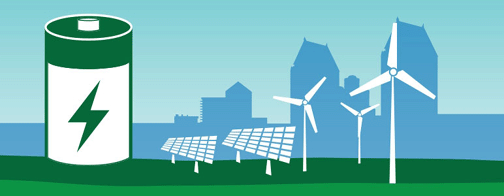
Study finds microgrids with wind, solar, and batteries can be built years sooner and at lower cost than SMRs
CNZ describes itself as an open research institute, founded by Octopus Energy Group in the UK, and claims to advise the State of California and Europe’s International Energy Agency as well as the British government.
While CNZ’s study applies to the UK sector, where energy costs are among the highest in the industrialized world, it is likely that the overall conclusion would still be valid in other countries as well.
Its analysis shows that renewables can meet 80 percent of the constant demand from a large datacenter over the course of a year. Offshore wind can provide the majority of load requirements, with gas generation backed by battery storage as a stopgap source of power representing the most cost-optimal mix.
Greater capacity in the on-site battery storage system would reduce the reliance on gas power, and this would likely happen over time as the cost of such systems is expected to come down, the report claims.
Fri 26 Sep 2025, Dan Robinson,
https://www.theregister.com/2025/09/26/renewables_vs_smr_datacenter/
Sorry, Donald Trump and Keir Starmer – Scotland doesn’t need nuclear
Craig Dalzell: I’M going to preface this article by saying that unlike
many of my comrades across the green and environmental movement, I’m not
ideologically against nuclear power per se.
In this decade of the 21st
century, we’re seeing the true energy transition start to change the
world around us faster than we realise. When I was in school, renewables
were taught as a thing that existed but were likely to only supply a small
fraction of the energy future. Today, wind and increasingly solar power are
dominating the globe in terms of new installed capacity.
Just after I left
high school in 2002, the total combined new energy generation installed
between both renewables and nuclear was about 20% of the global total that
year. Now, it’s more like 80%. And that’s massively overemphasising the
impact of nuclear.
The International Energy Agency’s 2025 Global Energy
Review found that more than 7GW of new nuclear power capacity was brought
online in the previous year compared to 700GW of new wind turbines and
solar photovoltaic panels (with solar providing around three-quarters of
that capacity). The age not just of renewables but of solar power
specifically, appears to be crashing over us.
It makes sense. The panels
are now cheap and easy to produce as once you have a production line going
it can just keep fabricating them. They’re easy to install just about
anywhere (to the point where in places like Germany it’s increasingly
common to see folk hanging them from their balconies). And every single new
panel installed anywhere starts producing power immediately with no fuel,
almost no maintenance and will keep producing power for decades.
The efficiencies of production have been stark. A solar PV panel in my school
days cost about £4.87 per watt in today’s prices. That panel now costs
about 20p per watt. A 96% price reduction in real terms.
Conventional nuclear power, on the other hand, requires years to decades of planning and
construction, truly massive upfront capital costs and the plants don’t
produce any power until they are switched on.
One way that the nuclear
sector is adapting is through the development of “small modular
reactors” (SMRs). Last week, Keir Starmer used Donald Trump’s state
visit to sign a deal for the US to produce such reactors for the UK. Costs
are expected to remain high though. Right now, a watt of conventional
nuclear energy costs about three to five times as much as solar and even
the best estimates for SMR cost reductions aren’t expected to make up
that gap.
The UK Government accepts that SMRs will only reduce the cost of
electricity by about 20% compared to conventional nuclear, which will mean
they will remain the most expensive way to generate electricity for the
foreseeable future. The future of energy, especially in Scotland, isn’t
going to be expensive conventional nuclear or expensive and untested SMRs.
It’s going to be by capturing the wind, waves and sun all around us and
bottling it for later use.
The National 25th Sept 2025, https://www.thenational.scot/politics/25496145.sorry-donald-trump-keir-starmer—scotland-doesnt-need-nuclear/
1 This Month

of the week – Shut Down Drone Warfare!


Tell the Ukrainian Government to Drop Prosecution of Peace Activist Yurii Sheliazhenko

Petition to revoke the licensing of the Near Surface Nuclear Disposal Facility (NSDF) at Chalk River. https://www.ourcommons.ca/petitions/en/Petition/Details?Petition=e-7247
To see nuclear-related stories in greater depth and intensity – go to https://nuclearinformation.wordpress.com
-
Archives
- March 2026 (237)
- February 2026 (268)
- January 2026 (308)
- December 2025 (358)
- November 2025 (359)
- October 2025 (376)
- September 2025 (257)
- August 2025 (319)
- July 2025 (230)
- June 2025 (348)
- May 2025 (261)
- April 2025 (305)
-
Categories
- 1
- 1 NUCLEAR ISSUES
- business and costs
- climate change
- culture and arts
- ENERGY
- environment
- health
- history
- indigenous issues
- Legal
- marketing of nuclear
- media
- opposition to nuclear
- PERSONAL STORIES
- politics
- politics international
- Religion and ethics
- safety
- secrets,lies and civil liberties
- spinbuster
- technology
- Uranium
- wastes
- weapons and war
- Women
- 2 WORLD
- ACTION
- AFRICA
- Atrocities
- AUSTRALIA
- Christina's notes
- Christina's themes
- culture and arts
- Events
- Fuk 2022
- Fuk 2023
- Fukushima 2017
- Fukushima 2018
- fukushima 2019
- Fukushima 2020
- Fukushima 2021
- general
- global warming
- Humour (God we need it)
- Nuclear
- RARE EARTHS
- Reference
- resources – print
- Resources -audiovicual
- Weekly Newsletter
- World
- World Nuclear
- YouTube
-
RSS
Entries RSS
Comments RSS
 nuclear-news