Research shows that a rapid truly green energy transformation will achieve a near-net-zero emissions energy system

Rapidly decarbonising the global energy system is critical for addressing climate change, but concerns about costs have been a barrier to implementation. Most energy-economy models have historically underestimated deployment rates for renewable energy technologies and overestimated their costs.
The problems with these models have stimulated calls for better approaches and recent efforts have made progress in this direction. Here we take a new approach based on probabilistic cost forecasting methods that made reliable predictions when they were empirically tested on more than 50 technologies.
We use these methods to estimate future energy system costs and find that, compared to continuing with a fossil-fuel-based system, a rapid green energy transition will likely result in overall net savings of many trillions of dollars – even without accounting for climate damages or co-benefits of climate policy.
We show that if solar photovoltaics, wind, batteries and hydrogen electrolyzers continue to follow their current
exponentially increasing deployment trends for another decade, we achieve a near-net-zero emissions energy system within twenty-five years. In contrast, a slower transition (which involves deployment growth trends that are lower than current rates) is more expensive and a nuclear driven transition is far more expensive. If non-energy sources of carbon emissions such as agriculture are brought under control, our analysis indicates that a rapid green energy transition would likely generate considerable economic savings while also meeting the 1.5 degrees Paris Agreement target.
Oxford University 14th Sept 2021
Many businesses urge UK government to incentivise the uptake of genuinely clean energy
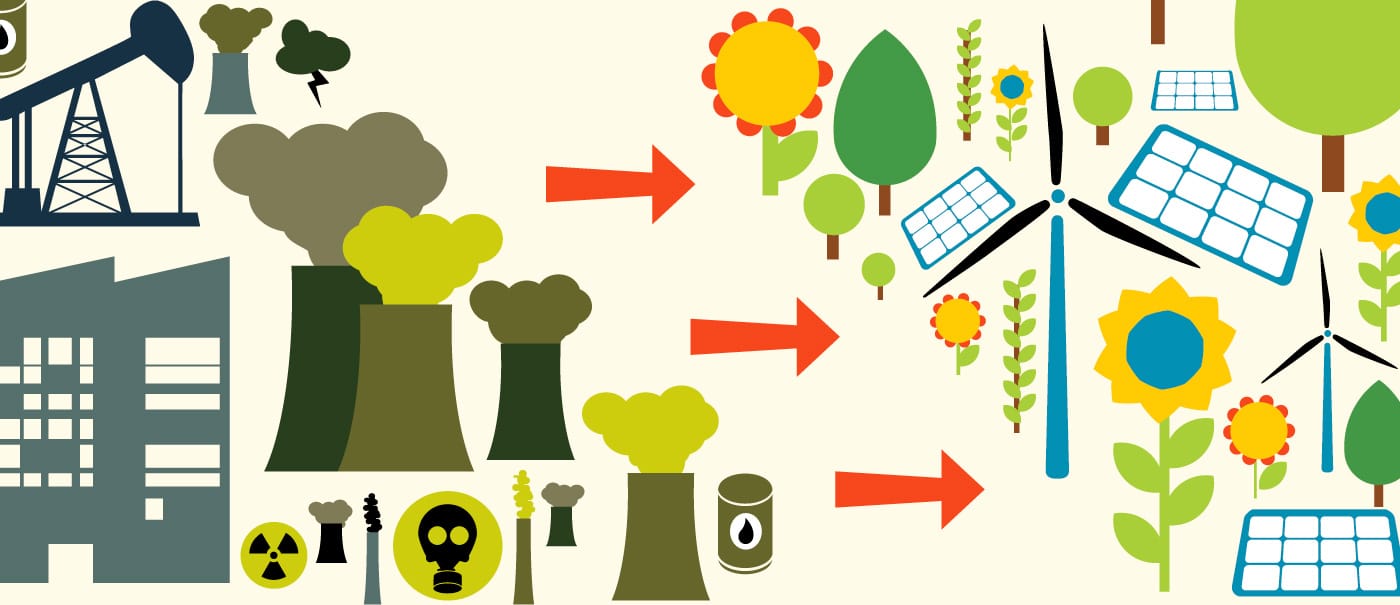
The government is facing yet more calls to slash VAT rates on domestic renewable energy and clean technology systems so as to incentivise the uptake of green solutions that can reduce household carbon emissions and
shield consumers from volatile gas prices.
In a letter to the government yesterday, nearly 30 companies and organisations from across the energy
sector argued steps needed to be taken to bring down the cost of a number of clean technologies, arguing that domestic zero carbon energy systems remained “unaffordable” for many households.
The coalition – which includes the Association for Renewable Energy and Clean Technology (REA), EDF, Nissan, and Ovo Energy – called on the government to slash VAT on a range of domestic energy saving materials, including energy storage systems, domestic EV chargers, heat pumps, and solar PV installations.
Business Green 15th Oct 2021
https://www.businessgreen.com/news/4038700/energy-players-vat-scrapped-green-home-solutions
European Commission urges member states to speed up solar energy deployment
The European Commission (EC) has urged member states to accelerate solar
deployment in order to tackle Europe’s rising electricity prices and has
released a ‘toolbox’ to address the short-term impact of prices and
strengthen resilience against future shocks.
Speaking at a press conference
earlier this week (13 October), the EC Energy Commissioner, Kadri Simson,
called the current situation in Europe, which has pushed energy prices up
to record levels, “exceptional” but urged member states to future proof
their countries from further shocks.
PV Tech 15th Oct 2021
Renewables winning bigtime, as nuclear power stagnates.

“We simply don’t have the time to waste attention, intelligence, manpower and funding for fantasy technologies that might or might not work, more likely, some time in the 2030s or 2040s, while affordable concepts from efficiency to renewables are readily available,” Schneider said, referring to the fourth-generation of nuclear power plants that several governments across the planet are presenting as a viable option. “Gen IV designs are PowerPoint reactors – they don’t exist. And the best example is Bill Gates, who started a company in 2006 to develop and promote a new design. Fifteen years later, he has nothing to show – no licensed design anywhere, no site, no prototype.”
Renewables vs. Nuclear: 256-0 PV Magazine, SEPTEMBER 28, 2021 EMILIANO BELLINI
The latest World Nuclear Industry Status Report shows that the world’s operational nuclear capacity grew by just 400 MW in 2020, with generation falling by 4%. By contrast, renewables grew by 256 GW and clean energy production rose by 13%. “Nuclear power is irrelevant in today’s electricity capacity market,” the report’s main author, Mycle Schneider, told pv magazine.
Global nuclear power capacity including grew by just 400 MW in 2020, according to the latest annual edition of the World Nuclear Industry Status Report, published by French nuclear consultant Mycle Schneider. The lackluster results for nuclear compare to 256 GW of newly deployed renewable energy capacity last year, including 127 GW of PV and 111 of wind power.
Continue readingSizewell C nuclear project no longer viable, with new developments in cheaper wind power- energy expert
Nuclear power has become “outdated by technology” and offshore wind can
produce power more quickly and cheaply, an energy scientist told the BBC.
Professor in energy and climate change Charlie Wilson said there was no
longer a good case for a new £20bn Sizewell C plant on the Suffolk coast.
He said new ways to store wind turbine energy meant supplies could be
maintained even in low winds.
EDF, the firm behind Sizewell C, said nuclearwas key for UK energy needs.
The government said nuclear was vital for the
“UK’s low-carbon energy future”. Prof Wilson, of the the Norwich-based
Tyndall Centre for Climate Change Research at the University of East
Anglia, said nuclear power cost twice as much as wind power. Electricity
generated by wind turbines costs about £40 per megawatt hour, compared to
£92.50 which is the projected cost of the latest nuclear plant being built
at Hinkley Point C in Somerset, he added.
He said in the past nuclear power
was seen as key because in any weather it provides the same baseload power
– baseload refers to the minimum amount of electric power needed to be
supplied to the electrical grid at any given time. “The view in the
1970s-1990s was that you needed this large firm baseload power generation
like nuclear,” he said.
“The game-changing technologies around storage and
flexibility mean intermittent renewables – like large offshore wind farms –
are now viable as a reliable generation source.
BBC 25th Sept 2021
A site once earmarked for nuclear power will now assemble wind turbines

A site once earmarked for nuclear power will now assemble wind turbines, WHYY, This story originally appeared on NJ Spotlight. Tom Johnson, NJ Spotlight, 15 Sept 21,
The New Jersey Economic Development Authority and PSEG have signed a longtime lease on land that is planned to become home to the New Jersey Wind Port — a step enhancing the state’s goal of becoming the hub of a burgeoning offshore wind industry.
The site, located on an artificial island in Lower Alloways Creek in Salem County next to three PSEG nuclear plants, is viewed by the administration of Gov. Phil Murphy as an almost ideal location to serve the supply needs of an offshore wind sector that’s expected to take root up and down the Eastern seaboard.
With an expansive footprint alongside Delaware Bay, lack of height restrictions, and easy access to the Atlantic Ocean’s wind farm lease areas, the Wind Port is one of a few select spots on the East Coast that can accommodate the marshalling, assembly and shipping of the huge turbines used to generate offshore wind power. Hundreds of feet tall, offshore wind turbines cannot fit beneath bridges, power lines and other naturally occurring barriers.
For PSEG, the lease agreement also should prove to be lucrative. The site was once viewed as the location for a fourth nuclear unit. But the company abandoned that concept when it appeared economically unsound. Now it’s looking to use the land to help secure its foothold in the emerging offshore wind industry. PSEG already has a 25% stake in the state’s first offshore wind farm, a 1,100-megawatt facility off Atlantic City to be built by Ørsted……….
“The New Jersey Wind Port is a transformational investment that will create hundreds of good jobs and drive billions of dollars of economic activity in South Jersey and throughout the state,” said EDA Chief Executive Officer Tim Sullivan.
PSEG Chief Operating Officer Ralph LaRossa agreed. “Alongside PSEG nuclear plants, the New Jersey Wind Port will establish South Jersey as the heart of New Jersey economy,’’ he said. “By supporting the development of renewable energy and offshore wind power, this lease will establish New Jersey as the destination for clean energy development, operations, training, skills and innovation.’’
New Jersey has approved three wind projects, including two by Ørsted, one of the largest offshore wind developers, and another by New Shell Ventures and EDF Renewables — all in the Atlantic Ocean. The Murphy administration wants to develop 7,500 megawatts of offshore wind capacity by 2035.
Along the East Coast, offshore investment through 2035 is anticipated to exceed $150 billion, according to the EDA.
The first rule of real estate and offshore wind is location, location, and location,’’ said Doug O’Malley, director of Environment New Jersey. “The New Jersey Wind Port is uniquely positioned to jump start the state’s offshore wind industry and offshore wind in the region.’’ https://whyy.org/articles/a-site-once-earmarked-for-nuclear-power-will-now-assemble-wind-turbines/
Energy Markets Bet Against Nuclear As Election Nears In Japan

Energy Markets Bet Against Nuclear As Election Nears In Japan, Oil Price, By Haley Zaremba – Sep 08, 2021 Japanese Prime Minister Yoshihide Suga shocked the world on Friday when he announced that he will be stepping down and declining to seek re-election after serving one term. ………
one candidate has emerged as a major frontrunner. ….. Taro Kono served as the minister in charge of battling Covid-19 in Japan. It is looking likely that Kono will garner the support of the Liberal Democratic Party (LDP), whose majority in the Japanese parliament ensures that any candidate who heads the party will ultimately win the race for Prime Minister. Kono emerged as the clear frontrunner in Japanese media polls over the weekend that asked respondents to indicate their preferred leader.

It remains to be seen whether Taro Kono will take the helm of Japan, but if he sticks to his guns, the Japanese nuclear energy sector could soon recede into the rearview.
In addition to being known for his role in combating the novel coronavirus pandemic, Kono is also a noted anti-nuclear advocate with a long history of outspoken dissent about the nuclear energy that currently represents a fifth of Japan’s energy mix. Due to this history, the news of Kono’s ascent toward the Prime Minister position on Monday has already sent shockwaves through Japan’s energy markets.
So far, renewable energy markets are winning big. “Frenzied buying from retail traders sent Japan’s renewable energy stocks soaring Monday,” in response to Kono’s emergence as a top contender according to reporting from Bloomberg. Solar and biomass power company Renova Inc. saw its stock increase by 15% while solar firm West Holdings Co. hit an all-time high after its stocks jumped 9%. These gains came at a cost to nuclear energy firms and power companies, and Kansai Electric Power Co. stocks notably dropped 2.7%.
Although the markets have already spoken, it remains to be seen whether Kono will stick to his staunchly anti-nuclear stance if he enters office as Prime Minister. “Whether he will actually reflect his previous stance into his policies once the race for the prime minister position begins is a different story,” Norihiro Fujito, chief investment strategist at Tokyo’s Mitsubishi UFJ Morgan Stanley Securities Co. was quoted by Bloomberg. “The market is just getting ahead of itself.”
…….. Currently, the national plan “calls for renewable sources to provide between 22% and 24% of Japan’s electricity by 2030, and for nuclear energy to provide between 20% and 22%.” But nuclear energy is a hard sell in Japan, a country that is still recovering from the devastating 2011 Fukushima nuclear disaster
Just this week, a full decade after the tragedy caused by an earthquake and ensuing tsunami, the International Atomic Energy Agency is reaching out to Japan to work alongside them in their continuing struggles to manage the radioactive waste still piling up after the 2011 accident. Japan has continued to use more than a million tonnes of water to cool the damaged reactors and prevent a meltdown, and now they’re running out of storage space for the radioactive waste water. Their plan? Dump it into the Pacific Ocean.
The continued complications and hazardous aftereffects of the nuclear disaster at Fukushima throw the dark side of nuclear into stark relief for the Japanese public. ……… It remains to be seen whether Taro Kono will take the helm of Japan, but if he sticks to his guns, the Japanese nuclear energy sector could soon recede into the rearview. https://oilprice.com/Alternative-Energy/Nuclear-Power/Energy-Markets-Bet-Against-Nuclear-As-Election-Nears-In-Japan.html
A Just Recovery Renewable Energy Plan for Africa

Friends of the Earth Africa today launched ‘A Just Recovery Renewable Energy Plan for Africa’ which offers a practical and much-needed opportunity to change the trajectory of energy development, distribution, and access on the African continent.
The report stresses the urgency to democratise energy systems, reduce the power of transnational corporations and enable peoples and communities to access sufficient energy to live a dignified life. The report which was launched during a webinar with key climate justice voices demands a complete shift from current dirty energy systems to achieve 100% Renewable Energy in Africa.
The plan found that it is technically and financially feasible, with an annual investment requirement of around US$130 billion per year. It lays out clear targets for this vision, with over 300GW of new renewable energy by 2030, as agreed
by the African Union, and over 2000GW by 2050. It also shows that the finance and investment needed to achieve the 100% renewable energy goal can be done through public finance from the global North, ending tax dodging and dropping the debt.
All Africa 2nd Sept 2021
In China, wind and solar energy are the clear winners over nuclear.
A Decade Of Wind, Solar, & Nuclear In China Shows Clear Scalability Winners
China’s natural experiment in deploying low-carbon energy generation shows that wind and solar are the clear winners. https://cleantechnica.com/2021/09/05/a-decade-of-wind-solar-nuclear-in-china-shows-clear-scalability-winners/ By Michael Barnard, 6 Sept 21,

My 2014 thesis continues to be supported by the natural experiment being played out in China. In my recent published assessment of small modular nuclear reactors (tl’dr: bad idea, not going to work), it became clear to me that China has fallen into one of the many failure conditions of rapid deployment of nuclear, which is to say an expanding set of technologies instead of a standardized single technology, something that is one of the many reasons why SMRs won’t be deployed in any great numbers.
Wind and solar are going to be the primary providers of low-carbon energy for the coming century, and as we electrify everything, the electrons will be coming mostly from the wind and sun, in an efficient, effective and low-cost energy model that doesn’t pollute or cause global warming. Good news indeed that these technologies are so clearly delivering on their promise to help us deal with the climate crisis.
 |
In 2014, I made the strong assertion that China’s track record on wind and nuclear generation deployments showed clearly that wind energy was more scalable. In 2019, I returned to the subject, and assessed wind, solar and nuclear total TWh of generation, asserting that wind and solar were outperforming nuclear substantially in total annual generation, and projected that the two renewable forms of generation would be producing 4 times the total TWh of nuclear by 2030 each year between them. Mea culpa: in the 2019 assessment, I overstated the experienced capacity factor for wind generation in China, which still lags US experiences, but has improved substantially in the past few years.
My thesis on scalability of deployment has remained unchanged: the massive numerical economies of scale for manufacturing and distributing wind and solar components, combined with the massive parallelization of construction that is possible with those technologies, will always make them faster and easier to scale in capacity and generation than the megaprojects of GW-scale nuclear plants. This was obvious in 2014, it was obviously true in 2019, and it remains clearly demonstrable today. Further, my point was that China was the perfect natural experiment for this assessment, as it was treating both deployments as national strategies (an absolute condition of success for nuclear) and had the ability and will to override local regulations and any NIMBYism. No other country could be used to easily assess which technologies could be deployed more quickly.
In March of this year I was giving the WWEA USA+Canada wind energy update as part of WWEA’s regular round-the-world presentation by industry analysts in the different geographies. My report was unsurprising. In 2020’s update, the focus had been on what the impact of COVID-19 would be on wind deployments around the world. My update focused on the much greater focus on the force majeure portions of wind construction contracts, and I expected that Canada and the USA would miss expectations substantially. The story was much the same in other geographies. And that was true for Canada, the USA and most of the rest of the geographies.
But China surprised the world in 2020, deploying not only 72 GW of wind energy, vastly more than expected, but also 48 GW of solar capacity. The wind deployment was a Chinese and global record for a single country, and the solar deployment was over 50% more than the previous year. Meanwhile, exactly zero nuclear reactors were commissioned in 2020.
And so, I return to my analysis of Chinese low-carbon energy deployment, looking at installed capacity and annual added extra generation.

German utility aims to expand renewables, rejects keeping nuclear reactors open
RWE CEO rejects keeping nuclear power plants open, Reuters DUESSELDORF, Aug 24 – German utility RWE (RWEG.DE) rejected on Tuesday the idea of letting nuclear power plants stay open for longer due to the fact they produce less carbon dioxide.
“We are not available for this,” CEO Markus Krebber told journalists. The German government is paying four nuclear operators – including RWE – nearly 2.6 billion euros ($3.05 billion) in compensation for forcing them to shut their nuclear plants early in response to the Fukushima disaster.
RWE, which used to rely heavily on nuclear power and coal, has transformed itself into one of the largest green power companies in Europe.
Krebber called for a new federal government to accelerate the pace of the shift to renewable energy by increasing targets, expanding the grid and cutting the approval procedures for wind energy plants.
Krebber, who took over as CEO at the end of April, will present his strategy in the fourth quarter, including a new dividend policy: “We are no longer a dividend stock. We are a growth stock,” he said. https://www.reuters.com/business/energy/rwe-ceo-rejects-keeping-nuclear-power-plants-open-2021-08-24/
Renewables are beating nuclear
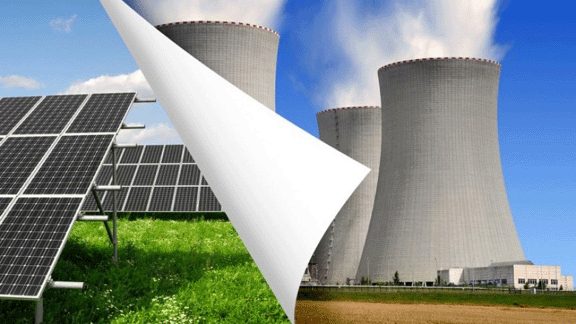
It’s Not a Competition, But Renewables Are Beating Nuclear Anyway, Bloomberg Green By Nathaniel Bullard19 August 2021, Energy giant BP Plc has been publishing its annual review of global energy statistics for seven decades. (I’ve been reading it — and digesting its data — for about a fifth of that time.)
The latest edition published in July is, understandably, quite focused on the largest year-on-year decline in primary energy consumption since 1945. But there’s another finding worth noting: 2020 was the first year in which renewable power generation (excluding hydro) surpassed nuclear power generation.
……..with nuclear generation basically flat since the turn of the century and renewables continuing to grow, the latter caught the former in 2020.
[on original – graph showing dramatic rise in renewable energy, uneven output of nuclear] Compare the shape of the renewables curve to nuclear’s. The perfectly smooth renewables curve is an aggregate of hundreds of geothermal plants, thousands of biomass turbines, a-third-of-a-million wind turbines, and more than a billion photovoltaic modules, installed across numerous global markets. It shows not a single annual decline in more than 50 years.
Nuclear is basically the opposite: a single technology with a small number of plants in an even smaller number of markets. Many discrete decisions — whether to embark on a massive expansion in one market, say, or to shut down generation for years in the wake of disaster — are visible in this chart. There, in 2011, is the Japanese nuclear fleet response to the Tōhoku earthquake and ensuing tsunami. And we don’t need to squint to see the shutdown of six plants last year in the U.S, Sweden, Russia, and France.
This is what the nuclear fleet’s growth trajectory looks like, according to the International Atomic Energy Agency: basically flat in the 21st century, with only four more plants operational now than in 2001.
Nuclear plants are also pretty old. Most were designed for a 40-year useful life, and a lot of them are approaching that age now—a full 45% are between the ages of 31 and 40. There are more nuclear plants older than 46 than there are those under 6.
………. It takes years, sometimes a decade or more, to bring a nuclear plant into full operation, which means that there’s a significant lag between when construction starts and when the finished facility is connected to the grid. New nuclear construction in the U.S. is also running over schedule and over budget, for many reasons………. https://www.bloomberg.com/news/articles/2021-08-19/it-s-not-a-competition-but-renewables-are-beating-nuclear-anyway
An expert explains that the Philippines’ nuclear power plant would be OK, but solar power would be faster and better.
Instead of nuclear power, why not solar power? https://opinion.inquirer.net/143165/instead-of-nuclear-power-why-not-solar-power Philippine Daily Inquirer August 17, 2021, Last July 8, Peter Wallace wrote in his column about nuclear power plants being safe and that there are many countries operating their nuclear power plants safely over the last 50 years: the United States, Germany, Taiwan, Japan. etc.
I agree about recommissioning the Bataan nuclear plant. As a chemical engineer, I can say that we have enough controls to operate it safely.
However, reviving the Bataan plant will take at least five years. Why not recommend the use of solar panels instead, per Republic Act No. 11285 or the Energy Efficiency and Conservation Act, which requires building owners to use renewable sources like solar? The Philippines is the only country in the world with 2,000 hours of sun per year.
Germany went on to use solar panel systems on roofs and, in a short period of time, four million houses have been generating power, resulting in the shutdown of many coal plants. In the United States, New York appointed an energy czar to speed up the use of renewable energy.
Australia gives incentives to households that use solar batteries. lberdrola Spain has made tremendous progress on the use of renewable energy, becoming one of the top five electric utility companies in the world. Portugal and Spain have invested in photovoltaic battery storage systems.
Comparing the costs of nuclear and solar power
Solar challenging nuclear as potential climate change solution https://www.pv-magazine.com/2021/08/09/solar-challenging-nuclear-as-potential-climate-change-solution/
Research suggests that we can power 80% of the United States with wind, solar, and 12 hours of energy storage, but the replacement of nuclear power plants hasn’t been financially viable. Is that about to change?AUGUST 9, 2021 JOHN FITZGERALD WEAVER Nuclear power delivers almost 20% of all electricity in the United States, and about 50% [ if you don’t count the uranium-nuclear fuel chain] of all low-emission electricity. Moreover, the United States has almost 100 nuclear power units operating more than 90% of the time, providing a steady base of power generation.
But moving forward, it seems nuclear has lost its swagger. Price increases, project delays, and cancellations have caused what may prove to be generational damage to nuclear power’s reputation. pv magazine USA has previously reported on industry pricing models, showing nuclear’s lagging pricing.
Now, Georgia Power’s Vogtle Unit 3 and Unit 4 – the nation’s only nuclear generating units currently under construction – have announced further delays and price increases. Conservative cost estimates suggest the two 1.117 GW facilities will require at least $30 billion to complete, including $3 billion in finance costs and $27 billion in construction costs.
Solar+storage costs
As solar and energy storage professionals, we must be conscious of the limitations of the sun, and the cost of energy storage. As we all know, the sun also sets. And while research suggests we can power 80% of the U.S. with wind, solar, and 12 hours of energy storage, being able to replace a nuclear power plant that runs 24/7/365 in wind, rain, snow, and sleet simply hasn’t been financially viable.
But is it today?
The chart above [ on original] shows the price of solar panels from 1976 through the end of 2019. Here, we see prices fall by more than 99.8% from over $100 per watt down to nearly $0.20 per watt. Below, we see the price of battery packs starting in 2010 and ending in 2020, based on data from Bloomberg New Energy Finance. Here, we see costs fall from $1,191/kWh to $137/kWh – a price decrease of greater than 88%.
In both cases, we can expect prices to continue trending downward in both the middle and long term. And so, what can we expect to pay when we replace a nuclear power plant with solar power plus batteries?
Cash to spend
The chart above [ on original] shows the price of solar panels from 1976 through the end of 2019. Here, we see prices fall by more than 99.8% from over $100 per watt down to nearly $0.20 per watt. Below, we see the price of battery packs starting in 2010 and ending in 2020, based on data from Bloomberg New Energy Finance. Here, we see costs fall from $1,191/kWh to $137/kWh – a price decrease of greater than 88%.
In both cases, we can expect prices to continue trending downward in both the middle and long term. And so, what can we expect to pay when we replace a nuclear power plant with solar power plus batteries?
Cash to spend
In order to replace the two nuclear plants while the sun is down, the batteries would need to replicate two 1.117 GW power sources for 16 hours. The total energy storage capacity would be 39.3 GWh, after we add an extra 10% for safe measure.
Roughly speaking, the total cost of these solar+storage facilities would be:
- $8.4 billion for 10.55 GWdc of solar power, fully installed at $0.80/watt
- $527 million for hypothetical power grid upgrades at $0.05/watt
- $7.8 billion for 39.3 GWh of energy storage fully installed at $200/kWh
- Around $16.8 billion grand total, no incentives
So, Georgia, pv magazine USA just saved you more than $13 billion (as of today, anyway).
Some caveats
It’s almost certain that a solar facility of this magnitude – roughly 27,000 acres, or around 0.07% of Georgia’s land – would be split among many landowners in the state. If land lease rates in Georgia are comparable to what might be earned in Pennsylvania, the project could provide as much as $27 million per year in income to Georgia landowners for decades to come.
Furthermore, the solar power plants would start generating electricity and revenue within about three years of the first signature, and two years after groundbreaking. The new Vogtle reactors began construction in 2013 (planning began much earlier), and are projected to complete in 2022-23.
With these considerations in mind, the repowering costs to get a solar+storage facility to a 40 to 80-year lifetime would likely be offset by the fact that the solar facility will enter service at least eight years earlier than the equivalent nuclear site. Additionally, during the solar plant’s operating lifetime, it saves massive amounts of regular operations and maintenance costs,
as well as specialist engineer labor costs. The nuclear facility will easily last 40 years, and potentially as long as 80. However, the ongoing operations and maintenance costs are significant, as well as upgrades and equipment replacements that start to become necessary after 40 years. And sometimes, those $1 billion dollar upgrades go wrong, and a nuclear power plant gets trashed.
When we do repower the batteries and solar panels, they almost certainly will be cheaper, and operate at a higher efficiency, likely stretching the life of the solar facility to 50+ years. Again, this solar+storage facility would generate 20% more juice in the summer (when the power is needed most in Georgia) because we oversized it for the winter.
In the end, it would be best if we had a healthy ecosystem of clean energy generation systems that include nuclear [but nuclear is not clean]. However, if we’re going to debate the costs of nukes vs. solar, then it is no longer a discussion.
US Renewables Generated More Power Than Coal Or Nuclear In 2020 For First Time
US Renewables Generated More Power Than Coal Or Nuclear In 2020 For First Time, IFL SCience, Jack Dunhill, 3 Aug 21, Renewables produced more power than coal or nuclear power in the USA last year for the first time in history, according to a new report by the Energy Information Administration. With surges in wind, solar and hydroelectric power, the renewable industry produced 21 percent of all electricity generation in the US last year, a massive increase over the previous decade.
Over the past year, the US has seen record growth in renewable power generation, adding 26 gigawatts of production capability in 2020 alone, 80 percent more than 2019. Combined with previous infrastructure, it brought the total renewable power production up to 170 gigawatts, which edged out both nuclear and coal by just a few percent (20 percent and 19 percent of total energy production, respectively). ….. https://www.iflscience.com/environment/us-renewables-generated-more-power-than-coal-or-nuclear-in-2020-for-first-time
Australia’s carbon emissions down 20% due to wide take-up of renewable energy

Telegraph UK, 29th July 2021, For Australia’s part, our experience with technology-orientated pathways
gives us confidence that with the right investments and partnerships, a prosperous net-zero world is well within our reach.
On the ground, our real-world rollout of renewables has made clear to Australian firms and families the immense benefits of investing in clean technology. Because of their embrace of our new energy future, Australia’s emissions are down over 20 per cent on 2005 levels and green technology continues to be taken
up at record levels right across our nation.
https://www.telegraph.co.uk/news/2021/07/29/technology-key-free-prosperous-net-zero-world/
1 This Month
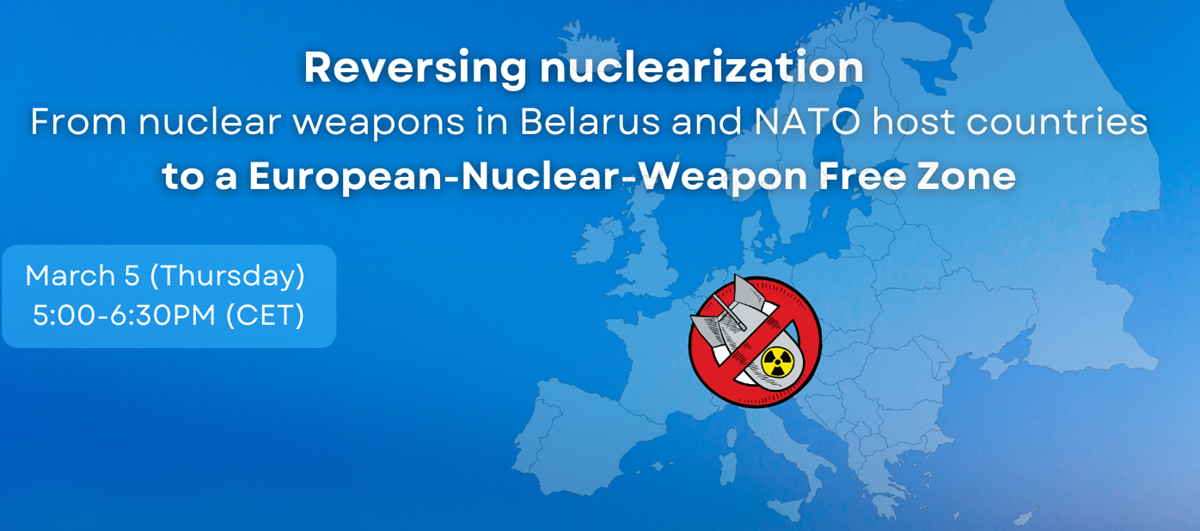
5 March -Online – Reversing nuclearization:
From nuclear weapons in Belarus and NATO host countries to a European-Nuclear-Weapon Free Zone
11am-12:30pm Eastern Time USA / 5pm-6:30pm CET

of the week – Advocating for a
nuclear free beach – https://www.samuellawrencefoundation.org/
The Samuel Lawrence Foundation advocates for a Nuclear Waste Free Beach at San Onofre, join us and take action!

10 March A LIVE WEBINAR THE REAL EFFECTS OF NUCLEAR POWER
What the Industry Isn’t Telling Us
1:00 PM Mountain, 2 pm Central, 3 pm Eastern. Live on the Keepers of the Water Facebook page


18 March Webinar @ 1 PM EST: An Assessment of SMR Projects: The Case of Canada
register for the zoom:
https://us02web.zoom.us/webinar/register/WN_o8BIIOUvQ2ONJR1nta65DQ#/registration

of the week – STOP SMALL MODULAR REACTORS IN CANADA
To see nuclear-related stories in greater depth and intensity – go to https://nuclearinformation.wordpress.com
-
Archives
- March 2026 (51)
- February 2026 (268)
- January 2026 (308)
- December 2025 (358)
- November 2025 (359)
- October 2025 (376)
- September 2025 (258)
- August 2025 (319)
- July 2025 (230)
- June 2025 (348)
- May 2025 (261)
- April 2025 (305)
-
Categories
- 1
- 1 NUCLEAR ISSUES
- business and costs
- climate change
- culture and arts
- ENERGY
- environment
- health
- history
- indigenous issues
- Legal
- marketing of nuclear
- media
- opposition to nuclear
- PERSONAL STORIES
- politics
- politics international
- Religion and ethics
- safety
- secrets,lies and civil liberties
- spinbuster
- technology
- Uranium
- wastes
- weapons and war
- Women
- 2 WORLD
- ACTION
- AFRICA
- Atrocities
- AUSTRALIA
- Christina's notes
- Christina's themes
- culture and arts
- Events
- Fuk 2022
- Fuk 2023
- Fukushima 2017
- Fukushima 2018
- fukushima 2019
- Fukushima 2020
- Fukushima 2021
- general
- global warming
- Humour (God we need it)
- Nuclear
- RARE EARTHS
- Reference
- resources – print
- Resources -audiovicual
- Weekly Newsletter
- World
- World Nuclear
- YouTube
-
RSS
Entries RSS
Comments RSS
 nuclear-news