Spain and Portugal stand out from the European Union, in slashing energy bills because of their high renewable energy use
Spain and Portugal have broken ranks with the EU to allow themselves the
space to slash their energy bills by 40 per cent. The move is being allowed
because both southern European countries have a large amount of renewable
energy and aren’t as reliant on fossil fuels as the rest of the Continent.
MSM 31st May 2022
Canada can achieve 100% zero-emission electricity by 2035 – with renewable energy, storage, energy efficiency , and interprovincial transmission
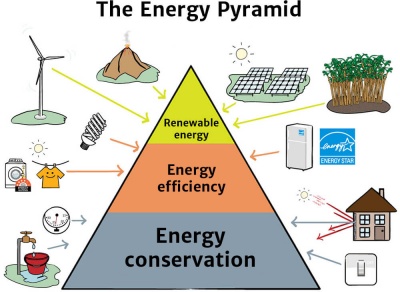
| Canada can achieve 100% zero-emission electricity by 2035 with an electricity system that prioritizes renewable energy, storage, energy efficiency, and interprovincial transmission and avoids the pitfalls of nuclear generation, fossil gas, carbon capture and storage, and carbon offsets, the David Suzuki Foundation (DSF) concludes in a modelling study released this week. And the authors note two equally important dimensions of the transition: decolonizing power to benefit Indigenous peoples, and engaging with communities at the outset to save precious time and money. “At a time when energy security and affordability are top of mind for many Canadians, this report shows that a clean electricity pathway based on renewables offers an affordable option for ambitiously reducing emissions while meeting increasing electricity demand,” the Foundation writes. The Energy Mix 27th May 2022https://www.theenergymix.com/2022/05/27/canada-can-hit-100-zero-emission-electricity-by-2035-without-nuclear-ccs-report-finds/ |
EU hits fast forward on renewables, including “massive deployment” of solar

Spurred by Russia’s invasion of Ukraine, European Commission unveils massive scaling-up and speeding-up of renewable energy, with solar as the “kingpin.” The post EU hits fast forward on renewables, including “massive deployment” of solar appeared first on RenewEconomy.
EU hits fast forward on renewables, including “massive deployment” of solar — RenewEconomy
Energy saving and renewables to create many more jobs than nuclear could.

Dave Elliott: Renewable energy has the potential to create twice as many
jobs as nuclear, and three times as many jobs per million pounds invested
compared to gas or coal power, while investment in energy efficiency can
create five times as many.
So says a new UK Energy Research Centre study of
Green Job Creation, based on a new review of the literature. It’s an
update to their earlier 2014 low carbon energy & employment study. That was
a bit more cautious about making final pronouncements, since, it said, it
was difficult to assess net economy-wide impacts over time. For example,
though some sectors might benefit more than others, if there was full
employment, new investment was unlikely to create extra jobs net of any
losses. A bit sniffily it said ‘the proper domain for the debate about
the long-term role of renewable energy and energy efficiency is the wider
framework of energy and environmental policy, not a narrow analysis of
green job impacts.’
In reality, we can’t just chase for the optimal
number of green jobs. The choice of technology will be made mostly on the
basis of a range of other issues- although, as UKERC says, job quality is
also important if we want to move to a socially and environmentally
sustainable future, a point I have developed in a recent study. We need
good, sustainable jobs as part of a global ‘just transition’.
Renew Extra 14th May 2022
https://renewextraweekly.blogspot.com/2022/05/renewables-energy-saving-create-most.html
In 2021 USA’s renewable power generation exceeded it nuclear generation.
The US Energy Information Administration reports that power sector
generation from renewable sources totalled 795 million MWh in the USA
during 2021, overtaking nuclear generation, which totalled 778 million MWh.
The US electric power sector does not include some electricity generators
in the industrial, commercial, or residential sectors, such as small-scale
solar or wind or some combined-heat-and-power systems. Renewable generation
includes electricity generated from wind, hydropower, solar, biomass, and
geothermal sources.
Natural gas remained the most prevalent source of
energy for electricity generation, accounting for 1474 million MWh in 2021.
Although several US coal-fired power plants retired in 2021, coal-fired
generation increased for the first time since 2014 and was the source of
more electricity than either renewables or nuclear power. Total electricity
generation increased slightly in 2021, but it remained less than its
record-high year of 2018.
Modern Power Systems 3rd May 2022
https://www.modernpowersystems.com/news/newsus-renewables-generation-has-overtaken-nuclear-9670031
Photovoltaics vs. nuclear power on Mars

Photovoltaics vs. nuclear power on Mars https://www.pv-magazine-australia.com/2022/04/29/photovoltaics-vs-nuclear-power-on-mars/
Solar might be more efficient than nuclear energy to supply power for a six-person extended mission to Mars that will involve a 480-day stay on the planet’s surface before returning to Earth, according to new US research.
APRIL 29, 2022 EMILIANO BELLINI Researchers at the University of California, Berkeley, have compared how PV or nuclear energy could power a crewed outpost for an extended period on Mars and have determined that solar offers the best performance.
“Photovoltaic energy generation coupled to certain energy storage configurations in molecular hydrogen outperforms nuclear fusion reactors over 50% of the planet’s surface, mainly within those regions around the equatorial band, which is in fairly sharp contrast to what has been proposed over and over again in the literature, which is that it will be nuclear power,” said UC Berkeley researcher Aaron Berliner, noting that two energy sources were compared for the power supply of a six-person extended mission to Mars involving a 480-day stay on the planet’s surface before returning to Earth.
The US team considered four different scenarios: nuclear power generation with the miniaturised nuclear fission Kilopower system, PV power generation with battery energy storage, PV power generation with compressed hydrogen energy storage produced via electrolysis, and hydrogen generation with compressed hydrogen energy storage (PEC).
In our calculations, we assumed a capacity factor of 75% to account for the solar flux deviation throughout the Martian year and sized energy storage systems to enable 1 full day of operations from reserve power,” the group explained. “We then calculated the carry-along mass requirements for each of the power generation systems considered.”
The scientists found that, of the three PV-based power generation options, only the photovoltaics-plus-electrolyser system outcompetes the nuclear system based on carry-along mass. They also said that the optimal absorber bandgaps for the PV systems depend heavily on the location on the surface of Mars, the total depth of the air column above a given location, gradients in dust and ice concentrations, and orbital geometry effects that cause different effective air column thicknesses for locations near the poles.
In our calculations, we assumed a capacity factor of 75% to account for the solar flux deviation throughout the Martian year and sized energy storage systems to enable 1 full day of operations from reserve power,” the group explained. “We then calculated the carry-along mass requirements for each of the power generation systems considered.”
The scientists found that, of the three PV-based power generation options, only the photovoltaics-plus-electrolyser system outcompetes the nuclear system based on carry-along mass. They also said that the optimal absorber bandgaps for the PV systems depend heavily on the location on the surface of Mars, the total depth of the air column above a given location, gradients in dust and ice concentrations, and orbital geometry effects that cause different effective air column thicknesses for locations near the poles.
For the first time, U.S. renewable energy output exceeds nuclear generation, EIA finds

Utility Dive, By Elizabeth McCarthy. 28 Apr 22,
Dive Brief:
- The growing number of large solar and wind energy projects resulted in renewable generation beating out nuclear energy last year, the U.S. Energy Information Administration said on Tuesday.
- The nation has seen a steady rise in renewable generation, with the biggest share from solar, which is expected to continue because of the lower cost and greater safety of this intermittent power resource, clean energy advocates say. That is despite the Biden administration’s multi-billion dollar program to keep online baseload nuclear power plants scheduled to retire.
- Natural gas supplies the biggest share of electricity in the county but its share is also expected to decrease over the next three decades. EIA projects solar will replace it as the dominant source of generation in the U.S. by 2050.
- Dive Insight:Utility-scale renewable generation in the U.S. reached 795 million MWh in 2021, compared to 778 million MWh of nuclear generation.“This is a ‘good news’ story,” said Ralph Cavanagh, Natural Resources Defense Council energy program co-director.
- The news gets better for renewables when considering that private investments in clean technology rose to over $27 billion in 2021, up from about $20 billion in 2020, according to a report by the American Investment Council released last week. Private equity companies over the last decade have invested close to $150 billion and backed more than 1,000 clean technology companies in the U.S., it added.
- The biggest mover on the U.S. generation front has been solar as installation costs have dropped 70% over the last decade. That has led “the industry to expand into new markets and deploy thousands of systems nationwide,” according to a Feb. 11 joint statement by the Edison Electric Institute, NRDC and the Solar Energy Industries Association. Supply chain issues pushed up prices last year “but did not eliminate solar power’s competitive advantages in retail and wholesale markets,” the organizations wrote in their joint statement to the National Association of Regulatory Utility Commissioners. EIA’s April 26 analysis does not include rooftop solar or other smaller renewables serving predominantly onsite demand. Factoring in just “end-use solar, the milestone for surpassing nuclear generation would have been reached earlier,” said Syne Salem, an EIA engineer. The tally also excludes small-scale wind and some industrial and commercial combined-heat-and-power systems.
- U.S. nuclear electricity generation fell to its lowest level in a decade, EIA reported, with the retirement of one reactor in 2021, New York’s Indian Point 1040 MW Unit 3. Nuclear generation made up 19% of the electric generation last year and it’s expected to fall to 12% by 2050, EIA concluded.Since 2013, a dozen nuclear units have retired in the U.S. and the decline is projected to continue despite the Department of Energy’s$6 billion program to help extend their operating life.. The owners of three plants that could tap into those DOE funds, Entergy and Pacific Gas & Electric, are continuing to decommission them. The only new nuclear plant being built is the 2,228 MW Vogtle project in Georgia that has seen big cost overruns and delays……………………….. https://www.utilitydive.com/news/for-the-first-time-us-renewable-energy-output-exceeds-nuclear-generation/622899/
Energy Department’s own survey shows 8 in 10 Britons support onshore wind – and the Nuclear Free Local Authorities says the Government should back it
Whilst government ministers continue to deride onshore wind as
‘unpopular’, the energy department’s recent public survey shows
otherwise – with 8 in 10 Britons surveyed expressing their support for
the technology, over twice the number endorsing new nuclear – leading the
Nuclear Free Local Authorities (NFLA) to urge the UK government to back it.
The Department for Business, Energy & Industrial Strategy (BEIS) has
collected data every quarter since 2012, recording responses from the
public to a range of energy related questions. The latest public attitude
survey was carried out over the Winter of 2021/22 and published at the end
of last month.
The results reveal continued strong support for renewables,
with onshore wind receiving a favourable response. Contrary to the myth
that onshore wind is unpopular, only 4% of those surveyed registered their
opposition, with 8 in 10 saying they supported it. By way of contrast only
37% of participants supported the development of nuclear energy and only
17% supported the resumption of fracking for shale gas. The government’s
own UK Energy Security Strategy concedes that ‘Onshore wind is one of the
cheapest forms of renewable power’, yet there has been no public funding
made available, nor any target for new generation set, with only a vague
promise to ‘consult this year on developing local partnerships for a
limited number of supportive communities who wish to host new onshore wind
infrastructure in return for benefits, including lower energy bills’.
NFLA 20th April 2022
Constant cheap renewable power to Britain – the Sahara wind and solar cables

Within five years, the world’s longest undersea cable will link Devon to
a vast territory of solar panels in the Sahara Desert, supplying
electricity directly into Britain’s grid at a fraction of today’s power
prices. A second cable will land two years later in 2029.
Together they will provide 3.6 gigawatts (GW) of constant baseload power, equivalent to
two Hinkley-sized nuclear reactors. The difference is that we will be able
to afford it.
That, at least, is the plan. The £16bn Xlinks Morocco-UK
Power Project – chaired by former Tesco chief Sir Dave Lewis – has an
elegant feature. It combines wind and solar in perfect geographic
circumstances to make near-constant power for 20 hours a day.
Trade winds on the coast of North Africa raise the average “capacity factor” of
onshore wind turbines to 54pc. A desert convection effect creates a regular
wind current in the early evenings and smooths the handover from solar to
wind. “It picks up every afternoon just as the sun is setting,” said
Simon Morrish, the project’s chief executive.
This overcomes the curse of intermittency, with lithium batteries in the desert to cover the remaining
gaps. Xlinks will be a park of 580 square miles at Guelmim Oued Noun on the
28th parallel south of Agadir, picked because it is at the top of the
global horizontal irradiance index. The yield is three times higher than in
the UK. The sun shines for 10 hours a day in winter. “The space is
unlimited. We could in theory put up 500 of these projects in Morocco,”
he said. The consortium is already planning a second hub to power Benelux.
It could multiply the scale several times over for the UK, constrained only
by the safe limits of energy security.
Telegraph 20th April 2022
Once Rocked by Nuclear Disaster, Fukushima Is Now a Renewables Hub
https://e360.yale.edu/digest/once-rocked-by-nuclear-disaster-fukushima-is-now-a-renewables-hub, 15 Apr 22,
More than a decade after a major nuclear power plant disaster, Fukushima, Japan is seeing extensive renewable energy development on abandoned lands, as satellite imagery from NASA shows.
When an earthquake and resulting tsunami hit the Fukushima Daiichi Nuclear Power Plant in 2011, damaged reactors released radioactive material into the surrounding area, rendering large swaths of farmland unusable. Today, some of those fields are home to sprawling solar arrays.
The Fukushima prefecture has set a goal of 100 percent renewable power by 2040. Around 40 precent of its power currently comes from renewables, with plans underway to spend $2.75 billion on the development of 11 solar farms and 10 wind farms on contaminated or abandoned lands.
“A strong desire to never see a repeat of such an accident was the most important starting point” for Fukushima’s renewable push, Noriaki Saito, energy director at the prefecture’s planning department, told AFP.
UK’s energy strategy ”cowardly and incoherent” – solar and onshore wind are the practical options
Michael Grubb: The writer is professor of energy and climate change at
University College London and was former senior adviser to energy regulator
Ofgem.
The UK energy strategy is both cowardly and incoherent. The defining
feature of the UK energy strategy is its incoherence. It does not know what
problem it is trying to solve – and thus it does not solve any. By
failing to boost energy efficiency and kicking the only possible short-term
supply option – that of cheap onshore wind – into the long grass, it
most certainly will not help those struggling with energy bills in the
coming winters.
Offshore wind is the great success story of the past decade
and capacity has grown sharply in recent years. The strategy increases the
offshore target for 2030 from 40GW to 50GW. That’s very ambitious but
possible. But offshore wind involves big and complex kit from only a few
suppliers, it usually takes three to five years from bid to completion, and
the pace of expansion could stress supply chains and drive up costs. If it
were all concentrated in the North Sea, there would be immense challenges
for the grid – both in transmission and in managing the peaks and
troughs. Wind is best when distributed more widely.
The most cowardly failure concerns onshore wind. It is not only our cheapest energy resource
– it typically costs about a third to a quarter of what people will soon
be paying for their electricity – but it is, with solar, the only one
that could make a dent in the short term. The strategy outlines a plan for
nuclear to 2050, kicked off with one new plant to be funded before the next
general election. If it takes an energy crisis to actually make a decision,
so be it, but it will not help solve the crisis.
Nuclear is not only slow
and expensive, it would need to be flexible to ramp up and down with the
swings of demand, wind and solar. This further undermines the economics.
Launching a 30-year plan for nuclear also raises the question – why
can’t the government set out even a coherent 30-month plan for energy
efficiency?
FT 10th April 2022
https://www.ft.com/content/3fe73617-5f8f-4b70-8856-ca53e2ec92b3
UK government got its energy strategy so wrong
‘Major misjudgment’: how the Tories got their energy strategy so wrong. Analysis: betting big on nuclear, hydrogen, oil and gas while passing over energy saving measures, Johnson’s plan is a huge missed
opportunity.
Government industrial strategies are often derided as attempts to pick winners. The UK’s Conservative government has taken a different approach with its new energy strategy. In terms of dealing with the energybill and climate crises, it’s picking losers.
Nuclear power is the only major energy technology that has increased in cost in the last decade and
routinely suffers from massive time and budget overruns. Even Kwarteng acknowledges that France’s large nuclear fleet “cost a fortune”. The gamble Johnson is making, with taxpayers’ money, is that nuclear power is a more reliable wager to secure clean future power than renewables and fast-developing energy storage technologies. It’s a long shot.
Renewables and storage will develop much faster and get much cheaper due to the rapid learning that comes with small-scale technologies, unlike colossal projects
like nuclear.
Guardian 6th April 2022
” Renewable Energy Foundation (REF)” – strongly linked to anti-wind power lobby

Charity linked to UK anti-onshore wind campaigns active again. While the
name of the Renewable Energy Foundation (REF) suggests it is a charity
dedicated to promoting low-carbon electricity, it appears to spend most of
its time campaigning against onshore wind.
When it was founded in 2004,
with the TV personality Noel Edmonds as its chair, the organisation was
clear it wanted to fight against the “grotesque political push” for
onshore renewable energy in the UK. It styles itself on its website as “a
registered charity promoting sustainable development for the benefit of the
public by means of energy conservation and the use of renewable energy”.
However, many in the energy sector believe the charity to be full of
anti-wind lobbyists. In 2008, the REF had what it described as a
“dialogue” with the Charity Commission over whether it was violating
its charitable status by being too political in its campaigning. The
Charity Commission said it assessed the complaint relating to the REF’s
campaigning activities and determined there was no evidence that it was not
charitable, but also provided guidance about how to achieve its objectives
as an organisation.
The REF has strong links to a group accused of climate
science scepticism, the Global Warming Policy Foundation, started by the
former chancellor Nigel Lawson, who has denied global heating is a problem.
Prof Michael Kelly, a trustee of the REF also has a position on the board
of the GWPF. John Constable, an adviser to the GWPF, has been quoted as an
REF spokesperson and was previously its director of policy and research.
Constable answered the Guardian’s questions for this article on behalf of
the REF.
While the REF has been relatively quiet in recent years, growing
pressure on the government to support wind energy to help solve the energy
crisis seems to have led to it becoming more active again. In recent weeks,
the charity has provided anti-onshore wind research to the Telegraph and
Daily Mail. Colin Davie, a trustee of the REF, has appeared on Radio 4’s
Today programme to oppose onshore wind. Constable added that the REF had
“no blanket policy” on renewables – but that the charity did not see
them as a large part of the net zero strategy. He added: “Each proposal
must be judged on its own merits, and providing that local environmental
concerns offer no obstacle, niche applications may be suitable, as they may
be for all renewables.”
Guardian 5th April 2022
Portugal to speed up switch to renewable power in wake of Ukraine war
https://www.reuters.com/business/sustainable-business/portugal-speed-up-switch-renewable-power-wake-ukraine-war-2022-04-01/?fbclid= By Sergio Goncalves,
LISBON, April 1 (Reuters) – Portugal aims to accelerate its energy transition and increase the proportion of renewable sources by 20 percentage points to 80% of its electricity output by 2026, four years earlier than previously planned, the government said on Friday.
As part of a global shift away from carbon-emitting fossil fuels, countries are betting on renewable energies such as wind and solar, a transition that is being accelerated in Europe after Russia’s invasion of Ukraine.
The new Socialist government that was sworn in on Wednesday, said in its overall programme released on Friday that the energy plans should mobilize more than 25 billion euros of investment in the next 10 years, involving public and private players, incentives and financing.
“Portugal has already taken very significant measures in the energy transition, but the evolution and duration of the war in Ukraine must necessarily imply new measures,” Cabinet Minister Mariana Vieira da Silva told a news conference.
The country, committed to become carbon neutral by 2050, currently gets 60% of its electricity from renewable sources – one of the largest proportions of green energy use in Europe.
Unlike central European countries, Portugal does not depend on Russian natural gas pipelines, as it mainly imports liquefied natural gas from Nigeria and the United States, and has not imported Russian crude since 2020.
The government also wants to “more than double the installed capacity of renewable sources in the next decade”.
Portugal, which closed its two coal-fired power plants last year, has 7.3 GW of hydroelectric capacity and 5.6 GW of onshore wind parks, which together represent 83% of its total installed capacity. Reporting by Sergio Goncalves Editing by Andrei Khalip and Frances Kerry
The Nuclear Free Local Authorities (NFLA) of the UK and Ireland call for truly green energy on old nuclear sites
NFLA endorses call for real green energy on former nuclear sites
The Nuclear Free Local Authorities (NFLA) of the UK and Ireland has called for renewable technologies to be used to produce ‘real green energy’ on land formerly occupied by now decommissioned nuclear power plants.
The NFLA was pleased to see the Nuclear Decommissioning Authority (NDA), the agency charged with making safe and clearing closed civil nuclear plants, committing itself in its latest draft Business Plan to being a ‘net (carbon) zero’ business, but disheartened by the lack of detail.
In its response to the consultation on the plan concluded today by the NDA, the NFLA hopes that ‘active consideration can be given to generating onsite power and heat to support decommissioning operations using renewable technologies.
Councillor David Blackburn, Chair of the NFLA Steering Committee, said:
“We are surprised that the NDA has not picked up on the obvious. The land formerly occupied by nuclear power plants, whilst not being so attractive for residential, leisure or office developments, has great potential to be the location for solar farms, wind turbines and ‘green’ hydrogen. Or, where these plants are located by the sea, even to support offshore generation through being a support base for wind farms and tidal schemes. By their nature, nuclear plants are also linked to the electricity grid. Why not use their geographical situation and infrastructure for ‘real green’ energy generation?”
In its draft Business Plan, the NDA has indicated that the following land on each of these redundant power plant sites has now been ‘de-designated’ from nuclear use: Berkeley – 11 hectares; Harwell – 23 hectares; Oldbury – 32 hectares; Winfrith – 10 hectares; and Capenhurst – 17 hectares, but over the next decade all of the UK’s remaining outdated Advanced Gas Cooled reactors will be closed and decommissioning will begin, a process that will take over 100 years.
Councillor Blackburn added: “Clearly NDA operatives will be on-site for a long-time so an investment in micro-generation schemes, such as roof-mounted solar, a solar farm or wind turbines, would pay for itself many fold. Not only would the NDA reap the dividend of generating renewable power to support decommissioning operations, but it would also reduce the agency’s carbon footprint. And as 1,043 hectares is expected to be eventually freed up, there is no reason that the agency could not become a net exporter of renewable energy to the National Grid.”
In its response, the NFLA references a community-owned renewable energy provider which has a 915 KW solar farm on a 1.6 hectare site, and points out that the Oldbury ‘de-designated land’ is 32 hectares, enough to theoretically host twenty such schemes. For more information please contact: Richard Outram, Secretary, NFLA email Richard.outram@manchester.gov.uk / mobile 07583 097793
1 This Month

of the week – Shut Down Drone Warfare!


Tell the Ukrainian Government to Drop Prosecution of Peace Activist Yurii Sheliazhenko

Petition to revoke the licensing of the Near Surface Nuclear Disposal Facility (NSDF) at Chalk River. https://www.ourcommons.ca/petitions/en/Petition/Details?Petition=e-7247
To see nuclear-related stories in greater depth and intensity – go to https://nuclearinformation.wordpress.com
-
Archives
- April 2026 (7)
- March 2026 (251)
- February 2026 (268)
- January 2026 (308)
- December 2025 (358)
- November 2025 (359)
- October 2025 (376)
- September 2025 (257)
- August 2025 (319)
- July 2025 (230)
- June 2025 (348)
- May 2025 (261)
-
Categories
- 1
- 1 NUCLEAR ISSUES
- business and costs
- climate change
- culture and arts
- ENERGY
- environment
- health
- history
- indigenous issues
- Legal
- marketing of nuclear
- media
- opposition to nuclear
- PERSONAL STORIES
- politics
- politics international
- Religion and ethics
- safety
- secrets,lies and civil liberties
- spinbuster
- technology
- Uranium
- wastes
- weapons and war
- Women
- 2 WORLD
- ACTION
- AFRICA
- Atrocities
- AUSTRALIA
- Christina's notes
- Christina's themes
- culture and arts
- Events
- Fuk 2022
- Fuk 2023
- Fukushima 2017
- Fukushima 2018
- fukushima 2019
- Fukushima 2020
- Fukushima 2021
- general
- global warming
- Humour (God we need it)
- Nuclear
- RARE EARTHS
- Reference
- resources – print
- Resources -audiovicual
- Weekly Newsletter
- World
- World Nuclear
- YouTube
-
RSS
Entries RSS
Comments RSS
 nuclear-news