Focus on renewables, not nuclear, to fuel Canada’s electric needs

Relying on nuclear power goes against the evidence. The smart money is on renewables. Solar and wind energy make much more sense.
Policy Options, by Martin Bush, September 1, 2023
The demand for electricity continues to rise as countries transition to an electrified economy. To ensure an adequate and reliable supply during peak hours, governments must decide which energy technologies should be prioritized and developed to help with this transition.
Nuclear power is certainly in the running for providing this essential service, but it’s not the best option. Refurbishing aging CANDU reactors and investing in unproven nuclear technology, such as small nuclear reactors (SMRs), will waste money that could otherwise be invested in renewable energy solutions.
That’s where the smart money is – renewables – and all the evidence points to why. Electricity from nuclear energy is too expensive.
According to the World Nuclear Industry 2022 Status Report, nuclear energy’s share of global electricity generation in 2021 was 9.8 per cent – its lowest level in four decades – and substantially below its peak of 17.5 per cent in 1996.
Nuclear energy is being outpaced by non-hydro renewables, which in 2021 increased their share of global power generation to 12.8 per cent.
Between 2009 and 2021, utility-scale solar energy costs plummeted by 90 per cent, while similar wind energy costs dropped by 72 per cent. In contrast, nuclear costs increased by 36 per cent.
The cost of electricity generated by solar and onshore wind is in the range of 2.4 to 9.6 U.S. cents per kilowatt hour, (¢/kWh) while the cost of electricity from nuclear is estimated as anywhere between 14 and 22 ¢/kWh. It’s not even close.
In 2021, total investment in non-hydro renewable electricity capacity reached a record US$366 billion, 15 times the reported global investment in nuclear power plants of US$24 billion. Investments in solar energy were 8.5 times and wind six times the investments in nuclear energy.
Globally, the cost of renewable-produced electricity is now significantly below not only nuclear power but also gas. According to an analysis by Bloomberg New Energy Finance, wind and solar power are now the cheapest form of new electricity in most countries, including Canada. Bloomberg anticipates it will be more expensive to operate existing coal or fossil gas power plants within five years than to build new solar or wind farms.
Unsurprisingly, it is wind farms and large solar installations that are being built in record numbers……………………………………………………………………………………… more https://policyoptions.irpp.org/magazines/september-2023/renewables-not-nuclear-electric-canada/
French energy regulator: Nuclear alone not enough for carbon neutrality
“renewable energies to be brought on stream as quickly as possible, as there will be no new reactors in operation by 2035” to meet the need to decarbonise the energy mix.
By Clara Bauer-Babef and Paul Messad | EURACTIV.fr 27 Aug 23 https://www.euractiv.com/section/politics/news/french-energy-regulator-nuclear-alone-not-enough-for-carbon-neutrality/
If France is to achieve carbon neutrality by 2050, it must integrate renewables into its energy mix, according to the head of the country’s energy regulator, RTE, who believes nuclear power alone will not be enough.
As part of its EU targets, France has pledged to become carbon neutral by 2050 and contribute to the bloc’s efforts to cut greenhouse gases by 55% by 2030.
“To achieve carbon neutrality by 2050, nuclear power alone will not be enough,” said Xavier Piechaczyk, Chairman of RTE, on France Inter radio on Saturday.
Instead, France needs to diversify further its energy mix, which is currently 40% nuclear, 28% oil, 16% natural gas, 14% renewables and 2% coal, according to the French Ministry for Ecological Transition.
All the more so as “energy consumption will fall, but electricity consumption will rise to replace fossil fuels”, with a 25% increase in decarbonised electricity, writes RTE in its reference report on the French energy mix in 2050.
As such, Piechaczyk calls for “renewable energies to be brought on stream as quickly as possible, as there will be no new reactors in operation by 2035” to meet the need to decarbonise the energy mix.
France plans to build six new small nuclear reactors (EPR), although these will not be operational until 2035. Construction for the first reactor is only set to start in 2027.
“France is struck by a pathology, which is to spend its time arguing between nuclear versus renewable: it’s not the first question to be asked”, Piechaczyk said.
Piechaczyk referred in particular to the conflict between the radical left and ecologists, who are opposed to nuclear power, and the presidential majority and the right, supported by the Communists, who favour the development of nuclear power.
(Paul Messad & Clara Bauer-Babef | EURACTIV.fr)
Power-starved North Korea turns to solar energy to keep the lights on
1North Korea is increasingly turning to solar power to help meet its energy
needs, as the isolated regime seeks to reduce its dependence on imported
fossil fuels amid chronic power shortages. Prices of solar panels have
dropped in recent years thanks to an influx of cheap Chinese imports and a
rise in domestic assembly of panels within North Korea, according to the
Stimson Center think-tank in Washington.
This has allowed many North
Koreans to install small solar panels costing as little as $15-$50,
bypassing the state electricity grid that routinely leaves them without
reliable power for months. Larger solar installations have also sprung up
at factories and government buildings over the past decade.
FT 27th Aug 2023
https://www.ft.com/content/cff0639f-e095-465c-a6e9-3e418a7e30cf
Military interest in nuclear-powered space travel, but solar-powered is just as good, -and safer.
2 Government, Industry Explore Nuclear, Solar Space Engines
COLORADO SPRINGS, Colorado — More commercial and military activity is taking place in space, and the Defense Department and industry are investing in emerging propulsion technologies to move systems in orbit faster, farther and more efficiently.
……………………………………..In 2021, the Defense Advanced Research Projects Agency selected Lockheed Martin as one of three prime contractors — along with General Atomics and Blue Origin — for Phase 1 of its Demonstration Rocket for Agile Cislunar Operations, or DRACO, program to showcase the potential of a nuclear thermal propulsion system in space, a DARPA release said.
This January, NASA announced it had partnered with DARPA on the DRACO program, describing a nuclear thermal rocket engine as “an enabling capability for NASA crewed missions to Mars.” The goal is to demonstrate the system in orbit in fiscal year 2027, with the Space Force providing the launch vehicle for the DRACO mission, a DARPA statement said.
The program is about to enter Phase 2, which “will primarily involve building and testing on the non-nuclear components of the engine” such as valves, pumps, the nozzle and “a representative core without the nuclear materials in it,” DARPA’s program manager for DRACO Tabitha Dodson said during a panel discussion at the Space Foundation’s Space Symposium in April. Dodson said then a Phase 2 decision is “quite close.” However, at press time in mid-July, no contracts have been awarded.
…………………………………“There are no facilities on Earth that we could use for our DRACO reactor’s power test … so we’ve always baselined doing our power test for the reactor in space,” Dodson said. Once in space, DARPA will “very gradually” ramp up the system to “full power thrust,” she said…………………………………………………………………………………………………………………………………………
Despite DARPA’s commitment to safety, nuclear propulsion systems face an uphill battle getting deployed on spacecraft at scale, said Joel Sercel, founder and CEO of TransAstra, a space technology company.
………………………………………………………………………………..In May, the Space Force awarded TransAstra a Phase One Small Business Innovation Research contract to explore new applications for the company’s propellant-agnostic Omnivore thruster.
The Omnivore thruster uses solar reflectors to focus sunlight onto a solar absorber, which then superheats the system’s propellant to generate thrust “typically six times faster and eight times cheaper than electric systems,” a company release said.
Additionally, TransAstra calculated an Omnivore thruster “using liquid hydrogen propellant … will perform similarly to nuclear rockets, but without nuclear materials, costs or risk.”
Sercel said Omnivore has “80 percent of the performance of nuclear at 1 percent of the cost.” The system is essentially nuclear powered, “but the nuclear reactor in question is the fusion reactor at the center of the solar system called the Sun,” he added.
“The nice thing about nuclear reactors is that you have a small, compact reactor versus large deployable solar reflectors, but the basic performance of solar thermal rockets and nuclear rockets is about the same,” he said. And with Omnivore “you don’t have all these safety concerns and radioactive material and reactor control issues and so on. So, we think it’s a much more practical approach.”
Omnivore could have multiple mission applications for the Defense Department, Sercel said. Using liquid hydrogen propellant, the thruster “can deliver hundreds of kilograms” of spacecraft to geosynchronous orbit “on small launch vehicles, and the Space Force seems to be very excited about this,” he said. The system could also deliver spacecraft weighing more than 100 kilograms to cislunar space, he said.
Additionally, TransAstra has an Omnivore variant that uses water as the propellant, the solar absorber superheating the water vapor and releasing the gas through a nozzle to generate thrust.
The water-based variant can be placed on the company’s Worker Bee small orbital transfer vehicles, about 25 of which can fit on a single Falcon 9 rocket, Sercel said.
“Each [Worker Bee] could deliver up to six small [satellites] to their orbital destinations. So, we can deliver a full constellation of 100 small or micro [satellites] to all different inclinations, and you would get global coverage in one launch.”…………………………………………………………more https://www.nationaldefensemagazine.org/articles/2023/7/31/government-industry-explore-nuclear-solar-space-engines
Old Nuclear Weapons Sites Targeted for Clean Energy Projects.

Daniel Moore, 28 Jul 23 https://news.bloomberglaw.com/environment-and-energy/former-nuclear-weapons-sites-targeted-for-clean-energy-projects
- Agency identifies 70,000 acres at five weapons sites
- DOE land could host largest US solar farm at Hanford Site
The Energy Department plans to turn some of its Cold War nuclear weapons development sites into grounds for clean energy generation, including what could be the largest US solar project, agency leaders announced Friday.
The department has identified about 70,000 acres at five sites that hosted nuclear weapons development and testing and have since been cleaned up, according to details of the announcement shared in advance with Bloomberg Law. The announcement is part of the agency’s new Cleanup to Clean Energy initiative, an effort to repurpose parts of DOE-owned lands into clean energy generation sites.
“It’s a good deal and a huge opportunity,” Energy Secretary Jennifer Granholm said at the outset of a daylong event with clean energy industry representatives held in an auditorium space at the agency’s headquarters in Washington.
Developers would have a unique opportunity to lease land from the Energy Department, Granholm said. The sites have massive tracts of land whose characteristics are already mapped out. The decades of site analysis and remediation would speed up environmental and permitting reviews, too.
“Therefore, it will take less time to get shovels in the dirt,” Granholm said.
One former nuclear testing facility, the Hanford site in Richland, Wash., has the potential to host the largest solar farm in the country, Granholm said.
Another site, the Idaho National Laboratory in Idaho Falls, Idaho, sprawls 890 square miles and purchased about 50 megawatts of power in fiscal year 2020 to support 5,400 employees, 600 vehicles, and 300 buildings and trailers, according to the agency. The other sites under consideration include: Nevada National Security Site, in Nye County, Nev.; the Savannah River Site, in Aiken, S.C.; and the Waste Isolation Pilot Plant, near Carlsbad, N.M.
The agency’s Office of Environmental Management, Office of Legacy Management, Office of Nuclear Energy, and National Nuclear Security Administration all worked to locate the best sites.
The industry officials included those “with proven experience in implementing successful clean electricity projects generating 200 MW or larger,” according to the department.
After the panel, DOE officials told reporters they’re looking forward to project proposals that could power not just DOE facilities but the surrounding region.
Power generators could even propose an arrangement with a customer—a hydrogen producer, semiconductor manufacturer, or other type of facility, said Katy Huff, assistant secretary for the Office of Nuclear Energy.
At the Hanford site, the biggest nuclear cleanup site in the country, “there are certainly plenty of developers who have expressed interest” but the department hasn’t made any decisions, said Ike White, who leads the Office of Environmental Management.
“The department is just opening up this for ideas,” White said, adding the agency is open to a range of clean energy technologies.
Not nuclear, but wind and solar still cheapest – CSIRO
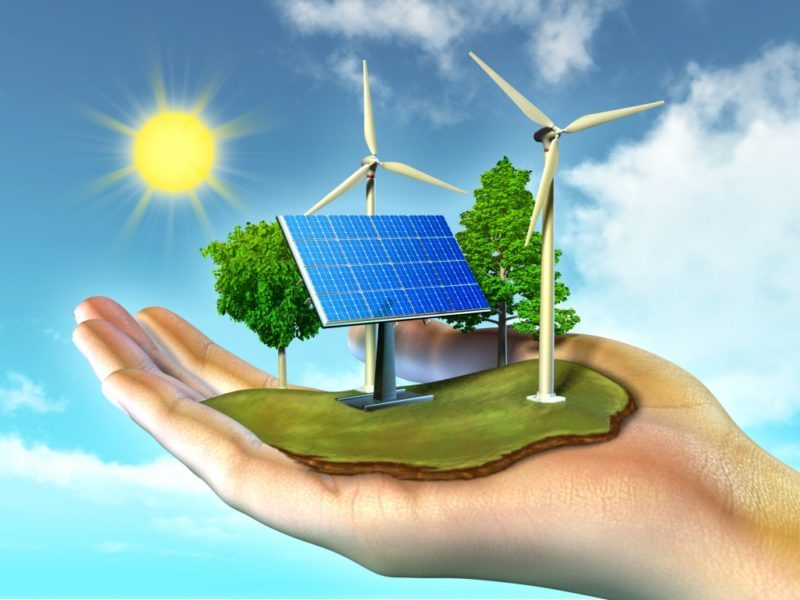
By Peter Roberts https://www.aumanufacturing.com.au/not-nuclear-but-wind-and-solar-still-cheapest-csiro 18 July 23
There is a huge amount of hype around new energy sources to replace fossil fuels and none more so than the phenomenon of small modular nuclear reactors (SMR).
But the hype remains just that according to the latest GenCost 2022–23 study released today by CSIRO and Australian Energy Market Operator.
While SMRs are likely cheaper to build that traditional large nuclear power stations, renewable power from onshore wind turbines and solar PV are increasingly important as the cheapest sources of new energy generation capacity according to the report.
This holds true whether the costs of integration into the grid are taken into account, or not.
Each year the two bodies work with industry to give an updated cost estimate for large-scale electricity generation in Australia, and each year wind and solar come out on top
The 2022-23 report found that onshore wind and solar PV are ‘the lowest cost generation technology by a significant margin’, despite cost increases averaging 20 per cent for new-build electricity generation in Australia.
Offshore wind is higher cost but competitive with other alternative low emission generation technologies.
CSIRO Chief Energy Economist Paul Graham said: “Innovation in electricity generation technology is a global effort that’s strongly linked to climate change policy ambitions.
“Technology costs are one piece of the puzzle, providing critical input to electricity sector analysis.
“To limit emissions, our energy system must evolve and become more diverse.”
GenCost said the next lowest cost flexible technology in 2023 is gas generation with carbon capture and storage, but only if it could be financed at a rate that does not include climate policy risk.
Fossil fuels were more expensive and faced hurdles such as government legislation and net zero targets, and historically high energy costs.
GenCost said that with SMRs, ‘achieving the lower end of the nuclear SMR range (of cost estimates) requires that SMR is deployed globally in large enough capacity to bring down costs available to Australia’.
As for SMRs, none of this should not be surprising as even the International Atomic Energy Agency does not claim nuclear power is cheaper.
The agency claims only that SMRs, advanced nuclear reactors that have a power capacity of up to 300 MW(e) per unit or about one-third of typical sizes, provide cheaper power than traditional large nuclear stations.
Their advantage over traditional nuclear is linked to the nature of their design – small and modular.
According to the IAEA more than 70 commercial SMR designs are being developed around the world.
The IAEA says on its website: “Though SMRs have lower upfront capital cost per unit, their economic competitiveness is still to be proven in practice once they are deployed.”
.
Welsh campaigners call for Wylfa to be at heart of Ynys Mon ‘green energy’ island
Campaigners from several organisations opposed to new nuclear power
developments in Wales have written to Climate Change Minister Julie James
calling for the Welsh Government to acquire the Wylfa site as a national
asset to develop a range of cutting-edge renewable energy technologies.
Last week, the Welsh Affairs Committee in Westminster called on the British
Government to acquire the former nuclear power plant site at Wylfa to
redevelop for nuclear power, but, in their response, ministers indicated
that it was a ‘commercial decision’ for Hitachi, the owners of the
site, to determine who they sell the site to.
Anti-nuclear activists
believe this represents an opportunity for the Welsh Government to approach
Hitachi to see if they can purchase the site to become the hub of an Ynys
Mon (Anglesey) that is truly a ‘green energy island’. This would be in
line with Cardiff’s aspiration to ensure that all electricity consumed in
Wales is from renewable sources by 2035, and that such generation should be
ramped up in line with demand in the future.
NFLA 15th July 2023
New Book -The Path to a Sustainable Civilisation

In this radical new book Prof. Mark Diesendorf and Rod Taylor, who are
based in Australia, say that major changes have to be made in order the
move to a sustainable future.
They claim that we have allowed large
corporations, the military and other vested interests to capture
governments and influence public opinion and markets excessively. The
result will be social, economic and environmental disaster.
They argue that the way forward is to build social movements to apply overwhelming pressure on government and big business, weaken the power of vested interests and
strengthen democratic decision-making.
This, they say, must be done simultaneously with action on the specific issues of climate, energy, natural resources & social justice, so as to transition to a truly
sustainable civilisation. That may sound Utopia, but the book takes us
through the practical technology options and explores how the transition to
their use might come about globally. However, it goes well beyond just
offering technical and social fixes, challenging the idea that
technological changes alone will be sufficient to transition to ecological
sustainability. It says that a sustainable civilisation needs ‘an
economic system that fosters ecological sustainability and social
justice’, whereas ‘the current dominant system, neoclassical economic
theory together neoliberalism practice, is based on numerous myths. Its
practitioners claim it’s a science although it does not stand up to
scientific scrutiny’.
Renew Extra 8th July 2023
https://renewextraweekly.blogspot.com/2023/07/the-path-to-sustainable-civilisation.html
Germany’s power mix boasts more renewables, lower spot market prices – despite nuclear exit
Germany’s shutdown of nuclear power plants in April did not result in a
ramp-up of lignite-fired power plants, despite concerns. Instead, there has
been a significant increase in the share of renewables in the electricity
mix, and the proportion of coal-generated electricity has fallen by more
than 20%.
Electricity in Germany has become cheaper and cleaner since its
last three nuclear power plants were shut down, according to new data from
the Fraunhofer Institute for Solar Energy Systems ISE. Net electricity
production from lignite and hard coal has decreased by more than 20%, while
natural gas has experienced a minor decline.
In contrast, renewables have
reached a record share of 57.7% of net electricity generation. According to
Fraunhofer ISE, the German energy system successfully managed the nuclear
phase-out. The decommissioned reactors’ reduced output was offset by lower
consumption, decreased exports, and increased imports.
PV Magazine 4th July 2023 https://www.pv-magazine.com/2023/07/04/germanys-nuclear-exit-leads-to-more-renewables-lower-spot-market-prices/
Community energy for the UK
At the close of Community Energy Fortnight (10-23 June), the Nuclear Free
Local Authorities have written to a minister asking the government to hold
onto parts of the Energy Bill that will be vital if the community energy
sector is to continue to grow.
In his letter to Nuclear and Networks
Minister Andrew Bowie, who is leading on the legislation for the
government, NFLA Steering Committee Councillor Lawrence O’Neill has asked
for Clauses 272 and 273 to be retained in the bill.
These clauses, backed by the campaign group Power for People, would allow small community owned projects generating renewable energy to supply electricity to the National
Grid or to the communities that they serve on a fairer basis, and they
would also guarantee these suppliers a set income. Disappointingly, the
government is believed to be looking at dropping these clauses from the
bill, without suggesting any alternate provision.
NFLA 23rd June 2023
Nuclear Free Local Authorities – visiting community owned project in the UK, at the start of Community Energy Fortnight,
At the start of Community Energy Fortnight (10 June), NFLA Secretary
Richard Outram travelled to picturesque Dovestones Reservoir to visit his
nearest community owned hydro project. Saddleworth Community Hydro was
holding a public open day to mark the start of this annual event promoted
by Community Energy England, which is held to showcase projects, share
knowledge in the sector, and celebrate success.
Community Energy England
was founded in 2014 by community energy practitioners as the ‘voice’ of
the sector and to help put people at the heart of the energy system. Now
with over 275 community energy organisations as members, its mission is to
‘to help active community energy organisations implement new projects,
innovate, improve and grow.’ Saddleworth Community Hydro also started in
2014, commencing operations in September of that year. It was the first
high head project in England to generate power from the waters of a
reservoir.
At a cost of £500,000, it was financed almost equally by grants
from the Department for Environment, Food and Rural Affairs and the
European Agricultural Fund for Rural Development and by the sale of shares
to around 200 members, and subsequent upgrades have been funded by local
supporters.
NFLA 16th June 2023
Wind and solar overtake fossil fuel generation in the European Union
New data from energy think tank Ember shows that wind and solar produced
more EU electricity than fossil fuels in May, for the first full month on
record. Almost a third of the EU’s electricity in May was generated from
wind and solar (31%, 59 TWh), while fossil fuels generated a record low of
27% (53 TWh). “Europe’s electricity transition has hit hyperdrive,”
said Ember’s Europe lead Sarah Brown. “Clean power keeps smashing
record after record.”
Ember 8th June 2023
https://ember-climate.org/press-releases/wind-and-solar-overtake-fossil-generation-in-the-eu/
Business Green 8th June 2023
How Much Would It Cost to Solve Climate Change? And How Would We Pay for It?

Palmer Owyoung, Medium 31st May 2023
We know we need to replace fossil fuels with renewable energy. But as of
2023, we still get about 78 % of our energy from fossil fuels, with coal
making up the single biggest source of electricity at 36%. So how do we get
from where are today to 100% renewable energy before 2050? Is there a
climate change solution? Most importantly how much will it cost and who
will pay for it?
To answer the first question, we look to Mark Jacobson, a
professor of civil and environmental engineering and director of the
Atmosphere/Energy Program at Stanford University. In his 2023 Book No
Miracle Needed, he puts together a comprehensive plan based on real-world
data that shows how the world can transition off fossil fuels using
existing technology in the form of wind, solar, geothermal, hydo-electric,
and battery storage.
According to Jacobson we already have 95% of what we
need to get there and the remaining 5% will come from hydrogen fuel cells
that can power airplanes and long-distance cargo ships. The data for his
book comes from a detailed study that he published in 2015 of what each of
the 50 U.S. States needs to transition their electrical grid,
transportation, heating/cooling, and industrial sectors to renewable energy
powered by wind, water and sun.
The plan’s goal is to replace 80 to 85% of
fossil fuels by 2030 and 100% by 2050. This time frame is considerably more
aggressive than the Paris Climate Agreement and Jacobson not only addresses
the need to reduce greenhouse gas emissions and air pollution, but does so
while keeping energy costs low, creating new jobs and maintaining a stable
power grid.
One of the biggest issues with solar and wind is the
intermittency problem, which means that the sun does not always shine and
the wind doesn’t always blow. Jacobson’s 2015 report was criticized for
making assumptions about how energy could be stored and it was dismissed as
using unrealistic assumptions. His response was to write the 2018 study
that divided the world into 143 countries and 20 regions around the world.
Using data and a simulator he and his team looked at the grid stability in
each of the regions for every 30 seconds for the past five years to
determine the cost of energy per unit. What they found was that wind, water
and solar power are enough to keep the grid stable and uninterrupted
contrary to what his critics said. In fact, he found that there is enough
wind generated on the Earth to power our needs 6 or 7 times over and while
it’s true this energy is intermittent, he says it would require no more
than 4 hours of battery storage in order to solve the problem.
Furthermore,
a 2023 study published in Nature indicates that electric vehicle batteries
alone could provide the short-term storage needed by global grids as early
as 2030.
·
US Electricity From Renewable Energy Beat Electricity From Coal Or Nuclear In 2022
Since 2007, the use of coal for electricity generation has generally been in decline, while the use of renewables has been on the rise. Electricity generation from nuclear had remained relatively flat over the last two decades but has experienced a slight decline in recent years. In 2022, net generation of electricity from renewables reached 0.91 billion megawatt-hours, topping both coal and nuclear (0.83 and 0.77 billion megawatt-hours, respectively). In 2022, renewables accounted for about 21% of all net generation of electricity.
- Renewable sources of power include wind, solar, hydropower, biomass, and geothermal energy. “Other” category includes petroleum liquids, petroleum coke, batteries, chemicals, hydrogen, pitch, purchased steam, sulfur, miscellaneous technologies, and non-renewable waste.
- Electricity net generation is the amount of gross electricity generation a generator produces minus the electricity used to operate the power plant.
Source: U.S. Energy Information Administration, Electricity Data Browser, queried April 21, 2023.
View the supporting data for this Fact of the Week.
Portugal’s renewable energy success
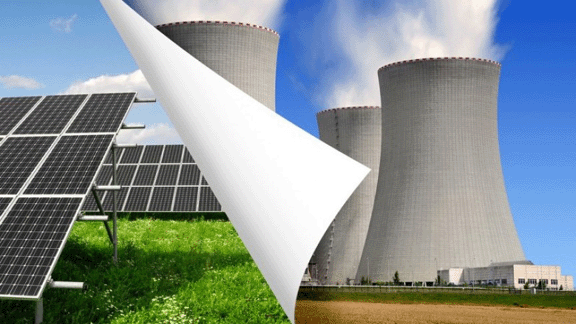
Portugal reached a major milestone of producing more than half (51%) of
its electricity from wind and solar in April. The previous monthly record
high was 49%, set in December 2021.
According to Ember, Portugal’s record
of 50% from wind and solar comes despite relatively modest wind generation.
Strong deployment of solar capacity pushed solar generation to an all-time
high of 360 GWh in April, significantly higher than the previous record of
300 GWh in July and August of 2022. Last year, the country installed 0.9 GW
of solar photovoltaics, increasing its solar capacity by more than 50% to
2.5 GW.
Review Energy 18th May 2023
1 This Month



Shut down the radiation-damaged Heysham nuclear reactors now
To see nuclear-related stories in greater depth and intensity – go to https://nuclearinformation.wordpress.com

Say No to NASA’s Reckless Nuclear Reactor on the Moon
Say No to NASA’s Reckless Nuclear Reactor on the Moon
-
Archives
- October 2026 (247)
- September 2026 (339)
- August 2026 (330)
- July 2026 (355)
- June 2026 (287)
- May 2026 (306)
- April 2026 (356)
- March 2026 (251)
- February 2026 (267)
- January 2026 (308)
- December 2025 (358)
- November 2025 (359)
-
Categories
- 1
- 1 NUCLEAR ISSUES
- business and costs
- climate change
- culture and arts
- ENERGY
- environment
- health
- history
- indigenous issues
- Legal
- marketing of nuclear
- media
- opposition to nuclear
- PERSONAL STORIES
- politics
- politics international
- Religion and ethics
- safety
- secrets,lies and civil liberties
- spinbuster
- technology
- Uranium
- wastes
- weapons and war
- Women
- 2 WORLD
- ACTION
- AFRICA
- Atrocities
- AUSTRALIA
- Christina's notes
- Christina's themes
- culture and arts
- Events
- Fuk 2022
- Fuk 2023
- Fukushima 2017
- Fukushima 2018
- fukushima 2019
- Fukushima 2020
- Fukushima 2021
- general
- global warming
- Humour (God we need it)
- Nuclear
- RARE EARTHS
- Reference
- resources – print
- Resources -audiovicual
- Weekly Newsletter
- World
- World Nuclear
- YouTube
-
RSS
Entries RSS
Comments RSS

