New Renewable Energy Storage System supported by U.S. Dept. of Energy
U.S. Dept. of Energy Supports New Renewable Energy Storage System Oil Price, By John Daly | Sat, 28 September 2013 The two bottlenecks inhibiting further use of renewable energy systems are cost and the fact that the sun doesn’t always shine or the wind blow-in one word, storage. While mass production of components such as solar photovoltaic cells means that their price has been dropping, the issue of storing and releasing electricity generated by renewable sources during their down times has led engineers worldwide to tackle the problem.
Large-scale, low-cost energy storage is needed to improve the reliability, resiliency, and efficiency of next-generation power grids. Energy storage can reduce power fluctuations, enhance system flexibility, and enable the storage and dispatch of electricity generated by variable renewable energy sources such as wind, solar, and water power.
Now one technology seems sufficiently promising that it is receiving funding from the U.S. Department of Energy’s Office of Electricity Delivery and Energy Reliability Energy Storage Program.
What is this promising new technology?
Isothermal compressed air energy storage (ICAES) refers to storage of compressed air at a constant temperature, which is a key element in the improved energy efficiency of the system.
SustainX has completed construction of its first utility scale ICAES system. It was hooked up to the grid earlier this month and it’s now in the process of revving up to speed. The DOE’s Office of Electricity Delivery and Energy Reliability’s Energy Storage Program underwrote $5,396,023 of the system’s cost……..
The DOE is certainly impressed, noting on its “Isothermal Compressed Air Energy Storage” webpage; “SustainX’s ICAES technology offers several advantages: it can be sited anywhere, and it is not dependent on advantageous geological formations. It allows power and energy to scale independently. It consumes no fuel and produces no emissions. It utilizes proven mechanical systems and is composed almost entirely of steel, water, and air. It offers 20 years of performance at full power and capacity and 100% depth of discharge.” Governmental endorsements don’t come much stronger than that.
And how big is the compressed air energy storage industry going to become? According to Navigant Research director Kerry-Ann Adamson, the market will grow dramatically over the next decade. Adamson remarked, “Rapidly changing energy mixes and increasing renewable energy penetration will continue to introduce instability onto electricity grids worldwide in the coming years, while the volatility of load profiles will challenge grid operators to deliver reliable and secure electricity. These macro conditions will drive demand for CAES, helping to rejuvenate a sector that has been largely dormant for the last two decades.” http://oilprice.com/Alternative-Energy/Renewable-Energy/Bill-Gates-Backs-New-Renewable-Energy-Storage-System.html
Breakthrough in solar energy storage battery
 No Mem-Brainer Flow Battery Delivers Big http://www.energymatters.com.au/index.php?main_page=news_article&article_id=3904 23 Aug 13, A palm-sized experimental flow battery developed by Massachusetts Institute of Technology researchers has the potential to solve intermittency challenges in utility-scale renewable energy systems.
The MIT team has engineered a prototype flow battery storage system without the expensive membrane usually required. Continue reading
Reliable and cheap renewable energy storage
Rechargeable flow batteries could be cheaper solution to renewable energy storage http://www.treehugger.com/clean-technology/rechargeable-flow-batteries-could-be-cheaper-solution-renewable-energy-storage.html Megan Treacy August 19, 2013 Researchers at MIT have developed a battery that could bring us reliable and cheap large scale energy storage. Based on flow battery technology, the researchers took out the costly membrane and created a battery that has a power density that is an order of magnitude higher than lithium-ion batteries and three times greater than other membrane-less systems.
MIT reports, “The device stores and releases energy in a device that relies on a phenomenon called laminar flow: Two liquids are pumped through a channel, undergoing electrochemical reactions between two electrodes to store or release energy. Under the right conditions, the solutions stream through in parallel, with very little mixing. The flow naturally separates the liquids, without requiring a costly membrane.”
The reactants used are liquid bromine and hydrogen fuel, which is cheap, but also has had issues with breaking down the membrane in other flow batteries. By taking out the membrane they were able to speed up energy storage and extend the life of the battery.
“Here, we have a system where performance is just as good as previous systems, and now we don’t have to worry about issues of the membrane,” says Martin Bazant, a professor of chemical engineering. “This is something that can be a quantum leap in energy-storage technology.”
As we bring more renewable technologies like wind and solar into the grid, affordable and reliable energy storage is increasingly important. While solar and wind energy output varies based on weather conditions, large scale energy storage systems can smooth out the power delivery from those technologies by storing any excess energy when it’s produced and using it when the output is lower or demand is higher.
“Energy storage is the key enabling technology for renewables,” says Cullen Buie, an assistant professor of mechanical engineering. “Until you can make [energy storage] reliable and affordable, it doesn’t matter how cheap and efficient you can make wind and solar, because our grid can’t handle the intermittency of those renewable technologies.”
MIT says, “Braff built a prototype of a flow battery with a small channel between two electrodes. Through the channel, the group pumped liquid bromine over a graphite cathode and hydrobromic acid under a porous anode. At the same time, the researchers flowed hydrogen gas across the anode. The resulting reactions between hydrogen and bromine produced energy in the form of free electrons that can be discharged or released.
The researchers were also able to reverse the chemical reaction within the channel to capture electrons and store energy — a first for any membraneless design.”
Now that the team’s experiments have lined up with their computer models, they’re focused on scaling up the technology and seeing how it performs. They predict that the technology will be able to produce energy costing as little as $100/kWh, which would make it the cheapest large scale energy storage system built yet.
Energy storage available in wind turbines
Wind Turbines Store Energy For Less Breezy Days HUFF POST, 7 Aug 13 “……a new wind turbine that generates more electricity at lower wind speeds, stores some excess energy for sale to the grid later (allowing owners to take advantage of higher prices), and also does a better job of analyzing and predicting the supply of wind energy too. In short, many clean energy advocates are pretty excited about GE’s 1.6-100 and 1.7-100 wind turbines and power management system.
Specifically, here are some of the features that clean tech geeks are getting excited about:
- Improved blade designs resulting in a 47 percent increase in “swept area” (the square feet of the rotor) compared to previous models – meaning a 20-24 percent increase in power.
- More energy harvested at lower wind speeds, resulting in a class-leading capacity factor of 54 percent. (Detail alert: the capacity factor is the actual power output over time, compared as a percentage to the theoretical power output of the turbine if it was producing at its maximum output at all times.)
- A battery storage system that allows wind turbine operators to save excess electricity — either because they are producing more electricity than the grid needs at a given moment, or because they’ll get a better price for it later.
- A sophisticated package of analytics equipment and software, which helps owners predict both when power will be needed and when the wind will be blowing, allowing communication between turbines in what’s been described as “an industrial Internet”.
Individually, each of the developments represented in the Brilliant turbines are a big deal. Collectively, says Andrew Burger of CleanTechnica, they have the potential to be game changing. In an enthusiastic, three-part series on the Brilliant turbines (see alsopart two, and part three), Burger explains why all this really matters to the rest of us – namely that the cost of wind energy has come down by 60 percent in recent years, making it competitive with new coal and natural gas plants. And that’s before you even start calculating all the hidden, but very real economic costs caused by our reliance on fossil fuels…. http://www.huffingtonpost.com/2013/08/07/wind-turbines-store-energ_n_3715788.html
Renewable energy with Liquid Metal Batteries
Liquid Metal Batteries Would Make Renewable Energy Viable Engineering.com Tom Spendlove on July 26, 2013 Electricity demand has to be in constant balance with electricity supplied – this is the large scale problem Donald Sadoway wants to solve in this TED Talk. The constraints of this problem are immense. A solution would need to generate incredibly high power, have a long service life and come at a very low cost.
Energy storage is the solution. Giant batteries could address the problem of intermittency that prevents wind and solar from contributing to the grid like a coal burning power plant.
Donald Sadoway: The missing link to renewable energy
Sadoway knows that battery science is straightforward and that the first battery was simple. Alessandro Volta’s invention in the early 1800s only required two electrodes, metals of different compositions, and an electrolyte. ….
Through research at MIT, the battery designs evolved from a shot glass-sized cell storing 1 Watt-hour to a saucer-sized cell storing 200 Watt-hours. Sadoway started his own company to produce larger batteries that will stack to fill a forty foot shipping container.
These large scale batteries would contain 2 MegaWatt-hours, enough energy to meet the daily needs of two hundred American homes.
Solar energy storage in a big way, in Nevada
 Solar towers and storage – about to change the energy game? http://reneweconomy.com.au/2013/solar-towers-and-storage-about-to-change-the-energy-game-91721, By Giles Parkinson on 4 July 2013 The 110MW Crescent Dunes Solar Energy Plant, a concentrated solar power project due to be completed in Nevada early next year, will not just be the largest solar power tower plant with fully integrated energy storage built – it could also challenge the way the world thinks about renewable energy. Or even energy sources in general.
The $1 billion Crescent Dunes project near Tonopah in the Central Nevada Desert, some 300kms north of Las Vegas, was developed by the Santa Monica-based SolarReserve and features the company’s market leading molten salt power tower technology with fully integrated energy storage.
What makes it unique and a potential game changer in the electricity industry is the flexibility and dispatchability of its power, meaning that it can deliver electricity whenever it is needed by customers; and its cost, which already beats diesel, is competitive with new build coal and gas generation.
The Crescent Dunes facility will have 10 hours of molten salt storage, which on average will allow it to deliver 110MW of baseload capacity to Las Vegas between the hours of 12 noon and midnight each day, when the city needs it most to power the lights and air conditioning of its casinos and entertainment palaces. It has signed a 25-year power contract with NV Energy, Nevada’s largest utility, to do that. Continue reading
A new way to store solar energy efficiently?
 Australian Invention Could Revolutionise Solar Energy Storage July 13, ANU researchers have developed a material that can store large amounts of power rapidly – and with very little energy loss. Based on the mineral rutile, it is a ‘dielectric’ material; which are used in the construction of capacitors.
The researchers say their material is superior to current capacitors in energy absorption, is cheaper to manufacture and can function effectively in a massive temperature range: -190°C to 180°C. Continue reading
Wall mounted solar inverter and battery to be mass produced
SMA’s New Solar Inverter Incorporates Battery Energy Storage http://www.energymatters.com.au/index.php?main_page=news_article&article_id=3807 24 June 13 SMA’s latest inverter that incorporates a lithium ion battery has won an award at Intersolar Europe 2013 in Munich.
Sunny Boy Smart Energy is the first wall mounted solar inverter with an integrated battery to be mass produced. Continue reading
Large scale batteries for renewable energy storage now growing in use
 Large Scale Energy Storage Roundup http://www.energymatters.com.au/index.php?main_page=news_article&article_id=3755 23 May 13,
As the world increasingly moves towards renewable energy; it will need many individual energy storage locations distributed across the grid to address issues of variability in electricity production. The idea of a battery being a relatively small device or a series of small boxes cobbled together with wiring is changing fast. Batteries capable of storing huge amounts of energy are being developed using all sort of materials and technologies.
The following are just a few we’ve reported on in the past; some of which are have now been deployed in commercial applications: Continue reading
Renewable energy could be boosted by Compressed Air Storage
Compressed Air Storage Could Boost U.S. Renewable Energy Uptake http://www.energymatters.com.au/index.php?main_page=news_article&article_id=3752 21 May 13, New U.S. research into storing energy in underground caverns in the form of compressed air could lead to improved uptake of utility scale wind power in America’s Northwest.
A study by the Department of Energy’s Pacific Northwest National Laboratory and Bonneville Power Administration has found that compressed air energy storage (CAES) has the capacity to store wind power for up to 85,000 homes in two specific geologic areas of inland Washington and Oregon.
CAES storage helps solve the problem of intermittency in renewable energy generation. When the wind powers turbines, or the sun shines on a solar power plant, electricity is abundant and must be stored for later use.
CAES works by using excess energy from a power plant to pump compressed air deep into an underground storage structure such as porous rock, where it remains until needed. The pressurised air is then released back to the surface where it drives a turbine to generate electricity for the grid, thus providing a constant flow of energy.
Study manager for the BPA, Steve Knudsen, believes that with 13 percent of the Northwest’s power supply coming from wind energy sources, CAES technology will become a valuable tool in helping the states meet Renewable Portfolio Standards, which require 20 to 30 percent of all electricity come from variable sources such as wind and the sun.
There are just two CAES plants in the world and both are man-made, one in Alabama and one in Germany. The PNNL/BPA research looked instead for natural geologic formations in Oregon and Washington, finding seams of porous volcanic basalt rock, 450 metres below the surface and at least 10 metres thick.
So far two promising locations have been identified. One is the Columbia Hills Site in Oregon, which is near a natural gas pipeline and could be paired with a CAES system to provide up to 40 days of continual energy storage. The other is the Yakima Minerals Site, which would use geothermal power and CAES technology in a hybrid power plant and utilising geothermal energy to cool the facility’s air compressors, increasing their efficiency.
Breakthrough in solar energy storage for powering national grids
VIDEO The Lithium-Polysulfide Flow Battery http://www.energymatters.com.au/index.php?main_page=news_article&article_id=3713 29 April 13,
U.S. researchers believe a breakthrough in battery technology will see more utility-scale solar and wind energy powering national grids.
Scientists from the U.S. Department of Energy’s (DOE) SLAC National Accelerator Laboratory and Stanford University have designed a new low-cost flow battery storage system that could solve issues relating to the peaks and troughs in power generation from renewable energy sources.
Flow batteries pump two types of liquid through a chamber, where two streams of dissolving molecules cause a chemical reaction that store or release energy.
They are currently thought to be the most effective way to maintain grid stability because the tanks, pipes and fittings used in flow battery systems can be scaled-up to store power for large-scale solar and wind facilities where energy generation depends on weather conditions.
But today’s flow batteries are expensive – the liquids used often require large quantities of rare earth materials to operate and a special membrane that separates the active and inactive ions. According to the SLAC/Stanford team, with solar and wind heading toward 20 percent of generation capacity, there needs to be a simpler and more efficient flow battery system.
“For solar and wind power to be used in a significant way, we need a battery made of economical materials that are easy to scale and still efficient,” said Yi Cui, Stanford associate professor of materials science and engineering.
Cui’s team designed a new membrane-free battery that does away with rare materials, using a chamber with a single molecular stream of lithium and sulphur ions. A reaction with a catalyst produces lithium polysulfides, discharging energy and absorbing lithium. The lithium ions are then reabsorbed into an organic compound to be used again.
The researchers say the next step is to develop and field test a utility-scale flow battery based on their design capable of handling megawatts of energy storage.
Another flow battery concept we’ve covered in the past utilising cheap and readily available materials is the Rustbelt Flow Battery; which uses iron.
Plan for storage of offshore wind energy
Wind Power Storage, Environmental Network News, 26 April 13 One of the problems with wind power is that when there is no wind then there is no power. Offshore wind could provide abundant electricity — but as with solar energy, this power supply can be intermittent and unpredictable. A new approach from researchers at MIT could mitigate that problem, allowing the electricity generated by floating wind farms to be stored and then used, on demand, whenever it’s needed….. http://www.enn.com/energy/article/45904
Solar power developments in Japan: battery storage
Japan To Implement 60,000 kWh Capacity Battery http://www.energymatters.com.au/index.php?main_page=news_article&article_id=3697 19 April 13 The Japanese government plans to install a massive battery at an electrical substation on the island of Hokkaido.
According to the Japan Times, the country’s Ministry of Economy, Trade and Industry (METI) says the battery will be put in place by the end of the first quarter in 2015 to help develop a stable electricity supply generated by solar and wind power sources. The battery system will have a storage capacity of around 60,000 kWh and will use up a large portion of ¥29.6 billion earmarked for battery projects.
Hokkaido is Japan’s second largest island and the largest and northernmost of Japan’s 47 prefectures. It has become a hive of renewable energy activity due to the availability and low prices of suitable land. According to Bloomberg, the island’s power infrastructure is approaching its limit for handling the amount of clean electricity being generated.
Japan has seen solar uptake skyrocket since the introduction of a feed in tariff scheme, currently paying 38 yen per kilowatt hour (around AUD 38 cents) for rooftop solar power systems under 10kW and slightly more for larger systems.
In other renewables news out of Japan, METI states based on data compiled by the Agency for Natural Resources and Energy (ANRE), the total combined new renewable energy capacity added between April 1, 2012, and January 31, 2013,reached 1,394,000 kW .
Photovoltaic power facilities accounted for 1,329,000 kW, with household solar panel systems making up 1,023,000kW of that amount. METI notes that 37,000kW capacity was added by January 31 – with all of that being added after June 2012.
METI also announced Japan and India have decided to hold the “India-Japan Energy Forum 2013” in September in New Delhi and Greater Noida, which aims to reinforce the two nation’s cooperation in the field of energy.
Germany moving ahead on renewable energy storage
Germany’s Energy Storage Incentives Start May 1 http://www.energymatters.com.au/index.php?main_page=news_article&article_id=3694 17 April 13, New renewable energy subsidies in Germany may do for battery storage globally what the nation did for solar power.

In February we reported Germany would apparently soon formally confirm a start date for an initiative to support the purchase of battery based energy storage systems integrated with solar panel arrays. It took a little longer than rumoured, but that moment seems to have arrived. Continue reading
Crescent Dunes Solar Energy Plant solves problem of “intermittent power”
Crescent Dunes Molten Salt Solar Receiver Completed http://www.energymatters.com.au/index.php?main_page=news_article&article_id=3673 5 April 13, SolarReserve has announced one of its flagship projects is reaching final stages of completion in the Nevada desert, with the installation of molten salt receiver panels on the peak of the 540-foot tall tower of the Crescent Dunes Solar Energy Plant. By utilising molten salt storage technology, the Crescent Dunes solar plant, located near Tonopah, Nevada, can operate like a conventional power plant, providing “on demand” and emissions-free electricity for up to 10 hours in adverse conditions.
“The energy storage capability of this technology solves the problem of intermittency typical of other renewable energy sources,” said Kevin Smith, CEO of SolarReserve. Continue reading
1 This Month
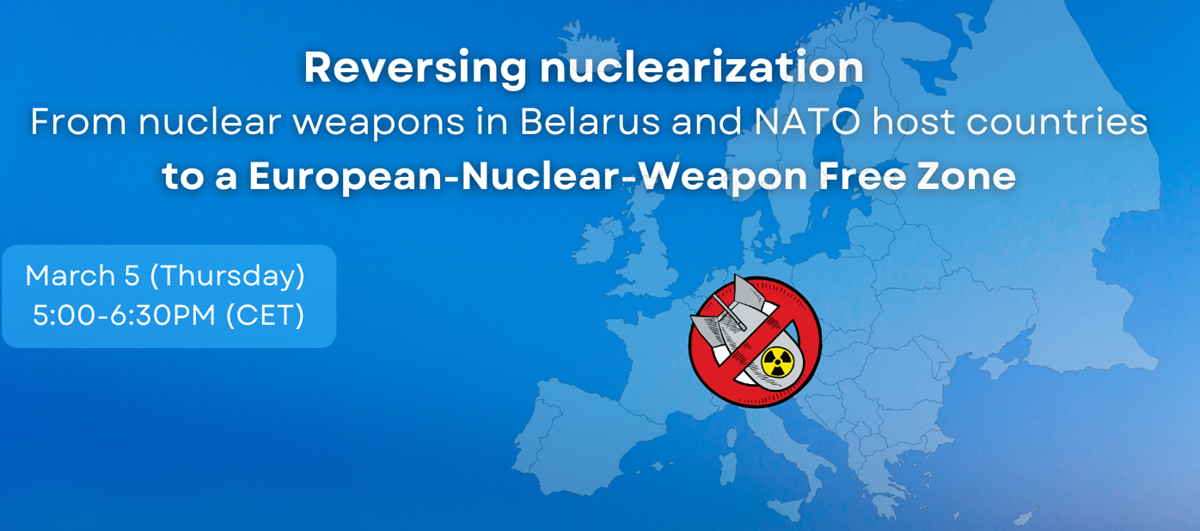
5 March -Online – Reversing nuclearization:
From nuclear weapons in Belarus and NATO host countries to a European-Nuclear-Weapon Free Zone
11am-12:30pm Eastern Time USA / 5pm-6:30pm CET

of the week – Advocating for a
nuclear free beach – https://www.samuellawrencefoundation.org/
The Samuel Lawrence Foundation advocates for a Nuclear Waste Free Beach at San Onofre, join us and take action!

10 March A LIVE WEBINAR THE REAL EFFECTS OF NUCLEAR POWER
What the Industry Isn’t Telling Us
1:00 PM Mountain, 2 pm Central, 3 pm Eastern. Live on the Keepers of the Water Facebook page

18 March Webinar @ 1 PM EST: An Assessment of SMR Projects: The Case of Canada
register for the zoom:
https://us02web.zoom.us/webinar/register/WN_o8BIIOUvQ2ONJR1nta65DQ#/registration

of the week – STOP SMALL MODULAR REACTORS IN CANADA
To see nuclear-related stories in greater depth and intensity – go to https://nuclearinformation.wordpress.com
-
Archives
- March 2026 (38)
- February 2026 (268)
- January 2026 (308)
- December 2025 (358)
- November 2025 (359)
- October 2025 (376)
- September 2025 (258)
- August 2025 (319)
- July 2025 (230)
- June 2025 (348)
- May 2025 (261)
- April 2025 (305)
-
Categories
- 1
- 1 NUCLEAR ISSUES
- business and costs
- climate change
- culture and arts
- ENERGY
- environment
- health
- history
- indigenous issues
- Legal
- marketing of nuclear
- media
- opposition to nuclear
- PERSONAL STORIES
- politics
- politics international
- Religion and ethics
- safety
- secrets,lies and civil liberties
- spinbuster
- technology
- Uranium
- wastes
- weapons and war
- Women
- 2 WORLD
- ACTION
- AFRICA
- Atrocities
- AUSTRALIA
- Christina's notes
- Christina's themes
- culture and arts
- Events
- Fuk 2022
- Fuk 2023
- Fukushima 2017
- Fukushima 2018
- fukushima 2019
- Fukushima 2020
- Fukushima 2021
- general
- global warming
- Humour (God we need it)
- Nuclear
- RARE EARTHS
- Reference
- resources – print
- Resources -audiovicual
- Weekly Newsletter
- World
- World Nuclear
- YouTube
-
RSS
Entries RSS
Comments RSS
 nuclear-news