Inside the power-hungry data centres taking over Britain.

Our thirst for AI is fuelling a new construction wave: of giant data centres. But can ourelectricity and water systems cope — and what will the neighbours say?
Plants [like the one] run by the company Stellium on the outskirts of
Newcastle upon Tyne, are springing up across the country.
There are already
more than 500 data centres operating in the UK, many of which have been
around since the Nineties and Noughties. They grew in number as businesses and governments digitised their work and stored their data in outsourced “clouds”, while the public switched to shopping, banking and even tracking their bicycle rides online.
But it was in 2022, when a nascent
technology company called OpenAI launched ChatGPT, that the world woke up to the potential of AI and large language models to change the way the planet does, well, just about everything.
It can do this thanks largely to advances in chip design by the US company Nvidia — now the world’s most valuable (and first $5 trillion) business. The trouble is, a typical 4334wChatGPT query needs about ten times as much computing power — and electricity — as a conventional Google search.
This has led to an
explosion in data centres to do the maths. Nearly 100 are currently going
through planning applications in the UK, according to the research group
Barbour ABI. Most will be built in the next five years. More than half of
the new centres are due to be in London and the home counties — many of
them funded by US tech giants such as Google and Microsoft and leading
investment firms. Nine are planned in Wales, five in Greater Manchester,
one in Scotland and a handful elsewhere in the UK.
The boom is so huge that
it has led to concerns about the amount of energy, water and land these
centres will consume, as residents in some areas face the prospect of
seeing attractive countryside paved over with warehouses of tech. Typically
these centres might use 1GW (1,000MW) of electricity — more power than is
needed to supply the cities of London, Birmingham and Manchester put
together.
Times 29th Nov 2025, https://www.thetimes.com/business/technology/article/inside-britains-ai-data-centre-boom-can-the-grid-keep-up-jllzb3b0p
EPR nuclear reactors are just not performing well at all

The French EPR reactor was supposed to be built in 4 or 4,5 years, and to
produce 13 TWh of electricity per year. (As for EDF:s promise, see for
example https://lnkd.in/dFXe5geb point 19.)
At 13 TWh/year and operating when planned to do so, the first 4 reactors, in Finland, France and China should have produced about 648 TWh by the end of 2024. According to new
data from the IAEA PRIS they have produced 123,4 TWh, a mere 19 % of what
was promised.
Much of this underachievement is explained by construction
delays, on average 8,5 years for the first 4 reactors. But even after they
have started to produce electricity, it is far less than the 13 TWh/year.
In fact, it is 8,4 TWh. Put it in another way, the ”load factor” is
low. Lifetime load factors through 2024 are Taishan 1: 55%, Taishan 2: 76
%, Olkiluoto 3: 77,6%. Flamanville 3 in France was connected to the grid
only in December 2024 so it is too early to tell.
But as for the other three, the weighted average so far is about 67 percent. 100 per cent is
impossible. The world average load factor is about 82 per cent, as real
world reactors have both planned and unplanned stops.
The EPR has consistently been marketed as being able to produce 13 TWh per year, for 60
years. The theoretical maximum for a 1600 megawatt reactor, 24/365, is just
above 14 TWh, so 13 TWh corresponds to a load factor of 92.8%.It is
conceivable that the load factors will increase but it is not sure. Taishan
is the oldest EPR in operation, and it is also the worst performer.
Frederik Lundberg 24th June 2025,
https://www.linkedin.com/feed/update/urn:li:activity:7343320565471924224/
Hunterston ‘industrial revolution’ on our doorstep

Drew Cochrane, Largs & Millport Weekly News 29th Nov 2024
When politicians of every hue have been popping up in promotional photos in recent weeks to pronounce the pathway to thousands of jobs for Hunterston in the next five years you know it’s for real.
The bad news for those in Fairlie who are of a protesting disposition (God forbid) is that the projects, spearheading Scotland’s mission towards Net Zero, will not be stopped.
First Minister John Swinney risked a nose bleed by travelling way down south to London to welcome the Highview Power plans to create the world’s largest liquid air energy facility at Hunterston which will store as much as five times Scotland’s current operational battery capacity for locally produced renewable energy.
One thousand jobs in the construction phase and 650 jobs in the local supply chain by its completion in 2030 are the headlines.
Labour’s UK Energy Minister and Scottish MP Michael Shanks visited Hunterston this month to see the ‘Converter’ station at the site of the forthcoming XLCC sub-sea cable production factory which promises 900 permanent well-paid jobs, including, crucially, 200 apprentices. Again, contractors and suppliers will also number hundreds in support work.
Electricity is being supplied from the local site to Wales by sub-sea cable as a precursor to the XLCC plan to bring renewable energy from the Sahara, via Morocco, once the production factory bursts into action by 2029, work scheduled to start in March. We also carried the story and picture of the first apprentices being trained.
Local SNP MSP Kenneth Gibson visited Clydeport which has released 350 acres of the land, designated as National Development Status by the Scottish Government. He, like myself, does not buy the argument from some quarters, that the value of properties in Fairlie will fall; quite the reverse when staff move into the area.
It won’t entirely be a smooth transition, particularly, with heavy traffic on the A78 but as I’ve said before on this page this is our biggest industrial revolution since the decades of IBM and nuclear power on our proverbial doorstep……https://www.largsandmillportnews.com/news/fairlie/24745296.drew-cochrane-hunterston-industrial-revolution-doorstep/
Will AI’s huge energy demands spur a nuclear renaissance?
Contracts with Google and Amazon could help, but bringing new types of reactor online will take larger investments — and time.
Davide Castelvecchi, Nature , 25vOct 24
Last week, technology giants Google and Amazon both unveiled deals supporting ‘advanced’ nuclear energy, as part of their efforts to become carbon-neutral.
Google announced that it will buy electricity made with reactors developed by Kairos Power, based in Alameda, California. Meanwhile, Amazon is investing approximately US$500 million in the X-Energy Reactor Company, based in Rockville, Maryland, and has agreed to buy power produced by X-energy-designed reactors due to be built in Washington State.
Both moves are part of a larger [??] green trend that has arisen as tech companies deal with the escalating energy requirements of the data centres and number-crunching farms that support artificial intelligence (AI). Last month, Microsoft said it would buy power from a utility company that is planning to restart a decommissioned 835-megawatt reactor in Pennsylvania.
The partnerships agreed by Google and Amazon involve start-up companies that are pioneering the design of ‘small modular reactors’, which are intended to be assembled from prefabricated pieces………….they still have a way to go before they become a reality.
Nature talked to nuclear-energy researchers to explore the significance and possible implications of these big-tech investments.
Could these deals spur innovation in the nuclear industry?
Building nuclear power stations — a process often plagued by complex permit procedures, construction delays and cost overruns — is financially risky, and betting on unproven technologies is riskier still…………..
the details of the deals are murky, and the level of support provided by Amazon and Google is likely to be “a drop in the bucket” compared with the billions these start-ups will ultimately need, says physicist Edwin Lyman, director of nuclear power safety at the Union of Concerned Scientists in Washington DC. “The PR machine is just going into overdrive,” says Lyman, but “private capital just doesn’t seem ready yet to take that risk”.
Allison Macfarlane, director of the School of Public Policy and Global Affairs at the University of British Columbia in Vancouver, Canada, and former chair of the US Nuclear Regulatory Commission (NRC), says that the speed of progress in computer science raises another question. “If we’re talking 15 years from now, will AI need that much power?”
Are there safety advantages to the small modular designs?
“The smallest reactors, in theory, could have a high degree of passive safety,” says Lyman. When shut down, the core of a small reactor would contain less residual heat and radioactivity than does a core of the type that melted down in the Fukushima Daiichi disaster that followed the cataclysmic 2011 tsunami in Japan.
The companies also say that the proposed pebble-bed reactors are inherently safer because they are not pressurized, and because they are designed to circulate cooling fluids without the help of pumps (it was the loss of power to water pumps that caused three of the Fukushima plant’s reactors to fail).
But Lyman thinks it is risky to rely on potentially unpredictable passive cooling without the backup of an active cooling option. And as reactors become get smaller, they become less efficient. Another start-up company, NuScale Power, based in Portland, Oregon, originally designed its small modular reactor — which was certified by the NRC — to produce 50 MW of electricity, but later switched to a larger, 77-MW design. The need to make the economics work “makes passive safety less credible”, Lyman says.
Do small modular reactors carry extra risks?
In some cases, small modular reactors “could actually push nuclear power in a more dangerous direction”, says Lyman. “Advanced isn’t always better.”
In particular, Lyman points out that the pebble-bed designs drawn up by X-energy and Kairos would rely on high-assay low-enriched uranium (HALEU), which comprises 10–20% uranium-235 — compared with the 5% enrichment level required by most existing reactors (and by NuScale’s reactor). HALEU is still classified as low-enrichment fuel (as opposed to the highly enriched uranium used to make nuclear bombs), but that distinction is misleading, Lyman says. In June, he and his collaborators — including physicist Richard Garwin, who led the design of the first hydrogen bomb — warned in a Science article that a bomb could be built with a few hundred kilograms of HALEU, with no need for further enrichment1.
Smaller reactors are also likely to produce more nuclear waste and to use fuel less efficiently, according to work reported in 2022 by Macfarlane and her collaborators2. In a full-size reactor, most of the neutrons produced by the splitting of uranium travel through a large volume of fuel, meaning that they have a high probability of hitting another nucleus, rather than colliding with the walls of the reactor vessel or escaping into the surrounding building. “When you shrink the reactor, there’s less material in there, so you will have more neutron leakage,” Macfarlane says. These rogue neutrons can be absorbed by other atomic nuclei — which would then themselves become radioactive.
Will small reactors be cheaper to build?
The capacity to build components in an assembly line could drastically cut reactors’ construction costs. But there are also intrinsic economies of scale in building larger reactors, says Buongiorno. “Don’t believe people blindly” when they say smaller reactors will produce cheaper energy, he says: nuclear energy has a lot going for it, but “it ain’t cheap” — and that is unlikely to change significantly.
Will all of these efforts help to combat climate change?
…………….. whether building new reactors is the best way to rapidly cut emissions is debated. Macfarlane points out that solar panels and wind turbines can be deployed at a much faster rate.
https://www.nature.com/articles/d41586-024-03490-3
As electric vehicles take off, we’ll need to recycle their batteries

As electric vehicles take off, we’ll need to recycle their batteries Electric car batteries contain critical minerals like cobalt and lithium. We’ll need to recycle them unless we want to keep mining the earth for new ones.As electric vehicles take off, we’ll need to recycle their batteries
Electric car batteries contain critical minerals like cobalt and lithium. We’ll need to recycle them unless we want to keep mining the earth for new ones. BY MADELEINE STONE, 29 May 21 , When Ford unveiled the F-150 Lightning last week — an all-electric version of the best- selling vehicle in the United States—it was a big moment in the short history of electric cars. The 530-horsepower, 6,500-pound truck’s sticker price of just under $40,000 ($32,474 with a federal tax credit) drew comparisons to Ford’s Model T, the vehicle credited with making cars accessible to the middle class. In the first 48 hours after the battery-powered behemoth debuted, Ford received close to 45,000 pre-orders for it, equivalent to nearly 20 percent of all EVs registered in the U.S. last year……… (subscribers only)
Residential batteries ready to compete with fossil fuels and nuclear in Germany
Sonnen: Residential batteries ready to compete with fossil fuels and nuclear in Germany Energy Storage, 14 Dec 18 , Batteries in private households will be now able to perform the “same tasks as a conventional power plant”, across the whole of Germany, the CEO of Sonnen has said, following a ruling that opens up grid services markets to the company’s devices.
Sonnen last week announced that it has obtained pre-qualification to enter Germany’s Primary Control Reserve market by grid operator TenneT for its battery energy storage units installed across the country. Primary Control Reserve is a form of frequency regulation, keeping the grid to within acceptable boundaries of its optimum 50Hz operating frequency……….
If every solar home in Germany – there are around 1.5 million at present – was equipped with a SonnenBatterie, the power capacity would add up to 4.5GW, with an energy capacity of 15GWh. Such systems, connected to the virtual battery, or virtual power plant (VPP), could replace four large thermal power plants, equivalent to the entire capacity currently being used for PCR across the entire European continent.
The possibility for scaling up the model, in other words, “is one large step towards a clean and decentralised energy structure,” Ostermann said………https://www.energy-storage.news/news/sonnen-residential-batteries-ready-to-compete-with-fossil-fuels-and-nuclear
Cheap flexibility from storage, demand-side response and distributed renewable energy generation poses a “huge threat” to the nuclear industry
Tom Grimwood Speaking at a conference held by Aurora Energy Research in London yesterday (11 October), Davey said the falling costs of such technologies raise “serious questions” about the government’s pursuit of new nuclear plants.“There’s no doubt storage and flexibility pose a huge threat to nuclear industry,” he told the audience. “Nukes are expensive; take a hell of a long time to build. In ten years, where are we going to be with storage and flexibility?
“I think it’s going to be cheap as chips and have variations we don’t even know about today, because so much is evolving. The energy revolution is going apace.”
“That has to ask serious questions of the nuclear strategy which the government is pursuing”.
Davey hailed the government and Ofgem’s smart systems and flexibility plan as the “best thing” he’d seen in terms of policy since leaving office in 2015.
However, he added: “I don’t see much movement. And I’m not saying it’s because it’s easy… But we really need to be moving forward on that to give people better markets and contracts that are more investible… I think we could do a lot better.”
He continued: “If you had better policy you might be able to answer this question of do we keep a big centralised system, investing in lots of big centralised assets, or do we have more of a hybrid system.
“And we’ve gone to a hybrid system a little bit without thinking it all through but for good reasons. Solar took off much quicker than people thought, for example, and the capacity brought on peakers which weren’t really in the picture.
“We’ve now got that hybrid system and my worry is no one’s really thinking that through strategically.”
Davey also raised concerns over the influence of large generators on policy and regulatory decisions: “My worry is that the lobbying power of the big centralised generators… is a bit bigger than those of us who think a lot of the future is in the decentralised sector.
“If I have political message to people, it’s to really think that through because I think we’ve seen in some of the network code debates and elsewhere a politics which is very much in favour of centralised generators.”
Speaking to Utility Week in early 2017, the chief executive of UK Power Reserve, Tim Emrich, accused the Connection and Use of System panel of being unduly influenced by incumbents after the industry body recommended drastic cuts to the triad avoidance payments available to small-scale distributed generators.
The changes were approved by Ofgem later in the year. https://utilityweek.co.uk/cheap-chips-flexibility-poses-huge-threat-nuclear/
France’s EDF to spend 8 billion euros ($9.8 billion) by 2035 on energy storage
Utility Dive 29th March 2018. French national utility EDF says it plans to spend 8 billion euros ($9.8
billion) by 2035 in a move to become “the European leader” in energy
storage. EDF’s goal is to develop 10 GW of storage around the world by that
same timeframe. The company already operates 5 GW of storage facilities. In
particular, EDF is targeting the residential sector in France and Europe
with a variety of self-consumption services that use batteries, as well as
Africa where the utility company hopes to develop a portfolio of 1.2
million off-grid customers by 2035 through local partnerships.
https://www.utilitydive.com/news/edf-to-invest-nearly-10b-in-energy-storage-by-2035/520212/
France to make a huge investment in energy storage
French Nuclear Giant Gambles Big On Energy Storage , Forbes, William Pentland
Forbes, Electricite de France said today that it plans to invest a whopping $9.93 billion in electricity storage by 2035.
“Electricity-storage technologies have a potential to radically change the energy sector,” said Chief Executive Jean-Bernard Levy.
The French utility company said on Tuesday that the planned investment would be used to develop an estimated 10 gigawatts of additional energy storage projects, or roughly twice the total amount of capacity it currently operates.
The utility said it would target energy storage projects in the European market, especially in France, but that it would also pursue opportunities in Africa, including battery storage and storage plus solar projects in Ghana and the Ivory Coast.
Over the next two years, EDF said it would use roughly one third of its investment in energy storage to acquiring projects and start-up companies focused on energy storage projects and grid applications. A portion of the investment – about $87 million – will also be used to support research and development activities in the energy storage space. ……https://www.forbes.com/sites/williampentland/2018/03/27/french-nuclear-giant-gambles-big-on-energy-storage/#f013703d8ff7
Australia claims world first: fully solar-powered train

World-first solar train now leaving the platform in Byron Bay with zero emissions, ABC North Coast , By Bruce Mackenzie, 17 Dec 17, What is claimed to be the world’s first fully solar-powered train is operating on the New South Wales North Coast.
A refurbished 70-year-old ‘red rattler’ is running on a three-kilometre stretch of disused rail line at the popular tourist destination of Byron Bay.
It made its maiden trip yesterday with almost 100 passengers on board.
Electric bus solar system
The $4-million project is the brainchild of multi-millionaire businessman Brian Flannery, who owns a resort in the area.
“Hopefully it attracts people to Byron Bay,” Mr Flannery said.
“I think international tourists will come here to have a look at this world’s first solar train.
“So let’s see, in five years’ time they’ll probably still say I’m mad, but it’s a bit of fun.”
Tim Elderton, from the Lithgow Railway Workshop, was tasked with building curved solar panels and a battery system to power the train.
“Of course the major difference is it’s got solar panels on the roof so it can recharge itself.
“For those cloudy days we’ve also got 30 kilowatts of solar panels in this [station’s] roof here so we can also plug it in.
“On a sunny day like today we can do about four or five trips before we have to plug it in.”……..
Tram infrastructure a possibility
Longer trips than this one — 10 minutes to cover three kilometres or so — would require regular recharging stations along the route, but Mr Flannery said the technology might be suited to inner-city trams.
A lot of the tram networks of course have overhead wires and they’re electric but they’re powered off the grid from overhead,” he said.
“But in a case where you want to build a tramline without that infrastructure, I think you could.
“At various stations you could top the train [or tram] up.” http://www.abc.net.au/news/2017-12-16/world-first-solar-train-the-brainchild-of-byron-bay-millionaire/9265522
Surge in USA storage for renewable energy
U.S. Energy Storage Surges 46% Led by Big Project in Windy Texas https://www.bloomberg.com/news/articles/2017-12-07/u-s-energy-storage-surges-46-led-by-big-project-in-windy-texas By Brian Eckhouse
Driven by regulatory demands and sharp price declines, energy-storage is becoming more common. Prices for lithium-ion battery packs have fallen 24 percent from 2016 levels, according to Bloomberg New Energy Finance. Utilities including Exelon Corp., Duke Energy Corp. and American Electric Power Co., meanwhile, are increasingly receptive to storage projects, which potentially will facilitate wider adoption of wind and solar power.
Chinese government boosting storage capacity for renewable energy
China to boost energy storage capacity to fuel renewable power use, Reuters, OCTOBER 12, 2017
Puerto’s electrical system could be restored with solar panels and Tesla batteries – Elon Musk

 Elon Musk says Tesla’s batteries could replace Puerto Rico’s electrical system https://www.businessinsider.com.au/elon-musk-tesla-batteries-solar-could-fix-puerto-rico-electrical-system-2017-10?r=US&IR=T DANIELLE MUOIO Tesla CEO Elon Musk said the company’s batteries and solar panels could help restore electricity to Puerto Rico if residents and the government decide they want to pursue that option.
New energy storage technology – cheaper than lithium-ion batteries
Times 2nd Aug 2017, Google’s parent company Alphabet is turning to salt and antifreeze to
provide energy storage that could be cheaper than lithium-ion batteries.
The technology giant’s secretive X division is working on a way to store
energy from renewable sources that would otherwise be wasted because of the
time mismatch between supply and demand.
The system was designed by Robert Laughlin, a Nobel prize-winning physicist of Stanford University. It takes
in energy in the form of electricity and converts it into hot and cold air,
using a heat pump. These streams heat molten salt and cool the antifreeze
respectively. The process can be reversed to release the energy as the warm
and cold air meet, creating gusts that drive a turbine and feed power back
into the grid.
Scientists had already shown that the technology could store
energy. Alphabet’s engineers have designed a version that works at lower
temperatures, however, which reduces costs and makes it commercially
viable. https://www.thetimes.co.uk/edition/news/cheaper-batteries-powered-by-antifreeze-designed-by-google-s-parent-company-alphabet-vpclt3jpn
Battery storage means that solar and wind power could meet needs of growing electric car market
 Telegraph 26th July 2017, Do we have enough power to deal with the growth in electric vehicles?
National Grid has warned that the boom in the number of people charging up
their cars could result in a surge in peak demand, requiring hundreds of
billions of pounds worth of investment in new power plants – unless the
electric vehicle revolution is properly managed.
In one scenario National Grid estimates that electric vehicles alone could cause peak power demand
to climb by 1.3 GW a year between 2025 and 2045. This would require the
UK’s shrinking generation capacity to grow by the equivalent of two large
gas-fired power units a year or one £18bn Hinkley Point C nuclear plant
every three years. By 2030 the UK would need 8GW, almost three extra
Hinkley projects, to meet the need of drivers who choose to top up their
vehicles during peak hours.
Fortunately, there’s a better way to accommodate the charge-up demand which could cut the extra power needed by
more than half to a more manageable 3GW increase by the end of the next
decade while saving consumers money. Earlier this week Business Secretary
Greg Clarke fired the starting gun on a battery boom through a £246m
research and development competition, and a new plan to put home batteries
at the heart of its industrial strategy.
The support should help the electric vehicle drive, but also help the energy system to cope with the
higher demand caused by the fleet of new cars. A heady roll out of electric
vehicles is expected to drive the cost of battery storage down at an even
faster rate than expected, meaning drivers could be parking their electric
cars next to affordable home batteries, which are linked to cheap solar
panels.
Currently consumers are only able to use around 30pc of the power
generated by solar panels because their demand picks up once the sun is
setting. But the battery boom means energy users can store the unused solar
power generated during the day to charge their cars at night, saving money
and easing the pressure on the grid.
Major wind farms, including the giant Burbo Bank project off the Liverpool coast, are already connected to
batteries so that energy stored during windy nights can power homes when
demand lifts in the morning. Using renewable energy more effectively also
means costs will fall too. The shift in economics is expected to trigger a
deluge of fresh investment into renewable power projects, without the need
for subsidies. The cumulative impact of more renewable power – and better
use of it – could help meet the demand created by electric vehicles in the
first place. http://www.telegraph.co.uk/business/2017/07/26/electric-vehicles-have-put-energy-sector-road-change/
1 This Month
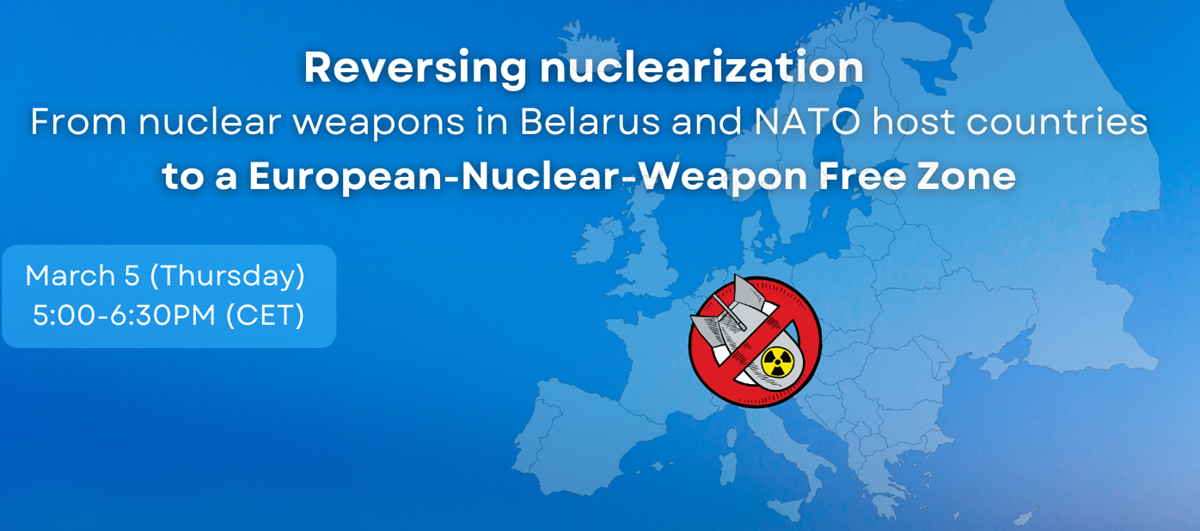
5 March -Online – Reversing nuclearization:
From nuclear weapons in Belarus and NATO host countries to a European-Nuclear-Weapon Free Zone
11am-12:30pm Eastern Time USA / 5pm-6:30pm CET

of the week – Advocating for a
nuclear free beach – https://www.samuellawrencefoundation.org/
The Samuel Lawrence Foundation advocates for a Nuclear Waste Free Beach at San Onofre, join us and take action!

10 March A LIVE WEBINAR THE REAL EFFECTS OF NUCLEAR POWER
What the Industry Isn’t Telling Us
1:00 PM Mountain, 2 pm Central, 3 pm Eastern. Live on the Keepers of the Water Facebook page


18 March Webinar @ 1 PM EST: An Assessment of SMR Projects: The Case of Canada
register for the zoom:
https://us02web.zoom.us/webinar/register/WN_o8BIIOUvQ2ONJR1nta65DQ#/registration

of the week – STOP SMALL MODULAR REACTORS IN CANADA
To see nuclear-related stories in greater depth and intensity – go to https://nuclearinformation.wordpress.com
-
Archives
- March 2026 (37)
- February 2026 (268)
- January 2026 (308)
- December 2025 (358)
- November 2025 (359)
- October 2025 (376)
- September 2025 (258)
- August 2025 (319)
- July 2025 (230)
- June 2025 (348)
- May 2025 (261)
- April 2025 (305)
-
Categories
- 1
- 1 NUCLEAR ISSUES
- business and costs
- climate change
- culture and arts
- ENERGY
- environment
- health
- history
- indigenous issues
- Legal
- marketing of nuclear
- media
- opposition to nuclear
- PERSONAL STORIES
- politics
- politics international
- Religion and ethics
- safety
- secrets,lies and civil liberties
- spinbuster
- technology
- Uranium
- wastes
- weapons and war
- Women
- 2 WORLD
- ACTION
- AFRICA
- Atrocities
- AUSTRALIA
- Christina's notes
- Christina's themes
- culture and arts
- Events
- Fuk 2022
- Fuk 2023
- Fukushima 2017
- Fukushima 2018
- fukushima 2019
- Fukushima 2020
- Fukushima 2021
- general
- global warming
- Humour (God we need it)
- Nuclear
- RARE EARTHS
- Reference
- resources – print
- Resources -audiovicual
- Weekly Newsletter
- World
- World Nuclear
- YouTube
-
RSS
Entries RSS
Comments RSS
 nuclear-news