Renewables are taking the wind out of new nuclear’s sails.
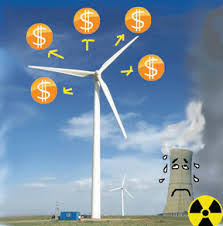
THERE’S been a lot of talk about and PR for new
nuclear in Scotland – but awkward facts intrude. Greenland, the
planet’s thermostat, lost 105 billion tonnes of ice last year, with sea
ice the lowest in the 47-year satellite record. The climate crisis is here
and the choices we make now will determine the success or failure of our
climate actions.
Cost is important, but time is the critical variable –
and time is running out. Global data reveals construction of a new nuclear
station takes 17 or more years. Nuclear power construction has an average
time over-run of 64%.
In comparison, utility-scale wind and solar take on
average only two to five years from planning phase to operation, and
rooftop solar PV projects are down to six months.
At a time when so much
looks grim, the renewable revolution holds out real hope. In 2025, more
power was generated worldwide from renewable energy than from coal and 91%
of new renewables are now cheaper than fossil fuels. The UN confirms that
renewables have increased their lead over fossil and nuclear in terms of
cost.
The result is, wind and solar worldwide now generate 70% more
electricity than nuclear. With each year nuclear adding only as much net
global power capacity as renewables add every two days, nuclear is facing
the same challenges as fossil fuel: uncompetitive costs, stranded assets, a
polluting legacy and severe competition from renewables.
Can new nuclear
generate power in time? In 2025, world net nuclear capacity increased by
4.4 GW, not much more than the UK’s Hinkley Point C project, and 180
times less than new solar and wind capacity. The International Energy
Agency (IEA) predicts 4600 GW new renewable capacity by 2030, meeting 90%
of global electricity demand growth.
Over the past decade we’ve seen
renewable electricity generation increase to triple that of nuclear. By the
end of this decade renewables will out-generate nuclear by up to seven
times. It is entirely possible to mitigate climate impact and sustain a
reliable power system by expanding renewable energy in all sectors, rapid
growth and modernisation of the electricity grid, storage technology
roll-out, increased international interconnections, and using power far
more effectively and efficiently via energy efficiency and management.
The compelling economics of renewables unmask those of fossil and nuclear. With
all key international and national energy organisations and institutes
agreeing that renewables will be doing the heavy lifting for the energy
transition, the future backbone of the global power supply system will be
renewable, sustainable and cost-effective. Scotland has very great
renewables potential and should play to its strengths. New nuclear is
already too late and too costly for the climate and energy crises.
The National 23rd March 2026,
https://www.thenational.scot/comment/25958295.renewables-taking-wind-new-nuclears-sails/
Energy fallout from Iran war signals a global wake-up call for renewable energy
Daily Mail, By ASSOCIATED PRESS, 20 March 2026
HANOI, Vietnam (AP) – The war in Iran is exposing the world´s reliance on fragile fossil fuel routes, lending urgency to calls for hastening the shift to renewable energy.
Fighting has all but halted oil exports through the Strait of Hormuz, the narrow waterway that carries about a fifth of the world´s oil and liquefied natural gas, or LNG. The disruption has jolted energy markets, pushing up prices and straining import-dependent economies.
Asia, where most of the oil was headed, has been hit hardest, but the disruptions also are a strain for Europe, where policymakers are looking for ways to cut energy demand, and for Africa, which is bracing for rising fuel costs and inflation.
Unlike during previous oil shocks, renewable power is now competitive with fossil fuels in many places. More than 90% of new renewable power projects worldwide in 2024 were cheaper than fossil-fuel alternatives, according to the International Renewable Energy Agency.
Oil is used in many industries beyond generating electricity, such as fertilizer and plastics production. So most countries are feeling the impact, while those with more renewable power are more insulated since renewables rely on domestic resources like sun and wind, not imported fuels.
China and India, the world´s two most populous countries, face the same challenge of generating enough electricity to power growth for over a billion people. Both have expanded renewable energy, but China did so on a far larger scale despite its continued reliance on coal-fired power.
Today China leads the world in renewables. About one in 10 cars in China are electric, found the International Energy Agency. It’s still the world´s largest importer of crude oil and the biggest buyer of Iranian oil. But electrifying parts of its economy with renewables has reduced its reliance on imports.
Without that shift, China would be “far more vulnerable to supply and price shocks,” said Lauri Myllyvirta of the Centre for Research on Energy and Clean Air. China also can rely on reserves built when prices were low and shift between using coal and oil as fuel in factories, he said.
India also has expanded its use of clean energy, especially solar power, but more slowly and with less government support for manufacturing renewable energy equipment and connecting solar to its power grid……………………………………………………………………………….. https://www.dailymail.co.uk/wires/ap/article-15663585/Energy-fallout-Iran-war-signals-global-wake-call-renewable-energy.html
As the oil and gas crisis drives the world economy towards another financial crash, green energy is the only viable future
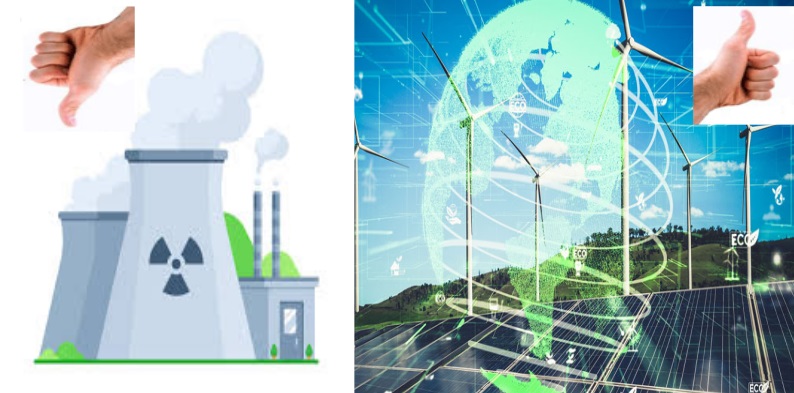
Could this be a watershed moment heralding US geopolitical and technological decline?
David Toke, Mar 19, 2026
Let’s not make a secret of this. The world is hurtling at breakneck speed towards the worst-ever energy crisis. This will be worse than the oil crises of the 1970s. It could be worse even than the oil crisis of 2007-2012, the latter which triggered the global financial meltdown of 2008. Maybe it is small comfort to those billions of people around the world facing hardship in this developing crisis. However, out of the ruins we shall see a market and state-driven renewed drive towards installation of wind, solar, batteries and Electric Vehicles.
Of course, if the US/Israel war with Iran ceased at once and The Straits of Hormuz were reopened by the end of March this apocalyptic scenario could be greatly reduced. Even then, the damage to oil and gas fields would take time to be repaired, and prices would remain high. Yet, time drags on. Reports circulate that the US is planning a military assault to secure the Straits (which would take a long time to assemble and execute), so the likelihood of deep damage to the world economy seems all but certain.
As can be seen in Figure 1 [on original] today’s oil crisis looks much worse than those of the 1970s with Saudi, Kuwaiti and Iraqi oil shut off from transport through the Straits of Hormuz. I take into account in Figure 1 that some oil from these countries, mainly from Iran, but also a minority of the oil from Saudi Arabia, and a trickle from Iraq, will keep on flowing. The release of oil from the IEA’s strategic reserve has some short-term public relations calming effect, but has modest physical effect. But on top of all of this gas production from Qatar and the UAE is shut down. This accounts for 6 per cent of the world’s gas production, although only around half of this is exported in the form of Liquified Natural Gas (LNG)……………………………………….
Regrettably, the energy crisis to which we are already entering may well be even worse than the 2007-2014 high price period. This is because our current crisis is not just an oil crisis, but also a crisis of shortage of natural gas. Added to that, as if more was needed, the closure of the Straits of Hormuz means that other important goods such as large amounts of nickel and material for fertilisers is also blocked off. A vicious round of inflation is striking the world, and what we are seeing now in terms of increases in oil and gas price increases are only the low foothills of the process.
Energy insiders recognise that current oil prices, increasing now above $100 per barrel (up from around $65 per barrel in February), are not yet reflecting the market shortages. Oil traders may be hedging on the conservative side, expecting a political deal, or at least an understanding, to end the War and open the Straits of Hormuz soon. But, if, as seems increasingly likely, the war drags on for months, then physical market realities will send the oil price into a very steep climb.
………………………………………. Indeed market price equilibrium will only come when the amount of oil and gas demanded shrinks to the amount of available supply. Logically, such dramatic contractions in capacity as currently exist can only ultimately happen with massive price increases. This will produce massive economic recession around of the world.
……………………………………..Trump’s USA and Israel can blow up Iranian gas fields and increase the profits of interests of US oil and gas companies without immediately affecting US consumers. This is because the US natural gas market is largely insulated from world gas prices. But Europe will pay heavily for this since natural gas prices in Europe are governed by prices of world LNG supplies. Further destruction of natural gas supplies will see European gas prices go even faster upwards and for much longer than they are anyway. Ultimately, the US economy will get blowback as the rest of the world’s economy collapses through the oil and gas crises – and of course also as US consumers see their gasoline bills spiral upwards beacuse of increases in oil prices.
Each oil crisis has created a new green energy revolution……………………………………..
This oil crisis will boost renewables, EVs and heat pumps
So what technological leaps will this latest oil crisis generate? Certainly, the crisis will make wind power, solar PV, batteries, heat pumps and Electric Vehicles essential means to help mitigate the effects of the coming economic cataclysm. Without solar and wind power the European gas crisis of 2022-3 would have been all the worse. This oil and gas crisis would be all the worse without the amount of solar PV, wind power, batteries and also heat pumps that are in operation.
According to the European Heat Pump Association, there were 25.5 million heat pumps operating in its 19 member states in 2025. This saves around 5 per cent of European gas supply. In the UK renewable energy generates getting on for half of UK electricity. If this were all produced from natural gas, then UK natural gas consumption would be around a third higher than it is………………………………………………………
……………………………. when the world rebuilds its energy systems there will be increased emphasis on green energy technologies. China, which is deeply involved in green energy technology, will see its economic and geopolitical position strengthened. Although US oil and gas companies will make enormous profits from the War, US citizens will be impoverished by rising fuel and food prices, and world respect for the US as a geopolitical actor will be much reduced into the bargain. The longer this current crisis continues, the greater the risk will be of another global financial crash.
Trump-USA’s attempt to prevent green technological progress will make the USA a loser compared to the rise of China. Finally, and crucially, the battle to combat the climate crisis through market/technological changes and changes in people’s behaviour will be boosted. It would, of course, be much better to do this through peace, not war. https://davidtoke.substack.com/p/as-the-oil-and-gas-crisis-drives
“Grow your own and buy local”: Networks seek change and flexibility to manage a 100 pct renewable grid.
RENEW ECONOMY. Giles Parkinson, Mar 19, 2026
The head of Australia’s peak network group has called for regulatory change and more flexibility for homes and their power assets, to help local networks manage the consumer-driven push towards 100 per cent renewables across the country.
Andrew Bills is the chair of Energy Networks Australia, and finds himself at the cutting edge of this transition as CEO of SA Power Networks, where the output of rooftop solar alone exceeds grid demand about every second day of the year.
South Australia is expected – within 18 months – to become the first gigawatt-scale grid in the world to reach 100 per cent “net” renewables (the net refers to the fact that it imports and exports at times and is not an isolated grid), and is already running at a 75 per cent share of wind and solar.
Much of that solar comes from households, with nearly half (48 pct) of all homes supporting a total of 3.2 gigawatts of rooftop solar capacity, which is significant in a grid with average demand less than half of that.
That solar penetration is also world leading, and at a level that stuns network peers in other countries. It is rapidly being followed by a faster uptake of home batteries (double that of the country average), and a growing interest in electric vehicles.
This has required South Australia to be at the forefront of key technologies designed manage this home energy revolution, initially with the blunt and rarely used “solar switch-off”, required by the market operator as a last resort to help maintain grid security.
That has been followed, more successfully, by the rollout of innovative technologies that allow for flexible exports for solar households, and no longer limits the amount of rooftop solar that can be installed.
iis now being augmented with the trial installation of home energy management systems and tariffs that reward homes for cutting imports, as well as exports, at key times………………………………………………………………………………………………………………………………………………………………………………………………. https://reneweconomy.com.au/grow-your-own-and-buy-local-networks-seek-change-and-flexibility-to-manage-a-100-pct-renewable-grid/
Renewables projected to overtake gas on cost within five years, report finds
20 February 2026, https://eibi.co.uk/news/renewables-projected-to-overtake-gas-on-cost-within-five-years-report-finds/
Renewable electricity is set to become the most economically favourable source of power in the UK by 2028 to 2029, according to new analysis by the Renewable Energy Association (REA), even after accounting for the full costs of expanding grids, storage and transmission.
The findings are set out in the Renewable Energy Association’s Renewable Cost Analysis Report 2025, which models two scenarios for the electricity system. Under a ‘Clean Power 2030’ pathway, annual investment of about £40bn would expand renewable capacity and cut the share of unabated gas to below 5%.
An alternative ‘No New Renewables’ scenario assumes no additional wind or solar capacity until 2040, with natural gas meeting future demand, which would mean lower upfront spending but higher ongoing fuel costs.
The REA concludes that although electricity generation will remain expensive across all technologies, renewables represent the most cost-effective long-term option. Including employment impacts, the analysis suggests renewable generation becomes the net economic winner by the end of the decade.
The modelling assumes flat gas prices over the next five years. If gas prices fall by 25% between 2025 and 2030, the point at which renewables become cheaper is delayed by only one year when excluding job benefits.
The report says its analysis includes all additional grid, transmission, storage and system costs associated with higher renewable deployment, in contrast to traditional levelised cost estimates that focus on generation costs alone.
It also highlights wider benefits from renewables, including reduced exposure to volatile international gas markets, improved energy security and environmental gains such as lower carbon emissions and cleaner air.
The REA recommends continued government support to manage short-term electricity costs, including possible reductions to green levies and value added tax, alongside stable policy to encourage investment. It says early investment in renewables would deliver long-term economic benefits, domestic employment and greater energy security for the UK.
Read REA’s Renewable Cost Analysis Report 2025.
Nuclear energy is a distant prospect – wind and solar are here now
Sceptics don’t outright deny climate change but dismiss solutions as unrealistic
Sadhbh O’Neill, Irish Times 26th Feb 2026
Recent commentary on Ireland’s energy system is a reminder that not everyone is comfortable with change.
For people unconvinced by the potential of renewable energy to provide all our energy needs, the focus of energy policy should still be on large-scale sources of generation, as it was in the glory days of the ESB when it ran everything (and it took up to 18 months to get a grid connection).
Amid nostalgia for a simpler past, there are still voices making the case that fossil fuels and nuclear energy should form the backbone of the grid. This case is made on the basis that renewables can only match demand up to a certain point due to their intermittency, low energy densities and the challenges of integrating them into the grid.
And it is always hard to make the case for energy efficiency and demand management when fossil fuels, on paper at least, are plentiful, and there is no sign yet of the big energy producers slowing down extraction or divesting from fossil energy………………………………………………..
With regard to nuclear energy, there is a lot of interest in small modular reactors (SMRs), which, at approximately 400MW generating capacity, would be much more appropriate in scale for Irish electricity needs. The problem with nuclear energy is that traditional power plants, at about 1.3GW, are too individually large for Ireland, not to mention the likelihood of a nuclear plant taking decades to secure the required approvals and get built.
The ESB in its 2025 Emerging Technology Insights report notes that SMRs remain unproven due to a lack of demonstration projects. None of the SMR projects to date will have a demonstration plant completed before 2030.
Given that we are just four years away from key climate deadlines, nuclear power is so unrealistic in the context of what we need to do right now that it might as well be irrelevant.
The SEAI Energy in Ireland 2025 report highlights that Ireland needs proven, immediate solutions to avoid missing its second carbon budget (2026–2030). Luckily for Ireland, we have abundant renewable resources, which have never been so cheap to develop.
Renewable energy costs have come down so fast and by so much that even when you factor in the grid upgrades required, in 90 per cent of the world they outcompete new fossil fuel infrastructure easily, including the US. This is because wind and solar technologies are proven, scalable and cost-competitive over the long run, making them more attractive to investors…………………………………………. https://www.irishtimes.com/environment/climate-crisis/2026/02/26/nuclear-energy-is-a-distant-prospect-wind-and-solar-are-here-now/
Scottish communities need obstacles to local energy removed .

26th January, By Liz Murray, Community Energy Scotland
SINCE locals installed four wind turbines on the Isle of Gigha some years ago, the benefits across the whole community have been huge.
The hundreds of thousands of pounds made from selling their locally generated
electricity to the grid has come directly back into the community and has
been used to help fund housing developments and restorations, business unit
development, moorings and tourism accommodation.
Jane Millar, development
manager of the Isle of Gigha Heritage Trust, said: “The turbine income
has been absolutely essential to the success of Gigha. We have grown our
population from 90 to 170; we have been able to build decent housing that
has retained and recruited young families to live here.
“We are now able
to protect and restore the famous Achamore Gardens and our new camping and
motorhome facilities ensure we provide a much better visitor experience
while reducing vehicle traffic and protecting our beautiful island.”
There are other stories like this in Scotland, where local communities own
and control renewable energy developments. Different communities do
different things with the income – that’s what being in control is
about. But the common factor is that the income generated from
community-owned renewables stays in the community, is invested in things
that benefit people across the community – and in many cases is used to
bring in further income.
Research has shown that community-owned wind
provides 34 times more financial benefit to local communities than
privately owned wind farms. And community energy projects also generate
10-fold additional local employment and income impact, over and above the
energy project itself.’
There’s so much potential but there aren’t
nearly enough stories like that of Gigha. For Scotland to have more stories
like Gigha, we urgently need the obstacles to community-owned energy to be
removed, so the benefits of Scotland’s renewable energy revolution can be
more fairly shared.
The National 26th Jan 2026, https://www.thenational.scot/news/25794945.scottish-communities-need-obstacles-local-energy-removed/
Wind is certainly not the only renewable power source in Scotland
The National 12th Jan 2026, Alexander Potts
I WOULD like to reply to Lyndsey Ward (Letters, Jan 6) to say that it isn’t the SNP that look silly for not wanting nuclear power plants in Scotland, but those who advocate that we build them.
Statistics published last month showed that Scotland produced 115% of electricity by renewables for the previous year (2024/2025). In other words, we produced 15% more than we needed by renewables alone. And yes, we do use other sources to produce electricity when needed. As we export 40% of electricity to England from the above 115% figure, we are certainly way above what our/Scotland’s demands are, so do we actually need more generating capacity?
I of course acknowledge that at times the wind turbines are switched off, but as I have stated, we do have other means to produce electricity. However, I do have to ask Lyndsey why she didn’t mention that we also generate renewable electricity by hydro power, and have been since the 1950s, as well as solar and tidal power? In that respect, Lyndsey has fallen into the same old trap as others in that she assumes we only generate renewables by the one source and that we don’t have back-up facilities.
Lyndsey also forgets to mention one very important fact in Scotland’s renewable project, in that we pump the water back up to the reservoirs at off-peak periods, so the one thing that we aren’t going to run short of is hydro power. In a similar fashion, people assume that solar panels only work in bright light. However, they work when there is a light source available and are producing power from early morning to evening more or less all the time, even in overcast conditions.
Although tidal power is still at the early stages of development, its only drawback is that its doesn’t produce power at slack water periods, which is about two hours per day (two one-hour periods per day). The interesting thing about that, though, is that slack water time is different all around the coast, so the more that potentially come online, the more that minor problem is overcome. As tidal energy production is submerged, then there won’t be visual evidence as with wind turbines………………………………………………………………………. https://www.thenational.scot/business/25756714.wind-certainly-not-renewable-power-source-scotland/
Elon Musk Slams Nuclear Energy As ‘Super Dumb’, Declares Solar Power The Real Future.

Elon Musk’s solar business, anchored by the 2016 Tesla-SolarCity merger, now operates under Tesla Energy, offering solar panels, Solar Roof systems, and battery storage to promote renewable home energy solutions.
NDTV, Edited by: Nikhil Pandey, Offbeat, Dec 16, 2025
After recently making headlines for his comments on womanhood, Elon Musk has once again stirred the internet, this time with a blunt take on the future of clean energy. The Tesla and SpaceX CEO has taken a jab at nuclear power, calling it inefficient compared to solar energy.
In a viral post on X, Musk dismissed the global obsession with building nuclear fusion reactors on Earth, calling the idea “super dumb.” He argued that instead of chasing complex nuclear solutions, humanity should focus on harnessing solar energy, the very source that powers our entire planet naturally.
He argued that humanity is ignoring the most powerful fusion reactor already available, the Sun.
“The Sun is an enormous, free fusion reactor in the sky. It’s super dumb to make tiny fusion reactors on Earth,” Musk wrote on X. He added, “Even if you burned four Jupiters, the Sun would still account for nearly 100% of all power ever produced in the solar system. Stop wasting money on puny little reactors – unless you’re openly admitting they’re just science experiments.”
At the heart of Musk’s argument is the idea that solar power is vastly underused. He views it as the most abundant, clean, and logical alternative to fossil fuels. His blunt remarks, telling governments and companies to quit investing in miniature fusion projects unless they’re labelled as experimental, quickly gained massive attention online, sparking fresh discussions on the direction of global energy policy…………….
Another user argued that if sunlight were a weapon, humanity would have harnessed solar power centuries ago, noting that just 1/10,000th of the solar energy hitting Earth could meet all global energy need…………………………. https://www.ndtv.com/offbeat/elon-musk-slams-nuclear-energy-as-super-dumb-declares-solar-power-the-real-future-9824354
Transition will halve our energy costs by 2050

NESO report says net zero will make energy cheaper within 25 years
Energy Live News 11th Dec 2025
Britain could halve its energy spending by 2050 as decarbonisation cuts costs and shields the economy from fossil fuel shocks.
That is the headline finding from NESO’s new analysis of the Future Energy Scenarios 2025 which lays out three illustrative routes to net zero and the price tags attached.
NESO says energy-related costs fall in every pathway dropping from roughly 10% of GDP today to around 5-6% by mid-century even as demand rises due to population growth, economic expansion and power-hungry data centres.
The reason is simple. Spending shifts from imported fossil fuels to homegrown renewables, stronger networks and efficient electric heating which cut operating costs and create local jobs.
The report also shows just how much a net zero system protects the country………….. https://www.energylivenews.com/2025/12/11/transition-will-halve-our-energy-costs-by-2050/
Renewables deliver nearly two thirds of power fed to grid in Germany, not including self-consumption

Nearly two thirds of all electricity fed into Germany’s public grid
between July and September 2025 came from renewable power sources, the
country’s statistical office Destatis said, based on preliminary data.
With 98.3 billion kilowatt-hours (kWh), wind turbines, solar panels and
other renewables contributed 64.1 percent to the electricity mix, up from
63.5 percent in the same period last year. Total renewable power production
rose three percent compared to the third quarter of 2024, while total
electricity production increased by two percent. A robust expansion of
renewable power sources led to record output levels for a third quarter:
Wind power production increased by more than ten percent compared to the
third quarter of 2024, reaching a share of over one quarter (26.8%) of the
power mix, while solar PV output rose 3.2 percent to a share of 24.1
percent.
Renew Economy 9th Dec 2025,
https://reneweconomy.com.au/renewables-deliver-nearly-two-thirds-of-power-fed-to-grid-in-germany-not-including-self-consumption/
Trump’s AI Push May Hinge on Renewable Energy
By Kyle Stock and Mark Chediak, December 5, 2025 , https://origin.www.bloomberg.com/news/newsletters/2025-12-04/how-trump-s-renewables-roadblocks-can-stall-the-ai-boom
President Donald Trump is pro-AI and anti-renewables. But those two stances are increasingly contradictory: Data centers need quick power on the cheap, and that’s exactly what renewables offer.
Today’s newsletter takes you inside the mismatch and why opposing renewables might do more than hinder the US in the battle for AI supremacy.
The Trump administration is moving to fast-track the construction of power-hungry data centers as a matter of national security. At the same time, it’s adding roadblocks for new solar and wind farms.
But the two policies could be at odds: Hindering renewable energy projects risks slowing the AI boom — and could exacerbate rising electricity prices, a slew of data suggests.
“It’s an all-hands-on-deck moment right now to get the power to supply this,” said Robert Whaley, director of North American power at Wood Mackenzie, an energy consultancy. “In the next 10 years, there’s really nothing to replace renewables.”
The AI explosion — and its energy demands — is happening much faster than the pace at which utilities typically plan and build large power plants. In response, tech giants like Meta Platforms Inc. and Alphabet Inc.’s Google have taken extreme measures to keep up, cobbling together data centers in tents and signing contracts for their own power plants.
Wind and Solar Are Now Cheaper
Cost to build electricity generation in dollars per megawatt hour, based on recent projects and fuel costs
Renewable energy so far remains the fastest and cheapest option to add power to the grid. Nearly 80% of the planned power plant capacity in the pipeline is tied to renewable sources, according to filings with federal regulators and grid operators compiled by Cleanview.co, an energy data company.
The number of applications for natural gas and nuclear facilities, the options President Donald Trump is embracing to power the AI surge, is much smaller, making up about 14% of planned capacity.
The dynamic creates a potential political challenge for Trump, whose goal of using the AI boom as an engine for the American economy risks blowback at the ballot box if voters blame the data centers he’s championed for higher power bills.
“President Trump is expanding base load power from reliable energy sources like natural gas, coal, and nuclear to support growing electricity demand from AI and data centers,” said Taylor Rogers, a White House spokesperson. “Intermittent and unreliable energy sources like offshore wind that were propped up by the Green New Scam simply cannot generate the sustained power needed to make the United States the global leader in cutting-edge technologies like AI and quantum computing.”
US New Electricity
New electrons from solar, storage and wind are expected to outnumber those of new natural gas plants almost six-fold in the next 10 years
But the cost to build solar and wind farms plummeted in the years before those incentives were scrapped. Meanwhile, building up enough gas and nuclear plants to power data centers may prove too slow and expensive. Gas turbines, critical equipment to turn natural gas into electricity, are in short supply, and even though Trump is moving to accelerate permitting of the next generation of small-modular nuclear reactors, the next wave of those aren’t expected to be built until the end of the decade at the earliest.
At this point, battery storage systems, solar arrays and wind farms are faster and cheaper to build per kilowatt of capacity than anything else, according to Lazard.
Another advantage to renewable-powered data centers is that those equipped to supply their own power during heatwaves and other emergencies can begin operations much more quickly than those reliant solely on traditional utility hookups, according to a new study by Princeton University’s ZERO Lab in conjunction with energy software firms Camus Energy and encoord.
Installing onsite natural gas turbines, solar panels or batteries means data centers can achieve a speedier connection to the grid because they will represent less of a demand stress when electricity is tight. In some cases, the wait time can be cut by as much as five years — a significant difference in an industry where grid hookups can stretch up to seven years.
Read the full stories on how renewables projects are quietly getting built
South Australia averages 100 pct wind and solar over week, 90 pct over last 28 days

South Australia – the country’s most advanced renewables grid – has
average more than 100 per cent net renewables (compared to state demand)
over the past week, and more than 90 per cent renewables over the last 28
days. It is not the first time that South Australia has reached 100 per
cent renewables – it has done so previously over the Christmas/New Year
period – but it marks a significant milestone, given that its mix of
renewables is made up entirely of variable wind and solar, and with no
hydro or even biomass to speak of.
Renew Economy 2nd Dec 2025, https://reneweconomy.com.au/south-australia-averages-100-pct-wind-and-solar-over-week-90-pct-over-last-28-days/
Inside the power-hungry data centres taking over Britain.

Our thirst for AI is fuelling a new construction wave: of giant data centres. But can ourelectricity and water systems cope — and what will the neighbours say?
Plants [like the one] run by the company Stellium on the outskirts of
Newcastle upon Tyne, are springing up across the country.
There are already
more than 500 data centres operating in the UK, many of which have been
around since the Nineties and Noughties. They grew in number as businesses and governments digitised their work and stored their data in outsourced “clouds”, while the public switched to shopping, banking and even tracking their bicycle rides online.
But it was in 2022, when a nascent
technology company called OpenAI launched ChatGPT, that the world woke up to the potential of AI and large language models to change the way the planet does, well, just about everything.
It can do this thanks largely to advances in chip design by the US company Nvidia — now the world’s most valuable (and first $5 trillion) business. The trouble is, a typical 4334wChatGPT query needs about ten times as much computing power — and electricity — as a conventional Google search.
This has led to an
explosion in data centres to do the maths. Nearly 100 are currently going
through planning applications in the UK, according to the research group
Barbour ABI. Most will be built in the next five years. More than half of
the new centres are due to be in London and the home counties — many of
them funded by US tech giants such as Google and Microsoft and leading
investment firms. Nine are planned in Wales, five in Greater Manchester,
one in Scotland and a handful elsewhere in the UK.
The boom is so huge that
it has led to concerns about the amount of energy, water and land these
centres will consume, as residents in some areas face the prospect of
seeing attractive countryside paved over with warehouses of tech. Typically
these centres might use 1GW (1,000MW) of electricity — more power than is
needed to supply the cities of London, Birmingham and Manchester put
together.
Times 29th Nov 2025, https://www.thetimes.com/business/technology/article/inside-britains-ai-data-centre-boom-can-the-grid-keep-up-jllzb3b0p
We must embrace reality with cheap green energy
Critics will say we can’t afford to transition away from fossil fuels.
When you come face to face with the impacts, it’s reasonable to argue
that we can’t afford not to. But something interesting is starting to
happen. Around four or five years ago, it became cheaper to generate
electricity from the sun and wind than it is by setting things on fire.
Renewable energy has been getting so plentiful, to the point that some
governments are literally giving it away. In Australia, where almost 40% of
homes have solar panels on their roof, the government announced that they
have so much solar energy that from January next year, Australians will get
three free hours of electricity every single day. Whether you have a solar
panel or not, for those three hours, you can charge your car, run the
washing machine or even store up your home battery and run the house for
free all night.
At a time when it was announced that the energy price cap
is set to rise slightly here in the UK, and when the average cost of
heating and running a home is close to £1800, it’s hard not to feel
jealous of those Australians who can look forward to free power for three
hours a day.
Even more astonishingly it’s China which is driving this
change towards cleaner energy. When I lived in China back in the early
2000s, we had toxic smog so thick you couldn’t see the apartment block
across the road. Chinese cities used to dominate the top 10 most-polluted
cities in the world, today they barely feature in that most grubby of
lists.
In May of this year, China installed new solar and wind energy
systems that generated as much electricity as Poland generates all-year
round, from all available sources, and while they continue to construct
more coal-fired power stations, those stations run at most at 50% capacity,
and the country’s carbon emissions are thought to have peaked.
These power stations are used almost as back-up power, because they’re more
expensive to run than solar or wind farms, and once the next breakthrough
comes in the form of battery storage, experts argue that dirty power
stations will grow obsolete. China has figured out that clean energy and
renewables are the way forward, because they will ultimately prove to be
cheaper and more profitable.
They’ve made more money exporting green tech
in the past 18 months than the US has made in exporting oil and gas in that
same period. While America is betting the house on AI being the future,
China has gambled on renewable energy and clean tech being the way forward.
In Europe, people are nipping down to their equivalent of B&Q to pick up
plug-in solar panels they can hang off their balconies. These cheap and
cheerful solutions can provide up to 25% of an apartment’s energy usage,
and are as easy to use as plugging in a toaster. It’s such an innovative
– and useful – development that the UK Government has launched a study
to see if it could be rolled out here.
Regulations would need to be
reformed, but if this could be achieved, we could soon access the kind of
cheap and convenient solution that close to 1.5 million Germans enjoy.
It’s easy to feel overwhelmed when faced with the challenge of a warming
planet, and dither and delay from those in power. But ultimately we’ve
got more power than we think. Environmentalist Bill McKibben argues that
economics dictate that in 30 years’ time we’ll be running this planet
on solar and wind energy anyway. It’s up to us to determine how long we
want to wait to embrace reality, and cheaper energy bills.
The National 26th Nov 2025,
https://www.thenational.scot/politics/25650532.must-embrace-reality-lower-bills-cheap-green-energy/
1 This Month

of the week – Shut Down Drone Warfare!


Tell the Ukrainian Government to Drop Prosecution of Peace Activist Yurii Sheliazhenko

Petition to revoke the licensing of the Near Surface Nuclear Disposal Facility (NSDF) at Chalk River. https://www.ourcommons.ca/petitions/en/Petition/Details?Petition=e-7247
To see nuclear-related stories in greater depth and intensity – go to https://nuclearinformation.wordpress.com
-
Archives
- March 2026 (237)
- February 2026 (268)
- January 2026 (308)
- December 2025 (358)
- November 2025 (359)
- October 2025 (376)
- September 2025 (257)
- August 2025 (319)
- July 2025 (230)
- June 2025 (348)
- May 2025 (261)
- April 2025 (305)
-
Categories
- 1
- 1 NUCLEAR ISSUES
- business and costs
- climate change
- culture and arts
- ENERGY
- environment
- health
- history
- indigenous issues
- Legal
- marketing of nuclear
- media
- opposition to nuclear
- PERSONAL STORIES
- politics
- politics international
- Religion and ethics
- safety
- secrets,lies and civil liberties
- spinbuster
- technology
- Uranium
- wastes
- weapons and war
- Women
- 2 WORLD
- ACTION
- AFRICA
- Atrocities
- AUSTRALIA
- Christina's notes
- Christina's themes
- culture and arts
- Events
- Fuk 2022
- Fuk 2023
- Fukushima 2017
- Fukushima 2018
- fukushima 2019
- Fukushima 2020
- Fukushima 2021
- general
- global warming
- Humour (God we need it)
- Nuclear
- RARE EARTHS
- Reference
- resources – print
- Resources -audiovicual
- Weekly Newsletter
- World
- World Nuclear
- YouTube
-
RSS
Entries RSS
Comments RSS
 nuclear-news