Techno-optimism alone won’t fix climate change.

Sussex Energy Group 12th May 2025 by Ruby Loughman , https://blogs.sussex.ac.uk/sussexenergygroup/2025/05/12/techno-optimism-alone-wont-fix-climate-change/
This blog post was originally published by the Energy Demand Research Centre (EDRC), 2 May 2025, written by Professor Mari Martiskainen.
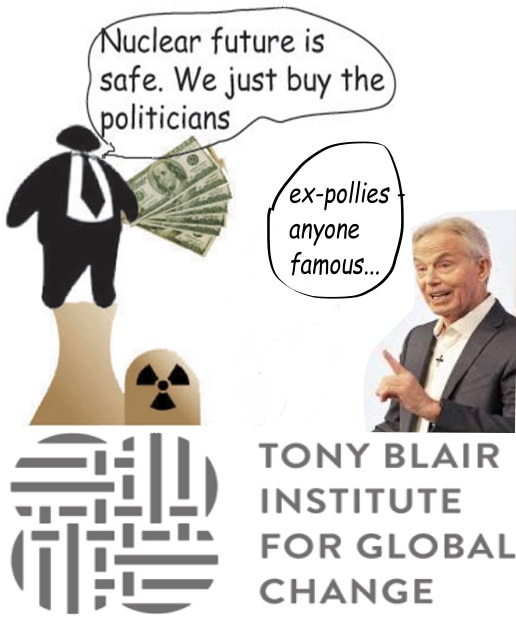
Ex-prime minister Tony Blair was making headlines this week by saying that current Net Zero policies are ‘doomed to fail’. In a new report by the Tony Blair Institute (TBI), he argues that voters “feel they’re being asked to make financial sacrifices and changes in lifestyle when they know the impact on global emissions is minimal”. It is an unprecedented call from a former prime minister whose party has been leading climate action in the UK. I will pick up on three key points in relation to the importance of climate action.
The science on climate change is clear
First, the science is clear. Unless we take action, climate change is going to have even more devastating impacts on our societies and the global economy. Countries such as China are seeing this as a big financial opportunity in winning the green race. The evidence on the economic prize is sound and clear: the opportunity for the UK economy is enormous relative to the impact we can have on global emissions, where green growth should be seen as this century’s central opportunity for growing more equitable prosperity.
People want climate action and clear government leadership
Second, people want to take climate action, and for that they want clear leadership from government. While the TBI report questions people’s willingness to undertake lifestyle choices, for example, it is clear from a host of academic and policy studies that people want to act and are ready to change, as long as they get clarity on what is expected. For example, the world’s largest standalone survey on climate change by UNDP found that 80% of people globally want their country to do more on climate change, and 72% want their country to move away from fossil fuels to clean energy quickly.
An academic survey of 125 countries by Andre and colleagues found that “69% of the global population expresses a willingness to contribute 1% of their personal income, 86% endorse pro-climate social norms and 89% demand intensified political action.” Many people have important conditions for this transition, such as it being fair. Crucial issues for policy attention include ensuring that people can have confidence on the value that their own financial commitments will deliver, privately and publicly. This means also the government committing to a genuinely ‘just transition’ in terms of jobs and delivering greener growth.
People must be at the centre of climate solutions
Third, the report calls for ‘actions for positive disruption’, and by this it means accelerating and scaling technologies that capture carbon, harnessing the power of AI, investing in frontier energy solutions, and scaling nature-based solutions. The latter are very welcome, but a major focus on nuclear, carbon capture and AI relates to techno-optimism and the widely debunked approach that technology alone will fix the world’s problems.
This approach leaves out a range of positive socio-technical approaches where people are at the centre of climate solutions. It also misses out on the numerous benefits that could be achieved by engaging citizens in the energy transition. A truly positive disruptive action would be for example to question the high-consuming lifestyles and excess energy consumption that many countries have, including some of those petrostates that TBI has worked for.
It also needs to recognise the opportunity that energy demand action can have in reducing emissions while also enabling a better quality of life for many. The TBI report for example claims that “proposed green policies that suggest limiting meat consumption or reducing air travel have alienated many people rather than bringing them along”. However, our research with people in the UK, for example, has found that there is support for a substantial shift in diets, including reduced meat and dairy consumption.
Addressing climate change needs to be a joined-up, global effort. This needs trusted, robust and impartial evidence applied in a world of vested interests and misinformation. Net zero policies themselves have not become toxic for the majority, yet we should not discount people’s concerns about the changes needed. Technology alone, however, is not the solution.
How Miliband can make renewables cheaper – but there is really no alternative to renewables
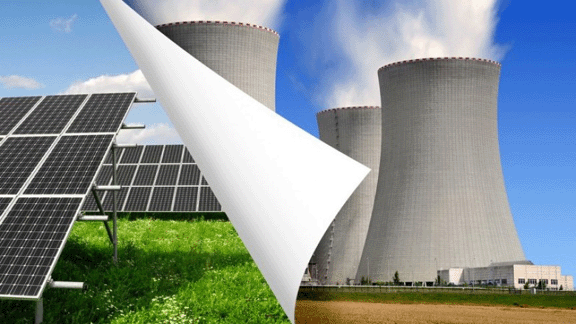
giving longer term contracts to renewable energy developers will make solar and wind schemes even cheaper
In a world where the costs of building all sorts of power plants are
increasing, the Government has a powerful card up its sleeve to keep down
the cost of new renewable energy projects. The Government is considering
extending the contract length under which new renewable energy projects
receive their fixed payments per MWh that is generated.
If contracts for
difference (CfDs) are issued to last for 20 years instead of 15 years, this
could reduce the price of power from the renewable projects by at least 10
per cent (according to my calculations). By offering lower annual returns
over a longer period, the projects can be delivered for a lower fixed price
per MWh that is generated. Such a cost reduction seems likely to offset any
temporary (Trump-induced) cost increases for renewables.
The ‘Trump
effect’ may have led Orsted to discontinue its massive 2.4 GW Hornsea 4
offshore wind project near East Anglia. However, some commentators such as
Jerome Guillet argue that Orsted should have planned better to avoid this
outcome. Other countries operating the CfD system for renewable energy
employ 20-year contracts, and it has always been a mystery to me why the UK
Treasury plumped for a 15 year period. This is an artificially short period
compared to the project lifetime of 25 or 30 years.
Hinkley C, by contrast,
was given a 35-year premium price contract. Meanwhile, the French
Government is pressing the UK Government to put more money into the
long-delayed construction of the Hinkley C power plant. This, it seems, is
part of the price for EDF agreeing to the construction of the successor
Sizewell C plant. This is even though Hinkley C was given a contract that
pays it over £130 per MWh in today’s prices.
That compares to the most
recent auctions of wind and solar PV, whose contracts are worth £71-£83
per MWh at 2025 prices. As I write this, there appears to be a standoff in
negotiations over the terms for Sizewell C between the British and French
governments.
Quite apart from the cost, the idea that nuclear power is
going to be delivered anytime soon is fanciful. The idea that so-called
small modular reactors are any sort of alternative to the big ones is
ridiculous. They are just more expensive still!
At the end of the day,
energy efficiency and renewables are the only real options. After all, over
90 per cent of the new generation being deployed in the world last year was
renewable, almost all of it being solar or wind. The reason this is
happening is that their costs are falling and they continue to fall.
Renewables are the present and future. We need more electricity to
electrify transport, heating, and much else. Sceptics may rail and sneer at
Miliband’s clean power programme. If it has any faults, it is because it
is too mainstream, wasting money and time on carbon capture and storage and
nuclear power.
Dave Toke’s Blog 8th May 2025 https://davidtoke.substack.com/p/how-milband-can-make-renewables-cheaper
Rooftop solar can be torn out of capital’s hands

Decentralised solar has the potential to support co-operative, municipal
and other forms of community ownership and control. Solar power is
expanding across the global south, growing faster in China, India and
Brazil than in older, richer solar developers like the US, Japan and
Germany.
Big, corporate-owned solar farms now account for most of the
world’s solar capacity, but decentralised rooftop solar comes a close
second. Rooftop panels are often owned by households, especially in rich
countries, but overall are more likely to be owned by businesses – energy
companies that lease the rooftops, or industrial firms that generate
electricity for their own use.
Nevertheless, I will argue here, because of
its scale and simplicity, decentralised solar has the potential to support
co-operative, municipal and other forms of community ownership and control.
It can play a role in struggles to supercede the domination of capital with
a socially just society, and to forestall disastrous climate change.
Ecologist 7th May 2025, https://theecologist.org/2025/may/07/rooftop-solar-can-be-torn-out-capitals-hands
Dispatch from France | May ’25

Clean Energy Wire, 02 May 2025, Camille Lafrance
Against the backdrop of the major blackout on the Iberian Peninsula in late April, which also affected parts of France, the country is heading for controversial discussions about its energy strategy for the coming decade. A focus will be on the future roles of renewables and nuclear power. The launch of France’s new generation of nuclear power plants was postponed for several years, while the country’s older reactors continue to cause problems.
- Delay to new generation of nuclear power plants – France’s new generation of nuclear power plants (known as EPR2) is set to go online three years later than previously planned. It is now meant to become operational by 2038, instead of 2035. EPR2 reactors are supposed to be simpler and cheaper to build. The EPR2 programme will be financed by a government loan, which should cover at least half the construction costs. EDF has called for more state money in order to reign in debt.
- Uranium supply and diplomacy – France could lose a large part of its uranium stockpile in Niger as that country’s hostile military leadership might sell it to Russia or China. The mine was operated by French state-owned uranium company Orano’s local subsidiary until the end of 2024. France is entirely dependent on uranium imports. In response, state-owned uranium company Orano is planning to mine the raw material needed for France’s fleet of 57 nuclear reactors in Uzbekistan………………………..
- The Flamanville saga continues – A new malfunction at the controversial Flamanville nuclear power plant has reignited a debate about the future of France’s ageing fleet of nuclear reactors. One of its reactors suffered a steam leak in late March. The incident occurred just one week after the reactor returned to the grid following a two-month maintenance shutdown. The plant already has a twelve-year history of delays and a ballooning budget (from 3.3 billion to 13.2 billion euros)………………………………….. https://www.cleanenergywire.org/news/dispatch-france-may-25
Nuclear Free Local Authorities call for more NGO cash and solar panels on Sellafield nuke plant.

Responding to the Nuclear Decommissioning Authority’s consultation on its latest three-year draft Business Plan (2025 – 8), the NFLAs have made modest calls for more cash for nuclear groups engaged in stakeholder consultation and for Sellafield to install solar panels to reduce electricity use.
Reiterating a request made forcefully by the NFLA Secretary to last year’s NDA Stakeholder Summit, we once more requested financial support for non-government organisations engaged in stakeholder dialogue. At present, a wide range of NGOs are represented on two Forums, one generalist, but the other specialising in examining the challenges attendant to the Geological Disposal Facility. Delegates invited to in-person Forum meetings or other events have historically had expenses reimbursed but have never received an honorarium. At the last Stakeholder Summit, NGO participants were refused reimbursement of travel costs and, facing the possibility of being substantially out of pocket, attendance declined. By way of pushback, we stated in our response: ‘If the NDA truly valued stakeholder consultation it would set out in this Business Plan a commitment to provide some financial support to the NGO community.’
The NFLAs have also made an appeal for GDF Community Partnerships to be granted cash and autonomy to commission third-party independent research and advice. At present, Nuclear Waste Services has a tight hold on the purse-strings and any request for information initiated by GDF panel members is vetted by NWS who draw on NDA group resources or go to other approved external sources.
In the second core strand of our response, we returned to a past aspiration – that the NDA generate ‘an increasing proportion of the energy that it consumes in the course of its work from installing renewable energy technologies on its estate’. Sellafield places great demands on the national grid; the business may have made a great play on replacing its carbon-guzzling shunting locomotives with electric ones, yet, on a recent visit, the NFLA Secretary saw that there was currently zero renewable electricity generation on site. There are a huge number of buildings, many of which will not be decommissioned and demolished for decades, so there must be possible to install solar panels on many of them. The NDA also has significant land holdings around Sellafield that could accommodate wind turbines.
AI’s Energy Demands and Nuclear’s Uncertain Future

Challenges for Nuclear Power
The primary obstacle for nuclear energy, particularly SMRs, is cost—and the fact that they currently do not exist and are therefore unproven. Since the 1960s, only extra-large reactors (600–1,400 MWe) have been economically viable due to economies of scale: it is more cost-effective to build a single large reactor than many smaller ones. SMRs, despite their promise, face similar financial hurdles.
Allison Macfarlane, April 16, 2025 https://gjia.georgetown.edu/2025/04/16/ais-energy-demands-and-nuclears-uncertain-future/
The closing months of 2024 witnessed a series of deals between the nuclear industry and AI technology companies. These agreements may represent a step toward ensuring a steady energy supply for AI while providing much-needed revenue for nuclear power companies. This article examines the challenges of nuclear power meeting AI’s energy demands and argues that these challenges are significant, the demand itself remains uncertain, and a more cautious approach to government investment in this sector is warranted.
The New Deals
In recent months, AI companies have seen a surge in interest in nuclear energy, driven by the increasing power demands of data centers. Tech giants are looking for reliable, low-carbon power sources to sustain their operations, leading to strategic investments in nuclear projects. However, the nature of these investments varies significantly, with some focusing on established technology and others betting on unproven innovations.
In September 2024, Microsoft signed an agreement with Constellation Energy to purchase power for its data centers by restarting the Three Mile Island plant in Pennsylvania. Closed in 2019 due to economic challenges, it is yet to be determined whether Microsoft’s agreement will be financially viable. The $1.6 billion plan involves refurbishing the plant, renewing its operating license, and resuming operations by 2028.
The following month, both Google and Amazon announced investments in small modular reactors (SMRs)—nuclear reactors producing less than 300 MWe—to power future AI data centers. Amazon partnered with X-Energy—a designer of high-temperature gas reactors—and other firms, committing $500 million to reactor design, licensing, and TRISO fuel fabrication. Additionally, Amazon secured an agreement with X-Energy and Energy Northwest, a consortium of Washington state utility companies, to procure at least 320 MWe from four reactor modules.
Meanwhile, Google signed a Master Plant Development Agreement with Kairos, a company developing molten salt-cooled, TRISO fuel-powered reactors. The deal aims to deploy 500 MWe by 2035, with the first reactor expected online by 2030. Kairos is ahead of X-Energy in development, receiving a US Nuclear Regulatory Commission construction license in November 2024 for its small-scale Hermes 35 MWe demonstration reactor in Oak Ridge, Tennessee.
It is essential to distinguish between these agreements. Microsoft is investing in a proven, decades-old nuclear power plant, betting on established technology with the potential for continued operation. In contrast, Amazon and Google are investing in speculative projects. No SMRs currently operate in the United States or Europe. While Russia has deployed a floating SMR and China has a single demonstration SMR, no such reactors exist in the Western world, and their performance and economic viability remain unproven.
Despite the enthusiasm surrounding these deals, their potential to tangibly increase nuclear power remains uncertain. Identifying successful collaboration models between AI companies and the nuclear industry, if any exist, will be crucial. Governments must carefully evaluate the soundness of their investments in this evolving sector and compare them with more immediate, cost-effective solutions such as wind, solar, geothermal, and storage.
The Reality of AI’s Energy Demand
AI data centers may consume vast amounts of electricity, and future expansions could increase energy demand. However, a recent McKinsey report suggests that the primary challenge in the United States is not increasing energy production but overcoming limitations in grid connections and transmission. Expanding transmission infrastructure and using existing and mature energy technology may be a more practical solution.
Moreover, AI’s energy needs may not escalate as anticipated. Emerging innovations, such as in-memory computing, optical data transmission, and 3D stacked computing, could significantly reduce AI’s power consumption. Additionally, increased model efficiency and potential shifts in AI usage patterns could further curb demand.
The Chinese model DeepSeek, for example, demonstrates that significantly less energy may be required for AI advancement. DeepSeek, whose product is similar to OpenAI’s ChatGPT, reportedly consumes ten to forty times less energy than its counterparts due to more efficient chip usage.
Government intervention could also temper AI’s energy consumption. Regulatory bodies have already taken steps to ensure grid stability, as seen when the US Federal Energy Commission blocked a proposed deal between Amazon, Talen Energy’s Susquehanna nuclear plant, and PJM Interconnection. The commission ruled that diverting power to Amazon’s data centers would jeopardize grid reliability and consumer prices.
Challenges for Nuclear Power
The primary obstacle for nuclear energy, particularly SMRs, is cost—and the fact that they currently do not exist and are therefore unproven. Since the 1960s, only extra-large reactors (600–1,400 MWe) have been economically viable due to economies of scale: it is more cost-effective to build a single large reactor than many smaller ones. SMRs, despite their promise, face similar financial hurdles.
NuScale, for example, initially designed a 50 MWe reactor and obtained US Nuclear Regulatory Commission (NRC) design certification, only to later pivot to a more cost-effective 77 MWe model currently under review at the NRC. Oklo Inc., a microreactor designer, followed a similar trajectory, moving from a 1 MWe model to a 15 MWe design, and is now considering a 75 MWe reactor.
Furthermore, claims that factory production of nuclear reactors will reduce costs remain unproven. The Westinghouse AP-1000 reactor, designed for modular assembly and built in a factory, ultimately faced quality control issues that resulted in cost and schedule overruns and contributed to Westinghouse’s 2017 bankruptcy. The two AP-1000 reactors at Georgia’s Vogtle plant took over a decade to complete and cost over $35 billion, far exceeding the original $14 billion estimate.
Construction delays are another persistent issue. Recent reactor projects in France, Finland, the United Kingdom, China, and the UAE have all experienced significant schedule overruns, ranging from three to fourteen years. Cost overruns are similarly widespread, with some projects exceeding initial estimates by factors of two or four
Beyond financial concerns, SMRs introduce additional challenges, including waste disposal, security, and nuclear proliferation risks. The United States has no long-term plan for nuclear waste disposal, as progress towards a deep geologic repository for disposal of high-level nuclear waste remains at an impasse, with Congress last appropriating funds in 2010. Advanced reactors could exacerbate this issue with increased waste volumes and complex processing requirements. Additionally, higher fuel enrichment levels and potential reprocessing needs will necessitate stringent security and safeguard measures, further raising costs.
The Path Forward
Investing in nuclear power—especially unproven SMRs—would require tens to hundreds of billions of dollars, a level of funding dependent on government support. The critical question is whether this investment will yield sufficient returns.
Interest in nuclear-powered AI data centers is growing worldwide, with countries like France exploring nuclear options for new data centers. While expanding nuclear capacity in established nuclear nations may be feasible, introducing nuclear power in non-nuclear countries presents significant hurdles. Establishing legal and regulatory frameworks, securing financing, and integrating reactors into existing grids would take decades and require substantial investment.
Governments must therefore invest carefully. SMRs are unlikely to be ready to meet significant electricity needs for another twenty years or more, by which time electricity markets will have evolved, with cheaper storage and renewables more widely available. The most viable short-term nuclear option—Microsoft’s approach of reviving existing plants—is limited, as few shut-down but not decommissioned plants remain. In the interim, governments should prioritize investments in proven energy sources, such as wind, solar, geothermal, and storage technologies. For non-nuclear nations, a rigorous cost-benefit analysis of nuclear energy, including full lifecycle costs and deployment challenges, is essential. If, in the coming decade, nuclear power—particularly SMRs—proves economically unfeasible, investments in the sector will be for naught.
TIDES, NUKES AND BIRDS
Over the years, I’ve been hugely critical of what I call the ‘all of
the above’ brigade – made-up largely of nuclear enthusiasts who don’t
want to be seen trashing renewables in public but are desperate to keep new
nuclear (both big and small) in the mix to meet future electricity demand
here in the UK – even though it’s abundantly clear that nuclear cannot
compete with renewables on cost, construction time or even reliability. We
now have a wonderful opportunity to do a properly rigorous analysis of
‘nuclear vs renewables’ – this time, with the focus on tidal energy
rather than wind or solar as is usually the case. The biggest threat to the
potential for tidal energy on the Severn is the Government’s obsessive
support for nuclear power – including the prospect of a massive new power
station at Sizewell C on the Suffolk coast (with a Final Investment
Decision said to be “imminent”), as well as ‘in principle’ support
for so-called ‘ Small Modular Reactors.’
Jonathon Porritt 16th April 2025 https://jonathonporritt.com/tidal-energy-severn-estuary-nuclear-vs-nature/
Forget Sizewell C nuclear – go for a warm home plan

April 12, 2025, https://renewextraweekly.blogspot.com/2025/04/forget-sizewell-c-go-for-warm-home-plan.html
Sizewell C will cost much too much and there are much better alternatives. So says a new plan by Alison Downes of Stop Sizewell C and Colin Hines of the Green New Deal Group. They argue that ‘there is a clear political advantage from halting Sizewell C and redirecting the billions saved into making millions of homes more energy efficient, thus reducing fuel poverty’. They say this approach ‘will benefit every city, town, village and hamlet in Britain. It will generate long term, secure jobs, particularly for young people. It will be quick to implement, so by the next election new jobs and cheaper, warmer, healthier homes will have appeared in every constituency’
By contrast, they say ‘should Sizewell C go ahead, it is expected to cost around £40bn between now and when it opens, potentially around 2040: an average of £2.7bn per year for the next 15 years’. But, ‘deducting money already spent, if Sizewell is cancelled now, the public money saved by 2030 is £7.1bn, assuming (as seems likely) no private investors are found to share the cost.’ And they propose that ‘this £7.1bn should be added to the £6.6bn to be spent over the current Parliament on home energy efficiency, as promised in Labour’s 2024 manifesto.’ They say ‘this shift of funds would massively increase the chances of achieving the Government’s aim to ‘Make Britain a clean energy superpower to cut bills, create jobs and deliver security with cheaper, zero-carbon electricity by 2030, accelerating to net zero’.
It certainly does sound a strong case. On costs, they say that ‘no European Pressurised Reactor (EPR) project has ever been completed even close to budget or on time. All six EPR reactors worldwide have or will cost at least double their expected budgets and are, or have been, six to 14 years late. The case of Hinkley Point C is especially stark: EDF’s most recent estimates of the construction cost is up to £35bn [2015], or £46bn in 2023 money – almost double its £18bn [2015] budget when the FID was taken in 2016. These costs do not include financing costs, which EDF has said might double the total construction cost. Hinkley’s Unit 1 is now delayed to between 2029 and 2031, four to six years late, with the second reactor at least a year behind. EDF has made five cost and completion revisions for Hinkley since FID, and with several years to go, it is implausible that there will not be further revisions.’
Claims that there will be ‘replication’ cost savings seem to be illusory: ‘Taishan 1 & 2 in China took well over double the predicted build time and were reportedly 50% over budget. Olkiluoto 3 in Finland was 14 years late and three times over budget, and Olkiluoto 4 was cancelled. Flamanville 3 in France came online (though is not yet up to full power) 12 years behind schedule and four times over budget; £11.2bn [2015] for a single reactor. These repeated failures suggest that learning from previous EPRs has not happened, and at £17.5bn [2015] for each of Hinkley’s two reactors, replication seems to have increased cost’.
As an alternative, the report argues, we should cancel Sizewell and use the money saved to boost home energy efficiency and the Warm Homes plan. It notes that ‘Labour has promised to invest an extra £6.6bn over the next Parliament, doubling the existing planned government investment, to upgrade five million homes to cut bills for families.’ It says the Warm Homes Plan ‘will offer grants & low interest loans to support investment in insulation and other improvements such as solar panels, batteries and low-carbon heating to cut bills. Another aim is to ensure homes in the private rented sector meet minimum energy efficiency standards by 2030, potentially saving renters hundreds of pounds per year.’
And it says this could and should be dramatically expanded, ‘by more than doubling its budget to decarbonise and make the UK’s 30 million homes & buildings energy-efficient’. It notes that ‘the Energy Efficiency Infrastructure Group (EEIG) estimates that to carry out all of the necessary work needed to dramatically reduce emissions from homes between now and 2030 will require at least 250,000 more tradespeople’. And the report says that ‘were the Government to scrap Sizewell C and transfer the £7.1bn saved to making UK homes more energy efficient, this would allow it to fund what the EEIG describes as an ambitious zero-carbon skills strategy, working with industry, unions, schools, and colleges, to tackle any skills gaps that could hinder progress. Examples of required skills include those for designers, builders, and installers of energy-efficient and zero-carbon heating, for which demand will increase sharply. This should also result in a major expansion of high quality and advanced apprenticeships, backed up with new sector-led national colleges.’ And why not! And they should start with the fuel poor and the left behind.
That is very much what the new green heat campaign also has in mind- something that is also being pushed by the Association for Decentralised Energy. It’s part of Labour International’s green deal, looking at all the new green technology options, aiming to create jobs locally, not least by releasing money from having to be spent on high cash-cost heat, with added environmental costs. It says that ‘clean heat can play a major role in regenerating flagging local economies, making them more attractive to new inward investment due to the improved levels of disposable household incomes that result from reduced energy outgoings and increased opportunities to secure better employment and income. Higher levels of local economic demand are most likely to be expended in the local economies in which they arose, growing local economies wealth, health, resilience and prospects; beneficial economic outcomes that will feed up into the national economy.’
Is this sort of future going to happen? The official position is that Sizewell C will be funded by recourse to the Regulated Asset Base (RAB) model, with consumers paying up-front, in advance, before construction even starts. It is claimed that this would mean that, all being well, developers and backers will face less investment risks than otherwise, and can pass on savings to consumers. But will they? And will all go well? There can be big delays and overspends, as we have seen in the past. The report notes that ‘RAB would require residential consumers… to potentially financing half the total construction cost,’ and, if it goes bad, they could even be stuck with paying off excesses into the 22nd Century, when the plant is forecast to be retired.
The other key message from the developers and government is that we need more nuclear- to balance variable renewables. Well this is easily squashed. The last thing you want, if you are trying to back up a variable energy source, is a large, costly and inflexible one that can only run continuously at full output. There are plenty of alternative option for flexible balancing systems including short and long storage. With renewables booming and storage at last getting established, who needs Sizewell? Well it seems not EDF- so the UK has had to provide a further £2.7bn!
Spain’s Nuclear Shutdown Set to Test Renewables Success Story

Plans to shut down all nuclear power plants by 2035 remain unchanged even as other countries delay closures and plan to build more.
Spain is moving forward
with plans to shut down its seven nuclear reactors over the next decade,
despite calls to reconsider, and will instead rely on renewables and
battery storage to fill the energy gap.
Bloomberg 11th April 2025, https://www.bloomberg.com/news/articles/2025-04-11/spain-s-nuclear-shutdown-set-to-test-renewables-success-story
‘An incredibly powerful tool’: Can AI solve its own energy problem?
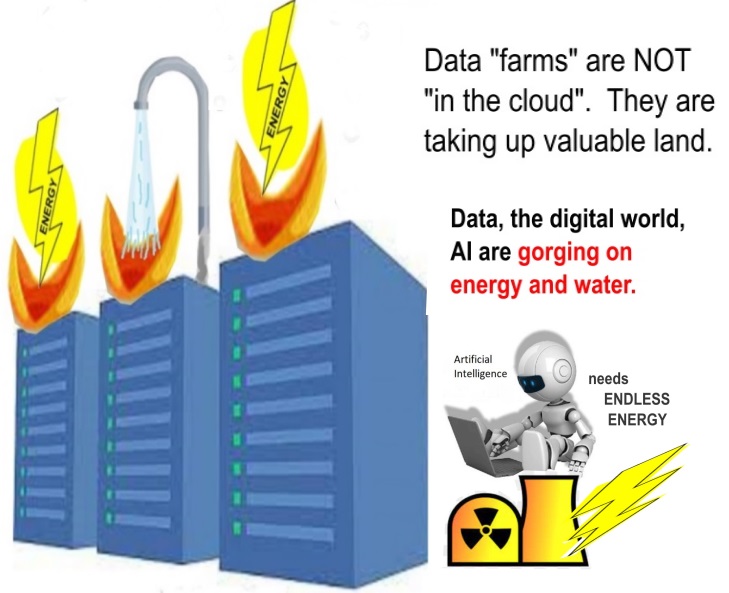
Amber Rolt, 10 April 2025
New IEA study explores how AI is set to drive huge electricity demand while
at the same time offering potential to unlock ‘significant opportunities’
in energy improvements and emissions reductions.
When BusinessGreen asked
‘how bad is AI for the environment?’, ChatGPT had plenty to say. The
Artificial Intelligence (AI) tool patiently responded that training large
language models such as itself are “extremely energy intensive”, explaining
that they use millions of kilowatt-hours (kWh) of electricity, consume more
than 700,000 litres of water for cooling methods, and that each query has a
carbon footprint of up to 10 grams of CO2. “Because these tools are used
millions of times a day, it adds up,” ChatGPT added.
So there you have it,
straight from the horse’s mouth: AI’s impact on the environment and energy
systems is immense. And, according to a special new report from the
International Energy Agency (IEA) dedicated to the subject today, that
impact is set for rapid growth in the coming years. So much so, in fact,
that it warns AI holds potential to “transform the energy sector” over the
next decade.
Still, precisely what that transformation will look like is up
for debate. On the positive side, the report suggests AI can help energy
companies improve efficiency, develop technologies, and could contribute to
emissions reductions. But will these promised efficiencies and
technological improvements be enough to offset the huge surge in energy
demand needed to feed the rapidly growing numbers of data centres that AI
relies on?
Business Green 10th April 2025
https://www.businessgreen.com/news/4412130/incredibly-powerful-tool-ai-solve-energy
Finland backs green hydrogen as Fortum pauses nuclear expansion
28 March 2025, Helsinki Times
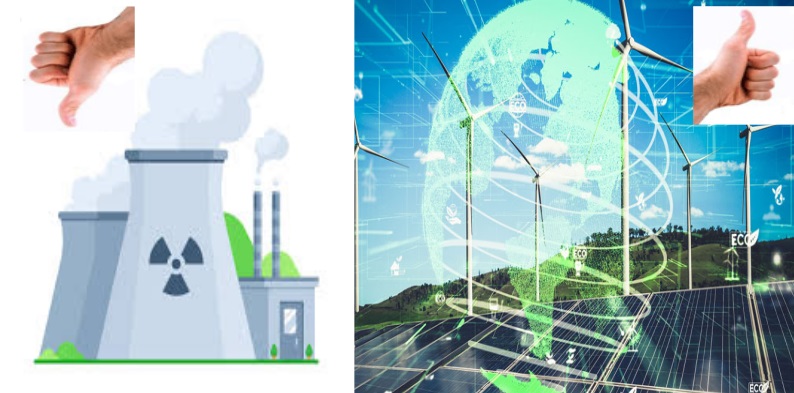
Finnish utility Fortum has ruled out new investments in nuclear power in the near term, citing low electricity prices in the Nordic market and high construction costs. The announcement came as Finland inaugurated its first industrial-scale green hydrogen plant, marking a shift in focus toward alternative energy technologies.
Fortum concluded a two-year study into the feasibility of building new nuclear reactors and determined that such investments are not commercially viable under current market conditions.
New nuclear could provide new supply to the Nordics earliest in the second half of the 2030s, if market and regulatory conditions are right,” said Markus Rauramo, CEO of Fortum.
The company will instead focus on expanding renewable power generation, increasing storage capacity, and extending the life of existing nuclear facilities, including the Loviisa nuclear plant.
The company’s Vice President for New Nuclear, Laurent Leveugle, said a risk-sharing model would be required to make future nuclear investments possible.
“We are not saying that the state has to pay for it, but that the risk must be shared with the different parties: technology providers, investors, utilities, and also the state,” Leveugle told Reuters…………………….
While Fortum has paused new nuclear plans, Finland is pressing ahead with new green energy initiatives. On 26 March 2025, P2X Solutions inaugurated the country’s first industrial-scale green hydrogen production plant in Harjavalta. The event was attended by Alexander Stubb, President of the Republic of Finland.
“Finland has everything it takes to become a clean energy superpower,” Stubb said during his speech at the inauguration……………………………………………………………………………
As Fortum turns to renewables and lifetime extensions for existing nuclear facilities, and P2X accelerates hydrogen development, Finland’s energy policy is shifting toward flexible and decentralised solutions.
The Nordic power market has experienced prolonged periods of low electricity prices, driven by increased renewable capacity and lower demand growth. Fortum has warned that these conditions are not sufficient to support capital-intensive projects like nuclear reactors without regulatory reforms or direct financial support……………………………………………..
Finland’s approach to energy diversification comes amid broader European efforts to reduce reliance on fossil fuels and improve energy security. Green hydrogen and advanced storage systems are seen as essential components of this transition.
Fortum’s position reflects growing caution among European utilities over the costs and risks associated with new nuclear builds. The company has yet to release any cost estimates for new reactors, but industry analysts say capital requirements often exceed €10 billion per unit and construction timelines stretch over a decade.
By contrast, modular hydrogen projects like those developed by P2X Solutions involve lower upfront costs and shorter lead times. They also benefit from growing political and financial support across the EU…………………….https://www.helsinkitimes.fi/business/26416-finland-backs-green-hydrogen-as-fortum-pauses-nuclear-expansion.html
As Nuke Power Dies, Lithium Must Not Be the New Plutonium
https://columbusfreepress.com/article/nuke-power-dies-lithium-must-not-be-new-plutonium-2 30 Mar 25
Atomic Energy’s death spiral has spawned a run to green power.
But the toxic mineral lithium has become a critical pitfall…with clear ways around it that demand attention.
Humankind’s 400+ licensed large commercial reactors embody history’s most expensive technological failure.
Once hyped as “too cheap to meter,” just three “Peaceful Atom” plants have opened in the US since 1996, all of them very late and hugely over budget. Four at Japan’s Fukushima blew up in 2011, with ever-escalating economic, ecological and biological costs. Two in South Carolina are outright $9 billion failures. Projects in Georgia (US), Finland, France and the UK have come with catastrophic delays, overruns and cancellations. So have much-hyped Small Modular Reactors, and the taxpayer-funded idea of restarting nukes already dead.
And in the post DeepSeek era, gargantuan projected power demands for Artificial Intelligence and crypto are coming back to Earth.
Meanwhile the US now gets far more usable electricity from solar, wind and geothermal than from coal or nuclear. China’s wind/solar investments now dwarf its nukes, whose new construction plans are shrinking fast . Likewise those for the world as a whole (except among countries wanting to build nuclear weapons).
Despite nearly seven decades of operation, commercial atomic power still can’t get comprehensive private insurance against the next Fukushima. The recent (likely Russian) February 24, 2025 explosion at Chernobyl warned that a single drone or military mis-hap could ignite yet another mega-radiation release.
None of which will deter a radioactive grab for taxpayer billions. While gutting government, Team Trump is hell-bent to spew still more money at this dying technology. New nukes, SMRs and zombie reactor revivals will get gargantuan sums while generating little if any actual electricity. Corporate Democrats like Gavin Newsom and Gretchen Whitmer will do all they can to stall the green revolution.
Nonetheless, amidst the global rush to renewables, the toxic, expensive mineral lithium is slated for millions of batteries worldwide.
Some will be at the heart of electric cars. Others will back up solar and wind turbines for “when the sun doesn’t shine and the wind doesn’t blow.”
Powerful, efficient, and relatively lightweight, lithium has been viewed as essential for use in electric vehicles and stationary storage. Billions of dollars have been invested in mining, milling and processing lithium, with far more to come. At its best, it has been envisioned at the core of any green-powered transition.
But lithium is volatile, flammable, toxic, challenging to mine, sustain and re-cycle, with ecological, labor and health issues that must be addressed.
On January 15 and February 18, 2025, fire devastated the 300mgw Moss Landing, California, battery storage facility, among the world’s largest. Faulty maintenance and major techno-failures set 80% of the plant ablaze, emitting massive toxic fallout. So have Tesla vehicles burned in accidents, wildfires and protests.
Health impacts already reported by lithium downwinders tragically recall symptoms from poisonous disasters like Bhopal (India), East Palestine (Ohio), Three Mile Island (PA) and elsewhere. Lithium mining can be ecologically destructive, with significant health and labor issues.
Thankfully, there are superior substitutes on the near horizon. Sodium Ion batteries are heavy, but can be far cheaper, cleaner to mine and easier to recycle than lithium. Chinese auto giant BYD now offers a sodium iron battery sedan cheaper than a lithium Tesla. Iron air, aqueous (water) metal ion, gallium nitride and other unexpected players are likely (sooner or later) to have their place.
When it comes to the millions of solar panels poised to bury nuke power worldwide, activists concerned with electric/magnetic radiation warn that DC/AC “dirty” current must also be carefully managed, requiring updated filters, inverters, micro-grids and more. There are also the on-going problems of eco-destructive bio-fuel production and persistent turbine bird kills.
Fossil/nuclear backers are forever happy to weaponize such techno-challenges. Solartopian advocates have no choice but to fully face them.
Lithium may be a long way from plutonium, high level radioactive waste, or the airborne fallout that cursed Hiroshima andNagasaki, Fukushima and Chernobyl. There are known solar solutions to EMF/inverter challenges. The kwh/bird kill problem has been steadily improving.
While wind turbines don’t kill fish, fossil/nuke burners kill trillions. Agri-voltaics on solarized farmland can be hugely productive. Micro-grids are orders of magnitude safer, cleaner and more efficient than the utility power lines that ignite our forests and cities.
But on a planet we must preserve, in a volatile political and ecological climate, mere “trade-offs” may not be good enough.
With VERY significant economic realities on our side, green advocates can and must phase out not only King CONG (Coal, Oil, Nukes, Gas) but also lithium and other toxic elements, along with EMF emissions, poorly deployed inverters, bird kills, disrupted desert eco-systems, faulty grids, and more.
Perfection may not always be possible…but we need to rapidly evolve to pretty damn close.
Thankfully, unlike the forever escalating cost overruns, delays, techno-failures and eco-impacts of fossil/nuclear fuels, the barriers to overcome on the way to Solartopia seem largely curable, at prices that are sustainable and rewards that are essentially infinite.
How bloated energy supply projections are usually wrong – a history of energy efficiency tells us why
David Toke, Substack, Mar 23, 2025
There’s a general belief going around about surging energy demand in developed countries like the USA and the UK. Goldman Sachs, for example, has been leading the chorus proclaiming massive AI-led increases in energy demand (See HERE). But such claims are likely much exaggerated. They are the latest in a history of falsely predicted energy bubbles. These have served the interests of the big energy corporations and their bizarre demands for state funding of technologies like small modular reactors (see my post HERE). I want to discuss this history of bloated projections of future energy consumption. I want to talk about how it is that they are false prophets, both in history and now.
Yes, we need to electrify the economy to make it more energy-efficient using things like heat pumps and EVs. These technologies will increase electricity demand, but they will actually reduce overall energy demand, not increase it. The stories about ‘surging’ energy demand imply absolute increases in energy consumption, not relative shifts.
The (historical) role of bloated projections of future energy consumption has been to distract attention from energy efficiency improvements. These are important, if not the overriding, means through which the bloated energy projections are confounded. It is doubly true today when we desperately need to encourage energy efficiency through electrification. This will reduce emissions, increase energy security and create more demand for renewable energy.
A history of bloated energy projections
Bloated projections in the USA
Yes, we’ve been here before. The big energy corporations with their demands for massive investment in centralised power plant trade on the fact that the general public do not remember the past and the inaccuracy of the past claims of massive increases in energy consumption.
In the 1970s it became clear that the world could not survive unsustainable increases in energy production and pollution. This was, by the way, before climate change became a major issue even within the green movement. Amory Lovins led the way in charting a strategy based on decentralised energy consumption in a book called ‘Soft Energy Paths’. published in 1977. He noted how the US Government and its agencies were predicting a doubling of energy consumption in the year 2000 compared to 1975 (note: all energy not just electricity). They were predicting a massive increase in reliance on coal and nuclear power.
Lovins talked about what he called an alternative ‘soft energy path’ to this ‘hard energy path’. In his projection total energy projection increased by only around a third by 2000, and thereafter began to decline (pages 29 and 38 compared)1. He mused about how solar photovoltaics ‘could be used, to increase the range of functions now performed by electricity’ (page 143). Amazingly his projection of total US energy consumption by 2000 turned out to be broadly correct, even though many of his general policy rescriptions were not adopted. Energy consumption increased by only around a third compared to the confident predictions made by Government agencies and reports supported by big corporations.
Exaggeration of future energy demand is the usual practice of the Government. The US Government’s Energy Information Administration (EIA) publishes a lot of very useful data about energy. However its future energy projections are riddled with overestimations………………………………………..
I am focusing on the USA because I have more data for this discussion. The same general position holds in the UK………………………………
As we can see, overblown energy projections are now manifesting themselves in new ways. In Australia, the Australian Energy Market Operator (AEMO) is being criticised for imagining a future natural gas supply shortage. This is despite the fact that natural gas use in Australia is declining because of increasing electrification of services (See HERE).
How energy efficiency deflates bloated energy demand projections
Energy efficiency is the creeping destroyer of energy demand projections. I call it ‘creeping’ energy efficiency because this is often missed by people who are modeling projections of future energy. They simply do not know what improvements in energy efficiency there are going to be. But they do know how much is generated by power stations or supplied by gas. So they just do multiplication sums involving the supply-side data they do know about and they do not make radical enough assumptions about the development of energy efficiency.
Recently I have seen projections of the impact of AI on energy consumption derived by assuming a constant relationship between the amount of AI and data centres and energy consumption. They then multiply the expected expansion of AI by the current expected energy consumption of AI and arrive at some very large quantities. But this is stupid.
It is as if somebody in the year 1900 was projecting how much coal was going to be used in power stations in the future relying on the energy efficiency of a coal-fired power plant existing in 1900. This was around 10 percent (ie 10 percent of the coal’s energy was converted into electricity). Of course, this energy efficiency increased, ultimately to over 40 percent. So anybody doing these sums about future coal consumption would have gotten their answers absurdly wrong. Nowadays coal is on its way out, in the West, at least. But as will coal-fired power plants, the efficiencies of AI will improve. This may happen very rapidly.
Early 2025 saw the emergence of DeepSeek, an AI system that is radically cheaper than other US based systems. They, reportedly, have reduced energy consumption by around 75 per cent (see HERE), or perhaps even more according to some estimates (see HERE). Other companies will have to try to emulate their success since they will struggle to compete if they do not. According to an analysis of the company’s efforts:
‘DeepSeek’s research team disclosed that they used significantly fewer chips than their competitors to train their model. While major AI companies rely on supercomputers with 16,000+ chips, DeepSeek achieved comparable results using just 2,000. This strategic approach could mark a turning point in AI energy efficiency and resource allocation.’ (see HERE)
After the emergence of DeepSeek, much of the conversation on the energy demand from AI centres briefly paused. Then, the lessons of the example of DeepSeek apparently lost the cacophony of voices carried on from before in the vein of talking about ‘surging’ AI-related demand for energy.
So as was the case with coal-fired power plants, the efficiencies of AI will improve. This will happen very rapidly indeed if DeepSeek is anything to go by since the other AI companies will have to keep up with improving efficiencies and cutting costs if they are to keep up with the competition.
…………………. even in the case of the USA, it has all been much overblown. Certainly AI and data centers are unlikely to produce a substantial increase in energy demand in the UK. Indeed, AI is likely to induce declines in energy consumption, as I argue in an earlier post (see HERE).
Energy Efficient lighting
A good case study of how energy efficiency almost silently hacks away at energy is lighting…………………………………………………………………………….
Future energy efficiency
Often talk about likely increases in electricity consumption to power more energy-efficient technologies like EVs and heat pumps becomes confused with talk about surges in energy demand through data centres (which are overblown, as I argue). Heat pumps and EVs will reduce energy consumption overall – by pretty large amounts. Battery-electric technology will expand to all of transport (ultimately even including aircraft). Heat pumps will provide residential, commercial, and industrial space heating. The energy-saving potential is immense. Up to half of all energy consumption could be saved. Energy consumption has already stabilised in most western states – and has reduced in some such as the UK.
Conclusion
As we have seen, in the past clams of projected surges in energy demand have been undermined by greater energy efficiency. So why is it that demands for energy supply increases to meet overblown estimations of surges in energy demand receive so much more publicity than energy efficiency?
One major reason is that big corporations whose interests are concerned with building large power stations have concentrated political power. The lobby for greater energy efficiency has a much more diffuse base. But today the renewable energy lobbies and the energy efficiency lobbies should have a much keener interest in working together. To create a much bigger market for renewable electricity, electrification needs to be rapidly developed.
One problem that obscures this, and makes the energy supply lobby ignore energy efficiency, is that the electricity supply and natural gas supply interests are intertwined. AEMO in Australia feels the need to bang the drum for natural gas, even though electrification is more efficient and more sustainable than natural gas. The big energy corporations tend to sell both electricity and gas, and so they will try and promote both of them.
We need to combat the influence of the big corporations. We need to put our shoulders on the wheel in backing incentives and regulations to be shifted in favour of energy efficiency. Otherwise the energy transition will take much longer to happen.
https://davidtoke.substack.com/p/how-bloated-energy-supply-projections
27-year-old chemist discovers a process for recycling rare earths.

Gordon Edwards, 17 Mar 25 – The article copied below, translated by Google Translate, adds an optimistic note to the rise of renewables as the most affordable choice for rapidly reducing greenhouse gas emissions.
Toxic materials are often used in the construction and operation of industrial infrastructure of many kinds. This includes renewable energy equipment such as wind, solar, geothermal and other renewables.
The so-called “rare earths” (also named “lanthanides”) are a group of 17 metals in the
periodic table that have unusual properties that are ideal for use in electronic and electricity generating devices. Mining these metals is very dangerous for the workers and the environment. The metals themselves have a high chemical toxicity. But they are needed for renewable energy systems as well as many other electronic applications.
Note, however, that wind and solar do not create toxic waste. They simply make use of these naturally-occurring toxic materials that can, in principe, be recycled and used again and again. Recycling and reusing such toxic materials ought to be an essential built-in requirement of renewable energy systems.
Nuclear power, on the other hand, literally creates hundreds of highly toxic new elements that cannot be recycled or re-used for civilian purposes simply because they are too radioactive – meaning their atoms are unstable and will spontaneously disintegrate, giving off biologically damaging atomic radiation. A radioactive variety (“isotope”) of any given element is always much more toxic than the non-radioactive variety of the same element.
Even the finest stainless steal and zirconium-alloy structures used in the core of a nuclear reactor will have to be kept out of the environemnt of living things for thousands of years as radioactive waste. These originally non-radioactive metals have become intensely radioactuve.
Such is not the case with materials used in wind and solar. No new toxic materials are created, and those toxics that are used can be recycled and reused many times.
Ironically, one of the reasons why rare earths are so dangerous to mine is because of the inevitable presence of radioactive elements – uranium, thorium and their decay products – leading to excessive exposure to radon gas and radioactive dust that can be very harmful over the long term. It turns out that rare earths have a strong geochemical affinity with uranium and thorium, the two principle primordial radionuclides on Earth.
P.S.
One of the reasons why Donald Trump wants to acquire Greenland is because there is a mountain of rare earth ores near the Inuit community of Narsaq. Thanks to Nancy Covington and the International Physicians for the Prevention of Nuclear War, Canada (IPPNWC) (then called Physicians for Global Survival) I was sent to Narsaq in 2016 to explain the radioactive dangers of mining that mountain, called Kvanefjeld in Danish or Kuannersuit in Greenlandic (the native Inuit language).
ETH Chemist Discovers Process for Recycling Rare Earths
The mining of rare earths is environmentally harmful and controlled by China. Chemist Marie Perrin (27) has developed a method that could solve both problems.
“Why is the sky blue? How do clouds form?” Marie Perrin asked herself as a child. “Even then, I was very curious,” she recalls. Her curiosity not only ensured that the daughter of two scientists understood the world around her better with each passing year. It could also soon be a reason why this world is changing. The now 27-year-old and her team at ETH Zurich have developed a method for recycling rare earths.
Important Resource for the Energy Transition
Rare earths are 17 metals that are used in all modern devices: in batteries, smartphones and computers, in wind turbines and electric cars. “They’re all around us,” says Perrin, “but only one percent of all rare earths are recycled.” Recycling is important because the energy transition is requiring ever more rare earths. Their extraction is not only expensive but also highly harmful to the environment and often releases radioactivity.
There’s also a geopolitical problem looming over them: Around 70 percent of rare earths are mined in China. What this could mean for the rest of the world became clear in 2010, when a conflict arose between China and Japan. China informally stopped exports of rare earths to Japan. Prices rose by over 1,000 percent, and supply shortages arose around the world. “If you compare it to oil, the largest exporting countries have a market share of 30 to 40 percent,” explains Marie Perrin.
Lightbulbs made from ETH waste
“We were lucky to have discovered this method,” recalls Perrin. Originally, her research had nothing to do with the recycling of rare earths. But she discovered that the molecules she was studying had the potential to do just that. The chemist devoted herself to her research: “I fished old energy-saving light bulbs out of the ETH recycling bins and experimented with them in the lab,” says Perrin. Until she succeeded in separating the rare earth europium from the light bulb.
Perrin compares the process to baking pizza: Imagine mixing a pinch of salt into pizza dough. How can you recover the salt that has now dispersed throughout the dough? You need something that can distinguish and separate the elements in the dough from those in the salt.
In Marie Perrin’s case, this ingredient is called tetrathiometalate. “Using the known methods, this process had to be repeated several times,” explains Perrin. “This requires an enormous amount of resources.” With Perrin’s process, the rare earth europium can be separated from the other elements in a light bulb in a high degree of purity in a single step.
Initiative Required
Perrin’s research team published their results in the journal Nature Communications, filed a patent, and was faced with the question: What next? “Either you sell the license to larger chemical companies or you develop the technology further in-house,” explains Perrin. “It was clear to me that I wanted to do it myself.” The risk of the process gathering dust in a drawer at a large company was too great for her – as was her curiosity to find out where the technology could lead her.
Together with an old school friend and her doctoral supervisor, Marie Perrin founded the startup REEcover. The goal: to make the process scalable with light bulbs in a first step. In a second step, it will be expanded to include other of the 16 remaining rare earths. “I’m a researcher and had no entrepreneurial experience,” says the Frenchwoman. But her curiosity drives her forward here too: “There’s something new every day, which is fun.
“A Promising Future“
Our timing is good,” Perrin is aware. The European Union passed a law on critical raw materials in 2024. One of the goals of the law is to reduce dependence on rare earths from China. This is another reason why REEcover is considered one of the most promising startups at ETH.
How the IEA is grossly biased against renewables – the IEA should be scrapped
David Toke, Mar 11, 2025
The International Energy Agency (the IEA) is hopelessly biased against renewable energy both in terms of the projections of future energy development it has made and also in the way it frames the statistics about energy supply. The statistical methods used by the IEA favour fossil fuels and nuclear power. The IEA does not give sufficient attention to energy efficiency. These things can be illustrated by reference to analysis of its past energy projections and also by analysing the way it counts energy statistics. The question that must be posed, is what is the point of the IEA if it gets things so badly wrong…………………………………………………………………………………………………………………………………………………………………………………………………………….
Conclusion
The way that the IEA compiles its statistics is grossly biased against renewable energy and in favour of fossil fuels and nuclear power. Its future energy projections have been abysmal, and this failure illustrates its appalling bias. The IEA’s approach also obscures the impact of energy transition which will involve increasing dominance by electric-battery and heat pump technologies. The IEA fails to give priority to energy efficiency. Rather it tends to talk more about absolute increases in energy consumption, such as in data centres (for example see HERE).
Yet such notions of accelerated absolute increases in energy consumption have already proved to be overblown. This is demonstrated by China’s DeepSeek AI project which is being powered by a small fraction of the energy consumption of earlier AI projects (See HERE). The IEA is also keen on pushing nuclear power fantasies, including small modular reactors (see HERE).
In general the IEA tends to talk about energy security rather than energy transition, as can be seem in the executive summary of its 2024 World Energy Energy Outlook (see HERE). Yet energy transition will implicitly give us energy security. It will do through the replacement of of insecure and volatile fossil fuel supplies with renewable energy and electrically based energy efficient technologies.
The key to understand this is that the IEA is not independent in focus or finance. The IEA is financed by a collection of mostly western governments. We should remember that the IEA was formed to, in effect, help western countries cope with the fact that the western based oil companies lost control of oil markets after 1973. The Secretariat is based in nuclear-dominated France. The information it gives is seriously flawed.
The conditions which led to the IEA’s formation have fundamentally changed. Our biggest challenge now is energy transition and the climate struggle to reduce greenhouse gas emissions. The IEA’s projections are wholly unreliable and its statistics give a false impression of what is happening.
The main energy trade groups already have their own trade associations – eg IRENA for renewables, the WNA for nuclear, and we know that the oil and gas companies look after themselves. The IEA serves no useful purpose. It needs to be scrapped. A new intergovernmental organisation could be created, to which the IEA staff could be redeployed, with a mission of promoting energy efficiency technologies. https://davidtoke.substack.com/p/how-the-iea-is-grossly-biased-against
1 This Month
23-25 October – on Zoom – World BEYOND War’s annual global conferenc


Shut down the radiation-damaged Heysham nuclear reactors now
To see nuclear-related stories in greater depth and intensity – go to https://nuclearinformation.wordpress.com

Say No to NASA’s Reckless Nuclear Reactor on the Moon
Say No to NASA’s Reckless Nuclear Reactor on the Moon

-
Archives
- October 2026 (231)
- September 2026 (339)
- August 2026 (330)
- July 2026 (355)
- June 2026 (287)
- May 2026 (306)
- April 2026 (356)
- March 2026 (251)
- February 2026 (267)
- January 2026 (308)
- December 2025 (358)
- November 2025 (359)
-
Categories
- 1
- 1 NUCLEAR ISSUES
- business and costs
- climate change
- culture and arts
- ENERGY
- environment
- health
- history
- indigenous issues
- Legal
- marketing of nuclear
- media
- opposition to nuclear
- PERSONAL STORIES
- politics
- politics international
- Religion and ethics
- safety
- secrets,lies and civil liberties
- spinbuster
- technology
- Uranium
- wastes
- weapons and war
- Women
- 2 WORLD
- ACTION
- AFRICA
- Atrocities
- AUSTRALIA
- Christina's notes
- Christina's themes
- culture and arts
- Events
- Fuk 2022
- Fuk 2023
- Fukushima 2017
- Fukushima 2018
- fukushima 2019
- Fukushima 2020
- Fukushima 2021
- general
- global warming
- Humour (God we need it)
- Nuclear
- RARE EARTHS
- Reference
- resources – print
- Resources -audiovicual
- Weekly Newsletter
- World
- World Nuclear
- YouTube
-
RSS
Entries RSS
Comments RSS

