Schneider Electric warns of future where datacenters eat the grid.
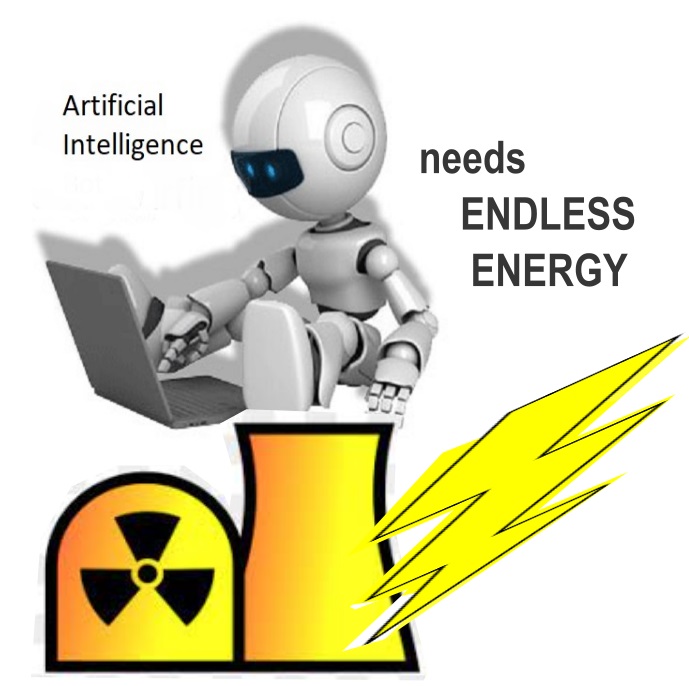
Report charts four scenarios from ‘Sustainable AI’ to ‘Who Turned Out The Lights?’
The Register, Dan Robinson, Thu 2 Jan 2025
Policymakers need to carefully guide the future consumption of electricity by AI datacenters, according to a report that considers four potential scenarios and suggests a number of guiding principles to prevent it from spiraling out of control.
The research published by energy infrastructure biz Schneider Electric follows the IEA Global Conference on Energy & AI last month. Titled Artificial Intelligence and Electricity: A System Dynamics Approach, it looks at the emerging schools of thought relating to AI and the associated impact on electricity consumption.
Much has already been reported on the rise of AI, and especially generative AI, which has led to huge investment in high-performance and power-hungry infrastructure for the purposes of developing and training models.
As the report notes, existing datacenter infrastructure requires significant energy to function, and will need extra resources to support the anticipated growth in AI adoption. This has already been causing concerns about the potential strain on electricity grids and the possible environmental impact if energy demand to power AI continues to rise at its current rate.
Schneider has modeled four distinct scenarios, which it has labeled as: Sustainable AI; Limits To Growth; Abundance Without Boundaries; and Energy Crisis. All four forecast a general upward trend in energy consumption for the period 2025 to 2030, but diverge notably after this based on the assumptions underpinning each one.
Sustainable AI looks at the potential outcome of prioritizing efficiency while energy consumption steadily increases, whereas Limits To Growth outlines a constrained path where AI development hits natural or human-related limits. Abundance Without Boundaries considers the potential risks of unchecked growth, while the Energy Crisis scenario examines how mismatched energy demand and generation would potentially lead to widespread shortages…………………………………….
The Abundance Without Boundaries scenario indicates that the rapid and unrestrained development of AI systems poses the risk of a continual arms race towards bigger and more powerful infrastructure, outpacing the capacity for sustainable resource utilization.
Schneider forecasts total AI energy consumption to rise enormously from the 100 TWh in 2025 to 880 TWh by 2030, continuing on an upwards trajectory and reaching a staggering 1,370 TWh in 2035.
This scenario displays the Jevons Paradox, where improvements in AI efficiency paradoxically lead to increased overall energy consumption. It forecasts that AI and datacenters will expand without barriers, as techno-optimists drive rapid AI deployment across all sectors, believing that AI advances will solve any resource constraints.
Finally, the Energy Crisis model foresees the rapid growth of AI leading to its energy demands conflicting with other critical sectors of the economy. This triggers various negative outcomes, including economic downturns and severe operational challenges for AI-dependent industries…………………………………………………………………………
…………………………… The overall message is that governments and industry leaders need to strategically plan to balance AI growth with environmental and economic sustainability. Whether they do so is another matter. https://www.theregister.com/2025/01/02/schneider_datacenter_consumption/?fbclid=IwY2xjawHq2YVleHRuA2FlbQIxMQABHVfvIFP2K80qCEymVUJTwNLMHze1xPomN5JWt_BJUqcjsnJ4ok3ufW7j4A_aem_xPDDvZ99rni2Twb5uri1Tg
—
A 12-year-old schoolgirl has designed a solar-powered blanket for the homeless
A 12-year-old schoolgirl has designed a solar-powered blanket for the
homeless, winning a prize in a UK engineering competition. Rebecca Young,
from Kelvinside Academy in Glasgow, said she thought of the invention after
seeing people sleeping on the city streets. Tasked with producing a design
to address a social issue, she began researching sleeping bags and
backpacks to see if there was a way to help protect those living rough from
the cold.
Times 1st Jan 2024 https://www.thetimes.com/uk/scotland/article/girl-12-designs-solar-powered-blanket-for-homeless-xxwwg2rrx
Why tech giants such as Microsoft, Amazon, Google and Meta are betting big on nuclear power

Sat, Dec 28, Bradley Hoppenstein, CNBC
Data centers powering artificial intelligence and cloud computing are pushing energy demand and production to new limits. Global electricity use could rise as much as 75% by 2050, according to the U.S. Department of Energy, with the tech industry’s AI ambitions driving much of the surge.
Data centers powering AI and cloud computing could soon grow so large that they could use more electricity than entire cities.
As leaders in the AI race push for further technological advancements and deployment, many are finding their energy needs increasingly at odds with their sustainability goals.
“A new data center that needs the same amount of electricity as say, Chicago, cannot just build its way out of the problem unless they understand their power needs,” said Mark Nelson, managing director of Radiant Energy Group. “Those power needs. Steady, straight through, 100% power, 24 hours a day, 365,” he added.
After years of focusing on renewables, major tech companies are now turning to nuclear power for its ability to provide massive energy in a more efficient and sustainable fashion.
Google, Amazon, Microsoft and Meta are among the most recognizable names exploring or investing in nuclear power projects. Driven by the energy demands of their data centers and AI models, their announcements mark the beginning of an industrywide trend…………………. https://www.cnbc.com/2024/12/28/why-microsoft-amazon-google-and-meta-are-betting-on-nuclear-power.html
A nuclear-free energy future for Hydro-Québec, says Michael Sabia

Marie-Anne Audet, Thursday, December 12, 2024, Le Journal de Montreal,
Hydro-Québec has definitively closed the door to nuclear power, according to its CEO, Michael Sabia, who assured Thursday that energy production will reach new heights with the agreement in principle announced between Quebec and Newfoundland and Labrador around the Churchill Falls dam.
If approved, the deal would add 2,400 MW to Hydro-Québec’s production. The Crown corporation also plans to invest $25 billion to launch three new power plants in Labrador
“We are going to increase production between 8,000 and 9,000 megawatts [by 2035]. With the 2,400 megawatts coming from Newfoundland, we arrive at more than 11,000 megawatts of additional power,” he illustrated during an interview with LCN………………………………………………… https://www.journaldemontreal.com/2024/12/12/un-futur-energetique-sans-nucleaire-pour-hydro-quebec-affirme-michael-sabia
Murder, mayhem, and minerals: The price of the renewable energy revolution
It’s not as if the human and environmental toll of mining is a
particularly well-kept secret. But the full extent of the damage from
mining for the rare earth elements and other metals that go into electronic
devices, electric vehicles, solar panels, and countless additional
components of modern life can be hard to wrap one’s mind around—unless
the mountain of evidence is laid out end-to-end, as in Vince Beiser’s new
book Power Metal: The Race for the Resources That Will Shape the Future.
The book begins with an overview of what Beiser calls “critical
metals,” where they come from, and the history of their discovery and
extraction, before moving on to the current state of mining and processing
critical metals today.
Bulletin of Atomic Scientists 11th Dec 2024 https://thebulletin.org/2024/12/murder-mayhem-and-minerals-the-price-of-the-renewable-energy-revolution/
Meta misguided in calling for massive nuclear energy scale-up

Johanna Neumann and Jon Maunder, 4 Dec 24, https://environmentamerica.org/center/media-center/statement-meta-misguided-in-calling-for-massive-nuclear-energy-scale-up/
BOSTON — Meta announced a request for proposals (RFP) on Tuesday, asking energy developers to respond with plans to build 1-4 GW of new nuclear generation capacity to be delivered in the early 2030s. The tech giant wants to use the power for data centers to support energy-intensive artificial intelligence (AI).
The agreement comes on the heels of other large technology companies expressing interest in nuclear. In October, Google announced a partnership with California’s Kairos Power, to buy energy from small nuclear reactors starting in 2030, and Amazon announced that it signed agreements to support the development of new nuclear energy projects. Earlier this fall, Microsoft inked a deal with Constellation Energy that aims to restart the Three Mile Island nuclear plant.
Energy-intensive computing is projected to drive a surge in electricity demand after nearly two decades of little to no new growth. Already, this projected increase is prolonging America’s dependence on dirty energy. Polluting coal and gas fired plants are having their lives extended, new gas plants have been proposed, and there’s interest in reopening additional previously shuttered nuclear plants, such as Palisades in Michigan.
Environment America Research & Policy Center’s Senior Director of the Campaign for 100% Renewable Energy, Johanna Neumann, issued the following statement:
“The long history of overhyped nuclear promises reveals that nuclear energy is expensive and slow to build all while still being inherently dangerous. America already has 90,000 metric tons of nuclear waste that we don’t have a storage solution for. Do we really want to create more radioactive waste to power the often dubious and questionable uses of AI?
“In the blind sprint to win on AI, Meta and the other tech giants have lost their way. Big Tech should recommit to solutions that not only work but pose less risk to our environment and health.”
“Data centers should be as energy and water efficient as possible and powered solely with new renewable energy. Without those guardrails, the tech industry’s insatiable thirst for energy risks derailing America’s efforts to get off polluting forms of power, including nuclear.”
Baseload power generators not needed to guarantee supply, say science and engineering academies
Sören Amelang, Dec 5, 2024 https://reneweconomy.com.au/baseload-power-generators-not-needed-to-guarantee-supply-say-science-and-engineering-academies/
An energy system dominated by solar and wind energy does not require baseload power stations to guarantee supply security, German research academies have said.
“The academy project ‘Energy Systems of the Future’ (ESYS) has concluded that a secure energy supply is also possible without baseload power plants,” said the National Academy of Science and Engineering (acatech), the German National Academy of Sciences (Leopoldina), and the Union of the German Academies of Sciences and Humanities.
Baseload power plants supply electricity continuously, whereas so-called residual load plants run only intermittently when needed.
“A combination of solar and wind energy with storage, a flexible hydrogen system, flexible electricity demand and residual load power plants will be necessary for a climate-friendly and reliable electricity supply,” the academies said.
The German government plans to use hydrogen-fuelled gas turbine plants to back up its renewables-based future electricity system.
The researchers modelled the potential of four baseload technologies: nuclear power plants, geothermal energy, natural gas power plants with CO2 capture, and nuclear fusion power plants.
Their results showed that baseload plants could become part of future energy systems if they save costs – a scenario the scientists consider unlikely. Baseload plants’ greatest impact on the overall system is that their surplus electricity could be used to run electrolysers, which would turn electricity into hydrogen, they said.
“For baseload power plants to lead to a substantial cost reduction, their costs would have to fall significantly below the level forecast today,” said Karen Pittel, who heads the ifo Institute’s Center for Energy, Climate and Resources, and is also deputy chair of the ESYS board of directors.
“In fact, we estimate that the risks of cost increases and delays in baseload technologies tend to be even higher than with the further expansion of solar and wind energy.”
The LA Times Makes the Case for Shutting the Diablo Canyon Nukes

Harvey Wasserman, 4 Dec 24 https://www.counterpunch.org/2024/12/03/the-latimes-makes-the-case-for-shutting-the-diablo-canyon-nukes/?fbclid=IwY2xjawG8YRJleHRuA2FlbQIxMQABHSQ9odEebiUpHvQEucI8G6sh43u-Rh8KUrx7a82De1V7jLHnoraX19z0Dw_aem_NVnlx2KzztXtkLu2amu4_w
In a landmark front page feature, the Los Angeles Times has made a powerful argument for shutting California’s last two atomic reactors.
The forty-year-old Diablo Canyon nukes are being subsidized by statewide ratepayers to the tune of nearly $12 billion in over-market charges slated to enrich Pacific Gas & Electric through 2030. PG&E’s CEO, Patti Poppe, was paid more than $40 million in 2022. The company has been convicted of more than 90 federal manslaughter charges stemming from fatal fires in San Bruno in 2010, and in northern California in 2017
Taking up a quarter of the Times’s November 25 cover, the feature by Melody Peterson reports that a “glut” of solar-generated electricity is regularly shipped out of state at enormous losses to California rate payers. Green energy capable of powering more than a half-million homes is regularly “curtailed.”
But the cost of generating that electricity with solar panels is a fraction of Diablo Canyon’s hyper-expensive “base load power”, which is currently jamming and jeopardizing the California grid.
During most afternoons, photovoltaic cells in the Central Valley regularly produce electricity “too cheap to meter” (wind turbines in west Texas regularly do the same).
As it pours into the grid, the cheap solar juice is often used to charge industrial-scale batteries that power the state into the evening hours after sunset.
During part of virtually every day now, California’s entire electric supply comes from solar, wind and geothermal sources, at far less cost than what comes from Diablo Canyon. Atomic reactors are shut on average 9% of every year.
A landmark plan to phase-out Diablo Canyon by 2024 and 2025 was signed in 2018 by then-Lieutenant Governor Gavin Newsom. Compiled through two-years of intense top-level dialog, involving scores of public hearings and countless hours of research, the plan was signed by then-Governor Jerry Brown. It was endorsed by the state legislature and regulatory agencies, neighboring local governments, the plant’s labor unions, a wide range of public safety and environmental groups, leading ratepayer organizations and PG&E itself.
The Diablo phase-out relied on the projected ability of renewable sources and battery back-ups to replace the reactors’ output. As indicated by the LATimes’s cover piece and more, rapid advances in solar, wind, geothermal and battery technologies have far exceeded expectations for replacing Diablo’s base-load output. They’ve also plummeted far below current nuclear price levels…as well as those projected for future Small Modular Reactors in the unlikely event any should come on line within the next decade.
Battery technologies in particular have hugely advanced, all but eliminating the “periodicity” that comes when the sun doesn’t shine and the wind doesn’t blow. The industry has been largely dominated by lithium ion technology, which has gotten a huge boost from two major finds in California. But Vanadium, iron air and sodium technologies are also booming toward much cheaper, cleaner and more powerful storage systems that are rapidly accelerating the green-powered paradigm, especially when it comes to the large solid state units that will dominate non-vehicular uses in homes, business and factory settings.
This increasing renewable-based flexibility is accelerating the ability of grid operators synchronize supply with fluctuating demand. By contrast, nuclear power’s rigid base-load mode blocks cheaper renewables off the grid, forcing some to be shipped out of state.
California’s backup battery capability—, much of it decentralized and privately owned—has at least twice saved the state from impending blackouts. The Golden State’s battery-based reserves—-still rapidly expanding—-now exceed Diablo’s maximum output by more than 400%.
But in April, 2022, Newsom shredded the nuclear phase-out plan he signed four years earlier. Allowing no public hearings, Newsom strong-armed the legislature into a widely resented 11th hour rubber stamp.
Newsom’s hand-picked Public Utilities Commission then trashed California’s well-established “Net Metering” system that initially helped foster some two million rooftop solar installations. The moves cost the state more than 17,000 of its 70,000 solar installer jobs (about 1500 workers are employed at Diablo Canyon).
Newsom’s pro-nuclear package gifted a “forgivable” $1.4 billion loan to PG&E. Running the two reactors through 2030 could cost the public $11+ billion in over market billings, a gargantuan hand-out to the state’s biggest private utility. Even consumers who get zero power from Diablo are expected to pay.
Thus it’s no surprise that California suffers the US’s second-highest electric rates (behind only Hawaii, which gets much of its electricity from burning oil…but is rapidly now shifting to renewables).
Newsom has issued an executive order to “research” why our electric rates are so high. But as shown by the LATimes’s cover story (entitled “Solar Power Glut Boosts California Electric Bills. Other States Reap Benefit,” by Melody Peterson) much of California’s solar electricity can’t get access to a grid jammed by a rigid, hyper-expensive nuclear base load.
Diablo now faces federal licensing challenges. Like all commercial US reactors, it has no private liability insurance to compensate the public for catastrophic accidents. Shown to be dangerously embrittled in 2002, Unit One has not been tested since. Some 45 miles from the San Andreas, Diablo is surrounded by a dozen known earthquake faults whose impacts a long-time NRC site inspector (among others) says the plant can’t withstand.
Diablo pours radioactive carbon 14 into the atmosphere along with other greenhouse gasses emitted during the mining, milling and fabrication of its fuel rods. Thousands of tons of radioactive waste sit on site in cracked dry casks with nowhere else to go. .
Diablo’s twin cores operate around 560 degrees Fahrenheit, heating Avila Bay and the Earth in violation of state and federal law.. They kill countless marine creatures with thermal, chemical and radioactive emissions.
Despite their huge economic costs, devastating jobs impacts, and bitter public opposition, Newsom has opted to keep Diablo running.
Without a hint of irony, the LATimes’s latest attack blames the “glut” of green power on the success of renewables.
But it underscores (without ever mentioning Diablo) that Newsom’s $11+ billion “nuclear base-load tax” could be avoided by letting the PV industry fill the grid with its far cheaper power.
The Times also confirms that nothing terrifies the fossil/nuclear industry and its monopoly utilities more than the prospect of a global energy economy run on renewable power produced by rooftop solar, delivered through public-owned green grids and decentralized micro-grids, all backed up by a new generation of advanced batteries.
With the Olympics coming to Los Angeles in 2028, the Games could be totally powered by covering the state’s available rooftops with cheap, reliable, battery-backed solar cells.
The epic drop in electric rates and rise in employment and economic well-being could win the Earth’s ultimate, life-sustaining gold medal.
It would also make great copy for yet another LATimes cover story…this one celebrating rather than denigrating the astonishing success of the Golden State’s sustainable energy industries.
Cost of switching off UK wind farms soars to ‘absurd’ £1bn
Britain’s curtailment cost jumps as grid struggles to cope with power
British bill payers have spent an “absurd” £1bn to temporarily switch
off wind turbines so far this year as the grid struggles to cope with their
power.
The amount of wind power “curtailed” in the first 11 months of
2024 stood at about 6.6 terawatt hours (TWh), according to official
figures, up from 3.8 TWh in the whole of last year. Curtailment is where
wind turbines are paid to switch off at times of high winds to stop a surge
in power overwhelming the grid.
Households and businesses pay for the cost
of this policy through their bills. The cost of switching off has reached
about £1bn so far this year, according to analysis of market data by
Octopus Energy which was first reported by Bloomberg. This is more than the
£779m spent last year and £945m spent in 2022.
The jump in curtailment
follows the opening of more wind farms at a time when the country still
lacks the infrastructure needed to transport all the electricity they
generate at busy times. Clem Cowton, the director of external affairs at
Octopus, added:
“The outdated rules of our energy system mean vast
amounts of cheap green power go to waste. “It’s absurd that Britain
pays Scottish wind farms to turn off when it’s windy, while
simultaneously paying gas-power stations in the South to turn on.
Telegraph 2nd Dec 2024,
https://www.telegraph.co.uk/business/2024/12/02/britain-paying-wind-farms-record-1bn-to-switch-off/
Hunterston ‘industrial revolution’ on our doorstep

Drew Cochrane, Largs & Millport Weekly News 29th Nov 2024
When politicians of every hue have been popping up in promotional photos in recent weeks to pronounce the pathway to thousands of jobs for Hunterston in the next five years you know it’s for real.
The bad news for those in Fairlie who are of a protesting disposition (God forbid) is that the projects, spearheading Scotland’s mission towards Net Zero, will not be stopped.
First Minister John Swinney risked a nose bleed by travelling way down south to London to welcome the Highview Power plans to create the world’s largest liquid air energy facility at Hunterston which will store as much as five times Scotland’s current operational battery capacity for locally produced renewable energy.
One thousand jobs in the construction phase and 650 jobs in the local supply chain by its completion in 2030 are the headlines.
Labour’s UK Energy Minister and Scottish MP Michael Shanks visited Hunterston this month to see the ‘Converter’ station at the site of the forthcoming XLCC sub-sea cable production factory which promises 900 permanent well-paid jobs, including, crucially, 200 apprentices. Again, contractors and suppliers will also number hundreds in support work.
Electricity is being supplied from the local site to Wales by sub-sea cable as a precursor to the XLCC plan to bring renewable energy from the Sahara, via Morocco, once the production factory bursts into action by 2029, work scheduled to start in March. We also carried the story and picture of the first apprentices being trained.
Local SNP MSP Kenneth Gibson visited Clydeport which has released 350 acres of the land, designated as National Development Status by the Scottish Government. He, like myself, does not buy the argument from some quarters, that the value of properties in Fairlie will fall; quite the reverse when staff move into the area.
It won’t entirely be a smooth transition, particularly, with heavy traffic on the A78 but as I’ve said before on this page this is our biggest industrial revolution since the decades of IBM and nuclear power on our proverbial doorstep……https://www.largsandmillportnews.com/news/fairlie/24745296.drew-cochrane-hunterston-industrial-revolution-doorstep/
Germany’s national, federal highways could host 54 GW of PV

Germany’s national, federal highways could host 54 GW of PV. A new study
by Germany’s Federal Highway Research Institute (BASt) points to strong
potential for solar deployment across the nation’s roadways and highways.
PV Magazine 20th Nov 2024, https://www.pv-magazine.com/2024/11/20/germanys-national-federal-highways-could-host-54-gw-of-pv/
Big batteries and EVs to the rescue again as faults with new nuclear plant cause chaos on Nordic grids
Giles Parkinson, Nov 19, 2024 https://reneweconomy.com.au/big-batteries-and-evs-to-the-rescue-again-as-faults-with-new-nuclear-plant-cause-chaos-on-nordic-grids/?fbclid=IwY2xjawGqC8xleHRuA2FlbQIxMQABHadLKvCjeIJudeDt86k27LkV53Q1FcfYmtcRSA_HGcWU1b1TmW7voTgIOA_aem_wwFpyxMordh4V_FbOJ3lfw
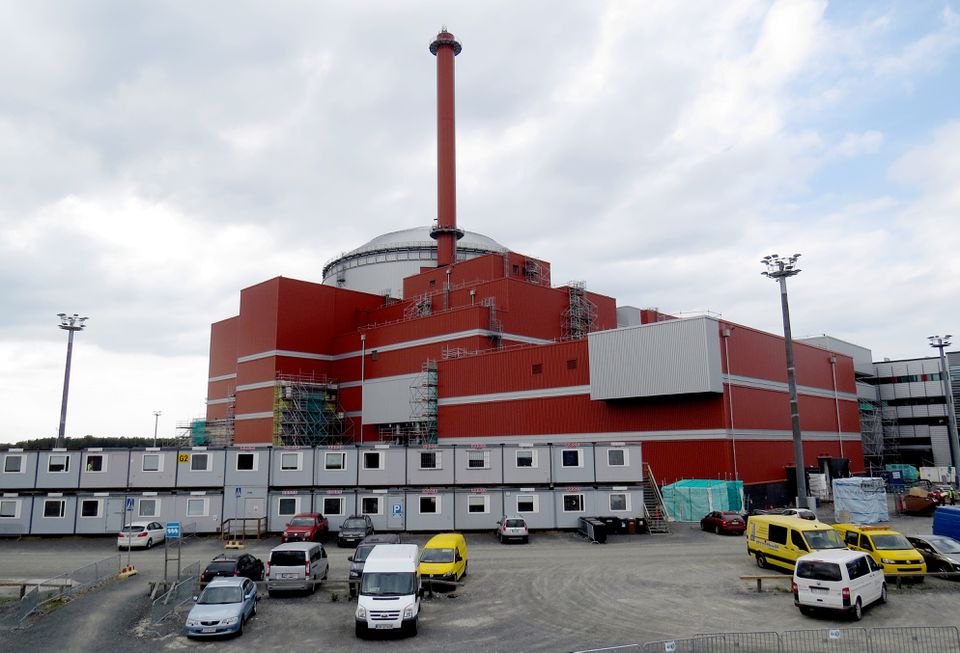
The newest and most powerful nuclear reactor in Europe that was delivered more than a decade late and nearly four times over budget is also proving to be a headache for grid operators now that it is finally up and running.
On Sunday, the 1,600 megawatt Olkiluoto 3 nuclear reactor tripped again, the latest in a series of faults and outages that have plagued the new facility and caused the market to reach out for back-up power to fill the gap.
Olkiluoto owner TVO says the reactor tripped on Sunday due to a turbine malfunction in the generator’s seal oil system. “The repair is taking longer than expected, and based on the current information, the plant is estimated to return to electricity production in approximately two days,” it said in a statement.
It’s not the first time the unit has failed. In October, it was forced to reduce power suddenly when one of the reactor’s control rods unexpectedly dropped into the reactor.
Its sister reactor, Olkiluoto 2, was off line for three weeks due to a faulty water-cooled rotor that had to be replaced and will run for months at reduced output because of the fear of failure.
But on Sunday, when the entire 1,600 MW capacity of Olkiluoto 3 was taken out of the system with no notice, it had a big impact on the grid, sending frequency plunging to 49.55 Hz, well outside the normal band.
“Olkiluoto is starting to compete with the Swedish nuclear power plant, Forsmark, for being the leading cause of major (loss of generation) disturbances in the Nordic power system,” writes Andreas Barnekov Thingvad, a Denmark-based trading systems director at battery company Hybrid Greentech.
He says his company contributed to the market response to stabilise frequency (see graph on original ) and the grid with its portfolio of batteries and virtual power plants, including electric vehicles.
Olkiluoto was finally connected to the grid last year, at an estimated cost of €11 billion ($18 billion) compared to the original budget of €3 billion. That cost blowout forced its developer, the French company Areva, to be bailed out by the French government.
When it did come online, nuclear boosters in Australia hailed it as being responsible for a steep fall in electricity prices. They failed to mention the fact that the reactor was more than a decade late, and Finland was forced to turn to highly expensive Russian gas in the interim to make up the shortfall.
Indeed, TVO, the reactor owner, says now that the new reactor has been commissioned, there is often too much production on the Finnish grid, and the reactor has to be dialled down, or curtailed, in much the same way that renewables often are. It is still not allowed to run at full capacity.
“The electricity system in Finland faces on an increasingly frequent basis a situation where more down-regulating production capacity is needed because there is too much production,” TVO notes.
The new reactor has also spent large periods off line (see the graph above from TVO’s most recent interim report). Its annual outage was supposed to last 37 days, but stretched to double that, to 74 days. TVO blamed “defect repairs and technical problems with inspection equipment took more time than had been planned.”
The point of this story is to highlight another bit of nonsense from the nuclear lobby, who like to claim that renewable sources such as wind and solar require back up, while nuclear does not.
That is simply not true, and the world’s big investment in pumped hydro in the 1970s and 1980s was principally designed to provide back up to nuclear reactors then in vogue. Ontario has ordered some of the world’s biggest batteries to support its nuclear fleet, most of which will be offline for several years for upgrades and maintenance.
Thingvad noted the multiple recent outages that had occurred in both the Finnish and Swedish nuclear reactors over the last few months:
- – On November 17th, at 15:25:51, Olkiluoto 3 had another turbine failure, tripping all 1600 MW of generation and causing the Nordic system frequency to drop to 49.59 Hz. The failure is expected to last several days.
- – On September 3rd, Olkiluoto 3 experienced a fault that caused it to drop 640 MW, leading the Nordic frequency to fall to 49.77 Hz.
- – On June 10th, Forsmark Block 3 experienced a reactor trip of 1172 MW, causing the Nordic system frequency to drop to 49.61 Hz.
- – On June 3rd, 2024, Olkiluoto 3, with 1600 MW, suddenly tripped due to a turbine malfunction. The Nordic system frequency dropped to 49.58 Hz.
- – On May 13, 2024, the Forsmark Block 1 nuclear power plant in Sweden, which has a capacity of 1 GW, tripped due to a grid failure. Forsmark experienced multiple outages – each of at least a gigawatt – in 2023.
- The scale of such outages would be significant in a grid like Australia, where the biggest single unit – at the Kogan Creek coal fired generator in Queensland – is 750 MW.
If, as the federal Coalition proposes, it wants to put in units sized at a gigawatt or more, then the market operator will have to invest in more standby capacity in case of the inevitable trips and outages.
The bigger the unit, the more back up power that is required. Wind and solar may be variable, but those variations are easily and reliably predicted. The sudden loss of a 1,600 MW facility is not.
The Australian Energy Market Operator has already made clear that its biggest headache is managing the unexpected outages of big generators, such as the ageing and increasingly unreliable coal fired power stations that the federal Coalition wants to keep open while it waits for nuclear to be rolled out and commercial SMRs to be invented.
“The repeated outages at Olkiluoto and Forsmark nuclear plants are a stark reminder of the critical need for grid resilience and diversification in our energy systems,” noted Eric Scheithauer-Hartmann, a German-based energy executive.
“It’s encouraging to see companies like Hybrid Greentech stepping up to support the Nordic power grid with advanced battery storage and intelligent energy solutions.
“As we continue to face challenges with traditional power generation, investing in smart grid technologies and renewable integration isn’t just beneficial—it’s essential for maintaining stability and meeting future energy demands.”
The Future of Nuclear Power is Wrought with Challenges
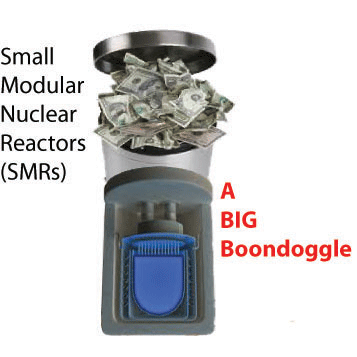
My analysis indicates that while advanced modular nuclear reactors might theoretically be helpful for the very long term, they cannot fix the problems of the US, and other countries in the West, nearly quickly enough. I expect that the Trump administration, which will start in January 2025, will see this program as a boondoggle.
Strangely enough, the US has no working model of a small-scale nuclear reactor, even one operating on conventional fuel.
Oil Price, By Gail Tverberg – Nov 12, 2024
The world is facing a growing shortage of uranium, the essential fuel for nuclear power plants.
The US is heavily reliant on Russia and its allies for enriched uranium, creating geopolitical risks.
Recycling spent nuclear fuel is expensive, complex, and faces significant environmental and security challenges.
It is easy to get the impression that proposed new modular nuclear generating units will solve the problems of nuclear generation. Perhaps they will allow more nuclear electricity to be generated at a low cost and with much less of a problem with spent fuel.
As I analyze the situation, however, the problems associated with nuclear electricity generation are more complex and immediate than most people perceive. My analysis shows that the world is already dealing with “not enough uranium from mines to go around.” In particular, US production of uranium “peaked”about 1980 (Figure 1 on original).
For many years, the US was able to down-blend nuclear warheads (both purchased from Russia and from its own supply) to get around its uranium supply deficit.
Today, the inventory of nuclear warheads has dropped quite low. There are few warheads available for down-blending. This is creating a limit on uranium supply that is only now starting to hit.
Nuclear warheads, besides providing uranium in general, are important for the fact that they provide a concentrated source of uranium-235, which is the isotope of uranium that can sustain a nuclear reaction. With the warhead supply depleting, the US has a second huge problem: developing a way to produce nuclear fuel, probably mostly from spent fuel, with the desired high concentration of uranium-235. Today, Russia is the primary supplier of enriched uranium.
The plan of the US is to use government research grants to kickstart work on new small modular nuclear reactors that will be more efficient than current nuclear plants. These reactors will use a new fuel with a higher concentration of uranium-235 than is available today, except through purchase from Russia. Grants are also being given to start work on US production of the more highly enriched uranium fuel within the US. It is hoped that most of this highly enriched uranium can come from recycling spent nuclear fuel, thus helping to solve the problem of what to do with the supply of spent fuel.
My analysis indicates that while advanced modular nuclear reactors might theoretically be helpful for the very long term, they cannot fix the problems of the US, and other countries in the West, nearly quickly enough. I expect that the Trump administration, which will start in January 2025, will see this program as a boondoggle.
Current problems with nuclear electricity generation are surprisingly hidden. World electricity generation from nuclear has been close to flat since 2004.
Although there was a dip in world generation of nuclear electricity after the tsunami that affected nuclear reactors in Fukushima, Japan, in 2011, otherwise world production of nuclear electricity has been nearly flat since 2004 (Figure 3 on original)……………………………………………………………………………………………………
Recycling of spent fuel to recover usable uranium and plutonium has been accomplished only to a limited extent. Experience to date suggests that recycling has many issues……………………………………………..
There seem to be several issues with building units to recover uranium from spent fuel:
- Higher cost than simply mining more uranium
- Pollution problems from the recycling plants
- Potential for use of the output to make nuclear warheads
- Potential for nuclear accidents within the plants
- Remaining radioactivity at the site at the end of the reprocessing plant’s life, and thus the need to decommission such plants
- Potential for many protestors disrupting construction and operation because of issues (2), (3), (4), and (5)
The US outlawed recycling of spent fuel in 1977, after a few not-very-successful attempts. Once the purchase of Russian warheads was arranged, down-blending of warheads was a much less expensive approach than reprocessing spent fuel. Physics Today recently reported the following regarding US reprocessing:
“A plant in West Valley, New York, reprocessed spent fuel for six years before closing in 1972. Looking to expand the plant, the owners balked at the costs required for upgrades needed to meet new regulatory standards. Construction of a reprocessing plant in Barnwell, South Carolina, was halted in 1977 following the Carter administration’s ban.”
Japan has been trying to build a commercial spent fuel reprocessing plant at Rokkasho since 1993, but it has had huge problems with cost overruns and protests by many groups. The latest estimate of when the plant will actually be completed is fiscal year 2026 or 2027.
The largest commercial spent fuel reprocessing plant in operation is in La Hague, France. It has been in place long enough (since 1966) that it has run into the issue of decommissioning an old unit, which was started as a French military project. The first processing unit was shut down in 2003. The International Atomic Energy Administration says, “The UP2-400 decommissioning project began some 20 years ago and may be expected to continue for several more years.” It talks about the huge cost and number of people involved. It says, “Decommissioning activities represent roughly 20 per cent of the overall activity and socio-economic impact of the La Hague site, which also hosts two operating spent fuel recycling plants.”
The cost of the La Hague reprocessing units is probably not fully known. They were built by government agencies. They have gone through various owners including AREVA. AREVA has had huge financial problems. The successor company is Orano. The currently operating units have the capacity to process about 1,700 metric tons of fuel per year. The 1700 metric tons of reprocessing of spent fuel from La Hague is reported to be nearly half of the world’s operating capacity for recycling spent fuel.The plant would process 800 metric tons of fuel per year.
I understand that Russia is working on approaches that quite possibly are not included in my figures. If so, this may add to world uranium supply, but Russia is not likely to want to share the benefits with the West if there is not enough to go around……………………………………………………………………………………….
The US is trying to implement many new ideas at one time with virtually no successful working models to smooth the transition.
Strangely enough, the US has no working model of a small-scale nuclear reactor, even one operating on conventional fuel. A CNBC article from September 2024 says, Small nuclear reactors could power the world, the challenge is building the first one in the US…………………………………………………………………………………….
Starting at this level, it is difficult to see how reactors with the new technology and the HALEU fuel to feed them can possibly be available in quantity before 2050.
It is difficult to see how the cost of electricity generated using the new advanced modular nuclear reactors and the new HALEU fuel, created by reprocessing spent fuel, could be low.
As far as I can see, the main argument that these new modular electricity generation plants will be affordable is that they will only generate a relatively small amount of electricity at once —about 300 megawatts or less, or about one third of the average of conventional nuclear reactors in the US. Because of the smaller electricity output, the hope is that they will be affordable by more buyers, such as utility companies.
The issue that is often overlooked by economists is that electricity generated using these new techniques needs to be low cost, per kilowatt-hour, to be helpful. High-cost electricity is not affordable. Keeping costs down when many new approaches are being tried for the first time is likely to be a huge hurdle. I look through the long list of problems encountered in recycling spent fuel mentioned in Section [6] and wonder whether these issues can be inexpensively worked around. There are also issues with adopting and installing the proposed new advanced modular reactors, such as security, that I have not even tried to address.https://oilprice.com/Alternative-Energy/Nuclear-Power/The-Future-of-Nuclear-Power-is-Wrought-with-Challenges.html
Donald Trump’s election victory deals blow to US clean energy industry.

Developers of solar and battery recycling projects put plans on hold amid concern
about policy and federal funding support.
Donald Trump’s US election victory has dealt a blow to the renewable energy industry, prompting at least half a dozen developers to put projects on hold and investors to dump
shares.
Canadian solar manufacturer Heliene is pausing progress on its
$150mn plan to manufacture solar cells in the US until it gets more policy
clarity from the incoming Trump administration. Battery recycling start-up
Princeton NuEnergy is reconsidering its timeline to build a $300mn factory
in 2028, the companies told the Financial Times. Clean energy fears Trump’s
re-election spells doom for the industry.
The president-elect has vowed to
turbo-charge the country’s oil and gas production and do away with
President Joe Biden’s climate policies on the campaign trail, including
repealing the Inflation Reduction Act, the strongest action the US has
taken to boost renewable energy.
FT 11th Nov 2024 https://www.ft.com/content/8bcb24f3-4deb-4500-8880-cf46a4670463
At COP29, IRENA Outlook calls for ambitious NDC update a ‘Make or Break’ for Global Goal to Triple Renewables by 2030

Even if all COP announcements to date were to be fully implemented, a
significant CO2 emission gap would still need to be closed by 2050,
according to IRENA’s World Energy Transitions Outlook 2024.
Released at the opening of the UN Climate Conference COP29 in Baku, Azerbaijan, the
Agency’s 1.5°C Scenario outlines a net-zero path by mid-century, offering
a framework for governments to develop energy transition strategies that
better align energy planning with climate policies to channel investment.
The Outlook shows that current country pledges could cut global
energy-related CO2 emissions by 3% by 2030 and 51% by 2050. Achieving the
global goals of tripling renewable power capacity and doubling energy
efficiency by 2030, as agreed at COP28, would keep the energy transition on
track for net-zero emissions by 2050. These 2030 targets are crucial to
limiting global temperature rise to below 1.5°C, as underscored by the UAE
Consensus.
IRENA 11th Nov 2024, https://mailchi.mp/73121b5cd521/press-release-ndcs-30-a-make-or-break-for-global-goal-to-triple-renewables-by-2030
1 This Month

of the week – Shut Down Drone Warfare!


Tell the Ukrainian Government to Drop Prosecution of Peace Activist Yurii Sheliazhenko

Petition to revoke the licensing of the Near Surface Nuclear Disposal Facility (NSDF) at Chalk River. https://www.ourcommons.ca/petitions/en/Petition/Details?Petition=e-7247
To see nuclear-related stories in greater depth and intensity – go to https://nuclearinformation.wordpress.com
-
Archives
- March 2026 (244)
- February 2026 (268)
- January 2026 (308)
- December 2025 (358)
- November 2025 (359)
- October 2025 (376)
- September 2025 (257)
- August 2025 (319)
- July 2025 (230)
- June 2025 (348)
- May 2025 (261)
- April 2025 (305)
-
Categories
- 1
- 1 NUCLEAR ISSUES
- business and costs
- climate change
- culture and arts
- ENERGY
- environment
- health
- history
- indigenous issues
- Legal
- marketing of nuclear
- media
- opposition to nuclear
- PERSONAL STORIES
- politics
- politics international
- Religion and ethics
- safety
- secrets,lies and civil liberties
- spinbuster
- technology
- Uranium
- wastes
- weapons and war
- Women
- 2 WORLD
- ACTION
- AFRICA
- Atrocities
- AUSTRALIA
- Christina's notes
- Christina's themes
- culture and arts
- Events
- Fuk 2022
- Fuk 2023
- Fukushima 2017
- Fukushima 2018
- fukushima 2019
- Fukushima 2020
- Fukushima 2021
- general
- global warming
- Humour (God we need it)
- Nuclear
- RARE EARTHS
- Reference
- resources – print
- Resources -audiovicual
- Weekly Newsletter
- World
- World Nuclear
- YouTube
-
RSS
Entries RSS
Comments RSS
 nuclear-news