Solar panel capacity will soon overtake nuclear worldwide for the first time
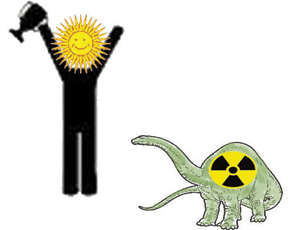 Solar panel capacity to overtake nuclear energy next year in historic landmark, Solar still generates less electricity than nuclear but it is growing rapidly, Independent, Ian Johnston Environment Correspondent , @montaukian, 22 Aug 17, Solar panel capacity is set to overtake nuclear worldwide for the first time within the next few months, according to expert predictions.
The total capacity of nuclear power is currently about 391.5 gigawatts but the total capacity of photovoltaic cells is expected to hit 390 gigawatts by the end of this year with demand growing at up to eight per cent per year, according to GTM Research…
Stephen Lacy, writing on GTM’s website, said: “It’s still going to be a record-breaking year for new solar capacity additions – yet again…..
Mr Lacy said: “In the last three years, growth rates and cost reductions for solar have far exceeded projections. Meanwhile, high costs, slow construction and competitive renewable alternatives are causing the global nuclear industry to falter.
“The trend lines are becoming clearer every year.”
The Sun delivers enough energy to the Earth in an hour to provide humans with everything they need for an entire year.

The value of wind and solar power to America’s health and environment
if you add up those central estimates, wind and solar saved Americans around $88 billion in health and environmental costs over eight years. Not bad.
 Wind and solar power are saving Americans an astounding amount of money
Not getting sick and dying from pollution is worth quite a bit, it turns out. VOX, by Aug 18, 2017 Wind and solar power are subsidized by just about every major country in the world, either directly or indirectly through tax breaks, mandates, and regulations.
The main rationale for these subsidies is that wind and solar produce, to use the economic term of art, “positive externalities” — benefits to society that are not captured in their market price. Specifically, wind and solar power reduce pollution, which reduces sickness, missed work days, and early deaths. Every wind farm or solar field displaces some other form of power generation (usually coal or natural gas) that would have polluted more.
Subsidies for renewables are meant to remedy this market failure, to make the market value of renewables more accurately reflect their total social value.
This raises an obvious question: Are renewable energy subsidies doing the job? That is to say, are they accurately reflecting the size and nature of the positive externalities?
That turns out to be a devilishly difficult question to answer. Quantifying renewable energy’s health and environmental benefits is super, super complicated. Happily, researchers at the Lawrence Berkeley Lab have just produced the most comprehensive attempt to date. It contains all kinds of food for thought, both in its numbers and its uncertainties.
(Quick side note: Just about every country in the world also subsidizes fossil fuels. Globally, fossil fuels receive far more subsidies than renewables, despite the lack of any policy rationale whatsoever for such subsidies. But we’ll put that aside for now.)
Here’s how much wind and solar saved in health and environmental costs
The researchers studied the health and environmental benefits of wind and solar in the US between 2007 (when the market was virtually nothing) and 2015 (after years of explosive market growth).
Specifically, they examined how much wind and solar reduced emissions of four main pollutants — sulfur dioxide (SO2), nitrogen oxides (NOx), fine particulate matter (PM2.5), and carbon dioxide (CO2) — over that span of years. The goal was to understand not only the size of the health and environmental benefits, but their geographical distribution and how they have changed over time.
To cut to the chase, let’s review the top-line conclusions:
- From 2007 to 2015, wind and solar in the US reduced SO2, NOx, and PM2.5 by 1.0, 0.6, and 0.05 million tons respectively;
- reduction of those local air pollutants helped avoid 7,000 premature deaths (the central estimate in a range from 3,000 to 12,700);
- those avoided deaths, along with other public health impacts, are worth a cumulative $56 billion (the central estimate in a range from $30 to $113 billion);
- wind and solar also reduced CO2 emissions, to the tune of $32 billion in avoided climate costs (the central estimate in a range from $5 to $107 billion).
So, if you add up those central estimates, wind and solar saved Americans around $88 billion in health and environmental costs over eight years. Not bad.
That number is worth reflecting on, but first let’s talk a second about how they came up with it.
Uncertainties abound in measuring positive externalities
Tallying up these benefits is difficult for all sorts of reasons………
In all those steps, there are uncertainties and ranges, some having to do with the limitations of models, some having to do with the limitations of our understanding of the impacts of pollution, some having to do with difficult-to-quantify intangibles like the value of a human life.
These uncertainties explain the wide range of estimates involved: premature mortalities range from 3,000 to 12,700; local pollution impacts from $30 to $113 billion; CO2 climate impacts from $5 to $107 billion. (It’s worth saying that there are good reasons to think most SCC estimates are lowballing — certainly $5 billion is ludicrous.)……..
Wind and solar benefits vary over time and from place to place
If you dig into the paper, you find that the most interesting data has to do with the variations in benefits across regions and over time.
It’s complex, but in a nutshell, the health and environmental benefits of wind and solar vary depending on what other sources are being displaced, and how much, and when…….
Wind and solar effects also varied widely by region, because some regions have cleaner power sectors than others. In California, wind and solar are mostly displacing natural gas. In the upper Midwest and mid-Atlantic regions, which rely more heavily on coal, wind and solar have greater impact……. https://www.vox.com/energy-and-environment/2017/8/18/16160456/wind-solar-power-saving-money
USA research recommends wind and solar power for Africa
Environmental Research Web 19th Aug 2017, The International Renewable Energy Agency says that Africa has the
potential and the ability to utilise its renewable resources to fuel the
majority of its future growth. It adds ‘doing so would be economically
competitive with other solutions, would unlock economies of scale, and
would offer substantial benefits in terms of equitable development, local
value creation, energy security, and environmental sustainability’.
Simply deploying solar PV locally, off grid, with panels put on individual
homes, schools and the like, although helpful, is not enough to make more
than a limited dent on problem of providing full access to energy.
At present, 57% of Africa’s mostly rural population does not have access to
electricity. Grids, including local mini grids, are also needed New cheaper
power inputs also also needed- but they are on the way.
A new assessment by the U.S. Department of Energy’s Lawrence Berkeley National Laboratory
(Berkeley Lab) has found that wind and solar can be economically and
environmentally competitive options in Africa and can contribute
significantly to the rising demand, which could triple as African economies
develop. http://blog.environmentalresearchweb.org/2017/08/19/powering-africa/
Energy sector impacted by Britain’s withdrawal from the European Union
IPPR 16th Aug 2017, The implications of the UK’s withdrawal from the European Union are
particularly significant for the energy sector. This uncertainty
surrounding Brexit negotiations in turn raises specific regional concerns.
The North as a whole boasts 48 per cent of the UK’s renewable power,
including 71 per cent of England’s biomass generation, 41 per cent of UK
wind power and 40 per cent of UK installed nuclear capacity. Concerns over
the retention of mechanisms and legislation that support the energy sector
are therefore particularly pressing for businesses and other energy
stakeholders in the North.
https://www.ippr.org/research/publications/impact-of-brexit-on-energy-in-the-north
EDF offers British homeowners a solar system – installed free, but with conditions
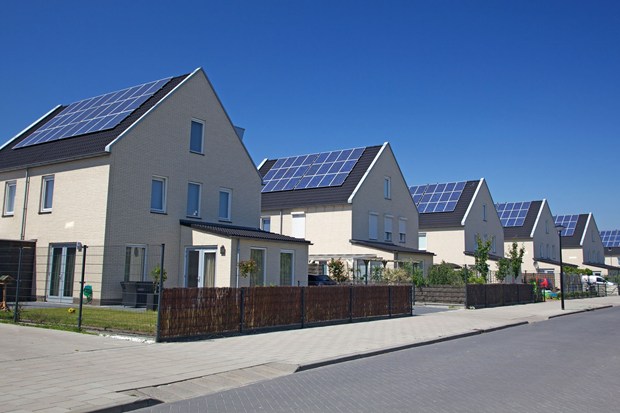 Guardian 12th Aug 2017, If you want solar photovoltaic panels on your home but don’t have the money for them, EDF Energy is offering to install a free system – complete with
storage batteries – if you agree to buy the subsidised power it generates
for 20 years.
The French-owned energy giant is looking for 100 homes to
trial its Sunplug scheme, which is being offered in conjunction with
established solar supplier Lightsource. To sign up you need to have a
large, unshaded south-facing roof at a pitch of about 45 degrees. If you
are accepted, the company will install the largest solar panel system the
roof can take – a 16-panel setup will generate 4kW – plus an LG storage
battery that lets you use the power that’s generated during the day in the
evening.
In return, EDF gets to keep the feed-in tariff paid by the
government, which is worth about £150 a year. It also keeps the export
tariff – around £50 a year. The householder is contractually bound to
pay Sunplug 9.9p per kilowatt hour for each unit of electricity they use
from the panels and battery.
This is a little cheaper than what you would pay if you bought green electricity from the grid. For example, green
supplier Good Energy charges 15.5p, with a standing charge averaging 26p a
day. The advantage could come in future years as the price demanded by
Sunplug can only rise by the retail prices index or 2.5% – whichever is
lower.
If the price of grid electricity rises substantially over the next
20 years, users will make considerable savings. However, if they don’t,
some users will be left wondering why they bothered, not least because they
have to have the system inspected each year, which will cost about £80. So
this scheme is likely to appeal to anyone who wants green electricity at
fixed prices over the next two decades.
The other significant benefit comes at the end of the 20-year term, when the householder is given ownership of
the system, which should continue to generate substantial free power. So
what’s the Money verdict? Solar PV systems are still a good investment if
you have the money upfront, the right roof and location, and if you plan to
stay in the house for a long time. The case for the free Sunplug deal is
less clear. To us, it looks too heavily weighted in favour of the company.
If it offered some free electricity each day or other incentives, that
would make the scheme more attractive.
https://www.theguardian.com/money/2017/aug/12/edf-free-solar-panels-buy-power-generated-20-years
Big savings for UK homes that install solar and storage technologies
 Solar Power Portal 10th Aug 2017, Installing solar and storage technologies into homes could save them as
much as £600 each year on their fuel bills, a new study has found.
The report, released by Swansea University’s Specific Innovation and
Knowledge Centre, claims that an integrated system comprising solar PV roof
installations, battery storage and solar heat collection technology on
south-facing walls could cut energy consumption by more than 60%.
The findings are backed up by a working demonstration project completed on a
school in Swansea. The ‘Active Classroom’, as it has been dubbed, has
generated more energy than it has consumed since receiving the complete
system six months ago. https://www.solarpowerportal.co.uk/news/solar_and_storage_could_save_homes_600_each_year_new_report_finds
Grand solar power plan for Tunisia, to connect to the European grid
Daily Planet 9th Aug 2017, A UK-based solar developer has this week applied to the Tunisian government
for authorisation to build a 4.5 gigawatt plant in the country, making it a
solar plant large enough to provide carbon-free electricity to over five
million European homes or over seven million electric vehicles.
TuNur is looking to build the new solar complex in the Tunisian Sahara, supplying
energy to both Tunisia and Europe. Three high voltage submarine cable
systems are planned, allowing for the transport of power to Europe with low
loss.
The first will link Tunisia with Malta, which is already connected to
the European grid, and would reinforce the island’s position as a central
Mediterranean energy hub. The second cable, which would come ashore north
of Rome has been under development for several years and is being evaluated
as a “project of common interest” by the European Community.
The project is the latest in a number of solar projects based in North Africa,
and follows the Noor project in Morocco, which launched in 2016. Noor 1, is
the first section, providing 160 megawatts of a total 580 megawatt
capacity. https://dailyplanet.climate-kic.org/tunisian-solar-power-plant-power-five-million-homes-europe/
New records on solar power generation in UK -reducing demand on the grid
Solar Power Portal 9th Aug 2017, Soaring generation from the UK’s solar assets sent UK power demand to a
new low last month, according to data compiled by monitoring firm EnAppSys.
 The data showed that average half-hourly demand throughout July stood at
26.2GW, courtesy of a significant amount of embedded generation from
sources such as rooftop solar. These sources are seen on the grid as demand
reduction and, as a result, reduce the amount of power that is drawn down
from the grid.
Throughout July the average embedded generation figure stood
at 3GW. Solar and other renewables have already witnessed a number of new
generation records this year, particularly in Spring. Unseasonable weather
in April helped solar to a new landmark generation record.
https://www.solarpowerportal.co.uk/news/soaring_solar_sends_uk_power_demand_to_eight_year_low
France’s renewable energy development hampered by red tape
Bloomberg 4th Aug 2017, Some eighty days into Emmanuel Macron’s new job, Europe’s biggest
renewable energy companies are still waiting for the French president to
make good on campaign pledges to boost green power.
To meet French goals of doubling onshore wind and tripling solar solar power by 2023, Macron’s
government still needs to show it can support investments by helping
developers cut through the country’s bureaucratic red tape.
Companies including Italy’sEnel SpA, Germany’s EON SE and Innogy SE remain
reluctant to develop renewables in Europe’s third-biggest economy. “We
regularly check our existing markets and potential new markets on new
project opportunities,” Innogy’s spokeswoman Viola Baumann said in an
email response to questions from Bloomberg. “There’s no new development
and that also applies to France.” https://www.bloomberg.com/news/articles/2017-08-04/green-power-still-tied-up-with-red-tape-in-macron-s-france
Ultra-efficient ‘next generation’ offshore wind turbines for Scotland .
 Business Green 7th Aug 2017, Business and Energy Secretary Greg Clark has given the green light for
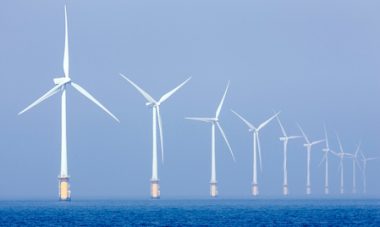
ScottishPower Renewables to develop a 1.2GW offshore wind project 46 miles
off the coast of East Anglia that will use ultra-efficient ‘next
generation’ turbines.
If successful in future Contracts for Difference auctions, ScottishPower Renewables said the project would begin
construction around 2022, with the wind farm up and running by 2025. The
auction is widely tipped to deliver a host of highly competitive projects
that are expected to comfortably exceed the government’s target of offshore
wind farms delivering power at less than £100/MWh.
Some industry insiders have said rapid improvements in turbine technology and project management
should enable low bids that significantly undercut the level of support
offered to new nuclear projects. https://www.businessgreen.com/bg/news/3015222/green-light-for-next-generation-12gw-east-anglia-offshore-wind-farm
The future of nuclear power is in question: “baseload generation” is no longer necessary
How to manage the implosion of nuclear power, Washington Examiner , 4 Aug 17
Westinghouse is bankrupt. Only two new nuclear plants are being built in the U.S., and both are plagued with huge cost overruns. The nuclear industry has been rocked by plant closings and battered by an abundance of cheap natural gas, which has made it difficult for nuclear plants to compete. Since 2014, electricity companies have either closed or announced plans to shut down 14 existing U.S. nuclear plants, and odds are high that at least a dozen more nuclear plants will be shuttered. Among those in jeopardy are all four nuclear plants in New Jersey – PSE&G’s Salem 1 and 2 plants and the Hope Creek plant and Exelon’s Oyster Creek plant.
At a bare minimum, the policy choices ahead are difficult. And for PSE&G, the question is whether New Jersey needs the large amounts of baseload power that nuclear plants provide. Could New Jersey run on natural gas and renewable energy alone?
This may seem like an absurd question, given that nuclear power supplies 44 percent of the state’s electricity. The answer is that low-cost natural gas – which accounts for 46 percent of New Jersey’s electricity – will grow in importance, along with renewables and improvements in energy efficiency. Incredible as it might seem, nuclear power is just no longer needed to maintain grid reliability.
According to a study by the Brattle Group, the term “baseload generation,” which has been synonymous with nuclear power and coal for decades, is no longer useful for the purposes of planning and operating today’s electricity system. Instead, more flexible resources like natural gas and renewables are increasingly needed to cost effectively assist with meeting changing system loads, responding to local requirements and integrating the variable output of solar and wind power.
Despite changing market conditions, some states have approved generous subsidies to keep their financially-stressed nuclear plants afloat. Illinois and New York state have approved a zero-emission nuclear resource program that puts a price on nuclear power’s attributes in meeting carbon reduction goals — though both efforts are being challenged legally by other electricity producers, who say the nuclear credits intrude into federal wholesale markets.
What is indisputable is that the Illinois and New York state measures are in fact subsidies requiring electricity users to pay an additional $700 million annually in higher rates. Several other states – Ohio, Pennsylvania, and Connecticut – are considering similar measures. But nuclear power’s future is being questioned and challenged as never before………
Absent the need for baseload power, New Jersey’s PSE&G should prepare for what had once been unthinkable: the early retirement of the Salem and Hope Creek nuclear plants. Exelon’s Oyster Creek plant, the nation’s oldest operating nuclear plant, is scheduled to be closed by the end of 2019…..
In remote Asia, solar power is transforming the lives of women
 Climate News Network 1st Aug 2017, A solar revolution is transforming the lives of women in the remotest parts of Asia. They no longer have to wait decades to be connected to a power grid but are able today to exploit the huge potential of the abundant sunshine.
In societies where women normally play a subservient role and spend much of their time on menial chores, solar businesses are creating a new breed of female entrepreneur who are bringing electricity to their villages.
In the last two years two schemes designed to encourage women to bring the solar revolution to parts of rural India and Nepal have won international Ashden Awards, which bring the organisations involved
£20,000 (US$26,360) each in prize money and a lot of guidance to improve
and extend their businesses. http://climatenewsnetwork.net/women-take-control-solar-revolution/
State of California aims for 100% renewable energy by 2045
California Aims to Make Electricity Production in the State 100 Percent Renewable by 2045 http://tribunist.com/news/california-aims-to-make-electricity-production-in-the-state-100-percent-renewable-by-2045/, By Tribunist Staff on August 1, 2017, Even though the White House decided to step out of the Paris Accords, many states are still working to increase their use of clean energy in an effort to fight climate change. While California has already invested in alternative energy sources like wind, solar, and hydro, a new set of bills looks to take it to the next level.
New energy storage technology – cheaper than lithium-ion batteries
Times 2nd Aug 2017, Google’s parent company Alphabet is turning to salt and antifreeze to
provide energy storage that could be cheaper than lithium-ion batteries.
The technology giant’s secretive X division is working on a way to store
energy from renewable sources that would otherwise be wasted because of the
time mismatch between supply and demand.
The system was designed by Robert Laughlin, a Nobel prize-winning physicist of Stanford University. It takes
in energy in the form of electricity and converts it into hot and cold air,
using a heat pump. These streams heat molten salt and cool the antifreeze
respectively. The process can be reversed to release the energy as the warm
and cold air meet, creating gusts that drive a turbine and feed power back
into the grid.
Scientists had already shown that the technology could store
energy. Alphabet’s engineers have designed a version that works at lower
temperatures, however, which reduces costs and makes it commercially
viable. https://www.thetimes.co.uk/edition/news/cheaper-batteries-powered-by-antifreeze-designed-by-google-s-parent-company-alphabet-vpclt3jpn
Smart Energy Revolution for Britain
NuClearNewsNo98, August 2017 The Government and Ofgem have published their strategy for a modernised, smart and flexible power system. The 32-page document by the Department for Business, Energy and Industrial Strategy (BEIS) looks at how a smarter energy system will create opportunities to reduce energy costs, increase productivity and put UK businesses in a leading position to export smart energy technology and services to the rest of the world. The plan aims to facilitate a smarter grid through a series of technical and regulatory changes. (1)
A study by Imperial College and the Carbon Trust, which was commissioned by BEIS, estimates that between £17bn and £40bn could be saved by 2050 if technologies such as battery storage and demand side response become more widespread. New rules will make it easier for people to generate their own power with solar panels, store it in batteries and sell it to the National Grid. The rules are due to come into effect over the next year. They will reduce costs for someone who allows their washing machine to be turned on by the internet to maximise use of cheap solar power on a sunny afternoon. And they will even support people who agree to have their freezers switched off for a few minutes to smooth demand at peak times. They’ll also benefit a business that allows its airconditioning to be turned down briefly to help balance a spell of peak energy demand on the National Grid. Thanks to improvements in digital technology, battery storage and renewables, these innovations in flexibility are already under way with millions of people across the UK generating and storing electricity. So instead of predicting peak demand then building power stations to meet it, energy managers will be able to trade in Negawatts – negative electricity. (2)
The Government will invest £246m in battery technology that it says will be a key pillar in helping to power its industrial strategy. In its first major move to support the nascent battery revolution, the Government will set up a “battery institute” to award hundreds of millions of pounds to companies on the brink of major research and development breakthroughs. Greg Clarke underlined the importance of “cutting -edge energy plans”, which include battery power and electric, driverless vehicles.
The rapidly falling cost of battery power is expected to radically change the way Britain is able to make use of its renewable energy generation, by storing excess wind and solar for when wind speeds slip and sunshine wanes. Battery technology is already ushering in major upheaval for automotive industries and fuel retailers by accelerating the boom in electric vehicles. (3)
“You almost need to draw a line under what has come before [with energy markets] and start again” says Nick Boyle, the founder of Europe’s largest solar operator Lightsource. “There is no doubt that batteries completely and utterly metamorphose the market in that they make the uncontrollable controllable. It makes the arguments against renewable energy fall away,”
The new energy reality is not simply about consumers taking power from generators, but means the roles of producer and consumer will flip and, in some cases, merge. Lightsource is already pairing solar panels with battery packs to allow customers to effectively become their own energy market. Solar panels create energy which can be used at cheaper rates than electricity from the main grid, or stored in the battery to use later. If the battery and electric vehicle are both charged a Lightsource customer could sell their power back to the grid. By creating a network of households and businesses which can generate power and reduce demand, Lightsource could create a string of virtual low-carbon power plants.
“We’ve always said that we would like to equip a million homes with solar panels and batteries. If you use a 4kW panel that would be 4GW of capacity,” says Boyle. This is the equivalent scale of Hinkley Point C plus a gas-fired power plant, but only when the sun shines. “But if you add a 6kW battery you’ve created an extra 6GW of storable electricity which could be used to balance the grid.”
“It’s not about hardware anymore. It’s about software. And this can move at such an incredible pace and will only get quicker,” says Boyle. “It seems like we’re offering something impossible. But this is only because many are still using a yardstick of how they bought energy in the past. You almost need to draw a line under what has come before and start again.” (4)
“This government’s record on energy has been incompetent to the point of derision or despair, depending on how much you care about it” says Stuart Elmes, CEO of Viridian Solar. But finally the Government is showing signs that it gets it.
Greg Clarke. Secretary of State for Business, Energy and Industrial Strategy (BEIS) is talking about nothing less than the coming revolution in energy, one that has become evident to many working in the renewables sector, but has until now been just a little too far over the horizon for the politicians to ‘get’. A combination of key technologies – solar, wind, and energy storage coupled with a real-time energy market driven by information technology are maturing and the impact will be extraordinary.
Solar panels and wind turbines have a complementary output profile and a combination of both will even out seasonal energy production in northern climates such as the UK. Energy will be stored in and released from large batteries – including those in electric vehicles – to meet shorter term peaks in demand and troughs in supply. Real-time electricity pricing will allow internet enabled appliances to turn on or regulate down following pricing signals to smooth out demand to better match supply.
What we’re looking at is a fundamental shift from an energy system based on resources to one founded on technology. The inflexion point is coming and it’s now no longer a question of whether the oil age will end, but how soon it will come. So, two cheers for Greg Clarke, it looks like he’s got the vision, competent implementation to support a smart grid will now be the key to the UK taking advantage of the coming energy revolution. (5) http://www.no2nuclearpower.org.uk/nuclearnews/NuClearNewsNo98.pdf
1 This Month

of the week – Shut Down Drone Warfare!


Tell the Ukrainian Government to Drop Prosecution of Peace Activist Yurii Sheliazhenko

Petition to revoke the licensing of the Near Surface Nuclear Disposal Facility (NSDF) at Chalk River. https://www.ourcommons.ca/petitions/en/Petition/Details?Petition=e-7247
To see nuclear-related stories in greater depth and intensity – go to https://nuclearinformation.wordpress.com
-
Archives
- April 2026 (114)
- March 2026 (251)
- February 2026 (268)
- January 2026 (308)
- December 2025 (358)
- November 2025 (359)
- October 2025 (376)
- September 2025 (257)
- August 2025 (319)
- July 2025 (230)
- June 2025 (348)
- May 2025 (261)
-
Categories
- 1
- 1 NUCLEAR ISSUES
- business and costs
- climate change
- culture and arts
- ENERGY
- environment
- health
- history
- indigenous issues
- Legal
- marketing of nuclear
- media
- opposition to nuclear
- PERSONAL STORIES
- politics
- politics international
- Religion and ethics
- safety
- secrets,lies and civil liberties
- spinbuster
- technology
- Uranium
- wastes
- weapons and war
- Women
- 2 WORLD
- ACTION
- AFRICA
- Atrocities
- AUSTRALIA
- Christina's notes
- Christina's themes
- culture and arts
- Events
- Fuk 2022
- Fuk 2023
- Fukushima 2017
- Fukushima 2018
- fukushima 2019
- Fukushima 2020
- Fukushima 2021
- general
- global warming
- Humour (God we need it)
- Nuclear
- RARE EARTHS
- Reference
- resources – print
- Resources -audiovicual
- Weekly Newsletter
- World
- World Nuclear
- YouTube
-
RSS
Entries RSS
Comments RSS
 nuclear-news
