Bitcoin’s dirty little secret – its danger to the environment and the climate

Bitcoin’s dirty little secret: It’s not easy being green, The Age,
By Nick O’Malley and Chris Zappone, May 8, 2021 Depending on who you ask bitcoin, the digital currency at the heart of the crypto craze is either a currency or a commodity, a speculative bubble or a safe tool for storing and building wealth.
One thing everyone agrees on is that it has become a staggering consumer of energy and producer of climate wrecking carbon dioxide. Debate between its champions and detractors grows with its price and value, intensified by accelerating global efforts to tackle climate change.
Bitcoin supporters must now grapple with the reality that built into the cryptocurrency’s design is a seemingly endless demand for energy in the form of computing power.
……. “One of the biggest risks to the climate today is that people keep demanding more bitcoin,” says Macquarie University associate professor Sean Foley.
To understand why bitcoin requires so much energy, you have to understand how it is verified – in ever-growing banks of computer “mines”.
……… As each computer is in effect competing with the entire pool of computers engaged in proof of work, there is an incentive for miners to keep growing their banks of computers, especially when the value surges.
……. As the money has flowed, the enterprises engaged in mining are growing larger and moving into energy-rich but regulation-light environments like China, Russia and Iran in a race to confirm more calculations and “mine” more bitcoin.
In April 2020, about 65 per cent of all bitcoin mining in the world happened in China, according to figures from the Cambridge Centre for Alternative Finance, with a third of it in Xinjiang.
…………..The network of computers mining bitcoin across the world currently emits about 60mn tons of CO2, the same as the nation of Greece
………..Bank of America analysts say the rising complexity of transactions that underpin bitcoin is “the biggest flaw of the entire system” because this demands ever more power to function………. https://www.theage.com.au/environment/climate-change/bitcoin-s-dirty-little-secret-it-s-not-easy-being-green-20210506-p57pki.html
France’s nuclear output slumped – they had to import power
French nuclear output slumps to 6-month low in April, Power, SOPHIE TETREL, Paris, 04 May 2021 (Montel)
France’s nuclear power generation slumped to a six-month low at 27.1 TWh in April, making it a net power importer for two weeks when cold weather buoyed demand, national TSO data showed on Tuesday.
Nuclear output last month was just 276 GWh or 1% higher than in April last year when it plunged to a record low during the first wave of the coronavirus pandemic, and it was 4.6 TWh below the level reached in March this year.
Average power plant availability dropped about 9 percentage points month on month to 37.3 GW or 61% of installed capacity in April, due to maintenance and fail… (subscribers only) https://www.montelnews.com/en/story/french-nuclear-output-slumps-to-6-month-low-in-april/1218663
The huge carbon footprint and massive energy use of online activities and of Bitcoin

This is a most timely article. Why is the world not noticing this? Elon Musk and other billionaire Bitcoin fans are also fans of space travel – another energy-gobbling thing. They are fans of nuclear energy. The thing that nuclear energy fans have in common with space travel fans and Bitcoin fans is their religious fervour for endless growth and endless energy use.
Unfortunately our entire culture, the Western consumer culture, has swept the world with a mindless belief in ever more stuff, ever more digital use, with no awareness of the energy used. So we tink that our billions of trivial tweets are up ”in the cloud”, – not even realising that they are in dirty great steel data buildings that use massive amounts of energy just to keep cool, This ever- expanding energy and resource gobbling is going to kill us, – and Bitcoin is just one glaring, sorry example of this.
Truth or fiction: Is mining bitcoin a ticking time bomb for the climate? Rehabilitating Earth By Jennifer Sizeland 2 May 21
While many of us may consider the carbon footprint of buying a physical item like a jumper or a toaster, it is truly mind boggling to think about the environmental impact of time spent online. This may be why the huge carbon footprints of cryptocurrencies like bitcoin are going largely under the radar for many of us, including investors and climate activists.
Yet the real-world cost of bitcoin cannot be underestimated. A University of Cambridge study found that the network burns through 121 terawatt-hours per year, putting it into a category of a top-30 country in terms of electricity usage. In fact, the carbon cost was largely ignored altogether until 2017 when prices surged and the general population started to take more notice. Aside from the significant carbon footprint of bitcoin, it’s important to understand what bitcoin is and why it’s so popular.
Decoding Cryptocurrencies
Bitcoin is created by mining a 64-digit hexadecimal number (known as a ‘hash’) that is less than or equal to the target hash that the miner is looking for. The miner gets paid in crypto tokens for all the currency they make. The act of solving these computational equations on the bitcoin network makes the payment network trustworthy. It proves the worth of the bitcoin and verifies it at the same time so that it can’t be spent twice. Essentially, an online log makes records of the transactions made and once approved, they’re added to a block on the chain, hence the phrase ‘blockchain’.
What makes it all the more confusing is that not only is cryptocurrency fairly new to the general population, but the way it is created is shrouded in secrecy due to its niche status. This makes it much harder for miners to be held accountable for their intensive carbon usage, in a time when every company needs to consider their impact on the planet.
The secrecy is also what excites investors about bitcoin since it isn’t tied to a certain location or institution and it’s completely decentralised – unlike a bank. Investors trust bitcoin as inflation is controlled algorithmically by cutting the reward rate periodically, rendering the rate of new bitcoin supplies as unalterable by design. The issue remains that there is no government or organisation to hold them to account for their carbon footprint. A footprint which is intrinsically tied to its value as the demand for it increases, using more and more energy. With every market jump, the cost to the planet is greater.
The price of one bitcoin is $57,383 at the time of writing, which takes the market cap value above that of Facebook and Tesla. The wider cryptocurrency market that includes dogecoin, ethereum and litecoin has reached an estimated $1.4 trillion and counting.
From a financial perspective, miners want cheap servers to increase their profit margins which is why much of the bitcoin activity is done in China. As the industry is unregulated there is no reason why activity wouldn’t surge in the place where it costs the least to do it. Currently, China does not have a cost-effective renewable energy supply so two thirds of the grid is fuelled by dirty coal power stations.

Another problematic caveat to the bitcoin story is the amount of so-called green companies and investors that are buying into it. Some of them are not disclosing this element of their portfolio due to the immense carbon footprint but those that are publicly traded have no choice. Perhaps one of the most high-profile companies to reap the rewards from bitcoin is Elon Musk’s Tesla, who have made $1 billion in 10 weeks from their investment. It remains to be seen whether these businesses are doing their due diligence regarding the origins of their bitcoin and if it is mined from a sustainable source. While this may give Tesla more money to invest in green infrastructure, it’s hard to say whether this is the more ethical way to do so……….
One important lesson we can take from this is that it demonstrates how the digital world has a very real impact on planet Earth. Whether we’re buying cryptocurrency or simply scrolling the internet, we are impacting the planet in one way or another. https://rehabilitatingearth.com/2021/05/02/truth-or-fiction-is-mining-bitcoin-a-ticking-time-bomb-for-the-climate/
French nuclear giant EDF unveils first wind and battery project in Australia — RenewEconomy

French nuclear giant EDF buys 280MW wind project in central Queensland, the first of a major pipeline of wind, solar and storage projects in Australia. The post French nuclear giant EDF unveils first wind and battery project in Australia appeared first on RenewEconomy.
French nuclear giant EDF unveils first wind and battery project in Australia — RenewEconomy
For climate action, renewables clearly beat nuclear power

| Heinrich Boll 26th April 2021, Mark Jacobson: New nuclear power costs about 5 times more than onshore wind power per kWh. Nuclear takes 5 to 17 years longer between planning and operation and produces on average 23 times the emissions per unit electricity generated. In addition, it creates risk and cost associated with weapons proliferation, meltdown, mining lung cancer, and waste risks. Clean, renewables avoid all such risks. https://eu.boell.org/en/2021/04/26/7-reasons-why-nuclear-energy-not-answer-solve-climate-change |
Overdue Shutdown of the Indian Point Nuclear Plant
Overdue Shutdown of the Indian Point Nuclear Plant
Environmental groups write that gains in energy efficiency and renewable power exceed the plant’s annual output.
“Nuclear Plant’s Shutdown Means More Fossil Fuel in New York”(news article, April 13):
New York State is making good on its promise to replace the aging, unsafe Indian Point nuclear plant with clean energy. Gains in energy efficiency and renewable power over the last decade already exceed the plant’s total annual output, with much more to come.
We can expect year-to-year changes given fluctuations in energy demand and prices. But the overall trend in New York is clear: Clean energy is here to stay, and emissions reductions are on track to reach the state’s ambitious climate goals.
Closing this dangerous plant is overdue. Over the years Indian Point has experienced reactor structure problems with the potential for structural failure, as well as leaks, fires and unplanned shutdowns.
For the 20 million people who live within 50 miles of it, Indian Point’s long-planned closure ends a risky chapter. Paul GallayKit Kennedy
Mr. Gallay is president of Riverkeeper and Ms. Kennedy is senior director, climate and clean energy program, at the Natural Resources Defense Council. https://www.nytimes.com/2021/04/21/opinion/letters/indian-point-nuclear.html
PNM Resources to replace its Palo Verde nuclear energy with 100% solar and battery
Sierra Club 16th April 2021, After announcing it would drop one of its leases in the Palo Verde Nuclear plant last year, this month PNM proposed replacing the energy with 100% solar and battery. In support of its proposal, PNM cited the Energy Transition Act’s requirements and the Public Regulation Commission’s decision last year to choose a 100% solar/storage proposalrather PNM’s favored gas-inclusive replacement scenario for San Juan Generating Station coal. The replacement proposal will need to be approved by the commission. In selecting carbon emission-free generation to replace Palo Verde, PNM states in testimony it has taken into consideration “the state’s energy transition policies and long-term mandate for a carbon emission-free generation portfolio.” While we have yet to delve into all of the details of PNM’s application, this is very encouraging and we look forward to supporting PNM’s request for prompt approval of replacement resources. https://www.krwg.org/post/pnm-cites-eta-proposing-100-solar-and-storage-replace-nuclear |
Bitcoin: cryptocurrency an extreme energy user. Can it be justified in a climate emergency?

This is a critically important article. As long as multi billionaires like Elon Musk and Bill Gates are accepted as authorities of integrity, on what direction society should take, we are in trouble. Both of these visionary zealots are enthusiastic about nuclear power. Both are enthusiastic about nuclear-powered space rocketry. Elon Musk is all for Bitcoin. I don’t know about Bill Gates’opinion on this. While we acknowledge thsat these entrepreneurs have made beneficial achievements, we really do not need to minlessly follow them. Neither are really scientific experts, and should not in any way be determining society’s policies on climate, or anything else. Neither show any awareness of concern about unlimited growth and unlimited energy use, on a finite planet.
A new “crypto climate accord” wants to clean up Bitcoin. But the calls for government regulation, bans and taxation are growing. The post Can cryptocurrency be justified in a climate catastrophe? appeared first on RenewEconomy.
Can cryptocurrency be justified in a climate catastrophe? — RenewEconomy
Bitcoin mining and cryptocurrency in general are having what could very loosely be sort of described as a ‘coming of age’ moment. It’s loose because advocates of these digital currencies, which obtain ‘trust’ from requiring massive amounts of energy to generate (‘proof of work’), don’t seem to be handling the challenges of dealing with key issues like climate and environment particularly well.
This was explored recently in RenewEconomy, in this post detailing how there are many Bitcoin mining operations running massive server farms that either exist on carbon intensive grids, or even directly use fossil gas on mining sites where that gas would have otherwise been flared.
And last week, we covered a piece of research that predicted Bitcoin’s energy consumption will match that of Australia’s by the year 2024.
“Under the Paris Agreement, China is devoted to cut down 60 per cent of the carbon emission per GDP by 2030 based on that of 2005. However, according to the simulation results of the [blockchain carbon emission] model, we find that the carbon emission pattern of Bitcoin blockchain will become a potential barrier against the emission reduction target of China”, the researchers found. It’s significant, because the fate of China on energy and climate decides, by and large, the fate of the world.
Part of the reason interest has increased in Bitcoin was a significant purchase of it by Tesla. CEO Elon Musk is a well-known fan of cryptocurrency, including Dogecoin, an alternative to the more mainstream Bitcoin. But scrutiny of its extreme energy consumption, alongside a lack of any real sustainability or environment initiatives across the industry of Bitcoin miners, has led to nearly months now of constant criticism (including from this author).
Now, a new initiative is attempting to change that at a surprisingly ambitious and fundamental level. Last week, a range of organisations launched the ‘Crypto Climate Accord’, aiming to decarbonise the entire cryptocurrency industry, including Bitcoin trading house Coinshares.
Among the partners are the Rocky Mountain Institute (RMI), well-regarded among energy experts, and representations from the United Nations Framework Convention on Climate Change (UNFCCC). Energy Web and the Alliance for Innovative Regulation (AIR) are involved too, as are the cryptocurrency companies.
“The Accord intends to achieve this by working collaboratively with the cryptocurrency industry — including all blockchains — to transition to 100% renewable energy by 2025 or sooner. While many organisations are individually taking steps to decarbonise their operations, the Accord recognises that an industry-wide coalition and scalable solutions can quickly multiply impact.”
Total decarbonisation of power by 2025 comes along with full decarbonisation of all business operations by 2040, and with the active removal of historical emissions from the Earth’s atmosphere by 2040. These are both genuinely ambitious goals, and they seem to be closely tied to international climate diplomacy. It is a far cry from the decentralised, regulation-hating, unaccountable world of Bitcoin mining as it exists today.
While this seems like a step in the right direction, it is very likely its advocates will be swimming against the tide. The very philosophy of collective action to take responsibility for the externalities of profit-making business is contrary to the libertarian values of individual freedom. Some participants may not be all that invested. “Coinshares less than two weeks ago was arguing more energy consumption is about the best thing ever. I’m not sure how this is inspired by the Paris Agreement if they’ve clearly never read it or don’t understand it”, wrote Alex De Vries, author of the Digiconomist blog.
Meanwhile, Bitcoin seems only to be getting hungrier for energy, and there doesn’t seem to be much effort to direct that big ship towards clean power sources only. Cheap coal and gas will likely get cheaper, as they both get displaced from grids by renewable energy.
The Centre for Global Development just released a new analysis showing that mining a single Bitcoin is equivalent to the total annual energy usage of 18 Americans, or 2,199 Tanzanians.
They recommend a range of policy options to forcibly clamp down on the problem, including a ban of large mining operations and taxing mining activity. Neither of these will be welcomed by the industry. “The most hopeful case for the environment is that the price of bitcoin falls low enough to push most miners out of business, leaving behind only those with access to cheap renewable energy and the most efficient mining rigs”, they write.
The question is whether voluntary accords or forcible regulation win out in cleaning up Bitcoin. The alternative is very ugly – a major new threat to climate action at a sensitive time indeed.
Rapid global increase in energy consumption

Reuters 9th April 2021, The global energy system has become greener over the last decade, but most countries are nowhere near on track to achieve net zero emissions by the middle of this century. Net zero has become symbolically and diplomatically important for policymakers, but the goal will remain far out of reach without much faster change.
In recent years, energy consumption has becomeless carbon-intensive, but not fast enough to offset the rapid increase in energy use as a result of rising populations, incomes, and demand for energy services in developing countries.
Worldwide energy consumption rose at a compound annual rate of 1.9% in the ten years before the coronavirus epidemic while energy-related carbon dioxide (CO2) emissions increased at an average rate of 1.4%.
Bitcoin mining to consume more electricity than whole of Australia by 2024 — RenewEconomy

Researchers warn bitcoin mining could undermine efforts to reach global climate targets, with electricity consumption expected to surpass that of Australia. The post Bitcoin mining to consume more electricity than whole of Australia by 2024 appeared first on RenewEconomy.
Bitcoin mining to consume more electricity than whole of Australia by 2024 — RenewEconomy
The amount of electricity consumed by bitcoin mining operations will surge over the next three years, consuming more power than entire countries, including that of Australia, new research has predicted.
In a new research paper published in the journal Nature Communications, researchers from the Chinese Academy of Sciences and Tsinghua University have projected that on current trends, bitcoin mining electricity consumption will more than double from its current levels, peaking in 2024.
At that time, the researchers say, the total electricity consumption of Bitcoin miners will reach as high as 297 terawatt-hours annually if no measures are undertaken to curb energy use or emissions. This will be more than the annual electricity consumption of the whole of Australia, which currently stands at around 265 terawatt-hours per year.
The surge in electricity consumption will see bitcoin rank as the equivalent of the 12th largest electricity consumer amongst all countries, higher than the likes of major European economies, including Italy and Spain.
The researchers say that without stricter regulatory controls, the growing energy demand of Bitcoin and cryptocurrencies more broadly could undermine global sustainability efforts.
Using a simulated carbon emissions model, the research led by researchers Dabo Guan and Shouyang Wang estimates that Bitcoin mining will be responsible for 130 million tonnes of carbon emissions – higher than the emissions of countries like Qatar and the Czech Republic.
The operation of cryptocurrencies like bitcoin requires substantial computational power to process transactions and to maintain a transaction ledger.
Computers dedicated to processing these transactions are awarded in return for their computational power by being issued units of the cryptocurrency.
The offer of potentially lucrative cryptocurrency units in return for computing resources has sparked a surge in investment in dedicated ‘mining’ equipment, which has sent energy consumption surging with it.
This has particularly been the case in China, where access to cheaper supplies of electricity and ready access to the necessary computer equipment has made bitcoin mining a profitable venture.
It is estimated that around 70 per cent of bitcoin miners are located in China.
But the researchers said that the operations are already causing electricity demand throughout China to increase, with bitcoin mining ranking in the top 10 among China’s 182 prefecture-level cities, as well as amongst 42 major industrial sectors in China.
Bitcoin is already responsible for approximately 5.4 per cent of China’s electricity emissions.
The researchers warned that the bitcoin mining operations could undermine China’s efforts to meet its targets under the Paris Agreement.
“The Paris Agreement is a worldwide agreement committed to limit the increase of global average temperature,” the research paper says.
Under the Paris Agreement, China is devoted to cut down 60 per cent of the carbon emission per GDP by 2030 based on that of 2005. However, according to the simulation results of the [blockchain carbon emission] model, we find that the carbon emission pattern of Bitcoin blockchain will become a potential barrier against the emission reduction target of China.”
As Ketan Joshi reported for RenewEconomy, the quest to supply Bitcoin mining operations with cheap sources of power have seen operators turn to fossil fuel generators for their supplies of electricity.
The researchers suggest that an ‘individualised’ approach that encourages miners to shift away from regions predominantly powered by coal and into regions that can act as a source of zero emissions electricity.
he paper warns that the imposition of carbon prices or taxes may only work to shift miners to other countries with lower energy costs, potentially seeing them continue to use supplies of fossil fuel electricity.
The researchers say miners should be moved into regions with higher proportions of renewable energy supplies, such as hydroelectricity, and supporting operations to take advantage of surplus electricity supplies.
While this ‘site regulation’ approach modelled by the researchers showed electricity demand growing even higher, potentially reaching 320 terawatt-hours by 2025, however, emissions will be substantially lower.
“Among all the intended policies, Site Regulation shows the best effectiveness, reducing the peak carbon emission per GDP of the Bitcoin industry to 6 kg per USD. Overall, the carbon emission per GDP of the Bitcoin industry far exceeds the average industrial carbon intensity of China, which indicates that Bitcoin blockchain operation is a highly carbon-intense industry,” the paper says
Japan has the ability to become both coal-free and nuclear-free
Can Japan Be Both Carbon-Free and Nuclear-Free?
Japan can – and should – pursue an energy mix that is both carbon-neutral and avoids reliance on nuclear energy. The Diplomat, By Daisuke Akimoto 7 Apr 21, Japanese Prime Minister Suga Yoshihide, scheduled to have summit talks with U.S. President Joe Biden on April 16, has been pursuing a carbon-neutral society. On October 26, 2020, Suga delivered a policy speech to the Japanese parliament and declared that “by 2050 Japan will aim to reduce greenhouse gas emissions to net-zero.” Internationally, the Paris Agreement entered in to effect in 2016, and Japan as a signatory to the treaty is obliged to reduce greenhouse gas emissions to limit global warming.
Japan has been under international fire on climate issues, as it is the world’s fifth largest emitter of carbon dioxide. In an interview with Mainichi Shimbun on May 20, 2019, Swedish environment activist Greta Thunberg criticized the fact that Japan had relied on coal-fired energy for more than 30 percent of its total amount of electricity, and planned to build and export new coal-fired plants. For this reason, Suga’s pledge to pursue a carbon-zero society was welcomed by U.N. Secretary General Antonio Guterres.
According to a poll reported by Reuters on December 9, 2020 however, many Japanese companies were pessimistic about the feasibility of the government’s carbon-free goal. n its policy proposal of March 2021, the powerful Japan Business Federation (Keidanren) suggested that the government should rely on efficient coal-fired power generation and nuclear energy as well. Before the 2011 nuclear accident in the Fukushima Daiichi Nuclear Power Plant, Japan operated as many as 54 nuclear power plants, but currently, only nine nuclear power plants are in operation. Keidanren proposed that about 30 nuclear power plants should be brought back online by 2030.
Japan has been under international fire on climate issues, as it is the world’s fifth largest emitter of carbon dioxide. In an interview with Mainichi Shimbun on May 20, 2019, Swedish environment activist Greta Thunberg criticized the fact that Japan had relied on coal-fired energy for more than 30 percent of its total amount of electricity, and planned to build and export new coal-fired plants. For this reason, Suga’s pledge to pursue a carbon-zero society was welcomed by U.N. Secretary General Antonio Guterres.
According to a poll reported by Reuters on December 9, 2020 however, many Japanese companies were pessimistic about the feasibility of the government’s carbon-free goal. n its policy proposal of March 2021, the powerful Japan Business Federation (Keidanren) suggested that the government should rely on efficient coal-fired power generation and nuclear energy as well. Before the 2011 nuclear accident in the Fukushima Daiichi Nuclear Power Plant, Japan operated as many as 54 nuclear power plants, but currently, only nine nuclear power plants are in operation. Keidanren proposed that about 30 nuclear power plants should be brought back online by 2030.
Does Japan really need to continue its reliance on nuclear energy as a means of achieving a carbon-neutral society? In exploring answers to this energy conundrum, it is important to look to the changes in nuclear power’s share of electricity generation in Japan. In 2010, the 54 nuclear power plants generated nearly 25 percent of the total amount of electricity produced in Japan. Presently however, the nine nuclear reactors in operation produce a mere 6 percent of the total electricity generated in Japan, indicating that Japan has successfully managed to deal with its electricity shortage without too much dependence on nuclear power in the past 10 years.
Likewise, public opinion about Japan’s nuclear energy policy needs to be taken into consideration. According to a survey by the Japan Atomic Energy Relations Organization, 87 percent of respondents in 2010 agreed that nuclear power was necessary, but that the percentage plummeted to 24 percent in 2013, after the Fukushima nuclear disaster. In a 2019 survey, only 12 percent of respondents stated that nuclear power generation should be maintained or increased, whereas 60 percent replied that nuclear power should be phased out or abolished immediately. Clearly, a majority of the Japanese people do not support the reactivation of the existing nuclear power plants, much less construction of new ones.
From a different viewpoint, Japan’s reliance on nuclear energy has military implications. U.S. Senator Edward Markey has pointed out the possibility of nuclear proliferation in Northeast Asia, warning that Japan’s stockpile of plutonium amounted to 48 tons as of 2017, which was nearly equal to the U.S. military’s stores and sufficient to create more than 6,000 nuclear warheads. Some experts, such as Professor Arima Tetsuo at Waseda University, have argued that the possession of a vast amount of plutonium – more than necessary for commercial use – symbolizes Japan is keeping opening the option to possess nuclear weapons. Paradoxically however, Tomas Kaberger, chair of the Executive Board of the Renewable Energy Institute, contended that nuclear reactors and reprocessing plants could be targeted in the event of armed attack, increasing Japan’s military vulnerability.
lthough the Suga administration does not plan to build new nuclear reactors, the government would depend on nuclear energy to achieve the carbon-neutral goal. This is because most lawmakers of the ruling Liberal Democratic Party (LDP) insist on the necessity of nuclear energy, which is regarded as a rich source of political support. However, an increasing number of LDP politicians have been supportive of the gradual decommissioning of the nuclear power plants.
Akimoto Masatoshi, former parliamentary vice minister of land, infrastructure, transport and tourism, is the most conspicuous LDP legislator advocating for decommissioning nuclear reactors in Japan. Akimoto, a key ally of Suga, has argued that it is possible to create a carbon-free society without nuclear reactors. Likewise, Kono Taro who has prime ministerial ambitions and serves as minister for administrative reform and regulatory reform, has been convinced that it is desirable for Japan to reduce its reliance on fossil fuels and nuclear energy by facilitating the further introduction of renewable energy……….
Without doubt, the landscape of international politics has been transforming in response to the global climate change and energy transformation, which will eventually change Japanese politics. On March 11, five former prime ministers – Hosokawa Morihiro, Murayama Tomiichi, Koizumi Junichiro, Hatoyama Yukio, and Kan Naoto – expressed a joint declaration calling for the Suga government’s policy shift toward a nuclear-free Japan. Learning from the lessons of Fukushima, Suga and candidates for future Japanese prime minister who share nuclear-free ideals, such as Kono Taro and Environment Minister Koizumi Shinjiro, are expected to take bold actions to transform Japan’s energy policy toward a carbon-free and nuclear-free Japan. https://thediplomat.com/2021/04/can-japan-be-both-carbon-free-and-nuclear-free/
New solar farm to replace Iowa’s only nuclear power plant: will supply more energy, and many jobs.
 Iowa’s only nuclear power plant will be turned into a solar farm, https://electrek.co/2021/03/22/iowas-only-nuclear-power-plant-will-be-turned-into-a-solar-farm/ Michelle Lewis, Mar. 22nd 2021
The Duane Arnold Energy Center in eastern Iowa, a now-idle nuclear power plant, will soon become a 690-megawatt solar farm. The new solar farm plus storage will produce more energy than the single-unit 615-megawatt nuclear plant generated, which powered more than 600,000 homes.
The new solar plan
Owner NextEra Energy of Florida will build the solar farm across 3,500 acres at and near Duane Arnold in Palo, Linn County. NextEra also intends to include up to 60 megawatts of AC-coupled batteries for power storage.
The project is expected to bring in a $700 million project investment, $41.6 million in tax revenue, and around 300 construction jobs.
NextEra will negotiate leases with landowners in summer 2021 and begin construction in winter 2022. The company intends to have the solar farm online by the end of 2023.
NextEra Energy Resources currently has ownership interests in 3,160 megawatts of operating solar projects representing universal-scale solar facilities in 27 US states and one in Spain, as well as multiple small-scale (distributed generation) solar projects.
Nuclear decommissioning process
The Gazette in Cedar Rapids reports on the history of the Duane Arnold site and why the nuclear power plant was shut down
In a 2019 article, a Duane Arnold plant director told the Gazette that the facility, which employed nearly 600 people, no longer fit in Iowa’s energy portfolio that increasingly consisted of wind and solar.
The facility — Iowa’s only nuclear power plant, which began operating 45 years ago — was supposed to be decommissioned at the end of October 2020.
But “extensive” damage to the facility from the August 10, 2020, derecho [a severe storm] forced NextEra to shut it down early.
The Sierra Club explains Duane Arnold’s nuclear plant decommissioning process here, but the bottom line is that it’s going to take 60 years (and nuclear waste is of course radioactive for thousands of years):
After 60 years, the plant will be torn down, the nuclear materials would be transported to a central storage facility if one is built by then, any contamination would be cleaned up, and the land will be available for re-use.
Wind is currently the largest single source of electricity in Iowa, making up more than 40% of the state’s electricity.
So-called ”cloud” computing means huge electricity use in data so-called ”farms”

Times 4th March 2021, Electricity prices could “dramatically escalate” over the next nine
years — possibly by 260 per cent — because of an increase in demand caused by data centres and the switch to renewable energy, according to research.
A study by the Economic and Social Research Institute (Esri) has found that the size of the increase will depend on public acceptance of renewable energy infrastructure, such as wind farms, and to what extent public objections are taken into account as they are built. About 37 per cent of Ireland’s electricity is from renewable sources and the government has committed to increasing this to 70 per cent by 2030.
Electricity demand is also expected to grow by about 40 per cent in that time, largely due to the requirements of data centres, which support cloud computing and the internet.
https://www.thetimes.co.uk/article/electricity-costs-may-surge-by-260-researchers-warn-w927rlc2p
Elon Musk and Bill Gates: beware of gurus toting solutions to climate change.
https://www.onlineopinion.com.au/view.asp?article=21339–4 March 21, Elon Musk has grand plans to save the world. Bill Gates has just published his book How To Avoid a Climate Disaster. They both envisage tax-payer funding for their solutions. But beware of gurus toting the  solution to the planet’s crisis.
If you don’t think that our home planet is in an ecocidal crisis, then you’ve been blissfully unaware of global heating, over-population, biodiversity loss, waste crises, plastic pollution, overconsumption of energy, water shortages, deforestation, nuclear danger, space junk danger, perpetual nuclear war risk…….
Visionaries like Bill Gates and Elon Musk have brought extraordinary, and beneficial advances to our human society. On the way, they have become billionaires. And good luck to them. But their wealth and fame has made them all too ready to be seen as world leaders, and to see themselves as having the solutions to world problems. This can be problematic, as in effect, some of their solutions exacerbate the problems.
The future envisioned by both Bill Gates and Elon Musk has one huge blind spot. They both foresee ever-expanding energy use, and they plan for that – problems can be fixed with technology.
On a finite planet, endless energy use just cannot work. But the concept of enough is just not in their plans. If the human species does not take up the concept of enough, we could just become an extinct species. Technology could be used to reduce energy use, but that idea fades away as Gates, Musk, and other technocratic leaders see progress as being to have ever more exciting and energy-guzzling gimmicks and activities.
The digital revolution. It should be a benefit, enhancing our lives, and in many ways, it IS. But an energy price is paid in our unbridled use of digital technology. Every email, emoji, Facebook post, tweet, blogpost, Youtube, uses electricity. It’s not as if these actions just disappear ”into the cloud”. What a dishonest term that is! There is no such cloud. What there actually IS – is a host of vast areas of dirty great data” farms”. There’s another dishonest term. They’re not farms. They are soulless collections of great metal servers, using ever growing amounts of electricity, and of water, to keep them cool.
Then there’s the price at the end. It’s very hard to find out the details and the extent of toxic materials from digital technology, that are dumped in poor countries.
And, to be fair, companies like Apple, have made some efforts to reduce their ewaste.
However, planned obsolescence is rampant in the high tech world, resulting in the utter tragedy of ewaste pollution, – from discarded smartphones, laptops, computers, printers, TVs, fidbits, smart fridges, robots etc, the tragedy of the thousands of children working as waste-pickers in India and Africa, in slum conditions. E-waste includes many toxic materials such as lead, arsenic, cadmium, and mercury, that release dioxins. . ”With no health or environmental protections in the slum, the toxins contaminate the air, water, and the food consumed in the slum…….. The area is constantly covered in thick, toxic smoke from the burning of electrical cables that goes on all day and night,” – High-tech hell: new documentary brings Africa’s e-waste slum to life

Both Gates and Musk are enthusiasts for renewable energy, and in the climate crisis, they are to be applauded for their work in this direction. Yet, as with all kinds of digital technology, renewables should not be unlimited, and do have their downsides, both in the production (pollution from rare earths mining/processing), and in the final disposal, with toxic wastes, and components that are difficult to recycle. . The International Renewable Energy Agency (IRENA) estimates that solar panels produced 250,000 metric tonnes of waste in 2018 alone.
Bill Gates and Elon Musk do show their awareness of the planet’s grave environmental problems, but we don’t hear from them about energy conservation, or about moving away from the consumer society. Both talk quite enthusiastically about the great increase in energy use that we can expect. They complacently predict endless energy use, just as the nuclear lobby did in its glossy advertising film ”Pandora’s Promise”
Elon Musk now plans to put 24,000 satellites into space, and is well known for his dream of colonising Mars, and This idea has, of course, been taken up by many others, and there’s a sort of general public delight in space travel and interstellar rocketry. People seem oblivious to the fact that this will require huge amounts of energy, and that the space scientists already are turning away from clean solar power, to the far more dangerous source of nuclear fission. They’re also oblivious of the state of affairs in near space, where the trillions of bits of space debris pose dangers, floating about just like the plastic pollution in the oceans. Meanwhile the military planners in USA, Russia, China are already planning for nuclear weapons and war in space.
No surprise then that Elon Musk sees nuclear power as necessary – not just for his predicted need for much more electricity on Earth, but for this obsession with satellites and rockets.
Less well understood than his push for electric cars and Tesla technologies, is Elon Musk’s investment in the cryptocurrency, Bitcoin. Running Bitcoin demands enormous amounts of 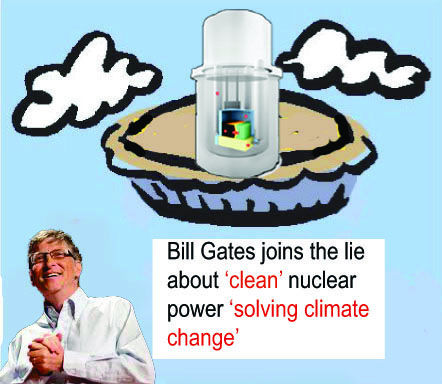 electricity, as Timothy Rooks explained recently.
Bill Gates, while motivated to help fight climate change, has also long been trying to make a success of his nuclear technology company Terra Power. The climate emergency presents him with the perfect opportunity to promote this, and especially, to get tax–payer funding to do it, as he suggests in his new book.
Wake up people! These two gurus have done some good stuff. But don’t let them manipulate us into dangerous territory – with nuclear technology, so connected with weaponry, and with its dangers, and the unsolved problem of radioactive trash. Sure, technology has got to be part of solving the planet’s crises. But we need much more imaginative leadership to steer our species away from infinite consumption and infinite energy use.
The “negaWatt” – the best energy is the energy you don’t use
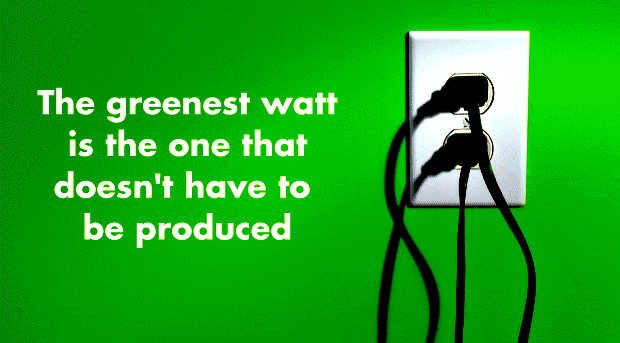
Harvard and Oxford, has been promoting the concept of “negaWatt”, a theoretical unit of saved energy. According to him, it is possible to achieve collosal savings on the energy necessary for human activities.
https://www.wedemain.fr/dechiffrer/amory-lovins-poursuivre-le-nucleaire-est-une-folie/
1 This Month

of the week – Shut Down Drone Warfare!


Tell the Ukrainian Government to Drop Prosecution of Peace Activist Yurii Sheliazhenko

Petition to revoke the licensing of the Near Surface Nuclear Disposal Facility (NSDF) at Chalk River. https://www.ourcommons.ca/petitions/en/Petition/Details?Petition=e-7247
To see nuclear-related stories in greater depth and intensity – go to https://nuclearinformation.wordpress.com
-
Archives
- April 2026 (68)
- March 2026 (251)
- February 2026 (268)
- January 2026 (308)
- December 2025 (358)
- November 2025 (359)
- October 2025 (376)
- September 2025 (257)
- August 2025 (319)
- July 2025 (230)
- June 2025 (348)
- May 2025 (261)
-
Categories
- 1
- 1 NUCLEAR ISSUES
- business and costs
- climate change
- culture and arts
- ENERGY
- environment
- health
- history
- indigenous issues
- Legal
- marketing of nuclear
- media
- opposition to nuclear
- PERSONAL STORIES
- politics
- politics international
- Religion and ethics
- safety
- secrets,lies and civil liberties
- spinbuster
- technology
- Uranium
- wastes
- weapons and war
- Women
- 2 WORLD
- ACTION
- AFRICA
- Atrocities
- AUSTRALIA
- Christina's notes
- Christina's themes
- culture and arts
- Events
- Fuk 2022
- Fuk 2023
- Fukushima 2017
- Fukushima 2018
- fukushima 2019
- Fukushima 2020
- Fukushima 2021
- general
- global warming
- Humour (God we need it)
- Nuclear
- RARE EARTHS
- Reference
- resources – print
- Resources -audiovicual
- Weekly Newsletter
- World
- World Nuclear
- YouTube
-
RSS
Entries RSS
Comments RSS
 nuclear-news